



Abstract
Background:
Metastatic secondary ocular tumors spread from systemic malignancies, including breast cancer. This study aimed to evaluate the cytotoxicity of extracts from 5 medicinal plants native to Saudi Arabia.
Methods:
For preliminary activity screening, cytotoxicity using the MTT assay and selectivity index determinations were made for medicinal plant extracts against various cancer cell-lines. The most promising extract was subjected to GC-MS analysis to determine the phytochemical composition. Clonogenic assays were performed using the most promising extract to confirm the initial results. Finally, western blot analysis was used to determine the modulation in expression of survivin and P27 suppressor genes in the human breast adenocarcinoma (MCF7) cell-line to understand the potential mechanistic properties of the active plant extract.
Results:
The 5 plant extracts showed various cytotoxic activity levels using IC50. The most active extract was found to be the leaves of Capparis spinosa L. (
Conclusion:
Leaves of Capparis spinosa L. (
Introduction
The prevalence of common ocular tumors world-wide is documented with scattered data. The predominant primary malignant orbital tumor in adults is lymphoma, with a prevalence ranging from 55% to 67%. 1 An average annual incidence of 2.0 per million population for all types of malignancies was found, showing a steady increase over the 13-year study period, Melanoma represents (8%) in the USA. 2 In Canada, Darwich et al 3 observed that the Canadian ASR of ophthalmic lymphoma was 0.65 per million person-years during 1992 to 2010. In the Netherlands, Koopman et al reported that the most common ocular tumor type was lymphoma, accounting for 67% of cases in both orbital soft tissues (72%) and the lacrimal gland (51%). Rhabdomyosarcoma accounted for 12%, adenocarcinoma for 6%, and adenoid cystic carcinoma for 5%. 4 Among Chinese in Taiwan, the average annual age-standardized incidence of eye cancers was 2.46 per million population (2.57 for male and 2.33 for female). For cases less than 15 years of age, the most common eye malignancy was retinoblastoma (86.0%), followed by rhabdomyosarcoma (3.9%) and lymphoma (2.8%). For cases 15 years of age or older, the most common eye malignancy was melanoma (28.6%), followed by squamous cell sarcoma (21.0%) and lymphoma (20.8%). 5 In Saudi Arabia, uveal melanoma (11.9%), and lymphomas (orbital, adnexal) (5.8%) were observed. 6 The highest number was recorded in Riyadh (35.39%), followed by Makkah (16.93%). The incidence was higher in the 0 to 4 years’ age group (55.21%), and it declined with age. 7 The data also revealed differences in the number of reported cases over time, as well as in the representation of eye cancer cases by gender and nationality, with retinoblastoma being the most common (53.32%). 7
The importance of medicinal plants as natural remedies is well established against various illness. Several reviews documents plants as drug candidates for drug discovery have been published and outlined.8,9 Flavonoids, terpenoids, triterpenoid glycosides, and phytosterols are main classes of phytochemicals 10 are present in most plants and may be responsible for the expected biological effect(s).
Achillea biebersteinii Afan. (Achillea arabica Kotschy) is a wild plant belonging to the family Asteraceae, known as “Qaisoom” in Arabic. 11 It is distributed in the southern region of Saudi Arabia. The antimicrobial, anticholinesterase, and antioxidant activities of different extracts of Turkish Achillea biebersteinii have been studied 12 and its protective and therapeutic effects against ethanol-induced gastric ulcer in rats demonstrated that it is a valuable source of an antiulcer agent with a post-prandial hyperglycemia lowering effect. 13 The hepatoprotective and antioxidant activities of the essential oil of Achillea biebersteinii have also been demonstrated, 14 as well as its wound healing potential by in vivo excision and incision models with comparable activity to the standard Madecassol. 15 The anti-inflammatory activity of highly oxygenated terpenoids from Achillea biebersteinii has also been studied, 16 as well as the properties of its phenol and flavonoids of different extracts 17 and its properties as an anti-nociceptive. 18 Other related species such as A. millefolium have also been shown to upregulate ocular antioxidant enzymes and downregulate inflammation, to give relief from ear-ache or throat infection, and as an eye-wash. 19
Anastatica hierochuntica L. is a wild plant belonging to the family Brassicaeae, known as “Kaff Mariam” in Arabic, is an annual that is widespread in Saudi Arabia, and is used traditionally for malaria, epilepsy, arthritis, mental depression, bronchial asthma, mouth ulcers, and as an analgesic.20 -23 This plant is used locally as a liquid from fresh leaves as a treatment for conjunctivitis and other problems of the eye. The plant inhibits melanogenesis in theophylline-stimulated murine B16 melanoma cells. 24 Previous studies have indicated that both the methanolic and aqueous extracts of Anastatica hierochuntica possess antifungal, antimicrobial and antioxidant properties 25 and nephroprotective potential. 26 Anastatica hierochuntica methanolic and aqueous extracts have antiproliferative effects, 24 meanwhile, its potential toxicity effects in pregnant Sprague-Dawley rats and their developing fetuses have been investigated 27 as well as mutagenicity. 28
In the case of Anisotes trisulcus (Forssk.) Nees, 2 compounds have been identified from its aerial parts that exert mild and moderate cytotoxic effects on cultured hepatoma 29 with new alkaloids having been identified 30 with significant hepatoprotective effects. 31 In Arabic peninsula, this plant locally used for inflammation 32 and for eye (personal communication).
Capparis spinosa L. locally known as “Shaflah” or “Kabbur,” a member of the family Capparaceae has been used as a traditional herbal remedy since ancient times for its beneficial effects for human ailments. 33 In the Central region of Saudi Arabia, the unopened buds were externally used to treat eye infections. 34 It has also been reported to treat liver and kidney diseases, paralysis, and diabetes 35 and in Morocco, the unopened buds are used externally to treat eye infections and prevent cataracts while caper dried fruits are used to treat hypertension and diabetic complications when taken orally with a glass of water.36,37 It is commonly known as Caper and is of great significance as a traditional medicinal food plant. 38 It is considered to be one of the most popular species of aromatic plants grown in the Mediterranean. 39 The quercetin in Capparis spinosa extract has shown anti-tumor effects 40 ; protective effects against oxidative stress and genotoxicity in mice have also been reported, 41 while anti-plasmodial, anti-leishmanial, and insecticidal activity of its essential oils have been reported. 42
Flueggea virosa (Roxb. ex Willd.) Royle from the family Phyllanthaceae, known locally as “Hamrar,” is a shrub or small tree with significant inhibitory activity against aldose reductase, 43 It has been traditionally used to treat fever, malaria, sexual dysfunction, pain, diabetes, epilepsy, snakebite, venereal disease, rheumatism, arrhythmia, rash, diarrhea, pneumonia, cough, hepatitis, and HIV-related illness, and also as a contraceptive. 44 Various fractions from the leaves of Flueggea virosa have been investigated for its antimalarial efficacy and exhibited potential activity (IC50 values < 10 μg/ml) against various strains. 45 Three new indole alkaloids, along with 9 known alkaloids, were isolated from the fruits of Flueggea virosa. 46 Four known terpenoids, 8 new dinorditerpenes were isolated and identified from the roots of Flueggea virosa and these compounds exhibited significant anti-hepatitis C virus activity. 47
The neoplastic changes affecting the human eye can be classified as primary or secondary to a malignancy in other parts of the body. Conjunctival and uveal melanoma, retinoblastoma (Rb) in children, conjunctival and intra-ocular lymphoma, and ocular surface squamous neoplasia are the most common primary tumors of the eye. Meanwhile, metastatic secondary tumors spread from systemic malignancies, especially of the breast and lung, prostate, colon or any other parts of the body.48,49
Retinoblastoma, the most common ocular malignancy in both children and adults, was less frequent in Saudi Arabia than in other some Gulf areas, although it is higher than in western countries. 6 Both primary and metastatic eye cancer are asymptomatic and present clinically with visual defects or blindness.50,51 Examinations reveal that common ocular primary neoplasms and secondary ocular tumors can be differentiated in cytologic preparations. Rb cells have been found to occur either singly or in clusters. 52 A review reported that clinical presentation of retinoblastoma patients in Saudi Arabia has a high rate. The number of presenting patients with extraocular disease significantly decreased from 22.8% (1983-1988) to 12.3% (1989-1994). 53
The reported survival for uveal melanoma with a poor prognosis appears to vary 54 Early detection and the first surgery in conjunctival melanoma management are critical for prevention of recurrent or new tumors, as reported by advanced American Joint Committee on Cancer (AJCC). 55 Although most patients with uveal melanoma develop metastases, research findings suggest that only 2 in 5 of all patients have a poor prognosis. 56 Early detection and prompt treatment can give cure rates up to 95% for intra-ocular tumors, whereas extraocular disease is associated with high mortality.57 -61
Breast cancer is a common and serious health issue cancer in women that can to spread to the eyes. 62 A study of a population of breast cancer patients with ocular metastasis has shown that uveal metastasis was the initial site of breast cancer in 3% of patients 63 and the first site of metastatic cancer in 16%. Cancer in the eye is rare as there is no lymphatic system; instead, it spreads via the blood vessels, affecting areas of the eye with the best blood supply, namely the uveal tissue. 64 Eye metastasis from colorectal cancer 65 and primary liver cancer were reported by Sun et al. 66 Ophthalmologists often discover the presence of terminal metastatic disease when the cancer has spread to the eye uveal tissue at early stages and usually in patients with a history of primary cancer. 67 Based on this review of the literature, 5 Saudi plant species which have been traditionally used to treat some ocular complaints were evaluated in the current study for their cytotoxic effects and to prepare them for further investigations regarding their putative ocular effects.
Materials and Methods
Phytochemical Studies
Plant material identification
Five plants, namely Achillea biebersteinii (Whole;

(A) The spiny branch (B) and flowers of Capparis spinosa L. (
Collection and extraction of plants
Plants were collected from different locations from Baljurashi province (Wadi E lkhaitan), Al Baha area in April 2021. The leaves (250 g) and whole plants (250 g) were shade dried and then powdered using a mechanical grinder. Dried materials were macerated in ethanol 80% v/v for 1 week at room temperature. The resulting residues were filtered, pooled and evaporated to dryness to afford green to brownish viscous syrup. The crude extracts were transferred onto petri plates, allowed to dry and finally weighed in 3 repeated readings (whole = 9.5 g; Leaves = 50.23 g). The yield percentage was calculated using the formula: Yield % = (afforded extract weight)/(air dried weight) × 100.
GC-MS analysis
The dried leaf extract of Capparis spinosa was selected for GC-MS analysis based on results of selectivity studies displayed below. The extract (
Identification of phytochemical constituents
The Xcaliber software was used for mass spectral data analysis and the fragmentation patterns of each constituent was matched with MS data in database of the instrument and built-in libraries including MAINLAB, NIST and REPLIB. The phytocompounds present in the extract were identified by comparing with available structures in the computer library and the percent abundance of each component was determined by using peak area as reference. The reported biological properties of the detected compounds are based on data from Dr. Duke’s Phytochemical and Ethnobotanical Database. 68
Cancer Cell Studies
Cancer cell culture
Three cancer cell-lines, namely MCF7 (human breast adenocarcinoma), HT29 (human colorectal adenocarcinoma) and HepG2 (human liver adenocarcinoma) were used in this study, in addition to MRC5 (normal human fetal lung fibroblast), all from the ATCC, USA. The 3 cancer cells were sub-cultured in RPMI-1640 media (10% FBS v/v), while MRC5 was maintained in Eagles minimum essential medium (EMEM, 10% FBS v/v), with all cultures kept at 37°C, 5% CO2, and 100% relative humidity, for a maximum of 5 to 10 passages.
Cytotoxicity and selectivity studies
The cytotoxicity of the 5 extracts, in addition to doxorubicin and camptothecin, were evaluated by MTT assay as previously reported.69,70 Each of the cell-lines were separately cultured in 96-well plates (3 × 10³/well) and incubated with each of the extracts or doxorubicin at a final concentration of 0 to 100 μg/ml, for 3 days at 37°C overnight (DMSO 0.1% v/v; n = 3 of 3 independent experiments). After 3-day incubation, the cytotoxicity of each extract was evaluated by MTT assay. MTT was added to culture medium at 0.5 mg/ml to each well and incubated for 3 hours at 37°C. The MTT solution was removed and formazan granules were dissolved in DMSO and the absorbance was read on a multi-plate reader (Bio-Rad PR 4100, Hercules, CA, USA). The optical density of the purple formazan at A550 nm was shown to be proportional to the number of viable cells. The extract concentration causing 50% inhibition (IC50) was measured 3 times and compared to control cell growth (100%) and determined using GraphPad Prism. The selectivity index (SI) for the 5 extracts was calculated by dividing its IC50 against MRC-5 cells/IC50 against either MCF7, HT29, or HepG2 cell-line.
Clonogenic assay
Clonogenic assay measures tumor cell survival and subsequent proliferative ability following drug exposure.
71
Western Blotting
Western blotting was used to determine the expression change of survivin (apoptosis inhibitor protein), and P27 (cell cycle protein). MCF7 cells (1 × 10⁶ cells/well) were treated with vehicle, doxorubicin (2 µg/ml) and
Ethics Approval of the Study
As per Al Baha University standards, all the funded project proposals have undergone critical review followed by approval by the Scientific Research Affairs relevant committees before acceptance.
Results
Phytochemical Studies
The 3 plant extract yields were as follows:
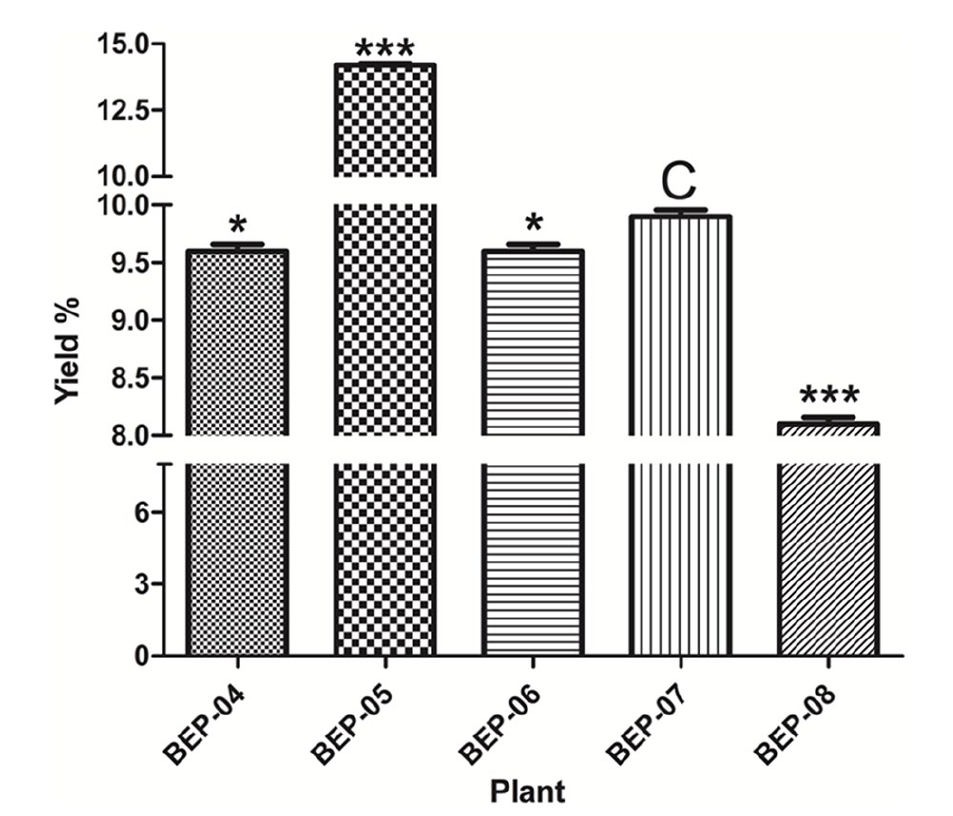
Yields (%) of the dry extract of 5 plants obtained after ethanolic extraction and evaporation of different selected 5 plants. Data presented from 3 readings. BEP-07 was used as a control for comparison, while Dunnett’s Multiple Comparison Test was used as PostHoc after 1-way ANOVA test.
Identification of Phytochemical Constituents Using GC-MS
The GC-MS chromatogram of Capparis spinosa plant (
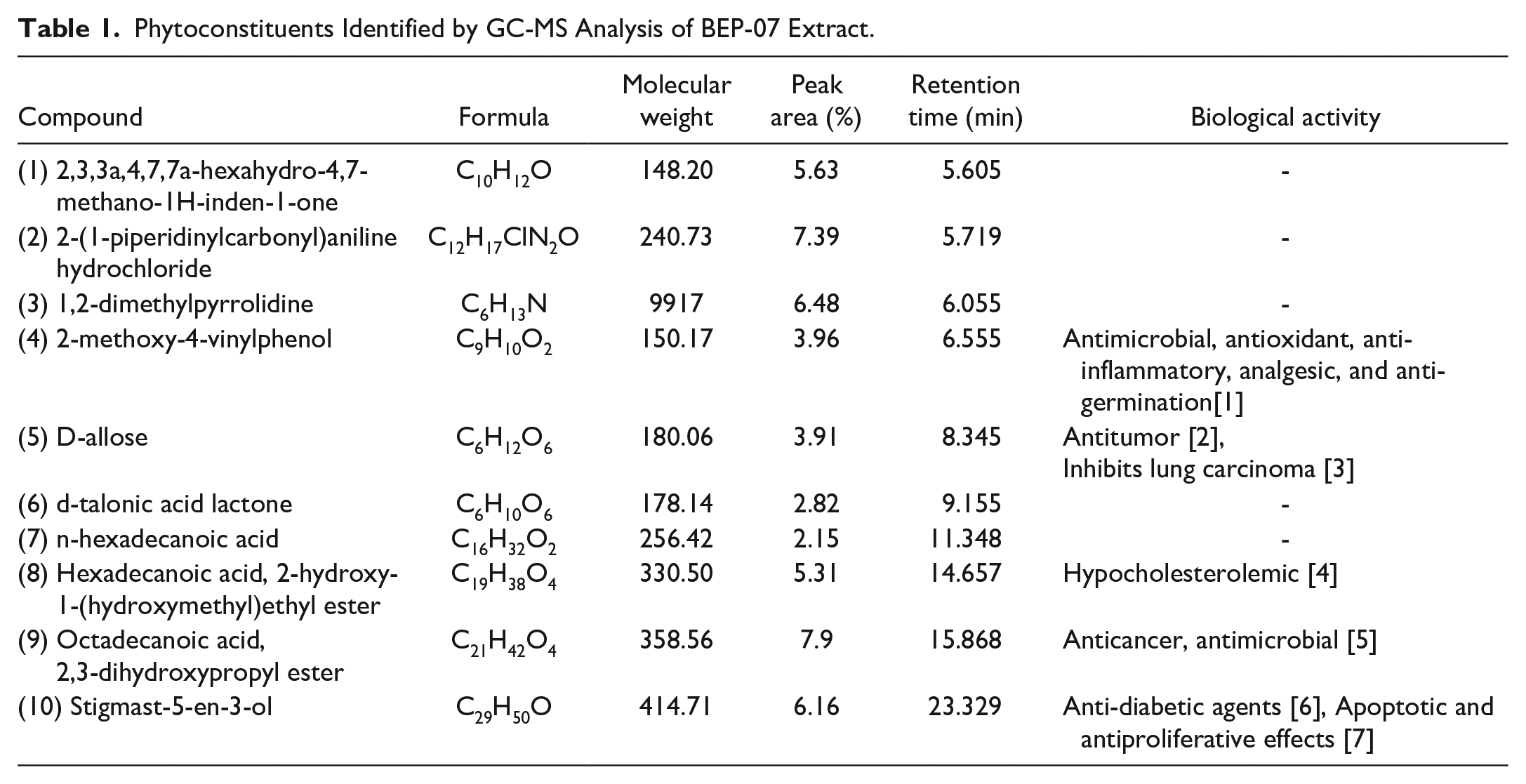
Phytoconstituents Identified by GC-MS Analysis of
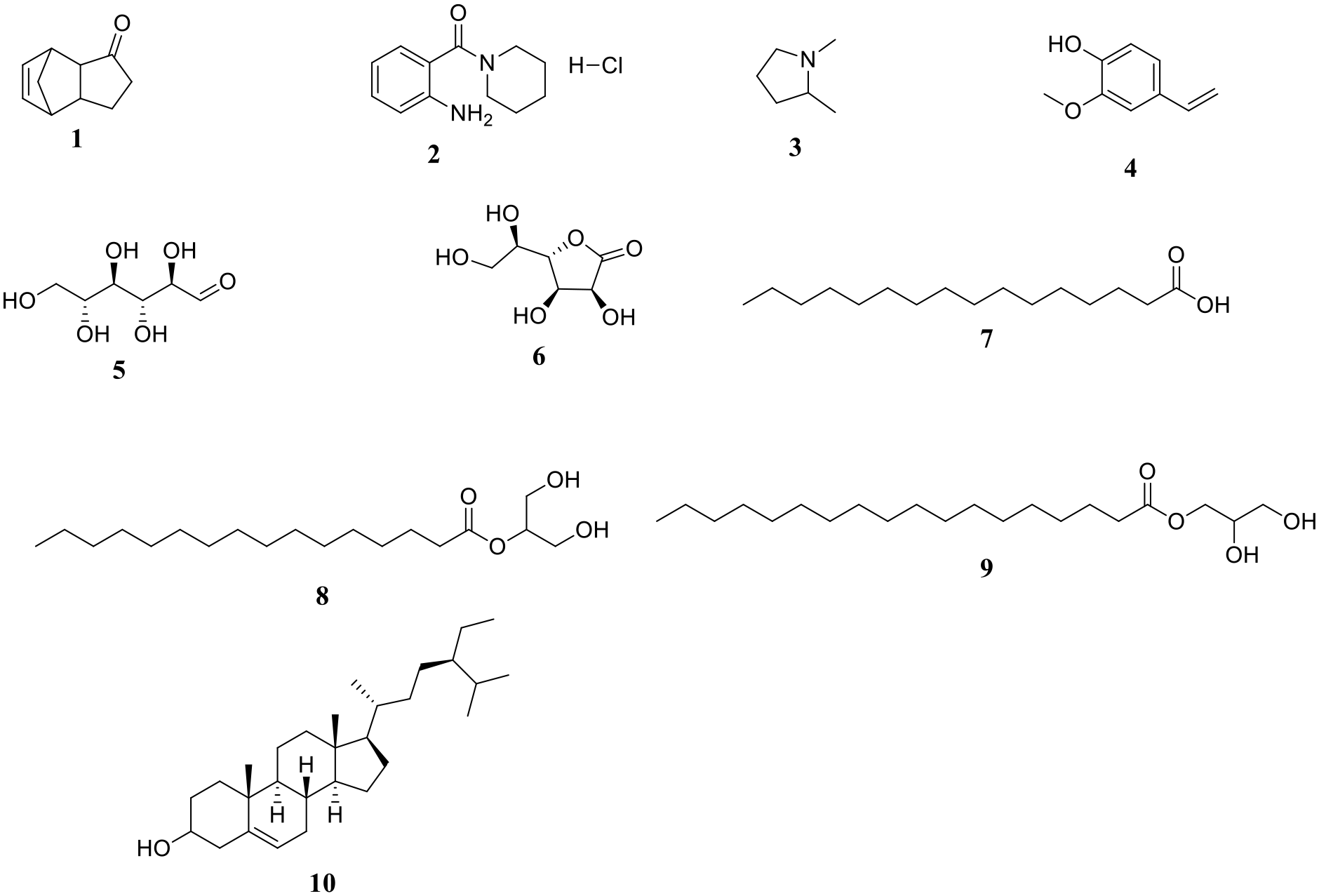
Structures of chemical constituents identified through GC-MS for

Peak areas (%) for the major components for the
Cytotoxicity and Selectivity Studies
The 5 extracts showed variable IC50 ranging from 1.55 to 30.65 μg/ml. The most active extract was
Cytotoxic Activity of the 5 Plant Extracts, Doxorubicin and Camptothecin Against 3 Cell-lines, and Normal Fibroblast (MTT, 72 h, IC50 “μg/ml” ±SD, n = 3).

Doxorubicin (G2M-blocker) Camptothecin (S-blocker).
MRC5: normal fibroblast.
Abbreviations: C, control; NS, not statistically significant.
Average cytotoxicity (IC50) of each extract against the 3 cancer cell-lines.
P ≤ .01. ***P ≤ .001.
Selectivity Index (SI) (≥1.1) of the 5 Extracts, Doxorubicin and Camptothecin Against Normal MRC5 Cells.

Clonogenicity of BEP-07 Extract
The

Colonies of MCF7 cells treated with (A)
Western Blotting of P27 and Survivin Following Treatment With BEP-07 Extract
The effect of doxorubicin and extract

(A) Expression of survivin and P27 in MCF7 cells treated with doxorubicin or
Figure 7 summarizes the study experiments and their results as an overview.

A study experiments and results summary.
Discussion
Metastatic secondary ocular tumors often are initiated from systemic malignancies, especially of the breast and lung, prostate, colon. Although several plants have been used in traditional medicine, few have been subjected to thorough scientific investigations. The most active extract in our study was
Finally, this study may lead to potential applications or further questions. More pharmacological and toxicological studies must be conducted to confirm our findings and to determine the level of safety and feasibility for isolation and characterization of the active ingredients to serve as a candidate for new drug discovery.
Study Limitations
The HepG2 cells were not used; instead breast cancer cells (MCF7) were employed. We performed the MTT in 2 steps, once at the beginning of the project with all cells and a second time after GC-MS analysis. In the second time we were aiming to use both HepG2 and MCF7, but we lost the HepG2 cell line and could not obtain a good HepG2 with a fresh or new passage.
Further confirmatory specific studies can be performed using ocular cancer cells, while advanced mechanistic investigations should be conducted to deeply determine or rule out any other possible mechanism of action.
More in vitro and in vivo pharmacological studies could be performed alongside toxicological ones to complete the extract profile at the pre-clinical stage to prepare for a clinical phase.
Conclusions
This study concludes that the leaves of Capparis spinosa (
Footnotes
Acknowledgements
The authors extend their appreciation to the Deputyship for Research and Innovation, Ministry of Education in Saudi Arabia for funding this research work through the project with Grant number: MOE-BU-4-2020.
Author Contributions
AHG conceived the original idea. MB, HA and AAEA designed the study. ANA, MEA., RA, and BR. conducted the experimental work and collected the data. AAEA analyzed the data and drafted the manuscript. AHG, AK and SG revised it. All equally contributed. All authors approved the version to be published and agreed to be accountable for all aspects of the work.
Availability of Data and Materials
All data generated or analyzed during this study are available with Dr. Ali as the correspondence author and can be provided upon request.
Declaration of Conflicting Interests
The author(s) declared no potential conflicts of interest with respect to the research, authorship, and/or publication of this article.
Funding
The author(s) disclosed receipt of the following financial support for the research, authorship, and/or publication of this article: This work was supported by the Deputyship for Research and Innovation, Ministry of Education in Saudi Arabia [grant number: MOE-BU-4-2020]. The funders played no role in the design of the study, data collection and analysis, or preparation of the manuscript.
