



Abstract
Cancer is one of the leading causes of death worldwide, and Korea is no exception. Humanity has been fighting cancer for many years, and as a result, we now have effective treatments such as chemotherapy, radiation, and surgery. However, there are other issues that we are only now beginning to address, such as cancer patients’ quality of life. Moreover, numerous studies show that addressing these issues holistically is critical for overall cancer treatment and survival rates. This paper describes how Korea is attempting to reduce cancer incidence and recurrence rates while also managing the quality of life of cancer patients. Integrative Oncology is the field that addresses these broad issues, and understanding the current state of integrative oncology in Korea is critical. The goal of this paper is to provide an overview of the current state of integrative oncology in Korea as well as to look ahead to future developments.
Introduction
Since 1983, cancer has been one of the leading causes of death and a major health problem in Korea. 1 Based on cancer incidence data from the 1990s to 2018, researchers forecasted the number of cancer incidences in 2021, concluding that 259 999 new cancer cases and 8156 cancer deaths are expected in Korea. 1 Korea, like other countries, has worked to reduce cancer incidence and mortality rates through national Cancer Conquer projects and research and development (R&D) studies.
Integrative oncology is a new cancer treatment trend that has emerged in the last 10 years. Because it is an evidence-based medicine that supplements conventional cancer treatments, it is frequently used interchangeably with the term Complementary and Alternative Medicine (CAM). 2 Integrative oncology, as opposed to conventional medicine, focuses on patients’ quality of life, well-being, and mind-body-spirit. As a result, it is patient-centered and individualized. 2 Integrative oncology treatments are critical because they address personal issues that have a significant impact on cancer patients’ quality of life. For example, a unique treatment of integrative medicine, moxibustion, can alleviate cancer-related fatigue while acupuncture mitigates chemotherapy-related nausea.3,4
The general public is becoming more aware of the field of integrative oncology. According to a study of 434 lung cancer patients, 68.8% are aware of complementary and alternative medicine (CAM), and 30.9%have used it. 5 Furthermore, 43% of patients using integrative oncology therapies (IO therapies) reported that their family and friends advised them to try IO therapies, and 14% of patients initiated treatment on their own. 5 Since integrative oncology is expected to continue to develop in this field of cancer treatment, it is important to review the current status of integrative oncology at this point and find what can be developed in the future. This paper presents a summary of the current status of integrative oncology in Korea and provides suggestions for its further development.
Method
The PubMed (https://pubmed.ncbi.nlm.nih.gov), KMbase (https://kmbase.medric.or.kr), KoreaMed (https://koreamed.org), DBpia (https://www.dbpia.co.kr), and NAVER Academic (https://academic.naver.com) databases were searched to collect relevant literature. In the titles and/or abstracts in English or Korean, the following words or phrases were used alone or in various combinations: “Cancer,” “Integrative Medicine,” “Integrative Oncology,” “Integrative Cancer Therapy,” “Korean Medicine,” “Korean Medicine Cancer Therapy,” “Complementary Alternative Medicine.” From the beginning of each database to June 2021, more than 100 publications were reviewed. The references listed in the identified article were consulted for compatibility. Based on the survey results, a list was created, and data was collected via PDF files or by requesting that libraries and conferences copy the original text. Furthermore, integrative medical treatment reports related to cancer that were published on the cancer treatment-related institution’s website were collected and investigated, and information deemed objective was cited.
The Current Status of Integrative Oncology in Korea
Overall Landscape of Complementary and Alternative Medicine in Korea
The Korean Ministry of Health and Welfare investigated the current status of complementary and alternative medicine (CAM) therapy used by cancer patients in 2008 to develop a national plan to include complementary and alternative (CAM) therapy as part of the Cancer Conquest R&D project. According to the study, 84.2% (1535/1822) of cancer patients have used complementary and alternative medicine (CAM). 7 Among them, 1009 patients were further selected and analyzed in order to find out what types of IO treatments were used the most among those patients. As a result, 101.2% (1021) of the patients received nutritional therapy, 40% (404) of the patients received TKM (Traditional Korean Medicine) treatments such as acupuncture and herbal medicine, 36.2% (365) received drug therapy, 29.6% (299) received psychotherapy, 10.6% received spiritual therapy, 5.1% (51) received exercise therapy, 2.0% (20) received energy therapy, and lastly 1.2% (1) received hand therapy. 7 The Ministry of Health and Welfare is currently carrying out a new version of this study in an attempt to distinguish new trends.
Supportive integrative cancer center for cancer survivors
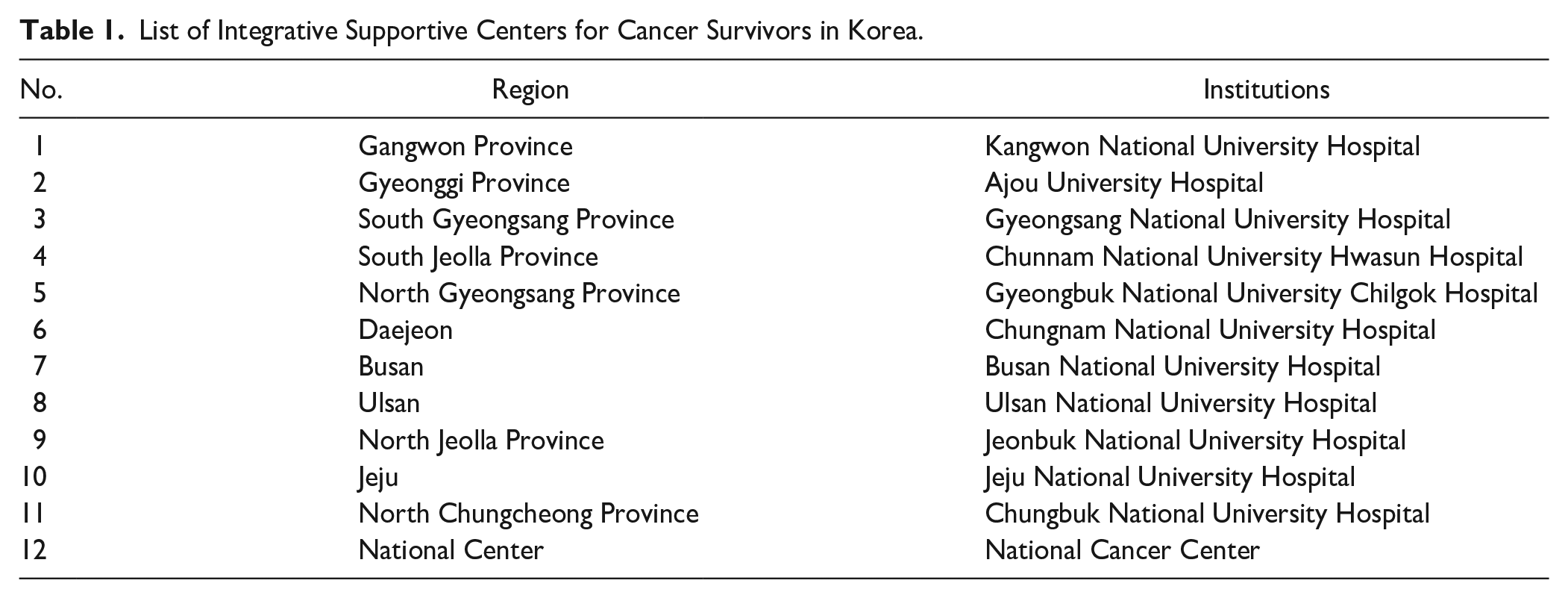
Since 2017, the Korean Ministry of Health and Welfare has been running a pilot project to support integrative cancer treatments for cancer survivors. As a result, 12 integrative support cancer centers were established, including one at the National Cancer Center, (Table 1). 9 Cancer patients who have completed conventional cancer treatments, as well as their families, are the program’s target subjects. The National Cancer Center, local governments, and experts in various fields can use this guideline to help them return to their normal lives by managing their physical and psychological health (Figure 1). 9
List of Integrative Supportive Centers for Cancer Survivors in Korea.
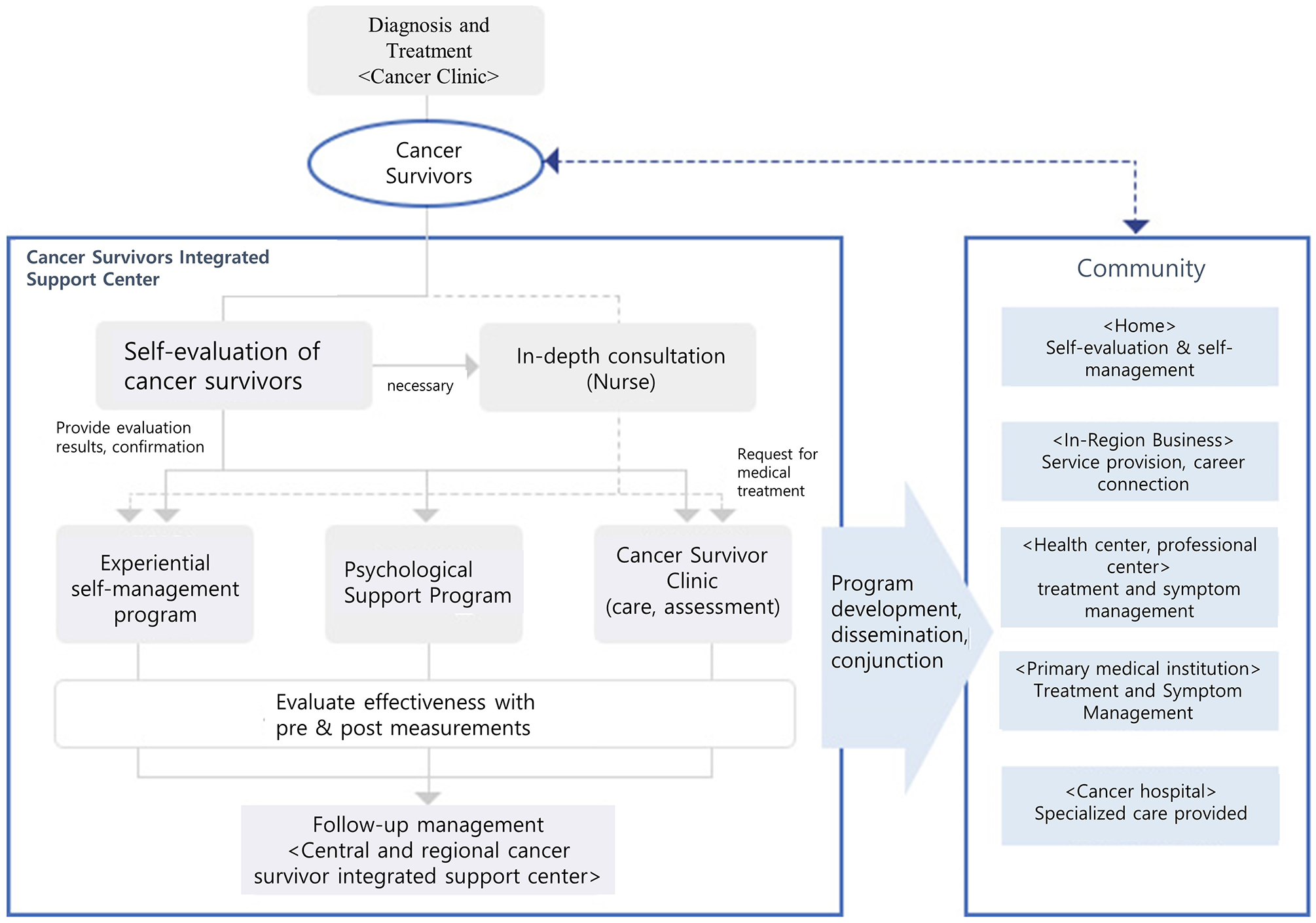
Integrative supportive center programs guidelines: The Korean National Cancer Center, local governments, and experts in various fields developed an integrative cancer program guideline that can help patients to return to their normal lives by managing their physical and psychological health. Subjects are patients who have finished the conventional treatments (surgery, chemotherapy, radiation). Through this program, the centers can acknowledge and evaluate problems that cancer survivors experience. Based on that evaluation, centers offer supportive programs as needed. Moreover, centers can coalesce with communities to resolve patients’ problems.
Government designated integrative medical hospitals
Dedicated integrative medical centers were established in 2019 as part of the Ministry of Health and Welfare’s pilot project of Western medicine and Korean medicine collaboration. Daegu Jeon In Comprehensive & Integrative Medicine Hospital, Won Kwang University Jang Heung Integrative Medical Hospital, and Chungju Widam Comprehensive & Integrative Medicine Hospital are among them. These facilities provide treatments such as high-frequency thermo-cancer treatment, high-pressure oxygen therapy, immunotherapy, high-concentration vitamin C treatment, antioxidant therapy, acupuncture, moxibustion, and TKM (Table 2). 8 In addition, they run an immunotherapy-based immune center that uses traditional Korean medicine to provide integrative medical immunotherapy. 8 These centers have different insurance coverage regulations because they are dedicated integrated cancers of Western medicine and Korean medicine. When patients receive both TKM and Western treatments in these centers on the same day, they are both covered. 8 However, outside of these centers, if patients decide to receive both types of treatments on the same day, only one of them will be covered. 8
Government Designated Integrative Medical Hospitals.

University affiliated Korean Medicine Hospital
In addition, there are 24 hospitals in Korea that are affiliated with 13 Korean Medicine Universities (Table 3). 10 These are general TKM hospitals, but because TKM treatments for cancer patients are fairly common and in high demand, they all provide integrative medical care for cancer patients using TKM. It was not possible to locate every single program they offered at each site. However, because they are all Korean Medicine affiliated integrative cancer centers, they all offer general TKM treatments based on symptoms such as acupuncture, moxa, and herbal medicine. In the latter part of this paper, a few leading TKM universities with IO therapy programs will be introduced.
Korean Medicine Hospitals Affiliated With 13 Universities.

Korean Herbal medicine and Integrative oncology
Herbal medicine has been used in various forms in Korea for thousands of years. The prevalence of cancer cases treated with Korean herbal medicine has been widely reported in Korean historical literature. Because of the ease of access to herbal medicine in Korea, taking herbal medicine is a fairly common concept among the Korean public, and there is naturally a high demand for proving the efficacy and safety of herbal medicine used in cancer patients. Based on this, studies to determine which herbal medicine substances can treat cancer are currently underway. Daejeon University and Kyunghee University are the 2 most prominent herbal cancer research institutions in Korea, accounting for 53% of all herbal research conducted in Korea between 2000 and 2010. 20 Daejeon University Korean Medicine Hospital has developed and researched the anti-cancer herbal formula HAD-B1, which contains Panax notoginseng Radix, Cordyceps militaris, Panax ginseng C.A. Mey, and Boswellia carterii Birdwood. 6 The study on the effects of HAD-B1 on the proliferation of A549 cisplatin-resistant lung cancer cells discovered that the formula inhibited A549CR cell growth in a concentration-dependent manner. 10 Kyunghee University conducted studies on the efficacy and safety of the traditional formula Gamiguibitang with cancer patients who had sleep disturbances, and the results showed that the formula could potentially be used to treat cancer patients’ sleep disorders. 21 There have also been studies on the anticancer effects of a single herb and its constituents. For example, studies on Ginseng, one of Korea’s most popular herbs, are currently ongoing. The urokinase receptor is negatively modulated by modified regular Panax ginseng extract (MRGX), according to researchers. 11 Furthermore, a recent study conducted jointly by Korea and Israel on Rh2-enriched Korean ginseng (Ginseng Rh2+) demonstrated tumor growth inhibition of non-small cell lung cancer. 22 Another single herb with anti-ovarian cancer properties is the East Asian native plant Rhus verniciflua Stroke (RVS). A study discovered that allergen-free RVS can induce apoptosis in SKOV-3 ovarian cancer cells via caspase activation. 12 Another intriguing form of TKM treatment is pharmapuncture, which involves injecting herbal substances into specific acupoints in the body. Mistletoe injection is one of them, and it makes use of mistletoe lectin chains, which can cause cell death. 13 Furthermore, researchers demonstrated the efficacy of mountain ginseng (MG) pharmacopuncture treatment in reducing cancer-related side effects such as cancer-related fatigue. 14
Integration of integrative oncology and conventional care
Korea has a dual medical system that includes both western medicine and Korean traditional medicine. When it comes to treating cancer patients and managing their quality of life, we cannot dismiss or minimize traditional treatments such as surgery, chemotherapy and radiations. In addition, Korean traditional medicine is an important part of healthcare when it comes to managing quality of lives of cancer patients and there has been research on how this dual system works together in this field. According to 2016 study that looked at discrepancies between the expectations of patient and oncologist regarding the efficacy of IO therapies, there was a significant discrepancy between patient and oncologist expectations. 15 However, the study found that a significant number of patients believed that IO therapies were as beneficial as they had anticipated. 15 These findings suggest that additional efforts to reduce the disparity between these 2 medicines are required.
Although there are systemic limitations to fully integrating IO therapies and western treatments, TKM hospitals are working hard to provide evidence based supportive care so that cancer patients can receive treatments they deserve. Seoul Korean Medicine Hospital is one of the leading centers, with their own program designed specifically for cancer patients called Wheel Balance Cancer Therapy. An analysis of non-small cell lung cancer patients who have tried the WBCT program yielded encouraging results. 72.7% of the participants had adenocarcinoma, 7% had squamous cell carcinoma, 2% had other cancers. Furthermore, 90% of the patients participated in this study were stage in stage IV lung cancer. 16 Treatments such as herbal medicine, herbal hot pack therapy, acupuncture, moxibustion, physiotherapy, exercise, pharmacopuncture, yoga and mind body meditation were included in the program, and participants were required to cooperate for at least 14 days. 16 As a result, the median survival time for all participants was 31.1 months. Patients who participated for more than 14 days but less than 28 days had a median overall survival rate of 16.2 months, compared to 45.2 months for patients who participated for more than 28 days. 16 Furthermore, another study on WBCT discovered that for stage IV cancer patients, participating in a WBCT program for more than 21 days maintains CRP and ESR levels, which is beneficial to survival. 16 Kyunghee University Korean Medicine Hospital is another institute. They also have a Korean Medicine Cancer Center, which aims to improve the quality of life of cancer patients by addressing the body as a whole. 17 Kyunghee Korean-Western clinic provides supportive treatments in addition to conventional care to reduce side effects of conventional cares. The pain, fatigue, loss of appetite, depression, digestion problems, hives, lymphedema, and numbness in the hands and feet are all addressed by the side effect relieving clinic. 17 Precancer clinics provide preventive care to patients with diseases that have the potential to progress to cancer, such as atrophic gastritis, colorectal adenoma, inflammatory bowel disease, viral hepatitis, chronic obstructive pulmonary disease, and prostate disease. 17
Organizations, Networks, Scientific Societies to Support IO in Korea
The Korean Society of Integrative Oncology (KSIO) is the Korean integrative oncology field’s representative organization. 18 KSIO was founded in 2015 with the goal of developing and disseminating integrative oncology in Korea, presenting recent evidence-based results, and providing academic lectures to both professionals and general public. Since 2015, KSIO has held an academic conference every year, and in 2018, it launched a board-certified education program. It has also translated and published 2 books, “Integrative Oncology” by Donald I. Abrams and “Anticancer Living” by Lorenzo Cohen.
This means they are consistently endeavoring to spread the concept of IO to the public. Regarding the research area, Gachon University first introduced integrative oncology research to Korea in 2003. Since then, integrative medicine centers in Korea University, Gachon University and Ajou University are currently conducting different integrative oncology research studies. The Korea Health and Wellness Ministry has been supporting research projects in Universities, including Daegu Jeon In Comprehensive & Integrative Medicine Hospital in 2013, Won Kwang University Jang heung Integrative Medical hospital in 2017, and Chungju Widam Comprehensive & Integrative Medicine Hospital in 2020. 9 This means that they are constantly working to spread the concept of IO to the general public.
Furthermore, Daejeon Korean Medicine University is creating integrative oncology practice guidelines based on cancer type. The guideline defines keywords used in the field while also introducing evidence-based treatment options in a safe manner. A meta-analysis of each cancer and the most common treatments is also underway.
Healthcare System Coverage/Reimbursement for Cancer Patients
In Korea, IO therapies are partially covered by insurance. Acupuncture, herbal medicine, and physical therapy are among the therapies covered by the insurance, according to the KOCID. 19 Supplements, psychological support, nutritional therapy, mind-body therapy, manual therapy, and homeopathy, on the other hand, are not covered. 19
Current Situation Regarding Training in IO for Healthcare Professionals
Seoul National University College of Medicine established the “Complementary and Alternative Medicine Research Institute” in 2006, and since then, other medical universities have established similar institutes to provide integrative oncology education. In terms of classes, concepts of Integrative Oncology are introduced in undergraduate classes in medical hospitals, and students interested in furthering their studies and conducting research on integrative oncology can do so in graduate school. Currently, KISO offers an Integrative Oncology Board-Certified program for both board-certified medical professionals and physicians. 18 The program consists of 20 to 40 hours of lectures that cover basic Integrative Oncology concepts as well as nutrition, physical activity, mind-body medicine, music therapy, a support system for patients, and Korean traditional medicine, which is associated with integrative oncology, among other things. 18 Furthermore, the program introduces the most recent trends in cancer treatment. KSIO offers this type of education twice a year. 18
Challenges
Although Integrative Oncology is rapidly expanding in Korea, there are a few significant challenges that we must continue to address. The first is cognitive disparities between oncologists and integrative oncologists. Because Korea has dual medical and educational systems, it is natural for different opinions and perspective to exist. As a result, patients continue to struggle to obtain advice and referrals from their medical doctors for more integrated treatments. However, because the well-being of patients is a top priority for both sides of medical professionalism, increasing access to evidence-based integrative oncology therapies within the conventional medical system is required. Patients should be able to make their own decisions after being informed about the benefits and drawbacks of integrative oncology therapies based on scientific evidence from a medical doctor. Second, critical pathways should be developed that effectively combine conventional medical system and IO therapies. To accomplish this, we propose that more R&D studies be conducted to provide these guidelines. Well-designed RCT studies are also in high demand in order to reach systemic considerations.
Conclusion
Integrative oncology in Korea is being offered in forms of combination of conventional medicine and traditional Korean medicine (TKM). Due to the fact that Korea has its own traditional medical system, TKM has been leading the development of both clinical and researches of integrative oncology in Korea. In addition, many attempts are being made to provide better integrative oncology treatments, such as collaborative pilot projects. However, since critical pathways based on scientific evidence of integrative oncology treatments have not been developed yet, and the level of trust between western medicine and TKM is low. As a result, the integrative oncology field in Korea is growing with some challenges. With dedicated integrative oncology supportive health professionals, organizations, growing interest in the public, and increasing evidence based research studies, integrative oncology in Korea is highly anticipated to keep flourishing.
Footnotes
Declaration of Conflicting Interests
The author(s) declared no potential conflicts of interest with respect to the research, authorship, and/or publication of this article.
Funding
The author(s) disclosed receipt of the following financial support for the research, authorship, and/or publication of this article: This research was supported by the Daejeon University Research Grant (2021).
