




Abstract
Subtle slights refer to a wide range of ambiguous negative interactions between people that may harm individual health, wellbeing and performance at work. This literature review aims to help human resource development practitioners and researchers understand the similarities and distinguishing features of disparate bodies of subtle slight research. A systematic review yielded 338 papers, the majority of which concerned three constructs: microaggressions, everyday discrimination and workplace incivilities. Meta-synthesis revealed that all three categories related to subtle, low-intensity interactions but differed in their descriptions of the type of perceived violation. The most common demographic factors under scrutiny were race or ethnicity, gender, sexual orientation, and age. We propose a framework that involves four dimensions common to all subtle slights: type of violation, intensity, duration and intent (VIDI). This framework may help future efforts to understand, monitor and address this issue of contemporary concern in the workplace.
Introduction
Diversity, Equity, and Inclusion (DE&I) are critical drivers of organisational change and the future of Human Resource Development ([HRD], Torraco & Lundgren, 2020). Creating corporate practices that adequately address DE&I has been described as the most complex HRD challenge of the century (Heitner et al., 2013). Employers spend billions of dollars annually to reduce the harm that ensues from discriminatory practices at work and enhance beneficial outcomes for diverse demographic groups (Rodgers et al., 2019; Shore et al., 2018). However, most initiatives have focused on overt examples of discrimination and misbehaviour, overlooking the more frequent, subtler slights (Jones et al., 2017). Stephen Young, the former Chief Diversity Officer at JP Morgan Chase, used the metaphor that organisations tend to “manage the elephants while the ants walk by” (Funderburg, 2005, p. 129).
A subtle slight describes a range of ambiguous negative interactions between people. Subtle slights may seem innocuous, yet they can harm people who experience them (Jones et al., 2016). Subtle slights in the workplace can thus undermine many HRD concerns. Employers are beginning to demonstrate interest but understanding and addressing the issue are not straightforward (di Gennaro & Brewer, 2018; Jamieson, 2020). It has been suggested that the reasons for this include the fact that information about subtle slights comes from disparate bodies of research (Cortina et al., 2017) and is sometimes embedded in political values (Lilienfeld, 2017, 2020). It may be helpful here to provide a brief account of the developing interest in subtle slights over the past few decades.
A Brief History of Research into Subtle Slights
In 1978, Chester Pearce used the term “microaggressions” to describe the insults and dismissive actions he observed African Americans experience from White Americans. He described these as “subtle, stunning, often automatic, and non-verbal exchanges which are ‘put downs” (Pierce et al., 1977, p. 66). Examples of microaggressions include: clutching your bag closer on seeing a young Black man approach on the street or saying, “what are you?” to enquire about someone’s racial or ethnic group. The term has subsequently shaped many approaches to studying the mental health of marginalised groups (Lui & Quezada, 2019). Other examples of microaggressions would include a man stating, “what a shame” in response to learning that a woman is gay, telling someone of Asian descent that they speak English well, or a manager assuming an older worker doesn’t understand a piece of new technology.
During the 1980’s, the idea of “subtle discrimination” began to be used in the discourse around women’s rights, focusing on “modern sexism” in society and the legal system (Hanratty, 1989; Lott, 1985). Further constructs emerged in the 1990’s. Micro-inequities were described as “actions which are unjust toward individuals, when reasonable people would agree the particular treatment of the individual occurs only because of a group characteristic” (Rowe, 1990, p. 155). Aversive discrimination was defined as a “modern form of prejudice that characterizes the racial attitudes of many Whites who endorse egalitarian values, who regard themselves as nonprejudiced, but who discriminate in subtle, rationalizable ways” (Dovidio & Gaertner, 1996, p. 53). Everyday discrimination, such as being treated with little courtesy or respect in social encounters, emerged as a subscale of the Perceived Discrimination Scale (Williams et al., 1997). And “workplace incivility” was described by Andersson and Pearson (1999, p. 457) as a “low-intensity deviant behavior with ambiguous intent to harm the target, in violation of workplace norms for mutual respect.”
The 2000’s saw research into microaggressions being invigorated by Derald Wing Sue and colleagues (Constantine & Sue, 2007; Sue et al., 2007), who described them as “brief, everyday exchanges that send denigrating messages to people of color because they belong to a racial minority group” (Sue et al., 2007, p. 273). These authors reflected on possible terms for these phenomena, including “modern racism,” “symbolic racism,” “aversive racism,” “implicit discrimination,” and “microinequities.” However, they concluded that “in reviewing the literature on subtle and contemporary forms of racism, we have found the term “racial microaggressions” to best describe the phenomenon in its everyday occurrence” (p. 272). Also emerging was research into “selective incivility” as a construct to explore how subtle rudeness is a form of bias against underrepresented group members (Cortina, 2008). This construct continues to be developed and has been described as equivalent to modern and subtle discrimination in organisations (Cortina et al., 2013; Krings et al., 2014). In recent years, the term “microaggression” has been added to dictionaries (Italie, 2017) and applied in organisational DE&I training (Shepherd, 2019). And more recently, questions have been raised about the intentionality and precise parameters of subtle slights (Gardner & Ryan, 2017; Greenland et al., 2018). Similarly, negative affect (NA), an individual disposition to experience and report distress and unpleasurable engagement (Crawford & Henry, 2004), is considered by some authors as a potential co-variable: one that might influence whether and how individuals perceive subtle slights (Lilienfeld, 2017).
The Impact of Subtle Slights
Researchers have reported many adverse outcomes associated with the experience of the various types of subtle slight. For example, there have been reported relationships between microaggressions and alcohol abuse (Blume et al., 2012), emotional distress (Wang et al., 2011), and post-traumatic stress symptoms (Robinson & Rubin, 2016). Perceptions of everyday discrimination have been linked to reports of stress, increased body weight, poor sleep, and nicotine dependence (Hunte, 2011; Kendzor et al., 2014; Lewis et al., 2013) A seminal meta-analysis in 2016 (Jones et al., 2016) suggested that subtle discrimination is at least as damaging as overt discrimination. This relationship was found for all four types of correlates explored: individual work (e.g., career success), organisational (e.g., disengagement, turnover and performance), physical health (e.g., blood pressure, body weight) and psychological health (e.g., stress, anxiety, depression and self-esteem). Jones and colleagues also explore the theoretical implications of their findings: possible mechanisms to explain the impact of the experience of subtle discrimination. Since Jones and colleagues’ review, others have also reported associations between everyday discrimination and physical health (Mouzon et al., 2017b), depressive symptoms (Goodwill et al., 2019), and psychological distress (Molina et al., 2016) A study in 2001 found that 70% of employees reported experiencing incivility at work in the previous 5 years (Cortina et al., 2001). Such incivility has been linked with psychological distress, reduced performance, creativity, and helpfulness (Lim & Cortina, 2005; Porath & Erez, 2009). This research into workplace incivility has begun to explore not just outcomes but also processes: antecedents (Arab et al., 2013; Welbourne et al., 2015), mediators and moderators (Abubakar et al., 2018; Kim & Qu, 2019; Loh & Loi, 2018; Sliter et al., 2012; Torkelson et al., 2016).
Disunified Research
We mentioned earlier that research into subtle slights has been researched in siloes and is ‘disunified (Sternberg & Grigorenko, 2001; Wang, 2019). In contrast, in unified science, there is said to be a common understanding of the basic properties of the phenomenon in question, for example, in the meaning of a “quark” in physics (Staats, 1999). Such common understanding has been suggested to allow research to progress more efficiently and apply its findings more easily (Passmore & Chae, 2019). With subtle slights, some bodies of research appear to identify with a specific discipline (e.g., clinical psychology) or paradigm (e.g., behaviourism) and are thus often published in discipline-specific journals. This siloed approach contrasts with research into other issues of concern, such as workplace aggression and employee engagement, which are more integrated (Hershcovis & Reich, 2013; Shuck et al., 2017). Employers may be acutely aware of the need to take action about subtle slights at work (Cortina et al., 2017; Leigh & Melwani, 2019; Metinyurt et al., 2021), but may be unaware of the various approaches and unsure as to the most appropriate way forward. It is difficult to identify, monitor and address these negative behaviours when their conceptualisations are unclear (Marshburn et al., 2017). Policy development is challenging under these circumstances.
The Need for Alignment
Some reviews and meta-analyses of subtle slight research have begun to consider features common to one type of slight. For example, a literature review in workplace incivility considered features such as ambiguity and intensity (Cortina et al., 2017) and proposed that these might differentially affect performance. And a review of subtle discrimination in the workplace suggested that these slights existed on three continua: subtlety, formality, and intentionality (Jones et al., 2017). Although the continua-based approach has been critiqued for lack of definitional clarity, overlaps between continua and the absence of process models (Daniels et al., 2017; Gardner & Ryan, 2017; Marshburn et al., 2017), it has been suggested that they might serve as a starting point for future research to unify features of all types of subtle slights (Jones et al., 2017). A deeper understanding of the similarities and differences between the various forms of subtle slight, together with an overarching framework, may align these bodies of knowledge and help employers better understand and address these phenomena. It may also enable the development of process models featuring both antecedents and outcomes (Daniels et al., 2017). As Klein and Briggs suggested in their commentary on workplace discrimination (Klein & Briggs, 2017, p. 124), “Without a doubt, a framework that lends itself to the integration of the many forms of discrimination is long overdue.”
Purpose Statement and Research Questions
In this paper, we explore in detail the various subtle slight constructs. We do this by employing a meta-synthesis approach and by asking three questions:
Method
Meta-synthesis involves a rigorous and systematic search for material and a quality appraisal and review of compiled papers (Samnani et al., 2017). It employs an inductive approach to draw together literature from various disciplines to synthesise findings and explain phenomena (Samnani et al., 2017).
Search Strategy
The search strategy was developed from an initial scoping literature review that generated key papers on types of subtle slight. We reviewed papers that cited, and were cited by, these research articles and reviewed articles for related synonyms to refine the strategy. The final search parameters were: microaggression, incivility, everyday discrimination, aversive discrimination, covert discrimination, implicit discrimination, modern discrimination, subtle discrimination, microinvalidation, microassault, microinequity and microinsult. The terms everyday racism, everyday sexism and everyday ageism were also included.
Databases
We searched nine databases, drawing mainly upon the disciplines of sociology, psychology, medicine, and business: ABI Inform, Applied Social Sciences Index and Abstracts (ASSIA), International Bibliography of the Social Sciences (IBSS), Sociological Abstracts, Business Source Premier, Medline, PsycINFO, Scopus and Web of Science (Figure 1). QUOROM flowchart demonstrating search and data extraction processes.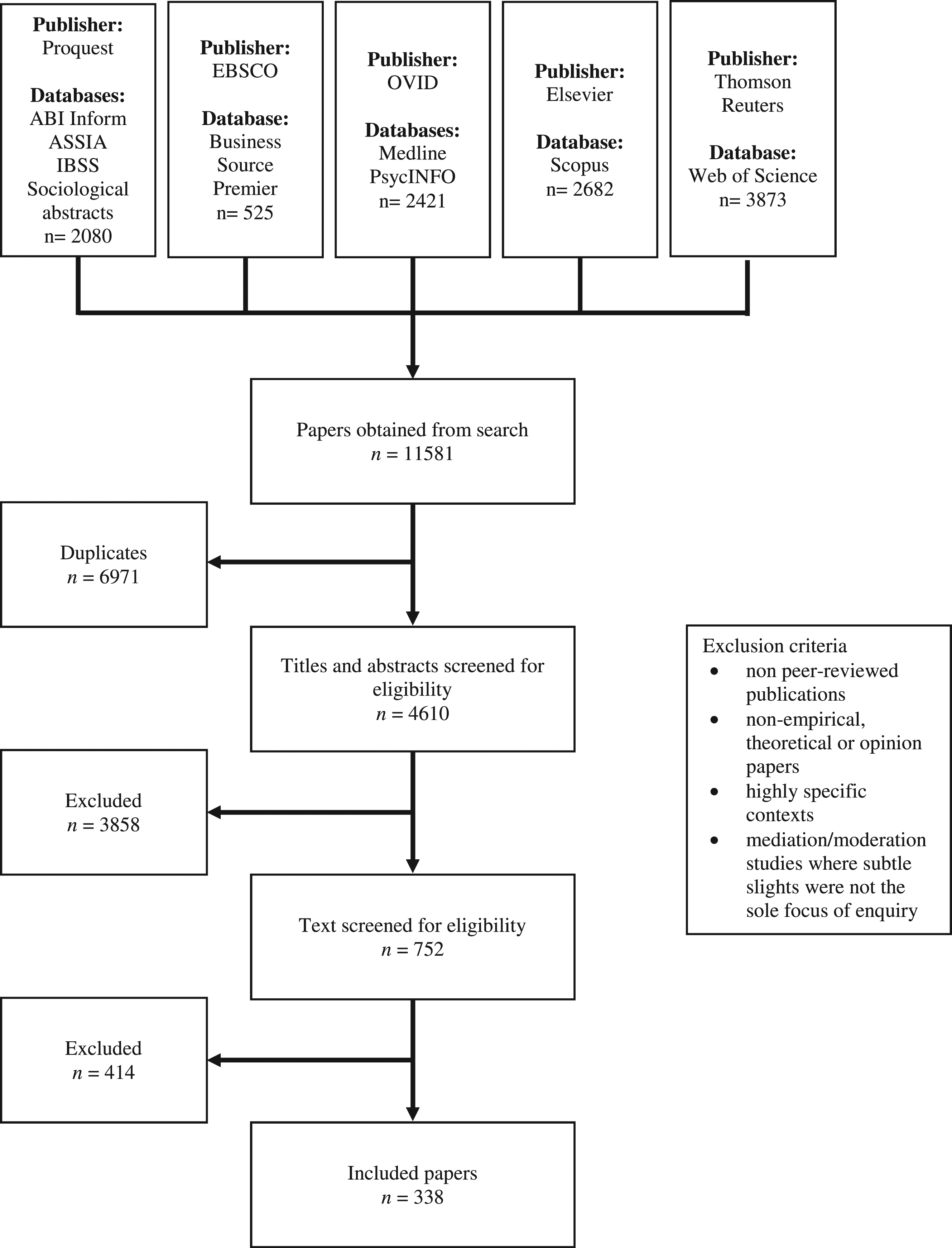
Inclusion and Exclusion Criteria
Our main objective was to ensure the inclusion of primary, empirical research and literature reviews into subtle slights, their antecedents, and outcomes. Papers were included if written in English, published between 1st January 2007 and 31st January 2020, featured adult participants (aged 18 and over), and published in peer-reviewed journals. Once duplicates had been removed, this strategy yielded 4610 papers (see Figure 1). Articles were subsequently excluded if their focus was on slights that are not generally considered “subtle,” such as overt discrimination or bullying, or unconscious bias. We excluded research that went beyond a focus on antecedents and outcomes, such as those focusing on mediation/moderation, measure validation, or that explored how third parties such as onlookers responded to subtle slights. We also excluded autobiographical articles, editorials, commentaries, book reviews and book chapters. We excluded non-empirical, theoretical or opinion papers. These inclusion and exclusion criteria yielded 752 papers for review.
Full-Text Review, Coding and Analysis
Copies of the 752 papers were obtained, and the first author scanned the full text against the inclusion and exclusion criteria. We resolved inconsistencies in the application of these criteria with both authors discussing samples of papers at two stages: after titles and abstracts were screened for eligibility and again after the full texts had been screened. No changes to decisions were made at this point. An independent researcher then reviewed a random selection of 20 papers from the original 752 to check the reliability of the application of inclusion and exclusion criteria. These checks resulted in minor amendments incorporated into the subsequent analysis of all articles. After final exclusions, 338 papers remained. References for these papers, together with their key characteristics (year of publication, authors, title, journal, country of the primary researcher, which type of subtle slight was the focus, sample size, nature of the sample, research context and study design), are provided in a tabular form in Supplemental Materials.
The first author assessed the final 338 papers for quality using the appraisal methodology described by Crombie (1996) and the Critical Appraisal Skills Program (CASP, 2019). CASP is a toolkit that assists in the evaluation of evidence, with checklists provided for different research methodologies. The appraisals produce four quality ratings (high, moderate, low, and very low). This quality review did not result in the exclusion of papers. Instead, it allowed us to comment on the quality of research for each construct. We also based our descriptions of how constructs were defined from those highest quality papers.
Results
We organised the meta-synthesis according to our three research questions: similarities and distinguishing features of the different subtle slight constructs, how those constructs are defined, where the research originates and its demographic focus, and the quality of research.
Features and Definitions of Subtle Slight Constructs
Number of Papers on Subtle Slights Presented by Construct.
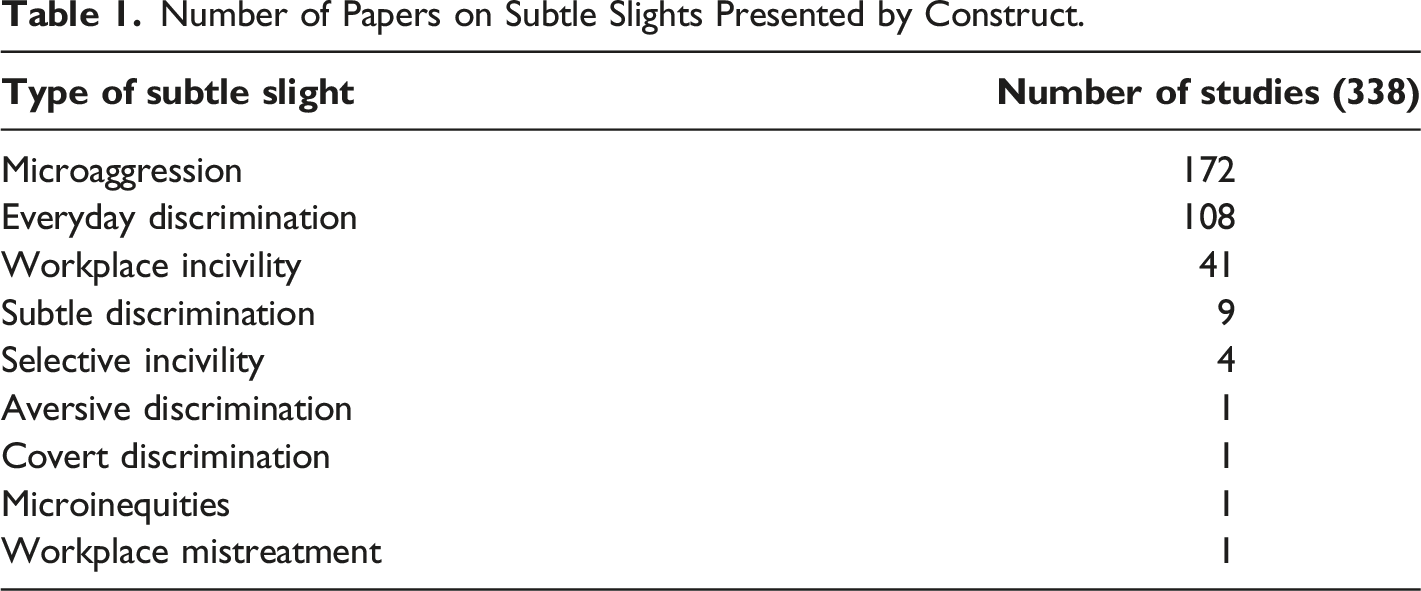
We explored how each body of work within the period under review defined its core construct using the definitions given in those papers rated as high quality (see the section below for details of the quality appraisal system).
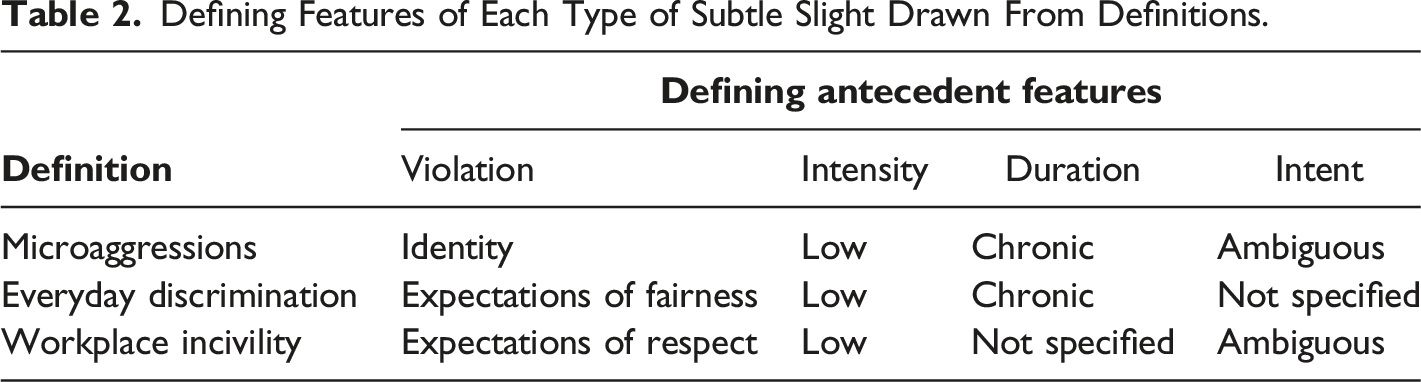
High-quality papers on microaggressions (22) shared common themes around intensity, intent, and duration. Although definitions varied slightly to fit the demographic being studied, the most frequent definition stemmed from Sue et al.’s article: “brief and commonplace daily verbal, behavioural or environmental indignities, whether intentional or unintentional, that communicate hostile, derogatory, or negative racial slights and insults towards people of color” (Sue et al., 2007, p. 271).
Most of the high-quality papers on everyday discrimination (67) defined it as “chronic, and unfair treatment that occurs in commonplace social encounters” (Mouzon et al., 2017a). Many of these papers also included measures of overt discrimination. Most studies employed the measure of everyday discrimination used by Williams et al. (1997), and the examples given in these papers tended to come from Williams’ measure. These include being treated with less courtesy than others, being treated with less respect than others, or receiving poorer service than others in restaurants or stores.
The nine articles on workplace incivility rated as high quality all used the same definition, drawn from (Andersson & Pearson, 1999, p. 457): “low-intensity deviant behavior with ambiguous intent to harm the target, in violation of workplace norms for mutual respect. Uncivil behaviors are characteristically rude and discourteous, displaying a lack of regard for others.” Examples quoted in the literature include having someone put you down or be condescending to you, make demeaning or derogatory remarks about you, repeatedly gossip about you to other co-workers, or doubt your judgment on a matter over which you have responsibility.
Defining Features of Each Type of Subtle Slight Drawn From Definitions.
We explored the range of potential outcomes of subtle slights that researchers investigated. The most common were those concerning mental health (particularly depressive symptoms), physical health, substance use or alcohol-related problems and sleep quality. Less commonly explored outcomes included context-specific variables like customer service, employee wellbeing and engagement, intention to stay, and job performance. Overall, most research into microaggressions and everyday discrimination tended to focus on individual health outcomes. Work-related outcomes mostly emerged from studies about workplace incivility, although these studies also focused on individual outcomes. The complete list of outcomes across all types of subtle slight is presented as a “word cloud” in Figure 2 below, where larger text represents more commonly reported outcomes. Word cloud of outcomes explored in research into subtle slights.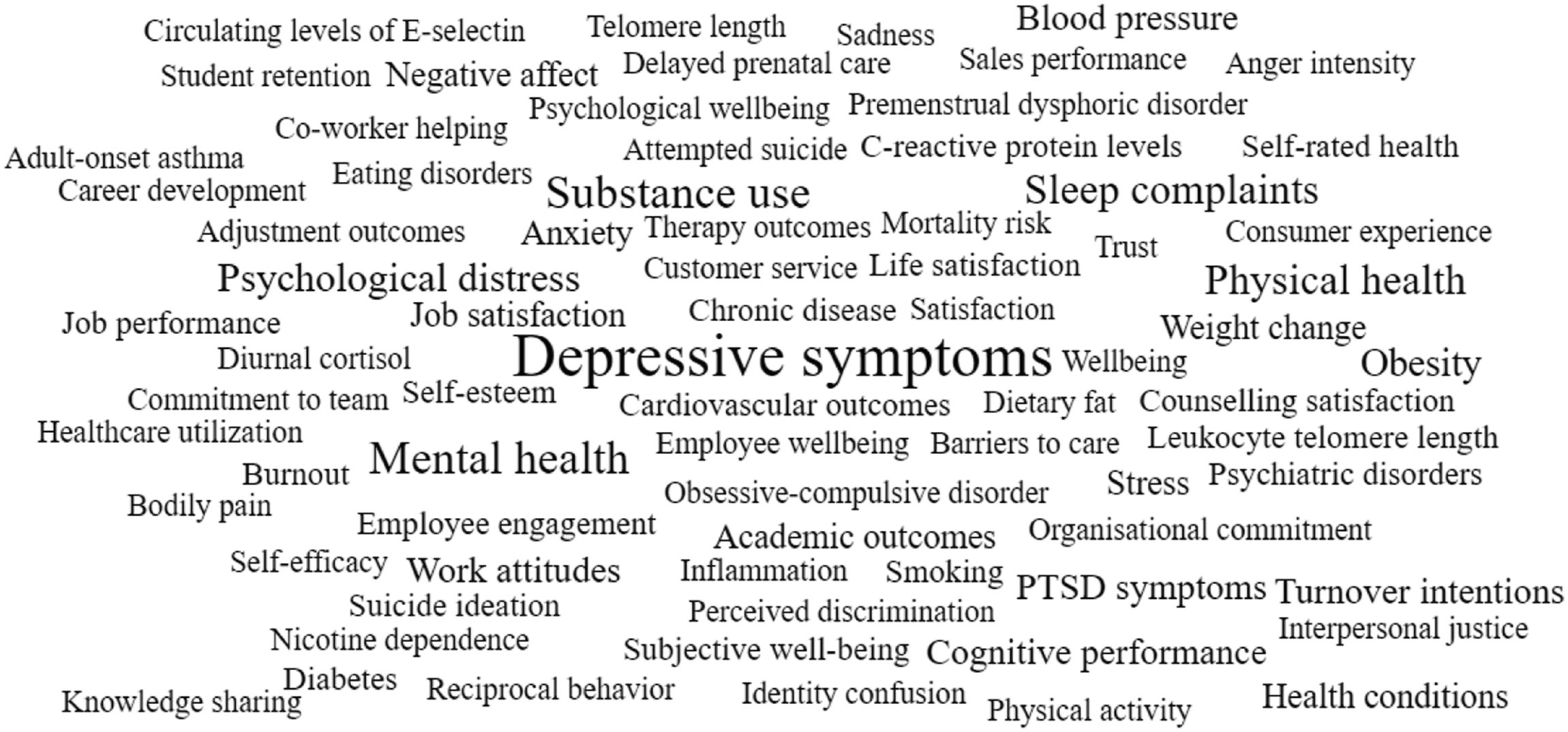
Where the Research Originates and Demographic Focus
The overwhelming majority of the 338 papers (270, 80%) emerged from the USA, with 17 from Canada, 10 from the UK and nine from Australia. The remaining countries each produced four or fewer of the included papers: Malaysia, Spain, Germany, The Netherlands, Belgium, China, India, Israel, Portugal, Sweden, Brazil, Finland, Hong Kong, Iran, New Zealand, Norway, and Switzerland.
To shed some light on disciplinary focus, we looked at the range of journals where papers were published. Research into microaggression typically appeared in journals with a strong interest in diversity, usually originating from a sociological or counselling discipline. The lived experience of microaggressions has been explored in various contexts, such as education, everyday life and work. In contrast, everyday discrimination has often been driven by clinical psychology or public health, exploring relationships between exposure to everyday discrimination and various outcomes, usually health-related. These papers often appeared in epidemiology and public health journals and typically used longitudinal, large cohorts representing defined populations, such as the Black Women’s Health Study (e.g., Bacon et al., 2017; Coogan et al., 2014; Cozier et al., 2014; Lu et al., 2019). Finally, studies into workplace incivility were typically carried out from a business and management perspective, were primarily published in work-related journals, and often included outcomes of organisational interest, such as employee engagement (Reio & Sanders-Reio, 2011), intention to stay (Sharma & Singh, 2016), job performance (Jiang et al., 2019) and job satisfaction (Morrow et al., 2011).
The Demographic Focus of Papers.
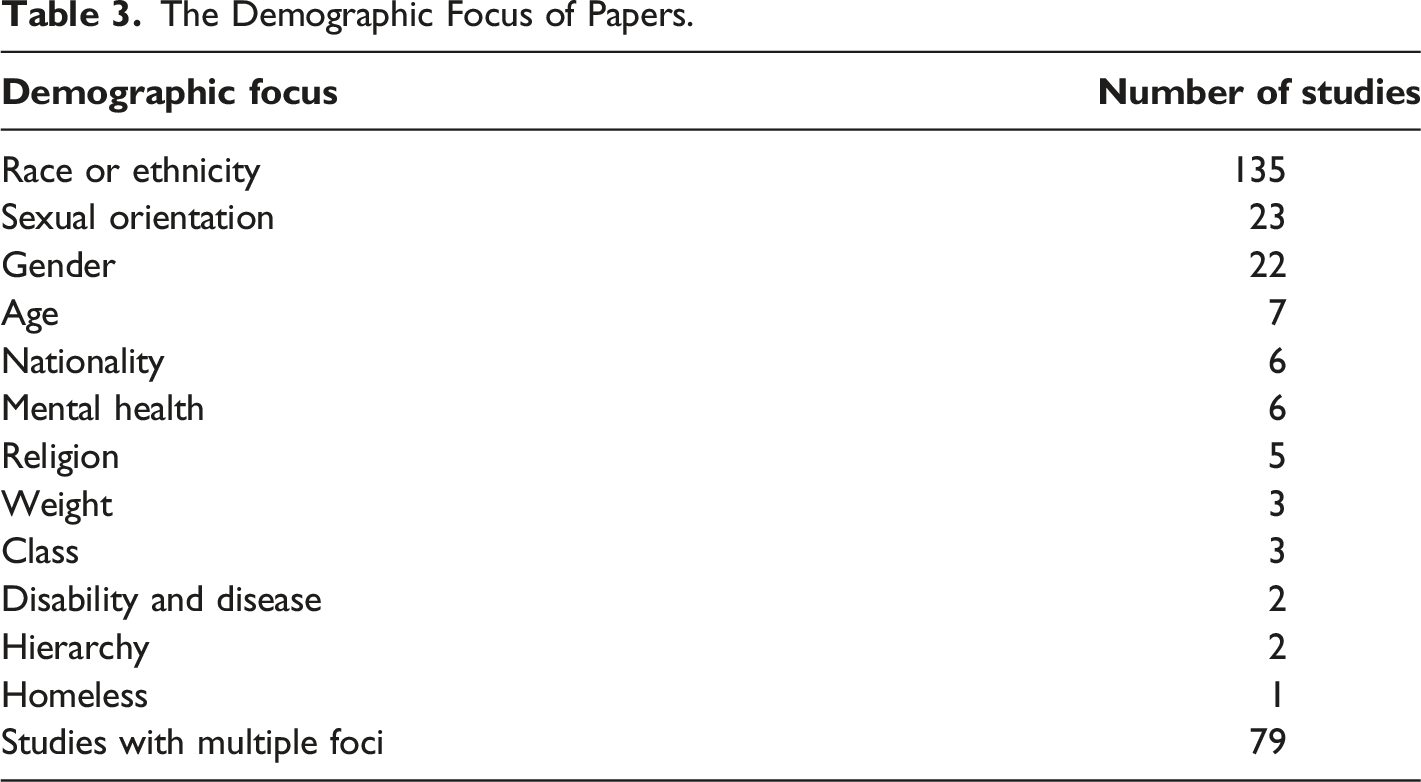
Quality of Research
Quality Appraisal of Research Into Subtle Slights.
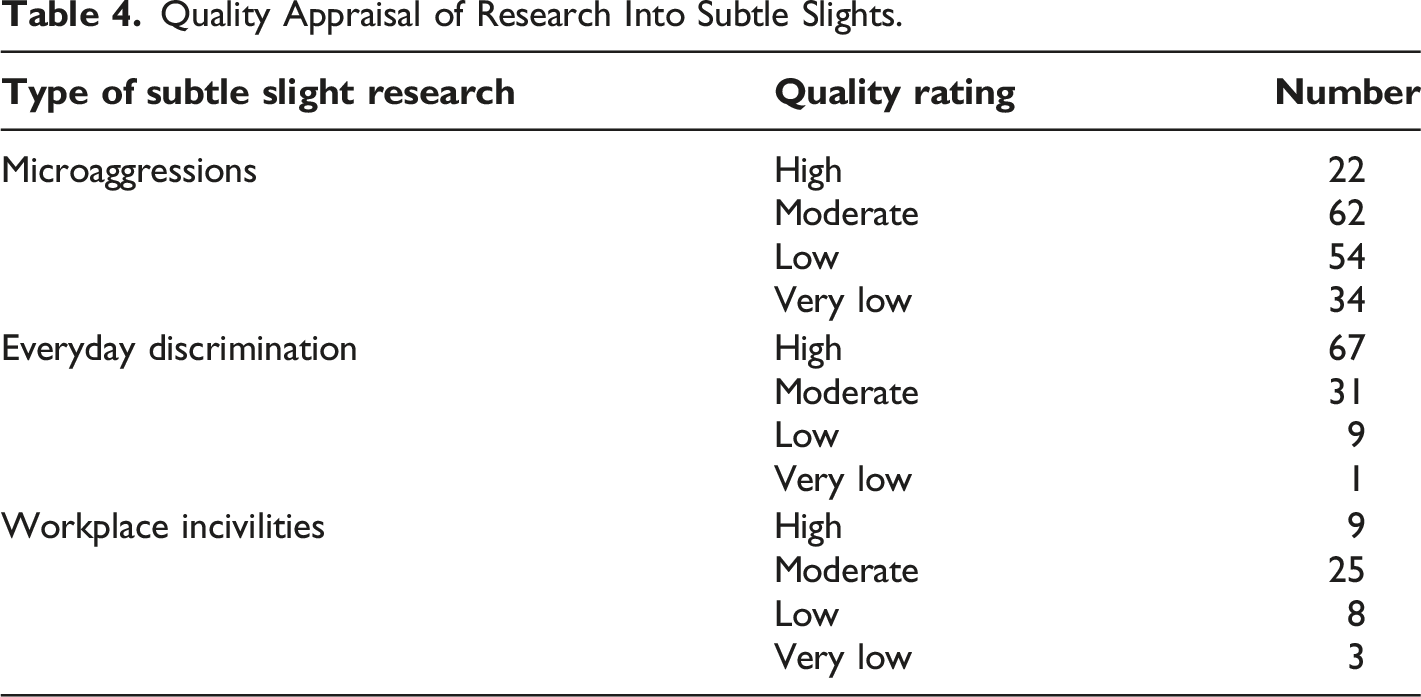
Sample Sizes and Research Methods for Each Type of Subtle Slight Research.
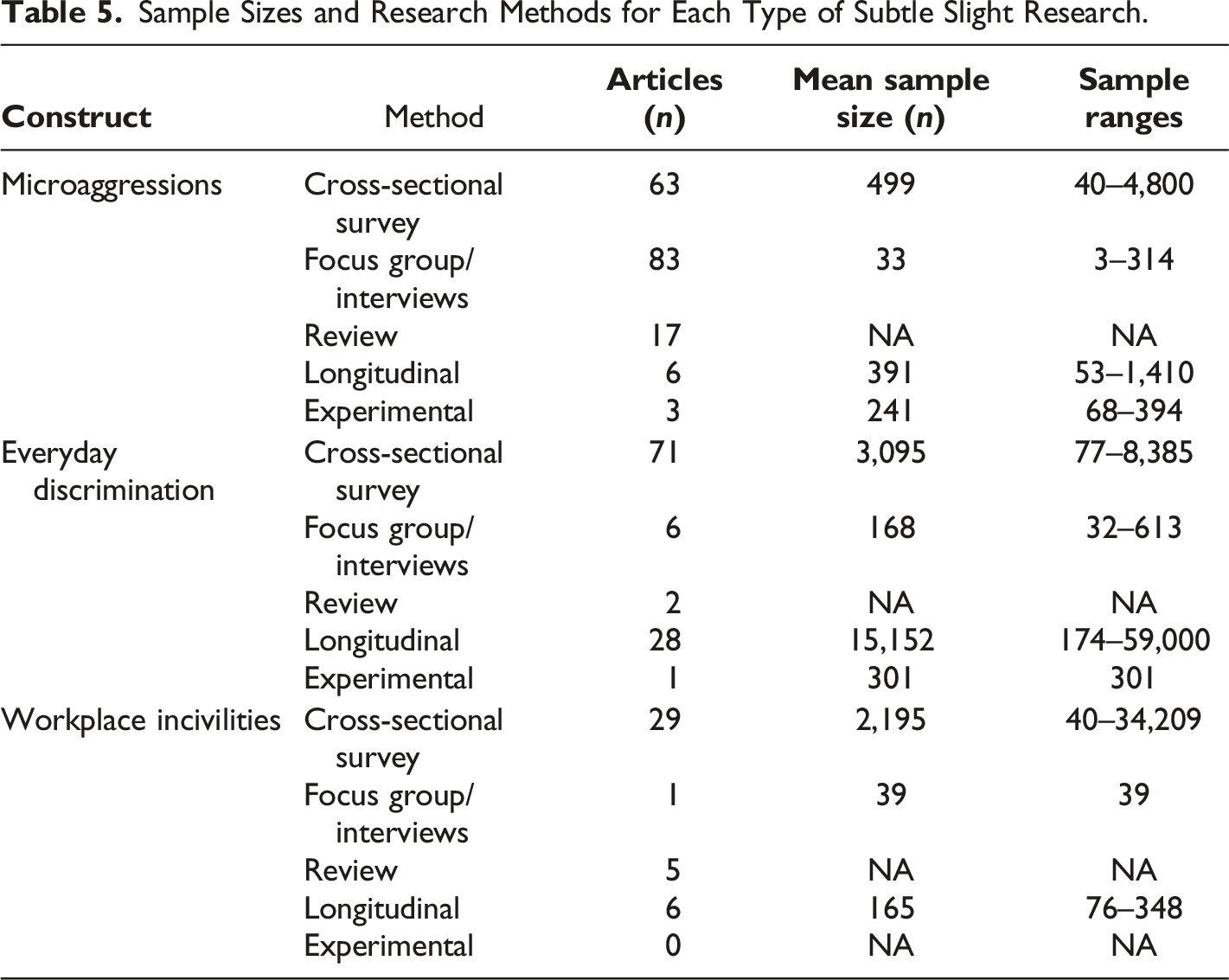
As shown in Table 5, most studies used cross-sectional surveys or qualitative methods (focus groups or interviews). Used to a lesser extent were longitudinal studies and experimental designs. Research focusing on microaggressions frequently used a focus group or interview approach. Research into everyday discrimination predominantly used cross-sectional or longitudinal surveys. Research into workplace incivilities typically used cross-sectional surveys. Most papers rated as low quality via CASP appraisal checklists were interviews, focus group studies and reviews. For studies employing interviews and focus groups, this was often because of an absence of features such as quality control measures, impartial auditing of qualitative analysis, the opportunity for an independent inspection of notes or transcripts, and lack of transferability to other settings. Review studies tended to be rated lower because of a lack of comprehensive literature searches, unreproducible search strategies, unclear presentation of inclusion or exclusion criteria and limited/no use of quality assessments.
Finally, the review of research explored whether empirical studies controlled for NA. Twenty-five empirical studies included a measure of NA as a control or outcome variable; most of these were on workplace incivility. Their findings were mixed. Some found NA co-varied with outcomes such as anxiety, hurt feelings and job satisfaction (Flanders, 2015; Ismail et al., 2018; Reio & Ghosh, 2009). Further papers studies suggested that other variables might mediate the role of NA, such as the experience of negative events (Ong et al., 2009) or differences between supervisor and subordinate (Woznyj et al., 2017).
Discussion
This meta-synthesis explored the common and distinguishing features of research into three major subtle slight constructs: microaggressions, everyday discrimination and workplace incivility. It also explored the quality of research and where it originated. Analysis revealed that research into subtle slights was disunified. Studies into these various constructs usually emerged from certain disciplines and thus adhered to the epistemologies of those disciplines (Sternberg & Grigorenko, 2001). Nonetheless, there were similarities between these constructs; all referred to low-intensity negative interactions between people. There were key differences between constructs in terms of the “violation” that causes them to be regarded as slights. These findings and their implications are discussed below.
In terms of the origin of the harm that results from subtle slights, all are regarded as harming the person experiencing a slight through a violation of expected treatment or social norms. A microaggression is the experience of a slight or put-down, a violation based on the target’s identity. Everyday discrimination is the experience of unfair or disrespectful treatment due to the target’s identity. Both subtle slight constructs are regarded as stemming from stereotyping, conscious or unconscious, of marginalised group members’ identities. Workplace incivility is related to generic rudeness and violations of workplace norms; people at work expect to be respected, protected and to receive fair treatment. Thus, anyone can experience workplace incivility, but only certain group members might experience microaggressions or everyday discrimination. All types of violation are regarded as having the potential to be harmful.
We suggest that the subtle slight constructs reviewed in this study may be understood in terms of four criteria: Violation (of fairness, identity or respect), Intensity (how strong or offensive the slight is perceived to be), Duration (whether the experience is frequent and occurs over a long period of time), and Intent (whether the slight is deliberate, unintentional or ambiguous). A critical difference between the VIDI Framework and past research (Cortina et al., 2017; Jones et al., 2017) is the incorporation of ‘violation’ to differentiate between different subtle slight constructs.
The quality appraisal suggested that research into everyday discrimination and workplace incivilities was of higher quality than research into microaggressions. Qualitative research (interviews and focus groups) with small samples, frequently comprised of students, was often used in microaggression research. There have been criticisms about the extent to which small samples sizes and students, particularly students of psychology, have been used in studies of racial microaggressions (Lilienfeld, 2017; Wong et al., 2014). Reliance on student samples may lead to bias, as student populations are often unrepresentative of populations of interest (e.g., employees or a cross-section of society), and phenomena of interest may manifest differently in student samples and their study environments (Shen et al., 2011). The cross-sectional and longitudinal surveys more frequently used by research into everyday discrimination and workplace incivilities were more likely to be rated as high quality, feature large and representative samples, use valid and reliable measurements, and account for confounding variables.
Implications for Practice
Clearly, subtle slights are deleterious and may undermine many HRD interests. However, tackling them has not been straightforward given the hitherto disparate approaches to understanding them. The variety of subtle slight constructs and their features may be confusing for employees (Farrington, 2011; Oldroyd & Morris, 2012) and complicated for employers to monitor and mitigate (Marshburn et al., 2017). The VIDI framework might prepare the ground for employers to identify and focus on all types of subtle slights by simplifying their features. This could be helpful for practitioners in adopting appropriate messaging in policies, practices and training without committing to a particular discipline or construct (Torraco & Lundgren, 2020). For example, focusing on “intent” in all types of slight, from the perspectives of both the person delivering the slight and the target, might be helpful for employers considering awareness-raising, training initiatives, support for line managers managing slights; recognition of a slight and understanding of intent informs options of how to respond (Ashburn-Nardo et al., 2008).
There is also the question of which term organisations use to introduce the concept of subtle slights to a broad workforce. The present study has used “subtle slights” as an overarching neutral term for various constructs. However, the choice of the terms we use to describe peoples’ lived experiences is not trivial. One of the specific terms currently employed, microaggressions, may be effective in specific contexts but not in others. The term microaggression, while increasing in popularity, has been criticised on several fronts. It has been suggested that its use to refer to experiences of different demographic groups from those about whom it was first explored has weakened its power and that “racial abuse” should be used instead, particularly for the experiences of Black people (Kendi, 2019). The affix of “aggression” within the term microaggression has been described as overly pejorative (Lilienfeld, 2017) and oxymoronic when combined with the root, “micro,” which suggests something trivial (Priscilla Lui et al., 2020). Ultimately, any term should achieve two things: give weight to people’s lived experiences and generate understanding in those who do not have that experience. There needs to be more research into how employers and employees in many contexts understand and react to these terms.
Subtle slights may be inherently covert, ambiguous and contextual, making them difficult to define and recognise. Acceptability, the degree to which an individual perceives a behaviour to be acceptable, has been suggested to predict whether that individual is likely to “send” a subtle slight (Mekawi et al., 2021; Mekawi & Todd, 2018). However, having a sense of acceptability requires an understanding of subtle slight features (Ashburn-Nardo et al., 2008), features which have been described as “imprecise” in distinguishing between subtle slight constructs and from other more overt forms of aggression (Freeman & Stewart, 2021). The ambiguity of a subtle slight is such that research found bystanders significantly benefit from displays of emotion and appeals for help from the targets when deciding whether to respond (Jensen & Raver, 2021). Many of Lilienfeld’s (2017) recommendations for further microaggression construct development relate to stronger operationalisation, reduced ambiguity and contextualisation in how subtle slights are defined and measured.
Implications for Research
Several research gaps were identified. Most of the research reviewed has focused on race and originated in the USA. More research needs to be conducted in other countries and with a broader range of demographics to allow researchers to adjust constructs to the experiences they find. Research would benefit from greater integration with other disciplines, such as pragmatics, linguistics, politeness, and face-saving (Bargiela-Chiappini, 2003; Locher & Larina, 2019); these connect the concept of subtle slights to research that is more culturally diverse (Kinnison, 2017; Olaniyi, 2017). It is also clear from the research extracted in this article that there are many different experiences of subtle slights. The Stereotype Content Model ([SCM], Fiske et al., 2007) may provide a theoretical basis for understanding how different groups within organisations experience identity-based slights. SCM suggests that stereotypes are based on two perceptions: warmth (whether we see someone as a friend or foe); and competence (whether we believe they can act on their intentions and thus can help or hurt us). A large body of research has (Fiske, 2018) shown these two dimensions to influence how we treat people within out groups that we tag with those associations.
Research should investigate potential co-variables such as negative affect; currently, its role in the perceptions of subtle slights is unclear and the focus of debate (West, 2019; Williams et al., 2018). There is evidence to suggest that other co-variables might be instrumental in the perception of subtle slights; for example, whether the communicator is known for fairness or equity (Offermann et al., 2013), a person’s level of dispositional forgiveness (Burrow & Hill, 2012), or level of neuroticism (Milam et al., 2009). It would be helpful for practitioners in addressing the challenge of subtle slights at work, to understand that slights might be experienced because of individual dispositions or personality traits, but also that organisational policies, practices and climates might facilitate their emergence and affect how far they are tolerated (Hernandez et al., 2020). Thus, more systems-level research would be helpful.
The VIDI framework might be useful for researchers in attempts to align the various forms of subtle slights. Further HRD research into subtle slights will benefit from workplace-based research designs featuring employee samples. More research needs to be conducted into the relationship between the experience of the subtle slight construct, particularly identity-based slights such as microaggressions and everyday discrimination, and performance or workplace outcomes. More research needs to be undertaken on employee sentiment regarding organisational interventions against subtle slights, such as training. The methodological challenge remains that the subtle slight construct is hard to observe ethnographically (Wong et al., 2014) without using the exploratory research featured in this meta-synthesis. However, there is an opportunity for researchers to be creative in addressing this challenge. To find “real-world” examples, researchers may seek recorded employee interactions (such as transcripts of calls with customers or interactions on company social media pages) and code those interactions into subtle slight examples. There may also be the opportunity to use experimental designs to observe how people react to the concept of subtle slights and training designed to mitigate them.
This review has highlighted that the current focus of the subtle slight literature is on a definition of constructs. A greater focus on theory and systems thinking would enrich our understanding of why subtle slights occur and the mechanisms by which harm takes place, both for individuals and organisations. The literature reviewed in this meta-synthesis does suggest that microaggressions and everyday discrimination stem from conscious or unconscious stereotyping of marginalised group members’ identities. In contrast, workplace incivility can arise from factors including job dissatisfaction, dominant conflict management styles and obsessive passion for work (Cortina et al., 2017). Jones et al. (2016) provide a valuable commentary of various theories that might explain the harm that subtle discrimination causes and that the very “subtlety” of these experiences is important in understanding that harm. This understanding might help address the concern that most current initiatives to reduce discrimination at work focus on overt rather than subtle behaviours.
Limitations and Conclusions
This review has established that research into subtle slights is carried out in different disciplines, using different terminology. It is possible that some terms were not identified during the systematic search process. Despite the rigour of the systematic process, human error remains a factor. It is possible that relevant articles could have been missed or unintentionally excluded throughout the process of filtering and compiling. Due to the breadth of this review, hand searching of journals was not carried out, which may limit the identification of relevant articles. And there is always the problem of publication bias: studies showing significant or interesting findings are more likely to be published than those that do not establish relationships. This may have skewed the results of this review.
Despite the systematic process of this meta-synthesis, we acknowledge that the judgements upon which articles were included, excluded, and rated for quality remain subjective. In contrast, other researchers may have made different decisions. We attempted to control this using precise quality assessment forms and a separate researcher to audit a selection of articles. The meta-synthesis was approached from the authors’ discipline of psychology, and the quality appraisal process was rooted originally in clinicians’ need for evidence-based interventions. Definition of quality and methodological rigour may vary from disciplines with different perspectives (e.g., sociology, counselling).
This study has demonstrated the breadth and variety of research, the similarities, and the distinctive features of subtle slight constructs. Combining this literature has created a compelling overview of the adverse effects of the experience of subtle slights in the workplace and everyday life. Organisations can advance their DE&I practices by addressing subtle slights within the VIDI Framework, focusing on common features rather than committing to specific constructs. More work needs to be done to integrate constructs and test the acceptability and effectiveness of efforts to address them in the workplace.
Supplemental Material
Supplemental Material - Microaggressions, Everyday Discrimination, Workplace Incivilities, and Other Subtle Slights at Work: A Meta-Synthesis
Supplemental Material for Microaggressions, Everyday Discrimination, Workplace Incivilities, and Other Subtle Slights at Work: A Meta-Synthesis by Iain A. Smith and Amanda Griffiths in Human Resource Development Review
Footnotes
Declaration of Conflicting Interests
The author(s) declared no potential conflicts of interest with respect to the research, authorship, and/or publication of this article.
Funding
The author(s) received no financial support for the research, authorship, and/or publication of this article.

Supplemental Material
Supplemental material for this article is available online.
References
Supplementary Material
Please find the following supplemental material available below.
For Open Access articles published under a Creative Commons License, all supplemental material carries the same license as the article it is associated with.
For non-Open Access articles published, all supplemental material carries a non-exclusive license, and permission requests for re-use of supplemental material or any part of supplemental material shall be sent directly to the copyright owner as specified in the copyright notice associated with the article.
