




Abstract
Introduction
Immunotherapy approaches have improved by Immune check point inhibitors such as PD-1, CTLA-4, and PD-L1 inhibitors. However, the response to immunotherapy varies widely among patients due to various factors. Co-administration of probiotics with ICIs has become a promising strategy to improve therapeutic outcomes. This review evaluates the impact of environmental factors and life style on cancer pathophysiology, outcome of disease, and response to the treatment. It evaluates the role of probiotics in modulating immune responses and the synergistic interaction of probiotics with immunotherapy.
Methods
We conducted a comprehensive systematic review of clinical and preclinical studies to assess the effects of probiotics on immunotherapy outcomes. Studies were selected based on their focus on probiotics’ role in immune response modulation and interaction with ICIs. Data from trials involving patients with varying responses to immunotherapy, including those with prior resistance, were analyzed to explore the probiotic-enhanced immunotherapy.
Results
Gut microbiome has wide effects on immune responses through different pathways like production of short chain fatty acids (SCFAs), polysaccharide A, and indole-3-carbaldehyde. Also, probiotics found to enhance Anit-inflammatory responses and increase CD8+ T-cell activity, suggesting a synergistic effect with ICIs. Gut microbiota composition plays a key role in determining the effectiveness of immunotherapy, especially in treatment-resistant patients. For optimized treatment outcomes, personalized probiotics tailored to individual's microbiota showed potential. Important challenges are treatment resistance and compromised mucosal integrity because of microbiome alterations. Effective drug delivery also remains as important barriers to common adoption.
Conclusion
For immunotherapy outcomes improvement, immune responses modulation and gut microbiome diversity enhancement show probiotics important promise. Despite their potential, limitations must be addressed including treatment resistance and also delivery challenges. In order to maximize therapeutic benefits, personalized probiotic strategies have to be developed, and also the mechanisms by which probiotics improve ICI efficacy require elucidation through further research.
Keywords
Introduction
Effector T cells, particularly CD8+ T cells, play a crucial role in eliminating tumoral cells and controlling the development and progression of cancers by inhibiting tumor growth in both healthy individuals and cancer-bearing hosts. 1 Alongside CD8+ T cells, CD4+ T cells also have shown cytotoxic programs that directly attack cancer cells. 2 However, tumors deploy various immune inhibitory mechanisms to evade these antitumor responses, even in immune-competent hosts including immune suppressive molecules like Cytotoxic T Lymphocyte-associated antigen 4 (CTLA-4), Programmed cell death-1 (PD-1), and PD-ligand 1 (PD-L1).1,3 Also, due to an imbalanced immune response, the highly activated phenotype of regulatory T cells in the tumor microenvironment causes tumor promotion. 4
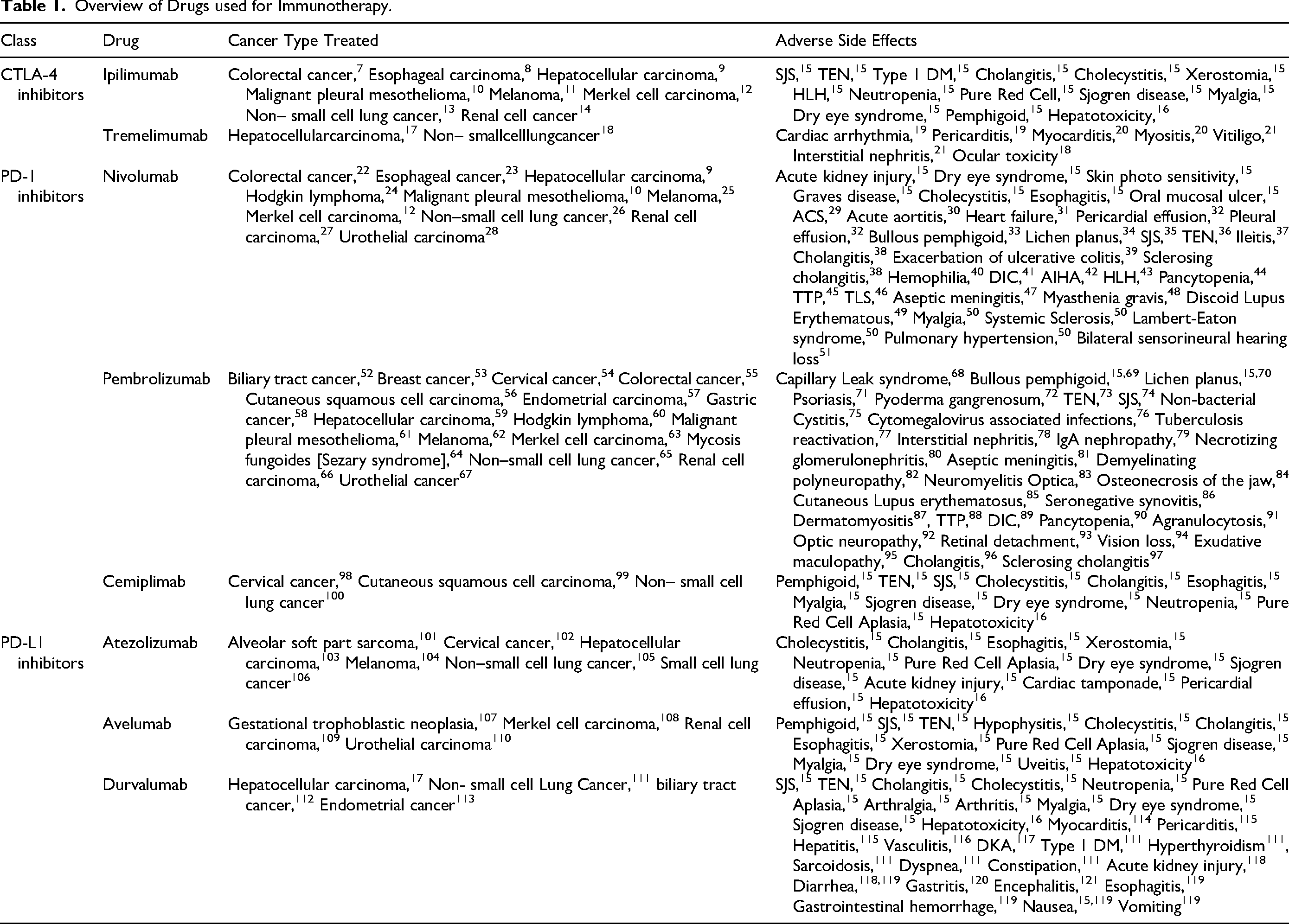
Immunotherapy enhances the immune responses against tumoral cells, without directly affecting target cancer cells. 5 This innovative approach activates immune cells to recognize and attack malignant tissue. A significant area of research on immunotherapy revolves around immune checkpoint inhibitors including programmed cell death protein 1 (PD-1)/PD-L1 and cytotoxic T-lymphocyte-associated protein 4 (CTLA-4) (See Table 1). These agents have shown potency in selectively targeting tumoral cells while sparing healthy cells. 6
Overview of Drugs used for Immunotherapy.
The significance of immunotherapy is due to its high specificity and potency for long-term effectiveness; however, its applicability is not universal since the outcomes vary significantly across different types of cancer and patients. 122 This variability emphasizes the necessity for future explorations and innovations to seek optimal treatment strategies.
CTLA-4, an immune checkpoint inhibitor molecule, is critical in regulating T-cell responses. While the basal expression level of this molecule is low, it can be strongly upregulated following antigen-mediated activation. 123 As a consequence of this upregulation, activation and proliferation of T-cells are reduced by disruption of CD28-B7 interaction and suppression of T-cell receptor signaling pathway. 124 Also, it has been shown that blocking this molecule with neutralizing antibodies can enhance antitumor immunity in mice.123,125 PD-1 is another immune checkpoint molecule that causes negative regulation of T-cell activation. 126 Its significance became evident in 1999 when the loss of PD-1 in mice led to autoimmune conditions, highlighting its role in maintaining immune tolerance. Engagement of PD-1 with its ligands like PD-L1 causes T-cell exhaustion, a dysfunction that impairs the immune response. 127 PD-L1 is also expressed in antigen-presenting cells which regulates the differentiation and suppressive function of regulatory T-cells (Treg). 128 By increasing PD-L1 expression, tumor cells take advantage of this pathway and lead T-cells to exhaustion, which fosters a tumor microenvironment conducive to tumoral growth and invasion. 129 (See Figure 1.)

Building upon the role of immune modulation in cancer therapy, probiotics—live microorganisms that confer health benefits—are a promising tool to improve antitumor responses by shaping the gut microbiome. These are helpful microorganisms that are generally recognized as safe (GRAS). However, fully understanding their therapeutic use requires more studies to fill the knowledge gaps. A comprehensive review highlighted that while probiotics influence lipid profiles and gut microbiome composition, their effects are often inconsistent and transient. 135
Probiotics act as an active modulator of the gut microbiome and the immune system by increasing short-chain fatty acid (SCFA)-producing bacteria (critical metabolic byproducts that significantly impact immune function), controlling pathogenic bacteria via producing antimicrobial peptides, bacteriocins, and butyrate, and also altering gut environmental factors such as pH which induces cancer cell apoptosis. 6 Additionally, they improve gut permeability by promoting mucus secretion, enhancing gut barrier functions, and preventing pathogen adhesion.6,136
Next-generation probiotics including human commensal species such as Faecalibacterium prausnitzii and Akkermansia muciniphila can prevent cancer as well as obesity and inflammatory bowel disease.137,138 F. prausnitzii regulates the host's immune system by producing polysaccharide A, which can result in immune response enhancement and CD8+ T cell activation. 6
In cancer patients, conventional treatments such as chemotherapy, radiotherapy, and surgery can create unfavorable conditions for the colonization of probiotics, particularly in individuals with colorectal cancer. 139 As the potential effects of probiotics are related to the gut microbiome composition, it can be concluded that both probiotics and gut microbiome can affect the outcome of immunotherapy.139,140 Probiotics also take part in competition for nutrients in the distal colon, regulating natural killer (NK) cell activity, and inhibiting the growth of pathogenic gram-negative bacteria. They also reduce the activity of bacterial enzymes responsible for producing carcinogenic compounds by creating an acidic environment.141,142
Molecular pathological epidemiology (MPE), a new field of epidemiology which is a multidisciplinary assessment of relations between tumoral features including tumor markers, progression, and other factors such as genetic, environment, lifestyle, and epidemiology by integrating epidemiology and molecular pathology methods. 143 This approach leads to identification of specific patterns in tumors to expand targeted treatments and individualized medicine. 144 Also, a widespread field of MPE is investigation of gut microbiome and its relationship between epidemiological factors and tumoral factors like modulation of immune response, alteration of tumor microenvironment, and response to treatment. 145
Previous studies have evaluated the role of gut microbiome in enhancement of cancer immunotherapy outcomes. Lu and colleagues analyzed the modulation of immune system by microbiome. 146 Also, Jiang and colleagues emphasized the increase of immunotherapy effectiveness by probiotics. 6 Kang and colleagues proposed a microbe-based strategy for enhancement of anti-tumor treatment. 147 However, in this review, we have studied the precise mechanism of immune checkpoint inhibitors, interaction of immunotherapy and microbiome, and also we have discussed MPE and its potential role in improvement of personalized medicine. Challenges and limitations ahead in using the microbiome to improve cancer treatment outcomes and future directions have also been discussed.
Methods and Materials
Our review article employs a systematic approach to gather, analyze, and synthesize existing literature regarding the integration of probiotics into cancer therapy, particularly focusing on their effects on patients undergoing immunotherapy.
This systematic review was conducted in accordance with the PRISMA guidelines 148 and is registered in the INPLASY database (Registration number: INPLASY202570044).
Literature Search Strategy
A comprehensive literature search was conducted using several reputable academic databases, including PubMed, Scopus, Web of Science, science direct, and Google Scholar. Keywords and phrases covering “probiotics”, “cancer therapy”, “immunotherapy”, “microbiome”, “immune checkpoint inhibitors (ICIs)”, “personalized medicine”, “SCFA”, “polysaccharide A”, “indole-3-carbaldehyde”, “molecular pathological epidemiology”, “environmental factor”, and “lifestyle” were used to identify relevant articles. Boolean operators (AND, OR) were applied to refine search results. Additionally, the references of relevant articles were reviewed to find more related studies as well as papers that cited our selected references to ensure we covered all important literature. The search was conducted to capture the most relevant and recent advancements in the field. No restrictions on study type or geographical scope were applied. Also, the search was included publications from 1995 to 2024, capturing the most relevant and recent advancements in the field.
Inclusion and Exclusion Criteria
Focused on the use of probiotics in cancer treatment. Explored the microbiome's role in modulating immune responses during cancer therapies. Provided clinical data, case studies, or insights on the safety and efficacy of probiotics. Explained the role of SCFA, polysaccharide A, and indole-3-carbaldehyde in regulating immune system. Discussed molecular pathological epidemiology, environmental factors, and lifestyle and their relation to cancer and its treatment. Were peer-reviewed articles, clinical trials, meta-analyses, or systematic reviews.
Were not available in English. Had no full-text available. Had unclear methodology or reporting. Focused on topics unrelated to cancer therapy or probiotics.
Data Extraction and Analysis
After collecting resources, duplications were removed manually and were evaluated for risk of bias by assessing key methodological aspects including randomization, blinding, sample size, completeness of outcome data, selective reporting, and reviewing the conflict-of-interest statement. A two-phase screening process was performed: First, the abstract of articles was reviewed, and then the full text of all articles was examined by five independent authors to extract key information from each selected article including details on study design, patient demographics, types of probiotics administered, treatment protocols, outcomes measured, and key findings related to the effectiveness of probiotics in cancer therapy. The findings were categorized based on themes such as the impact of probiotics on therapeutic application, treatment side effects, immune modulation, microbiome diversity, and overall patient outcomes. Three authors retrieved the studies and any disagreements were resolved by two authors. A narrative synthesis was conducted to present a cohesive understanding of how probiotics can be integrated into cancer treatment and future roadmap.
Ethical Considerations
This study is a systematic review that analyzes existing published. Since no new data were collected from humans, animals, or biological samples, and only previously published studies with their own ethical approvals were used, this review does not require separate ethical approval.
Environment and Lifestyle Role in Cancer Pathophysiology
Environmental factors and lifestyle play a role in cancer development and progression through various molecular mechanisms. Exposure to carcinogenic chemicals such as benzene (present in cigarette smoke and industrial emissions) can lead to mutations in key genes involved in regulation of cell cycle and DNA repair like TP53, resulting in cancers like leukemia. 149 UV radiation from the sun causes direct damage to DNA, leading to mutations like BRAF, which is common in melanoma. 150 Poor diet, such as eating too many processed or low-fiber foods, can increase the risk of colorectal cancers by increasing chronic inflammation in the intestine, particularly by activation of the NF-κB signaling pathway. 151 Low exercise is associated with increased levels of insulin-like growth hormone (IGF-1), which results in stimulation of abnormal cell proliferation, as in breast, colon, and endometrial cancer. 152 Also, by increasing cortisol production, chronic psychological stress suppresses the immune response and leads to tumor progression, particularly by reducing the activity of natural killer cells (NK cells). 153 Exposure to heavy metals like arsenic in water increases the risk of lung, bladder, and kidney cancer by induction of oxidative stress and disruption of DNA repair pathways.154,155 Individual differences in exposure to environmental and lifestyle factors influence disease outcomes and response to treatment. Long-term exposure to asbestos causes chronic lung inflammation and DNA damage, which increases the risk of mesothelioma. 156 Alcohol consumption impairs the efficacy of anticancer drugs such as tamoxifen in the treatment of breast cancer by increasing estrogen levels and disrupting hormonal metabolism, particularly in patients with weak CYP2D6 genotypes that limit the capacity to produce the active metabolite of endoxifen.157,158 Smoking-induced EGFR activation leads to resistance against EGFR inhibitors in lung cancer through sustained survival signaling. 159 Genetic polymorphisms in the GSTM1 gene alter susceptibility to carcinogens such as cigarette smoke and affect response to treatment. 160
Molecular Pathological Epidemiology
Molecular Pathological Epidemiology is a new interdisciplinary field that aims to gain a better understanding of the interaction between genetic and environmental factors in the initiation, progression, and response to treatment in cancer. 161 Unlike traditional epidemiology, which analyzed the disease as a uniform entity, MPE seeks molecular differences between various cancers, which results in diversity in response to treatment. Recent studies revealed that there is an association between lifestyle and tumor type. For instance, consumption of processed meat is associated with colorectal cancer in which Fusobacterium nucleatum is abundant. This bacterium can modulate the immune response against tumors. 162 Similarly, aspirin use is more strongly associated with improved survival in colorectal cancers with PIK3CA mutations, but not in wild-type tumors. 163 These results show that paying attention to the molecular differences of tumors can help in more accurate selection of treatment and even prevention.
MPE could also be useful in the field of immunotherapy. For example, it has been shown that factors such as the composition of the gut microbiome, obesity, or alcohol consumption can alter the structure of the immune system in TME and affect the response to treatment. 162 A recent study demonstrated that abundant dietary fiber can improve the response to anti-PD-1 treatment in melanoma, particularly in patients with high diversity of gut microbiome and SCFA-producing bacteria. 164 These complicated interactions would not be evident without classification by molecular or microbial subtypes, which is the core principle of MPE. MPE is gradually finding applications in the clinic. For example, it is used to identify biomarkers and select more appropriate treatments. 162 As a result, adding MPE to future studies can reveal new sides of this type of epidemiology to improve the efficacy of individualized medicine. Molecular pathological epidemiology (MPE) helps researchers understand how lifestyle, environment, and molecular features of a disease are connected. This information can be used to group patients more accurately and choose better treatments based on their individual characteristics. Instead of giving the same treatment to everyone, MPE allows doctors to adjust the plan to each person.
Probiotics and Microbiome in Immunotherapy
Emerging evidence suggests that the composition of the gut microbiota significantly affects the efficacy of cancer immunotherapies, particularly immune checkpoint inhibitors (ICIs). Also, it appears to affect outcomes of chimeric antigen receptor T cell therapies. 135 Fecal microbiota transplantation (FMT), when combined with ICIs, has shown potency in changing the tumor microenvironment and boosting host immunity in different malignancies such as melanoma, 165 prostate, and gastrointestinal cancers. 135 Moreover, a disrupted gut microbiome can cause immunity dysfunction, which suppresses immune responses. The microbiome thus plays a critical role in regulating these responses, particularly affecting the effectiveness and side effects of ICIs. 6 Besides this, combining probiotics (such as Lactobacillus rhamnosus and Bifidobacterium lactis) with prebiotics could inhibit cancer progression, particularly colon cancer. 166 Prebiotics can help restore microbial diversity, promoting beneficial microbes and potentially enhancing treatment outcomes. 167
The interactions between cancer and the gut microbiome are not that simple. Gut bacteria metabolize dietary compounds that may affect tumor development and progression; although they can also produce metabolites that contribute to cancer progression, particularly colorectal cancers; 168 For example, certain pathogens such as Helicobacter pylori and E. coli, are associated with gastric 169 and colorectal cancers, 170 respectively. Similarly, β-glucuronidase enzyme, which is secreted by the gut microbiome, can promote the risk of estrogen-dependent malignancies such as breast, ovarian, and endometrial cancers by converting estrogen into its free form. 171 These examples show how the gut microbiome can turn harmful, particularly as its composition disrupts. Also, interventions such as antibiotics, probiotics, and prebiotics sometimes lead to dysbiosis, which complicates the treatment. 141 Dysbiosis also affects the outcomes of radiation therapy, which highlights the role of the microbiome in cancer treatment. 172
Given these impacts, maintaining a balanced microbial composition in patients is crucial for optimizing therapeutic success, as disruptions can impair immune recovery and negatively affect both the efficacy of treatments and the occurrence of side effects. 173
The gut microbiome varies by individual due to genetics, diet, environment, medications, and lifestyle (eg, smoking), affecting its role in cancer immunotherapy,174–176 which acts as a biomarker that can predict the response to the treatment. For instance, patients with high levels of Faecalibacterium show a high presence of immune cells in the TME, indicating that specific gut microbiome can enhance anti-tumor immunity. 141 According to these, manipulating the gut microbiome can be an effective strategy to enhance the efficacy of immunotherapy. Two strategies can be utilized to achieve this goal: introduction of beneficial microbial populations to restore diversity of microbiome and enhance immune response to facilitate effective anti-tumor activity; 177 and targeting the harmful microbial population which impair immune system function, disrupt microbial balance, and promote tumor growth.178,179 SCFAs, which are produced via fermentation of dietary fibers by gut bacteria, have a crucial role in maintaining health, as reduction in SCFAs level is often associated with inflammatory bowel disease (IBD), irritable bowel syndrome (IBS), type 2 diabetes, obesity, and cancer. 180 These SCFAs significantly regulate the immune system in complex pathways; exhibiting a dual role in murine models, as they support certain immune functions, they also may limit the efficacy of anti-CTLA-4 therapy by restriction of molecular expression in immune cells. 181 However, as an anti-inflammatory and anti-carcinogenic agent, they act through various mechanisms such as inhibiting histone deacetylase (HDAC) activity and acting as a ligand for G-protein-coupled receptor to facilitate the expansion and differentiation of regulatory T-cells and promote immunosuppressive cytokines production 182 (see Figure 2). As previously mentioned, the connections between the gut microbiome, SCFAs, and immune modulation highlight the potential for targeted microbiome manipulation to enhance immunotherapy outcomes in cancer treatment, which offers valuable avenues for therapeutic advancements. 183

Role of the Gut Microbiome in Immune Modulation for Cancer Immunotherapy. The gut Microbiome Produces Metabolites such as SCFAs (Including Butyrate, Propionate, and Acetate), Polysaccharide A, and Indole-3-Carbaldehyde. These Metabolites Modulate Immune Responses by Interacting with G Protein-Coupled Receptors (GPCRs) (Including GPR43, GPR109A), Histone Deacetylase (HDAC), PPARγ, Toll-like Receptor 2 (TLR2), and Aryl Hydrocarbon Receptor (AhR) Pathways, Promoting IL-10 Production to Reduce Inflammation (TNF-α, IL-6), Enhancing IFN-γ and IL-12 Secretion, and also Boosting Anti-Tumor Immunity by Th1, CD8+ T cells, and NK Cells. This Modulation Improves the Tumor Pmicroenvironment, Enhancing the Efficacy of Immune Checkpoint Inhibitors.6,182–196
Polysaccharide A, which is mainly produced by Bacteroides fragilis in the gut microbiome, has an important role in regulation of the immune system. 184 By activation of Toll-like receptor 2 (TLR-2), PSA stimulates the production of anti-inflammatory cytokines such as IL-10 and shifts the balance between inflammatory T-cells (Th1/Th17) and regulatory T-cells in favor of anti-inflammatory response. 185 This potency of PSA results in reduction of chronic inflammation due to cancer. 186 Furthermore, studies have shown that PSA can modulate the tumor microenvironment and improve the response to cancer immunotherapies, such as immune checkpoint inhibitors. 187 These effects occur through enhancing immune cell activity and reducing immunosuppression in the tumor microenvironment. 188 Therefore, PSA, as a key microbial metabolite, has great potential for the development of novel therapeutic strategies in cancer immunotherapy 145 (see Figure 2).
Indole-3-carbaldehyde, another microbiome-generated metabolite through tryptophan metabolism by bacteria such as Lactobacillus, acts as a ligand for aryl hydrocarbon receptor (AhR). 197 The activation of AhR enhances the anti-inflammatory response and increases IL-22 production that decreases the chronic inflammation related to cancer. 189 Furthermore, indole-3-carbaldehyde can improve the response to immunotherapy like immune checkpoint inhibitors by modulating the tumor microenvironment. 190 These findings show that targeted manipulation of the gut microbiome to increase the production of metabolites such as SCFAs, PSA, and indole-3-carbaldehyde can be a strategy to enhance the outcomes of immunotherapy 146 (see Figure 2).
Probiotics can elevate SCFA production and anti-inflammatory cytokines (eg, IL-10) while reducing inflammation markers (eg, CRP, TNFα).191,192 Specific bacteria, such as Roseburia species, are critical for butyrate production, influencing the activation of peroxisome proliferator-activated receptors (PPARs).
193
Activation of PPARs, especially PPARγ, is crucial for modulating immune responses and achieving anti-inflammatory effects. Probiotics such as Lactobacillus casei Zhang can increase butyrate production, which results in activation of PPARγ and inhibition of NF-κB pathway, eventually reducing inflammation.
194
Similarly, Lactobacillus reuteri DSM 17938 supports PPAR signaling pathways, leading to reduced inflammation and promotion of cancer cell apoptosis through an undefined mechanism.
195
Also, Lacticaseibacillus casei promotes propionic acid fermentation, which enhances PPARγ activity and inhibits pro-inflammatory TLR-4 signaling.
196
Different PPAR isotypes can either suppress or promote cancer, based on various factors like isotype type, cancer type, and tumor stage:198,199
PPARα: Inhibits cancer progression by reducing angiogenesis. PPARγ: Can inhibit proliferation and metastasis but may also support tumor growth under certain conditions. PPARβ/δ: Exhibits diverse effects, potentially promoting tumorigenesis while influencing the energy metabolism of tumor cells.
Clinical Evidence: Microbiome in Cancer Immunotherapy
As previously described, modulation of gut microbiota through probiotics has gained attention as a promising strategy to enhance the efficacy of cancer immunotherapy, especially immune checkpoint inhibitors (ICIs). Evidence suggests that increasing bacterial diversity through probiotics or fecal microbiota transplant (FMT) can address resistance to tumor immunotherapy.200–202
Tanoue and colleagues isolated 11 bacterial strains from healthy donors that could stimulate CD103 + dendritic cells to induce IFNγ-producing CD8+ T cells. This activation enhanced the effectiveness of anti-PD-1 therapy in mouse models of MC38 adenocarcinoma. 203
Le Noci and colleagues showed that aerosolized Lactobacillus rhamnosus boosted immunity against lung metastases and enhanced the response to chemotherapy in mice. 204
Guangqi Gao and colleagues reported that supplementation with Lactobacillus pentosus increased beneficial metabolites, which improved the response to anti-PD-1 therapy and raised blood levels of metabolites such as α-ketoglutarate. 205
In studies on melanoma, Mackenzie J. Bender and colleagues found that Lactobacillus reuteri produced indole-3-carbaldehyde (I3A), which activates the aryl hydrocarbon receptor (AhR) and boosted interferon-gamma production, thereby enhancing immune checkpoint inhibitor (ICI) therapy. 190
Routy et al demonstrated that Akkermansia muciniphila is a mediator, linking immunotherapy and treatment responses in mice with MCA-205 sarcoma and RET melanoma. Also, following non-responders to immune checkpoint inhibitors (ICI), oral administration of A. muciniphila restored the effectiveness of PD-1 blockade through an IL-12 dependent process, which facilitated the recruitment of CCR9 + CXCR3 + CD4+ T lymphocytes into epithelial tumors. 206
Iida N. and colleagues showed that the gavage of Alistipes shahii in antibiotic-treated mice restored immunotherapeutic responses, highlighting the critical role of the microbiome in treatment efficacy. 207
Fecal microbiota transplantation (FMT) from long-term anti-PD-1 responders into PD-1-resistant melanoma patients showed improved response. While variations in donor profiles and administration methods were noted, all studies linked FMT to enhanced efficacy of PD-1 therapy.165,208
An imbalance between Bacteroidetes and Firmicutes species negatively impacted responses to PD-1 targeted therapies. 209 Davar et al found that probiotics containing live bacteria significantly improved outcomes in refractory cancer patients when used alongside immune checkpoint inhibitors (ICIs). 210
Ongoing trials are evaluating various microbial ecosystems with anti-PD-1 therapy. For instance, Clostridium butyricum (CBM588) has shown promising results and increased response rates in patients with advanced renal cell carcinoma. 211
As elaborated above, numerous studies have shown that specific probiotic strains can significantly improve the efficacy of immune checkpoint inhibitors (ICIs). These studies suggest that probiotics may promote the activation and proliferation of CD8+ T cells, which are essential for initiating and sustaining anti-tumor immunity. Additionally, probiotics can stimulate pro-inflammatory responses, potentially creating a synergistic effect when combined with conventional cancer therapies. This synergy is significant in overcoming the immune evasion strategies employed by tumors, thereby leading to improved patient outcomes. 212 Clinical trials, including those involving FMT from long-term responders to ICIs,165,208 provide compelling evidence of the importance of gut microbiota in determining therapeutic efficacy. The interventions on gut microbiome to restore its diversity have demonstrated the potency to shift the immune landscape toward an improved anti-tumor response, as in patients with prior resistance to PD-1 therapies. These findings highlight the role of gut microbiome in modulation of the immune system and emphasize the importance of future studies on microbial composition in therapeutic strategies. The success of these trials also demonstrates the potency of microbiome-based therapies as an adjuvant to conventional cancer treatments. However, there are several challenges and limitations in employing these findings in clinical practice, as discussed in the following section.
Challenges and Limitations
Challenges
Resistance and Treatment-Related Toxicities
Integrating probiotics into cancer treatment faces challenges, particularly regarding treatment resistance, which complicates efforts to achieve sustained benefits from immunotherapy. Additionally, reported adverse effects, such as gastrointestinal inflammation, 213 raise concerns about the safety of probiotic applications in sensitive cancer patient populations.
Impaired Mucosal Barriers
Compromised mucosal integrity in many cancer patients can impede the effective colonization and functioning of probiotics. 139 Tumors can alter the local environment, affecting microbiome diversity and stability, 214 which may limit the beneficial effects of probiotic therapies.
Real-Time Monitoring
Lack of precise measurement tools to evaluate the change of microbiome after probiotic administration in patients causes a question for physicians to show whether the treatment with probiotics was effective or not.
Delivery Mechanisms
Effective delivery and stability of probiotics present additional hurdles. The gastrointestinal tract is a hostile environment, and many probiotics may lose viability before reaching their intended targets.
Optimal Dosage and Timing
The appropriate dose of probiotics, along with the timing and sequence of their administration—particularly how long before starting conventional cancer treatments—remains unclear and poses a significant challenge ahead.
Limitations
Variability in Microbial Responses
The variability in microbial responses among individual patients complicates the application of probiotics in immunotherapy. Personal differences in microbiome composition can significantly influence the effectiveness of administered probiotics, making a one-size-fits-all approach ineffective. As mentioned, factors such as genetics, diet, previous antibiotic use, and lifestyle play substantial roles in shaping individual microbiomes,174–176 necessitating a nuanced understanding to guide interventions.
Lack of Comprehensive Understanding
Despite significant advancements in medicine, the mechanisms of immune modulation and enhancement of clinical responses to immunotherapy by probiotics are still partially understood.
Limited Human Studies
While preclinical data are promising, a basic limitation is the lack of clinical studies to evaluate the safety and efficacy of probiotics in various cancers. Current studies often vary in approach and methodology, which results in inconsistency of findings.
Future Directions and Conclusion
Addressing Resistance and Toxicity and Delivery in Probiotic use
As previously described, despite the effectiveness of ICIs, resistance and treatment-related toxicities, like intestinal inflammation, remain significant challenges. Yet, the modulation of gut microbiota through probiotics has gained attention as a promising strategy to enhance efficacy and address resistance. Targeted probiotics, such as B. longum, could mitigate inflammation without compromising antitumor effects. 215 Also, emphasizing optimized delivery pathways is crucial. Innovative delivery mechanisms, such as protective coatings or encapsulation technologies, 216 are being explored to enhance the stability and bioavailability of probiotics. However, these solutions must be carefully optimized to ensure they do not compromise the inherent activity or therapeutic benefits of the probiotics.
Tailoring Probiotic Treatment for Different Patients
The growing field of microbiome research has opened up new avenues for personalized medicine, particularly in the integration of probiotics to immunotherapy. In comparison to employing a one-size-fits-all approach, tailoring probiotics to individual patients enhances therapeutic outcomes significantly. Identification of specific bacterial strains which are capable to modulate immune responses introduces exciting opportunities for enhancing immunotherapy and advancing personalized medicine. Researchers can tailor probiotic therapies to maximize the outcome of treatment by analyzing the microbiome profiles of different patients with appropriate response to treatment alongside the individual patient's microbiome. Personalized approaches may include selecting specific probiotic strains based on a patient's microbial flora, genetic predispositions, previous treatment experiences, and also molecular pathological epidemiology. This customization ensures that therapies could be more effective while adverse effects are minimized, leading to better patient adherence and outcomes. Below are critical considerations that highlight the importance of personalization in probiotic treatments:
Integrating Probiotics into Cancer Therapy: A Future Roadmap
The integration of probiotics into cancer therapy represents a paradigm shift in how we approach accessible treatment modalities. The fact that personalized probiotic therapies can enhance treatment outcomes in cancer patients is getting clearer as our understanding of the microbiome and its interaction with the immune system deepens. The path forward involves several strategic approaches, which can be outlined as follows:
The future of cancer therapy lies in a multidisciplinary approach that takes advantage of microbial complexities. Integrating tailored probiotic treatments into conventional cancer therapies can unlock new possibilities for enhancing treatment efficacy and improving patient outcomes.
In summary, the integration of probiotics into cancer immunotherapy presents a promising avenue for enhancing treatment efficacy. However, significant challenges and limitations must be addressed. Further studies are essential to fully understand the underlying mechanisms and to tailor approaches based on individual variabilities in gut microbiome. The therapeutic potential of probiotics can be maximized by prioritizing patient-specific approaches as in individualized medicine to improve the outcomes of cancer treatment. Collaboration among researchers, clinicians, and industry partners will be crucial to advancing these findings and unlocking the full potential of microbiome-based therapies in oncology.
Footnotes
Abbreviations

Author’s Note
Kimia Jazi is also affiliated with School of Medicine, Shahid Beheshti University of Medical Sciences, Tehran, Iran.
Ethical Approval
This study is a systematic review that analyzes existing published. Since no new data were collected from humans, animals, or biological samples, and only previously published studies with their own ethical approvals were used, this review does not require separate ethical approval.
Funding
The authors received no financial support for the research, authorship, and/or publication of this article.
Declaration of Conflicting Interests
The authors declared no potential conflicts of interest with respect to the research, authorship, and/or publication of this article.
Data Availability Statement
All data are derived from publicly available sources cited in the manuscript.