



Abstract
Through direct encounters with the more-than-human world (MTHW) I encounter otherness. Practices of oil painting, slowing down, shapeless listening, and gazing afford distinct ways of seeing that resist comprehension, naming, or control. This research affirms that much of the planet remains mysterious and likely indifferent to me. Respecting enduring mystery runs counter to empirical research doctrine, which through seeking to understand, quantify, and name, often entails destroying the source of wonder. Eschewing enclosure and control, I accept unknowability. Themes of coherence, complexity, mattering, and indifference emerge. This inquiry offers loose prescriptions for encountering otherness and invites researchers to practice humility.
Introduction
My direct encounters with the more-than-human world provide sites of inquiry into what it means to encounter otherness. Otherness, also referred to as alterity, resides in the more-than-human world (MTHW) and within my humanness. Using a multi-modal approach combining arts-based and contemplative research methods, I kneel deeply in deference to MTH alterity. This alterity remains mysterious and unknowable while paradoxically feeling familiar, even intimate. Specific modes of inquiry include emplaced being, slowing down, shapeless listening, soft gazing, and oil painting. Using a multi-modal methodology affords different approaches to encounter alterity that resists understanding and control. Through direct experiences in the MTHW, themes of coherence, complexity, mattering, and indifference emerge and continue to bewilder. My inquiry offers loose prescriptions for future encounters with alterity that remains unknowable. These experiences amplify the need for deeper engagement with the earth’s radical alterity and deeper self-inquiry into how people conceptualize the term “wild.” Wild is an unruly concept, resisting containment, naming, and enclosure. It cannot be caught, because it’s . . . wild. Try to hold or contain it, it runs away, or vanishes. Let it be itself, it reposes. How to love and not claim, want or crave it? These questions are part of this inquiry and continue to perplex.
Through direct experience with MTH otherness, I seek to learn about co-emergence with otherness. I seek to resist my own urge to overtake, subdue, name, or control the other. My aim is to serving this beautiful life-sustaining earth while accepting that it may be indifferent to me as a singular human being. I practice kneeling in deference before the earth without expecting a pat on the back from the MTHW for being virtuous. How to live relationally in an ecosystem that remains indifferent to me is at the root of this project. How to love and serve while resisting my habituated craving for affirmation from the one I’m serving? The Western education system is built on dissection, classification, and enclosure of the unknown into the domain of the known. This research gestures toward co-emergence with the earth’s mystery. Education plays a central role in reproducing attitudes of exploitation, and thus, can play a central role in shifting those attitudes toward a more relational, respectful, and humble worldview (Blenkinsop & Fettes, 2021).
In researching my encounters with MTH otherness, I spend time in five outside places. Each place calls me to slow down, tarry, stop and practice shapeless listening and soft gazing, followed by oil painting of each place. All five places are outside and terrestrial, as opposed to marine, and are located in southern British Columbia (BC). They vary in terms of human presence and industrial disturbance: Demon Ridge, above Watersprite Lake, east of Squamish and the Mamquam River Logging road to Blanca Lakes, in the Elaho River Valley Cedar forest on Hollyburn Mountain Inner city polling station in East Vancouver neighborhood Elaho River, branching off the Squamish River
I resist describing places as wild based on the absence of people due to my encounter with wildness and alterity in my densely populated inner city neighborhood where I discover intactness and wildness on Election Day, October 24, 2020.
Emplaced Being, Shapeless Listening
Over the span of eight months, I visit five terrestrial places and photograph each place from different points, taking time to listen and look with no goal other than attending to the moment. Aside from the urban polling station, four of the places are not heavily peopled. Some appear disturbed by human encroachment or resource extraction; others appear undisturbed by human presence. On a sunny autumn day, I hike along a rocky logging road undergoing rewilding by vegetation toward Demon Ridge above the Mamquam River. Silvery tree stumps endure amid growth of red willows and young fir trees (Figure 1).
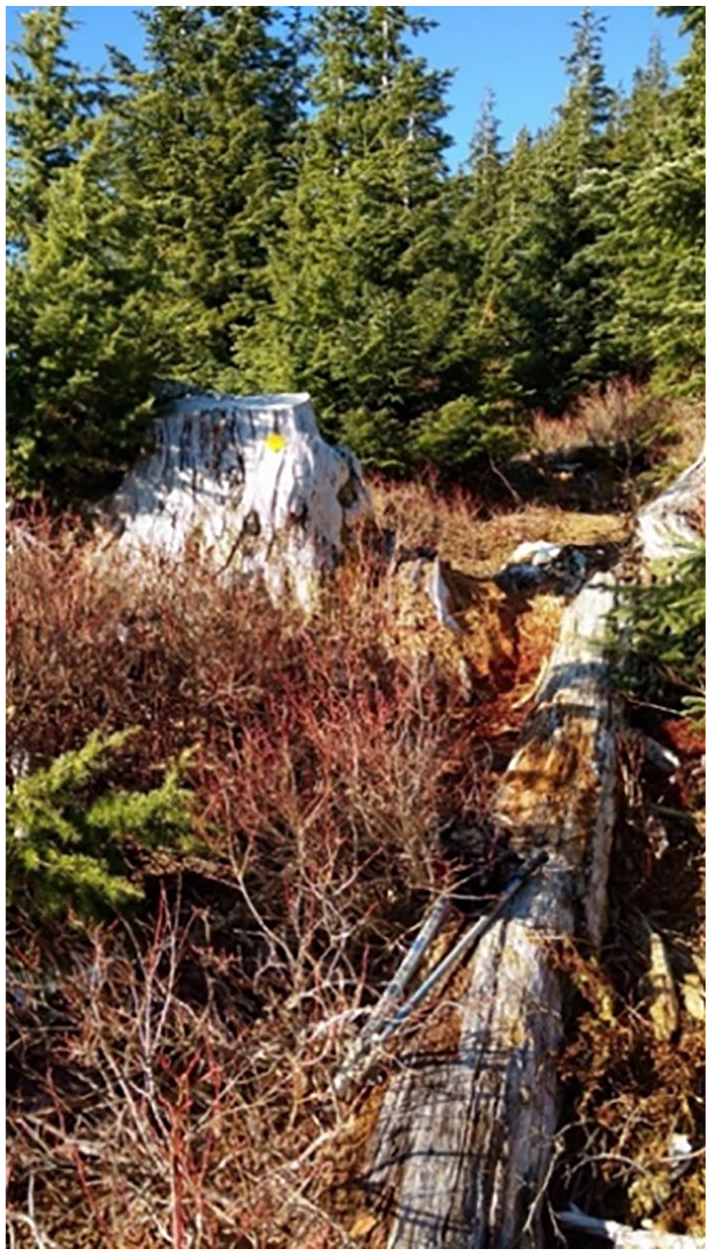
Disturbed but intact selfhood, Demon Ridge (photograph by the author).
I pause to rest before ascending beyond the logging road and my breath slows. I loosen my gaze and lapse into shapeless listening. The air, comfortably warm, moves subtly as I gaze across the Mamquam Valley. Faint gun shots punctuate the soft air. My husband says there’s a rifle range down in the valley. The shots I hear are not hunting, but this logging road provides access to wild creatures’ habitats, beings who are hunted for human sport (Livingston, 1994). Human disruption here includes road building, resource extractions, hiking, and hunting. Plundered for timber, the logging road affords access to hikers and hunters to the creatures and other beings living around Demon Ridge. We saw other hikers ahead of us who continued up valley instead of ascending to the ridge. Plastic flagging tied to trees and nailed to stumps indicates a hiking route to the ridge top. In spite of this marking and human presence, I discern wholeness, intactness and even wildness here. This combination of human disruption and wildness contradicts the colonial ideal of unpeopled wilderness. This excavated place, the logging slash, disrupted ground, the stony logging road built for resource extraction is still rich; it has a story. It’s still itself. It’s ongoing, and intact, in spite of disruption and extraction. While practicing shapeless listening in the place pictured in Figures 1 and 2, I ponder the place’s intactness and selfhood. The colonial ideal of wilderness untouched by humans would not embrace this place as wild; the excavation and other signs of human presence precludes that. However, I’m unconvinced this place isn’t wild. Through shapeless listening and soft gazing here, I begin to see that the colonial ideals of purity and wilderness are false requisites for a place’s intact selfhood and wildness.
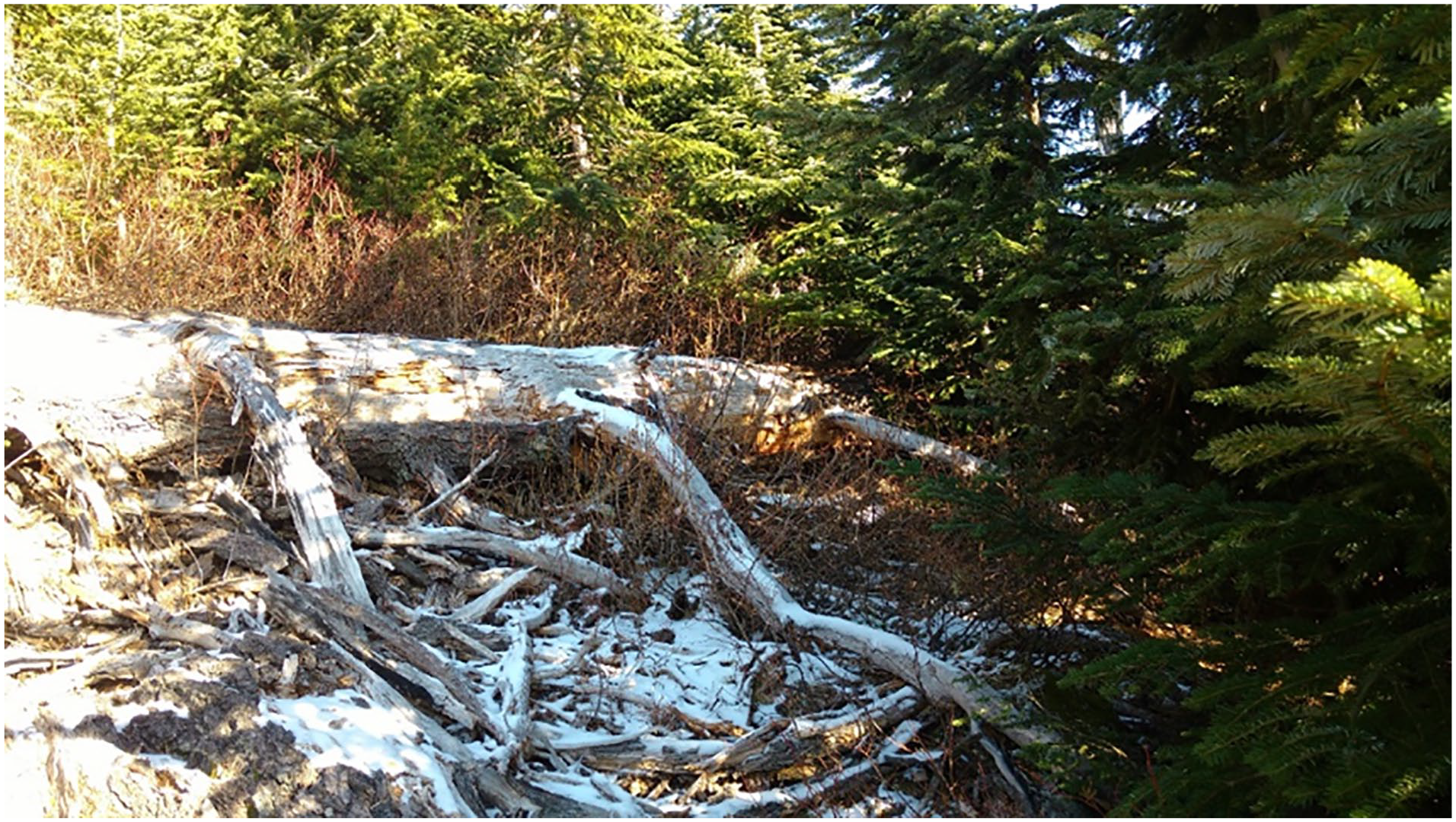
Cold, decomposing, shadowed land: simultaneously familiar and radically other, beside logging road, below Demon Ridge (photograph by the author).
The Wild
I consciously resist seeing less peopled places as “wild,” and classifying some as wilder than others until I can learn more about the meaning of “wild.” Bringhurst (2009, p. 268) writes “the wild isn’t something to conquer or subdue; it’s something to try to live up to: a standard better than gold.” This aspirational invocation feels human centric, like the wild expects humans to behave differently than we’re behaving, as a parent observing her unruly children. I don’t see it like this, sitting here in the sun, gazing at the logging road, the barren blueberry bushes with their red stalks, the ancient rotting tree dusted with snow. Here is coherence, even wildness, in spite of the logging slash, the flagging, the MTH stumps that echoe what they were before being cut. They are still here. They are still themselves. Different selves, but selves in their own right. Stump selves. I see selfhood, alterity and soverignty here. This contradicts Livingston (1994) who writes that wildness “has no missing parts, either through mutation or amputation . . . Wildness is whole. It is the antithesis of the domisticated human state, uncontaminated by power, claims to power, or the need for power” (Livingston, 1994, p. 172). There is disruption in Figure 1, “amputation” (Livingston, 1994, p. 172), even destruction. Yet, this place is still generating, becoming, and asserting its selfhood. Lilburn reaches beyond Bringhurst’s (2009, p. 268) unchanging gold standard toward the wild’s “liberating complexity . . . a polity that leaves nothing out . . . [it has] its eye on a kind of unlimited possibility of shape. It thinks about, or encourages thinking about, forms that have no predetermined structure” (Ruzesky, 2010, p. 18). Lilburn’s description of wild’s liberating inclusive complex polity that “leaves nothing out” (Ruzesky, 2010, p. 18) echos Livingston’s description of wildness. “Wildness is, and has been, from the beginning. It is not merely an evoloved phenomenon; it is a quality of being, and a precondition of having become” (Livingston, 1994, p. 172, emphasis in original). I slide away from Livingston’s sense of “having become” (Livingston, 1994, p. 172) which implies a terminal arrival, and a cessation of continuous becoming that I discern in Figures 1 and 2.
Encountering Otherness, Radical Alterity
The wild does not care about our aspirations, or how earnest our paintings, poetry, and yearnings are. As a painter, I see nature’s mysterious alterity and its wholeness, even in places disrupted by human presence. I feel addressed by the wild, arrested to stop and look, to take photographs of places pictured Figures 1–20, and to paint them, as in Figures 6 and 21. I want to understand the “fervid geometry” (Ruzesky, 2010, p. 18) the wild speaks. The wild alterity resists me; it resists my comprehension. I feel myself reaching to breach the wild’s unknowabilty. Through practicing contemplative and shapeless listening, my uncertainty grows regarding whether I’m seen or singled out for communication, indeed communion with land. I imagine that the wild reciprocally sees and feels me when I see and feel the wild. Driving on the logging road to Blanca Lakes, the striated rock formations glow in the morning light (Figures 3 and 4). I hop out of the car to look closely and take photographs. There is fantastic otherness here compelling me to pause, to attend. I kneel in deference to this place.
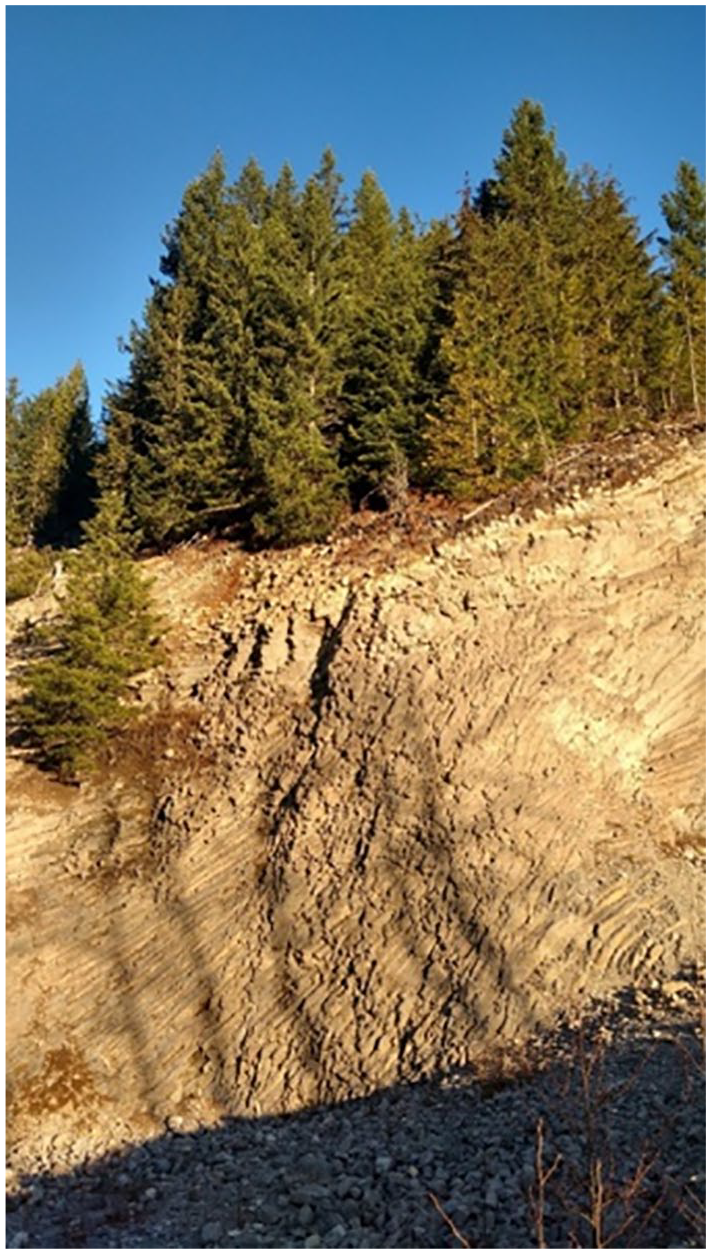
MTH alterity forces me to stop the car and look, logging road to Blanca Lakes (photograph by the author).
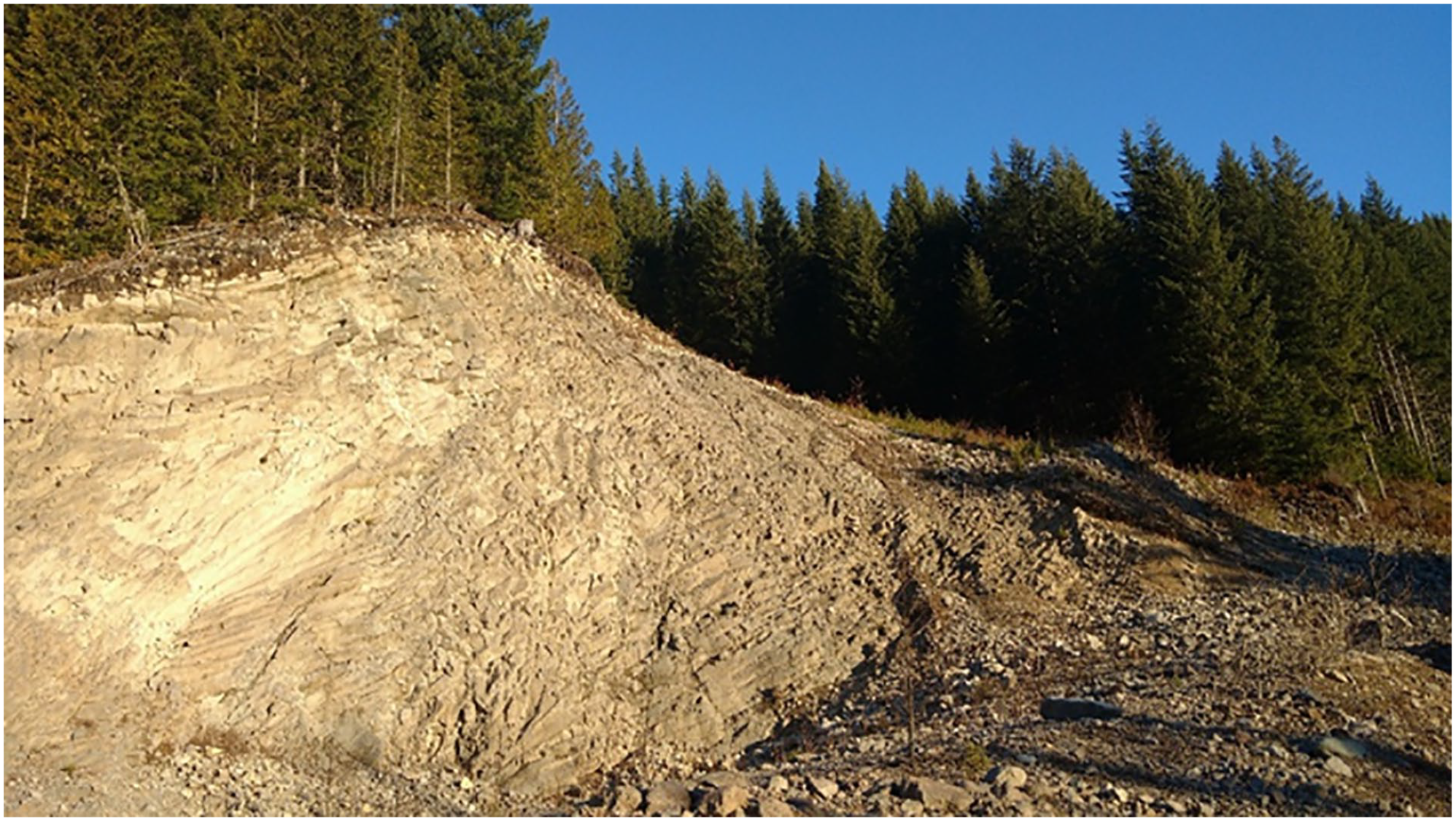
I look but can’t fathom the complex mind behind this assemblage. Logging road to Blanca Lakes (photograph by the author).
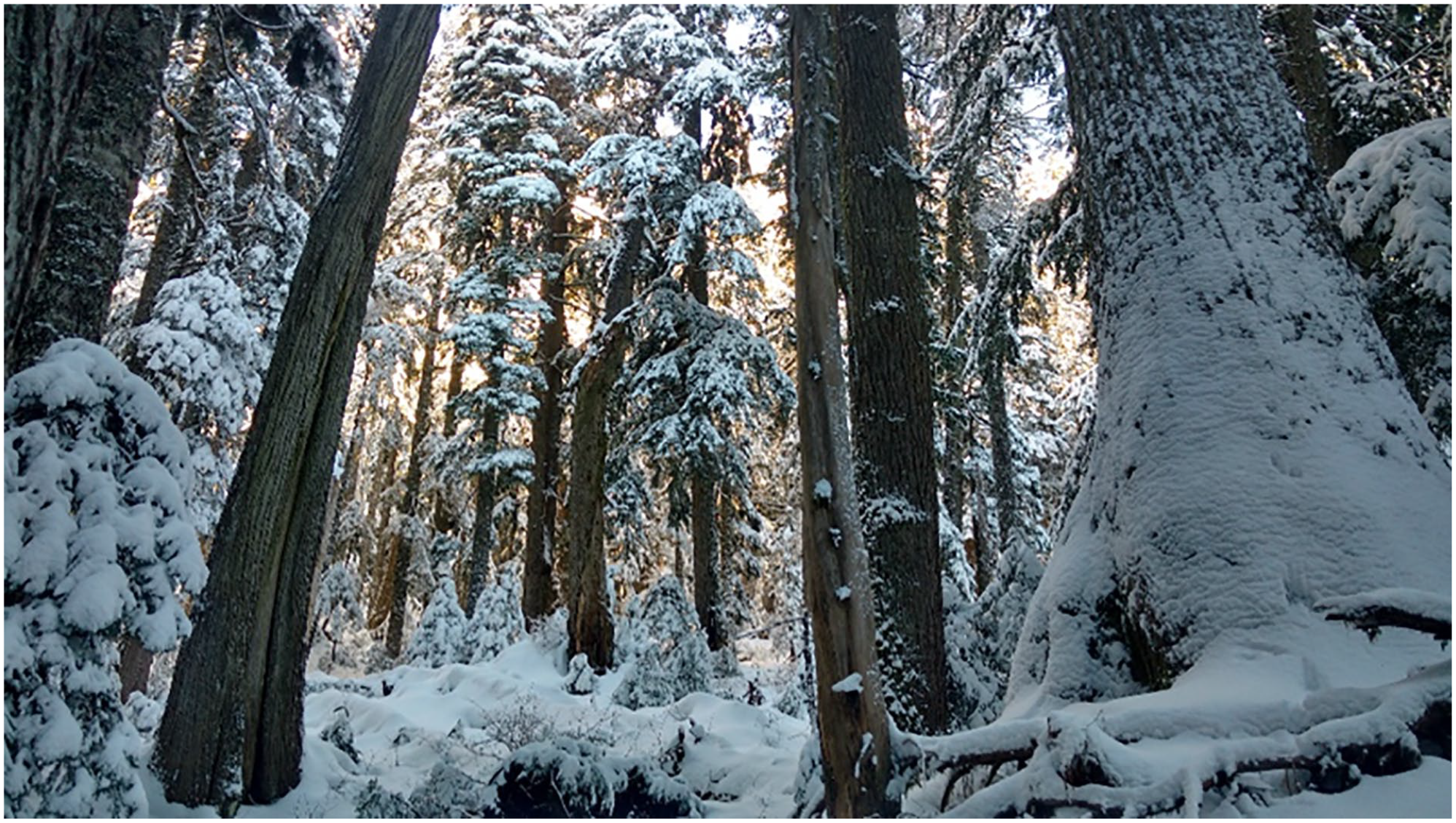
Cedar forest on Hollyburn Mountain (photograph by the author).
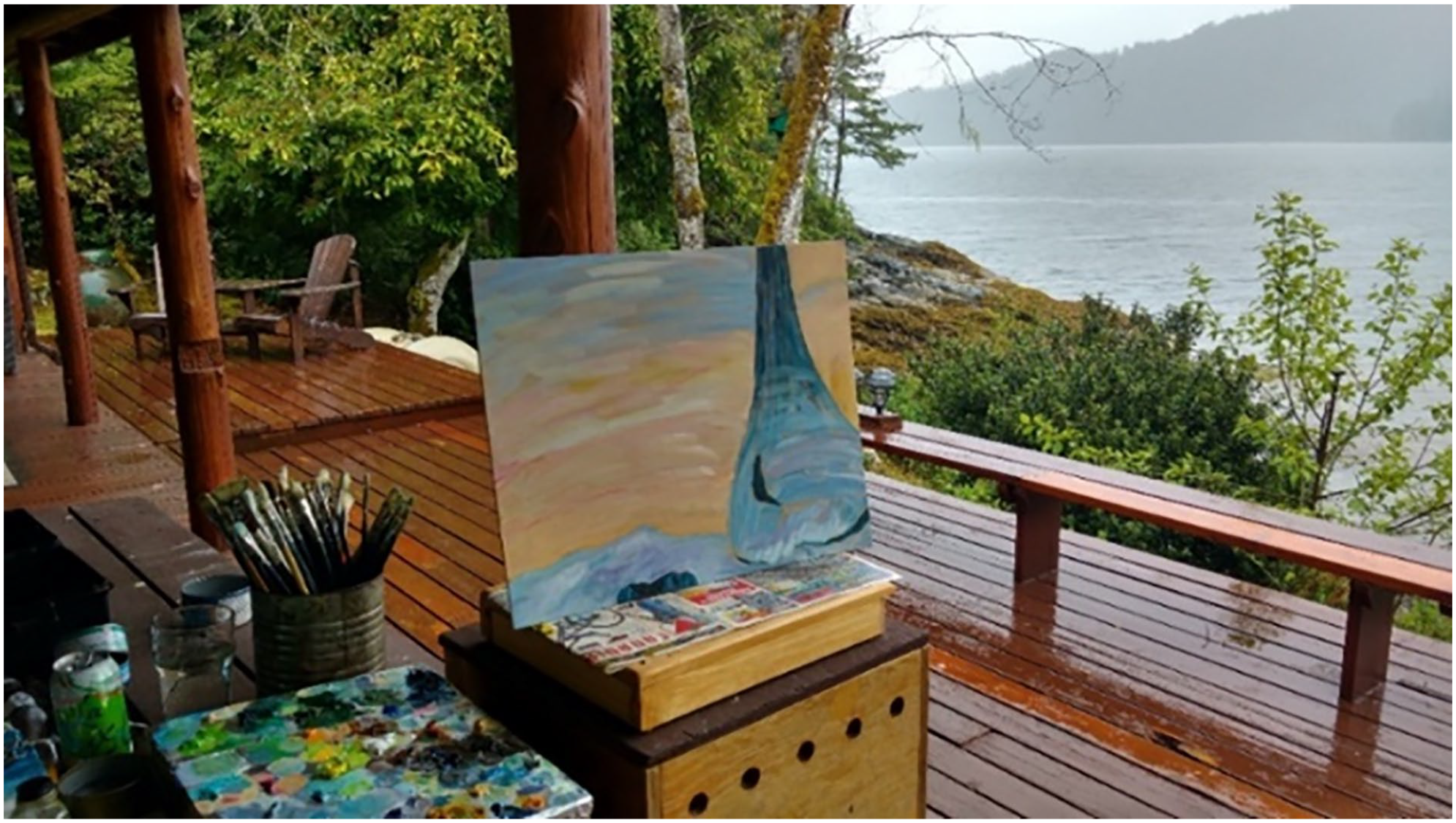
Painting as soft gazing, deep kneeling (photograph by the author).
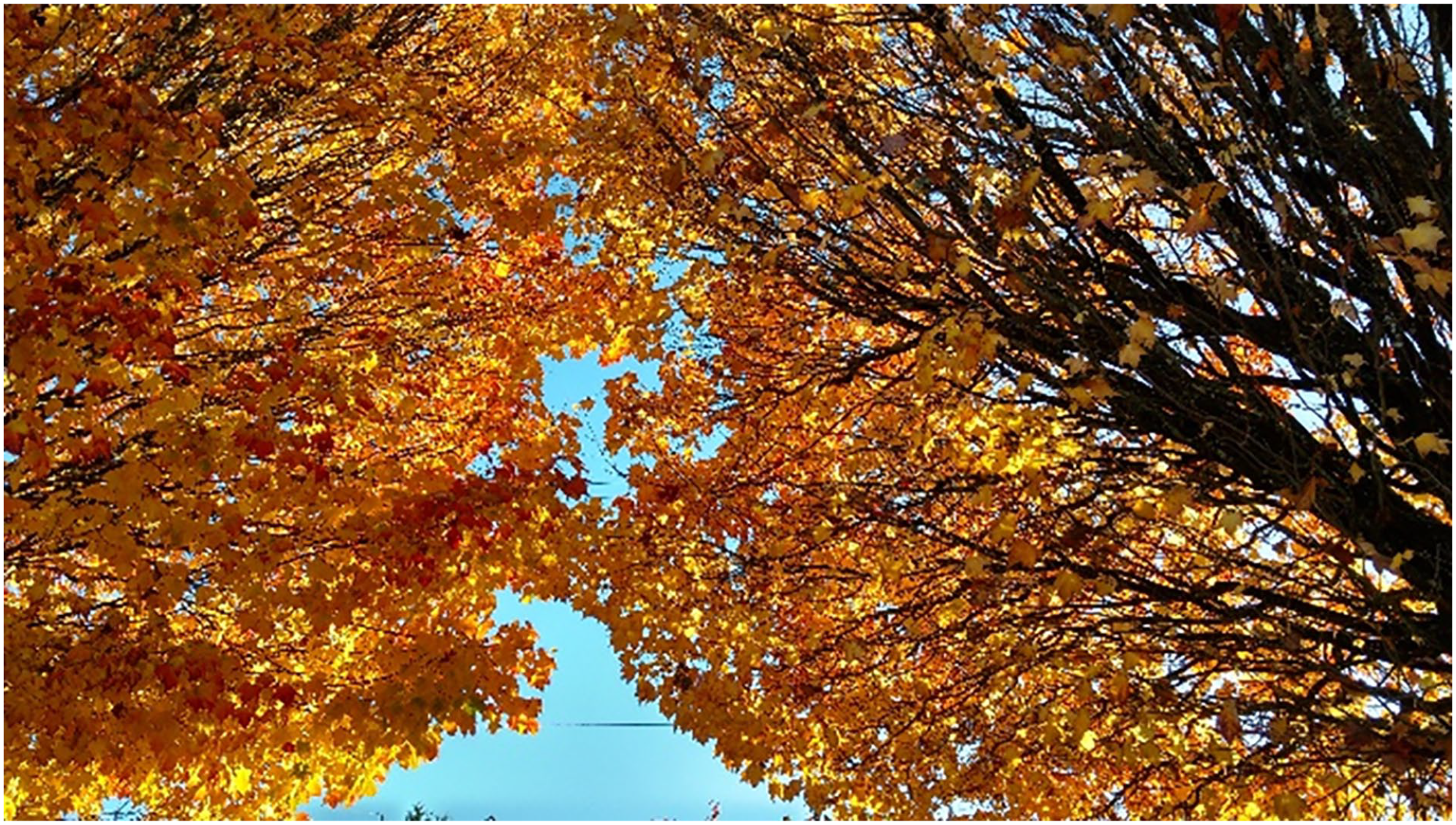
Contact with the MTHW on election day, Vancouver, BC (photograph by the author).
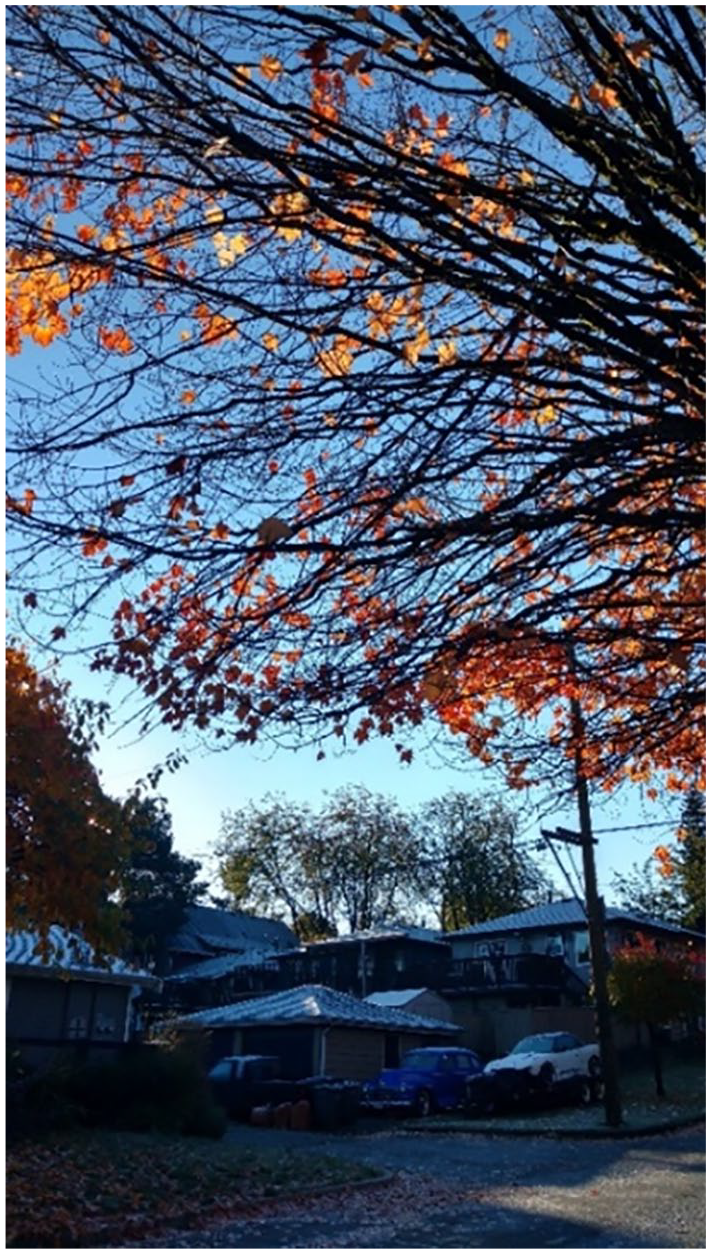
Maple tree’s “fervid geometry” on frosty Vancouver morning (photograph by the author).
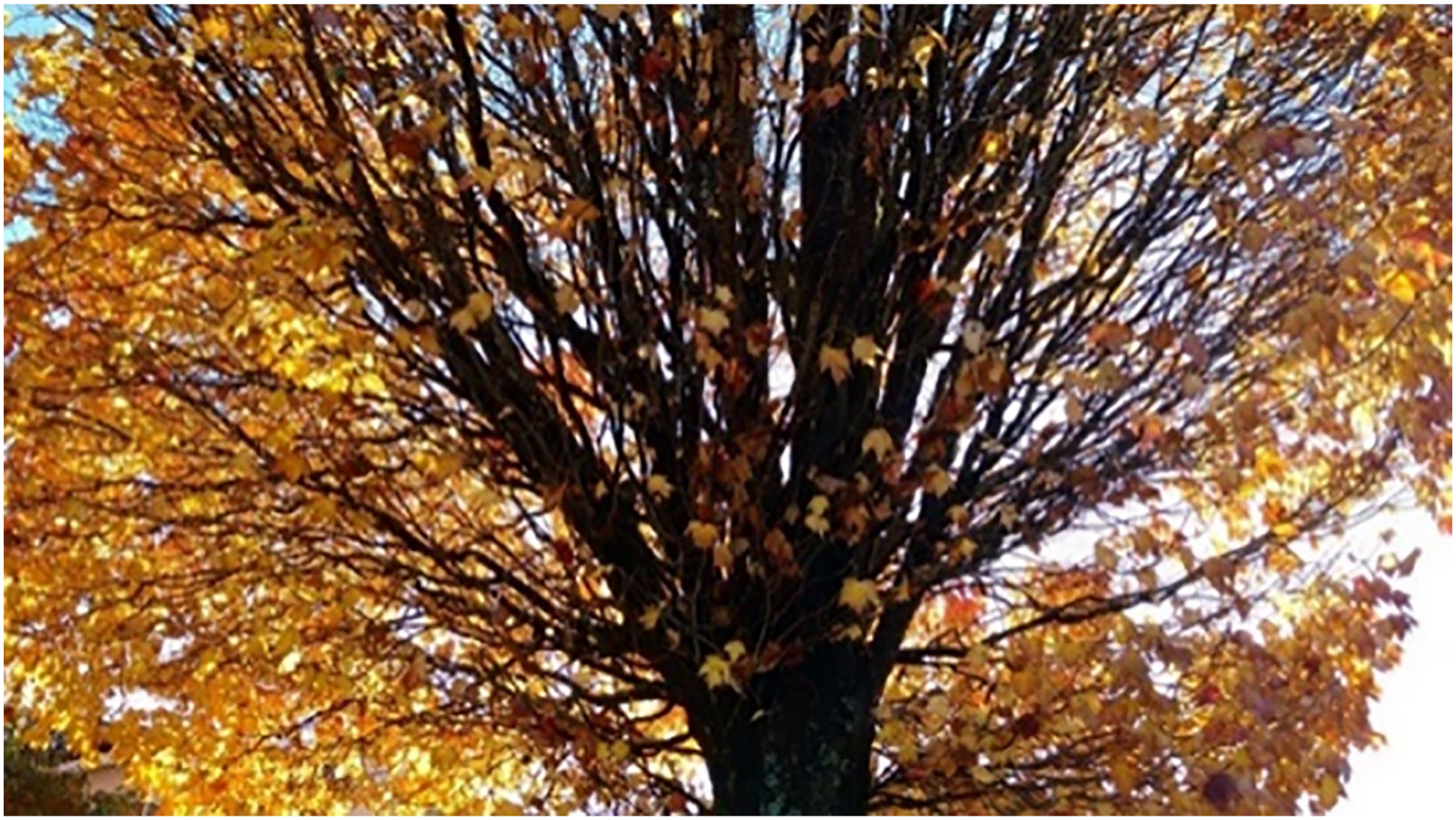
Maple tree arterial branching on BC election day (photograph by the author).
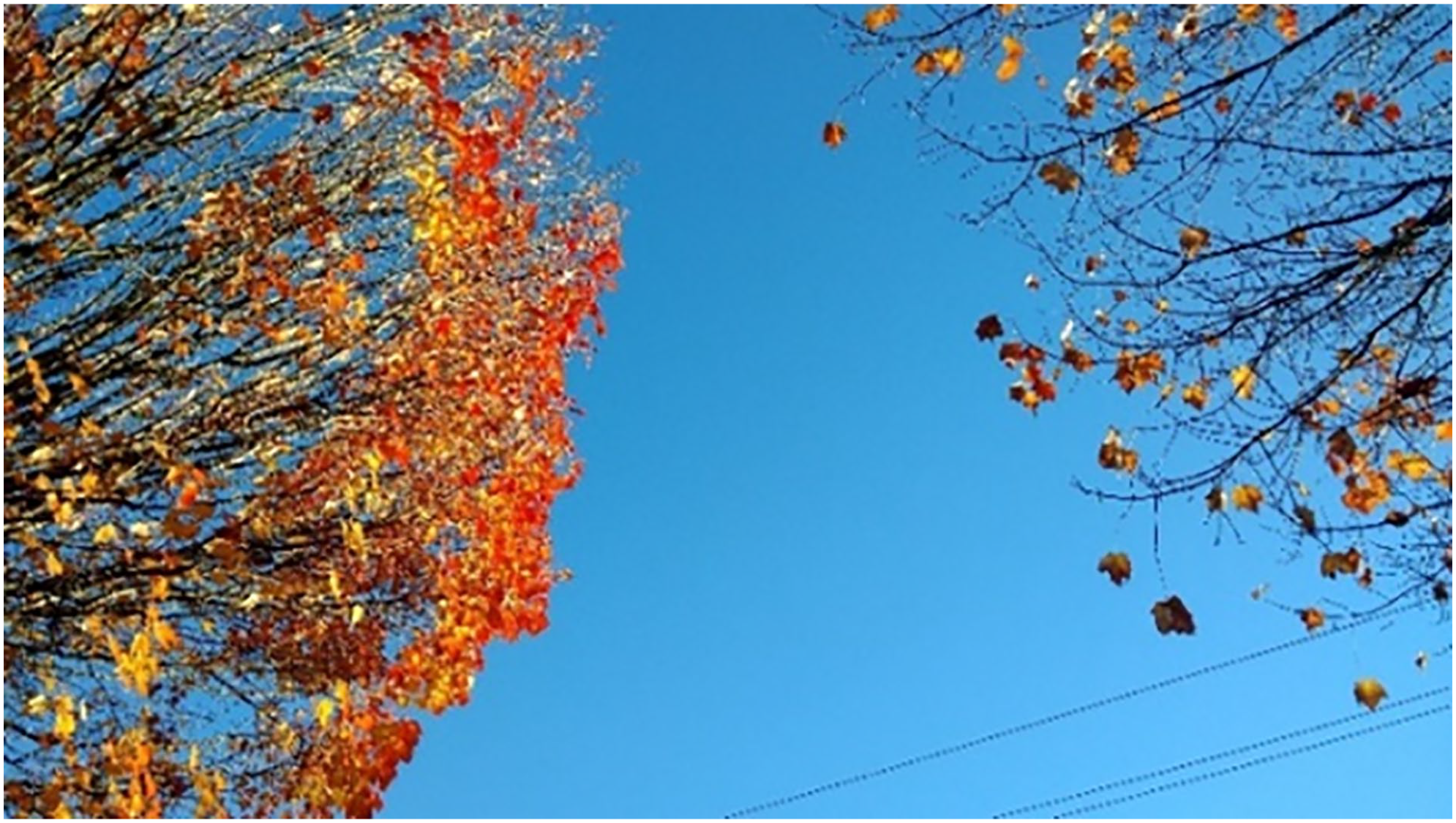
Maple trees branches reach for each other (photograph by the author).
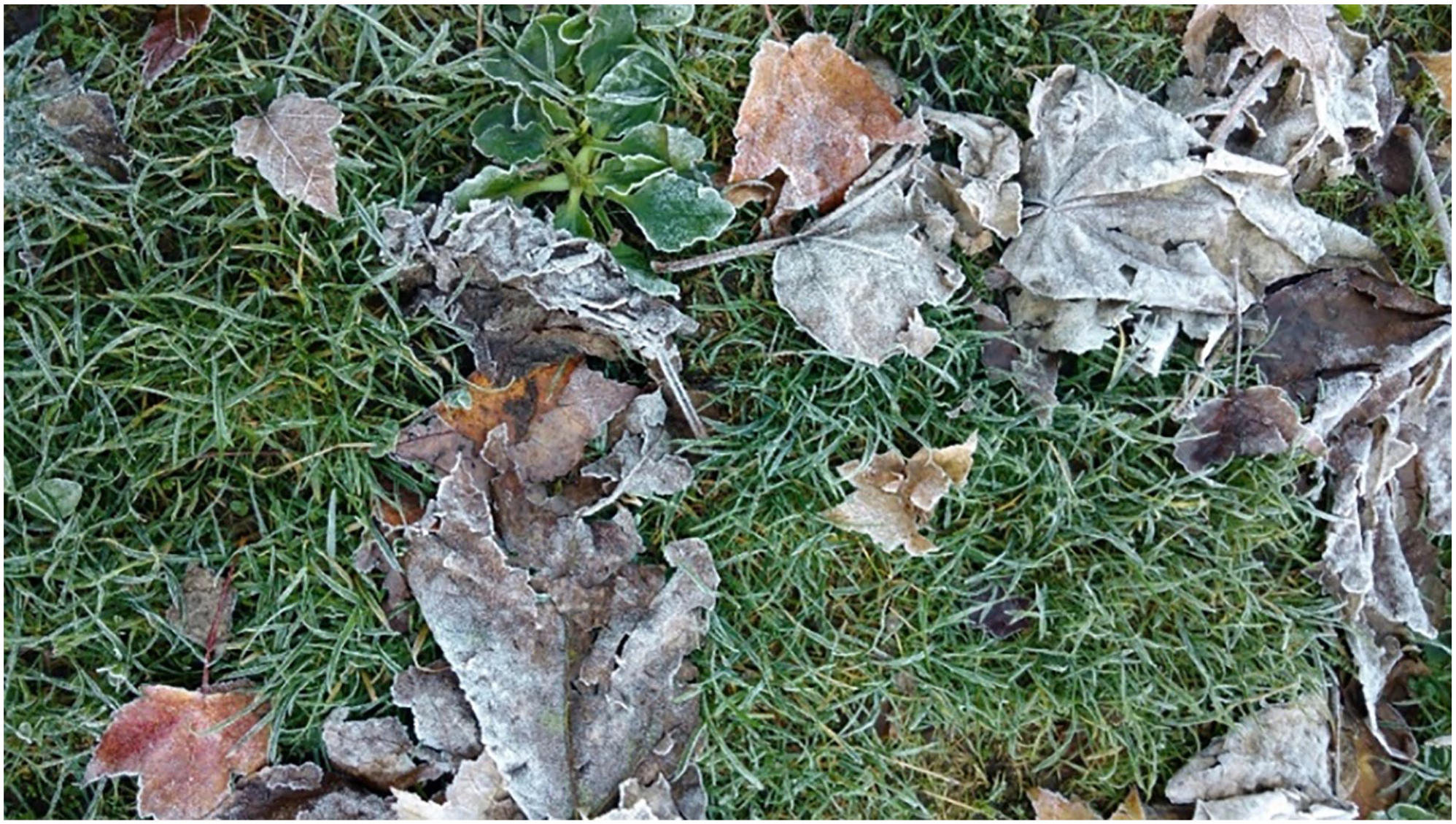
No less beautiful than the illuminated trees above, fallen leaves curl and decompose (photograph by the author).
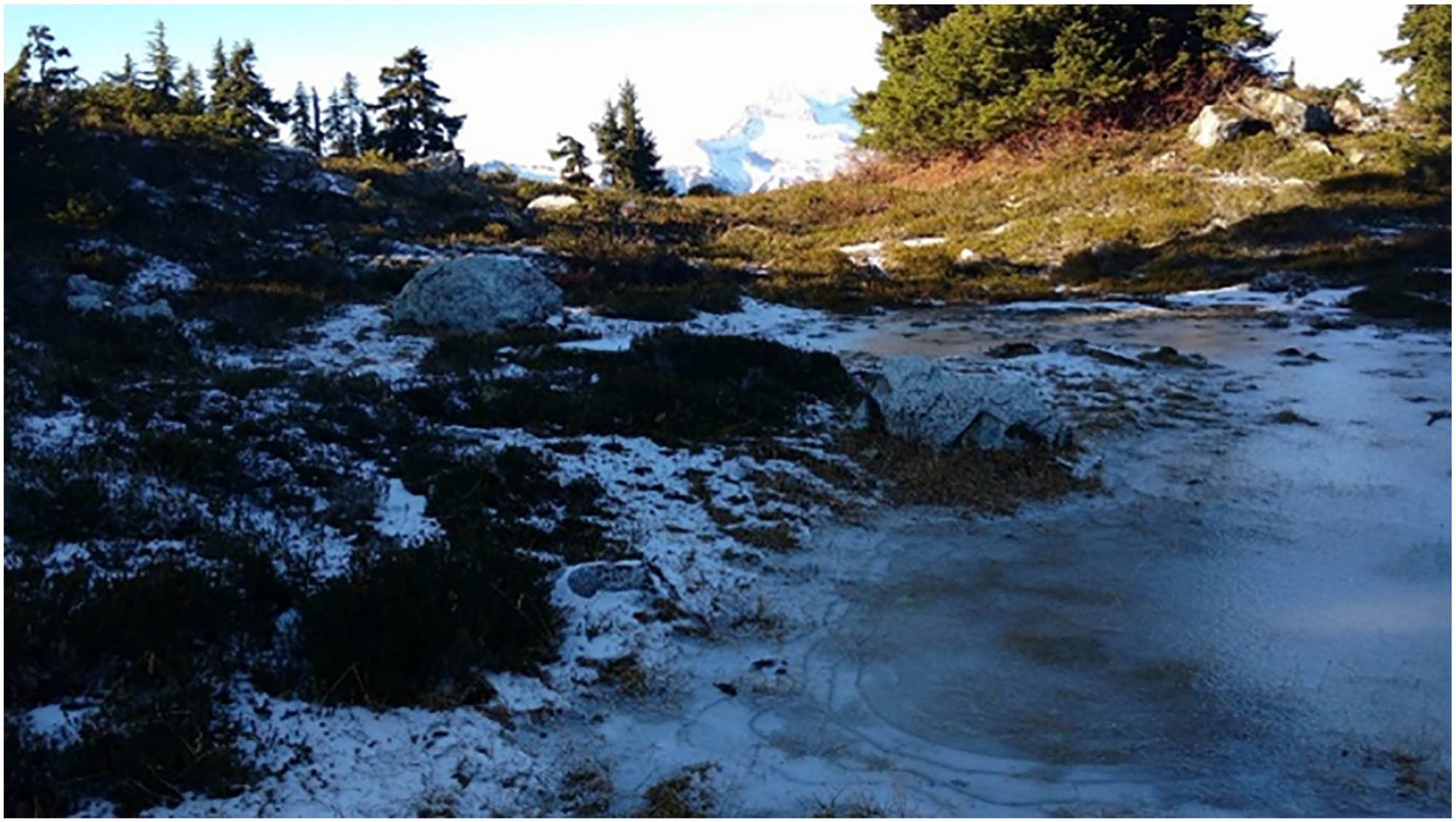
Sovereignty, resistance to understanding (photograph by the author)
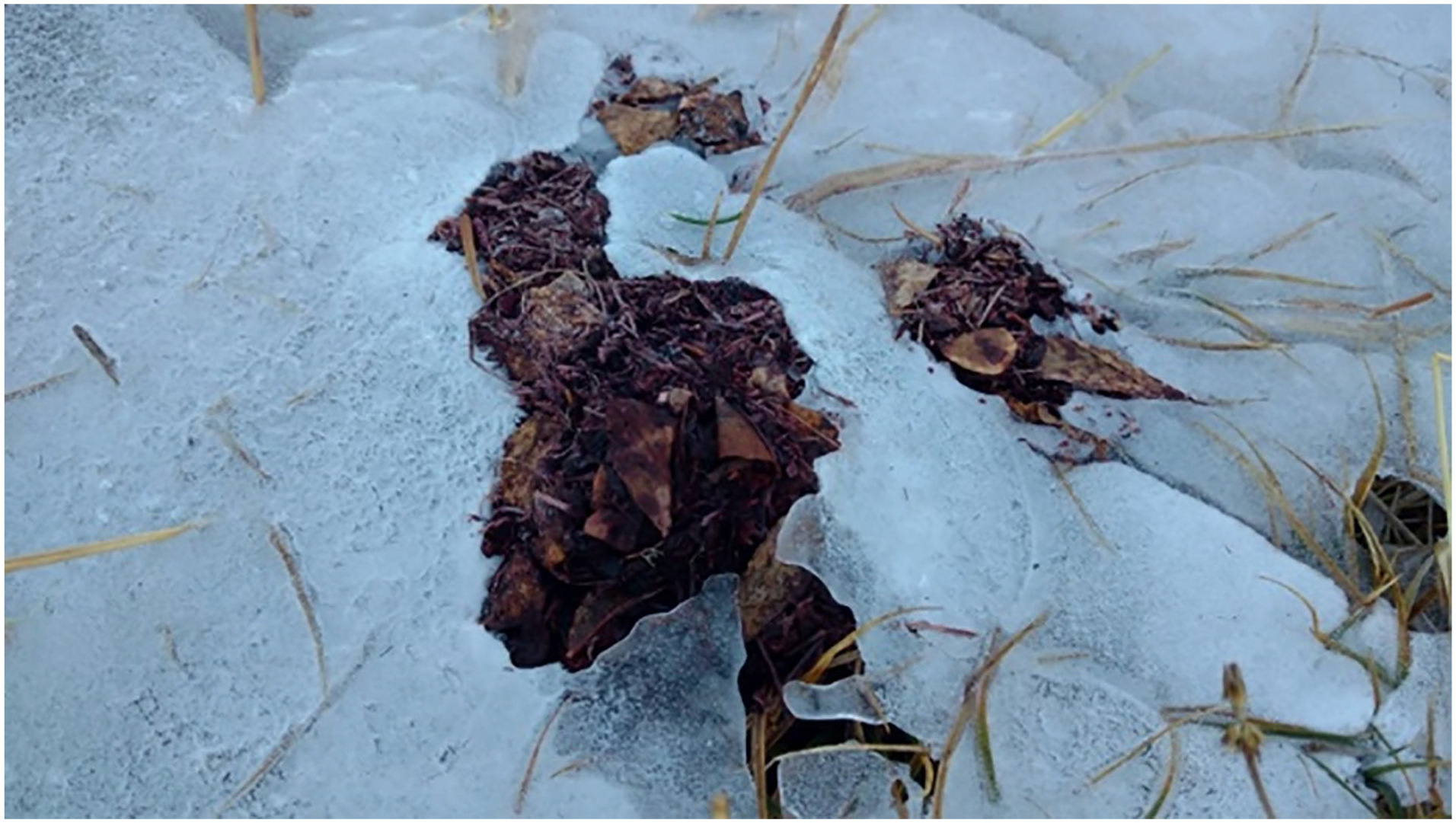
Frozen berry-filled bear shit: while this place feels uninviting, it’s someone else’s home (photograph by the author).
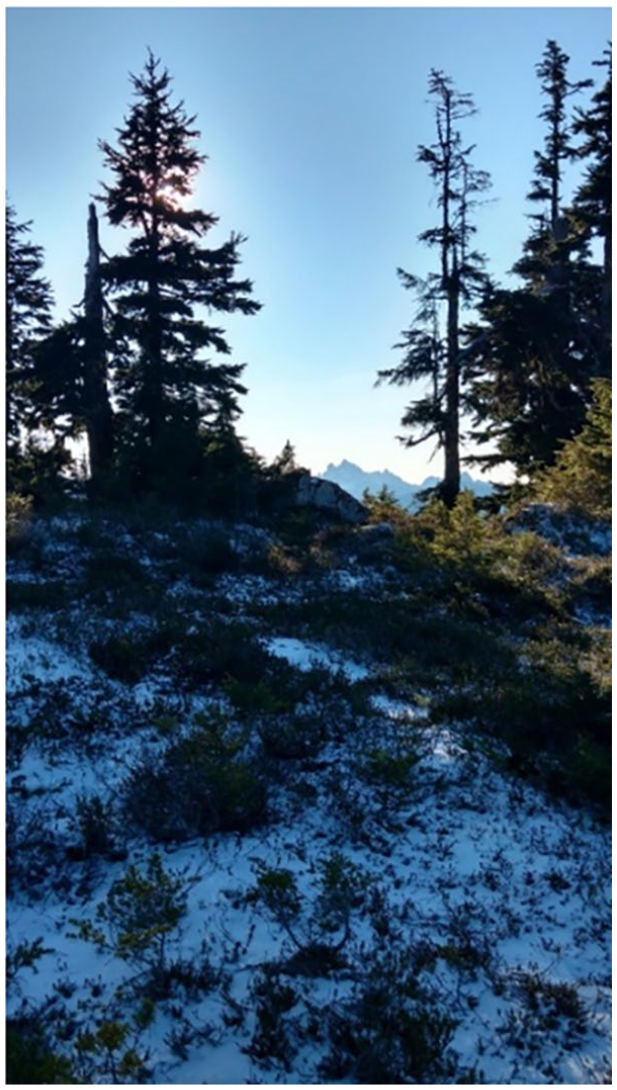
Cold alterity on Demon Ridge (photograph by the author).
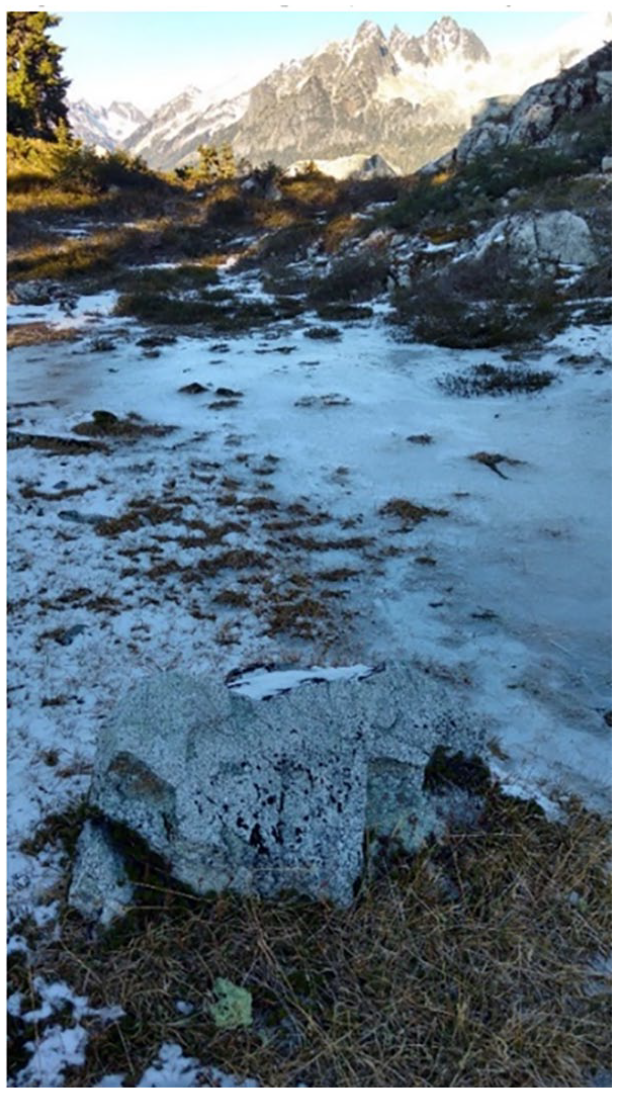
Sovereignty of Demon Ridge (photograph by the author).
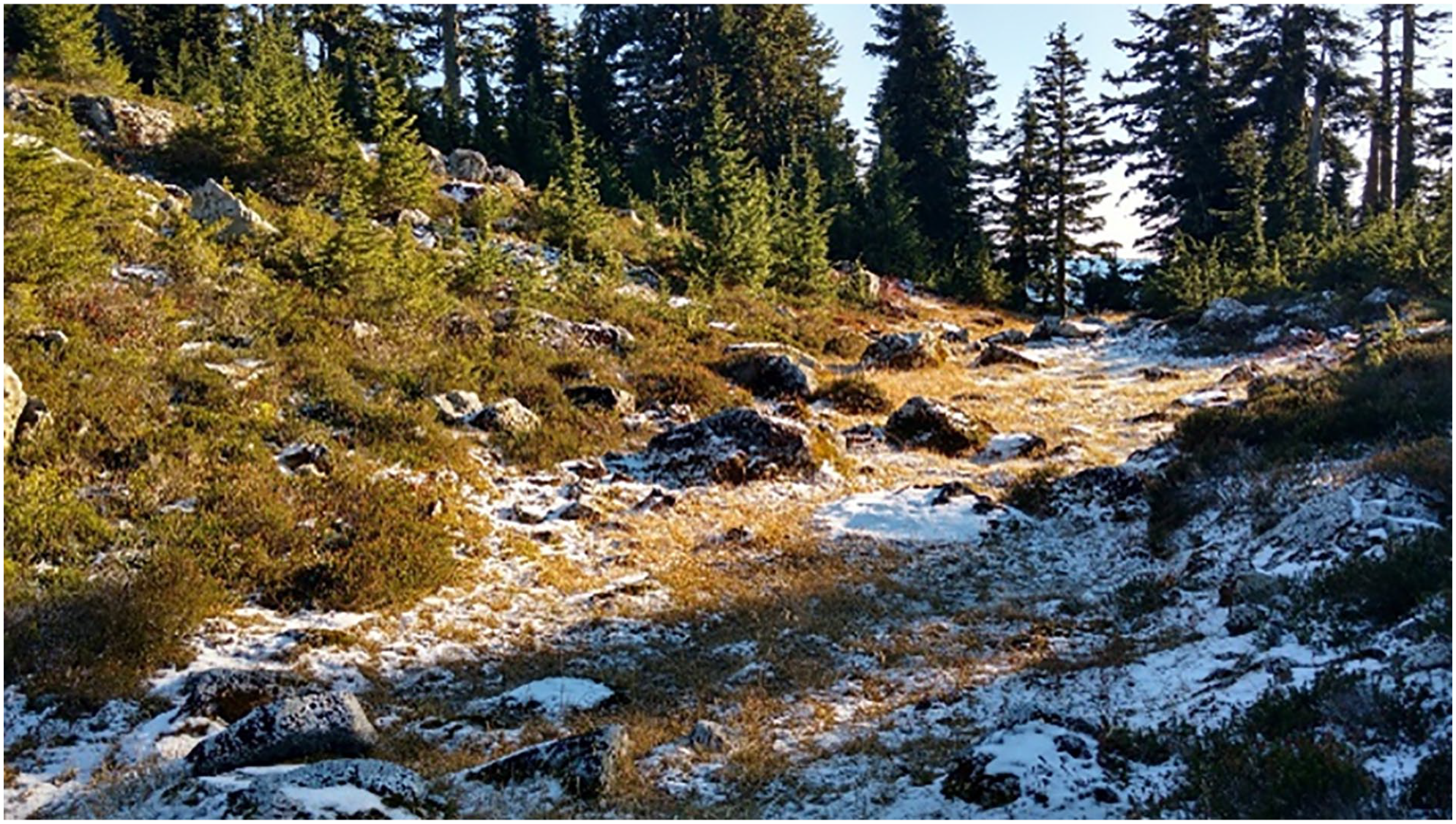
Demon Ridge: no inviting place to sit (photograph by the author).
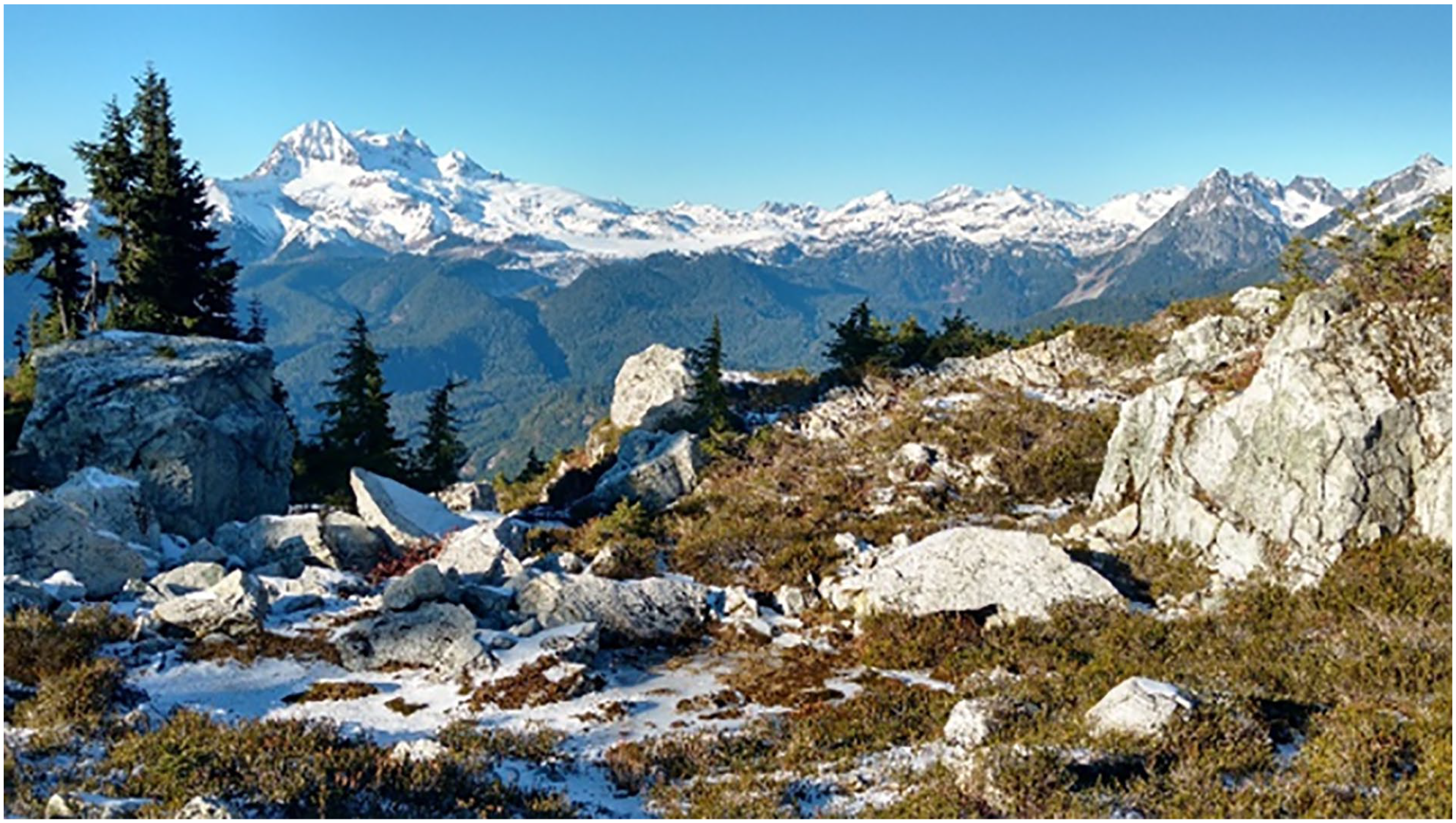
Demon Ridge: don’t think for one second you belong here; you don’t have the body for it unlike these boulders, tough heather and bear who matter and belong (photograph by the author).
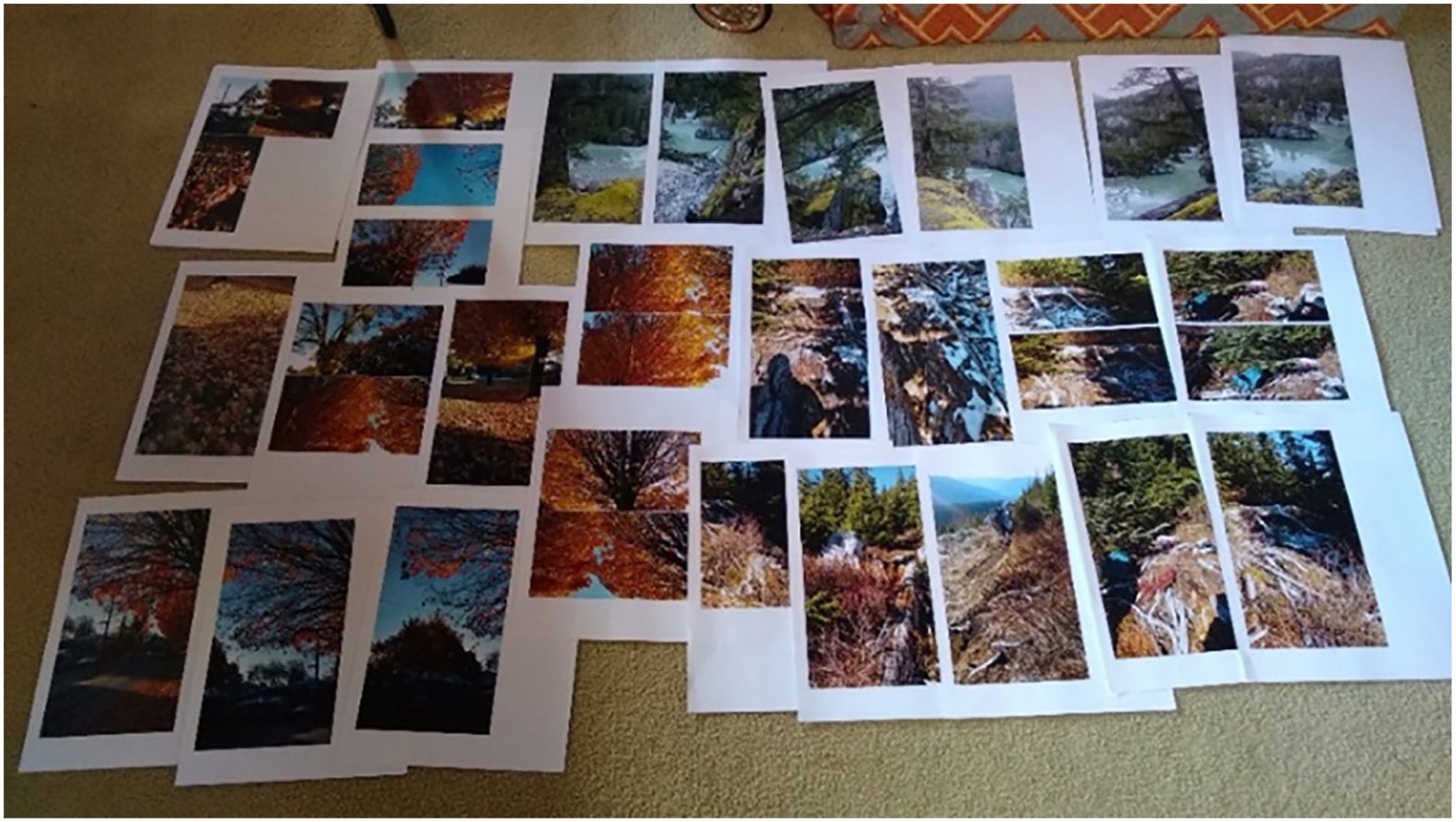
Assembled photographs of my encounters with MTH ouside places (photograph by the author).
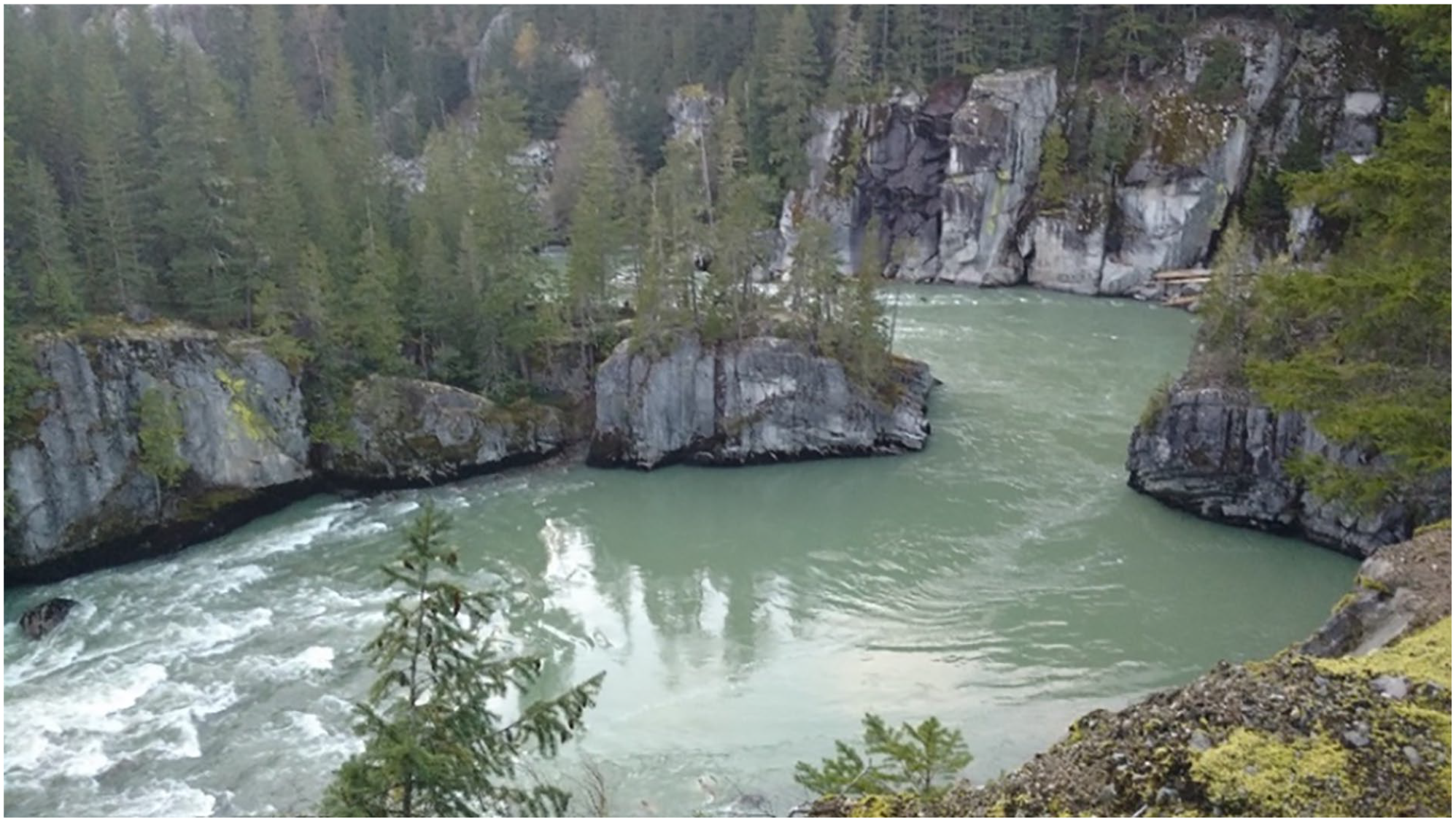
Elaho River. Unassailable. Sovereign. Relational. Mattering. Indifferent (photograph by the author).
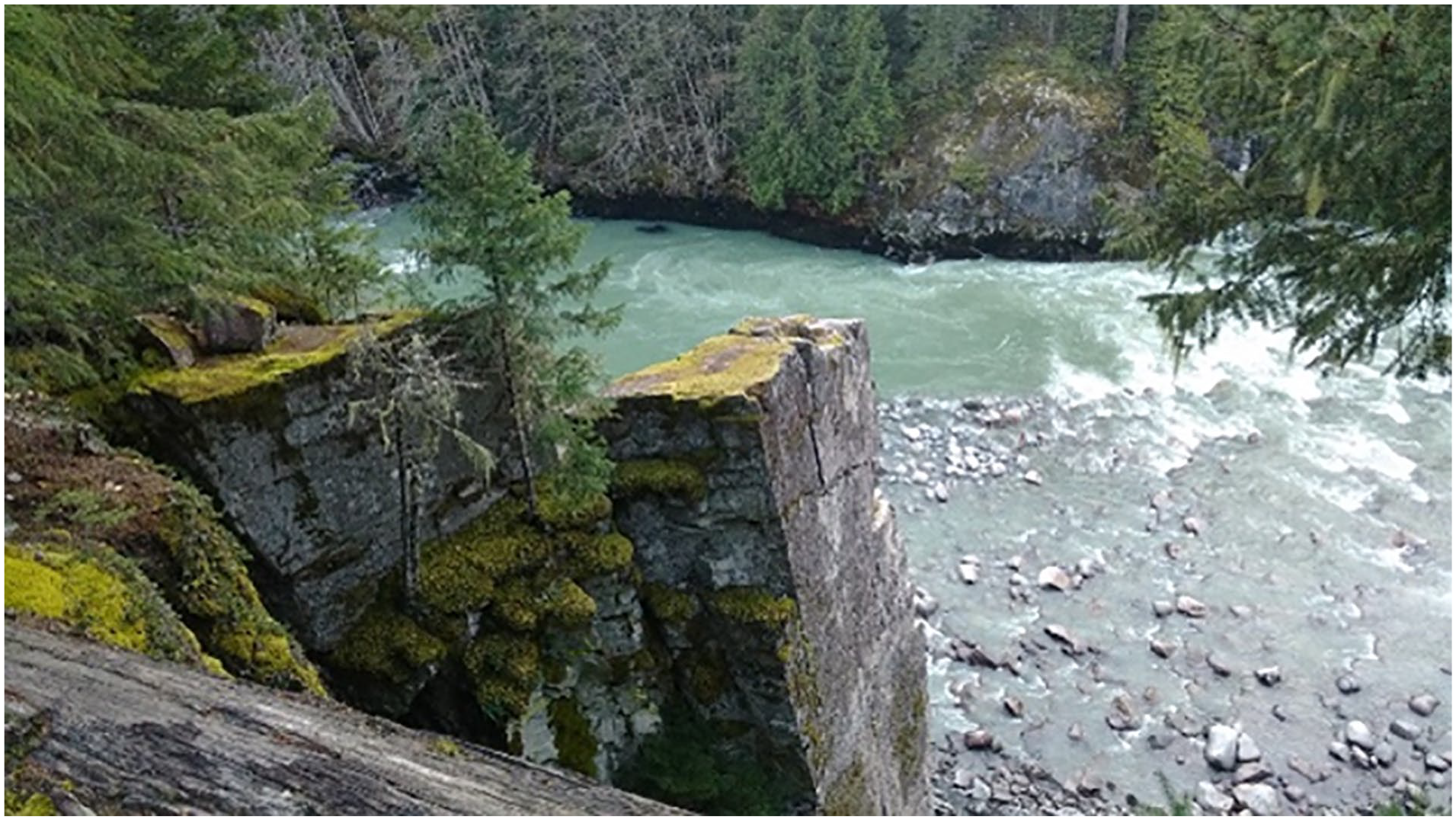
Basalt towers on the Elaho River. Coherence and complexity. It all hangs together (photograph by the author).
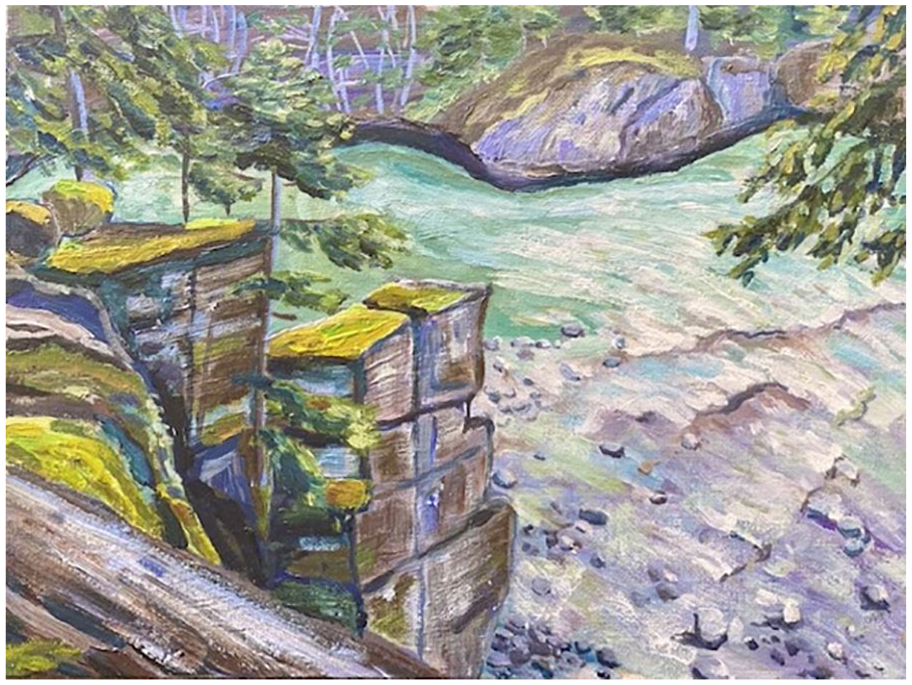
Painting as kneeling: early study of Elaho River basalt towers shown in Figure 20 (photograph by the author).
Through careful listening and emplaced being, I see the whole is indifferent to me as a singular individual. I want to feel special. I want to belong within this whole wild place that I see. And I do belong here. But I belong asa decentered and equally other being, with alterity in my bloodstream, my bones, urine, dreams, diseases, crumbling body, buried memories and conflicting self images. There’s clinging to my yearning that disgusts me. I can’t stand clinginess, it’s repulsive. I wonder how the wild feels about my yearning, my search for meaning, my deep reverential kneeling through oil painting and writing. Yuck! Perhaps the wild doesn’t care how I feel. I turn to Bai and Banack’s (2006) invocation to tread lightly and respectfully in my encounters with the patterned reality in the MTHW: Complexity of our being, including inescapable impermanence, precludes absolutes, such as moral imperatives. Instead of prescriptions of absolutes, we recall creativity inherent in our awareness of complexity and celebration of pattern. So let us thread our way cautiously through mazes of moral absolutes tempting us with solutions. Let us tread lightly in hope that we may glean glimpses of fleeting snowflakes falling through the calm of night and resting ever so briefly upon warm skin. (p. 6)
The solutions Bai and Banack allude to here are ways of relating to the MTHW. The more I reach, cling and strive, the further the MTHW leans away from me, unyielding its mystery. Letting my insecurity and yearning to fall away yields release. This letting go and falling away allows a mutual regard to emerge, of one stranger to another, me and the MTHW, if it wants to.
I stood in the cedar forest transfixed by its strangeness, such as the radical alterity of the bulbous tree trunk on the right of Figure 5. There is power and strangeness in this cold silent place. The dim light, the cloak of snow and curving lines offer limited entrance into this mysterious north facing place. I stand close to the base of the bulbous cedar (Figures 5 and 6), my feet clipped into my ski bindings and skis. Yet I’m shut out from understanding this place, what languages are being spoken between all the constituents: the wet snow, the dim watery light, the strange curving tree bodies, the near and touching elements in the whole. I’m simultaneously inside the forest and also excluded, outside the language. Or am I outside?
Can I just be here, inside with alterity, and not be an outsider? Can I be inside the whole without understanding how I fit? I respect the unknowability of this place. This encounter, being othered, provides a site of inquiry into encountering alterity. “From such alterity, Indigenous teachings infer the necessity of respect, caution and humility” (Blenkinsop & Fettes, 2021, p. 10). Through my encounter on Hollyburn Mountain, I feel humility to not know. I stand here on my skis for half an hour watching the light change, and feel increasingly cold from being inactive. I start painting the bulbous-bottomed tree (Figure 6) to seek understanding, but ultimately, this cedar forest remains unknowable.
Its selfhood is sovereign and expressed in its profound unknowability. There is value in encountering this unknowability and not attempting to decode or pierce it: . . . less emphasis should be put on developing any single mode of knowing, because this fosters the illusion of knowability. Rather, multiple ways of allowing our encounters with the world to “form the self” will allow for more fully alive, aware, skilled and reciprocal—in short, more wild, less colonized—ways of inhabiting and moving through that world. (Blenkinsop & Fettes, 2021, pp. 11–12)
Blenkinshop and Fettes suggest that arts-based approaches offer ways of attuning to the earth’s wholeness in ways that science does not and cannot. The arts engage non-discursive ways of knowing and expression. As a practicing artist, art offers me a different “way in” lacking in empirical methods. But artist must back away from claiming to speak on behalf of the MTHW. Artist should not claim privileged understanding of mystery or alterity because we use non-discursive non-rational methods to think and express what we see. Practicing arts-based inquiry that engages deep listening and respect leads to humility in the artist, who is one subject of many co-arising with the subjects she paints. Through careful observation, and soft gazing, the mysterious nature of this bulbous tree may choose to emerge. It may also stay hidden.
Wildness in the City
I wake early on Election Day, Saturday, October 24, 2020, hoping to cast my ballot at the polling station before the crowds arrive. I cross my street and walk toward the elementary school transformed into a temporary polling station. Maple leaves rustle overhead in the trees glowing in the morning light (Figures 7–10). I slow my pace and notice the impossibly subtle gradations of shading in the leaves. My pace slows to a stop. I stare openly and without regard to voters emerging from various directions and approaching the polling station. I take photographs of the trees’ branches, their tracery against the cerulean sky, two trees’ branches reaching for one another like family members reaching to embrace. Practicing slowing down and tarrying, I’m no longer hurrying to vote. Mindful that this morning’s dazzling light is fleeting and will vanish once I enter the polling station, I stop to encounter these leaves, this tracery, this light. Right. Now. People passing by murmur softly to one another, ignoring me. I stand beneath the luminous globe of leaves, listening and gazing at the vibrant trees trembling with light in Vancouver’s inner city neighborhood of Cedar Cottage (Figures 7–10).
I ascribe human qualities to the trees motion toward each other, their blushing colors and arterial branching. I infer them speaking to me, telling me their branching is akin to the branching in my own arteries. More-than-human alterity abounds in human bodies: Referring to the always hybrid assemblage of matters that constitutes watery embodiment, we might say that we have never been (only) human. (Braidotti, 2013, p. 1; Haraway, 1985, 2008) This is not to forsake our inescapable humanness, but to suggest that the human is always also more-than-human. (Neimanis, 2019, p. 2)
But I’m not here to draw a likeness between myself and the trees’ familiar branching form. I want to see how kinship and relationality might emerge while resisting the urge to compare, liken, and align with the trees mystery. While reaching for similarity is an effort to relate with the other, it’s also acquisitive in its urge to understand and name. I want to respect the radiant trees’ alterity, their selfhood and what they’re doing this morning, shimmering and rustling in ways that I can’t shimmer or rustle myself. I allow my discursive mind to fall silent, and drop comparisons between the trees and the branching I imagine in my body, in my circulatory system. I let the discursive naming, words like “branching,” quiet within me. Maybe there is similarity, a family resemblance of branching forms in the trees and myself. But this encounter provides an opportunity to become comfortable with the trees’ unknowability. Beneath my feet, scattered leaves lie in frost and shadow (Figure 11).
The dazzling light above (Figures 7–10) and the shadow below (Figure 11) are equal in their alterity and their power to arrest, compelling me to stop. The complex arrangement of fallen leaves on the ground speaks of nature’s genius at creating balance within asymmetry, which resists artistic replication. Landscape painters try to mimic natural asymmetry; symmetry in the landscape genre speaks of contrivance and falseness. The soft textures and shades of rotting leaves (Figure 11) reminds me of wabi-sabi, the elusive Japanese way of seeing nature’s resistance to order, control, symmetry and understanding (Koren, 1994) and recreating this in art. Following my late painting mentor’s teachings, I seek to learn from nature’s genius, indeed nature’s mastery, at forming asymmetrical patterns, through practicing oil painting. Replicating nature’s asymmetrical genius through my painting practice remains elusive. This keeps me humble before the mastery of the MTHW mind. Lilburn compares the wild complexity of nature’s asymmetry to “fervid geometry”: An oak tree is a fervid geometry which is pretty much unsayable, although stable. How would you trace that pattern? And then if you wanted to focus just a little more, look at a tiny pice of bark. It’s unsayable, unmapable. What would be the geometry of that . . . kind of liberating complexity. You can have no control if that’s the kind of complexity your’re imagining. You can’t even bring it into thinking. (Ruzesky, 2010, p. 18)
I gaze at the decomposing leaves (Figure 11), and resist the urge to decode their perfect asymmetrical placement coupled with their imperfect yet flawless muted colors. Lilburn calls this resistance to name “shapeless listening,” a lost Christian contemplative practice of attending without seeking to understand (Ruzesky, 2010, p. 28). What kind of mind can array these forms, shapes, colors, and textures that have the power to arrest a voter on the way to a polling station? Only a master with a mind so vast, sensitive and tough could create this living art. My human mind perceives complexity beyond what I can name and see; I know there is more here than I can see and describe, much more. Theologian Priscilla Stuckey suggests we might find ourselves reassessing what it means to know, what counts as knowledge, and who can be recognized as a knower. We might entertain a view of Earth and of epistemology in which humans are but one extension of Earth’s many-faceted ability to know. (Stuckey, 2010, p. 187)
In my encounter with the MTHW in the city, I discern intelligence, alterity, wildness and selfhood; wildness in the trees’ branching pattern, in their glowing rustling leaves, in the soft gradations of Sienna and lemon yellows. The algorithm here cannot be apprehended; this morning’s MTH alterity, its geniusm arrests me, extending beyond my human ken. I’m called to stop and look. This calling hints at recognition of familiar voice, a familiar beckoning.
I discern cohesion in the assemblage of trees interacting with each other (Figures 7–10), with the light, the sky, the frost (Figure 11). The complexity and cohesion speak of completeness, nothing omitted. Instead of seeing isolated parts, separate trees, fragmented leaves upon frosted grass, and shadow, I perceive MTH coherence, right here in the inner city. I practice gazing softly, loosely, looking at nothing in particular while taking in everything at once. This relates to Indigenous scholar Wildcat’s (2005) “big picture thinking” that rejects zeroing in on parts fractured from the whole.
Slowing Down to Attend to Place
Encountering MTH alterity respectfully and attentively requires shifting pace, slowing down, and loosening my compulsion to complete tasks such as casting my ballot before crowds arrive at the polling station, or completing the underlayer of this bulbous tree trunk (Figure 6) before beginning a new painting. The practice of slowing down is part of the Dao: A perception of Dao, or the way of complexity, emerges from “slow” seeing and attentively observing the phenomenal world in which we are intimately embedded. Reminding and remembering will enhance this seeing and sensing, which henceforth shall be called participatory ethics, [ . . . ] a way of communal life. It will be of this recalling and remembering that ethics, congruent with complex ways of co-emergence, may illuminate thought, conversation and action. (Bai & Banack, 2006, p. 6, emphasis in original)
Slowing down, tarrying, and stopping may be the primary ingredients in respectful encounters with the other. Jardine considers tarrying and dawdling essential to confronting life’s big questions and I too have have advocated practice of slowing down when confronting life’s difficulties (Behrisch, 2020). A consummate dawdler, my long-term friendships remain with other dawdlers who resist the push to be somewhere, or to do something. Through dawdling and slowness, we discover our mutual kinship. Upon my first meeting with an other person, I can’t rely on my first impression for any reliable data; it’s not complete and not accurate. I need time to while, to discern what the other is about, if there’s anything to discern at all. This involves practicing humility, recognizing that the other may remain unknowable: In whiling, things start to regard us and tell us about ourselves in ways we could not have experienced without such whiling. And we become selves that recognize themselves in the recognition of the world . . . But they will only regard us, speak to us, if we treat them properly. (Jardine, 2008, p. 8)
To treat something or someone properly, respectfully, is to take time, to slow down, and to be with them without judgment or the desire to contain, and apprehend their mystery. I’m tired from hiking. I drop my pack and nuzzle into the soft earth next to the decomposing tree in Figure 2. Even in the sun, the ground is cold. I empty my pack and spread down on the ground to insulate me from the cold ground. In shadow next to me, snowdust covers the ground and the decomposing tree’s branches. The sun’s warmth doesn’t penetrate here, a sprawling nap is not on the menu. Never the less, I drop into a dream state, and drift into sleep. Three quarters of an hour later, I awake, and am invited by my husband to hike up to Demon Ridge. I’ve fallen more deeply asleep than expected and stagger in my delerious semi-waking state. I slowly pick my way up through the thinning trees to the alpine meadow.
Sovereignty and Alterity on Demon Ridge
Much of the Ridge rests in shadow. It does not invite me to tarry, while, linger, gaze, get poetic, go soft focus or listen shapelessly. It resists me, refusing to yield answers about its selfhood, its alterity. I pause to look and wonder the meaning of what I see. The ridge is colder than the nest in which I curled to nap, below by the logging road. I thread my way around the Ridge’s intricate folds, shadows, frozen pond surface, and encounter a mound of berry-rich bear shit at the edge of the frozen pond (Figure 13).
The assemblage of ice, bear shit and dead grass (Figure 13) calls me to pause and take a photograph. There is poetry here, wabi-sabi asymmetrical perfection in the grouping of natural elements arising. I’m part of this bear-shit assemblage as I squat to appeciate the asymmetrical perfection in front of me. I feel the echo of the glossy bear who paused to take a dump here. I contemplate the bear’s aesthetic choice of place, a place that called her to slow down and take a crap. This mound of berry-filled dung tells me the MTH world here is alive, walking, eating, hunting, mating, shitting, shedding, dying, and sleeping, just like I do back in the city. Unpeopled Demon Ridge does not invite my knowing or understanding. It does not invite me to make myself comfortable. It feels resistant to my humanness. I ascribe qualities to the land: punishing, resistant, patient, slow, mysterious. I see nobility. Selfhood. Harshness. Cold hard alterity. I don’t understand this place.
Alpine Relationality and Belonging
There is relationality between all the alpine elements on Demon Ridge: the icy pond, the stiff fir trees that withstand winter storms and freezing temperatures, the granite boulders and tough heather sprouting from the meager but nutrient-rich alpine soil, the bear scat. Indigenous scholar Leanne Simpson writes about land as our first teacher (Simpson, 2014); Black writes about land as “the ultimate source of law” (as cited in Blenkinsop & Fettes, 2021, p. 6). Demon Ridge hints at relationality between all consituents here. Everything here belongs, except for me. Nothing lives here that doesn’t belong, that hasn’t adapted to this place. Nothing stays here that doesn’t love the place, that can’t stand alpine harshness and solitude. I can learn from this encounter. Tegardless off my projections onto the land, the land remains indifferent to my comfort, to my feeling of aloneness, of cold and discomfort. I can pass through this place, but it remains indifferent to me. I will not be camping for two weeks here to write, observe or paint. Today I’m obliged to attend to the complexity of this MTH place that resists my understanding.
Mattering and Indifference
While I want to matter and be known by this place, Demon Ridge doesn’t care or need to know what I feel. It’s indifferent to me. I’m an uninvited guest for whom accommations are not being made. The cold indifference of the land rebuffs me, resists me pausing, relaxing. Contrasting with the bear who lives on blueberries and owns a warm furry coat, my body is not adapted to this place. I have no business calling Demon Ridge my home, my place. It’s not my place. It belongs to the community of beings who live here, who’ve adapted to the cold, steep, shadowed unpeopled place. I’m not accommodated here. I don’t belong. Lilburn practices deference to place, resisting the urge to name, contain, and invite oneself to feel at home: Read the shit, read the deer trails. Practice an activism of forgetting the royalty of one’s name, of yielding, of stepping aside. This will be like breathing through the whole body, the new, larger body of a place that might take us in. (Lilburn, 2008, p. 182)
Demon Ridge resists comprehension. Never the less, I take about 20 photographs to study later in a warmer place, where my body is adapted to pause, tarry, stop, and practice loose gazing. Months after this hike, I alternate between glancing and gazing for long spells at the images. The Ridge’s sovereignty does not unyield. This commands respect, deference. I cannot bring msyelf to paint this place. It cannot be interpretted; not yet anyway. Maybe never. It keeps itself apart: A sense of the distance of things has a wonderful ascetic effect: it breeds deference; it provides optimum growing conditions for admiration. Then we may be fed and taught; knowing, in the end, is being looked after. It, the farness, returns us to our sober selves by relieving us of our self-ministrations, our self-priesting assurances that all is well or somehow will be. (Lilburn, 2008, p. 82)
During my doctoral studies, I learn about relational kinship ontologies from Indigenous scholars (Akulukjuk et al., 2020; Kimmerer, 2013; Todd, 2016; Wilson et al., 2019) and non-Indigenous scholars (Abram, 1997, 2010; Bai, 2001; Blenkinsop & Fettes, 2021). I learn that relations exist before relata (Hoyle, 1977; Jaimungal, 2021). This means that we come into being only through being in relationship with others. Qualities of beauty, endurance, intelligence, virtue, and trickery are irrelevant until one comes into relation with another. Selfhood comes from being networked with an ecology of other selves (Kohn, 2013; Simard, 2013), not before. This is what relations before relata means. Consituents come into being only through their connections to other consituents, such as the granite boulders, tough mountain heather and bear scat in Figures 12–17. I’ve interpreted relationality as being akin to kindness. This is perhaps a mistake. Relationality and relational ecologies are about connections and mattering, but not mattering as in being liked or adored by others. Mattering means belonging in some way to another, to a whole, and it may not be in a cozy welcoming way. It may mean mattering as a food source to a predator or parasite, as a host for disease. It is not a Hallmark card saying “you matter to me.”
I matter because I’m somehow networked with others, in ways I can’t discern. I learn from being on Demon Ridge that constituents can be in relation, and matter within a relational ecology, which may be indifferent to them singularly. To matter to others is to be in relation with them, in some way. I visit an ecology of selves (Kohn, 2013) here on Demon Ridge (Figures 12–17) which may be indifferent to me and one another. The constituents are all in relation, but their MTH relations live outside my understanding of my human longing to belong, to be loved and accepted. This is not cruelty or dismissal. It’s indifference. Mattering and indifference co-arise within an intact ecology of selves. One can matter in an ecology which may be indifferent to them as a singular relata. Finding language to describe this paradox of mattering in an indifferent system challenges me. The indifference of Demon Ridge (Figures 12–17) evokes the Tao’s ten thousand things: Be completely empty. be perfectly serene. The ten thousand things arise together; in their arising is their return. Now they flower, and flowering, sink homeward, returning to the root. The return to the root is peace. Peace: to accept what must be, to know what endures. In that knowledge is wisdom. Without it, ruin, disorder To know what endures is to be openhearted, magnamimous, regal, blessed, following the Tao, the way that endures forever. The body comes to its ending, but there is nothing to fear. (Le Guin, 1998, p. 22)
The Tao’s invocation teaches me that while I matter within the universe, the universe may be indifferent to me. Demon Ridge remains aloof and indifferent to me.
Seeking to belong to an indifferent system means continually reifying, asserting and justifying myself. This is not a respectful way to encounter alterity. I interpret indifference and mattering as wisdom, as part of the Tao. Without the countervailing forces of mattering and indifference, “ruin, disorder” (Le Guin, 1998, p. 22). Encountering the other means accepting the unassailability, the sovereignty of the other, and the possiblity of its indifference to me.
The Desire to Be Singularly Addressed
I print images of the five places listed above on p. 4 and study their colors, textures, “fervid geometries,”(Ruzesky, 2010, p. 18), their open and closed spaces, contiguous and disparate constituents. I linger, and ask what each place is saying. What are all the places saying? Are they saying different things from each other? Are they saying anything at all? I think I feel something emerging toward me when I practice shapeless listening and loose gazin. But could it be my own solopsistic muttering, my projected desire to hear something, to feel singularly addressed as a chosen confidant? This feels like religious ardor, my will to be addressed singularly, when I don’t understand what the wild is saying. I fervently want to matter, to feel addressed by each place where I pause to look and listen. Perhaps I am being addressed, but more like a spectator in a stadium, in the field that buzzes and speaks all the time in its own register. There may be meaning and relationality that not necessarily addressing me.
Each place compelled me to pause, to slow down and listen, to attend respectfully without sentimentality or presumption. I spend time with each image, recalling the day, the moment when I took the photograph; what it felt like in that instant, that . . . awe. I remember being called to attend to the light, the dark, the details that rushed at me. All of it. Too much to think about. Too much to name, or as Lilburn says, “unsayable, unmapable,” (Ruzesky, 2010, p. 18).
Staying Permeable, Porous
As I reach for understanding, I learn from Lilburn that I’m reaching for permeability. Reading Levinas, Lilburn says remaining permeable is an intensely political act that resists the urge to totalize and make sense, “to make everything that is not us, ours”(Ruzesky, 2010, p. 23). Following Lilburn’s invocation, I endeavor to stay open and porous and resist the urge to make each moment count toward a summative goal and understanding. This porous shapeless listening expects no yield, no answering affirmation. Just open permeability to what’s being said. No translation, just withness, as an outsider. Kneeling in deference. But kneeling toward what? Just this. What’s this? I cannot say. The Tao says “The unwanting soul sees what’s hidden, and the ever-wanting soul sees only what it wants” (Le Guin, 1998, p. 3).
Conclusion: Coherence, Complexity and Mastery
I assemble the images on the floor of my living room, grouping them in clusters of places where I took the photographs. I’m unsure what insight this might yield, but sense that if there is a common theme, a resonating voice, it will emerge from the whole rather than from looking at the parts, at each image singlarly (Figure 18).
I gaze at the group of images to see if anything unites them. Is there a quality that ties all these places and moments that transfixed me, together? I pass by this assembled gallery of MTH images for six consecutive days, pausing to consider individual images, softening my gaze to consider the entire assemblage as one unified whole. “What is it saying? What ties all this together? What is going ON?” There is a quality uniting these places, these images. I see coherence in each individual image of the MTHW. Something coheres them into a whole. But what is it? I practice Lilburn’s “plain attention and being caught and staying in the caught-ness, not rushing to name and to definition” (Ruzesky, 2010, p. 28). What is it? I will myself to stop reaching for an answer. Only when I’ve stopped asking might something or someone feel like offering to meet me. Only when I’ve stopped wanting might I receive what doesn’t matter. This is mastery, the exquisite MTH voice I can barely discern.
There is coherence, complexity and selfhood in all these places, even those inhabited by people, places that have been logged, where hikers pass through, or located beside a logging road built to extract, to plunder. This is what the images arrayed on the floor speak. Quietly, when I practice shapeless listening and soft gazing, they speak of coherence and complexity. And mattering and indifference. Relationality transcends each image, each place. Every constituent relates to the other consituents; every constituent matters. How can constituents, or relata, matter, if the system is indifferent? In indifference, there is sovereignty. The Tao says Not showing themselves, they shine forth. Not justifying themselves, they’re self-evident. Not praising themselves, they’re accomplished. Not competing, they have in all the world no competitor. (Le Guin, 1998, p. 31)
There is mastery here in these arrayed images. The places don’t justify themselves. The disturbed places still shines forth, in muted tones, very quiety, nearly silent, nearly invisible, close to imperceptable. A soveriegn does not need to shout or scream, cry or lament. It just is. All of these places, including the Elaho River (Figure 19) are themselves. Unassailable, sovereign, relational, mattering and indifferent to my feeling of belonging: Things become experienced as having their own measure. We begin to experience them as there. Understanding such things is no longer a matter of mastery and control which forces things to face this way and unveil. Things reposing in themselves do not just face this way. (Jardine, 2008, p. 13)
Mattering and indifference to go hand in hand. But how? Do we matter to “the wild?” Do I matter? All places I photographed are relational, ecological, complex, coherent, and indifferent to me. Co-exising within the dazzling beauty I perceive, the sensual dusting of snow, the frost accents are predation, death, rot, and renewal; these are all right here, part of the whole, the ecology, the relational universe. They don’t lurk in the shadows. They are here on the frosty grass at my feet on Election Day in the city. Physicist Fred Hoyle (1977) reminds me of the vast unknowability of the MTHW world and of the universe, and its perpetual self-renewal: We see. how . . . inside stars, the familiar materials of our everyday world have been produced; in which the everyday materials have been forged from the simplest form, . . . In order to cool off, a star . . . fling[s] material out into space—from where all its material originally came. (Hoyle, 1977, pp. 71–72)
There is mastery in the universe’s self-renewal and indifference. How could I understand what the universe is saying if it’s indifferent to me? It feels arrogant and poor to assume it’s addressing me singularly. It’s speaking and doing its thing all the time, always and already becoming. “The question is always: how are we already in relation to what we are seeking to understand? And how, through that relationship, is it already teaching us? And how might shifting or deepening that relationship reshape our understanding?” (Blenkinsop & Fettes, 2021, p. 8).
In closing, I’ll continue my inquiry into respectful encounters with the MTHW through shapeless listening, soft gazing and oil painting, as my study of basalt towers above the Elaho River (Figures 20 and 21). Through these encounters with otherness, I resist the urge to know, to pierce the MTH mystery that beguiles:
Two things, one origin,
But different in name, whose identity is mystery.
Mystery of all mysteries!
The door to the hidden. (Le Guin, 1998, p. 3)
Even if the only sound I can discern is the whoosing of my pulse in my ears, I will listen and attend. This whooshing might be the unnamable tidal rhythm that the world speaks, that unites or enfolds all an endless cycle relations of death, and rebirth, of entropy and reforming. Or it might just be my pulse. I remind myself to stop totalizing, to stop trying to make it cohere into a whole, a framework. This is my challenge, to resist the urge to press it into a sensible whole. Practicing shapeless listening, soft gazing, and painting as kneeling. These experiences amplify the need for deeper inquiry into the idea of wild. They amplify the need for deeper engagement with the earth’s radical alterity. I hope to learn about co-existing with a fragile other, our home, our sustaining earth, our beloved land, abused and beloved to many of the earth’s community. To co-arise and co-exist with an unknowable mysterious other challenges me. It challenges the modern Western educational enterprise which seeks to name, understand, extract, and contain. I invite you to join me in bringing co-emergence with the mysterious MTH other into mainstream conversation and education.
Thank you.
Footnotes
Declaration of Conflicting Interests
The author declared no potential conflicts of interest with respect to the research, authorship, and/or publication of this article.
Funding
The author received no financial support for the research, authorship, and/or publication of this article.
