




Abstract
This study aimed to develop innovative palm pads and back-of-hand mesh materials for cycling gloves using thermoplastic elastomers (TPEs) and 3D printing technology. To this end, two prototype gloves, referred to as “Study Glove 1” and “Study Glove 2,” were fabricated and compared with a commercial glove. First, the palm pads of the study gloves were designed with honeycomb structures featuring varying cell sizes, while their back-of-hand sections incorporated a uniform mesh structure with a zigzag infill pattern. These structures were then subjected to physical property testing and were subsequently incorporated into the palm and back sections of actual gloves. 12 women in their 20s and 30s evaluated the gloves based on their fit and functionality. Study Glove 2 received particularly favorable feedback for its comfort, breathability, and flexibility. Its back-of-hand mesh material was praised for flexibility and breathability, suggesting its potential as a viable alternative to conventional mesh materials. While the honeycomb structure in the palm pad of Study Glove 1 provided rigidity and shock absorption, it was sometimes found to lack flexibility and cushioning. In contrast, the honeycomb structure of Study Glove 2 successfully combined flexibility with cushioning. This research underscores the potential of TPEs in creating 3D-printed palm cushions for cycling gloves. The findings confirm the feasibility of using 3D printing technology in cycling glove production and suggest further applications in other protective equipment and sports gear, depending on the desired size and thickness of the cushioning structure.
Introduction
Three-dimensional (3D) printing, a form of additive manufacturing, fabricates objects by layering materials, facilitating the creation of intricate shapes at lower time and economic costs compared to traditional machining processes. 1 This technology supports the customization and low-volume production of diverse products, enabling cost-effective testing of product quality and performance before scaling to mass production, thereby conserving materials, time, and costs. 2 Among the various 3D printing methods, fused deposition modeling (FDM), which utilizes thermoplastic filaments, is particularly popular. 3
Generally, materials used in 3D printing vary depending on the specific method, with FDM typically employing filaments from various plastic families. Common options include acrylonitrile butadiene styrene (ABS), valued for its rigidity, and polylactic acid (PLA), known for its eco-friendliness and ease of use. While ABS offers greater heat resistance than PLA, it releases harmful fumes when heated, requiring proper ventilation during printing. Additionally, the high temperatures required for printing make ABS-based printing more challenging than PLA-based printing.4,5 Among the materials commonly used in FDM-based 3D printing, those with the highest tensile elongation and impact resistance include thermoplastic polyurethanes (TPUs), thermoplastic elastomers (TPEs), and thermoplastic copolyesters (TPCs) with biological properties. While the flexible and elastic nature of these materials complicates printing, they offer excellent durability. Furthermore, their washable nature renders them ideal for garment production. 6
Specifically, TPE filaments are based on thermoplastic elastomeric polyurethanes and contain a mixture of resins and rubber, which provides them with similar elasticity and flexibility to those of rubber. Because of their thermoplastic nature, plastics exhibit properties such as excellent resilience and shock absorption, as well as remarkable processability and lightweight characteristics. These characteristics enable the use of plastics across various industries, including the manufacturing of sports equipment, hats, footwear, leather goods, and gloves. 7 Additionally, TPE is easily deformable at high temperatures, making it highly recyclable. Due to this advantage, it is becoming more widely acknowledged as an eco-friendly and sustainable material. 8
Active research into 3D printing technology spans multiple fields, including footwear production apparel manufacturing, fashion design, and protective gear development.9–15 With ongoing advancements, 3D printing applications have also expanded into the sports domain, where its impact is particularly notable. For instance, researchers at the Illinois MakerLab, University of Illinois, developed 3D-printed racing wheelchair gloves using PLA, highlighting benefits such as cost reduction, lightweight design, and customization. 16 Inspired by these developments, leading brands like Asics, Nike, and Adidas are now using 3D printing to produce environmentally sustainable, customizable footwear from recyclable thermoplastic materials.17–19
Sporting goods often require specific materials and functions tailored to different athletic activities. Hence, 3D printing technology is ideal for manufacturing such products. 20 Specifically, sports gloves fulfill both protective and performance-enhancing roles as they must protect the hands while enhancing grip and dexterity. 21 However, gloves made from low-stretch fabrics can limit hand functionality, thereby diminishing the wearer’s performance22,23 and potentially impacting sporting outcomes. Therefore, improvements are needed in this regard. Although studies have analyzed hand dimensions and shapes to provide foundational data for glove design, 24 certain challenges remain, including the need for age-specific measurements and the lack of product design considerations. Accordingly, this study introduces cycling gloves made from TPE materials and explores the practical applicability of leveraging the customization potential of 3D printing technology.
The primary focus was on designing palm cushions and back-of-hand mesh materials using TPE in combination with 3D printing. The study sought to determine optimal honeycomb sizes and cell thicknesses for palm cushions, as well as to optimize printing parameters for comfortable, breathable back-of-hand materials that are suitable for prolonged wear. The specific objectives were as follows: (1) Determine the optimal honeycomb structure size for palm cushions by analyzing variations in honeycomb size and cell thickness. (2) Identify suitable output conditions for the back-of-hand material by adjusting the 3D-printed infill structure and density. (3) Evaluate the fit and functionality of the gloves after fabrication using 3D printing and sewing techniques, assessing their practicality.
Methodology
Design and development of cycling gloves
This study compared three pairs of gloves: one commercially available glove and two prototypes, referred to as “Study Glove 1” and “Study Glove 2.” For the commercial glove, the most popular brands among online cycling communities over the past year were explored, and brand “A” was selected. Following this, the product with the highest ratings on the official website of brand “A” was chosen (Figure 1). Subsequently, the palm pad and back-of-hand mesh of the study gloves were 3D-printed to resemble the design of the selected commercial glove (Figure 2). Flat sketch of the commercially available glove (Source: Authors’ own work). Flat sketch of the study gloves (Source: Authors’ own work).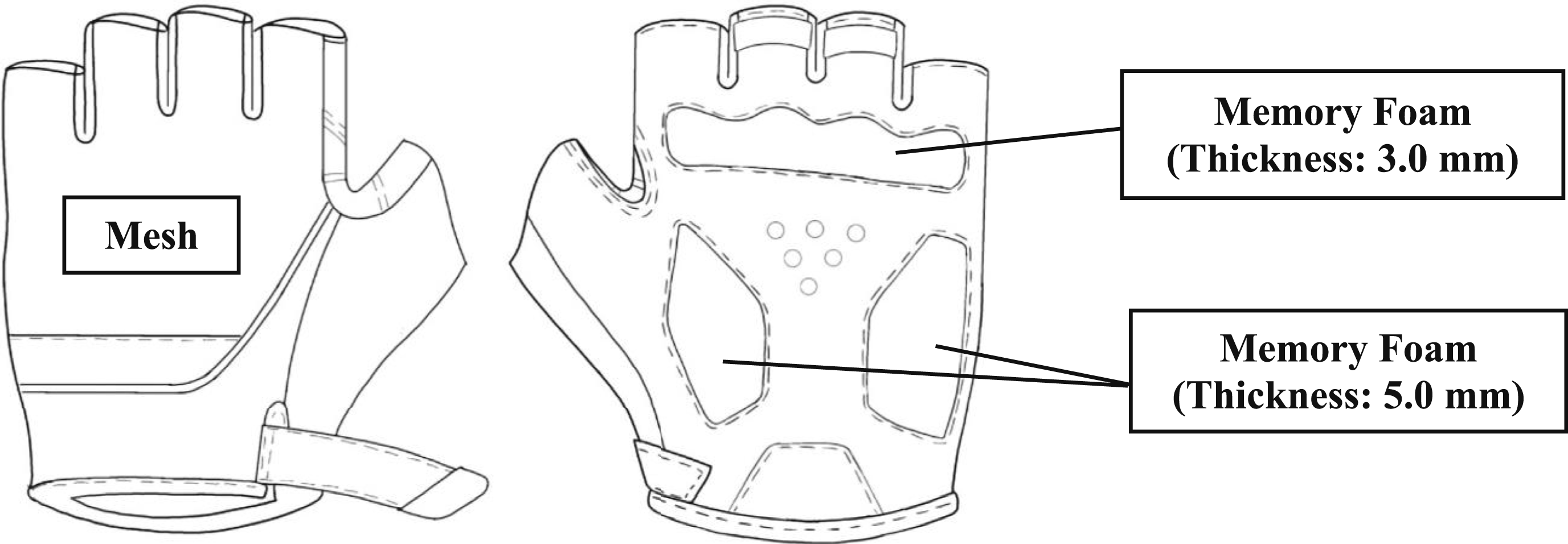

The size of the commercial glove was selected as size S based on the average hand circumference of 18.9 cm for women aged 20‒69 years, as indicated by data from the 8th Korean Anthropometric Survey.
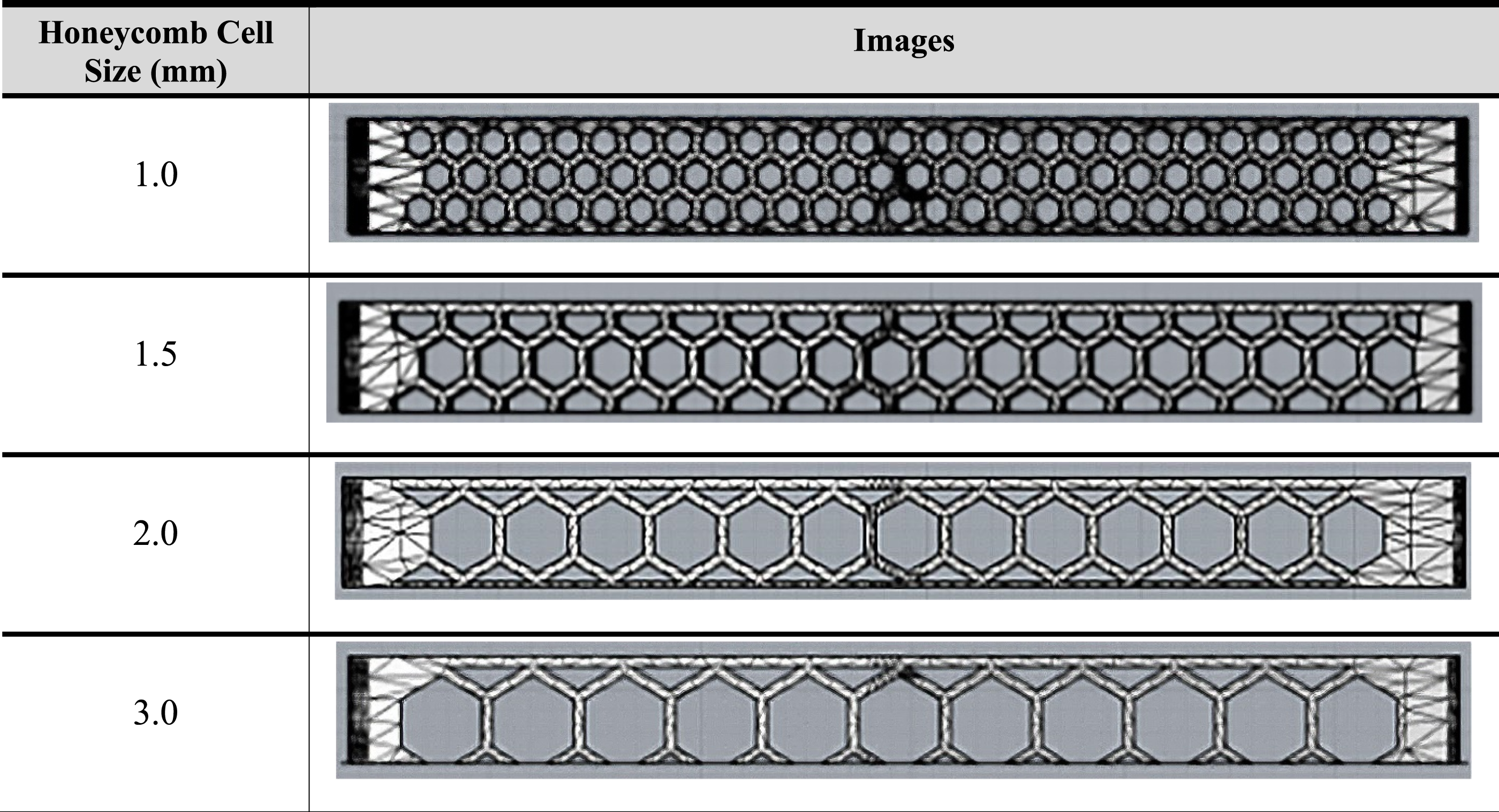
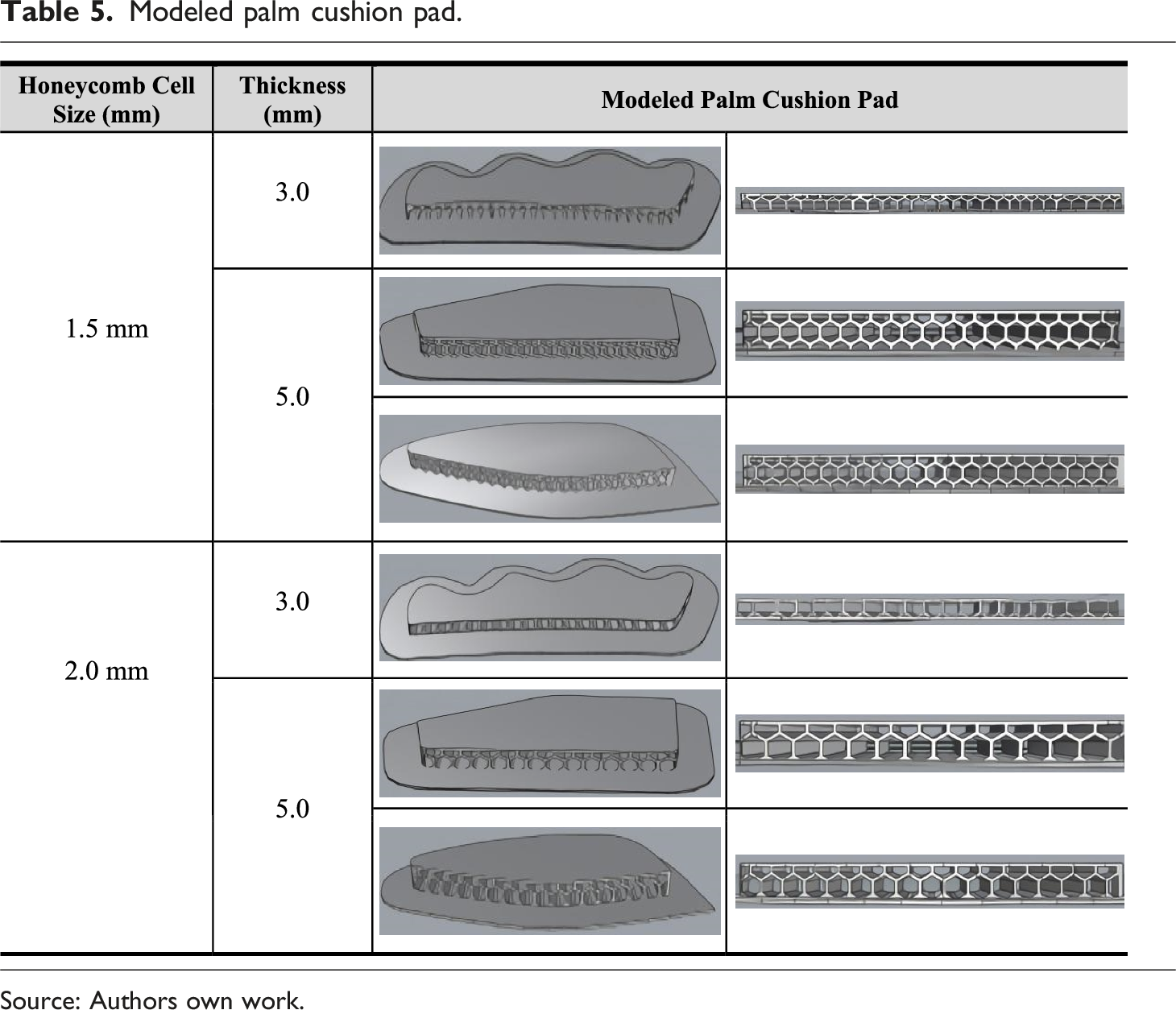
The palm pad was designed as a honeycomb structure to reduce impact. This structure was aimed at minimizing vibrations during riding and protecting the palm during falls. 25 The honeycomb design, known for its impact absorption, was modeled with cell sizes of 1 mm, 1.5 mm, 2 mm, and 3 mm. Meanwhile, the pad thickness was set to 3 mm and 5 mm, corresponding to those of the commercial glove.
Rhino 8 software was used for 3D modeling, and STL files were obtained. The slicing software Cubicreator4 produced the G-code for printing, which was performed using a CUBICON Single Plus - 320C 3D printer with a 1.75-mm-diameter TPE 85A filament. Nozzle and bed temperatures were set to 230°C and 60°C, respectively, optimized for printing using flexible TPE filaments. Initially, a printing speed of 30 mm/s was selected; however, this speed was subsequently reduced to 15 mm/s to prevent filament tangling and maintain print quality.
For the back-of-hand mesh, the zigzag infill pattern in Cubicreator was selected to reduce weight and printing time. 26 The infill density was set at 50% to balance flexibility, elasticity, and stiffness. Meshes with three thicknesses (0.6 mm, 0.8 mm, and 1.0 mm) were printed and tested for tensile strength, and the optimal thickness was applied to both Study Glove 1 and Study Glove 2. The printing parameters for the back-of-hand material were identical to those used for the palm pad: a nozzle temperature of 230°C, a bed temperature of 65°C, an output speed of 30 mm/s, and a fill density of 50%.
Material property testing
The impact resistance of the 3D-printed palm pad was evaluated using an Izod impact tester, a device designed to assess a material’s capacity to withstand sudden impacts. Specimens were prepared in accordance with the ASTM D256 standard, which outlines the impact-testing procedures for plastic materials. Additionally, the tensile strength of the printed infill pattern was measured using a UNITEST M1 Series tensile tester, a device that measures the force required to elongate materials. Specimens for this test were prepared in line with the ASTM D638 Type I standard, which specifies the procedure for determining the tensile properties of plastics.
Evaluation
Selecting study participants
Hand size ranges for the participants.

Evaluation of fit and functionality
This study assessed the fit and functionality of the selected commercial cycling glove and the two study gloves. Fit was evaluated on a five-point scale (1 = completely unsuitable, 5 = completely suitable) across four criteria: fit, comfort, appearance, and overall satisfaction. Participants who rated an item as “1” or “2” were asked to provide reasons for their rating.
Steps involved in the functionality evaluation.

The fit and functionality ratings of the participants were analyzed using descriptive statistics, multiple response analysis, the nonparametric Friedman test, and the Wilcoxon signed-rank test in IBM SPSS Statistics.
Comprehensive evaluation and interviews
Following the comfort and functionality evaluations, participants completed a comprehensive assessment of the three glove pairs by ranking them and explaining their choices. Interviews were then conducted to encourage participants to discuss 3D printing technology and their experiences with the selected 3D-printed cycling gloves. The goal was to gather insights into the practical potential of these gloves.
Results and discussion
Glove design
Development of honeycomb-structured palm cushion pads
Modeled honeycomb structures with different cell sizes.

Source: Authors own work.
Printed honeycomb structures with different cell sizes.


Source: Authors own work.
Modeled palm cushion pad.
Source: Authors own work.
3D-printed palm cushion pad.


Source: Authors own work.
Impact testing results
ASTM D256 standards.


Source: Authors’ own work.
Results of the impact test.

Tensile strength and elongation testing results
Tensile strength tests were performed on the 3D-printed specimens using a UNITEST M1 Series tester, in accordance with ASTM D638 Type I. Each specimen’s thickness was tested thrice, and the results were averaged. The testing duration was 1 min 53 s for all specimens, none of which fractured during testing.
The 0.6-mm-thick specimen withstood a maximum load of 11 N, while the 0.8-mm- and 1.0- mm-thick specimens withstood loads of 13.6 N and 16.9 N, respectively. Notably, all three specimens exhibited 600% elongation, reflecting the flexibility of the TPE material, which is comparable to that of polyurethane, as reported by Park et al.
27
Overall, the TPE material, which was printed with a zigzag internal filling pattern at 50% density, exhibited high tensile strength and elongation without restricting hand movement (Figure 3). 3D-printed ASTM D638 type I sample (Source: Authors’ own work).
Results of the tensile and elongation tests.


3D-printed back-of-hand mesh (Source: Authors’ own work).
Fabrication of the study gloves
Images of sample gloves.
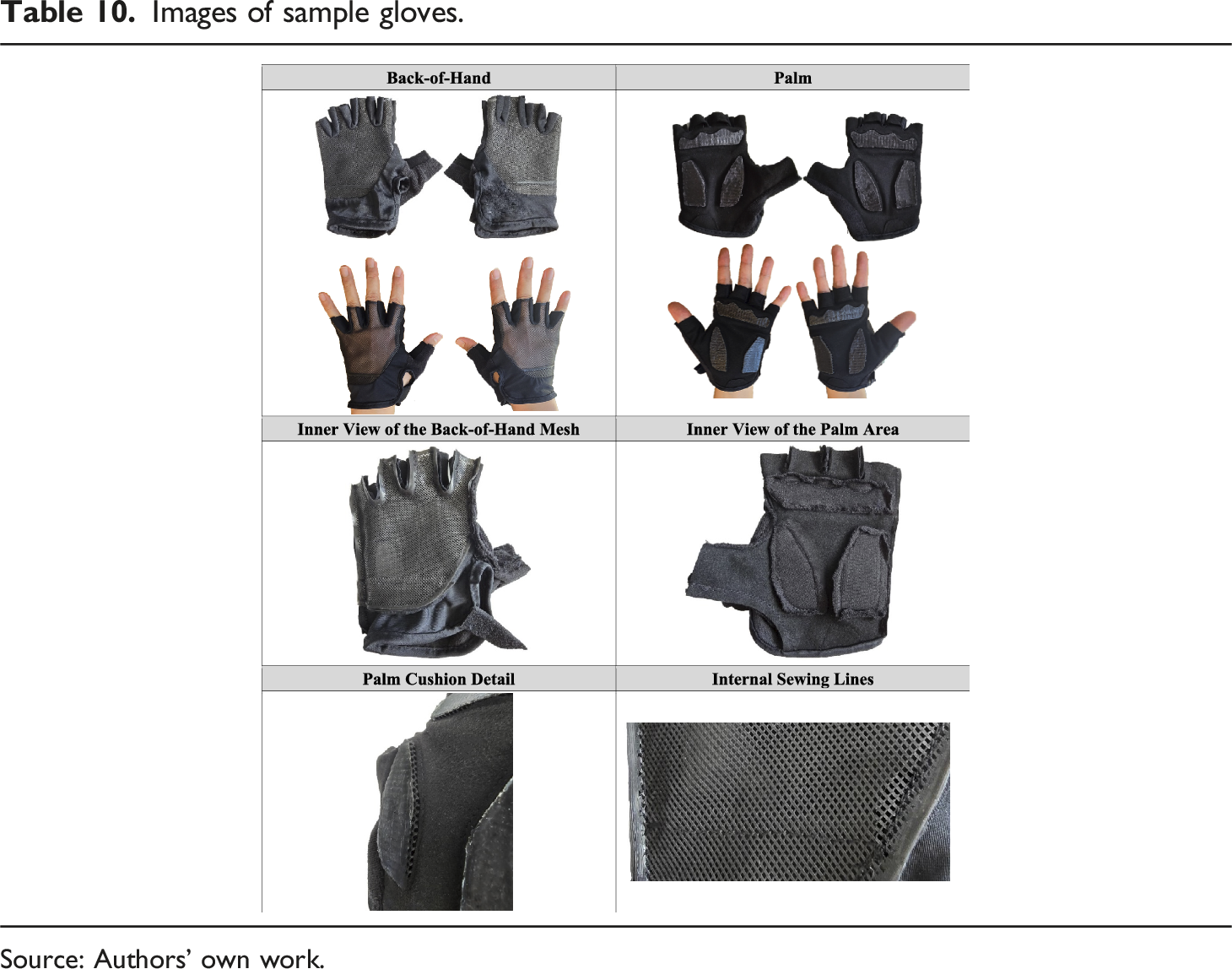

Source: Authors’ own work.
Evaluation results
Cycling patterns and glove preferences of the participants
An analysis of the cycling patterns and glove preferences of the 12 study participants revealed that five had been cycling for over 4 years, four had been cycling for more than three but less than 4 years, two had been cycling for more than two but less than 3 years, and one had been cycling for more than one but less than 2 years. The primary purpose of cycling was personal leisure or hobby for six participants, club activities for five participants, and exercise for health for one participant. In terms of frequency, three participants cycled three to four times per week, three participants cycled once or twice per week, two participants cycled three to four times per month, and two participants cycled irregularly (Figure 5). Most participants cycled consistently at least once a month, with the most common duration of cycling sessions exceeding 3 h. This consistency suggests that the study participants were actively involved in cycling, primarily through leisure and club activities. Cycling activity levels of participants.
Glove usage and size patterns of the participants.

Regarding glove materials, 29.2% of the respondents were unsure of the material of their gloves, while the remaining participants most commonly used gloves made from synthetic leather, nylon, and spandex. In terms of brand preferences, 33.3% of the participants selected “Other,” including brands such as Loffi Quick-Mit, Bontrager, Santic, Giyo, CU-TINE, Shimano, Nike, and ASOS. Among specified brands, NSR (26.7%) had the highest response rate, followed by ULVINE (13.3%), an unidentified brand (13.3%), Aden Bike (6.7%), and SILENCE (6.7%) (Figure 6). Cycling glove usage among the participants.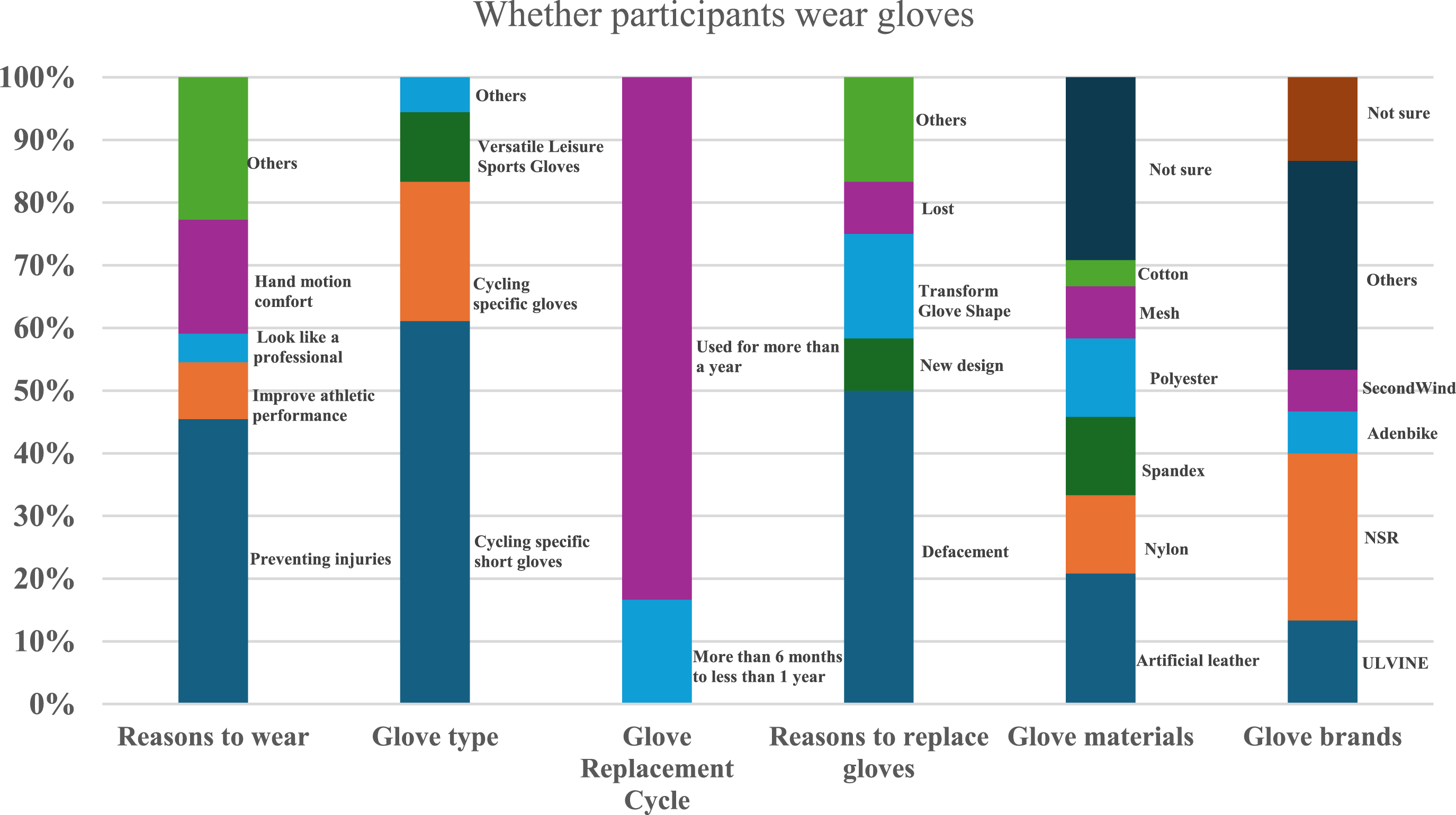
These findings underscore that female cyclists primarily use gloves for injury prevention and hand protection. The frequent friction-induced damage caused to fingertips and palms highlights the need for durable glove materials. Additionally, fabricating gloves with a variety of materials and designs is essential.
When rating their satisfaction with their cycling gloves on a five-point Likert scale, the participants rated most items as “fair.” However, durability received a lower average score of 2.92, likely because damage was the primary reason for replacing gloves. Overall, the participants were generally satisfied with the quality of their gloves, except for durability.
When asked to identify factors influencing their purchase decisions, the respondents ranked color (4.67) and design (4.58) as the most important considerations. Satisfaction with the variety of available designs, however, was moderate, at 3.00, suggesting potential for improvement by offering customized designs through 3D printing technology.
Cycle glove satisfaction and purchase considerations survey results.

Overall, our results revealed that cycling glove purchasers prioritize both aesthetic and functional factors, with durability as a significant concern. Customization through 3D printing technology may effectively address these issues.
Fit evaluation results
Evaluation results for the Commercial Glove and Study Gloves 1 and 2.

 Shading indicates the glove with the highest value among the three gloves.
Scale: 1 = Completely unsuitable, 2 = Mostly unsuitable, 3 = Neutral, 4 = Mostly suitable, 5 = Completely suitable.
*p < 0.05.
In terms of overall fit satisfaction, however, a significant difference (p < .05) was observed. Study Glove 2 received the highest satisfaction score of 4.08, followed by the commercial glove at 3.83 and Study Glove 1 at 3.58. The Wilcoxon signed-rank test confirmed a statistically significant difference between Study Glove 1 and Study Glove 2, which was attributed to variations in the cell dimensions of honeycomb structures within the palm pad. In terms of specific subcategories, Study Glove 1 scored lower for stretch, the commercial glove was rated lower for weight and fit, and Study Glove 1 was deemed unsuitable owing to the stiffness of its palm pad.
Appearance ratings revealed no statistically significant differences among the three gloves, each receiving similar average scores in the three-point range. The aesthetics of the back-of-hand and palm pads were rated as moderate for all gloves, though some feedback suggested improvements to the 3D-printed sections.
The overall evaluation revealed no significant differences among the three gloves. In terms of portability and durability, all gloves received ratings in the four-point range.
In conclusion, all three gloves received ratings in the three to four range, with no significant differences overall. Although the study gloves were not rated as superior, their comparable performance to the commercial glove suggests that our 3D-printed TPE palm pad and back-of-hand mesh could be effectively used in cycling gloves.
Functionality evaluation results
Functionality evaluation results for the Commercial Glove and Study Gloves 1 and 2.

Shading indicates the glove with the highest value among the three gloves.
Scale: 1 = Completely unsuitable, 2 = Mostly unsuitable, 3 = Neutral, 4 = Mostly suitable, 5 = Completely suitable.
*p < 0.05.
The gripping behavior evaluation revealed significant differences (p < .05) among the gloves in terms of their palm length and the thickness of the 3D-printed back-of-hand component. Specifically, for palm length, the commercial glove was rated significantly lower than Study Glove 2, primarily owing to perceptions of a looser fit. This finding aligns with the observations of Yu et al., who reported that excessive space between the glove and the hand can compromise grip performance and overall hand function. This reinforces the importance of designing gloves with an optimal fit to maximize grip efficiency. 28
Based on the overall average scores, the proposed glove received slightly higher ratings than the commercial glove; however, the difference was not statistically significant. This suggests that while the proposed glove was rated better on certain evaluation metrics, it did not offer a distinct advantage in terms of overall user satisfaction.
Collectively, the findings demonstrate that the proposed glove was positively evaluated in terms of palm length and the thickness of the 3D-printed back-of-hand, achieving higher ratings on these specific metrics. This highlights the potential of our design approach and materials to offer functional benefits over conventional gloves, particularly in enhancing fit and structural support.
In the riding behavior evaluation, a significant difference (p < .05) was observed among the gloves in terms of their ventilation. Study Glove 1 and Study Glove 2 were rated 4.00 and 4.20, respectively, while the commercial glove received a lower rating of 2.80. This suggests that the ventilation quality of the study gloves was superior. Therefore, compared with the commercial gloves, the proposed gloves are likely to maintain better comfort during prolonged wearing.
Regarding hand vibration, palm pad cushioning effectiveness, and palm pad positioning, all three gloves performed similarly, with scores in the three-point range, exhibiting no significant differences. However, some comments indicated that the palm pads in the commercial glove were too thin, while those in Study Gloves 1 and 2 were thick and stiff, leading to discomfort. This feedback may be attributed to personal preferences regarding palm cushioning.
In terms of handle retention, all three gloves yielded comparable results, with no discernible differences. The commercial glove received the highest rating for overall satisfaction with gripping behavior, while Study Glove 1 was deemed to provide an inadequate grip.
Evaluation of donning and doffing ease revealed no significant differences among the gloves. In particular, Study Glove 1 received a lower score of 3.50 for its palm protection pad, while Study Glove 2 and the commercial glove scored 4.00 and 3.80, respectively. This discrepancy is likely attributed to the inflexibility of the honeycomb structure with the 1.5 mm cell size. Additionally, the palm material of the study gloves was rated as comfortable during donning and doffing, suggesting that the internal filling structure used in the study gloves could be viable for cycling gloves.
In terms of overall satisfaction, all three gloves received similar ratings. Study Glove 2 scored the highest at 4.00, followed by the commercial glove and Study Glove 1 at 3.70, suggesting that the study gloves can positively impact cycling activities. Specifically, in terms of suitability as a cycling glove, Study Glove 2 received a score of 4.00, while Study Glove 1 and the commercial glove both scored 3.50. These results confirm the feasibility of using 3D-printed TPE materials in cycling gloves. Thus, by adjusting the dimensions of the honeycomb structure and thickness of the palm pad, 3D-printed TPE materials can be optimized for cycling gloves and other sports equipment.
In conclusion, Study Glove 2 received high scores across various categories, including comfort, ventilation, and flexibility, indicating that 3D printing technology has the potential to enhance cycling glove functionality. Further research is needed to optimize the size and thickness of the honeycomb structure to improve fit and performance.
Comprehensive evaluation and interview results
Comprehensive evaluation questions.

Study Glove 1 was rated the least ergonomic for gripping the steering wheel, while Study Glove 2 ranked the highest in most other evaluated categories. These high ratings for Study Glove 2 were attributed to its flexibility, as well as the ventilation performance of its back-of-hand mesh material, which proved advantageous during cycling. However, concerns were raised regarding the insufficient ultraviolet protection of the back-of-hand mesh material. Furthermore, the palm pad of Study Glove 1 was criticized for being hard and excessively thick, causing discomfort when gripping. Conversely, Study Glove 2 was commended for its cushioned comfort, though it received negative feedback for its aesthetic appeal. To address this, participants suggested adding a fabric layer over the 3D-printed component.
These findings align with results from the Cycle Glove Satisfaction and Purchase Considerations study, which emphasized the importance of both appearance and functionality. Thus, while the palm pad design of Study Glove 2 demonstrates promise for adaptation in cycling gloves, further refinements are warranted.
Conclusion
This study examined the performance of 3D-printed cycling gloves made from TPEs. The cushions of the palm pads were designed with an in-plane oriented honeycomb structure, a design commonly used for impact mitigation. Glove palm cushion pads with hexagonal structures featuring cell sizes of 1.5 mm and 2.0 mm were 3D-printed and subjected to impact testing. Additionally, the back-of-hand mesh material was 3D-printed with a zigzag internal filling pattern at 50% density and subjected to tensile testing.
To evaluate the viability of Study Glove 1 and Study Glove 2 as cycling gloves, both prototypes were compared with a commercial glove from the perspectives of comfort and functionality. 12 women in their 20s and 30s participated in the evaluation. Although, the overall comfort and functionality ratings did not significantly differ among the three gloves, all gloves scored within an average three-point range. Participant feedback suggested that aesthetic enhancements would be beneficial for the 3D-printed components of the gloves.
The functionality ratings of the gloves were moderate overall. The participants noted that the back-of-hand mesh material of Study Glove 2 offered enhanced flexibility and ventilation, contributing to comfort during use; however, they mentioned the lack of ultraviolet protection as a drawback. In contrast, the palm pad of Study Glove 1 was deemed hard and excessively thick, causing discomfort when gripping the steering wheel. Overall, while Glove 2 received positive feedback for its cushioning and comfort, its aesthetic appeal was critiqued, with recommendations for adding a fabric covering over the 3D-printed components.
Glove 2 received positive ratings for both comfort and functionality, while Glove 1 was deemed less adequate, primarily owing to differences in the honeycomb structure dimensions. The honeycomb structure with a 1.5 mm cell size, though effective in shock absorption, was too stiff and lacked the resilience and cushioning needed for cycling gloves. Conversely, the honeycomb structure with a cell size of 2.0 mm provided greater flexibility and cushioning, indicating its suitability with potential adjustments to thickness. Furthermore, the flexible and breathable nature of the back-of-hand mesh material suggests its viability as an alternative to traditional mesh materials.
Our findings confirm the feasibility of 3D-printing cycling gloves using TPE materials and highlight the potential of such materials for broader application in protective equipment and sports gear. As noted by Dasgupta and Dutta (2024), 3D printing using elastomers represents a cost-effective and material usage efficient alternative to traditional manufacturing. Furthermore, the ability to customize designs in 3D printing allows for tailoring the fit and performance characteristics of the product to the requirements of different users while minimizing material waste, in addition to enabling the creation of complex geometries that conventional methods struggle to achieve. 29
In this study, a cushioning pad structure was developed using 3D printing technology. Future research could employ fit-improvement strategies suggested in previous studies to develop gloves optimized for individual hand sizes and shapes. This approach requires experimental verification of the effectiveness of fit enhancement and systematic evaluation of the feasibility of customized glove design.
While this study confirms the feasibility of 3D-printing cycling gloves using TPE materials, certain limitations must be addressed. The sample size (12 participants) was small and was restricted to women in their 20s and 30s, which limits the generalizability of the findings. Future research should incorporate a larger, more diverse participant pool to ensure more robust results. Additionally, our analysis of glove performance focused primarily on subjective user evaluation, lacking an objective comparison with commercial gloves. Hence, future research should include comparative durability testing of the proposed gloves against commercial alternatives. To this end, we will conduct long-term simulated usage tests to assess performance variations over time and compare the results with those from this study. We anticipate that such comparisons will enhance the objectivity and validity of our findings.
Footnotes
Acknowledgments
This work is based on the part of the master’s thesis of the first author.
Declaration of conflicting interests
The author(s) declared no potential conflicts of interest with respect to the research, authorship, and/or publication of this article.
Funding
This research was supported by Korea Institute for Advancement of Technology (KIAT) grant funded by the Korea Government (MOTIE) (P0020460)
