




Abstract
The COVID-19 pandemic has highlighted the critical need for adequate respiratory protection, leading to a surge in non-powered air-purifying respirators (N-PAPRs). It is even relevant for future requirements as, according to the World Health Organization (WHO), the pandemic is not yet all over. This paper investigates the development and optimization of composite N95 respirators by incorporating nanofibrous membranes made from polyacrylonitrile (PAN) and polyvinyldifluoride (PVDF) using the electrospinning technique. The study assesses the impact of areal densities (g/m2) on penetration performance under three different levels of face velocities based on realistic situations. Our findings indicate that despite having a finer diameter and higher surface area of the PVDF nanomembrane, the respirator incorporated with PAN nanofibrous membrane exhibits higher filtration% (ŋ = 96.5% at 0.6 g/m2 and 9 cm/s). It was also found that when the areal density increases, the difference in penetration between PAN and PVDF composites gets marginalized. In contrast, the initial pressure drop was significantly similar in both polymer composites, but as the areal density increases, the pressure drop increases notably. Moreover, an innovative self-decontamination method was introduced utilizing graphene oxide (GO), which leverages light-responsive properties to achieve antibacterial effects through reactive oxygen species (ROS) generation and localized heating. This dual functionality extends the respirators’ usability while maintaining safety and efficacy. The findings suggest that optimizing the areal density of nanofibrous membranes can significantly enhance respirator performance, addressing the high filtration efficiency, low pressure drop and enhancing the span life of the respirator masks (N95).
Introduction
Respiratory protective equipment (RPE) is one of the personal protective equipment (PPE) utilized to reduce the risk of toxic and fine particulate particles that cause a significant threat to human health. However, prolonged exposure to these fine particles (PM0.3) can result in various health issues due to their ability to penetrate and accumulate within the respiratory tract and subsequently dissolve into the bloodstream. Respirators were first introduced in the U.S. healthcare sector during the late 1980s, primarily due to the rising number of mycobacterium tuberculosis (TB) cases, despite the widespread use of surgical masks. Surgical masks cover only the wearer’s mouth to prevent the patient from the wearer. However, respirators are designed to establish an airtight seal with the wearer’s face, which ensures that air passes only through the filter medium during breathing. It is equipped with a combination of different nonwoven layers.
A typical N95 respirator combines nonwoven layers, including spunbond, melt blown, and needle-punched. The melt blown layer, composed of densely packed, micro-sized fibers, is the primary filtration layer. 1 Achieving a filtration efficiency of at least 95% involves using a thicker layer of melt blown material. In some cases, manufacturers also employ multiple layers of melt blown material to enhance filtration efficiency. Research has shown that increasing the thickness of the respirator by using multiple melt blown layers can significantly improve filtration efficiency. Zhang et al. (2019) fabricated a five-layer respirator with two melt blown layers and three needle-punched layers, achieving an excellent filtration efficiency of 99.52% at a flow rate of 85 ℓ/min. Enhancing the filtration efficiency to higher levels is relatively easy, but maintaining the balance between filtration efficiency and pressure drop is the main priority. This design resulted in a high-pressure difference of 136 Pa, which could have adverse psychological impacts on human health. 2
Researchers have also integrated charged filter layers into the respirator to balance filtration efficiency and breathing resistance. These layers are mostly electrostatically charged and called electret filters. In contrast to conventional filters, electret filters provide better particle capture efficiency and lower air pressure drop due to electrostatic interactions.3,4
Zhang et al. (2021) studied a respirator with four corona-charged melt blown layers, demonstrating a significantly high filtration efficiency of 99.01% and a low-pressure drop of 95.71 Pa, adhering to the National Institute of Occupational Safety and Health (NIOSH) standards. The mass median diameter of the NaCl aerosol used in this study was 0.26 µm despite the high filtration efficiency of electret media reported in the literature. 5 However, there is a decline in charge density over time, making these respirators suitable for one-time use only. Over the last decade, researchers have been exploring nanofibrous membranes to achieve maximum filtration efficiency and minimal pressure drop while extending respirators’ lifespan. Nanofibrous membranes exhibit various properties ideal for efficient filter media, including high porosity, air permeability, and surface area per unit mass. Their fine fiber structure increases filtration surface area and demonstrates a slip flow effect, effectively reducing pressure drop. Additionally, nanofibers offer chemical stability and mechanical strength.
Yun et al. (2007) created electrospun polyacrylonitrile nanofibers (270-400 nm diameters) and evaluated their effectiveness as nanoparticle filters. Their experiments, using NaCl nanoparticles under 80 nm, showed that thicker filters resulted in better filtration efficiency, demonstrating the potential of electrospinning for producing high-performance filters for nanoparticles. 6 Bian et al. investigated the impact of nanofiber properties (thickness and diameter) on the PM2.5 filtration efficiency of Nylon 2, 5 nanofiber filters. Their results showed that thicker filters had higher filtration efficiency, while larger fiber diameters reduced efficiency. 7
Recently, Noel et al. (2019) evaluated the filtration performance of nanofiber materials consisting of polyacrylonitrile (PAN), polyvinyldifluoride (PVDF), and cellulose diacetate (CDA) for use in composite multilayered surgical masks. The outer layers of the composite air filter media (CAFM) were composed of polypropylene (PP) nonwoven layers. The research assessed different configurations, including one, two, or three layers of various nanofibrous membranes. The areal density of the nanofiber membranes was varied to evaluate its impact on the filtration performance of the CAFM, with higher areal density typically corresponding to a more significant number of nanofiber layers. Among the different types of CAFM, PAN nanofibers consistently showed the highest filtration performance. However, the face velocity utilized in this research was significantly high at 30 m/s, which is unsuitable for normal breathing conditions. 8 Additionally, there was significant variation in the areal density of the nanofibrous membranes. Therefore, no study investigates the impact of different polymer membranes with similar areal densities on filtration performance in the application of respirators.
To pursue higher quality, filter membranes must exhibit high filtration efficiency while minimizing breathing resistance. The efficiency of a filter membrane is closely linked to the most penetrating particle size (MPPS), which is influenced by factors such as face velocity, areal density, filter thickness, fiber diameter, and fiber charge density. 9 Numerous studies have focused on face velocity as a key research parameter. However, the range of face velocities from normal breathing to exercise conditions remains underexplored, typically varying between 3 cm/s to 9 cm/s.
Therefore, in this study, polyacrylonitrile (PAN) and polyvinyldifluoride (PVDF) polymer membranes of similar areal density, produced by the process of electrospinning were used in composite multilayered respirators to optimize their filtration performance.
Alongside the filtration performance, the reusability of a respirator is also crucial after the outbreak of COVID-19. There are two main methods that are effective for disinfecting masks: heat-based and chemical-based decontamination. Ullah et al. (2020) discovered through their studies that nanofibrous filter media can be repeatedly used after cleaning with 75% ethanol. 10 However, the use of high concentrations of chemicals is not advised because they can break down the polypropylene-based fibers and thus damage the structural durability of the masks, making them unfit for reuse. Hydrogen peroxide in vapor form has also been widely used to decontaminate respirators. 11
Apart from chemical decontamination methods, heat-based methods for respirator disinfection are more effective, as chemical methods can cause severe breathing problems. Reports have shown that temperatures of 60°C and above are effective in inactivating several bacteria and viruses, including SARS-CoV-2, due to the instability of their spike proteins.12,13 However, existing heating methods for mask disinfection typically require ovens and other thermal sources to heat the samples.
To address this issue, this study explores graphene oxide (GO), a light-responsive material that enable GO to absorb sunlight efficiently and convert it into heat energy. GO is highly efficient in converting near-infrared (NIR) light (typically 700–1100 nm) into heat. This photo thermal effect is due to GO’s strong absorption in the NIR range, making NIR light particularly effective for heat generation in GO-containing materials. 14 In addition to its heating capability, GO also exhibits antibacterial properties. Therefore, GO-based disinfection methods can be investigated to enable self-cleaning respirators while maintaining high filtration efficiency and breathability.
The motivation behind this study lies in the pursuit of developing next-generation respirators that can deliver high filtration efficiency while minimizing breathing resistance and extending the lifespan of the respirator. The use of nanofibrous membranes, made from polymers such as polyacrylonitrile (PAN) and polyvinyldifluoride (PVDF), is of particular interest due to their unique properties, including high chemical resistance, mechanical strength, and flowability.
This work presents several key innovations, including developing an N95 respirator composite made from different nanofibrous membranes consisting of PAN and PVDF through electrospinning. The study investigates the impact of these nanofibrous membranes’ varying areal densities (g/m2) on filtration performance under three different levels of face velocities, such as 3, 6, and 9 cm/sec. Additionally, a method is developed to enable effective self-decontamination and reuse of the respirators by utilizing graphene oxide (GO).
Material and methods
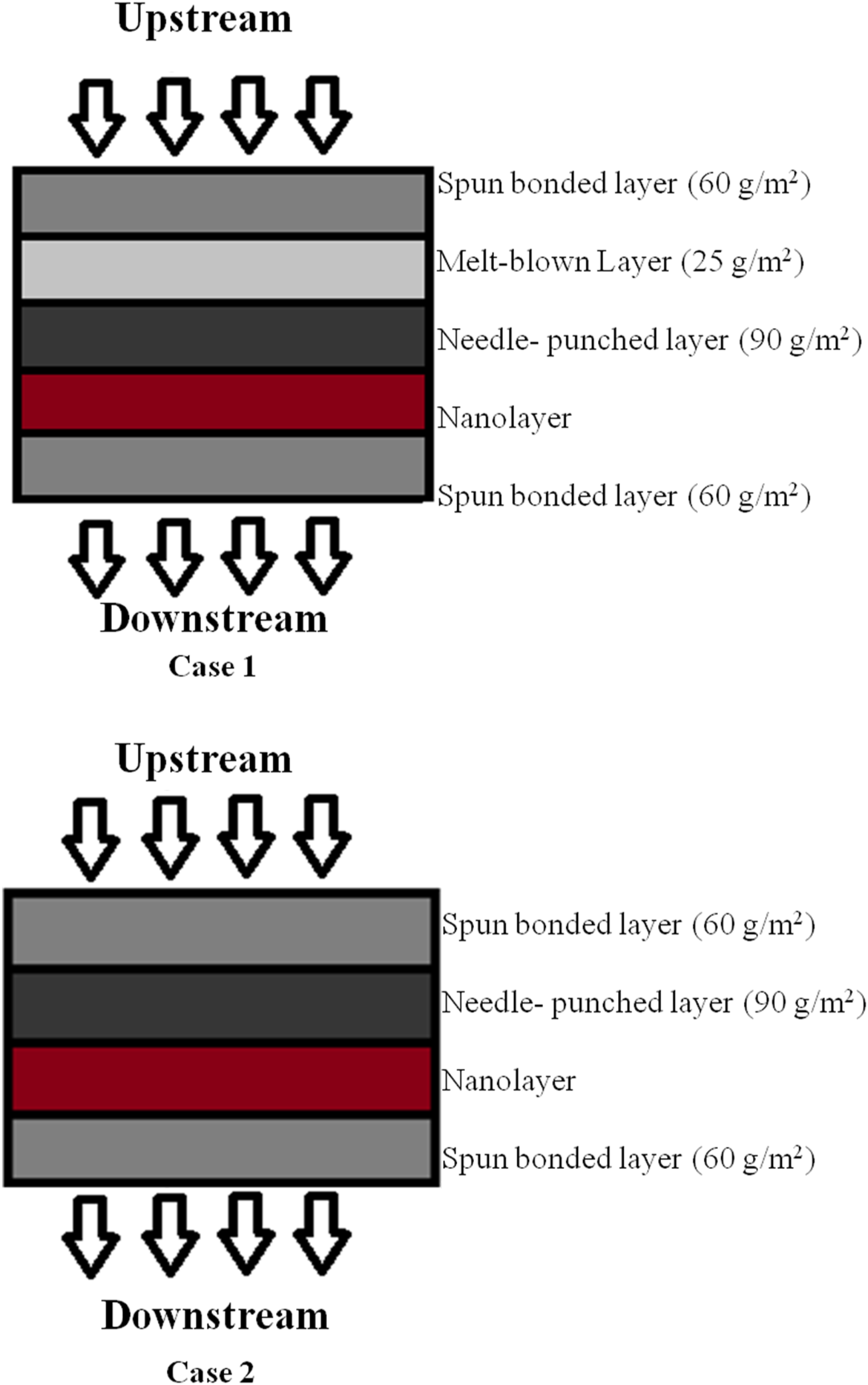
A typical N95 respirator has five layers arranged sequentially from upstream to downstream: spunbond, melt blown, needle-punched, melt blown, and spunbond, as shown in Figure 1. This research study tests the filtration efficiency, media resistance, breathability, and carbon dioxide (CO2) content analysis of the respirator when the nanomembrane of PAN and PVDF polymers replaces the melt blown layer separately in two configurations: Case 1 and Case 2 (See Figure 2). (a) Schematic illustration of the typical N95 mask layers. (b) Sequential representation of the different nonwoven layers in a standard N95 respirator, from upstream to downstream. Sequential representation of the different nonwoven layers in a respirator: Case 1 includes a melt blown layer incorporated with a nanolayer, along with spunbond and needle-punched layers. Case 2 features only the nanolayer, with spunbond and needle-punched layers, and the melt blown layer is absent.
Case 1
The melt blown layer on the downstream side of the respirator will be replaced by a nanomembrane. This configuration is necessary because the melt blown layer next to the wearer’s mouth is exposed to moisture during breathing, which reduces its filtration efficiency over time due to the decay of its electrostatic charge. The upstream melt blown layer will remain unchanged, which acts as a pre-filter, as illustrated in Figure 2 (Case 1).
Case 2
In this configuration, both melt blown layers shown in Figure 1 will be removed, and a single nanomembrane will be incorporated on the downstream side, next to the spunbond layer, as shown in Figure 2 (Case 2). This design aims to minimize breathing resistance while keeping the filtration efficiency equal to or greater than 95%. Additionally, it increases the lifespan of the respirator by eliminating the issue of charge decay.
Combination of different factors and levels.

Materials
The polymers polyacrylonitrile (PAN) and polyvinyldifluoride (PVDF) used in this study had molecular weights of 1.5 × 10⁵ g/mol and 1.4 × 10⁵ g/mol, respectively. To prepare the solution for electrospinning, 8 g of PAN polymer was dissolved in 100 mL of n,n-dimethylformamide (DMF) (AR, 99.9%) solvent. This mixture was stirred on a magnetic stirrer at 50°C for 8 hours at 400 rpm until a homogeneous solution formed. Similarly, 12 g of PVDF polymer was dissolved in 100 mL of DMF solvent under the same conditions.
Different solution and process parameters for PAN and PVDF nanomembrane.

The respirator’s development occurs after successfully preparing the nanofibrous membranes of PAN and PVDF. This involves combining various nonwoven layers, including the nanomembrane, as outlined in Figure 2 (case 1 & case 2). The different layers—spunbond, melt blown, needle-punched, and nanomembrane—are shaped into a cup form using an ultrasonic welding machine, as illustrated in Figure 3. Prototype of a Composite Respiratory Mask with Nanofiber Membrane (a) side view and (b) front view.
Testing methods
Scanning electron microscope (SEM) test
The morphology of the electrospun fibers was observed using a scanning electron microscope (SEM). SEM analysis was conducted using a Zeiss EVO 18 particular model with an accelerating voltage of 20 kV to obtain high-resolution images of the sample’s surface morphology. Before scanning, the samples were sputter-coated with a thin layer of gold to enhance their conductivity. The gold coating helps minimize beam damage and provides a uniform surface for electron interactions, producing more precise and detailed images of the sample’s surface morphology.
Penetration test
The penetration test is done according to NIOSH standard (42 CFR 84), the respirators were tested in a flat form to assess penetration percentages at three different levels of face velocity, which were 3 cm/s, 6 cm/s, and 9 cm/s. Three samples were tested for each level. The penetration tests were conducted using a TSI 8130 Automated Filter Tester (as shown in Figure 4). Sodium chloride (NaCl) served as the aerosol for these tests, with a concentration of 2% by wt. of NaCl. The aerosol mass median particle size targeted was 0.3 microns, representing the most penetrating particle size (MPPS). TSI Sample holder for penetration test.

Factors and levels for penetration test.

There are total 12 different test combinations of each polymer type (PAN and PVDF) and 3 specimens for each combination are used for penetration test.
Breathing resistance test
Factors and levels for breathing resistance test.

There are total 12 different test combinations of each polymer type (PAN and PVDF) and 3 specimens for each combination are used for breathing resistance test.
Inhaled carbon dioxide (CO2) content analyses test
Factors and levels for carbon dioxide inhalation test.
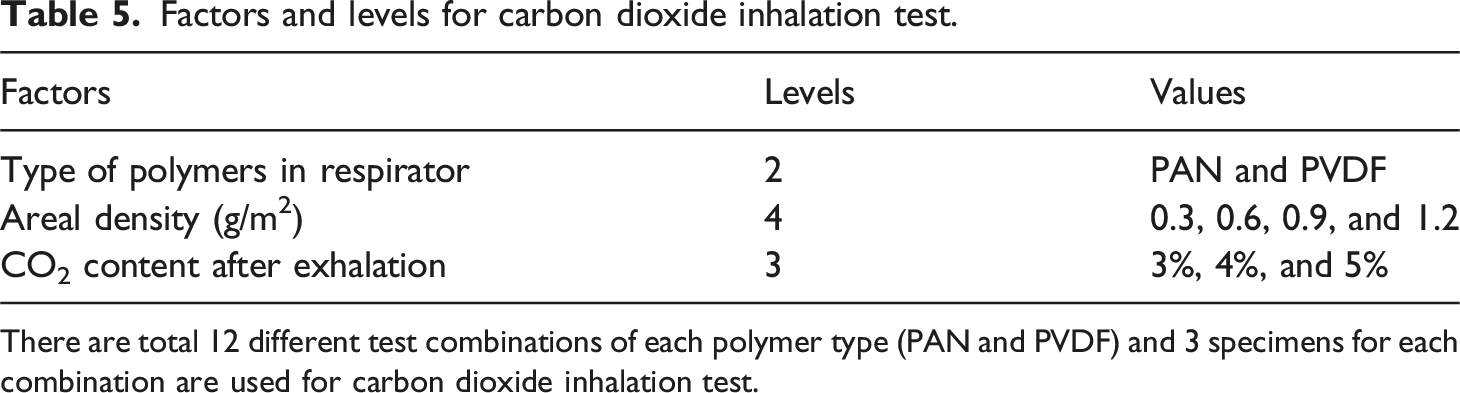
There are total 12 different test combinations of each polymer type (PAN and PVDF) and 3 specimens for each combination are used for carbon dioxide inhalation test.
Antibacterial test
Two bacterial strains, Escherichia coli (E. coli, ATCC 25922) and Staphylococcus aureus (S. aureus, ATCC 29213), were selected for antibacterial testing. These strains were cultured in Luria-Bertani (LB) broth and agar, ensuring optimal growth conditions. The LB medium was prepared according to ISO 20645 standards for consistency in the agar diffusion assay (ADA) method.
Sterilization of bacterial strains and Petri dishes was done at 121°C and 15 psi for 15-20 minutes using an autoclave. Overnight cultures of E. coli and S. aureus were grown in LB broth, and cell density was adjusted to 1 × 10⁶ CFU/mL. 100 µL of this bacterial suspension was added to each petri dish and incubated for 24 hours at 37°C.
For the antibacterial assessment, electrospun membranes of polyacrylonitrile (PAN) and polyvinyl difluoride (PVDF) embedded with graphene oxide (GO) (1.0 wt % GO) were prepared. PAN was dissolved in dimethylformamide (DMF) and mixed with GO, ensuring uniform dispersion. This PAN/GO solution was electrospun into fine fibers to form a membrane. The process was repeated for PVDF/GO membranes. Sample dimensions, measuring 0.5 × 0.5 mm, were placed on LB agar plates to evaluate their antibacterial properties under standardized conditions.
Results and discussion
The behavior of composite respirators incorporating nanomembranes (PAN and PVDF) was analyzed at four different levels of areal densities (0.3, 0.6, 0.9, and 1.2 g/m2) and three different levels of face velocities (3, 6, and 9 cm/sec). The performance of both configurations (Case 1 and Case 2), as mentioned in Figure 2, was evaluated based on parameters such as penetration percentage, media resistance, breathing resistance, and carbon dioxide inhaled content analyses. This analysis used a TSI 8130 automated filter tester, a breathing simulator, and a carbon dioxide content analyzer. Each graph utilized in this research represents the mean values, with error bars indicating the standard deviation.
Effect of areal density and face velocity on penetration % for PAN and PVDF polymer composites (discussed in Figure 2 (case 2)).

Statistical contribution of different factors affecting penetration (%) and media resistance (Pa).

Analysis of penetration percentage
Material parameters (areal density and polymer type)
Figure 5 presents the relationship between areal density and penetration percentage under three different levels of face velocities (3 cm/sec, 6 cm/sec, and 9 cm/sec). The data reveals that the penetration percentage decreases as the areal density increases, and each level of face velocity follows this trend. Moreover, the penetration percentage of respirators incorporated with polyacrylonitrile (PAN) nanomembranes, as per the configuration described in Figure 2 (Case 1), is consistently lower compared to those using polyvinyldifluoride (PVDF) nanomembranes. This indicates that respirators with PAN nanomembranes are more effective in filtering aerosol particles than those with PVDF nanomembranes. Effect of areal density on penetration% for PAN and PVDF composites at face velocity (A) 3 cm/sec, (B) 6 cm/sec, and (C) 9 cm/sec as mentioned in [case 1].
The Scanning Electron Microscope (SEM) test results for PAN and PVDF nanofibers are presented in Figure 6. These SEM images were captured after performing the penetration test using the TSI 8130, effectively showcasing the durability and filtration efficiency of the nanofibers by visibly capturing aerosol particles on their surface. The analysis reveals that the average diameter of PAN fibers is 320 nm, while PVDF fibers exhibit an average diameter of 180 nm, as measured at a magnification of 20.0 kx and summarized in Table 8. (a) SEM image of PAN polymer membrane, (b) SEM image of PVDF polymer membrane after penetration test under 20 kx magnifications, (c) Distribution of diameter range for PAN nanofiber and (d) Distribution of diameter range for PVDF nanofiber. The diameter specifications of PAN and PVDF membrane obtained through SEM images under 20 kx magnifications.


Characteristics comparison of PAN and PVDF membrane having areal density 0.6 g/m2.

In spite of having a finer diameter and more specific surface area of PVDF-incorporated nanomembrane, the PAN-incorporated respirator demonstrates higher filtration efficiency. This is because PAN nanomembranes, with a particular areal density (e.g., 0.3 g/m2, 0.6 g/m2, 0.9 g/m2, and 1.2 g/m2), have higher fibrous deposition due to low fiber density as compared with PVDF to achieve the same areal density as of PVDF. This would take more preparation time for PAN nanomembrane. This extended duration in PAN also results in a higher number of layers being deposited on the spunbonded polypropylene substrate layer, which revolves on the drum collector at a constant speed of 400 rpm.
For instance, achieving a 0.6 g/m2 membrane took 15 minutes for PAN. With a drum collector rotating at 400 revolutions per minute (rpm), the PAN nanomembrane accumulates 6000 (400 layers per minute × 15 min) in a given time. In contrast, the PVDF nanomembrane only accumulates 4000 layers (as PVDF took only 10 minutes). This increased number of layers enhances the membrane thickness. As a result, the impact of depth straining and depth retention is significantly magnified.
Moreover, PVDF nanofibers have a higher density (1.78 to 1.81 g/cm³) than PAN nanofibers (1.18 to 1.20 g/cm³). Therefore, when creating nanofibrous membranes of PAN and PVDF with specific areal densities (e.g., 0.3 g/m2, 0.6 g/m2, 0.9 g/m2, and 1.2 g/m2) and keeping all other electrospinning process parameters constant (as shown in Table 2), the number of fibers in PAN nanomembrane is substantially higher than in PVDF membrane.
Therefore, this significant increase in layers and fiber count in the PAN nanomembrane creates a more tortuous path and greater restrictions for airborne fine particles than PVDF. Consequently, this enhances the filtration mechanism, as the single fiber theory explains.
The penetration percentage versus the areal density curve for PAN and PVDF samples has been plotted in Figure 7 better to understand the relationship between areal density and filtration efficiency. The results reveal that PAN and PVDF nanomembranes exhibit consistent negative slopes in this relationship. This trend confirms that as areal density increases, penetration percentage decreases, indicating that denser filters generally provide better filtration efficiency. Effect of areal density on penetration% of composite incorporated with (A) PAN nanomembrane (B) PVDF nanomembrane.
Operational parameter (face velocity)
To understand the behavior of respirators (as mentioned in Figure 2 (case1)) under varying face velocities (such as 3 cm/s, 6 cm/s, and 9 cm/s), the penetration percentage versus face velocity curves for PAN and PVDF samples have been plotted in Figure 8. All curves show a linear increase in penetration percentage as face velocity increases from 3 cm/s to 9 cm/s. Effect of face velocity on penetration% of composites incorporated with (A) PAN and (B) PVDF nanomembrane.
At a lower face velocity (3 cm/s), aerosol particles have a longer residence time within the filter, enhancing filtration through diffusion or Brownian motion. Conversely, particles are more likely to pass through the filter at higher face velocities as diffusion becomes less effective, and only larger particles are intercepted and filtered out through direct impaction and interception mechanisms. This accounts for the observed increase in penetration percentage with rising face velocity.
However, a distinct behavior was observed for membranes with an areal density of 0.3 g/m2. In this case, the slope of the penetration percentage increase was significantly sharper and steeper compared to higher areal densities (0.6 g/m2, 0.9 g/m2, and 1.2 g/m2). This marked difference can be attributed to the lower fiber density inherent in the 0.3 g/m2 membranes, which results in fewer fibers available to capture aerosol particles. Consequently, the primary filtration mechanisms—diffusion, interception, and impaction—are less effective, rapidly increasing particle penetration as face velocity rises. Additionally, at higher face velocities, the reduced residence time of particles within the filter media further increases the severity of the limited filtration capacity of the low-density membrane, causing a steeper rise in penetration percentage.
Hence, the 0.3 g/m2 membranes appear to fall below a critical threshold areal density, beyond which the filtration performance degrades significantly more with increasing face velocity. This threshold effect underscores the importance of maintaining a minimum fiber density to ensure effective filtration across varying flow rates.
Analysis of media resistance (Pa)
It would be seen that initially (at 0.3 g/m2), the difference in media resistance (Pa) of both types of respirators (PAN and PVDF) would be negligible (as shown in Figure 9). However, the difference would increase by increasing the areal density. Moreover, it is clearly noticeable from Figure 9 that the respirator incorporated with the PAN nanomembrane would have higher media resistance than the respirator with the PVDF nanomembrane. Effect of areal density on media resistance of respirators incorporated with PAN and PVDF nanomembrane at face velocity (A) 3 cm/sec, (B) 6 cm/sec, and (C) 9 cm/sec.
The airflow naturally follows the path of least resistance, where nanofibers offer minimal obstruction. Therefore, as discussed above, an areal density of 0.3 g/m2 falls below the optimal threshold. This results in numerous spots with lower fiber density, reducing media resistance. As a result, at an areal density of 0.3 g/m2, the difference in media resistance of PAN and PVDF respirators would be minimal. Conversely, as areal density increases, the fiber counts rise, creating more tortuous paths. These paths make it harder for the airstream carrying particles to move across the mask. As a result, media resistance increases with higher areal density.
Moreover, the respirator incorporated with the PAN nanomembrane has more nanofibers in the membrane than the PVDF nanomembrane (discussed earlier). Therefore, the PAN-incorporated respirator offers higher media resistance than PVDF. Hence, this would amplify the difference in media resistance between PAN and PVDF as areal density increases.
Analysis of carbon dioxide inhalation %
Effect of CO2 exhalation% volume content and areal density on CO2 inhalation% for respirator incorporated with PAN and PVDF nanomembrane.
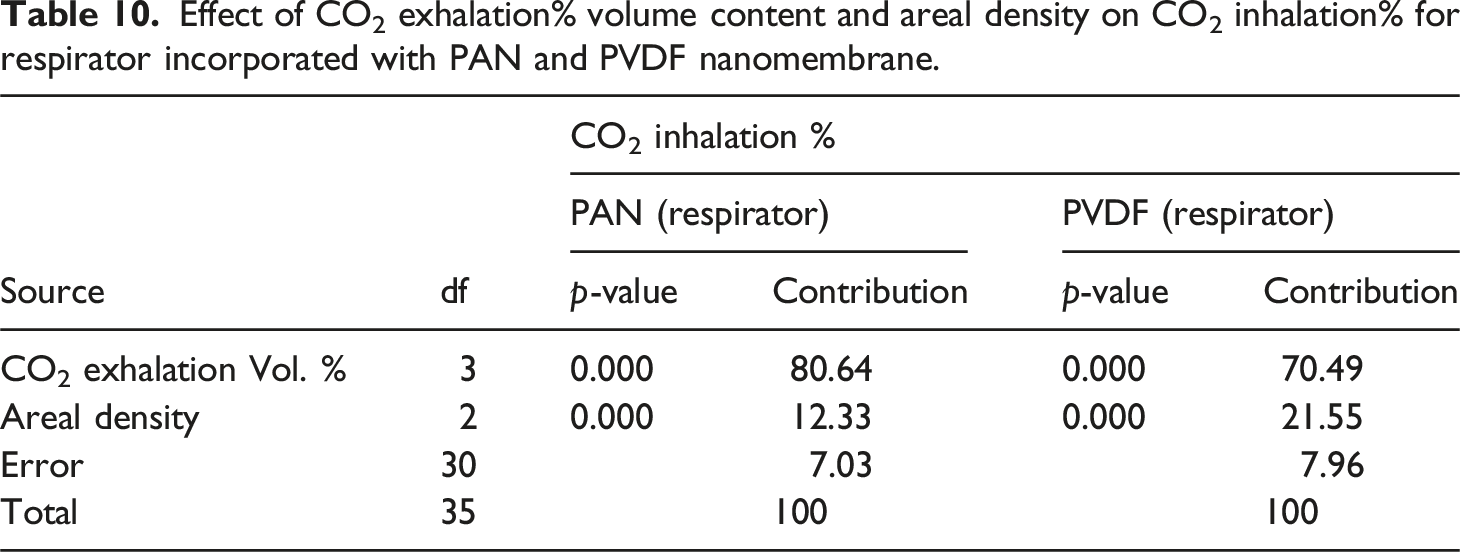
For the PAN nanomembrane, CO2 exhalation volume % is the primary factor influencing CO2 inhalation volume %, contributing 80.64% to the variance (p-value = 0.000). Areal density also plays a significant but smaller role, with a 12.33% contribution. Similarly, in PVDF, CO2 exhalation volume % remains the dominant factor, contributing 70.49% (p-value = 0.000). However, areal density has a more pronounced impact on PVDF, accounting for 21.55% (p-value = 0.000), highlighting the material density’s greater significance in PVDF.
The CO2 Content Analyzer Test results indicate that CO2 exhalation volume % and areal density significantly influence the CO2 inhalation volume % in PAN and PVDF nanomembranes. For PAN, the CO2 inhalation volume% continuously increased with higher CO2 exhalation volumes % across all areal densities (Figure 10). A similar trend was observed for PVDF nanomembrane also. Additionally, the data indicate that PAN membranes generally exhibit slightly higher CO2 inhalation percentages than PVDF membranes at the same exhalation volumes and areal density. Effect of areal density on CO2 inhalation% at different exhalation% of composite respirator (A) PAN and (B) PVDF.
This is because as the number of nanofibers and layers in the nanomembrane increases (i.e., areal density increases), the torturous path in the nanomembrane increases, which enhances the depth filtration mechanism. As a result, the CO2 molecules get entrapped in the downstream side during exhalation and get inhaled again by the wearer during the next breathing cycle. Therefore, the inhaled CO2 will also increase as the areal density increases.
Relationship between breathing resistance and carbon dioxide content
The scatter plot illustrates (shown in Figure 11) the relationship between breathing resistance (x-axis) and carbon dioxide (CO2) content (y-axis) for PAN and PVDF. The blue dots represent PAN, and the red squares represent PVDF. The line of best fit, with an r2 value of 0.82, indicates a strong positive correlation between the two variables. This correlation suggests that carbon dioxide content increases for both membranes as breathing resistance increases. This is due to the increase in areal density. As the areal density increases, the number of fibers enhances the more restrictive path for CO2 molecules to diffuse from respirators quickly. Regression plot of breathing inhalation resistance and carbon dioxide inhalation % for composite respirator with incorporation of PAN and PVDF nanomembrane.
However, the PVDF data points are closer to the trend line, indicating a more consistent relationship. This consistency implies that PVDF’s breathing resistance and carbon dioxide content performance are more predictable than PAN.
The study underscores the importance of selecting appropriate materials for respiratory protection based on their resistance to airflow and CO2 re-inhalation characteristics. With its almost perfect linear relationship and lower sensitivity to CO2 changes, PVDF may be preferred in applications demanding consistent and predictable breathing resistance. Conversely, with its higher sensitivity, PAN may be suitable for environments where higher breathing resistance is acceptable or required.
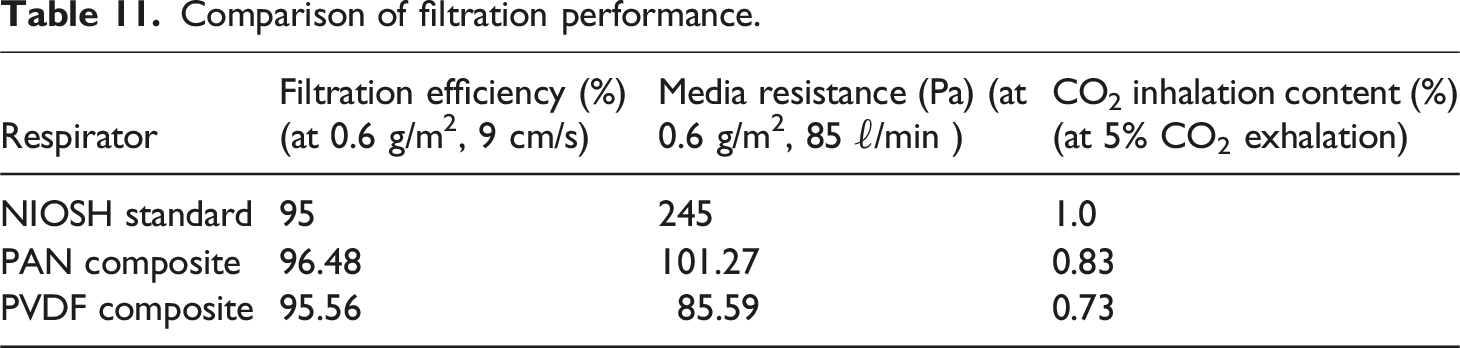
Comparison of filtration performance.
Effect of graphene oxide (GO) on antimicrobial and antibacterial properties of respirator
This study also investigates the impact of graphene oxide (GO) on nanomembranes, specifically focusing on its antimicrobial properties and light-responsive nature. Graphene oxide is known for its ability to generate localized heating, exceeding 60°C, under light irradiation, which is lethal to most microorganisms. Additionally, GO exhibits inherent antibacterial properties, contributing to its effectiveness as an antimicrobial agent. The dual properties of GO increase the lifespan and reusability of the respiratory mask.
The agar diffusion assay (ADA) method evaluated the graphene oxide-enhanced nanomembranes’ antimicrobial efficacy. Two bacterial strains were tested: Escherichia coli (E. coli, ATCC 25922) and Staphylococcus aureus (S. aureus, ATCC 29213). The samples were placed on agar plates and incubated for 24 hours. The results demonstrated significant antibacterial activity, with restricted bacterial growth observed around the graphene oxide samples (as depicted in Figure 12). Figure 12 shows the control images of PAN polymer composite without Graphene Oxide (GO) and with graphene oxide. The color around the membrane sample, as in sections (2, 3, 4) in Figure 12, indicates the killing of bacteria (E-coli), unlike in the case of section 1. Controlled effect of antibacterial activity on Escherichia coli. Section 1: PAN polymeric membrane without GO in bacterial solution, and Section (2, 3, 4): PAN polymeric membrane with GO in bacterial solution.
The positive results can be obtained in which graphene oxide exhibits antimicrobial and antibacterial properties. The graphene oxide is a light-responsive material; graphene oxide can convert light energy into heat, raising local temperatures above 60°C, sufficient to kill bacteria. Additionally, graphene oxide can generate reactive oxygen species (ROS) under light exposure, which induces oxidative stress in bacterial cells, thereby damaging proteins, lipids, and DNA. These combined effects make graphene oxide a potent antimicrobial agent, particularly effective in forming nanomembranes used in respirators. Incorporating graphene oxide into PAN and PVDF polymers enhances the functional properties of the membranes, providing a dual-action mechanism: physical filtration and antimicrobial activity.
Conclusion
In this study, we developed and evaluated a composite respiratory mask incorporating PAN and PVDF nanofiber membranes by removing the melt blown layer. Our research focused on assessing the impact of different areal densities of nanofibrous membranes on penetration% at different face velocities, such as 3, 6, and 9 cm/sec, covering a range of conditions from normal breathing to excessive exercise, an aspect not comprehensively explored in previous studies. This study presents several key innovations, including the development of an N95 respirator composite made from different nanofibrous membranes (PAN and PVDF) through electrospinning, a novel approach in this field. The integration of GO and the comprehensive evaluation of filtration performance under distinct face velocities contribute valuable insights, enhancing the practicality and usability of high-efficiency, reusable protective equipment.
The key findings demonstrate that the respirator incorporated with PAN nanomembrane composite exhibits lower penetration percentage despite having a higher diameter than those of PVDF nanofibers. Electrospun PVDF nanofibers have a low diameter range and high specific surface area, but still, PAN-incorporated nanomembrane respirator achieves lower penetration percentage. Owing to the more number of layers in the PAN nanomembrane, while keeping all the process parameters constant, the effect of depth straining and depth retention is greater than that of PVDF incorporated composite. In contrast, the media pressure drop for PVDF respirator is lower, indicating a trade-off between filtration efficiency and pressure drop. However, the media pressure in both types of respirators is well below the threshold defined by the NIOSH and EN149 standards.
Our findings suggest that respirators with a nanofiber membrane areal density of 0.6 g/m2 or higher provide high filtration efficiency and low-pressure drop while maintaining acceptable physiological parameters such as carbon dioxide inhalation. Further, incorporating graphene oxide (GO) into the respirator demonstrated dual functionality by converting light energy into heat to kill bacteria. The integration of GO for self-decontamination further enhances the practicality and value of these respirators in meeting current demands for high-efficiency, reusable protective equipment.
Footnotes
Declaration of conflicting interests
The author(s) declared no potential conflicts of interest with respect to the research, authorship, and/or publication of this article.
Funding
The author(s) received no financial support for the research, authorship, and/or publication of this article.
