




Abstract
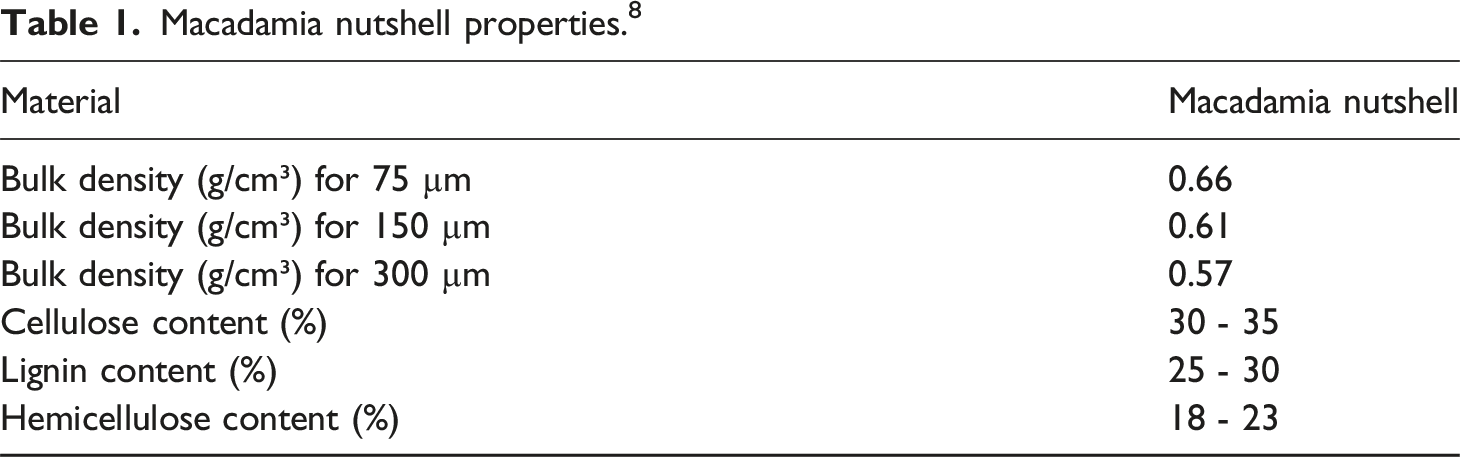
In the current research, tensile, flexural, and compression were done, as well as the effect of water absorption on dimensional stability, to study the effect of adding different weight fractions of Macadamia nutshell about (10, 20, 30, and 40 wt %) to Polyvinyl Butyral composites. Different average grain sizes of Macadamia nutshell (75 µm, 150 µm, and 300 µm) were used. In addition, both FTIR analysis and morphological observation of composites were conducted. Findings reveal that M7501 (10% filler, 75 µm) consistently achieves the highest mechanical properties, including tensile strength (35% higher), Young’s modulus (15% higher), toughness (40% greater), tensile strain (25% greater), flexural strength (29% higher), and compressive strength (20% higher) compared to M7504 (40% filler). Conversely, composites with larger particle sizes and higher filler content, such as M3004 and M1504, exhibited significant reductions in mechanical properties, with up to 43% lower flexural strength and 41.7% lower compressive strength compared to their counterparts with lower filler content. Higher filler contents exacerbated this issue by increasing the likelihood of particle clustering, which creates weak points and voids that compromise the structural integrity of the composite. Additionally, larger particle sizes (150 µm and 300 µm) showed more pronounced agglomeration and void formation compared to smaller particles (75 µm), further highlighting the challenges in achieving a homogeneous composite structure with larger fillers. SEM investigation demonstrated that increasing filler amounts led to noticeable particle agglomeration, aggregation and void formation, negatively impacts the composites, leading to weaker mechanical properties.
Introduction
The current focus on ecofriendly materials has led to the development of bio based composites which might be a potential replacement for the synthetic materials. 1 Using natural fillers to improve the characteristics of the composite material is quite popular in many applications for both structural as well as semi-structural applications while adhering to the general approach of reducing the use of synthetic materials. 2 The global production of macadamia nuts has surged, leading to an accumulation of discarded nutshells. Thus, macadamia nutshells can be considered as prospective filler, given that the production costs are reasonable and potential applications in various industrial sectors. Such as those applied in textiles that require moisture management, outdoor gear, utilized in construction applications (as sound insulation control in building materials and used in environmentally friendly packaging solutions). Due to increasing demands in the use of natural fillers and decreasing the use of synthetic fillers, the investigation of macadamia nutshells in natural fiber composites is important.3,4 Some of the properties that make macadamia nutshells suitable for use in innovative product designs include; Low density, high mechanical strength,5,6 biodegradability, and recyclability. Previous works on composite materials based on macadamia nutshells have been done with different polymers such as PLA, 7 PE, 8 polybenzoxazine, 9 polyester, 10 and PP. 11
As a solution to increasing environmental pollution and the global energy issue, natural biomass has been used to strengthen polymer-matrix composites. Different forms of biomass, such as seeds, nutshells, bast fibers, leaves, and grass/cane/reed fibers, have been effectively integrated into polymer matrices. Researchers have explored these biomass materials to enhance composite performance. In their study, Dong et al. 12 investigate the mechanical properties of Macadamia nutshell powder and PLA (polylactic acid). The research examines how powder weight content, condition, and processing methods affect composite performance. Findings indicate that 40% nutshell powder content increases the elastic modulus by 9.8%, while decreasing flexural and tensile strengths by 42% and 63%, respectively. Hardness remains unaffected by powder content, condition, and processing method. Mirindi et al. 13 explored the mechanical properties of particleboards made from macadamia and gum Arabic to address the high cost and carcinogenic risks of conventional formaldehyde-based particleboards. They tested different ratios of gum Arabic (20% - 50%) mixed with macadamia. The study revealed that particleboards with 50% gum Arabic exhibited optimal properties, including low water absorption (9.42%) as well as high density (1219.20 kg/m3), internal bond strength (1.25 MPa), and compressive strength (22.54 MPa). These environmentally friendly particleboards are suitable for various applications. Song et al. 14 investigated the use of macadamia (MS) as filler in polylactic acid (PLA) composites, both treated (alkali and silane) and untreated MS were studied. PLA with 10 wt% treated MS showed mechanical properties nearly equivalent to pure PLA. Porous scaffolds of this composite demonstrated porosities between 30%–65%, interconnected holes (0.3 - 0.5 mm), and micropores (0.1 - 1 µm), with elastic moduli ranging from 37.92 to 244.46 MPa, highlighting potential applications in lightweight and structural parts. Chensong et al. 15 investigated the flexural properties of polyester composites reinforced with macadamia particles. The study examined four weight fractions of macadamia nutshell particles (10%, 20%, 30%, and 40%). Results indicated that flexural modulus increased with higher weight fractions of nutshell particles. Sagar T. Cholake, et al. 16 has proposed an interesting approach to solve the problem of environmental pollution through the development of WPC panels from waste automotive plastics and macadamia shell. The density, mechanical, microstructural and FTIR analysis of the WPC panels were conducted and compared to panels manufactured with automotive plastics only. It was also observed that density increased as the amount of macadamia shell in the samples also increased. The incorporation of macadamia shells increased the overall stiffness of the composite, with an overall stiffness of 548 MPa for the panels with 75% macadamia shell. From the microstructure analysis, it was observed that the addition of macadamia shell altered the failure mode of the brittle failure of the pure plastic to a more ductile one due to improved mechanical interlocking. Also, the WPC panels had better flame resistance than the pure plastic panels. Based on this study, it is recommended that automotive waste plastics and macadamia shells are used in the production of eco-friendly WPC panels for structure construction and pallet making as a means of waste disposal. Chensong, et al. 17 investigated the biodegradation and water absorption characteristics of polylactic acid (PLA) based biocomposites reinforced with macadamia nutshell powder. It looks into the impact of processing techniques, the amount of powder included, and the condition of the powder. The biodegradation parameters reflected different weight loss trends, which were a function of the processing technique, and the counter-rotating specimens had increasing weight loss with higher powder content. The study demonstrates the multifaceted nature of PLA biodegradation and emphasizes the prospects of applying natural fillers in the matrix of composite materials. Cortat et al. 18 focused on the enhancement of macadamia nutshell (MR) through the production of green composites with polypropylene (PP). The work focused on the composites with MR content ranging from 5 to 30 wt% and used FTIR, TGA, SEM, mechanical tests, and LCA. Stability of PP and MR as depicted by FTIR increased by about 20°C with the addition of MR. The composites exhibited superior elastic modulus (2401 MPa) compared to pristine PP (1516 MPa) and low water absorption (up to 0.3%). LCA showed that PP/MR-25% offered the best environmental benefits and overall properties, presenting a more environmentally friendly alternative. Sheila et al. 19 have compared the mechanical properties of polypropylene composites reinforced with seed coat fibers (SCF) and wood fibers (WF), specifically radiata pine. The research aims to optimize SCF for partial or full replacement of WFs in composites for use in furniture. The mechanical behaviors, including critical strain energy release rate and fracture toughness, are influenced by factors such as chemical composition, fiber dispersion, and relative density. Radiata pine WFs exhibit superior mechanical properties compared to SCFs, with macadamia shells, eucalyptus capsules, and pine cones showing promising but lower performance in polypropylene matrices. Yadav et al. 20 highlights the significance of biofillers in enhancing the biodegradability of polymer composites and their role in reducing environmental impact. Additionally, the study by Vijay et al. 21 presents an in-depth analysis of the mechanical and thermal properties of biofiller-reinforced composites, showing their potential as an eco-friendly alternative to traditional fillers.
The need for sustainable alternatives to traditional materials has never been more pressing. The pressing need for identifying sustainable alternatives becomes more evident when considering the information presented in the Sustainable Development Goals Report 2022. 22 Because of the extensive application and the positive results of the use of macadamia in construction and building projects to strengthen cement, it has become widely used. 23 Thus, the investigation of new methods is crucial to enhance the utilization of fillers such as macadamia nutshells for the creation of functional and structural composite materials. Using Macadamia nutshells as filler promotes sustainability by utilizing waste products and reducing reliance on synthetic fibers. Yet, no studies have been found on their water absorption behavior of polyvinyl butyral (PVB) composites filled with macadamia nutshell. So this manuscript presents a comprehensive evaluation of the composite’s mechanical strength, FTIR stability. As well as, this study aims to optimize the techniques used for morphology observation, providing detailed insights into the microstructure and its impact on the performance of the composites before and after immersion in distilled water. The findings from this study assist in identifying the Macadamia nutshell/PVB composites as a viable option for the future, in line with the global pursuit of sustainable materials, and increasing the composite’s effectiveness while encouraging environmental sustainability.
Experimental
Materials
Macadamia nutshell properties. 8
PVB matrix properties (data sheet).

Composite manufacturing process
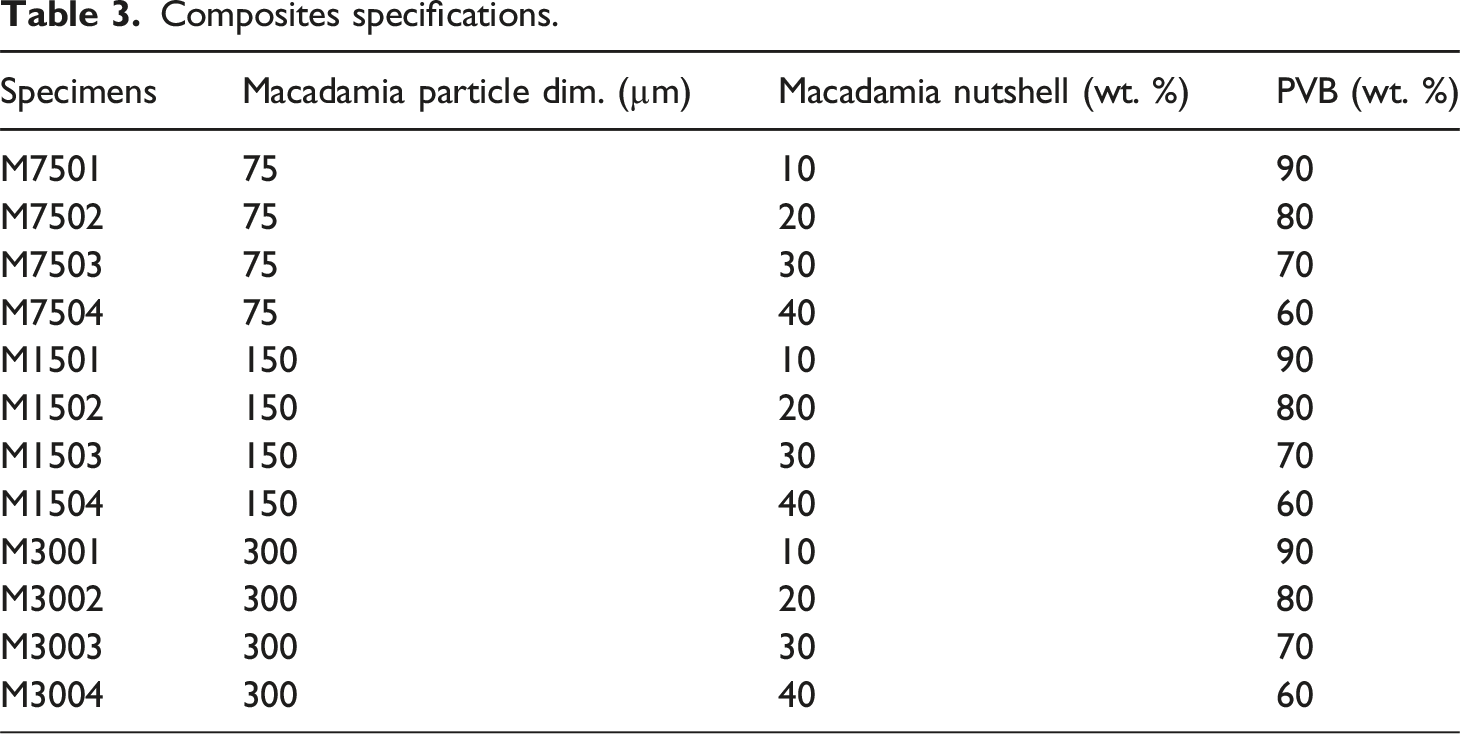
The composites were manufactured by mixing macadamia nutshell particles into PVB (polyvinyl butyral) by the hot press technique. PVB that has made it widely used in the architectural and automotive industries: It is economical to manufacture, it is very hard wearing, easily processable and has good chemical as well as mechanical strength. The objective of this study was to determine how various particle sizes of macadamia nutshell and weight percentages affect the physical and mechanical characteristics of the composites. The Macadamia nutshells were cleaned and dried at 80°C for 1 hour to remove any moisture content. Then they have been ground into a fine powder using mechanical grinders; particles were made in three different sizes: 75 µm, 150 µm, and 300 µm (using a series of sieves, AASHTO M92 U.S.A. STANDARD SIEVE from Humboldt Mfg. Co.). The step-by-step process involved in the preparation and characterization of macadamia nutshell composites is indicated in Figure 1 and Table 3. It includes the sourcing of macadamia tree samples and grinding of the macadamia nutshell, then sieving to achieve desired particle sizes (75 µm, 150 µm, and 300 µm). Following that, the composites were heated and pressed to help the particles spread out evenly within the PVB matrix at different weight concentrations. Subsequently, it allowed cooling naturally while being subjected to pressure. The composites were then extracted from the mould and cut into standardized dimensions for testing their mechanical properties. Schematic representation of the processing and testing workflow for macadamia Nutshell-PVB composites. Composites specifications.
Theoretical densities (ρ) of the laminated hybrid composites were determined using the weight percentage and density of each component material, following the methods outlined in ASTM standards D 2734-09 and D 792-08. The sample size of all the specimens was calculated, and the volume was measured using a digital caliper, average volume was recorded. To find the hybrid composites’ densities, the weight of each one was divided by its volume, which was measured in g/cm³.
Physical and mechanical properties of composites
Dimensional stability test and water absorption effects
The dimensional stability test is employed to estimate the effect of polyvinyl butyral (PVB) composites with macadamia nutshell particles to alterations in moisture swelling. This work also considers water absorption as a critical factor that directly affects the mechanical properties of the mentioned composite materials. It should be noted that both the size and content of the macadamia nutshell particles are important parameters that affect the water absorption of the composite material. Different particle sizes and weight percentages result in different moisture diffusion paths, affecting the mechanical degradation rate. It is important in order to improve these aspects and the properties of composites when used in the service conditions. The weight variation of the composites was measured by the Archimedes method following the ASTM D 570-98R10E01 and D 792-08 norms with the help of a digital balance. At the beginning, the samples were weighed and then put into a basin with distilled water at a temperature of 27 (±2) °C. Then, the samples were taken out of the water and the redundant water was gently patted with tissue paper. This process was carried out on the samples until they were fully immersed to the extent of saturation (when the samples weight gain began to decrease, reaching a lower value over multiple consecutive measurements). Weight gain was documented at various time intervals during the immersion period. After that, the water absorption percentage (W%), thickness swelling percentage (T) are determined. The Fickian diffusion coefficient (D) was determined by analyzing the slope of the water absorption curve, by plotting the square root of time with the gradients of water absorption percentage at linearly early periods, in mm2/s by:

Mechanical properties of composites
Tensile, Flexural, and compression tests were conducted at different particle sizes and content in the composite. These experiments were intended to set the characteristics of the composites with regard to their possible use in the engineering sectors. Tensile test was conducted for the analysis of mechanical properties of the composites following the ASTM D3039-17 standard. They were prepared into a size of 250 × 25 × 6 mm and a gauge length of 170 mm. The test of flexural properties was carried out as per ASTM D790-20 standard to evaluate the composite’s ability to bear deflection. All the samples were made in a dimension of 150 × 15 × 6 mm to be used in the three-point bending test. Compressive strength properties of the composites are tested as per ASTM D6641-16 standard by preparing flat and rectangular specimens having 150 × 15 × 6 mm as suggested on the dimensions that have been provided. All tests were done five times on the a servo-hydraulic MTS test machine, (Instron Company, Norwood, MA, USA) having a maximum load of 50 kN and cross head speed of 2 mm/min. The tests were performed up to the failure for three times for each specimen set, to study the mechanical characteristics and the failure mode.
FTIR (fourier transform infrared spectroscopy)
FTIR is widely applied as a technique to study the interphase in the macadamia nutshell-PVB composites that were produced for this study by using Brukeroptier Co. (TENSOR27). FTIR plays a vital role in identifying the functional groups and to see if there are any chemical changes that may happen during the process of degradation. The method provides an opportunity to set the intensity and presence of the absorption bands related to some chemical bonds and functional groups in the composite material. Thus, the following aspects should be discussed to analyze the impact of macadamia nutshell content and particle size on the chemical properties and biodegradation of the composites. The FTIR scan resolution was set to 4 cm⁻1 and scan times set to 16 scans. This information is then associated with the mechanical characteristics to at least get an idea of how well the material will do.
Morphological observation
The microstructure of the macadamia nutshell and PVB matrix interface was studied using Scanning Electron Microscopy (SEM). The surface morphology and the elemental analysis were performed on a HITACHI S-3400N scanning electron microscope for a voltage of 10 kv to 15 kv. These analyses are very useful for the identification of the position of the fillers in the matrix and the effects of this position on the structure of the composite material, which can be applied to improve the composite formulations and their properties.
Results and discussion
Dimensional stability and water absorption effects
Composite densities, void contents and corresponding weight fractions.

Figure 2 shows a comparison between the theoretical (Th) and experimental (Ex) densities of polyvinyl butyral (PVB) composites filled with macadamia nutshell particles of different sizes and weight fractions. The theoretical density decreases with increasing macadamia nutshell content across all particle sizes. Experimental densities also decrease with higher macadamia nutshell content. However, the experimental values are consistently lower than the theoretical densities, suggesting the presence of voids and imperfect packing within the composites.
17
A 75 µm macadamia particles (M7501 - M7504) composites show the smallest difference between theoretical and experimental densities, indicating better particle distribution and packing efficiency. While at 150 µm macadamia particles (M1501 - M1504), the density gap between theoretical and experimental values increases compared to the 75 µm composites, suggesting moderate particle packing and possible increased void content. The largest difference between theoretical and experimental densities is observed with 300 µm macadamia particles (M3001 - M3004), highlighting significant void content and poor packing efficiency due to larger particle sizes. Experimental and theoretical densities of the composites.
Figure 3 illustrates the void content (%) across different composite configurations of polyvinyl butyral (PVB) composites filled with macadamia nutshell particles. The void content increases with higher macadamia nutshell content across all particle sizes. At 75 µm macadamia particles (M7501 - M7504) composites, the void content ranges from 2.75% (M7501) to 6.67% (M7504). The increase in void content with higher nutshell content suggests that more filler leads to more voids due to challenges in achieving uniform dispersion and strong interfacial bonding. While at 150 µm macadamia particles (M1501 - M1504), void content rises from 3.90% (M1501) to 10.38% (M1504). This increase is more pronounced compared to the 75 µm particles, indicating that larger particles contribute to higher void formation and potentially more interfacial defects.
17
At 300 µm macadamia particles (M3001 - M3004), the void content ranges from 4.87% (M3001) to 13.43% (M3004). These values represent the highest void contents observed in this study, highlighting the significant impact of larger particle sizes on void formation due to poor packing efficiency and increased stress concentration sites.
13
Void content in the composites.
Water absorption and swelling characteristics of composite specimens.

The weight gain trends of the PVB composites reinforced with macadamia nutshell particles of different sizes and weight proportions are depicted in Figures 4 and 5. This data presents the complete picture of the water absorption of the composites. The water absorption is defined by the gradual increase in the weight of all the tested composite samples. A lot of emphasis has been made on the saturation level and the rate of weight gain and this depends with the content of macadamia nut shells and the size of the particles. The weight gain of M7501 composite is about 7% at saturation when the particle size of macadamia is 75 µm (M7501 – M7504), this show moderate water absorption due to the lower level of filler. With the nutshell content rising, the M7502 composite weight gain is about 13% higher, which proves that there is a significant rise in the water absorption. The incorporation of M7503 composite is improved by the presence of extra contents as seen by the weight increase of about 19%. The highest weight gain of about 23% is therefore recorded in the M7504 composite which implies that it has the highest macadamia content as well as the most hydrophilic properties due to increased points of contact for water. The weight increment of M1501 composite is about 6.8%, which is reasonably close to the last one of M7501 but a bit lower because of the bigger particle size. The M1502 composite weight gain rises to about 12%, which has the same characteristics as M7502 but at a different saturation level. The M1503 composite attains approximately 16.8% weight gain which suggests that the water absorption as a filler rises with the increase of the filler content. M1504 composite has a weight increase of about 21% which shows a high absorption at the maximum filler content. M3001 composite weight increase is about 6.3%, the least due to the largest particle size amongst the rest. The M3002 composite has a weight increase of around 11%, which indicates overall better absorption, although still lower than the smaller size particles. The composite weight increase of M3003 comes to about 15.4%, signifying a moderate rate of absorption. The M3004 composite exhibits a weight increase of within 19.8%, indicating substantial water absorption at the greatest filler percentage. However, this rise is still lower when compared to composites with smaller particle sizes. The weight gain percentage is highest in samples with the smaller macadamia particles (75 µm) for all compositions, which is attributable to better water absorption because of the higher surface area and better interaction with PVB.
5
As for the other smaller particles, the 150 µm macadamia particle composites show a moderate weight gain. Nevertheless, they possess good water absorption, albeit at a relatively reduced rate due to the slightly reduced surface area and pack density. The weight gain percentages of the 300 µm macadamia particle composites are the lowest due to the least effective water absorption rate due to the large size, small surface area, and possibility of void formation, which reduces the pathways for water absorption.
25
The results suggest that increased macadamia nutshell content enhances the hydrophilic nature of the composites, leading to higher water absorption and weight gain. This aligns with previous studies highlighting the influence of natural fillers on moisture absorption behaviour.2,17 Besides, the non-water absorbing characteristic of the PVB matrix also helps in controlling the weight gain because the presence of water is minimized in the composite structure due to hydrophobic nature of the PVB. Water absorption comparison over time for PVB composites filled with macadamia nutshell particles with different sizes. Water absorption (%) of all composites, with different sizes.

Figure 6 illustrates the thickness swelling percentage over time for polyvinyl butyral (PVB) composites filled with macadamia nutshell particles of varying sizes and weight fractions. All specimens exhibit an increase in thickness swelling over time, indicating that water absorption leads to dimensional changes. The extent of swelling varies based on the macadamia nutshell content and particle size. M7501 composite shows a final thickness swelling of approximately 2.5%, indicating a minimal dimensional change due to lower filler content. For M7502 composite, swelling increases to about 4.8%, showing significant expansion with increased filler content, reaches around 7% swelling in M7503 composite, indicating substantial dimensional change. M7504 composite exhibits the highest swelling of approximately 9%, highlighting significant expansion due to maximum filler content.
17
Demonstrate the highest thickness swelling percentages across all compositions, indicating that smaller particles facilitate greater expansion due to their larger surface area and more effective interaction with water. Thickness swelling of all composites.
M1501 composite displays swelling of about 2.2%, slightly less than M7501, due to larger particle size and less effective water uptake. While M1502 composite shows increases to approximately 4.4%, indicating moderate expansion. M1503 composite swelling is around 6.5%, reflecting increased dimensional change. M1504 composite shows about 8.5% swelling, demonstrating significant expansion with higher filler content.
M3001 composite exhibits the lowest swelling at approximately 1.8%, attributed to the largest particle size and reduced surface area. M3002 composite swelling increases to about 3.9%, indicating a trend towards higher expansion. M3003 composite swelling is around 5.8%, indicating moderate dimensional change. M3004 composite exhibits about 7.6% swelling, showing considerable expansion despite the larger particle size. It was indicated that larger particle sizes result in less effective dimensional change due to decreased surface area and potentially more voids within the composite.
Mechanical properties
Figures 7 and 8 present the mechanical properties of different composites with different particle size and weight percent of macadamia nutshell and polyvinyl butyral. The stress-strain curves for the composites reveal that the tensile strength rises with the strain until it attains a certain level, after which it plunges down, meaning the failure point of each composite configuration. M7501 has the highest tensile strength and strain at break, which indicates that there is good bonding and transfer of load from macadamia to the PVB matrix. The properties of the composite are affected by the macadamia nutshell content; for instance, tensile strength and strain reduce when moving from M7502 to M7504. These may be due to the enhanced void content and the reduced density as seen in the given data, which makes the composite to be weaker. Voids can cause stress concentration and thus decrease the load carrying capacity of the composite. The trend is the same for all particle sizes, including the 150 µm and 300 µm sizes. The composites with the smaller particles (75 µm) have generally higher tensile strength than the ones that contain larger particles (150 µm and 300 µm) meaning that the composites with a low macadamia nutshell content and smaller particle size offer the best tensile property. This is probably due to the fact that smaller particles make for a more even distribution and therefore a better bond with the PVB. From the trend, it can be deduced that to further increase the tensile strength, less macadamia should be incorporated and the particle size should be reduced. In general, the mechanical characteristics of the composites depend on the particle size and weight fraction of macadamia nutshell powder. Thus, reducing the particle size and the amount of macadamia results in production of materials with better tensile strength and mechanical characteristics. It is also seen that with the increment of percentage macadamia there is an increment in the voids content which in turn causes the reduction in tensile strength and strain of the composites. Similar observations were made by the reference studies by,26,27 which showed that increased surface area is occasioned by reduced particle size of the filler and improved dispersion as well as mechanical properties of the composites. These trends for different natural fillers observed in the current analysis are very crucial in the determination of filler content and particle size to improve the mechanical properties of polymer composites. Tensile stress–strain curves for the all composites. Ultimate tensile strength of all composites.

From the Young’s Modulus values in Figure 9, it was observed that the composite M7501 had the highest Young’s modulus in tensile indicating the material was the stiffest among the composites. The modulus decreases as the mass fraction of macadamia nutshells rises from 10% to 40% for all the particle sizes. For instance, M7504’s modulus is seen to decrease this time with a reduction of 15% as compared to M7501. The same trend is noticed in the composite with 150 µm and 300 µm particle sizes as well. For instance, M3004 is 25% less than M3001 (300 µm, 10% M). The Young’s modulus decreases with the increase in the filler content and particle size in accordance with the increase in void content and decrease in the experimental density obtained from the current data. Thus, higher void content means that stress transfer from the matrix to the filler will be less efficient, which in turn leads to lower stiffness. In comparison with works28,29 based on the literature studies, the filler content and particle size are the key factors affecting the stiffness of the composite. The observed tendency can be considered as consistent, which is in good agreement with the results obtained for the macadamia nutshell composites. As the particle size of the fillers increases, the modulus values are reduced by approximately 15%–25% with a higher macadamia content and larger particle size. This means that the mechanical characteristics of the bio-composites are mainly determined by the concentration and size of the filler, thus underlining the need to control the parameters of the filler for enhanced mechanical performance. Young’s modulus of all composites.
The modulus of toughness which is the measure of the energy absorption of the composites reduces drastically from 10% to 40% macadamia nutshell content for all the particle sizes, Figure 10. The results of the test show that M7501 has the highest level of toughness followed by a reduction demonstrated by M7504 to a level that is only half of that of M7501. Similarly patterns are seen in composites with particles measuring 150 µm and 300 µm. For example, M1501 exhibits a drop of 48.6%, whereas M3001 demonstrates a decrease of 50%. These trends are in agreement with the literature findings,
3
the decrease is attributed to the increase in void content and reduced interfacial bonding between the filler and the matrix it as filler content increases and thus reduction in energy absorption and the modulus of hardness. This also supports the previous finding that macadamia nutshells can increase the toughness at low filler content but high filler content can be counterproductive on the energy absorption capacity of the composites.
4
Modulus of toughness of all composites.
The tensile strain results for the macadamia/PVB composites are presented in Figure 11, showing the carried strain before failure of the material under tensile load. Tensile strain of M7501 is the highest, which shows the best ductility as compared to the other composites. As the percentage of macadamia content rises from 10% to 40%, the tensile strain reduces uniformly across all particle sizes. For instance, M7504 has a decrease of 25% in a tensile strain than M7501. The same tendency occurs with other particle sizes; the lowest value of tensile strain is observed for M3004, which is 40% less than M3001. The reference study
11
stated that an increased amount of filler decreases the tensile strain of the composites because of the enhanced stiffness and brittleness of the fillers. This decrease in the tensile strain by 25%–40% with an increase in filler content and particle size as observed here is in agreement with the study by Dong et al.
12
who also realized similar decrease in strain in macadamia nutshell filled composites as the filler content was increased. This correlation underlines the influence of the filler content and particle size on the ductility of the composites, with the lower filler content and smaller particle size providing composites with higher tensile strain and thus better flexibility. Tensile strain of all composites.
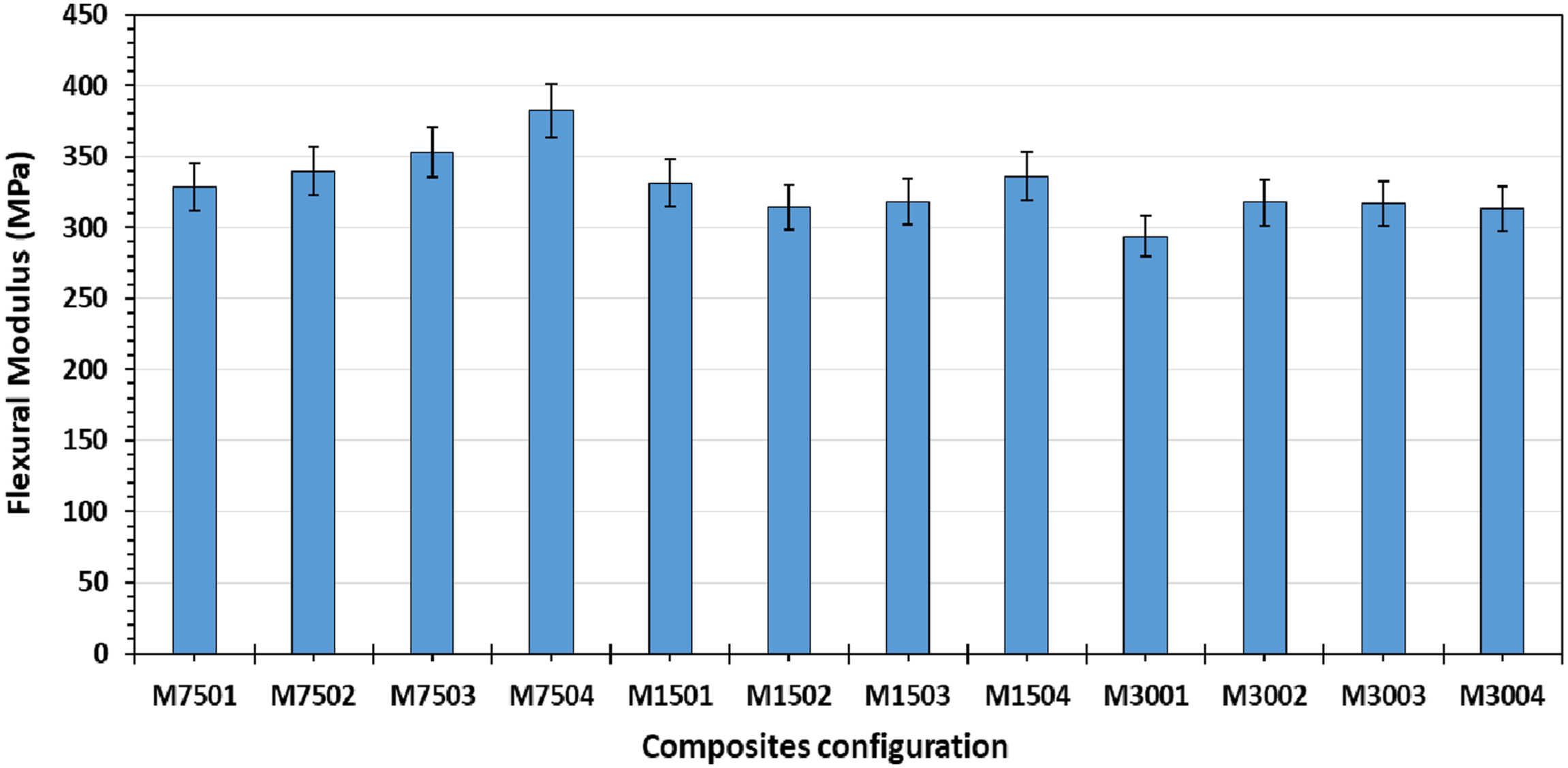
From the flexural stress-strain curves shown in Figures 12 and 13, how the composites respond to bending load is shown. M7501 has the maximum flexural strength and then the strength decreases with the increment of the macadamia nut content. Observing the stress-strain curve of the M7501, it can be seen that it has a higher bearing stress before failure hence it possesses better flexural properties. When the filler content rises to 40%, the composite is not as tough as the one with 20% filler content and the stress at failure is also lower. Conversely, flexural strength of M7504 is significantly lower, 29% decrease. The flexural strength of M1501 composite is quite good and almost similar to the flexural strength of M7501. Lower filler content and void content can be observed here due to the use of a higher concentration of filler, which is uniformly distributed. This increases the load-carrying capacity, decreases brittleness, and thus enhances the flexural strength. M1502, when the level of macadamia is gradually increased to 20% the flexural strength is expected to reduce by a further 6%–7% when compared to M1501. This decrease can be attributed to the rise in void content (5.394%) and lowering of experimental density which weakens the composite’s flexural strength. When the ratio of the filler is further raised to 30% for M1503, the flexural strength is expected to reduce even further, probably by another 13%–14% from M1501. The void content increases to 7.540%, which only serves to increase the brittlness and decrease the composite’s ability to handle bending stress. The M1504 composite has the least flexural strength amongst the 150 µm group, about 20% lower than the M1501. The void content rises to its highest point at 10.377%, results in increasing in the microcracks which in turn greatly affected the flexural properties due to the presence of more defects and reduction of the area that can effectively bear the load. Similar trends are observed across different particle sizes, the comparison of flexural strength shows that M3004 has the least strength which is 43% less than M3001. This is in accordance with Chensong et al.
15
in a study that revealed that generally, mechanical properties are negatively influenced by increase in filler content which in turn leads to increased void content. In this area, higher filler content and rise in void content cause reduction in the flexural strength and the total structural efficiency. This comparison shows the efficacy of moderation in the particle size and filler content in the bio-composites’ flexural characteristics. In this study, the reduction in the flexural strength by 29%–43% as the macadamia content and the particle size increased as supported the assertion that high filler content and larger particle sizes create voids that reduce the load-bearing capacity in the flexural test. The findings of this study are in consonance with the literature on the filler content and particle size to enhance the mechanical properties of bio-composites including those with macadamia nutshells (Figure 14). Flexural stress–strain curves of all composites. Flexural strength of all composites. Flexural Young’s modulus of all composites.

The macadamia/PVB composites’ relative bending deformation is presented in the flexural strain percentage as shown in Figure 15. M7501 has the highest flexural strain which proves that the composite is the most flexible among the others. The general trend that has been noticed is that the flexural strain decreases as the macadamia content increases for all the particle sizes. For example, M7504 representing a 28 % less as compared to the M7501, which is slightly lower than M7501 (reflecting a small decrease of about 7%). M1504 exhibits a substantial reduction in flexural strain, with a decrease of 30% compared to M1501. M3001 is roughly equivalent to M1501; however, it is slightly reduced in M3004 which is 38 % reduction. These trends are in agreement with the findings of Dong et al.
5
who noted that the flexural strain of the composites was low for the composites with high filler load because of increased stiffness and brittleness. The decrease of the percentage of the flexural strain was 28%–38%. The results indicate that reducing the amount of filler and decreasing the size of particles enhance the flexibility of the material, hence improving its ability to withstand strain when subjected to bending forces. This is particularly important for applications that need materials with both durability and flexibility. Flexural strain of all composites.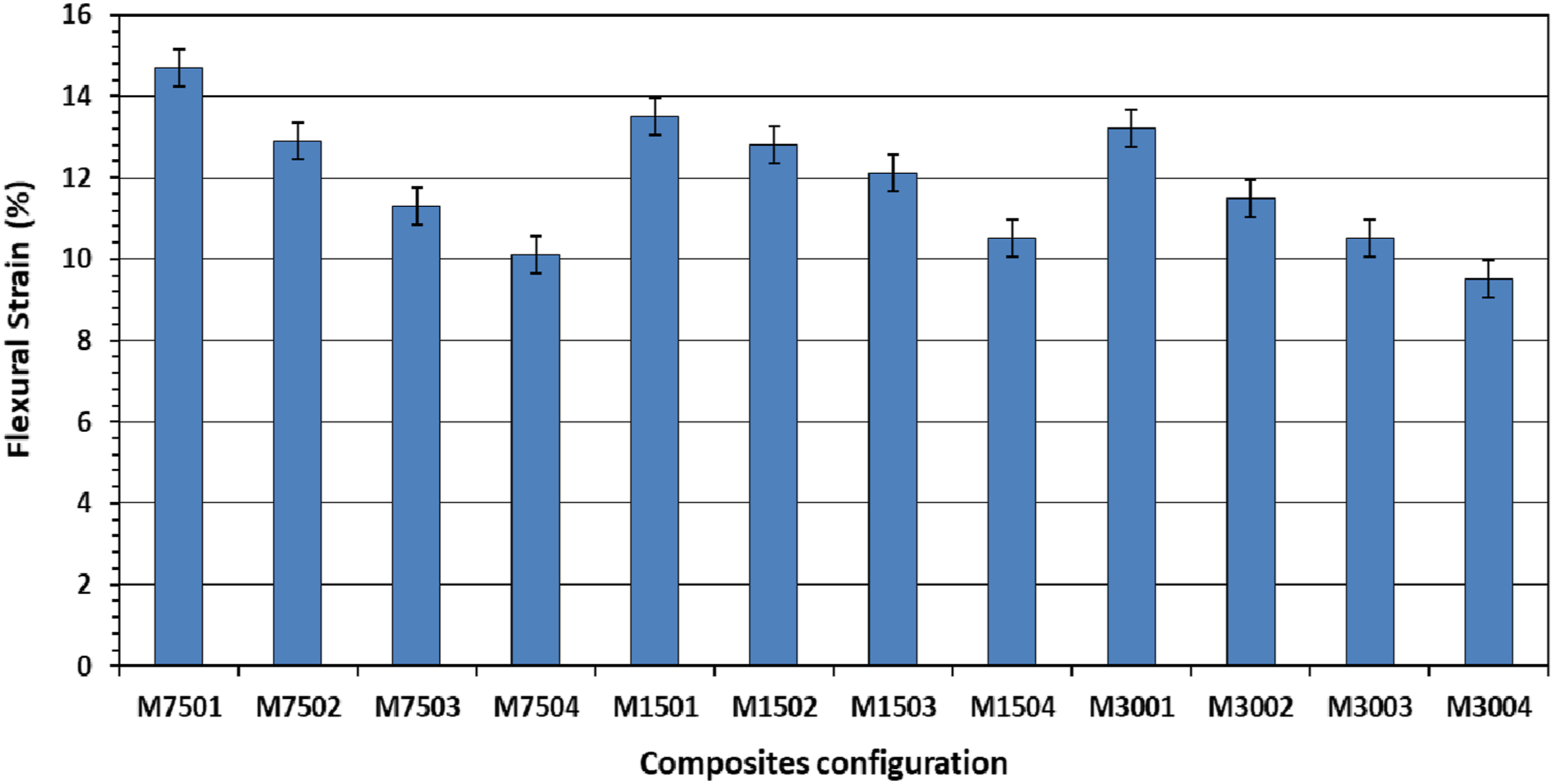
As for the compressive stress-strain curves (Figure 16), it shows the response of the macadamia/PVB composites under the compressive load. M7501 has relatively high compression strength and strain at failure; this is an indication that the material can easily withstand compression forces. When the level of macadamia is high (M7504), then the compression strength is very low this shows that as the level of filler rises then the compressive strength falls. Figure 17 shows the trend of compression strength of samples of all the composites. Out of the four types of material, M1501 and M3001 have the highest compressive strength. On the other hand, M1504 and M3004 exhibit compression strengths around 41.7% lower than their equivalents with lower macadamia content. Similarly, M7504 exhibits a decrease of around 20% in comparison to M7501. These findings are in accordance with the observations made in literature, including the study carried out by Song et al.
14
This has been seen as a filler volume increases especially if the filler has large particle sizes then the void content is also high and the compression strength as well as the overall properties of the composite are reduced. The study found that there was a reduction in compression strength of 20%–41.7% when the filler content and particle sizes increased. This finding aligns with existing literature, which shows that natural filler composites also experience reduced compressive characteristics because of increased brittleness and decreased load-bearing capacity. This underscores the need of controlling the filler quantity and particle size in order to preserve or improve the compressive strength of bio-composites. Compression stress–strain curves of all composites. Compression strength of all composites.

FTIR analysis
Figure 18 and Table 6 represent the transmittance characteristics of macadamia/PVB composites with various macadamia loadings of 10%, 20%, 30% and 40% and a particle size of 75 µm. The spectra give a clear understanding of the chemical reactions and the changes that are likely to happen between the macadamia particles and the PVB matrix. M7501 exhibits the highest transmittance across most wavenumbers, indicating relatively lower interaction between the filler/matrix and stronger as well as more prominent chemical bonding. This composite also helps in the better dispersion and lesser interference in the IR spectrum. This, indicated by the highest transmittance across most wavenumbers, can be attributed to the lower concentration filler content, the particles are more uniformly dispersed in the matrix, leading to fewer disruptions in the polymer’s structure, leading to weaker filler-matrix interaction and fewer chemical bonds form between them. This lower degree of interaction allows more infrared light to pass through the material, leading to higher transmittance. As the filler content increases to M7502 (20%), there is a slight decrease in transmittance, this shows that there is good intercalation and at the same time an introduction to potential scattering. M7503 (30% macadamia) has even lower transmittance than M7502 due to the higher filler content that increases the interaction and at the same time causes more voids that could affect the clarity of the spectrum. M7504 (40% macadamia) has the lowest transmittance the most defined absorption peaks proving that filler agglomeration leads to higher scatter and absorption thus indicating structural irregularity. In light of these observations, it is possible to agree with Sagar et al.
16
who observed that rising levels of filler content improve the contact between natural fillers and the matrix but also lead to formation of more voids and defects visible on the IR spectrum. In the same way, Yang et al.
30
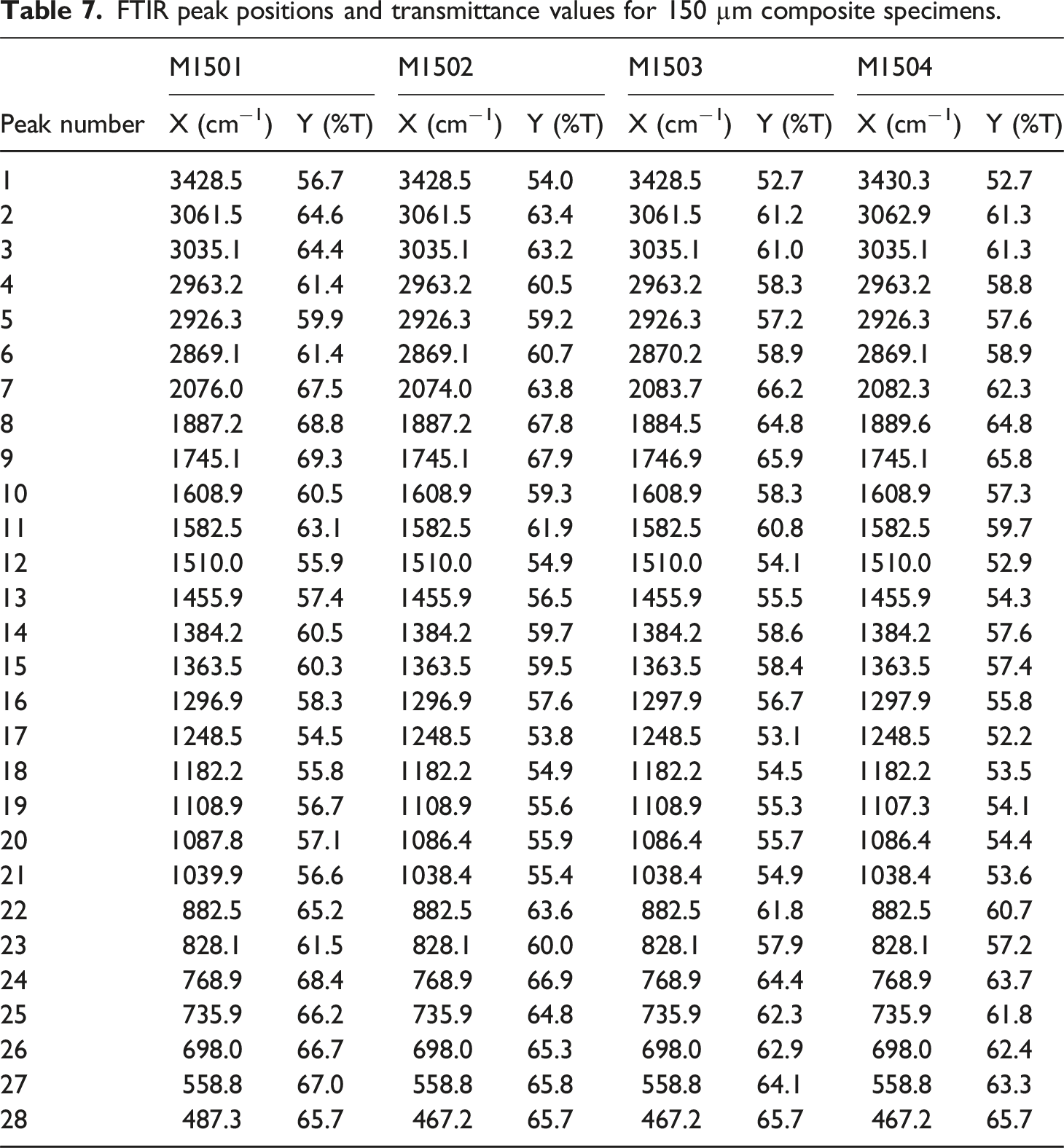
indicated that increased filler content in natural fiber composites enhances chemical bond but at the same time, it results to higher void volume that may affect negatively the material integrity. The variations in transmittance percentages across the samples highlight the moderate balance between improving mechanical characteristics by increasing filler content and preserving a uniform composite structure. Figure 19 and Table 7 show the FTIR spectra of the transmittance of macadamia/PVB composites with various macadamia content (10%, 20%, 30%, 40%) at the particle size of 150 µm. Both the filler content and the particle sizes have an effect on the amount of interactions that occur between macadamia particles and PVB matrix. The transmittance fluctuations provide an indication of the magnitude of this interaction. M1501 (10% macadamia) has the highest transmittance for most of the wavenumbers and this is an indication that the composite has less filler-matrix interaction and relatively less voids. M1502 (20% macadamia) has a slightly lower transmittance than M1501 which shows that there is a good bonding between the filler and the matrix; however, it led to an increase in dispersion. M1503 (30% macadamia) exhibits a decrease in transmittance, indicating the presence of stretching vibrations in different chemical bonds. This suggests that the composite is getting more varied with more filler content, which impacts the transparency of the spectrum. M1504 (40% macadamia) has the lowest transmittance and has high absorptance values, which suggest that there is good filler-matrix interaction but there is also evidence of filler agglomeration that reduces the homogeneity and increases the IR absorption of the material. These trends are in agreement with earlier research done in the field. As pointed out by Kuram et al.,
2
when the filler content is increased in natural fiber composites, the transmittance is generally reduced as a result of increased filler-matrix interaction but this is accompanied by increased porosity. Likewise, Khan et al.
4
have indicated that the increasing in the filler content of the hybrid composites enhance the chemical reactivity of the composites; however, this is coupled with the increase in the porosity that can be detrimental material’s structural integrity. Hence, there is a very fine line that has to be drawn between what is the best filler content to improve the bonding of the composite and what is the best void content to retain the mechanical and thermal properties of the composite. Therefore, it is crucial to achieve an appropriate balance between maximizing the filler content to improve bonding and reducing voids to preserve the material’s properties. The FTIR spectrum in Figure 20 and Table 8 show the transmittance behaviour of macadamia/PVB composites for different percentages of macadamia (10%, 20%, 30%, 40%), while the particle size used was 300 µm. M3001 with 10% macadamia content has the highest transmittance throughout the range. M3002 with 20% macadamia content has shown a slight reduction in transmittance which points towards slightly better interaction between the filler and the matrix than in M3001. M3003 (30% macadamia) has a still lower transmittance, a higher interaction but also a higher structural inhomogeneity in the composite material. M3004 (40% macadamia) has the lowest transmittance and high absorption peaks, which mean that there is strongest filler-matrix interaction among the samples and the most serious voiding and filler agglomeration. The findings of this study are in consonance with the findings from the literature. Yang et al.
30
observed that with increase in filler content in natural fiber composites, the transmittance decreases because of increased interaction between the filler and matrix. The spectrum data indicates that increased filler content and bigger particle size results in a higher void level which in turn reduces the transmittance and increase the absorption. This highlights the need for improving filler content with much emphasis on the advantages of having improved bonding while at the same time having to deal with the consequences of increased voids in composite materials. FTIR spectrum of the macadamia/PVB composites at 75 µm practical size. FTIR peak positions and transmittance values for 75 µm composite specimens. FTIR spectrum of the macadamia/PVB composites at 150 µm practical size. FTIR peak positions and transmittance values for 150 µm composite specimens. FTIR spectrum of the macadamia/PVB composites at 300 µm practical size. FTIR peak positions and transmittance values for 300 µm composite specimens.




Morphological properties
The SEM images of Macadamia nutshell particle-reinforced PVB composites with particle dimensions of 75 µm and varying filler contents reveal distinct differences in the microstructure, as shown in Figure 21. M7501 (10% filler) exhibits a smooth and relatively uniform matrix with well-dispersed macadamia nutshell particles, minimal voids, and good interfacial adhesion between the particles and the PVB matrix. As the filler content increases in M7502 (20%), M7503 (30%), and M7504 (40%), the images show increased particle agglomeration and surface roughness. M7502 still maintains a relatively uniform distribution, but M7503 and M7504 display significant clustering of particles, leading to more pronounced voids and uneven distribution. The higher filler content in M7503 and M7504 indicates potential challenges in achieving a homogeneous composite structure, which can affect the overall mechanical properties and performance. These observations highlight the balance required between filler content and the dispersion within the matrix to ensure optimal composite properties. SEM image of fractional surface for 75 μm Macadamia nutshell particles dimeter at (a) 10% wt. % (b) 20% wt. %, (c) 30% wt. %, (d) 40% wt. %, before immersion.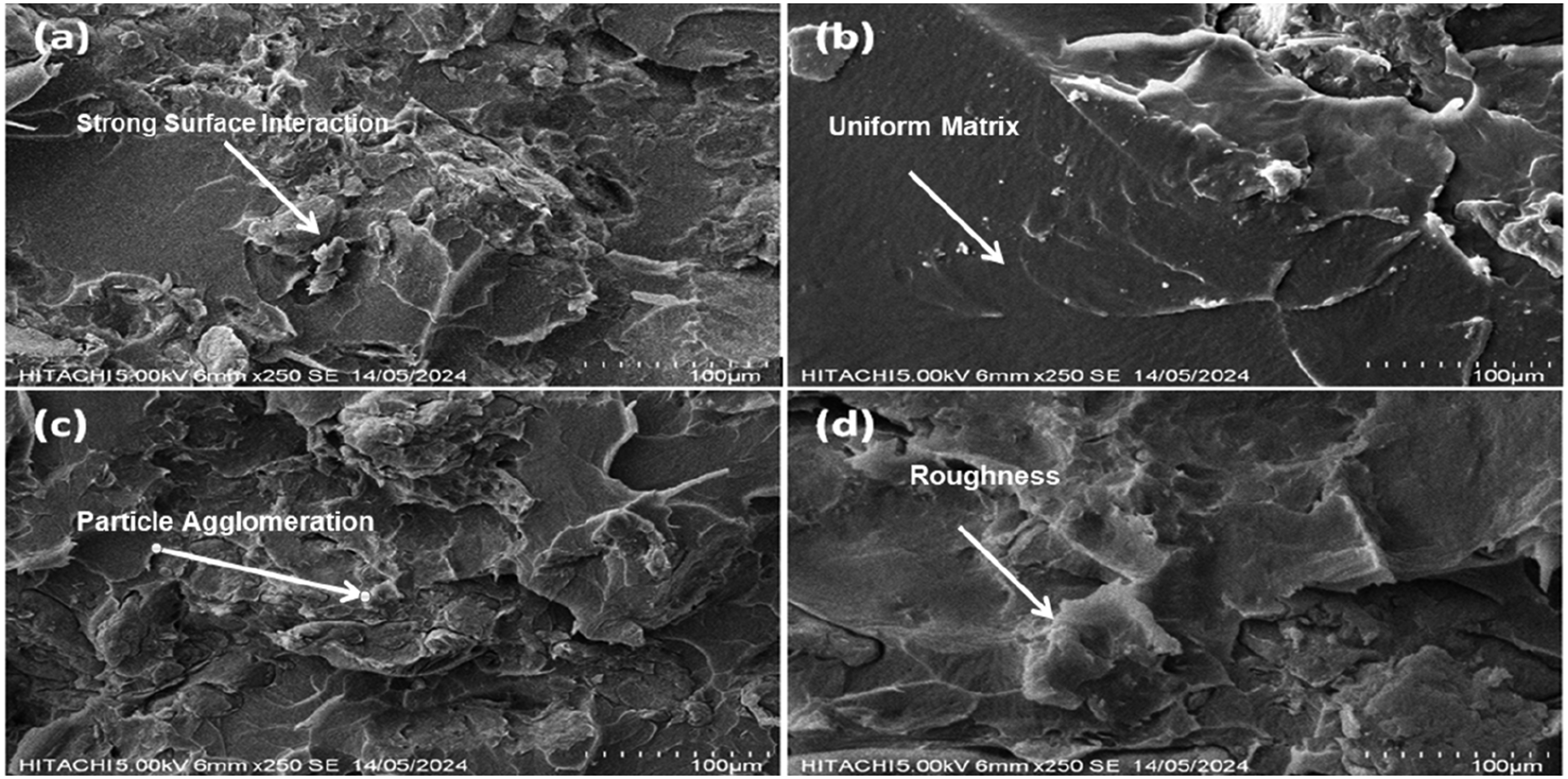
Figure 22 illustrates Macadamia nutshell particle-reinforced PVB composites with particle dimensions of 150 µm and varying filler contents, revealing clear differences in the microstructure. M1501 (10% filler) exhibits a smooth and homogeneous PVB matrix with well-dispersed macadamia nutshell particles, indicating strong interfacial adhesion and minimal voids. As the amount of filler material increases in M1502 (20%), M1503 (30%), and M1504 (40%), the microstructure exhibits a greater degree of particle agglomeration and surface roughness. M1502 maintains a relatively uniform distribution, but M1503 and especially M1504 display significant clustering of particles, resulting in larger voids and a more uneven matrix. The photos indicate that using greater filler amounts (30% and 40%) poses challenges in achieving a uniform composite, which might degrade the mechanical properties and performance. SEM image of fractional surface for 150 μm Macadamia nutshell particles dimeter at (a) 10% wt. % (b) 20% wt. %, (c) 30% wt. %, (d) 40% wt. %, before immersion.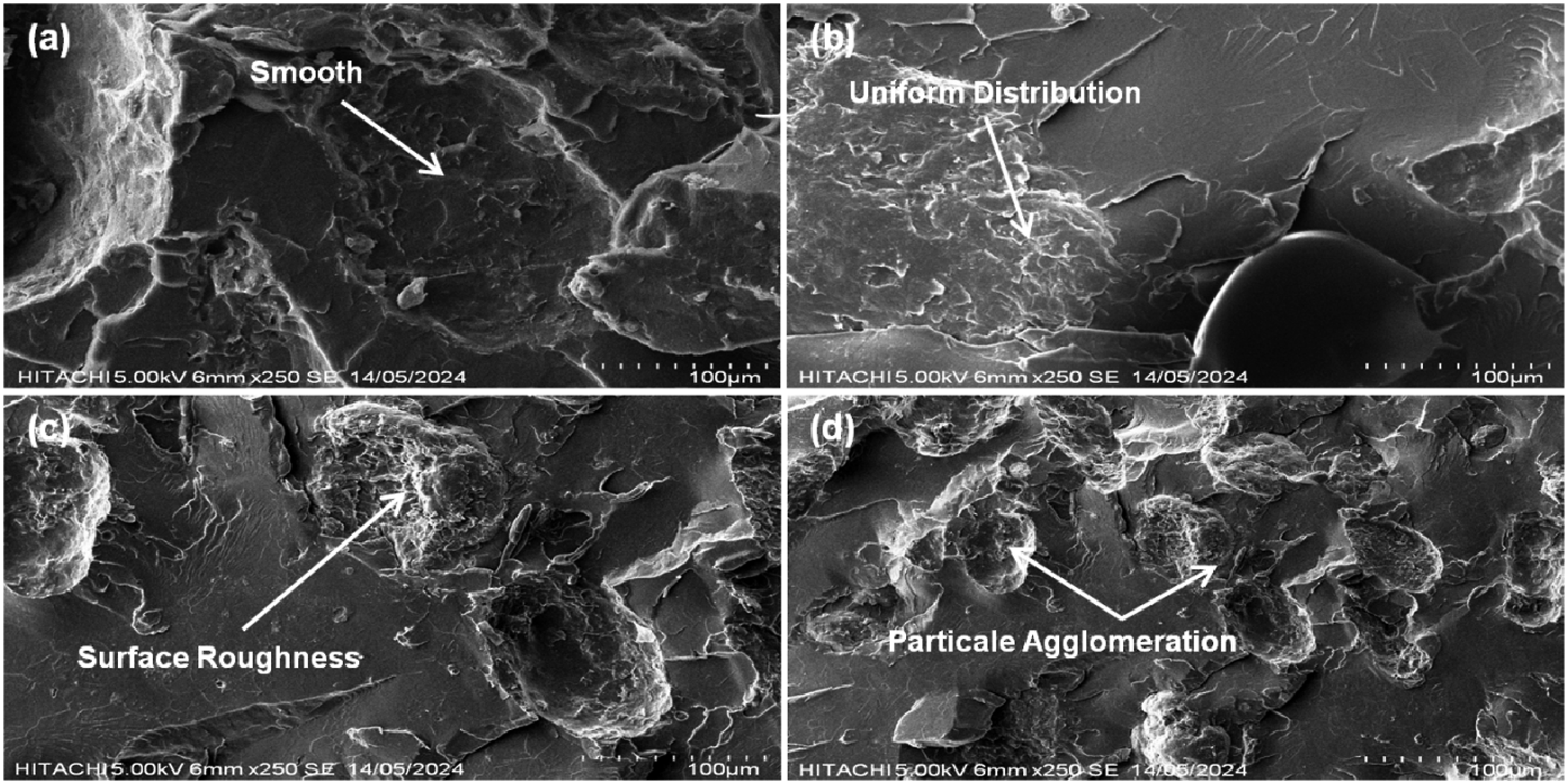
The SEM images of Macadamia nutshell particle-reinforced PVB composites with particle dimensions of 300 µm and varying filler contents display significant microstructural differences, Figure 23. M3001 (10% filler) shows a relatively uniform dispersion of macadamia nutshell particles within the PVB matrix, with minimal voids and good interfacial adhesion. As the filler content increases in M3002 (20%), M3003 (30%), and M3004 (40%), there is a noticeable increase in particle agglomeration and surface roughness. M10 maintains a relatively even distribution, though some clustering starts to appear. M3003 demonstrates a higher degree of particle clustering and greater voids, suggesting a lower level of homogeneity in the matrix. M3004 exhibits the most significant agglomeration and void development, indicating difficulties in producing a homogeneous composite structure at greater filler concentrations. These data suggest that although increasing the amount of filler might improve some characteristics like as stiffness, it also increases heterogeneity that can have a negative effect on the mechanical characteristics and overall composite performance. The optimal filler material must achieve an appropriate balance between its advantages of strengthening and maintaining the structural integrity, while also ensuring a uniform distribution. Because of the particle agglomeration, the mechanical as well as the overall properties of the composite systems are changed. Agglomeration refers to the process in which particles have a propensity to aggregate or cluster together rather than dispersing uniformly throughout the matrix. As a result, the clustering described above forms agglomerates, and hence, zones of stress concentrations in the composite material. These are the areas where initiation and growth of cracks is most likely to occur when the composite material is loaded with mechanical stress; thus, weakening the composite material and shortening its service life. Likewise, the uniform distribution ensures improved bonding between the resin and particles along the interface. Agglomeration decreases the available area of surface for bonding, thus affecting the structural integrity of the composite. Moreover, the concentration of particles results in creation of the pores or voids in the matrix of the composite material. Such cavities can also be zones of stress concentration and, as a result, lead to a decrease in the mechanical characteristics of the material. SEM image of fractional surface for 300 μm Macadamia nutshell particles dimeter at (a) 10% wt. % (b) 20% wt. %, (c) 30% wt. %, (d) 40% wt. %, before immersion.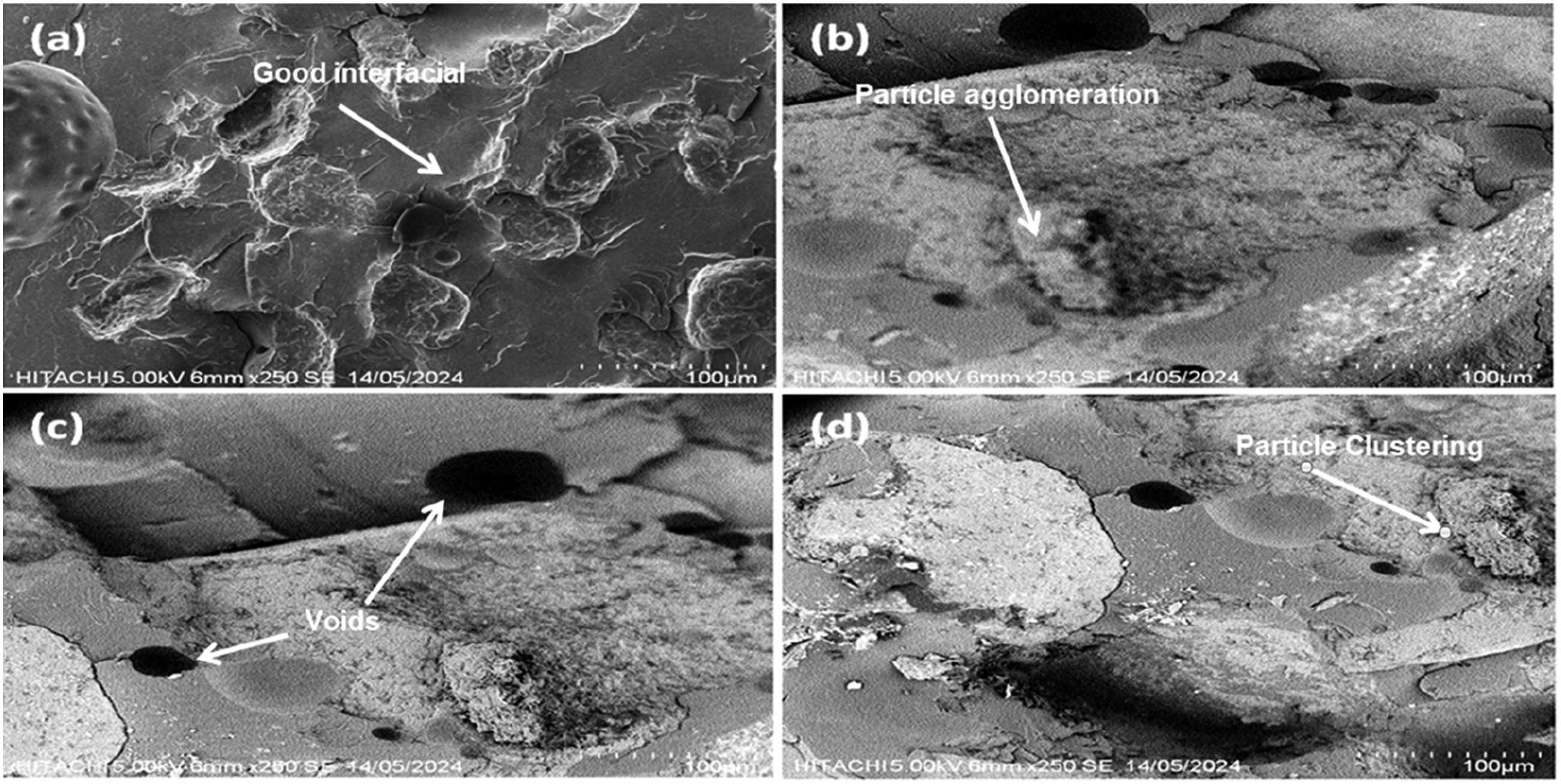
Figure 24 displays Macadamia composites with a diameter of 75 µm and different filler contents undergo significant changes in their microstructure when immersed in distilled water. These composites exhibit noticeable alterations in their microstructure after being immersed in distilled water, as compared to their initial form. The composite M7501 (with 10% filler) maintains a predominantly intact structure with few indications of deterioration, although there is some swelling and small disruption in the matrix. M7502, which contains 20% filler, has more evidence of matrix breakdown and particle separation in comparison to M7501. This suggests a higher degree of water absorption and subsequent swelling. M7503 (30% filler) demonstrates substantial matrix deterioration, characterized by the formation of conspicuous gaps and fissures surrounding the agglomerated particles, indicating a heightened vulnerability to water-induced harm. The M7504 sample, which contains 40% filler, exhibits the most significant deterioration. It shows widespread void formation, matrix disintegration, and particle detachment, suggesting that the high filler concentration has caused considerable structural damage when exposed to water. SEM image of fractional surface for 75 μm Macadamia nutshell particles dimeter at (a) 10% wt. % (b) 20% wt. %, (c) 30% wt. %, (d) 40% wt. %, after immersion.
Figure 25 shows that Macadamia composites with a diameter of 150 µm and different filler contents (M1501, M1502, M1503, M1504) undergo significant changes in their microstructure when immersed in distilled water. M1501 (10% filler) has a mostly undamaged structure with some swelling and minimal disruption of the matrix, suggesting a modest degree of water absorption but generally strong structural integrity. M1502 (20% filler) exhibits more substantial matrix disruption, characterized by heightened particle separation and the formation of bigger holes. These observations indicate a greater degree of water absorption and more extensive deterioration. M1503 (30% filler) has significant matrix deterioration, characterized by the presence of many cavities and cracks, which suggests the occurrence of substantial damage caused by water. The structure exhibits a higher degree of fragmentation in comparison to M1501 and M1502. The M1504 sample exhibits the most pronounced deterioration, characterized by a highly porous structure, extensive creation of voids, and considerable detachment of particles. This indicates the highest degree of water absorption and structural degradation compared to the other samples. SEM image of fractional surface for 150 μm Macadamia nutshell particles dimeter at (a) 10% wt. % (b) 20% wt. %, (c) 30% wt. %, (d) 40% wt. %, after immersion.
Figure 26 shows the microstructures and degrees of deterioration of Macadamia nutshell composites with a particle diameter of 300 µm and different filler contents (M3001, M3002, M3003, and M3004) after being immersed in distilled water. Notable variances are seen among these composites. The M3001 sample, including 10% filler, exhibits little structural damage characterized by slight surface roughness and small disruption of the matrix. This suggests a moderate level of water absorption while maintaining its overall structural integrity. M3002 (20% filler) has more prominent surface roughness and bigger voids, indicating increased water absorption and mild deterioration. The M3003 composite material, which contains 30% filler, exhibits noticeable deterioration characterized by the presence of many cavities and cracks surrounding the macadamia nutshell particles. This suggests extensive damage caused by water and major disintegration of the matrix. M3004 (40% filler) exhibits the most pronounced degradation, characterized by a highly porous architecture, substantial voids, and notable particle detachment, indicating the highest degree of water absorption and structural deterioration. The morphological characteristics of macadamia nutshell particle-reinforced PVB composites were observed to be consistent with the findings of earlier investigations.2,29,30 These comparisons highlight the significance of achieving a well-proportioned filler content to improve the mechanical characteristics of composite materials, while reducing structural defects such voids and agglomeration. SEM image of fractional surface for 300 μm Macadamia nutshell particles dimeter at (a) 10% wt. % (b) 20% wt. %, (c) 30% wt. %, (d) 40% wt. %, after immersion.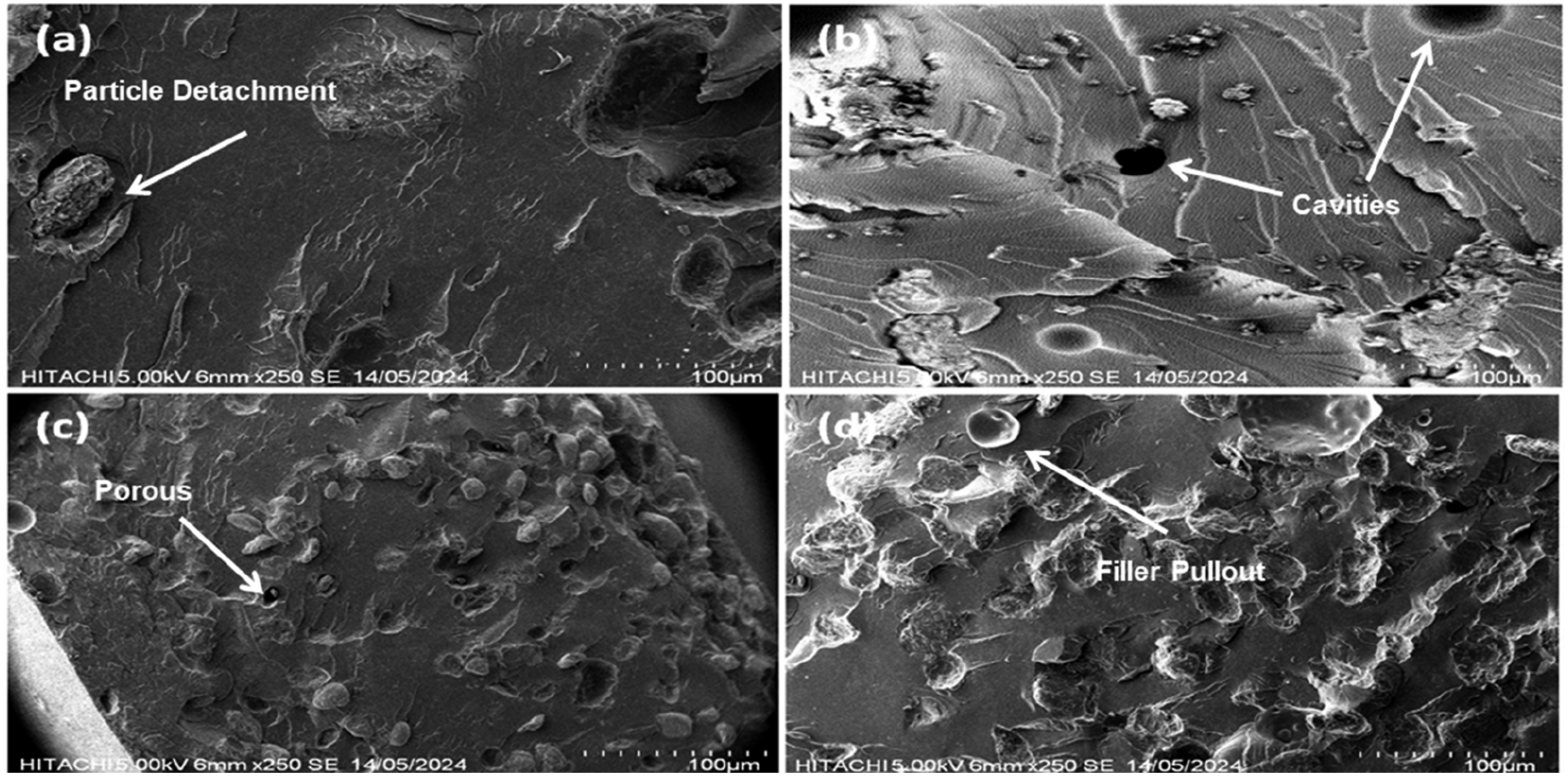
Conclusions
This research advances the understanding of environmentally friendly materials and their role in promoting sustainable practices. The study demonstrates that these composites possess promising mechanical properties, particularly at lower filler contents (10%–20%), which promote effective particle dispersion, strong interfacial adhesion, and improved tensile strength and toughness. The findings show that increasing filler content (30%–40%) leads to challenges such as particle agglomeration, void formation, and reduced mechanical performance, particularly after exposure to water. These results emphasize the critical balance required between filler content, particle size, and composite integrity to achieve optimal performance with maintaining a homogeneous structure.
M7501 (10% filler, 75 µm) achieving the highest values for tensile strength (approximately 35% higher than M7504), Young’s modulus (about 15% higher compared to M7504), toughness (40% greater than M7504), and tensile strain (25% greater than M7504). In comparison, composites with higher filler content and larger particle size experience agglomeration, void formation, and decreased performance, such as M3004 showing a reduction in tensile strength by 25%, Young’s modulus by 25% and toughness by 50% and tensile strain by 40% compared to M3001. Additionally, M7501 exhibiting highest flexural strength, 29% greater strength compared to M7504 (40% filler), while composites with larger particle sizes and higher filler content, such as M3004, show a 43% decrease in flexural strength compared to M3001. In another hand, M7501 having approximately 20% higher compressive strength compared to M7504, while M3004 and M1504, exhibit reductions of around 41.7% in compressive strength compared to M3001 and M1501, respectively. The use of SEM to conduct morphological analysis showed that increased filler loading led to increased particle agglomeration and voids which are stress raisers that reduce the composite’s strength. Also, the water absorption tests confirmed that composites with increased filler content had higher water absorption rates and dimension changes which led to the reduction of mechanical properties, including after water exposure. It can conclude that before immersion, the composites generally show relatively uniform dispersion at lower filler contents (10% and 20%), with smooth surfaces and minimal voids. However, as filler content increases to 30% and 40%, there is noticeable particle agglomeration, which leads to larger voids and increased surface roughness. After immersion in distilled water, all composites exhibit varying degrees of degradation, with higher filler content composites showing more significant damage. For the 75 µm particles, M7501 (10% filler) and M7502 (20% filler) retain relatively intact structures with minor swelling and matrix disruption, whereas M7503 (30% filler) and M7504 (40% filler) exhibit extensive matrix degradation and void formation. The 150 µm particle composites follow a similar trend, with M1505 (10% filler) and M1506 (20% filler) maintaining better structural integrity compared to M1507 (30% filler) and M1508 (40% filler), which show severe water-induced damage and particle detachment. For the 300 µm particles, M3001 (10% filler) and M3002 (20% filler) display moderate degradation, while M3003 (30% filler) and M3004 (40% filler) exhibit the most significant structural breakdown, with highly porous structures and extensive voids. Understanding the morphology of SC-reinforced PVB composites is critical for optimizing their properties.
Overall, the balance between filler content and particle size is crucial in optimizing the mechanical properties and durability of the composites. Lower filler contents and smaller particle sizes generally result in better dispersion, stronger interfacial adhesion, and improved mechanical properties, while higher filler contents and larger particle sizes increase the risk of agglomeration, void formation, and reduced performance, especially after exposure to water.
Footnotes
Acknowledgments

Declaration of conflicting interests
The author(s) declared no potential conflicts of interest with respect to the research, authorship, and/or publication of this article.
Funding
The author(s) received no financial support for the research, authorship, and/or publication of this article.