




Abstract
Owing to the high cost of carbon fibres and a necessity for finding alternatives that environmentally friendly, a portion of carbon fibres was substituted by woven jute fibre, with various stacking sequences for military applications. Hot press was used to fabricate the composite and hybrid samples of jute/carbon fibres reinforced polyvinyl butyral film using as a layer. Dynamic mechanical experiments (DMA) were conducted with more focus on the stacking sequences of jute and carbon, with increasing temperature. Results showed that the carbon/jute/carbon (H1) hybrid has the highest storage modulus and loss modulus values compared with other hybrids. Significantly, placing woven jute fibre at the outer layers and carbon fibres at the inner layers provided lower dynamic mechanical properties than that of the hybrids with placing jute at the inner layers. Besides, the damping factor shifts to higher temperatures by hybridization of jute fibres compared with carbon composite. Additionally, glass transition temperature (Tg) obtained from the damping curve and loss modulus exhibits a temperature between 129 and 180℃ for all composites, in withstanding dynamic loads. The dynamic mechanical properties were observed to be decreased with increasing temperature for all laminated composites. From results, it could be deduced that it is possible to reduce amount of carbon fibres in different composites industries with woven jute, thus providing less both cost and harmful environment.
Keywords
Introduction
Recently, hybridized natural and synthetic fibres to fabricate polymer composites are receiving higher attention because of the environmental issues and sustainability concept. In addition, their certain disadvantages were compared to synthetic fibres [1,2]. Carbon fibres have significant characteristics such as high specific strength and stiffness, corrosion resistance, high modulus and thermal stability which are considered as a favoured reinforcement in the composite material. On the other hand, it is extremely expensive and has significantly harmful environmental effects, which restrict the usage areas of it. Natural fibres including jute, hemp, flax, sisal, and coir fibres can be utilized as hybridized or substitutes for synthetic fibres, to fabricate hybrid polymer composites for various applications such as automobile [3] and aircraft structures, electric packaging to medical equipment [4].
Hybrid is the flexible system with unique properties which combined two or more fibres types to design composite materials that overcome the drawbacks of individual fibres composites. Currently, hybridizing natural and synthetic fibres with enhanced properties have received higher attention, such as low cost, light weight, ease of installation, good processability, and fatigue resistance. Among various types of natural fibres, jute fibre has a high content of cellulose, which considers an attractive option for the special engineering materials such as construction structures, building, automotive, aerospace, biomedical materials, in an eco-friendly manner [5]. Jute fibres exhibit excellent properties, such as cheapness, high specific modulus, light weight, good thermal, good acoustic insulating, fewer energy requirements, lower wear/tear in processing, abundant worldwide, biodegradability. Because they have large range of mechanical and physical characteristics, they are utilised increasingly in reinforced thermoplastic polymer composites as well as in thermoset polymer composites which extended their wider applications. Due to its high mechanical characteristics and lower density, jute fibres are considered as an important and favourable alternative to synthetic fibres such as glass fibres.
However, the large potential of replacing partially the synthetic fibres by natural fibres, many tests are required to explore the composite behaviour under cyclic stress such as damping performance. Dynamic mechanical analysis (DMA) is the useful technique in characterising the structure of composite and studying the viscoelastic composites behaviour compared to other tests, providing important information about the stiffness, the degree of crosslinking and fibres to matrix interfacial bonding of the material. It measures the storage modulus, loss modulus and damping materials behaviours by applying sinusoidal force and then determining the reaction of the material to that force. Several previous works on DMA of hybrid jute fibres with other natural fibres reinforced thermoset polymer composites have been reported. More recently, jute and human hair [6], jute and oil palm-reinforced epoxy composites [7], kenaf and jute [8], jute and palmyra palm leaf stalk fibre [9], reinforced polyester composites have been examined under dynamic loading. Researchers concluded that the thermal and dynamic properties of jute hybrid characteristics show increase upon jute fibre content and chemical modification. The addition of jute fibres enhanced damping behaviour, raising the hybrid loss modulus as well as storage modulus. However, limited works reported on the dynamic mechanical behaviour of the hybrid synthetic with natural fibres reinforced composites. Glass/bamboo [10], glass/banana [11], glass/pineapple leaf [12], glass/jute [13,14] reinforced thermoset composites. Results displayed that the addition of jute content amount shows both enhanced dynamic and thermal mechanical hybrid properties. A few attempts were done to study the effect of natural fibres on the dynamic and thermal-mechanical behaviour of natural fibres reinforced thermoplastic composite. Researchers have investigated short hemp /glass [15], kenaf, hemp, flax/glass [16], short bamboo/glass [17], fibres reinforced polypropylene hybrid composites. Hybrid-based polypropylene polymer and different natural fibres hybridized with glass fibres were prepared with 25% wt. and 50% wt. fibres content. The hybrids exhibited both high storage and loss modulus values and decreased the damping factor comparative to the pure counterpart. In another study, DMA of short carbon and kenaf fibres reinforced thermoplastic natural rubber hybrid composites was performed and obtained results indicated that the hybridisation of kenaf fibre improved thermal and dynamic mechanical hybrid properties [18]. It was observed that the storage and loss modulus increased with increasing composites fibre loading which leads to stiff and strong interface. Due to environmental awareness and its delicate balance, many researchers are still looking for the possibility of utilizing and improving natural fibres, due to their disadvantages which can be decreased by hybridising with synthetic fibres. Polyvinyl butyral (PVB) film is employed in a wide array of industries and projected to ascertain a bright future for many commercial applications, due to its impressive performance and outstanding versatility [19].
A current research evaluates the effect of different stacking sequences of the locally available Malaysian woven jute hybridized carbon fibres with PVB thin film layers composites on the thermal and dynamic mechanical performance, over a range of temperature. Evidently, no works have been reported on determining the effect of increasing temperature on the properties of this hybrid, in terms of storage modulus, loss modulus, damping factor from a literature review. To reduce greenhouse gas emissions and more responsible use of natural resources, jute fibres reinforced PVB hybrid has been used for environmentally friendly corporate policy and introduced innovative solutions for the sustainable. Hybrid composites were fabricated by hybridized plain woven jute with carbon fibres reinforced thin film layers of PVB by hot hydraulic press technique, to evolve cost, effective, high performance hybrids and to construct systems with less harmful environmental impact. The layering pattern effects on the dynamic mechanical performance DMA and thermal analysis were investigated and compared to plain jute and plain carbon composite. This research will open a new avenue for use of these hybrids in military utilities, aerospace, marine and civilian structures, to reduce the use of synthetic fabric in conventional laminate composites, while meeting the prescribed baseline performance specifications. It is imperative to find a viable and sustainable alternative to synthetic fibres due to eco-legislation and keenness towards eco-friendly materials.
Experimental
Materials
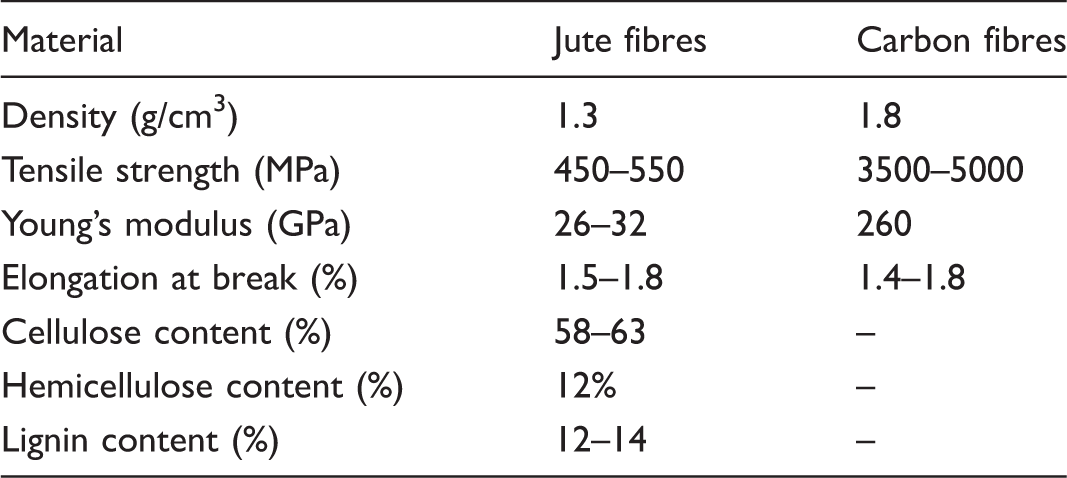
Two kinds of woven fabrics were utilized: plain jute and carbon fibres (Figure 1). Tables 1 and 2 show the chemical composition, physical characteristics and mechanical properties of carbon fibres, plain woven jute and PVB thin film PVB layer. Plain woven jute mat was supplied by ZKK Sdn Bhd. Malaysia. Carbon fibres were supplied by Brazen Composite Sdn. Bhd., Melaka. PVB thin film layers were used between fibre layers. Recently, a simple and economical method is developed as a new thin film layer matrix production [20]. Ductile and tough PVB interlayers are mostly used for an application that requires strong bonding, many surface adhesions, stiffness as well as flexibility. Due to the low cost, long lasting ability, easy fabrication, added to that, possessing good chemical and mechanical and chemical characteristics, PVB is an interlayer, usually used in the architectural and automotive area.
Woven (a) carbon fibres, (b) plain woven jute and (c) PVB. Chemical, mechanical and physical properties of fibres (technical sheet). Chemical, mechanical and physical properties of PVB (technical sheet).

Hybrid composite fabrication
The hot press was used to produce laminated hybrid with different jute fibres , carbon fibres weight percentage reinforced PVB, as shown in Figure 2. The jute fibre was dried in oven at 105℃ for 3 h, removing moisture and was stored in dry container. Table 3 shows different layering configuration and sequence of the laminated hybrid. To study the effect of layering configuration on the dynamic behaviour, plain jute was placed in various locations. Carbon and jute fibres were stacked at various arrangements with PVB layers sandwiched in between at dimensions of 200 mm × 200 mm. Studies are also carried out on pure carbon and pure plain-woven jute-reinforced PVB composite for the purpose of comparison. Six types of composites were fabricated, and three samples for each type of thermal testing replicated.
Hybrid composite samples preparation. Laminated composites specifications.

Laminated composites with various layering pattern of plain woven arranging were fabricated by changing the weight percentage of two types of fibres with keeping the fibre weight ratio of 60% for all hybrid composites. Woven jute layers, carbon fibres and PVB layers were cut at the size (200 × 200 mm sheets) and then arranged in different stacking. Before any moulding process, mould release agent has been sprayed to prevent sample sticking and to obtain the smooth sample surface. The stack of various laminates was centred in between the two plates of the compression moulding press (stainless steel made). Consequently, plates were closed and heated to 165℃ for 20 min at compression pressure of 5 MPa. When plates temperature reached 165℃, the compression pressure was set at 5 MPa and was constant for 15 min. The pressure was maintained at 5 MPa when the temperature was reduced to laboratory temperature (25℃). The fabricated laminates were taken out of the compression moulding once the plate temperature reached 25℃. Mass and the dimensions of the hybrid laminates were measured to calculate the density of hybrid materials.
DMA
The DMA tests were conducted according to the ASTM D4065-06 [21] to study the viscoelastic behaviour (Storage modulus, loss modulus, Mechanical damping parameter) of hybrid laminates with respect to temperature variation. DMA tests were performed using TA (DMA Mettler Toledo M 861) machine, operating in three-point bending mode at frequency of 1 Hz under controlled amplitude. The temperature was increased from 20℃ to 350℃, under controlled sinusoidal strain with heating rate of 5℃/min. The specimen’s sizes have thickness of 0.5–5 mm, 10 mm width, and 55 mm length.
Effects of dimensional stability and water absorption
Dimensional stability of jute/carbon laminated composite was investigated by both water absorption and thickness swelling tests at room temperature. The weights of composites were measured using Archimedes approach, according to the standard [22] and ASTM [23], by sensitive digital balance with three digits. Weights and thickness of the samples were measured and then immersed in a container of distilled water at a temperature of 27 (±2)℃. Five immersed specimens of each hybrid were measured, and average value was recorded. The samples were taken out from the distilled water and all wet surface was wiped with a clean dry tissue paper. The samples were regularly taken out and reweighed to the nearest 0.001 mg until saturated. The weight gain of the specimens at a given immersion time was recorded at regular time intervals of time. Thereafter, the water absorption percentages (weight gain) were determined using the following equation [21]

Percentage of thickness swelling was calculated by equation [21]

Assuming the absorption process is linear at an early stage of immersion, so Fickian diffusion coefficient D could be determined from the slope of water absorption curve.
From slopes at linearly early stages of water absorption percentage versus the square root of time, the diffusion coefficient (D) is calculated. The diffusion coefficient or diffusivity (D) has the dimensions of mm2/s and is calculated by [21]


Results and discussions
DMA
The E′ storage modulus, E″ loss modulus, damping factor were investigated to analyse the dynamic mechanical behaviour of laminated composites with respect to temperature variation, at an oscillation frequency of 1 Hz under amplitude control.
E′ Storage modulus
Figure 3 shows the stacking sequence effect on the storage modulus curves as a function of temperature of jute and carbon/PVB composites, at a frequency of 1 Hz. At 20℃, the storage modulus values of C composites were 14 GPa, H1 is 12 GPa, H2 is 8 GPa, H3 is 5 GPa, H4 is 10 GPa and J composites is 4 GPa, respectively. However, they have come approximately to same level (2 GPa) after 200℃ with no considerable change. It is shown that carbon composite illustrates maximum storage modulus value, while pure jute composite shows minimum storage modulus value. These effects could be attributed to the fact that force which was applied at the outer laminated layers by three-point bending configuration withstands the applied force. Due to high stiff behaviour of carbon fibres compared to jute fibres stiffness, it leads to enhanced storage modulus of carbon (C) composite. Moreover, storage modulus curves of carbon composite suffer a drastic fall around 100–200℃ indicating a transition from the glassy region to rubbery region state, showing greater reinforcing effect on the modulus above Tg than below it. However, gradually, degradation in storage modulus of glass transition temperature (Tg) area is much less for jute composite above Tg. It could be attributed to the combination of hydrodynamic effects of fibres embedded in viscoelastic medium and to mechanical restraint introduced of carbon fibres. The obtained storage modulus graph is also in agreement with the storage modulus graph obtained in the hybridization of glass/ramie fibre-reinforced polyester composites [24].
Storage modulus curves of jute, carbon composites and their hybrids.
Among all laminated hybrids, H1 composite (carbon layers as skin and jute layers as core) has the highest storage modulus values compared with H2 hybrids. Furthermore, before Tg, H1 storage modulus value was higher than H2 composites, indicating that the stiffness of laminated will decrease when the jute fibre is used as an outer layer. While at high temperature, E′ storage modulus values of all laminated composites were very close; it means that when temperature rises, the variation of storage modulus was decreased in all cases. As temperature increases, the laminated layers become more flexible, and lose their close arrangement resulting in a low degree of stiffness which leads to low storage modulus (rubbery region). While beyond Tg, the H3 and jute composites had almost the same behaviour curve. H3 storage modulus value was slightly lower than J storage modulus value, indicating the effectiveness of jute fibres reinforcement above Tg. This behaviour was also observed in research findings [25], indicating better tension transfer between fibre and matrix at high temperature of natural fibres. According to the results, by increasing the carbon layers number, fibres agglomeration takes place which increases effective fibre to matrix stress transfer, resulting in high H4 storage modulus compared with same carbon weight in H3 hybrid. Similar results were also reported on the storage modulus behaviour of carbon-reinforced composites by other researchers [26,27].
Loss modulus (E″)
Figure 4 illustrates the viscous response of all laminated composites for different stacking sequence arrangement between carbon and jute fibres, loss modulus curves as a function of temperature, at a frequency of 1 Hz. When the peak values were examined, it was seen that loss modulus curves of C composite have had the highest value, 2738.69 MPa at about 133℃, whereas the peak value of loss modulus curves of the J composite was 631 MPa at about 151℃. H2 and H4 hybrids have had peak loss modulus curves at about the same temperature (130℃), 1753 MPa and 1917 MPa, respectively. Variance in loss modulus values is small between H2 and H4 hybrids, at the same temperature. Thus, the incorporation of one carbon layer did not constitute a much difference in the property advantage of the hybrid. Furthermore, it does not cause much of a shift in the temperature above Tg. Even though the hybrid peak value of loss modulus curves follows a decreasing trend as jute layers are added correspondingly replaced by carbon fibre. The addition layer deserves little justification considering the much higher price of carbon in comparison with jute fibre. It is also seen that the incorporation of jute fibres causes the broadening of the E″ loss modulus peak, because of an increase in chain segments and more free volume with addition of natural fibre [28]. Moreover, the additional relaxation can be related to the micromechanical transition arising from the immobilized polymer layer, which acts as an interlayer affects the composites relaxation [29], while H1 composite has had a peak value of 2191 MPa at about 144℃ followed by H3 composite which has a peak value of 1052 MPa at about 140℃. As same as the storage modulus curve trend, the loss modulus of the laminated composite which had carbon layers at the outer and jute layers at the inner (H1) reached the highest loss modulus value among other hybrids, which can be attributed to the fact that the outer layers of stiff carbon fabrics resist the applied force; thus, resulting improvement in loss modulus E″ value. The effect of using different stacking sequence of jute layers was prominent at the curves of loss modulus for all laminated hybrids. As a same as hybrid loss modulus trend is noticed for glass/ramie fibre reinforced polyester composites [24], it had improved by addition of ramie fibres in the composite above Tg. Which is evident in the area of glass transition (shifting from glassy to elastic state) for composites with high jute fibre weight [24].
Loss modulus curves of jute, carbon composites and their hybrids.
Damping factor (tan δ)
As it is known, damping factor curves give information about correlation of viscous and elastic components of viscoelastic material [18]. Effects of layering sequences on the (Tan δ) damping factor of laminated hybrid composites with temperature are illustrated in Figure 5. It is noticed that when temperature raised, tan δ (damping factor) increases, went through maximum in transition region, then decreases in rubbery region, indicating lowered viscoelastic. The C composites elucidated the highest damping factor value and the J composite shows the lowest value among all composites. Furthermore, fibres hybridization basically lowered viscoelastic damping factor because the fibres carry greater extent of the stress and allow only small part to strain the interface associated with crosslinking density, leading to lower damping characteristics. It was observed that the damping factor is influenced by the various fibre layers sequences. As indicated, a lower tan peak value was obtained from H3 (carbon/jute), while the highest value was obtained from H1(carbon/ jute/carbon), among all hybrids. The tan δ peak height of H2 (jute/carbon /jute) was slightly higher than H3 (carbon/jute), but close to H4 (carbon/jute/carbon/jute). Thus, adding one layer of jute fibre enhances damping characteristics of laminated hybrid composite. It was reported that high bonding strength between the matrix and reinforcement decreases the mobility of molecular chains, which causes a reduction in damping factor [30]. It is known that adhesion of natural fibres to matrices is insufficient compared to conventional fibres [31,32], causing an increase in damping factor. Additionally, it is evident that Tan δ curves became broader for all hybrids compared with C composite, before and after the Tg (glass transition) region, signifying more time for molecules relaxation mainly due to the nature of natural jute fibres with PVB polymer to overcome the inter friction between their molecular chains. Reported results are also in line with other research results [28,33].
Damping factor curves of jute, carbon composites and their hybrids.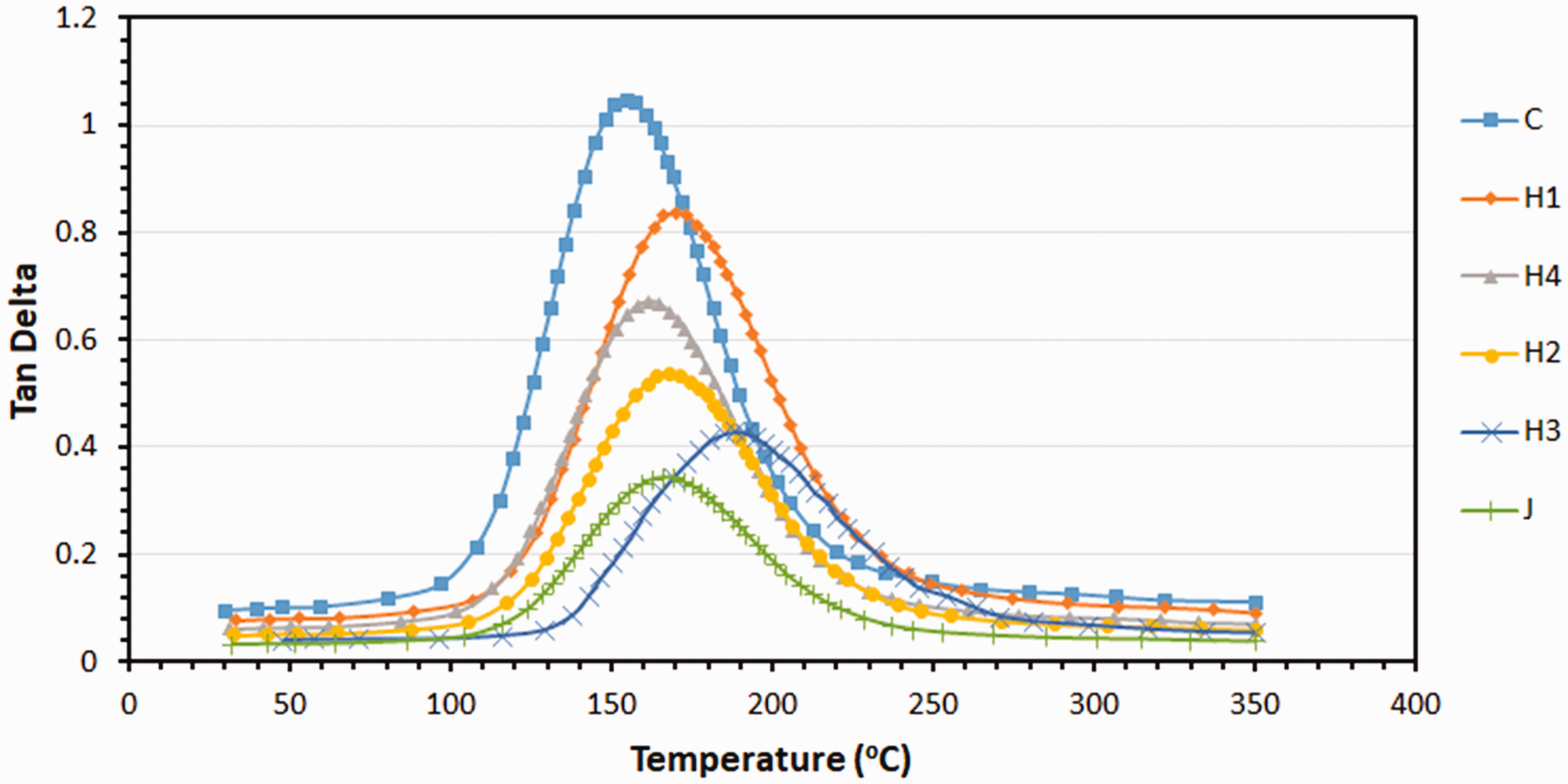
Glass transition temperature (Tg)
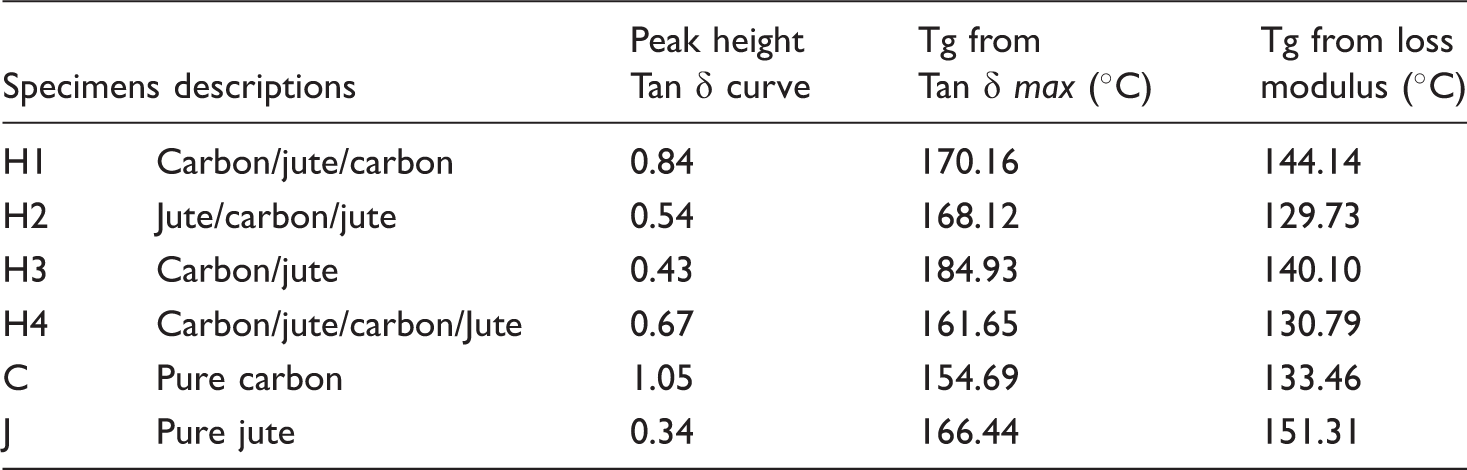
Peak height of Tg and Tan δmax values of all hybrid composites.
Cole–Cole plots
Cole–Cole curves, obtained by plotting loss modulus (E″) against storage modulus (E′) at one frequency, represent dynamic mechanical characteristics of polymeric material, measured as function of temperature and frequency. A Cole–Cole plot is utilised to study the structural changes taking place in crosslinked polymers after the addition of reinforcements to polymeric matrix by the type of retardation distribution and the relaxation time. Figure 6 shows the Cole–Cole plots for all different layering patterns of hybrid and pure composites. It was observed that both the stacking sequence and fibres type have affected the shape of the Cole–Cole plot, which influences the dynamic characteristics (the polymeric structure is either heterogeneous or homogeneous nature). The Cole–Cole plotted curves demonstrate an arc, and their shapes indicate viscoelastic mechanical properties, and smooth semicircular arcs represent a homogenous polymeric system. Furthermore, perfect shape signifies the interface effect and homogeneous dispersion in polymeric system [25]. Jute composites curve evidently displays high heterogeneity, indicating poor interfacial bonding between jute/matrix interfacial bonding. It is also clear that reinforcing with jute fibre shows a narrow curve, whereas H1, H2, H3 and H4 laminated hybrid composites show a broad one. It means that Cole–Cole plots show the perfect semicircle diagram resembling more homogeneity among all laminated hybrids, associated with lower variation in relaxation process. It could be noticed that the addition of carbon fibres to the jute composites decreased the imperfect semi-circular shape compared with Cole–Cole jute composite curve. Therefore, the incorporation of jute fibres to the carbon composite highly affects the shapes of Cole–Cole curve and thereby influences their dynamic characteristics with a function of temperature. As stated from literature, the overall results showed that hybridisation natural with synthetic fibres improves the dynamic mechanical behaviours for composite materials [34].
Cole–Cole curves of jute, carbon composites and their hybrids.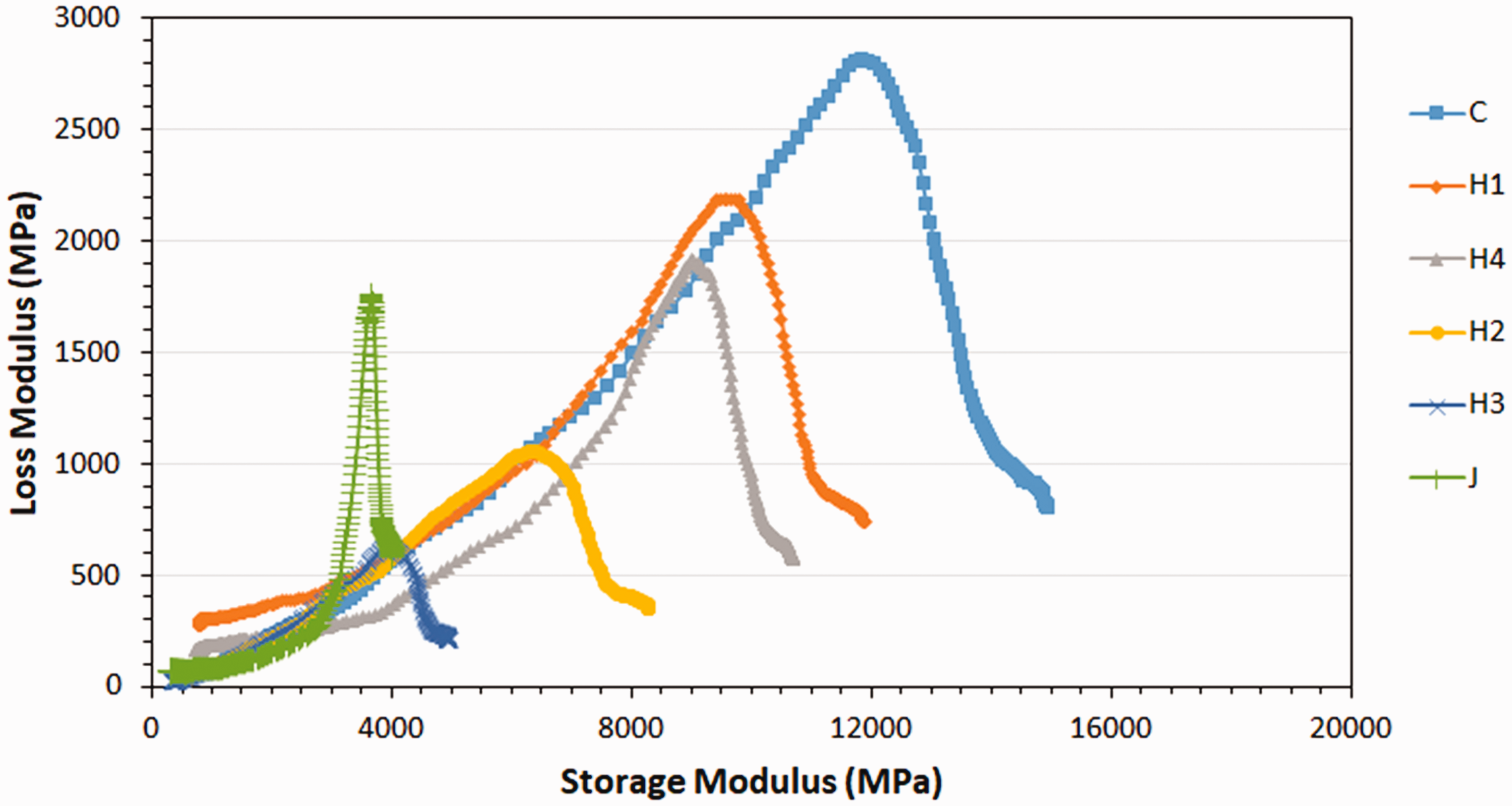
Dimensional stability and water absorption effects
Water absorption represents the important factor which leads to a change of polymer composite properties, generally reduction in the hardness and stiffness. The reverse relationship between the rising of water immersion time and composite strength is due to the reduction of the composite hardness. This is attributed to the degradation of the fibre–matrix interface leading to poor stress transfer efficiencies. The percentage of water gain and the thickness swelling was calculated by weight and thickness difference of the specimens before and after water immersion.
Water absorption parameters for all laminated composites.

The increase in the weight of all laminates immersed in distilled water is shown in Figure 7 as a function of the square root of time. Initially, all samples had a sharp linear increase in water absorption curves demonstrating the rapid water penetration into the laminated composites. After that, the curves gradually increase with increasing immersion time until reached a saturation state. It could be seen that the jute composite absorbs significantly more water than the other laminated composites. Additionally, it is evident that among all hybrids, the sequence H2 absorbs the least amount of water. Generally, the weight gain percentage increases with increasing jute fibre content in contrast to that of the carbon fibres. This is due to the hydrophilic character of jute fibres, as well as the PVB resin properties. As stated by Yahaya et al. [1], the water absorption characteristic is controlled by the natural fibre composite characteristics. Furthermore, the water absorption percentage was influenced by the void content of the laminated composite and increases by trapping the water inside the voids. Similar behaviour was reported by Lee et al. [36], who reported that water absorption increased with natural fibres incorporation due to the greater micro-void formation in the matrix.
Water absorption of all laminated composites.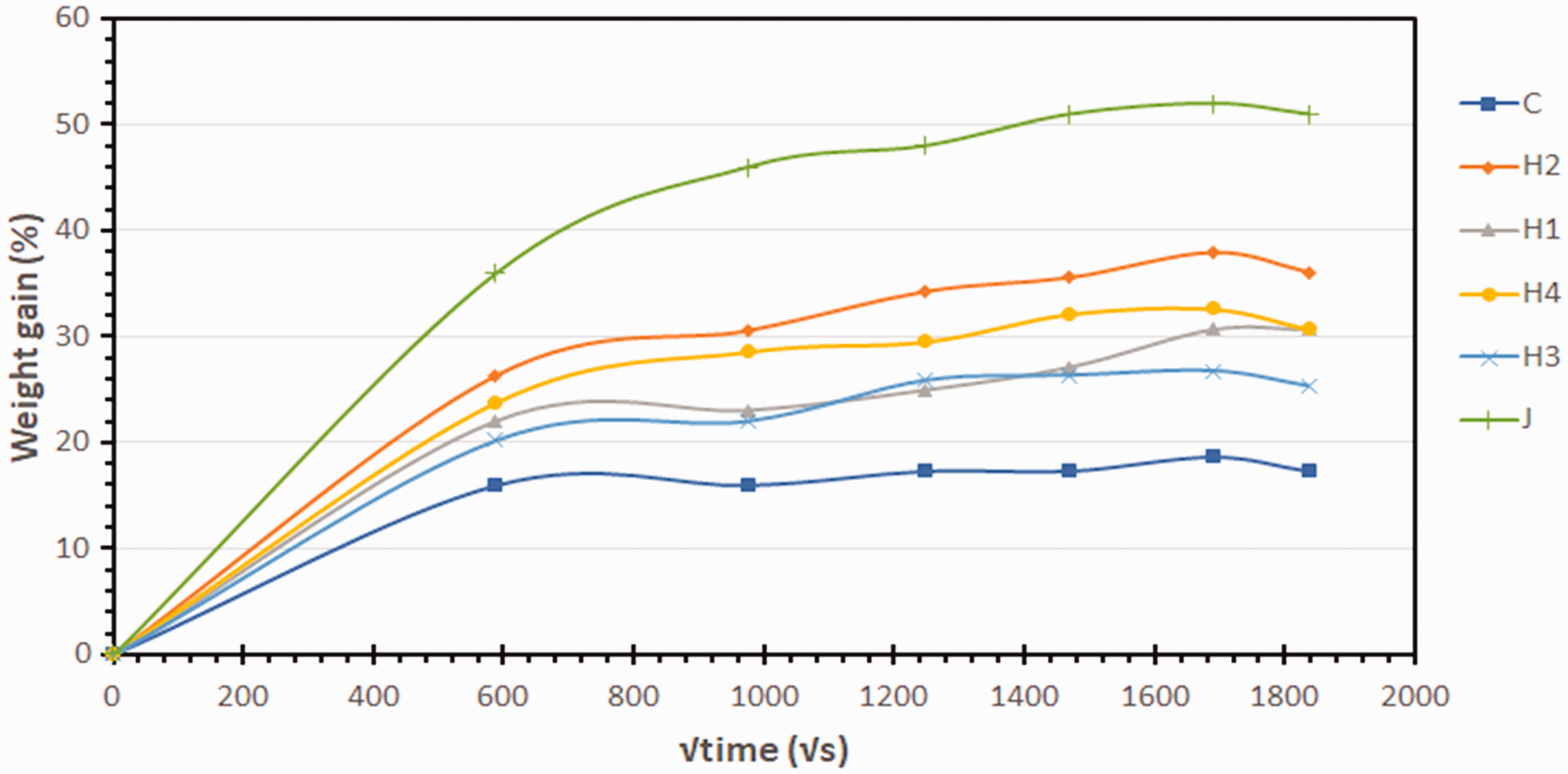
Figure 8 illustrates the increase in thickness swelling of all laminated composites after immersion until a constant thickness was obtained. It is evident that the increase in both immersion time and jute content leads to an increase in thickness swelling of the laminated composites. Such findings have been previously reported [30]; the water absorption induced predominantly increases the dimension of the composite. J composite illustrates the highest thickness swelling (25%) among all laminated composites. Similar to water absorption behaviour, thickness swelling was also influenced by the percentage of void content of the composite. Generally, the contradiction of water absorption, diffusion coefficient and thickness swelling depends on the weight fraction, stacking sequence, fibres type, voids content and viscosity of the PVB resin.
Thickness swelling of all laminated composites.
In one of the longitudinal studies [37], the effect of water absorption on mechanical properties of unwoven kenaf was investigated. They concluded that composite properties were influenced highly by immersion time. All types of reinforced polymer composites absorb water when immersed in the water for a long time, especially composites with natural fibre, because of its hydrophilic nature. It is more sensitive towards water absorption, which causes instability in the properties of the composites. It is indicated in the literature that water absorption and thickness swelling of natural fibre reinforced composites are improved by the incorporation of synthetic fibres [38], which provide better mechanical and tribological composite properties. Moreover, using lignocellulosic fibres on the surface of the reinforced composites results in exposure directly to absorb more water leads to high thickness swelling properties [31,39]. When the water absorption behaviour of natural fibre composites is investigated, it is seen that the micro-cracks of the natural fibres reduce the interfacial adhesion of fibre with matrix, resulting in the water molecules getting penetrated leading to thickness swelling.
Conclusions
Effects of hybridizing naturally woven jute with carbon reinforced PVB composites on dynamic mechanical properties and moisture diffusion properties were investigated, with special reference to fibres arranging sequences. The effect of temperature on storage modulus (E′), loss modulus (E″), and damping factor (tan δ) was examined by keeping relative fibres weight to 60:40. The results revealed that overall dynamic mechanical properties of jute/carbon hybrid are dependent on the jute fibre content and stacking sequence. H1 exhibited the best dynamic mechanical properties compared to other laminated hybrids. The configurations of fibre layers were also found to affect the dynamic mechanical behaviour of laminated hybrids significantly, and placing jute fibre at the outer layers and carbon layers at the inner (H2) was found to be less dynamic mechanical characteristics than that of the hybrids with placing carbon layers at the outer layers and jute fibre at the inner (H1). It was concluded that H4 (Carbon/Jute/Carbon/Jute) with 50 wt.% carbon content and H2 (Jute/Carbon/Jute) with 30 wt.% carbon content exhibited almost close dynamic mechanical behaviours. Moreover, all hybrid laminates exhibited rigid polymeric structure compared to jute composite.
In water absorption tests, the laminated hybrids with high jute contents absorbed more water which leads to high dimensional change. This approach is expected to develop a new composite material that is of low cost compared to synthetic fibres composites associated with the reduction of potential harmful effects of the petroleum products, without jeopardising the mechanical properties. This research will open new avenue for use in military utilities, aerospace, marine and civilian structures, to reduce the use of synthetic fibres in conventional composites, while meeting the prescribed baseline performance specifications.
Footnotes
Acknowledgements
The author would like to thank the Ministry of Higher Education & Scientific Research of Iraq and to Mustansiriyah University, College of Engineering, Mechanical Engineering Department for the support for the work contained in this study. Gratitude also extends to all technicians working in the Laboratory of Biocomposite Technology, Institute of Tropical Forestry and Forest Products (INTROP), UPM, for their scientific assistance.
Declaration of conflicting interests
The author(s) declared no potential conflicts of interest with respect to the research, authorship, and/or publication of this article.
Funding
The author(s) received no financial support for the research, authorship, and/or publication of this article.