



Abstract
In this study, bamboo and glass fibers were successfully added into bisphenol A–aniline-based benzoxazine resin by hot pressing method. The effect of water absorption on the mechanical properties of the neat benzoxazine and its composites was studied. The composites prepared in this study has been proved to exhibit better water resistance than some conventional natural fiber/polymer composites due to good hydrophobicity of the benzoxazine matrix. From the mechanical tests, the tensile performance of both neat benzoxazine and the composites degraded seriously after prolonged immersion in water. However, neat benzoxazine and the composites maintained relatively higher residual flexural properties (residual mechanical properties refer to the ratio of strength and modulus of the saturated samples to that of the nonaged samples) after 20 days of water immersion. The effect of water molecules on the fracture surface morphologies of the composites was studied using a scanning electron microscope (SEM). The SEM images showed that the interfacial bonding between fibers and the matrix degraded seriously due to the attack of water.
Introduction
As a new thermosetting resin, benzoxazine has many appealing characteristics such as excellent heat resistance, low moisture uptake, near-zero shrinkage upon polymerization, and high modulus and strength, thus attracting extensive attention from researchers to entrepreneurs in the field of high-performance materials. 1 However, benzoxazine still has some disadvantages such as high brittleness, high curing temperature, and high melt viscosity. As traditional reinforcements, synthetic fibers were widely used in the fabrication of fiber-reinforced polybenzoxazine composites. 2 -4 However, more and more researchers claimed that compared with glass, carbon, or other synthetic fibers, natural fibers could be a more competitive and sustainable alternative due to their added advantages of low-energy requirements, abundant availability, lightweight, and biodegradability. 5 Various natural fibers such as sisal fiber, kenaf fiber, and hemp fiber were successfully added in polymers for the preparation of biocomposites. 6 According to the literature, 7,8 in comparison with various natural fibers, bamboo fibers exhibited an excellent combination of tensile strength (440–600 MPa) and modulus (35–46 GPa). Because the utilization rate of bamboo fiber was still very low, these waste bamboo fibers showed great potential in the preparation of biocomposites. 9
Nevertheless, due to the inherent defects such as low mechanical strength, variability in quality, limited processing temperature, and strong hydrophilicity, natural fibers were not widely used for the fabrication of load-bearing components of structures. 10 -12 To enhance their compatibility and mechanical properties, a large number of experiments were carried out to modify the surface of natural fibers using physical, chemical, and biological methods. 13 -15 The results showed that all the methods could improve the interfacial adhesion between the fibers and the polymer matrices to some extent. However, some researchers claimed that the hybridization process (a combination of natural and synthetic fibers) may be a more major and effective way to improve the mechanical properties of the resulting composite materials. 16,17 Natural fibers were environmentally friendly and cost-effective, while the synthetic fibers had extremely high strength and modulus. Natural/synthetic hybrid composites could make full use of the respective advantages of natural fibers and synthetic fibers.
Another major problem of natural fiber/polymer composites was their tendency to deteriorate seriously under hydrothermal environment or prolonged immersion in water. 18,19 On the one hand, natural fibers contained a large number of hydrophilic polyhydroxyl substances. On the other hand, natural fibers were fibrous substances with many capillaries and large surface area, so they were easy to absorb water.
Although benzoxazine resin exhibited strong hydrophobicity, the mechanical behavior of natural fiber-reinforced polybenzoxazine composites under prolonged water absorption still needed to be investigated to achieve their wider application. However, to the best of our knowledge, the effect of water absorption on the mechanical properties of bamboo/glass-reinforced polybenzoxazine hybrid composites has not yet been explored.
To fill this gap, in this study, bamboo and glass fibers were successfully added in benzoxazine resin for the first time to fabricate the hybrid composites by hot pressing method. A new method was developed to prepare the so-called bamboo fiber mat and the fabrication process in this research greatly reduced the internal defects of the composites. The effect of water absorption on the mechanical properties of the neat benzoxazine and its composites was studied. The fractured surface morphologies of the composites were observed by a scanning electron microscope (SEM).
Experimental section
Materials
The polymer was polybenzoxazine, purchased from Chengdu Coryes Polymer Science & Technology Co., Ltd (China). Benzoxazine resin used in this study could be cured at high temperature (>160°C) without adding curing agent. 1 Bamboo fibers (Phyllostachys heterocycla in Zhejiang Province) were kindly donated by a textile company located at Ningbo, Zhejiang (China). The two-dimensional plain woven glass fiber cloth was selected with a density of 2.5 g/cm3 and 0.2 mm thickness.
Treatment of bamboo fibers
To evaluate the effect of alkali treatment on the mechanical behavior of the composites under prolonged immersion in water, 6 wt% sodium hydroxide (NaOH) solutions were used for pretreatment of bamboo fibers based on our previous study. 20 For simplicity, the detailed processing steps about pretreatment of bamboo fibers were not given in this article and could be found in the work by Zhang et al. 20 In this study, we developed a new method of preparing the so-called randomly oriented bamboo fiber mat. Before the preparation of composites, bamboo fibers were sized into around 40 mm manually. Subsequently, a certain weight of bamboo fibers was poured into a self-made water tank (300 × 200 × 100 mm3) and stirred evenly. The water in the tank was carefully squeezed out by a piece of aluminum sheet (300 × 200× 5 mm3), and the randomly oriented bamboo fibers were pressed into a thin film. The thin film was then placed in the oven for complete drying and hard-pressed in a hydraulic press at 15 MPa pressure for 10 min to maintain the thickness. This method greatly improved the entanglement probability between fibers. At the same time, due to the presence of water, the colloids on the surface of bamboo fibers could transfer between fibers, which may improve the cohesion between fibers and ultimately improve the mechanical properties of the resulting composites.
Composite preparation
Benzoxazine resin could be cured under high temperature without any curing agent. The compression molding with isothermal heating was applied for the fabrication of the composites. A brief sketch of the preparation process was shown in Figure 1. Firstly, a certain weight of benzoxazine resin was heated in the oven at 150°C for 15 min. Secondly, half of the melted resin was poured into a preheated steel mold, and the prepared bamboo fiber film and glass fibers were gently laid on the resin. The left half of resin was then poured on the fibers evenly. Thirdly, the mixture was heated at 155°C for 30 min with the upper mold unclosed. Finally, the upper mold was placed on the mixture, after that the mold was pressed at 15 MPa and heated at 165°C for 2 h and 185°C for another 2 h, respectively. Bamboo fibers, benzoxazine resin, and the resulting composite were shown in Figure 2(a) to (c), respectively. We prepared three kinds of composites: untreated bamboo fibers-reinforced polybenzoxazine composite (UBP), 6 wt% NaOH-treated bamboo fibers reinforced polybenzoxazine composite (TBP), and glass and treated bamboo fibers-reinforced polybenzoxazine hybrid composite (GBP). For comparison, neat benzoxazine resin was also prepared. The volume fractions of the prepared composites were calculated using a method discussed in the work by Ridzuan et al. 21 The volume fractions of the bamboo fiber (v b), glass fiber (v g), and matrix (v m) of the prepared composites were respectively determined using equation (1), where V and ρ represent the volume and density, respectively, while the subscripted b, g, m, and c denote the bamboo fiber, glass fiber, matrix, and composite, respectively.

where V b = V b/V b + V g + V m, V g = V g/V b + V g+ V m, and V m = V m/V b + V g + V m.
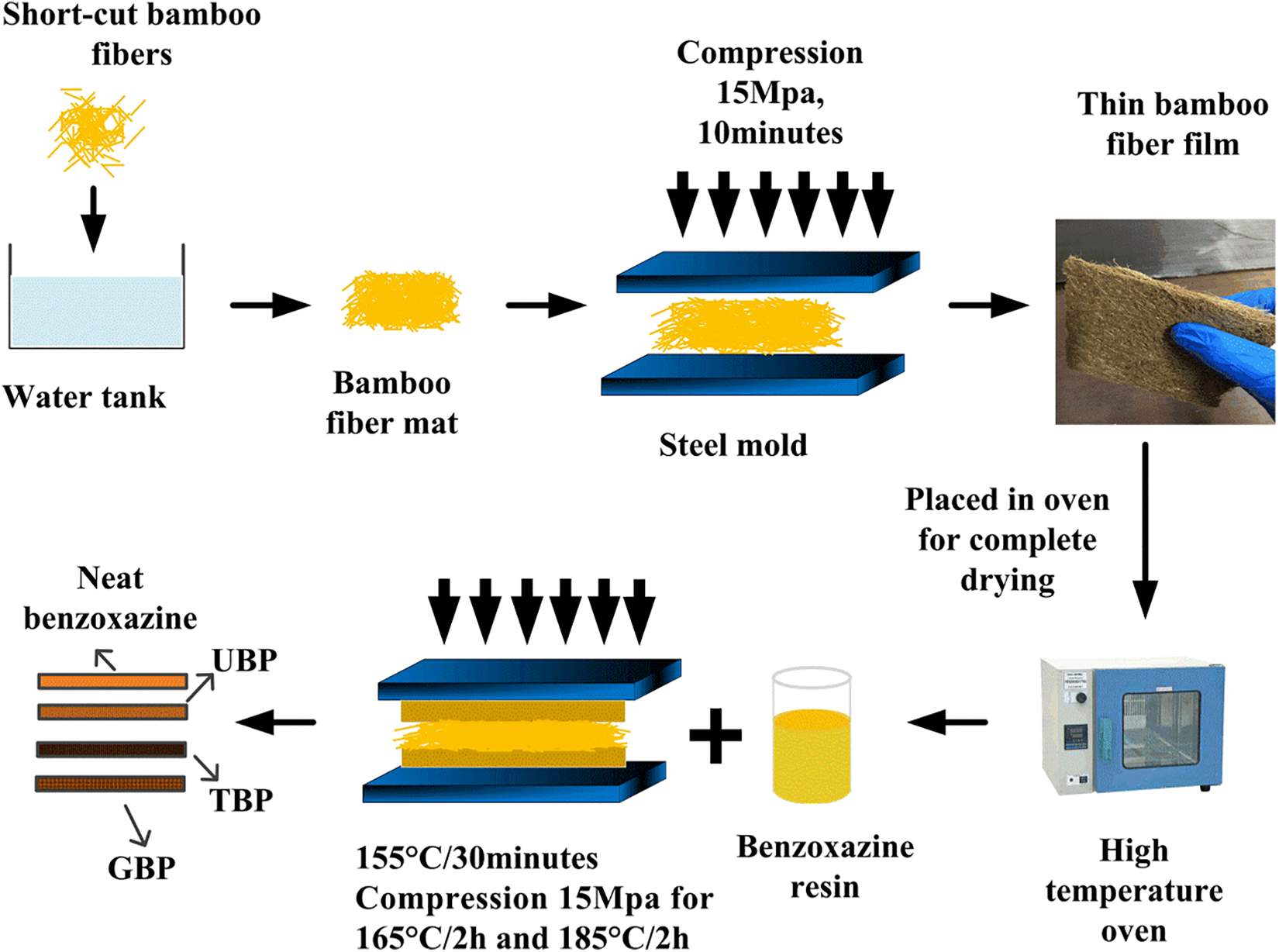
Schematic diagram for composites preparation.

(a) Raw bamboo fibers, (b) benzoxazine resin, and (c) prepared composites.
The volume of each component was determined by V = mass/ρ. The detailed composition of UBP, TBP, and GBP are summarized in Table 1.
Composition of the composite samples.

UBP: untreated bamboo fibers-reinforced polybenzoxazine composite; TBP: 6 wt% NaOH-treated bamboo fibers-reinforced polybenzoxazine composite; GBP: glass and treated bamboo fibers-reinforced polybenzoxazine hybrid composite; NaOH: sodium hydroxide.
Moisture absorption test
The water absorption test was conducted following the ASTM D570 standard. The specimens were prepared with a dimension of 150 × 20 × 2.7 mm3. The neat benzoxazine resin and the composites were soaked in 25°C and 80°C water, respectively. To examine the effect of temperature on water absorption of composites, 80°C water was used as the reference. Before the test, all the samples needed to be maintained complete drying. Then, the samples were weighed accurately and immediately put into water until saturation. In the process of absorbing water, the samples were taken out from the water every 24 h and weighted using a high accuracy 4-digit analytical balance. To achieve a valid result, five parallel samples were tested for each type of composite.
Tensile and flexural testing
The effect of water absorption on the tensile properties of bamboo composites was investigated using a Zwick universal testing machine (Zwick/Roell, Z050, Germany) at a crosshead speed of 1.3 mm/min in accordance with the ASTM D690 standard. The testing samples were sized into 165 × 20 × 2.4 mm3. The flexural test was still carried out on the Zwick machine at a crosshead speed of 2.5 mm/min. The dimension of samples for 3-point bending test was 125 × 20 × 2.4 mm3. The depth ratio needed to be maintained at 16:1 according to ASTM D790.
Fracture surface morphology of composites observed by SEM
To further analyze the aging mechanism of water molecules on composites, the fractured surface morphologies of the composites were observed using SEM (Zeiss MA15, Hitzacker, Germany). Before SEM characterization, each sample was uniformly coated with platinum and the SEM test was performed in the high vacuum mode at accelerating voltages of 10 kV.
Results and discussion
Water absorption behavior
Figure 3(a) and (b) shows the water absorption behavior of neat benzoxazine and its composites at 25°C and 80°C, respectively. The moisture content percentage,

where m 0 and m t represented the mass of the dry and immersed sample, respectively. It could be found that water absorption of all the samples reached an apparent equilibrium within 20 days. Figure 3 shows that the samples absorbed more water with the increase of water temperature. At 25°C, saturated moisture content percentage for neat resin, UBP, TBP, and GBP were recorded as 0.48%, 4.24%, 3.64%, and 3.11%, respectively. In comparison, at 80°C, saturated moisture content percentage for neat resin, UBP, TBP, and GBP were increased as 0.64%, 6.32%, 5.16%, and 4.26%, respectively. This phenomenon was consistent with some relevant research. 22,23 According to the literature, 18 the maximum water absorption percentage of pure polyester was 1.5%. Sgriccia et al. studied the 15 wt% hemp fiber-reinforced epoxy composites and the results showed the saturated water absorption for the composites was 18.4%. 24 Obviously, the benzoxazine matrix and its composites absorbed less water than some conventional natural fiber/polymer composites.

Water uptake curves at (a) 25°C and (b) 80°C for neat benzoxazine and its composites.
Compared to TBP and GBP, composites filled with untreated bamboo fibers had higher water weight gain under saturation condition. This finding indicated that moderate alkali treatment had a positive effect on the hygroscopicity of the composites. Ridzuan et al. 21 found that there was a linear reduction of moisture absorption rate for Pennisetum purpureum/glass–epoxy composites with the increase of glass fiber volume content. This was because the glass fiber was resistant to water absorption and could serve as barriers preventing natural fibers from water attack. Similarly, in this study, GBP exhibited a better water resistance than the composites merely filled with bamboo fibers.
Generally, water diffused in polymer composites in three ways. 25 Firstly, water molecules diffused in small gaps between the polymer chains. Secondly, water molecules diffused through pores and crevices at the interface between the fibers and the resins. Thirdly, water molecules diffused through microcracks in the resin matrix formed by fiber swelling. Bamboo fibers exhibited natural hydrophilicity due to the presence of a large number of hydroxyl groups on their surface. 26 After 6 wt% NaOH treatment, some hydrophilic substances on the surface of bamboo fibers were removed, and the interfacial bonding between the fibers and the resin matrix was better. 20 Benzoxazine matrix exhibits strong water resistance, so it can protect the treated bamboo fiber from water attack to a certain extent. However, for untreated bamboo fibers, the weak interfacial bonding between the fibers and the matrix may cause some small pores during the fabrication of the composites. Figure 4 shows the morphologies of the samples before and after immersion observed by an optical microscope. As shown in Figure 4 (a) and (b), after long-term immersion in water, some trapped water could be found in the saturated sample, while the unaged sample showed a relatively clean pattern. Figure 4(d) clearly shows the swelling behavior of a single bamboo fiber due to the attack of water. Figure 4(e) and (f) shows the difference in macroscopic appearances between the dried sample and the saturated sample. The swelling behavior could lead to microcracking of the brittle thermosetting resin. With the increase of microcracks, water diffusion through these cracks became active. 27 In addition, as shown in Online Supplemental Figure S1, a simple contact angle test was carried out and the result showed the contact angle of benzoxazine resin was greater than 90°.

(a to f) Fiber swelling due to the long-term immersion in water.
Effect of water immersion on tensile properties
Figure 5(a) to (d) shows the typical stress–strain curves of neat benzoxazine, UBP, TBP, and GBP subjected to tensile loading, respectively. Detailed test data are summarized in Table 2. After long-term water immersion, the tensile modulus and strength of neat benzoxazine and its composites decreased obviously.
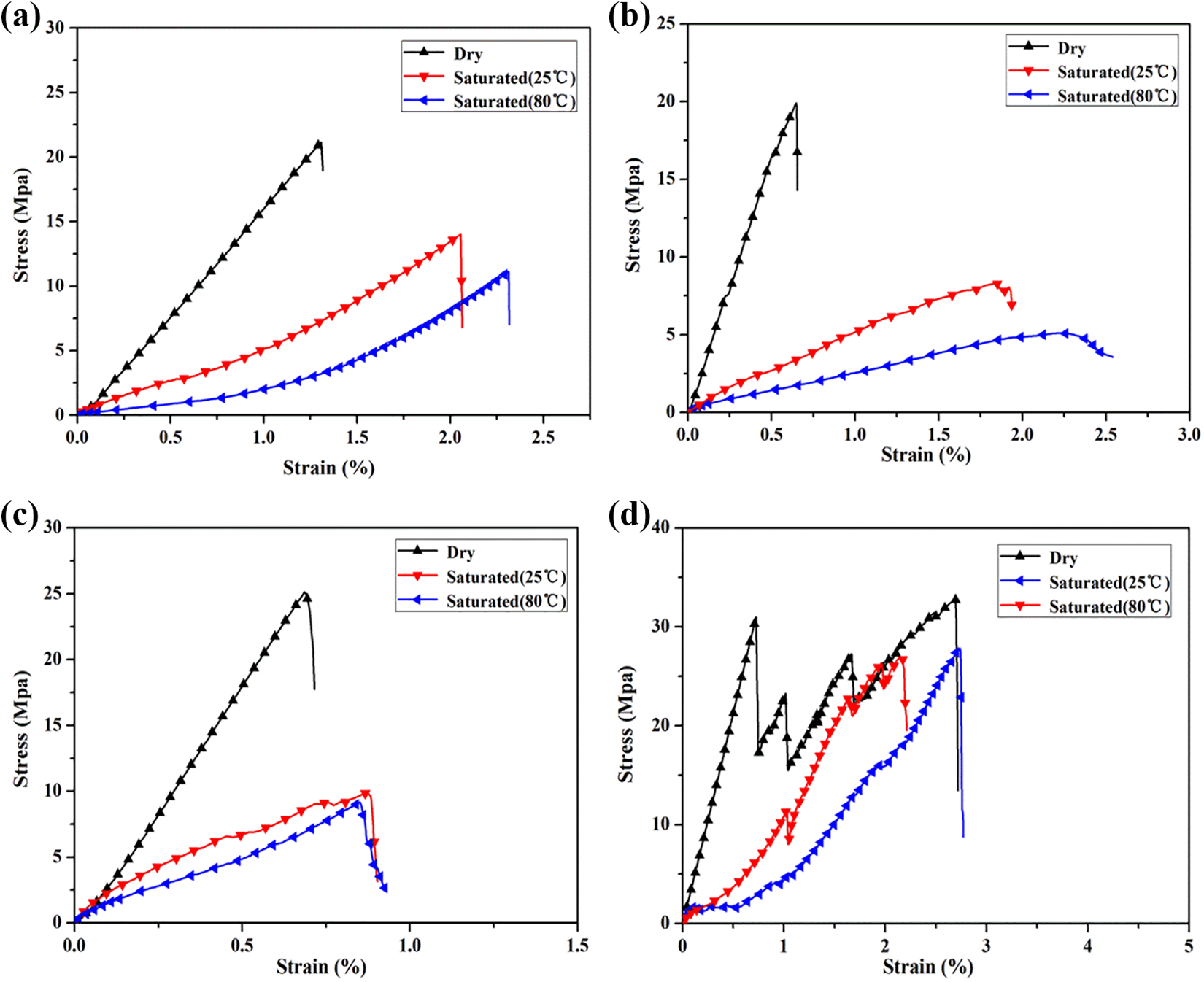
Tensile stress–strain curves of (a) neat benzoxazine, (b) UBP, (c) TBP, and (d) GBP under dry and saturated conditions.
The tensile properties of neat benzoxazine, UBP, TBP, and GBP in various aging conditions.

UBP: untreated bamboo fibers-reinforced polybenzoxazine composite; TBP: 6 wt% NaOH-treated bamboo fibers-reinforced polybenzoxazine composite; GBP: glass and treated bamboo fibers-reinforced polybenzoxazine hybrid composite; NaOH: sodium hydroxide.
The tensile strengths of nonaged neat benzoxazine, UBP, TBP, and GBP were 21.9, 20.4, 24.7, and 32.9 MPa, respectively. After immersion in 25°C water for 20 days, the tensile strengths of neat benzoxazine, UBP, TBP, and GBP decreased to 14.7, 8.3, 9.7, and 25.7 MPa, respectively. Similarly, the tensile strength and modulus of benzoxazine and composites further decreased after immersion in 80°C water for 20 days. This was because the interface between the fibers and the matrix deteriorated, which indirectly caused damage to the tensile properties of the composites. 28 However, it was clear that the tensile modulus of the composites was enhanced due to the incorporation of fibers. This was because both bamboo and glass fibers had obviously higher Young’s modulus than the benzoxazine matrix.
From Table 2, we could find randomly oriented short bamboo fibers did not enhance the tensile strength of the composites obviously. Especially the incorporation of untreated bamboo fibers had a negative effect on the tensile strength of the composites. According to the literature, 29 the tensile strength of the fiber-reinforced composites mainly depended on the fiber orientation and the interfacial bonding between the fibers and the matrix. For UBP, the weak interfacial bonding between the bamboo fiber and the matrix may not effectively realize the stress transfer. And as mentioned above, the small pores in the composites could act as defects, which could cause stress concentration during loading. As the bamboo fibers with a length of 40 mm were randomly oriented in the composites, the high strength of bamboo fibers could not be utilized effectively only if the fibers were along the direction of the tensile loading. All these reasons could explain why the UBP exhibited lower tensile stress than neat benzoxazine.
After 6 wt% NaOH treatment, the aspect ratio and the Young’s modulus of the bamboo fibers increased and meanwhile the interfacial adhesion between the bamboo fibers and the matrix were significantly improved. 20 Hence, the composites reinforced with alkali-treated bamboo fibers exhibited better tensile properties than neat benzoxazine and UBP. However, under saturated conditions, the tensile strength of UBP and TBP deteriorated seriously, while neat benzoxazine exhibited a higher residual tensile strength. On the one hand, the natural hydrophilicity of bamboo fibers led to water penetrating into the fiber–matrix interphase, which could weaken the mechanical properties of the composites. On the other hand, the microcracks caused by fiber swelling may further reduce the tensile strength of the composites.
However, water immersion had a negligible effect on the tensile strength of GBP, while the tensile strength of the composites only filled with bamboo fibers decreased significantly. The high residual strength for GBP confirmed that the incorporation of glass fibers could improve the tensile properties of the composites under both dry and saturated conditions. This was because glass fibers had significantly higher tensile strength than the benzoxazine resin matrix and bamboo fibers. In addition, as glass fibers were added into composites in the form of long continuous fibers, the high strength of glass fibers could be effectively utilized. By incorporation of 5% volume content glass fibers, there was a significant increase in tensile strength, Young’s modulus, and failure strain of the composites. In Figure 5(d), due to the existence of glass fibers, cracks could be effectively hindered when tensile fracture occurred in composites, thus GBP exhibited higher ductility.
Effect of water immersion on flexural properties
The typical flexural stress–strain curves of neat benzoxazine and the composites obtained from the flexural test are depicted in Figure 6. Table 3 summarizes the test data. Unlike tensile behaviors, the neat benzoxazine and the composites exhibited relatively higher residual flexural properties (residual mechanical properties refer to the ratio of strength and modulus of the saturated samples to that of the nonaged samples) after 20 days of water immersion. This result was different from some previous studies on natural fiber polymer composites. 21,28 According to Maslinda et al., 28 the flexural properties of the composites deteriorated seriously and the conclusion drawn from their study showed the mechanical behavior of the composites depended on the time of immersion in water. With the increase of moisture content in composites, the interface between the fibers and the matrix weakened, leading to the failure of the composites. From Table 3, the flexural modulus of neat benzoxazine increased, while the flexural strength of neat benzoxazine decreased as the immersion temperature increased. This result was similar to a relevant study. 30 Meanwhile, the flexural modulus of the composites in the saturated conditions was comparable to that obtained in the dry condition. Undoubtedly, water immersion could destroy the chemical bonds in the composites, weaken the bonding between the fibers and resins and cause voids in the composites and microcracks on the surface, which could lead to the decline of the mechanical properties of the composites. However, the results of this study showed that the composites had high residual flexural properties after 20 days of water absorption. This may be ascribed to the relatively short soaking time and water temperature effect. Under the action of water temperature, polymer molecular chains possessed certain mobility. Some molecular chains were rearranged to form new crystalline structures. The mobility of molecular chains was further enhanced, and the perfection of crystalline structures was increased, which improved the flexural properties of the composites. 26 In addition, the elimination of internal stress by thermal action may also increase the flexural properties of composites to a certain extent. Therefore, in this study, the composites exhibited relatively stable flexural properties. However, further study was also needed.
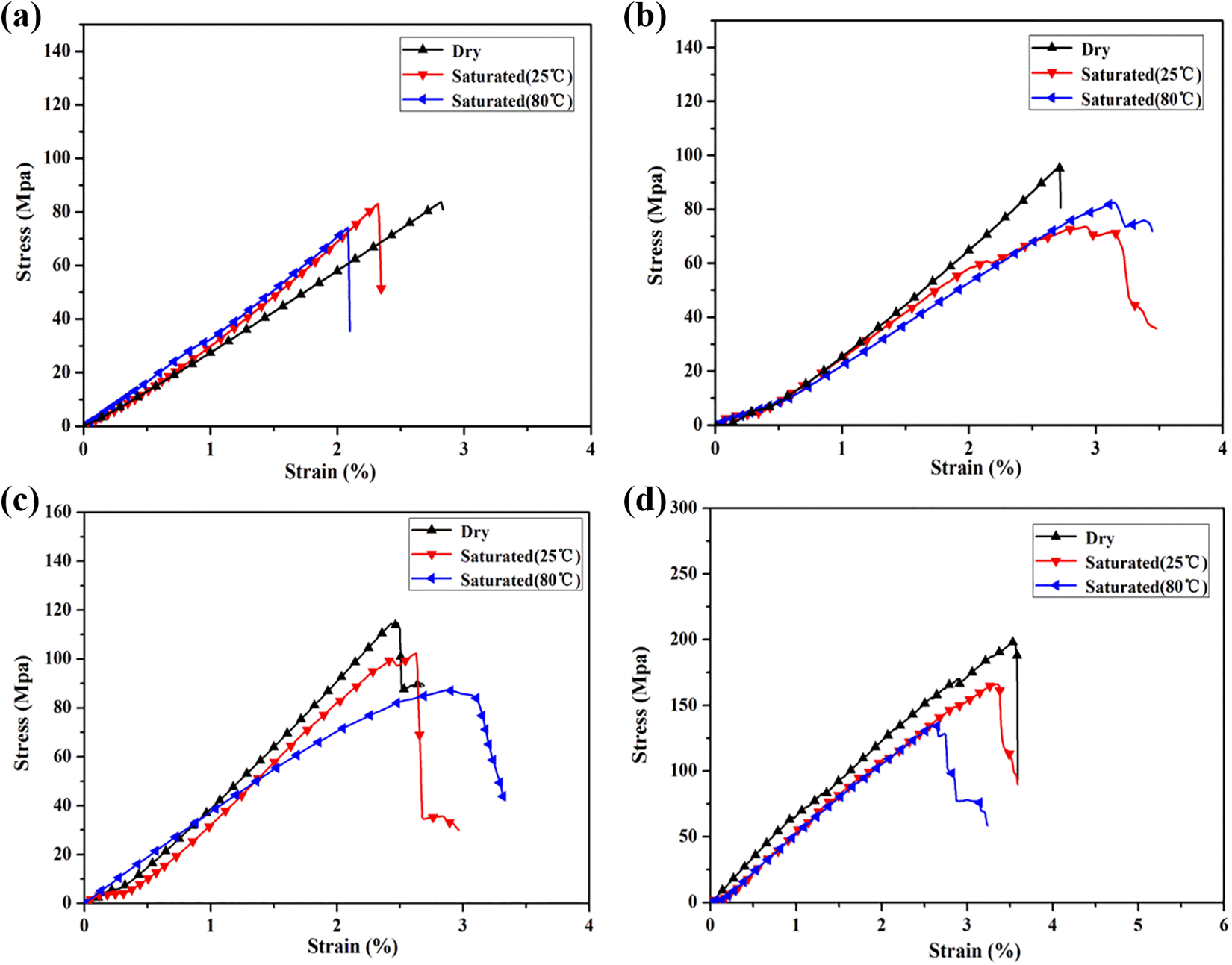
Flexural stress–strain curves of (a) neat benzoxazine, (b) UBP, (c) TBP, and (d) GBP under dry and saturated conditions.
The flexural properties of neat benzoxazine, UBP, TBP, and GBP in various aging conditions.

UBP: untreated bamboo fibers0-einforced polybenzoxazine composite; TBP: 6 wt% NaOH-treated bamboo fibers-reinforced polybenzoxazine composite; GBP: glass and treated bamboo fibers-reinforced polybenzoxazine hybrid composite; NaOH: sodium hydroxide.
Figure 6 shows that, rather than a brittle fracture of neat benzoxazine, the composites could still bear the flexural load for a while when the stress reached the maximum values. This confirmed the presence of fibers could improve the toughness of composites. In both dry and wet conditions, GBP exhibited the highest flexural strength and modulus. This was also due to the incorporation of glass fibers.
Fracture surface morphology
Figures 7 to 9 show the SEM images of fracture surfaces of the composites subjected to tensile and flexural tests under dry and saturated conditions, respectively.
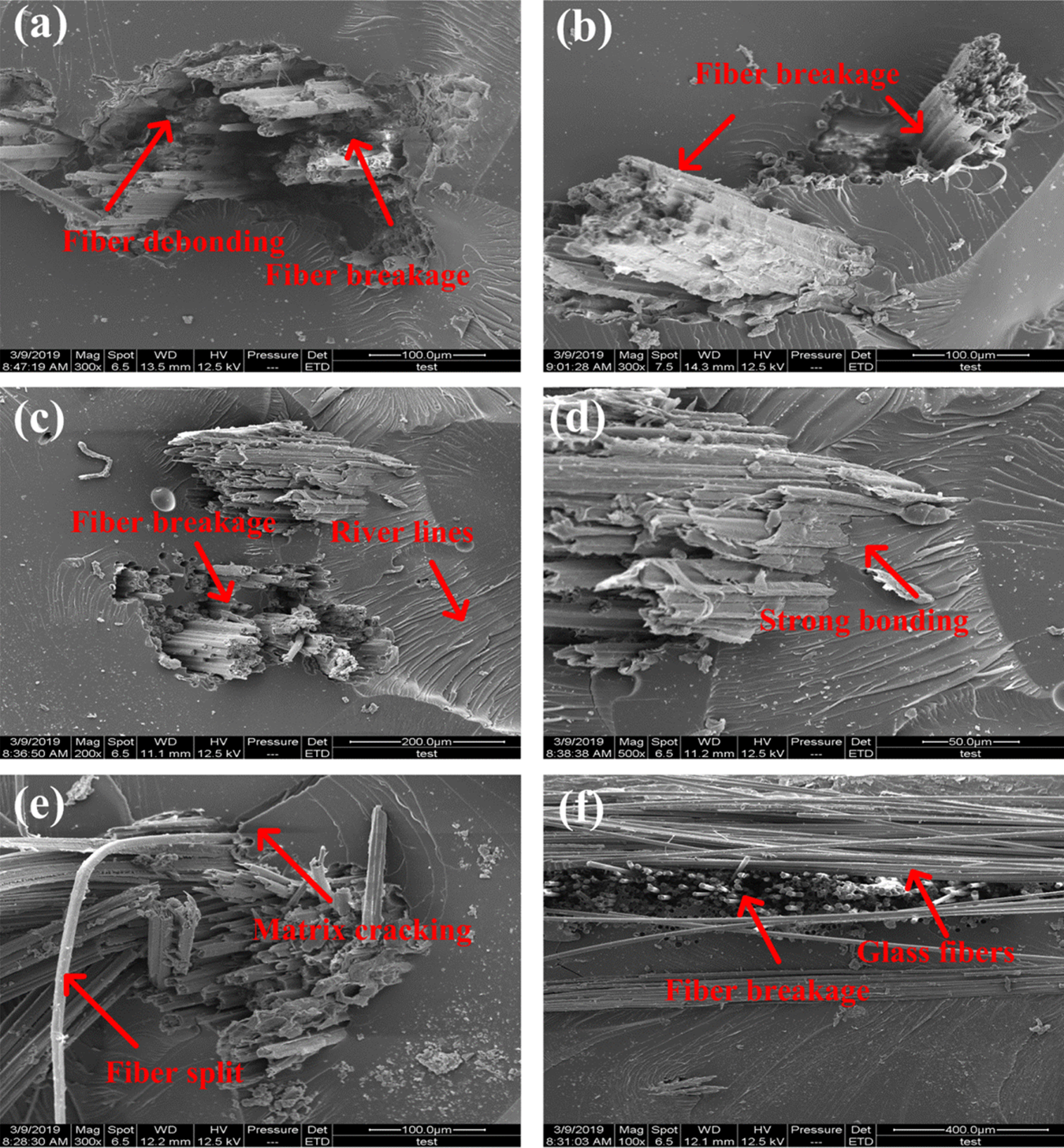
SEM images of (a and b) UBP, (c and d) TBP, and (e and f) GBP under dry conditions.

SEM images of (a and b) UBP, (c and d) TBP, and (e and f) GBP under saturated conditions (water temperature: 25°C).

SEM images of (a and b) UBP, (c and d) TBP, and (e and f) GBP under saturated conditions (water temperature: 80°C).
Figure 7(a) and (b) shows the SEM images of the composites with raw bamboo fibers that were tested under dry conditions. Typical fiber breakage and slight debonding could be clearly observed. This indicated the interfacial bonding between the raw bamboo fibers and the matrix under dry condition was not too weak because the failure modes of slight debonding and fiber breakage instead of completely fiber pullout were observed. In Figure 7(c), river lines could be observed in the fracture surface, which were the typical fracture surface morphology of thermosetting resins. As shown in Figure 7(d), after moderate alkali treatment, the interfacial adhesion between the fibers and the matrix was greatly improved. Hence, fiber breakage was the predominant failure mode for the composites under dry conditions. According to Ref., 20 the single bamboo fiber actually consisted of many elementary bamboo fibers that were tightly intertwined with each other. In Figure 7(e), fiber split could be observed and this fibrillation process could consume some energy by mechanical frictions among elementary fibers, which ultimately improved the mechanical properties of the composites. Meanwhile, matrix cracking could be found on the surface. The interfacial bonding between treated bamboo fibers and benzoxazine matrix was so strong that cracks occurred around the stretched fibers. New fracture surfaces could be created by these cracks, thus enhancing the mechanical properties of composites. In Figure 7(f), transverse and longitudinal glass fibers could be observed. As we all know, glass fibers had extremely higher tensile strength than natural fibers and the fracture of glass fibers could greatly enhance the mechanical strength of composites. Therefore, the results in this study showed GBP exhibited significant better mechanical properties than other composites even if only 5% of glass fibers were incorporated in the composites.
However, the fracture surfaces of the composites under saturated conditions showed different patterns. As shown in Figure 8(a), after 20 days of immersion in 25°C water, fiber pullout phenomenon took place in the fracture surface of UBP. This confirmed water absorption could weaken the fiber/matrix interface and why the mechanical properties of the composites under saturated conditions were worse than those of composites under dry conditions. More importantly, in Figure 8(c) and (d), the brittle benzoxazine matrix experienced many microcracks caused by the fiber swelling behavior. These microcracks may create stress concentration leading to the deterioration of mechanical properties of the composites. Serious fiber/matrix debonding could be observed due to the poor interfacial adhesion between fibers and the matrix, as shown in Figure 8(e). It was obvious that after 20 days of water immersion, the fracture surfaces of the composites became rough and bumpy. This was because long-term water absorption could cause physical damage to the composites and matrix delamination shown in Figure 8(f) was able to further decrease the fiber/matrix attachment and reduce the mechanical properties of the composites. 31 In Figure 9, with the increase of water temperature, the interfaces between the fibers and the matrix deteriorated more seriously. Fiber pullout became the main failure mode and the fracture surfaces were more rough and bumpy. The poor fiber/matrix interface could not provide sufficient stress transport, thus the mechanical properties of the composites decreased significantly. 18
Conclusions
In this study, bamboo and glass fibers were added in the benzoxazine resin for the first time to fabricate the hybrid composites by hot pressing method. The effect of water absorption on the mechanical properties of the composites was studied. The bamboo fiber/benzoxazine biocomposite fabricated in this study exhibited better water resistance than some conventional natural fiber/polymer composites. After 20 days of water immersion, the tensile properties of the composites deteriorated seriously, while the composites exhibited relatively higher residual flexural properties. Alkali treatment had a positive effect on the water absorption and mechanical behaviors of the composites due to the better interfacial bonding between the fibers and the matrix. The composites filled with glass fibers exhibited the highest strength and modulus under both dry and saturated conditions. This result confirmed the hybridization process (a combination of natural and synthetic fibers) could significantly improve the mechanical properties of the resulting composites. The deterioration of mechanical properties of the composites could be ascribed to the matrix microcracks, which were caused by the fiber swelling behavior and could act as stress concentrators. From SEM images, nonaged and saturated composites exhibited apparently different failure modes. Fiber breakage was the main failure mode for the composites due to the strong bonding between fibers and the matrix under dry conditions. However, matrix delamination, microcracks and fiber pullout could be observed for water immersed samples.
Supplemental material
Supplementary_Information - Effect of water absorption on the mechanical properties of bamboo/glass-reinforced polybenzoxazine hybrid composite
Supplementary_Information for Effect of water absorption on the mechanical properties of bamboo/glass-reinforced polybenzoxazine hybrid composite by Kai Zhang, Wenyan Liang, Fangxin Wang and Zhenqing Wang in Polymers and Polymer Composites
Footnotes
Declaration of conflicting interests
The author(s) declared no potential conflicts of interest with respect to the research, authorship, and/or publication of this article.
Funding
The author(s) disclosed receipt of the following financial support for the research, authorship, and/or publication of this article: The National Natural Science Foundation of China [Grant Nos 11972124, 11532013], Natural Science Foundation of Heilongjiang Province of China [Grant No. A2015012], and Fundamental Research Funds for the Central Universities [Grant No. HEUCF170204] are acknowledged for financial support.

Supplemental material
Supplemental material for this article is available online.
References
Supplementary Material
Please find the following supplemental material available below.
For Open Access articles published under a Creative Commons License, all supplemental material carries the same license as the article it is associated with.
For non-Open Access articles published, all supplemental material carries a non-exclusive license, and permission requests for re-use of supplemental material or any part of supplemental material shall be sent directly to the copyright owner as specified in the copyright notice associated with the article.
