




Abstract
The research investigates the unique characteristics and benefits of using nonwoven fabrics and polymer I cross-section composites in concrete beams. These materials show improved strength, flexibility, and corrosion resistance compared to conventional steel-reinforced beams, offering promising solutions for various construction applications. This study constructed an I-beam structure using a nonwoven polyester fabric/polyester composite cast in a concrete beam. Other designs included woven carbon fabric or Kevlar nonwoven fabric applied to the bottom flange of the I-beam for reinforcement. The flexural behavior of an I-beam polyester nonwoven/polyester composite with Kevlar or carbon-reinforced concrete beams was examined. The comparison between the different samples indicates that: flexural strength: the carbon sheet-reinforced sample exhibits the highest flexural strength, followed by the steel rebar and Kevlar-reinforced samples. The ductility: The steel rebar-reinforced sample shows the highest ductility, indicating better deformation capacity before failure. Carbon sheet reinforcement also provides substantial ductility. Bending stiffness: The highest bending stiffness is observed in the Kevlar-reinforced sample, suggesting a stiffer and less flexible beam. These observations highlight the trade-offs between stiffness, strength, and ductility in reinforced concrete beams. The reinforcement material choice depends on the application-specific requirements, such as the need for higher bending strength, better flexibility, or greater stiffness.
Introduction
Steel reinforcement in concrete beams faces significant challenges, primarily due to its susceptibility to corrosion and high weight. These limitations drive the exploration of alternative reinforcement methods that can enhance performance and durability.
Nonwoven fabrics, when used as reinforcement in concrete beams, offer substantial benefits, including improved stress distribution, delayed crack formation, and increased flexural strength. Nonwoven concrete (NWC) acts as a crack-spacing layer, enhancing load-bearing capacity and workability, which are crucial for energy absorption during failure. Additionally, NWC effectively manages crack growth by sealing smaller fissures and preventing their expansion, thereby improving the beam’s strength under dynamic loads. 1
The fiber volume fraction is critical for the performance of composite materials. Nonwoven fabrics can increase this fraction without adverse effects, thereby enhancing the strain-hardening behavior of the composites. The cement paste bonds well with fibers in nonwoven fabrics, boosting the overall performance and structural strength of the composite. 2 Furthermore, fabric formwork introduces architectural innovation by enabling custom structures that require less concrete, conserve energy, and allow for diverse finishes and complex geometries.3–5
Fiber Reinforced Polymer (FRP), which comprises fibers such as carbon, Kevlar, glass, basalt, and aramid within a polymer matrix, is increasingly employed for structural repair and strengthening. FRP enhances both flexural and shear strength and is available in various forms, including sheets, laminates, rebars, and mesh. Its application has grown due to its high strength-to-weight ratio, corrosion resistance, and design versatility, though challenges related to cost and durability persist.6–20
Fiber-reinforced concrete (FRC) is a composite material made from conventional concrete or mortar reinforced with randomly dispersed microfibers. The mechanical properties of FRC composites and the stress transfer at the fiber-matrix interface are crucial in determining their stiffness and strength. 21 Although concrete has low tensile strength and ductility, the incorporation of various fibers significantly enhances these properties.22,23 Nonwoven fabric fibers/polyester blends are emerging as efficient reinforcement materials for concrete beams, especially in applications such as bridge decks and seismic retrofitting. These materials offer improved performance, reduced weight, and greater design flexibility compared to traditional steel reinforcement.24–26 Hybridization and the use of FRP significantly increase the strength and stiffness of reinforced bars, thereby27,28 enhancing the ductility and load-bearing capacity of concrete structures.29,30
Traditional crack models in plain cement concrete exhibit a two-block split, but the addition of fibers leads to a more ductile fracture in fiber-reinforced concrete (FRC).31–33 Although steel reinforcement offers high strength and stiffness, it is prone to corrosion under heavy loads, which can lead to potential failure and complications in concrete formation. While Carbon Fiber Reinforced Polymer (CFRP) avoids corrosion, it lacks elasticity and ductility, and its high cost is a significant drawback. Combining steel’s tensile strength with CFRP’s corrosion resistance creates an ideal composite for concrete reinforcement. 34 The design and manufacturing of high-tech dispersed-fiber reinforced concrete require precision for optimal performance. 35
CFRP bars in concrete beams provide greater stiffness and handle ultimate loads well, though they may fail under extreme tension. The stiffness of CFRP strips can be utilized to enhance anchorage and strength. 36 Studies suggest that FRC composites offer advantages such as design flexibility 37 and improved mechanical properties due to their high textile content. 38 Research indicates that combining concrete with geotextiles or basalt fiber-reinforced polymer significantly improves flexural strength, stiffness, and ductility.39,40 High-performance fibers and natural fibers could potentially replace steel in reinforced concrete beams, offering enhanced flexural strength, ductility, and energy absorption. However, further research is needed to fully understand the behavior of hybrid textile nonwoven/polymer composite-concrete beams, considering factors like textile type, polymer composite, bonding mechanisms, and beam geometry. 41
CFRP has proven effective in reinforcing lightweight concrete beams, though its performance varies between small specimens and normal-weight concrete under the same failure mode. 42 While using carbon fiber, compression cracking was observed. Hybrid nonwoven/polymer composite-concrete beams present several advantages over traditional steel-reinforced concrete beams. They are lighter, which can reduce 43 construction costs, and they exhibit greater corrosion resistance, making them suitable for harsh environments. Additionally, they have improved fatigue strength, enhancing durability under repeated loading. Proper reinforcement and design techniques, such as selecting the appropriate type of reinforcement, can further improve the crack resistance of concrete beams under bending forces.44–46 However, challenges such as ensuring strong adhesion between composites and concrete, and addressing the differential mechanical properties between the two, must be addressed to fully realize the potential of hybrid nonwoven/polymer composite-concrete beams in construction.
Concrete beams, available in various shapes and sizes, are essential components in construction, designed to meet different structural requirements. Rectangular beams are common due to their straightforward design and manufacturing process, offering flexibility in use. Box beams are favored in bridges for their high strength and stiffness, while also reducing the volume of concrete required. Investigating the flexural performance of steel-continuous-fiber composite bar (SFCB) and fiber-reinforced polymer (FRP) bar hybrid-reinforced sea-sand concrete (SSC) beams has shown that increasing SSC strength and out-wrapped FRP modulus enhances bearing capacity and stiffness, but reduces ductility, shifting failure from concrete crushing to FRP bar fracture.45,46
Nonwoven/polymer composite-concrete beams demonstrate enhanced strength and durability compared to traditional steel-reinforced beams. They also offer improved corrosion resistance, reduced weight, and greater design flexibility. Additionally, these hybrid composites provide better fatigue resistance, increased sustainability, and superior workability, making them highly attractive for various construction and infrastructure applications.45–47
Concrete composites reinforced with fibers enhance micro-level strength, reduce cracks, and decrease weight. Previous research has explored the use of metallic, vegetable, and synthetic fibers. 48 Cement beams subjected to bending can fail in several modes, each with distinct mechanisms and symptoms. Common failure modes include flexural (tensile) failure, shear failure, compression failure, and flexure-shear failure, each characterized by specific stress-related phenomena. 49
This study investigates a novel concrete beam reinforcement technique that utilizes nonwoven fabrics and polymer-concrete composites. This method combines the benefits of fiber-reinforced polymer (FRP) with concrete, resulting in beams that are more durable, stronger, and more resistant to corrosion than traditional steel-reinforced beams. The study introduces innovative composite beam designs, notably an I-beam structure with nonwoven fabric/polyester encased in a concrete box. This design is further enhanced by adding layers of carbon fabric or Kevlar nonwoven fabric to the bottom flange for reinforcement, a distinctive strategy to improve the beam’s performance.
The research gap in using textile fibers with concrete beams lies in the need for alternative reinforcement methods that offer improved performance and durability compared to traditional steel reinforcement. Existing literature does not fully address the flexural performance of concrete beams when textile composites are used as the primary reinforcement in various layouts. Textile fibers, including nonwoven polyester fabric and polymer composites, have distinct characteristics such as a high strength-to-weight ratio, resistance to corrosion, and flexibility. These properties can enhance the structural integrity and endurance of concrete beams, offering advantages such as ease of installation and reduced environmental impact.
Material and methods
Composite fabric performs preparation
Calculations of the relation between the formed fabric tube, and the final shape beam dimension (By the authors).

Preparation of nonwoven I-BEAM
Nonwoven I-beam formation
Hybrid I-beam samples of preparation.

Construction of I-beam of PET-nonwoven/polyester composite.


The preparation of polyester nonwoven fabric/polyester composite.
Preparation of the nonwoven/polymer composite
The composite was prepared using resin transfer molding (RTM) for its manufacturing. The setup involved compression RTM, which follows these steps: 1. Design Preformed Molding Body: A nonwoven I-beam preformed body that matches the desired performance and structural requirements is created. This body is then placed in a rigid mold cavity. 2. Partial Mold Closure: The mold is partially closed, leaving an opening for resin injection. 3. Resin Injection: The resin system is injected into the mold cavity under low pressure. 4. Complete Mold Closure: Pressure is applied to fully close the mold to its final position, ensuring complete infiltration of the resin into the preformed body.
The properties of the fabric used.

aCV%.
Several composite cross-sections of PET-nonwoven/polyester composite beams can be prepared using the mentioned above procedure. The photo in Figure 2 shows different shapes of fabric polymer composite prepared using the above calculations. The fiber volume fraction of the fabrics that were fabricated was 25 %. PET-nonwoven/ polyester composite beams.
Preparation of the fabric/polymer composite cementitious samples
This work investigates a rectangular hybrid nonwoven/polymer composite-concrete beam. The design replaces the steel bars typically used in conventional concrete with I-beams made from polyester nonwoven fabric/polyester composites. The following steps are proposed for manufacturing the fabric/polymer composite concrete beam.
Formation of the fabric/polymer composite cementous samples
The flowchart outlines the experimental steps involved in the study, from material preparation to testing and data analysis: 1. Prepare materials: • Nonwoven fabric (Polyester) • Carbon woven fabric • Kevlar nonwoven fabric • Concrete mix 2. Prepare molds: • I-beam mold • Concrete box mold 3. Design composite configurations: • I-beam with polyester nonwoven/polyester composite • I-beam with additional carbon fabric and Kevlar nonwoven fabric layers 4. Cast concrete: • Prepare concrete mix • Fix the I-beam in the middle of the mold • Pour concrete into molds • Embed composite materials into concrete according to designs 5. Curing: • Allow the concrete to cure according to standard curing procedures (C31/C31M – 19) 6. Testing: • Conduct flexural testing on concrete beams with different composite configurations • Measure flexural strength and stiffness using a 3-point bending tester 7. Data analysis: • Analyze test results to determine the effect of composite reinforcement on beam performance • Compare results with conventional cement/steel rebar reinforcement 8. Evaluate beam ductility:
Assess the ductility of concrete beams reinforced with I-beam nonwoven/polyester composites, using different woven carbon and nonwoven Kevlar materials.
Concrete/PET I-beam composite preparation
The concrete was prepared according to M20 concrete standard (43). M20 grade concrete has a notional cement-to-sand-to-aggregate-to-water ratio of roughly 1:1.5:3, with the water-cement ratio between 0.4 and 0.6. Concrete is composed of cement, sand, and coarse aggregate. The fabric/polyester composite samples were fixed on the foam board to ensure they were located at the center of the concrete beams. The concrete beam was formed in wood molds as shown in Figure 3. Six types of samples of different constructions were formed using concrete: 1. Pure concrete sample. 2. Concrete/steel rebar with a diameter of 8 mm and length of 300 mm. 3 steel rebars with a length of 80 mm were fixed every 100 mm along the 300 mm concrete beam. 3. Concrete/nonwoven polyester I-beam. 4. Concrete/I-beam (PET-nonwoven/polyester composite). 5. Concrete/I-beam (PET-nonwoven/layer of woven carbon fabric/polyester composite). 6. Concrete/I-beam (PET- -nonwoven/layer nonwoven Kevlar fabrics/polyester composite). Concrete beam formation.

The final dimensions of the concrete beams were 300 × 80 × 80 mm.
Figure 3 shows the photos of the methods of sample preparations.
Figure 4 shows the final cross-section of the beam. The concrete samples cross cross-section view.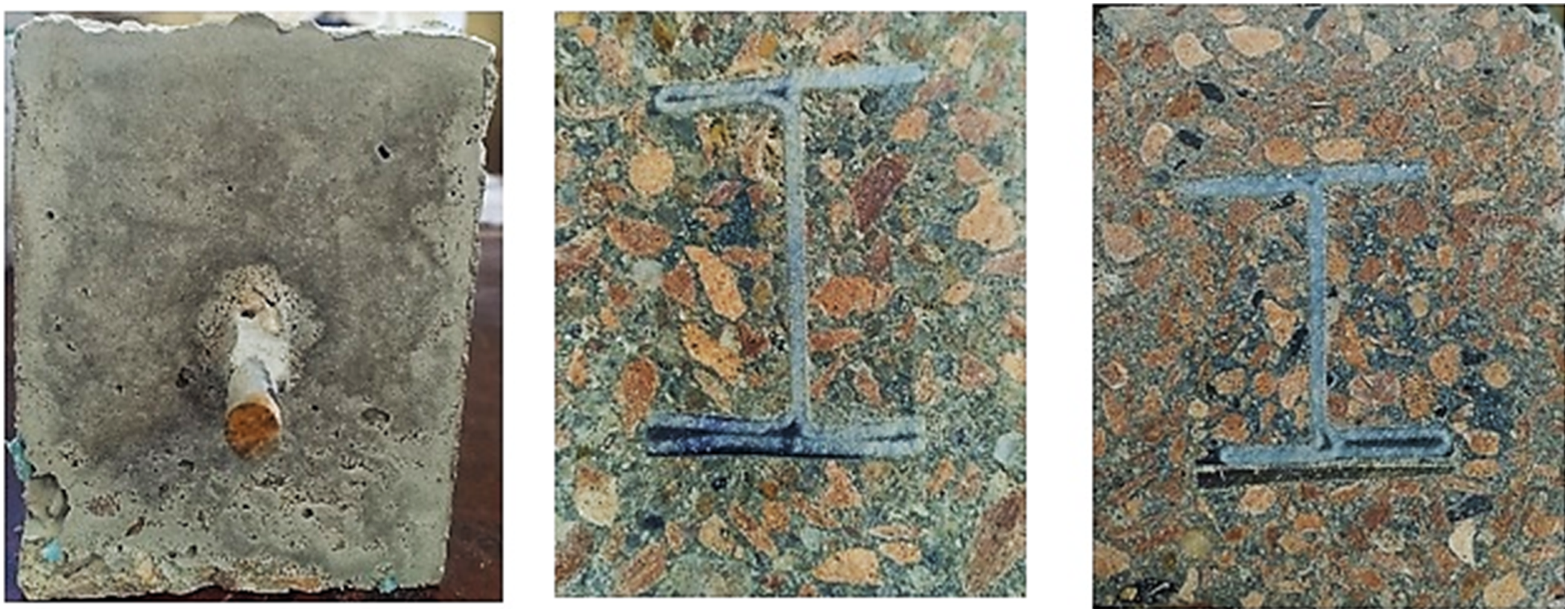
Tensile properties of nonwoven fabrics
The polyester needle-punched nonwoven fabric, made by GIZA Co., is used to form the I-beam and enforce the fabric/polymer composite. To improve the performance of the fabric/polymer composite, a layer of carbon woven fabric sheet from BASF (MBRACE TM FIBER) or Kevlar nonwoven fabric, with equal weight per unit area, was added to the bottom flange of the I-beam. The tensile properties of polyester, Kevlar nonwoven fabric, and carbon fabric were tested according to ASTM D4632. Five samples were tested at a speed of 300 mm/min. The needle-punched nonwoven reinforcement material from polyester fiber has been chosen to construct the I-beam, with carbon and Kevlar fabrics providing additional support. While the high cost of carbon and Kevlar fiber remains a consideration, their benefits in terms of corrosion resistance, strength-to-weight ratio, fatigue resistance, structural performance, and reduced maintenance make them highly advantageous materials for reinforced concrete beams. The long-term benefits often justify the initial investment, particularly for critical infrastructure projects where durability and reliability are paramount. The properties of the different fabrics are shown in Table 4.
When the characteristics of polyester and Kevlar nonwoven textiles are compared in Tables 4, it is clear that Kevlar fabric has a higher Young’s modulus than polyester nonwoven fabric. Despite this, both types of fabrics exhibit great extensibility because their structures allow fiber movement under stress.50,51 Carbon fabric, characterized by elastic behavior and negligible plastic deformation, is important for maintaining structural integrity and reliability under various loading scenarios. Compared to polyester and Kevlar materials, carbon fabrics have a higher breakdown performance, meaning they can absorb more energy before breaking. This makes carbon fabrics more dependable and long-lasting for applications that demand high strength and durability.
3-point bending test
3-point bending tests are applied, and the downward force along the span to bend the material until failure. Bending tests reveal the material elastic modulus, flexural stress, and flexural strain of a. The 3-point bending test involves positioning the material over a span supported at both ends, applying a downward force at the center of the span, and bending it until it failure while recording the applied force and beam deformation. The data recorded during the bending test used to evaluate the flexural strength of the different samples was performed on the TDS 150 testing machine with a load capacity in kilonewtons (kN), according to ASTM C348-80. A crosshead speed of 1 mm/min was maintained. Readings of the bending force in kilonewtons and deflection in millimeters were recorded. Four specimens were tested, and the average results have been reported. The beams were subjected to flexural testing, as shown in Figure 5. The beams were instrumented with a sensor in the middle of the testing region to monitor the mid-span deflection. 3-Point bending provides three points of contact.
The ductility of concrete beam
The ductility of a concrete beam subjected to three-point bending can be assessed using various formulas and calculations. One common method to calculate the ductility of a beam is by determining the ratio of deflection at failure to the deflection at the first crack. This ratio is known as the ductility index and indicates how much the beam can deform before failure.
To calculate the ductility index for a concrete beam under three-point bending, you can use the following formula:
Ductility Index = δf/δcr
Where: • δf is the deflection at failure of the beam. • δcr is the deflection at the first crack of the beam.
The ductility index using this formula can assess the ability of the concrete beam to deform and absorb energy before failure occurs in a three-point bending test.
Results and discussion
The concrete beam’s flexural strength and crack resistance are expected to improve by incorporating an I-beam. This enhancement is achieved through several mechanisms, including increasing the section modulus, optimizing load distribution, improving stiffness, enabling crack resistance capabilities, and facilitating composite action between the concrete and embedded reinforcement. These combined mechanisms create a robust structural system capable of withstanding applied loads and preventing crack formation and propagation.
Compression of the different properties of the samples
The bending properties of the produced concrete samples.

aCV%.
Analysis of data is shown in Figure 6(a–e), indicates that. a, b, c, d, and e. The properties of the different combinations of the concrete beams.Sample ID: 1-Cementitious sample, 2- Cementitious/steel rebar, 3- Cementitious/nonwoven polyester I-beam, 4- Cementitious/Polyester nonwoven I-beam composite, 5- Cementitious/composite I-beam and nonwoven Kevlar fabrics, 6 - Cementitious/composite I-beam and woven carbon fabric.
Sample 1: This sample, a plain cementitious concrete beam, has the lowest flexural strength and ductility among all samples, indicating it has a limited capacity to withstand bending forces and deformation before failure. The bending stiffness is moderate.
Sample 2: Incorporating steel rebar significantly increases flexural strength and ductility. This sample exhibits higher bending force and deflection at maximum load, suggesting improved performance under bending loads. The bending stiffness is slightly lower than that of the plain concrete sample.
Sample 3: Reinforcement with a nonwoven polyester I-beam enhances deflection capacity and ductility compared to plain concrete. However, the bending force and stiffness are lower than those of the steel-reinforced sample.
Sample 4: The polyester nonwoven/polymer I-beam composite shows improved bending force and deflection at maximum load compared to the polyester nonwoven I-beam. The ductility is slightly lower, indicating a trade-off between deflection capacity and ductility.
Sample 5: The Kevlar-reinforced sample exhibits the highest bending stiffness and a significant increase in bending force. The deflection at maximum load is lower, indicating higher stiffness. The flexural strength and ductility are also improved, making it a robust reinforcement option.
Sample 6: The carbon sheet reinforcement significantly enhances the bending force, deflection at maximum load, and flexural strength. The ductility is also markedly improved. However, the bending stiffness is lower compared to the Kevlar-reinforced sample, indicating a different balance between stiffness and flexibility.
The addition of carbon sheets (Sample (6) and Kevlar fabric (Sample (5) significantly enhances the flexural strength and bending force compared to the other samples. The ANOVA analysis of the results shows that the significant increase in flexural strength of the carbon sheet reinforced specimen (Sample (6) is in line with the findings in the literature which exhibit higher strength due to higher tensile strength and stiffness in carbon fiber composites so when compared tother samples.52,53 For sample 6, the increased maximum load deflection indicates improved load capacity. This behavior is consistent with studies showing that carbon fiber reinforcement results in high absorption and flexural strength before failure. 54 The high ductility of steel rebar (Sample (2) is well documented and important for applications requiring high deformation capacity, as detailed in various structural engineering studies. 54
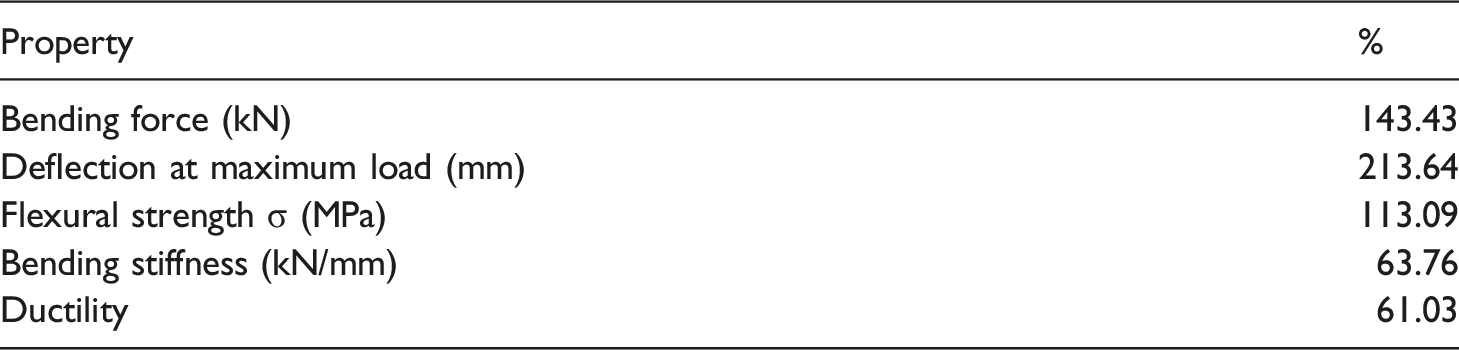
Nonwoven fibers such as carbon fiber and Kevlar can enhance the performance of concrete beams when used as composite reinforcement. 58 Addressing issues such as tensile strength, shear resistance, interfacial bonding, compressive strength, flange stability, and overall stiffness can significantly enhance the performance and reliability of these composite beams under bending loads.
The carbon sheets application (Sample 6) and Kevlar nonwoven fabrics (Sample 5) significantly enhances the bending force, Flexural strength, and Ductility compared to traditional and other composite reinforcements. Advanced composites like Kevlar and carbon fibers enhance concrete beam performance, outperforming traditional steel in some metrics. Nonwoven/polyester polymer composites provide a balance of improved performance and cost-effectiveness. Each sample offers distinct benefits, making them suitable for specific applications.
Figure 7 illustrates the work done during the cement beam bending, which is equivalent to the strain energy stored in the beam. Each type of reinforcement material (nonwoven polyester, carbon fabric, or Kevlar nonwoven) possesses unique mechanical properties, such as tensile strength, modulus of elasticity, and energy absorption capacity. These properties directly influence the beam’s ability to endure and dissipate energy when exposed to bending loads. The strain energy of the different concrete beams.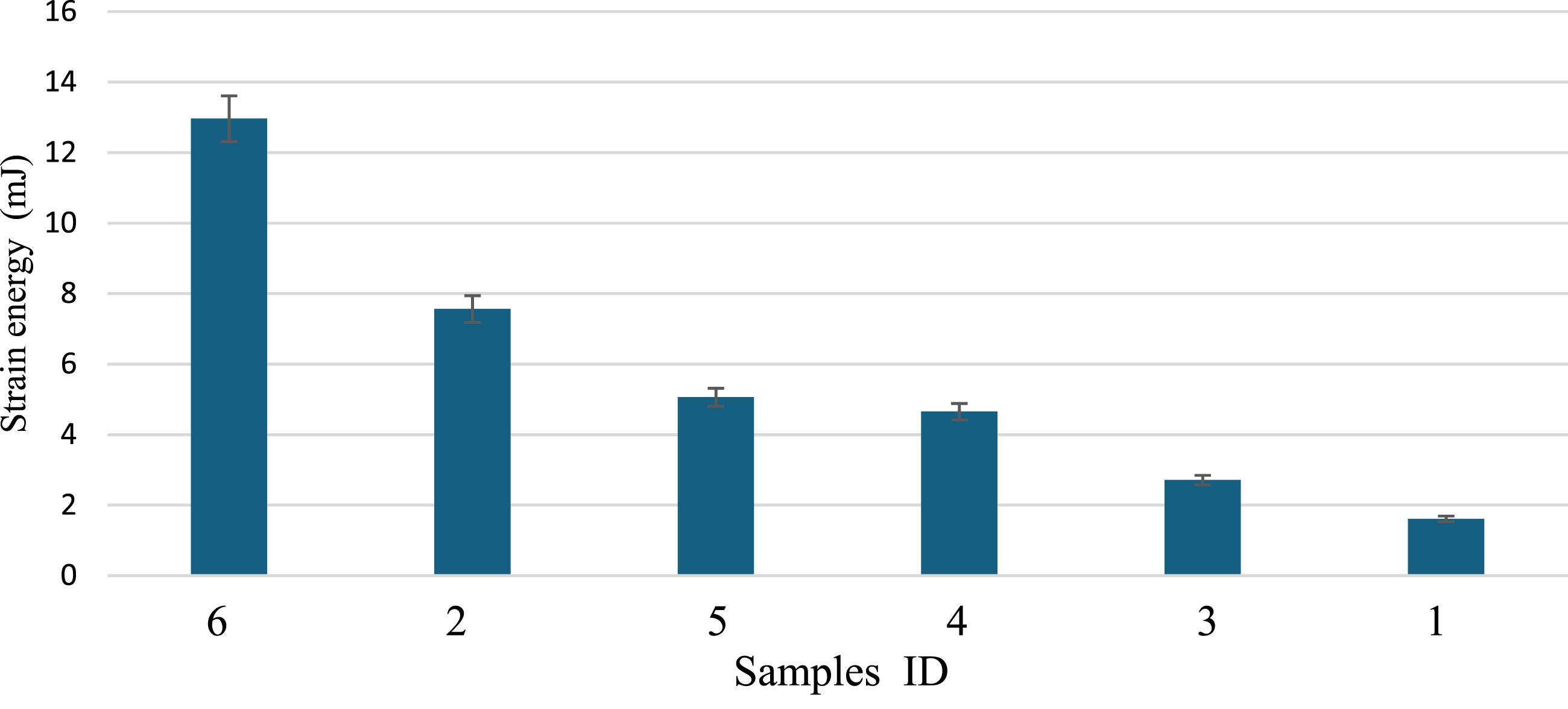
Furthermore, the reinforcement composite materials’ stiffness impacts the overall flexural stiffness of the beam. Beams reinforced with stiffer materials, like I-beams, may display higher energy absorption in flexural loading due to their improved resistance to deformation and enhanced load distribution. The concrete/composite I-beam with a layer of carbon weave sample exhibits a higher strain energy value compared to other combinations. This could be attributed to the high Young’s modulus of the carbon weave, indicating that the beam can endure significant deformation and absorb a substantial amount of energy during loading in comparison to the other samples.
The analysis of the Rader curve, Figure 8, for the studied samples, shows that the sample 6 properties may be better than concrete with steel rebar beam in most properties, including bending force, flexural strength, and strain energy. The overall area of sample 6’s polygon is larger, suggesting that it performs better across the range of tested properties. The radar curve of the properties of the different samples.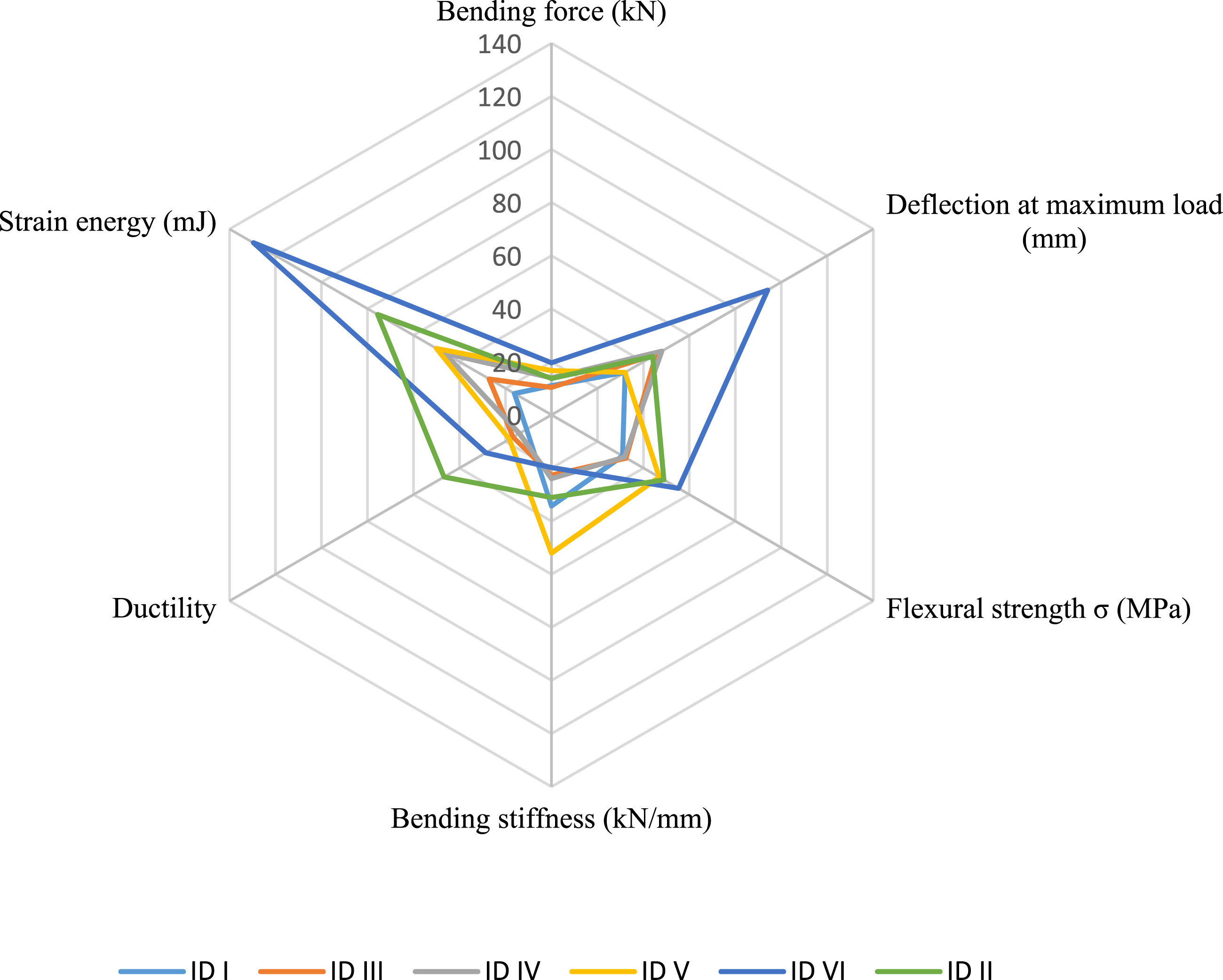
The amalgamation of the concrete matrix and the embedded I-beam creates a composite structural system with synergistic properties. These two materials work together to resist bending and shear forces, enhancing overall performance compared to either material alone. This combined effect further enhances the beam’s flexural strength and crack resistance. The ductility of a cement concrete beam refers to its ability to deform without fracturing under applied loads. Ductility is a valuable characteristic in structural materials like concrete as it enables the structure to experience considerable deformation before failure, offering warning signs and facilitating stronger safety measures. Understanding the ductility of cement concrete beams is crucial for ensuring the safety and resilience of structures, particularly in applications where the ability to withstand significant deformation without failure is essential.
Effect of concrete structure on crack resistance
The failure modes are classified as; Flexural Cracking, Shear Cracking, Debonding, Compressive Crushing, and Buckling of I-beam Flanges. As shown in Figure 9, under bending force, the failure of the beam leads to the complete failure of the I beam with composite. Kevlar or carbon nonwoven increased the resistance of the beam, especially under tension in the lower section. Consequently, higher failure resistance was noticed, especially when carbon fabric was added over the lower flange of the I beam. No debonding and buckling of I-beam flanges failure modes were noticed. In this work, the I-beam composite was formed under pressure, as well as the formation of the concrete/I-beam polyester nonwoven structure, which guaranteed good interfacial shear stress between the concrete and the I-beam surface. Concrete is weaker in tension than in compression. As a beam is bent, it experiences tensile stresses on the bottom surface, that result in the formation of cracks. The ability of concrete to resist crack formation and propagation when subjected to bending forces depends on its tensile strength. Analyzing cracks in concrete structures is crucial for diagnosing structural issues, assessing safety risks, understanding root causes, predicting future behavior, and optimizing repair strategies. Vital aspects of ensuring concrete infrastructure’s safety, durability, and longevity. Crack resistance in a concrete structure is important because cracks can undermine its structural integrity, durability, and appearance. Concrete with high crack resistance can maintain its functionality and appearance over time, even in harsh environments or under significant stress. Factors that affect crack resistance include the composition of the concrete, its strength, and the presence of reinforcement. Although concrete is strong in compression, it is weak in tension, which means it can develop cracks when subjected to forces that pull it apart. Analyzing these cracks is crucial for ensuring the safety and durability of concrete structures. If cracks do develop in the concrete matrix, the presence of an I-beam can act as a barrier to propagation. The stiffer and stronger material of the I-beam helps limit the length and depth of cracks, improving the overall crack resistance of the composite beam and prolonging its service life and structural integrity. In plain, unreinforced concrete, cracks typically propagate straight across the section perpendicular to the tensile stress direction, as the material fails uniformly under the applied load. However, when reinforcements such as nonwoven fabrics, polymer composites, or steel rebars are added to concrete, they alter the stress distribution and crack propagation. These reinforcements distribute stresses more evenly and provide resistance in multiple directions, resulting in different crack patterns like diagonal or complex networks of cracks. The fibers bridge cracks and delay their propagation, leading to a more ductile failure mode. Understanding these failure modes allows engineers to identify areas for improvement in the design and material properties of I-beam polyester nonwoven polymer composite reinforced concrete beams. Addressing issues such as tensile strength, shear resistance, interfacial bonding, compressive strength, flange stability, and overall stiffness can significantly enhance the performance and reliability of these composite beams under bending loads. a, b, c, d. The failure of concrete under the bending force of the different samples.
Figures 9(a)–(d) illustrate that under bending force, the failure of the beam results in the complete failure of the I-beam with the composite. Using Kevlar or carbon nonwoven materials increases beam resistance, particularly under tension in the lower section, leading to higher failure resistance, especially when carbon fabric is added to the lower flange of the I-beam. When comparing crack propagation in a concrete beam reinforced with carbon fabric versus concrete/steel rebar reinforcement, notable differences in crack shape are observed (Figures 9(a) and (b)). The application of carbon fabric reinforcement results in narrower cracks, compared to concrete or steel rebar reinforcement, due to its high tensile strength and stiffness, effectively controlling crack widths. The crack pattern also varies between the two methods. Carbon fabric reinforcement often leads to more distributed micro-cracks, whereas concrete or steel rebar reinforcement may exhibit larger, more localized cracks. Carbon fabric reinforcement can delay crack initiation and propagation by distributing loads more uniformly, thus reducing stress concentrations. Conversely, concrete and steel rebar reinforcement may experience earlier crack initiation and more rapid crack propagation in localized areas, with steel rebars typically causing micro-cracks to propagate along their length, resulting in macro-cracks. While both reinforcement methods aim to enhance the structural integrity of concrete beams under bending, carbon fabric reinforcement tends to produce narrower, more evenly distributed cracks, whereas concrete/steel rebar reinforcement may result in wider, more localized cracks with greater variability in size and distribution.
Furthermore, future research directions to use hybrid nonwoven/polymer I-beam composite concrete beams, as reinforcement structural elements, to eliminate steel rebar, should focus on several key areas. Optimization strategies need to be developed to enhance the performance and efficiency of these hybrid composites. This includes exploring various material compositions, manufacturing processes, and design parameters to achieve the best possible balance between strength, durability, and cost-effectiveness. Alternative reinforcement configurations should also be investigated to determine the most effective ways to integrate hybrid nonwoven/polymer materials within concrete structures. This could involve experimenting with different shapes, sizes, and placements of the I-beam composites within the concrete matrix to maximize their reinforcing capabilities and improve the overall structural integrity.
Conclusion
This research explores innovative I-beam structures incorporating nonwoven fabric/polyester composites, enhanced with carbon or Kevlar fabric layers. By combining the properties of fiber-reinforced polymer (FRP) and concrete, the study offers a promising alternative to traditional steel reinforcement methods. This approach aims to address issues such as corrosion, weight, and longevity commonly associated with steel reinforcement, thereby improving the concrete beams durability and structural integrity. Experimental results demonstrate significant improvements in the flexural performance of concrete beams reinforced with hybrid composites. Nonwoven/polymer composites reinforced with carbon or Kevlar fabrics show notable enhancements in flexural strength, bending stiffness, and overall bending deflection. These findings suggest that hybrid composites could serve as a sustainable alternative to traditional construction materials. The analysis of bending properties indicates that beams reinforced with innovative designs exhibit enhanced performance compared to traditional steel-reinforced beams. Specifically, concrete/composite I-beams with a layer of carbon fabric demonstrate higher flexural energy and better bending stiffness, providing substantial benefits in structural applications. Using Kevlar or carbon fabrics on the bottom flange of the I-beam improves ductility, crack resistance, and load-carrying capacity, contributing to enhanced crack performance.
While current research primarily focuses on concrete beams, the principles of hybrid nonwoven/polymer composite reinforcement can be applied to a wider range of structural elements. Future studies could explore applications in columns, slabs, and bridge components, where eliminating steel rebar could offer significant advantages in weight reduction, corrosion resistance, and sustainability. Moreover, investigating the use of these composite materials in seismic-resistant structures and high-impact environments could lead to innovations in building design and safety. Additionally, their use in non-traditional applications, such as in the reinforcement of marine structures or areas with high corrosion potential, could be particularly beneficial given the non-corrosive nature of polymer-based materials.
Footnotes
Declaration of conflicting interests
The author(s) declared no potential conflicts of interest with respect to the research, authorship, and/or publication of this article.
Funding
The author(s) received no financial support for the research, authorship, and/or publication of this article.
