




Abstract
According to recent studies, user comfort is one of the major challenges faced regarding the vehicle seating. The outer upholstery layer of the seat cover is the main factor contributing to overall user discomfort in the driving environment. This is related to the limitations of the conventional fabrics used. Therefore, alternative textile materials for seat covering are being increasingly sought out. In this work, we propose innovative shape memory-based seat covering fabrics offering improved comfort properties. Shape memory polyurethane (SMPU) multifilament yarns were combined with polyester (PES) yarns to produce three types of woven fabrics having the typical structures used in seat coverings (plain, twill 2/2 and derived twill) using a fixed warp and weft ratio of 3PES:1SMPU. The effects of SMPU yarns on the physical characteristics of the fabrics (thickness, areal weight, yarn density, and tightness) as well as on their mechanical behavior, shape memory effect, thermal comfort, and abrasion resistance under similar usage conditions in car seat covers were investigated. Improvement was observed in the ergonomic comfort with maintained thermal comfort in the presence of SMPU multifilament yarns, with this effect being more noticeable in the twill fabrics. The thermodynamic SMPU-based fabrics used in this study could be potential candidates for use in seat upholstery given the improvement in user comfort over extended use.
Introduction
Seating comfort is currently one of the most frequently studied aspects in the transportation sector, especially for long-distance driving. Over the years, the factors influencing seating comfort in vehicles have been identified.1–3 In a recent review, Sabri et al. 4 classified these factors into three groups: the user, the driving, and the driving environment, correlating them with their impact on comfort and safety. The user group consists of individual factors of the person such as: physical characteristics (height, weight), psychological characteristics (according to demographics or health status), and psychological criteria (emotional or mental state, experience). The driving group focuses on the factors of skill level, the driving itself, and the user’s activity. Finally, the driving environment group is divided into the following factors: environmental (thermal comfort, noise, pressure gradients), dynamic (vibration, shock, and acceleration), and spatial (workspace, operation control, and ergonomics 5 ). Regarding this last factor, studies have focused on the search for comfortable driving (ergonomics, physical characteristics, and thermal comfort), due to the users’ preference in the face of musculoskeletal problems during long periods of sitting.3,6,7 The driving posture causes pain in the lumbar area,8,9 buttocks, and muscles, 10 and discomfort due to seat perspiration11,12 on long journeys. These factors have been addressed by analyzing user opinions regarding different types of vehicle seats to improve their design. Ergonomics have been analyzed by relating body size, seat, and sensation, 13 and evaluating distinct foam firmnesses.9,14 Havelka et al. 12 added that seat discomfort is also directly related to heat transfer and humidity (related to the water vapor permeability index). This heat transfer must be below 6 m2 Pa/W, according to the Hohenstein Institute’s comfort rating system. 15 According to Verdu et al., 16 the water vapor permeability index must not exceed a value of 0.3 to be considered thermally comfortable.
A study by Scheffelmeier et al.
17
revealed that the seat cover is one of the important components in a vehicle’s seating system since it is the outer layer that is in direct contact with the user. Therefore, seat cover is one of the objects of analysis in studies examining vehicle comfort. This seat cover (Figure 1) typically consists of two -or three-layer laminated structure, with a woven layer (outer fabric/upholstery), polyurethan layer (interlining foam) and, in some cases, a scrim layer (bottom fabric) is also added. Despite the importance of seat covering, limited literature exists on the specific analysis of the interaction between the user and the seating surface or upholstery. Petrů et al.
18
analyzed the impact of foam interlining and the outer fabric on user contact pressure. Their findings revealed that pressure peaks in buttocks and thighs increased by up to 62% due to the effect of the outer fabric, confirming that this outer fabric exerts a significant influence on seat stiffness and static comfort. Despite the use of a sandwich foam structure, an improvement of only 14% was achieved in contact distribution. Several studies have highlighted the close relationship between vehicle comfort and discomfort with the contact area and the pressure exerted by the seat.
19
Other studies, such as that of Nandakumar et al. address the comfort issue by incorporating a refrigerated cushion with phase change materials (PCM) in order to reduce hemorrhoid disease in bus drivers.
20
Scheme of the general composition of a seat cover.
Regarding thermal comfort, Mazari et al. 14 and Havelka et al. 12 evaluated the comfort level of interlining materials. The results indicated that 3D spacer fabrics are a good alternative that improves thermo-physiological comfort and service life. Warska et al. 21 analyzed different thermal interlining structures (3D spacer knitted fabric) with different heating element distributions. It was concluded that this type of fabric improves physiological seating comfort.
Although the impact of the outer fabric or upholstery on seat comfort has been demonstrated, few studies have created innovative upholstery to improve this comfort. This may be due to the high demands of these fabrics, including resistance to stress, abrasion, temperature, and humidity, as well as safety and comfort. 22 Polyester (PES) fibers have traditionally been used as seat upholstery fabrics, given their excellent durability, dirt resistance, UV resistance, and appearance preservation properties. 23 However, PES fabrics, due to their low elasticity and poor recovery leading to irreversible dimensional deformation, do not meet the needs of users in terms of ergonomic and thermo-physiological comfort in a constantly changing environment. 24
Dynamic reversible textiles (thermodynamic textiles) are textiles that can quickly adapt to the environment under some external stimulus. These fabrics combine conventional materials with shape memory materials (SMMs), 25 such as shape memory alloys (SMAs) or shape memory polymers (SMPs),26–33 which react to an external stimulus (such as temperature, UV, or humidity, among others) or internal stimulus (bodily functions).24,30 The change produced by the stimulus is called the shape memory effect (SME).
The SMA or SMP can be integrated in textiles into different forms, the most common being as a membrane or finish/coating with SMPs, given their ease of incorporation into the textile surface. The less common means are integration into the textile through monofilament yarns or core-spun yarns.32,34–38 Nonetheless, no studies have examined the incorporation of SMP in the form of multifilament yarns, the most widely used form in the automotive field due to their strength, durability, good dimensional stability, and abrasion resistance. The significant advantages of multifilament yarns over filaments, membranes, and surface finishes or coatings give them great potential for use in textile applications,39,40 especially in the automotive sector. Shape memory polymers can be categorized based on polymer type (thermoplastic or thermoset) and the mechanisms by which they achieve fixation and return to their permanent shape. Shape memory polyurethanes (SMPUs) are the most common thermoplastic SMPs, revealing excellent repeatability in shape memory function, with consistent fixation and recovery ratios of over 90%. 41
When SMPU yarns are integrated into a fabric, their structure affects the shape memory. Normally, in woven fabrics, the increase in interlacing points results in an increased fabric stiffness, that is, it has a direct impact on the physical properties (shrinkage, thickness, and tightness). 42 According to prior studies, this impact is also observed in the shape memory effect (SME) of the SMPU yarn once integrated into the fabric. 43
Current applications of dynamic textiles include thermal comfort,29,44–46 compression management,47–51 and thermal protection.52,53 All of these respond to the demand for improved garments in the fields of sports (breathable clothing), health (chronic venous disorders), and workwear (firefighters). In the automotive field, the use of SMMs has been limited to the development of sensors, actuators, and devices integrated into internal elements of the automobile. 54 Nonetheless, as far as we know, no prior studies have been carried out on applications for seat upholstery to improve the thermo-physiological and ergonomic comfort of users.
In this study, different reversible dynamic textiles containing SMPU multifilament yarns have been developed for seat upholstery applications as an attempt to improve ergonomic comfort during driving. This improvement is related to the fabric’s reversible deformation (stiffness reduction), thereby increasing the contact area. SMPU multifilament yarns permit fabric deformation (temporary fabric shape) from a more closed structure (permanent fabric shape) to a more open and adaptable one, depending on the pressure of the body in contact with the fabric.
Based on prior results, 43 SMPU multifilament yarns were incorporated at a ratio of 3PES:1SMPU, since this was the amount found to provide a suitable shape memory effect without limiting mechanical performance for vehicle seat upholstery applications. On the other hand, considering that fabric structure has a significant impact on the final performance, the effect of integrating SMPU multifilament yarns on woven fabrics was evaluated using three weaves typically used in these applications (plain, twill, and twill derivative).11,23 The ergonomic comfort of the developed dynamic fabrics was analyzed through the assessment of the mechanical properties (tensile tests) and the shape memory effect (using fixity and recovery ratio). Furthermore, thermal comfort was assessed by measuring thermal resistance, water vapor resistance, and water vapor permeability index. Durability was analyzed through abrasion tests.
Materials and experimental methods
Materials
Number of filaments, linear density of the yarns in the temporary (TSY) and permanent (PSY) shape, breaking force, and elongation and percentage of recovery shape in length of the SMPU yarn.

During the SMPU yarn extrusion process, the permanent shape was programmed, and the temporary shape was set, using an approach similar to that of past studies.
55
Reversible dynamic behavior was achieved through the elongation and shrinkage of the SMPU yarn (see Figure 2). SMPU yarns were incorporated into the fabric in their temporary shape to enable the shape memory effect (SME). To get a permanent shape, fabrics were heated to 90°C (the minimum reference temperature -Tr-). Without the application of external tension. During this process, the SMPU yarns recovered their PSY, producing fabric shrinkage. It should be noted that the Tr temperature allows a complete erasure of the temporary shape memory and was previously determined through dynamic mechanical analysis (DMA).
56
Figure 2 presents a scheme of the dynamic reversible behavior of the yarn when passing from the TSY to the PSY. Scheme of the effect of the temperature on the SMPU yarn: yarn after the melt spinning, in temporary shape (TSY), and after heating to the minimum reference temperature (Tr), in permanent shape (PSY).
Twisted and textured PES multifilament yarns (PES yarns in this study) with a count of 450 dtex and 300 dtex were supplied by Antex (Spain) and were combined with SMPU yarns in warp and weft, respectively.
Experimental methods
Three woven fabrics were selected having different weave interlacing coefficients (Kl) typically used in seat coverings: plain weave or 1/1 (p), with interlacing coefficient Kl = 1, twill weave or 2/2 (T2), with Kl = 0.5, and a structure derived from twill weave (TD) with Kl = 0.75 (see Figure 3). The derived twill structure was designed to have the same number of interlacing points for both warp and weft, as occurs for the plain and the twill 2/2 structures. Schemes of the plain 1/1, twill 2/2, and derived twill weaves produced with PES and SMPU yarns with a ratio of 3PES:1SMPU in both warp and weft directions and their interlacing points.
The Kl (weft and warp) was calculated according to the Galcerán equations (Equation (1) and (2))
57

Where iwe was the number of interlacing points per weft in the weave, w1 was the number of ends in the weave, and w2 was the number of picks in the weave;
Where iwa was the number of interlacing points per warp in the weave, w1 was the number of ends in the weave, and w2 was the number of picks in the weave.
The woven fabrics were produced using a 45 cm wide laboratory weaving loom (Studio 5020, Techn inc, Taiwan) (see Figure 4). PES (450 dtex for warp and 300 dtex for weft) and SMPU yarns were used in both warp and weft directions at a ratio of 3PES:1SMPU. For comparison purposes, 100% PES fabrics having the same structure (plain, twill 2/2, and twill derivative 2/2) were also produced (see nomenclature in Figure 5). The warp tension and rapier speed were adjusted to permit the integration of the SMPU yarns by warp and weft. The same warp and weft density was used for all fabrics (22 years/cm and 19.5 p/cm, respectively). Photography of the plain weave fabric produced by combining SMPU/PES yarns on the laboratory loom (Studio 5020, Techn inc, Taiwan). Images and nomenclature of the fabrics produced according to composition and weave type.

After weaving, the fabrics were heated to 90°C using a STUART SD 500 digital hot plate and without the application of any external force. As previously mentioned, this process was carried out to induce the recovery of the permanent shape of the textiles. Figure 6 presents an example of a simplified scheme of the changes produced in the fabrics from temporary (Figure 6, left) to permanent shape (Figure 6, right) upon heating above the Tg. It is seen that fabric shrinkage took place and, consequently, there was an increase in both warp/weft yarn density, which in turn, will affect the main fabric characteristics (tightness, thickness, and areal weight). A simplified scheme of how the presence of SMPU yarn affects the thermodynamic behavior of a plain weave fabric containing 25% SMPU.
Characterization techniques
A basic characterization of the fabrics was made using the average of at least three measurements, determining: thickness, according to UNE 40339:2002 standard, areal weight according to ASTM D3776 standard, and yarn density using a thread counter. Dimensional changes (width and length) of the fabrics were measured after the weaving process (shrink relaxation), termed the “temporary shape of the fabric” (TSF), and after heating above Tg, the “permanent shape of the fabric” (PSF). Therefore, the distance between 4 dots painted in the fabrics was measured before and after heating. The average of five measurements was calculated along the fabric in the direction of the weft and warp.
The tightness of the fabrics, in TSF and PSF, was calculated using equations (3)–(6):58–60
Where:
Kl wa – Kl we , were the Galceran weave factors in warp and weft directions.
K dmax(wa) – K dmax(we) , was the maximum warp-weft density coefficient.
Q, was the coefficient depending on the type of matter (PES = 9.6 and SMPU (PUR) = 9.63).
and then:
K dmax(wa-we) , was the maximum warp-weft density coefficient.
Then it was calculated:
K d(wa-we) was the warp-weft density coefficient.
D was the warp-weft density (y/cm - p/cm).
Nm was the warp-weft yarn linear density.
Based on these results, the tightness was determined by means of the equation (6):
The thermal resistance (Rct) and the resistance to water vapor (Ret) of the textiles were determined using the Permetest test (Sensora Company, Czech Republic). Three samples of each fabric measuring 150 mm × 150 mm were analyzed in the TSF and PSF. All tests were conducted at 20 ± 1°C and 47 ± 1% RH. The two determined parameters, Ret and Rct, characterized the thermal comfort indicated by the water vapor permeability index (imt).15,61,62 This index refers to the breathability of the fabrics, with values between 0 (impermeable fabric) and 1 (permeable fabric).
16
Index calculation was carried out according to ISO 11092 standard using equation (7):
I mt , was the permeability index of clothing material, dimensionless.
S, parameter to normalize the units of measure (60 Pa/K value).
The tensile tests were conducted according to the UNE-EN ISO 13934-1:2013 standard using a Zwick/Roell static testing machine. Three samples of each fabric measuring 50 mm × 100 mm were analyzed in the warp and weft direction in the PSF. A test speed of 100 mm/min was applied with a preload force of 5N. From the tests, the minimum limit recovery strain (ɛ1) required to perform the shape memory effect (SME) test was determined.
The shape memory effect (SME) was calculated from the fixity ratio of the temporary shape (Rf) and the recovery ratio to the permanent shape (Rr). To determine Rf and Rr, a specific test was designed to test the fabrics with a support structure simulating the attachment of car seats upholstery. The structure consisted of a 220 × 220 mm clapping frame that supported the fabric and an internal structure that permitted identical tension adjustment for all the fabrics using the FERVI model 0806/020 dynamometric screwdriver measuring torque. Figure 7 (top) shows the frame components and their dimensions while Figure 7 (bottom) shows the sample preparation process before testing. Structure support simulating car seat upholstery. Structure dimensions and parts (top): (a) clapping frame, (b) internal structure, and (c) frame base. Assembly of the frame (bottom): (1) attach the internal structure with the frame base, (2) place the fabric on the internal structure, (3) fix the fabric with the clapping frame, and (4) adjust the fabric tension.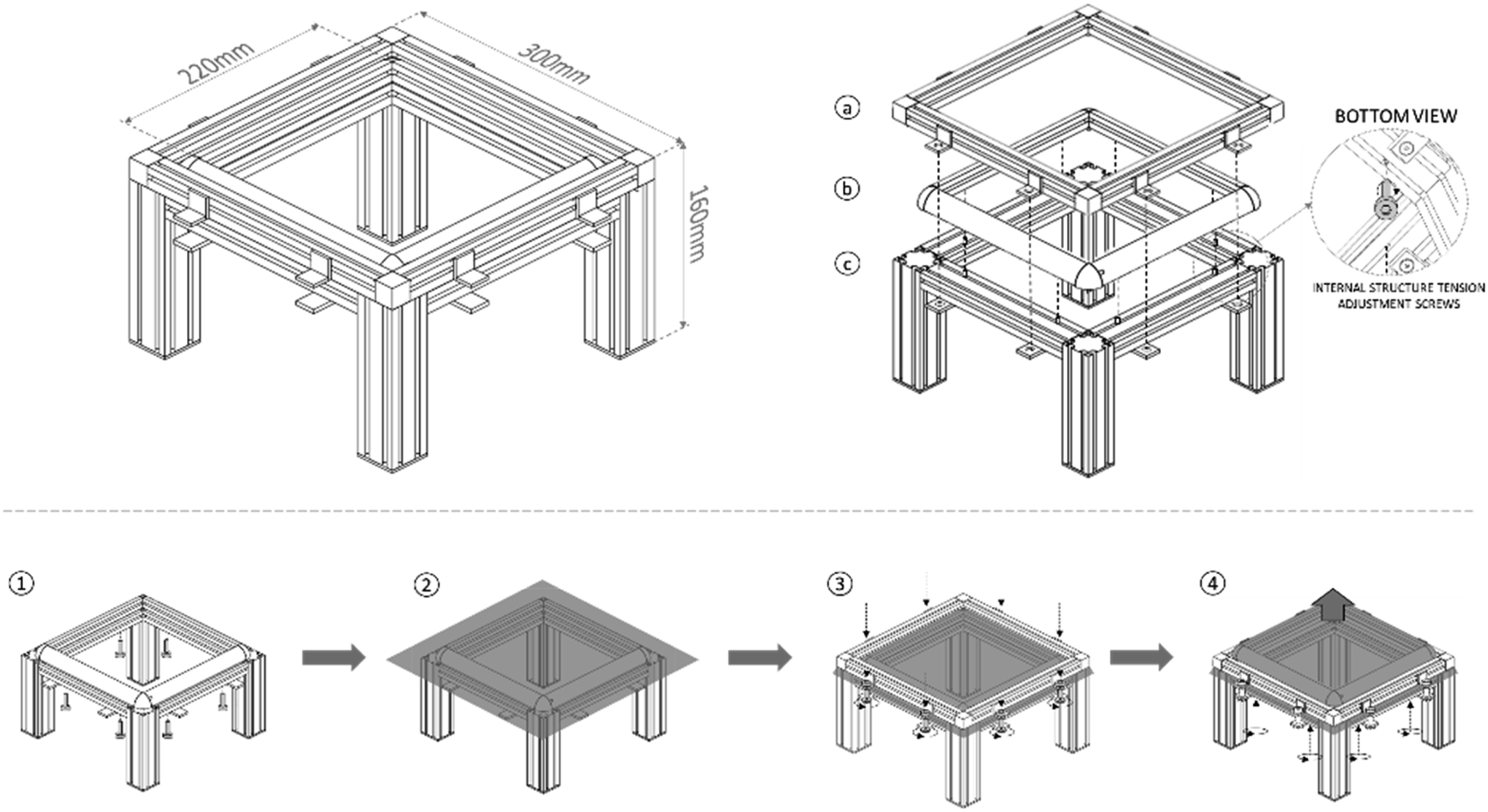
For the test, flexural force (Ff) was applied using a Zwick/Roell static testing machine. To determine this Ff, a preliminary test was performed with the fabric using the lowest threshold of recovery strain (ɛ1). The steps of this test are detailed below: Step 1: The final fabric length (Lα°) was calculated using equation (8) by applying the percentage increase in limit recovery strain (ɛ1) to the initial length (Li) of 220 mm. Step 2: the limit recovery deformation in flexure (ɛf) was obtained by applying the arc of circumference equation (equation (9)). Step 3: The bending test was performed with the fabric having a lower ɛ1, applying a constant deformation of 10 mm/min until the limit recovery deformation in flexure (ɛf) was reached.


From the results of this preliminary test, the Ff was obtained, as shown in Figure 8. Diagram of the circumferential arc and application of force Ff according to the limit recovery deformation in flexure (ɛf), the initial length (Li) and the final fabric length (Lα°).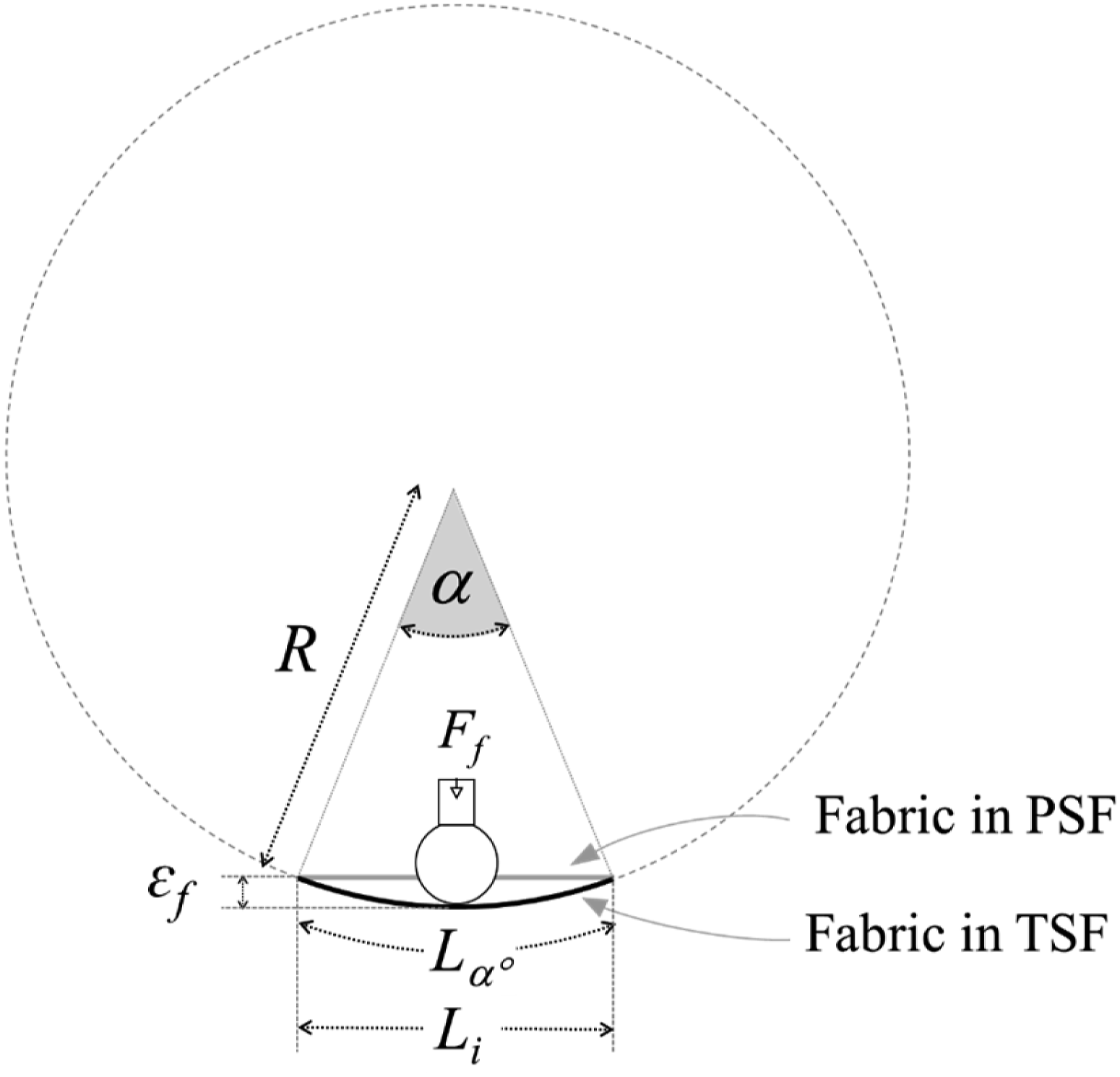
Upon determining the Ff, this force was used to perform the SME test. This SME test consisted of 4 phases (Figure 9): In Phase one, the fabrics were heated to a reference temperature (Tr) of 90°C at a heating rate of 5°C/min, maintaining this temperature for 1 min. In Phase 2, a constant deformation of 10 mm/min was applied until reaching Ff. Subsequently, the Ff was maintained while the sample was cooled to 21°C ± 0.5, maintaining this temperature for 5 min until reaching the maximum deformation (ɛm). In Phase 3, the force was withdrawn, and recovery of the fabric deformation (ɛu) occurred. Finally, in Phase 4, the fabric was once again heated to 90°C at five°C/min (recovering the fabric’s permanent shape), observing a permanent residual deformation (ɛp). SME trial phase diagram.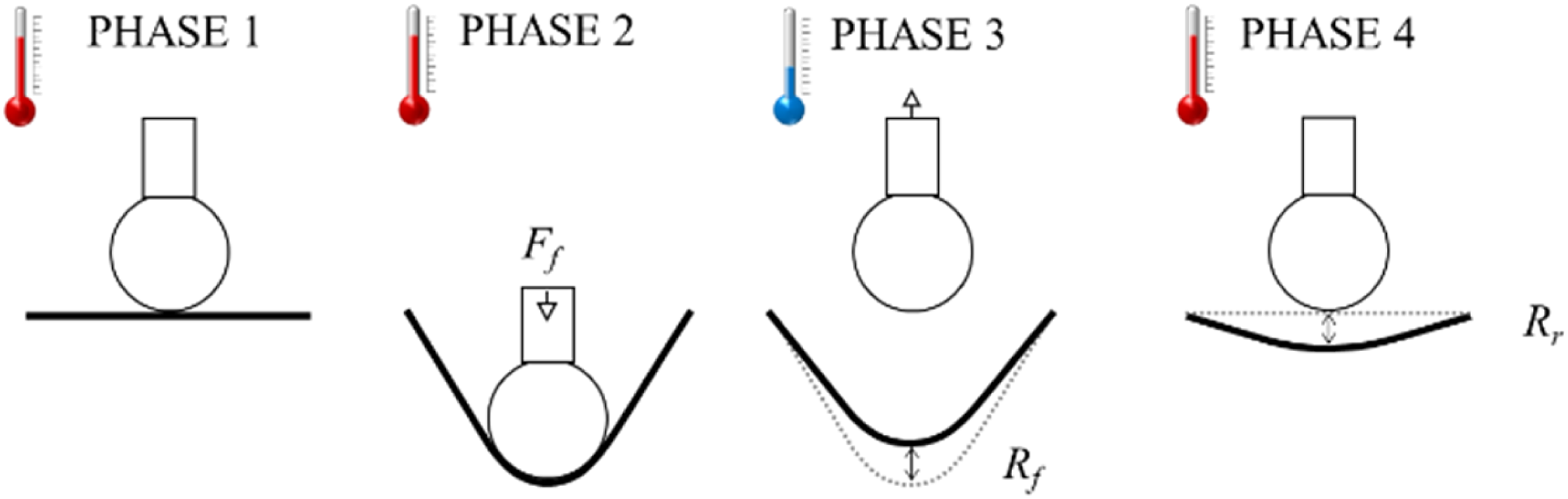
Subsequently, the fixity (10) and recovery (11) ratios were calculated using the following formulas: 63,64 ɛ
u
, was the recovery of the fabric deformation. ɛ
m
, was the maximum deformation. ɛ
p
, was the permanent residual deformation.

The Tr is the temperature required to ensure a complete removal of the residual stress of the temporary shape (Figure 10).
56
This Tr was determined in the dynamic mechanical analysis (DMA), which was performed on a TA Instruments Q800 DMA. Dynamic mechanical analysis (DMA) curve of shape memory polyurethane (SMPU) that changing at 65°C.
The fabric’s abrasion resistance was determined by the Martindale method according to UNE-EN ISO 12947-2:2017 standards, at a pressure of 12 kPa in three specimens for each sample. The wear was checked visually every 5000 cycles until the yarn breakage criterion of two broken yarns (as indicated by the standard) was reached.
Tensile and abrasion resistance values of the standards used for upholstery UNE-EN_14465:2004 and Volkswagen automotive upholstery.

The Tukey test for analysis of variance (ANOVA) was performed with the Minitab software to statistically treat the results, thus obtaining the significance groups.
Results and discussion
The ergonomic comfort of the developed fabrics is based on a pre-stressed structure of the outer fabric (permanent shape), as opposed to the deformation of the fabric (temporary shape) to create a structure capable of adapting to the user. This leads to dynamic changes in the SMPU yarns’ length and diameter, which led to changes in the fabric structure parameters. Similarly, when the temporary shape structure returns to the permanent shape due to an external thermal stimulus, the changes in the SMPU yarns affect the fabric structure.
Fabric structure parameters: thickness, areal weight warp and weft density, and tightness in the TSF and PSF.

In general, no significant variations appear in the results for PES fabrics between TSF and PSF as passive materials. The Tukey test confirmed this finding. However, SMPU-based fabrics revealed significant variations in their respective values as compared to the PES. This variation may be more evident in Figure 11, which shows the percentage differences between 100PES and 25SMPU fabrics in TSF and PSF. Graphs of the percentage differences between 100PES and 25SMPU fabrics for the examined textile parameters in TSF and PSF: (a) thickness, (b) area weight, (c) warp density, (d) weft density, and (e) tightness.
In terms of areal weight, warp and weft density, as well as tightness, a minor increase in TSF values was observed for the SMPU-based fabrics as compared to the 100% PES fabrics. However, in terms of thickness (Figure 11(a)), a clear increase in values was observed in the SMPU-based fabric with plain interlacing and a decrease was seen in the twill fabrics as compared to the PES fabrics. This was due to the substitution of PES textured yarns by SMPU yarns, and the type of weave used. Significant differences were found between plain and twill structures in TSF regarding thickness, according to the Tukey test, and between SMPU and 100% PES fabrics in TSF regarding thickness and warp and weft density.
However, the PSF of the SMPU-based fabrics revealed a clear increase in all the analyzed parameters with respect to the PSF of the 100% PES fabrics. This increase of the SMPU-based fabric with respect to the 100% PES fabric was significant according to the Tukey test.
The change in characteristics of the fabrics containing SMPU yarns when going from the TSY to the PSY demonstrated the dynamism of the SMPU-based fabrics as compared to the passive behavior of the 100% PES fabrics. This dynamism results in a decreased fabric stiffness by facilitating deformation and, therefore, an increase in the fabric’s area of contact with the body given the stretching that takes place.
On the other hand, an increase in values of all parameters was observed in the twill 2/2 as compared to the plain weave in the SMPU-based fabrics in the PSF. This suggests that the interlacing results in a direct impact on the properties of the SMPU-based fabric and, therefore, on the SME of the SMPU yarn integrated into the textile.
Figure 12 shows the dimensional variation (shrinkage) for both warp and weft of the fabrics after the weaving process (TSF) and heat treatment (PSF). Comparison of shrinkage between fabrics with 100% PES and fabrics with 25% SMPU filament, in the temporary shape TSF (after weaving) and in permanent shape PSF (after the heating treatment over Tg) in weft and warp directions.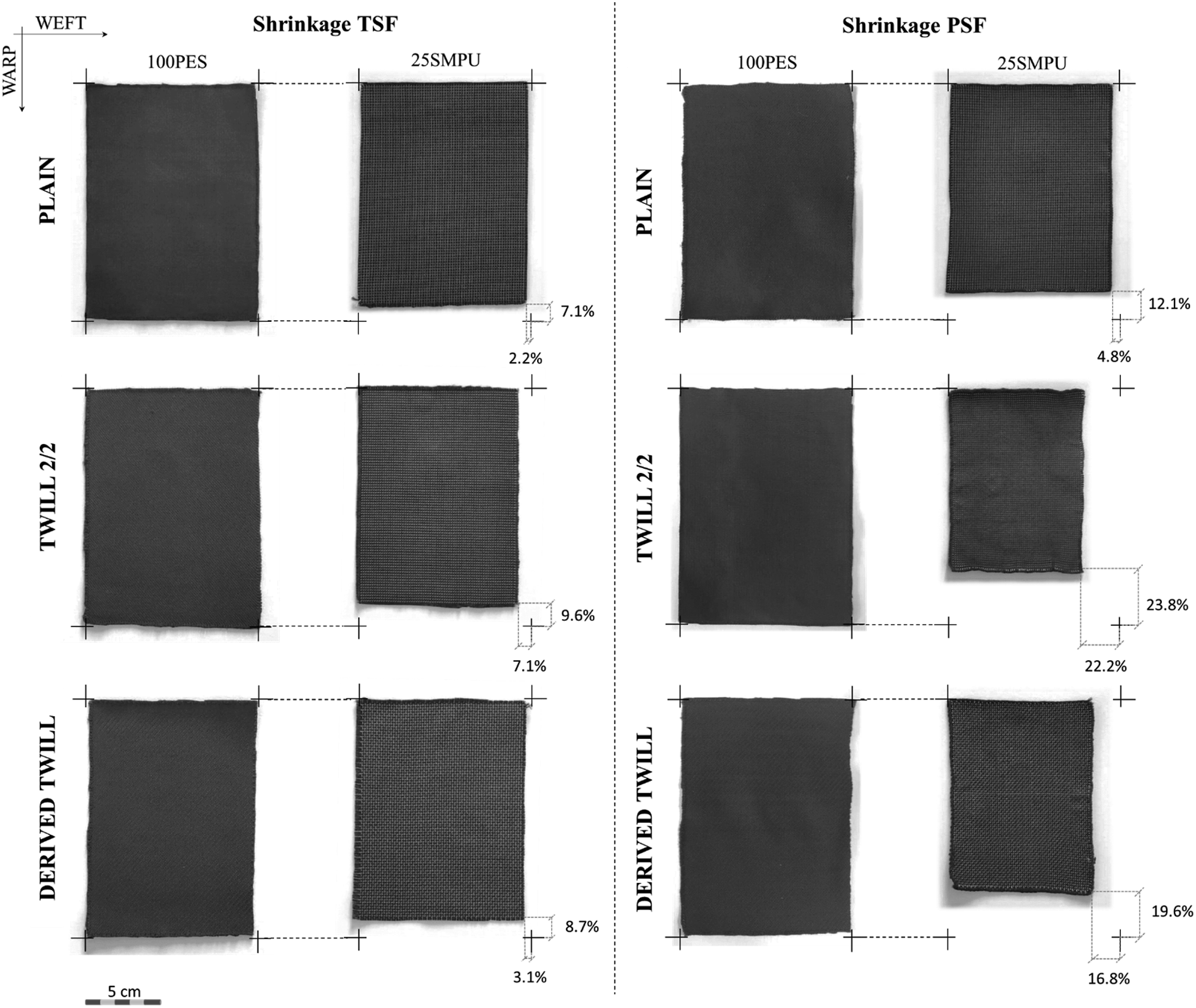
SMPU-based fabrics presented much higher shrinkage than PES fabrics (which was higher in twill than in plain fabrics) in both TSF and PSF and in both directions (warp and weft). This was caused by the shape memory characteristics of the SMPU yarn (observed in Table 3 above) displaying higher elastic strain recovery than the PES yarn after heat application. According to Tukey test, these differences between SMPU-based fabrics and 100% PES fabrics were significant.
Fabric shrinkage in the residual shrinkage (difference between PSF and TSF) in weft and warp directions.

This characteristic is crucial for the study objective, since obtaining a higher elastic strain recovery (permanent shape) implies a higher elastic deformation (temporary shape), in the upholstery textile, thereby improving its properties of ergonomic adaptability (increased contact area through textile deformation) and thermal transmission (heat transfer), offering a mechanical resistance similar to that of the 100PES.
After demonstrating the dynamism of the SMPU-based fabrics having a low SMPU content (25%), the effect of SMPU yarns on the mechanical behavior of the developed fabrics was analyzed. For this purpose, 100PES and SMPU-based fabrics were tested in the PSF shape, since this is the form in which they would be installed as upholstery, prior to user use. The maximum force at break and strain (Fmax and ɛmax, respectively) as well as the limit recovery force and strain (F1 and ɛ1, respectively) were determined. Figure 13(a) shows the full curves obtained until reaching fabric rupture and Figure 13(b) shows the detail of the initial curve zone. Force-strain curves obtained from fabric tensile tests (weft and warp) with different SMPU structure and content in the PSF: (a) general graph and (b) detail of the initial curve zone up to 45% strain.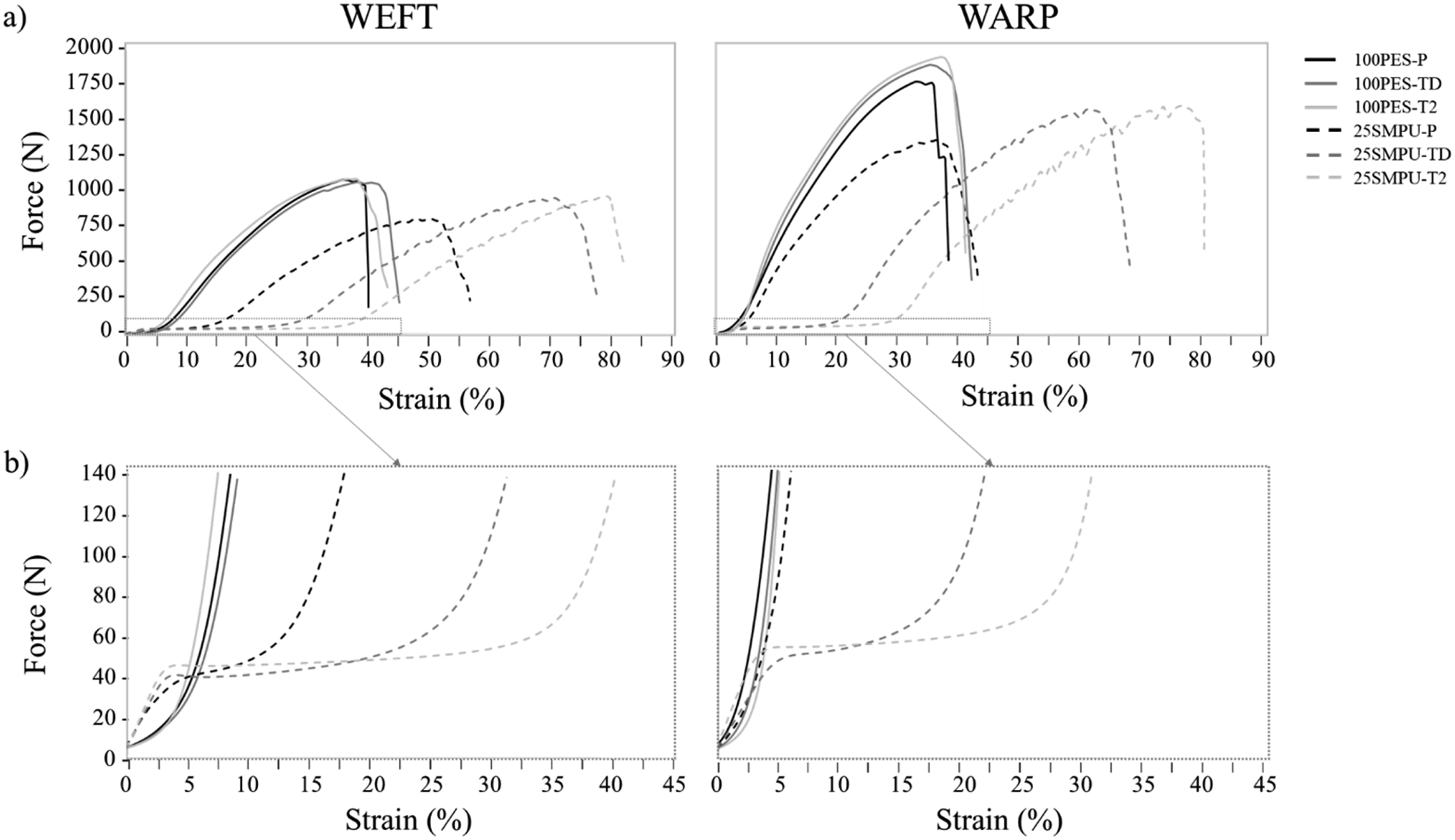
Maximum force at break (Fmax), maximum strain (ɛmax), as well as the limit recovery force and strain (F1 and ɛ1, respectively) obtained in the PSF fabrics.

As shown in Table 5, the Fmax and average ɛmax of the SMPU-based fabrics is higher for the twill structure, especially in the 25SMPU-T2 sample, which reaches a maximum force similar to that of the 100PES-T2, as well as the highest maximum strain of all of the fabrics (78%). This is because the twill 2/2 structure has the lowest interlacing points, and therefore presents a higher recovery to the permanent shape. The differences in ɛmax between the SMPU-based fabrics and the PES fabrics were significant according to the Tukey test.
SMPU-based fabrics displayed higher values of F1 and ɛ1, as compared to those obtained in the PES fabrics, especially in the twill fabrics. This is attributed to the difference in fabric behavior in the initial curve zone. In the case of PES fabrics, the initial force-strain is produced by the (non-elastic) PES yarns. However, for SMPU-based fabrics, this initial force-strain is mainly produced by the (elastic) SMPU yarns. This behavior of SMPU-based fabrics was discussed extensively in a previous article. 43 According to Tukey test, the differences between SMPU-based and PES fabrics are significant. Figure 13 presents the percentage differences in force/strain values between the 100PES and 25SMPU fabrics of each structure.
The graphs in Figure 14 show that SMPU-based fabrics obtain higher values in maximum strain (ɛmax) (Figure 14(a)) and in limit recovery force/strain (F1 and ɛ1, respectively) (Figure 14(b)), with this difference being clearly larger in twill fabrics as compared to flat ones. The values obtained for maximum force (Fmax) in twill fabrics are similar (Figure 14(a)). These results are important as they show the high adaptability (deformation) of the SMPU-based fabrics while they maintain the maximum strength parameters of 100% PES fabrics. These results suggest the clear potential use of SMPU-based fabrics as technical fabrics with similar characteristics to current fabrics, but with greater ergonomic adaptability to the environment. Graphs demonstrating the percentage differences between 100PES and 25SMPU fabrics: (a) of maximum force/strain and (b) limit recovery force/strain.
As explained in the experimental section, the shape memory effect (SME) test was performed in two parts: an initial part to determine the Ff and a second part with the assays to obtain the fixation and recovery ratio (Rf and Rr). For the initial test, the Lα° was calculated using the data obtained from the force-strain test for the SMPU-based fabric having the lowest ɛ1 (9% in the 25SMPU-P sample, Table 5). Next, the value of the limit recovery deformation in flexure (ɛf = 13 ± 0.5 mm) was obtained by calculating equation (9). Finally, the test was performed with the 25SMPU-P sample until a ɛf of 13 mm was reached. Once this deformation was reached, the test was halted and the Ff was determined with a value of 5 ± 0.3 N being applied to all of the textiles in the second part. Once the Ff was determined, the rest of the tests were performed, applying a constant deformation of 100 mm/min until reaching 5N. Figure 15 shows Phase 3 of the test (fabric deformed, cooled to 21°C, and released from the applied tension). Shape memory effect (SME) test sequence of sample 25SMPU-P.
Fixity ratio (Rf) and the recovery ratio (Rr) at 90°C.
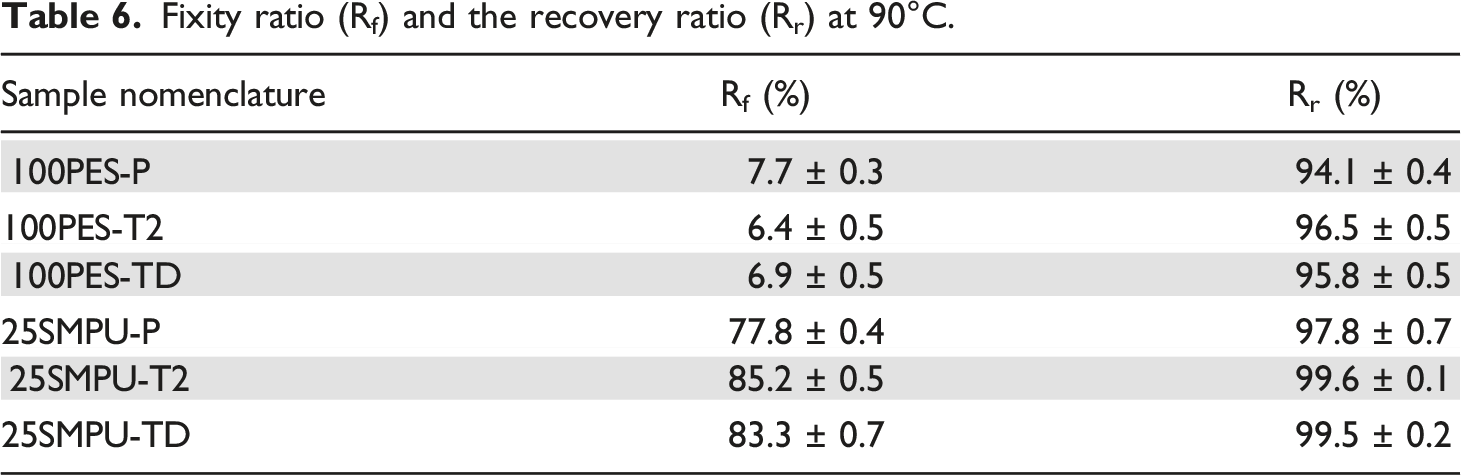
The results indicate that the SMPU-based fabrics had high values for the fixation ratio (Rf) and recovery ratio (Rr). Fabrics with twill structure showed better Rf and Rr values than plain structure given the type of interlacing that facilitates the fixity and recovery of the integrated yarns. The elastic strain recovery capacity of the SMPU yarns was considerably different from the PES yarns, which displayed low elasticity (low Rf values and lower Rr than the SMPU-based fabrics). These differences, in Rf and Rr, between SMPU-based fabrics and 100PES fabrics were significant according to the Tukey test.
The SME and force-strain results indicate that it is possible to obtain ergonomic comfort in seating by increasing the deformation capacity of the outer fabric (upholstery) with a high capacity to recover its initial shape. Figure 16 shows a schematic comparison of a traditional upholstery, consisting of 100% PES (Figure 16(a)), and our innovative upholstery fabric incorporating 25% SMPU yarns (Figure 16(b)). It is clearly demonstrated that pressure may be reduced at the user-seat interface using a SMPU-based fabric given its dynamic reversible deformation behavior. Scheme of the behavior of ergonomic seat-user adaptation: (a) PES fabrics and (b) SMPU-based fabric.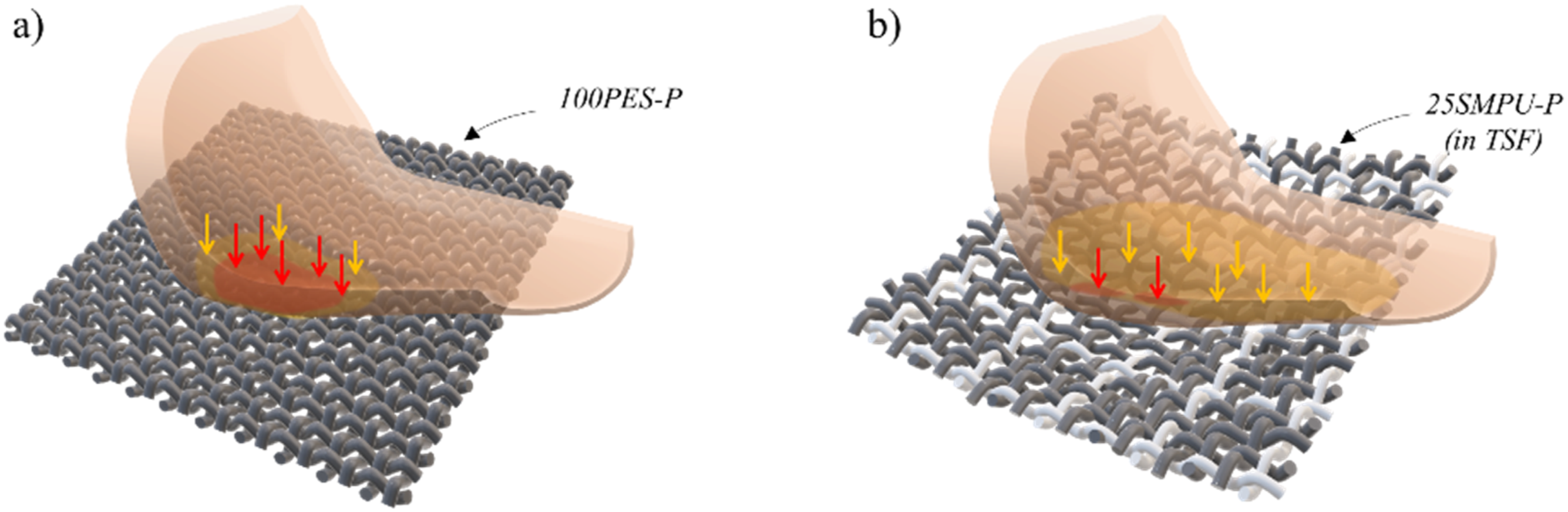
These results clearly demonstrate how the elastic deformation observed in the tests reduces the seat’s stiffness, consequently this could increase the contact area and reduce pressure points experienced by the user, thereby, the seating comfort could be enhanced.
Results of the Permetest tests for fabrics in TSF: water vapor resistance (Ret), thermal resistance (Rct), and water vapor permeability index (imt).

The water vapor resistance and the water vapor permeability index were similar for SMPU-based and PES fabrics, except for plain weave fabrics, in which slight differences were observed. These differences could be mainly due to the significantly lower thickness of the 100PES-P sample with respect to the other fabrics (see Table 3). As for the thermal resistance, a significant increase was observed in SMPU-based fabrics with respect to the PES fabrics, which was more noticeable in the plain fabric as compared to the twill one. However, this difference had little impact on the imt, which relates both thermal properties. These differences between plain and twill fabrics were significant according to the Tukey test. The results suggest that SMPU-based fabrics offer not only ergonomic comfort, but also thermo-physiological comfort, since the values of Ret were below 6 m2·Pa/W (considered extremely breathable according to the Hohenstein Institute) 15 and the values of imt below 0.3 (classifying the fabrics as thermally comfortable). 16
Finally, the abrasion of the SMPU-based fabrics in the TSF, corresponding to the form employed during the contact with the user was evaluated and compared with the PES fabric in Figure 17. Results of the abrasion test of PES and SMPU-based fabrics in the TSF.
The results indicate that the plain SMPU-based fabric offers clearly superior abrasion resistance as compared to all the twill, SMPU-based fabrics. On the other hand, the SMPU-based twill fabrics displayed similar abrasion resistance as the PES fabrics, with the same abrasion resistance in the case of the 2/2 twill weave. According to 14465:2004 (Table 2), all abrasion resistance values in this study reached or exceeded 30,000 cycles, indicating that all fabrics are suitable for use as upholstery. Furthermore, both plain weave and 2/2 twill on the SMPU basis meet the stringent Volkswagen standard (VW 50105:2018) for automotive upholstery, which requires a minimum resistance of 35,000 cycles. This demonstrates their high quality. Figure 18 presents a photographic image of one of the specimens of the 25SMPU-T2 fabric in the TSF after the abrasion test. Figure 18(a) shows the specimen holder with the fabric after 30,000 abrasion cycles and Figure 18(b) shows the details of the fiber breaks after 30,000 cycles. Result of the abrasion test of sample 25SMPU-T2 in the TSF: (a) image of the fabric´s surface in the test-tube holder and (b) details of the fabric with a torn appearance.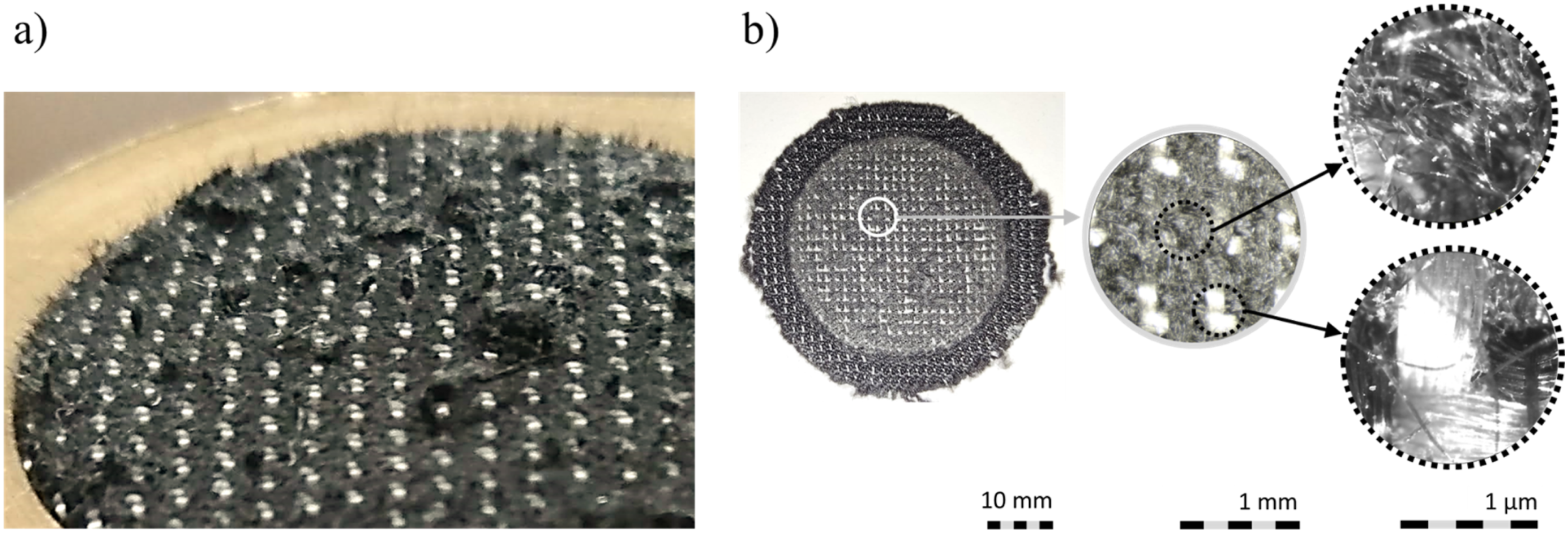
The details in Figure 18(b) demonstrate that the SMPU yarns maintained their structure while the PES yarns displayed a pilling effect or high wear due to shrinkage of the SMPU yarns in the fabric (see Figure 18(a)). This result highlights the potential for the implementation of SMPU-based fabrics in applications such as the outer fabric of the seat cover, since plain and twill are the most frequently used structures in car seat upholstery.
Conclusions
Extensive research has been conducted in the field of seating comfort in the transportation sector, especially during prolonged driving situations. Key factors such as ergonomics, physical characteristics, and thermal comfort have been identified to address musculoskeletal problems and discomfort experienced over long driving periods. While some studies have suggested modifications to the interlining layer to improve ergonomic comfort, modification of the upholstery fabric (outer fabric) has rarely been considered, despite its proven impact on user comfort.
In this study, it was found that SMPU fabrics with recoverable elastic strain may have a positive impact on improving ergonomic comfort. These results suggest new possibilities for the design of more comfortable seats in the future. The elastic deformation was caused by the incorporation of SMPU yarns in the SMPU-based fabrics, reaching the highest deformation in the 2/2 twill fabric at 28%. The dynamism of the SMPU-based fabrics was demonstrated using temperature as an external stimulus (thermodynamic SMPU fabric) while PES fabrics displayed almost no deformation (only 3%, confirming that PES is a thermodynamically passive material). This improvement in adaptability had little impact on the maximum strain of the SMPU-based fabrics, especially for the 2/2 twill sample (at 1366N) as compared to the 100PES 2/2 twill fabric (1481N).
The SMPU-based 2/2 twill fabric also displayed the highest shape memory effect (SME) value reaching 85.2% fixity ratio (Rf) and 99.6% recovery ratio (Rr). In addition, the fabric remained within the water vapor permeability range that is considered thermally comfortable, while complying the Volkswagen’s strict standards for abrasion resistance and tensile strength of vehicle seat upholstery. The results clearly demonstrated an improvement in comfort of the proposed SMPU-based outer fabric, thanks to the increased adaptability to the body, without affecting overall thermal comfort, making this fabric potentially suitable for application as car seat upholstery, and offering advantages for driving safety, especially for long rides.
Footnotes
Acknowledgments
This work was financially supported by the Catalan Government through the funding grant ACCIÓ-Eurecat (Project PRIV – Confortex). Special thanks also to Francesc Mañosa (Eurecat) and Daniel Roig (Centre de Recerca i Transferència de Tecnologia Tèxtil, CRTTT) for the experimental work and material characterization, and to Nelson Duraes, R&D Manager at Functional Fibres, CeNTI - Centre for Nanotechnology and Smart Materials for the production of the multifilament.
Declaration of conflicting interests
The author(s) declared no potential conflicts of interest with respect to the research, authorship, and/or publication of this article.
Funding
The author(s) disclosed receipt of the following financial support for the research, authorship, and/or publication of this article: This work was supported by the Catalan Government.
