




Abstract
Terrestial herbs and aquatic herbs are of natural origin with significant medicinal properties. These properties were selected and aimed to provide antimicrobial and anti-odour activities after finishing with nine different fabric samples in the present study. Hemigraphis colorata and Bacopa monnieri are the two herbs selected and a novel herbal composite (HC1) was developed. Composite was finished onto fabric samples using Pad-dry cure process. Finished fabrics were subjected to antibacterial activity using standard EN ISO 20,645 test method against Escherichia coli and Staphylococcus aureus. To prevent odour from physical activities, aromatic oil was finished onto fabric samples; followed by testing anti-odour activity using Swiss standard SNV 195,651. Test results of antibacterial activity of herbal composite (HC1) finished fabrics revealed good inhibitory action against both test bacteria. Aromatic efficiency of herbal composite finished fabrics showed significant aromatic efficiency. Statistical evaluation determined that there was no significant difference (p–1) between finished and control fabrics in terms of antibacterial activity and aroma. Results for the biocompatibility of the herbal composite finished fabrics revealed that the composite concentrations did not inhibit the growth of fibroblast cells; thus indicating the biocompatibility of the herbal composite finished fabric samples. The present study would be considered highly significant by providing an eco-friendly and sustainable products for developing medical textile products and smart home textile products.
Keywords
Introduction
Nature has provided an abundant source of fibres. The fibres shall be extracted from plant sources and animal, sources. Based on the natural fibre extrusion protocol, Shaker et al., (2020) extracted natural fibres from Vernonia elaeagnifolia plant by biological retting process. The researchers analysed the performance properties with conventional textile fibres. The fibres were used as a reinforcement material in polymeric composite materials due to its high thermo stability. The natural fibres used in our present research is also considered as one such material which shall be used in different engineering applications after investigating its mechanical properties and stability. Different types of natural fibres were extracted from plant source in the current study; its physical and biological properties were investigated before and after finishing with natural dyes. As natural fibre is an emerging and environment friendly product, its application in the field of textiles and apparels have gained more interest from the industrial production point of view. This is because, the need for natural textiles are high among the people who are really concerned about the environment and health care. Other significant factors and properties are, its biodegradability (Taj et al., 2007), comfort, cost effective, high performance, renewable (Gunti and Atluri, 2013) and fashionable (Yan et al., 2014). These properties led to replace the synthetic fibres with different natural fibres (Mahir et al., 2019).
Antimicrobial applications using natural fibres are also gaining more importance to establish and commercialize healthcare textiles in different fields like medical industries which included hospitals, healthcare sectors, diagnostic laboratories, adult home care centres, food and beverage units, education sectors, surgical centre, medical equipment manufacturing sectors etc. Since these zones are highly sensitive to microbial attack, the need for antimicrobial textiles are highly significant among the workers and people associated with these sectors. From commercial point of view, many synthetic antibacterial agents were used for finishing and constructing antimicrobial textiles. In earlier stages even though these fabrics proved to be highly efficient in retarding and protecting the workers from microorganisms, in later stages the microbes become more resistant to these synthetic antibacterial agents. Current studies reported the exponential rise in multi-drug resistant bacteria on repeated use of these synthetic antibiotics (Spellberg et al., 2013). Ghane et al., (2022) reported that bacterial resistance to antimicrobials is a major global issue today. Shastry and Rekha, (2021) investigated that microbes produce biofilms to become resistant to antibiotics and disinfectants. Shin and Kim, (2022) highlighted that a novel approach is highly essential to combat with biofilm producing antibiotic resistant bacteria. And hence need for an alternative drug is essential.
Hence, developing a novel antibacterial agents that has a dual function of preventing the process of drug resistance and improving the properties of antimicrobial textiles against infectious disease are highly essential. From different literature survey, the emphasis of World Health Organization on the replacing antibiotics with natural ingredients was noticed (Son et al., 2022). The organization instructs the researchers to use rich reservoirs of useful compounds from nature to replace chemical and synthetic antibacterial agents (Bulut et al., 2021). The natural compounds shall be processed in the pharmaceutical industry for the production of natural antimicrobials with the very negligible side effects (Yonjalli et al., 2020).
Based on these concept, in our present study, two different herbs from two different natural sources were selected. Hemigraphis colorata is a terrestrial herb and Bacopa monnieri is an aquatic herb. Both herbs were selected based on their medicinal properties. Hemigraphis colorata is an excellent garden plant shall be grown and cultivated easily due to terrestrial in nature. The extracts from herbs were well known for its wound healing ability caused due to different bacteria and fungi (Subramaniam et al., 2001). Bacopa monnieri is a perennial creeping aquatic plant also named as Brahmi plant (Rajashekharappa et al., 2008). Recent studies were cited in related to antibacterial activity of Bacopa monnieri. Jyoti Mehta et al., (2022) studied the antibacterial potential of Bacopa monnieri and its bioactive molecules against uropathogens.
The present research was aimed to prepare extract from both of these herbs using soxhlet methods. The developed extracts were made into a novel composite and converted into reactive dyes for finishing onto different types of natural fabric materials. The combination of two different herbal drugs were selected based on the character of synergism. Synergistic activity of drugs in a combination contains potential antimicrobial activity when compared to be tested alone. Mode of action of two different drugs on targeting the cellular components of a microbe influences more antimicrobial activity than the action of a single drug. Based on this synergistic character, H. colorata and Bacopa monnieri were combined together as a novel composite and finished onto nine different fabrics; its antimicrobial activity against bacterial cultures were evaluated in the present study. All the nine fabrics finished with herbal composite were aimed to investigate the antibacterial activity without affecting its comfort properties. An extensive study was conducted to assess the antimicrobial effectiveness of the herbal composite finished fabrics by employing standard test methods and the findings are discussed in this paper.
Research method
Yarn procured and construction of fabrics
100% certified organic yarns namely Aloevera, Bannana, Corn, Eucalyptus, Lotus, Milk, Orange, Rose and Soya was procured from Thane, Maharastra, India. All the nine type of yarns were tested in AGS Textile Testing Laboratory, Tirupur, before proceeding to weaving process.
The above yarns were converted into woven fabrics in the pit loom, Erode, Tamilnadu. Plain Weave (1 × 1) pattern is used to produce all the nine fabrics. Yarns are not blended in any combination. For instance 100% Aloevera yarn is used for both warp and weft yarns to produce 100% Aloevera Fabric. In the same way all the nine types of fabrics (Aloevera Fabric, Bannana Fabric, Corn Fabric, Eucalyptus Fabric, Lotus Fabric, Milk Fabric, Orange Fabric, Rose Fabric and Soya Fabric) constructed and used for this study.
All these nine raw fabrics shown in Figure 1(a). Raw unfinished and finished fabric samples with reactive herbal composite dyes. (a): Unfinished fabric samples. (b): Finished fabric samples.
Preparation of fabric - Fabric Pre-treatment
All desized fabric materials was cut in to 10 cm × 10 cm and processed further for pre-treatment steps. Five series of steps were carried out to pre-treat all the nine fabrics separately as follows, Soaking fabrics in water @ 700C for 20 min, Rinsing in running water @ 500C, Relaxation and drying @ room temperature, Non-Ionic detergent (Machine washing) and Shade drying.
Initially, the fabrics were soaked in normal fresh water at 700C for 20 min. The washed fabrics were rinsed well in the running water to remove surface dirt and other impurities. All the fabrics were squeezed (relaxed) gently in hand and dried at room temperature. To improve excess starchy like components from fabric surface and interstices, non-ionic detergent (sodium lauryl sulphate – 1% (10 g/L) was used. Washing was done in a normal washing machine kept at low speed for 10 min. Washed fabrics were relaxed in hand and shade dried for 120 min.
Collection and Processing of medicinal herbs
Hemigraphis colorata and Bacopa monnieri are the two herbs selected for the present research. Dried leaves of the selected plants were milled to powder in a controlled condition. Powdered herbs were further processed for getting extractions. Extraction of each herbs were carried out using a standard Soxhlet method. In the Soxhlet extraction method, finely ground sample - herbal powder was placed in a porous bag or “thimble” made from a strong filter paper or cellulose, which is placed, is in thimble chamber of the Soxhlet apparatus. Extraction solvent is heated in the bottom flask, vaporizes into the sample thimble, and condenses in the condenser and drip back. When the liquid content reaches the siphon arm, the liquid contents is emptied into the bottom flask again and the process is continued. For the study, infusion method of Soxhlet Extraction had been adopted. The powdered herbs were filled in the thimble and placed in the soxhlet extractor. The extractor had been filled with solvent solution of ethanol and the temperature of 60°C was set and left for 6 h. Slowly and steadily the temperature was increased upto 100°C. The extract from the thimble was collected in the round bottom flask kept in the heating mantle below by passing through a side arm tube. Similar extraction protocol was done for H. colorata and Bacopa monnieri separately.
Development of herbal composites using terrestial and aquatic herbal dyes
Hemigraphis colorata and Bacopa monnieri extracts were mixed together to develop as composites. Briefly, the H. colorata extracts was kept under stirring conditions using a magnetic stirrer (180 rpm, 40°C) in a beaker. Followed by Bacopa monnieri extracts was added drop wise onto the above extract at the rate of 1 mL per minute. The magnetic stirring condition was kept constant for 2 h till complete development of composite. Developed composites was named as HC1. The composite was stored in brown amber bottle at refrigeration temperature prior to finishing the fabric samples.
Preparation of Reactive herbal composite dyes
To convert the herbal composite reactive and finishing onto nine different selected fabric materials, this method was performed. Synthesis of reactive dye was accomplished by suspending 2% each of the herbal composites (H. colorata + Bacopa monnieri - HC1) in 20 mL deionized water in water bath at 37°C. To this suspension, 0.04 M cyanuric chloride was added to convert the composite reactive. The suspension was maintained at 37°C during the drop-wise addition of 0.04 M NaOH. Thus developed reactive herbal composites were maintained at room temperature for finishing the fabric materials.
Finishing the fabrics with reactive herbal composite dyes
An exhaust dyeing method was used to bind the synthesized reactive herbal composite to the selected fabric samples. The dye bath was prepared by adding 0.5 mL of Triton-X-100, 100 mg of sodium sulfate, and 5 mL of the reactive herbal composite, (HC1) to 10 mL of deionized water. To the suspension, cross-linking solution (citric acid) was added at a concentration of 2%. About 5 g squares of the each test fabric were submerged in the dye bath heated to 60°C. After 30 min of incubation, 100 mg of NaCl that had been dissolved in 10 mL of deionized water was added. The temperature was then raised to 80°C, and the fabrics heated for another 30 min. The fabric was then rinsed in deionized water and heated for 10 min at 80°C in deionized water, then rinsed and kept in a convection oven at 105°C until dried. Finished fabrics of all samples with herbal composite was presented in Figure 1(b).
Determining the antibacterial activity of reactive herbal dye finished fabrics using EN ISO 20645 test method
The test specimens (HC1 finished Fabrics) were cut into pieces (20 mm in diameter) and its antibacterial activity was tested using standard EN ISO 20,645 test method. All the test cultures (Escherichia coli and Staphylococcus aureus) were inoculated in a sterile Nutrient broth (Composition g/L: Peptone: 5 g; Yeast extract: 5 g, Beef extract: 3 g, Sodium chloride: 5 g; Final pH - 7.0 ± 0.2) and allowed to attain the growth for 24–48 h. Using sterile 4 mm inoculating loop, one loop full of culture (E. coli and S. aureus) was transferred by swabbing all around the surface of the Mueller-Hinton agar plate (Composition g/L: Acid hydrolysate of Casein: 17.5 g; Starch: 1.5 g, Sodium chloride: 5.0 g, Agar 17.0 g; Final pH - 7.0 ± 0.2) and also covering the central area of the Petridish. For each test organism, separate Mueller-Hinton agar plates were used in a sterile zone. All the inoculated plates were incubated at 37°C for 24 h. The test plates were examined for the clear zone of inhibition around the finished fabrics. The zone of inhibition around each type of fabric specimen was measured in millimeter (mm).
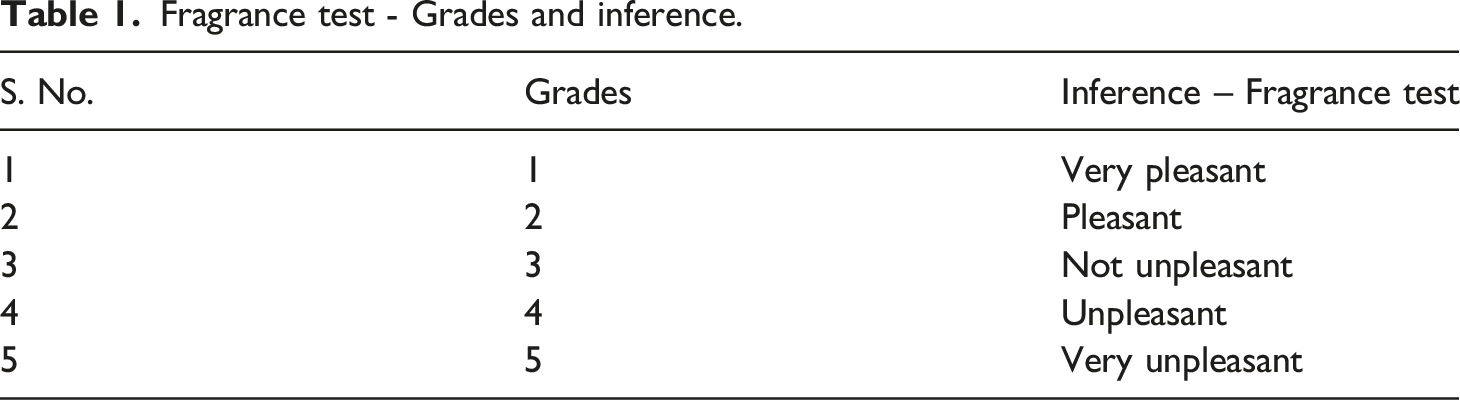
Investigating the aromatic efficiency of herbal composite finished fabrics using standard fragrance test (Swiss standard SNV 195651)
Fragrance test - Grades and inference.
Evaluating the physical characteristics of finished and control fabrics
All nine fabric samples were evaluated for the physical properties such as fabric count, thickness and fabric weight. All the test was carried out for both finished and control fabric samples. Each test protocol was described below.
Fabric count
Fabric count is a measure of number of thread in one square inch of fabric or one square centimetre. Fabric count is determined by counting the number of weft and warp per centimetre according to ASTM D 3887–96 using pick glass. Weft is a column of loops along the length of the knitted fabric and course is a row of loops across width of the knitted fabric. Fabric count was determined at 10 different places in the selected fabrics and average number of weft and warp per centimetre was calculated.
Fabric thickness
Thickness of a textile material is defined by the American society for testing and materials (ASTM) as the distance between the upper and lower surface of a material, measured under specified pressure. A thickness gauge is used for measuring fabric thickness. A piece of the fabric is placed on the reference plate of the instrument ensuring that there are no creases in the fabric. The pressure foot is gradually brought down and after allowing it to rest on the fabric for 30 s, the gauge reading is taken. The fabric thickness is read at 10 different places on the sample and the mean of these readings is taken as the average measured thickness of the sample.
Fabric weight
According to ASTM D 3776 standard, fabric weight of the unfinished and finished fabrics was carried out. It measures the fabric mass per unit area (weight). It is expressed as grams per square meter. Samples were cut using the GSM cutter avoiding selvedge and creases. The samples were allowed to condition in standard atmospheric condition for 1 hour after which the weight was taken on a digital balance having 0.01 g sensitivity. The mass per unit area of the sample was calculated.
Biocompatibility of herbal composite - MTT assay
MTT assay is used to assess the biocompatibility of herbal composite used for finishing the fabric samples. L929 fibroblast cell lines were used in the present research and method was used as described by Budman et al., 2012. Briefly, the effect of herbal composite on L929 fibroblast viability was evaluated using the photometric MTT assay. About 1 mL of MTT solution was added to fibroblast cells which was already exposed to herbal composite. Followed, about 100 μl of 70% isopropanol for the formation of purple crystals. The colour intensity formed was read at 550 nm. The viability is expressed as a percentage of the control sample (100%).
Results and Discussion
Antibacterial activity of HC1 finished and control samples
Antibacterial activity of the herbal composite finished fabrics.

*Significant at 5% level.
The herbal composite finished aloe vera fabric (F1) showed 30 mm and 34 mm of inhibitory zones against E. coli and S. aureus respectively. Herbal composite finished banana fabric (F2) revealed 33 mm and 33 mm of inhibitory zones against E. coli and S. aureus respectively. HC1 finished corn fabric (F3) showed 36 mm and 34 mm of inhibitory zones against respective organisms. Eucalyptus fabric (F4) samples finished with herbal composite showed 34 mm and 33 mm of inhibitory zones against E. coli and S. aureus. Lotus (F5) fabric samples finished with HC1 revealed 36 mm and 30 mm of inhibitory zones against respective organisms. HC1 finished milk fabric (F6) showed 32 mm and 33 mm of inhibitory zones against E. coli and S. aureus. Orange fabric (F7) finished with herbal composite revealed 28 mm and 28 mm of inhibitory zones against respective organisms. Herbal composite finished Rose fabric (F8) revealed 27 mm and 36 mm of inhibitory zones against E. coli and S. aureus. Soya (F9) fabric samples finished with HC1 revealed 31 mm and 30 mm of inhibitory zones against respective organisms. In Figures 2–5 the maximum inhibitory action of finished fabric samples (Banana, Corn, Eucalyptus and Lotus) against E. coli and S. aureus was presented. Antibacterial activity of Herbal composite finished Banana fabric. Antibacterial activity of Herbal composite finished Corn fabric. Antibacterial activity of Herbal composite finished Eucalyptus fabric. Antibacterial activity of Herbal composite finished Lotus fabric.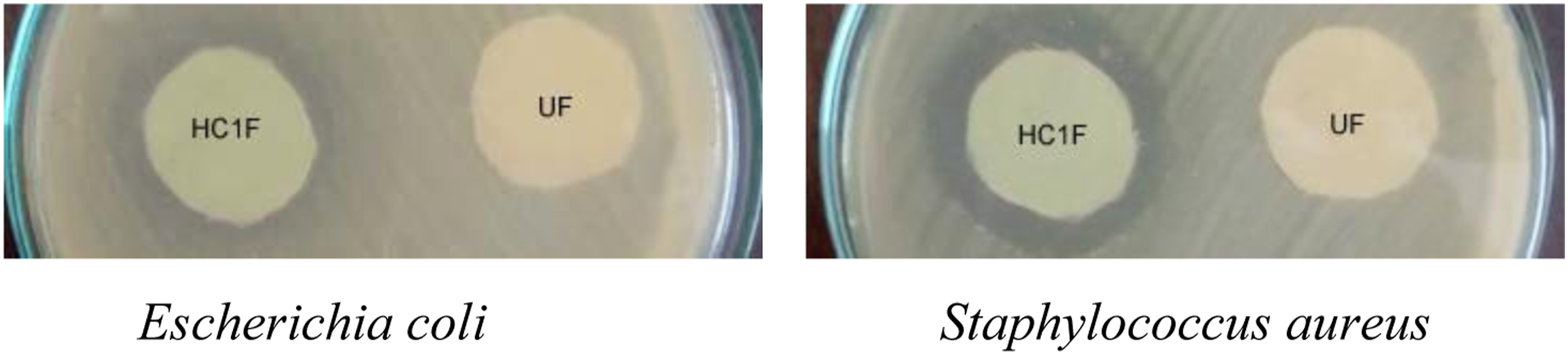
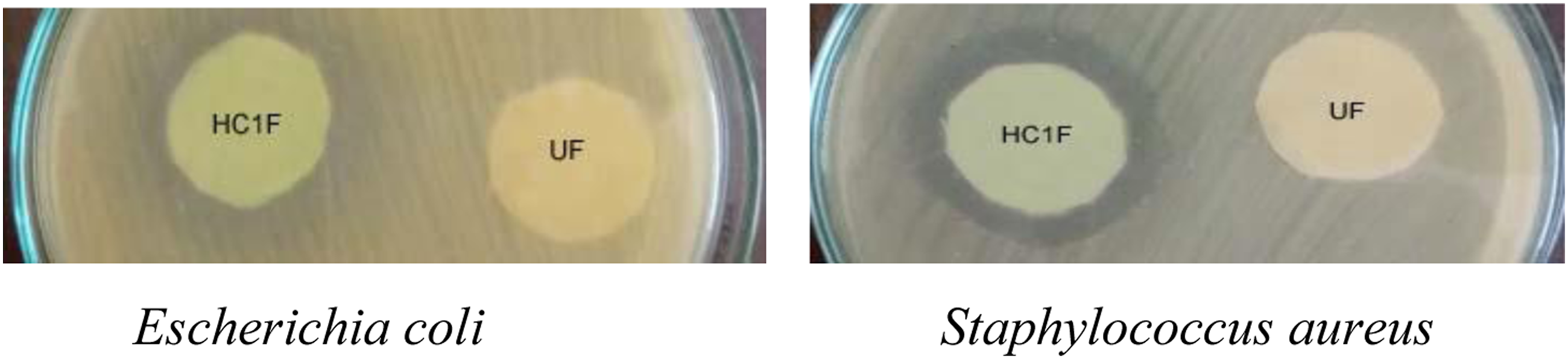


To prove that herbal composite has antibacterial activity, the control unfinished fabric was also subjected to similar experimental protocol. All control samples did not exhibited inhibitory zones against the respective bacterial strains which indicated that only herbal composite finished samples have exhibited antibacterial activity but control samples did not exhibit antibacterial activity. Difference between finished and control samples expressed in terms of zone of inhibition was statistically calculated using one way ANOVA (Statistical package of social sciences, Windows-7) with 5% significant level. The statistical results revealed that there was significant difference in inhibitory zones in terms of antibacterial activity between the finished and control fabrics (F = 1426.8 for E. coli and F = 924.6 for S. aureus). The obtained results indicated that herbal composite containing H. colorata and Bacopa monnieri extracts inhibited the growth of both bacterial strains in all nine types of finished fabric samples.
Antibacterial activity of the finished fabric expressed in this present research was reviewed from the literature survey. The herbal extracts of H. colorata and Bacopa monnieri used for finishing had proved to contain different types of significant biological compounds like alkaloids, flavonoids, terpenoids, steroids, phenols and glycosides (Devi Priya et al., 2021). These phytochemical compounds were proved to be attributing for different biological properties like antibacterial activity, antiviral activity and anti-oxidant activity (Gangadharan et al., 2014).
In our present research two herbal sources were used for finishing which expressed excellent antibacterial activity. Similarly many research articles were proved to reveal good antibacterial activity for two different herbal extract finished fabrics. Sumithra and Amutha (2016) used 50:50 cotton and bamboo blended fabric samples to finish with two herbal extracts (Galinsoga parviflora and Azadirachta indica). Antibacterial activity was accessed using EN ISO 20,645 test method against E. coli and S. aureus. The pad-dry cure method of the G. parviflora extract finished fabric revealed inhibitory zones of 35 mm and 38 mm against respective test organisms. Slightly higher inhibitory activity of about 39 mm and 40 mm was obtained against test bacteria for A. indica finished 50:50 cotton and bamboo samples. In our present study also, H. colorata and Bacopa monnieri extract finished nine types of fabric samples revealed good inhibitory zones ranging from 30 mm to 38 mm against test bacteria. Antibacterial activity results obtained in our present study was found well coincided with the results of Sumithra and Amutha (2016) in terms of inhibitory zones.
In another study, Sumithra and Vasugi Raaja (2014) focused on imparting extracts of Ricinus communis, Senna auriculata and Euphorbia hirta as composite on denim fabrics. The antimicrobial efficiency of composite finished denim fabric samples were evaluated using EN ISO 20,645 test method. The herbal composite finished fabric revealed inhibitory zones of 25 mm and 29 mm against respective E. coli and S. aureus. Similar type of herbal composite containing H. colorata and Bacopa monnieri extract was used for finishing in our present research. Incomparison with the results of Sumithra and Vasugi Raaja (2014), the antibacterial activity results obtained in our present study was found well supportive as similar range of inhibitory zones.
Sumithra (2017) highlighted that eco-friendly products are highly beneficial to our health as also to the environment; also extended that these products improves quality of our lives as these green products are made from natural raw materials. In this work, medicinal herbs such as Tribulusterrestris – Whole plant, Cissusquandrangularis – Whole plant, Leucasaspara - Stem, Leaf and flower, Passiflorafoetida – Stem, Leaf and flower and Cereus janacaru – Whole plant have been selected for finishing 100% cotton fabric using dip-dry method. The finished fabrics have been tested for its antimicrobial activity using standard test method ENISO 20,645. The research concluded that Tribulusterrestris finished fabric revealed good antibacterial activity (Inhibitory zones ranging from 19 mm to 21 mm) when compared to other herbs with enhanced the wearing comfort properties. In comparison to this work, in our present research, the antibacterial activity (ENISO 20,645) were analyzed for Herbal composite (HC1) finished fabric samples. The results revealed that inhibitory zones ranging from 30 mm to 38 mm were obtained for all the test samples with excellent biological properties. Thus the results obtained in our present study was found well supportive with the results of Sumithra and Vasugi Raaja (2020) in terms of antibacterial activity.
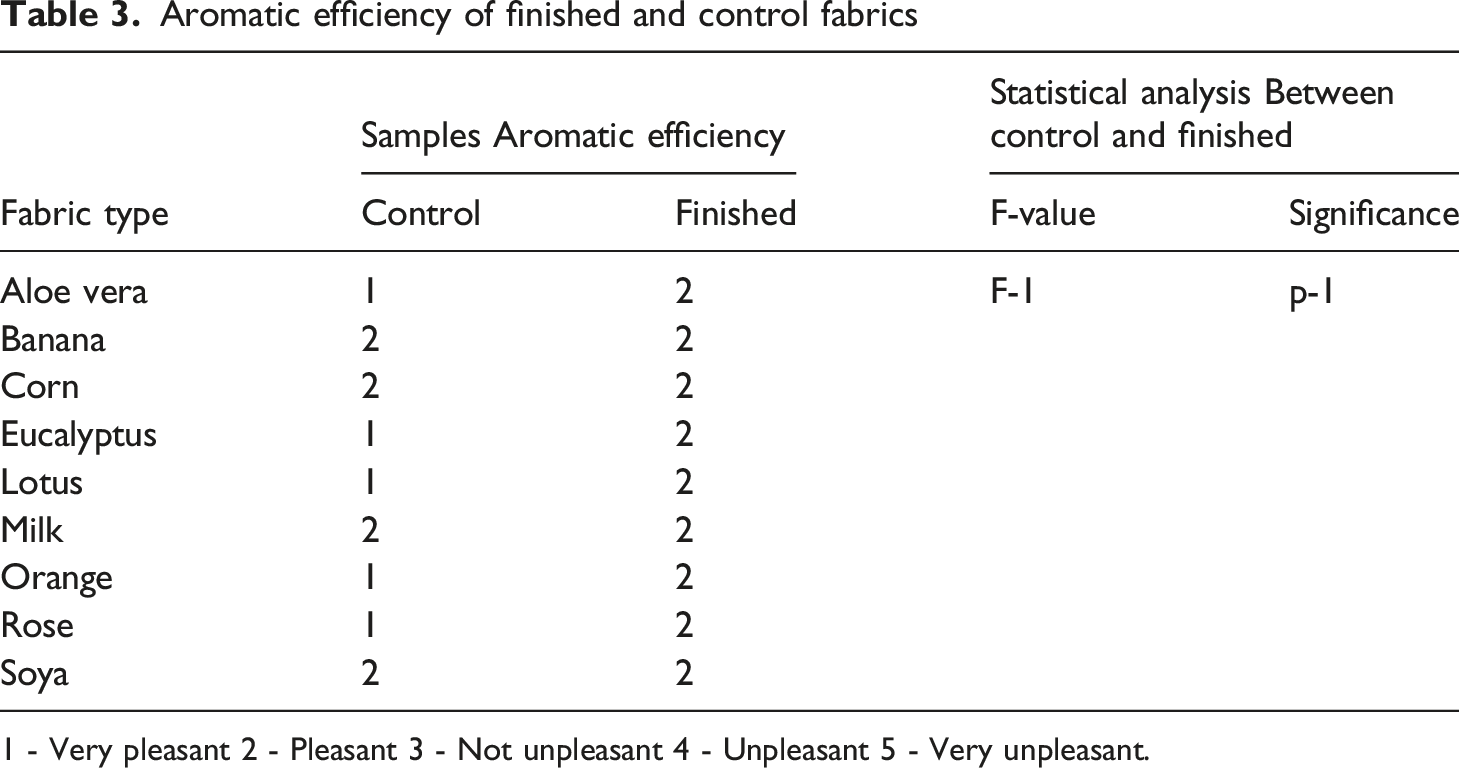
Aromatic efficiency of herbal composite finished fabrics
Aromatic efficiency of finished and control fabrics
1 - Very pleasant 2 - Pleasant 3 - Not unpleasant 4 - Unpleasant 5 - Very unpleasant.
Sumithra and Vasugi Raaja (2020) recently analyzed the extracts of medicinal herbs such as Ricinus Communis (leaves and seeds), Datura metel (leaves with fruits), Aloe Vera (flower), Abutilon indicum (leaves), Solanum surattense (Leaves), Coccinia grandis (Fruits and leaves), Aloe vera (leaves), Cardio spermum halicacabum (Leaves), for finishing cotton denim fabric using dip-dry method. The finished fabrics have been tested for anti-odour activity using standard odour test method. The authors concluded that the selected herb finished samples enhanced the wearing comfort properties and stopped bad odor. In comparison to this work, in our present research the anti-odour properties were analyzed for different types of finished fabric samples. The results revealed that all nine fabrics finished with herbal composite containing H. colorata and Bacopa monnieri extracts provided excellent anti-odour properties. This was mainly due to the odour masking action of the aromatic oil finished in the fabric samples. In Table 2, the finished samples showed pleasant grade when compared to control samples. Thus the results obtained in our present study was found well supportive with the results of Sumithra and Vasugi Raaja (2020) in terms of odour control.
Sumithra (2015) highlighted that body odors emanating from a person can be an embarrassing problem in many cultures where natural body odors may be viewed as unpleasant and even considered unhygienic. Hence the author focused on the Microencapsulation and Nanoencapsulation of the 100% cotton denim fabric using leaf extracts of S. auriculata followed by pad-dry cure method. The selected fabric were tested for the efficacy of anti-odor finish, to enhance the durability of the finished fabric treated and washed samples are tested using organoleptic evaluation of odor control and the results showed there was maximum absorbency and retentively of anti-odor finish in nanoencapsulated sample when compared to microencapsulated sample. In comparison to this work, in our present research anti-odour properties were analyzed for different types of fabric samples before and after finishing with herbal composite containing H. colorata and Bacopa monnieri extracts. The results revealed that all the finished test samples provided good aromatic and anti-odour activity when compared to control samples. This is evident from Table 2 since there was no significant difference in the aromatic grade values as per tested standards. Thus the results obtained in our present study was found well supportive with the results of Sumithra (2015) in terms of odour control.
Physical properties of the finished fabrics
Fabric count (weft direction)
Fabric count (Weft) of finished and control samples.

Fabric count (Warp) of finished and control samples.

Fabric count with respect to weft per centimetre for herbal composite (HC1) finished and unfinished control fabric samples were statistically determined using F value. Difference between finished and control samples expressed in Table 4. From the values, it was evident that there was no significant statistical difference (p - 1) between finished and control fabrics in terms of fabric count with respect to weft per centimetre.
Fabric Count (Warp)
Fabric count with respect to warp per centimetre for herbal composite (HC1) finished and unfinished control fabric samples were statistically determined using F value. Difference between finished and control samples expressed in terms of percentage (%) was presented in Table 5. From the values it was evident that there was no significant statistical difference (p – 0.59) between finished and control fabrics in terms of fabric count with respect to warp per centimetre.
Fabric thickness
Thickness of finished and control samples.

Fabric weight
Fabric weight of finished and control samples.

Biocompatibility of herbal composite
Biocompatibility of Herbal composite.

*Mean ± Standard deviation.
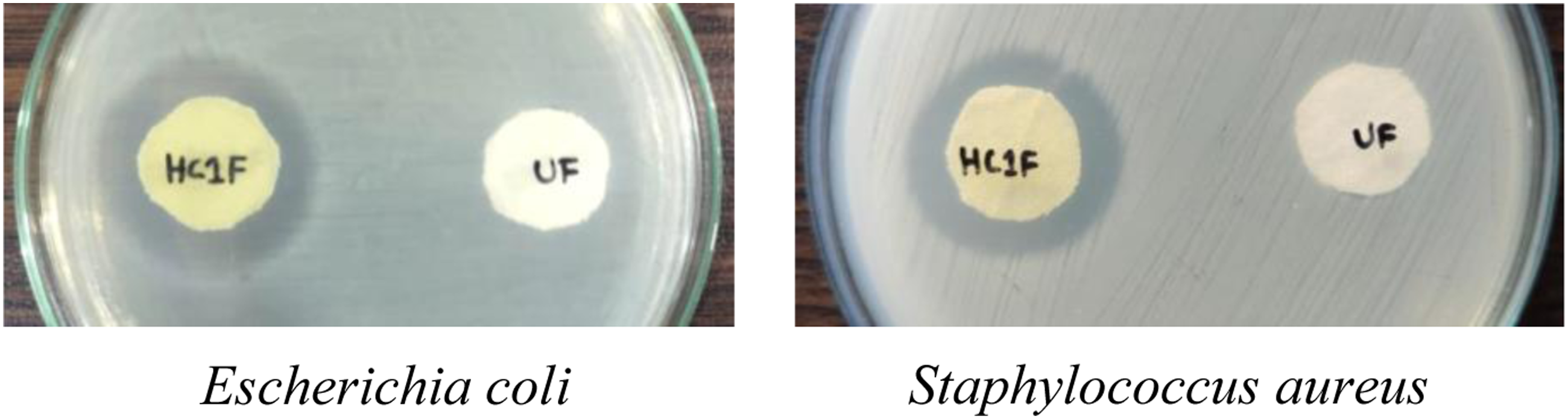
Antibacterial activity of Herbal composite finished Aloe vera fabric.
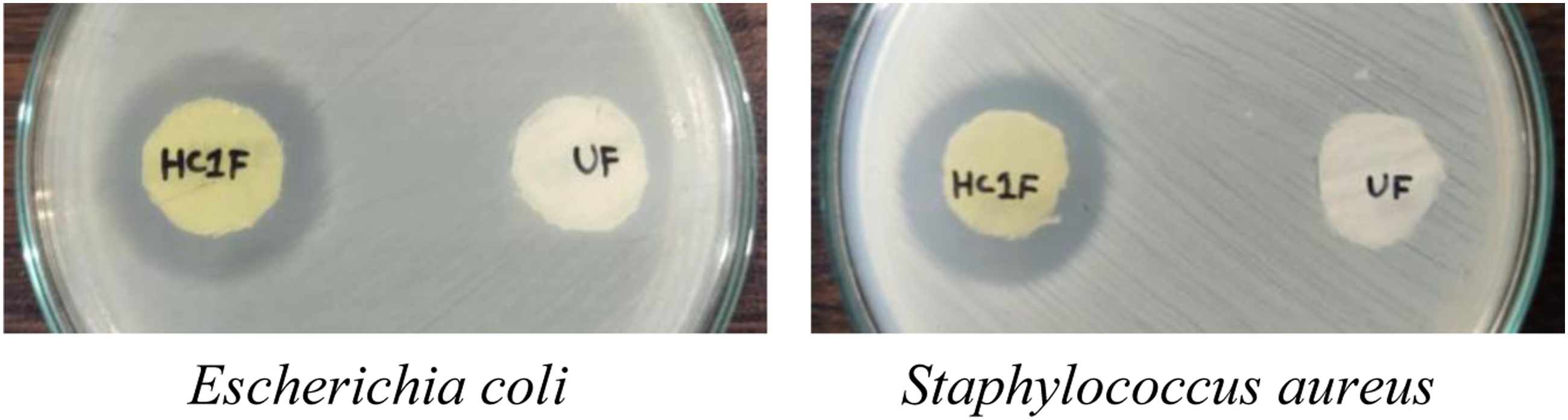
Antibacterial activity of Herbal composite finished Milk fabric.

Antibacterial activity of Herbal composite finished Orange fabric.

Antibacterial activity of Herbal composite finished Rose fabric.

Antibacterial activity of Herbal composite finished Soya fabric.

Biocompatibility of Herbal composite. (Phase contrast microscopic analysis of L929 fibroblast cell line morphology).
Similar in vitro method was used to investigate the biocompatibility of the herbal composite during the literature survey. MTT assay method used in many research works were found highly correlated with the results of the present research. Gabriel Alvares Borges et al., (2017) performed a study aiming to evaluate ozone cytotoxicity in fibroblasts (L929) and keratinocytes (HaCaT) cell lines. In vitro evaluation of wound healing and biocompatibility of ozone therapy and chlorhexidine was carried out. Treated the cells of selected cell lines with ozonated phosphate-buffered saline (8, 4, 2, 1, 0.5 and 0.25 μg/mL ozone), and chlorhexidine (0.2%). Biocompatibility was confirmed with percentage of cell viability through MTT assay. During the analysis, ozone showed no cytotoxicity in both of the cell lines; whilst chlorhexidine markedly reduced cell viability which indicated the biocompatibility of ozone and chlorhexidine treatment. This study was found well correlated with the present research analysis since chlorhexidine and peptide conjugates were of antibacterial agents.
Niladri Roy et al., (2010) developed a novel medicated hydrogel wound dressings using polyvinyl lpyrrolidone (PVP), Carboxymethyl cellulose (CMC), polyethylene glycol (PEG). The permeability and biocompatibility of the developed hydrogel was carried out in presence of human immortalized non-tumorigenic keratinocyte cell line (HaCaT), and further confirmed with balb/c 3T3 mouse fibroblasts cells. The developed hydrogel dressings exhibit slight cytotoxic effect, as they showed high cell viability in all extract concentrations. Further, there was no significant difference in the morphology of the HaCaT cells after 24 and 120 h of culturing in the cell culture media (DMEM).
Conclusion
In the present study, leaf portions of H. colorata and Bacopa monnieri are the two herbs selected and a novel herbal composite (HC1) was developed. Composite was converted into a reactive herbal dyes using standard test method and finished onto fabric samples using Pad-dry cure process. Finished fabrics were subjected to antibacterial activity using standard EN ISO 20,645 test method against E. coli and S. aureus. Test results of antibacterial activity of herbal composite (HC1) finished fabrics revealed good inhibitory action against both test bacteria. To prevent odour from physical activities, aromatic Argan oil was finished onto fabric samples; followed by testing anti-odour activity using Swiss standard SNV 195,651 method. Aromatic efficiency of herbal composite (HC1) finished fabrics also showed significant results after testing as per swiss SNV 195,651 standards. Both finished and unfinished control fabric samples were statistically evaluated using F value. Statistical evaluation determined that there was no significant difference (p–1) between finished and control fabrics in terms of aroma, which indicated the anti-odour efficiency of herbal composite finished fabrics. The biocompatibility of herbal composite used for finishing the fabric samples was investigated using MTT assay method. Results for the biocompatibility of the herbal composite finished fabrics revealed that the composite concentrations did not inhibit the growth of fibroblast cells; thus indicating the biocompatibility of the herbal composite used for finishing all nine fabrics. The present study would be considered highly significant by providing an eco-friendly and sustainable products for developing medical textile products and smart home textile products.
Footnotes
Declaration of conflicting interests
The author(s) declared no potential conflicts of interest with respect to the research, authorship, and/or publication of this article.
Funding
The author(s) received no financial support for the research, authorship, and/or publication of this article.
