




Abstract
Oil-contaminated soil is detrimental to the ecosystem. There are various methods for purifying and controlling oil-contaminated soil. Among these, the use of oil absorbent geotextiles is considered a new method, and its performance requires more research. The separating by geotextiles has the advantages such as absence of chemicals in the separation process, less energy, simple control and implementation. This study presents an environmentally friendly sustainable solution using spacer geotextile layers to absorb crude oil and improve the geotechnical properties of contaminated soil. The variables include contamination percentage, number of fibrous substrate layers, soil overhead load pressure and duration of exposure to contaminated soil. The response variable is the internal friction coefficient of soil obtained from the direct shear test. By comparing soil samples containing geotextiles with samples without geotextiles, it was concluded that spacer geotextile layers could increase the internal friction coefficient of the soil and thus lead to improved soil properties. Increasing the number of geotextile layers, loading and the presence time of geotextile layers in the soil had increased the internal friction angle. But as the oil percentage in the soil increases, the internal friction angle of the soil decreases. Also, in this study, a linear regression model has been used to investigate the effect of existing parameters and the model was in good agreement with the experimental data.
Introduction
With the development of human civilization, technology development, and the population growing, the world is now facing environmental problems. 1 Soil is one of the essential and valuable resources of nature that is at risk of various pollution types. 2 In general, any change in the properties of soil components that leads to unusable soil is called soil contamination. Soil contaminants include agricultural agents, industrial activities, oil agents and waste. Contamination of the soil with petroleum products, in addition to contamination of the groundwater aquifer, will cause changes in the physical and chemical properties of the soil. 3 The infiltration of crude oil into the soil causes changes in geotechnical properties, such as reducing bearing capacity and increasing the total and relative subsidence of structures, resulting in severe cracking of existing foundations and structures. 4 Therefore, the possibility of structural rupture and failure in soils contaminated with petroleum products increases. The issue of stability and resistance of oil-contaminated soils are important for foundations, oil reservoirs, oil pipelines, stability of soil slopes, etc.
So far, many studies have been done on the impact of pollutants on the soil. Among the researches performed are the analyses of Shin et al. on crude oil-contaminated sand 5 and Evgin and Das 6 on clean cortisone sand contaminated with engine oil. Alsanad et al. used artificially contaminated sand with different oil pollution percentages to determine the effect of contamination on different sand parameters. 7 Puri 8 has investigated the impact of crude oil on sand parameters . Shin et al. conducted studies on the shear strength of oil-contaminated sand and the ultimate bearing capacity of the foundation. The results showed that oil pollution significantly reduces the bearing capacity of this type of soil. 9 Rehman et al. in 2007 studied the geotechnical characteristics of oil-contaminated soils. 10 In 2012, Kermani and Ebadi examined changes in the parameters of petroleum-contaminated fine-grained soils. With increasing oil pollution, liquid limit (LL), plastic limit (PL), internal friction angle and compressibility increase, as well as the percentage of optimum moisture and adhesion decrease. 11 The results of this study were different from the study of Khamechian et al. 12 Khamehchiyan et al. (2007) showed that oil contamination reduces the permeability and maximum shear strength of samples. These differences make it challenging to have a general description of the impact of crude oil contamination on the soil. Research results often differ due to the type of soil and the different behavior of each soil against contamination.
The difference between the engineering characteristics of contaminated soils and clean soils and the need to use them in construction and other projects shows the importance of treating and refining contaminated soils. It takes a lot of funds, time and energy to purify contaminated soils. In recent years, in order to purify contaminated soils, methods such as washing, evaporation, solidification and stabilization, thermal decomposition, phytoremediation, biological slurry, biological respiration and geostructures have been developed. Geostructures are a set of structural components designed to purposely mobilize the strength and stiffness of soil in order to withstand loads. Geostructures are hence soil-structure interaction issues. Geostructures are flat products composed of polymeric materials used as an integral part of construction projects with soil, stone, earth or other materials related to geotechnical engineering. 13 Geotextile, geogrid, geocell, geonet, geomembrane, erosion control mat, geosynthetic clay liner, and geo-composite are some of the most common geosynthetics . 14 The most extensively used geostructures are geotextiles. 15 Geotextiles or fibrous substrates have the ability to absorb petroleum contaminants in the soil before water. 16 Since the surface tension of oil is low and the surface tension between the surface of oil and geotextile is more than water and geotextile so, at first, oil absorption occurs. Due to gravity, crude oil penetrates the soil and causes changes in the geotechnical properties of the soil. This will significantly impact soil resistance parameters, especially adhesion, internal friction angle, plastic limits, moisture content, and dry density. In recent years, limited studies have been conducted on oil pollution and using geotextiles to clean them. Some of these studies include the research of Radetic et al. on the effectiveness of recycled wool-based nonwoven material for the removal of diesel fuel and motor oil from water 17 and Moriwaki et al. 18 (2009) on the reduction of motor and vegetable oils from water by using silkworm cocoon waste as a sorbent material. Also, Chen et al. 19 (2009) investigated the effect of fiber diameter and fiber blending on liquid absorption inside nonwoven structures.
Polypropylene is one of the most extensively utilized fibers for geotextiles due to its low cost, excellent tensile characteristics and chemical resistance. Because of these superior properties, polypropylene is one of the most extensively utilized fibers for geotextiles. 20 Polyester is another popular synthetic fiber for geotextiles. It has excellent creep resistance and excellent tensile characteristics. High-temperature geotextiles constructed of polyester fiber can be employed. 21
In 2012, Shuo et al. designed a filter consisting of three types of fibers: polypropylene, nylon 66, and polytetrafluoroethylene, which are used to separate oil from water. It was discovered that PP has the highest oil separation efficiency, whereas nylon 66 has the lowest. Also, the results showed that as the concentration of Triton decreases, the adsorption efficiency increases. 22
In 2013, Wu et al. used silicone-coated polyester nanofibers. Silicone coating resulted in increased hydrophobicity of polyester that can easily absorb petrol, diesel, and crude oil. More notably, even after 10 cycles of absorption–desorption, the dip-coated polyester material retained its superhydrophobicity and oil absorption capability. 23 Puppala and Ghazavi concluded that polypropylene fiber reinforcement improved the unconfined compressive strength (UCS) of the soil.24,25 Kumar et al. concluded that adding polyester fibers to highly compressible clays increased UCS of the soil. 26 Based on studies, filters-based polyester and polypropylene showed promising results in reducing soil pollution. Therefore, in this work, in order to improve the quality of petroleum contaminated soil (PCS), geotextiles based on polyester and polypropylene spacers were used, then direct shear test were performed and a regression model was presented.
Materials and methods
Characteristics of oil, soil and fibrous bed
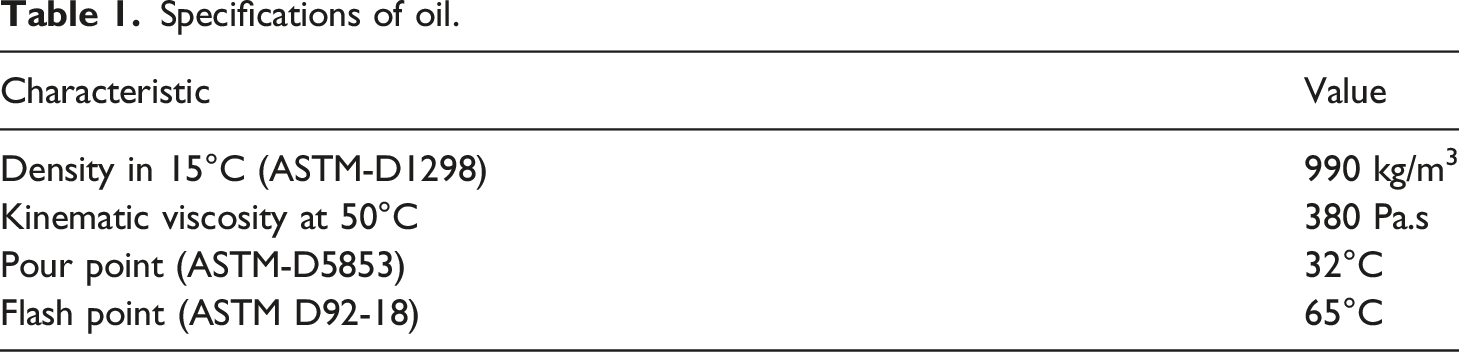
Specifications of oil.

The particle size distribution of soil.
Soil characteristics.

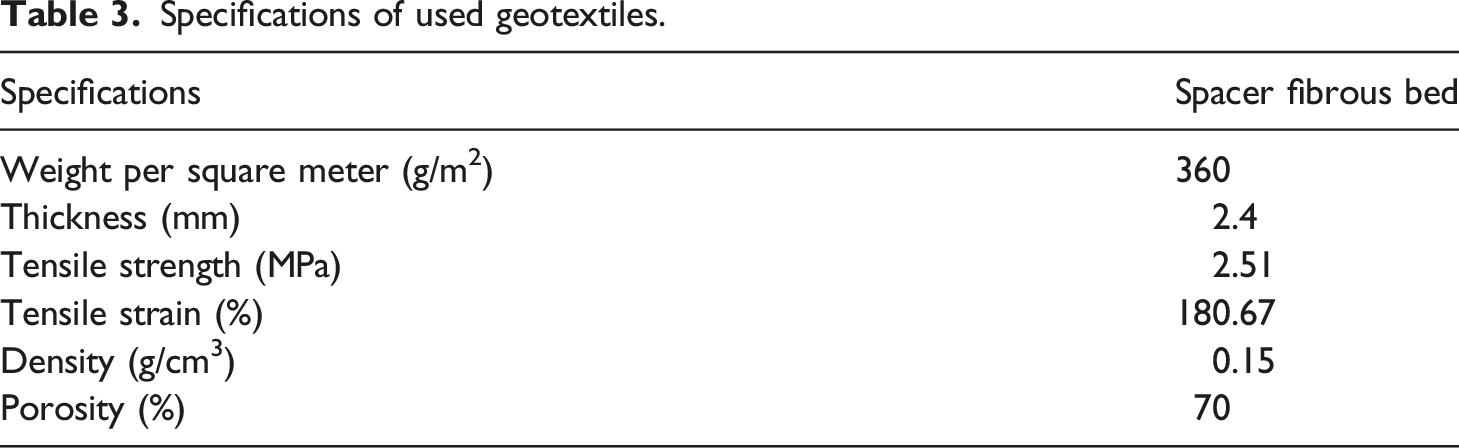
Polypropylene and polyester fibers have higher oil-sorption capacity with very much lower uptake of water. Moreover, these fibers are lighter than fresh or sea water and will float on it. Polypropylene and polyester are the ideal material for marine oil-spill recovery due to its low density, low water uptake and excellent physical and chemical resistance. So, in this paper, a geotextile made of polyester and polypropylene was used. The geotextile was purchased from Forouzanbaft company, Tehran, Iran. The weight per square meter of the samples was measured according to ASTM-D 3776–96 and the thickness of the samples was measured according to ASTM-D 5729–97. The figure and specifications of the geotextile are presented in Figure 2 and Table 3. (a) and (b) image of the geotextile sample, (c) geotextiles sample after absorbing the oil. Specifications of used geotextiles.
Preparation of samples
The amount of soil required to fill the shear box is calculated according to the percentage of soil compaction and the volume of the mold. Also, the amount of oil to contaminate the soil was determined according to the desired percentages of oil in the experimental design.
The desired amount of oil was mixed manually with a specified volume of soil. The percentage of soil contamination was examined at three levels of 3, 6 and 12% by weight of soil. Depending on the weight of the soil and the percentages of pollution, the weight of the oil is obtained. These values have been selected according to the reference. 27
Then the desired amount of oil was mixed manually with a specific volume of soil. According to the experimental design in different samples, a number of geotextile layers were placed in the soil, parallel to the soil surface (perpendicular to the loading direction) and with certain distances and transferred to the shear box after 1 week. If the number of geotextiles increases, the volume of soil in the shear box will also increase, but the effect of this increase is not significant. As the number of geotextile layers increased, the soil mass was constant, as well as the compaction energy, that is, the number of hammer blows or the number of blows we applied to compact the soil. So, the mass and compaction energy of the soil are kept constant. Therefore, the soil properties between the geotextile layers remained constant.
Experiments with geotextiles were performed on unsaturated soils. Because the presence of water helps the outflow of oil. In fact, to eliminate the effect of water on oil output and only to investigate the impact of geotextiles, the soil was not saturated with water.
Soil compaction test
The soil compaction test aims to establish the maximum dry density that may be achieved for a given soil with a standard amount of compaction effort. According to ASTM D1557, to evaluate the maximum dry density and optimum moisture contents, some weighed soil was poured into a mold with a volume of 942.3 cm3 and a weight of 3769 g. It was compacted with a special hammer in three layers and by 25 blows.
Direct shear test
A direct shear test based on Mohr-Coulomb (M-C) theory was used to determine soil shear strength parameters. According to (M-C) theory, shear strength (τ) depends on three parameters: cohesion of the material (c), normal effective stress (σ) and internal friction angle of the material (ϕ) and is defined as follows
Note that for sand C=0 and therefore, the internal friction angle is equal to
In order to obtain more accurate results and according to ASTM D3080-04, a straight shear machine with a shear box by a cross-section of 30 × 30 cm was designed and built. The application of normal and shear stress is done by this set. Levers and weights have been used to exert normal load. The shear stress is applied to the shear box with the help of a motor and gears. For this purpose, normal stress and a shear rate of 0.7 mm/min have been used. Depending on the design of the experiments, after 1 hour or 24 h, the shear is applied and the displacement values are recorded. The schematics of the direct shear test and placement of geotextile layers inside it are shown in Figure 3. (a) The schematics of the direct shear test, (b) Specimen configuration of shear box that contains one geotextile layer, (c) The shear boxes with 1, three and five geotextile layers.
Oil absorption test from the soil by geotextile
This section described the method used to evaluate the oil absorption efficiency of geotextile. At first, the desired amount of oil was mixed manually with a specified volume of soil. Then geotextile layers were cut into the size of 10 cm × 10 cm. All tests were carried out at 23 ± 4°C and 60 ± 10% RH. First of all, the specimens were weighed and placed in a chamber containing a layer of oil-contaminated soil for a duration of 1 h and 24 h. The textiles were then removed and weighed on a digital balance with an accuracy of 0.01 g.
The experimental oil absorption efficiency (R) of each sample was calculated as the ratio of oil adsorbed to dry mass of the sample MD
Statistical studies
Experimental design and variables.

Results and discussion
Soil compaction Test
Figure 4 shows the soil dry weight curve at different percentages of moisture. Based on this, the maximum dry weight was determined to be 1.8 g/cm3 and the optimum humidity (maximum moisture in dry weight) was determined to be 12%. Dry density versus moisture.
Direct shear test
Direct shear test results.

First, the relationship between existing variables, including the number of required geotextiles, percentage of soil contamination, loading rate and loading time with the values of internal friction angle, was investigated. Figure 5 shows the internal friction angle values for contaminated soil samples with different percentages of 3, 6 and 12% of oil for the state without geotextile and with geotextile in two different times of 1 and 24 h without loading. According to the results, the amount of internal friction angle has increased with the use of geotextiles, but this amount of increase is not very noticeable. It can also be seen that the amount of internal friction angle has increased with increasing time. It could arise from the opinion that a longer contact time of geotextiles can reduce the oil content in soil, and thus increase the shearing resistance and internal friction angle of soil. This change is due to the capillary process; also, the oil characteristics may change over time (increase in density and viscosity) due to the evaporation process, thus increasing the shearing resistance and internal friction angle of soil. However, this difference is not very significant. Increasing the percentage of oil contamination has led to a significant reduction in the internal friction angle. The values of internal friction angle of the soil at two different times and different soil contamination percentages.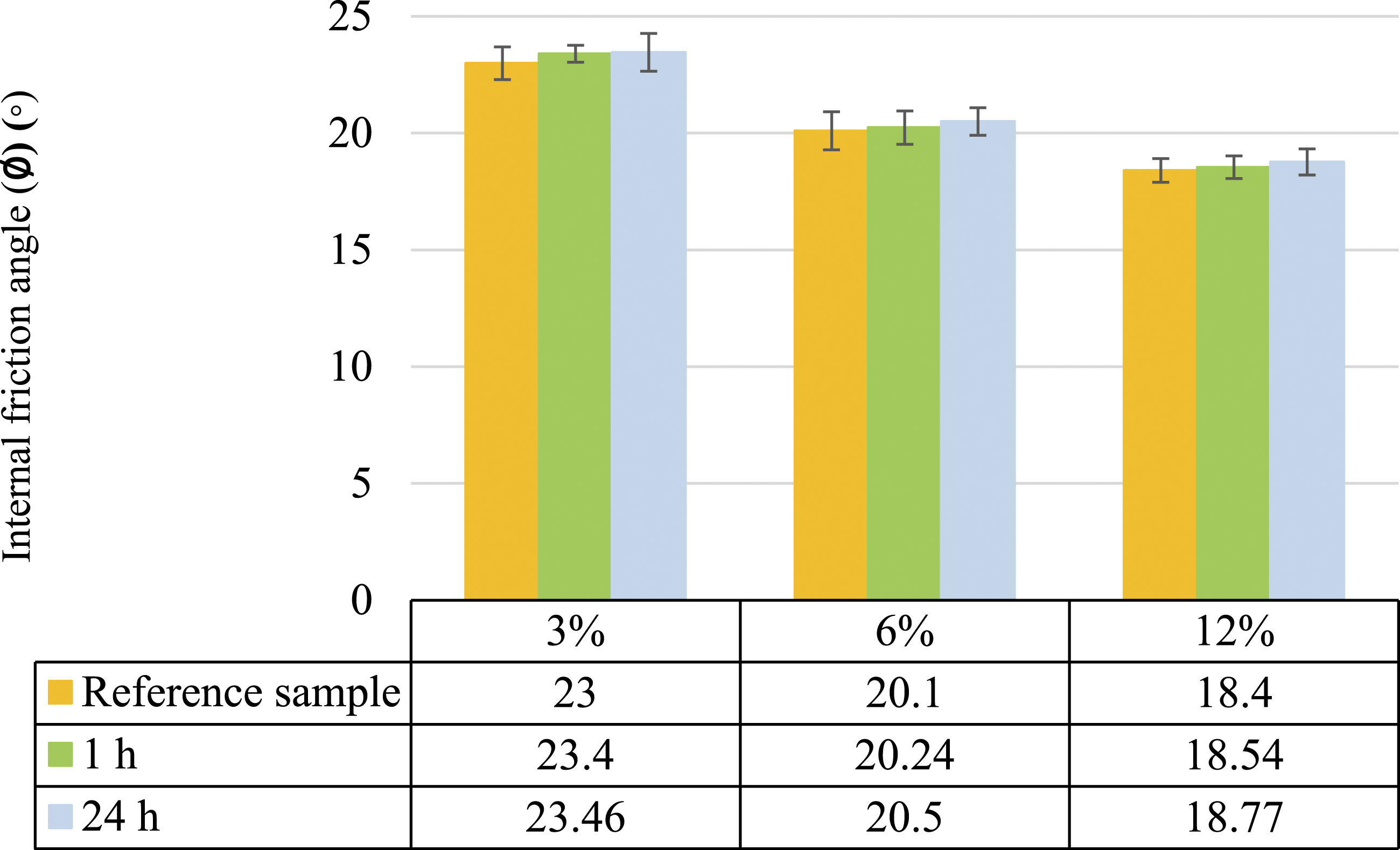
Oil absorption efficiency from the soil by geotextile
The experimental results for geotextile samples have been shown in Figure 6. As seen in Figure 6, increasing the number of geotextile layers in the soil leads to an increase in oil absorption efficiency, which indicates more oil absorption from the soil. Also, with the increase in the geotextile’s presence time inside the soil (from 1 h to 24 h), the oil absorption efficiency has increased. The experimental oil absorption efficiency results for geotextile layers.
Statistical studies
Correlation check
According to Figure 7, the linear relationship between independent and dependent variables is evident. The shear strength had increased with an increasing number of geotextile layers, loading amount, and loading time. By increasing the percentage of soil contamination with oil, the shear strength decreased. The relationship between shear strength and (a) percentage of contamination, (b) number of layers, (c) loading and (d) time.
The values of the Pearson correlation coefficient.

** Correlation is significant at the 0.01 level (2-tailed).
* Correlation is significant at the 0.05 level (2-tailed).
Relationship between the variable number of layers and shear strength.

Regression model
Enter Method

Statistical tables of enter method (model summary).
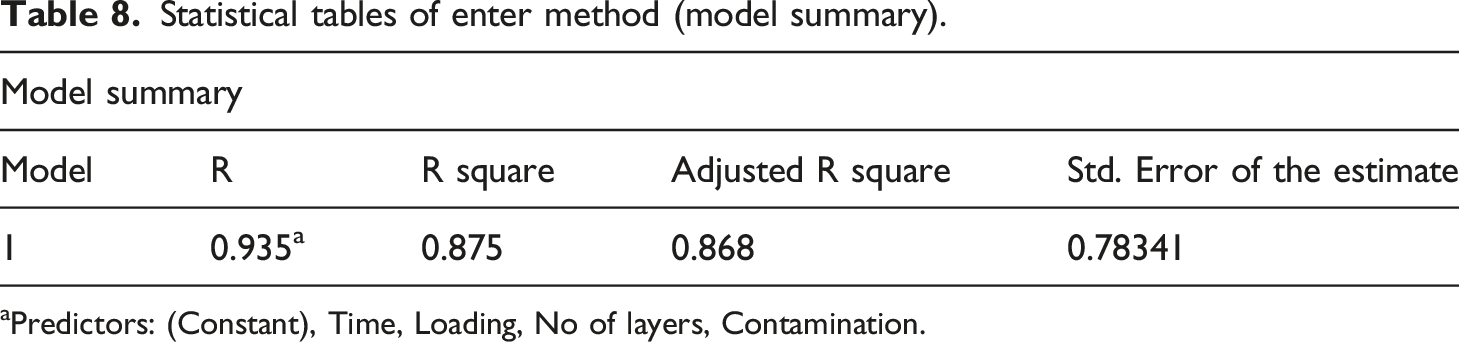
aPredictors: (Constant), Time, Loading, No of layers, Contamination.
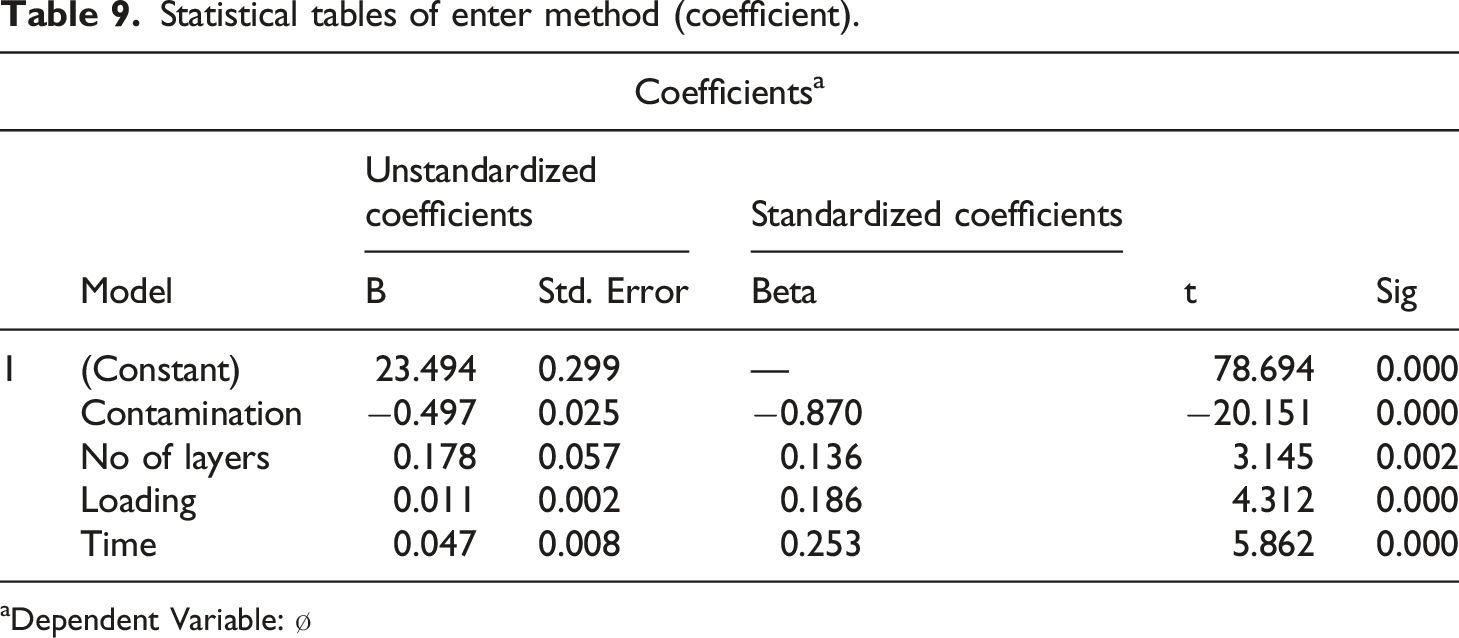
Statistical tables of enter method (coefficient).
aDependent Variable:
Stepwise method

Statistical tables of stepwise method (model summary).

aDependent Variable:
Coefficients of parameters.

Considering the negative coefficient obtained in the model for the contamination percentage parameter (−0.87), it can be seen that with increasing the oil percentage in the soil, the internal friction angle of the soil decreases. It, in fact, indicates a decrease in the degree of locking of soil particles in each other and the flow of soil particles due to the presence of oil. Also, increasing the number of geotextile layers leads to increasing the engagement of geotextile layers with soil grains, thus increasing the internal friction angle. The amount of load is also directly related to the internal friction angle. Increasing the amount of loading has led to an increase in the involvement of soil materials with each other, locking of particles and increasing soil consolidation, and as a result, has increased the angle of internal friction. Also, placing geotextiles in the soil set for a longer period has improved the internal friction angle.
Model validation
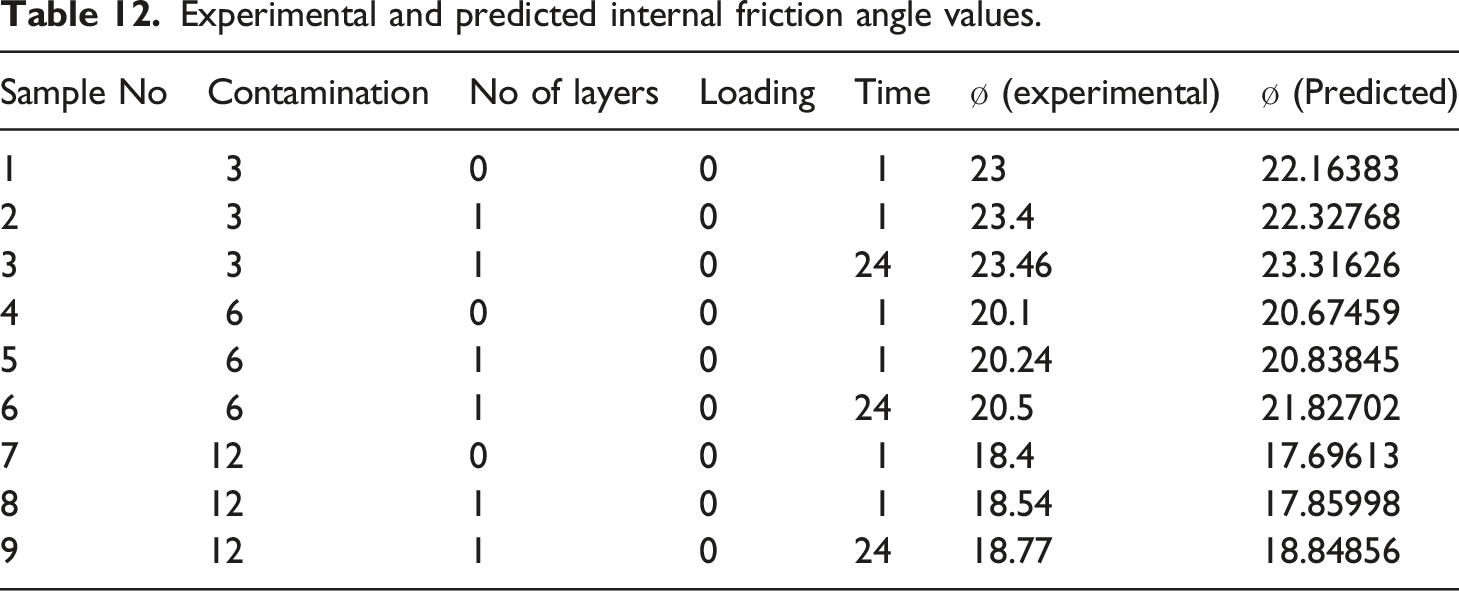
Experimental and predicted internal friction angle values.
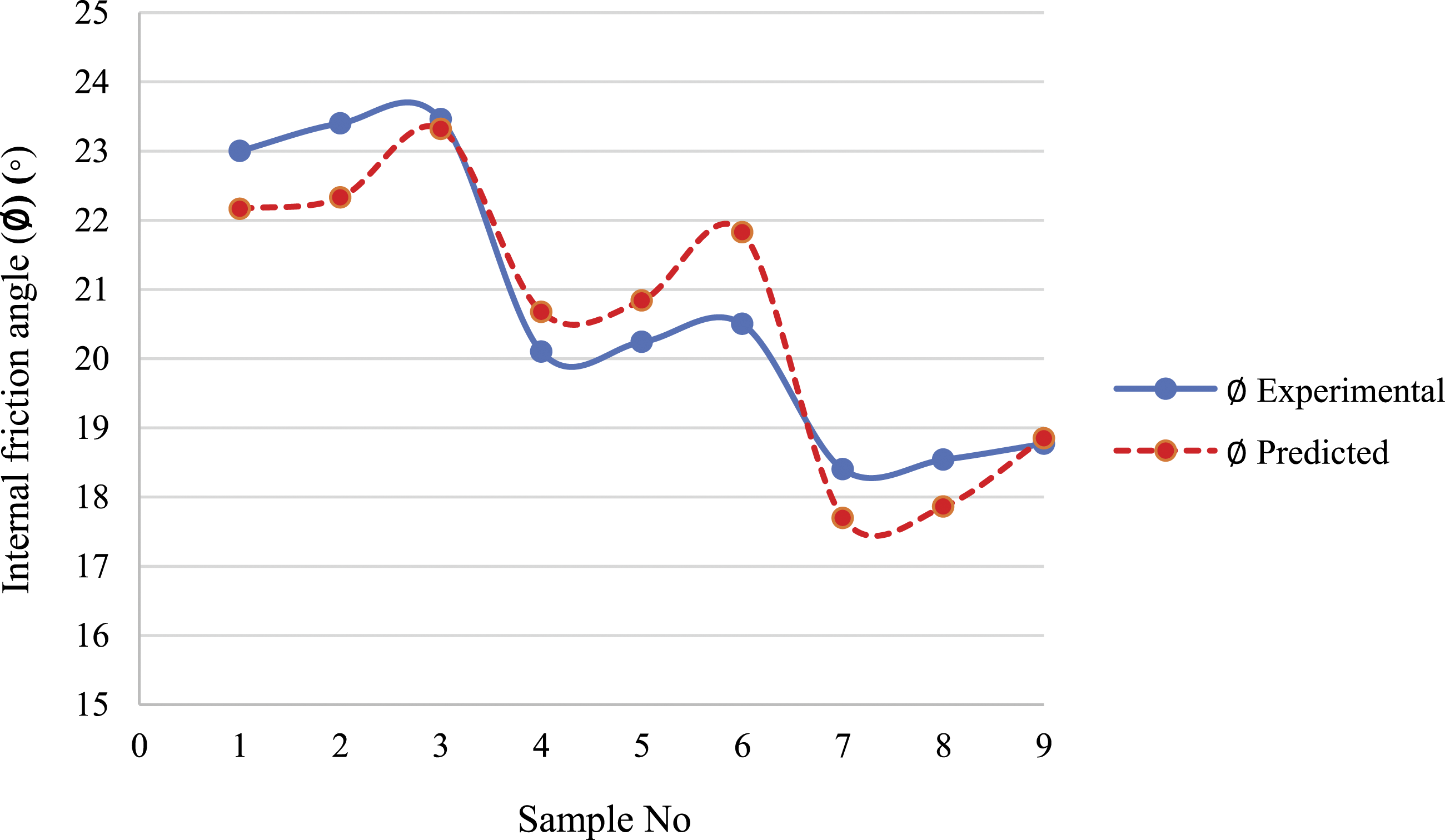
Comparison of experimental and predicted values of internal friction angle.
The effect of water in the system
The values of different internal friction angle in different contaminants percentages.

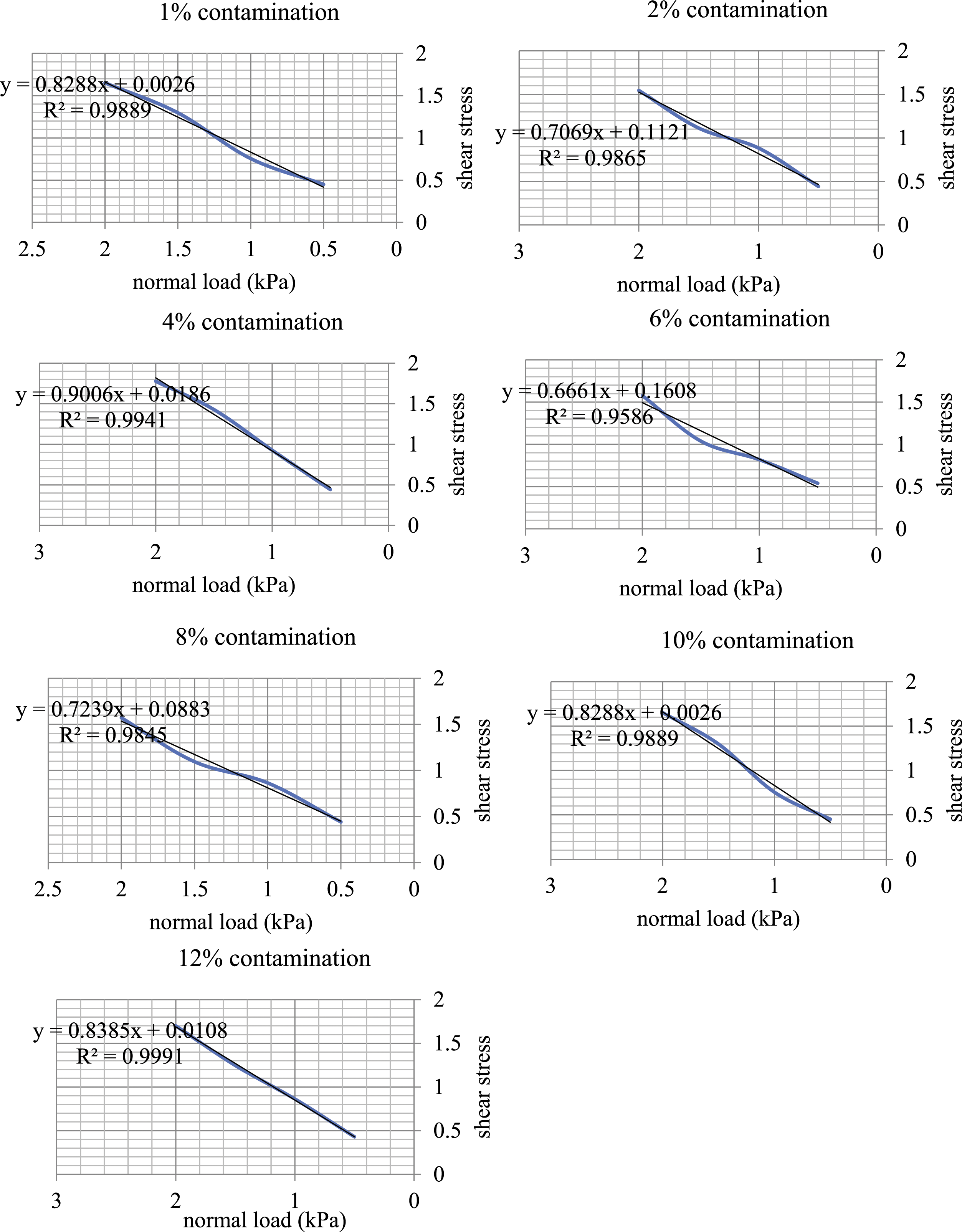
The behavior of internal friction angle in the different contaminants in saturated soil.
For unsaturated soils with 2% and 6% contamination, in different values of a normal load of 0.2, 0.5, 1, 1.5 and 1.7, the shear stress data were recorded and the values of internal friction angle were calculated. As the experimental data shows in Figure 10 The variations in the values of the internal friction angle are almost constant. The values of internal friction angle for unsaturated soils.
Conclusions
As the percentage of oil in the soil increases, the internal friction angle of the soil decreases, which in fact indicates the lubrication of soil particles due to the presence of oil. Also, increasing the number of geotextile layers leads to increasing the involvement of geotextile layers with soil grains, thus increasing the internal friction angle. The amount of load is directly related to the internal friction angle. Increasing the amount of loading has led to an increase in the involvement of soil materials with each other, locking of particles and increasing soil consolidation, and thus has increased the angle of internal friction. Also, placing geotextiles in the soil complex for a longer period of time has improved the increase in internal friction angle. By increasing the number of geotextile layers in the soil, oil absorption efficiency increases, which indicates more oil absorption from the soil. Also, the oil absorption efficiency has increased with the increase in the geotextile’s presence time inside the soil (from 1 h to 24 h).
The initial model was presented by enter method and then the effectiveness of the parameters was investigated by the stepwise method. Accordingly, four parameters, including contamination percentage, time, loading force and number of geotextile layers, are effective. In connection with checking the validation of the model or actual data, it confirms the high compliance of the proposed model with the data. Water was also identified as an influential factor in the internal friction angle.
The validity of the Mohr-Coulomb relation for contaminated soils will be investigated in our future work.
Footnotes
Declaration of conflicting interests
The author(s) declared no potential conflicts of interest with respect to the research, authorship, and/or publication of this article.
Funding
The author(s) received no financial support for the research, authorship, and/or publication of this article.
