




Abstract
The coronavirus pandemic (COVID-19) is currently the biggest threat to human lives due to its rapid transmission rate causing severe damage to human health and economy. The transmission of viral diseases can be minimized at its early stages with proper planning and preventive practices. The use of facemask has proved to be most effective measure to curb the spread of virus along with social distancing and good hygiene practices. This necessitates more research on facemask technology to increase its filtration efficiencies and proper disposal, which can be accelerated with knowledge of the current manufacturing process and recent research in this field. This review article provides an overview of the importance of facemask, fundamentals of nonwoven fabrics, and its manufacturing process. It also covers topics related to recent research reported for improved facemask efficiencies and testing methods to evaluate the performance of facemask. The plastic waste associated with the facemask and measures to minimize its effect are also briefly described. A systematic understanding is given in order to trigger future research in this field to ensure that we are well equipped for any future pandemic.
Introduction
The globe is facing an unprecedented situation with the rapid surge in the spread of novel severe acute respiratory syndrome coronavirus 2 (SARS-COVID-2) which causes acute respiratory disorder disease, widely known as COVID-19. The disease has been transmitted to 480 million people and around 220+ countries as reported by the World Health Organization (WHO) as of April 2022.
1
Generally, the spread of virus can be due to direct physical contact with emitted droplets, contact on surface where droplets were present, and aerosolization of emitted droplets.
2
The transmissions are related to the expiratory activities such as breathing, talking, singing, sneezing and coughing which spread through 3 major routes as represented schematically in Figure 1.3,4 The most common route of infection is due to the direct contact of an infected person with a healthy individual through hugging or shaking hands. In this mode of infection, no intermediate objects are involved. The infection which is caused due to virus containing coarse particle droplets (>5 μm) are generated within a range of 1 m distance comes under the category of droplet transmission. These droplets emitted by the infected person gets attached to the surfaces of the objects or can fall on nasal passages, mouth, respiratory tract or eyes and cause infection in close contact.5,6 The third mode of infection is due to fine droplets (<5 μm) that travels with air and if inhaled by healthy individuals leads to infection. The coronavirus remains viable for 3 hrs and floats in air for several hours as reported by Doremalen et al.
7
The virus mutations and asymptomatic patients are further aggravating the situation. In such circumstances masking, social distancing, and proper hygienic practices such as washing hands frequently has proved to be the most effective method to slow down the transmission. The entry point of the virus into the body is through angiotensin converting enzyme 2 (ACE2) which is a protein that regulates vasoconstriction and blood pressure. The virus effectively utilizes the ACE2 which leads to rapid human to human transmission.
8
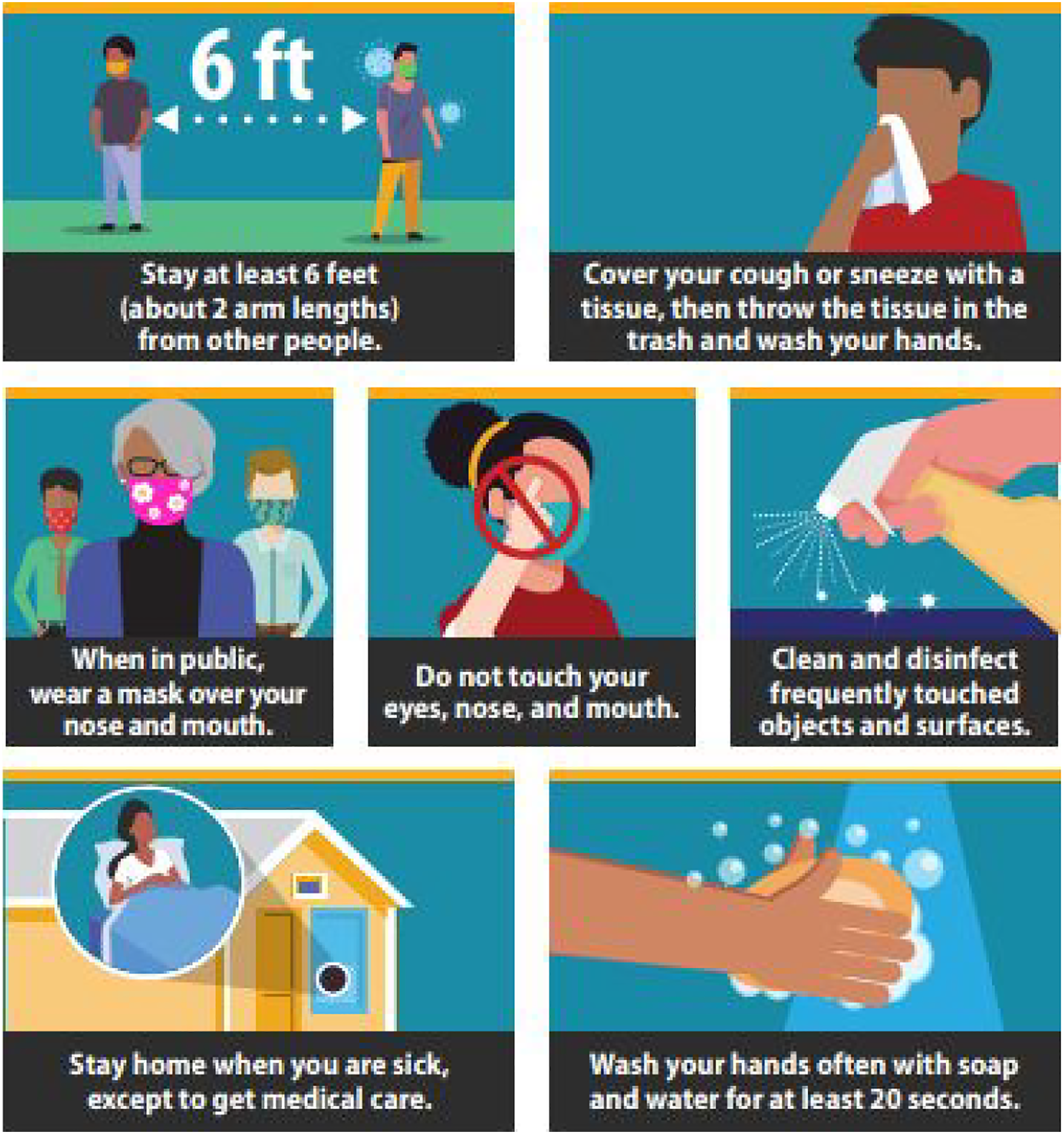
The situation is further aggravated with asymptomatic carriers who are oblivious of the fact that they are infecting others and contribute to around 40–45% of the total infections.9,10 There is an exponential increase in the COVID-19 cases which can be controlled with proper preventive practices as per guidelines given by Center of Disease Control (CDC) (see Figure 2). Facemasks, respirators, and personal protective equipment (PPE) are playing a key role in preventing the transmission of COVID-19, along with good hygiene practice and social distancing.
11
The authorities are trying their best to prevent the transmission by imposing nationwide lockdown and making facemasks compulsory in public places. Modes of transmission of SARS-CoV-2 through viral aerosols. Preventive measures to stop Covid-19 disease (Courtesy of the CDC).
The term facemask and respirators are often used interchangeably, however there are few technical differences. Respirators have a tight fit and provides two-way protection compared to the loose fit and one-way protection of facemasks. In assessment of the growing respiratory shortage, the authorities have recommended respirators, only to be used by frontline healthcare workers. Respirators have high filtration efficiencies, which are essential for healthcare workers since they are at high risk, evident from statistical data which indicates that a large percentage of infection are present among healthcare professionals.12–14 For the sake of simplicity, the term facemask is used throughout this article. Facemasks have become ubiquitous due to the pandemic with billions of people practicing masking. With the increase in demand, there is also a swift increase in the prices. This is considered beneficial to the society by few reports since more companies will speed up manufacturing for profit reasons alleviating the shortages in supply, whereas few reports call it as naked profiteering.15,16 The reuse of facemask should be considered as an effective means to curb the demand, however proper decontamination needs to be performed to serve the purpose of protection. 17
The importance of facemasks in this pandemic can also be estimated from the number of publications as given in Figure 3. The results obtained in the graph is by searching the keywords (a) “Facemask” and (b) “Nonwoven fabrics”. It can be seen from the graph that the number of publications on facemasks were almost consistent before the pandemic till 2019, however with the emergence of the coronavirus pandemic, it experienced a swift increase in the year 2020 and 2021. Nonwoven fabric, which is the main component for facemask fabrication, also experienced a similar trend with increase in the number of publications. Tremendous research efforts have also been made to curb the disease with over 289,665 document results with the keyword COVID-19 in the Scopus database. Facemask has a tremendous potential to curb the spread of virus-laden particles and thus has turned out to be a new normal during the current pandemic. The roll out of vaccines to the population is a boon for the society, however we are not getting rid of facemasks anytime sooner until it has been made clear about the vaccine efficiency in building the immune response, and doses has been given to the majority of the population which seems to be a long way down the road. Number of publications with keyword (a) “Facemask” (b) “Nonwoven fabric” from the year 2010-2021 from Scopus database.
The chaos witnessed at the beginning of the COVID-19 pandemic portrays the precarious situation we are currently witnessing. It reflects the careful planning that is required for any such future outbreak considering the present situation of viral mutations which makes present medication ineffective. Hence more research needs to be focused on rapid facemask manufacturing, improving filtration efficiencies, along with its proper use and disposal to fight the current pandemic, and to be well prepared for any future pandemic. The research on the topics mentioned can be triggered with systematic information regarding the basics of nonwoven fabrics, role of facemask in containment of infectious disease, the current materials and methods used, its testing and proper use, and disposal. However, after a thorough literature review, we found that very little information is available on these topics. This review article addresses the issue by covering the basics up to the most recent research reported along with proper testing, and disposal of facemasks. Section 2 deals with the importance and efficiencies of different facemasks. Section 3 is dedicated to the most common types of facemasks, materials used, and their filtration mechanisms. Brief information on the facemask fabrication techniques, which involves spun bond, melt blown, and electrospinning techniques, are provided in Section 4. Recent research on novel facemasks is summarized in Section 5. Testing methods involved to evaluate the facemask’s performance is given in Section 6. Problems associated with the facemask waste and its remedies is provided in Section 7 and 8, respectively. Summary and prospects are given in Section 9.
Importance and efficiencies of facemask for virus containment
The three modes of transmission can be successfully prevented through the use of properly fitted facemasks.
18
Maintaining a social distance of minimum 1.5 m is one of the best practices one can follow as prescribed by the authorities. However, a recent study by Bourouiba
19
revealed that the droplet from saliva and mucous can travel up to 8 m as shown in Figure 4, which is alarming considering the current social distancing practices. The study was conducted by high-speed cameras and is an important finding, suggesting need of more distancing which seems to be difficult in the present scenarios. Many reports suggest facemasks as an effective means of preventing the transmission, especially in public places by cutting the chance of direct contact with the coronavirus.3,20 For instance, it was reported that the SARS-Cov-1 transmission was reduced in Hong Kong by 64% by frequent use of masks in public settings.
21
The facemask will not allow outward transmission which provides protection to both wearer and surrounding people. Apart from limiting airborne transmission, it will also prevent unnecessary touching of mouth and nose, hence mitigating the disease since there are various uncertainties with regards to asymptomatic carriers and virus transmission which is more detrimental to people with weak immunity or pre-existing medical conditions.22,23 Distance travelled by a human sneeze.
19

Community transmission can be effectively reduced if everyone, including those who are perfectly healthy, practices wearing facemasks at places where there are high chances of transmission. There are many factors which affects the efficacy of the facemask in preventing the outward transmission, which include facemask fitting, number of layers, and coverage area.3,24 It is vital to understand the effectiveness of the facemask in order to prevent the outward transmission of infectious diseases. For that purpose, many studies were conducted using simulated breathing which can determine the particles emitted in the range of 0.02–1 μm, all these studies indicate effective reduction in the transmission of aerosolized particles in all types of facemask from homemade cotton facemasks to surgical facemasks.
4
However, a recent study by Asadi et al.
3
reported the efficacy of different facemask types during various activities like breathing, speaking, and coughing using an aerodynamic particle sizer (APS, TSI model 3321) as shown in Figure 5(a) They used different facemasks such as KN95, N95, surgical, and homemade facemasks as demonstrated in Figure 5(b). The APS is used for counting the particle size with best efficiency in the range of 0.5 to 20 μm. Their finding indicates that KN95, N95, and surgical facemasks were more effective in reducing the emitted particles, whereas wearing homemade cotton-based facemasks led to even more particle transmission. This is due to the shredding from the fiber fragments which can contribute more to the spreading of infectious disease due to re-aerosolization.25–27 The homemade facemasks were washed and tested again for number of particles which also does not show any significant improvement in reducing particles emission, ruling out the possibilities of fresh debris and unfixed fibers on the surface of the facemask contributing to increased particles. The number of particles emitted per second by the volunteers wearing different facemasks and activities is given in Figure 6. The facemasks are only effective if there is a proper fit and coverage of nose and mouth. Recent studies indicate the use of nylon stocking as a cover on surgical facemasks for improving the particle removing efficiency up to 90% compared to 50–70% without the use of nylon sheets.
28
Also double masking has also proved to be improve the filtration efficiency as compared to single masking.
29
Particle emission rates associated with (a) breathing, (b) talking, (c) coughing, and (d) jaw movement when participants wore no mask or when they wore one of the six mask types considered. Scheffe groups are indicated with green letters; groups with no common letter are considered significantly different (p < 0.05). surgical; KN95: unvented KN95; SL-P: single-layer paper towel; U-SL-T: unwashed single-layer cotton t-shirt; U-DL-T: unwashed double-layer cotton t-shirt; N95: vented N95. Note that the scales are logarithmic and the orders of magnitude differ in each subplot.
3


It is worth mentioning that there are few experts who are not in the favor of using facemasks. Their arguments are based on the logic that the public will not be able to be compliant with the facemask for longer periods, along with issues related to proper disposal and safe facemask use. Some also argue masking will give rise to a false sense of security that will lead to improper measures of hand hygiene and physical distancing. Universal facemask wearing also leads to exponential increase in waste since it is estimated that over 129 billion facemasks have been used every month around the world, which eventually ends up contributing to landfills or being dumped in water bodies. Considering a more pragmatic approach, masking can largely prevent the outward transmission, and to minimize the ill effect of facemasks, awareness programs for responsible masking should be provided by the authorities.
Facemask structure and its mechanism
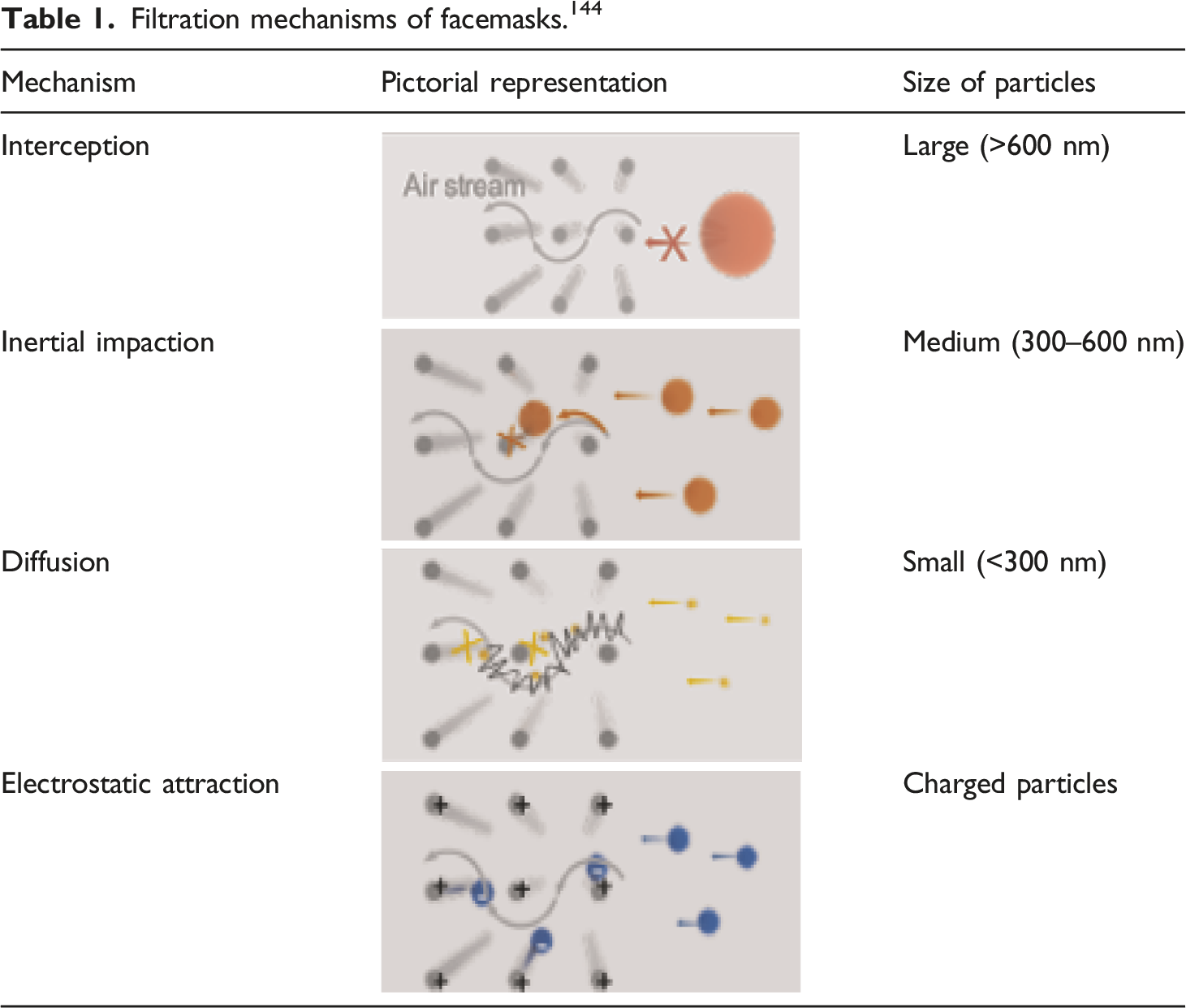
Filtration mechanisms of facemasks. 144
Facemask type and materials
In this section the most common types of facemasks, materials, and fabric layers are described briefly. The most common types of facemasks, their layers, and SEM image of filtration fabric layer is given in Figure 7. Common facemask types (Surgical, N95,
119
and cloth) and their components.
N95/KN95 or KF94
N95 facemasks are most effective to prevent transmission of airborne diseases and liquid contamination as reported by the Centre for Disease Control and Prevention (CDC) National Institute for Occupational Safety and Health (NIOSH) and the Occupational Safety and Health Administration (OSHA). 34 The facemask is 95% effective for particles sized ≥0.3 mm due to its structure and multiple layers. The structure involves the main component of nonwoven melt blown polypropylene fabric layer with electrostatic charge deposited on it, which is estimated to increase the filtration efficiency by 10–20 times. 35 The outer layers are made up of spun bonded polypropylene nonwoven fabrics. Just after the filter layer, a support made up of modacrylic fabric is provided for stable shape and proper fit. The proper fit is most essential for healthcare professionals while dealing with confirmed infected patients. 36 Owing to the tremendous demand in healthcare settings, it is recommended by the CDC that these facemasks should be used only by frontline healthcare workers who are more exposed to infection and needs more effective respiratory protection, compared to the general public. 34 Considering the present situation, the inventor of N95 facemask has proposed techniques to clean and reuse the facemasks. These techniques include either direct heat treatment or steam treatment. They recommend the reuse of facemask in 3 days alternating cycles since evidence suggest that the virus cannot survive on plastics for more than 3 days. However it should be noted that these recommendations are not yet approved by regulatory agencies and should be practiced depending on the situations. 7 In a recent report by Wang et al., 37 they showed an effective way to decontaminate and regenerate electrostatic charge using a hot water treatment and hair dryer respectively. They showed that the essential filtration performance was maintained up to 10 cycles which can help reduce plastic pollution and facemask scarcity using a simple approach. Another study by Kim et al. 38 reported reusing facemask without any significant decrease in the performance using an autoclave.
Surgical facemask
A surgical facemask or medical grade facemask is the most popular choice among the public considering its low cost and adequate protection for public places. Surgical facemasks were intended to protect patients with open wounds during surgery from the bacterial infection exhaled by the team performing the surgery. Surgical facemasks have been tested for its effectiveness with Staphylococcus aureus pathogen before it came under use in the healthcare sectors. The size of the virus is around 120 nm which is way smaller than the pathogen used for testing for effectiveness. However, it is still logical to use surgical facemasks since the virus is on droplets which makes the size of virus insignificant. The surgical facemask is a loose fit facemask and should not be worn for more than 8 hrs. The facemask should be immediately discarded if damaged or wet to avoid self-contamination. 39 The most common surgical facemask consists of three layers: the mid layer is a melt-blown nonwoven fabric, and the outer and inner layers are usually made up of spun bonded fabrics which has the function to provide support and avoid direct contact with the melt blown nonwoven filter fabric. The inner layer is usually made up of soft fibers which are directly in contact with the skin to avoid skin irritation, whereas the outer layer is water resistant. A surgical facemask can be fabricated from various materials such as polypropylene, polyurethane, polyacrylonitrile, polystyrene, polycarbonate, polyethylene, polyester, and cellulose. 40
Cloth facemasks
CDC recommendation for fabric-based facemasks.

Facemask’s fabrics fabrication techniques
Different methods of fabric formation and its structure.

The nonwoven fabric layers for facemasks fabrication consist of polymer extrusion process with spun bond and melt blown techniques. Electrospinning is also widely used for better filtration efficiency. All these techniques will be discussed in this section.
Spun bond
Spun bonding technique involves simultaneous and integrated operations of filament production, web formation, and bonding. The integrated operations makes spun bonding process one of the shortest routes to produce fabric directly from polymers, hence reducing cost and time.
49
The spun bonded system works on the basis of solidifying the filaments from the spinneret and laying onto conveyor belt, followed by consolidation for strength enhancement via mechanical, thermal, or chemical bonding. The steps involved in the spun bond process is represented in Figure 8. The main components involved in a spun bond process is an extruder, filter, metering pump, spinning block, quenching, web forming, bonding, and winding as shown in Figure 9. The polymer is introduced from the hopper to the extruder, consisting of barrel and screw, which helps in forming homogenous molten melt and guides to the gear pump through filters. The filtration step is important to form high quality filaments and fabrics. The entire process usually consists of two filtration steps: one before the metering pump and another during the spinning block. The filter selection is very important and should be selected meticulously so that the filter does not damage the melt or disturb the melt flow.
50
The spinning block consist of spin block body, spin pack, and spinneret. The most important component is the spinneret, which consists of thousands of orifices drilled inside a metal block. Many such spinnerets are placed in series in order to produce larger webs. The length of the orifice depends on the pressure exerted by the metering pump, and the quality of the spinneret have a considerable influence on the web quality. The filaments emitted from the spinneret are cooled with conditioned air. The filaments are drawn in order give molecular orientation to enhance the strength after the bundle of filaments are deposited on the moving belt to form the web. A suction box is presented below the belt to help form uniform webs. The filaments can be separated by various forces such as mechanical, aerodynamic, or electrostatic before reaching the belt for uniformity and coverage.
51
The pore size distribution and separation between the filaments can be calculated by using bunching coefficient which is very important for facemasks material and surgical gowns.
52
The bunching coefficient can be calculated based on equation (1). Steps involved in Spun bond process. Schematic of spun bond process.
11



The characteristic of the final fabric is dependent on the direction of the laid filament which can be controlled by traversing the filament bundles aerodynamically or mechanically when deposited on the collecting belt (see Figure 9). Bonding method can be classified into 3 categories which include chemical, thermal, and mechanical bonding. In chemical bonding, the fibers are consolidated with the help of chemical adhesives. Thermal bonding process is different for thermoplastic and thermoset fibers. For thermoplastic fibers, bonding can be achieved by simply heating and cooling the fibers, whereas in the case of thermoset fibers, a low melting thermoplastic polymer is used to bind the fibers together (see Figure 8). The mechanical bonding method involves intermingling of fibers via needle punching or hydroentanglement process. The most common polymer for fabrication of outer layer of facemask is polypropylene which is a low melting thermoplastic polymer, hence bonding these fibers using thermal bonding is easier and saves unnecessary cost. 53 Spun bonded technique is one of the most durable techniques and is expected to grow in the future with growth in the market for products in the medical sector.
Melt blown process
Melt blown process is a single step process in which a stream of molten polymer is exposed to hot and high velocity air to form web structures consisting of microfibers. Polypropylene is the most common polymer used in melt blown process due to its low melt viscosity that makes the polymer pass easily through the micro holes. The schematic of the melt blown process is given in Figure 10. The polymer in the form of beads, chips, or granules is fed to the extruder where it is heated for melting until suitable viscosity is reached.
54
Various additives can be added to improve the performance of the polymer as listed in Table 4. The polymer is melted and extruded from the spinneret. The high velocity air (primary air) helps in drawing to form the microfibers, the air should be hotter than the polymer melts in order to maintain the liquid state of the polymers. The air stream fractures the polymer stream and creates microfibers which begins to entangle. The surrounding air (secondary air) cools the microfibers as they fall into the receiving roller. The fibers get entangled and solidified and hence no bonding is needed unlike that of the spun bonding process. The web produced has a high surface area and smaller pore size due to microfiber entanglement, hence acts as an excellent filtration material widely used in all types of commercial facemasks. Another apparatus to improve the filtration efficiency is by using corona charging to induce electrostatic charge on the nonwoven fabric material. The apparatus consist of high voltage power supplier and the fabric is allowed to charge for 30 s under a voltage of 18 kV.
55
Schematic of the melt blown process.
55
Additives used in melt blown process and its functions.

Electrospinning
Electrospinning is a process by which a polymer solution or melt can be spun into smaller diameter fibers using a high potential electric field. Electro spun nanofibers are more efficient when it comes to filtration efficiencies of the facemask given their nano meter size, high surface area, smaller pore size, and number of pores. The average diameter of electro spun fibers is in the range of 100–500 nm. Electrospinning process has a relatively simple setup as shown in Figure 11. The major component is the syringe pump and collector. A high positive voltage is applied to the syringe pump and the collector is connected to the ground. The collector can be made of any shape and could be stationary or rotating, such as flat plate or rotating drum. The formation of nanofibers is due to the electric force between the polymer solution and the collector plate, which stretches the solution flowing through the syringe pump and the solvent evaporates. The stretched fibers formed are attracted toward the collector plate which is connected to the ground. There are various parameters which can be varied to change the morphology of the fibers, including applied voltage, nozzle collector distance, flow rate of syringe pump, and spinning environment. There are various reasons why instability in the fiber forming process might happen which are related to the electrostatic field and material properties. The region from which the jet is initiated with application of high voltage determines the instability of the electrospinning process. The increase/decrease in the voltage changes the spinning current, which directly influences the shape of the jet initiation point and in turn affects the fiber morphology. Generally, it is considered that increase in the voltage leads to increase in the fiber length and decrease in the fiber size. The distance between the nozzle and the collector has a substantial effect on morphology, structure, physical, and chemical properties of electro spun fibers since it directly influences the evaporation rate of the solvent and deposition time. It is more likely to get a beaded structure if the distance is not sufficient. Also the morphology changes from circular to flat shape.56,57 It is recommended that the distance between nozzle and plate should be high when the polymer is dissolved in water.
58
The polymer flow rate from the syringe pump also affects the polymer morphology. For instance, the increase in the flow rate leads to increase in the beaded morphology.56,59–61 Comparison of melt-blown and nanofiber filters was investigated for reusability, where nanofiber filters exhibited consistent high filtration efficiency and superior cytocompatibility.
62
Electrospinning is a promising route for fabricating facemasks with excellent filtration efficiencies and breathability. However, the electrospinning setup is not suitable for large scale production of nanofibrous mat required to fabricate facemask filter materials. A modification of conventional electrospinning technique known as needleless electrospinning can be used which gives nanofibers with the similar properties as conventional electrospinning technique.
63
For instance a fully biodegradable facemask filter layer was made by Patil et al.
64
a facemask with antimicrobial properties using polylactic acid polymer. The NLES technique although looks attractive for commercial manufacturing of nanofibers, however maintaining homogeneity and fiber quality is difficult hence needs further investigation.
65
A brief comparison is made between melt blown and electrospinning technique for filter layer fabrication of facemasks in Table 5 to highlight the important features of each of these techniques. Schematic of electrospinning setup.
152
Comparison between melt blown and electrospinning method for filter layer fabrication of facemask.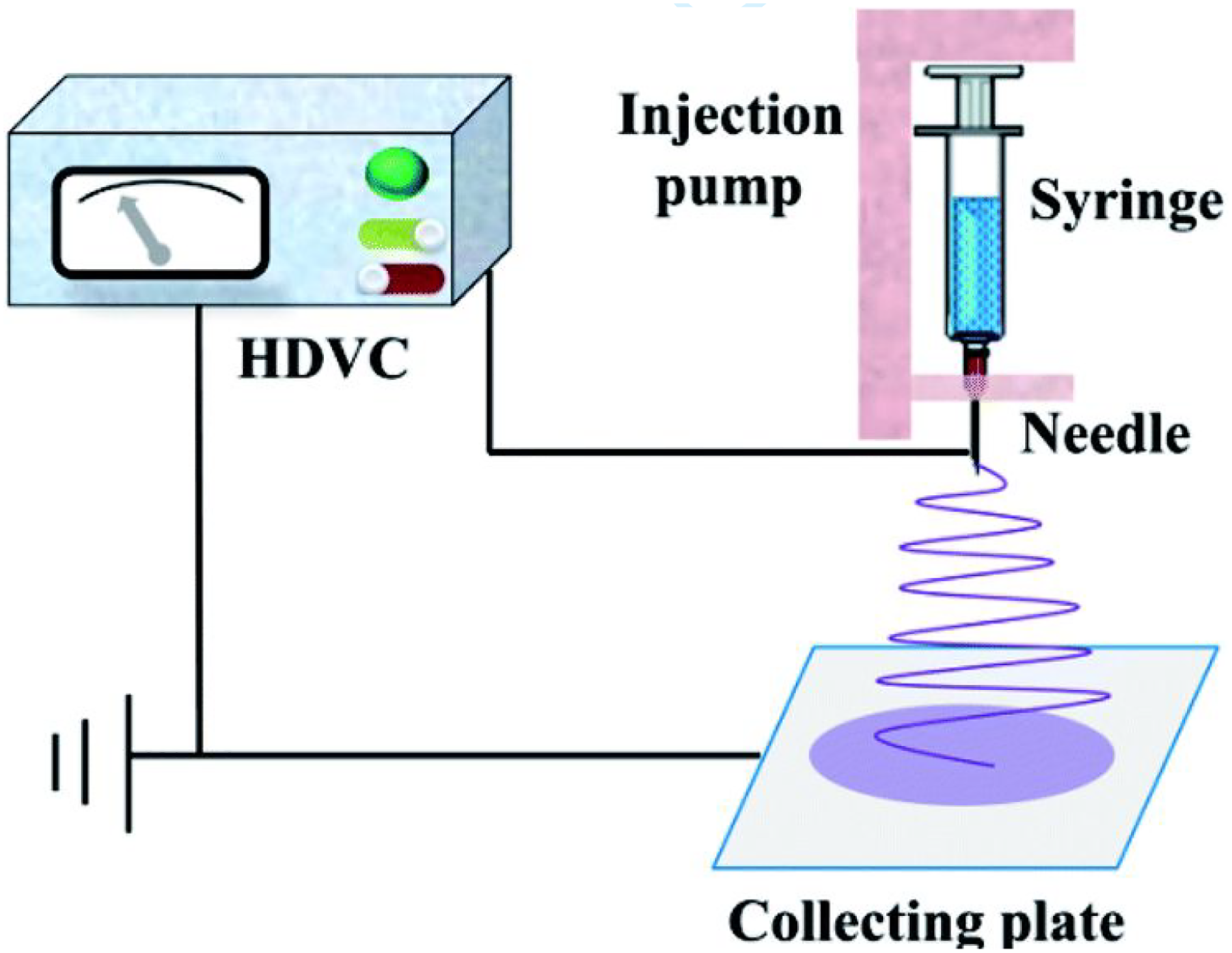

The recent development on facemasks
Conventional facemasks are effective to curb the spread of virus-laden particles, however there are few concerns related to sustainability, secondary infections, and filtration efficiencies. Also, the most widely used disposable facemasks generate huge quantities of non-biodegradable hazardous landfills since they are designed for single use.11,66 Research on sustainable facemasks with antibacterial properties are gaining rapid momentum. 66 Antimicrobial facemasks kill the microorganism in real time providing protection to the wearer and reduces the chance of re-aerosolization, preventing secondary infection which is very important to control since the virus are stable on plastic surfaces for 2–3 days as reported by Doremalen et al. 7 The antimicrobial properties are imparted to the facemask by the addition of antimicrobial agents which can be in the form of films, coatings, beads, and nanoparticles. 67 There is a variety of materials that can be chosen to impart antimicrobial activities which includes metal and metal oxides, antimicrobial polymers, substances derived from natural medicinal plants, and graphene-based compounds. Among metal particles, silver nanoparticles presents unique optical, physio-chemical, and biological properties, and is used as an antimicrobial agent from ancient times.68,69 When treated with silver particles, improvement in the antibacterial activity of commercial facemasks was seen. Additionally, the reusability of face masks can be achieved by cleaning treatment with ethanol.70,71 Although the facemasks incorporated with silver nanoparticles shows excellent antimicrobial activities, there are certain problems associated, such as detachment of Ag particles from the fabric surface and agglomeration. 72 To overcome these issues, certain techniques can be implemented, such as fabricating bilayer fabrics or composite,72,73 combining melt-blown and electrospinning process to improve the attachment of Ag particles on the surface of nanofibers, or using in situ techniques and fiber surface modification.74,75 Recently, Hamouda et al. 76 used silver nanoparticles on cloth-based facemask and showed that silver can be effectively used as an antiviral agent. They also showed that wearing this cloth based antiviral facemask have high air permeability showing excellent comfort values. Other metal-based antimicrobial agents include compounds of copper, tungsten, magnesium, and zinc also have antimicrobial properties as reported by many studies.77,78
Antimicrobial polymers are another class of materials with contact killing abilities. These materials are classified as bio-passive and bio-active polymeric materials. Bio-passive polymeric materials act as a repellent to prevent bacterial adhesion, whereas the bio-active polymeric material kills or deactivates the micro-organisms present on the surface. Bio-active polymers are functionalized with active moieties of metal compounds, quaternary ammonium compounds, antimicrobial peptides, and antibiotics.79,80 Substances extracted from natural sources also have antimicrobial properties. These substances include extracts of Punica granatum, 81 Acacia nilotica, 82 Allium sativum, 83 Vitex trifolia, 84 Andrographis paniculate,85,86 Sphaeranthus indicus, 87 Strobilanthes cusia, 88 Chromolaena odorata, 84 Azadirachta indica, 89 and Aloe barbaenis. 90 An antimicrobial facemask was made by spray coating mangosteen extract on commercially available facemask with 97.9% bacterial filtration efficiency (BFE) with 5% w/v ratio by Ekabutr et al. 91 Another study by Kubo et al. 92 reports the fabrication of three-layer antibacterial facemask, in which the outer layer was made up of nonwoven polypropylene while the inner layer was made up of cotton. The mid filter layer was made from plasma modified fabric with Scutellaria baicalensis microcapsule incorporated for antimicrobial activity. Another study reports a bio-based antiviral facemask based on enzyme mediated modification of nonwoven cellulosic fabric with catechin polyphenols. 93
Recent research on facemask fabrication.

Tests to evaluate facemask’s performance
The increase in the demand for facemasks is growing rapidly with many industries and researchers working on more effective facemask manufacturing. Standardized test methods are essential to ensure safety and wellbeing of all living organisms and need to be carried out with strict regime. The FDA has issued ASTM standards which include ASTM F2100-11 (2011).
105
Filtration efficiency is considered as the most important parameter from the NIOSH, and healthcare workers are advised to use the facemasks after NIOSH approval for maximum protection during close contact with patients suffering from aerosol transmissible diseases.
106
NIOSH is considered as more stringent testing, which is essential for N95 facemasks, whereas surgical facemasks are approved by the FDA after evaluating the test information provided by the manufacturer. There are various standard methods used to evaluate the performance of facemasks. A pictorial representation of the tests is given in Figure 12. Each of these tests have a specific role to determine the overall performance of the facemask which will be discussed in this section. Pictorial representation of facemask testing methods.
NIOSH standard testing
The certification for facemask effectiveness can be obtained by following NIOSH standards which conducts valve leak, Dioctyl Phthalate (DOP) test, NaCl, and inhalation/exhalation tests.
107
NIOSH is the most common techniques which make use of sodium chloride aerosol.
108
The NaCl aerosol are non-toxic, uncharged particles with a size rage of 10 nm–10 um with an average diameter of 300 nm.
109
The illustration of the testing setup is given in Figure 13. The test specimen is contacted with the aerosol, formed inside the aerosol mixing chamber with the flow rate maintained at 28 liters per minute.
24
The term Cu and Cd represents the aerosolized particles passed from upstream and downstream, respectively. NIOSH filtering setup illustration.
24

Fluid resistance
Fluid resistance test is to evaluate the ability of the facemask to prevent the penetration of fluid from outer to inner layer of the facemask. The fluid resistance of surgical facemasks and N95 surgical facemasks is evaluated by ASTM standard technique F1862 in which the material is tested for resistance to penetration of synthetic blood.110,111 The testing protocol involves passing a fixed volume of high velocity synthetic blood through the test materials. The schematic of the test setup is given in Figure 14. The penetration is dependent on various factors such as morphology and nature (hydrophilic or hydrophobic) of the facemask material along with the properties of fluid which include polarity, viscosity, and surface tension. The wetting characteristics of the synthetic blood can be tuned by adjusting the surface tension. The surface tension of synthetic blood is approximately 0.042 ± 0.002 Nm−1 according to ISO standards.
112
Schematic of fluid resistance test, 1: air line from supply to the controller, 2:EFD 1500 XL valve controller, 3: valve control switch, 4: targeting plate, 5: transparent plastic box, 6: hinged door with sample holding fixture, 7: air line from supply to the fluid reservoir, 8: fluid reservoir pressure gauge, 9: fluid reservoir (mount on bench top with base level to base of sample holding table), 10: fluid feed from the reservoir to the valve, 11: valve mounted on a ring stand mount with canula, 12: air line from controller to valve.
112

Flammability
Flammability test is of utmost importance for facemasks that is supposed to be used in hospitals, given that hospitals are at high risk of fire accidents due to the presence of highly flammable substances (fuels and oxygen cylinders). It is desirable that the materials used in facemasks should have very low flammability. It is required that a facemask material should not maintain the flame more than few seconds after it has been ignited. The time required for a facemask material of 127 mm (5 inches) to reach the flame is calculated. The flame spread test calculates the time needed for a flame to reach the facemask.
Breathability
Breathability is the most important factor when it comes to comfort properties of a wearer especially for health care professionals since they wear the facemasks for prolonged period, hence it is very important that the facemasks manufactured have good breathability of the facemask can be estimated by differential pressure test. The differential pressure test indicates the air flow resistance of the fabric. In this test the air is passed through the fabric in a controlled manner and pressure is calculated at inner and outer layer of the facemask. The differential pressure value is divided by the surface area to estimate breathability. The lower difference in the outer and inner surface of the fabric indicates good breathability whereas higher difference indicates lesser breathability. The ∆p value can be calculated by equation (2).
The standard specification requirement according to ASTM F2100-11 demands a minimum delta p value of less than 5.0 mm H2O/cm2.
Filtration efficiencies
The filtration efficiencies are measured for three entities which is particulate filter efficiency (PFE), BFE, and virus filtration efficiency (VFE). These are the three main causes of infection; hence it is imperative to test for all these entities for maximum protection, especially for healthcare professionals who are in close contact with infected patients. The PFE and BFE is dependent on the material filtration efficiency to act as a barrier against aerosols. The filtration efficiency is assessed using equation.24,113
Particulate filter efficiency
The Particulate filter efficiency (PFE) is evaluated by using different particle sizes using polystyrene latex particles which gives precise evaluation of submicron efficiencies. The latex particles are dispersed in water and aerosol is generated with the aid of a particle generator. A particle counter downstream is used to count the number of particles. The standard protocol is to precondition the test materials at 30–50% humidity and 21 ± 3°C. The velocity should be around 1 cm/s to 25 cm/s and full area for N95 facemasks, while just 90 cm2 area for surgical facemask materials. The concentration of the aerosol can be controlled in the range of 10,000 to 15,000 particles with the help of drying chamber. The facemask performance is evaluated based on the PFE value which varies from 1–99%, in which 1 represents minimum efficiency and 99% demonstrates maximum efficiency. The minimum filtration efficiencies should be 0.30 for facemasks. The PFE is given by equation (3).
Bacterial filtration efficiency
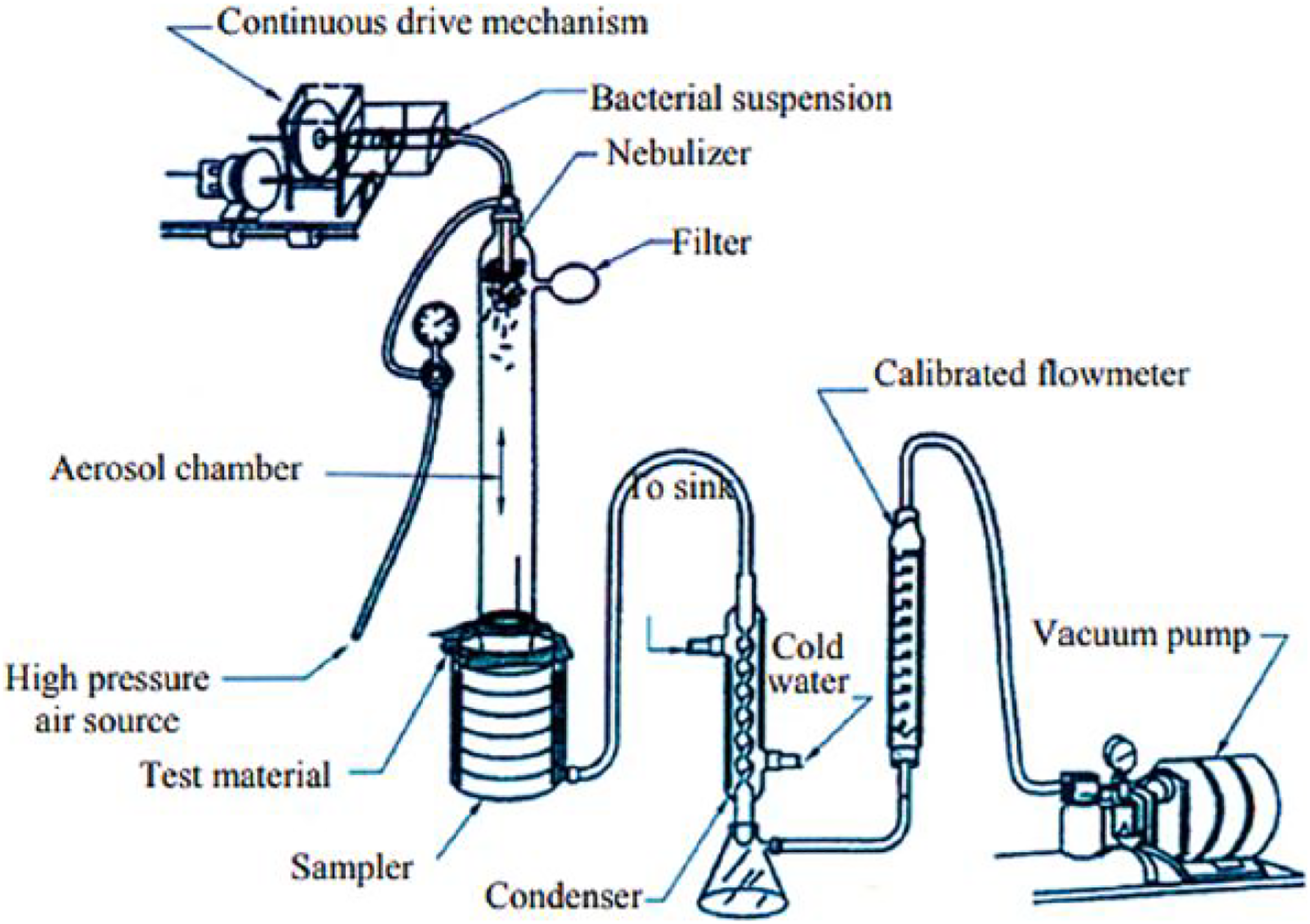
Bacterial filtration efficiency (BFE) is conducted according to ASTM F2101 which evaluates the capacity of facemasks to stop bacterial aerosol droplets transmitted through coughing, speech, and sneezing. The size distribution of these particles is between 0.6um to thousand microns.114–116 The filter material is clamped between the six-stage cascade impactor and an aerosol chamber. The bacterial aerosol (Staphylococcus aureus) is introduced in the chamber and is passed through the filter materials using the vacuum that is attached to the cascade impactor. The air flow rate is adjusted to 28 L/min and the bacteria suspension is conducted to the nebulizer for 1 min and the sample is exposed for 2 mins. The schematic of the BFE test prescribed by ASTMF2101 is given in Figure 15. The colonies forming unit (CFU) should be maintained at (2200 ± 500) CFU per test to avoid discrepancies during the testing.
117
The BFE is given by equation (4). Graphical representation of the BFE test instrument (ASTM F2101 - 01).
The number of the particle units per test is specified through the ASTM F2101 protocol. The BFE values are in the range of 1–99% and it should be at least 0.95 for medical facemasks. The BFE filtration values should be greater than 98% for medium to high protection. 118
Viral filtration efficiency
Viral filtration efficiency (VFE) is of utmost importance since it is the reason of many epidemic infections including the SARS-COVID-19. Viruses are within bioaerosol particles with the size diameter of 20–300 nm which have the ability to rapidly enter in the body via mouth, nose, or eyes. Virus penetration test is based on ASTM F1671 is used to evaluate resistance of a protecting materials against viruses. The test gives a pass or fail results. The test setup to perform VFE test is represented schematically in Figure 16.
119
The sample is located between the upstream and downstream, and the penetration of the aerosol is evaluated for both inside and outside of the materials. The penetration value is dependent on the fraction of particles of a certain diameter that can penetrate and pass through the materials.
109
The filtration capability can be evaluated based on assigned protection factor (APF) which expresses the ability of the filtration materials in preventing the exposure in conditions similar to workplace in which the materials is supposed to be used. The APF factor is given by equation (5). Test setup for viral filtration efficiency.
119



The penetration of the materials can be calculated by equations (7) and (8).
121


For equation (8), C1 and C2 present the aerosol concentration in front of the filter and behind the filter, respectively, and C0 stands for the aerosol concentration photometer reading for clean air. The size distribution and concentration of particles can be measured by the combination of three instruments differential mobility diameter (DMA), laser particle spectrometer (LPS), and the condensation particle counter (CPC) which is collectively known as wide range particle spectrometer (WPS). The particles with diameter 100–500 nm can be counted using DMA and CPC. DMA is considered as the most effective technique to evaluate particle size distribution which is in nano range for SARS-CoV-2. 122
Fit test
Fit test can be considered as one of the major factors which determines the efficiency of the facemasks, since if the fit is loose the aerosol particulate can enter without any barrier, making the use of facemasks ineffective. The fit test is performed to avoid any leakages existing after fitting the facemask for maximum safety. The fit test can be performed for quantitative or qualitative analysis. The qualitative test is like a pass or fail test in which the candidate wears a facemask and is covered inside the hood, a solution containing sweet or bitter taste is passed inside the hood.
123
If the candidate can sense the taste it means that the facemask fit is not properly fitted and there are chances of external leaks.
124
In case of quantitative tests, an electronic equipment is used to calculate the efficiency of facemasks numerically. The fit factor is calculated using the equation (9).
Rapid surges in plastic waste and its short-term and long-term effects
Estimation of medical waste in the hospital with confirmation of infected COVID-19 cases. 1

Moreover, personal hygiene, wearing facemask, working from home, and social distancing are the protocol to prevent infection. COVID-19 lifespan is more stable on the surface of materials, for example, glass, banknotes, plastics, stainless steel, papers, wood, and clothes.7,126,133 Therefore, uses of single-use PPE, plastic packaging, cutlery, and plastic bags especially in food delivery have gained importance in order to achieve hygienic superiority and reduce the risk of virus transmission during home quarantine and national lockdown. 130 Awareness of COVID-19 pandemic with hygienic superiority in the new-normal lifestyle. Estimated daily use of facemask with confirmation of infected COVID-19 cases is shown in Table 7. Total daily use of facemask would have reached 7 billion pieces in each day and might keep increasing during the pandemic.
The rapid number of confirmed COVID-19 cases dramatically enhanced the quantity of single-use PPE as the most reliable and affordable defense against the infection and transmission of the virus, and also increase of food delivery market would result in the numerous plastic waste generation.130,134,135 Notably, a single-use facemask is composed of plastics and other materials, which influences low recyclability.
130
Also, Polylactic acid (PLA) packaging is considered as biodegradable polymers, but there are some limitations to degradation where industrial-scale composters are required.130,136 Additionally, high demand for and use of PPE and plastic products during the pandemic of COVID-19 subsequently increase waste generation and improper waste management. These could impact the terrestrial and marine environments, consequently affecting the biota.133,135 Infectious wastes or medical wastes such as contaminated facemask, gloves, and materials for diagnosis, detecting and treating of COVID-19 are suspected to contain pathogens. These wastes can cause the spread of virus, harm to human health, and pollute the environment if there is improper waste management, for example, in the stages of pre-treatment, segregation, storage, delivery, collection, transportation, and disposal.131,135,137 Also, used facemasks and gloves from households, workplaces, public transportation, shops, and supermarkets could be mixed with municipal waste in the waste bin, which is possibly contaminated.
138
Figure 17 shows the environmental impacts of PPE during the COVID-19 pandemic.
As known, plastic waste directly affects animal and plant life, therefore PPE waste is considered as environmental pollution. Disposable facemasks are a potentially high source of microplastics since its production has scaled up during the pandemic.138,139 Microplastics can cause marine pollution, where there is high possibity of human exposure through the ingestion of food chain or air inhalation, for example, seafood, sea salt, and tap water. 126 Futhermore, Adyel et al. 140 has reported on the improper disposal of facemasks in nature at 1% can be translated into more than 10 million items, and weighing up to 40,000 kg. These wastes could induce virus transmission and affects the environment by contamination in air, water, and food.
Preventive measures
According to the COVID-19 pandemic where confirmation of infected cases is above 100M cases, developing a long-term plan for plastic waste is necessary. 135 Common techniques of plastic waste management are recycling, incineration, and landfilling. The estimation of global mechanical recycling rate of plastic waste is 16%, while 25% and 40% are observed in incineration and landfilling, respectively. The rest of 19% is improper management, which leakage into the environment. 130 Accumulation of plastic about 155-265 million tons in natural environment is predicted to be achieved by 2060. 126
Based on the different waste management practices, developing countries confront a higher risk of contamination than developed countries. Developed countries have green and sustainable waste management, which contributes to reducing of virus spreading. Conversely, waste in developing countries is mostly disposed to insecure landfills and dumping ground, where ragpickers or animals could visit and contacted with the contaminated waste.128,135 However, PPE and medical wastes need to be treated by incineration and secure landfill. Incineration with a high temperature above 850°C is a method to destroy the trace of virus and dispose of the medical waste. These medical wastes also can be treated with high-temperature sterilization and boiling before landfills.131,138 Even though incineration can be treated as an immediate solution during the pandemic, but incineration of PPE and medical waste has increased the load on incineration facilities. For instance, medical waste has increased from a normal level of 40 tons per day to 240 tons per day during the pandemic in Wuhan, where the maximum capacity of incineration is 49 tons per day. 141 Another concern on incineration is greenhouse gas emission, which has estimated the increasing emission of greenhouse gas to 91 million metric tons by 2050. 142 However, increases in the production of plastic and incineration during the COVID-19 pandemic would create greenhouse emissions than expected. 130 In addition, landfilling of the waste often release harmful air pollution such as dioxins and furans. In comparison, landfilling of non-recyclable plastic causes CO2 emission (253 g/kg) less than incineration (673–4605 g/kg).130,143
Apart from plastic waste management, for the long-term and ideal scenario domination of plastic waste emphasize in reducibility, reusability, and recyclability. The recycling of mixed plastic waste created CO2 emission less than incineration about 50%. Also, homogeneous plastic material is easier to be recycled than heterogeneous materials.126,130 Moreover, bioplastics are biodegradable, in which development on the production of biopolymer is promoted to replace petroleum-based plastics.
Summary and future recommendation
The outbreak of the novel coronavirus is a moment of realization about the uncertainties in the viral mutations which needs careful planning to cope up with the situation in an effective way. Facemasks is playing a substantial role in the pandemic to prevent the spread of virus-laden droplets through various mechanisms such as interception, inertial impaction, diffusion, and electrostatic attraction. In the present situation, virus mutations make presently available medications ineffective. Making new medicines to fight new infections is an arduous task that requires focused research and time for its safe use. Hence, it is vital to be well prepared in the event of similar incidence in the future by fabricating highly efficient facemasks to curb the spread of infectious diseases. For that, more research should be focused on rapid facemask manufacturing, improving the effectiveness of facemask technology, and its safe disposal.
In this review paper, information regarding the virus transmission to humans is briefly described in Section 1. The importance of facemasks and filtration efficiencies of most common facemask types is discussed in Section 2. The facemask component and type of fabrics used in various types of facemasks along with their prevention mechanisms are provided in Section 3. Section 4 describes the difference between conventional fabric and nonwoven fabrics. Manufacturing processes to produce different layers of facemasks which include spun bond, melt blown, and electrospun nanofibers based nonwoven fabrics are also described in the same section. Current state-of-the-art progress in facemask fabrication with improved filtration efficiencies and antimicrobial activity is briefly described in Section 5. The testing methods and standards to evaluate facemask performance which include NIOSH standard testing, filtration efficiencies, breathability, fluid resistance, flammability, and fitting test is provided in Section 6. Concise information regarding the surge in the plastic waste and remedies to solve the problem of waste associated with the pandemic are provided in Section 7 and 8.
The current state of virus mutations necessitates research on more advanced facemasks with high filtration efficiencies and self-sterilization abilities so that the facemask can be beneficial from sustainable point of view reducing burden caused due to waste generated by single-use surgical facemasks and its reusability will prevent facemask scarcity. Graphene seems to be a promising material for serving the purpose of self-sterilization and reusability. The high cost of graphene is a setback limiting its mass use, hence more research should be focused on fabricating low-cost reusable facemasks with similar properties. The use of natural substances to provide antimicrobial and antiviral activities to fabricate biodegradable facemasks needs to be explored further. Although vaccination programs have already started in most countries, there is no evidence that this can stop people from getting infection. Hence masking will still be an important part of our lives until sound evidence indicate development of herd immunity and negligible deaths due to COVID-19. Researchers from the health sector and material scientists should collaborate strategically to fabricate highly efficient facemasks to put an end of human-to-human transmission of infectious diseases.
Footnotes
Acknowledgments
The authors would like to express their gratitude to AUN/SEED-Net/JICA for awarding Special Program for Research Against COVID-19 (SPRAC) grant with grant number: 304/PBAHAN/6050453/A119.
Declaration of conflicting interests
The author(s) declared no potential conflicts of interest with respect to the research, authorship, and/or publication of this article.
Funding
The author(s) disclosed receipt of the following financial support for the research, authorship, and/or publication of this article: This work was supported by the AUN/SEED-Net/JICA (304/PBAHAN/6050453/A119).
