




Abstract
The outbreak of COVID-19 has created renewed attention on research and large scale manufacturing of face masks. In the last two decades, usage of face masks for respiratory protection has gained increased importance as a measure to control the maladies and fatalities due to exposure to particulate pollutants and toxic pathogens. Numerous variants of surgical and high-performance respirator masks are available in the market, and yet the fibrous materials science researchers, manufacturers and public health agencies are making concerted efforts towards improvising them with respect to self-sterilisability, facial fit, thermo-physiological comfort, reusability and biodegradability, while maintaining or rather enhancing the filtration efficiency. This review article presents a compendium of materials, design and performance standards of existing face masks, as well as elaborates on developments made for their performance enhancement. The criticality of inculcation of good hygiene habits and earnest compliance to correct mask donning and doffing practices has also been highlighted. This review is expected to make valuable contributions in the present COVID-19 scenario when donning a face mask has become mandatory.
Introduction
The deteriorating quality of air attributed to industrialisation and urbanisation, and frequent occurrence of epidemics and pandemics (SARS, Ebola, COVID-19, etc.) pose serious threat to the well-being and life of people worldwide. Microdust, air-borne fine particulate pollutants emitted from vehicles and chimneys, plethora of allergens and pathogens, etc. contaminate the air, and their chronic inhalation can have deleterious effects on human health.1–3 In view of this, usage of face masks has grown rapidly as a precautionary measure to prevent respiratory diseases originating from the aforementioned sources.4–7 There are scientific evidences confirming significant reduction in cardiac and respiratory illnesses among people residing in polluted cities by the usage of face mask.8,9 Besides, there are certain agricultural and industrial workers chronically exposed to harmful bioaerosols, fine particulate matter, micro- or nano-fibrous contaminants, etc. such that they essentially require to don protective masks during work.10–12 Above all, doctors and healthcare staff working in close proximity with patients, technicians working in pathological laboratories and researchers working with harmful microorganisms, also need to protect themselves from inhaling bio-pollutants.13,14 The recent outbreak of Coronavirus-19 (COVID-19) pandemic led to the necessity of using face masks like never before.
World Health Organization had initially pressed upon non-pharmaceutical measures like usage of face masks, following social distancing and maintenance of proper hygiene to contain this pandemic.15,16 In fact, mask donning at common or public places was declared mandatory in more than 50 countries, for example, India, UK, US, Singapore, New Zealand, Israel, Spain, Germany, etc. On the other hand, in some countries like Ireland, Denmark, Finland, Norway, etc., mask usage was recommend, but not enforced by law. 17 Though several vaccines are available across the world now, the aforementioned measures still stand crucial for the prevention of recurring waves of new mutants and variants of SARS-CoV-2. Since there was severe scarcity of all types of personal protective equipment (PPE) at the onset of COVID-19, and the governments prioritised frontline healthcare workers to be availed with the limited stock of PPE including face masks,18,19 a significant proportion of population was compelled to resort to alternative materials. Even the governments of most of the countries recommended the same in the light of the notion of ‘something is better than nothing’. In fact, a decade ago, many researchers and public health officials had apprehended the same taking lessons from previous pandemics due to SARS-CoV in 2003 and due to influenza A (H1N1) in 2009. Studies were undertaken to investigate the efficacy of common household fabrics and uncertified surgical masks in absence of standard or certified masks.20–24 However, to execute such contemporary solutions, one needs to have some basic understanding of the elemental requirements of masks capable of restricting the transmission of virus and bacteria, for example, appropriate type of fibre, fibrous structure, basic design aspects, target performance standards, etc. Besides, the scientists and industries working with fibrous materials also faced tremendous pressure to develop affordable technologies to meet the demand of face mask for both frontline healthcare workers and common public. This required them to have an understanding about the drawbacks associated with the existing solutions and propose improved technological solutions to overcome them. For example, conformability of mask with respect to different facial structures,25,26 thermo-physiological comfort while wearing the mask,6,27,28 increasing longevity and reusability of the mask, 29 etc. are some areas wherein many researchers have invested their efforts, but yet more are required.
There have been concerns regarding masks turning fomites in infected environments and leading to cross-contamination.11,30 Moreover, disposing off a pathogen loaded mask without sterilisation may prove dangerous if the waste management is not handled carefully. Therefore, materials development targeted at self-sterilisation of masks and use of biodegradable materials in place of synthetic polymers like polypropylene (PP), polyethylene (PE) or polyethylene terephthalate (PET) would be highly beneficial. The biodegradable materials would be more appealing to mitigate already alarming global issue of plastic pollution as well.
31
In light of all the aforementioned facts, this review article aims to critically analyse the available literature pertaining to face masks, encompassing materials used, basic technological details, design aspects and latest advancements that shall be useful to the materials researchers, manufacturers and common public in general. Figure 1 presents the year wise distribution of research papers in the area of face masks according to Scopus database. Research papers published on face masks (based on Scopus data).
Rest of the paper is arranged as follows. The second section presents the need of the hour in the context of recurrent waves of pandemic. The third section outlines the categorisation of face masks, followed by the fourth section elaborating upon their basic structural and design aspects, and their testing protocols. The fifth section summarises the findings of several experimental studies and cluster randomised trials undertaken to compare the performance of various types of surgical, respirator and cloth masks. The sixth section is dedicated to the advancements made in order to improve the biocidal activity, reusability, biodegradability, wear comfort and facial fit of face masks. The final section outlines the conclusions.
What is the exact need of the hour?
Understanding the threat of pandemics
In recent years, humanity has frequently been exposed to pandemics caused by different influenza viruses. One such class of viruses is coronavirus, whose novel variant SARS-CoV-2 caused the outbreak of COVID-19 in China during December of 2019 and then spread through numerous other countries of the world at a rapid pace. 32 Till the end of October 2021, it has caused the death of around 5 million people while infecting around 246 million across the world. Short-distance (∼1 m) transmission of infectious droplets from coughing or sneezing by COVID-19 infected individual(s) to a healthy individual is established; however, possibility of long-distance transmission of aerosol of SARS-CoV-2 exhaled while speaking or breathing is conflicting.33–35 Moreover, the uncertainty about a person being infected by it or not for as long as 14 days, owing to delayed onset of symptoms, puts each person at risk in the vicinity of even ‘seemingly’ unaffected or ‘asymptomatic’ individuals.16,36 This has brought a dramatic lifestyle change for entire human population such that a face mask is now a mandatory accessory for all and not a luxury item. Moreover, the alarming increase in the cases of pollution related ailments in metro cities also calls for strict compliance to usage of face masks by people residing therein.
Performance requirements
Out of the inhalable particle size range (<100 μm), particles of size between 5 μm to 10 μm can reach up to large bronchioles and lungs, whereas smaller ones can deposit deep inside the lining of lungs.37,38 On the other hand, in case of pathogens originating from an infected individual, droplets of size 5 μm–12 μm are sprayed out during coughing or sneezing and aerosols of virus of size less than 5 μm are exhaled out while breathing and speaking. Besides, aerosols are also formed due to evaporation of small infectious droplets (<5 μm).39–41 Thus, the target performance of masks is set in accordance to the severity of hazard against which respiratory protection is sought. While talking about outdoor masks for protection from air pollution, severity of threat is gauged in terms of size of particulate matter (PM2.5, PM10, etc.). 42 On the other hand, in case of infection control, size of concerned virus is considered. Particularly for SARS-CoV-2, the size varies between 0.06 μm to 0.14 μm, with average diameter as 0.125 μm.43,44 On the other hand, the average size of E. coli bacteria is 2 μm, implying that it is around 16 times bigger than SARS-CoV-2. Therefore, the target filtration performance of any face mask should be verified using particles belonging to the most penetrating particle size (MPPS), which yields the minimum filtration efficiency corresponding to that filter medium.13,45
Different countries have their own norms and guidelines for labelling, usage, maintenance and storage of different categories of masks. 46 However, the most popular system of standards is the one laid down by National Institute for Occupational Safety and Health (NIOSH), USA, wherein permutations of alphabets ‘N, R, P’ and numbers ‘95, 99, 100’ are used to define the resistance against oil and filtration efficiency, respectively. N, R and P denote not resistant to oil, resistant to oil and oil-proof, respectively; and 95, 99 and 100 correspond to at least 95%, 99% and 99.7% filtration efficiency, respectively, with respect to MPPS of 0.3 μm at a flow rate of 85 L/min. 29 Moreover, N95 level of protection easily mitigates the inhalation of PM2.5 that are around eight times bigger than the MPPS of corresponding filter medium.
In addition to satisfying the functional requirement of arresting different threats, the face masks should provide the wearers thermo-physiological comfort, be breathable, conform well to the facial contours, and have comfortable fixtures. Besides, as these are now a routine usage item, they should not hurt the consumers’ pockets also.
Types of face masks
Different types of protective masks are available in the market which may be broadly categorised into cloth masks, surgical masks and respirator masks. Cloth/fabric masks or home-made masks, developed from a single or multiple layers of a regular fabric, are often being used by persons with no symptoms or by those who are not exposed to high-risk environments.
47
In general, cloth masks are more comfortable in terms of breathability and thermo-physiological comfort in comparison to non-textile products. Surgical masks, which generally use three layers of nonwoven fabrics called SMS (spunbond-meltblown-spunbond), are used for covering the nose and mouth of the wearer (both patient and healthcare personnel) so as to physically shield them from body fluids, particulate matter and microorganisms.48,49 They fit loosely over the face and may not have a face shield (Figure 2). The term surgical mask is often used synonymously with dental mask, hospital mask, isolation mask, medical procedures mask, laser mask, etc.19,50 The meltblown fibres are very fine in diameter (1 μm), and thus they create very small pores yielding good droplet and particle capture efficiency.31,51 Some research studies24,52,53 have shown that surgical masks are not inferior to N95 in preventing workplace-acquired influenza. However, one major issue with surgical masks is that they allow airflow through the sides when the user inhales or exhales, causing potential risks of infection.54,55 Different variants of (a) surgical masks and (b) respirator masks.
On the other hand, respirator masks shown in Figure 2(b), snuggly fit to the wearer’s face and thus seal the inhalation of any fluid, particulate matter, hazardous airborne microorganisms and bio-aerosols to maximum efficiency.52,56,57 Respirators can further be classified as full masks or half masks depending on the coverage area. While the full mask protects the entire face including the eyes, mouth, and nose, the half mask protects only the mouth and nose. According to European standard EN 149:2001, there are three classes of respirators, namely FFP1, FFP2 and FFP3. FFP1 type masks have aerosol filtration efficiency of at least 80% for the MPPS and are mainly used as an environmental dust mask. On the other hand, FFP2 and FFP3 type masks have the minimum filtration efficiency of 94% and 99%, respectively. In the USA, respirators must meet NIOSH standards as explained in the ‘Performance Requirements’ section. It is important to note here that, the performances of N95 and FFP2 masks are almost same and they are advised for working with aerosol producing procedures with COVID-19 positive patients.
The most popular respirator mask designed to protect the users, primarily doctors, medical staffs and industrial workers is N95 which blocks at least 95% of very small particles (0.3 μm). Some of the fibre layers inside N95 are electrically charged (electret) to enhance the particle capture efficiency.45,58 A study conducted by the doctors of Zhongnan Hospital of Wuhan University 59 shows that none of the 278 doctors who used N95 mask became infected by SARS-CoV-2, whereas 10 out of 213 doctors from the no-mask group were infected. Ideally, one should necessarily be trained for correctly donning and doffing respirator masks.50,60 In fact, many a times, both healthcare and non-healthcare workers don the surgical masks inside out, and respirator masks upside down, consequently causing gaps due to wrong fit and thus are more exposed to risk. 25 Respirator masks are also addressed using other terms like respiratory protection masks, surgical respirators, facepiece filter respirators (FFRs), respiratory protective equipment (RPE), etc. and are of further sub-types, namely disposable half FFRs, reusable (or elastomeric) half and full FFRs, powered air-purifying respirators (PAPR), supplied air respirators, etc.37,61 Though the performance requirements from both the classes of masks (surgical and respirator) are different, there are many similarities with respect to the elemental fibre-based materials, associated filtration mechanisms, usage and care guidelines, etc. The following section reviews some basic information about the design and working of surgical and respirator masks.
Basic elements of masks
Structure and filtration mechanisms
Any type of mask primarily has a micro-fibrous networked structure that allows physical entrapment of contaminants via gravity sedimentation, inertial impaction, interception and Brownian diffusion.56,62,63 It is believed that these mechanisms can lead to arresting of contaminants with MPPS of approx. 0.3 μm, as shown in Figure 3, provided the nature and structure of filter media are favourable.13,64,65 Filtration efficiency versus particle size.
The functionality of commercially available surgical masks is based on these purely physical filtration mechanisms only. 66 In addition to this, the outer surface layer is required to be resistive to sudden splash of pathogenic fluids and disease laden droplets, thus, a hydrophobic fibre based fabric is used.67,68 The filtration media used in these masks mostly comprises of three to four layers of rectangular or concavely moulded, pleated (or flat-folded) pieces of nonwoven fabrics which may either be PET or PP microfibre based meltblown or spunbond fabrics or a combination of these.69–71 For example, a very popular combination is SMS having a middle meltblown layer with smaller pores in comparison to outer and inner spunbond layers to enable gradient filtration, that is, capturing of coarser particles by spunbond layers first, and then finer particles by meltblown layer.11,72 Notably, configuration of different fabric layers in a mask is generally decided on the basis of creating a gradient filtration process only.31,68,73
Nonwoven fabric structures are preferred for face masks owing to their excellent barrier properties arising from unique porous network and good breathability. Most importantly, it is their low cost of manufacturing that facilitates development of affordable products. Besides, most of the nonwoven manufacturing processes offer substantial flexibility in process for developing fabrics with desired structural parameters.51,72,74 The filtration efficiency of such nonwoven fabrics based masks against particles of size >0.3 μm lies between 60% to 80% and is a function of several parameters like fibre type, fibre linear density, fibre configuration or fabric structure, fibre orientation, pore size and its distribution, fabric areal density, fabric thickness; environmental conditions (temperature, humidity, air velocity); aerosol concentration, nature of contaminants, etc.51,74,75 However, with prolonged use, the growing deposition of contaminants over or between fibre surfaces (or cake formation) leads to both gradual decrease in filtration efficiency and increase in breathing resistance, thus rendering them useless after sometime.64,76 This problem is more aggravated for people donning masks in industrial or agricultural environments. 11 Some commercially available masks are constituted of woven or knitted fabric only and are commonly known as cloth masks. Such masks are popular in many developing nations owing to their low cost, washability and easy availability, as well as due to dire necessity arising due to pandemics or severe air pollution.36,77 However, the filtration efficiency of such cloth masks is inferior to that of nonwoven fabric based masks due to absence of an intricate porous network in the former.71,78,79
Often, the respirator masks employ an additional mechanism of filtration, that is, electrostatic attraction using electrically charged (electret) fibres for capturing nanosized particles that can easily slip past the pore openings.58,62,80 Herein, the fibres of filter media are given a positive charge such that the dust particles and pathogens, which generally have negative charge on their surface, get attracted to the charged fibres. This polarisation between filter media and contaminants assists in bringing down the maximum penetration towards contaminants of smaller size (submicron level) in comparison to physical filtration alone,64,65 and also leads to lower pressure drop enabling better breathability. 80 Besides, electret filters are reported to be highly efficient at air velocity as low as that while breathing across a face mask. 63 While the inventor of this technology claimed that the fibres can retain their electrostatic charge for more than a year even amidst high temperature and humidity, 81 other researchers58,65,82,83 have reported that the charges, and hence the particle capturing efficiency diminish upon accumulation of particles, exposure to harsh chemicals and under extreme environmental conditions. The retention of charge also depends upon the nature of fibre, that is, its dielectric property, thermal stability, hydrophobicity, as well as upon the technique used for charging, that is, corona charging, triboelectrification, electrostatic fibre spinning, induction charging, etc.84,85
Typically, a respirator mask comprises of an outer hydrophobic layer for resisting infectious droplets or splash of fluids; inner two to three layers for physical and electrostatic capture of particles; further inner layer for comfort, shape and structural support; and innermost hydrophobic layer to limit the moisture exhaled from mouth to enter the mask so that the filtering efficiency is not adversely affected.86,87 Alike surgical masks, most of the layers of these masks also are variants of meltblown and spunbond fabrics. At times, woven or knitted or spacer knitted fabrics are also used to incorporate their characteristic properties in the mask.88–90 Now-a-days, some or all layers are also imparted with biocidal finishes to deactivate the pathogens striking the mask surface either from environment or from the wearer’s mouth.40,87,91,92 Moreover, some design modifications are also incorporated for performance and comfort enhancement.27,28,54,86,93 The details regarding the same are discussed further in the section ‘Advancements in Materials, Technology, Fit and Comfort’ of this article. Configuration details of some commercially available surgical and respirator masks, and some research developments intended towards enhancing their filtration efficiency through structural modifications have been reviewed in the following section.
Design details of commercially available masks
The well-known BioFriend™ BioMask™ N95 respirator mask comprises of four fabric layers: outermost first and fourth layers of PP spunbond fabric, second layer of plain cotton or PET fabric, and third layer of PP meltblown fabric.
76
At times, rather than making it hydrophobic, the outermost layer is instead given a hydrophilic treatment (with citric acid) so that the pathogen laden droplets get absorbed into and away from the surface to reach the inner layer treated with ionic copper and zinc, and get deactivated.
94
Wildcrafts’ HYPASHIELD W95 anti-pollution reusable outdoor protection mask
95
comprises of six-layered filtration system as shown in Figure 4. The outer spacer fabric layer is targeted at filtering coarse particles, followed by a spunbond fabric layer for fluid protection, two meltblown fabric layers for filtering bacteria and small particles, then another spunbond fabric layer for fluid protection, and final innermost layer of a super soft fabric for moisture control and having antibacterial finish as well. Here, spacer fabric also contributes to increasing comfort and maintaining structural integrity during multiple washes (30 recommended). The mask is claimed to be capable of filtering particles of size >0.3 μm and bacteria of size >3 μm with Wildcraft HYPASHIELD W95 mask: (a) schematic arrangement of six layers; (b) outer surface; (c) inner surface.
95

Recently, many industries and research institutes have launched respiratory protection masks to control the spread of COVID-19. For example, three-layered HYPASHIELD protection masks by Wildcraft and Myntra, with an outer spacer fabric layer, middle hydrophobic meltblown antibacterial layer and inner super soft fabric with antibacterial finish. 96 Start-up companies from Indian Institute of Technology Delhi, India have recently launched an affordable face mask KawachTM97,98 with secure three-dimensional (3D) fit design, developed using a combination of knitted and meltblown fabrics, and capable of filtering particles of size 3 μm and 0.3 μm up to 98% and >90% efficiency, respectively; and an antimicrobial washable face mask NSafe99,100 (reusable up to 50 launderings) using woven fabric and having 99.2% filtration efficiency against bacteria of size 3 μm.
Structural modifications for improved filtration efficiency
High filtration efficiency demands a fibrous network with smallest possible pore size. However, this is also associated with increase in pressure drop which increases the inhalation resistance.51,101 Thus, a trade-off between filtration efficiency and inhalation resistance is required while choosing the fibrous structure. Zhang et al. 102 proposed development of a material with high filtration efficiency and yet low air resistance using fine fibres for small pore size; and by creating a highly porous and thick structure for smooth air passage and prevention of clogging of particulate contaminants, respectively. They prepared an electret meltblown fabric from PP polymer resin mixed with magnesium stearate particles as nucleating agent for charge enhancement. The developed material with average fibre diameter and pore size as ∼2 μm and ∼14.5 μm, respectively, demonstrated high filtration efficiency (99.2%), low pressure drop (92 Pa), and a far superior filtration performance than established respirator standard for PM2.5 filtration.
If the fabrics are made from even smaller diameter fibres, that is, submicron fibres and nanofibres, the MPPS is anticipated to decrease due to increased interception and inertial impaction attributed to large specific surface area and extremely small pore size.25,74,103 Generally, electrospinning process is sought for to produce such small diameter fibres. Moreover, if nanofibres are electrospun from polymers having polar functional groups, for example, polyacrylonitrile, polyimide, nylon-6, etc., enhancement in particle filtration efficiency can be obtained at low pressure drop and for long duration due to the innate affinity of these nanofibres towards particulate matter.104,105 However, electrospinning yields very low rate of production and industrial upscaling for manufacturing of masks is expensive.51,74 Thus, incorporation of nanofibres in face mask filter media is sought via different routes, for example, using nanofibres in combination with larger fibres, 106 depositing nanofibrous coating over microfibrous nonwovens,6,45,103,107 using a nanofibrous filler inside a mask,54,108 etc., or by spinning nanofibres via alternate techniques like multi-jet spinning,106,109 solution blow spinning,5,110 modular melt-blowing,51,74 etc. Huang et al. from Du Pont 106 fabricated a polymeric electret web by judicious mixing of 70% nanofibres, 5%–25% microfibres and 0%–5% coarse fibres, produced via combination of melt-spinning and electro-blowing. Tong et al. 107 proposed to deposit ultrafine fibrous coating over microfibrous substrate to fabricate a protective mask with filtration and bactericidal performances at par with those of an N95 mask. Akduman 45 deposited nanofibrous layers of polyvinylidene fluoride and cellulose acetate on spunbond PP fabric and achieved filtration efficiency equivalent to that of N95 mask. Through comparison of different commercially available masks, Skaria and Smaldone 54 demonstrated that use of a nanofibrous filter media inside a mask can reduce the breathing resistance and direct outflow of air through the mask rather than around the edges, while maintaining filtration efficiency of N95 level. Very recently, a research team in South Korea 108 developed a washable and reusable nano-filter face mask to be kept inside commercially available surgical masks to prevent the spread of COVID-19. They used insulation block electrospinning for controlling the alignment of nanofibres in orthogonal direction to reduce the air pressure towards the filter and hence increase the filtration efficiency.
Test methods and standards

ASTM, American Society for Testing and Materials; AATCC, American Association for Textile Chemists and Colorists; MIL, Military (standards); CPSC, Consumer Products Safety Commission; NFPA, National Fire Protection Association; ISO, International Organization for Standardization; OSHA, Occupational Safety and Health Administration.
Another crucial test that is recommended for face masks is Standard 100 Certification by OEKO-TEX®. 116 It is carried out to eliminate the chances of any allergy or side effects via skin contact or through inhalation of the chemical substances incorporated in the mask material. OEKO-TEX® test institutes issue a clearance certificate only after evaluation of each component of face mask for compliance to maximum permissible levels of chemicals, while accounting for all means of exposure in real-life simulated conditions.
Comparative studies on performance of different face masks
Despite being more efficient, respirator masks are uncomfortable due to their high breathing resistance, excessive humidity and heat generation, and for causing itching or irritability. Besides, they also obstruct vocal and auditory capacities, limit dexterity during vocational use, and are also more expensive.54,57,107,117 Consequently, though surgical masks are not aptly designed to check the inhalation of airborne contaminants,30,118 they are still widely used by healthcare workers and general public. Hence, a lot of researchers have evaluated the effectiveness of surgical masks with the help of both laboratory scale experiments and cluster randomised in vivo studies in hospitals and highly polluted surroundings.50,52,53,66
Compilation of findings in different mask related studies.

It is worth noting that not only surgical masks, but also respirator masks have been found to function below par with reference to their presumed performance. Balazy et al. 64 compared the performance of different models of N95 half masks, FFRs and surgical masks against MS2 virus, which is a harmless simulant of numerous pathogens. Surprisingly, N95 masks allowed more than 5% penetration of viruses of size 10 nm–80 nm. This deterioration in performance with respect to their standard was attributed to depletion of charge from electrically pre-treated fibres. Lee et al. 117 made 12 subjects wear different models of N95 FFRs and surgical masks to determine their performance against a range of particles, and observed all of them to be incapable of arresting particles sized between 0.04 μm to 0.2 μm. Notably, this range also represents SARS-CoV-2 and other influenza viruses. In fact, with the help of clustered randomised wear trials and systematic reviews of literature, researchers have also advocated that the use of facemasks alone (of any type) of even the highest level of filtration efficiency, is insufficient to prevent the transmission of infectious viruses.20,66,71 They argue that influenza infection can be transmitted to a considerable extent via other routes, namely fomite transmission, cross-contamination from used masks, leakage of exhaled air due to poor facial fit, etc. Hence, proper hand hygiene, correct mask donning and doffing habits, and mask disinfection should be given substantial importance.7,36,125 For example, Wang et al. 59 found significant reduction in the risk of infection from SARS-CoV-2 in doctors and nurses on using N95 respirators along with adherence to hand hygiene and disinfection.
Howsoever, in the event of epidemics and pandemics, the availability of any kind of masks becomes scarce and people are left with no other option but to fabricate their own masks from common household textile materials. Additionally, for economically weaker section of society residing in heavily polluted cities, it is not pragmatic to spare money for sophisticated respirator masks.21,126 In view of such critical situations, several studies have been conducted to investigate the effectiveness of some common household textile materials as protective masks against a wide range of particle sizes. A study
8
was undertaken to compare the performance of variety of commercially available dust respirators, cyclist masks, surgical mask and cotton handkerchief in restricting the penetration of fresh diesel exhaust particulate with concentration of 5,00,000 particles/cm3, wherein respirators performed significantly better than different cyclist, surgical and cotton handkerchief masks, as depicted in Figure 5. Besides, with the help of 15 subjects, it was also demonstrated that use of proper facemasks can limit the harmful effects of chronic exposure to air pollution on cardiac and neural health. Shakya et al.
77
too compared the filtration efficiency of different types of cloth masks, a surgical mask (made of woven PET and cellulose in this study) and two N95 masks against monodispersed aerosols of differently sized particles and diluted diesel exhaust. Though for larger 1 μm and 2.5 μm particles, cloth masks exhibited filtration efficiency ranging between 39% to 65%, but for smaller particles (0.03 μm, 0.1 μm and 0.5 μm), the efficiency ranged from 15% to 57%. However, a tetrahedral shaped cloth mask having an exhalation valve exhibited a filtration efficiency of 80%–90% for 1 μm and 2.5 μm particles owing to its better facial fit. Overall, cloth masks were concluded to be inferior to surgical and N95 masks. Comparative performance of commercial masks tested by Langrish et al.
8

Rengasamy et al. 21 evaluated the penetration of monodisperse and polydisperse aerosols of submicron and nanoparticles (including viruses) through common fabric materials: T-shirts, towels, scarves and cloth masks and N95 respirator. The penetration levels of the alternate household fabric materials ranged between 40% to 90%, which was much higher than that of N95 respirator filter media (5%), however similar to that of commercial surgical masks. Davies et al. 23 also measured the filtration efficiency and pressure drop across some common household materials including 100% cotton T-shirt, scarf, towel, antimicrobial pillowcase, vacuum cleaner bag, etc., against aerosols of Bacillus atrophaeus (0.95 μm to 1.25 μm) and Bacteriophage MS2 (23 nm) with size comparable to that of influenza virus. Overall, the filtration efficiency was found to depend on fabric structure and particle parameters. Densely woven pillowcase and densely knitted 100% cotton T-shirt were found to exhibit the best performance. Also, two layers of tea towel material gave a filtration efficiency at par with that of conventional surgical masks. Similarly, in a very recent study taken up by Konda et al. 63 also, the role of fabric structure and number of layers in determining the filtration performance of a cloth mask was reported. They investigated the performance of single and multiple layers of different natural and synthetic fabrics with varying structural properties, and their hybrid combinations as well. It was observed that hybrid cloth masks were able to filter particles smaller and greater than 0.3 μm with >80% and >90% efficiency, respectively, which was attributed to the synergistic effect of mechanical and electrostatic filtration. Another recent study conducted at Stanford University 127 reported multi-layered household fabrics to exhibit filtration efficiency at par with that of commercial medical masks. It was also demonstrated that the hydrophobic polymer based fabrics showed enhancement in filtration efficiency after triboelectric charging.
Interestingly, van der Sande et al. 22 suggested that any type of homemade face mask is likely to be more or less effective in restricting the dissemination of influenza from individual to environment and vice versa, that too regardless of loose fit or casual adherence. Nevertheless, respirator masks would provide the maximum protection, followed by surgical masks and then homemade masks. They also indicated that if the reproduction of influenza is not very high, and if its transmission is predominantly via large droplets, then even a low reduction in transmission might benefit hugely in containing the epidemic/pandemic. For example, in a recent study by Leung et al., 128 surgical masks have been suggested to efficaciously hinder the onward transmission of even human coronaviruses and influenza viruses from infected patients, only in case of respiratory droplets and not aerosols. The same has been predicted by Eikenberry et al. 129 as well through compartmental model simulation, using data related to COVID-19 dynamics in US. On the contrary, Bae et al. 130 investigated the dissemination of SARS-CoV-2 released from the coughs of COVID-19 patients through surgical and cotton masks and found both of them to be unable to prevent the viruses to reach the exterior surface of mask and environment.
Advancements in materials, technology, fit and comfort
Imparting biocidal activity in face mask materials
Due to frequent touching of the donned mask by the wearer for readjusting it and non-compliance to other good hygiene practices, the probability of people getting infected via contact transmission is very high. 87 Moreover, after being trapped in the fibrous network, some viable airborne microorganisms can even germinate on the mask surface, thus making the masks themselves turn into fomites.11,30,131 This is further facilitated by the hydrophobic outer layer of the mask which prevents the absorption of infection laden droplets, and rather causes its accumulation over the mask surface. 107 It may be noted that ideally, not just three-ply surgical masks, but even the highly efficient FFRs should also be disposed after single use! However, this is not pragmatic considering the costs involved, as well as from sustainability point of view. On the other hand, it is not easy to disinfect or sterilise these masks for re-use or disposal without damaging their fibrous structure.56,69,132 Therefore, there is growing impetus on finding suitable means to kill or inactivate the pathogens residing on mask surface or those have penetrated the fibrous structure, while causing minimum deterioration to their filtering efficacy, as well as retaining structural integrity of mask components and facial fit. 112 Popular disinfection treatments involve usage of short wavelength UV germicidal radiation, hydrogen peroxide vapours, ethylene oxide vapours, steam, heat, disinfectant solutions, autoclaving, disinfectant wipes, etc. It is crucial that the treatment does not generate any toxic by-product that may harm the wearer while he/she dons the disinfected mask. Further, it is also desired that the treatment be easily carried out in large scale at places like hospitals and quarantine centres, be simple enough to be carried out by individuals at home, demand less space and chemical usage, and be cost effective.
Considering the aforementioned challenges involved in sterilisation of used masks, it would be a boon to have biocidal materials in face masks so that they can reduce the possibility of cross-contamination. Substantial research work has been conducted to make bioactive textiles for application in face masks using well known metal and halogen based antimicrobial agents. Borkow et al.
133
explored the biocidal activity of copper to fabricate textile products exhibiting antibacterial, antiviral, antifungal and antimite activities. They designed an economical electroless plating process wherein Lyocell microfibres were plated with cationic copper [Cu(II) and Cu(I)]. In another study,
87
they integrated this technology in configuring a four-layered disposable N95 respirator mask (Figure 6). The fabrics for external (first A and fourth D) and second (physical filtering barrier B) layers were developed by spun-bonding and melt-blowing (respectively) 2.2% (w/w) CuO particle impregnated PP fibres. The third internal layer (C) was made from plain polyester fabric. The impregnated CuO nanoparticles deactivated H1N1, H9N9 and HIV-1 viruses without causing any adverse effect on the physical filtration properties of the mask. Composition of N95 masks prepared using CuO impregnated polypropylene fibres by Borkow et al.
87

The commercially available N95 BioFriendTM BioMaskTM series of masks manufactured by Filligent Ltd., Hong Kong, also contain positively charged copper or zinc ions in their second of four layers to bind with commonly present sulfydryl and carboxyl (negatively charged) groups on pathogens for their rapid inactivation. 76 To further facilitate, this inner antimicrobial layer is also given hydrophilic treatment to enable quick absorption of droplets loaded with pathogens. Davison et al. 76 tested the protection offered by these masks against 22 types of viruses including H1N1 and Coronavirus 229E and found them to deactivate them all within 5 min of exposure.
It has also been speculated that single bioactive layer in the mask might not be sufficient to deactivate wide variety of pathogens. Therefore, inclusion of multiple bioactive layers in the mask, each having a different biocidal mechanism has been proposed. 94 Li et al.67,113 coated the outermost layer of a surgical mask and an N95 mask with 0.4 mg/cm2 of silver nitrate and titanium dioxide nanoparticles and inner layer with hydrophobic emulsion. Considerable improvement in the antimicrobial activity of masks was observed from in vitro testing, without any adverse effect on air and water vapour permeability. However, in vivo wear filtration testing yielded contradictory result which was attributed to destruction of silver particles by proteinaceous excretions from human body. Therefore, impregnation of nanoparticles rather than coating was thought to perform better in anticipation of slow and continual release of silver ions from the masks. AgKilBact™ also contains an inner nonwoven fabric layer treated with nanosilver emulsion for preventing the growth of microbes (tested against extended spectrum beta lactamase, methicillin resistant S. Aureus and vancomycin resistant enterococcus). 107 Recently, an announcement was made by the scientists from Siberian Branch of the Russian Academy of Sciences (SBRAS) regarding the development of a reusable mask using a meltblown web of nanosilver impregnated PP microfibres as the middle layer in a conventional three-layered mask, and claiming it to completely deactivate influenza A virus, as well as S. aureus and E. coli bacteria. 134 Even Haas 135 proposed to use Fosshield™ fibres, that are core-sheath type of fibres embedded with a blend of organic silver and copper zeolites during their spinning, to manufacture a self-sanitising face mask. This technology is commercially available as SpectraShield™ series of respirator masks, namely Guardian FFP2 RD/FFP3 RD, Protector (Child) and Defender N99. 136
Another antimicrobial agent employed for making biocidal masks is iodine. A filter medium treated with triiodide was found to be effective in deactivating viable Gram-positive Bacillus subtilis spores without any increase in pressure drop. 137 However, smaller microorganisms with higher tendency of penetration through the filter medium were not tested. It is pertinent to mention here that high amount of iodine vapours can cause irritation in mucous membrane, coughing and chest tightness. Thus, the iodine concentration in air passing through iodinated filter should be less than 1 mg/m3. 138 In another study, Ratnaser-Shumate et al. 92 treated a nonwoven fabric based air filtration medium with poly(styrene–divinylbenzene)-4-(methyltrimethylammonium) triiodide and evaluated its disinfection activity against Micrococcus luteus and E. coli vegetative bacterial cells. They achieved effective protection against airborne pathogens, that too at much lower pressure drop in comparison to that created by high-efficiency filtration systems. Several other researchers also have exploited the bactericidal effect of iodine to decontaminate the mask surface as well as disinfect the air passing through it.40,139,140 Ansell Healthcare’s Gammex® A400 mask also contains a fabric layer with iodine infused in it for controlled delivery and dosage of iodine release for biocidal activity. 107 Another mechanism utilised for deactivating pathogens is by giving acidic treatment to fabric layers. Notably, viruses can be inactivated at low pH (<5), and the pH level recommended safe for skin contact is between 4 to 8. Therefore, Stewart et al. 94 proposed having pH 4 in the exterior layers, and even lower pH (1.5 to 2) in the inner layers for stronger inactivation of viruses.
However, it has also been demonstrated using masks coated with silver and copper based compounds, titanium dioxide and iodine-activated resin, that the disinfecting efficiency of such antimicrobial agents is dependent on their storage conditions defined by hygiene, temperature and humidity.
141
In view of this, Majchrzycka et al.
11
developed a reusable bioactive filtering half mask for industrial applications using the popular combination of a meltblown fabric sandwiched between two spunbond fabrics (Figure 7). The meltblown layer comprised of electret PP fibres that were integrated with porous biocidal structures of halloysite nanocrystals embedded with hexamethylene-1,6-bis (N, N-dimethyl-N-dodecylammonium) dibromide. The developed mask was claimed to possess prolonged biocidal activity against E. coli bacteria and A. niger moulds. Bioactive half mask developed by Majchrzycka et al.
11
; in inset – arrangement of filtering layers.
Another method to impart mechanically durable and wash-stable coating to deactivate viruses, reported recently, 142 involves thermal sintering of polytetrafluoroethylene nanoparticles onto PP nonwoven fabric to increase surface roughness and consequently decrease contact surface (area) owing to Cassie-Baxter state of wetting. The microfibres of the treated fabric could reduce the attachment of adenovirus type 4 and 7a by 99.2% and 97.6%, respectively, in comparison to untreated fabric; and could also maintain this repellency even after harsh abrasion and washing.
Biocidal treatment technique
The method used to incorporate any biocidal agent in fibrous materials is very crucial in determining the effectivity of mask, longevity of its biocidal effect and the physical properties of the mask. Generally, a thin film coating of bioactive compound is sufficient to demonstrate desired functionality. 143 However, for an efficient mask, it is essential that the coating be very thin and porous such that the inhalation resistance does not increase to uncomfortable level. Additionally, to facilitate binding or adhesion of cells with the biocidal agent, the coating must be rough and not smooth. 144 Thus, the processing techniques should be flexible enough to enable a precise control over relevant parameters. Of late, there has been elaborate research on developing antimicrobial nanoparticle impregnated fibrous webs (nonwovens) via electrospinning,68,107,144,145 melt-blowing11,146 and needle-punching 147 techniques for the fabrication of porous fibrous structures with innate biocidal activity. Emphasis is also being given on coating techniques like layer by layer self-assembling,148,149 sputter coating or plasma sputtering,150–153 spray coating,154,155 etc., so that the biocidal entities do not form an impermeable film on the fabric, but rather reach out to individual fibres of the fabric, such that the porosity and flexibility of the base fabric are not affected adversely.
Improving sustainability aspects
There have been serious sustainability related concerns regarding reusability of masks, nature of base fabric and biocidal agent, and disposal of masks adding up to non-biodegradable waste.31,156–158 Thus, to address the aforementioned issues, a team of researchers at Indian Institute of Technology Mandi, 159 India recently developed a technology to recycle waste PET bottles to manufacture high-efficiency masks. By electrospinning ultra-fine fibres (0.2 μm diameter) from shredded PET bottles, they produced a nano-nonwoven filter membrane whose single layer is reported to filter contaminants having MPPS of 0.3 μm with >98% efficiency. Moreover, owing to slip flow phenomenon, the ultra-fine nanofibres offer very less air resistance, leading to breathing comfort. In another approach, Quan et al. 91 utilised naturally occurring salt-recrystallisation phenomenon to develop a durable mechanism for deactivating pathogenic aerosols. They coated the middle PP microfibrous layer of a surgical mask with a film of NaCl salt which was demonstrated to remain intact even in harsh storage conditions, and could deactivate subtypes of H1N1 and H5N1 viruses. Another natural substance, that is, mangosteen extract has been used by Ekabutra et al. 154 to cover the surface of PP meltblown face mask via spray coating technique. The developed mask exhibited good antibacterial resistance against multidrug resistant tuberculosis, S. aureus and E. coli and also had suitable pressure drop and water repellency. A huge number of studies focussed around the use of natural bioactive agents like neem, cinnamon, chitosan, clove oil, turmeric, etc. for development of fabrics for use in medical and healthcare applications.160–162
Recently, Liu et al. 163 attempted to replace the synthetic fibres based fabrics with a silk fibroin/poly(lactic-co-glycolic acid)/graphene oxide microfibrous mat fabricated via electrospinning. The mat had pore sizes ranging between 4 nm to 10 nm, small enough to restrict common pathogenic particles and large enough to allow air and water vapour permeability ensuring breathing comfort. Moreover, the constituent graphene oxide as well as water repellency contributed to inhibition of germination of microbes. Of late, there has also been emphasis on developing reusable elastomeric respirators from flexible polymeric materials or wash durable cloth masks to deal with limited supply at times of pandemics and also to reduce biodegradable waste.29,100
Improving the facial fit
Other than the fibrous material’s innate filtration capability, the effectiveness of any mask is dependent on facial fit, user-compliance and adherence to correct usage practices. The likelihood of users complying to prolonged donning of masks at times of pandemics or while performing duties or amidst highly polluted air decreases with obstructions to basic activities like speaking, hearing and smelling; fogging of spectacles or sun-glasses; etc.111,120 Further, to fabricate such masks while ensuring proper sealing of the passage of air at the interface of mask with nose, cheeks and jaw is indeed a challenge. 164 Konda et al. 63 indicated that gaps at the interface of mask with skin due to improper facial fit can bring down the achievable filtration efficiency even up to 60%. This issue is more relatable to respirator masks and therefore, there has been growing emphasis on development of these masks with better facial fit. To accomplish this, design features like malleable metal strips at the boundary of nose, manual ties to enable tight fitting, tissue adhesives at the mask edges, elastic band or malleable stiffener at chin region,25,100 etc. are incorporated in commercially available masks.
Conlon
25
and Pippin et al.
38
indicated that since the masks are not able to adapt to the irregular contours of the face, the exhaled air conveniently takes the path of minimum resistance at the peripheries of the mask to leak into the environment. Morishima et al.
26
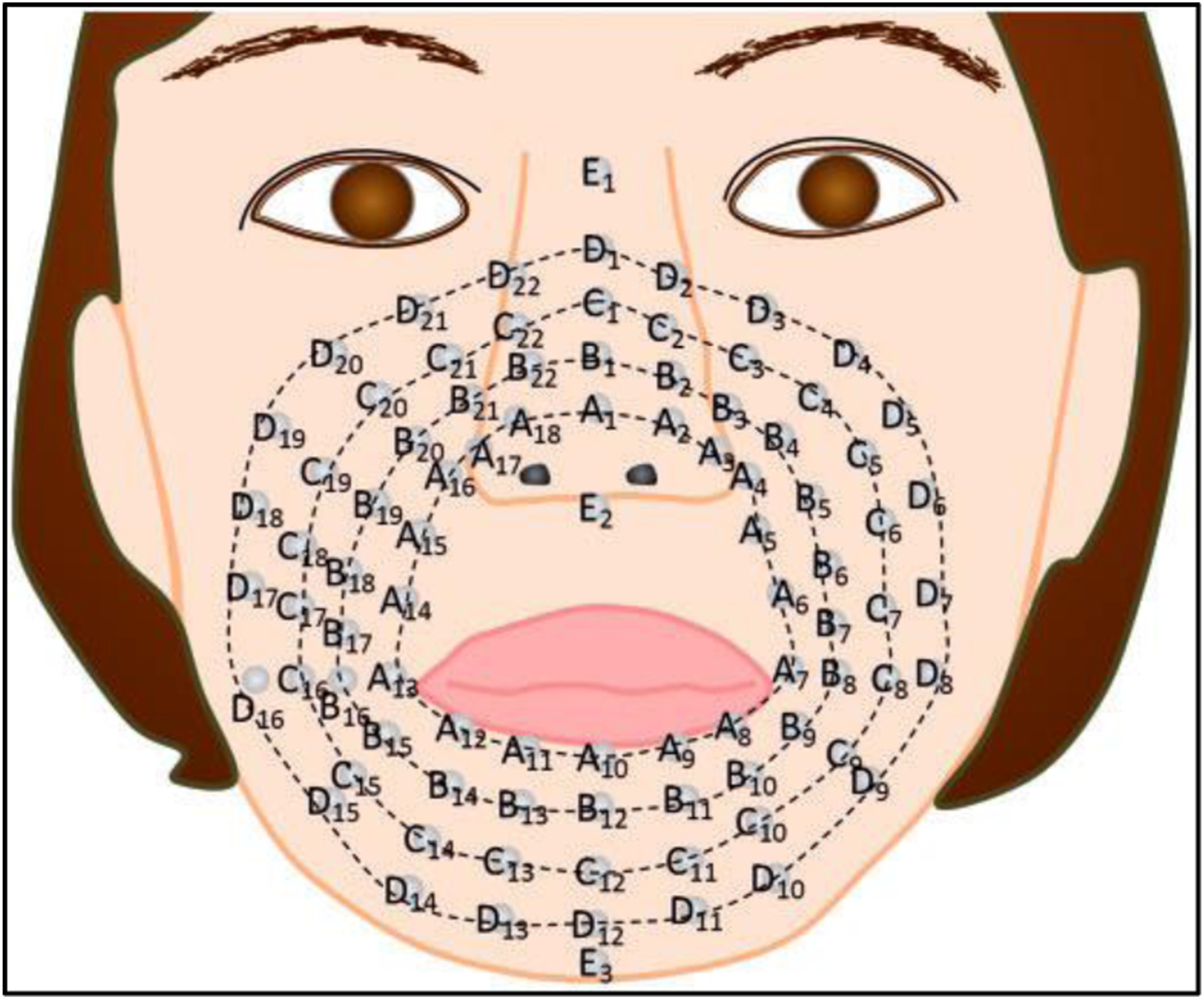
attempted to optimise a mask pattern that could fit a wide variety of face shapes by conducting a geometrical analysis of 2D patterns based on 3D coordinates (Figure 8). In a subsequent study, they also carried out physical drape testing of their patterns on 3D printed mannequins to shortlist the best pattern in terms of suitability for wider population and facial movements while speaking.
70
Notably, out of the different models of SpectraShield™ series, Defender N99 mask was found to be giving good fitting performance for a variety of face shapes and size.
165
3M™ dust respirator 8812 has a twin strap system and adjustable nose clip to provide custom fit, less pressure points and secure face seal for a range of face sizes.
166
Its another variant, 9422+ Aura™ respirator, has a 3-panel design for accommodating greater facial movement during speech. Moreover, to reduce fogging in eyewear (if any), the top panel of the mask is embossed and the exhalation valve cover is aerodynamically designed to direct airflow away from eyes.
167
A very interesting study demonstrating the feasibility of development of polyamide composite material based 3D printed custom face masks along with filter membrane has also been reported recently, but is not supported with any clinical validation.
168
Nevertheless, there is still a huge scope for improvisation of masks with respect to fit and for developing fast and reliable methods for fit-testing.
93
Facial marker points for developing a mask with comfortable fit.
70
Improving the comfort
All types of masks disrupt the thermoregulation in body and hence cause discomfort, consequently discouraging the user from wearing them.61,86,111 Many commercially available respirator masks, for example, 3M™ respirator series, N95 respirator mask series, etc., are fitted with an exhalation valve which closes during inhalation, and opens only during exhalation to ensure air passage through filter medium. Such valve also helps to limit the heat and humidity build up inside mask. Zhang et al.
27
designed an improvised FFR using an inward blowing fan on the outer surface to lower the dead space temperature and CO2 level inside the mask. They also validated the benefits with the help of Computational Flow Dynamics (CFD) simulation and Infrared imaging and simulation (to simulate face and mask surface temperature); and also claimed this improvisation to be better than using an exhalation valve. In a similar study, Zhou et al.
86
proposed the design of Dettol PROTECT+ Smart Mask to accessorise the conventional N95 respiratory mask with a micro-ventilator composed of a one-way smart valve and a ventilation fan, as shown in Figure 9. The valve restricted inflow of air and the fan aided the outflow of air from the interior of mask through the valve. With the help of this modification, they could also improve protection against PM2.5 and various small sized pathogens. Lee et al.
117
had also shown that the N95 FFRs with valves offered less breathing resistance than offered by the ones without valve, with no difference in their levels of protection. (a) Schematic configuration N95 FFR improvised by Zhou et al.
86
; (b) direction of airflow through the mask and the smart valve while exhalation.
Yang et al. 6 designed custom anti-pollution masks for summer and winter, using nanofibrous filter media deposited over a nanoporous PE substrate that was transparent to mid-infrared IR radiations emitted by human body. Interestingly, this substrate exhibited excellent radiative cooling effect in high temperatures, and on the other hand, could be modified via electroless plating of silver to reflect back the radiated body heat for producing warming sensation in low temperatures. Besides, the mask demonstrated high particulate matter capturing efficiency and low pressure drop as well, due to use of nanofibrous filter media. In another approach, Potnis et al. 28 proposed using phase change materials to facilitate cooling of the microclimate inside the mask. They suggested encapsulation of phase change materials in constituent 3D spacer fabrics in discontinuous patterns, such that the temperature sensitive areas of face and the areas subjected to higher flux from exhaled air be in contact with the phase change material, and provide at least 30 J of cooling to the face mask.
Future research directions
Though ample developments have been made to enhance the performance of face masks, still a lot of issues have remained unsolved. Design principles of multi-layered mask are one of these unsolved issues. From the discussion presented in preceding sections, it is understood that the gradient design strategy can be adopted for the design of facemasks. Not only the porosity and pore size but also the hydrophobicity of the materials should reduce from outer to inner layer of a mask. For a typical three-layered mask, the outer layer can be designed by spunbond nonwoven fabric with some chemical finish to create superhydrophobicity. This will ensure that large droplets will be trapped by the fibres and then automatically rolled-off. The middle layer may consist of meltblown fabric due to its smaller pore size. Finally, the inner layer can be a tightly woven cotton fabric which will give better feel to the wearer. This layer will also absorb the droplets released by the wearer. 169
Since a decade, environmental hazards of plastic pollution have been a driving force for the adoption of sustainable lifestyle and practices. However, the emergence of COVID-19 has forced the world to use disposable face masks, gloves, PPE kits, etc., thus putting the environmental sustainability at risk. Therefore, development of effective disinfection techniques for face masks is an urgent agenda for research for many universities and organisations. Biodegradable polymeric materials which can be used in face masks should also be attempted for development. For example, polylactic acid is a biodegradable polymer, however, its brittleness hinders its use as fibrous material for filtration. Alternately, research initiatives for enhancing the filtration efficiency of reusable cloth masks to N95 level, as well as maintaining it for large number of wash cycles should be ventured.
It is generally recommended to discard an N95 mask when it makes breathing uncomfortable. However, the mask can become unfit for further use much before, due to contamination by pathogens. Therefore, an indicator to signify expiration of a mask would be extremely useful. Researchers at MIT and Harvard 170 are attempting to develop a face mask that emits a fluorescent light when some specific viruses like SARS-CoV-2, Ebola, Zika, etc. are detected.
There have been concerns regarding the risk of transmission from an infected person wearing a respirator mask having exhalation valve. In fact, some countries have even put a ban on their usage. 171 Therefore, it is required to develop other means to enhance the thermo-physiological comfort of the wearer. It is generally observed that the masks lose their effectivity due to design failure rather than filter fabric or material failure; for example, due to cracking of metallic nose strip, damaging of elastic due to sunlight, deterioration of fit after multiple wears, etc. 172 Hence, these aspects should be focussed upon. Another matter of concern is preservation of functionality, viz. charge retention by electret fibres and stability of antibacterial agents. Since these functionalities are prone to decline with time, research efforts should be made to prolong their effectivity. Alternately, attempts may be made to develop user-friendly mechanisms for easily recharging the electret layer or to fabricate piezoelectric or triboelectric filter materials allowing sufficient static generation upon user intervention.
Conclusions
A comprehensive summary of scientific literature available on materials, structure, design and developments of face masks for respiratory protection from pathogens and particulate matter has been presented. A variety of such masks, having some differences in basic fibrous materials and structure, functional treatments, layering sequence, design aspects, etc., are available in the market. Though the randomised wear trials to compare the efficacy of these masks show conflicting results, in general, respirator masks have been found to be much superior to surgical masks, whereas, the latter is superior to cloth masks. Extensive efforts have been dedicated to enhance the filtration efficiency of filter media of face masks via modifications at different levels, namely, fibre or web manufacturing methodology, exploring gradient fibrous structures, functionalisation of fibre surface, electrostatic charging of fibres, etc. Further, extensive research studies have been conducted on designing of masks for proper facial fit, self-sterilisation by imparting biocidal activity in materials, increasing the duration of protection offered, and making them durable against harsh usage and storage conditions, etc. Additional comfort features like thermoregulation of facial heat, pressure reduction at specific facial points, soft feel, etc. have also received considerable attention. Of late, impetus has also been given at making these masks economically affordable, and reusable or wash-durable. However, there is still a long way to go in this regard.
The review has also explored the use of common household fabrics as candidates for face mask material to deal with scarcity of certified masks and to come up with an affordable solution for large proportion of developing nations. Though multi-layered assembly of some specific fibrous materials possess adequate filtration efficiency against sub-micron sized pathogens and particulate matter, a false sense of security by mere casual usage of such masks could be fatal. Besides, in last couple of years, there has been mushrooming growth of manufacturers of face masks who are making tall claims about filtration efficiency and other efficacies of their products without sufficient scientific back up. It is imperative for the health agencies to develop proper system of certification so that ordinary people are not misled during crisis.
Footnotes
Declaration of conflicting interests
The author(s) declared no potential conflicts of interest with respect to the research, authorship, and/or publication of this article.
Funding
The author(s) received no financial support for the research, authorship, and/or publication of this article.
