




Abstract
Cotton fabrics for outdoor use were coated with room-temperature vulcanizing silicone rubber (RTVSR) and its catalyst to obtain improved thermal stability and water repellency properties. The coated fabrics were exposed to different doses of electron beam irradiation as an extra curing step for the coating. The effect of RTVSR coating and subsequent electron beam irradiation on the cotton fabrics was then studied. The thermal stability was investigated by thermogravimetric analysis, and surface morphologies were observed by scanning electron microscopy. The mechanical properties, crease recovery, gel content, swelling property, and water repellency of the fabrics were also investigated. The results showed that the thermal stability and the water repellency of the cotton fabrics were improved as a result of the coating process. Moreover, the crease recovery and swelling properties of the fabrics were enhanced, accompanied by decreases in their gel content, as a function of the increase in the electron beam irradiation dose. These findings recommend the produced coated fabrics under the optimum conditions for use in the industrial purposes as isolation sheets through the pipes connecting points, especially those that contain hot fluids.
Introduction
Cotton is a popular natural fiber used to produce comfortable apparel. Because of the hydrophilic nature of its fibers, however, cotton is usually unsuitable for outdoor use. Different methods have been developed to enhance the hydrophobic properties of cotton for outdoor use. Water repellency on cotton surfaces is usually achieved by coating the fabric with water-resistant materials, such as paraffin wax, silicon resin, or fluorocarbons.1–4 These water-repelling agents may present in the forms of single molecules, oligomers, or polymers. Because fluorocarbon materials present environmental hazards,5,6 recent research has sought to obtain environment-friendly products based on hydrocarbons, fatty acid derivatives, or silicones for water-repellent textile applications. 7
Silicone-based materials are applied over porous surfaces to render the latter breathable and water resistant. Silicone rubber, as an example of a silicone-based material, is an elastomer composed of silicone, carbon, hydrogen, and oxygen; it is generally expressed by the generic formula R2SiO. Room-temperature vulcanized silicone rubber (RTVSR) is an example of silicone rubber prepared via the condensation crosslinking method, in which, silicone rubbers are usually cured using peroxide additives. 8 Due to the presence of the strong siloxane bonds (Si–O) as the main chains in molecular structure, 9 silicone rubber is characterized by its heat and insulation resistance,10,11 chemical and oil resistance. 12 Also, silicone rubber is characterized by its water repellency, weatherability, and its resistance towards moisture and steam. 13
Radiation as a commercial crosslinker agent, was used in many applications, 14 which it characterized by energy savings (no drying time and low-temperature process), low environmental impact (no solvent emissions), simplicity, low cost, small equipment, and high treatment speeds.
In this research, cotton fabrics are coated with RTVSR and its catalyst to enhance their thermal stability and water repellency and enable their use in outdoor and industrial applications. The coated fabrics were then irradiated with different doses of electron beams as an additional curing step for the coating formulation. The effect of the coating on the thermal stability, water repellency, and surface morphology of the cotton fabrics was studied. The effect of electron beam irradiation on the mechanical properties, crease recovery, gel fraction, and swelling properties of the coated fabrics was also investigated.
Material and methods
Materials
The cotton fabrics used in this study were supplied by Misr Spinning and Weaving Company (Mehalla El-Kobra, Egypt) and of a plain weave (170 g/m2). The fabrics were washed by scouring process in the presence of sodium carbonate (2 g/L) at boiling point for 30 min, without subjecting to any additional finishing process at the factory. In the laboratory, the fabrics were washed first with a solution of, then with boiling water, and then with cold water. The fabrics were dried by using hot air dryer. RTVSR and its specific catalyst (not known) were supplied by Shanghai Rubber Product Institute (China); the chemical structure of the silicone rubber used for the coating is shown in Scheme 1. Toluene, sodium carbonate, and glacial acetic acid were kindly supplied by El-Gomhoria Company, Cairo, Egypt. All of the reagents used in this study were of laboratory grade. The chemical structure of the silicone rubber unit.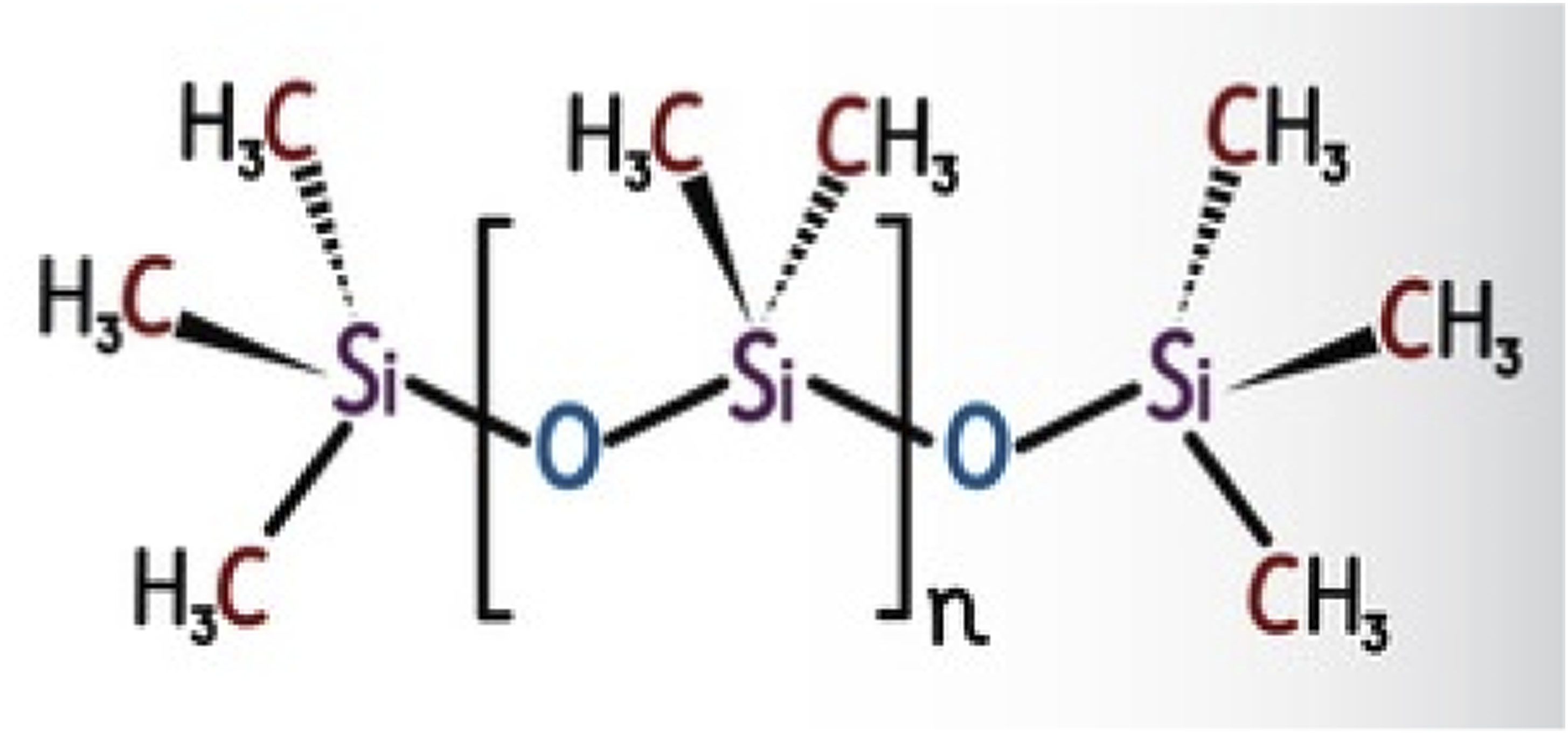
Methods
Silicone rubber coating of cotton fabrics
Silicone rubber was mixed with its specific catalyst (3%, w/w) under continuous stirring to achieve a homogeneous mixture and then applied to the cotton fabrics as a surface coating (thickness, ∼100 μm) using a film applicator (Elecometer 3540, Elecometer Instruments Ltd, USA). Scheme 2 illustrates the coating process of the cotton fabric. Diagrams of preparation and surface coating processes of cotton fabrics.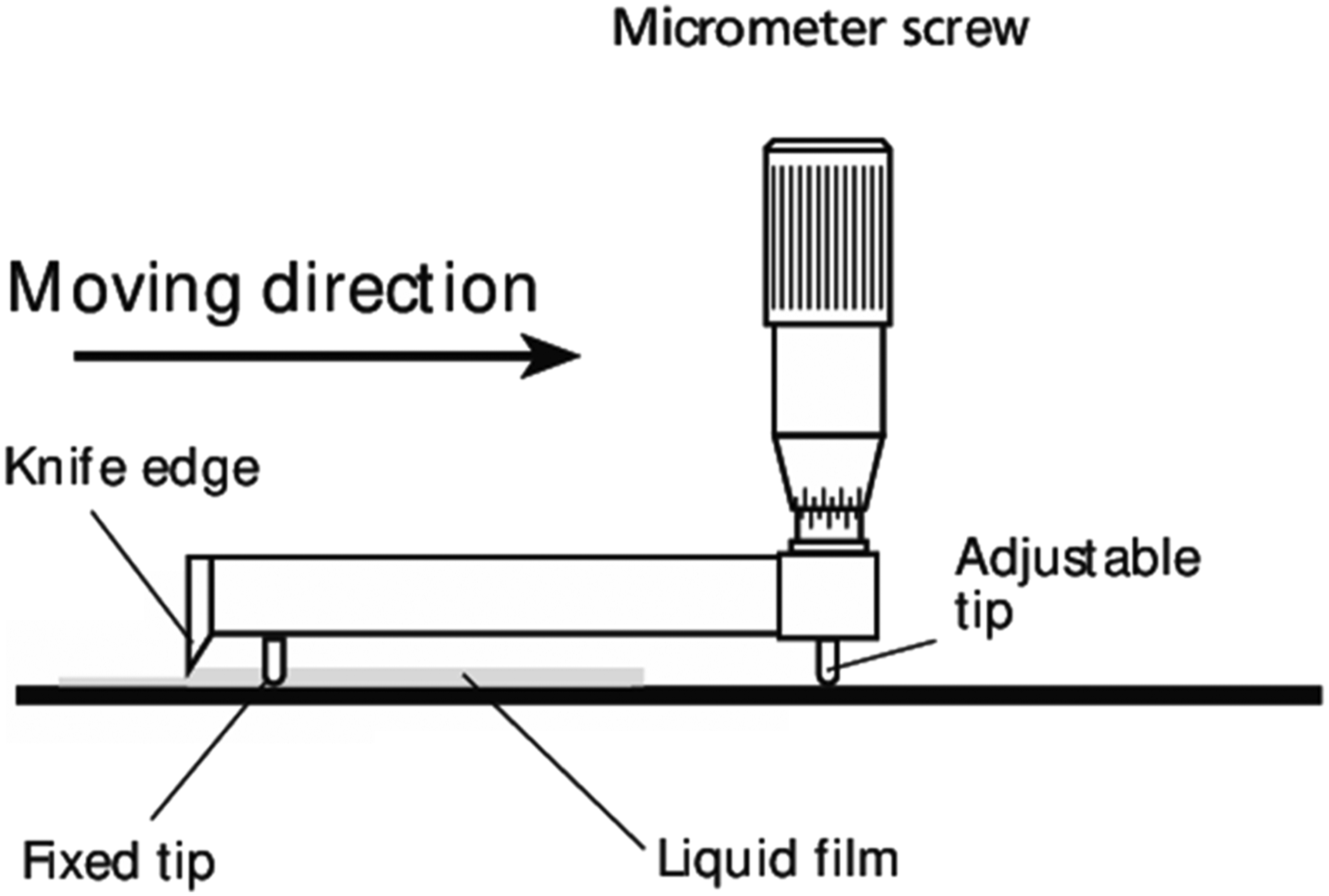
Electron beam irradiation
Electron beam irradiation was carried out on an electron beam accelerator (energy, 2.5 MeV) produced in Russia. The machine was installed at the National Center for Radiation Research and Technology, Cairo, Egypt. The required doses were obtained by adjusting the electron parameters and conveyor speed. The cotton fabric samples were exposed to irradiation doses of 5, 10, 20, and 40 kGy.
Scanning electron microscopy
The morphology of the cotton fabric surfaces was examined by scanning electron microscopy (SEM; JSM-5400, JEOL, Japan). A sputter-coater was used to pre-coat conductive gold onto the fabric surfaces prior to microstructural observations at 30 kV.
Fourier transform infrared analysis
Pure and RTVSR-coated cotton fabrics irradiated with electron beams at a dose of 20 kGy were analyzed by Fourier transform infrared (FTIR) spectrometry over a wide wavelength range (400–4000 cm−1) in the solid state using a Mattson 5000 FTIR spectrometer (Mattson Instruments, Madison, WI, USA).
Thermogravimetric analysis
The thermal stability of the cotton fabric samples was tested by thermogravimetric analysis (TGA; TG-50, Shimadzu, Japan). The samples were encapsulated in platinum pans and heated from room temperature to 600°C at a constant heating rate of 10°C/min. Measurements were obtained under nitrogen gas with a flow rate of 20 mL/min.
Mechanical properties
The tensile strength (TS) and elongation at break of the samples were measured at room temperature according to the ASTM D5034 standard method for textile fabrics using a tensile testing machine (HT-9112, Hung-Ta Instruments, Taiwan). Rectangular specimens measuring 40 mm × 100 mm in size were tested.
Water repellence measurements
Water contact angles
The static water contact angle (WCA) of the treated cotton fabrics was measured to investigate their water repellence property. WCAs were determined via the sessile drop method in air at 25°C. Here, drops of double-distilled water (4 μL each) were placed on the surface of the fabrics; photographs of the drops were then obtained using a camera. WCAs were measured five times from the photographs and averaged, and the result obtained was recorded as the WCA of the sample.
Water absorption properties
The water repellency of the fabrics was further determined by water absorption measurements according to the AATCC 21-972 test method. Here, a known weight of dry insoluble cotton fabric (Wd) was immersed in a tank full of distilled water for 20 min at room temperature by using a sinker. Then, the sample was removed and weighed (W

Crease recovery measurements
The ability of a coated fabric to resist and recover from the deformation induced by a load to its initial wrinkle-free surface is referred to as crease recovery. Crease recovery was tested by measuring the angle between the pre-folded halves, which is called the crease recovery angle. The crease recovery angles of the samples were measured according to the ASTMD-1295-67 method using a crease recovery tester (Model FF-07; METEFEM–Metrinpex Metefem, Hungary). A 1.5 kg load was applied to the samples for 5 min at room temperature. The samples subjected to the crease recovery measurements were cut into rectangles according to the recommendations of the standard. The crease recovery angle of the samples was obtained from the average of five measurements.
Gel content and swelling ratio measurements
The durability of the coated cotton fabrics was investigated via their gel content and swelling percentage. Cotton fabrics coated with silicone rubber and irradiated with different doses of electron beams were accurately weighed (W

Cotton fabrics coated with silicone rubber and irradiated with different doses of electron beams were subjected to swelling studies in toluene. Here, a known weight of dry insoluble cotton fabric (Wd) was immersed in toluene for up to 48 h at 25°C. The sample was then removed, blotted with filter paper to remove the excess toluene, and weighed (W

Results and Discussion
Surface morphology
The surface morphology of the cotton fabric samples was examined by SEM. Figure 1 shows SEM micrographs of the surfaces of (a) cotton fabric without rubber treatment or irradiation and (b) cotton fabric coated with RTVSR, followed by electron beam-irradiated at a dose of 20 kGy. As shown in Figure 1(a), the surface of the untreated/nonirradiated cotton fabric is smooth, and the fabric structure is clearly composed of free fibers. By contrast, in Figure 1(b), the surface structure of the coated fabric could not be clearly distinguished. The silicone rubber completely and thickly coated the fabric surface and all spaces between fibers. This finding may be expected because of the high crosslinking density between cotton cellulose and silicone rubber. Scanning electron microscopy micrographs of (a) surface morphology of untreated-unirradiated cotton fabrics (control) and (b) coated fabrics with silicone rubber and electron beam-irradiated to a dose of 20 kGy.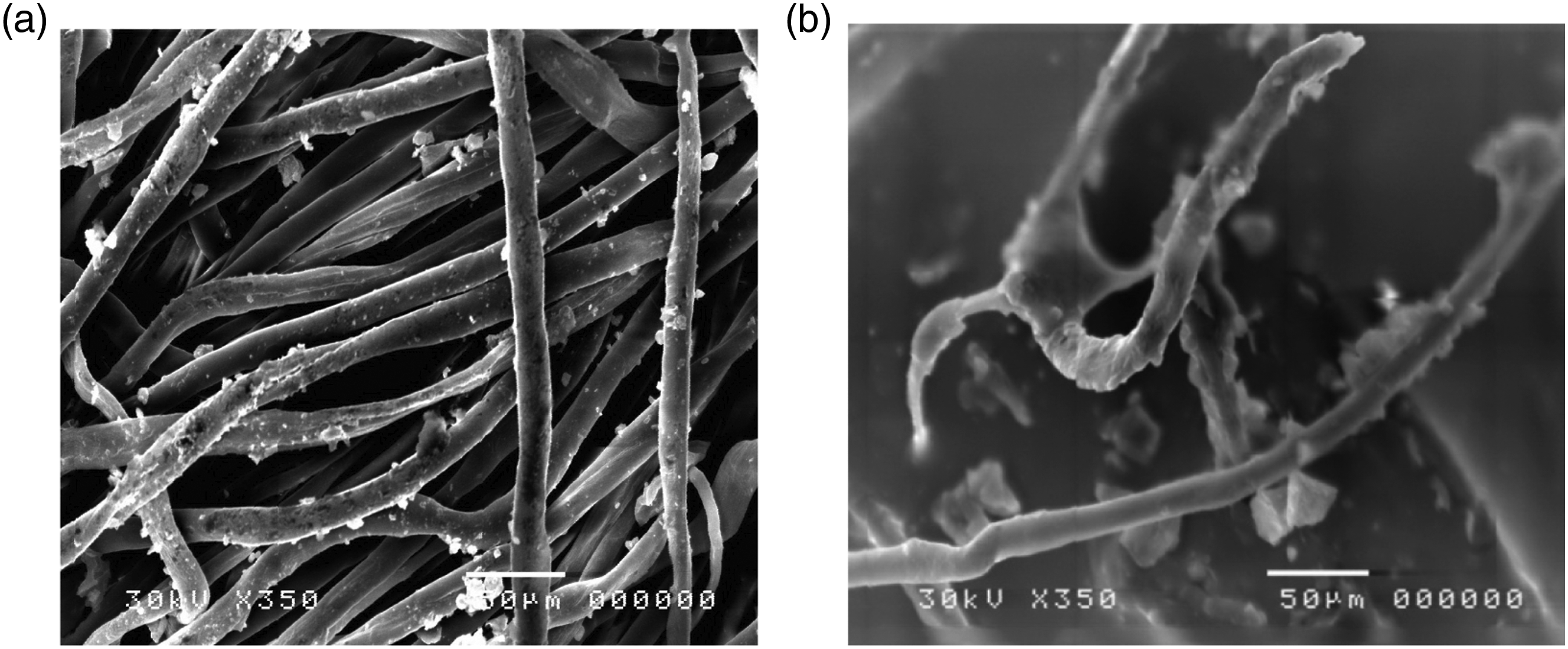
Fourier transform infrared analysis
The cotton fabrics obtained before and after coating with RTVSR, followed by electron beam irradiation at a dose of 20 kGy were characterized by FTIR spectroscopy. Figure 2 reveals the FTIR spectra of the untreated and treated fabrics. Peaks in the wavenumber range of 3660–2900 cm−1 reflect the characteristic stretching vibrations of the O–H and C–H bonds of polysaccharides. The broad peak at 3331 cm−1 may be attributed to the characteristic stretching vibrations of the hydroxyl groups of polysaccharides.15,16 The bands at 1425, 1250, and 1072 cm−1 are due to C–H bending, C–H, and C–O–C, respectively. The bands at 1740 cm−1 are attributed to the C=O groups of the cotton fabric. Besides these peaks, the FTIR spectrum of the silicone rubber-coated cotton fabric showed a peak at 2962.65 cm−1, which represents the stretching vibrations of CH3, and sharp peaks at 1258.52 and 864.27 cm−1, which respectively represent the bending and rocking vibrations of Si–CH3. The peaks at 1080 and 1009.28 cm−1 are assigned to the stretching vibrations of Si–O–Si in the silicone rubber backbone. The absorption peak at 787.39 cm−1 reflects the coupled stretching vibrations of Si–C and rocking vibrations of –CH3. The characteristic band of the OH group of cotton cellulose noticeably broadened following the coating of the cotton fabrics with silicone rubber.17,18 The FTIR patterns of the cotton fabrics before and after coating with RTVSR and irradiated with electron beam at 20 kGy. Note: FTIR: Fourier transform infrared; RTVSR: room-temperature vulcanizing silicone rubber.
Thermogravimetric analysis
The thermal stability of cotton fabrics coated with silicone rubber was investigated by TGA. Figure 3 shows the TGA thermograms and corresponding thermal decomposition curves of the uncoated and coated cotton fabrics. The thermal decomposition temperatures of the cotton fabrics before and after coating with silicone rubber and electron beam irradiation at a dose of 20 kGy are detailed in Table 1; the temperature parameters are also provided in the same table. The thermogram of the uncoated sample showed two stages of thermal decomposition. The first stage (from 186°C to 350oC) illustrated the dehydration of cellulose portion,19,20 in which a sharp increase in the thermal decomposition rate could be noticed, especially at the temperature from 310°C to 350°C due to the increase in the cellulose dehydration rate. Thermogravimetric analysis thermograms and the corresponding rate of thermal decomposition reaction of untreated–unirradiated (control) and the coated cotton fabrics with silicone rubber and electron beam irradiated to a dose of 20 kGy. Thermal decomposition temperatures at different weight losses of cotton fabrics before and after coating with silicone rubber and electron beam irradiated to a dose of 20 kGy.

After the coating process of the silicone rubber up on the cotton fabrics, it can be seen that the thermal stability of the cotton fabrics remarkably improved and their thermal decomposition rate decreased following coating because of the high thermal stability and strong intermolecular bonding afforded by the silicone rubber. 10 It can be seen also that the temperature at which 50% weight loss was recorded (T50%) was 354°C for the uncoated sample but 473°C for the coated sample. Compared with that of the uncoated fabric, the thermal degradation curves of fabrics coated with silicone rubber shifted toward higher temperatures. The increase in the decomposition temperature of the coated cotton indicates an improvement in its thermal stability. For example, the respective T10%, T50%, and Tcomp values of the coated sample were 26°C, 19°C, and 33°C higher than those of the uncoated sample, and the char residue of the coated cotton was greater than that of the uncoated fabric. The thermal stability of the coated cotton may be attributed to the high crosslinking density of the silicone rubber; a high crosslinking density enhances the rigidity of the fabric system and, in turn, improves the thermal stability of the cotton. 21
Mechanical properties
The effect of electron beam irradiation dose on the tensile strength (TS) and elongation at break of cotton fabrics coated with silicone rubber is illustrated in Figure 4. The TS and elongation at break of the coated fabrics increased after the coating processes. In detail, the TS of the fabrics gradually increased with increasing irradiation dose up to 20 kGy, likely because irradiation provides a crosslinking effect. However, continued increases in irradiation dose of up to 40 kGy resulted in a general plateauing of the TS. This phenomenon is attributed to the beginning of a degradation process arising from chain scission due to irradiation. The irradiation process can cause two competing reactions in the polymer matrix, namely, crosslinking or chain scission, depending on the total irradiation conditions.
22
Figure 4 also reveals that the elongation at break of all coated fabrics decreases with increasing irradiation dose. This finding could be attributed to the increase in crosslinking density, which impedes the mobility of the molecular chains of cotton and decreases the overall elongation ability of the material. Effect of electron beam irradiation dose on the tensile strength and elongation at break (%) of cotton fabrics coated with silicone rubber.
Water repellence properties of coated fabrics
Water contact angles
The water repellence properties of cotton fabrics coated with silicone rubber were investigated via WCA measurements. Figure 5 shows photographs of water droplets on the surface of cotton fabrics with and without treatment by silicone rubber coating and electron beam irradiation at a dose of 20 kGy. Camera photos of (a) water droplet on untreated cotton fabric and (b) water droplet on cotton fabrics coated with silicone rubber and Electron beam irradiated to a dose of 20 kGy.
Cotton fabrics are hydrophilic in nature, and a droplet of water can penetrate through the fabric surface within 1 s, as shown in Figure 5(a). The silicone rubber-coated sample shown in Figure 5(b) revealed hydrophobic characteristics; in this sample, water droplets remained on the fabric surface without deformation or absorption, and the WCA measurement after 5 min was 95°. This finding may be explained by the formation of a hydrophobic membrane over the silicone rubber-coated cotton fabric. Silicone rubber is characterized by water repellency due to the large number of CH3 groups present on the exterior of the coiled rubber structure; these groups can rotate freely and provide silicone rubber with distinct interfacial properties, including water repellency. 13
Figure 6 shows the WCAs of cotton fabrics without treatment or irradiation and cotton fabrics coated with silicone rubber with and without electron beam irradiation at different doses. The measured WCAs of the coated fabrics drastically increased following coating with silicone rubber even without electron beam irradiation. As the electron beam irradiation dose increased, a slight decrease in WCAs was noted, but the values remained higher than those recorded for the untreated sample. This finding may be attributed to the effect of the irradiation process, which increases the hardness and roughness of the rubber coating and decreases its flexibility and static contact angle. Increases in surface roughness generally lead to decreases in WCA because of the enhanced spreading ability of water drops on a rough surface.
23
Water contact angle of cotton fabrics before and after coating with silicone rubber, irradiated with electron beam at different doses.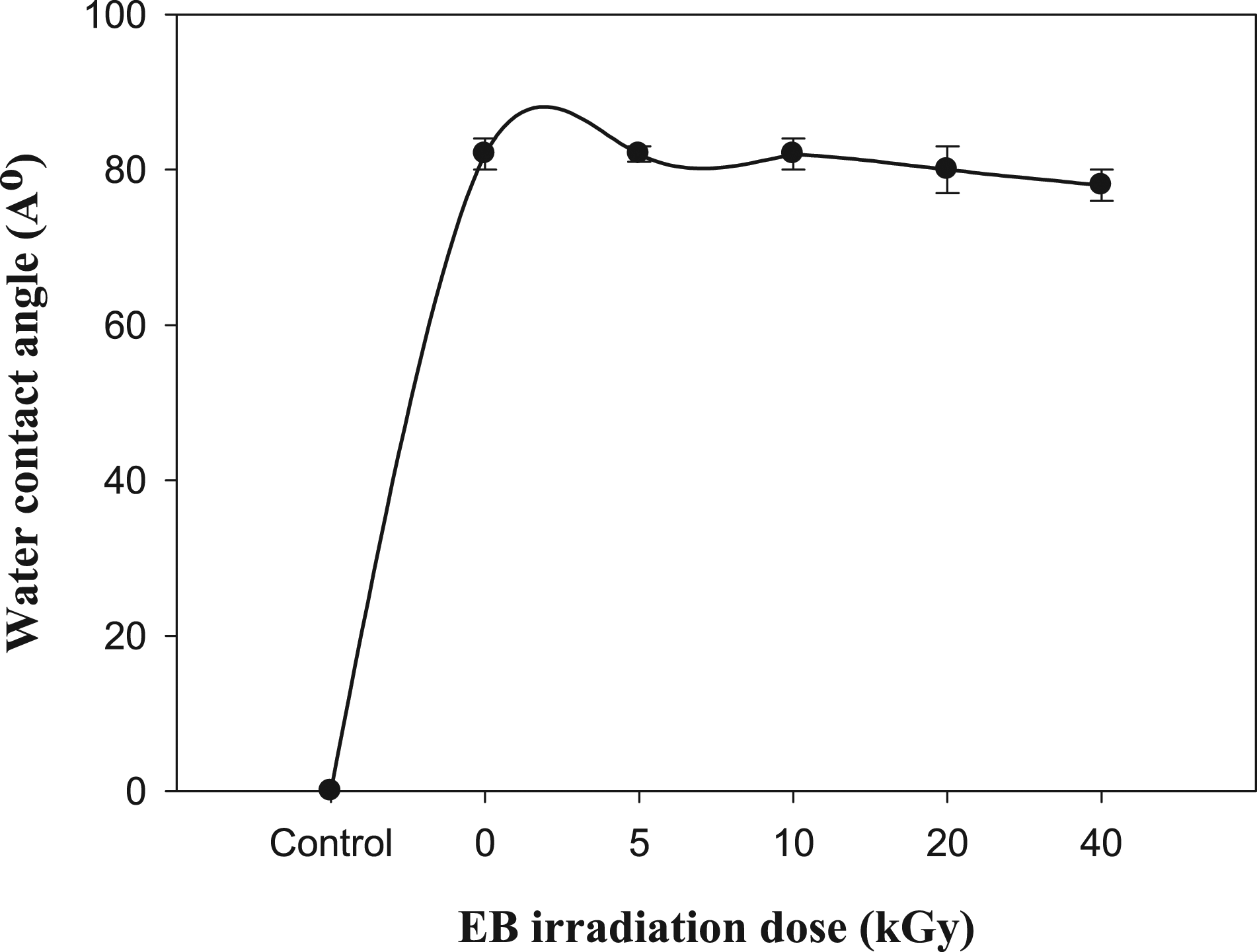
Water absorption properties
Changes in the water absorption properties of the coated cotton fabrics before and after electron beam irradiation at different doses were determined, and the results are illustrated in Figure 7. The water absorption percentages of the samples remarkably decreased immediately after coating with the silicone rubber, which forms a hydrophobic film over the fabric fibers. No remarkable change in water absorption percentages as a result of increasing doses of electron beam irradiation was noted. Water absorption of cotton fabrics before and after coating with silicone rubber, irradiated with electron beam at different doses.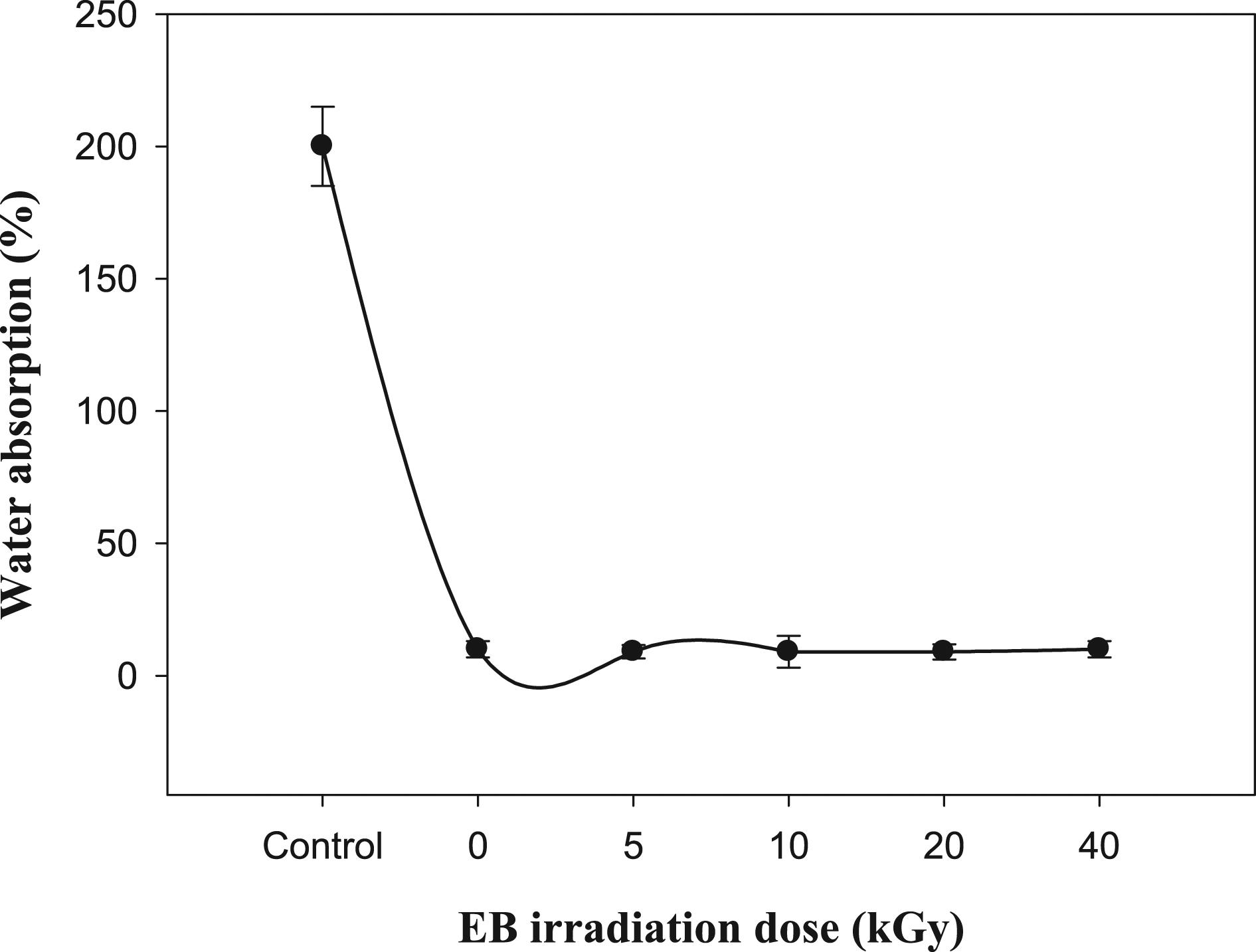
Crease recovery
The effect of the silicone rubber coating and electron beam irradiation on the flexibility of the cotton fabrics was assessed in terms of crease recovery angles. Figure 8 illustrates the crease recovery angles of cotton fabrics with and without rubber coating treatment and electron beam irradiation at different doses. The crease recovery angle of the coated/nonirradiated cotton fabric was higher than that of the uncoated/nonirradiated cotton by ∼12%. Increases in elasticity and flexibility and, hence, improvements in crease recovery angle may be expected following coating with silicone rubber. The crease recovery angles of the coated cotton fabrics first increased with increasing electron beam irradiation dose up to 5 kGy and then progressively decreased as the irradiation beam dose further increased to 40 kGy. The sudden increase in crease recovery angles could be attributed to increases in the crosslinking density and, hence, stiffness of the crosslinked film.
24
At higher irradiation doses, however, oxidative degradation, which decreases the elasticity of the coating, could occur. Crosslinking could also reduce the flexibility and increase the hardness of the coating,
23
leading to a decrease in crease recovery angle. Crease recovery angles of untreated–unirradiated (control) and cotton fabrics coated with silicone rubber before and after electron beam irradiation to different doses.
Gel content and swelling characteristics
The durability of the silicone rubber coating on the cotton fabrics following irradiation with electron beams at different doses was investigated by studying their gel content and swelling, and the results are illustrated in Figure 9. The gel content of the fabrics slightly increased by increasing irradiation dose. The coated/nonirradiated cotton fabric revealed a gel content of 72.2%, which could be attributed to the vulcanization of silicone rubber at room temperature. Higher gel contents indicate an increase in the crosslinking degree of silicone rubber after electron beam irradiation.
25
The swelling percentage of the coated fabrics greatly decreased with increasing irradiation dose. This finding confirms the occurrence of crosslinking induced by irradiation and subsequent formation of a three-dimensional network structure on the coated fabrics. Gel content and swelling percentages of cotton fabrics coated with silicone rubber, irradiated with electron beam at different doses.
Conclusions
In this work, cotton fabric was coated with RTVSR and subjected to electron beam irradiation to improve its thermal stability and water repellency and enable its use in industrial and outdoor applications. The effects of the coating and electron beam irradiation dose on the different properties of the cotton fabrics were investigated. The results revealed improvements in the thermal and water repellency properties of the fabrics. Enhancements in the mechanical, swelling, and crease recovery properties of the samples were attributed to the crosslinking effect of electron beam irradiation on the silicone rubber coating. The coated fabrics under the optimum conditions can be used successfully for fabrication of the isolation sheets through the pipe connecting points, especially that contain hot fluids, especially in the industrial purposes.
Footnotes
Declaration of conflicting interests
The author(s) declared no potential conflicts of interest with respect to the research, authorship, and/or publication of this article.
Funding
The author(s) received no financial support for the research, authorship, and/or publication of this article.
