




Abstract
Diabetes is a chronic disease that is widely spread in this time. Diabetic foot is one of the most common symptoms, it starts when the dryness emerge after that the cracks appear on the back or outcrops of the foot. The primary treatment for these symptoms is considered the best choice to prevent diabetic foot diseases. The aim of this study is using treated fabric with Tancho® (based on olive oil) to give the cracked or pre-ulcer foot the sufficient hydration for skin cells during the rest periods to heal. The study was based on using 100% cotton woven fabrics with three structures that are treated with Tancho® petroleum jelly as emulsion using two techniques; Pad/Batch and Pad/Dry/Cure methods, to compare between them in the improvement of fabric for healing. Weight and thickness were conducted to evaluate the fabric functional performance before and after treatment with Tancho®. The antimicrobial activity was done for samples to determine the biological property. Roughness, SEM and TEM were done to study the morphological surface of samples produced. Finally, the best samples performances as a result from radar chart analysis were applied in vivo for rats, to determine the efficiency of the treated samples through clinical observation and histopathological changes. The results of the produced samples that weaved by three different structures and treated with Pad/Batch method were increased of the stimulation of skin cells to heal after surgical either in case of use for surface skin scratches or as scaffold for skin layers.
Introduction
The World Health Organization (WHO) recently announced that the number of diabetes for adults has quadrupled in less than 40 years, making the disease quickly turn into a major problem especially in developing countries. The rise in the number of elderly and obese people in the world has made diabetes “a central issue for global public health”. Diabetes is manifested in many symptoms such as frequent urination, weight loss, lack energy and excessive thirst [1].
Diabetes is a condition that impairs the body's ability to process blood glucose, otherwise known as blood sugar [2], which can lead to a buildup of sugar in the blood, which can increase the risk of dangerous complications, like Heart disease, Blindness, Kidney failure, Heart attacks, Strokes and Charcot arthroplasty, which can deform the shape of the foot and lead to disability [1,3,4].
There are three types of diabetic disease; type

Meaning of “Diabetic Letters” [5].
Diabetic foot problems are a major health concern and a common cause of hospitalization. Most foot problems that people with diabetes face arise from two serious complications of the disease; nerve damage and poor circulation, which can cause changes in the skin like (dryness and itching). Foot ulcer and amputations are often attributed to vascular disease, neuropathy, and relative immunosuppression. So many dermatologic conditions can be either prevented or effectively treated if identified early [1,6,7].
There are quite number of treatments available for controlling of diabetic foot ulcers, which usually occur in prominent places of the foot, see Figure 1: local therapies, vasodilators, antibiotics, neuropathic and neurotrophic drugs, wound dressings, skin substitutes, growth factors and inflammatory modulators. There are advantages and disadvantages to each kind of wound treatment and multiple solutions for wound dressing are present as Miculickz pomade, 1% silver sulfadiazine cream, zinc hyaluronate solution, bovine collagen, hyperbaric oxygen therapy, hydrocolloid dressing, and synthetic skin substitutes. In addition to, some new therapies as growth factors or stem cells could be an innovative solution for this kind of patients [8,9].
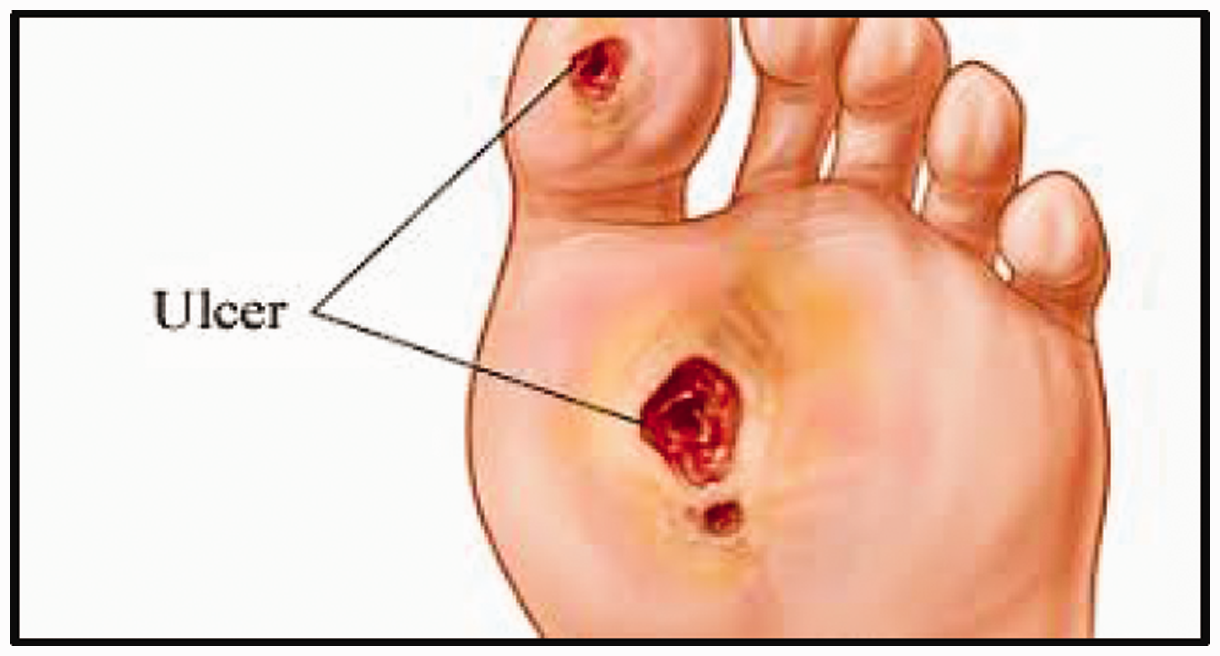
Foot ulcers.
Mostafa M. et al. has pointed out the electro-spun nanofibers which produced with different concentrations of CFX antibiotic for local treatment of diabetic foot ulcers and used to design new wound dressings loaded. Prepared patches showed enhanced mechanical properties compared to native individual layers. Also, they reached to design CFX-loaded, polyacrylic acid/polyvinyl pyrrolidone/polycaprolactone (PAA/PVP/PCL) triple layer patches are suitable for potential diabetic foot ulcer treatment [10].
Tancho® petroleum jelly produced based on the olive oil that penetrating in to the skin easily. This was produced from natural components to grant the smoothness for the elbow and heel roughness, treat and refresh from sunburn, as well as to keep the skin moist. It is suitable for sensitive skin.
Olive oil was using since 4000 B.C. by the Mediterranean populations as a food, drug, and cosmetic. The ancient Egyptians used it to make creams and perfumes. Extra virgin olive oil contains about (98–99)% triglycerides and about (1–2)% minor components, it can be defined according to its ratio of fatty acids (palmitic acid, oleic acid, linoleic acid, linolenic acid), and it assists to reduce the physiologic aging effects, atherosclerosis and neoplastic impedance.
Olive oil has antioxidant substances, moisturizing and soothing effects, anti-inflammatory and immune-modulator function, so its treatment has not side effects. Currently, it has an effective value in the dermo-cosmetology sector, like keeping the skin well hydrated and prevent various conditions such as atopic dermatitis, psoriasis, acne, and eczema [11,12].
Scientists and researchers use rodents in the various medical experimental, about 95% of all lab animals are mice and rats, according to the Foundation for Biomedical Research (FBR). Mice and rats were relied on for several reasons like convenience as it adapts well to new surroundings, reproduce quickly and have a short lifespan, inexpensive, docile. Most of the mice and rats are inbred so that, they are almost identical genetically. This helps make the results of medical trials more uniform, according to the National Human Genome Research Institute. In addition to, a good understanding of the anatomists, genetics, and physiology scientists for rodents made it easy to interpret the results of clinical trials in mice. Also, their genetic, biological and behavior characteristics closely resemble those of humans, according to a representative's statement for the National Institutes of Health (NIH) Office of Laboratory Animal Welfare [13].
Usage of textile in the medical field is known now. the study that performed by A. Abou-Okeil et al. to investigate wound dressing based on nonwoven fabrics for raising the healing of skin tissue, the results pointed to the 100% viscose fabric as natural materials without treatment achieved the best consequences of healing cells depending on the nonwoven web structure[14]. Also, in the other study by Inas N. El-Husseiny et al. based on a woven fabric to investigate surgical management of patellar ligament rupture in dogs using a prosthetic woven fabric, satisfactory results were obtained concerning the tendon healing [15].
This study aims to investigate the performance efficiency of 100% cotton woven fabric with different three simple and common structures before and after treatment by two different treatment methods using Tancho® petroleum jelly product, which based on the natural olive oil as an innovative use. To evaluate the hiding of the foot scratches and healing of skin layers injuries, these were caused by diabetic symptoms. Sometimes, it can the state worsen to cause foot ulcer or foot amputation.
Materials and methods
Materials
Fabric samples
Woven fabric technique was used to manufacture different samples with three woven structures; Plain 1/1, Hopsack 3/3 and Imitation gauze weave [16], from 100% cotton material as shown in Figure 2. Table 1 presents the specifications of produced samples.

Three woven structures of produced samples.
Produced samples specifications.

Chemicals
Tancho® jelly component supply from petroleum oil, fragrance (perfume), olive oil and Butyrate hydroxyl toluene (BHT), it made in Indonesia, and licensed by Mondom Corporation- Japan. Stearic acid (SA), Triethanol amine (TEA), Na2CO3 from laboratory grade and Egyptol® (non-ionic wetting agent based on ethylene oxide condensate) from Bassef company.
Methods
Synthesis Tancho® emulsion
Synthesis the Tancho
Hydrolysis of GPTMS
Hydrolyzed of 3-glycidyloxypropyltrimethoxysilane (GPTMS) by dissolve 10 mL of it in 2-propanol (180 mL) into 250 mL glass beaker on magnetic stirring to stir at room temperature for 1 h. Hydrochloric acid (1.22 mL, 0.01 M) was added to the solution to complete hydrolyzing [18].
Treatment of 100% cotton fabric with Tancho® emulsion
The 100% cotton fabric with three different weave structures were purified in the laboratory by washing at 100 °C for 60 min. using a solution containing 2 g/L Na2CO3 and 1 g/L Egyptol. The fabrics were washed several times with hot water, then cold water, finally dried at ambient conditions.
The fabric samples were cut with size (8 × 8) cm and modified by two method
Characterization and testing for fabric samples
Nine fabric samples were used in this study before and after treatment, the fabric samples code that is used in the following statistical figures and tables were presented in Table 2.
Description of produced samples code.

Physical and biological properties of fabric samples were evaluated as the following; Mass per unit (weight) according to ASTM D3776-2002 [19], Thickness test according to ASTM D1777-1996 [20], Roughness according to ASTM D7127-17 [21], Scan Electronic Microscope (SEM) where the samples were examined using a JEOL-840X scanning electron microscope- Japan, with magnification range 35–10,000, resolution 200A°, acceleration voltage19 kV, and all the samples were coated with gold before SEM. Antimicrobial test was estimated by quantitative measurement using shake flask method [22] for Staphyllococus aureus according to AATCC 6538, Escherichia coli according to AATCC 25922, Pseudomonas aeruginosa according to AATCC 27853 and Candida albicans according to AATCC 10231, to calculate the reduction (%) of antimicrobial activity. All results were expressed after doing compare with the control samples and media for 48 & 96 hours incubation period according the following equation; Histopathological examination was applied according to Bancroft et al. 1996 [24].
Where; 
All tests were done at atmospheric conduction (65 ± 5% for humidity and 20 ± 2°C for temperature) according to ISO 139 [25]. The physical and morphological analysis tests were carried out in the Spinning and Weaving Engineering Laboratory Department and the Central Laboratory in the Textile Industries Research Division, the biological analysis was estimated in Histopathological laboratory in the Medical Research Division at National Research Center.
Statistical analysis
The evaluation of fabric samples was carried out before and after treatments based on their physical and morphological properties by analysis of variance (ANOVA) with two factors with replicates, the significance level was set at P ≤ 0.05, In addition to, using radar chart analysis to select the greatest fabric samples performance for applying on rats by Vivo experimental.
Experimental surgery
The experimental surgery was carried out on two stages; the first was applied on twelve rats, and the second was applied on six rats. Male rats were used only, their weights range between (140–150) g, and they were checked to be healthy before the surgical experiments. All rats were injected with diabetes type
First stage
First stage of experimental surgery scheme.


Process of the experimental surgery with scratching of skin.
Second stage
The second stage of experimental surgery scheme.
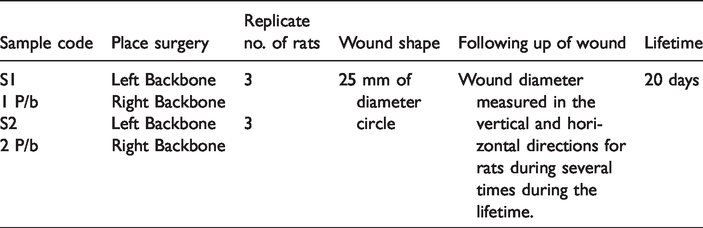

Removed skin layers for surgical application.
As a result of the skin stretching; the circular wound becomes elliptical shape during the healing phases. Therefore, the diameter of the wounds was measured in horizontal and vertical directions and calculates the circumference of elliptic to note the change in the wound circumference shape as shown in Figures 5 and 6 and equation (2). The period of life lasted for 20 days, clinical observations were recorded, after the merciful death of experimental animals, the histopathology samples were taken to the exam.

Skin behavior during wound healing phases.

Process of the experimental surgery with removed total skin layers.
Where;
Results and discussion
The tests results of woven fabric samples and their performance were presented in three sections; the first section shows the effect of two treatment methods used on the physical properties, surface behavior and biological properties of fabric samples results, and were determined the best produced woven samples using radar analysis. The second section displays the clinical observation for the skin rats with scratches results. The third section presents the clinical observations results and histopathological changes for the woven fabric samples that were used as a skin scaffold.
First section: Effect of treatment on the physical and biological properties
Weight test
Figure 7 shows that the weight values of different woven samples structures were affected by the two treatment methods that used. But the samples 2 P/b & 2 P/d/c (sample of hopsack 3/3 structure treated by Pad/Batch and Pad/Dry/Cure) gave the highest weight values after each two treatment methods, respectively compared to the other samples used, especial with Pad/Batch method. This is due to the hopsack float structure that helped to impede the treatment material, in addition the warp density of structure and the high cover factor compared to other woven structures used as referred in Table 1. Also, the Pad/Batch treatment method helped the fabric structure to increase the weight values, whereas this method depend on the ability of textile material to saturate of treatment material without pressure and heat, followed by sample 3 P/b (sample of Imitation gauze weaves structure by Pad/Batch method), due to the unbalance of pores area for the woven structure.

Fabric weight test values of blank and treated samples.
Thickness test
Figure 8 shows that the thickness values were decreased for all samples after each treatment method compared to the blank samples of different woven structures manufactured. It was found that the samples were treated by Pad/Dry/Cure methods gave the lowest values of thickness compared with Pad/Batch method, this is maybe due to indirect relationship between thickness values and pore coefficient, whereas the increase of pore coefficient led to decrease in cover factor and vice versa (see Table 1). Also, the density of warp & weft yarn and the woven structure used have a direct relation with thickness values as increasing of yarn densities and the balance of structure used achieved the smoothness fabric surface and low thickness with using fine yarn for weft and warp. Therefore, it was noted that the differences between thickness values for all produced samples with different structures. On the other hand, the thickness is slightly decreased in case of the Pad/Dry/Cure more than Pad/Batch due to the fixation of Tancho® emulsion on fabric by a physical and chemical bond, we think that the Vander van force is lowest by curing temperature with affected on the surface of fabrics.
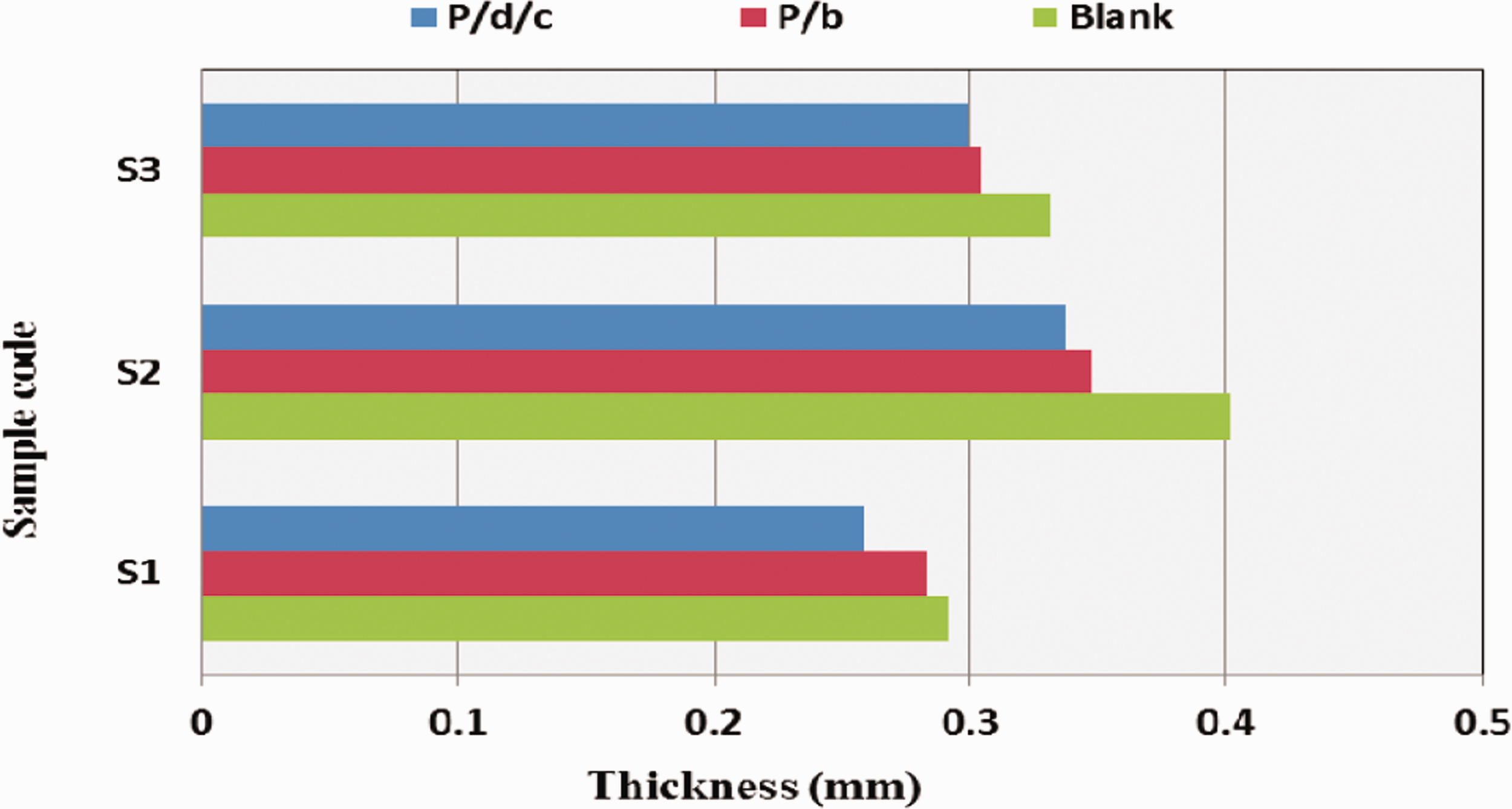
Fabric thickness test values of blank and treated samples.
Roughness test
Figure 9 points to the fabric roughness values that increased for the produced samples that weaved with Plain 1/1 and Imitation gauze weave structures and treated by two treatment methods. In addition to, the sample 1 P/d/c (sample of plain 1/1 structure treated by Pad/Dry/Cure method) gave a high value of roughness compared to its blank sample (S1) and 1 P/d sample because it has narrow pores and more balance distribution on the fabric surface evenly related other structures used. But the samples that weaved with Hopsack 2/2, especially the sample 2 P/b (sample of hopsack 3/3 structure treated by Pad/Batch treatment method) gave the lowest roughness rate, that means its surface became more smoothness because it has a long float and widens pores structure than other structures used, which led to the balance distribute of Tancho® material in the pores of fabric structure in the unit area and compacted it with the proses of treatment that equalized the roughness area of fabric surface structure. Generally, increasing the surface roughness of the samples helps stimulate the growth of live cells.

Fabric roughness test results of blank and treated samples.
Table 5 points to the woven structures have highly significant on weight and thickness test values and no significant on roughness rates, and the treatment methods have significance on the three tests values. While the intersection between woven structure and treatment methods have no significant on weight and roughness results but have a significant on thickness values.
The significant for all samples by ANOVA.

*P≤0.05 **P≤0.01 NS: Non Significance.
Effect of treated fabrics on antimicrobial activity
The antimicrobial activity results after 48 hrs. of incubation pointed to the reduction (%) of bacterial strain colony for treated samples by two treatment methods, especially with Staphyllococus aureus (G+ve) and Candida albicans as shown in Figure 10. Also, the sample 2 P/b (sample of Hopsack 3/3 structure treated by Pad/batch method) achieved high percentage of reduction for all organisms tested colony, followed by S3 B/b (sample of Imitation gauze weave structure treated by Pad/Batch method), after that the sample 1 P/b (sample of Plain 1/1 structure treated by Pad/Batch method).

Reduction (%) of microbial strains samples after 48 hours.
The variance between the blank samples structures of antimicrobial activities results related to the difference of woven fabric structure, as some woven structure helps in filtration the microbial partials. Also, it was cleared the high percentage of reduction (%) for all organisms tested colony during the incubation time, due to the concentration of Tancho® petroleum jelly that has the olive oil, which has antimicrobial effects. While Figure 11 was cleared that the improving in the reduction (%) of antimicrobial activities results after 96 hrs. of incubation for almost the samples measured, especially for Candida albicans and Pseudomonas aeruginosa, Because the growth of fungi takes longer time than bacteria. So, the effect of their reduction appeared after a long time, in contrast to the microbial activity which appears during the first days of incubation, and the length time and dead bacterial within the culture which helps in the growth of new bacterial were reducing the effect of the treated samples on them.

Reduction (%) of microbial strains samples after 96 hours.
The sample 1 P/b (sample of Plain 1/1 structure treated by Pad/Batch method) gave the highest percentage of reduction that due to the narrow and balance pores on the fabric surface, which make as a filtration web. Followed by the sample 2 P/b (Hopsack 3/3 structure treated by Pad/Batch method), after that the sample 3 P/b (sample of Imitation gauze weave structure treated by Pad/Batch method) after 96 hrs. of incubation.
Radar evaluation analysis for physical and biological properties
Figures 12 to 14 and Table 6 showed that the best samples performance for each woven structure sample (blank & treated). The Pad/Batch method with different three structures of woven samples used that treated with Tencho® petroleum jelly gave the highest area of radar compared to the other samples treated by Pad/Dry/Cure, maybe due to the high of temperature used (100 °C/3 min then 160 °C/90 sec.) to dry the samples during the treatment method. The sample 3 P/b (sample of Imitation gauze weave structure treated by Pad/Batch) as shown in Figure 14. Followed by the sample1P/b (sample of plain 1/1 structure treated by Pad/Batch) as shown in Figure 12, after that the sample 2 P/b (sample of Hopsack 3/3 structure treated by Pad/Batch) as shown in Figure 13 achieved the best three samples respectively, according to the greatest area of radar chart comparing to the other blank or treated samples produced. Although the Imitation gauze weaves structure samples treated by Pad/Batch method was the first order in the radar chart area as referred in Table 5, but it has unbalanced pores area on the fabric surface. So, the treatment possess of the samples did not homogenous penetration, whereas it wasn’t compatible with the healing performance during the skin surgery [24], In addition to, many studies refers to that the balance woven structure helps to stimulate of the cell proliferation [26,27]. Plain 1/1 and Hopsack 3/3 woven structures that treated by Pad/Batch treatment method (1 P/b & 2 P/b samples) were selected to apply the surgery in order to obtain the indication about all produced samples because they have a balance of pores distribution on the samples surface.

Properties evaluation of blank and treated plain 1/1 woven structure samples.

Properties evaluation of blank and treated hopsack 3/3 woven structure samples.
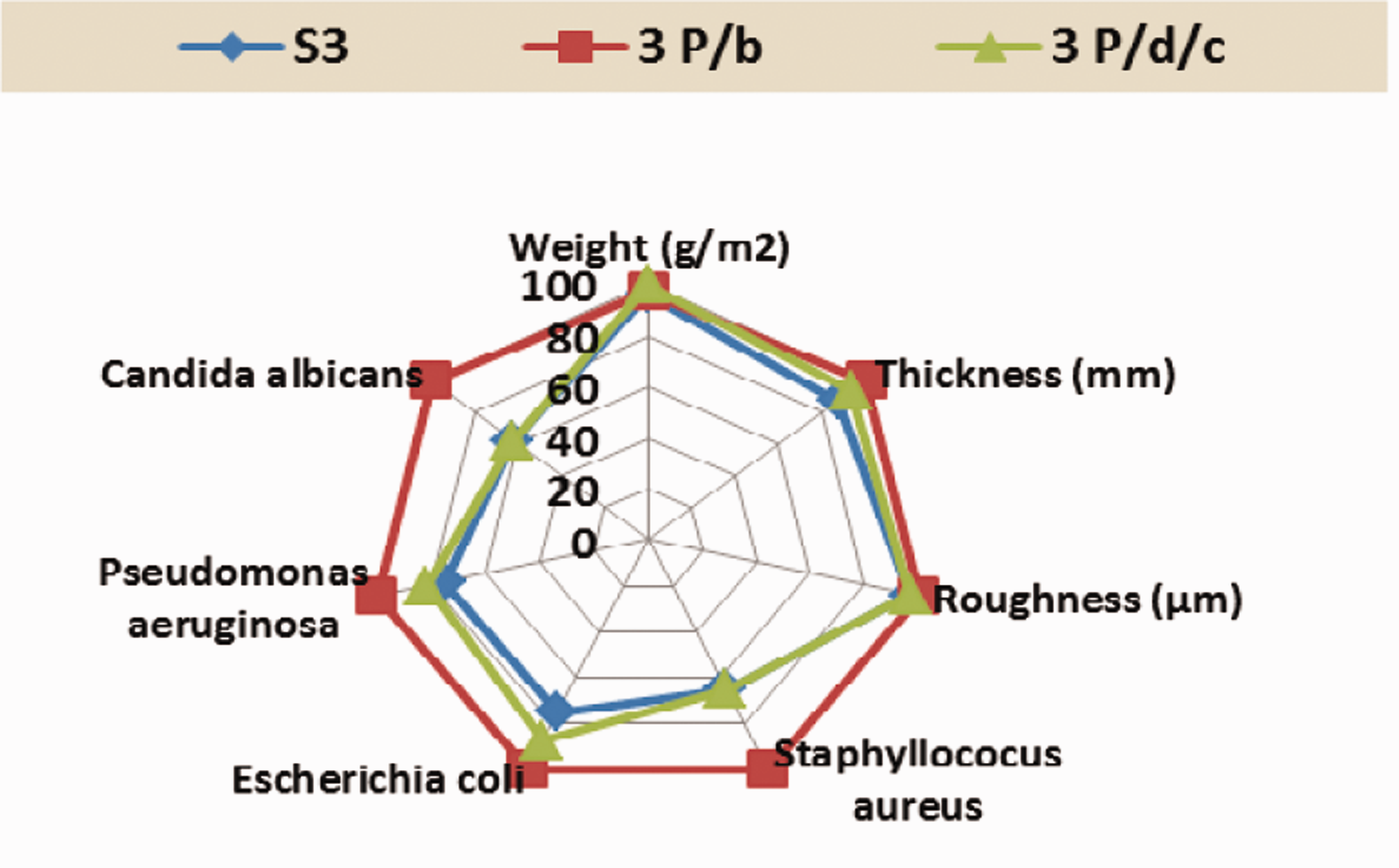
Properties evaluation of blank and treated imitation gauze weave structure samples.
Radar area and quality factor of tests results for all samples.

Transmission electronic microscope (TEM)
The morphology and particles size of the Tancho® emulsion was obtained by Transmission Electron Microscope (TEM) shown in Figure 15, we see that the emulsion particle size ranges approximately from 160 to 225 nm this indicate that Tancho® emulsion in nano form.

TEM of Tencho® emulsion.
Scan electronic microscope (SEM)
The morphology of fabrics which modified with Tencho® emulsion and hydrolyzed GPTMS as cross-linking was studied by SEM. Figure 16(a) to (c) shows that; most of the fabric surface is smooth with modified of the Tencho®/GPTMS emulsion, especially with Pad/Batch treatment method. This is indicating the chemical bonding between fabrics and Tencho® by hydrolyzed GPTMS. It is well seen that there is a homogenous-deposited film of the hybrid ingredients onto the surface of the treated fabric samples of two methods compared with that of the blank samples.

SEM for blank and treated samples by two treatment methods; (a) blank sample, (b) treated sample with pad/batch, and (c) treated sample with pad/dry/cure method.
Second section: Clinical observation for scratching skin of rats
Figure 17 shows that the various stages in the surgical procedure respectively for scratching skin healing of the rats. Although the rats were injected with diabetes type

Healing status of the rat scratching skin during three days (a) first day, (b) second day, (c) third day.
Third section: Samples performance evaluation as a scaffold
The wounds were healed perfectly through the lifetime of rats as a loss in wound area mentioned in Figure 18, and the standard deviation (S.D) for each sample during the lifetime pointed to the high percentage of losses in a wounding area that means excellent healing during the time passes. Also, the wounds that used the treated samples with Tancho® by the Pad/Batch method as a scaffold were healed faster than that used the blank samples. The samples 1 P/b and 2 P/b (samples of plain 1/1 or hopsack 3/3 structures treated by Pad/Batch method); gave the same effect on skin tissues by the clinical observation, which referred to it in Figure 19(7 and 8) because they have the balance distribution between the pores and yarns intersection areas of the fabric surface with the same method of treatment. Therefore, the two different structures have the same behavior of tissue stimulation in order to complete the healing, although the different absorption rates of treatment material as mentions in the effect of textiles structural parameters on surgical healing; a case study [28].

Loss of wound area percentage after healing during the lifetime.
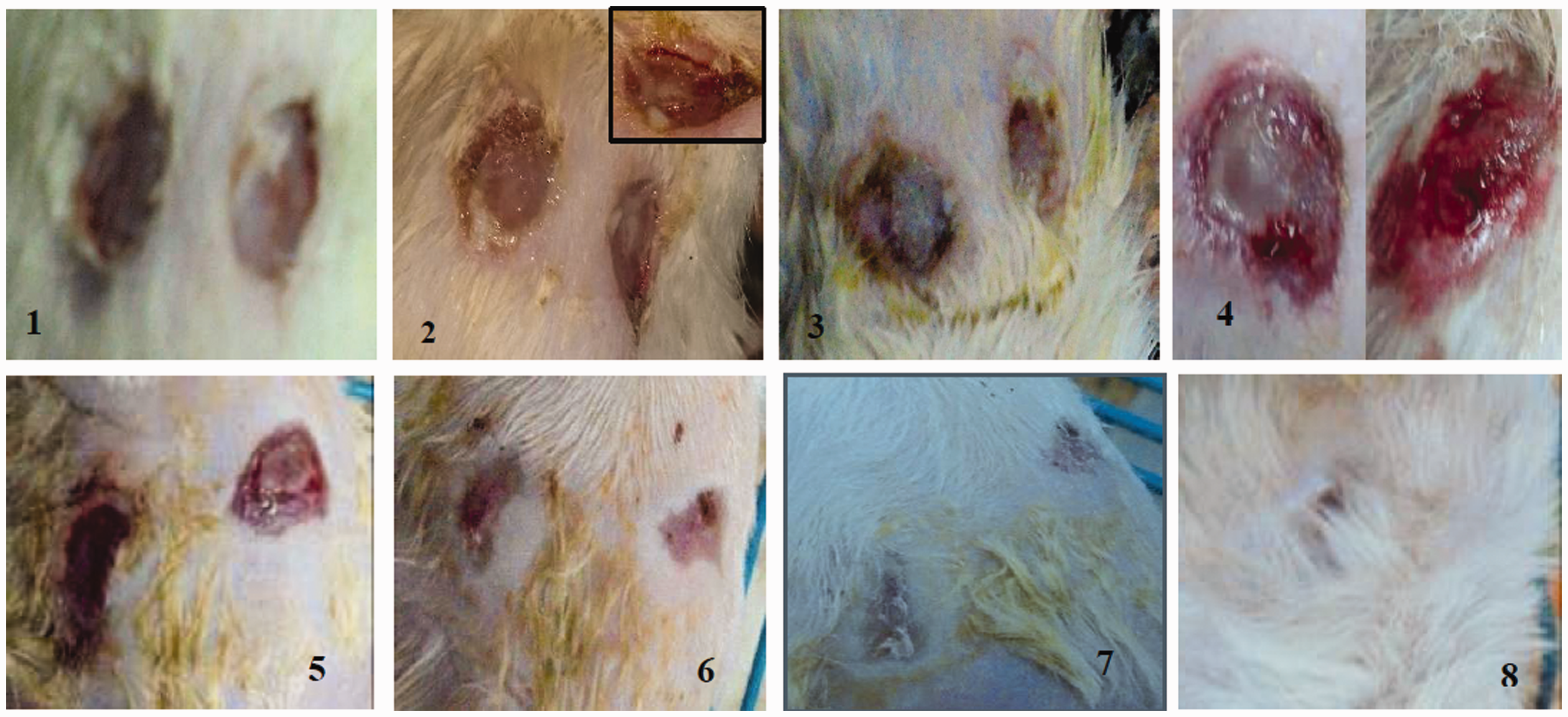
Stages of deceasing wound areas during the lifetime of rats.
Decreasing wounds' areas were shown in Figure 19, and the sup-figures(1–8) pointed to the shape of wound healing during the following-up of the wounds from 1th to 20th day. Also, it was shown that the changes of wound healing shape for skin layers from the circular to the oval shape, it was noted that on the last day and before the merciful death of rats the hair follicles began to grow the hairs on the wound site of skin.
Histopathological changes
Figures 20 to 23 show that the sections of normal skin around the wounds which are supported with different produced woven samples fabric. In the most status of healing; the epidermis was formed of keratinized stratified squamous epithelium and a thin layer of the epidermis was covered by a scab. The dermis was shown dense collagen bundles, many capillaries, few hair follicles, and inflammatory cells. Figure 20 presents a scab covering the wound and incomplete healing of the wound using sample S1 (blank sample of plain 1/1 structure). While Figure 21 shows that the wound healed with the founding of residual foreign materials as the sample 1 P/b (sample of plain 1/1 structure treated by Pad/Batch method), and mild inflammation appeared. Figure 22 points to the early stage of a healed wound with using the sample S2 (blank sample of hopsack 3/3 structure). Finally, Figure 23 shown that the healed wound site without skin appendages using the sample 2 P/b (sample of hopsack 3/3 structure treated by Pad/Batch method).

Epidermal layer is thin keratinized squamous cell epithelium. Dermis showed dense collagen bundles with many fibroblasts, many capillaries and few hair follicles for S1 blank. (H&E, X50).

There is a cover of thin epidermis with minimal keratin. Dermis showed spaces with foreign material, collection of inflammatory cells and many dilated capillaries for sample 1 P/b (H&E, X50).

Epidermis is keratinized stratified squamous epithelium. Dermis is formed of connective tissue layer of collagen fibers. It contains hair follicles, capillaries and sebaceous glands. Apical layer of dermis is folded to form dermal papillae for S2 blank. (H&E, X50).

Epidermis is keratinized stratified squamous epithelium. Dermis is formed of dense collagen bundles with blood capillaries, hair follicles and sebaceous glands for sample 2 P/b. (H&E, X50).
Conclusion
Diabetic foot is one of the most common symptoms among diabetics that they have difficult healing for their wounds. Therefore, the study has presented the samples that weaved to prevent and reduce the diabetic foot symptoms during the early stages using cotton fabrics with simple and common woven structures and treated with Tencho® petroleum jelly that based on the natural olive oil and BHT by two methods of treatment. The experimental surgical applications were performed on the backbone area of the experimental rats to facilitate the follow-up of this area. The experimental surgical was carried out by two different stages, one of them; by scratching for skin surface as same as the cracks of diabetes foot symptom, and supported it by selected produced samples from the results of radar chart. The other stage; by removing layers of skin and use the selected produced samples as a scaffold for skin, and the results were as follows; The cotton samples that weaved by Plain 1/1 and Hopsack 3/3 structures achieved high performance in the surgical application of experimental animals, either treated samples with Tencho® or blank samples for different healing degrees. Pad/Batch method of treatment gave the best effective results for skin healing compare with Pad/Dry/Cure method.
So it can be recommended to use these samples as socks or sock lining or gloves for diabetic patients, to restore the freshness, elastic and sufficient hydration for skin foot, especially during the sleeping time.
Also, the fabrics of this study can be used to make different products such as medical gloves to speed up skin healing and maintain its moisture, as well as face masks to treat the effects of sunburn. In addition to, it can also be developed by treating with other natural plant extracts that have a medicinal effect with the olive oil.
Footnotes
Acknowledgements
The author gratefully acknowledges Pharmaceutical Industries Research Division and Medical Research Division at National Research Centre in Egypt for carrying out the experimental surgery, antimicrobial tests and measure histopathological changes of skin cell.
Declaration of conflicting interests
The author(s) declared no potential conflicts of interest with respect to the research, authorship, and/or publication of this article.
Funding
The author(s) received no financial support for the research, authorship, and/or publication of this article.
