




Abstract
Coated fabrics are widely used in tension structures. In order to investigate the tensile behaviors of the coated fabrics, one group of specimens was cut out from multi-axial warp-knitted polyester fabrics coated with polyurethane on one side. These failure strengths of polyurethane-coated multi-axial warp-knitted fabrics were obtained by the method of uniaxial tensile test and a failure stress criterion is presented for the kind of materials. The results show that the coated fabric is anisotropic material, and the coating has great influence on the mechanical properties of the material. Furthermore, the failure stress criterion can be used for references in material design and application.
Introduction
Currently, large quantities of coated fabrics are present in civilian, monitoring of military programs and so on [1–3]. It has features of a specific strength, good fatigue resistance and damage and safety features which is widely used in a variety of force structures. The fiber-reinforced flexible composite material coated with different polymer compounds enhances the fabric performance to adapt to various uses [4]. Compared with the general composite materials, textile-reinforced composite material is better in integrity and performance [5].
At present, the research on fabric-reinforced flexible composites is mainly focused on the mechanical properties and theory [6]. Kabche et al. [3] studied the inter-tow contact interactions of inflatable membrane structure under different loading conditions and the effect of inflation pressure on the fabric stiffness. Zhang [7] studied the tensile performances in 11 directions and 6 tensile rates, and found that with off-axial angle increasing, the tensile strength decreases, while with the tensile rate increasing, the tensile strength increases slightly. Rong [8] explored the influence of different strain rates on the tensile properties and destruction form of the multi-axial warp-knitted fabric. Chen et al. [9] found that the fabric-reinforced flexible composite material is isotropic within the 20% of the ultimate tensile stress. Hu et al. [10] developed a uniaxial tension model to calculate the tensile modulus of the material in any angle. Dinh et al. [11] studied the nonlinear tensile behavior of the fabric membrane structure under large strain, and a finite element model is put forward to simulate the nonlinear behavior which is in good agreement with the experimental data. Wang et al. [12] investigated the damage of the reinforced flexible composite caused by the single edge notch under tensile condition, and it is quite notch sensitive. Zhang et al. [13] found that the PTFE(polytetrafluoroethylene)-coated fabrics are orthotropic and the temperature has no significant effect on the mechanical properties. They studied the structure, mechanical properties, and other performances, but there is still no study on the multi-axial warp-knitted fabrics which is only coated on single side.
In this paper, we studied the tensile properties of a kind of multi-axial warp-knitted fabric which is made up of high-strength polyester fiber and coated with polyurethane (PU) on one side of it. Uniaxial tensile tests were carried out, and the load and elongation data were obtained during the experiment. According to the tensile testing results, a mathematical model is proposed to fit the experimental data and to provide a basic theory to predict the tensile strength of the similar materials in different directions, which provide a reference for the design of tensioned membrane structure.
Experimental
Material and specimens
PU-coated multi-axial warp-knitted fabric is reinforced by polyester yarns with the order of 0° (warp), 45°, 90° (weft), and 135° which is shown in Figure 1, and it was coated with the PU by tape casting on the one side of fabric, as shown in Figure 2. The multifilament yarns are 1000D/192F high-strength polyester industrial yarn (Zhejiang Guxiandao New Material Co., Ltd). The stitch yarn is 50D/72F DTY PET (Shanghai Jin Xia Chemical Fiber Co., Ltd). Stitching yarns were used to fix the reinforced yarns. The weight fraction of the four strengthened threads and stitch yarn is 20.14%, 20.14%, 28.53%, 28.53%, and 2.67%. The average area density of coated fabric is 863.815 g/m2.
Structure of the multi-axial warp-knitted fabric. Photos of the fabric surface: (a) with coating and (b) without coating.

Specimens were prepared as shown in Figure 3 in 12 directions, they are 0°, 22.5°, 30°, 45°, 60°, 67.5°, 90°, 112.5°, 120°, 135°, 150°, and 157.5°. The gauge tensile size of the specimen is 60 × 30 mm. Each clamping length was 30 mm. The cross-sectional area of the specimen was calculated by the width and thickness on three positions, then using the average data as the width and thickness of the specimen.
Schematic diagram of a specimen.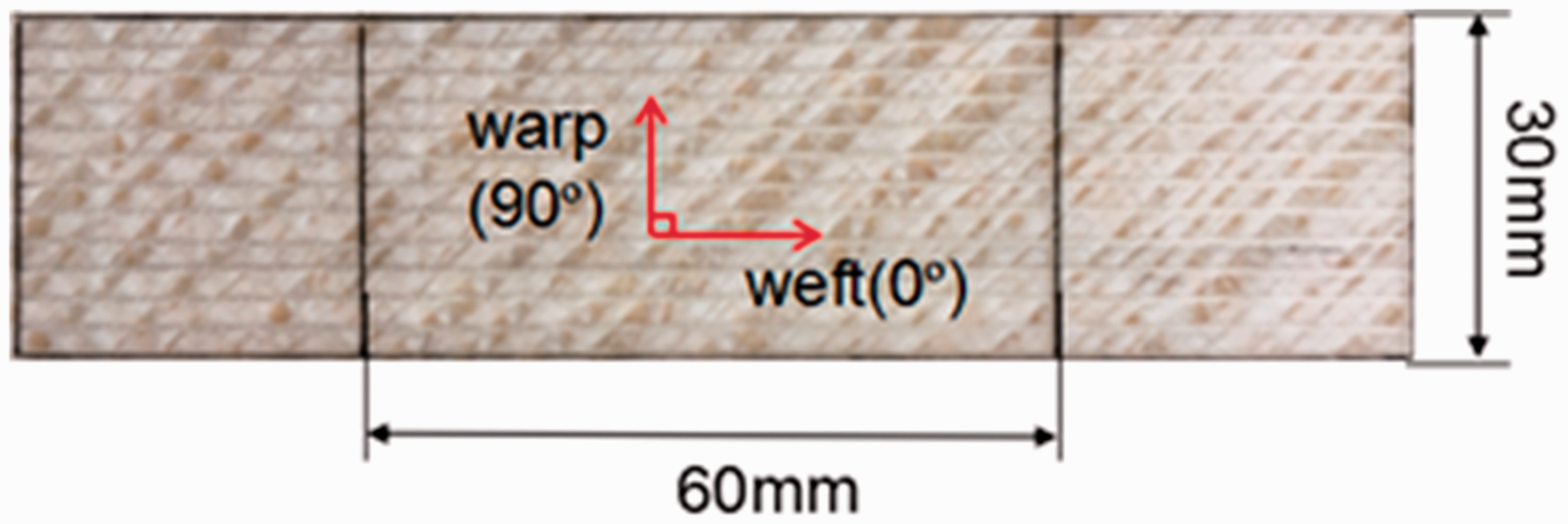
Uniaxial tension test
Quasi-static uniaxial tensile tests were performed at room temperature of 20℃ and relative humidity of 68% on an MTS materials testing machine with a load cell of 0–2000 N and with a precision grade of 0.5% to accurately record the deformation extension and force of the coated fabric specimens. Gripping the specimens with fixtures according to the marked line, and the distance of them is 60 mm. The tensile speed is in a constant speed of 10 mm/min. Three specimens were tested in each angle, and it follows the standard of ISO 5893:2002.
Results and discussion
Tensile properties
Figure 4 shows the stress–strain curves of this material under uniaxial tensile loading. It can be seen from Figure 4 that the failure stress and elongation are different in different directions. The failure stress of 0°, 45°, 90°, and 135° is far greater than the other angles. In other words, the failure stress in the yarns-reinforced directions is greater than the rest angles. Although 0° and 90° have the same fiber mass content, the failure strength of 0° is greater than 90°. This is mainly due to the stitching way of the stitch yarns whose yarn coil is aligned in the direction of 0°. What’s more, the yarns in 0° direction are twisted, and they are arranged in a more tidy and uniform manner, and when the damage failure occurs, the yarns broke at the same time.
Stress–strain curves in different directions.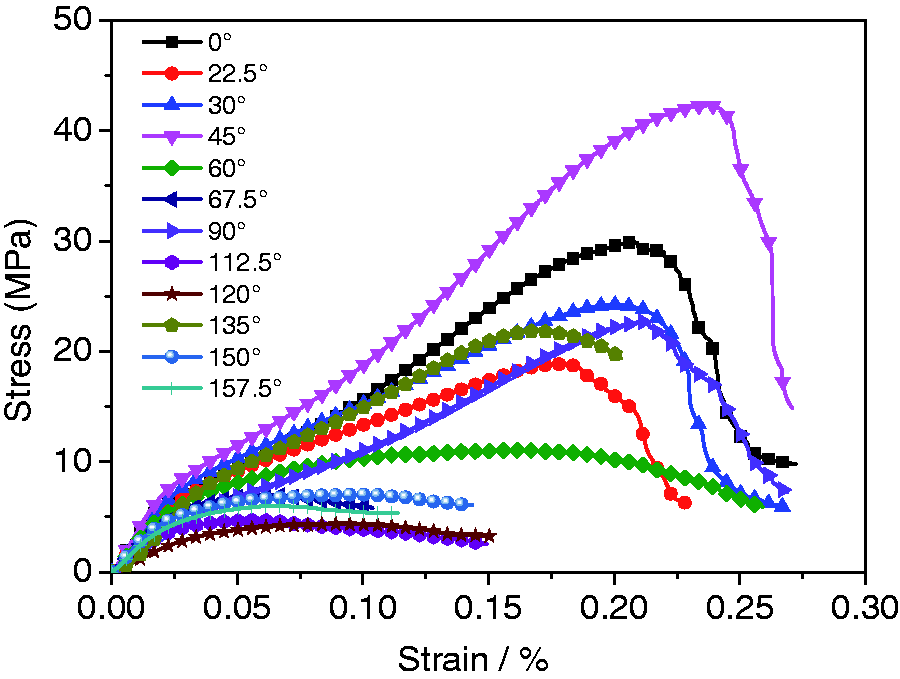
At the direction of 45° and 135°, the failure stress of 45° is greater than 135°, it is mainly due to the order of yarns’ layer. As shown in Figure 3, in 135°, its reinforced yarns are laid on the top layer, without the protection of the coating. When the sample is stressed, it is easy to loosen and slip.
As shown in Figure 4, at off-axis directions, the failure stress in 0° to 90° is generally greater than 90° to 180°. This is also due to the influence of the single side coating. In the range of 0° to 90°, the bearing yarn is close to the coating and is protected by the coating, on the contrary, within 90° to 180°, the bearing yarn is far from the coating side and is not protected by the coating. It reflects that the coating has great influence on the mechanical properties of the material.
Failure stress and strain in different directions.

Criterion of failure strength for this material
Due to the special structure of the material, the failure strength varies with the direction. Tsai-Hill criterion which is mainly used to predict the failure stress of orthogonal materials is not suitable for this material. Thus, we install an empirical criterion to predict the failure strength of this material. The derivation step of the empirical criterion is shown as follows.
Firstly, we put forward a constant ‘a’ which is used to reflect the isotropic characteristic of the material.
In order to characterize the enhancement effect of the four-axial-reinforced yarns, the equation Enhancement effects of the four-axial-reinforced yarns.
It has been understood that the stitch yarns which used the tricot stitch have reinforced effect in the 0° direction. Function of (a) The modification for 0°. (b) The modification for 45°.
The fiber counts in 45° and 135° are more than those in other directions, and the failure strength is larger too. Therefore, we use The modification for 135°.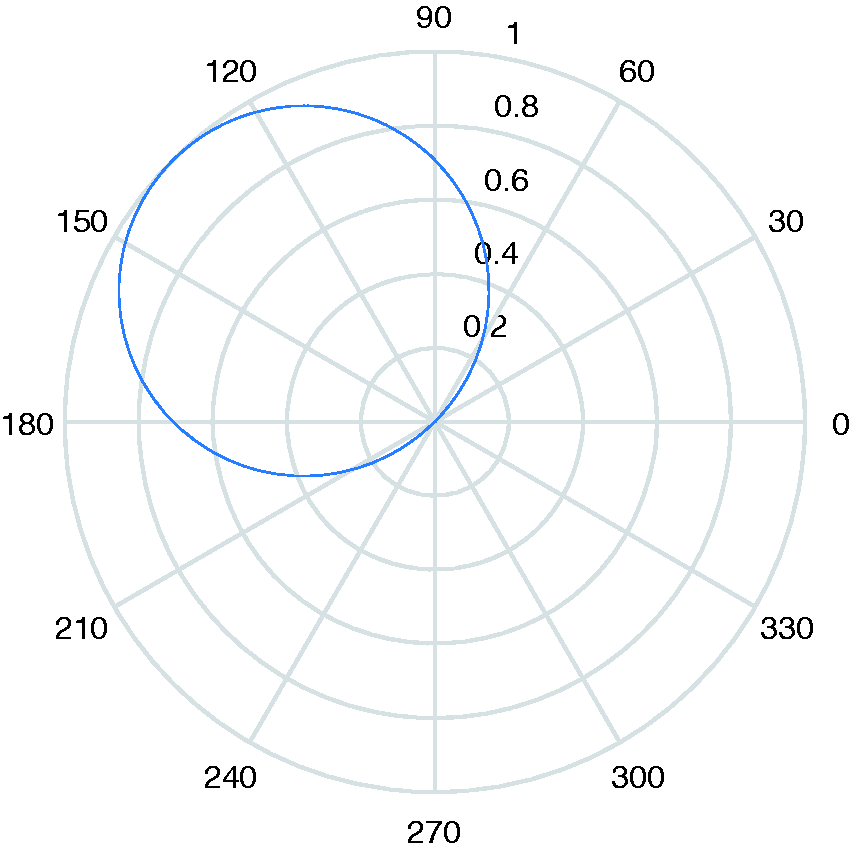
The bundle yarns which have great influence on the failure strength, the equation of The modification of stitch yarns.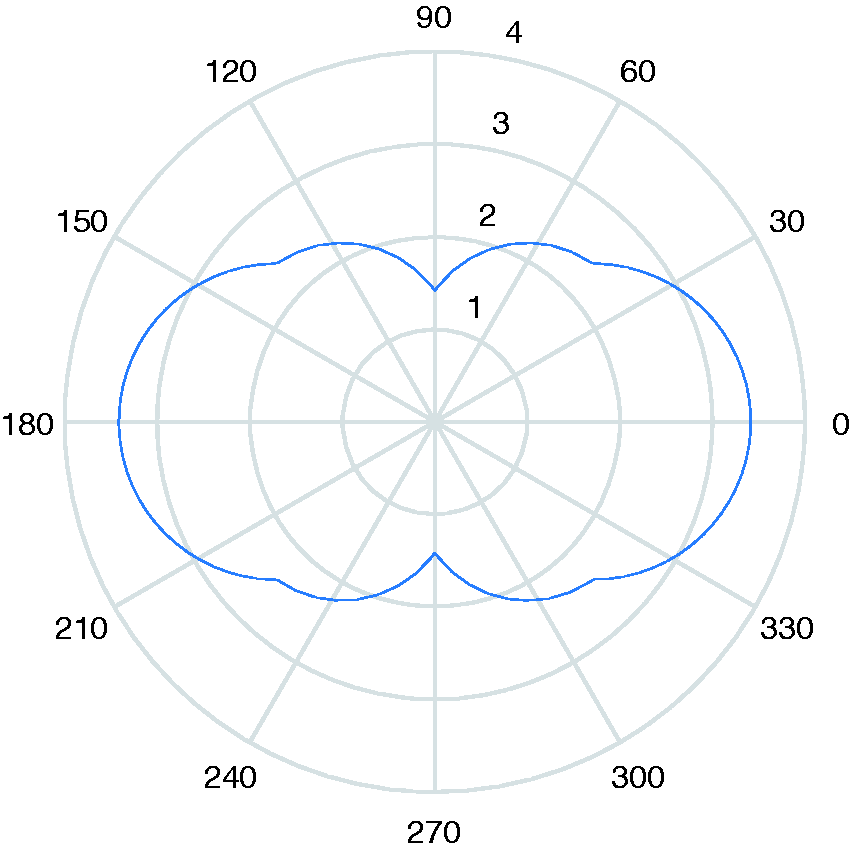
Combination of these equations becomes the empirical criterion to predict the failure strength for our material. The empirical formula is expressed as follows

In this formula, F(x) represents the failure stress, x represents the angles which ranged from 0° to 180°, and a, b, c, d, e, and f are the parameters.
Comparison between the experiment result and the prediction result of the model
Figure 9 gives the comparison of the experiment data and the prediction data of the empirical criterion. It can be seen that this is an anisotropic material, and the errors in the direction of 0° and 45° are larger than those in the other directions. The failure strength in the fiber-reinforced directions is larger than that in the other directions, and the prediction results agreed well with the experimental results in most of the specimens, except that in 45° direction. The error could be due to the one side coating of this material which makes the material unbalanced.
Failure strength predictions by the failure strength criterion.
This formula provides a simple way to know the failure strength of this material in any angle. It provides certain reference significance for membrane structure design, such as the tensioned membrane structure which is shown in Figure 10. The four-axis reinforcement material and the octagonal membrane structure are perfect match, and the maximum span must be designed according to the lowest failure strength in all tensile directions of the material.
Design of the upside down membrane structure.
Conclusions
The mechanical properties of this material were studied in different directions. The stress–strain curves show significant difference in different directions, which means that this material is an anisotropic material. And in the 45° direction, which has the most fiber counts leads to the maximum failure stress in this direction. It means that the fiber counts have influence on the mechanical property of the material. By in-depth analysis, it can also be noted that the coating has an influence on the mechanical property too. Although the yarn counts are the same at the direction of 45° and 135°, the failure stress of 45° is greater than 135°. At the off-axis, the failure stress in the range of 0° to 90° which is close to the coating side is generally greater than that in 90° to 180° range. This means that the failure strength of the loading yarns which lie closer to the coating side is larger.
Based on the experimental data, a failure strength empirical equation is put forward; it is a Fourier transform function which consists of several trigonometric functions which represent the reinforcement effect of the yarns. The empirical formula shows great efficiency in our experiment, and the data calculated by the failure criteria can be used as a reference for choosing and designing the material used for upside down membrane tensioned membrane structure.
Footnotes
Declaration of conflicting interests
The author(s) declared no potential conflicts of interest with respect to the research, authorship, and/or publication of this article.
Funding
The author(s) disclosed receipt of the following financial support for the research, authorship, and/or publication of this article: This work was supported by the municipal graduate student research innovation project of Chongqing (No. CYS17070), Scientific and Technological Research Program of Chongqing Municipal Education Commission KJ1403102, and Chongqing Research Program of Basic Research and Frontier Technology (cstc2017jcyjAX0003).