




Abstract
The paper determines that the cause of retardation of innovation for industrial filtration applications is commercial supposition rather than technical performance. The paper describes a multi-dimensional framework for characterizing the required filtration attributes for attaining a more sustainable filter for bespoke industrial applications. This framework appreciates the fact that bespoke applications have complex environments as such a subjective approach is taken and the results are indexed to that used commercially in the application. Paint exhaust filtration has been used as the papers' framework example and laboratory characterization of this bespoke filtration is undertaken revealing the multiple key areas of focus. This multi-dimensional approach demonstrates it is possible to utilize subjective visual characterization followed by quantitative methods as an effective facilitator of sustainable filtration re-engineering.
Introduction
The purpose of this paper is to characterize a bespoke filter application with a multi-dimensional framework; in order to set parameters that are relevant to a more sustainable filter solution. Paint exhaust arrestance filtration was chosen as it is recognized that this filter application has not been optimized in sustainability terms [1]. The automotive manufacturing industry and consequently paint application practitioners have a legal obligation to consider environmental best practice [2,3] and choosing this area as the framework example would facilitate the development of an engineered exhaust filtration, which provides environmental benefits to the industry, these advantages would potentially offer a reduction in hazardous waste [4] and therefore sustainable filtration for the industry (www.cpduk.co.uk).
The paper characterizes the mode of filtration employed by current commercially available paint exhaust filtration, as utilized globally in the automotive paint finishing industry. The industry standard filtration in this area is known commercially as glass fibre paint stop and is widely identified in industrial practice as GFPS. This exhaust media has not significantly changed in over 30 years [5] and it is this industry standard filtration that is used as the basis for the current practice indexing against which multi-dimensional characteristics of alternative paint arrestors are compared.
The objective of the characterization is to determine the multi-dimensional subjective properties demanded by the industry; in order that an innovative filter can be developed from the wider range of textiles that have been developed over the last 30 years and which are now commercially available.
The paper starts with a preliminary observation of commercially contaminated filtration media. The six main categories of interactions that cause particle deposition in filter media are considered in terms of scanning electron microscope (SEM) analysis. From this qualitative SEM review, a methodology is established which utilizes a laboratory scale test apparatus; Bolton 1 as depicted in Figure 1; this apparatus empirically contaminates the filtration with industrial paint finish allowing laboratory-contaminated samples to be compared and characterized by quantitative methods.
Bolton 1 test rig.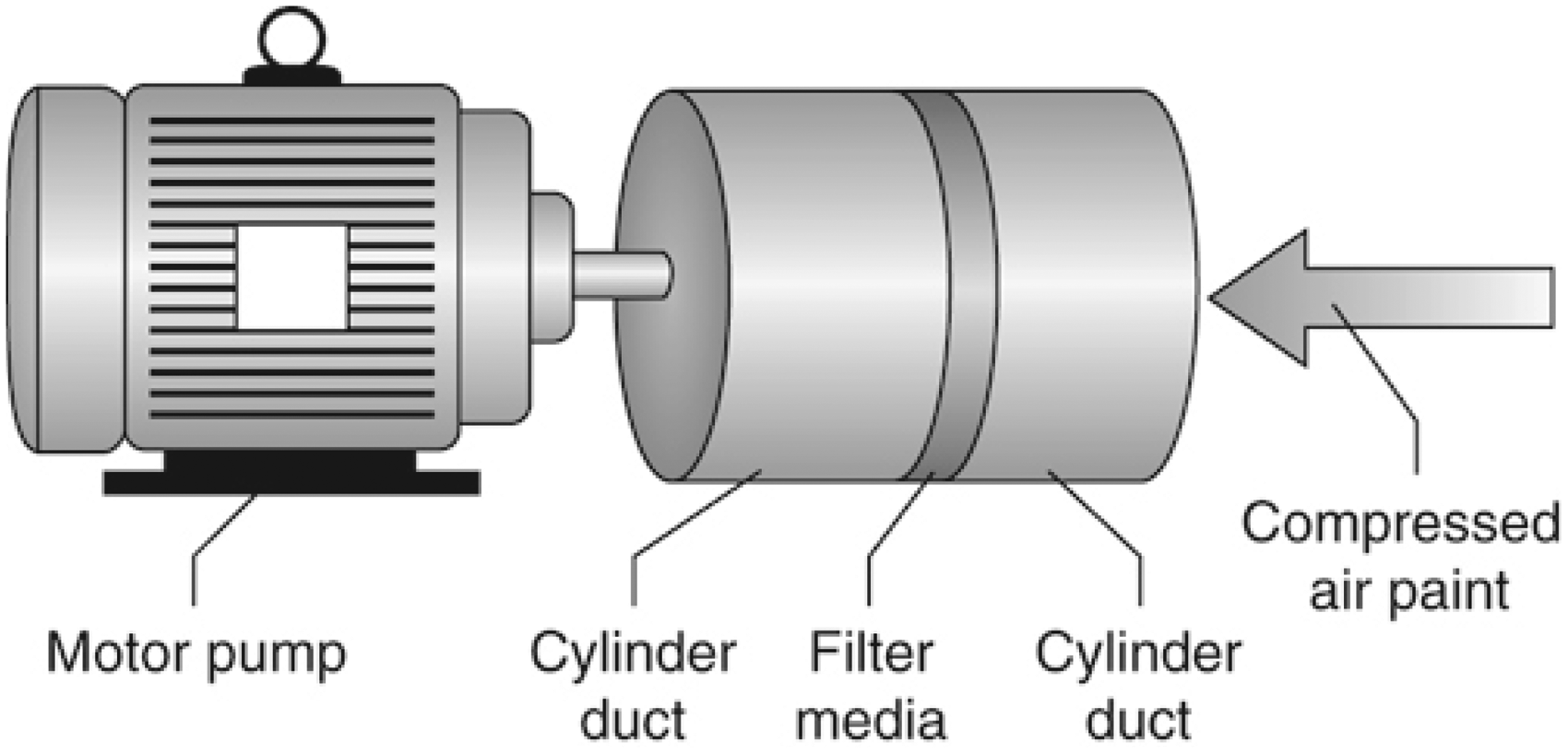
The methods chosen take into account the identified modes of filtration and also consider the desired outcomes in the commercial environment, thus ensuring that the substance of this paper does not only academically contribute to the body of knowledge in paint exhaust filtration but is also valuable to the manufacturing practitioners.
The research purpose was to create a framework for identifying potential textiles for bespoke filter applications, it was developed by an experimental investigation of paint exhaust filtration. Academic review of this area is limited [1]. Schweizer's [6] paper gives an overview of the media used, but what is significant is that the filtration available to the industry in 2014 has not developed significantly during the last 17 years since Schweizer's paper was published, notwithstanding the fact that the global industry now has much greater environmental legislation impacting on the production processes (www.defra.gov.uk; www.epa.gov).
It can be surmised that one reason for the lack of development is the low cost of this filtration. The exhaust filtration is a by-product of the paint manufacturing process and as a consumable item, it adds no intrinsic value to the manufactured product. The automotive industry is challenged with minimizing cost in a saturated market, and as such the driver is to meet the needs of the increasing environmental challenges at the lowest possible cost.
In some areas of production, best available techniques (BAT) [7] have been determined for the paint operation of automotive manufacture. This is not currently the case for filtration, so the market drive for low cost has suppressed the motivation for the textile industry to optimize a filtration product. This paper strives to consider the environmental challenges [1]. It analyses and characterizes the commercially available products in terms of their mode of filtration and considers these modes in terms of environmental performance for this end-use.
The research priority is the optimization of exhaust filtration in sustainability terms [1]. It is appreciated that cost engineering may be required to make a new exhaust filter commercially viable, but this paper sets out the focus that environmental solutions need innovation and the commercial market can stifle this innovation. It aims to tackle the issue of characterizing the optimum filtration system first, then offers the potential for subsequent research to design, develop and fully characterize this new engineered media at a commercially acceptable cost.
Materials and method
Materials
Three commercially available paint exhaust filtration media are considered, these are
Glass fibre paint stop supplied by Beta Group Ltd
This is a wet-laid high-loft glass fiber nonwoven fabric which is seen as the key industry standard as a primary layer filtration. It has been used for over 40 years [6]. Historically, it has been seen as advantageous due to its low cost and solvent resistance, however, the solvent content of automotive paints has been reduced significantly and this advantage is no longer seen necessarily as a key attribute.
Generic fibre type: Glass
Nominal weight: 300 g/m2
Nominal loft: 75 mm
Nominal filter construction: Graduated density wet laid nonwoven
Supplier code: GPS100
Application: primary exhaust filtration
Columbus Paper
This is a stitch-bonded craft paper which is favored in applications that require a higher paint arrestance for primary layer filtration. It is manufactured by Columbus Industries in the USA (www.collind.com)
Generic fibre type: Cellulosic craft paper
Nominal weight: 300 g/m2
Nominal Loft: 25 mm
Nominal filter construction: Stitch-bonded diamond cut craft paper
Supplier code: Yellow tag
Application: Primary exhaust filtration
Thermally bonded synthetic nonwoven
This is extensively used commercially, it is usually used in conjunction with one of the previous media as a secondary layer filtration. It has been added to the construction in order to improve the exhaust “arrestance” to meet the needs of the more stringent emission legislation held within the industry emissions legislation (www.defra.gov.uk; www.epa.gov). It is produced by many nonwoven manufacturers globally. The sample utilized was manufactured by Freudenberg Filtration Technologies.
This sample was excluded from the SEM analysis as it is a secondary filter and it was deemed appropriate on a subjective basis to compare contaminated filtration of the same application, namely primary exhaust arrestors.
Generic fibre type: synthetic polyester
Nominal weight: 300 g/m2
Nominal Loft: 20 mm
Nominal filter construction: Graduated density cross-laid thermally bonded nonwoven
Supplier code: PSB275
Application: secondary exhaust filtration
Methods
What this paper considers is the recognized fact [6] that filtration is an infinitely complex subject, due to ever-increasing filtration requirements, in so much as the fundamentals of filtration explain the general principles, but in reality a filter's end-use performance is always very specific. In the case of paint exhaust filtration the commercial end-use performance of the filter is affected by many factors including the type and brand of paint coating applied, the ambient conditions of the paint facility, the airflow specification, the functionality performance of the facility and the filter maintenance program. In this complex environment the sustainability performance of a filter is multi-dimensional. It is consequently important to have a multi-dimensional methodology.
In order to establish the appropriate test methods, a two stage analysis was undertaken, firstly commercially contaminated primary filters were examined with a qualitative SEM analysis to compare the mode of arrestance for the three media, and to ascertain the appropriate test methods for the laboratory scale analysis. This subjective analysis is useful as it demonstrates not just what a filter is containing but is also indicative of how it is containing it. The clean media was then characterized quantitatively in terms of pressure drop by measurement on an EN779 test rig [8]. The media was then contaminated on a laboratory scale test rig, Bolton 1 as shown in Figure 1, where controlled loading of the specimens could take place. The specimens were loaded with industrial basecoat supplied by McLaren Automotive and manufactured by AKZO The laboratory-prepared specimens were finally characterized further to establish an index against the glass fibre paint stop.
Laboratory methods
The preliminary analysis, discussed in Table 5, suggests that there was a need to focus empirically on the following potential laboratory characterization techniques.
Characterization of pressure drop including air permeability. Characterization of arrestance – a measure of the media's effective use of the inertia mode of filtration. Characterization of absorptive properties of the filter media – a measure of the media's effective use of absorption to retain contaminate.
It was hoped that a better understanding of these properties could offer the potential to engineer an environmentally idealized filtration media for this very specific end-use application. Beyond this end-use application, it was also envisaged that the methodology of SEM analysis followed by the laboratory scale characterization could offer an effective route to specific filter development for other bespoke end-uses.
The characterization was carried out under laboratory conditions because the paint application industry is notoriously variable [6]. Laboratory samples needed to recreate the modes of filtration seen in the commercial environments. A test rig to apply the contaminants to filter media was developed, the test rig Bolton 1 is shown diagrammatically in Figure 1.
The test rig had the potential to be end-use specific. End-use-specific rigs have previously been shown to be useful in understanding comparative fractional efficiencies [9]. The ASHRAE 52.2 2012 (www.ashrae.org) derivative utilized by criteria [10] was particularly effective because it characterized the fractional efficiency of different paint arrestors as well as paint weight arrestance.
This dual approach is associated with the prevailing test methodology for air filtration. This standard is EN779:2012. The test rig for this standard is designed to enable the grading of air filters in terms of their arrestance of particulate and their fractional efficiency in terms of the particle size retention. EN779:2012 grades the filters categorizing them first into Coarse (G Grade) Medium (M Grade) and Fine (F Grade). EN779:2012 is intended as a generic test method utilizing a standard test dust. This dust is not intended to be end-use specific and as such will not have the same relationship with the filter media as the actual contaminant in the filter's working life.
The Bolton 1 test rig is designed to load actual contaminant in order that the mode of filtration, as distinct from the filter's final performance, can be characterized. This characterization can then facilitate continuous innovation in filtration. In simple terms the analysis is aimed at a subjective understanding of not just what is happening in terms of final performance but how it is happening, such that future engineering innovations can be made.
The focus of the analysis is on comparative performance against commercially available media such that commercial performance would be maintained as the key index for new developments.
Scope of laboratory scale methodology
All media were contaminated on the Bolton 1 rig by utilizing commercially available solvent-based basecoat. The contamination involved spraying into the rig's airflow with a Clark air KIT1000 spray gun with a constant load for 1 minute. The arrestance mass was documented immediately following the contamination.
Bolton 1 test rig arrestance results.

Air permeability test results.

Percentage loss in air permeability following Bolton 1 rig contamination.

Significant result Columbus media air permeability improved following contamination and drying. Discussed in the Evaluation and Visualization section.
Filtration categorization.

Results and discussion
SEM analysis
Significance of mode of filtration to end-use application and environmental performance.

Glass fibre paint stop SEM analysis
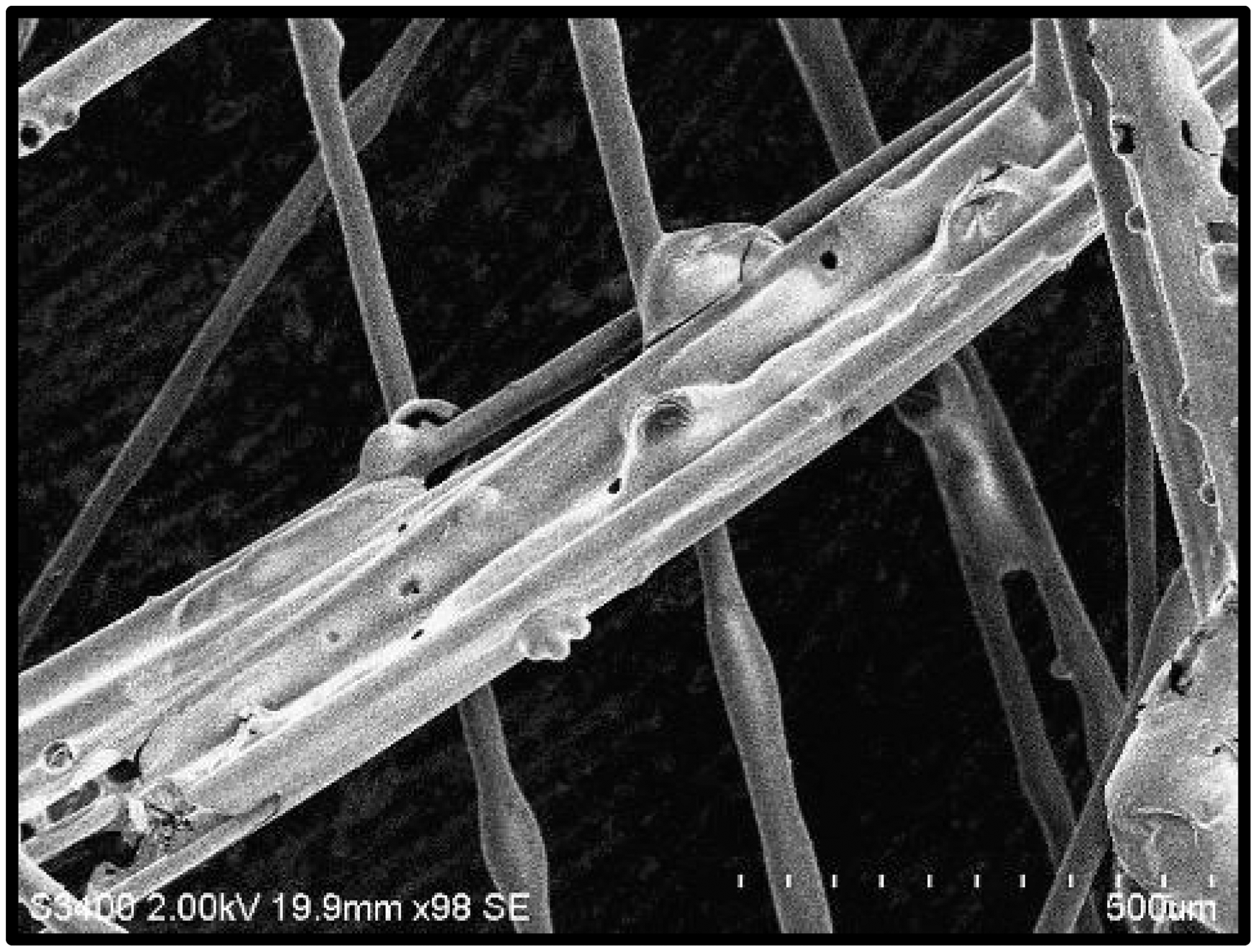
The analysis of commercially contaminated glass fibre paint stop exemplified in Figure 2 revealed clear voids facilitating air flow and potentially contaminant bypass. The void size was measured in excess of 500 micron, with evidence of a paint “filtration cake” building up on the filtration media. The lodging of large paint particulate >5 micron was evidenced and, when this is cross referenced with the mode of filtration, it can be deduced that these particulate have the mass to be filtered by inertia and since the voids are larger than the particle size the interception phenomena is likely being utilized by this filter media. It was also evident that the media did not “wet out” [11] the contaminant, as contaminant in droplet form was evidenced on the glass fiber.
SEM image of commercially contaminated glass fibre paint stop.
Columbus media
The SEM analysis of commercially contaminated Columbus media showed particulate >5 micron in size; again suggesting inertia as a key interaction in the filter's performance, a significant observation is the very large voids greater than 500 micron in size with the potential for contaminant bypass; but also offering the potential to reduce the filters pressure drop. Absorption was evidenced by the “wetting out” of the paint contamination as it was “soaked up” by the craft paper as shown in Figure 3.
SEM image of commercially contaminated Columbus media.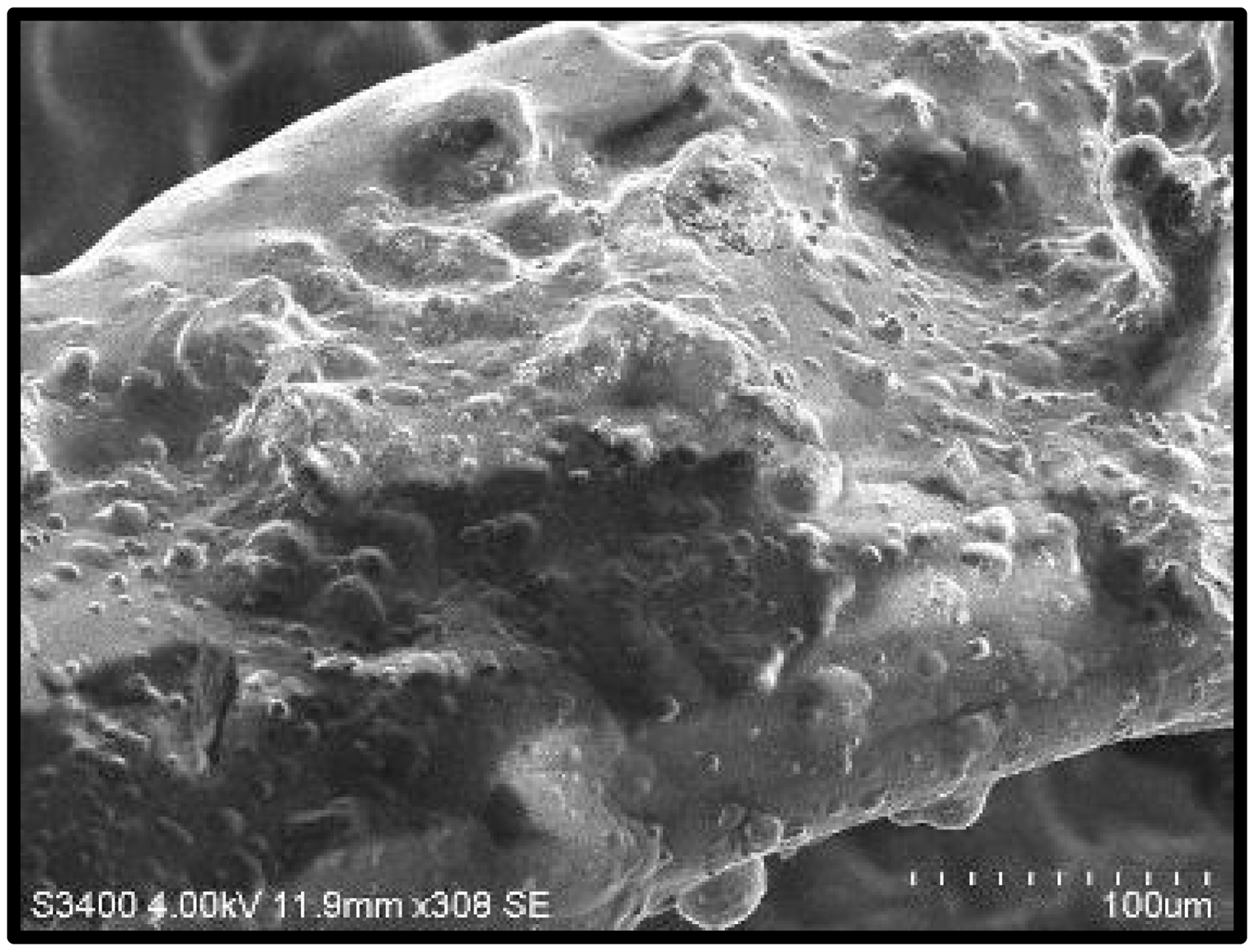
EN779 test rig pressure drop results
The SEM analysis evidenced voids in both media to offer the potential for appropriate filtration airflow dynamics. The specification for filtration airflow is characterized in industry by initial pressure drop as defined in EN779:2012. All media were tested to this specification for comparison and Figure 4 depicts the pressure drop results of the commercially available media.
Initial pressure drop of exhaust filter media.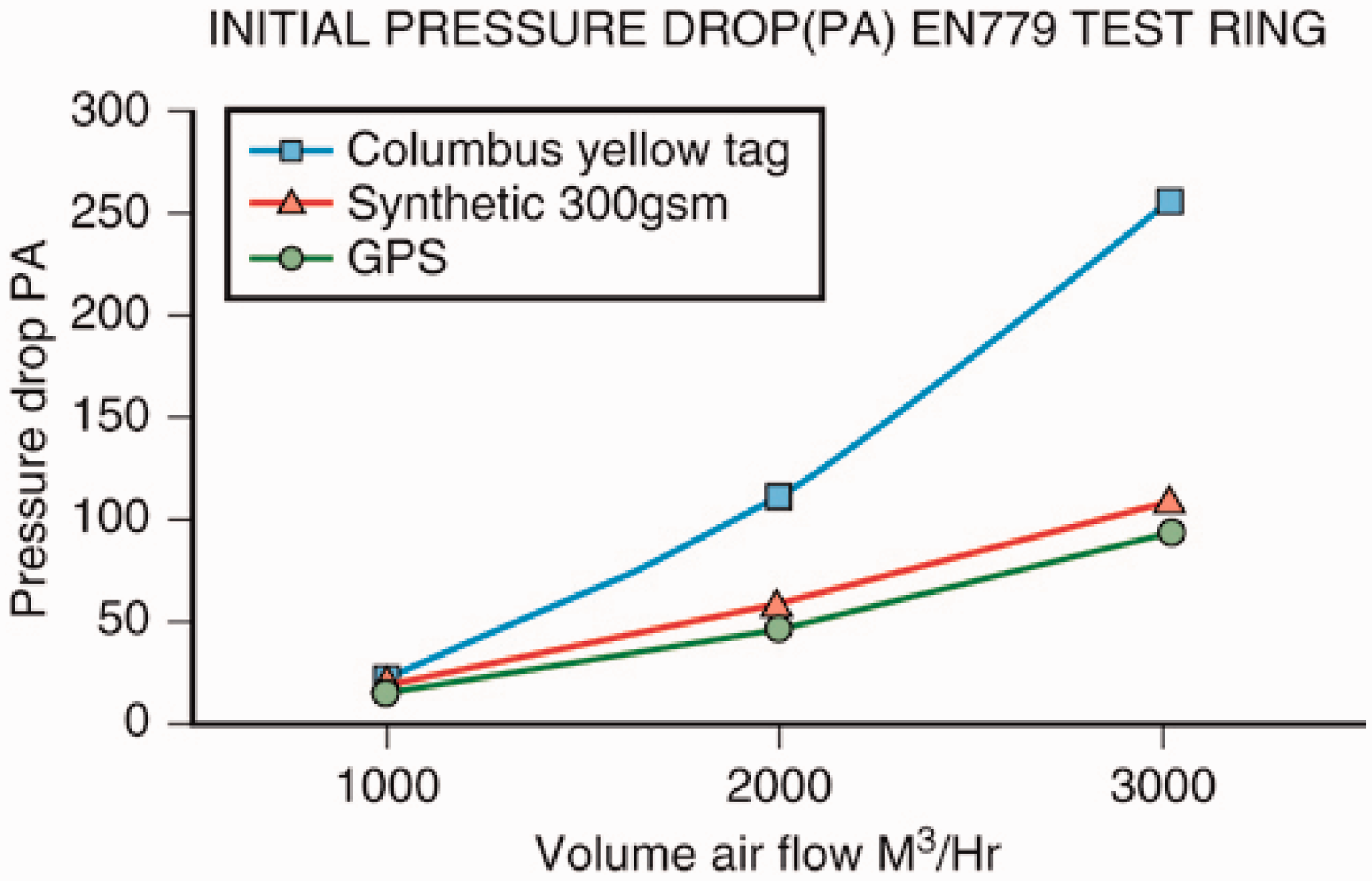
Figure 4 highlights the production advantage of glass fibre paint stop (Beta Group Ltd- GPS) in that it has a lower initial pressure drop; according to conventional theory this will support a longer production life, before the filter has become significantly blocked such that the airflow of the spray booth has been compromised.
SEM evaluation of laboratory contaminated paint arrestors
A qualitative SEM analysis of the laboratory-contaminated media was undertaken, the evaluation of which was assessed for correlation with the SEM analysis of commercially contaminated media.
Glass fibre paint stop by Bolton 1 contamination
The analysis of the laboratory Bolton 1 rig contaminated glass fiber paint stop as shown in Figure 5 revealed clear voids facilitating air flow and potentially contaminant bypass. The lodging of large paint particulate was evidenced suggesting that the particulate has the mass to be filtered by inertia and that the interception phenomenon is likely utilized by this filter media in the laboratory scale contamination process, as it was in the commercially contaminated samples. It was also revealed that the media did not “wet out” the contaminant, the filter held the contaminant as droplets, in the same way as the commercially contaminated sample had done previously [11].
SEM image of laboratory-contaminated glass fibre paint stop showing voids facilitating air flow. SEM image of laboratory contaminated glass fiber paint stop showing droplet collection of paint contamination.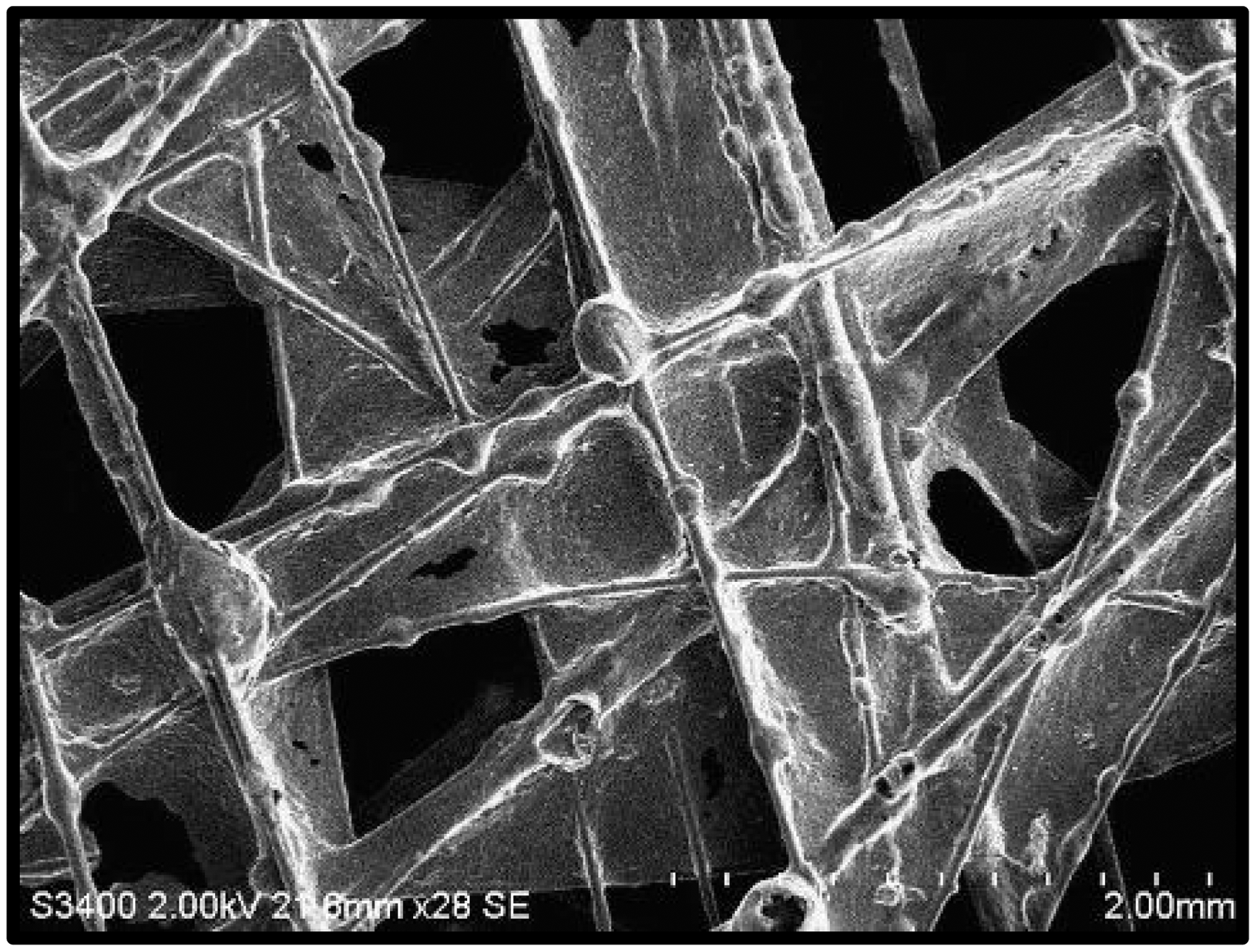
Columbus media
The SEM images of the Bolton 1 contaminated Columbus media showed a similar phenomenon as the commercially contaminated sample in that the exhaust media was evidencing an absorption effect, Figure 7 evidences this in the SEM image showing the “surface absorption” of contaminant rather than the clear droplets exhibited on the glass fiber (shown in Figure 6).
SEM image of laboratory contaminated Columbus media.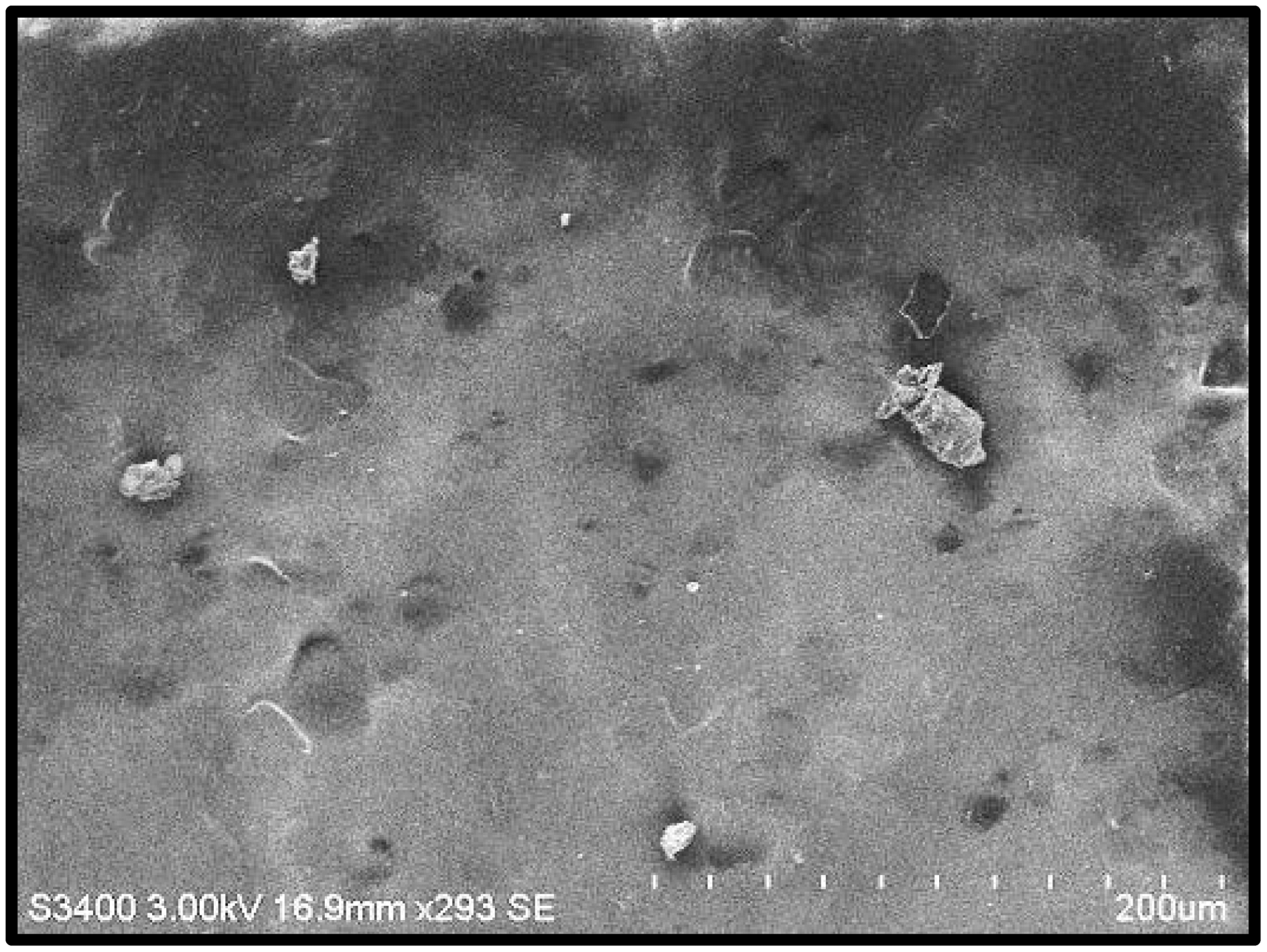
Data analysis
These characterization results were analyzed against the industrial requirements of the filter which are considered to be tangential to each other in so much as
The filter should retain the maximum range of paint particulate particles to meet the VOC emission standards stipulated in the incumbent country globally The filter should offer the minimum pressure drop to the paint shop system to maintain the required laminar airflow over the part to be painted, and at the same time minimizing energy consumption.
The reason that these two desired qualities are tangential is based on the fact that a filter by its nature is a “barrier”; but one which must allow an airflow through. The air can pass more easily through a filter barrier which has many large holes but consequently the contamination can also “escape” through these holes.
To ensure the contamination is “caught up” the airflow path can be restricted. The restriction can be created by the “barrier” nature of the filter becoming more solid, with fewer and smaller holes within it. This change in physical form will ensure a higher quantity of the contamination is withheld in the filter media. The airflow will however also be restricted and as such the pressure drop across the filter will increase. This current knowledge is compared in Figures 8 and 9, and this conventional understanding is the basis on which the subjective SEM analysis was undertaken.
Filter with many large holes. Filter with few small holes.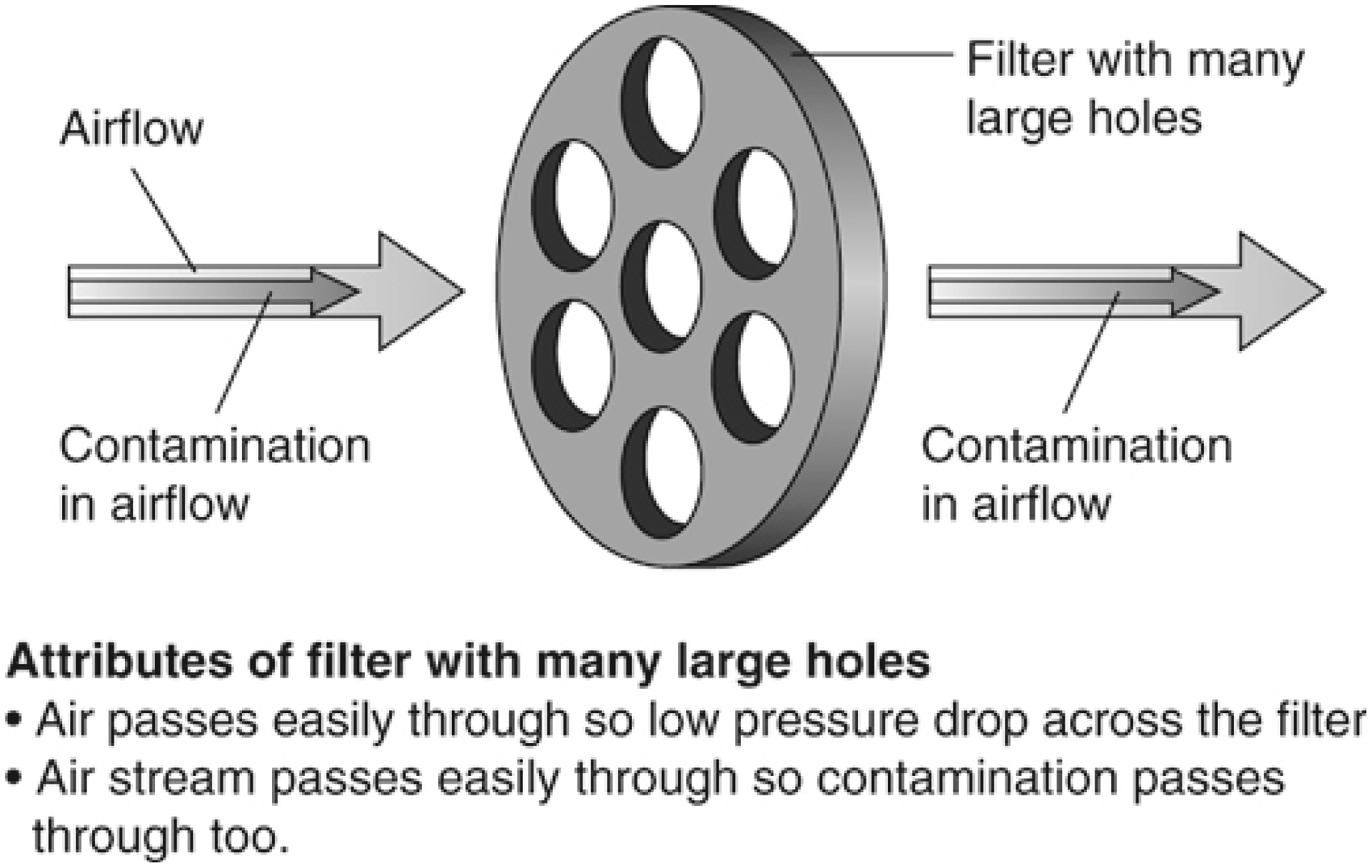
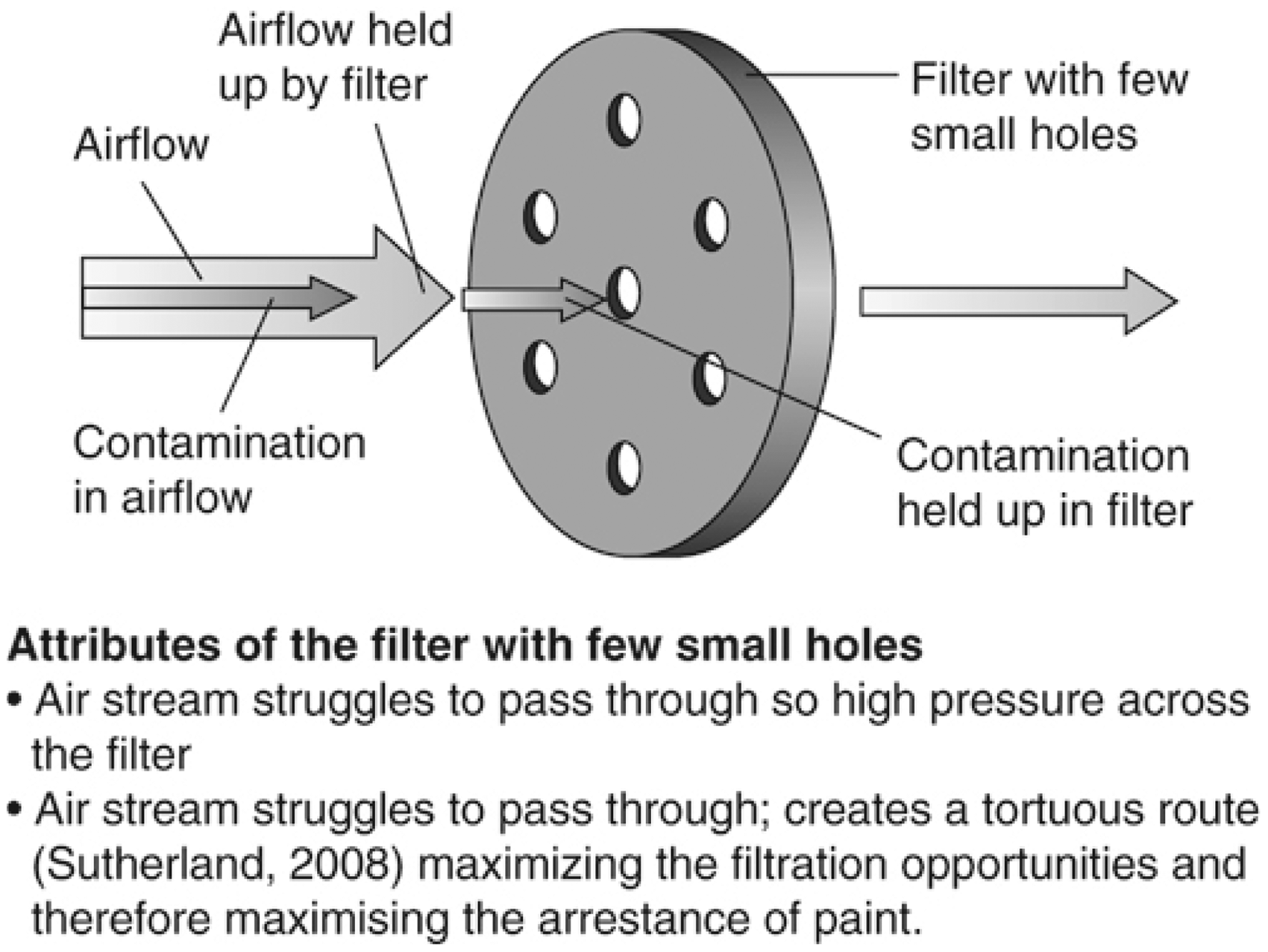
So for this application, it can be considered that there is a tangential continuum of potential filters. At one end of the theoretical continuum there is a filter with a low initial pressure drop, but also a low arrestance of contamination. At the other end there is a filter with a high initial pressure drop but a much higher arrestance of contamination in the airflow.
The significance in practical terms of an increase in pressure drop is that the facility will have a finite operating pressure drop, beyond which the fan system will not provide the specified quantity of air. The manufacturing facility cannot function without airflow and as such the correct pressure drop range is an essential requirement for the paint spray booth. In environmental terms, the filters lifetime i.e. how long it will remain in situ before it becomes industrial waste is directly related to the initial pressure drop as the pressure drop of the filter would typically rise as it becomes blocked by contamination, affecting the airflow facilities until such time as the restriction is above the specified pressure drop and the filter will require changing.
The assumption that these requirements are tangential forms the basis for conventional filter development. Conventional wisdom would dictate that the filter with the lowest initial pressure drop (www.ashrae.org) has the potential to offer longer lifetime, reduced energy consumption and therefore sustainability advantages. This theory has been borne out in filter theory based on the Ashrae 52.2 2012 standards and discussed by Robinson and Ouellet [12]. Air filter characterization has been dominated by laboratory testing by utilizing dry spherical contaminants. This research will instead look at the bespoke solution required for paint exhaust filtration. The contaminant in this case is an aerosol of paint which will dry but will be “wet” when first arrested by the exhaust filtration.
In order to discuss the SEM results, an appreciation of the mechanisms of filtration is required. The fundamentals of filtration are widely appreciated [13] with an understanding that there are six main categories of interaction that cause particle deposition in a filter medium. These categories are considered and documented in Table 4; however, the aim of this analysis was to help to contribute to the body of knowledge in the paint industry of the specific dynamics of paint exhaust filtration; such that any opportunities to design a sustainable exhaust filter which has a better environmental performance [1] can be met.
For this purpose considerations for potential environmental performance were also cross referenced in Table 4 and since the mode of filtration is particle-size-dependent [13] Figure 10 is included to exemplify the prior knowledge considerations, for engineering a filter with a target particle size efficiency; namely that the engineering should consider the appropriate mode of filtration for the application and to consider that this mode will also have potential environmental implications.
Relationship between category of filtration and fractional efficiency performance. Radar diagram representing the index values of synthetic and Columbus media in comparison to the industry standard glass fibre paint stop. Index of alternative exhaust filters in direct comparison to a glass fibre paint stop media grade GPS100. Current practice indexing of the filtration results. Derived target Index values for a prospective commercial paint arrestor indexed to GFPS filter media under the same conditions.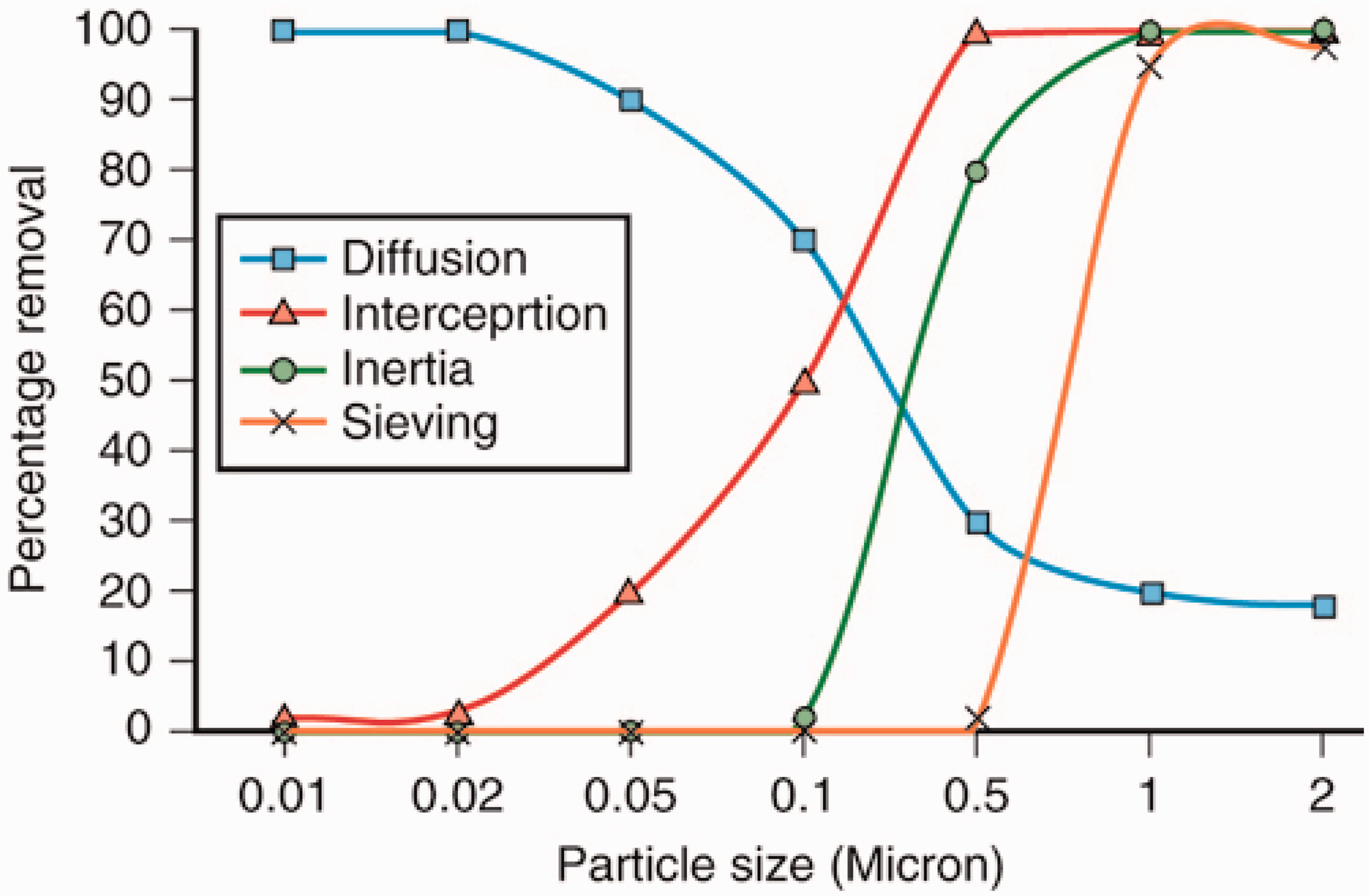


Effect of particulate size on filter efficiency and filter mode utilized
The mode of filtration is particle-size dependent [13]. What is environmentally significant is that the fine particulate <1 micron previously commercially emitted through sieve and inertial filtration now contribute to the volatile organic compound emissions and as such need to be considered in the context of commercial environmental significance. Figure 10 exemplifies present theory that the fractional efficiency of a mode of filtration is particle-size dependent. Paint particulate is nominally of >1 micron in size; however, it is understood that dried paint retained in a filter can “break-up” into finer particulate following initial retention, in this context it would emphasize the fact that although inertia and sieving would be effective at a particle size of 5 micron, the engineering of interception as a mode of filtration would facilitate the retention of “broken” particulate, and thus improve environmental performance.
Current practice indexing
The initial pressure drop, EN779:2012, of the Columbus and synthetic media are compared to that of the glass fiber paint stop and recorded below as an index of this glass fiber result. The results therefore do not have units as they are an index with a base of the glass fibre paint stop result.
Since these media are commercially available, it is surmised that a media with a target of a maximum initial pressure drop index of 2.00 will be commercially viable. However, it was considered that as a characterization exercise, it would be beneficial to consider the air permeability of the commercially available exhaust media as the air permeability is a function of this initial pressure drop and one which can be analyzed on a laboratory scale. To compare the air permeability, once-contaminated laboratory scale contamination was required as the commercial samples could potentially have too great a variation in sample loading.
Evaluation and visualization
The air permeability of contaminated samples in Table 3 shows very significant results. It demonstrated that in the case of the Columbus paint arrestor the filter did not perform according to the conventional filter theory. This conventional theory suggests that over time, as a filter is contaminated, it will “block” and as such the pressure drop will rise in a positive curve as is recorded in the EN779 test procedure (www.cen.eu) and as is exemplified in Figure 12. This increase in pressure drop would be reflected as a drop in air permeability.
Comparison of the pressure-drop curve of conventional filter theory and bespoke filter theory.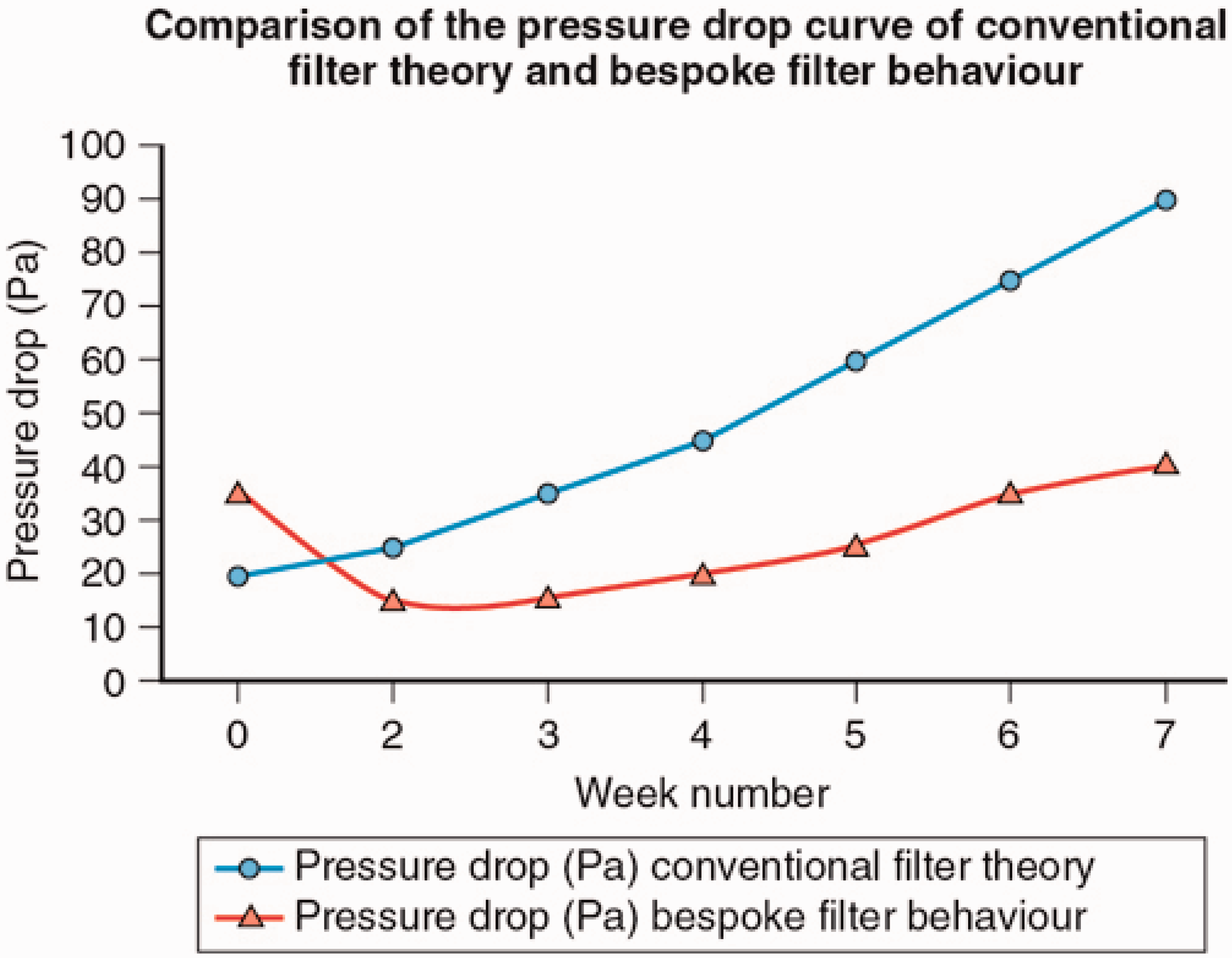
The glass fiber and synthetic samples behaved according to the conventional filter theory. However, the noteworthy result was that of the Columbus, whose air permeability actually increased.
The gain in the air permeability is very significant to the filter's end use application, as it allows extended practicable life, whilst at the same time arresting the paint particulate required. This atypical phenomenon could however be understood by a closer subjective examination of the filter.
When the filter was scrutinized, it could be appreciated by visual inspection that the craft paper was actually “more rigid” once the craft paper had initially absorbed paint contamination and then this paint had dried, thus hardening and actually strengthening the filter itself. In this way for the first time it can be documented that the conventional filter theory is not necessarily applicable to this specific end-use.
The results in Table 3 illustrate that the contamination does not immediately increase the pressure drop during the “working life” of the Columbus filter; the loading of the filter was however limited and if it had continued until the end of the working life of the filter, it is predicted that the Columbus filter would be exposed to a critical mass of contaminate; which would compact the craft paper and return the filter to the behavior of the conventional filter theory.
The premise, however, that the combination of the filter and the contaminate combined can offer a better filtration solution than the filter alone is a very important development. It emphasizes the importance in this application of including a characterization dimension which relates to absorption.
This development demonstrates the complexity of individual filtration end-use requirements and for this reason it was decided that the results should be reflected in a multi-dimensional format so that the optimized filter characterization can be easily visualized. The dimensions were documented as:
1 - Initial pressure drop at 2000 m3/h. 2- Air permeability. 3 - % loss in air permeability following paint contamination and drying. 4- Wet arrestance. 5- Dry arrestance.
One of the major objectives of the research was to retain a commercial principle and for this reason all the results were indexed against the glass fiber paint stop as this filter is still the most widely used filter in the industry and the benchmarked current practice.
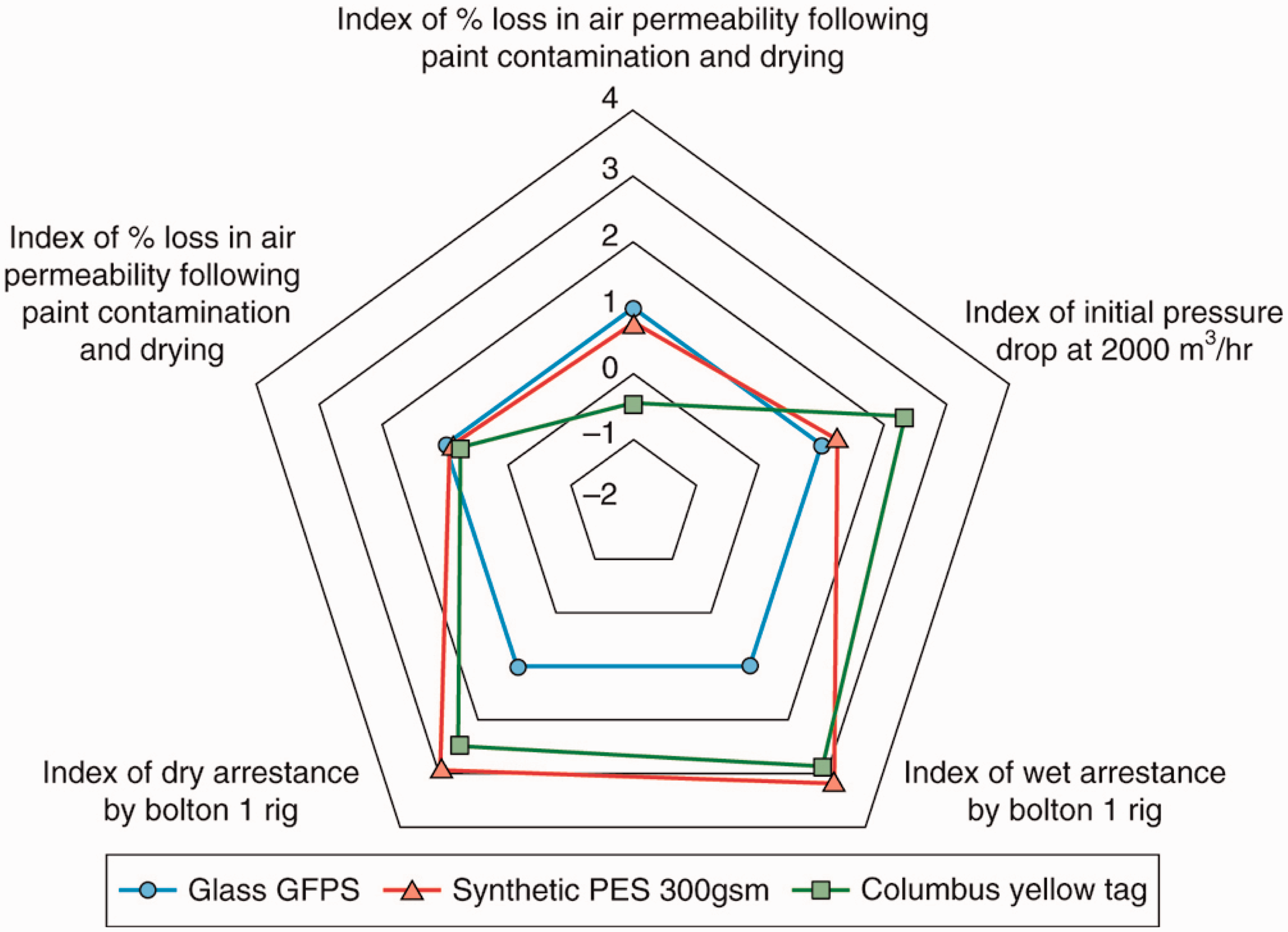
Figure 11 shows a radar chart of the results to gain a multi-dimensional view of the quantitative characterization of the commercially available paint exhaust media. The radar diagram gives a visualization to immediately highlight any potential advantages or weaknesses in alternative arrestors.
The radar diagram shows clearly how the synthetic and the Columbus craft paper filter are characterized in comparison to the glass fiber industry standard, but what needs to be defined explicitly is the desired characteristics of the filter.
Two considerations are required; the first is the index results for those characteristics whose desired characteristics are achieved, if the indexed result is less than one, these are:
The % loss of air permeability. The initial pressure drop.
The second consideration is the results for those characteristics that would exhibit a desired outcome if the results show an index greater than one and these are:
Wet arrestance. Dry arrestance. Initial air permeability.
By using the above considerations the index results shown in Table 6, showed that the Columbus media was the only media to achieve an improvement in the air permeability despite the fact that its initial pressure drop was higher than the glass fiber index. The synthetic fibre nonwoven showed consistently improved characteristics as compared to the glass fiber paint stop, but did not have the air permeability gains of the Columbus media. This can be considered further by a subjective evaluation of the SEM analysis of the laboratory contaminated primary paint arrestors. This SEM analysis showed that, the empirically contaminated specimens demonstrated the same modes of filtration as the commercially contaminated ones, namely inertia, interception and for Columbus media absorption. The contribution of absorption appeared to offer significant environmental benefits. The dichotomy within the paintshop application is the need for increased contaminate retention, whilst at the same time desiring an improved air flow through the filter; the absorbant characteristics of the Columbus media was noteworthy. In the case of the Columbus media, during its working life, the dichotomy is delayed. This delay is significant to the sustainability attributes of the filter in terms of the potential energy usage, by increasing the air permeability of the filter and waste reduction through increased working life of the filter (www.cpduk.co.uk).
The fact that the filter did not display the reduced air permeability, which was expected from the conventional filter theory, demonstrates the fact that specific filter end-use applications can offer what this research has labelled “bespoke filter behavior.” In this instance, during the filter's lifetime, the combination of the filter plus the contaminate can be more effective than the filter media alone, in providing the required performance characteristics.
This “bespoke filter behavior” is conceptualized in Figure 12. This figure is conceptual and included to highlight the target environmental benefits a reengineered filter could potentially offer if its lifetime pressure drop curve can be “skewed” away from a conventional curve, whose pressure drop would normally rise positively with contamination over time, by designing it to synergize with the contaminant. In this instance over time the pressure drop will initially drop but will return to a positive curve following the containment of a critical mass of contaminant.
In the experimental example this was exemplified for the Columbus media; as the absorption of the contaminant and the subsequent drying strengthened the media and improved the air permeability, where saturated contamination had not occurred.
This focus on “bespoke filter behaviour” will facilitate the reengineering of the filtration media. The contaminate, which the filter is separating, will be specifically considered in the design. This research has exemplified the way this relationship is possible and extends the evaluation by reintroducing the multi-dimensional radar diagram of filter's attributes.
Table 7 and Figure 13 depict the potential target index values for a commercial paint arrestor; the targets derived from the present research take into account the “bespoke filter phenomenon” and as such target the improved air permeability characteristics of the Columbus media, but at the same time hope to retain the higher arrestance values than the synthetic media. The multi-dimensional target characteristics will ensure that a filter meeting these index values should provide a more sustainable filter in an industrial paint-shop application [1, 14, 15].
Multi-dimensional target characterization of Paint arrestor.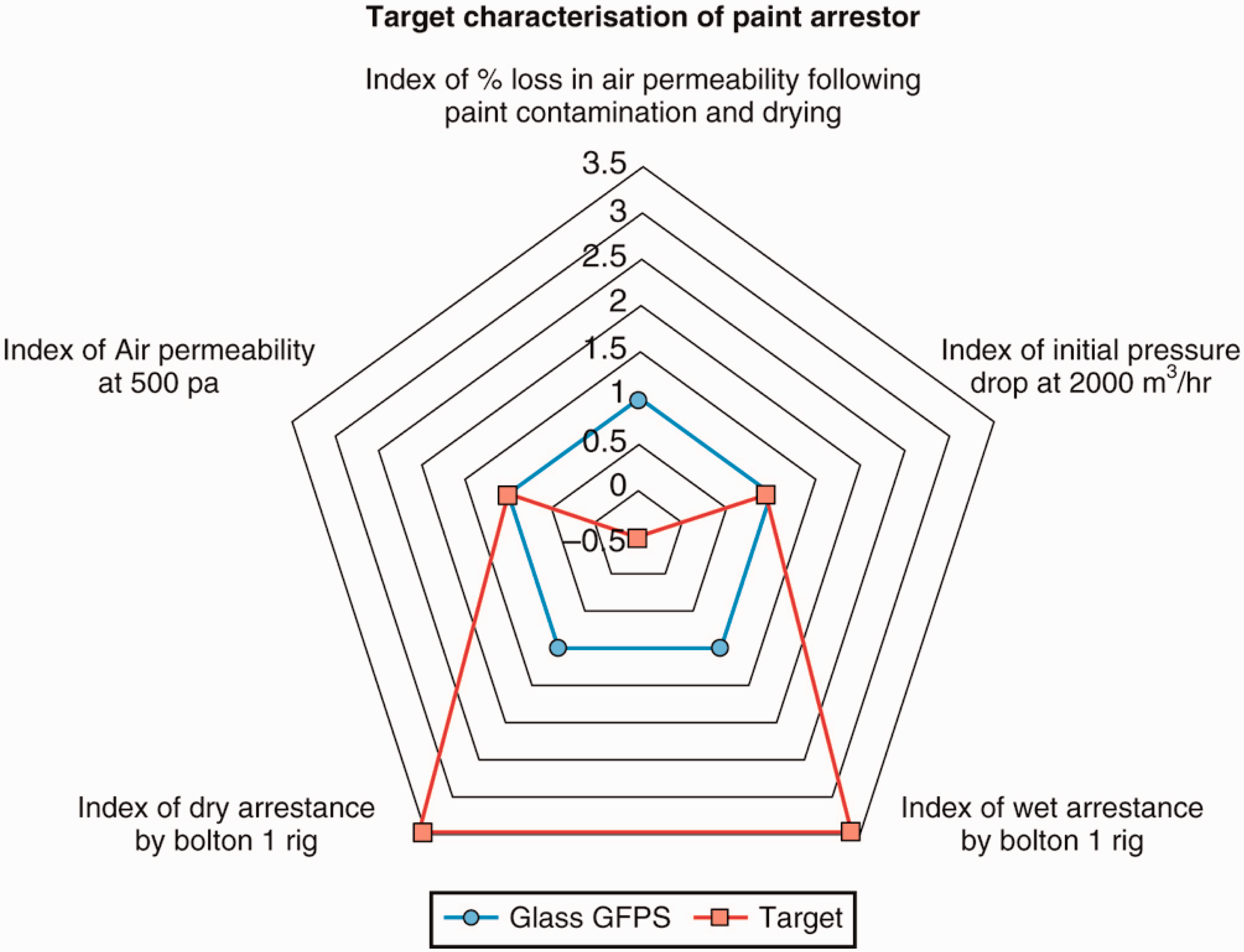
Conclusions
The research work effectively met its overreaching aim to create a framework to characterize the multiple areas of focus, relevant to sustainability, for a paint exhaust filter [16, 17, 18]. It completed this analysis by first reviewing the filtration mechanisms utilized by current commercially available media and offered an academic understanding of how these mechanisms can have an effect on the sustainability performance of the filter in its end-use, namely highlighting the environmental importance of pressure drop, arrestance and absorption.
The paper offers an innovative rationalization of the results in a radar diagram designed to visualize the multi-dimensional requirements of this specific filter. The radar diagram is effective in demonstrating the multiple requirements of a filter for this application. It is visually very helpful to the textile technologist to envisage the difference in shape which is required and encompasses the phenomenon of “bespoke filter behaviour” by defining a new shape requirement moving in this instance from a regular pentagon to an irregular one.
There is merit in the fact that the multi-dimensional characterization facilitated one of the paper's key academic findings specifically the documentation of the deviation from the conventional filter theory for the Columbus media and its relevance to environmental superior performance in this application.
The subjective target characterization index documented in this paper has the potential to be tested against commercially available industrial textiles which have the potential to be utilized as paint arrestors. It will aid the technologist to establish a suitable media for industrial trials that will be able to hold more contaminant, reducing significantly industrial waste, whilst at the same time allowing manufacturing airflows through the media reducing pressure drop and thus energy consumption.
It is concluded therefore that the multi-dimensional visualization methodology is useful beyond the scope of this case study and can be utilized further to reengineer bespoke filter requirements from a wider range of industrial textiles to offer environmental and sustainability benefits to process and manufacturing industry practitioners.
Websites (2014)
http://www.aqmd.gov/rules/download. html
http://www.colind.com/http://www.cpduk.co.uk/
http://www.defra.gov.uk/consult/2012/03/12/industrial-emissions-1203/
http://www.defra.gov.uk/industrial-emissions/eu-international/industrial-emissions-directive/
Footnotes
Declaration of Conflicting Interests
The author(s) declared no potential conflicts of interest with respect to the research, authorship, and/or publication of this article.
Funding
The author(s) received no financial support for the research, authorship, and/or publication of this article.