




Abstract
Nonwoven fabrics and aerogel have complementary properties required for good thermal insulation. In this work, the polyester/polyethylene nonwoven thermal wraps treated with amorphous silica aerogel are studied and characterized with regard to thermodynamical properties at subzero temperatures. The characterization of physical structure was done by scanning electron microscope. C-Therm TCi thermal conductivity analyzer was used to measure thermal properties like conductivity, resistance, and effusivity at subzero temperatures. Heat transfer caused by convection through the thermal wraps was measured by particle image velocimetry technique, which allows obtaining information about the current distribution of velocities in two-dimensional array in a flowing fluid. Vector and scalar maps of the fluid flow were caused by thermal convection. The samples were studied for different temperature gradients. On scientific evaluation of results, thermal conductivity and thermal effusivity were found to be differing with respect to different temperatures and fabric density. Thermal resistance showed an increase as the fabric thickness increases. It was observed that fabric density and the aerogel present in the structures have a significant effect on thermal properties of aerogel-treated nonwoven fabrics. The findings in this study are significant and can be used for further research in aerogel-treated nonwoven fabrics.
Keywords
Introduction
Aerogel, with its nanoporous structure and low density, is very much suitable to be used as super-insulating material. Due to its exceptionally high level of porosity and specific surface, it has very low thermal conductivity. Because of advances in the thermal performance of aerogel materials, silica aerogel is being considered as a medium to fill the interstitial space among fibres, thereby mechanically obviating any potential internal convection and radiation. Silica aerogel is a low-density, highly porous material, known for its super-insulating characteristics. Aerogels have a very low solid material density ∼0.02 to 0.4 g/cm3 and a very high internal surface area ∼900 to 1000 m2/g. Based on the combination of its solid microstructure, low density, and silica composition, aerogels show great promise as an insulation medium [1].
Heat transfer phenomenon in silica aerogel is associated with its complex nanoporous structure [2,3]. Thermal properties are among the most important features of textiles, and most studies carried out until now are focussed on measurements of static thermal properties such as thermal conductivity, resistance, and thermal diffusion. Heat insulation is an important factor for estimating apparel comfort for the user. Thermal insulation properties are determined by the physical as well as structural parameters of fabrics [4].
Short fibres are arranged in random directions to make nonwoven fabrics. INDA (North America’s Association of the Nonwoven Fabrics Industry) defines a nonwoven fabric as a manufactured sheet or web structures bonded together by entangling fibres or filaments, by various mechanical, thermal, and/or chemical processes [5]. These types of textiles were made directly from individualized fibres. Nonwoven fabrics are important components for good thermal insulation of the body from the surroundings and have both space and weight savings [6]. The important constructional parameters are (1) thickness, (2) weight per unit area, and (3) packing fraction, which is the ratio between the bulk density of nonwoven fabric samples and of the same sample if it was made up wholly from fibres [7]. In winter clothing, the role of the middle layer is to protect the human body against chilling conditions. Different kinds of nonwoven textile materials are used as the middle thermal insulating layer of multilayer clothing. Highly advanced thermal insulating material like aerogel is used to treat nonwoven fabrics. These are characterized by excellent thermal insulation. However, such advanced thermal insulating textile materials are very expensive. Hence, their usage is mostly limited to high-performance outerwear. In the trade, one can still observe the use of the traditional lining combined with the outer fabric. The thermal characteristics of these standard thermal insulation materials are not commonly known [8].
As recommended by the ASME Standard, the effectiveness of thermal conductivity of fibrous sheets (fabrics) is tested by the guarded hot plate method [9,10]. However, the guarded hot plate is based on the principle of thermal equilibrium, and it works best when the tested specimen can reach the steady-state quickly. In porous materials such as fabrics, the multiphase phenomenon makes the heat equalizing process slow and unstable and thus making the conventional steady-state techniques become ineffective or even inaccurate. Since 1987, the application of unsteady transient methods to fibrous materials were explored [11,12]. However, researchers hold varied and even controversial opinions about usage of unsteady method to test fibrous material. Traditional steady-state methods are inconvenient due to the time (usually several hours) required to obtain a measurement and their restricted size of testing samples. Jirsak et al. [13] pointed out in their paper that the test result of effective thermal conductivity obtained using unsteady method was unreliable due to the heat convection inside the material invoked by the temperature gradient applied during testing. The purpose of the current work is to explore the potential of two innovative methods for the measurement of thermal properties. The methods are different in their conception. In the thermal conductivity analyzer (C-Therm TCi), an interfacial test method is employed which means that the heat produced at the sensor is detected at the sensor. The hot plate method requires the heat generated at a sensor to penetrate the sample and be detected at the other side [14,15]. The second method involves particle image velocimetry (PIV), which is a reliable nonintrusive laser optical measurement technique based on seeding a flow field with micron-sized tracer particles and illuminating a two-dimensional (2D) slice or target area with a laser light sheet. These studies were carried out under subzero temperature conditions and differ widely from commonly used conditions. The results are relevant for classification of materials and eventually for quality assessment of nonwoven fabrics treated with amorphous silica aerogel. The research reported here discusses the influence of aerogel on the thermal conductivity, resistance, and effusivity at extremely low temperatures. Vector and scalar maps of the fluid flow caused by thermal convection above the textile sample were studied and characterized using PIV for different temperature gradients.
Methodology
Materials
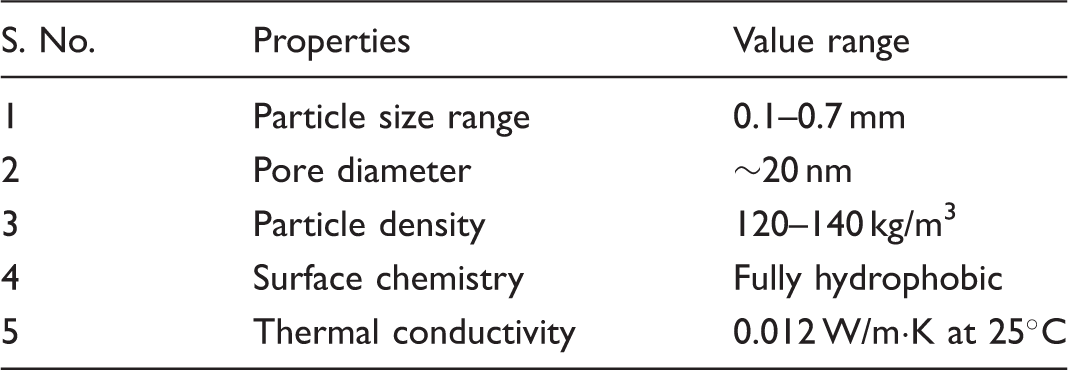
Properties of amorphous silica aerogel.
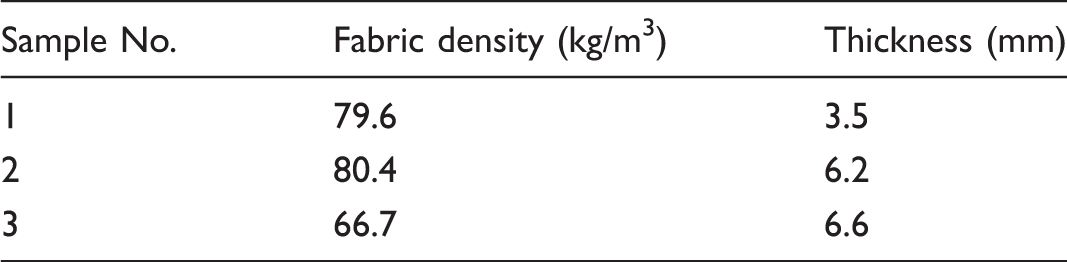
Details of aerogel-treated nonwoven fabric samples.
Fabric density
Fabric density is the factor of weight and thickness. To obtain an indication of the effect of fabric density on thermal properties, nonwoven fabrics with comparable densities in different thicknesses and their corresponding weights were measured for aerogel-treated nonwoven fabrics. The density difference of samples may be attributed to the fabric structure and also the percentage of aerogel particles present in the fibre.
Fabric density (kg/m3) is calculated as ratio of areal mass (G (g/m2)) and thickness (h (mm)).

Methods
Thermal test methods
There is a wide variety of methods and techniques to measure thermal conductivity, each suitable for a limited range of materials, depending on the thermal properties and the temperature of the medium. The testing methods for determination of thermal properties of any material can be divided into two groups: steady-state and transient-state methods. The main difference between these two methods is that steady-state requires the specimen to reach a stable test temperature. This is time consuming. Transient-state methods perform a measurement during the process of heating up or cooling down. Measurements can be done quickly.
C-Therm TCi thermal conductivity analyzer was used to measure the thermal properties like conductivity, resistance, and effusivity of the nonwoven wraps at subzero temperatures. The distribution of velocity currents in 2D array in a flowing fluid was measured by PIV to study heat transfer by convection. The thickness of the samples was measured using UNI-thickness meter. The weight of the fabrics cut to 10 cm × 10 cm dimension was measured. Images were taken from confocal microscope and scanning electron microscope (SEM) in order to compare the physical structure of the three nonwoven fabric samples and to determine if any difference was noticeable. All the samples were conditioned in standard atmospheric temperature of about 25° ± 2° and 65% ± 2% relative humidity (RH) before testing.
C-Therm Tci thermal conductivity analyzer
The C-Therm Tci thermal conductivity analyzer allows determining accurate values for thermal conductivity and thermal effusivity of aerogel-treated nonwoven material at subzero temperatures without extensive sample preparation or damage to the sample.
This highly accurate technique is based on the transient plane source (TPS) method. The primary difference between the traditional and modified TPS (MTPS) techniques is that the modified method offers a single-side interface compared to the double-sided interface requirements of the traditional version.
The MTPS technique has many advantages in comparison to other available testing methods, e.g. guarded hot plate, hot wire, or hot probe. The noninvasive nature of the C-Therm TCi’s MTPS sensors allows testing of materials of any size in situ or in laboratories without destruction of the specimen. Moreover, testing can be done in seconds with consistent and accurate results.
The C-Therm TCi consists of a sensor, power control device, and computer software as shown in Figure 1. A spiral-type heating source is located at the center of the sensor where heat is generated. The generated heat enters the material through the sensor during which a voltage drop occurs rapidly at the heating source. The thermal conductivity is calculated through the voltage drop data. The standard test method EN 61326-2-4:2006 was used for this purpose [14,15].
C-Therm Tci thermal conductivity analyzer.
Particle image velocimetry
The PIV (Figure 2) belongs to the family of methods for fluid flow measurement and visualization. It allows measurement in a wide range of flow speeds. The basic condition for the successful measurements deals with the property of the examined medium. The basic building block of the measuring system is a laser PIV system (Dantec Dynamics). The PIV measurement technique allows obtaining information about the distribution of velocity currents in 2D array in a flowing fluid. The motion of the fluid is visualized by the seeding particles that are usually added to the flow. The system displays and analyzes the particles’ movement in selected planar light cut. Conveniently placed light plane is generated with a powerful laser and optical system component. The position of particles in the plane of light section is recorded by some device sensitive to light, such as photographic film or a charge-coupled device camera detector. Evaluation thus recorded is based on the fundamental equation expressing relationship between speed, distance, and time, where distance represents the displacement of particles entrained in the fluid flowing in a defined time interval between two laser pulses [16].
Working principle of PIV.
Experimental arrangement of the PIV measurement technique consists of (1) Hi-Sence 12 bit digital camera, (2) light source – New-Wave Gemini pulsed laser with cylindrical optics expansion of the beam across the board cut, (3) laser beam illuminating the field of observation, (4) testing chamber, (5) textile sample, (6) heating plate, (7) thermocouples, and (8) the PC. The standard test method ASTM D7140M-13 was used.
For the PIV measurement shown in Figure 3, the parameters were selected after the textile sample directly touches the plate, where the transfer is caused by thermal conduction. The medium (air) above the sample was seeded with olive oil seeding particles for fluid flow visualization. With the increase of free surface temperature of textile sample, the thermal convection started working. One can observe this phenomenon by the fluid motion tracking system enabled by laser.
PIV measurement modes.
Microscopic analysis
The nonwoven fabric sample of three different thicknesses treated with aerogel was characterized using confocal microscope (OLYMPUS Confocal Scanning IR Laser Microscope, LEXT LS3000-IR).
Results and discussion
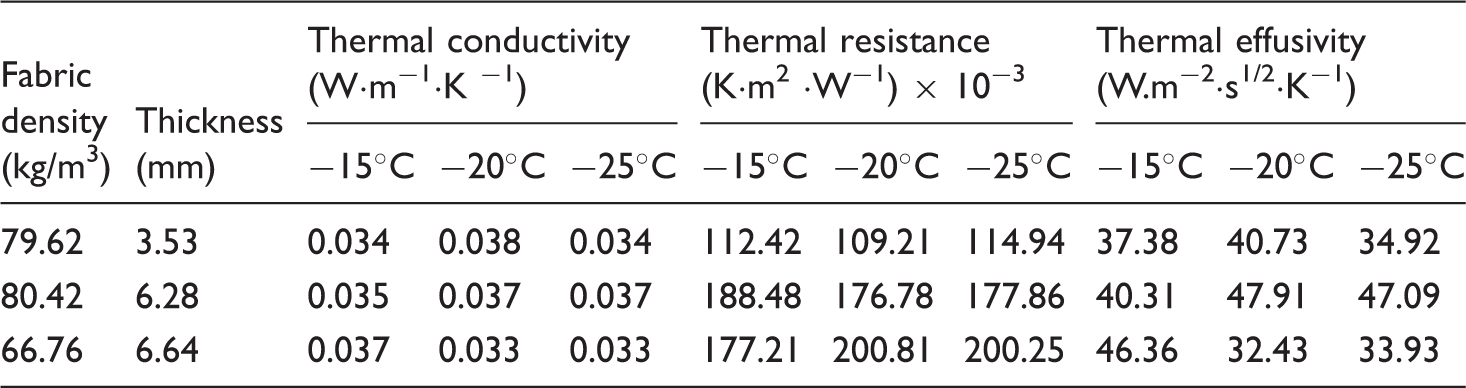
Thermal properties of the fabrics.
Statistical analysis of thermal properties measured from C-Therm TCi (analysis of variance).

DF: degrees of freedom.
A large F is evidence against H0 (null hypothesis), since it indicates that there is more difference between groups than within groups. ANOVA was done to analyze the results with 95% confidence level. A significant difference (p < 0.05) has been observed in the thermal resistance, conductivity, and effusivity properties of the silica aerogel-treated nonwoven fabrics with three different thicknesses.
Microscopic analysis
Images were taken using confocal microscope and SEM for cross-section of the three fabric samples with similar magnification. The physical structure confirmed to be different for three fabrics due to different thickness as is shown in Figures 4 and 5. It was observed that sample 2 has higher fabric density as compared to other samples. The aerogel deposition in the fabric between the fibres was also observed.
Images taken on confocal microscope for aerogel-treated nonwoven fabric. SEM images of nonwoven fabrics treated with aerogel: (a) sample 1, (b) sample 2, and (c) sample 3.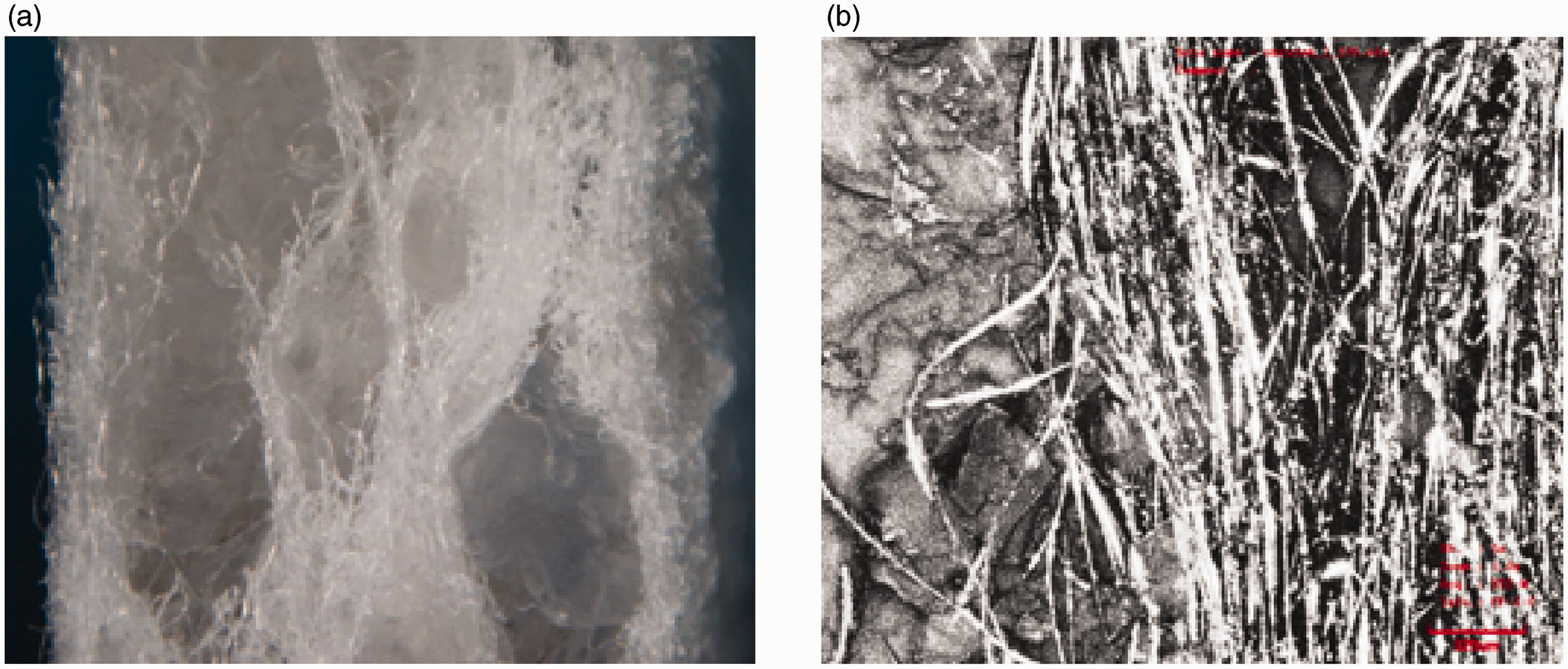
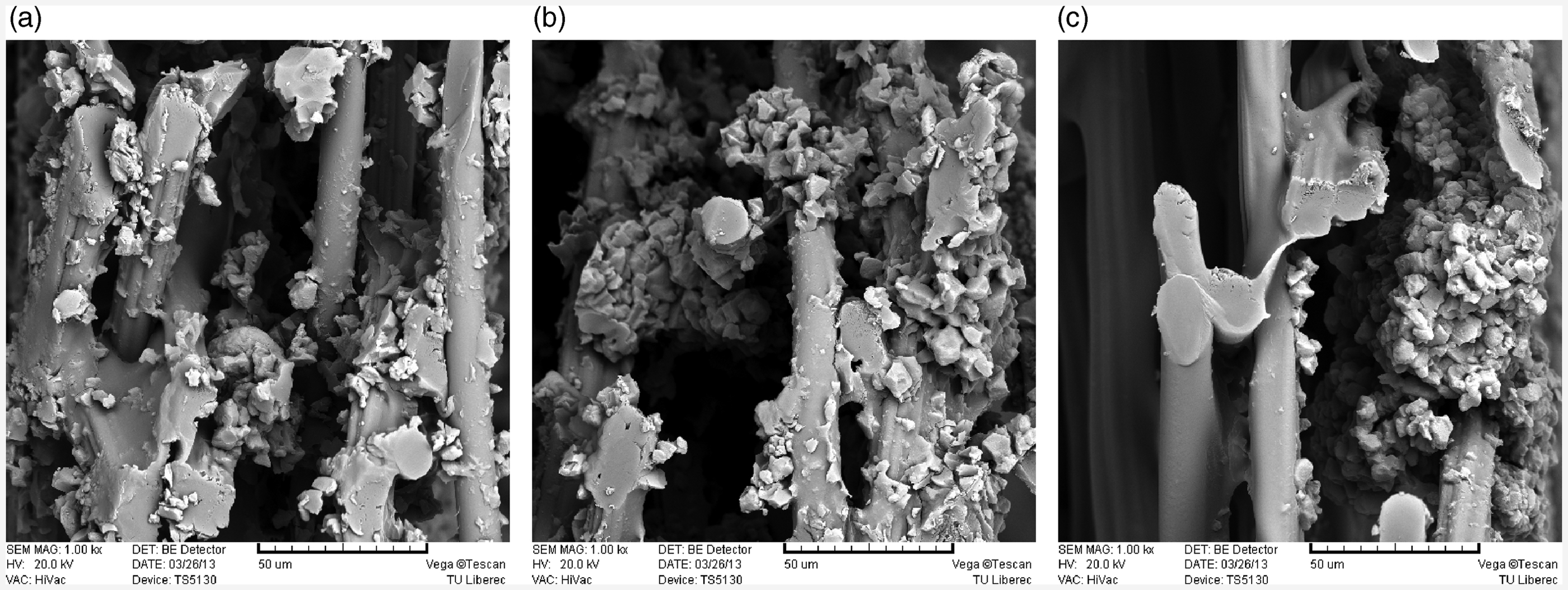
Figure 4(a) and (b) shows the images taken from confocal microscope. The aerogel particles present between the fibres can be seen clearly from the images. The inter-fibre spaces are clearly visible in Figure 4(a). The micro spacing between fibres is filled with aerogel particles. Figure 4(b) shows a higher magnification of the same sample. It can be seen that the aerogel is covering surface of individual fibres and is uniformly distributed in the structure.
SEM images are shown in Figure 5. The aerogel deposition on the fibres can be clearly observed.
These images provide a more clear understanding of the deposition of silica aerogel particles on the fibre surface. Fibre arrangement plays a vital role in deciding the density and thus the porosity of nonwoven fabrics. A higher degree of orientation can have adverse effect on porosity and thereby may reduce the insulation capacity. The microscopic images revealed that there is not much difference in fibre orientation. However, the porosity is mainly affected by positioning and concentration of aerogel particles in between the fibres.
Thermal conductivity
Thermal conductivity, λ, is a measure of the rate at which heat is transferred through unit area of the fabric across unit thickness under a specified temperature gradient and thus is defined by the relation [17]

The ANOVA shows that the fabric density has a profound effect on thermal conductivity of the aerogel-treated samples at subzero temperatures of −15℃, −20℃, and −25℃ and statistically it has significant difference (p = 0.001). The thermal conductivity of nonwoven fabrics is influenced by many factors including surrounding temperature, thermal conductivity of the fibres, and fabric structural parameters such as fabric density, fabric porosity, and fabric construction. The thermal conductivity of fibrous materials and aerogel present in the fabric will vary depending on the surrounding temperature due to radiation, convection, and conduction [18]. PES has a lower thermal conductivity (0.15–0.24 W·m−1·K−1), and PE has a relatively higher value (0.34 W·m−1·K−1), and the thermal conductivity of silica aerogel is about 0.02 W·m−1·K−1 at normal atmospheric condition. The three different nonwoven fabrics with varying thickness considered in the study are composed of PES and PE fibres treated with silica aerogel. Since the difference in thermal conductivity of the two fibres is small, the conductivity of a low-density fabric of this type corresponds to an air volume of about 90%. The proportion of fibres and the aerogel present in a fabric is represented by the fabric density, which is the volumetric proportion of air trapped in the fabric. For nonwoven fabrics, the density is the main factor contributing to the heat transfer through fabrics [19]. Figure 6 shows that the thermal conductivity for the aerogel-treated nonwoven fabrics is directly proportional to fabric density. The fabric with density 66.7 kg/m3 shows the minimum thermal conductivity and the densities 79.6 and 80.4 kg/m3 shows higher conductivity comparatively. Even though the difference in thermal conductivity between the temperatures is not that high, due to the individual correlation the data shows a variation in the thermal conductivity. This may be attributed to the open structure of the nonwoven fabrics, percentage of fibre content, and also the aerogel particles present in the structure. Among the three main reasons, aerogel present in the fabric plays a major role in the thermal conductivity followed by density of the nonwoven fabrics.
Thermal conductivity at −15℃, −20℃, and −25℃.
The statistical analysis shows that different temperatures at −15℃, −20℃, and −25℃ have insignificant difference on thermal conductivity (p = 0.51). While individually there is some difference in thermal conductivity of the samples, cumulatively the difference at various temperatures is insignificant. This behavior is attributed to the relatively small amount of aerogel present in the fabrics and also the structure of the aerogel-treated nonwoven fabrics, which is almost the same in all three cases.
Thermal effusivity
Thermal effusivity is a composite material property that explains the qualities like density, conductivity, and specific heat capacity. The thermal effusivity is a measure of a material’s ability to exchange thermal energy with its surroundings which is given by

The ANOVA shows that the effect of fabric density on the thermal effusivity has significant difference for temperatures −15℃ (p = 0.002), −20℃ (p = 0.005), and −25℃ (p = 0.003). Figure 7 shows the results of thermal effusivity; fabric with the density 66.7 kg/m3 has the highest value of thermal effusivity, whereas fabric with the densities 79.6 and 80.4 kg/m3 have lower value of this parameter. The correlation of thermal effusivity with fabric density is about R2 = 0.86. Aerogel particles present in the fabric and the open structure of the fabric contribute to the change in the effusivity values with regard to the temperatures.
Thermal effusivity at −15℃, −20℃, and −25℃.
The statistical analysis shows that different subzero temperatures at −15℃, −20℃, and −25℃ have insignificant difference (p = 0.87) in affecting the thermal effusivity. While individually there is some difference in thermal effusivity of the samples, cumulatively the difference at various temperatures is insignificant. From Figure 7, it is evident that the varied temperatures do not have much effect on thermal effusivity of aerogel-treated nonwoven fabrics at subzero temperatures.
Thermal resistance
Thermal resistance expresses the ability of material to prevent heat flow through the thickness over unit surface area [20–22]. Fabric thickness and thermal conductivity are important factors governing thermal insulation of textiles. Amount of stagnant air within the fabric and the fabric density are the underlying factors. The higher the thermal resistance, the lower is the heat loss. The thermal resistance, R, is connected with the thermal conductivity, λ, and the fabric thickness, h, as follows [22].

Effect of thickness on thermal resistance
Thermal resistance increases with a rise in the number of fabric layers due to the increase in sample thickness and weight. It is believed that the thickness is one of the major factors influencing the thermal properties of fibrous materials [22]. Comparing the influence of all parameters, it can be observed that by variation of the thickness, thermal resistance changes more rapidly than with other factors. In other words, the thickness of fabric sample has the most dominant effect on thermal resistance.
The statistical analysis shows that the fabric thickness has significant influence on thermal resistance for temperatures −15℃ (p = 0.02), −20℃ (p = 0.03), and −25° (p = 0.02).
As can be seen from the results (Figure 8), the thermal resistance increases as the fabric thickness increases for all the three different fabric densities. In addition, open-cell structure has higher thermal resistance than closed-cell constructions. This is explained by relatively higher fabric thickness and open-cell structure of nonwoven fabrics treated with aerogel. These structures can entrap more air within the nanopores of the aerogel and thus cause higher thermal resistance. From Figure 8, it can be seen that the correlation between thermal resistance and thickness is very high (above R2 = 0.93) for all three temperatures (−15℃, −20℃, and −25℃).
Thermal resistance at −15℃, −20℃, and −25℃.
The statistical analysis shows that different subzero temperatures have insignificant effect on thermal resistance. While individually there is some difference in thermal resistance of the samples, cumulatively the difference at various subzero temperatures is insignificant.
Relationship between fabric density and thermal resistance is shown in Figure 9.
Thermal resistance of nonwoven fabrics treated with aerogel at −15℃, −20℃, and −25℃.
It is evident that varied temperatures did not affect thermal resistance. Only the fabric density and thickness play a major role in deciding thermal resistance of the aerogel-treated nonwoven fabrics. Higher the density, lower is thermal resistance at all subzero temperatures.
Particle image velocimetry
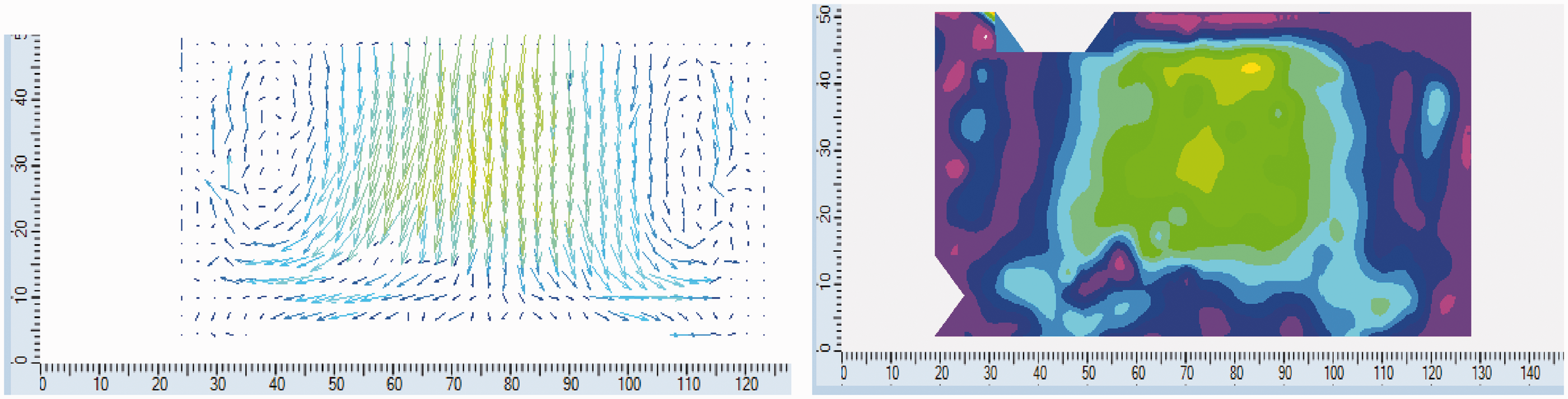
Vector and scalar maps of the fluid flow developed by thermal convection above the textile sample were plotted for different temperature gradients. The vector maps are colored to highlight the acceleration zones. The scalar maps were put in one scaling and could be compared. Scalar maps are used to display the on-screen multiple data derived from the velocity fields. The x and y axes scales in vector and scalar maps illustrate the magnitude and direction of the out-of-plane velocity component. Vorticity contours for the instantaneous flow structure is a vector field that gives a microscopic measure of the rotation at any point in the fluid. Vector and scalar maps for temperature gradients corresponding to difference between human body and chilling atmosphere are shown in Figures 10 to 13.
Vector and scalar maps for temperature gradient 21.5℃. Vector and scalar maps for temperature gradient 23.8℃. Vector and scalar maps for temperature gradient 37.5℃. Vector and scalar maps for temperature gradient 51.0℃.


Evaluation recorded is based on the relationship between speed, distance, and time, where distance represents the displacement of particles entrained in the surrounding fluid (air) flowing in a defined time interval between two laser pulses. The distance and air velocity diagram is shown in Figure 14.
Distance and air velocity diagram.
These charts describe the behavior at different temperature gradients (between the textile sample and temperature of neighborhood). As it is expected, the fluid flow motion accelerates according to the increasing temperature gradient. This velocity profile is taken 25 mm above the free surface of the textile sample. The maximum velocity is reached with temperature gradient of 51.0℃. The construction of the testing chamber did not allow observing the situation just above the surface of textile sample due the reflections. These results are very important for setting the boundary condition of numerical simulation, describing the behavior of textile samples in the subzero temperature condition as well as for simulation of heat transfer through the porous media.
Conclusions
The PES/PE nonwoven thermal wraps treated with silica aerogel were studied and characterized with regard to thermodynamical properties at subzero temperatures. The thermal resistance of the fabric is directly proportional to its thickness. This may be attributed to decrease in heat losses due to insulation by nano airspaces inside aerogel present in the fabric. Thermal conductivity and thermal effusivity were found to be differing with respect to three different temperatures and fabric density, which is attributed to the fabric structure, fibre content, and mainly aerogel particles present in the nonwoven fabrics. Thermal resistance (Rct) of the fabric, which depends on the boundary layer of air, showed an increase as the fabric thickness increases. The thermal resistance (Rct) of the aerogel-treated nonwoven fabric shows a different trend when plotted with the fabric densities, which was due to the weight and thickness of the fabric. From the PIV measurements, the relationship between the temperature gradient (between the textile sample and temperature of neighborhood) and velocity of fluid flow was described. As is expected, the fluid flow motion accelerates according to the increasing temperature gradient. The comparative analysis was done for the thermal properties for different subzero temperatures. It showed an insignificant difference, i.e. the temperatures did not have much effect on the thermal conductivity. Thus, the fabric density and the aerogel present in the structures have a significant effect on thermal properties of aerogel-treated nonwoven fabrics. Differences in thermal behavior of aerogel-treated samples are practically only due to thickness variation. More research and developmental work is still required in order to reduce the manufacturing cost and to find novel products with flexible textile materials.
Footnotes
Declaration of Conflicting Interests
The author(s) declared no potential conflicts of interest with respect to the research, authorship, and/or publication of this article.
Funding
The author(s) disclosed receipt of the following financial support for the research, authorship, and/or publication of this article: This study was jointly supported by the Czech–India project (Grant number: DZG06/4260).