




Abstract
Precise characterization of nonwoven fabrics such as their transport properties are of paramount importance in development of advanced filtration processes. Currently majority of available knowledge on transport behavior of fibrous materials is based on macro-scale empirically researched phenomena. Thus, evaluation of transport behavior of nonwovens based on fundamental scientific principles at micro-scale still remains a challenge that has to be tackled by scientists. In this paper, an integrated approach employing high-resolution X-ray micro-computed tomography and finite volume method are presented to predict permeability of needled nonwoven fabrics. In order to achieve the objectives of this research, dimensionless permeability of needled nonwoven fabrics with various porosities was computed using CFD tools. Comparisons of simulated results with experimentally obtained data and the published empirical and analytical models were made. Considering solid volume fraction of the samples, acceptable agreement between the results and previously published findings was observed. It was also established that experimental samples ideally can be represented as a three-dimensional random structure.
Keywords
Introduction
Porous media are defined as multiphase matters composed of at least one non-solid phase known as pores or voids. Although most porous medium are granular, there exists medium with large aspect ratio phase such as woven and nonwoven fabrics, nano-web and paper that are described as fibrous materials [1]. These materials simultaneously are soft, porous and voluminous, with relatively high resistance to mechanical deformation. In contrast to granular porous type, fibrous porous media require much less material to form a comparable stable structure. These characteristics have rendered the fibrous porous medium to gain a wide spectrum of medical and technical applications where flow behavior is the performance criteria [2,3].
Dry-laid nonwovens stand out as a unique class of fibrous porous materials. They are three-dimensional (3D) structures that can be manufactured directly from fibrous webs entangled and bonded by mechanical, chemical or thermal technologies or their combinations [4]. Distribution of fibers within the web can be either random or oriented with significant amount of voids among fibers. Void size, solid volume fraction (SVF) and fiber orientation distribution are determined by the used web forming and bonding techniques as well as the production parameters [5]. Readers are referred to Russel [6] for comprehensive description of nonwoven manufacturing technologies. In this study, a more restricted definition of dry-laid nonwoven fabrics has been used, namely as a fabric made directly from fiber webs or batts which have been entangled by barbed needles.
Flow through porous materials
The theory of fluid flow through a porous media such as nonwoven fabrics is too complicated to yield an acceptable analytical solution. Most published works on the flow of fluids through porous materials in effect are experimental verifications of Darcy’s law [7] as described by equation (1):

Flow phenomena in porous media have been investigated experimentally, analytically or modeled based on computer simulations, all of which have been extensively reviewed and discussed in Refs [9–12]. Research works aiming at prediction of permeability of the fibrous structures either empirically [13,14] or analytically [15–17] have been conducted over a long-time span. Empirical models generally describe permeability as only a function of SVF and fiber radius and ignore other structural parameters such as fiber orientation and pore size distribution [13]. As alternative approaches, analytical and numerical methods aim to predict the permeability by considering the flow of fluid within the pores of the porous media. The amount of analytical literature available on permeability of fibrous materials is not comparable to the vast amount of experimental work conducted in this field. The analytical models generally idealize the fibrous porous medium as a matrix of rods where established equations such as Stokes for a particular configuration are solved. Based on structure of the matrix (i.e. fiber orientation) and flow direction the model categories are as following:
Analytically developed models are not fully capable of apprehending the physical actuality of fibrous structure. This is mainly due to the inhomogeneity in fiber orientation and SVF [19], which has been recognized by researchers who have subsequently incorporated the inhomogeneity parameters into their models [20–23]. Literature are also indicative of prevalence of numerical solution in comparison to analytical solution, as complexity of flow increases [21,24]. In numerical techniques, the external conditions of an experiment are simulated by imposing boundary conditions resembling those existing in laboratory. Recent works on modeling of fluid flow are based on numerical simulation techniques using realistic 3D geometries of layered fibrous structures [21,23]. These models are advantageous as far as apprehension of actuality of the fibrous system is concerned and also provide possibility to verify the previously proposed analytical models.
The use of pore-level structure of the medium as input is the prerequisite for numerical simulation of permeating flow. Imaging techniques such as X-ray micro-computed tomography (XMT) pose the ability of capturing the actuality of the complex structure of porous media. Integrated technique of XMT and computer simulations was developed during 1990s. In this approach, XMT is used as the means of obtaining structural details of the material that can be used for computer simulations [25]. Recently, the use of XMT in conjunction with computer simulations has gained further popularity. Integration of both techniques in miscellaneous applications such as analysis of fluid flow through porous network [26–29], permeability of micro-structures [20,23] and heat transfer [30,31] is prevalent. A comprehensive literature review addressing the combined application of XMT and computer simulations is given by Atanasio et al. [32].
Needled nonwovens serve variety of end-uses such as hygienic products, wipes, insulations and filters. Transport properties of the fabric are the principal feature influencing the performance of nonwovens in these applications. Transport properties of nonwovens are related to various structural parameters such as SVF, fiber dimensions, fiber size distribution, pore size and pore size distribution, fiber orientation distribution and pore tortuosity [33–36].
Despite availability of empirical and analytical models capable of predicting permeability of fibrous ordered and disordered medium, numerical models competent of verification of the predictions generated by these models with actuality of the media scarcely exist. Additionally, review of literature points to the fact that in recent years, tomography-based determination of properties of granular porous materials and foams has attracted the interest of many researchers. However, very few published scientific work in the field of fluid transport behavior in realistic fibrous porous materials exist [21,23]. This may be attributed to the highly complex structure of fibrous porous materials in which simulation of fluid flow through the fibrous structures is complex and very demanding. While both these studies [21,23] are concerned with layered fibrous materials, our work widens the scope of these investigations and pioneers the extension of the field by focusing fibrous materials of 3D structures. As mentioned above, integration of XMT with computer simulations provides the feasibility of precise analysis of fluid flow through fibrous medium in terms of actual structure of the material, thus avoiding inevitable errors arising due to consideration of idealized initial structure. This work aims in parallel to most recent handful researches to model the flow of fluid through real needled nonwoven fabric at micro-structure. The method solely relies on XMT information obtained at pore-level. After discretization of complex micro-structure of a needled fibrous material using a voxel-based mesh technique, the discrete data were utilized in a finite volume computational fluid dynamics (CFD). Results of the integrated method then were compared with experimentally obtained data and already available empirical and analytical models.
Imaging of fibrous structures
The fiber network constitutes the microscopic scale that can be inspected by means of advance microscopy techniques such as scanning electron microscopy (SEM), confocal microscopy [37], magnetic resonance imaging (MRI) [38], digital volumetric imaging (DVI) [21] or X-ray tomography [39]. In contrast to SEM which usually provides qualitative observations of the network, coupling of the image analysis tools based on mathematical morphology concepts with the other techniques allow 3D reconstruction and measurements to be made [37,39].
Micro-structure of a porous medium can be realistically defined by serial sectioning-imaging technique [21,40]. Advanced computer graphic techniques virtually allow reconstruction of the original 3D micro-structure to be made using the acquired 2D images [41]. DVI is a tedious and time-consuming automated serial sectioning technique. The disadvantages associated with DVI include destruction of samples as well as non-isotropic spatial resolution (usually better lateral resolution than axial resolution).
In addition to the sectioning technique, XMT is widely used in the field of porous materials. Internal architecture of an object can be three-dimensionally quantified using XMT upon conducting image analysis. The specimen is fully irradiated with X-rays as it rotates through 180°. At each degree increment, a radiograph projection is taken. Serial radiograph projections are used to construct 2D slices. Attenuation of radiation during its traverse through the specimen results in capture of emerging low-intensity radiation by the detector array. Attenuation is related to material density which typically is represented as a gray-scale conforming a 2D pixel map [42,43]. Figure 1 depicts the schematic diagram of an XMT scanning device. Additional image processing of the acquired 2D gray images provides the reconstruction of the original 3D micro-structure.
Schematic illustration of micro-computed tomographic apparatus.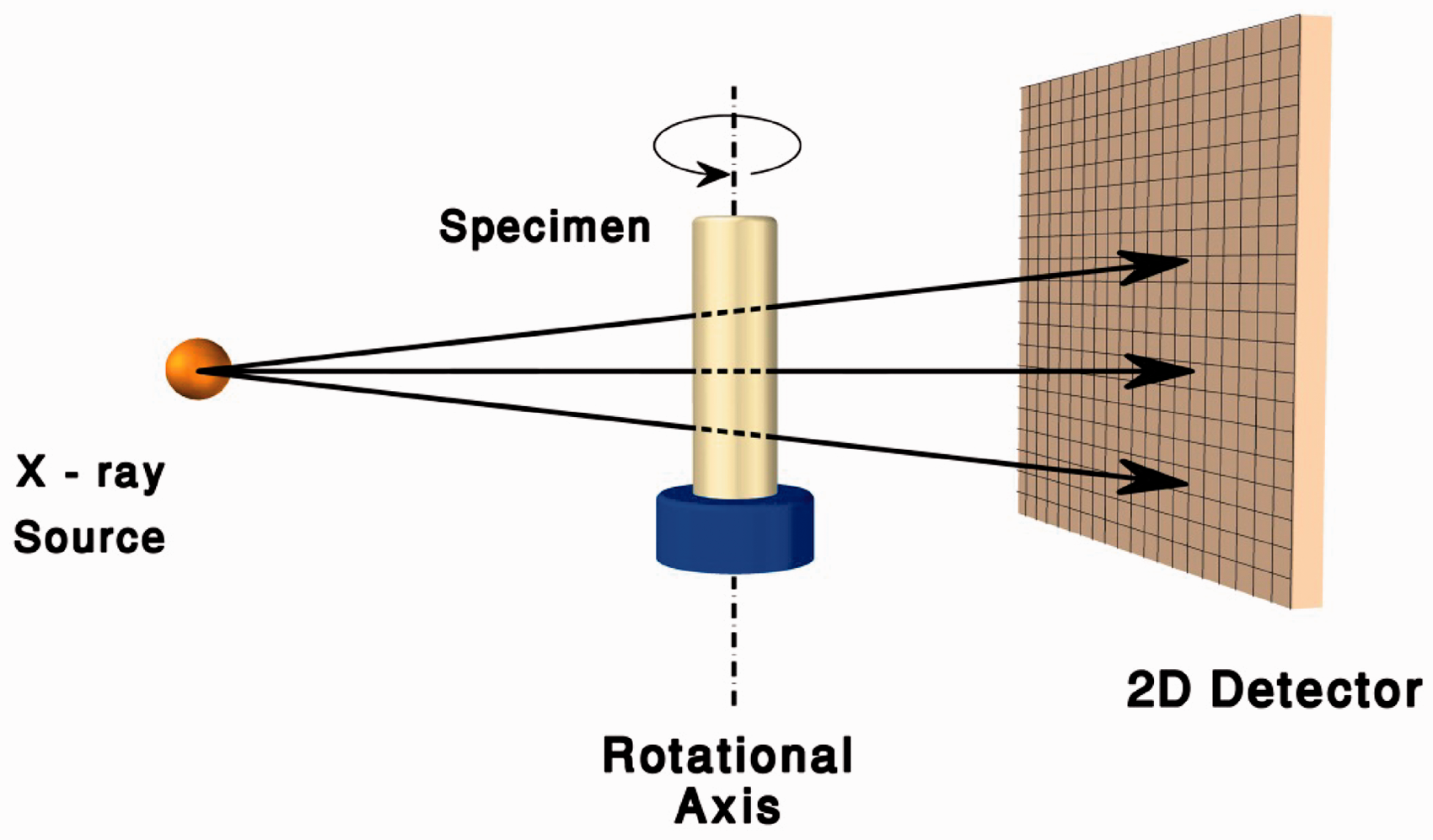
Experimental
Needled nonwovens
Needle punching is the technology most widely used for mechanical bonding of fibrous webs. Inception of the process that is also known as needle felting is realization of the aspiration of textile technologists of late nineteenth century to produce non-wool felts. Figure 2 illustrates the basic principle of a simple needle loom. The feed apron, an endless conveyor belt, feeds the fibrous webs into the needling zone formed by bed and stripper plates, where special barbed needles repeatedly penetrate the web thus increasing fiber entanglement. The consolidated fibrous web is eventually taken-up by a pair of rollers.
Schematic of needle punching process (TD = thickness direction, MD = machine direction and CD = cross direction).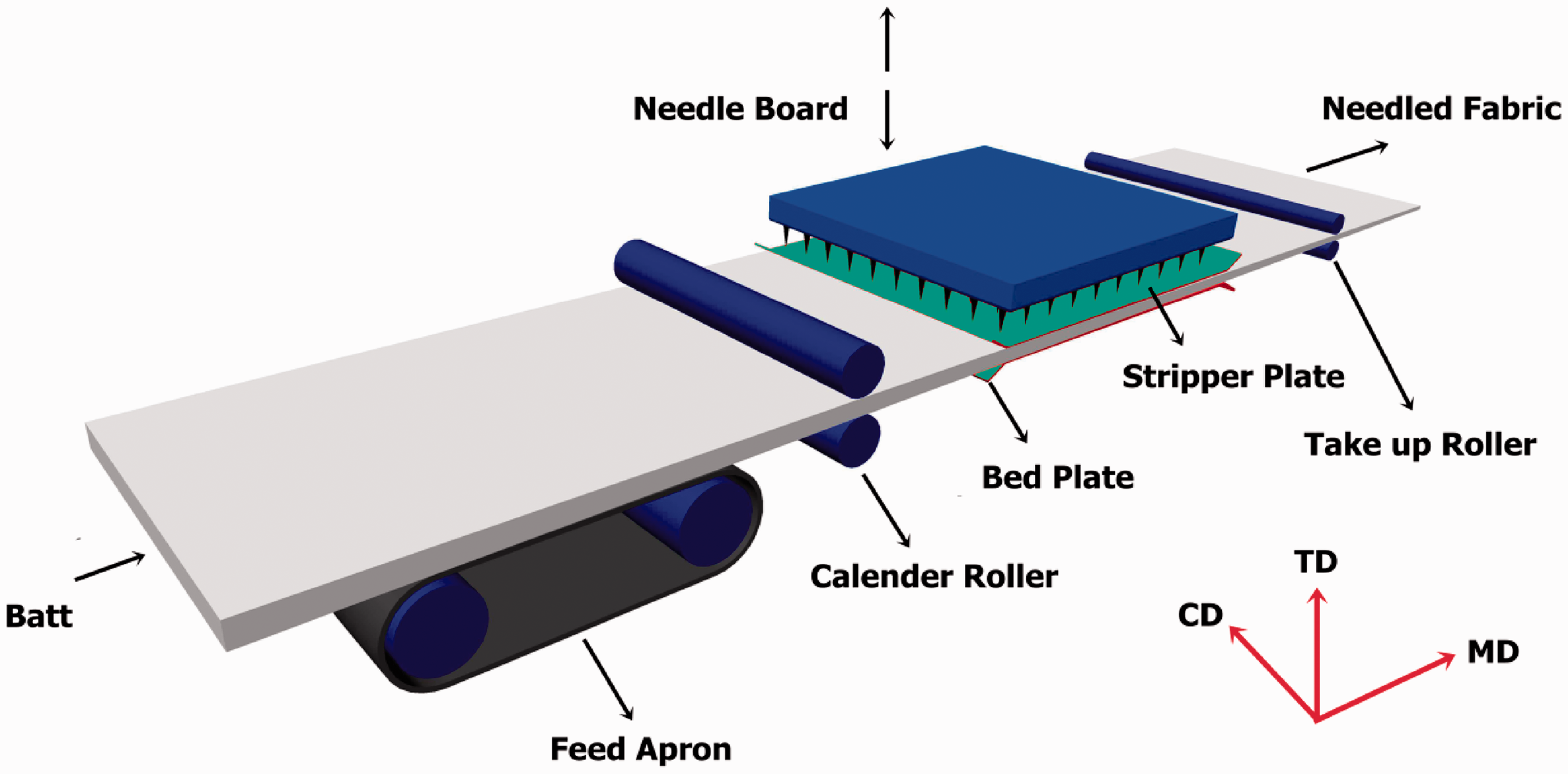
In this work, samples of needled fabrics were prepared using 10 denier 90-mm-long staple polypropylene fibers. Polypropylene fibers were supplied by MAHOOT Co. Fibers were processed on a 2.5-meter-wide double swift carding machine equipped with volumetric hopper feeder together with a commercial horizontal cross-lapper. To impart initial dimensional stability to the fibrous webs, the latter was lightly needled on taker needle loom. Superimposition of two pre-needled layers with the aim of ensuring uniformity of the structure by further needling on a laboratory needle loom at strokes frequency of 420 r/min resulted in production of needled nonwoven fabric weighing 450 g/m2. A total needling density of 90 needle/cm2 and needle penetration depth of 12 mm using Groz-Beckert felting needles 15 × 18 × 32 × 3 C333 G3007 was observed during preparation of the samples.
Permeability test
Prior to permeability test, samples were conditioned at a relative humidity of 65 ± 2% and temperature of 20 ± 2℃ for 24 h. In order to achieve laminar flow and avoid turbulence, a relatively small pressure difference between the two sides of the sample was maintained. It is important to notice that, Darcy’s law is valid only where the Reynolds number based on the pore size is low in the creep flow regime where inertial effects are not important compared with viscous forces. The measured air velocity through the sample was used to calculate the permeability and dimensionless permeability. A complete description of the sample preparation and the permeability measurement is given by Thoemen and Klueppel [30].
Fabric thickness measurement
Thickness of samples was measured using the XCT generated 3D image and the actual fabric according to the ASTM D5729 at 10 different locations. Considering the possible alteration of the micro-structure during handling of the samples, the two sets of measurements were relatively identical.
Micro-structural characterization
XMT is currently the well-established technique used for structural analysis of porous 3D materials, such as foams [44–47] and to a limited extent fibrous materials [23,39,42]. In this work, high-resolution XMT was used to characterize micro-structure of fibrous media. The specimen was scanned using Phoenix X-ray micro-tomograph. Samples precautionary were prepared to be sure that their micro-structure was preserved during the test. Imaging time for each sample was approximately 90 min.
A filtered back-projection algorithm was used to reconstruct horizontal slices 3.64 µm thick from the projections. A 3D volume was created by stacking reconstructed slices. Each pixel from a tomographic slice corresponds to a specific voxel in the 3D image (a CT image is created from the scattered data of X-ray absorption in the sample. The smallest unit of the displayed image is called a pixel, and by assembling pixels with CT values a CT image is formed. However, CT slices have a certain thickness, and when this is factored in the unit is referred to as a Voxel). An example of a typical 3D data set based on this procedure is shown in Figure 3, which vividly shows the structural complexity of needled fabrics.
Visualization of a sample (Dimensions 1400 × 1400 × 970 voxels: 5 × 5 × 3.5 mm3).
Image analysis
Image processing was carried out using MATLAB R2008a (The Mathworks, Natick, MA). The micro-computed tomography images were processed as a series of 950-990 slices of approximately 1400 × 1400 pixels and spatial resolution of 3.64 µm/voxel. This points to a volume of about 5 × 5 × 3.5 mm3. For the simplification of computing operation, prior to execution of CFD analysis to the µ-CT images, a suitable pre-processing comprising de-noising and segmentation steps was performed.
Image segmentation and 3D reconstruction
Constructed cross-sections based on radiographs taken at incremental angles were used to reconstruct gray-scale slices with intensity levels ranging from 0 to 255. The image processing was accomplished initially by reducing image noise intensity using a nonlinear filter. The filter replaces the intensity of each pixel by the average of the intensity values of the relevant pixel and the intensity of a defined neighborhood region. Permeability can be calculated if solid phase can be separated from the porous phase. Segmentation or thresholding is a process where generated gray-scale image is converted to a binary image in which each voxel is assigned to either the fiber matrix or the pore in the material. The simplest segmentation technique employs global thresholding, in which the neighborhood dependency of phases is ignored [48,49]. This type of algorithm often leads to phase miss-identification. This phenomenon is due to finite resolution effects or noise in image. The thresholding accuracy can be enhanced by employing a local contrast enhancement procedure prior to thresholding. One such method is technically referred to as “relaxation” [50,51]. Relaxation algorithms are beneficial as they tend to improve contrast locally. The criteria for accepting a particular pixel as part of an object depends on the incoming information from earlier processing of other pixels, and in particular, the nature and location of the pixels already accepted as parts of the object. In this manner, the relaxation procedures reassign the gray-scale levels in an image and clearly separate the pixels classes, before thresholding the image to binary. Mean intensity of the relaxation image is then calculated and is used as a threshold in global thresholding method. The image processing was accomplished using MATLAB R2008a software.
The results of segmentation step and the generated high-resolution de-noised image are presented in Figure 4. Black and white pixels represent fibers and void space, respectively. The segmented images were subsequently used to generate 3D reconstructions of the network assemblies, as shown in Figure 3.
The segmented slice (1088 × 1005 pixels: 3.42 × 3.66 mm2).
Numerical simulation
Domain discretization
Appropriate discretization of the domain is the key for successful finite volume solution. In the conventional CAD-type approach for meshing such geometries, the 3D geometries are converted into stereo lithography (STL) files, with ability to describe only the surface geometry of a 3D object without any reference to color, texture or common CAD model attributes. Mesh generator can then convert STL faceted geometries to volume mesh. Defining the geometry of the flow is the most serious challenge in application of CFD to fibrous porous materials. Flow in fibrous materials is geometrically complex over a range of scales as depicted in Figure 3. Application of CAD-based techniques to fibrous materials entails extensive computational resources [21,52]. Additionally, not only description of the computational complexity is quite challenging but also manual creation of a mesh that can reflect the geometry is both laborious and time consuming. For these reasons, in this work a voxel-based approach proposed by Tabor [52] free from intermediate STL file conversion is adapted. Thus, the fluid domain discretization is generated directly from the image voxels. For more information on this methodology readers are referred to Tabor et al. [52].
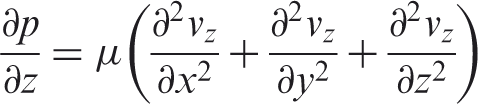
The following Stokes flow equations were discretized on the meshed structure. Unknown pressures and velocities were assigned to the center and face of voxels. Superficial velocity was computed by solving the following equations using finite volume method. The calculations were performed using the viscosity of air as required by the simulation. The transverse permeability was then calculated using Darcy's law (Equation (1)).


Boundary conditions
Laboratory-like environment can be simulated by imposing boundary conditions. This enables both sets of generated and experimental results to be compared. Utilization of boundary condition which creates a no-slip state at fluid-solid interfaces within the material is justified due to both dimension of fiber diameter and air thermal condition. Isolation of the sample from the surroundings which allows no flow out of the system was implemented by adding one-voxel-wide plane of solid phase (with no slip condition) on the image faces not perpendicular to the main flow direction. Experimental setups were added on the faces of the image that are perpendicular to the main flow direction. The setups are designed in a manner that a stable zone is created where pressures are quasi-static, and the fluid can freely spread on the input face of the sample. The outlet boundary condition was the standard fixed-pressure outlet. At the inlet, there is a choice of a standard fixed-velocity inlet condition or a fixed-pressure inlet. The calculations presented here are based on fixed-pressure condition. This imposes a specified pressure drop across the domain rather than a specified flow rate through the domain.
Simulation of fluid flow through virtual 3D fibrous structures
As mentioned before, integration of XMT with computer simulations yields to more precise investigation of fluid flow in terms of material properties based on actual structure of the material [32]. Hundreds of slices taken from the center region of the tomograms (1400 × 1400) were cleaned and stacked into a binary format for use in CFD code.
In high-resolution 3D imaging and modeling scenario with limited computing resources, selection of a region of interest (ROI) spatial domain that can be considered to be the best representative of the entire sample is desirable. Brinkman screening length criterion was used to find an appropriate size for the simulation domain. Parallel to the work of Clague and Phillips [20] and Jaganathan et al. [21,24], a minimum domain size of
Flow regime within the medium is based on steady-state laminar incompressible model in which the defined Reynolds number in terms of fiber diameter is much less than unity. A fixed pressure drop across the inflow and outflow regions was maintained during simulations. Flow velocity was computed by solving Stokes flow equations for the virtual structures. A volume classically has a size of 4GB, and the computing time per sample is about 3 hours using a system with 64 GB RAM and 32 processors. Computed permeability was converted to dimensionless permeability for the needs of this work.
Results and discussions
Effect of down-sampling
Numerical simulation of Stokes flow computationally is an intensive task for processing of such high porosity materials (about 37 × 106 pore voxels is needed for the whole treated image). For this reason down-sampling technique in which voxels population is reduced without altering the initial geometry of the media can be used. Voxel population can be manipulated using an interpolation scheme (i.e. producing a data set with coarser resolution). In this work, the effect of data set down-sampling on pressure drop by different percentages while maintaining a trivial superficial velocity of 0.01 m/s at the inlet was investigated. Since numerical tests revealed that pressure drop at coarser resolution is affected by down-sampling process, permeability was computed on previously determined ROI of 500 × 500 × 356 voxels in the original image resolution.
Comparison of results with empirical and analytical available models
Figure 5 shows an example of the fibrous structures selected for the simulations together with the path lines of the fluid flow through a sub-sample.
Illuminated streamlines representing velocity field through medium sub-sample.
As previously stated, disordered fibrous materials micro-structurally can be classified in following three categorizations:
Unidirectional structures in which all cylindrical fibers axes are parallel to each other [17, 54–57]. Layered structures in which cylindrical fibers axes lie randomly in parallel planes often perpendicular to a fluid flow [15,16]. Three-dimensionally isotropic structures in which fiber axes can be randomly oriented in any direction in space [15,16,58,59].
Theoretical investigation of permeability of 3D materials due to their geometrical complexity unlike 1D or 2D arrangements is not prevalent. Comparison of selected existing 1D, 2D and 3D structural models is shown in Figure 6, which unequivocally demonstrates the disagreement between the reported models. Additionally, it has been established that the existing models are not valid over entire range of solidity [58]. Figure 6 shows the inverse relation between permeability and SVF. This points to the fact that fluid flow is obstructed as media solid volume is increased, thus penetration of fluid into media is rather a tortuous process.
Comparison of dimensionless permeability for various models.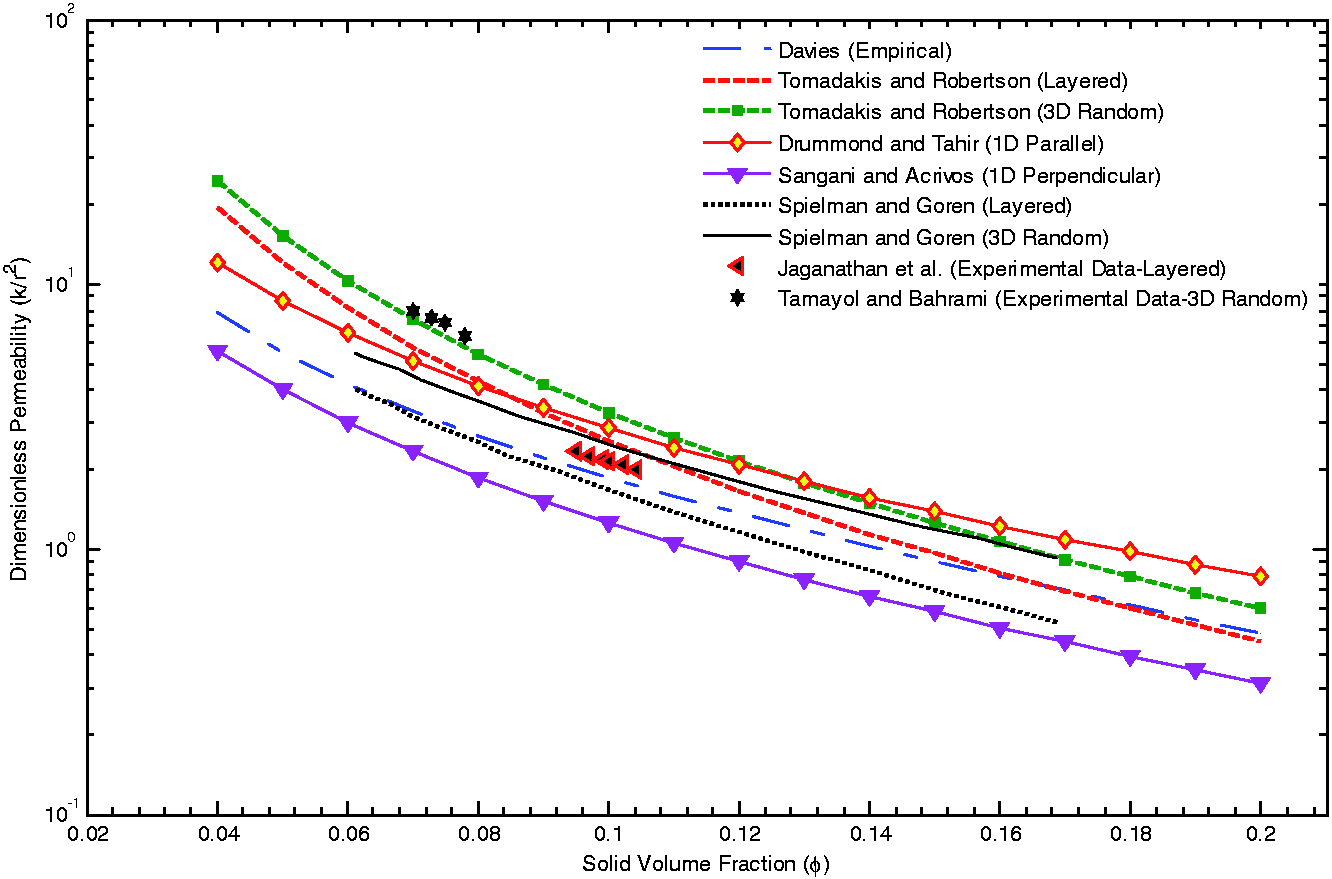
Figure 7 shows simulation results of various sub-samples with different SVFs and experimental results obtained via air permeability tester non-dimensionalized by the square of fiber radius. It can be seen that while experimentally obtained results are in good agreement with the results of simulations, increase in SVF reduces the dimensionless permeability. Since standard deviations were not distinguishable in the scale of the plots they were omitted. It must be noted that the samples used during air permeability experiments were much larger than those considered in development of micro-scale models. This is the reason behind the fact that SVFs of experimental samples are close to each other, thus comparison is valid over narrow range of solidities.
Comparison of the integrated method and available 3D analytical and empirical models.
In order to confirm the findings of this work, some already available predictions based on 3D analytical permeability models developed in terms of equations (6)–(8) and the empirical correlation given by Davies [13] were compared with results.
Permeability of rods randomly oriented in three principal directions can be estimated using equation (6) presented by Spielman and Goren [15]. Problem of a rod obliquity to the superficial velocity was resolved by allowing the permeability to acquire different values in the planes parallel and perpendicular to the flow direction. The average of the results over all rod directions can then be used for determination of permeability in 3D random medium [15].

Considering Figure 7 it can be stated that at high SFVs, the 3D isotropic model of Spielman and Goren is not only nearly in absolute agreement with the results of the present simulations but also accurately predicts the experimental data. However, at low SVFs the permeability of a typical needled nonwoven fabric is underestimated.
Jackson and James [12] are of the opinion that the permeability of any random 3D fiber structure is analogous to that of a cubical lattice of cylinders. Consequently, a model described by the following equation and based in part on Drummond and Tahir’s [17] for ordered unidirectional arrays of fibers was suggested:

The expression of Jackson and James [12] is based on a simple weighted averaging of the stream-wise and transverse permeability values. This underestimates the permeability of a 3D isotropic medium at all SVF levels.
Prediction of permeability of fibrous materials in terms of their structural parameters can also be made by Tomadakis and Robertson model [16]. This model is based on principle of electrical conductivity using following equation:

Considering Figure 7 it can be stated that at low SVFs, Tomadakis and Robertson model is nearly in absolute agreement with the results of the present simulations. However, at high SVFs, the conduction-based model overestimates permeability predictions of the needled fabric samples. Tomadakis and Robertson studied permeability of inter-penetrating structure in which fibers are allowed to overlap freely using electric conductivity principle. The overlapping assumption is one of the sources of discrepancy observed in the results.
The most reliable experimental permeability correction so far available and consequently widely acceptable empirical correlation used in case of perpendicular flow through layered fibrous structure was given by Davies [13], equation (9):

Figure 7 shows empirical model of Davies underestimates permeability predictions of the experimental needled fabric samples at all SVFs. This can be explained by the drag theory which states that fibers parallel to the flow direction are subjected to less drag than the fiber perpendicular to flow direction. The increase in preferential orientation of the fibers in the z-direction results in the continuity of the void spaces through which the air flow is increased. This in turn, results in higher transverse permeability.
In view of Figure 7 and considering the above discussions, it can be claimed that at all SVFs, the obtained results are best supported by the predictions of the 3D random models of Tomadakis and Robertson [16] and Spielman and Goren [15]. Additionally, results indicate that needled experimental samples ideally can be represented as a 3D random structure. This is confirmed by Figure 8 which depicts cross-section of fibers along Fibrous medium data set visualized using three orthogonal slices.
For more comprehensive treatment of the subject, the permeability simulation was run for machine X and cross machine Y directions in-plane of the samples. As far as permeability is concerned, no significant statistical discrepancies were found to exist when permeability in three principal directions were compared. This is logical when considering the fact that as shown in Figure 8 samples show no predominant fiber orientation.
Prior to needling, fibers in the cross-folded fibrous web are oriented in the
The present method, unlike past efforts in analytical modeling that deal with determination of permeability of fibrous microstructure, is based on realistic representation of the 3D fabric architecture. The proposed integrated tomography-based CFD in this work is a valuable complement to the existing analytical, empirical and modeled-geometry-based numerical methods.
The proposed approach has wide applications in investigating the fluid flow behavior through porous materials such as fiber-reinforced composites which have vast end-uses in the aerospace and automobile industries. Studies in fluid behavior in fibrous porous media are also greatly beneficial in thermal insulations, paper products, fibrous filters and membranes, polymeric industries and physiological systems and processes [60]. While in most of these applications, determination of the permeability traditionally is accomplished through experimental measurement techniques; however, these measurements often require a large number of carefully controlled experiments. Additionally, there exist applications in which the analysis of permeability of individual, distinct layers in structurally layered material is of great importance with regard to partial effect of the permeability of each constituting layer to the overall permeability of the material. In layered material, the use of conventional experimental procedures does not yield to acceptable results. However, application of tomography-based approach yields to both cost-effective and successful description together with precise understanding of fluid transport within layered material.
Additionally, pore-scale models bridge the quantified effects of fibrous structural parameters such as pore size, pore size distribution, 3D fiber orientation, fiber orientation distribution and crimp to transport properties of the material at macroscopic level. The present study offers a feasible and accurate method for investigation of flow behavior in realistic 3D architecture of fibrous materials. Needless to say that the proposed approach can be readily applied to investigation of fluid behavior in relation to structure of fibrous materials.
Conclusion
The importance of fluid transport through fibrous medium was emphasized. Feasibility of detailed numerical simulations of flow in porous medium in view of numerous readily available computing resources and the development of numerical algorithms was highlighted. Additionally, benefits of 3D XMT imaging that provides a new opportunity to evaluate the structure of fibrous media, apprehension of actuality of the fibrous system as well as stipulating the possibility of verification of the previously proposed models dealing with permeability measurement whether experimental or numerical were demonstrated. Permeability was computed by modeling Stokes flow at the pore-scale in actual 3D digital pore space from XMT. Simulated results were compared with already acceptable analytical permeability models as well as earlier empirical models. Good agreement was observed between computer-generated permeability values, experimentally measured data and values reported in other research. It was also established that, a 3D isotropic medium in which placement and orientation of the fibers are purely random can be considered a representative of needled nonwoven fabrics. The present study demonstrates potential of the developed method as a means of predicting permeability behavior of porous structures produced with various production parameters. The proposed method can be truly advantageous as far as engineering design of fibrous porous materials pertinent to miscellaneous industrial applications is concerned.
Footnotes
Acknowledgements
The authors gratefully thank Dr Peter Laity, of University of Huddersfield, UK, and Dr Afsheen Zarrebini, of University of Leeds, UK, for their assistance during course of this research.