




Abstract
Steel-slag asphalt concrete (SSAC) is a type of asphalt mixture that uses slag particles instead of conventional aggregates. It has been proven that replacement of course aggregates by steel-slag particles is the best composition of SSAC mixtures. Despite benefits derived from SSAC, like higher resistance to rutting, the mixture has some disadvantages. Higher optimized asphalt content is the major disadvantage of SSAC compared to ordinary AC mixtures. In order to solve this problem, it is necessary to decrease the bitumen absorption of slag aggregates. One approach that can be taken to increase the viscosity of the bitumen and/or to decrease the effective surface of slag aggregates is reinforcement of asphalt mixtures by using polypropylene (PP) fibers. The main aim of this paper is, therefore, to introduce a novel AC mixture, i.e. PP fiber-reinforced steel-slag asphalt concrete. In this respect, the optimized asphalt content was identified by using Marshall method. Analysis of results shows that the treatment reinforced with 2% of 19 mm PP fibers experiences a decrease in optimized asphalt content about 15% in comparison with the neat mixture, i.e. SSAC sample. Moreover, indirect tensile strength and resilient modulus (MR) have increased.
Introduction
Asphalt concrete (AC), a mixture of bitumen and aggregates, is a sensitive structure compared to other civil structures [1]. So, scientists and engineers are constantly trying to improve the performance of asphalt pavements. Generally fibers and polymers are two important cases used in this way [2–4]. But the most popular bitumen modification technique is polymer modification [5]. However, it has been claimed that among various modifiers for asphalt, fibers have gotten much attention for their excellent improving effects [4]. Fundamentally, reinforcement consists of incorporating certain materials with some desired properties within other material which lack those properties [6]. Consequently, fiber reinforcement of pavements is a coin with two sides. One side includes the randomly direct inclusion of fibers into the matrix, i.e. AC and/or Portland cement concrete slabs. Another side comprises the oriented fibrous materials, e.g. geo-synthetics family. It is emphasized that the former concept is not as well-known as the second, not only in optimizing fiber properties, fiber diameter, length, surface texture, etc. but also in reinforcing mechanism [7]. Research and experience have shown that fibers tend to perform better than polymers in reducing drain down of AC structures, thus fibers are recommended [8]. In addition, Hejazi et al. proved that fibers enhance bending rigidity of flexible pavements by increasing the momentum of inertia of cross-section [9]. In fact, fiber changes the viscoelastisity of mixture [10], improves dynamic modulus [11], moisture susceptibility [12], creep compliance, rutting resistance [13], freeze–thaw resistance [14], while reducing the reflective cracking of asphalt mixtures and pavements [14–16].
On the other hand, steel slag is the major byproduct from the conversion of iron to steel. Fundamentally, steel-furnace slag is a synthetic aggregate produced as a by-product of the electric arc steel making furnace [17]. One way to utilize the steel slag is to incorporate it into hot mix AC. This process has been used successfully in the Midwest and Eastern United States with reported improved pavement performance. Considerable experience has shown that the use of steel slag in AC minimizes potential expansion and takes advantage of the positive features in giving high stability, stripping resistant asphalt mixes with excellent skid resistance [18]. Despite these advantages, different studies have shown that optimum asphalt content will be increased when natural aggregates of AC were replaced by steal slag aggregates [8,19–23].
As it can be seen, fiber reinforced AC has been an interesting research area, but, in this study, it has tried to take advantages of both steel-slag aggregates and fibers, simultaneously. The goal was to improve AC properties by using steel slag and to reduce bitumen absorption of aggregates via polypropylene (PP) fibers.
Study approach
In order to achieve the mentioned purpose, an approach was designed. In the first step, optimum AC of conventional and steel-slag aggregates was obtained (mix design). Then, some specimens containing various amounts of PP fibers and different lengths were produced to evaluate the effect of these fibers on the AC performance. Finally, the optimum AC was achieved for samples containing optimum amounts of fibers.
In this regard, Marshall specimens are prepared. Laboratory evaluation involves determination of specific gravity, Marshall stability and flow, resilient modulus (MR) and indirect tensile strength (ITS).
Materials
Steel slag was obtained from Mobarake Steel Company, Isfahan, Iran. Limestone was prepared from Sofeh Mine, Isfahan, Iran, which is used extensively for local mixes, and the 60–70 penetration bitumen was bought from the Isfahan oil refinery, Isfahan, Iran.
Bitumen
Engineering properties of bitumen.

Penetration evaluates the hardness or softness of bitumen by measuring the depth in tenths of a millimeter to which a standard loaded needle, with a total weight of 100 g, will penetrate vertically in 5 s. Softening point test was conducted using Ring and Ball apparatus in accordance with ASTM D36-76. BIS 4689 defines the flash point as the temperature at which the vapor of bitumen momentarily catches fire in the form of ash under specified test conditions. This test was carried out according to ASTM D92 for all treatments. The Bending Beam Rheometer (BBR) test provides a measure of binder’s low temperature performance grade (PG) grade and these parameters give an indication of an asphalt binder’s ability to resist low temperature cracking. In this study, this test was carried out according to AASHTO PP 42.
Aggregates and gradation
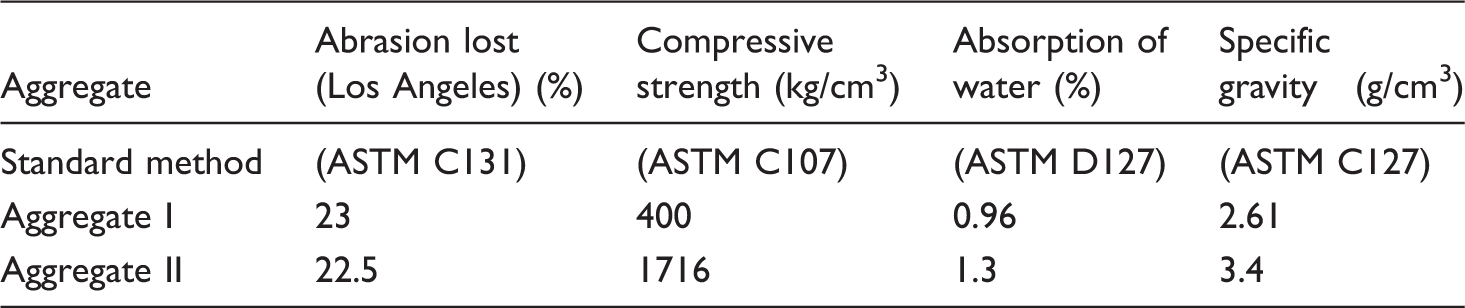
Engineering properties of aggregates used in this study.
Chemical properties of steel-slag aggregates used in this study.

As it can be seen from Table 2, the steel-slag aggregates have larger specific gravity compared to limestone. As well, the compressive strength of slag is higher than that of limestone.
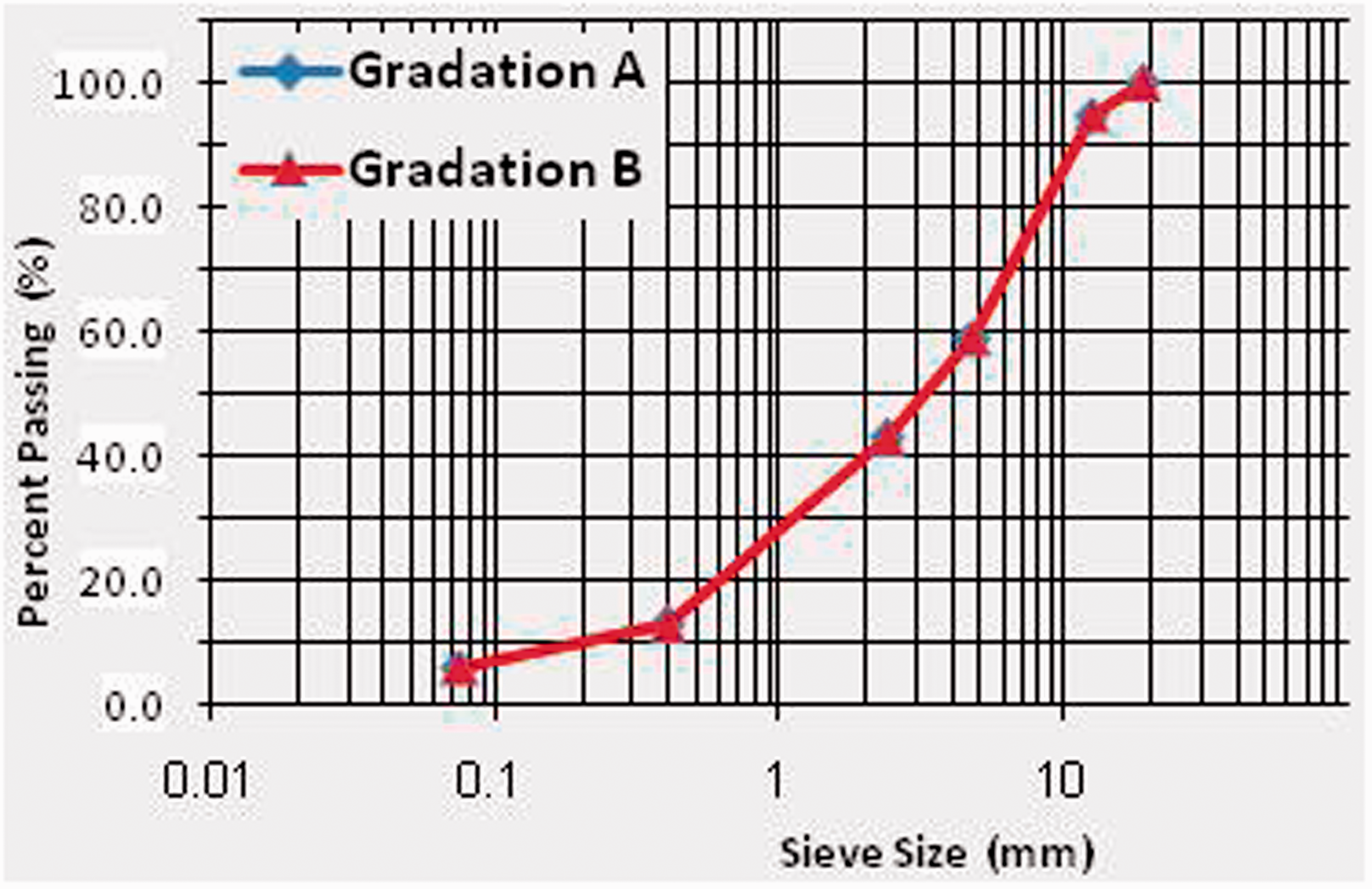
Two different types of continuous aggregate gradations used in this study.

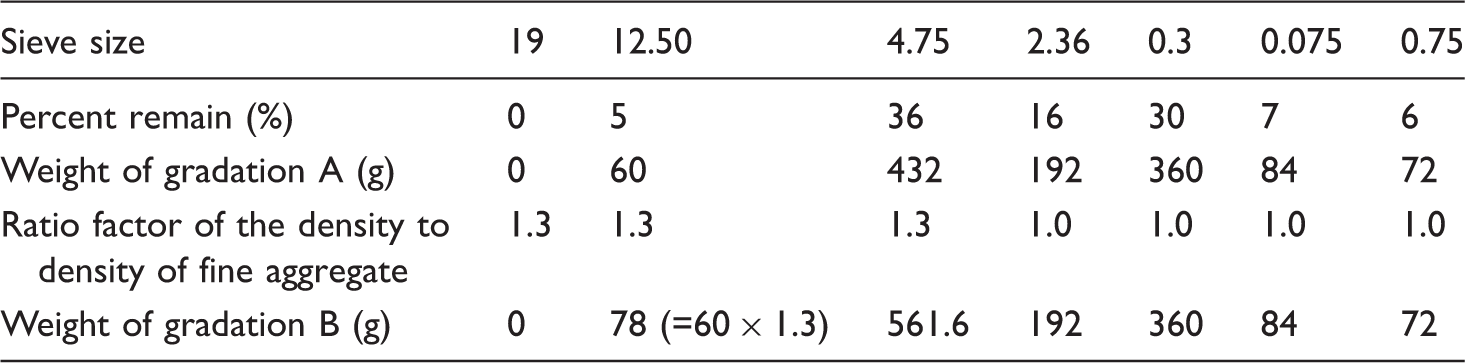
It is necessary to be considered that the gradation curve in ASTM D3515 has been based on minimizing of void in mixture. Since the basic assumption in ordinary design of aggregate gradation is similarity density of material and on the other hand, lime stone aggregates and steel-slag particles are different in density, so, aggregate curve should be re-plotted offered according to weight percentage instead of volume percentage. In this research, gradation B included two types of aggregates with various densities. Figure 1 illustrates the volume-base gradation of aggregates while Figure 2 presents the modified gradation curve re-plotted for two types of aggregate mixtures.
Aggregate gradation curves based on volume percentage. Aggregate gradation curves based on volume percentage (after modification).
Sieve analysis for making asphalt mixtures on the basis of two types of gradations.
Fiber
Characteristics of polypropylene fibers used in this study.

Experimental tests
Evaluating the physical and mechanical characteristics of FRSSAC, SSAC and conventional AC, several tests were conducted. These tests include Marshall tests, ITS and MR. Finally, the results have been compared in some charts.
Marshall test
Specific gravity and Marshall test results at optimum sample.

Through the experiments it was observed that both in A and B gradations, an increase in bitumen content causes an improvement in specific gravity of mixtures. It seems that bitumen fills spaces between aggregates. The maximum specific gravity occurs when all voids will be filled by bitumen. As it can be seen, the maximum Marshall stability for gradation type A is lower than that of gradation type B. As well, the optimum bitumen content in latter specimens is higher than that of the former. The enhancement in optimum bitumen content is because of porous surface texture of slag particles that leads to an increase in bitumen absorption. It is clear that angularity and rough surface texture of slag results in high Marshall stability quantity.
Experimental design used in this study.

ITS test
To define the tensile characteristics of FRSSAC, which can be further related to the cracking properties of the pavement [26], the ITS test was carried in this study.
The ITS test was performed at loading rate of 51 mm/min by using the Marshall apparatus. The ITS test involves loading a cylindrical specimen with compressive loads that act parallel and loading the vertical diametrical plane. In order to compute the ITS, the following equation is used:

Resilient modulus (MR)
Resilient modulus (MR) of asphalt mixtures, measured in the indirect tensile mode (ASTM D4123), is the most popular form of stress–strain measurement used to evaluate elastic properties. The MR along with other information is then used as an input to the elastic theories model to generate an optimum thickness design.
ASTM D4123 recommends a total of three laboratory fabricated specimens or three cores to be tested in order to determine the MR of that asphalt mix. Each of the specimens or cores has been tested twice (the orientation of the specimen of the second test is 90° from the first test) to produce a total of six measured MR values [26].
In this study, assuming that the Poisson’s ratio is 0.35, the MR of mixtures has been measured at 25℃ and loading frequency of 1 Hz.
The MR of elasticity, E, is calculated by the following equation:

Results and discussion
Figures 3–5 illustrate the results of B1 series experiments. Totally, it was observed that specific gravity, stability and flow values increased by increase in length of fiber (compare B1.No.2, B1.No.5 and B1. No.8). Although the trend of these properties is upward, it can be seen that unreinforced treatments (B1.No.1) have a higher value. Moreover, in spite of upward trend in stability of specimens containing 6 and 12 mm fibers, there is a downward trend in the case of treatments reinforced by 19 mm fibers. This result is strongly fitted with the “slippage theory of short fiber composites” that has been previously extended for fiber-reinforced AC by Hejazi et al. [9]. According to the proposed model the slippage index of each fiber within the AC matrix can be obtained [27]:
Specific gravity of specimens for different contents of fibers. Marshall stability for different contents of fibers. Marshall flow for different contents of fibers.
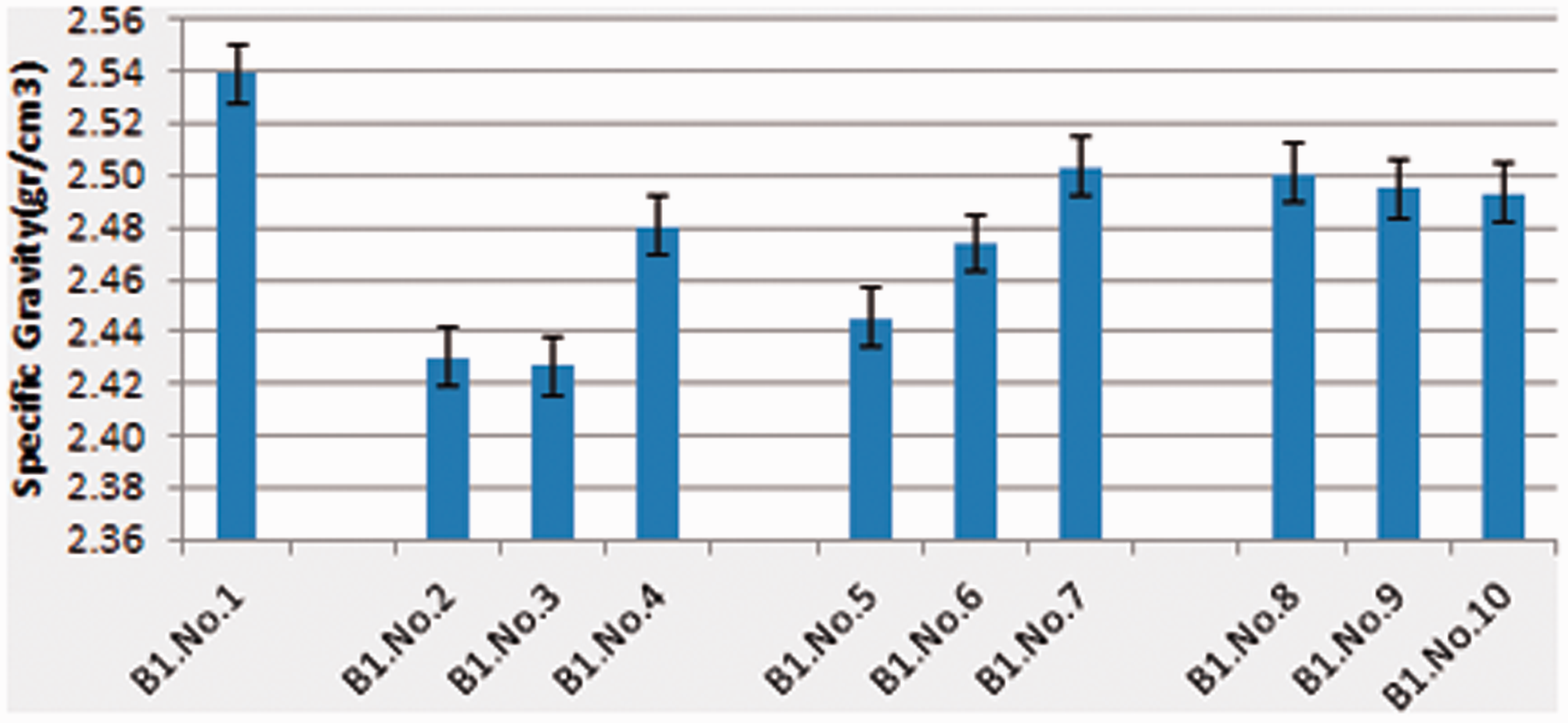
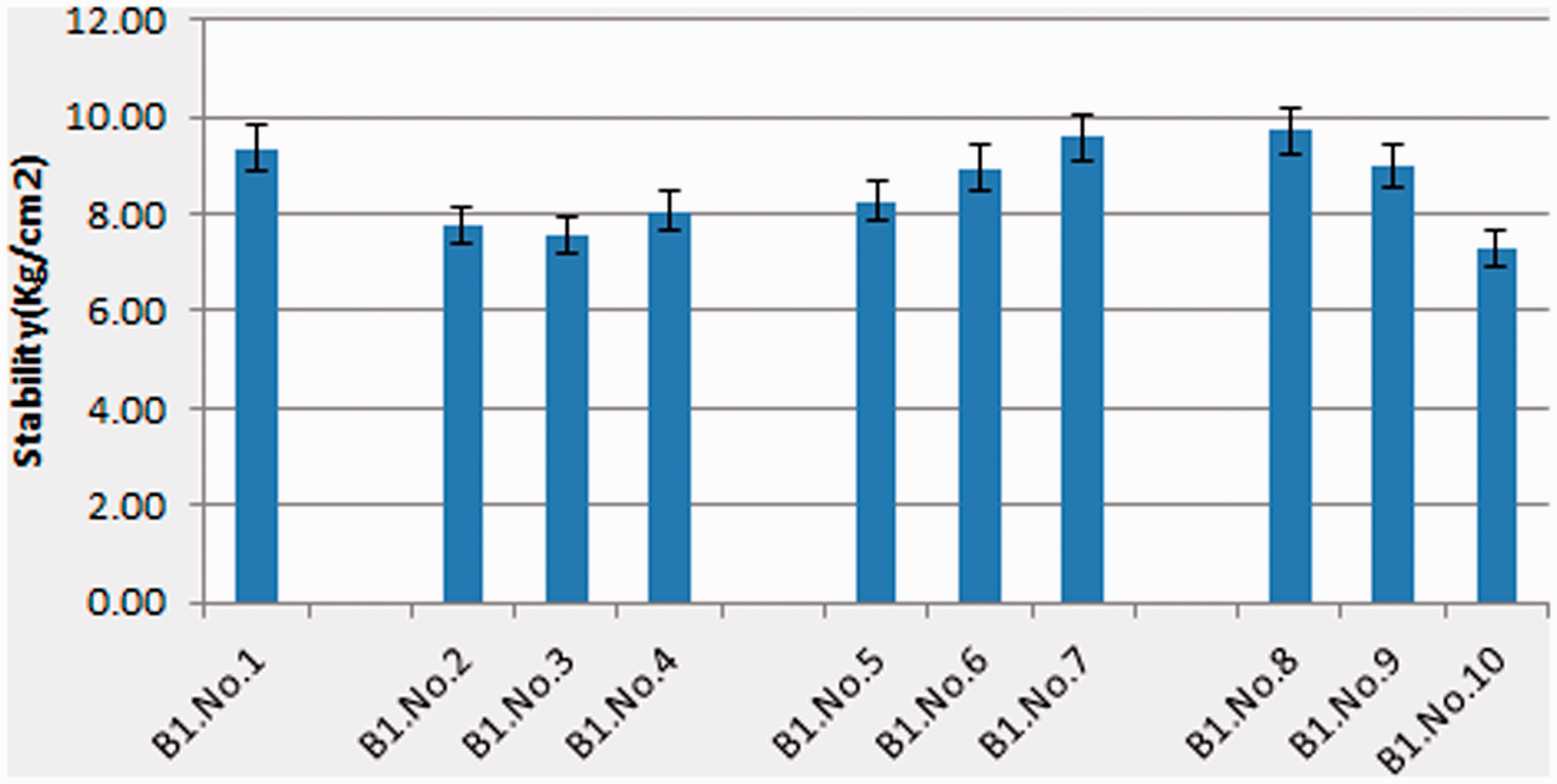

It can be seen that specimens reinforced within 2% of 19 mm PP fibers have the highest Marshall stability and the corresponding Marshall flow is within the standard range (2–3.5 mm).
To survey the feasibility of decrement in bitumen content, Marshall specimens with gradation A and B, involving optimum fiber content and different bitumen content, were prepared according to the experimental design shown in Table 8 (B2 and A series). The results are shown in Figures 6–8.
Specific gravity of specimens with various bitumen contents. Marshall stability of specimens with various bitumen contents. Flow values for Marshall specimens with various bitumen contents.

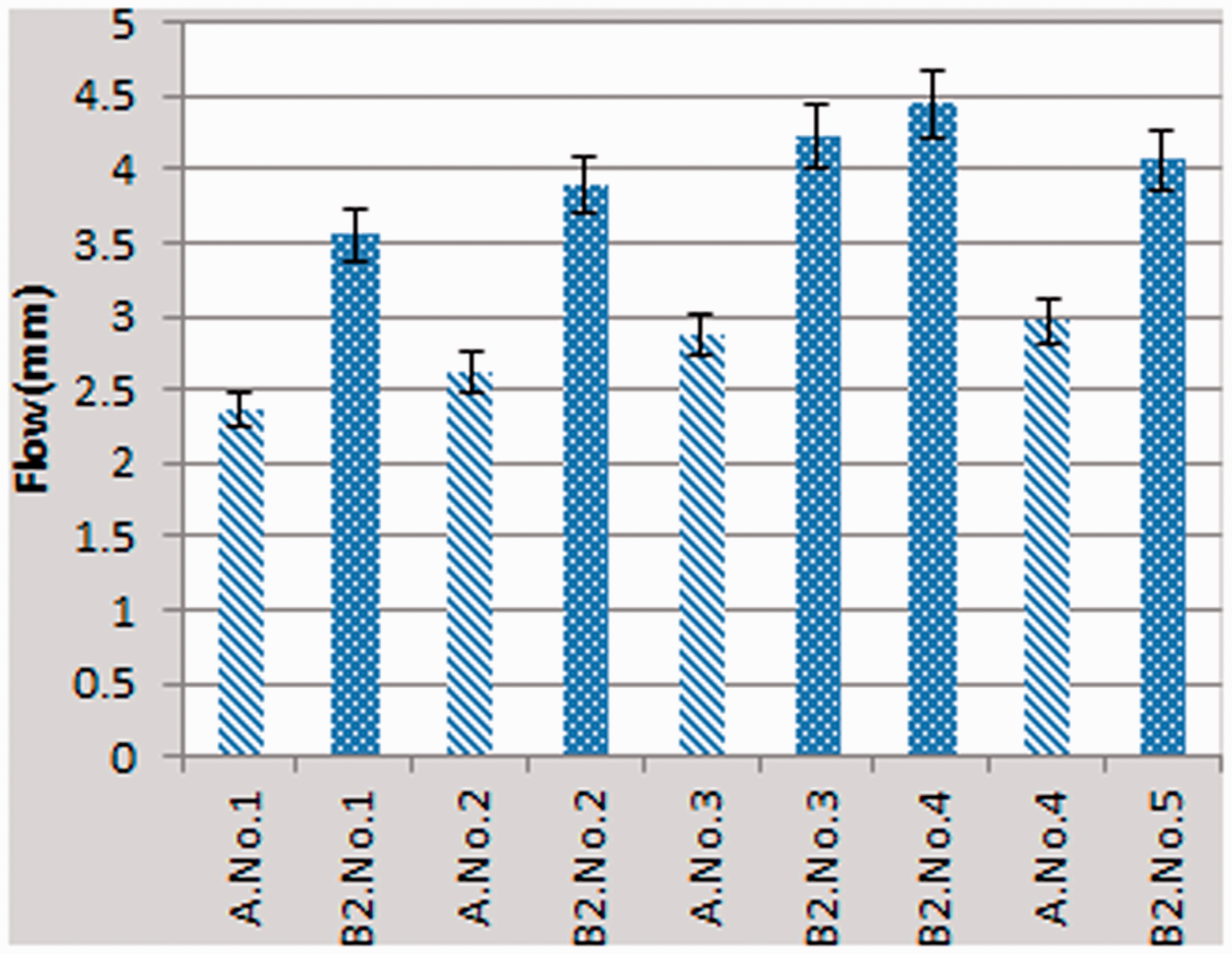
The results indicate an increment in optimum asphalt content in mixtures prepared using type A aggregates while it decreases in mixtures prepared using type B aggregate. Increasing trend in Marshall flow and specific gravity by the increment in bitumen content is a common result [2,24]. As it can be seen, the optimum bitumen content decreases in specimens prepared using type B aggregates, while it was constant for specimens prepared using type A aggregates. It seems that in the former specimens, fibers restrict the slippage of bitumen in voids placed in the surface of aggregates, but there is not such a trend in the latter specimens.
Marshall test results prove that specimens containing 6 mm PP fibers had no positive effect on the Marshall stability. So, MR and ITS tests were performed only on the other specimens. The results of these tests are given in Table 9 and Figures 9 and 10, respectively. Figure 9 shows that adding PP fiber to the asphalt mixture has a positive effect on ITS value, but increasing in the amount of fiber may have a reverse impact on ITS. Moreover, specimens made by type B aggregates have more ITS values compared to type A aggregates. It means that using slag particles in asphalt aggregates can improve crack resistance of AC.
Indirect tensile strength for different specimens. Resilient modulus (MR) for different specimens. MR and ITS values for different treatments.

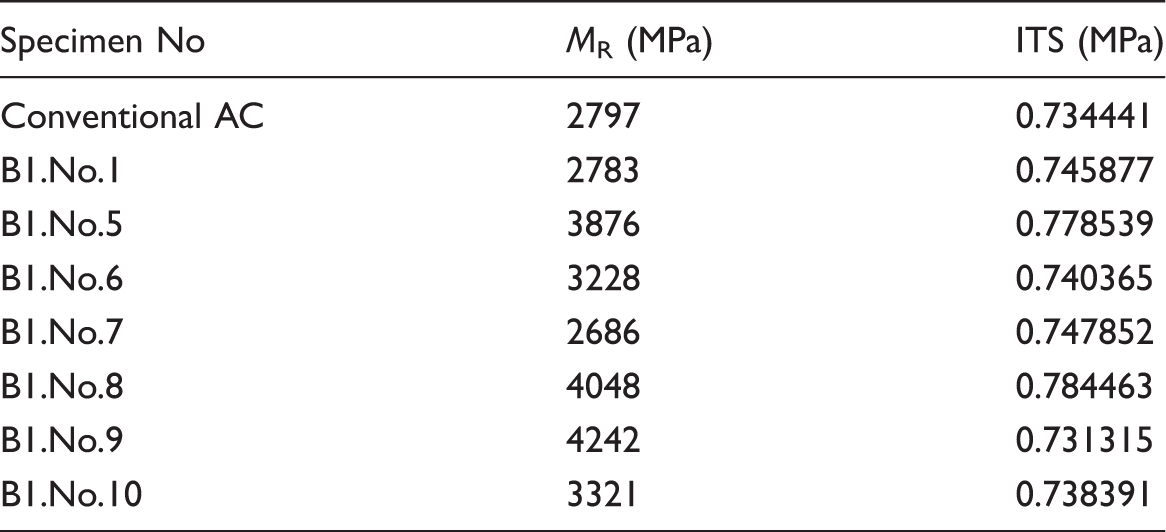
Figure 10 demonstrates that the type of aggregate has no significant effect on MR. In contrast, addition of fibers to SSAC causes a high improvement on this value. However, as it is observed in the case of ITS results, increment in the amount of fiber has an opposite effect on this value. Since, MR is usually used to determine the thickness of the AC layer, it is possible to decrease the thickness of the AC layer by using PP fibers in SSAC mixtures.
Statistical analysis
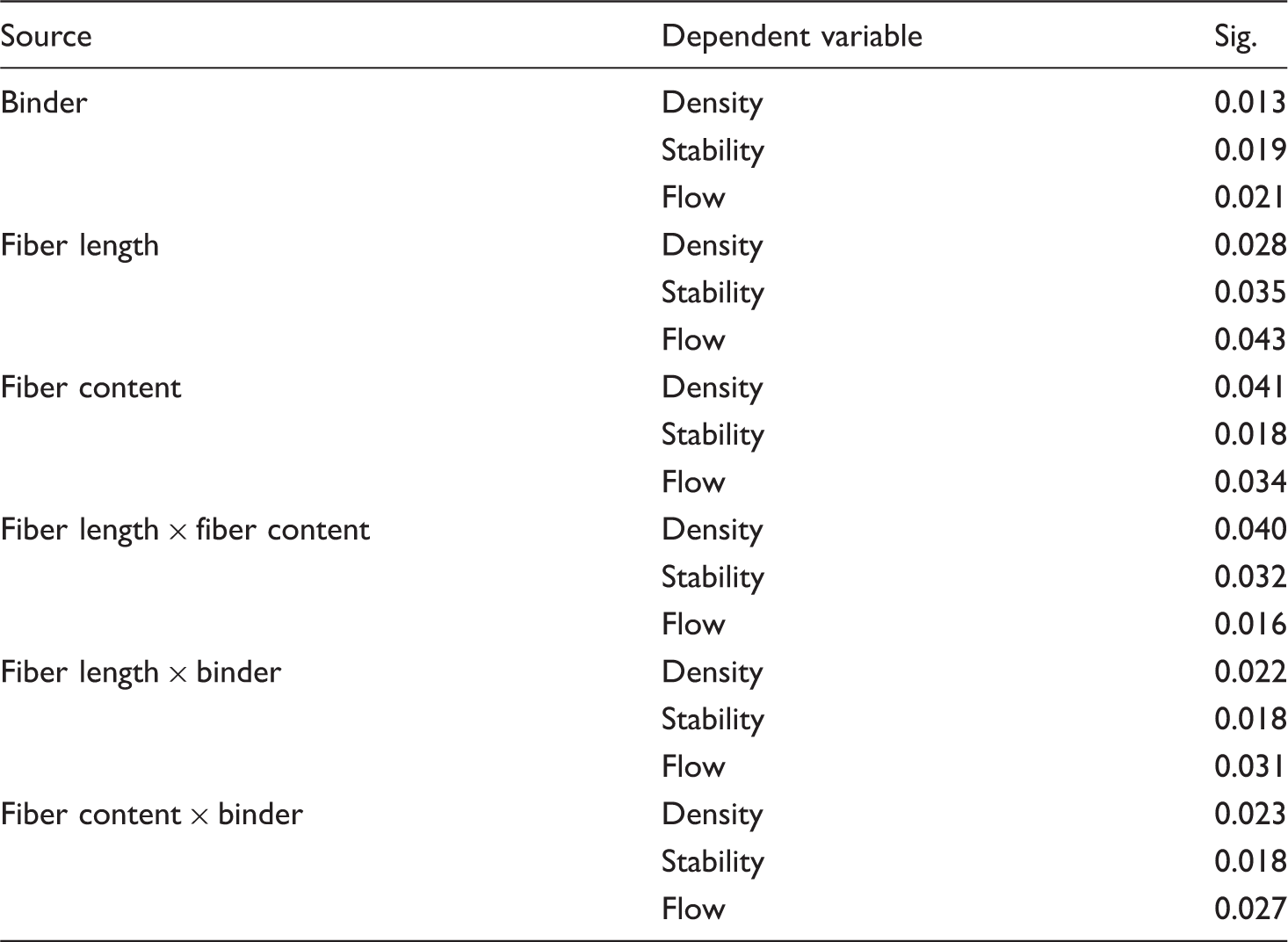
Univarate and multivariate statistical test results.
Conclusion
Following comments can be concluded from the present study:
Addition of PP fibers to AC mixture has various effects on operational properties of flexible pavements. Too short fibers may not provide any reinforcing effect while long fibers would result in “balling”. AC specimens containing 2% of 19 mm PP fibers have the best mechanical performances in comparison with the other fiber-modified and/or neat samples. It is possible to decrease the optimum asphalt content of SSAC mixture by using PP fibers. Therefore, PP fibers may improve the economical advantages of SSAC mixture. So, a separate study is necessary to evaluate the economical advantages of fiber-reinforced steel-slag asphalt concrete (FRSSAC) for each country. Crack resistance properties of AC mixtures improve in the case of FRSSAC compared to SSAC and AC mixtures. It is possible to decrease the thickness of the AC layer by using PP fibers in SSAC mixtures. Applying scanning electron microscopy technique and/or image processing methods is suggested to investigate the uniform distribution of PP fibers within the AC matrix in future works.
Footnotes
Funding
This research received no specific grant from any funding agency in the public, commercial, or not-for-profit sectors.