




Abstract
Knits have been playing a predominant role in the area of technical textiles, as recent researches point out. In one of the areas, knits have been produced for advanced textile preforms, wherein they have been knitted into net shapes and have advantages such as high conformability/drapeability to accommodate complex shape moulds, and good permeability. The advanced composite manufacturing processes demand the use of fashionable near net-shaped preforms. Flat knitting technology is especially suited for the production of such products like biaxial-reinforced multi-layer weft-knitted fabrics. Also, natural fiber knits have been developed using flat weft knitting technology in geo textiles, wherein the fabrics could be designed to suit varied soil types and conditions. These have indeed proved to be more economical and superior to their synthetic counterparts. Recently, knit scaffolds made from Poly Lactic Acid (PLA) yarns have been developed for urinary bladder reconstruction. They hold promise for other medical applications such as cardiovascular prosthesis and compression bandaging. Fabrics have been knit with copper core yarns and evaluated for their electromagnetic shielding effectiveness. The shielding effectiveness has been found to increase with factors such as tightness, wale density, and course density. Also, the interlock knitted fabric has better electromagnetic shielding effectiveness in comparison with rib and plain knitted fabrics. Warp knit coupled with stitch bonding technology has been able to effectively produce reinforcement textiles for composite materials. In yet another interesting development, weft knit and braided polypropylene has been used as stents for treating cardiac arterial diseases. The knit stents have proved to be advantageous over the metallic ones with regard to flexibility and easy movement. Warp knits have also been used for large-scale structures as in aircraft applications.
Introduction
Knitted fabrics, besides being extensively used for dress materials, are now gaining strong ground in the area of technical textiles. They have found entry into various areas such as geotextiles, automotive textiles, medical textiles, sports textiles, agricultural textiles, aerospace industry, protective textiles, and so on. The invention of innovative and eco-friendly textile fibers such as polylactic acid have made it possible for knits to be used in medical applications and automotive textiles.1,2 Recently, flat knits have been used in geotextile applications, 3 wherein they have been designed and produced to suit various soil types and conditions. Knits have also been used as advanced textile preforms for composites. 4 These have been found to be useful in the automotive industry. It has been possible to produce net shape or near net-shaped preforms that can be made for complex-shaped composite parts.
During the last decade, concerns have increasingly grown on electromagnetic interference (EMI) and effect of electromagnetic wave radiation from electronic and telecommunication devices on the human body. 5 Human tissues may be accidentally or intentionally exposed to electromagnetic sources such as radar, microwave oven, and industrial microwave equipment. In the case of industrial applications, electromagnetic shielding materials are used to exclude the unwanted electromagnetic radiation or signals, for example, to carry out sensitive electrical measurements or to prevent malfunctioning of equipment’s confidential data from being interrogate, TEMPEST protection is used. It is also used to provide protection against the electromagnetic pulse, which can disrupt neighboring equipment such as computers. A recent study on electromagnetic shielding effectiveness of copper core yarn knitted fabrics has shown improvement in EMI. 6
Knits for advanced preforms
During the recent years, considerable developments have taken place in textile processes for composite preforming. A significant development is the net shape or near net-shaped preforms that can be made for complex-shaped compositeparts.7,8 The advantages of textile preforming include the production of complex net-shaped preforms with continuous integration of many different plies as used in conventional manufacturing methods, control of fiber orientation, use of automated textile processes, allowing quality control and good reproducibility, and high productivity. 9 – 12 Net-shaped preforms produced by weft knitting have advantages such as high conformability/drapeability of knitted fabrics to accommodate complex shape moulds, good permeability to resin of the open loop structure, and the possibility of creating a uniform fiber volume fraction throughout. Considerable developments have taken place in the knitting of net-shaped preforms on electronic knitting machines using brittle yarns. The main criteria in the choice of knitted preforms for specified shapes is reduction of manufacturing costs. The use of drapable net-shaped fabrics with tailored fiber orientations produced on automated knitting machines resulted in saving of labor cost to the extent of 30%. Sufficient strength of weft-knitted composites in the weak warp direction can be obtained by choosing a sufficiently large loop size. A combination of shaping techniques can be used to produce net-shaped fabrics suitable for the automobile wheel wells. These include holding, narrowing, widening, and binding off. Good mechanical performance can be achieved through an interlock stitch structure, and this also protects the brittle yarn. Lay-in yarns can be used to regulate the mechanical performance in the weft direction. The speed of production can be increased by tucking the lay-in yarns. The fiber diameter and yarn linear density need consideration, as otherwise brittle yarns will break.
The manufacturing technique
An integrated design for manufacturing, which involves both aspects of mechanical analysis and process analysis, has been chosen in the development of knitted preforms for composite parts.
7
For knitted composites, this process is still being developed and consists of the following steps:
Mechanical analysis of the composite part, mainly through finite element analysis: defines the mechanical requirements for the knitted preform. Mapping of the stitch configuration as a function of location on the part to fulfill the mechanical requirements. Design of net shape cloth (2D or 3D) that covers the part. Choice of net-shape knitted cloths that can be knitted on automated knitting machines. Synthesis of the second and fourth steps, stitch layout and shape. Verification of the chosen solution through mechanical analysis and possible adaptations.
Fabric shape and stitch design on automated knitting machines
Two or three dimensional preforms of complex shapes can be knitted to a near net shape, on electronic V-bed weft knitting machines. These machines are fully automated and guarantee a low level of operator interference, and also a high level of reproducibility and quality control. By steering the knit stitch configuration as a function of location in the preform, the mechanical performance of the knitted fabric composite can be tailored to the loading conditions of the part. 5
The following processing parameters enable shaping as well as stitch variation capabilities:
Machine type – Number of knitting beds, width of bed, number of knitting heads and knitting systems, number of yarn carriers, machine gauge etc. Yarn type – Material: glass, carbon, or other fibers, linear weight, thickness of individual fibers. Method of yarn feeding and tensioning – Linear speed of head, stitch cam setting and the setting for each machine.
Stitch structures
A variety of stitch structures are possible, involving combinations of the basic stitch types, such as tuck stitches (incomplete stitches), transfer stitches, and racked stitches. It is difficult to achieve complex stitches with brittle yarns. Recently, four (basic) structures have been evolved (Figure 1); single jersey stitch on one bed; single jersey stitch on two beds forming two separate layers of fabric; rib stitch on two beds, creating a double-layer fabric with high stretch in the weft direction, which involves knitting on all the needles within the knitting width per knitting system used, putting maximum stress on the yarn during knitting: and interlock stitch on two beds, creating a true double-layer fabric with strong interlaminar bonding. Use of only half the needles across the knitting width per stroke in each knitting system results in reduced yarn failure and safer knitting.
Interlock stitch of brittle reinforcement yarn.
4

Lay-in yarns
Each of the basic stitch types can be supplemented by laying in yarns across the weft way direction. In the case of single jersey fabrics, the lay-ins has to be tucked-in to be integrated with the fabric as shown in Figure 2. In the case of double fabrics, just as is the case with a rib stitch or interlock stitch, lay-in yarns can simply be deposited in between the two beds, on the sections of yarn crossing over between the two beds. It is preferable to tuck the yarns into the fabric at frequent intervals when using heavy brittle lay-in yarns at high speeds.
7
A compromise has thus to be made between mechanical performance and productivity, since a curved aspect is introduced into the otherwise straight yarn. This is because the curved shape has a negative effect on the mechanical performance. On an experimental scale, there are machines that also allow warp lay-ins. A yarn canbe fed to each needle, into the fabric, without hindering the inter-looping operation at the needles.
Single jersey fabric showing knitting plan and tucking in a lay in yarn.
4

Stitch variation rules
It is possible to vary the type of stitch from one course to another and also over a course width. Various types of stitches can be accommodated in one course. Also, the stitch type can be changed in individual needles, as all the needles are individually controlled on modern automated/electronic knitting machines. In practice, the stitch cam setting can only be set per course, so that the length of the loops in the warp direction is the same over the width of one course. Regarding lay-ins, it is possible to lay-in yarns over only part of the width of a course. Several variations are possible from course to course. It is easier to increase the number of beds in action, for example, by going from single jersey to rib stitch. The number of beds in action can also be decreased relatively easily by transferring the yarn from one bed to the other although transferring brittle yarns is difficult.
Shaping rules
The following rules are adopted for shaping fabric structures formed on a V-bed knitting machine
Holding Widening Narrowing Binding off.
The above principles may be used either singly or in combination.
Starting and finishing
There are two options available in weft knitting machines. One is to have the fabric continuously in place down to the take-up rollers and the other is to commence each piece afresh using a set up comb. Considering the latter case, it is practical to start a fresh piece with waste or cheap yarn, and knit up to the point where the fabric is placed into the take-up rollers before beginning to knit with specialized yarns. In either case, a separation yarn may be inserted immediately before the start of the knitting. The separation yarn can be removed after the piece is taken out of the machine, and the starting edge will remain stable. One of the advantages is that the fabric can be finished neatly, without wastage of yarn, by binding off, across the complete knitting width till only a single needle is left in action. 7 This is easily secured by pulling a yarn through one stitch when the fabric is off the machine. Binding off can be achieved on different types of machines.
Choice of yarn
The yarn types that can be knitted on certain machines are restricted. The setting of the stitch cam and the stitch structure also restrict the maximum linear weight. The diameter of the individual fibers in a yarn is very important. Generally, in the case of loosely packed yarns, the bending stiffness of the yarn will vary strongly with thefiber diameter. Thicker fibers will have more trouble making loops in a fine gauge machine.
Speed considerations
A number of factors influence the speed of linear knitting without any shaping. The most crucial control factor is the cam/knitting speed. The type of stitch greatly influences the speed. The number of knitting systems used directly influence the speed. The width of the fabric has a great effect. Heavy lay-in yarns slow down the process considerably, since they create more drag in the system. Thus, the type of yarn feeding assumes importance in this case. Larger loops of the knitted preform will show less chance of failure during knitting. Thus, the machine could be run at higher speed with the yarn at hand.
3D shaping
Net-shaped two-dimensional fabrics are developed for the wheel wells of automobile. These are made from the preforms. The fabrics are draped around the mould and require one seam on top of the wheel well where sections of the fabric come together. It is also possible to develop proper three-dimensional fabrics in certain cases. These do not require any seaming when put in the mould. A tubular fabric can be knitted on a double V-bed machine by knitting two separate fabrics on each bed and joining the fabrics together at the sides. This is shown in Figure 3. It is possible to knit a conical fabric by altering the tubular width of the fabric gradually. The lay-in when used will normally be in the direction of the hoop of the tube or cone. It is also possible to knit a circular fabric narrowing (zeroing), widening, and renarrowing a tubular fabric.
7
Illustration of knitting a tube on a double bed machine, two individual fabrics are joined at the sides.
4

Other developments
Heavy multilayered fabrics can be produced on multibed machines. Presently, machines with four beds are available. However, three- or four-layered fabrics with suitable stitch structures are yet to be developed. 7 The knitting of pockets seems to be a promising proposition, as it can integrate a knitted one with other types of fabrics. The other fabrics would then be slipped after cutting into the suitable shape. It is possible to knit pockets in a double-layer fabric like a rib stitch or interlock fabric by separating the two layers in certain areas. This can be achieved through the introduction of a jersey stitch on both the beds of the machine, in the pocket areas.
Biaxial knits as fashionable preforms
The advanced composite manufacturing processes increase the demand for the shape of preforms from the biaxial knits in a fashionable way. One possible way for producing such preform materials is by means of flat knitting technology. 13 For most applications, it is necessary to incorporate straight load-bearing yarns into the fabric structure to account for the mechanical properties demanded for the composite part. Research work has focused on combining the advantages of flat knitting with the various possibilities of two-and three-dimensional fully fashioned knitting. The aim is to achieve the manufacture of fully fashioned fabrics with straight load bearing yarns on flat knitting machines.
Biaxial reinforced knits
Biaxial reinforced knitted fabrics consist of weft and warp yarns that are stitched together (Figure 4). Reinforcing yarns can be used widely.
14
The requisite strength and stiffness of the composites are contributed by the reinforcing yarns while the knit structure permits good draping behavior of the preforms and also contributes toward good impact behavior in the composites.
15
The action of the knitting needles is clearly shown. The preforms are suitable for manufacturing by means of the heat-molding technique, by combining them with thermoplastic matrix materials.
16
The structure of the multilayer knit fabric restricts its deformation during composite manufacturing. Research work has thus been directed toward the development of multilayered three-dimensional reinforced knitted fabrics. The focus has been on experimental investigations regarding the modification of a serial flat knitting machine with individual needle selection to permit the manufacture of reinforced near net-shaped performs.
17
The limited space in the vicinity of the working area is illustrated in Figure 4(a).
Working area of a biaxial flat knitting machine (a) and cross section (b) top view and (c) biaxial reinforced knitted fabric.
13

Biaxial near net-shaped preforms have been produced by feeding the warp yarns from either sides of the machine, which restricts the width of fabric. Subsequently, the fabric widths have been increased by modifying the yarn feeding system. Anumber of methods are available for producing fashionable fabrics using the flat knitting technology. One of these involve varying the number of stitches – either the stitch length or stitch pattern. In another method, the number of stitches is varied in the wale and course direction as well.
18
Both methods have been dealt with in earlier studies.
19
–
21
The variation of the number of stitches in wale direction has been considered. For producing fully fashioned biaxial reinforced fabrics by varying the number of stitches in the wale direction, partial courses have to be knitted. This means that in certain courses only selected needles are used for knitting. The remaining needles do not participate in stitch formation in a respective course, but the loops formed are kept in the needle head until for stitch formation again.
22
–
24
This operation is called ‘needle parking.’ The developed view of an optimized preform for a cuboid open on one side is shown in Figure 5. The respective needles are parked in the area of the notches at the four corners of the cuboid, while the number of needles is varied according to the geometrical needs after completion of a corner, all needles participate again on stitch formation over the fabric width. Thus, the corners of cuboid need not be subsequently sewn. In Figure 5, a finished corner is illustrated on the right. Regarding manufacture of the composite part, the arrangement of the reinforcement yarns has to be observed closely (Figure 6). On both side walls of the cuboid, the continuous warp yarns are turned and hence we can make fully fashionable performs from biaxial weft knits.
Production of a cuboid, open on one side, via needle parking method.
13
Arrangement of the reinforcing yarns within the knitted perform.
13


Flat knits in geotextiles
Geotextiles are generally used for reinforcement, filtration, separation, drainage, and erosion control. So far, synthetic polymers such as polyester, polyamide, polypropylene, and polyethylene have been used in the form of woven, knitted, non-woven, knotted, grid, membranes, and composite materials.25,26 These materials are being widely used in various areas of technical applications. Geotextiles have a time-bound function as far as ground engineering applications are concerned, such as basal embankment reinforcement, and temporary roads on soft land. Moreover, synthetic geotextiles are uneconomical in the case of developing countries. In such regions, there are adequate availability of cheap, indigenous, natural fibers such as jute, sisal, coir etc., and the existing textile sectors could convert these fibers into geotextile fabrics. Flat weft-knitting technology has been adopted for producing innovative natural fiber geotextile fabrics. The interactive behavior of these fabrics in different soil types and conditions has been discussed herein, with particular reference to short-term reinforcing applications.
Characteristics desirable in geotextiles
Functional requirements in reinforcing geotextiles 27

A: very important, B: important, C: moderately important, D: not applicable.
Manufacture of innovative structures
In order to knit very coarse and uncrimped natural fiber yarns, an ordinary flat weft-knitting machine has been redesigned and modified so as to produce a geotextile structure. 29 It is possible to introduce both high-strength and low-extension yarns in the knitting machine along the wale or course-wise directions or both. Jute, flax, abaca, and sisal fibers have been considered to be suitable owing to their high strength. The reinforcing yarns can range between 1000 and 10,000 tex, while the knitting yarn may be of 1000 tex. The choice of distributing the lay in yarns and the knitted loop structure are dictated by the end-use applications. Introduction of high-strength yarns at appropriate places enables to produce a solid fabric. Grid structures suitable for geotextiles (with wide apertures) could be produced by skipping needles at particular intervals. Geotextiles could be engineered for specific requirements of soil reinforcement by varying the yarn and knit structure. Yet another interesting aspect to be noted is that the specially designed knitting machine for tubular structures of desired width that could be filled with other materials such as paper, straw, etc., so as to be used as a geotextile structure, specifically in wet conditions such as river banks and water drainage paths. One set back with the knitting machine is that it prevents introduction of warp yarn owing to its design. Moreover, it also requires a creel to accommodate the warp yarns and also a modified continuous take-up mechanism so as to wind on the heavy and thick fabric. The technology is commercially being utilized in UK. 30
Evaluation of performance
An important functional aspect of geotextiles to be considered is its shearing resistance at the soil-fabric interface. This could be determined by means of the coefficient of interaction, which is the ratio of the frictional coefficient between soil and fabric. It has been found that introduction of geotextile actually strengthens the ambient sand. This could be attributed to the surface texture of some geotextiles in that sand grains can interlock with the fabric and thereby reduce its movement. 29 Geotextiles used as reinforcement for short-term applications should necessarily have high tensile strength with low breaking extension and provide a good shear resistance in the fill used for construction works. It could be inferred that for overall performance the nonwoven natural fiber geotextiles are found to be the least suitable for reinforcing application. On the contrary, the geotextiles made out of woven and knitted natural fibers exhibit the best performance.
PLA knits in medical applications
During the recent years, biomaterials have been explored for specific applications, such as tissue engineering, which is concerned with evolving biological substitutes that could assist in tissue functioning. 31 Scaffolds have been developed which not only provide space for the growth of tissues but also enable new tissues to grow with specific functions.32,33 A number of polymeric materials have been used for scaffolds. The tailoring of scaffold is not usually generic but it is always application-specific. 34 The production of scaffolds involves consideration into a number of parameters. 35 The most common methods of producing scaffolds include phase separation, particulate leaching, freeze drying, composite foam preparation, and other techniques. 36 Each technique has its own inherent merits and demerits. Hence, scaffolds are designed in accordance to the areas of application. Ideally, the scaffold material suitable for urinary bladder should have porosity, elasticity, drapeability, and good mechanical characteristics. Earlier, bio-receptive PET films have been used as scaffolds. 37 – 39 Bio-receptive PET knits have been developed for urinary bladder construction, which was however nonbiodegradable. In a recent work, a biodegradable knitted scaffold has been produced for urinary bladder reconstruction, using polylactic acid. 1 The PLA fiber has been produced by adopting the dry jet wet spinning technique. The knitted fabric so produced has been investigated for mechanical properties and porosity. This has opened up new possibilities in the field of development of textile structures in tissue engineering. These materials perform the function of the scaffold, which guides the cells for their harvesting into a tissue leading to the subsequent human organ reconstruction. Textile knits could be designed with different porosities and mechanical strength as well as elasticity, which would be useful for the urinary bladder repair. The area is wide open with enormous possibilities in the field of biotextiles toward textile designing with required physicochemical features.
Flexural rigidity of PLA monofilament
The flexural rigidity of the filament influences its bending properties, which is a requisite in knitting. It therefore affects the loop size, loop formation, and the knit fabric behavior. 1 It is observed that the flexural rigidity decreases with the increase in the draw ratio. The flexural rigidity decreases with increase in draw ratio owing to thinning of the filament. This affects the bending behavior of the filament, which could influence its knittability.
Mechanical properties
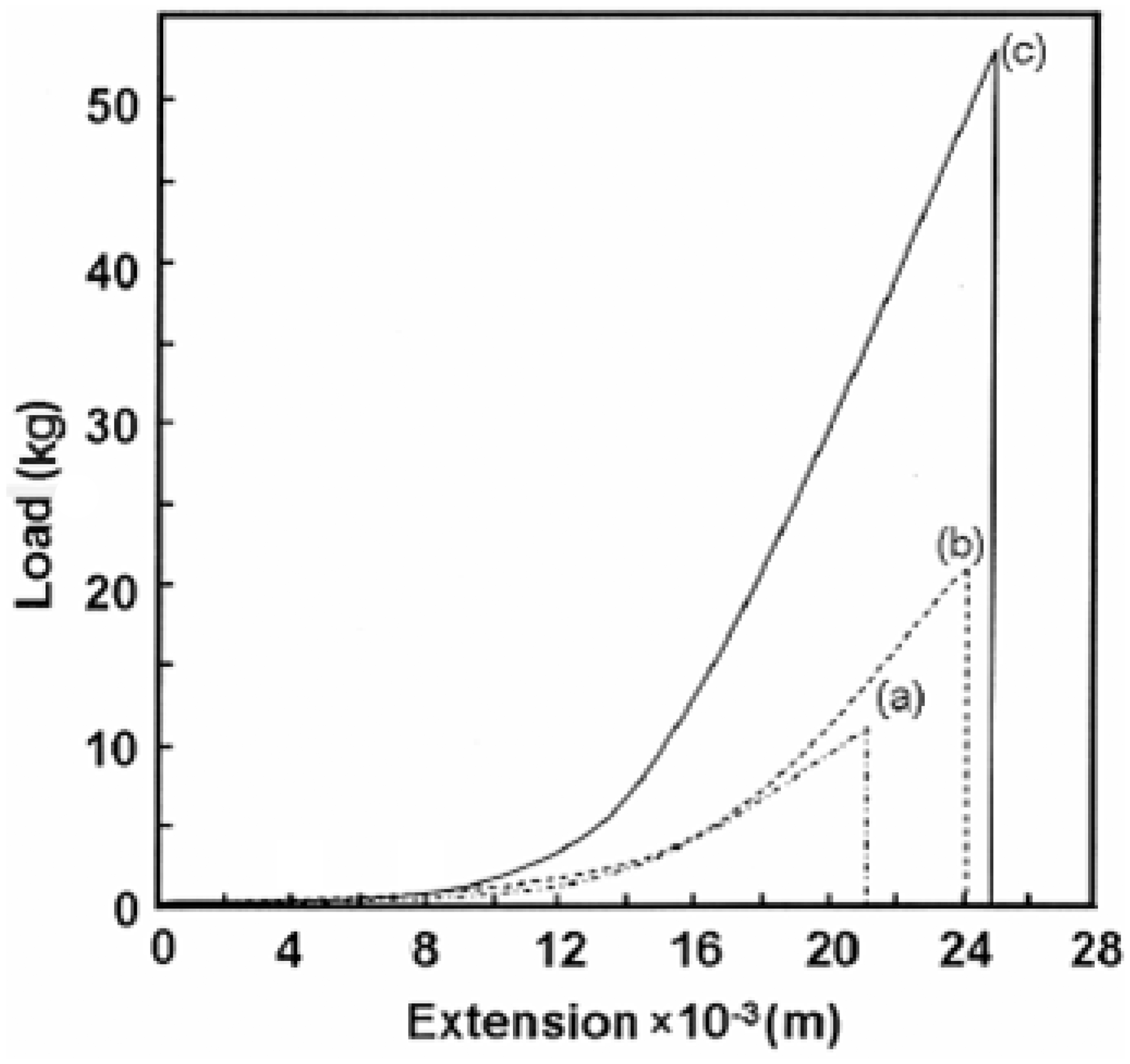
Knitted structures have been produced using 2, 4, and 8 ply PLA yarns, and the loops have been found to be of uniform size. The three structures have been evaluated for mechanical properties and in vitro degradation studies.
1
The behavior of the knitted fabric under pressure has been tested adopting the ball-bursting technique, which almost simulates the behavior of the urinary bladder in the urine-filling process. The stress value obtained by the bursting test for knitted fabric is considerably higher than the required value. The extension of the knitted fabric is also found to be high. The maximum load to burst the fabric is influenced by the number of plies in the yarn. The cyclic loading at half the bursting load is another method adopted to assess the performance of the knitted structure. As the knitted fabric is to be used as scaffold material for urinary bladder reconstruction, the cyclic test has therefore been performed so as to test the deformation property of the knit fabric. It is observed that after 4–5 cycles of loading, the material gets stabilized, and the load extension curve starts repeating for further loading cycles(Figure 7). In case of cyclic loading, initially fabric shows higher extension. It is because at initial cycles of loading, individual loops give the contribution toward the extension in addition to the elasticity of the yarn. After few cycles of loading, the contribution from the loops decreases due to their deformation and the residual extension is the result of the inherent extension in the yarn. The fabric gets deformed in all the cases after 4–5 cycles of loading.
Load extension curves of knitted fabrics in ball bursting test (a) 2-ply yarn, (b) 4-ply yarn, and (c) 8-ply yarn.
1
Porosity of knitted structure
Porosity and area of pores of knitted fabrics 1

In vitro degradation analysis
The intended purpose of PLA-knitted samples is for using it as scaffold for urinary bladder. So they have been treated at pH of 4.6 to 8.0 at 37°C (required for urine), which is the body temperature, for certain period. The result of the analysis of degradation of surface in the samples through SEM reveals that as pH lowers the degradation is increased. This reveals the catalytic effect of hydronium ions on hydrolysis process. At lower pH, the degradation becomes higher, which confirms the catalytic effect of hydronium ions on hydrolysis process. 1 The study shows that the knitted structures are well suited for using as a scaffold for urinary bladder and also paves way for the potential use of different textile materials in various applications of medical field (Cardiovascular prosthesis, Compression Bandaging etc.).
Metal core knits in electromagnetic shielding
During the past few years, concerns have increasingly grown on EMI, and effect of electromagnetic wave radiation from electronic and telecommunication devices on the human body. 40 In the case of industrial applications, electromagnetic shielding materials are used to exclude the unwanted electromagnetic radiation or signals. Polymeric composites are extensively used as passive and active elements in some electrical circuit components in different applications,41,42 due to their light weight, easy processability, flexibility, corrosion resistance, and cost effectiveness. To provide conductivity and shielding from EMI, incorporation of fillers of high intrinsic conductivity such as particulate carbon blacks, carbon and graphite fibers, or metal powders to the polymer matrix is required.43,44 The amount of electrically conductive filler required to impart high electrical conductivity to an insulating polymer can be dramatically decreased by the selective localization of the filler in one phase, or best at the interface of a continuous two-phase polymer blend. 45 The potential health hazards associated with exposure to electromagnetic 46 fields are also a matter of concern. To shield and limit against EMI and electrostatic discharge (ESD), conductive polymer composites started replacing coated materials for various shielding applications in the electrical and electronic industries, especially for electronic household materials. This trend has been driven mainly because of the better characteristics of these polymers in terms of ESD, shielding from EMI, thermal expansion, density, and chemical properties. 47 Earlier some knitted fabric-reinforced polypropylene composites have been fabricated for use as EMSE and ESD properties. It has been reported 48 that materials with high absorption loss and low reflection loss are highly effective in shielding the electromagnetic energy. Copper has been chosen as the conductive filament, 49 – 51 owing to its economy in comparison with other materials. The development of fabrics with good shielding effectiveness (50–70 dB) would be a handy tool for safeguarding electronic appliances from EMI.
The shielding effectiveness appears to be highly influenced by knitted fabric structure and copper wire diameter as compared to tightness factor and thickness of developed conductive fabric. 6 The conductive fabric produced from copper core yarn knitted fabric provides an attenuation of 30–63 dB at the medium frequency range 700–1000 MHz. Hence, these fabrics can be used to shield the household appliances, such as FM/AM radio, wireless phone, cellular phone, computers, buildings, secret rooms, and various electronic gadgets that operate up to 1000 MHz frequency. Studies have shown that with an increase in wale density, course density, and tightness factors, an increase in shielding effectiveness is observed from low frequency to higher frequency range (20–18000 MHz). Interlock fabric structure has higher EMSE at low frequency to higher frequency range than the plain and rib structures. An increase in copper wire diameter shows a general decrease in electromagnetic shielding effectiveness. Since copper is a rigid material compared to polymeric textile material, it offers resistance to bending while knitting the fabrics. With the increase in the diameter, the bending of copper thread becomes more difficult, resulting in openness of the knitted fabric structure, thereby providing less shielding effectiveness. The effect of fabric thickness is found to be negligible. The variation in the shielding effectiveness of the fabric can be attributed to the fact that the electrical property of the material varies depending upon the frequency. Hence, it is suggested to use the fabric at the frequencies where higher attenuation is obtained.
The copper core knit fabrics can be used to shield the industrial appliances such as industrial electronic gadgets, power lines, mobile radio, TV broadcast and receiver, cardiac pacemakers, automotive electronic equipment, inadvertent detonation of explosive devices, electronic control systems of airlines, cooling systems for telecommunication applications, voltage regulation of synchronous generators, wireless communications, military secret room, military tents, etc. 6
During the recent years, wearable electronics have been enjoying popularity in various technical applications such as military, medical applications, telecommunications, and health care garments. Also, conductive textiles are applicable in the areas of civilian and military applications. Core-sheath conductive yarns have been developed with copper filament as core and cotton as sheath using Dref3 friction spinning system. 52 Copper core conductive yarns have been used to produce conductive fabrics. These fabrics have a wide range of applications which includes electromagnetic shielding wearable textiles, mobile phone charging, and body temperature sensing garments. The studies have revealed that copper core conductive fabrics can be used to shield television, computers, and similar equipments and also shield gadgets like computers.
In yet another interesting study, 53 the tenacity and breaking extension of cotton-covered copper open-end friction spun yarns have been investigated. The study reveals that the interaction of core sheath behavior and mechanical properties of the conductive yarns mainly depends upon the frictional characteristics and the percentage of the core sheath components. The electrical properties of these conductive core spun yarns have been studied at three different applied voltages and it is found that the core sheath yarns have very low resistance ranges (3–28 Ω). Such yarns are highly suited for the development of sensor wears and signal transferring applications, such as defence, medical, and technical textiles. Moreover, the yarn can be woven and knitted into fabrics that can be used in antielectrostatic, electrostatic dissipating, body temperature control jackets, telecommunications, and electromagnetic shielding wearable textiles. The commercialization would be easily effected in the near future.
In a novel study, 54 optical fibers have been used for producing fabrics by various techniques, which include sequential work, hand loom, power loom, and core conductive fabrics for the development of signal-transferring fabrics. A microprocessor has been used to study the signal transfer loss. The results reveal that the signal transfer loss is lesser in the case of handloom fabrics in comparison with others. Optical core conducting yarns have been used for making the fabrics. The study involved the physical characteristics of these fabrics. This has resulted in the development of a sensor-type signal transfer fabric that utilizes the optical core conductive fabrics for data transfer. Such fabrics are highly suitable for the development of garments for military and health care areas. Further research is required for finding the various applications of signal transferring fabrics made out of polyester optical fibers, which can be used for development of tele-garment and protective garment for defense purposes.
The influence of blend proportion, fabric thickness, fabric tightness factor, and air permeability on the thermal conductivity behavior of jute/cotton blend knits has been investigated. 55 The fabric having coarser yarns exhibited lower thermal conductivity due to higher fabric thickness, lower air permeability, and higher tightness factor. The value of thermal conductivity is dependent on the proportion of the jute component in the blend. The fabric properties have been found to influence the thermal conductivity. For the higher air permeability values of the jute/cotton blend knit fabrics, the thermal conductivity noticed increasing trend due to the easy diffusion of the heat within the open fabric structure. Whereas a higher fabric tightness factor and fabric thickness results with the decreasing trend of thermal conductivity due to the compactness of the yarn and the arial density of the fabrics which hinders the diffusion of heat.
Warp knits in reinforcement textiles
The stitch bonding technology offers a highly effective process of manufacturing reinforcement textiles for composite materials. This innovative technology is based on joining layers of threads and fabric with a knitting thread to create a layered structure, a multi-ply. Stitch bonding is categorized as a knitting process and is in fact a special type of warp knitting. The basic version of a stitch-bonded material is the combination of a warp-knitting thread system and a weft thread layer. A warp layer alone cannot be fixed by a warp knitting thread system. The warp thread is fixed on the reverse side of the fabric by means of a sinker loop, but for the face side of the fabric at least one weft thread is necessary. In order to combine base materials with one another by means of a loop system, it is necessary that the needle with the warp thread for the loops penetrates the materials in each work step. This means that the warp and knitting threads must move in accordance with one another as well as perpendicular to the vertical direction of the stitch bonding machine.
The main objective in the development of the expanded stitch bonding process is to ensure free positioning of individual layers; especially those of the warp-thread layers on both outer sides of the fabric.56,57 Forming the basis of the needle-shift technique is the additional movement of the compound needle in a right angle perpendicular to its standard movement during the knitting cycle in the stitching process. On a knitting machine, the compound needle and the wire tongue only move up and down perpendicular to the raw material. In the shift technique, a lateral movement of the compound needle and the wire tongue is added, in order to transfer the knitting thread according to pattern on the side of the fabric away from the guides. In earlier studies, it has been proven that symmetrical layer positioning in the form of (00/Θ0/Θ0/00) can be manufactured and successfully reproduced using this technique. Such multiplies are used in reinforced plastics and due to the symmetrical layer constellation, successfully minimize deformations caused by residual stresses in the construction members.
The expanded stitch bonding process extended to include a shift of the needle bar makes a free positioning of layers in multi-plies achievable. It is now possible to produce symmetrically arranged multi-plies (00/Θ0/Θ0/00) in a single step, independent of the restrictions of standard knitting patterns. 58 Deformations caused by residual stresses in reinforced plastic composites can now be avoided. However, by implementing the new production step, there are extensive ramifications on the present stitching patterns. The patterns produced with the new extended stitching principles require new methods of diagramming and numerical notation. The lapping diagram and the chain notation need to provide supplemental information. From these new diagramming and numerical techniques, equivalent patterns, based on the conventional warp-knitting techniques, are created and are equal to the new patterns. With the help of an equation, it is also possible to mathematically calculate the equivalent pattern based on the chain notation. All known patterns in the conventional warp knitting process can be combined with the expanded stitching process, whereas the new patterns can be developed from the corresponding established conformities found in the two original patterns.
Weft knits as stents in arterial implant
Stents have been used in treating coronary arterial diseases. The stents could be implanted through a catheter to compress the plaque and open the artery lumen for efficient flow of blood after the implant. The stent needs to be flexible so as to enable it to be carried to the place in the artery where the injury is located. 59 The stent should keep the artery open by allowing flow of blood and it should also beelastic so that it may accompany contraction and expansion of the arteries as the heart beats. The radial expansion force is the resistance of the stent to collapsing during expansion. 60 This is a determining factor of the capacity of the stent to keep the adequate artery geometry for the blood to flow. The structural design and the type of material determine the radial elasticity and the flexibility of the stent. Another important property of the stent is its fluoroscopic visibility, which enables its exact detection on the harmed area of the artery. This is related to the material used to make the stent and to its dimensions. Stainless steel has a low fluoroscopic visibility, while tantalum has a good fluoroscopic visibility owing to its radio opacity. If the stent is too small, its fluoroscopic visibility is also poor. Yet another aspect to be considered is that the stent should be able to be sterilized so as to avoid being contaminated by bacteria. A textile stent should necessarily have lengthwise flexibility, high radial expansion force, high elastic recovery after radial expansion, resistance to corrosion, good fluoroscopic visibility, and high biocompatibility.
Invariably, biocompatibility becomes a necessary criteria for a stent for its effective use.61,62 The performance of a stent will depend on its interaction with the human cells and fluids. Recent developments have focused on developing a stent that minimizes the occurrence of restenosis (blocking of artery). The problem is common with metallic stents and could be improved by applying textile materials over the metallic stent or by the application of special substances over the metallic structure. Polyester is generally used in covering metallic stents. In other cases, the metallic stent is impregnated with anti blood clotting substances. Researchers have proved that occurrence of restenosis may be reduced by covering metallic stents with textile fibers, and this has paved way for the development of the 100% textile stent. Modern day stents are textile materials that could be designed with improved properties over the metallic ones. Both knitted and braided textile stents could be easily compressed, resulting in blocking of artery and thus lead to heart attack, or other problems such as stent migration etc. 63 The flexibility of a stent is one of the most important characteristics, as without this property it may not be possible to reach the harmed part of the artery. However, to obtain the ideal flexibility of the stent, the radial compression force may be compromised. This latter property refers to the resistance to collapse when the stent expands and is the stents capability to maintain the lumen geometry. Another critical property of the stent is its biocompatibility which has to be very high to minimize the risk of thrombosis or a neointimal proliferative response. Recent studies have focused on development of 100% textile stents to replace commercially available metal and hybrid ones. 64 Polypropylene fiber has been found to be suitable owing to its economical cost as well as compatibility in physical properties. It is effective, readily available, versatile, and cheap. The use of monofilament will enable a greater stiffness and better results when the stent is subjected to compression, tensile, and bending forces as these will be directly borne by the yarn.
Mechanical properties
Studies on the radial compression tests for both knitted and braided fabrics have revealed that the best results have been obtained for the braided fabrics with a marginal increase for those heat-set at 140°C. It has been observed that as the fabric cover increases the resilience of the structures also increases. 65 Studies on bending tests at 90° for both knitted and braided samples have shown that the best results have been obtained for the braided fabrics with the effect of the heat-setting temperature producing small and unclear differences. It has been observed that resilience of the structures increases with the fabric cover. Studies on tensile tests for the knitted fabrics have shown that the structures produced with the thicker yarn have a greater stiffness. For the same yarn diameter, the shorter loop length resulted in the stiffer structure. The braided structures produced with the thicker yarn have a greater stiffness. For the same yarn diameter, the higher the braid angle the stiffer is the structure. The braided structures were considerably stiffer than the knitted structures and therefore performed better.
Overall, the braided structures had better mechanical properties, that is higher stiffness, than the knitted ones and this was due to their structure being made up of straight yarns rather than loops. The tightness of the construction increased the stiffness in all cases as more fiber per unit area is available to resist the loads. It has been observed that as the yarn diameter increased, the thickness of the fabrics (stent wall) also increased. This may explain the increase in the stiffness of the stents with yarn diameter due to an increase in the thickness of the stent wall.
Warp knits for large-scale structures
Earlier research has been focused so as to exploit the potential of textile-reinforced composites as a cost-effective method of producing damage tolerant primary aircraft structures. 65 Some of the potential benefits of the textile-reinforced composites are as follows: reduced material and assembly labor costs through automated fabrication of multilayer multidirectional preforms, reduced machining and material scrap through use of near net-shaped preforms, elimination of cold-storage requirements, and limits on shelf life for prepeg, reduced tooling costs for vacuum-assisted resin transfer molding compared to conventional autoclave processes, and improved damage tolerance and out-of-plane strength as a result of through-the-thickness stitching. Researchers subsequently began to explore breakthrough technologies that would significantly change the way composite structures were being built. This led to the development of large-scale aircraft hardware. Resin injection methods such as resin transfer molding, resin film infusion, and vacuum-assisted resin transfer molding have been the keys to successful fabrication of composite structures from dry textile preforms. The textile material forms such as multiaxial warp knits have shown the most promise for application to aircraft structures. Multiaxial warp knitting is a highly tailorable automated process that produces multidirectional broad goods for large area coverage.
The development of a high-speed multistitching machine and improvements in the multiaxial warp knitting process were required to achieve affordable full-scale wing structures. The stitching machine had to be capable of stitching cover panel preforms that were 3 m wide, 15 m long, and 31 mm thick at speeds up to 800 stitches per minute. The multiaxial warp knitting machine had to be capable of producing 2.5 m-wide carbon fabric with an areal weight of 1425 g/m2. Multiaxial warp knitting is a highly automated process for producing multilayer broadgoods. Compared to woven broadgoods, the knitted fabrics have less crimp since the individual tows are not interlaced. Early machine concepts lacked proper tension control to maintain proper fiber alignment. This was subsequently upgraded and knitting machines could produce 5-ply carbon fabrics in one pass through the machine. A two-step process is required to produce a 7-ply fabric for full-scale wing cover panels in aircrafts. Splicing concepts have been developed to producefabrics up to 2.5 m wide.
Conclusions
Considerable developments have taken place in the knitting of net-shaped preforms on electronic knitting machines using brittle yarns. A combination of shaping techniques can be used to produce net-shaped fabrics suitable for the automobile wheel wells. Good mechanical performance can be achieved through an interlock stitch structure, and this also protects the brittle yarns. Advanced composite manufacturing processes employed in industry increasingly demand the use of reassembled near net-shaped preforms. Flat knitting technology is especially suited for the production of fully fashioned preforms owing to its high flexibility. The possibility for fashioning by varying the number of stitches in the wale direction makes this process especially suitable for composite preform production because fixed fabric edges are formed. The capability of this manufacturing method to achieve three-dimensional preforms via needle parking method is exemplarily shown for an open cuboid and a spherical shell. Technological specifics as well as the fluctuations of geometric dimensions of a spiral fabric are exemplarily shown, and suggestions for solving any difficulties arising are made. A modified flat knitting technology has been developed to produce a wide range of new and novel knitted structures using natural fibers. The geotextiles so produced are found to have superior properties in comparison to the mid range of synthetic geotextiles for soil reinforcement, when considering strength and frictional resistance. The high degree of frictional resistance in natural fiber geotextiles is probably developed from both the coarseness of the natural fiber yarns and the novel structures. The geotextiles so produced will be much more environmental friendly than their synthetic counterparts and the fibers themselves are a renewable source that is biodegradable. In yet another interesting work, knitted scaffolds have been produced from PLA yarns. This opens up a newer dimension in the field of the development of textile structures for tissue engineering. There exists a good possibility to design textile knittings with varying porosity and mechanical strength as well as elasticity which would be useful for the urinary bladder repair. The area is wide open with enormous possibilities in the field of biotextiles toward textile designing with required physicochemical features. Studies on metal core knits have revealed that factors such as type of material, yarn count, number of fabric layers, and type of mordants influence the electromagnetic shielding effectiveness. Copper is found to have exhibited the highest effect while polyester shows the lowest. Though mordants on the fabric cause increase in the Electromagnetic Shielding (EMS) effectiveness, no clear distinction is observed to indicate which mordant is more effective. There is a good need to develop textile products that lead to electromagnetic shielding, owing to health problems posed due to radiation from electric and magnetic sources. This would be useful to the industries which are trying to produce textile fabrics for EMS application. Recently, warp knitting technique coupled with stitch bonding has been effectively utilized in manufacturing reinforcement textiles for composite materials. In yet another interesting polypropylene braided and weft knitted stents have been developed for effectively treating cardiac arterial diseases. Thus, visualizing from the aforesaid discussions, knits clearly prove their versatility in the various field of technical applications and therefore hold the promise to even more areas of applications in the near future.