



Abstract
Over the past 40+ years, a range of frameworks and models have emerged to support the prevention of child sexual abuse (CSA) in organizations. Existing implementation resources and guides often address key dimensions of CSA, including prevention and response, relevant people (victims and perpetrators), varied environments, and organizational processes. However, it remains unclear whether these resources reflect the core constructs common to existing frameworks and models, and whether any reflect all the key dimensions. We aimed to identify constructs related to organizational CSA prevention to assess strengths and gaps in current approaches. We searched across six databases, supplemented by grey literature, and conducted a systematic scoping review of documents—including frameworks, models, books, guidelines, and journal articles—related to preventing CSA in institutional or organizational settings. Documents were included if they discussed multi-dimensional approaches to CSA prevention. We extracted relevant concepts and used thematic analysis to identify overarching conditions of safety. We identified 25 documents that met our inclusion criteria. We extracted 50 prevention-related concepts and thematically coded these, resulting in 6 overarching conditions of safety. Drawing on the concepts related to organizational CSA prevention which we identified, we created six conditions of safety. These conditions offer a synthesized foundation for understanding the core elements of contemporary frameworks and models. They are intended to support researchers, policy makers, families, practitioners, and organizational leaders in developing, implementing, and evaluating strategies to prevent and respond to CSA.
Keywords
Introduction
Child sexual abuse (CSA) is a global public health concern with governments, youth-serving organizations, and families across societies internationally seeking to ensure its prevention. As noted by the World Health Organization (2017): “Child sexual abuse has mental health consequences, including lifetime diagnosis of post-traumatic stress, anxiety, depression, externalizing symptoms, eating disorders, relationship problems, sleep disorders and suicidal and self-harm ideation and behaviors” (p. 8). Using systematic reviews and meta-analyses, it is estimated that between 8% and 31% of girls have experienced CSA, and between 3% and 18% of boys. Such estimates are based on the proportion of children and adolescents in representative samples from the population who reported having experienced CSA (Barth et al., 2013; Stoltenborgh et al., 2015). However, rates are typically lower if using retrospective recall in adulthood. For example, Pereda et al. (2009) conducted a systematic review and meta-analysis, finding that 7.9% of men and 19.7% of women in the reviewed samples reported experiencing sexual abuse during their childhood or adolescence.
Globally, one of the most recent and rigorous nationally representative prevalence studies, the Australian Child Maltreatment Study, revealed that 28.5% of Australian adults experienced CSA (Mathews et al., 2023). Although the rate was slightly lower for the younger cohort (aged 16–24) compared with older Australians, it was significantly higher for gender diverse and sexuality diverse Australians (Higgins et al., 2024). Typically, CSA is not experienced on its own, but in concert with other types of child maltreatment. Only 6.7% of Australians reported experiencing CSA without any other form of child maltreatment; in fact, two-thirds of all people who experienced any kind of child maltreatment reported experiencing multi-type maltreatment (Higgins et al., 2023).
CSA Contexts
Recently, attention has turned to organizational or institutional CSA, including numerous government inquiries investigating historical and contemporary situations in Australia (Wright et al., 2017), New Zealand (Royal Commission of Inquiry into Historical Abuse in State Care and in the Care of Faith-based Institutions, 2020), England and Wales (Jay et al., 2018), Ireland (The Commission to Inquire Into Child Abuse, 2009) and the United States (John Jay College Research Team, 2004). 1 In Australia, a 5-year inquiry by the Royal Commission into Institutional Responses to Child Sexual Abuse (Royal Commission), and its 17-volume report and 409 recommendations resulted in a cascade of policy reforms. The Royal Commission found that youth-serving organizations had not done enough in the past to keep children safe from CSA and required support moving forward in ensuring children and young people would be safe. An important finding highlighted by the Royal Commission was the level of peer-on-peer abuse occurring within organizations (Commonwealth of Australia, 2017). The 409 recommendations of the Royal Commission also prompted efforts by youth-serving organizations to adopt cultures of safety that put children and young people’s safety first. It has led to the creation of national principles for child-safe organizations (agreed to in principle by all Australian states and territories and enshrined in law as child-safe standards by five of the seven). It has also led to the establishment of new regulatory or specialist response organizations such as the National Office for Child Safety, the National Centre for Action on Child Sexual Abuse, and Sport Integrity Australia.
Another context in which CSA occurs, and one that has specifically gained attention over the past decade, is online CSA. The COVID-19 global pandemic has been referenced in relation to causing a large spike in the levels of online abuse—both sexual and otherwise—experienced by young people (Salter & Wong, 2021). Pre-COVID-19 rates of various forms of online CSA (also referred to as child sexual exploitation) have been reported as:
15 to 20% for cyberbullying (Modecki et al., 2014; Spears et al., 2014)
13 to 19% for unwanted sexual solicitations (Ospina et al., 2010)
5% and 3% for offending and victimization of sextortion (Patchin & Hinduja, 2020); and
8.4% for victimization and 12% for perpetration of non-consensual forwarding of sexts (Madigan et al., 2018).
Most recently, population-representative data from the Australian Child Maltreatment Study have shown that 7.6% of young adults (aged 16–24) experienced nonconsensual sharing of sexual images of them as a child before age 18, and 17.7% experienced online sexual solicitation by an adult (Walsh et al., 2025).
Alongside the focus on organizational and online abuse, it is important to consider familial sexual abuse. Intrafamilial abuse encompasses abuse perpetrated by biological or social (e.g., stepparents) family members. Extrafamilial abuse encompasses abuse by anyone outside the family, usually perpetrated by known acquaintances of children (Fischer & McDonald, 1998; Hartley & Bartels, 2022). Abuse in any of these contexts can include harmful sexual behaviors from other children and young people. Although some prevention efforts of CSA apply to more than one of these contexts, many prevention efforts researched and implemented in relation to CSA speak directly to one context (organizational, intrafamilial, extrafamilial, or online) due to the differing nature of the risk and protective factors and approaches to preventing and responding to abuse (see Kaufman et al., 2016; Scoglio et al., 2021; Pinter et al., 2022; and Schaathun et al., 2024 for specific risk and protective factor across the different contexts).
Across the variety of forms and contexts of CSA, the global community is showing increased interest in preventing and ensuring the appropriate response (Russell et al., 2020). There are many similarities in the dynamics of abuse (such as the use of grooming, power imbalance, etc.), and it is possible that approaches to prevention and responses could be inclusive of efforts across these different contexts.
Current Approaches to Tackling CSA
Approaches to combating CSA have evolved over the decades. In the 1980s and 1990s, there was a large focus on delivery of protective behavior programs for children. These programs focused on equipping children and young people with the skills and knowledge that are hoped to help prevent abuse. A recent review of what works in CSA prevention education identified the importance of active rehearsal and participation with a focus on core areas to best support children’s ability to prevent or speak up and seek help about abuse (Trew et al., 2021). “Protective behaviors” programs have been criticized for the lack of evidence that links increases in children and young people’s knowledge and skills to reductions in actual prevalence of CSA (Pitts, 2015). An unintended consequence is that they can place the onus on children and young people to be responsible for sexual abuse prevention, rather than the adults, the systems, and the society around them whose responsibility it is to keep children safe (Rudolph & Zimmer-Gembeck, 2018; Rudolph et al., 2018). A more recent focus has been on supporting adults—workers, volunteers and parents, and the wider community—as well as organizations that work with children and young people to ensure the environments that children and young people interact with others in—physically, digitally, and interpersonally—are safe (Rudolph et al., 2018; Russell & Higgins, 2020; Russell et al., 2024). This has been done through different theoretical approaches including situational crime prevention and contextual safeguarding strategies, embedded within a public health approach to achieving community-wide change (Firmin, 2017; Higgins et al., 2016; Lonne et al., 2019; Rayment-McHugh et al., 2024)
Public Health Approaches
A public health approach to CSA prevention—supported by numerous working in the field (see Letourneau et al., 2014; Lonne et al., 2019; and McKibbin & Humphreys, 2020)—categorizes prevention and response activities into three levels. Firstly, primary prevention focuses on strategies aimed at preventing abuse from occurring across whole populations—such as supporting parents with knowledge of risks and skills to ask children about concerns, or whole-of-organization strategies to disrupt grooming and screening out high-risk individuals from working or volunteering with children. Secondary prevention is where programs and strategies are aimed at intervening in at-risk sub-populations where one or more risk factors may be present or problematic behavior has been observed—including children who have already experienced another form of abuse or neglect, or have greater vulnerability, such as those in the out-of-home care system, or LGBTQIA+ children and young people. Finally, tertiary prevention refers to strategies that are put in place after abuse has occurred, with the intention of preventing poor outcomes and consequences as a result of abuse as much as possible, such as therapeutic interventions, and strategic responses like restorative justice or trauma-informed processes in schools (Quadara et al., 2015). One of the key benefits of a public health approach is the utilization of existing universal services such as schools and health systems to reach entire populations with prevention messages and interventions. This, however, can be criticized as expensive and resource-intensive.
Situational Crime Prevention
Situational crime prevention is a theoretical approach that focuses on improving policies, practices, and strategies that increase the difficulty to abuse, and reduce the vulnerability of, young people (Kaufman et al., 2019; Morley & Higgins, 2018). This approach focuses on multiple factors that enable CSA to occur, not simply relying on keeping potential abusers away from young people. Frameworks have been created by Stephen et al. (2008), Kaufman (2010) and Kaufman et al. (2006) support youth-serving organizations to develop prevention responses (largely at the primary level of a public health approach) to make child abuse more difficult to be perpetrated. These strategies aim to make the specific organization less tempting to potential abusers as a context where they might be able to abuse a child (Morley & Higgins, 2018).
Contextual Safeguarding
The most recent approach to support tackling CSA—which works alongside a public health approach—is contextual safeguarding (Rayment-McHugh et al., 2024). Contextual safeguarding is defined by its most prominent researcher, Carlene Firmin, as “an approach to understanding, and responding to, young people’s experiences of significant harm beyond their families. It recognizes that the different relationships that young people form in their neighbourhoods, schools and online can feature violence and abuse” (Firmin, 2017, p. 1). It focuses on the risks outside familial contexts and works to reduce these to improve young people’s safety.
Contextual safeguarding has been used to support safeguarding process adoption in local council areas (e.g., Griffiths, 2021), supporting professionals such as psychologists and social workers in their safeguarding work (Allen, 2020; Wroe & Lloyd, 2020), and in intervening with young people who engage in harmful sexual behaviors (Firmin et al., 2019; Rayment-McHugh et al., 2021). With its strong focus on relationships, contextual safeguarding works seamlessly alongside a public health approach and incorporating situational crime prevention elements—with its focus on understanding and addressing environmental risks and enablers—to improve safety conditions for children and young people.
Implementation Resources and Guides
In addition to conceptual models and frameworks, several implementation resources have been developed to guide the practical application of CSA prevention strategies in youth-serving organizations. These resources—originating from Australia, the United Kingdom, and the United States—reflect varying degrees of alignment with the theoretical approaches outlined above. These resources vary in scope and emphasis but collectively aim to translate theory into practice by offering guidance on organizational policies, environmental design, workforce development, and child empowerment. For example, the CDC’s foundational guide outlines six components of CSA prevention including screening, supervision, and training (Saul & Audage, 2007), while the Johns Hopkins desk guide proposes eight organizational practices grounded in ecological and organizational theory (Letourneau et al., 2020). The U.S. National Coalition to Prevent Child Sexual Abuse and Exploitation’s updated plan articulates six pillars for prevention spanning advocacy, education, collaboration, funding, organizational practice, and research (The National Coalition to Prevent Child Sexual Abuse and Exploitation, 2021). In Australia, the Minimum Practice Standards published under the National Strategy to Prevent and Respond to Child Sexual Abuse provide a framework for trauma-informed, culturally safe service delivery across six domains, including governance, accessibility, and survivor-centered care (Department of the Prime Minister and Cabinet, 2023). The children’s guide to the National Strategy also foregrounds child participation and rights-based education (Australian Human Rights Commission, 2021). The non-government sector in Australia has also developed various resources, for example, the Together for Safeguarding framework offers a comprehensive, role-specific guide to embedding safeguarding into workforce capability. It outlines values, competencies, and behaviors tailored to different organizational roles, and provides practical guidance for recruitment, supervision, training, and continuous improvement (Social Vantage Advisory in partnership with PeakCare, 2022). In the United Kingdom, the Lucy Faithfull Foundation has advanced situational prevention through practical interventions in leisure centers, libraries, family homes, and online environments, demonstrating how small environmental and cultural changes can reduce opportunities for abuse and increase guardianship (Allardyce et al., 2024). While these resources offer valuable guidance, none provide a comprehensive, empirically derived framework for understanding the conditions that must be in place to prevent CSA and respond effectively when it occurs.
Aim
The aim of this paper is to address this gap by identifying constructs from a systematic review of academic and grey literature to develop a contemporary, integrated synthesis of factors related to the prevention of—and response to—CSA in organizations. This conceptual framework is intended to inform future frameworks, models, guidelines, policies, and evaluation tools, and to support youth-serving organizations in creating the conditions within environments where children are safe and supported.
Method
We used a two-stage method for developing the factors. Stage 1 consisted of a systematic review of existing models and frameworks regarding organizational CSA prevention and response. We used the Preferred Reporting Items for Systematic Reviews and Meta-Analyses (PRISMA) criteria (Moher et al., 2015) to support this stage of the review. Stage 2 consisted of a qualitative methodology that involved coding data from Stage 1, creating factors, recoding the extracted data, and seeking an expert panel review from CSA researchers, professionals, and survivors.
Stage 1: Systematic Review
Search Strategy
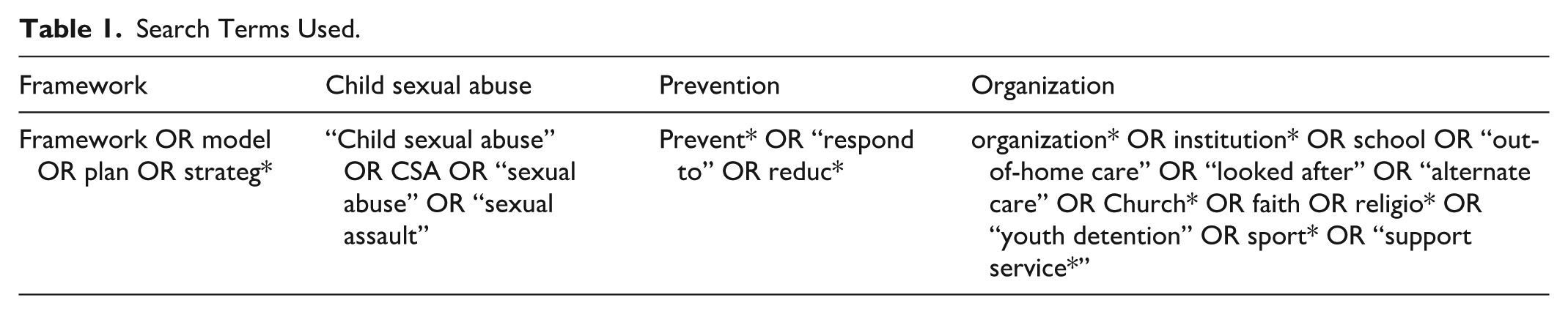
We conducted searches of six electronic databases: Scopus, Web of Science (Core Collection), PsycINFO, ERIC, MEDLINE, and the Social Sciences Index in January 2020 to identify peer-reviewed literature published in English. To identify as much literature as possible within the search parameters, we did not apply any date restriction. Table 1 outlines the terms we included in our keyword searches. Where possible, we also conducted subject heading (index) searches. Although our search strategy targeted academic databases, many of the included documents were books, manuals, and guidelines not subject to traditional peer review. As such, we consider this a systematic scoping review of documents that conceptualize CSA prevention in organizations.
Search Terms Used.
Inclusion and Exclusion Criteria
Texts were included if they described a model or framework that had a primary focus on prevention of CSA and was multi-dimensional. We focused on dimensions in terms of different groups of people (i.e., children, workers, or family/parents), different environments (i.e., a changeroom, in a car, or online), or processes (such as supervision practices or interrupting grooming).
Texts were excluded if the framework focused solely on responses once abuse had occurred (i.e., therapeutic models) or processes relating only to reporting abuse. Texts were also excluded if the model or framework described a singular dimension (see above) of CSA prevention. The search strategy did not specifically target grey literature.
Study Selection
Figure 1 provides an overview of our search process. Initial searching resulted in 2,479 texts, of which 1,169 were duplicates. The remaining 1,310 articles were divided between three screeners, resulting in a decision to exclude, include, or consider for further screening each article using Rayyan QCRI (Ouzzani et al., 2016). We then blind screened 67 articles that were either judged to meet the inclusion criteria or to warrant further detailed consideration. This resulted in 41 texts included for full-text screening.
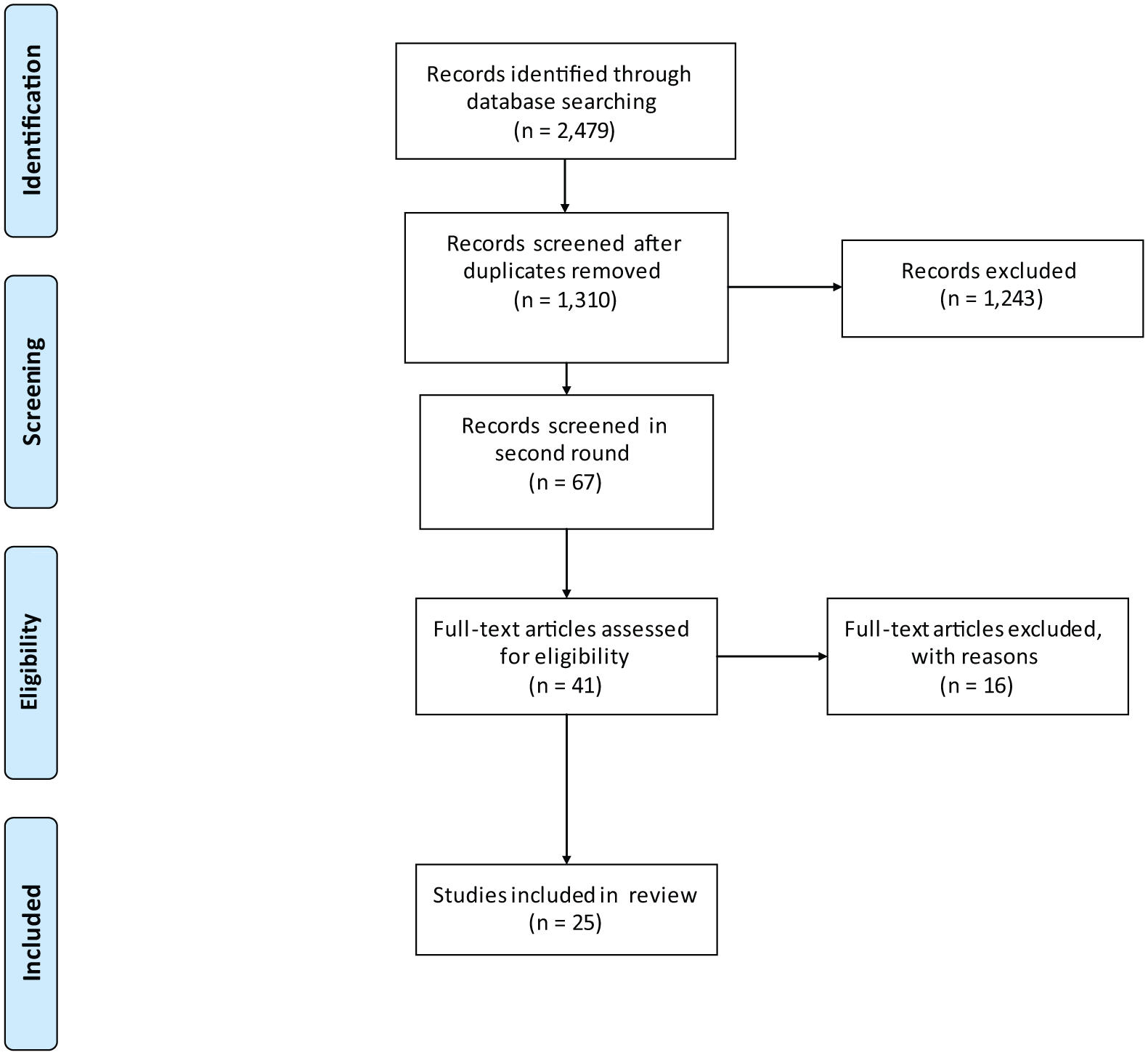
PRISMA Flow Diagram.
Of the 41 texts retrieved for data extraction, two were book reviews leading to the retrieval of two additional texts that weren’t already captured by our search (we then excluded the 2 book reviews, ending up with still 41 texts included). Of these 41 texts, after applying the inclusion and exclusion criteria, 25 were retained for the final data analysis (see Figure 1). Six were books, 5 were book chapters, 3 were curricula or manuals, 10 were journal articles, and 1 was a conference proceeding).
Data Collection and Analysis
In analyzing the 25 texts included in this review, we needed to consider the fact that many of the included texts were whole books or chapters. Based on the different types of reviews discussed in Grant and Booth (2009), we consider our review to be a systematic scoping review.
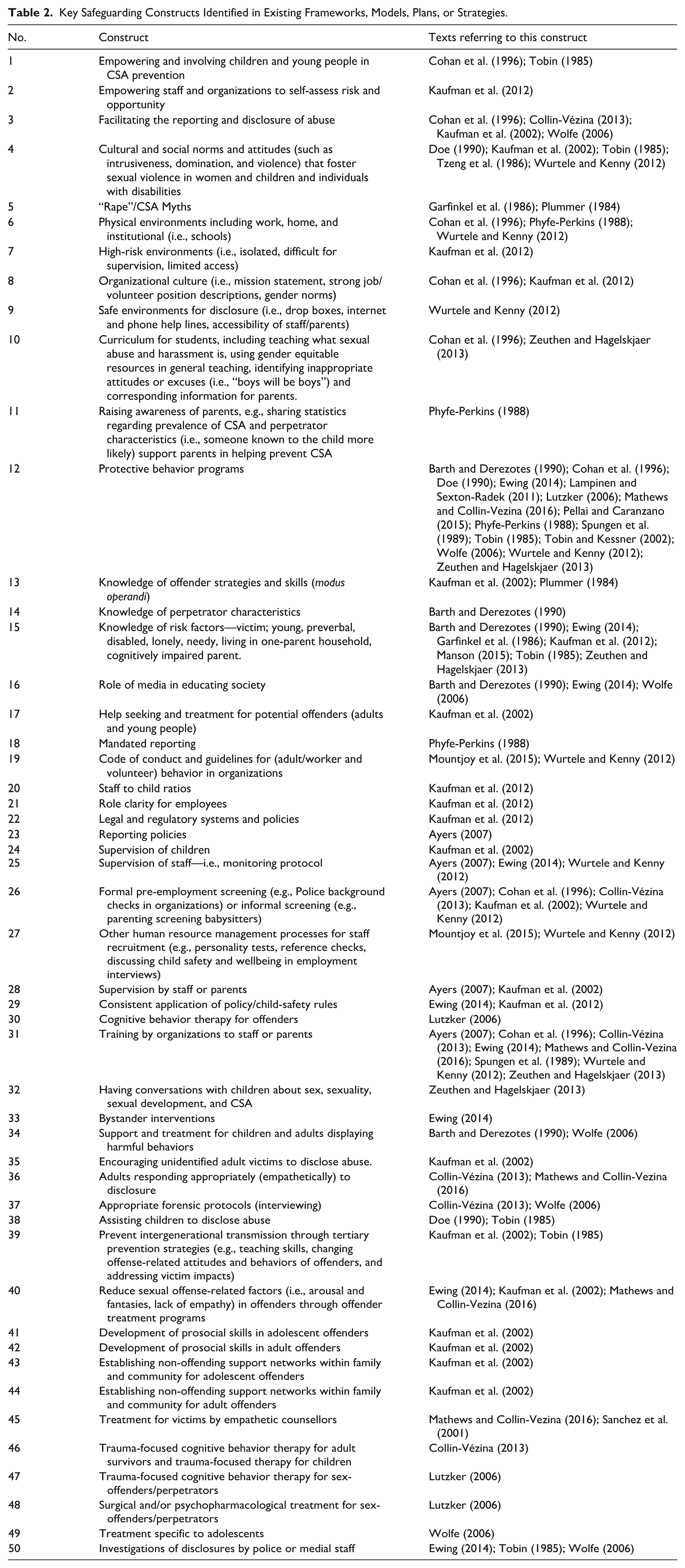
The first author read the included texts and extracted concepts that were presented as key components that either explicitly or tangentially discussed frameworks or models (see Table 2). We noted where concepts were discussed across multiple texts which texts concepts were extracted from to identify and investigate any patterns or frequency of each concept’s inclusion within the existing frameworks and models.
Key Safeguarding Constructs Identified in Existing Frameworks, Models, Plans, or Strategies.
Once key concepts had been extracted, we used thematic analysis to create overarching themes to which the concepts might be able to be grouped. This would allow us to identify overarching domains to which groups of concepts fell under. These could then be transformed into factors or conditions.
Findings
Overview of Included Texts
The documents spanned four decades with five texts discussing models of CSA prevention in the 1980s, a lull in the 90s with only three texts in this decade and then growing numbers across the 2000s and 10 articles in the 2010s. These dates point to both the emergence and later resurgence in CSA prevention models in research, policy, and practice.
When extracting data from the texts that across the 1980s and to a lesser extent the 1990s, the focus of CSA prevention models was purely on child-focused protective behavior programs. Since the 2000s, models have focused on areas such as the knowledge, attitudes, and skills of professionals and/or addressing the environments in which abuse occurs.
Concepts Identified
Data Extraction
Texts were scanned and read to extract relevant concepts, which were seen to be a key integral component of the model or framework. Table 2 outlines the key constructs that were extracted and which text(s) they were extracted from.
Summary
Our systematic review identified 50 concepts evident within existing models and frameworks of organizational (or institutional) CSA prevention and response. These concepts, and the models and frameworks they came from, often focused on individual components or domains of abuse prevention. For example, some models and frameworks only discussed organizational policies and procedures, ignoring aspects related to individuals (victims or perpetrators) such as skill development or treatment, or environmental or contextual factors. Others did the opposite and focused solely on potential victims of abuse and upskilling them with the hope this would prevent abuse occurring. While such frameworks can support the mitigation of specific risk factors or the development of policies or processes that help prevent abuse, organizations may inadvertently lack appropriate prevention strategies in other areas.
Across the models, there was very little focus on secondary and tertiary prevention strategies. Exceptions to this included Kaufman et al. (2002) who included concepts surrounding working with and treating offenders, and Phyfe-Perkins (1988) who included mandated reporting within their models. All of which are important concepts when considering how best to prevent CSA as well as work with existing victims and perpetrators in response to abuse that has already occurred. Our search did not identify any specific frameworks or models aimed at preventing sexual abuse of a specific cohort (i.e., sexuality and gender diverse young people, young people living with a disability, neurodiverse young people). While we hope that the Conditions of Safety as they stand can be useful for preventing abuse in these populations, the lack of diversity in the reviewed literature should be considered before further work occurs.
Thematic Coding
Once we had completed extracting key concepts from existing models and frameworks of CSA prevention, we used thematic analysis to identify themes across the concepts, which we would then be able to convert into conditions.
Both of us independently coded the 50 concepts, grouping these together under themes, which evolved as each concept was coded. We then met and compared themes and identified where cross-overs existed and correct naming of the themes considering both authors’ coding. This process resulted in the identification of six themes, which we consider “conditions of safety.”
Discussion
We conducted a systematic scoping review of documents—including frameworks, models, books, guidelines, and journal articles—related to preventing CSA in institutional or organizational settings to create a set of factors that can be used to support the prevention and response to CSA and support our understanding of how to measure and evaluate success in keeping children and young people safe from sexual abuse. With this in mind, we first conducted a systematic review of existing models and frameworks of CSA prevention and response in organizations. Included texts then had concepts within their models and frameworks extracted, and from there we thematically coded concepts into overarching themes. We have transformed the themes we developed into six conditions of safety.
Stages of Research
Systematic Review
The existing models and frameworks, and the theories that underpin these, support CSA prevention—and in some cases treatment—across varied dimensions. For example, the four preconditions model (Finkelhor, 1984; Finkelhor et al., 2016) focuses largely on perpetrators and factors (dimensions) associated with would-be victims. More recently, contextual safeguarding (Firmin, 2017; Rayment-McHugh et al., 2024) considers the contextual factors (or dimensions) that can be modified to prevent abuse and keep children safe. What is needed now is a coherent framework that brings together understanding of victim-related factors, perpetrator-related factors, situational and other contextual organizational factors, and broader societal attitudinal or cultural factors that can support safeguarding and prevention and responses to CSA.
Many concepts, such as the degree to which staff have adequate knowledge of risk factors for abuse, or knowledge of their accountability requirements (i.e., mandatory reporting), appeared across multiple models and frameworks and from the earliest models developed in the 90s. These findings highlight the growth and development of different factors across time in relation to the prevention and response to CSA. The potential for specific factors to become more focused on as frameworks and models that focus on gaps that have appeared over time with a reduction or “forgetting” of past factors could negatively affect safeguarding efforts. Alternatively, organizations may find that areas that have been researched and considered since the 80s (such as perpetrator and victim risk factors) are well understood and no longer need to be covered but rather a more holistic approach is needed to ensure those areas that are not well understood are focused on in training, policy development, and research.
Thematic Coding
Our thematic coding identified 6 factors/conditions that we found encompassed the 50 concepts we identified across existing frameworks and models (see Table 3). The conditions have been developed to help us to develop a set of factors that help us understand the conditions that can help keep children safe from CSA (primary and secondary prevention) and that are required to support effective responses to occurrences of harm (tertiary prevention).
Thematic codes generated.
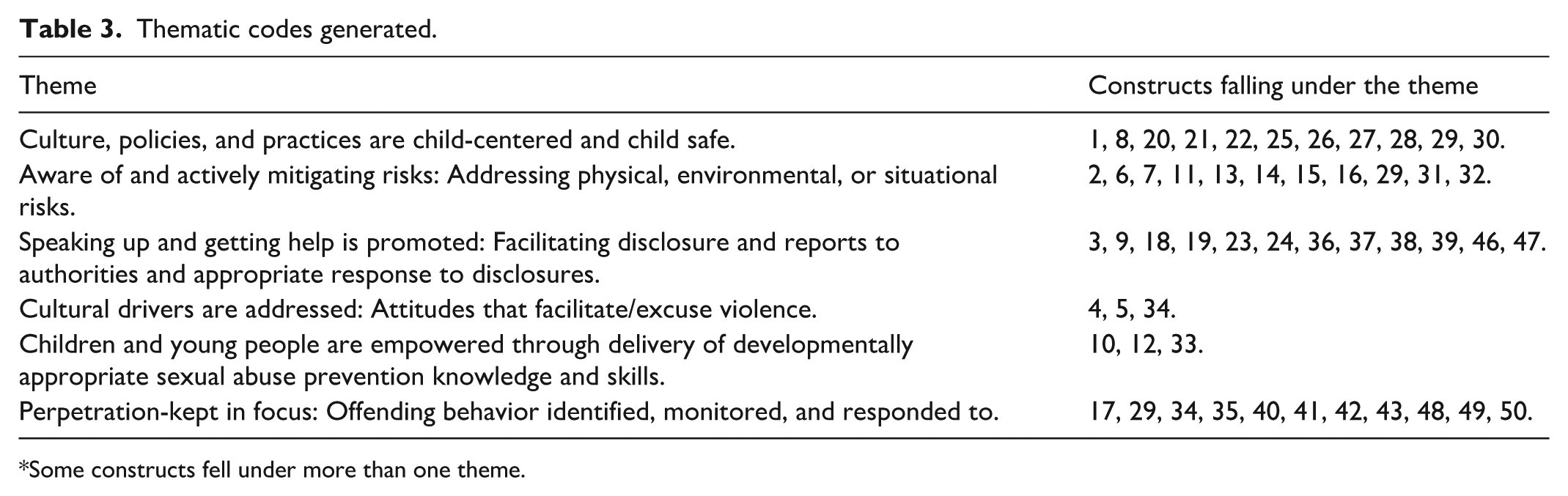
Some constructs fell under more than one theme.
The conditions within organizations that support the safety of children from CSA include a holistic consideration of how conditions related to preventing abuse can be related to the people (adults and children and young people), environments, and policies and practices that can be considered when modifying or implementing strategies and policies aimed at keeping children and young people safe. It is clear that adults need to be suitably trained and have skills in discussing safety, relationships, and sexual matters in developmentally appropriate ways with young people. Complementing this is the need for suitable policies, codes of conduct, and supervision of staff to ensure the governance structures in place support them and the safety of young people. This includes HR and hiring policies and processes.
While there is overlap in the primary, secondary, and tertiary levels of prevention and response to CSA, some of the conditions we identified through our thematic coding spoke to responses to CSA as opposed to prevention. Staff feeling confident receiving disclosures of abuse as well as young people also feeling confident to disclose feeling unsafe or of being abused was an important factor/condition. Once harm has occurred, it is important that victims are support mentally, physically, and culturally/spiritually. The importance of being trauma-informed, and encompassing different roles within harm response (i.e., forensic, legal, psychological) was an integral part of the factors/conditions we identified. The other factor/condition we identified as relevant to harm response was that of treatment and support to adult offenders and young people who display harmful sexual behaviors—both from a legal perspective but also a psychological or treatment perspective.
The Conditions of Safety
Considering the thematic codes developed through the second stage of our work and considering the answers to the questions we had when we embarked on this work, we created six conditions of safety relating to the prevention and response of sexual abuse of children and young people (See Box 1).
Six conditions of safety for preventing and responding to CSA in organizations.
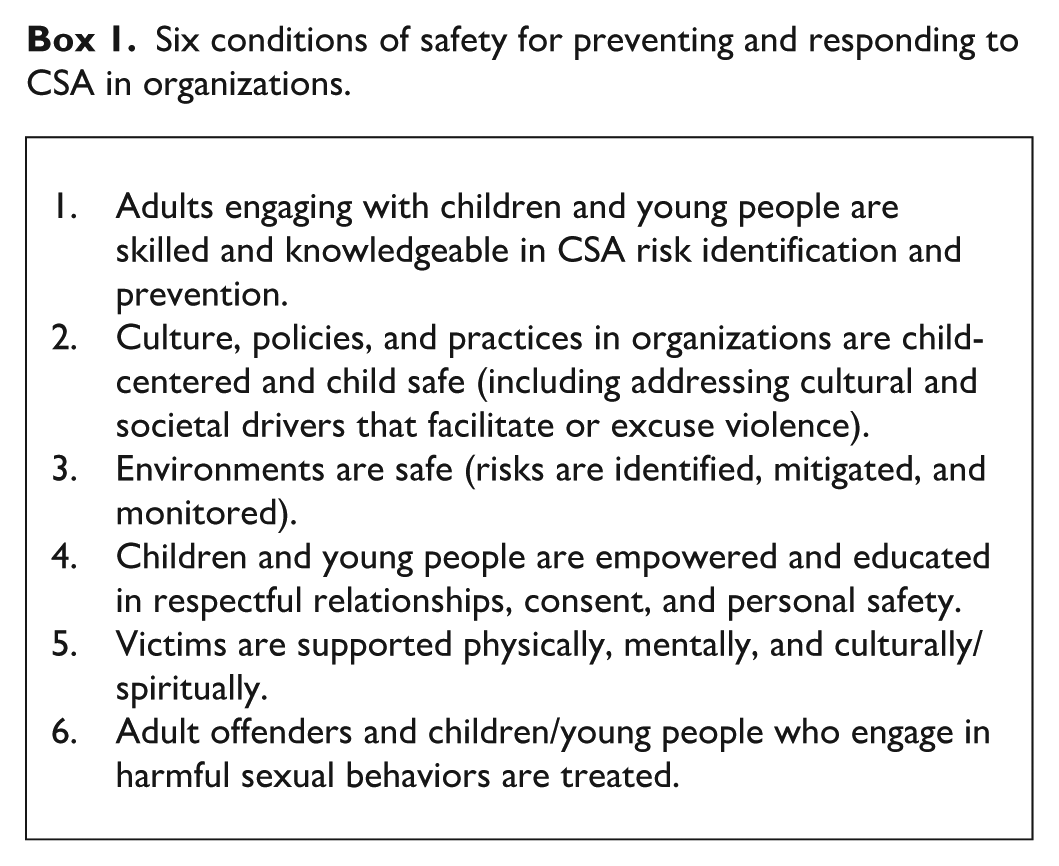
Although our impetus for developing the conditions was to understand and communicate the key elements of CSA prevention in organizational contexts (due to the proliferation of historical institutional abuse inquiries occurring globally), we hope that through research, framework and model development, implementation, and evaluation, the Conditions of Safety may be applicable to the wide range of other contexts in which sexually harmful and abusive behaviors—online, in families, and from peers.
How Implementation Resources Reflect the Six Conditions of Safety
Although each of the seven implementation resources identified earlier contributes valuable insights into CSA prevention, none fully encompasses the six Conditions of Safety. This is not a matter of minor omission but reflects a broader issue in the field: The absence of a comprehensive, operationalizable model that integrates prevention, response, and recovery across all domains of safeguarding.
The CDC’s 2007 guide offers detailed procedures for screening, training, and environmental safety, clearly aligning with Conditions 1 and 3, and to a lesser extent, 2. However, it does not substantively address child empowerment, victim support, or treatment of offenders and children with harmful sexual behaviors. Similarly, the Johns Hopkins (Letourneau et al., 2020) desk guide presents a system-level framework that supports Conditions 1, 2, 3, and 6, but its strategic goals are not framed as measurable or implementable conditions. Although the guide offers a robust framework for prevention and organizational accountability, it does not substantively engage with child empowerment or victim support. The U.S. National Coalition’s Six Pillars touch on Conditions 1 through 5, with strong emphasis on education and inclusion. However, despite referencing the need for intervention and treatment, it does not substantively address Condition 6. The Implementation Guide for Australian National Strategy to Prevent and Respond to Child Sexual Abuse is the most comprehensive in terms of operational detail. It clearly addresses Conditions 1 through 3 and 5 through 6 but does not substantively engage with Condition 4—child empowerment is largely absent from its standards. The Children’s Guide to the National Strategy is not designed as an implementation resource per se, but its inclusion highlights a critical gap: While it clearly empowers children to understand and respond to abuse (Condition 4), it does not address organizational culture, adult capability, or treatment responses. Together, these two resources reflect a complementary approach to safeguarding: The Implementation Guide provides detailed standards for adult-led systems and services, while the Children’s Guide offers developmentally appropriate messaging that supports child empowerment. However, their separation by audience also reveals a structural limitation—children are not supported to understand the roles adults and organizations play in keeping them safe (Conditions 1–3, 5–6), and adult-facing resources do not adequately incorporate child empowerment (Condition 4). A more integrated approach is needed, one that ensures children are informed about the full safeguarding ecosystem and that adult-led systems embed empowerment as a core condition. The Together for Safeguarding Framework provides a strong foundation for Conditions 1 through 3 and 5 but lacks substantive engagement with child empowerment and treatment of offenders or children with harmful sexual behaviors. Finally, the Lucy Faithfull Foundation’s situational prevention paper is unique in its explicit engagement with Condition 6. It provides concrete examples of offender-focused deterrence, environmental design, and family safety planning. However, it does not substantively address child empowerment (Condition 4), despite its emphasis on prevention.
Operationalizing and Embedding the Six Conditions of Safety
What sets the Conditions of Safety apart is their emphasis on operationalizability. Rather than offering broad principles or aspirational goals, the Conditions provide a structured foundation for developing models and frameworks that can be implemented, monitored, and evaluated over time. This review confirms that while existing resources offer valuable components, none provide a complete roadmap for safeguarding that spans all six Conditions. Unlike these United States, Australian, and UK-based frameworks, which were developed within specific cultural, legal, and institutional contexts, the Conditions of Safety were derived from a systematic review of documents, including peer-reviewed literature, across multiple jurisdictions. They were not built around assumptions about available resources, governance structures, or professional roles, making them potentially more adaptable to diverse settings. Consideration of the diversity of cultural aspects required to prevent and respond to abuse appropriately between different countries but also within different countries can and should be considered when applying the conditions. The importance of culturally sensitive approaches is essential, for example, when supporting victims from Indigenous communities or migrant backgrounds. Trauma-informed care must be adapted to reflect context-specific spiritual and cultural healing practices. Education programs on respectful relationships and consent should be inclusive of gender-diverse and neurodiverse children. Organizational policies must explicitly address the vulnerabilities of local marginalized groups, including those facing systemic discrimination or living in remote areas. This underscores the need for future research to explore how these conditions apply across diverse cultural, socioeconomic, and geographic contexts and how measures should be designed to evaluate effectiveness across these varied populations.
To understand whether children and young people are safe, the ability to evaluate strategies and interventions to create evidence-based resources, as well as measure outcomes related to safety is vital. As such, the factors we’ve identified through our thematic coding, and the resulting six conditions need to be able to be operationalized into outcome measures. Many psychometrically tested measures exist, however, the use of non-psychometrically tested items is frequent in this space. Whether or not these conditions, and measures that get developed against them, are only suitable for organizational contexts or could be operationalized in a way to measure the factors in family settings or the wider community would require context-specific research.
Research Implications
Identifying the conditions of safety from existing theories and models and developing prevention resources and operational guides that reflect all six conditions is just a first step in many that can help us to reduce CSA and improve the safety of children and young people. Several further research questions arise: Can the conditions of safety support the development of contemporary measurement tools and scales that would be adaptable across varied organizational and cultural contexts and used as a proxy for prevalence, to support evaluation of organizational policy changes or prevention strategy efficacy? Can changes in these conditions of safety—as measured at a whole of population, organization, or community level—map against changes in longer-term CSA prevalence data? These are complex questions that will require work through the development of models and frameworks underpinned by the conditions of safety, an analysis of how existing psychometrically valid measures relate to factors related to each of the conditions, and the funding and execution of experimental research evaluating the efficacy of CSA prevention strategies, policies, and interventions using such measures. Future research should explore how the Conditions of Safety can be adapted and measured in diverse populations, including Indigenous communities, LGBTQIA+ youth, children with disabilities, and those in non-Western cultural contexts.
Because the Conditions of Safety are grounded in constructs that have emerged consistently across decades of research, they offer a flexible yet empirically anchored foundation for prevention and response efforts in a wide range of environments—including those where formal child protection infrastructure may be limited or still developing. While further research is needed to explore their applicability in specific cultural contexts, the Conditions of Safety provides a promising framework for adaptation and implementation beyond the settings in which existing implementation resources were designed. By synthesizing key concepts from 25 prevention documents and peer-reviewed literature, the conditions are practical and implementable and can map against existing and future prevention resources and guides to ensure comprehensive approach to CSA prevention.
Strengths and Limitations
There are limitations to some of the choices we made within our review, including the selection of keywords used to identify texts and the restriction to English-language documents. A limitation out of our control was how few of the reviewed texts explicitly addressed the needs of marginalized populations such as LGBTQIA+ youth, children with disabilities, culturally and linguistically diverse communities, or Indigenous children.
A key strength of our review is its systematic approach, which reduces the likelihood of bias and enhances the reliability of the findings. The inclusion of diverse documents—spanning books, manuals, guidelines, and journal articles—enabled a broader synthesis of constructs than would have been possible through journal literature alone. This diversity reflects the real-world sources that inform CSA prevention practice and policy. Another strength lies in our construct-based thematic synthesis. Rather than summarizing frameworks descriptively, we extracted and analyzed constructs to develop overarching conditions. This analytical approach allowed us to identify operationalizable elements that can underpin future models and measurement tools. The design of the Conditions of Safety represents a further strength. The conditions—or individual constructs or elements that sit within them—are designed to be measurable and adaptable, offering a foundation for empirical evaluation and supporting the transition from descriptive to evaluative research in CSA prevention. Finally, the Conditions of Safety are not tied to any specific cultural or institutional context, making them potentially adaptable across diverse settings. Their derivation from constructs identified across decades of conceptual work enhances their relevance and applicability in varied environments.
Summary tables
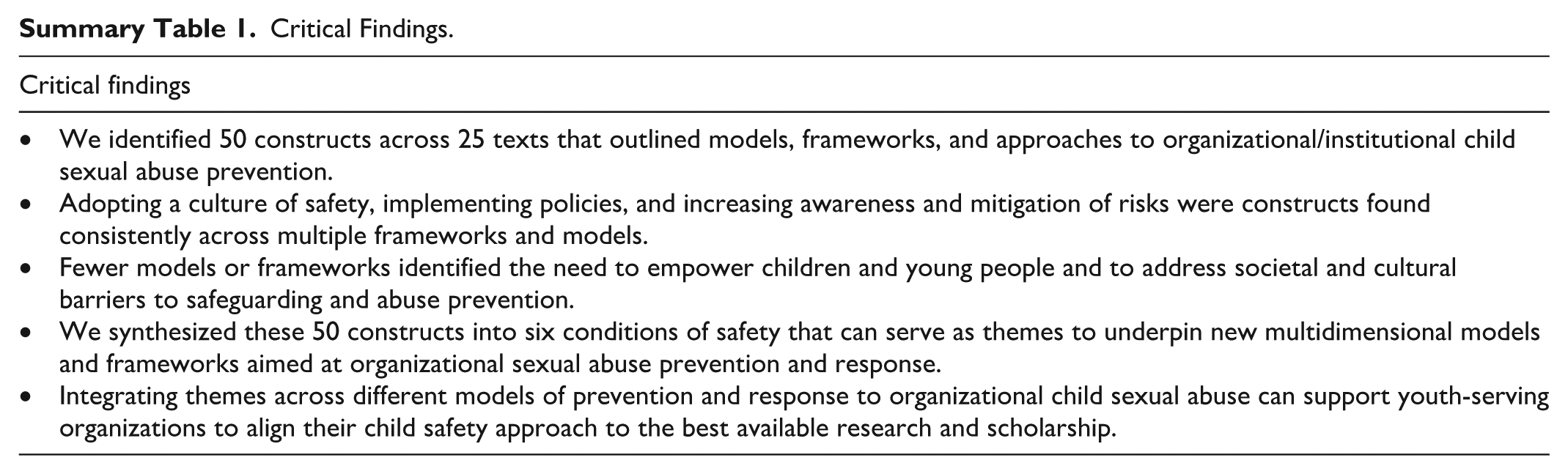
Critical Findings.
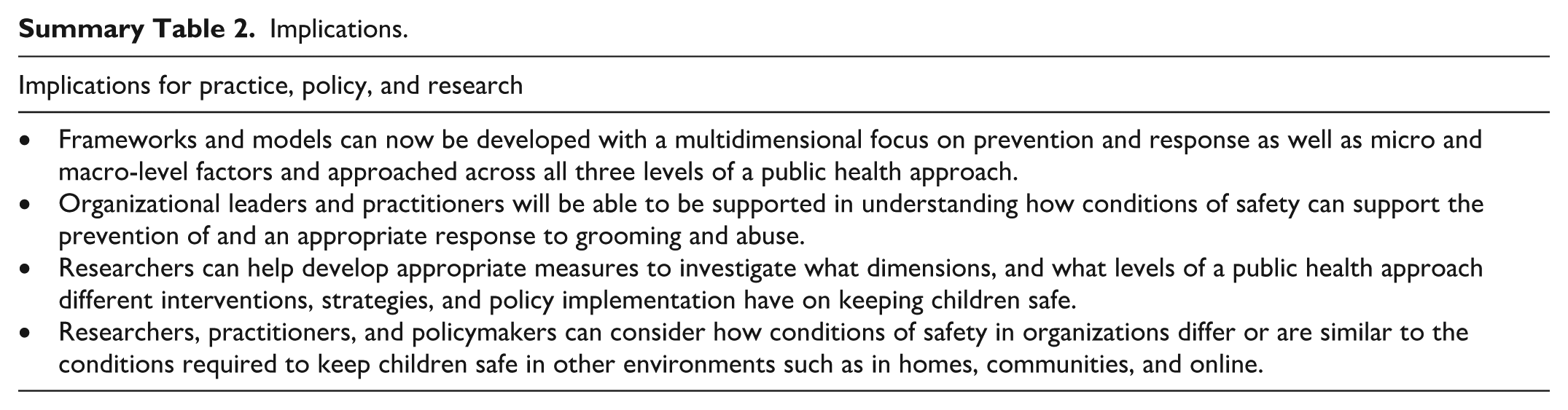
Implications.
Footnotes
Acknowledgements
Thanks to James McDougall for assistance with screening articles.

Funding
The authors received no financial support for the research, authorship, and/or publication of this article.
Declaration of Conflicting Interests
The authors declared no potential conflicts of interest with respect to the research, authorship, and/or publication of this article.