




Abstract
Child sexual abuse (CSA) is a major social and public health issue that creates short- and long-lasting impacts on victims, families, and society. While global researchers have considered the topic of CSA since the 19th century, the Nigerian context has been largely ignored. Yet, without sufficient evidence and understanding, making changes to practices and policies becomes almost impossible. The review aimed to gain insights into the nature and extent of CSA and identify areas for improvement in practice and research in Nigeria. This article presents the findings of a systematic review of 31 empirical articles related to CSA in Nigeria. Using key search terms along Boolean operators and truncation, PubMed, PsycINFO, CINAHL, ASSIA, PILOTS, African Journals Online, and Google Scholar were searched. A total of 1,325 studies were found, and 31 empirical studies, including 20 quantitative, 9 qualitative, and 2 mixed methods studies, were included. The review findings reveal the discourse on CSA and delve into various aspects such as its prevalence, manifestation patterns, root causes, management, and consequential impact on victims and societal domains. The gaps in the existing literature are identified and explored to identify areas for improvement in victim services, societal awareness, and healthcare practices and relevant policies. The sociocultural norms not only heightened children’s vulnerability to sexual abuse but also posed significant barriers to them disclosing such abuse. Survivors of CSA often receive inadequate care, indicating a pressing need for improvements in this area. Implications for research, policy, and conclusion were discussed.
Introduction
Child sexual abuse (CSA) occurs when a child is involved in sexual activity without understanding or being able to give informed consent or when the activity violates laws or social norms (United Nations International Children’s Emergency Funds, 2015; World Health Organization, 2006; 2014). CSA can be physical or non-physical, penetrative or non-penetrative, and has serious short-term and long-term effects on victims. According to the World Health Organization, one in four children globally experiences some form of sexual abuse. The prevalence of CSA in Nigeria is largely unknown, and estimates range from 2.1% to 77.7% (Audu et al., 2009; Obisesan et al., 1999). More than 31.4% of girls’ first sexual experience in Nigeria was reported to be rape or forced sex (United Nations International Children’s Emergency Funds, 2015). The actual magnitude of CSA remains unknown, with disparities in published statistics across the world (Audu et al., 2009; Pereda et al., 2009; World Health Organization, 2014) as it is highly underreported and underestimated.
The causes of CSA are multifaceted, comprising individual, contextual, and environmental factors that increase a child’s vulnerability (Smallbone et al., 2013). Young children, for example, can be particularly vulnerable to CSA due to their higher level of dependency, inability to protect themselves, and difficulty articulating their experiences or seeking help (Martinello, 2020; Sodipo et al., 2018). In addition, they are sometimes unable to see sexual exploitation when disguised as love, protection, or friendship (Melrose, 2013; Smallbone et al., 2013). In addition, children with a learning or physical disability, children being looked after away from home, and children with interrupted care histories (Coy, 2009; Ellis, 2019) are more at risk of experiencing CSA.
CSA entails short-term and lifelong sequela for the individual, family, and society, especially if left unrecognized or untreated (Hornor, 2010; Warrington et al., 2017). CSA has become a serious challenge in all societies, increasing victims’ risk of developing a wide range of physical and mental problems. The consequences are numerous and pervasive, and they may affect the physical, psychological, emotional, social, moral, educational, and economic wellbeing of victims (Hornor, 2010; Sigurdardottir et al., 2014). Victims of CSA can experience both physical (genital trauma, unplanned pregnancy, and sexually transmitted diseases), psychological (depression, post-traumatic stress disorder, self-blame, distrust, and anger), emotional (fear and anxiety), and behavioral difficulties (mistrust of others and missing from home) (Aborisade & Vaughan 2014; Okeafor et al., 2018; Oteh et al., 2009). Such experiences can also leave victims traumatized by unsavory memories, which can truncate psychosocial development and impede educational careers (Sigurdardottir et al., 2014; Warrington et al., 2017).
The true burden of CSA in Nigeria remains unknown and difficult to determine as most available data are collected through social media and cases presented at hospitals. The research team intends to delve deeper into the perspectives and methods employed by healthcare professionals (HCPs) in their line of work. The culture of silence around CSA has masked the extent of CSA. In addition, limited research has been conducted to aggregate the existing evidence around CSA in Nigeria. The few existing peer-reviewed articles from Nigeria are from clinical cases and do not account for the many cases that never reach a clinic. This leaves out evidence that may be present among children in and out of school, and adolescents from both secondary and tertiary institutions. Therefore, it is important to systematically appraise the few empirical studies available in Nigeria to aggregate the available evidence and understand the nature and extent of CSA in Nigeria. More specifically, the research team was interested in exploring the context in which the HCPs supporting sexually abused children in Nigeria operate.
This review aims to aggregate and critically appraise the quality of the available evidence to identify what was known about CSA in Nigeria, highlight gaps in the existing literature, and develop a theoretical framework to underpin and design subsequent studies. Our specific aim was to systematically review the existing body of knowledge on CSA in Nigeria, the prevalence and pattern of CSA, its causes, determinants, impacts, and HCPs understanding and working practices.
Methods
Eligibility Criteria
A systematic review approach was used to conduct exhaustive searches to identify and review all available peer-reviewed literature on CSA in Nigeria. Studies were considered eligible for review if they were (a) empirical in nature, (b) explored any topics on CSA in Nigeria, (c) published in peer-reviewed scholarly journals, (d) published in English language (which is the official language in Nigeria) (e) published between January 1, 1999, and May 2022. Literature from this period was included for three main reasons: the availability of data, temporal trend in the available evidence, and relevance of evidence. The issue of CSA in Nigeria was often reported in newspapers before 1999, but unfortunately, it was largely overlooked by social systems. However, in 1999, the federal government amended the Constitution of the Federal Republic of Nigeria to outline the country’s fundamental principles, powers, and rights. The amended constitution recognized various forms of child abuse, marking a crucial turning point, which has since led to increased awareness, research, and professional support for CSA victims in Nigeria. Table 1 provides details on the inclusion and exclusion criteria.
Inclusion and Exclusion Criteria.
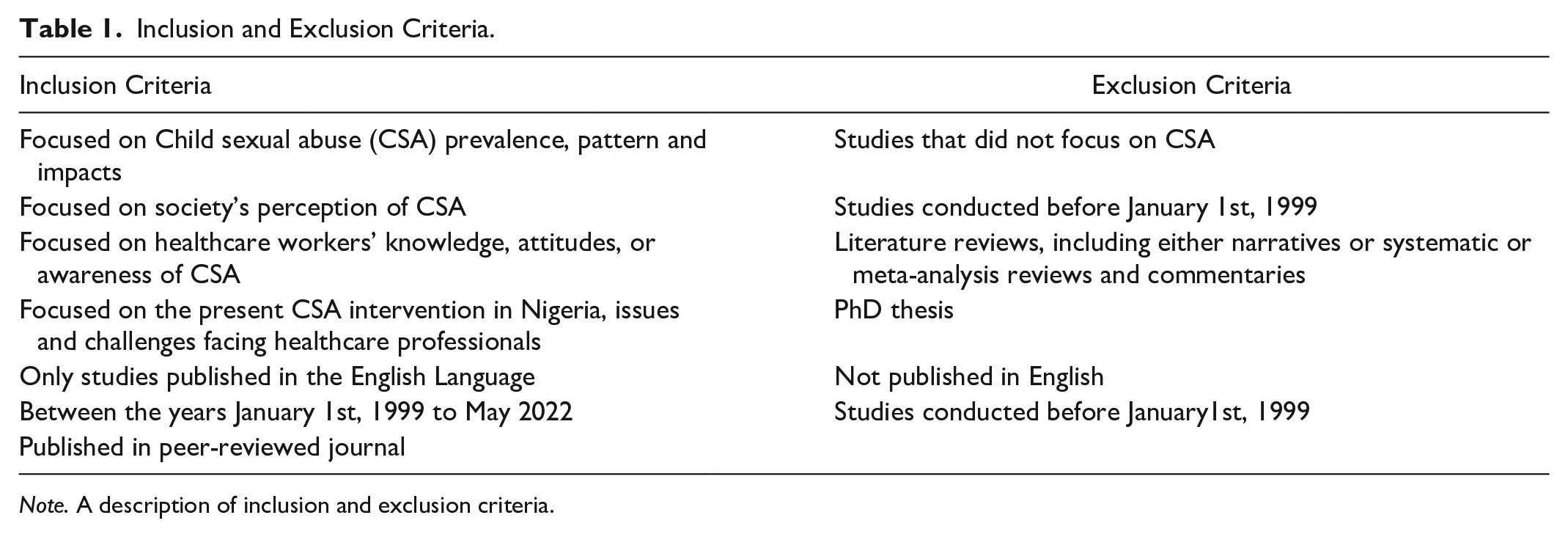
Note. A description of inclusion and exclusion criteria.
Data Sources
For a comprehensive literature review, the following six databases were systematically searched: PubMed, PSYCINFO, CINAHL, ASSIA, PILOTS, and African Journals Online, as well as Google Scholar, was also used in order not to miss out any studies not indexed. Also, the reference list of all articles included was keenly searched to identify other relevant empirical studies. Boolean operators (AND and OR) and truncation (*) were used alongside some of these keywords: “Child sexual abuse and pattern,” “Prevalence and child sexual abuse,” “Child sexual abuse and causes,” “Child abuse AND Nigeria,” “healthcare professionals AND child sexual abuse,” “Nigeria AND girls AND abuse,” “Nigeria AND sexual child abuse OR sexual exploitation,” “Doctors OR Nurse AND child sexual abuse OR child molestation,” “Nigeria AND issues and challenges AND healthcare providers,” “Barriers AND detecting Child abuse in Nigeria.”
Study Selection, Quality Appraisal, and Data Extraction
Following a comprehensive search, a total of 1,325 studies were identified. Of these, 418 were duplicates, and 876 were irrelevant studies (did not meet the inclusion criteria, were not empirical, were not conducted in Nigeria, or did not focus on CSA) were excluded. Review of the titles and abstracts resulted in the selection of 31 studies that met the inclusion criteria. The full text was retrieved for all 31 articles and an independent reviewer read these articles and all peer checked to determine suitability for inclusion. Figure 1 shows the PRISMA (Preferred Reporting Items for Systematic Reviews and Meta-Analyses) flowchart from identification of studies to the inclusion process.
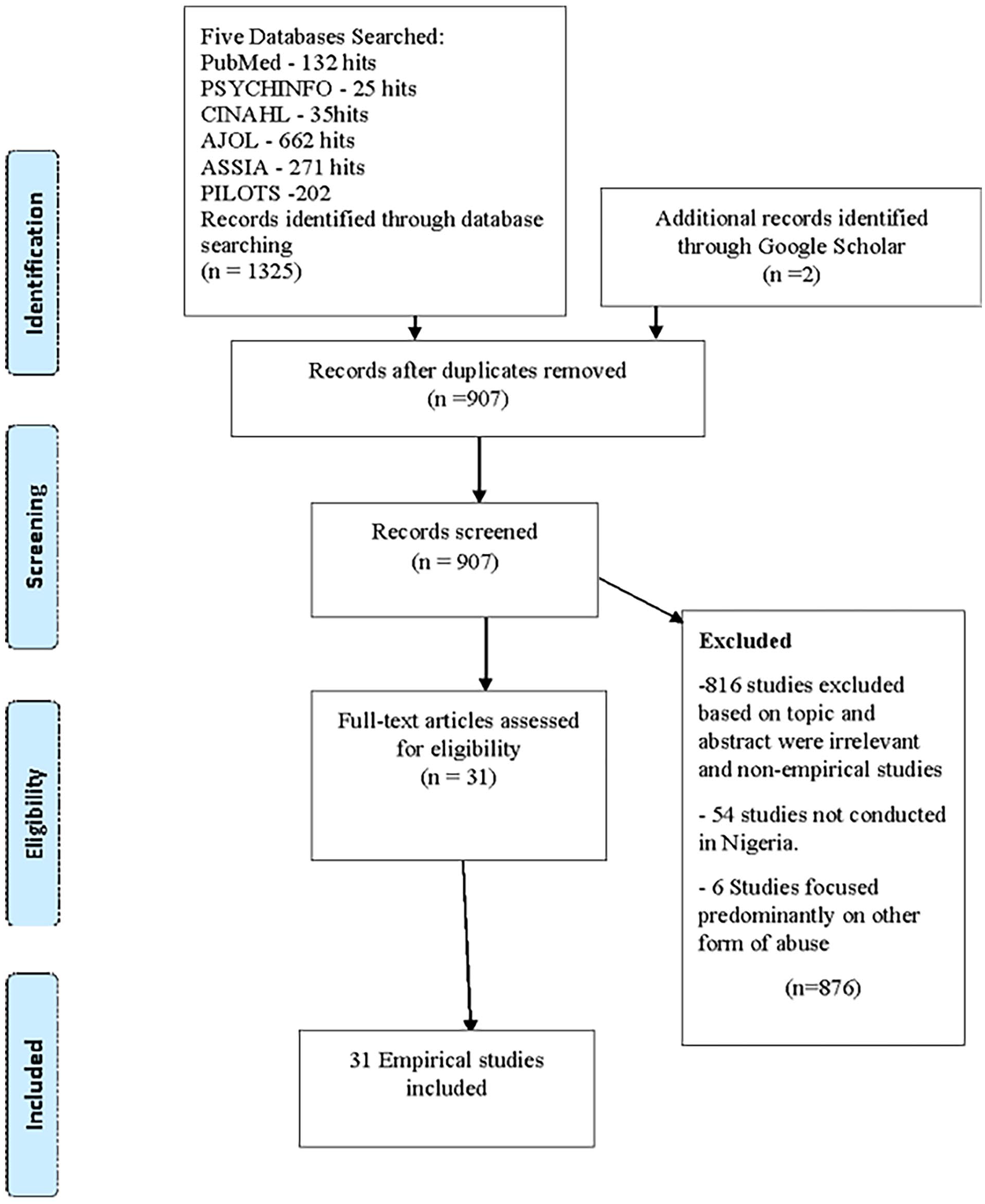
PRISMA flowchart of study selection.
A data extraction form was used to excerpt relevant information, the author names, year of study, aims of the study, design, settings, methodology, sample size, the study’s results and limitations of the studies. Similar concepts were clustered together to present findings. Each study that met the inclusion criteria was quality assessed using the critical appraisal skill program checklists, including the qualitative checklist (for qualitative studies), cohort study checklist (for quantitative studies, and case-control study checklist). The mixed methods appraisal tool (MMAT) Version 2011 was employed for quality evaluation of mixed methods studies. Study results were also analyzed to summarize prevalence of various forms of CSA, patterns of CSA, causes and determinants/predictors, consequences and impact on victims, family and society, society’s awareness and attitude toward CSA and victims and HCPs’ perceptions and practices and available services and identifying issues and challenges. Similar concepts were clustered together to present findings.
Results: Description of Studies Setting, Population, Design and Methodology
Table 2 summarizes each of the 31 included studies. The majority of these studies were quantitative (n = 23) and cross-sectional. Only six studies were qualitative (Aborisade & Vaughan, 2014; Aborisade et al., 2018; Aderinto, 2010; Nwolisa et al., 2016; Olatunya et al., 2013; Oteh et al., 2009), and two were mixed methods (Ogunyemi 2000; Oyekola & Agunbiade 2018). The majority of the studies were conducted in the Southwest (n = 19), and only five were carried out in the Southeast. One was conducted in each remaining geographical zone except Northwest, where research on CSA was unavailable. A significant number of the studies were community-based (n = 12). Nine studies were conducted in clinical settings, five in school settings, and only one study explored child sex offenders in prison (Aborisade et al., 2018). Twenty-five of the studies collected data from children and adolescents, particularly girls.
Summary of the Included Study.
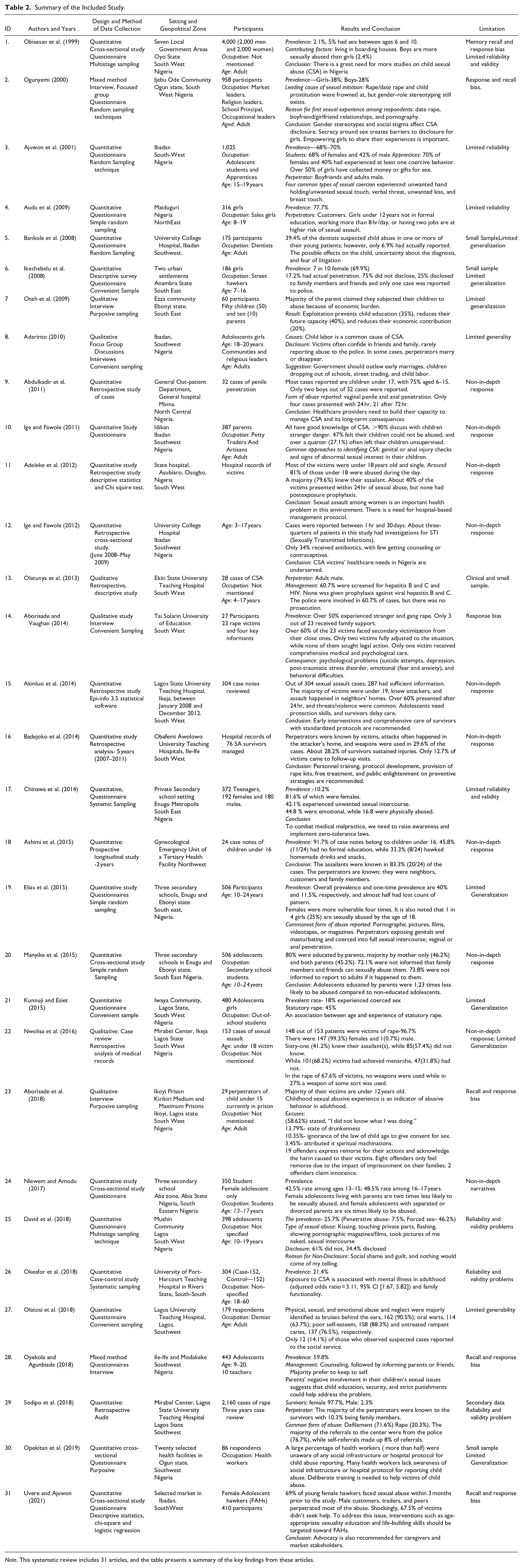
Note. This systematic review includes 31 articles, and the table presents a summary of the key findings from these articles.
Only eight (Aborisade & Vaughan, 2014; Aderinto 2010; Ebuenyi et al., 2018; Ige & Fawole 2011; Ogunyemi, 2000; Olatosi et al., 2018; Opekitan et al., 2019; Oyekola & Agunbiade, 2018) study explored the experiences of parents, community leaders, religious leaders, HCPs, teachers, and offenders, and none interviewed policy makers. Purposive and convenience sampling techniques were commonly used. Sample sizes ranged from 23 to 4,000 participants (Obisesan et al., 1999; Ashimi et al., 2015).
Data Collection
Data were collected using questionnaires (n = 18). Most of these questionnaires were self-developed and considered the social lifestyle and factors that could predispose their participants to be sexually abused in childhood. Also, the age of onset was commonly elicited across the questionnaires, as was the relationship between the victims and the perpetrators. Some studies used only 6-item questionnaires (Adeleke et al., 2012), while others used as many as 30 (Ajuwon et al., 2001). Other methods of data collection include in-depth qualitative interviews (n = 5), and two studies used a mixed approach to data collection, which included questionnaires, in-depth individual interviews, and focus groups (Ogunyemi, 2000; Oyekola & Agunbiade, 2018).
The Prevalence and Patterns of CSA
A wide variation in the prevalence of CSA in Nigeria was reported, ranging between 2.1% and 77.7% (Audu et al., 2009; Obisesan et al., 1999). Of the 31 included studies, 12 reported a higher prevalence of CSA in females, for instance (Audu et al., 2009; Ogunyemi, 2000). Only one study, however, showed that more boys (47, 2.4%) than girls (34, 1.7%) experienced CSA (Obisesan et al., 1999). To understand the disparity in prevalence, we looked at the acts that constitute CSA in each study. According to Obisesan et al. (1999), childhood is defined as the age between 6 and 10 years, which is different from the generally accepted definition of any child below the age of 18. Additionally, the acts that constitute CSA in this study were limited to penetrative vaginal intercourse. Participants were only asked if they were forced to have sex as a child, neglecting other non-penetrative sexual activities that may have been experienced by female participants. This may explain why the prevalence of CSA was lower in this study compared to others that assessed a wider range of sexual activities.
A variation in prevalence was observed depending on the group; for example, the prevalence of CSA was reported to be 70% among apprentices (Ajuwon et al., 2001), 69.9% among girls selling goods on the street (Ikechebelu et al., 2008), 10%–68% among teenagers attending secondary schools (Envuladu et al., 2013; Manyike et al., 2015), and 35% in out-of-school children (Kunnuji & Esiet, 2015). The most common age of first exposure was reported to be 12, and those under the age of 18 years were more likely to be victimized again within the next year (Kunnuji & Esiet, 2015).
Forms of CSA Reported
Common forms of CSA reported were unwanted kissing, hugging, inappropriate touch to breasts and genitals, verbal threats, abuse, and rape (Abdulkadir et al., 2011; Ajuwon et al., 2001; Ikechebelu et al., 2008). In addition, teenagers were forced to record themselves naked, look at pornographic pictures, films, videotapes, or magazines, watch perpetrators exposing genitals and masturbating, coerced into full sexual intercourse, or experience rape and vaginal or anal penetration (David et al., 2018; Manyike et al., 2015; Okeafor et al., 2018; Oyekola & Agunbiade, 2018). Over 50% of children that participated in this study experienced stranger and gang rape (Aborisade & Vaughan, 2014). Child marriage is not recognized as CSA in reviewed articles despite its prevalence in Nigeria. This may be due to its social and cultural acceptance, along with inconsistencies in the Nigerian constitution regarding the age of marriage consent.
Perpetrators and Their Strategies
All the studies found that perpetrators were usually men, mostly known to the victims (Adeleke et al., 2012), either as relatives, friends, customers, or neighbors. Only 20% of the respondents were victims of stranger or gang rape. In a study by Badejoko et al. (2014), it was found that neighbors were the most commonly identified perpetrators. Eight studies found that perpetrators used different forms of enticement, such as money, gifts or food, alluring promises, shelter or accommodation to lure adolescents (for instance, Aborisade et al., 2018; Adeleke et al., 2012; Ajuwon et al., 2001). Other means of subjugation include verbal threats and the actual use of force. Badejoko et al. reported in 2014 that in 29.6% of cases, perpetrators were violent and used weapons to threaten the victims. The most commonly used weapons for threatening are guns and knives, followed by bricks, broken bottles, machetes, and shaving blades (Badejoko et al., 2014; Nwolisa et al., 2016).
Risk Areas/Locations
Common places reported for CSA by perpetrators known or related to the child were during times of being home alone with the child, watching TV with the child, or when sending the child on an errand after gaining the parent’s trust (Aborisade et al., 2018; Adeleke et al., 2012; Akinlusi et al., 2014). Attacks by known assailants frequently occur in the attacker’s residence (Badejoko et al., 2014). The most common places for unknown assailants to coerce the child into sexual activity were friend’s homes, familiar neighborhoods, and during organized activities, such as parties (Aborisade et al., 2018). Evidence from this review showed that a significant number of children are sexually abused when hawking different forms of goods (Ashimi, Amole & Ugwa 2015). Assailants’ offices or business premises were the location for 40.6% of the cases, while 25.0% occurred in residential homes and 21.8% inside motor vehicles (Ikechebelu et al., 2008). Other locations included market stalls and mechanic workshops.
Victim’s Awareness of Whether CSA Can Lead to Pregnancy
One particular study by Ikechebelu et al. (2008) considered children respondents’ awareness of the risks associated with unprotected sex. 56.9% and 45.7% were unaware that such coercion could lead to unwanted pregnancy and sexually transmitted infections, respectively. It is important to educate young people about the risks of sexual abuse and to provide them with information about the support they can receive from their social network or protective agencies.
Help-Seeking Behavior or Intention to Disclose the Experience
A significant percentage (31.5%) of girls who participated in this study claimed they bought self-prescribed medication at a pharmacy after experiencing abuse. Most of the victims preferred to keep the experience to themselves, and few victims discussed their experiences with friends and family members. It is important to know that 75% of the participants chose not to disclose their experience, while 25% felt comfortable enough to share with family and friends. Only one case was reported to the police. This highlights the importance of creating a safe and supportive environment for individuals to feel comfortable coming forward with their experiences (Ikechebelu et al., 2008).
Factors Associated with CSA in Nigeria
Twelve studies explored the causes of CSA, for example (Aderinto, 2010; Fawole et al., 2002; Nlewem & Amodu, 2017; Obisesan et al., 1999). One study by Nlewem and Amodu (2017), found that female adolescents living with their parents were less likely to be sexually abused than female adolescents with separated or divorced parents. Other factors that increased the chances of CSA included basic deprivation and living arrangements (Kunnuji & Esiet, 2015). Several factors have been identified that increase the risk of child labor and exploitation practices, such as hawking and living separately from parents. Also, factors include being of a younger age range, specifically between 10 and 15 years old, consuming alcohol, having a disability, and experiencing labor and exploitation practices (Aderinto, 2010; Envuladu et al., 2013; Fawole et al., 2002). Ikechebelu et al. (2008), however, identified no significant relationships between the incidence of adolescent sexual abuse and socioeconomic class or age.
Additionally, research exploring teenagers’ perspectives has shown that the most common causes of CSA are poverty (52%) and cultural and religious practices (28%). Most children that participated in these studies in Nigeria suggested that their parents’ low socioeconomic status and inability to meet their financial needs subjected them to exploitative practices such as hawking, street begging, and seeking employment as house maids, which, although appeared to solve their financial precarity, also indirectly exposed them to CSA (Oteh et al., 2009; Oyekola & Agunbiade, 2018). Beyond this, gender discrimination and the relative social invisibility of young females alongside prevailing societal norms that are supportive of sexual violence were identified as other causes of CSA in Nigeria (Ajuwon et al., 2001; Manyike et al., 2015; Olatosi et al., 2018). The least-reported factors were physical appearance and lack of sex education (Oyekola & Agunbiade, 2018). Two studies identified protective factors, such as the active involvement of parents and teachers in terms of early sexual education and raising awareness of CSA to girls (Manyike et al., 2015; Oyekola & Agunbiade, 2018).
Nigerian Parents’ and Victims’ Knowledge, Perceptions, and Attitudes Regarding CSA
Six studies explored participants’ knowledge, perceptions, and attitudes, with emphasis on their sociocultural perspective and how this frames their standpoint regarding CSA (Aborisade & Vaughan, 2014; Aderinto, 2010; Ige & Fawole, 2011; Ogunyemi, 2000; Oyekola & Agunbiade, 2018; Ebuenyi et al., 2018). Ige and Fawole (2011) revealed that the majority (78.3%) of parent respondents had previous knowledge, as well as having heard about an incident involving their child or another child. Of these, merely 18.8% defined CSA as sexual intercourse with a child, either forcefully or consensually. Unfortunately, this study did not report how the remaining 80% of respondents defined CSA. The majority (84.2%) of the respondents agreed that CSA is common in their community; however, only (34.6%) agreed that CSA could have a serious health impact on victims. Only 2.1% of parents disclosed their children had experienced CSA, and more than 90% of respondents claimed they discussed “stranger-danger” with their children. Despite parental awareness, almost half of the respondents claimed their children could not be sexually abused, yet the authors subsequently note that over a quarter reported leaving their children unsupervised. Eighty percent of respondents condemned CSA acts such as rape, date rape, gang rape, child prostitution, and incest; however, evidence of gender-role stereotyping exists (Ogunyemi, 2000), and as a result, female gender rights are seen as an appendage to males, due to boy-child preferences in Nigeria. Ige and Fawole (2011) explored parents’ perspectives of practices that could contribute to CSA and found that respondents agreed they should sell their children to whoever can feed or properly educate them, especially in instances of extreme financial poverty. Aderinto (2010) reported that victims of sexual abuse are frequently forced to marry their perpetrators, especially when the sexual abuse results in unplanned pregnancy. Sexually abused children who participated in this study claimed they did not disclose that they had been a victims of CSA to their parents. Instead, 75% preferred to discuss their abuse with a friend. Others (Oyekola & Agunbiade, 2018), however, found that some children still reported their experience of CSA with family members and friends. The number of parents who disclosed their child’s experience to the police, community leaders, or an HCP was negligible. This may be due to the current trend in Nigeria, where victims are subjected to secondary victimization by their parents, medical personnel, families, neighbors, and others (Aborisade & Vaughan, 2014; Ebuenyi et al., 2018). The reviewed studies found that more efforts are required within the school system and at household and societal levels to curb, manage, and reduce CSA. Victims must be referred for counseling, and perpetrators must be severely punished (Ebuenyi et al., 2018). These studies identified the strengths and gaps in parents’ knowledge, perceptions, and practices of CSA in Nigeria. A significant number of parents accepted CSA as a common occurrence in their community and disagreed with common CSA myths stated in the questionnaire by the authors (Ige & Fawole, 2011). These myths include the belief that CSA is only severe when it involves intercourse, that homosexual abuse is more serious than heterosexual abuse, that female adults cannot sexually abuse children, and that only wayward or troubled children are at risk of being sexually abused. This parent’s knowledge of CSA and perception of risk can improve communication with their child and warn their children about stranger danger; unfortunately, most of the assailants are known and often trusted by parents and victims. However, despite being aware of the potential risks, it was felt by researchers (Ige & Fawole, 2011) that parents did not take tangible actions to safeguard their children.
The Impact of Sexual Abuse Among Adolescents in Nigeria
Among the 31 papers examined, only two studies (Aborisade & Vaughan, 2014; Oteh et al., 2009) predominantly focused on the immediate and long-term sequelae of abuse on adolescents, society, and the nation at large. These studies identified psychological consequences such as flashbacks, sleep disorders, guilt and self-blame, feelings of powerlessness, distrust, and anger. Other psychological consequences are suicide attempts, depression, post-traumatic stress disorder, and emotional (fear and anxiety) and behavioral difficulties (Aborisade & Vaughan, 2014). Sixty-eight percent of young people explained that they were also victimized by their parents, medical personnel, families, friends, and neighbors. Participants claimed their experiences with CSA left them traumatized. Child respondents in this study affirmed that such traumatic experiences damaged their educational careers, reduced the country’s future workforce, and impaired their future contribution to economic development, and thereby, CSA created long-standing negative impacts on their nation (Oteh et al., 2009). Consequently, the effects of CSA have a far-reaching and devastating impact on the individuals and the nation as a whole.
HCPs’ Knowledge, Perceptions, and Attitudes Regarding CSA
Three studies (Aborisade & Vaughan, 2014; Olatosi et al., 2018; Opekitan et al., 2019) focused on HCPs and assessed their knowledge, perceptions, and attitudes about CSA. Olatosi et al. (2018) reported limited knowledge of dentist’s knowledge of indicators of child abuse and a lack of a clear structure for referring victims to essential services. Dentists are in a unique position to identify physical indicators such as unexplained injuries, bruising, or trauma to the mouth, face, or head since they routinely examine many children. Despite being one of the specialists who attends to more children and is well placed to intervene, 46.5% of respondents do not evaluate suspected cases of abuse and neglect. When the dentists were asked how they responded to suspected cases of abuse, 65.4% reported a lack of knowledge about referral procedures, and 57.5% were afraid of the consequences for the child. Findings from this study are consistent with research by Opekitan et al. (2019), which assessed HCPs’ level of awareness of the social and legal supports available for victims. Disturbingly, an overwhelming proportion of respondents in this study agreed they are unaware of the available social resources for victims. Additionally, the study shows that more than half of HCPs that participated in this study lacked adequate knowledge of referral procedures and were concerned about confidentiality issues, a predominant barrier to reporting suspicious cases of child abuse (Olatosi et al., 2018). Despite theoretical knowledge, clinical inefficiency exists, which demonstrates knowledge gaps among HCPs in recognizing and responding to victims of sexual abuse, culminating in professional non-enquiry attitudes. On the other hand, research by Aborisade and Vaughan (2014) explored rape victims’ post-assault experiences and adjustment patterns, interviewed two medical doctors and two psychologists, and collected experts’ opinions on the victimology of rape. Respondents from this study stated that victims’ reactions and recovery largely depend on a complex combination of individual characteristics (such as personality) and external factors (such as the victim’s social support network, victim-assailant relationship, and severity of the assault). As such factors have a great impact on a victim’s psychological functioning and adjustment process, it is important to focus on a victim’s individual experiences and their unique social contexts when assessing their reactions and recovery needs. This will ensure that victims are provided with appropriate and tailored support.
Identification, Prevention, and Management of CSA Cases in Nigeria
This review identifies studies that discuss the practice of identifying CSA victims in Nigeria. Research by Oyekola and Agunbiade (2018) explored teachers’ opinions and reported complexities surrounding the recognition of CSA. In Nigeria, common methods used by parents for identifying CSA involve conducting genital or anal injury checks and looking for signs of abnormal sexual interest in their children (Ige & Fawole, 2011). Symptoms that were noted were things like young people withdrawing from others, being sad or moody, displaying anxiety or seeming to be in pain, and finding difficulty in carrying out daily activities. Studies suggest that primary prevention in contemporary Nigeria is based on parental supervision and child-parent communication about sexual activity and danger from strangers and familiar people, while secondary preventive practices include reporting to the police station and hospital for medical examination (Oyekola & Agunbiade, 2018; Ige & Fawole, 2011). The study conducted by Ige and Fawole in 2011 highlighted the crucial importance of promptly reporting to the police and seeking a medical examination in suspected cases of CSA. This approach is essential for the early detection of CSA cases and increases the likelihood of victims accessing early treatment with the goal of preventing harm to potential victims and promoting community safety. Unfortunately, authors reflect that discussions around sexual abuse seldom occur, and parental supervision is neglected (Ige & Fawole, 2011). Also, this study revealed that although Nigerian parents can readily identify the immediate physical signs of CSA, they were often unable to recognize behavioral changes as potential indicators of CSA. Such unawareness about the range of symptoms associated with CSA may delay the needed response to protect the child from further abuse and seek treatment. In cases where abuse is identified, they are rarely reported as respondents believe disclosing such acts will only bring social stigma and more trauma for their child and family rather than justice (Ogunyemi, 2000). The way parents respond to CSA is crucial as it greatly influences the child’s chance to access, disclose, and receive support from legal and health professionals after experiencing abuse. Of the 31 included studies, two focused on management of CSA (Olatunya et al., 2013; Ige & Fawole, 2012). Only 50% of victims from cases reviewed were subjected to routine High Vaginal Swabbing and retroviral screening, including for hepatitis B and C, and none received HIV and viral hepatitis postexposure prophylaxis, which is necessary to prevent them from being infected with the HIV virus. Out of the 60.7% of cases reported to the police, none led to prosecution (Ige & Fawole, 2012; Olatunya et al., 2013). Antibiotics were only prescribed to 34% of the victims, with fewer prescriptions for analgesics, vitamins, counseling, and contraceptives; only three quarters of the victims were checked for sexually transmitted infections, and a negligible number of victims were referred to postexposure prophylaxis, while none received the hepatitis B vaccine (Ige & Fawole, 2012). These studies reported that cases were reported between 1 h and 30 days after occurrence of the abuse, generically managed, and not reported to the police. HCPs only come in contact with children when they are presented by the parent, guardian, or teacher, and there are no structural systems in place to report abuse; most cases go unnoticed as there is no routine screening for child abuse among young girls in the Nigerian healthcare system. Previous studies have clearly identified that parents are less likely to report the sexual abuse of their child because of the social stigma and future consequences for the child; this suggests, therefore, that only a minority of CSA victims are referred for medical intervention.
Discussion
The purpose of this study was to systematically aggregate empirical evidence and critically review the existing body of knowledge on CSA in Nigeria. Firstly, while general research on CSA has increased over the past two decades, studies focusing directly on CSA in Nigeria are still rare. This review highlights that limited research has been conducted on CSA in Nigeria. Twenty-three of the reviewed studies were carried out using quantitative approaches to explore the prevalence experiences of CSA victims and HCPs (Adeleke et al., 2012; Ajuwon et al., 2001; Badejoko et al., 2014; Olatosi et al., 2018). Yet CSA experiences are complex and sensitive, and using a quantitative approach can decontextualize the complexity of that experience. Some of the researchers that used clinical case studies seem not to be sensitive to the context, and the possible influences of this approach on the reliability and generalization of these studies were not mentioned (Ige & Fawole, 2012; Nwolisa et al., 2016; Olatunya et al., 2013; Sodipo et al., 2018).
More than half of studies included in this review predominantly focused on the prevalence and patterns of CSA. Twelve study including (Aderinto, 2010; Fawole et al., 2002; Kunnuji & Esiet, 2015; Nlewem & Amodu, 2017) focused directly on the factors responsible, and little effort had been made to examine the current clinical patterns of management. Only two focused on the knowledge and awareness of HCPs, and none focused on the challenges faced in identifying and responding to a victim of CSA. None of these studies directly explored young people’s and adults’ perceptions about children’s status in society and their association with CSA. Therefore, it is clear that more research needs to be done to fully understand the extent of CSA in Nigeria.
According to this review, there are disparities in published statistics across the country concerning CSA, and the actual magnitude of the dilemma remains unknown. For the development of prevention strategies and policy initiatives, it is crucial to have accurate data on the magnitude of CSA (Finkelhor et al., 2016; Joleby et al., 2020). Despite growing evidence of the size of the problem, current evidence comes largely from institutionalized settings, and 18 used community-based samples. Another concern is the diverse and varied terminology employed and variation operation definition of the constructs of CSA used by researchers and research methodologies limit the extent to which comparisons can be made between studies (Mitchell et al., 2017). The current review showed definitional ambiguities, the heterogeneous nature of victims and perpetrators, and the rapidly changing nature of sexual activities have masked the true scale of this crime. This review also found that discrepancies and wide variation in the prevalence of CSA in Nigeria could be attributed to the gender of participants, that is, the number of males and females and the use of broad terminology rather than a specific definition of one of the named types of abuse. A definition of CSA in general, but most importantly, a distinction between types of sexual abuse, is obvious. Future research should develop a universal definition and language for CSA, as well as a clear distinction between types.
This review highlights that children are at a higher risk of experiencing sexual abuse due to sociocultural norms and their parents’ low socioeconomic status. However, several studies from other countries have identified potential vulnerabilities and indicators that increase the risk of child sexual exploitation and concluded that these risks apply to all children, regardless of their gender, ethnicity, cultural background, or socioeconomic status (Davies & Jones, 2013; Franklin et al., 2015; Wodarski & Johnson, 2015). This means that having a reductionist approach to theorizing the predisposing factors to CSA may affect the development and implementation of practice and policies to safeguard children and identify and respond to victims of CSA.
This review showed that CSA entails short-term and lifelong sequela for the individual, family, and society, especially if left unrecognized or untreated (Hornor, 2010; Mullers and Dowling, 2008; Warrington et al., 2017). Early trauma suffered by sexually abused children has been linked to multiple behavioral, psychiatric, and mental problems, including substance abuse, anxiety and depression, post-traumatic stress disorder, and suicide attempts (Mullers & Dowling, 2008; Okeafor et al., 2018; Warrington et al., 2017). This field requires further research, given the high prevalence of CSA in Nigeria and the severe effects it has on victims’ wellbeing, as well as the restrictive challenges professionals face in safeguarding them (Ifayomi, 2023). The harmful and sociocultural practices, taboos, and shared norms and values remain a major predictor for CSA in Nigeria and barriers to disclosing and seeking help. Despite the parental awareness, almost half of the respondents claimed their children could not be sexually abused and also left their children unsupervised. Hence, parents’ perspectives, practices, and attitudes could also contribute to CSA.
Radical services and approaches are in place for the protection and social welfare of children and the prevention of CSA (Nelson, 2016). This approach is contrary to the current situation in Nigeria, where the quality of medical and psychosocial care provided to survivors of CSA remains poorly studied and has proved to be substandard compared to the required care for victims (Akin-Odanye, 2018). There is still a substantial gap between the medical services provided to victims of CSA and their healthcare needs (Aborisade et al., 2018; Akin-Odanye, 2018; Ige and Fawole, 2012), and HCPs expressed their frustration as their efforts remained unproductive. There is need for more research on CSA in Nigeria regarding the predisposing factor, available service for victims and family, and professional practice of supporting sexually abused children in Nigeria. Summaries of critical findings and implications are included in Tables 3 and 4.
Critical Findings.
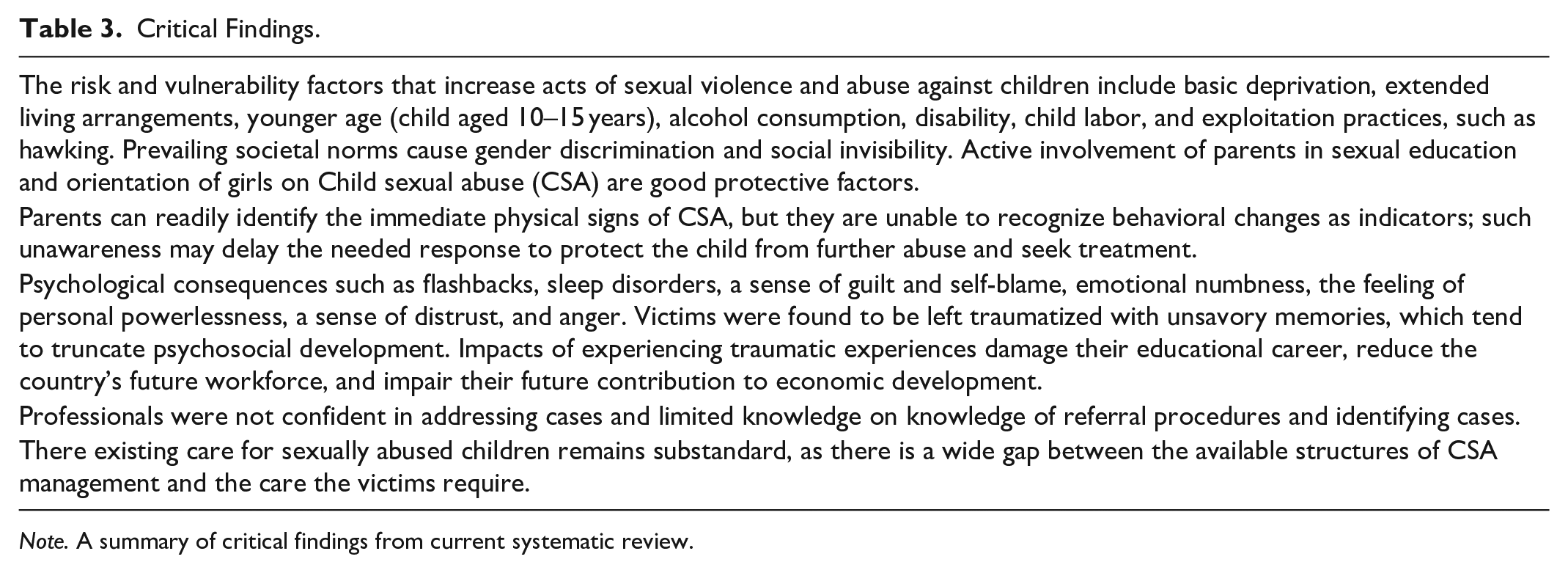
Note. A summary of critical findings from current systematic review.
Implications of the Review for Practice, Policy, and Research.
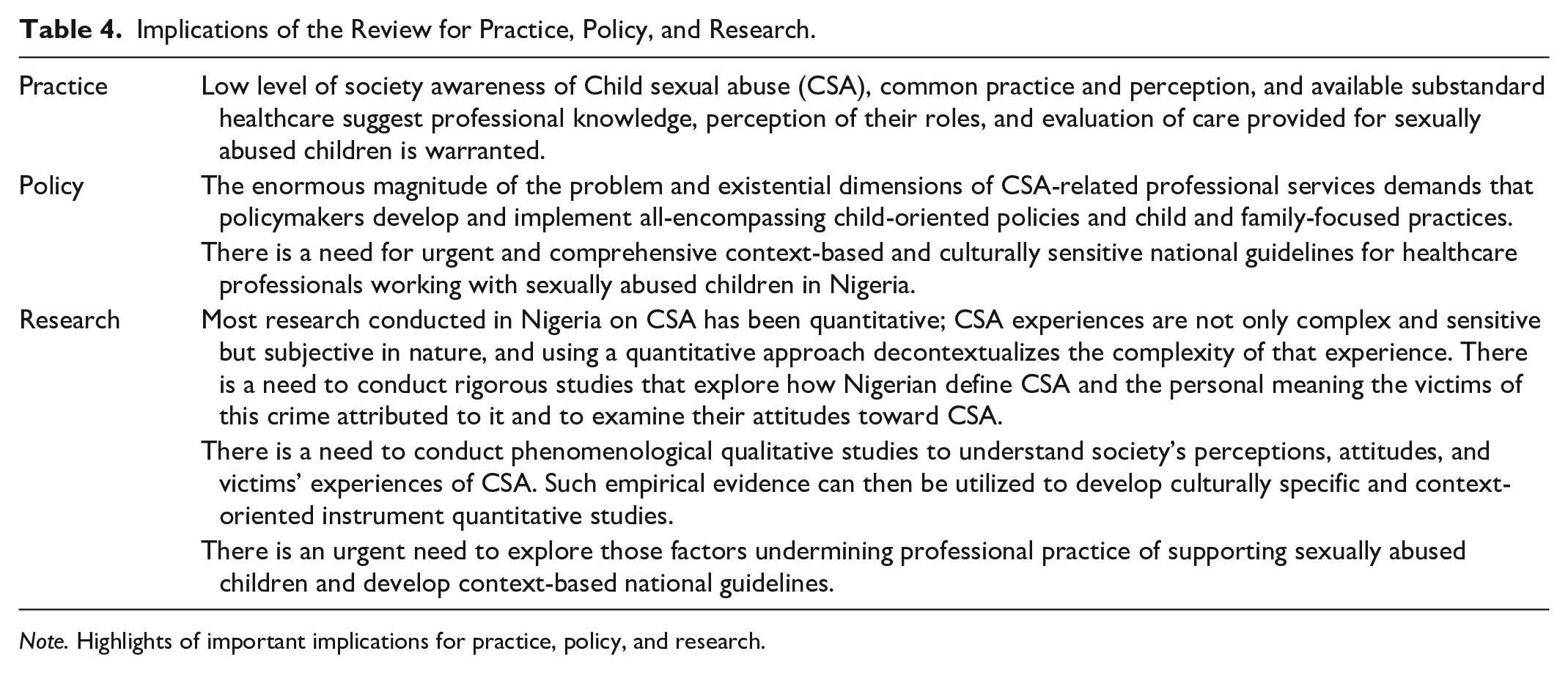
Note. Highlights of important implications for practice, policy, and research.
Strengths and Limitations
This review examines the prevalence of CSA in different samples and highlights the magnitude of CSA in Nigeria and the types of CSA that are most commonly experienced in the Nigerian context. In addition, the study examined the factors influencing children’s vulnerability to sexual abuse in Nigeria. Empirical evidence reveals patterns of CSA and society’s perceptions and awareness of CSA and its devastating consequences for victims, their families, and wider society. Such evidence is necessary to develop a framework for context-oriented preventative programs in Nigeria. Additionally, these results increase our understanding of available services and the gaps in literature for further research. It provides implications for public health policies and interventions and calls for the need to strengthen legal frameworks and improve the system of reporting and responding to cases of CSA. Finally, it emphasizes the need for further research on CSA in Nigeria. The critical appraisal of these studies also helped to assess the quality and quantity of studies conducted in Nigeria on this topic. A broad perspective has been offered on empirical research in CSA in Nigeria because the review has not been limited to any one research design or methodology (meaning all designs, either quantitative, qualitative, or mixed method approach studies, are included). The review is limited by the fact that we only included studies published between 1999 and 2022 in peer-reviewed journals and published in English. It is possible that some studies, which were published in non-indexed journals or non-published for some reasons, such as dissertation or thesis, are not identified and included. In selecting the studies for inclusion in the review, we ensured only studies representing independent samples and only those that explored CSA were included; others that explored other forms of child abuse and exploitation were excluded, therefore may impact the overall findings and may present an underestimate of the prevalence of CSA. Also, this review was conducted to gather information about the Nigerian context, and so the data is specifically related to the West African context. Please take into account these limitations when considering the results of the review.
We considered the diverse characteristics of the studies included in this analysis, particularly the participant demographics, topics explored, and context. Studies explored a wide range of CSA areas, including prevalence and contributing factors, parents’ perceptions of CSA, management of CSA, and support for CSA victims. The studies included in this review were conducted across Nigeria’s six geopolitical zones, although most are published from a particular zone, the Southwest. Aggregating evidence from all zones and cultures across the country helped the researchers explore different perspectives and cultures, identify the uniqueness among people from diverse backgrounds, and understand how these factors influence their behaviors, attitudes, and values. We believe this is critical for developing more effective and culturally sensitive interventions, policies, and services to meet the needs of different victims and their families. On the other hand, the lack of evidence on CSA from other geopolitical zones has serious ethical consequences for our review findings and limits generalisability, especially for victims in rural areas.
Lastly, comparing the results from this systematic review with Okunlola et al. (2020), a systematic review of 20 articles published between 2005 and 2016 on CSA in Nigeria helps to highlight the progress made in the field and areas that still warrant attention. In 2020, Okunola and colleagues made observation that most of the available studies were clinically reported cases of CSA; however, this review shows that effort has been made by researchers to start conducting community-based research, exploring the victims’ experience and society’s perspectives and practices around CSA, including perpetrator opinions and perceptions. However, many gaps in the research have not been examined. There is a need to exclusively examine the current services available to victims of CSA in Nigeria. Additionally, there remains a substantial lack of research that focuses on the challenges facing HCPs in supporting CSA victims in Nigeria. By understanding this, a more context-oriented approach, procedure, and policy that caters to the needs of victims, families, and professionals can be developed.
Implication for Further Research, Practice, and Policy
Our review revealed that there are critical implications for further research in terms of research methodological approaches, aspects of the CSA subject explored, research samples, and implications for practice. Most research conducted in Nigeria on CSA has been quantitative. There is a need to conduct rigorous studies that explore how Nigerians define CSA, and the personal meaning the victims of this crime attributed to it and to examine their attitudes toward CSA. There is a need to conduct qualitative studies to understand societal perceptions, attitudes, and victim experiences of CSA. Such empirical evidence could then be utilized to develop culturally specific and context-oriented quantitative studies. Similarly, no empirical work has been conducted to explore how HCPs can help prevent CSA, raise awareness, and help victims emotionally and socially. Since disclosure is essential in initiating medical, psychosocial, and legal intervention for children who have been sexually abused, there is a need to explore the disclosure process, as well as barriers and facilitators from the perspectives of victim family and professionals. Most research conducted in Nigeria has not thoroughly explored the issues regarding the prevention of CSA. Lastly, since the available healthcare services for sexually abused children in Nigeria are still developing and, therefore, sometimes ineffective compared to the comprehensive care required by these victims, there is need to explore the way HCPs perceive and understand their roles and the associated issues and challenges undermining their effort from their own point of view is necessary. It is important to emphasize the use of biopsychosocial models of intervention instead of the ineffective biological model when managing cases of CSA in Nigeria. The review has shed light on certain policy gaps, emphasizing the importance of the government taking proactive measures to address CSA in Nigeria. To achieve this, the government should prioritize sponsoring public awareness campaigns and implementing a child-friendly safeguarding process to effectively prevent, identify, and provide high-quality support for victims. Additionally, there is a need for stricter, comprehensive policies to deter perpetrators and implement a strategy that aims to bring more offenders to justice and reduce reoffending. It is also crucial to establish and enforce more stringent and comprehensive policies aimed at deterring potential perpetrators of crime. Furthermore, there is a critical need to develop a comprehensive strategy that focuses on increasing the prosecution of offenders while also addressing the root causes of criminal behavior to reduce the likelihood of reoffending.
Conclusion
Despite receiving increasing attention, CSA remains a severely and extremely detrimental epidemic. The magnitude of CSA in Nigeria remains unknown, with disparities in published statistics across the country. The sociocultural norms, including traditional practices and the low socioeconomic level of parents, increased the child’s vulnerability to sexual abuse and prevented them from disclosing the abuse. By taking proactive measures, parents can effectively reduce the risks of CSA and create a safer environment for their children. The quality of medical and psychosocial care provided to survivors of CSA remains poorly studied and has proven to be substandard compared to the required healthcare for victims. Even though the detrimental impact of CSA on victims is getting more attention around the world, professionals in Nigeria struggle to develop effective practices, services, and policies. Therefore, it is recommended to define CSA legally, develop a consensual conceptual framework, and increase awareness of CSA. The process of reporting and responding to children who have been sexually abused in Nigeria must also be improved.
Footnotes
Acknowledgements
N/A.
Declaration of Conflicting Interests
The author(s) declared no potential conflicts of interest with respect to the research, authorship, and/or publication of this article.
Funding
The author(s) disclosed receipt of the following financial support for the research, authorship, and/or publication of this article: The review was conducted as part of a self-funded PhD study at the University of Sheffield.
