



Abstract
Daycare maltreatment refers to abusive and/or neglectful acts perpetrated by teachers, directors, non-professionals or volunteers, family members of staff, and peers in a daycare setting. Despite growing evidence of its occurrence, the prevalence and consequences of daycare maltreatment for the child, the parent(s), and their dyad are largely unknown. This qualitative systematic literature review was conducted to synthesize the existing literature referring to daycare maltreatment, using Preferred Reporting Items for Systematic Reviews and Meta-Analyses guidelines. In order to be included in the analysis, the manuscripts needed to report empirical findings regarding maltreatment in daycare settings, be written in English, be published in a peer-reviewed journal or a dissertation, and be accessible by our research team. In all, 25 manuscripts met the above criteria and were included in the review. Our results indicate that reports of daycare maltreatment are characterized by early age of abused children, inferring mainly to sexual, physical, and emotional abuse. The majority of these manuscripts reported caregivers’ and teachers’ abuse, while peer victimization was reported much less. In addition, the findings demonstrated a higher representation of female perpetrators compared to abuse in other scenarios. Although some indications of long-term implications are reported in the manuscripts, a well-validated measure for assessment of daycare maltreatment seems to be lacking. These findings contribute to a more nuanced understanding of the complex experience and ramifications of daycare maltreatment, providing insight into its multi-faceted implications.
Childhood maltreatment has been acknowledged as a global public health and social welfare concern (Finkelhor et al., 2015). Although most childhood maltreatment incidences are thought to occur in domestic settings (Finkelhor et al., 1988), scattered cases of abuse in daycare settings draw public attention and discourse. Yet, the literature seems to be lacking regarding daycare as a setting for childhood maltreatment. The purpose of this review is to systemically synthesize our knowledge on daycare childhood maltreatment.
Daycare maltreatment refers to physical abuse, sexual abuse (Finkelhor et al., 1988), verbal or emotional abuse (Brendgen, Wanner, Vitaro, Bukowski, et al., 2007), peer victimization (Crick et al., 1999), and neglect (Margolin, 1991) in the daycare setting. Perpetrators can be teachers, directors, non-professionals or volunteers, family members of staff, or peers (Finkelhor et al., 1988). Findings indicate that the proportion of female perpetrators is higher in daycare maltreatment cases compared to other childhood maltreatment settings (Moulden et al., 2007). As male perpetrators are much more common in childhood maltreatment cases in general, it is possible that the higher representation of female perpetrators in daycare maltreatment cases can be explained by the female gender dominance in early education systems. Also, findings indicate that in about half of daycare maltreatment cases, multiple perpetrators are involved (Faller, 1988). In addition, daycare maltreatment often includes multiple victims, affecting few to many children (Kelley et al., 1993).
Uncovering the prevalence of daycare maltreatment is difficult and entails several challenges. Daycare maltreatment takes place behind closed doors while parents are absent, with the victimizing acts often disguised and concealed. Given the children’s young ages, verbal and cognitive developmental immaturity often hinder their ability to report daycare maltreatment (Kelley et al., 1993). However, even when children are developmentally capable of reporting, the dynamic inherent in childhood maltreatment has been shown to silence them (Collin-Vézina et al., 2015; Tener, 2018). In line with these obstacles, findings reveal that disclosure of daycare maltreatment is typically delayed (Kelley, 1989). Daycare maltreatment may also be reported by non-offending staff (Finkelhor et al., 1988), yet studies show that colleagues are less likely to report their peers due to their fear of potential negative sanctions (Malmedal et al., 2009). For this reason, it has been suggested that parents are the primary exposing agents of alleged daycare maltreatment (Finkelhor et al., 1988; Russell & Clifford, 1987). However, since parents are typically not present when daycare maltreatment occurs, the question remains regarding their ability to uncover it.
Taking this understanding one step further, a second related, fundamental characteristic of childhood maltreatment emerges. That is, childhood maltreatment is socially constructed, often vaguely defined, and lacks a single gold standard determination of whether it has or has not occurred (Widom, 2019). Moreover, the literature has established the understanding that one’s perception of childhood maltreatment is the decisive factor for later outcomes, including psychopathology (Danese & Widom, 2020; Talmon & Widom, 2021). Altogether, daycare maltreatment reflects a hidden phenomenon presumably neglected by research and practice.
The Consequences of Daycare Maltreatment for Children and Their Parents
Daycare maltreatment entails unique characteristics related to the relationship between children and the daycare providers and staff. The literature acknowledges the meaningful role of a caretaker who is not the parent, sometimes referred to as the “primary alternate parent” or “second parent,” which is supported by findings indicating that, for most children, the parent and subsidiary caregiver are interchangeable attachment figures (Sagi-Schwarz & Avezier, 2005). Hence, given the nature of this relationship, daycare maltreatment experiences should be considered a subsidiary attachment trauma—a form of relational trauma involving impairments in the healthy bonding between the child and their secondary caregivers.
Little is known about the consequences of daycare maltreatment for the mental and physical health of the child. Yet, daycare maltreatment seems to have many manifestations in common with abuse in other settings (Kelley et al., 1993). Namely, childhood maltreatment in general may instigate negative ramifications for the mental and physical health of the child, as well as impede psychosocial developmental processes. Particularly, findings indicate that childhood maltreatment is implicated in emotional posttraumatic manifestations, such as difficulties in emotional processing (Young & Widom, 2014), depression, and anxiety (Johnsona et al., 2002). In addition, findings show that children exposed to childhood maltreatment go on to experience behavioral posttraumatic difficulties, such as a tendency toward aggressive behavior (Johnsona et al., 2002).
Ostensibly, the outcomes of daycare maltreatment may subsist beyond the children’s responses and impact their parents. Indeed, research on other types of childhood maltreatment have outlined the debilitating ramifications of childhood maltreatment for the non-offender parent. More specifically, literature on parental responses to their child’s sexual abuse identifies them as secondary victims of the abuse (Deblinger et al., 1993; Manion et al., 1996), indicating elevated levels of emotional distress (Davies, 1995; Elliott & Carnes, 2001; Theimer et al., 2020) and an increase in physical health concerns (Cyr et al., 2016). More findings regarding non-offending parents in cases of child sexual abuse indicate that mothers may experience greater distress than fathers (Manion et al., 1996), presumably attributed to a higher susceptibility to secondary traumatization among females (Baum et al., 2014). Other documented reactions of sexually abused children’s parents include feelings of anger, guilt (Carter, 1993), alienation, grief (Bux et al., 2016), and ambivalence toward their child (Elliott & Carnes, 2001; Regehr, 1990). These findings unveil the multifaceted experience of parents of abused children, who need to manage a double burden—their own distress, as well as that of their child (St-Amand et al., 2021).
Nevertheless, a unique set of characteristics of daycare maltreatment makes it a distinct traumatic experience for parents. First, the relationship between parents and daycare staff necessarily involves a certain level of trust that the providers will protect, care for, and nurture the child. Thus, parents may experience a deep sense of betrayal by the perpetrator who not only broke their trust, but also made them guilty of entrusting their child to an abusive caregiver and thus perpetrating maltreatment by proxy. Indeed, Kelley (1990) found that parents of children sexually abused in daycare reported significantly more psychological distress and more symptoms consistent with posttraumatic stress disorder (PTSD) than did parents of non-abused children.
Stemming from a family systems perspective (Minuchin, 2018), children’s and parents’ reactions to daycare maltreatment are expected to be intertwined, manifested in corresponding dyadic effects. Indeed, in addition to the reaction to the traumatic experience, findings imply that children’s responses to maltreatment may vary as a function of their parents’ reactions. Specifically, the child’s symptom severity may change based on the family environment, available support, and distress that the disclosure might cause (Kelley, 1990). Other findings show that sexually abused children long for comfort from their parents following abusive acts (Andresen, 2018), thus underscoring the imperative role of the parents support for children’s experiences following abusive acts. Furthermore, findings show that in cases where parents experience emotional difficulties as a result of their children’s abuse, the children often develop heightened levels of emotional and behavioral symptoms, such as PTSD and depression (Khamis, 2016). Hence, previous studies suggest that parents’ reactions could serve as an explanatory mechanism for the relation between childhood maltreatment or, relatedly, daycare maltreatment and its implications for the child.
These findings are in line with the literature pointing to the synchronicity in parent–child relations (Feldman, 2007), secondary traumatization (Figley & McCubbin, 2016), and intertwined reactions to trauma among relatives (Greene et al., 2014). Such corresponding effects between parents’ and children’s posttraumatic reactions have been observed in natural disasters (Dyb et al., 2011), immigration (Reid & Berle, 2020), parental exposure to interpersonal trauma, and pediatric trauma (Zerach et al., 2012).
The relationship between a child and daycare provider reflects a caregiving scenario, where attachment, trust, and dependence are expected to transpire. Daycare maltreatment therefore reflects a relational stressor, presumably holding implications for the child, parent, and parent–child dyad. This study aims to systematically analyze the literature presenting empirical investigation and findings referring to abuse in daycare settings. Such synthesis of literature is expected to yield insight into the potentially veiled phenomenon of daycare maltreatment, and its consequences for children and parents.
Method
Literature Search Strategy
This qualitative review was conducted using Preferred Reporting Items for Systematic Review and Meta-Analysis Protocols (Moher et al., 2009). As seen in Figure 1, we systematically searched PsycINFO, PsycNET, PubMed, Sage Journals, and Web of Science for relevant articles in February 2022, using the following search term: (“abuse” OR “maltreatment” OR “neglect” OR "violence") AND (“child care” OR “daycare” OR “preschool” OR “pre-K” OR “kindergarten”). The literature search was exploratory in nature and therefore not limited by any theoretical framework. It resulted in a total of k = 5,118 entries. After excluding duplicates, k = 3,618 entries were manually screened for the following inclusion criteria: (a) They studied maltreatment in daycare settings; (b) They reported empirical data; (c) They were published in English; (d) They were published in a peer-reviewed journal or dissertations; (e) We could access them. After applying these criteria, 18 studies were included in the review. The search strategy is illustrated in the flow diagram (see Figure 1).
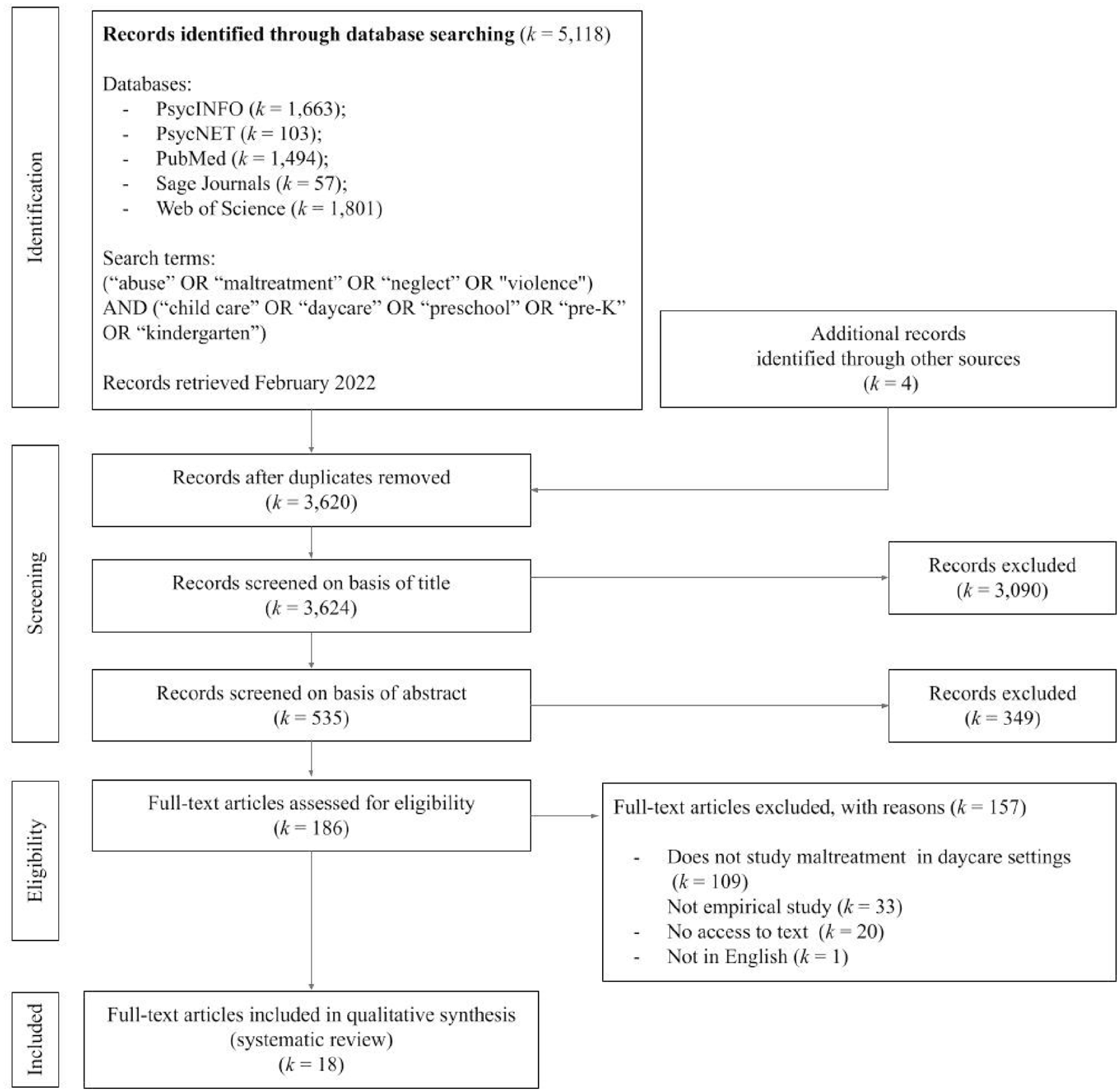
PRISMA flowchart of literature search and inclusion/exclusion decisions.
Design of Project
Considering the heterogeneous body of literature, we chose to conduct a systematic review. This allows for a descriptive overview, synthesizing findings from various study designs and methodologies (Pham et al., 2014).
Data Extraction
Following the literature search, we used an abstraction spreadsheet to systematically extract data from the 18 studies included in this review. To ensure no articles were wrongfully excluded and all information extracted was accurate, the senior researchers worked closely with the research assistants to monitor consistency and reliability. In addition, the senior authors and research assistants collaboratively screened 10 manuscripts to assess reliability and consistency prior to data extraction. The process indicated 100% level of agreement regarding eligibility of studies and extraction results.
Results
Study Characteristics
Overall, 25 manuscripts investigated childhood abuse in daycare settings. These manuscripts consisted of 18 studies. One of the manuscripts included in this review is a proposed research project that concerns the Amsterdam Sexual Abuse Case (ASAC) (Lindauer et al., 2014). Since then, six papers have been published under this project, all studying one sample of children who were sexually abused by a professional at a daycare center (i.e., the ASAC) (Tsang et al., 2021; van Duin et al., 2018, 2022; Vrolijk-Bosschaart, Brilleslijper-Kater, Widdershoven, Teeuw, Verlinden, Voskes, van Duin, Verhoeff, Benninga, et al., 2017; Vrolijk-Bosschaart, Brilleslijper-Kater, Widdershoven, Teeuw, Verlinden, Voskes, van Duin, Verhoeff, de Leeuw, et al., 2017; Vrolijk-Bosschaart et al., 2019). Therefore, we will consider these six papers as one study that concerns one sample (for more information, please see Lindauer et al., 2014). Brendgen et al. (2006) studied the long-term outcomes of verbal abuse by teachers, and published two more studies under this project, using the same sample (Brendgen, Wanner & Vitaro, 2007; Brendgen, Wanner, Vitaro, Bukowski, et al., 2007). Again, we will consider these three papers as one study that concerns one sample. Burgess et al. (1996) studied a sample of children who were sexually abused and their outcomes 15 years later (Burgess & Hartman, 2005). Again, we will consider the two manuscripts as one study. In the results section, we will specify the information derived from each paper separately and reference the data to the specific individual publication. Similarly, in relevant parts of the results section, we will treat these papers separately to provide a more accurate description of the prevalence and distribution of information each paper provides, totaling 25 papers.
All included studies were published between 1987 and 2022, with more than half published by 1999 (n = 13; 52%). During the years of 2000–2006, only two new studies concerning childhood abuse in daycare settings were published. This area has, however, regained research interest in recent years, with 48% of manuscripts (n = 12) published since 2007. The majority of these studies were conducted in the United States (k = 12; 48%), the Netherlands (k = 6; 23.07%), and Canada (k = 4; 16%), with only one study conducted in Israel (4%), Korea (4%), New Zealand (4%), and France (4%).
Overall, 18 studies recruited samples from daycare centers (72%; Atten & Milner, 1987; Brendgen et al., 2006; Brendgen, Wanner & Vitaro, 2007; Brendgen, Wanner, Vitaro, Bukowski, et al., 2007; Burgess et al., 1996; Burgess & Hartman, 2005; Crick et al., 1999; Duncan, 1999; Kelley, 1990; Khoury-Kassabri et al., 2014; Margolin, 1991; Shin & Kim, 2008; Tsang et al., 2021; van Duin et al., 2018, 2022, Vrolijk-Bosschaart, Brilleslijper-Kater, Widdershoven, Teeuw, Verlinden, Voskes, van Duin, Verhoeff, Benninga, et al., 2017; Vrolijk-Bosschaart, Brilleslijper-Kater, Widdershoven, Teeuw, Verlinden, Voskes, van Duin, Verhoeff, de Leeuw, et al., 2017; Vrolijk-Bosschaart et al., 2019). Of the daycare center samples, most consisted of parents of children who had been abused in daycare settings, to assess their children’s and their own outcomes following the abuse (k = 8; 32%; Burgess et al., 1996; Burgess & Hartman, 2005; Kelley, 1990; Margolin, 1991; Tsang et al., 2021; van Duin et al., 2018, 2022; Vrolijk-Bosschaart et al., 2019). Of these, Vrolijk-Bosschaart et al. (2019) also retrospectively analyzed children’s interviews after the abuse. Only 16% of the studies consisted of children as participants (k = 4; Brendgen et al., 2006; Brendgen, Wanner & Vitaro, 2007, Brendgen, Wanner, Vitaro, Bukowski, et al., 2007; Shin & Kim, 2008). However, none of the child samples specifically recruited children who had been maltreated in daycare. Daycare staff, that is, teachers and administrators, made up 16% of remaining included studies’ samples (k = 4; Atten & Milner, 1987; Crick et al., 1999; Duncan, 1999; Khoury-Kassabri et al., 2014).
Seven studies reported forensic samples from official reporting systems (28%; Bordin, 1996; Bybee & Mowbray, 1993; Flanery, 1992; Moulden et al., 2007; Rey-Salmon et al., 2020; Russell & Clifford, 1987; Spencer & Knudsen, 1992). For example, two studies reviewed medical files after the abuse (8%; Vrolijk-Bosschaart, Brilleslijper-Kater, Widdershoven, Teeuw, Verlinden, Voskes, van Duin, Verhoeff, Benninga, et al., 2017; Vrolijk-Bosschaart, Brilleslijper-Kater, Widdershoven, Teeuw, Verlinden, Voskes, van Duin, Verhoeff, de Leeuw, et al., 2017). In addition, two studies retrieved information regarding the abuse from police reports (8%; van Duin et al., 2018; Vrolijk-Bosschaart, Brilleslijper-Kater, Widdershoven, Teeuw, Verlinden, Voskes, van Duin, Verhoeff, Benninga, et al., 2017). Note that some papers recruited information from more than one type of source. In addition, one manuscript included in this review was a literature review that reviewed five primary studies on sexual abuse in daycare settings. Research findings in the manuscripts revealed the dynamics of sexual abuse in daycare settings, characteristics of offenders, patterns of disclosure, and the impact of the abuse (4%; Kelley et al., 1993). We decided to include this manuscript instead of the five papers it reviews as four of five studies were not retrievable anymore due to them being published long ago.
Covered by 48% of studies included in this review, the most focused topic was outcomes of maltreatment in daycare settings (k = 12; Brendgen et al., 2006; Brendgen, Wanner & Vitaro, 2007; Brendgen, Wanner, Vitaro, Bukowski, et al., 2007; Burgess et al., 1996; Burgess & Hartman, 2005; Kelley, 1990; Kelley et al., 1993; Tsang et al., 2021; van Duin et al., 2018; Vrolijk-Bosschaart, Brilleslijper-Kater, Widdershoven, Teeuw, Verlinden, Voskes, van Duin, Verhoeff, Benninga, et al., 2017; Vrolijk-Bosschaart, Brilleslijper-Kater, Widdershoven, Teeuw, Verlinden, Voskes, van Duin, Verhoeff, de Leeuw, et al., 2017; Vrolijk-Bosschaart et al., 2019). Of these, 58.3% (k = 7) studied the outcomes of children who were abused, one (88.3%) studied the outcomes of parents whose children were abused, and four (33.33%) studied the outcomes of both. All studies mentioned focused on psychological outcomes, except one which focused on the children’s physical outcomes of sexual abuse in daycare settings (Vrolijk-Bosschaart, Brilleslijper-Kater, Widdershoven, Teeuw, Verlinden, Voskes, van Duin, Verhoeff, Benninga, et al., 2017).
Six manuscripts studied the characteristics of the phenomenon, such as types of abuse in daycare settings, perpetrator’s identity, number of children per perpetrator, and numbers of perpetrators per child (24%; Crick et al., 1999; Faller, 1988; Flanery, 1992; Kelley et al., 1993; Khoury-Kassabri et al., 2014; Moulden et al., 2007; Rey-Salmon et al., 2020). Five studies (20%) investigated risk factors of maltreatment in daycare settings (Atten & Milner, 1987; Khoury-Kassabri et al., 2014; Margolin, 1991; Moulden et al., 2007; Shin & Kim, 2008). Of these, 60% (k = 3) studied risk factors focused on daycare staff, while 40% (k = 2) studied child characteristics. One paper studied the initial reactions of parents after the disclosure of their children’s abuse (van Duin et al., 2022). The rest of the included manuscripts studied legal issues (k = 5; 20%; Bordin, 1996; Bybee & Mowbray, 1993; Duncan, 1999; Flanery, 1992; Russell & Clifford, 1987). Note that some manuscripts studied more than one focus, as further described below.
Measures of Maltreatment in Daycare Setting
Out of the studies included, 11 used previously validated questionnaires (44%; Atten & Milner, 1987; Brendgen et al., 2006; Brendgen, Wanner & Vitaro, 2007; Brendgen, Wanner, Vitaro, Bukowski, et al., 2007; Burgess et al., 1996; Crick et al., 1999; Kelley, 1990; Khoury-Kassabri et al., 2014; Shin & Kim, 2008; Tsang et al., 2021; van Duin et al., 2018). Of these validated questionnaires, three measured aspects concerning abuse in daycare settings. These questionnaires included the Child Abuse Potential Inventory (Milner et al., 1986), Teachers’ Likelihood of Using Corporal Punishment with Children (Benbenishty et al., 2002; Khoury-Kassabri, 2012), and the Attitudes Toward the Use of Corporal Punishment to Discipline Children questionnaire (Khoury-Kassabri, 2012). Four studies used validated questionnaires to assess psychological outcomes of sexual abuse in daycare settings both for the parents and children (Burgess et al., 1996; Kelley, 1990; Tsang et al., 2021; van Duin et al., 2018). These questionnaires included the Anxiety Disorders Interview Schedule for DSM-IV Child Version, Parent Interview Schedule (Silverman & Albano, 1996), Children’s Revised Impact of Event Scale, Parent Version 13 (Children and War Foundation, 1998), Child Dissociative Checklist (Putnam et al., 1993), Child Sexual Behavior Inventory (Friedrich et al., 1992), Child Behavior Checklists 1½-5 and 6–18 (Achenbach et al., 2001; Achenbach & Rescorla, 2000), Attachment Insecurity Screening Inventories 2–5 and 6–12 (Polderman & Kellaert-Knoll, 2008; Spruit et al., 2018), Impact of Event Scale—Revised (Weiss, 2007), Parent Emotional Reaction Questionnaire (Cohen & Mannarino, 1996), Experiences in Close Relationships (Brennan et al., 1998), and SCL-90-R (Derogatis & Savitz, 1999).
In addition, one study included in this review developed a measure to assess peer victimization (Preschool Peer Victimization Measure—Teacher Report; Crick et al., 1999). Nine manuscripts used a qualitative analytic approach to study childcare setting’s maltreatment and outcomes, for example statement validity analysis, analysis of documented cases and complaint logs, case reports, and parent’s and children’s interviews. One study used a survey built for the study, that was given to directors and administrators on the topic of unproven abuse allegations in their child care center (Bordin, 1996). Another study used teachers reports to assess risk factors of peer victimization in preschools (Shin & Kim, 2008). Three additional studies used teachers reports and peer nominations to evaluate verbal abuse outcomes (Brendgen et al., 2006; Brendgen, Wanner & Vitaro, 2007; Brendgen, Wanner, Vitaro, Bukowski, et al., 2007). Four studies used interviews; one study interviewed teachers in kindergartens on the topic of sexual abuse protection policies (Duncan, 1999). Six studies held interviews with parents whose children were abused in childcare settings (Burgess et al., 1996; Burgess & Hartman, 2005; Margolin, 1991; Tsang et al., 2021, van Duin et al., 2018; Vrolijk-Bosschaart et al., 2019), and one study interviewed children who were sexually abused in a childcare setting (Kelley et al., 1993). The last six studies were the only ones to examine the topic of abuse in childcare settings by speaking to the victims and their families.
Abuse Characteristics
As mentioned, 25 manuscripts that consisted of 18 studies were included in this review. To provide an accurate description of abuse characteristics, studies that concerned the same sample will be represented by the first study that was published under the project (Brendgen et al., 2006; Burgess et al., 1996; Lindauer et al., 2014). The children’s demographic characteristics are summarized in Table 1. As shown, only 16.6% of included studies (k = 3) reported the age of children during the abuse. This age ranged from 0 to 8 years and the mean age was under 4 years (Burgess et al., 1996; Kelley, 1990; Lindauer et al., 2014) (Tables 2 and 3).
Studies on Maltreatment in Daycare Settings: Characteristics of the Included Research Manuscripts.
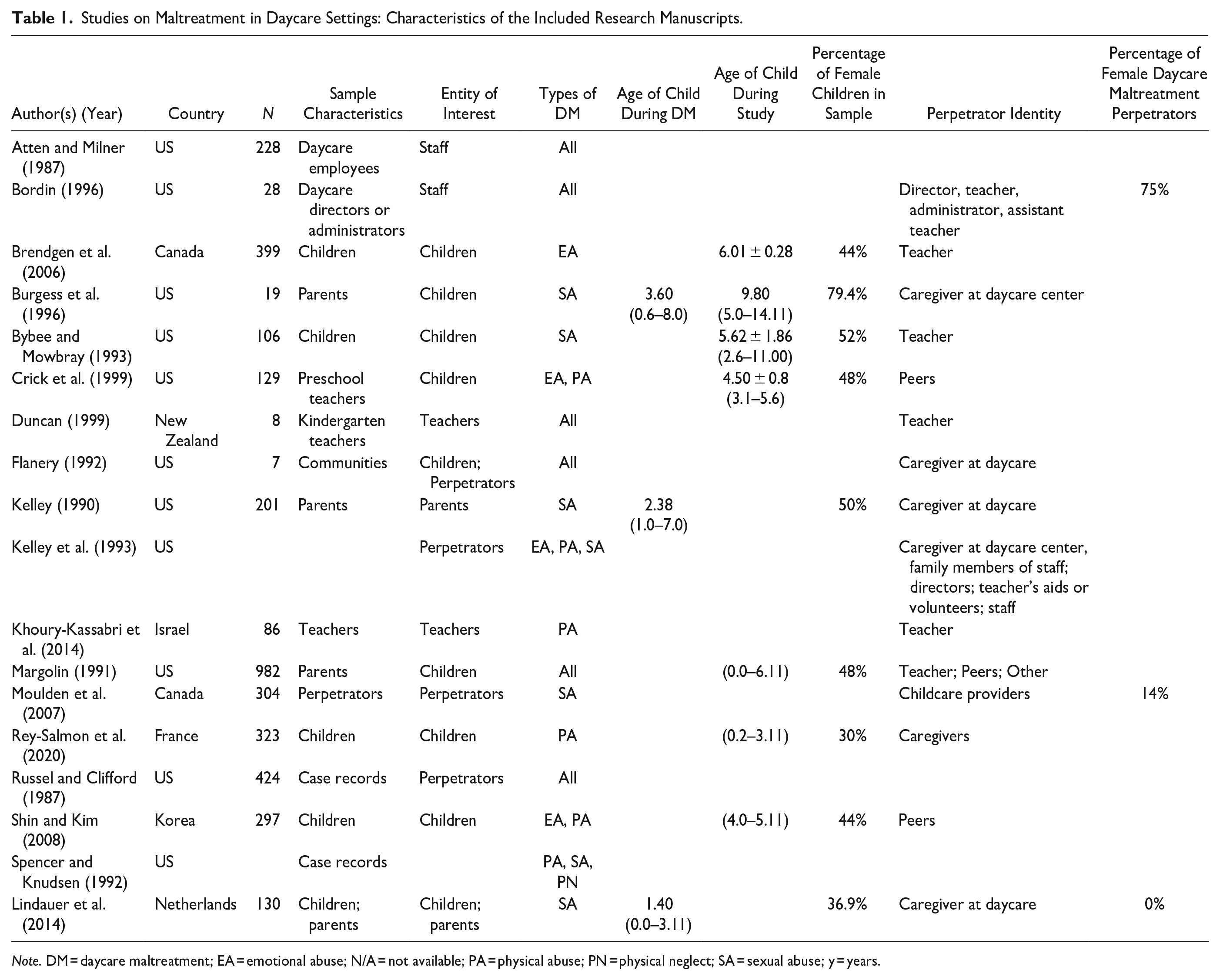
Note. DM = daycare maltreatment; EA = emotional abuse; N/A = not available; PA = physical abuse; PN = physical neglect; SA = sexual abuse; y = years.
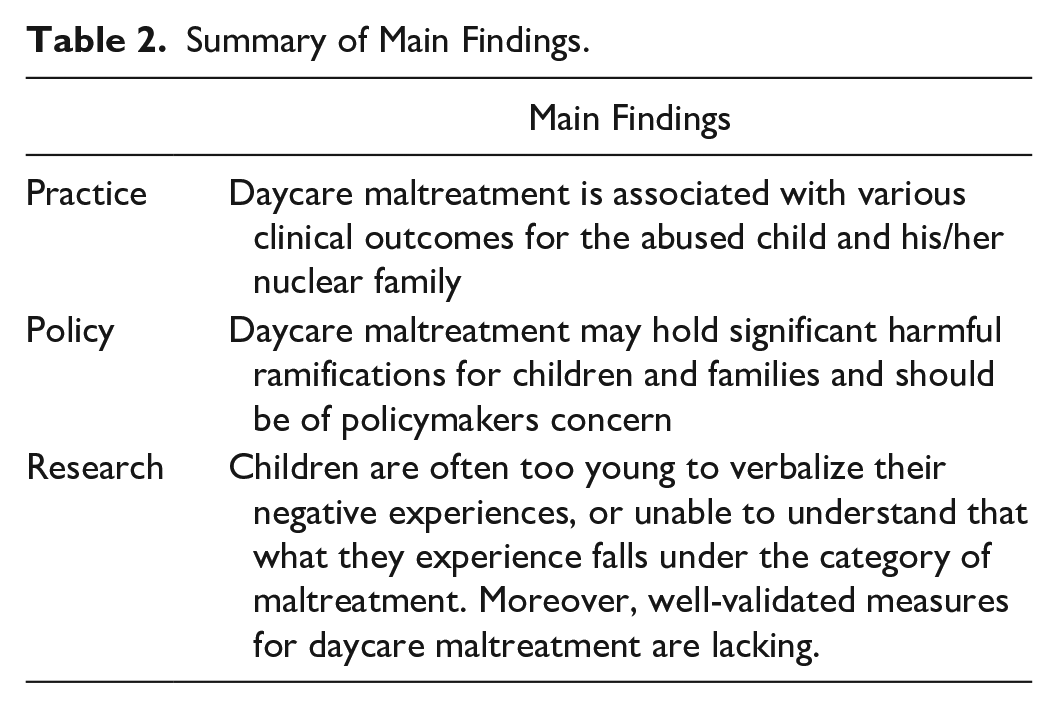
Summary of Main Findings.
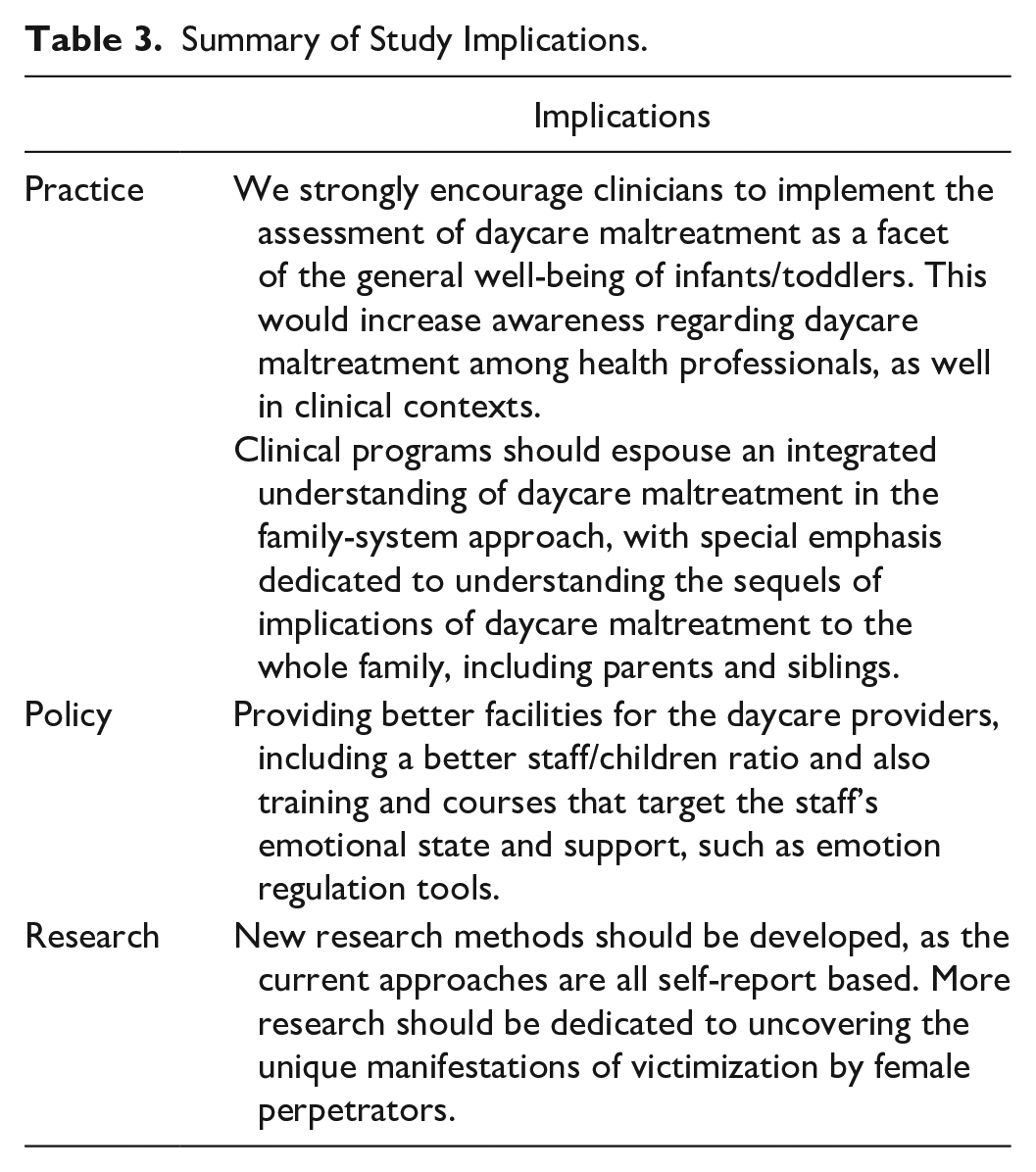
Summary of Study Implications.
Seven of the manuscripts reported the age of the children during the study; three studies investigating aspects of abuse in children older than 4 years of age (Brendgen et al., 2006; Burgess et al., 1996; Shin & Kim, 2008), two studies investigating abuse in children up to the age of 4 years (Crick et al., 1999; Rey-Salmon et al., 2020), and two studies spanning both age categories (Bybee & Mowbray, 1993; Margolin, 1991). Of the included studies, nine reported their sample’s gender distribution (50%). On average, 41.2% of the samples were female.
Unfortunately, only five (27.7%) of the included manuscripts mentioned the gender of the abuser. In two (11.1%) of the studies, the abusers were mostly female (Bordin, 1996; Bybee & Mowbray, 1993), and in three studies (16.6%) the abusers were mostly male (Margolin, 1991; Moulden et al., 2007; Lindauer et al., 2014). In all, 15 (83.3%) studies included the identity of the abuser and showed a variety of perpetrators and childcare settings. In most of the studies, the perpetrators were caregivers (k = 7; 38.8%) or teachers (k = 6; 33.3%). In other manuscripts, the perpetrators were peers (k = 3; 16.6%), non-professionals that include teacher’s aids or volunteers (k = 2, 11.1%), director or owner of daycare center (k = 2, 11.1%), family member of the staff (k = 1; 5.5%), non-daycare staff included bus drivers and janitors (k = 1; 5.5%), or a complete outsider to the daycare center (k = 1; 4%). Note that some manuscripts mentioned more than one kind of perpetrator.
Of the included manuscripts, six studies referred to child abuse in general, without specifying the type of abuse (33.3%; Atten & Milner, 1987; Bordin, 1996; Duncan, 1999; Flanery, 1992; Margolin, 1991; Russell & Clifford, 1987). Of the manuscripts that specify the type of abuse, the most common abuse studied was sexual abuse (k = 7; 38.8%; Burgess et al., 1996; Bybee & Mowbray, 1993; Kelley, 1990; Kelley et al., 1993; Moulden et al., 2007; Spencer & Knudsen, 1992; Lindauer et al., 2014) or physical abuse (k = 7; 38.8%; Crick et al., 1999; Kelley, 1990; Kelley et al., 1993; Khoury-Kassabri et al., 2014; Rey-Salmon et al., 2020; Shin & Kim, 2008; Spencer & Knudsen, 1992). In addition, five studies focused on emotional abuse, including verbal and relational abuse (k = 5; 27.7%; Brendgen et al., 2006; Crick et al., 1999; Kelley, 1990; Kelley et al., 1993; Shin & Kim, 2008). Some manuscripts studied more than one type of abuse. As opposed to our expectations, only one manuscript studied physical and emotional neglect (Spencer & Knudsen, 1992).
Unfortunately, only three of the included studies investigated the duration or frequency of maltreatment. One study found that the duration mean of sexual abuse of one study group was 13 months, and duration mean of ritual sexual abuse in another group was 16.57 months (Kelley, 1990). The studies under the ASAC project (Lindauer et al., 2014) found that 45.7% of the sample suffered from abuse 1–2 times, 42.8% 3–10 times, and 11.4% of the sample were abused over 10 times (van Duin et al., 2018; Vrolijk-Bosschaart, Brilleslijper-Kater, Widdershoven, Teeuw, Verlinden, Voskes, van Duin, Verhoeff, Benninga, et al., 2017).
Outcomes
Outcomes related to abuse in daycare settings have received comparatively more attention than other issues. Daycare abuse seems to have many consequences in common with abuse in other settings (Kelley et al., 1993). As mentioned before, 12 studies included in this review focused on the outcomes of daycare abuse, with seven concerning children’s outcomes, one concerning parent’s outcomes, and one concerning the outcomes of both. Some of the studies regarding children’s outcomes revealed outcomes concerning behavioral problems. For example, Vrolijk-Bosschaart et al. (2019) found that children during their interview following the sexual abuse showed behavioral reactions such as avoidance and distractive behaviors, and verbal reactions (e.g., conspicuous utterances, refusal to talk about specific subjects). Vrolijk-Bosschaart et al. (2019) found that parents reported their children exhibiting sexual behavior, fears and anxiety regarding sexuality, and sexual utterances after sexual abuse. Brendgen et al. (2006), Brendgen, Wanner, and Vitaro (2007), and Brendgen, Wanner, Vitaro, Bukowski, et al. (2007) found verbal abuse by childhood teachers to be positively related to behavior problems. Furthermore, verbally abused girls were at higher risk of early intercourse, and less likely to have obtained a high school diploma. Tsang et al. (2021) found behavioral problems to be an outcome 5 years after sexual abuse. In a later study, Burgess and Hartman (2005) reviewed adjustment problems after daycare abuse. The study found that 15 years after the abuse, 40% of the children made a marginal adjustment, while 20% of the children made a problematic adjustment. In addition, some studies have investigated subsequent developmental difficulties (Brendgen et al., 2006; Brendgen, Wanner & Vitaro, 2007; Brendgen, Wanner, Vitaro, Bukowski, et al., 2007; Vrolijk-Bosschaart, Brilleslijper-Kater, Widdershoven, Teeuw, Verlinden, Voskes, van Duin, Verhoeff, de Leeuw, et al., 2017).
In addition, five studies focused on outcomes regarding emotional distress (Burgess et al., 1996; Kelley et al., 1993; Tsang et al., 2021; Vrolijk-Bosschaart, Brilleslijper-Kater, Widdershoven, Teeuw, Verlinden, Voskes, van Duin, Verhoeff, de Leeuw, et al., 2017; Vrolijk-Bosschaart et al., 2019). Surprisingly, of these, only two tested PTSD symptoms. Tsang et al. (2021) and Vrolijk-Bosschaart, Brilleslijper-Kater, Widdershoven, Teeuw, Verlinden, Voskes, van Duin, Verhoeff, de Leeuw, et al. (2017) found in their shared sample that children exhibited PTSD symptoms following sexual abuse. More specifically, Tsang et al. (2021) found that 3% of the children in this sample showed PTSD symptoms: In addition, findings showed that 30% of the children had sexual behavior problems, 24% internalizing problems, 27% attachment insecurity, and 18% any psychiatric disorder (including PTSD).
In addition, Vrolijk-Bosschaart, Brilleslijper-Kater, Widdershoven, Teeuw, Verlinden, Voskes, van Duin, Verhoeff, de Leeuw, et al. (2017) found that children showed problems concerning emotions and toilet training. In the same sample, Vrolijk-Bosschaart et al. (2019) found that children during their interview following the sexual abuse showed signs of emotional distress such as anger and aggression. Burgess et al. (1996) found that 5–10 years after the abuse, over one-third of the children remained clinically symptomatic. Only one study reviewed physical symptoms following daycare abuse. Vrolijk-Bosschaart, Brilleslijper-Kater, Widdershoven, Teeuw, Verlinden, Voskes, van Duin, Verhoeff, Benninga, et al. (2017) found that 50% of the children reported physical complaints after being abused.
Regarding parent’s outcomes, most studies concentrated on parent’s emotional distress following their child’s abuse in the daycare setting. van Duin et al. (2018) thematically analyzed the parent’s initial emotional reactions after the disclosure, and found themes regarding emotions such as shock, uncertainty and vulnerability. Burgess et al. (1996) found that 5–10 years following the abuse, parents still expressed concern as to their child’s future interpersonal relationships. Kelley (1990) found that parents of sexually abused children reported significantly more psychological distress and more symptoms consistent with PTSD than parents of non-abused children. In a more recent study, van Duin et al. (2018) found similar outcomes. Three years after the sexual abuse disclosure of their children, 19% of the parents showed PTSD symptoms, and 3% showed avoidant and 8% anxious attachment problems in their intimate relationship.
However, as presented in the introduction, findings from studies assessing abuse by a non-parental figure provide indications of complex and corresponding posttraumatic ramifications in families (e.g., Kelley, 1990; Khamis, 2016). Of the studies included in this review, only one studied the corresponding symptoms in the parent–child dyad. In their study, van Duin et al. (2018) found a correlation between severity of parental PTSD symptoms and child’s psychological functioning. Within the sample’s confirmed victims, severity of parental PTSD symptoms was correlated with child’s PTSD symptoms, dissociative symptoms, behavior problems, and attachment problems. Consistent with findings presented in the introduction (Khamis, 2016), this study also found that children of parents experiencing more emotional reactions to the sexual abuse had significantly more symptoms of PTSD. In Tsang et al. (2021), although assessing the psychological outcomes of daycare sexual abuse in both children and their parents during five time points, corresponding symptoms in the dyad were not examined. Also, van Duin et al. (2018) thematically analyzed the parent’s initial emotional reactions after the disclosure and did not study how this affected children’s outcomes.
In addition, several factors may intervene in explaining the dynamic of corresponding responses to daycare maltreatment in the family, such as exposure to other stressful life events (e.g., divorce, loss of a close figure, economical strain), the quality and type of attachment (Feldman, 2007), the structure of the family, and others. The manuscripts included in this review did not assess these aspects in their study.
What does the Literature Teach Us About the Unique Dynamic of Daycare Maltreatment?
Although most child maltreatment occurs behind closed doors, one of the most cardinal characteristics of maltreatment occurring in daycare settings is that children are developmentally incapable of disclosing it when they are young. When daycare maltreatment occurs with children that are developmentally able to report it, the fundamental nature of daycare maltreatment may also silence them. By bringing children to the daycare (concretely and symbolically), children are provided with a message from their parents that daycare is a trustworthy, adequate place for them. This “message” conveyed to children, which fits the special dynamic between the perpetrators and the victims, may make it more difficult for them to realize that anything is wrong, and they are being maltreated. Two main questions arise from this understanding: First, do we truly know the prevalence of daycare maltreatment? And second, what are the dynamics of daycare disclosure?
Frequency of a Veiled Phenomenon
To answer the first question, the manuscripts included were reviewed for whether they conduct an evaluation of the overall incidence of daycare maltreatment in a given area. This review shows that not one study was conducted for the purpose of evaluating the prevalence of daycare maltreatment in a certain region, nor whether it is reduced by the local early education regulations. With that said, Russel and Clifford (1987) analyzed the complaint log of the North Carolina office of childcare licensing and found that out of 424 complaints submitted that year, 16.5% were of alleged child abuse and neglect and most of the complaints were substantiated. Although not providing an accurate evaluation of the prevalence in that area, these findings underline the unique characteristics of daycare maltreatment as a maltreatment difficult to confirm. Also, Bordin (1996) surveyed 28 childcare centers in California, to analyze unproven child abuse charges in the previous 3 years. Although reflecting the only two studies addressing this matter, these studies did not provide adequate data concerning prevalence of daycare maltreatment, and use outdated measurement instruments, and therefore not relevant for the cause of understanding the magnitude of the phenomenon.
Disclosure
Referring to the second question referring to the unique dynamics of daycare maltreatment, the studies were reviewed for information regarding the disclosure of daycare maltreatment. Three studies mentioned the issue of disclosure (Burgess & Hartman, 2005; Bybee & Mowbray, 1993; Kelley et al., 1993). Off these, only Bybee and Mowbray (1993) studied the characteristics of disclosure. In their study, they found that of the 106 children who had direct contact with investigators, 58% explicitly disclosed their sexual abuse. An additional 19% hinted about the abuse, and 50% disclosed witnessing abuse of another child. The data collected successfully differentiated children who made explicit disclosures of abuse and those who did not. Younger age, whether anatomically detailed dolls were used, and number of interviews were correlated with explicit abuse disclosures. Due to the significance children’s disclosure in abuse cases, and the development in our understating of the way children perceive, react to, and remember traumatic abuse events, there is an urgent need for new studies regarding this issue.
Discussion
Maltreatment in daycare settings takes place behind closed doors, with victims often unable to report it as they are too young or otherwise incapable. Therefore, daycare maltreatment may be a hidden traumatic experience, alarmingly neglected in research and practice. The aim of this review was to identify and synthesize the current evidence on daycare maltreatment and its implications. The findings of the current review address many characteristics of daycare maltreatment, including the early age of abused children, the type of abuse, and the identity of the perpetrator. This review also highlights the devastating immediate and long-term manifestations of daycare maltreatment for children, parent(s), and their dyads. Daycare maltreatment seems to share many consequences with abuse in other settings, yet it continually receives significantly less attention. The studies included in the current review suggest a unique complicated type of abuse conducted by a secondary attachment figure.
The current findings underline an alarming gap in our knowledge as to the actual rates of daycare maltreatment. In addition to the limited research in the field of daycare maltreatment, methodological limitations of the existing literature are striking. In general, the present review revealed that research interest in daycare maltreatment grew 20 years ago, an increase ceased after only a few years. We assume this decrease in interest in this field may be due to the increased efforts in improving the regulatory system of daycare facilities and the assumption that once the regulation is settled, maltreatment cases may be avoided. However, similar to maltreatment cases crossing socioeconomic and educational statuses, it is more than reasonable to assume that cases of daycare maltreatment still occur, but we, the scientific community and the society, are not aware of their frequency. This is also due to the literature’s reliance on older scales for assessing daycare maltreatment’s prevalence and consequences. Fortunately, recent publications are beginning to examine the dyadic implications of daycare maltreatment, shedding light on this overlooked phenomenon. Taken together, although it is a common assumption that teacher/child ratio, cameras, and other regulations aiming to define adequate childcare should result in lower daycare maltreatment incidence, this assumption, as far as we know, has yet to be empirically tested.
The findings of this review indicate that although little is known about the long-term ramifications of daycare maltreatment for children, what is known paints a distressing picture. A recent study examining the outcomes of sexual daycare maltreatment shows that 18% of affected children experience a posttraumatic psychiatric disorder and 30% display sexual behavior problems 3 years post-daycare maltreatment exposure (van Duin et al., 2018). In line with these findings, Burgess et al. (1996) found that 5–10 years after daycare maltreatment, over one-third of the affected children remained clinically symptomatic. Similarly, Kelley (1989) found that children who were sexually abused in a daycare setting exhibited more behavioral disturbances than non-abused children. Children maltreated by their daycare providers were also found to express high emotional distress and were more likely to develop behavioral and somatic problems (Gomes-Schwartz et al., 1985). Brendgen, Wanner, Vitaro, Bukowski, et al. (2007) found that verbal abuse by teachers was related to long-term behavioral problems in adolescence. Other findings reveal that parents of children exposed to daycare maltreatment report that their children express a severe sense of general fear and fear of being alone, but mainly fear of objects and people (Gomes-Schwartz et al., 1985). These findings highlight the debilitating consequences of daycare maltreatment for exposed children. However, it seems that much more research is needed to teach us about the corresponding dynamic of responses of children, parents, and the family as a system. In addition, factors facilitating adaptive adjustment to daycare maltreatment in the family, as well as factors hindering such adjustment, deserve our attention.
Notably, in most countries, the majority of daycare staff is female. Yet, the studies included in this review demonstrate over-representation of male perpetrators. Although women are more often represented as the victims, and less as perpetrators of violence and abuse (Denov, 2003), it has been argued that research may preclude indications of female perpetrators (Dutton & Nicholls, 2005). In addition, it is possible that victimizing acts by female perpetrators are not well-identified, thus leading to victimizing acts remaining unexposed. Further research is therefore needed to characterize the phenomenology of daycare maltreatment, and the dynamic in which it takes place, so that it may be more visible, identified, and assessed.
Implications for Research, Policy and Practice
Many children spend a considerable amount of their infancy and childhood in daycares, an environment that should be protective and nurturing. Uncovering the dark side of daycare experiences children might undergo during this partially pre-verbal stage is a crucial and substantial task for future policy and practice. First and foremost, the current review reveals that we know too little about daycare maltreatment. However, what we do know uncovers that such maltreatment may hold significant harmful ramifications for children and families.
Regulations and policies with respect to daycare operations vary widely worldwide. While an exhaustive review of these variations is beyond the scope of this review, the OECD outlined standards designed to facilitate beneficial early childhood education standards (OECD, 2012). Arguably, enhancing our understanding of the prevalence, characteristics, and outcomes of maltreatment in daycare settings may facilitate policy and practice efforts for preventing maltreatment, and the treatment of children and families when it unfortunately occurs. Therefore, the current review outlines a neglected scenario of maltreatment, providing an initial glance into daycare maltreatment as a research realm in need to be targeted. Several strategies might be considered, from providing better facilities for the daycare providers, including a better staff/children ratio and also training and courses that target the staff’s emotional state and support, such as emotion regulation tools.
Considering that children are often too young to verbalize their experiences, or unable to understand that what they experience is “wrong,” new research methods should be developed. One way is not to rely solely on police records and cases confirmed legally. By endorsing the understanding that it is possible that these cases only reflect the tip of the iceberg, perhaps daycare maltreatment incidences should be evaluated more broadly as suspected cases. One related research path that may teach us about the possible occurrence of childhood maltreatment in daycare settings can be through assessing parental suspicion of maltreatment. Parents may expose daycare maltreatment by noticing its signs and/or consequences (e.g., physical signs and bruises on the child may cause suspicion of physical abuse). Parents may also witness certain providers’ behaviors that raise suspicion regarding their behavior when parents are absent (Kelley et al., 1993). Thus, systemically assessing parental suspicion of daycare maltreatment may be valuable for providing more information on the potential occurrence of childhood maltreatment in daycare settings, presumably showing that it is more prevalent than we think.
In addition, as mentioned above, more research should be dedicated to uncovering the unique manifestations of victimization by female perpetrators, as well as developing methods to assess it. Relatedly, as arising from this review, well-validated measures for daycare maltreatment are lacking. Considering the complexity of the daycare maltreatment scenario, such measures should incorporate various research designs and assessment tools, including parental and child self-report tools, as well as strategies that indicate exposure to victimization bypassing self-report methods. Such methods may include the assessment of stress through biomarkers, well-validated observation tools, and others.
Research on daycare maltreatment should also incorporate a family-system approach by conducting research on the outcomes of maltreatment in daycare settings for the whole family, including parents and siblings. Such complex understanding may be provided from longitudinal assessments of families, while uncovering the complex set of corresponding interfamilial and multidimensional effects.
The current review has a number of strengths as it sheds light on a severe but overlooked phenomenon that has devastating long-term implications, and contributes to a better definition of daycare maltreatment and the environmental conditions allowing for daycare maltreatment to happen. However, these findings should be considered in light of their limitations. Due to the low number of studies we included in this review and the variation in the data across studies, only a qualitative synthesis of the studies was possible. With more studies involving empirical data, a meta-analysis could be a future goal. Moreover, this review only includes articles published in English, limiting the generalizability of our findings. Although, as the analysis of the included samples has shown, daycare maltreatment survivors differing in gender, age, socioeconomic status, race, ethnicity, etc. are reflected, it is possible that our inclusion criterion (i.e., studies published in English) systematically influenced the results of the current review. To cover this potential limitation, future studies in this field should ensure to choose recruitment pathways that enable participation for daycare maltreatment survivors from diverse cultural and religious contexts.
Taken together, these findings suggest that (1) daycare maltreatment has a unique set of characteristics compared to other types of maltreatment, (2) daycare maltreatment has various negative effects on survivors’ psychological state, (3) this phenomenon and its implications have been and still are a neglected topic in research. There is an urgent need to better understand daycare maltreatment, its prevalence, and its implications to prevent and detect its occurrence and to help survivors to overcome the experiences of daycare maltreatment.
Footnotes
Acknowledgements
None.
Declaration of Conflicting Interests
The author(s) declared no potential conflicts of interest with respect to the research, authorship, and/or publication of this article.
Funding
The author(s) received no financial support for the research, authorship, and/or publication of this article.
