




Abstract
Nonconsensual condom removal (NCCR; also known as “stealthing”) involves the removal of a condom before or during sexual intercourse without a partner’s sexual consent. Within the past several years, nations across the globe have codified NCCR as a form of sexual violence penalized by civil and/or criminal penalties. Given the recent legal attention to this behavior, we performed a scoping review of the peer-reviewed, empirical, English-language studies conducted on NCCR in order to summarize the current state of this field of research. Our scoping review yielded 27 articles meeting study inclusion criteria. Data on NCCR victimization and perpetration prevalence rates and correlates, as well as perceptions of NCCR, were extracted. The majority of the reviewed studies were conducted within the past 5 years and pertained to NCCR victimization. Rates of NCCR victimization ranged from 7.9% to 43.0% for women and 5.0% to 19.0% for men who have sex with men; rates of NCCR perpetration ranged from 5.1% to 9.8% for men and 0% for women. NCCR correlates included sociodemographic variables, relationship type, psychological factors, and sexual health concerns. Perceptions of NCCR were largely negative. The nascent field of NCCR research provides empirical evidence from several countries regarding concerning rates of NCCR. Building upon this foundation, continued research regarding NCCR is imperative. Studies that further delineate NCCR prevalence, risk factors, and outcomes would provide critical information beneficial to the development of evidence-based prevention and intervention programs targeting reductions in NCCR.
Nonconsensual condom removal (NCCR)—vernacularly known as “stealthing”—is a form of sexual coercion in which an individual agrees to use a condom but then takes off the condom without the partner’s knowledge or consent (Davis, 2019). These situations typically begin consensually with both partners agreeing to engage in protected sex; however, once the condom is removed by one partner without the consent of the other, either before or during sex, the sexual activity is no longer consensual (Brodsky, 2017). As such, the partner who was “stealthed” has had their sexual agency and autonomy violated by the stealthing perpetrator, potentially rendering this an act of sexual violence (Ebrahim, 2019).
Despite the clear lack of consent involved in NCCR, there has been debate regarding how NCCR should be located within the sexual violence continuum. In one of the first academic reports on NCCR, Brodsky (2017) argued that this behavior should be considered “rape-adjacent.” Demonstrating the current legal ambiguity of this behavior, legislatures across the globe have grappled with whether and how to incorporate NCCR into their legal codes regarding sexual assault. Globally, New Zealand, Switzerland, Canada, the United Kingdom, Germany, Singapore, and a majority of Australian states currently recognize NCCR as a crime, although prosecutorial results have varied and some NCCR convictions have been overturned upon appeal (Wolters, 2021). In the United States, California became the first state to redefine their sexual battery law to include NCCR, thereby allowing victims to pursue civil remedies. It did not, however, change the criminal code to include NCCR (Wolters, 2021). At the time of this writing, similar legislation has not only been proposed at the state level in New Jersey, Wisconsin, New York, Massachusetts, Maryland, and Nebraska (Fell, 2021; White, 2021; Wolters, 2021), but also at the federal level through H.R. 7920 introduced to the U.S. House of Representatives on May 31, 2022 (Stealthing Act of 2022, 2022). This federal legislation seeks “to create a civil action for nonconsensual sexual protection barrier removal” (Stealthing Act of 2022, 2022, p. 1), enabling victims of NCCR to seek civil damages. Given the recent overturn of Roe v. Wade in the United States, the ability to seek civil damages after an NCCR event is particularly critical for people who become pregnant after such events and may be forced to carry the fetus to term at potentially significant mental, physical, and financial cost.
Legal considerations aside, NCCR has clear public health relevance. First, a wealth of evidence indicates that correct, consistent male condom use is an effective means of reducing sexually transmitted infections (STIs) that are transmitted via genital fluid, such as HIV, chlamydia, gonorrhea, and trichomoniasis (Centers for Disease Control [CDC], 2022a). Further, estimates note that one in five people in the United States have an STI, and $16 billion in direct medical costs are spent on new STIs each year (CDC, 2021). Second, male condoms also provide significant protection against unintended pregnancies which represent a yearly cost of approximately $21 billion in the United States (CDC, 2022b; Guttmacher Institute, 2022). Although the extent to which NCCR contributes to these costs is unknown, the condomless sex that occurs as a result of NCCR certainly increases STI transmission and unintended pregnancy risk, as well as the resulting personal and financial costs. Finally, NCCR may occur without the victims’ knowledge, which obviates their ability to seek out STI prophylaxis or emergency contraception (where available), thereby potentially increasing these risks.
In the present scoping review, we examine the existing research literature regarding NCCR in order to provide an overview of this nascent field of sexual violence research. As defined by Colquhoun et al. (2014), scoping reviews are a “form of knowledge synthesis that addresses an exploratory research question aimed at mapping key concepts, types of evidence, and gaps in research related to a defined area or field by systematically searching, selecting, and synthesizing existing knowledge” (p. 1294). A scoping review is an appropriate method for reporting on evidence in an emerging field as it provides an initial scope of the literature on that topic, including method and evidence types, key concepts and characteristics related to the topic, and remaining knowledge gaps (Munn et al., 2018). In particular, we seek to provide information on prevalence rates of NCCR perpetration and victimization, correlates of NCCR perpetration and victimization, and general perceptions of NCCR. As such, the research question, “What is the extent and nature of the current literature on NCCR (“stealthing”), including NCCR prevalence, NCCR correlates, and perceptions of NCCR?” guided this review’s scope and focus. Our overarching objective is to present a compilation and synthesis of the current research in this area that can (a) create a foundation for future research and policy decisions regarding NCCR; (b) provide critical information for providers and advocates working with NCCR victims; and (c) stimulate the development, testing, and implementation of prevention and intervention efforts specifically targeting NCCR perpetrators.
Method
Stages of Scoping Review
Below we describe details on each of the four stages included in the current scoping review: (a) establishing eligibility criteria; (b) identifying relevant studies; (c) screening relevant studies; and (d) charting and organizing data.
Eligibility criteria
Articles included peer-reviewed studies in English examining empirical findings focused on NCCR victimization, perpetration, or perceptions thereof. Articles were excluded if they (a) were not peer-reviewed, (b) were not journal articles (i.e., conference abstracts etc.), (c) did not present empirical evidence, (d) were literature reviews, or (e) did not explicitly examine NCCR (e.g., collapsing NCCR with other forms of birth control sabotage). Due to the current limited research on NCCR, there were no limitations with regards to population or time of publication.
Identification of relevant studies
A literature search using the following databases was conducted: Cumulative Index of Nursing & Allied Health Literature (CINHAL), PsycInfo, and PubMed. We used the following terms across each database: “stealthing,” “nonconsensual condom removal,” “condom sabotage,” “contraceptive interference,” “contraceptive manipulation,” “contraceptive sabotage,” “coercive pregnancy behaviors,” “condom interference,” “condom manipulation,” “condom use resistance,” and “birth control sabotage.”
Selection of studies
To select studies, titles and abstracts of each identified article were reviewed first, followed by a full-text review. Study titles, year of publication, and author names were entered onto a spreadsheet. Zotero reference management software was used to store articles and identify duplicates. At each stage of study selection, articles were reviewed by two authors independently and brought forward for a team discussion if uncertainty occurred to ensure consistency.
Title and abstract review
Using the above search terms, 1,332 articles were identified. After removing 235 duplicates manually and using the duplicate detection function in Zotero, 1,097 articles were included in title review. In the title review stage, nine articles were excluded because they were not published in English, 36 articles were excluded because the title suggested nonempirical evidence, and 982 articles were removed because of lack of topical relevance. Of the remaining 70 articles, articles were excluded because they were conference abstracts instead of full texts (n = 2), their abstracts indicated that they did not contain empirical evidence (n = 7), or they did not examine NCCR (e.g., articles were focused on condom negotiation; n = 7), leaving 54 articles for the full-text review.
Full-text review
Of the 54 remaining articles, articles were removed because their full texts indicated that they lacked explicit data specifically examining NCCR (n = 27). The remaining 27 articles were included in this scoping review (see Figure 1).
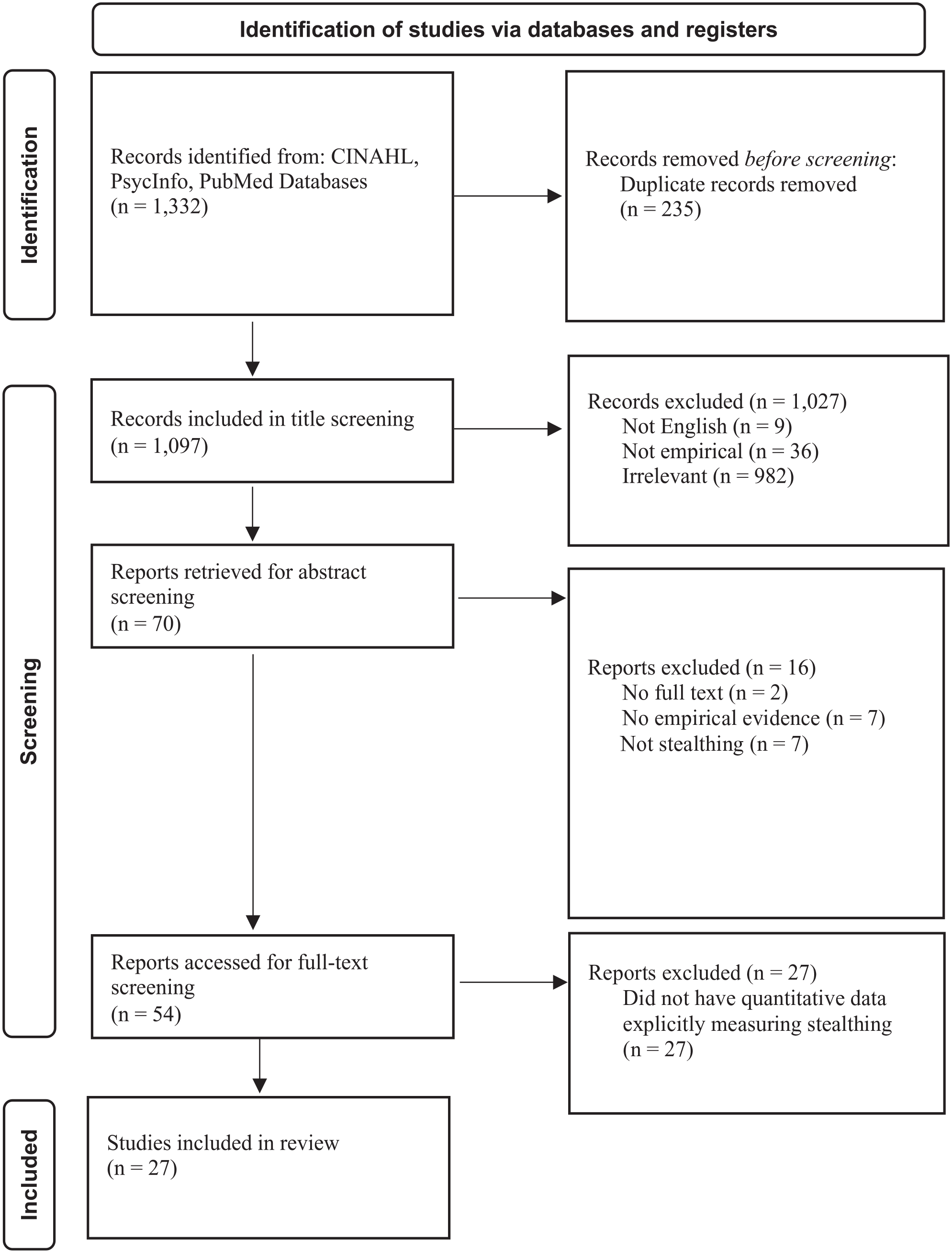
PRISMA flow diagram outlining identification, screening, and inclusion of articles in this scoping review.
Charting and organizing the data
To summarize and organize selected studies, the first author developed a template for data extraction (see Table 1): Study design, study population, recruitment criteria, and the operationalization of stealthing used in each study. Study design presents the methods of the investigation. Study population includes sample size and demographic information. Recruitment criteria provide information regarding study inclusion and exclusion criteria. Operationalization includes information on the measurement of NCCR, including interview or survey questions.
Sample Characteristics and Methodology of Included Studies.
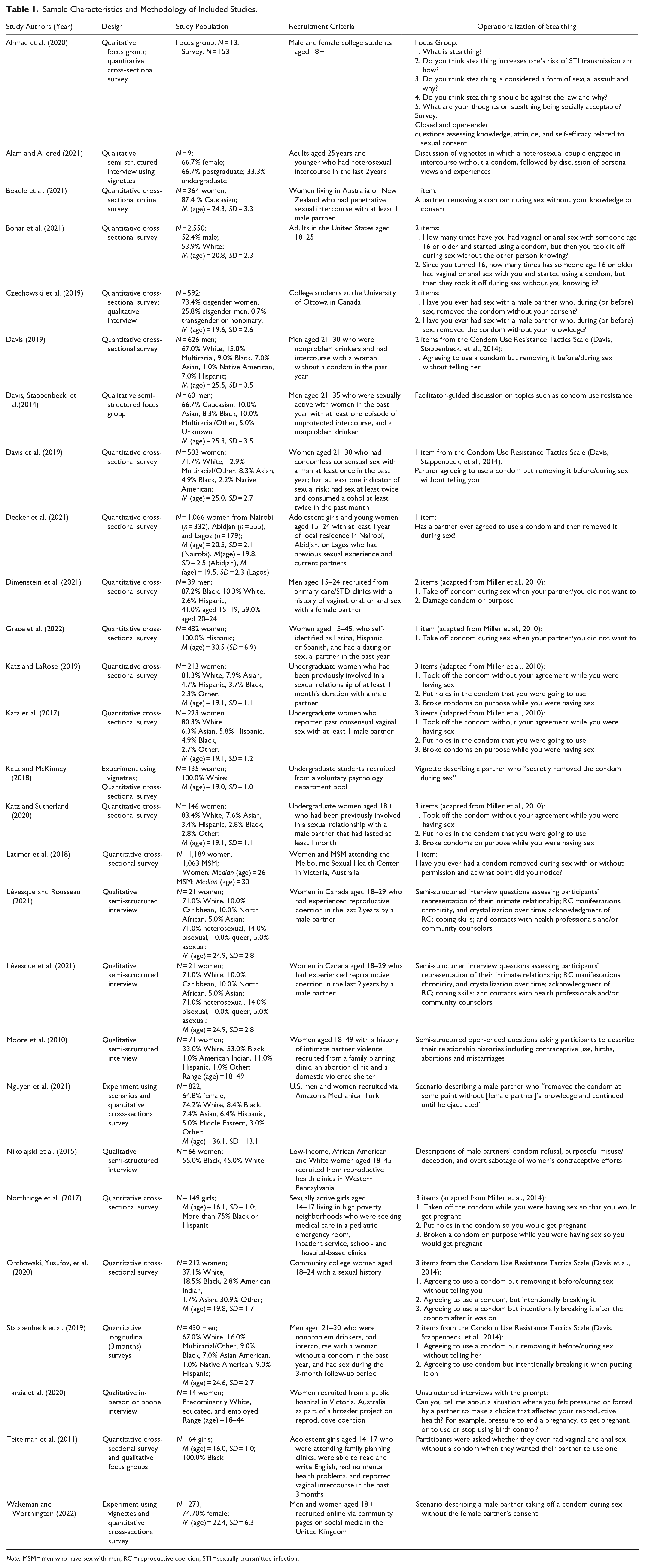
Note. MSM = men who have sex with men; RC = reproductive coercion; STI = sexually transmitted infection.
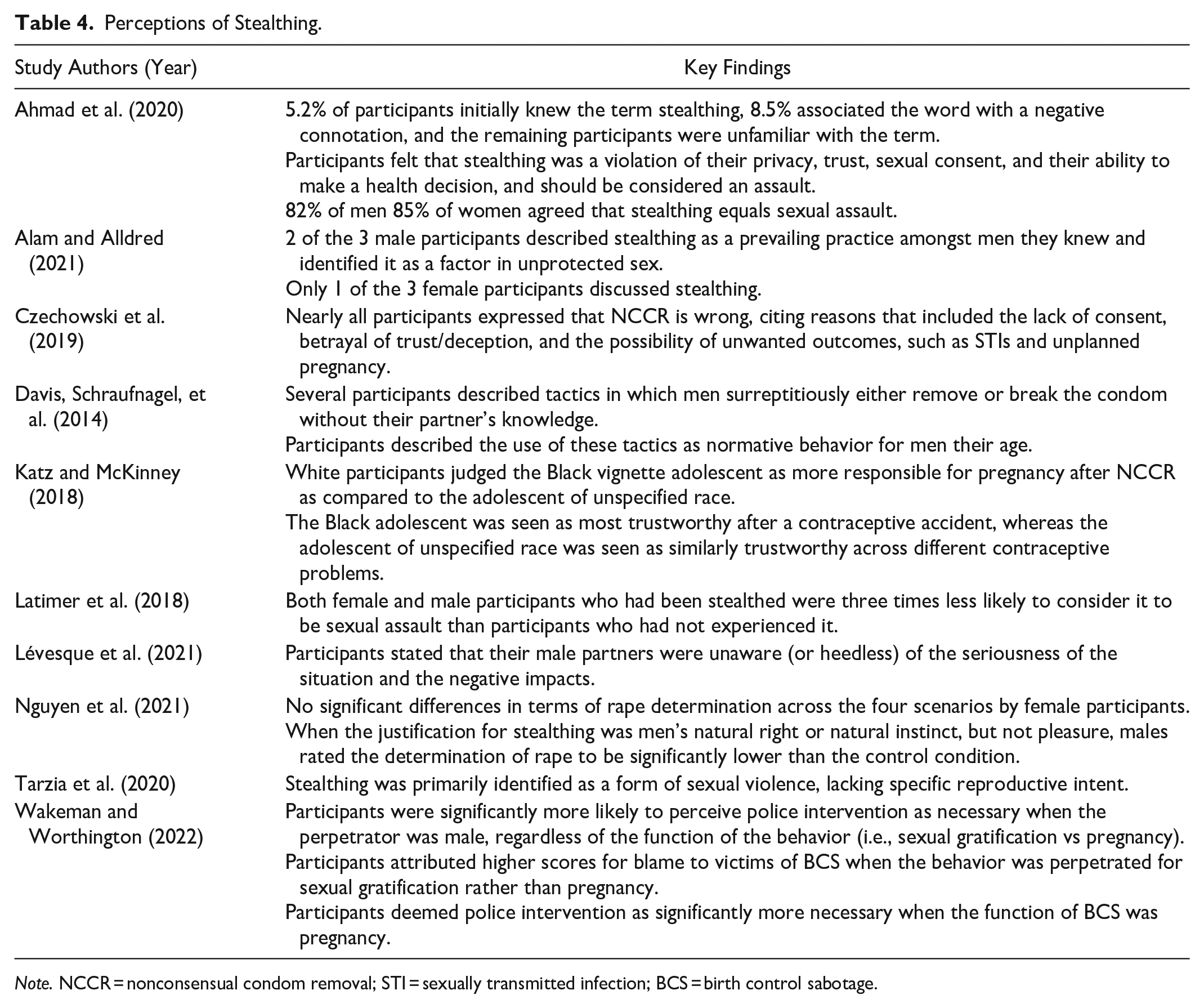
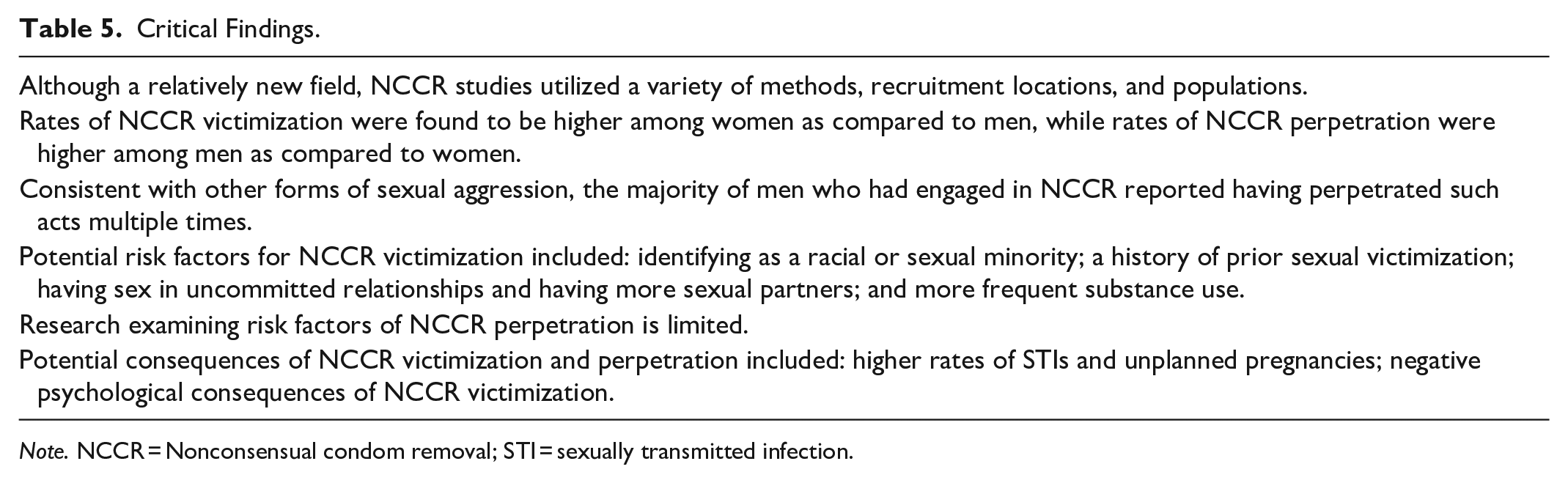
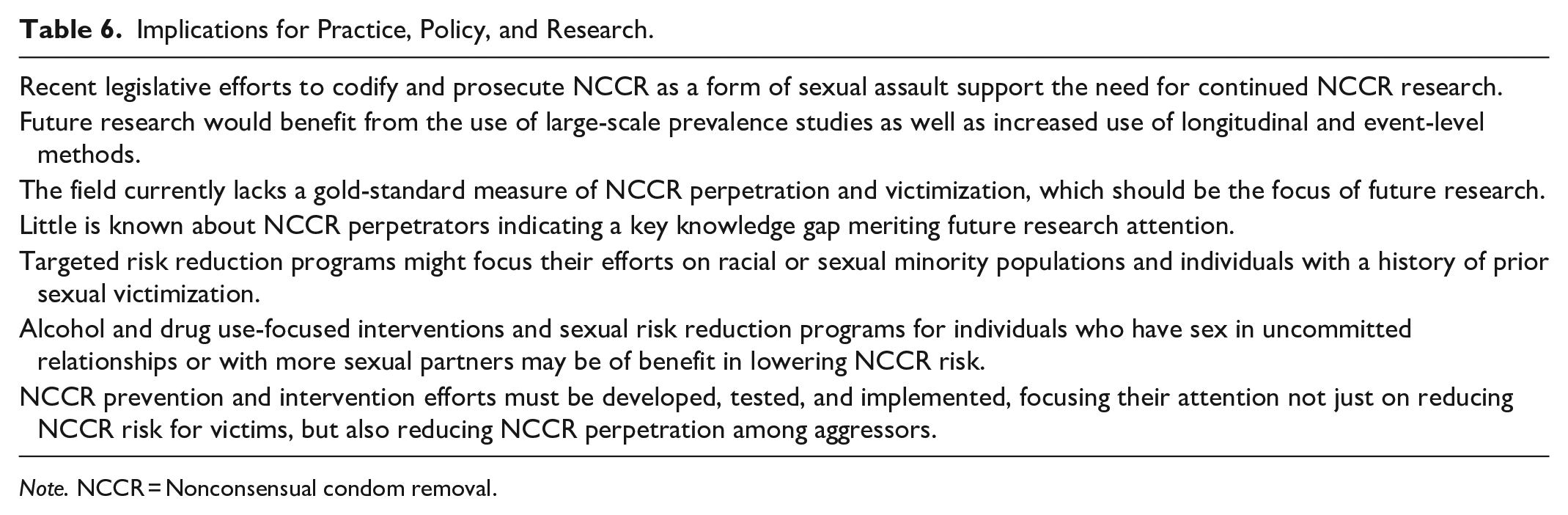
Then, relevant study information and results were extracted by four authors (JFH, WC, RS, and MK) to present prevalence, correlates, and perceptions of NCCR. The first author then reviewed the extracted information for accuracy; no disagreement was noted. Table 2 summarizes the prevalence of NCCR victimization (n = 17) and perpetration (n = 5). Table 3 presents correlates of NCCR victimization (n = 9) and perpetration (n = 1). Table 4 includes information on perceptions of NCCR (n = 10). Critical findings are summarized in Table 5; Implications of these findings are presented in Table 6.
Prevalence of Stealthing Victimization and Perpetration.
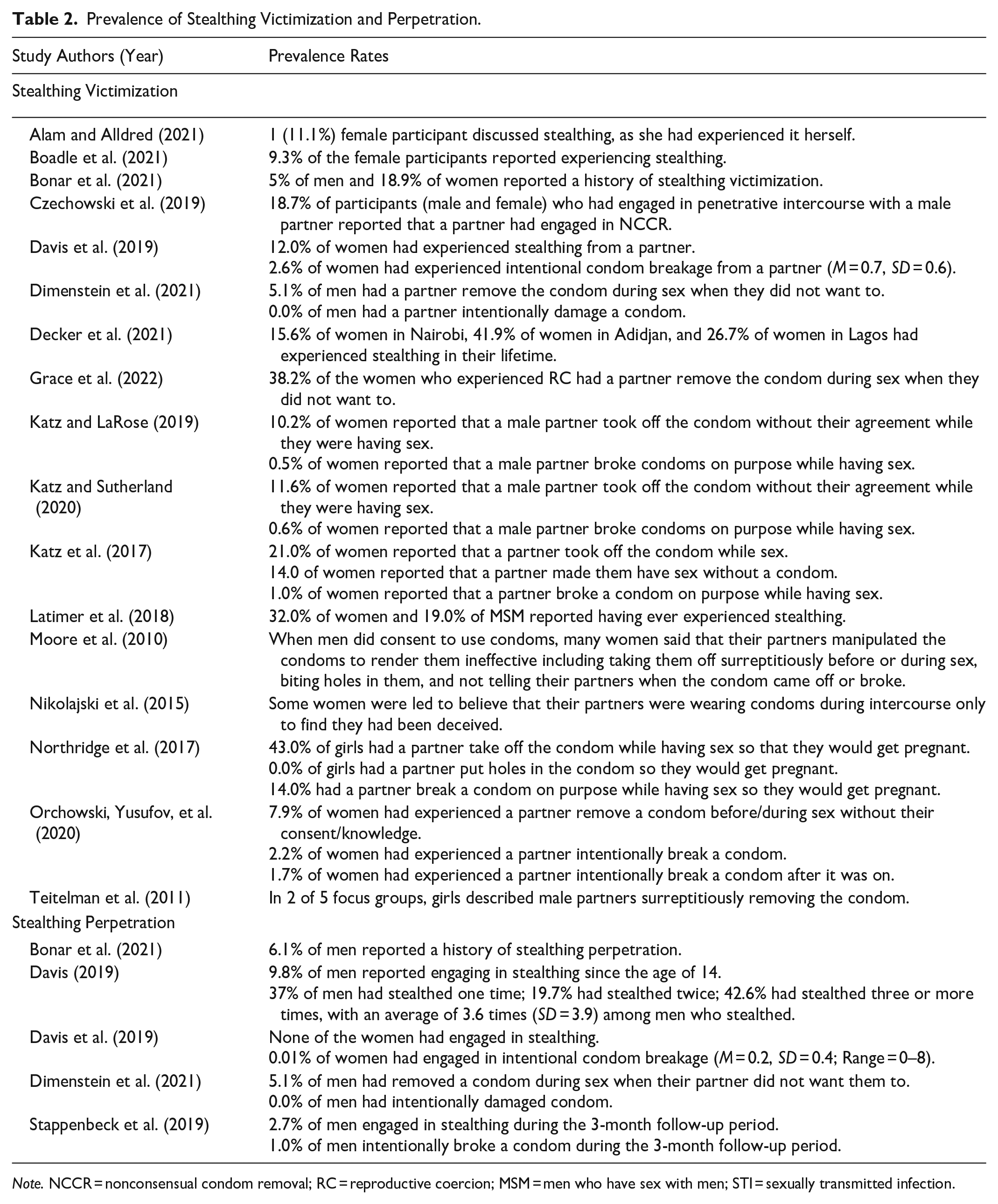
Note. NCCR = nonconsensual condom removal; RC = reproductive coercion; MSM = men who have sex with men; STI = sexually transmitted infection.
Correlates of Stealthing Victimization and Perpetration.
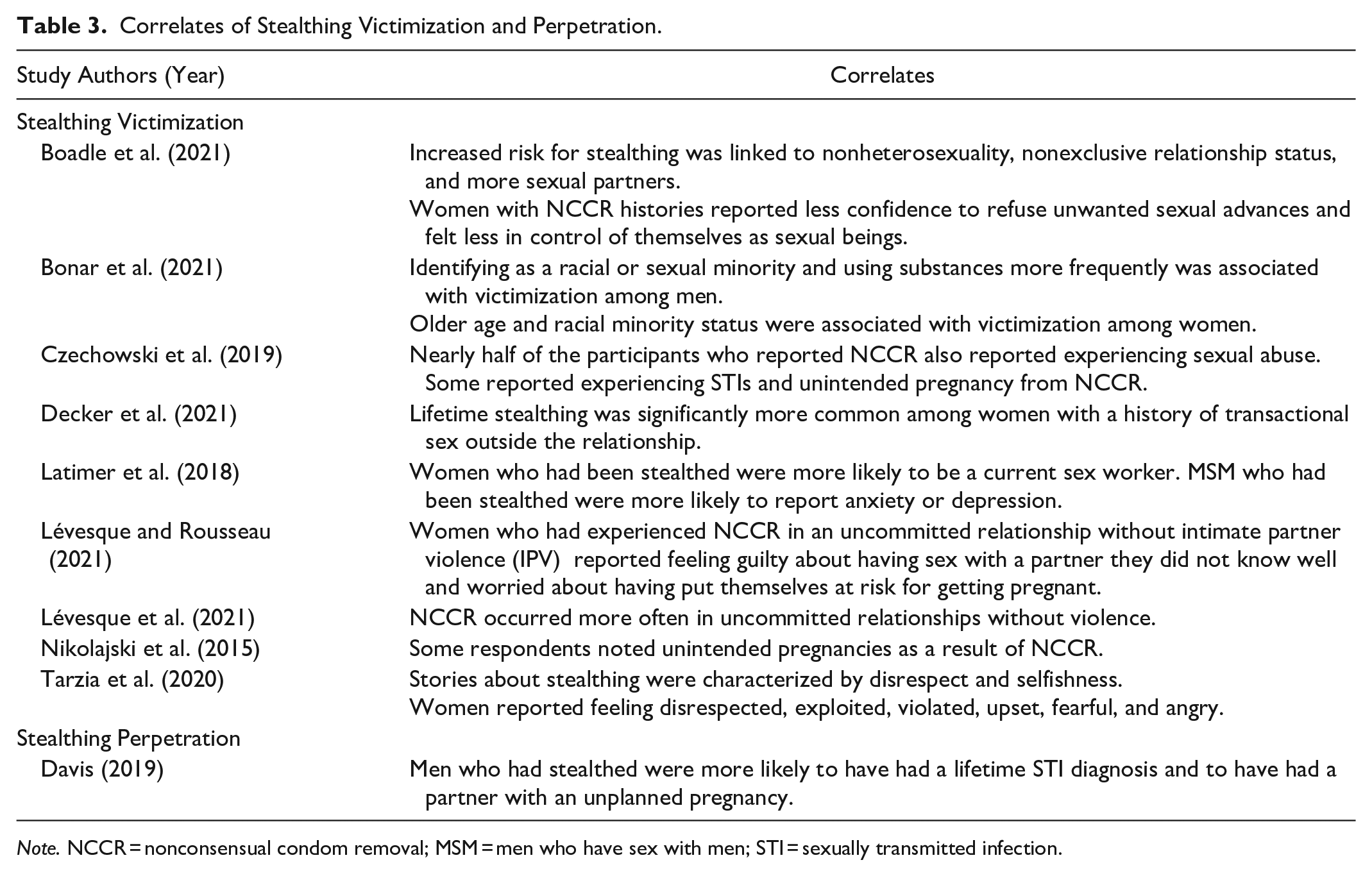
Note. NCCR = nonconsensual condom removal; MSM = men who have sex with men; STI = sexually transmitted infection.
Perceptions of Stealthing.
Note. NCCR = nonconsensual condom removal; STI = sexually transmitted infection; BCS = birth control sabotage.
Critical Findings.
Note. NCCR = Nonconsensual condom removal; STI = sexually transmitted infection.
Implications for Practice, Policy, and Research.
Note. NCCR = Nonconsensual condom removal.
Results
The 27 research articles which examined stealthing victimization and perpetration were published between 2010 and 2022 (see Table 1). Moreover, 23 of the 27 articles (85.2%) were published between 2017 and 2022. Most of the articles (n = 17, 63.0%) utilized quantitative research methods. The remaining articles used qualitative methods (n = 7, 25.9%) or both quantitative and qualitative methods (n = 3, 11.1%). Three of the quantitative articles described experimental data and one used a longitudinal (3-month follow-up) design; all others described the results of cross-sectional surveys. Of the 10 articles that utilized qualitative research methods, seven collected data via interviews and three collected data via focus groups. The majority of articles used exclusively female samples (n = 17, 63.0%), followed by mixed male/female samples (n = 6, 22.2%), and exclusively male samples (n = 4, 14.8%). Studies primarily focused on young adult samples. Six studies (22.2%) assessed NCCR with items from the Reproductive Coercion Scale (Miller et al., 2010) and four studies (14.8%) assessed NCCR with items from the Condom Use Resistance Tactics Scale (Davis et al., 2014). The remaining studies utilized author generated-items and questions.
Prevalence of NCCR Victimization and Perpetration
Of the 27 articles included in this review, 17 (63.0%) provided prevalence statistics on experiences of stealthing victimization as reported by women and men who have sex with men (MSM), and five (18.5%) provided prevalence statistics on stealthing perpetration reported by men (n = 4) and women (n = 1; see Table 2). Quantitative findings showed that rates of NCCR victimization ranged from 5.0% to 19% for men and from 7.9% to 43% for women, while intentional condom breakage or damage occurred at much lower rates. Rates of lifetime NCCR perpetration ranged from 5.1% to 9.8% among men, with one longitudinal study reporting that 2.7% of men engaged in NCCR over a 3-month period. One study (Davis, 2019) further delineated NCCR perpetration prevalence reporting that of those men who engaged in NCCR (9.8% of total sample), 37% had stealthed one time, 19.7% had stealthed twice, and 42.6% had stealthed three or more times, with an average of 3.6 times (SD = 3.9). In the one study examining a female sample (Davis et al., 2019), no women reported having perpetrated NCCR.
Correlates of NCCR Victimization and Perpetration
Correlates of NCCR victimization were reported in nine (33.3%) of the 27 articles and correlates of NCCR perpetration were reported in one article (3.7%; see Table 3). Findings showed that individuals who identified as racial or sexual minorities (Boadle et al., 2021; Bonar et al., 2021) or were in nonexclusive, noncommitted relationships (Boadle et al., 2021; Lévesque et al., 2021) or transactional relationships (Decker et al., 2021) were at higher risk for NCCR victimization. Moreover, psychological challenges such as decreased confidence (Boadle et al., 2021), guilt and worry (Lévesque & Rousseau, 2021), and fear and depression (Latimer et al., 2018; Tarzia et al., 2020)—as well as sexual abuse (Czechowski et al., 2019), STIs, and unintended pregnancies (Czechowski et al., 2019; Nikolajski et al., 2015)—were noted correlates of NCCR victimization. Similarly, Davis et al. (2019) reported that men who had perpetrated NCCR were more likely to have had a lifetime STI diagnosis and to have had a partner with an unplanned pregnancy.
Perceptions of NCCR
Finally, 10 (37.0%) of the 27 articles described perceptions of NCCR, with some presenting participants with scenarios that depicted NCCR and then eliciting participants’ responses about the scenario (see Table 4). Some studies showed that only a minority of participants were familiar with the concept of NCCR (e.g., 5.2% of participants in Ahmad et al.’s (2020) study knew the term “stealthing”) whereas other studies reported that participants perceived the practice of NCCR as “prevailing” and “normative” among individuals of their age (see Alam & Alldred, 2021; Davis, Schraufnagel et al., 2014). Articles described participants’ overall judgments of NCCR as negative, citing reasons such as violations of privacy, trust, and sexual consent (Ahmad et al., 2020). Participants in several studies perceived NCCR as a form of sexual violence, assault, or rape (Ahmad et al., 2020; Alam & Alldred, 2021; Tarzia et al., 2020). Lastly, studies demonstrated that the amount of blame participants attributed to individuals who experienced NCCR depended on factors such as recipients’ race. For example, participants were more likely to judge hypothetical Black adolescents as responsible for unintended pregnancies resulting from NCCR than adolescents of unspecified race (Katz & McKinney, 2018). Additionally, participants were more likely to judge NCCR perpetration as rape when the justification focused on pleasure as compared to men’s natural right/instinct (Nguyen et al., 2021). Finally, participants were more likely to blame victims when the justification for NCCR focused on sexual gratification rather than pregnancy (Wakeman & Worthington, 2022).
Discussion
As demonstrated in this review, the research regarding NCCR is quite nascent, with the vast majority of articles having been published since 2017. Despite the recency of the research in this area, studies took place in a variety of countries (e.g., the United States, the United Kingdom, Canada, Australia, New Zealand, Kenya, Ivory Coast, and Nigeria) with participants recruited from the general community, undergraduate and community colleges, sexual and reproductive health clinical settings, and social media. Notwithstanding the breadth of these studies, to date no large-scale projects have examined the prevalence of NCCR using nationally representative samples; as such, the prevalence rates noted in the reviewed articles should be interpreted in light of the recruitment methods and eligibility criteria of each study. That noted, some consistencies emerged across the studies, and these trends are commensurate with other findings regarding rates of sexual violence. For example, in line with other types of sexual victimization (Smith et al., 2017), women report higher NCCR victimization rates than do men, while men report higher NCCR perpetration rates than do women. Moreover, the majority of men who had engaged in NCCR reported having perpetrated such acts multiple times (Davis, 2019), which is consistent with other forms of sexual aggression (Foubert et al., 2020). Interestingly, NCCR was more frequently reported than other acts of condom nonuse (e.g., intentional condom breakage) for both victimization and perpetration, suggesting that NCCR should serve as the primary target for prevention and intervention efforts.
Several correlates of NCCR were identified across the reviewed studies. Sociodemographic risk factors for NCCR victimization included identifying as a racial or sexual minority, signifying that awareness and risk reduction programs might focus their efforts in these populations. As with other studies regarding sexual victimization (e.g., Walsh et al., 2020), a history of prior sexual victimization was associated with a greater likelihood of NCCR, highlighting another population that could benefit from targeted prevention and intervention programming. Some sex-related NCCR risk factors, such having sex in uncommitted relationships and having more sexual partners, could potentially be addressed through sexual risk reduction programs. Similar to other forms of sexual victimization (e.g., Abbey et al., 2014), more frequent substance use emerged as a correlate of NCCR victimization in one study, indicating that alcohol and drug use-focused interventions may be of benefit in lowering NCCR risk. Importantly, as with all sexual victimization, the onus of responsibility lies with the perpetrator, and prevention efforts must focus their attention not just on reducing risk for victims, but also reducing perpetration behavior among aggressors. To date, very little research has examined risk factors specific to NCCR perpetration; however, research regarding coercive condom use resistance more generally indicates that hostile masculinity factors, impersonal sex factors, and alcohol use (Davis & Logan-Greene, 2012; Wegner et al., 2017) may be key contributors to this behavior and merit additional empirical attention regarding NCCR in particular.
Research on the consequences of NCCR showed that both victimization and perpetration were associated with higher rates of STIs and unplanned pregnancies. Due to the cross-sectional nature of these findings, it cannot be determined if these are global or event-level associations. Although it is possible that STI transmission or unplanned pregnancies occurred as a result of the specific reported NCCR events, it is also possible that these associations are due to other factors. Similarly, studies demonstrating potential negative psychological consequences of NCCR victimization, such as anxiety, depression, and negative sexual self-perceptions, were also cross-sectional. As such, longitudinal, event-level studies are needed to determine the nature of these quantitative associations. That noted, qualitative data support the supposition that NCCR results in psychological harm. Women who experienced NCCR reported not only concerns about STI transmission, but also a host of negative emotions, including anger and fear (Tarzia et al., 2020). Overall, qualitative victim reports make it clear that NCCR is viewed as a violation of one’s sexual autonomy given its deceptive, nonconsensual nature, and as such, the vast majority of respondents view NCCR as “wrong” and believe there should be legal or other consequences for this type of behavior (Czechowski et al., 2019). In one study (Ahmad et al., 2020), over 80% of male and female participants described NCCR as a form of sexual assault.
Despite the overall negative perceptions of NCCR, some studies suggest that it is perceived as a relatively common behavior. Although the extent to which social norms specifically play a role in NCCR is unclear, research has demonstrated that condom use resistance more generally is predicted by perceived social norms (Davis et al., 2016). Several sexual aggression prevention programs, such as The Men’s Program (Foubert et al., 2010), The Men’s Workshop (Gidycz et al., 2011), and RealConsent (Salazar et al., 2014), incorporate social norms components into their programming by challenging men’s overestimates of other men’s acceptance of sexual aggression. To date, however, these programs have not parsed the specific effects of social norms content on sexual violence outcomes. Future research should investigate the role of perceived social norms in NCCR perpetration and, if implicated, should explore social norms-focused intervention approaches for reducing such behavior (Orchowski, Edwards, et al., 2020).
As with other types of sexual violence, perceptions of NCCR may play a role in attributing responsibility and/or blame for the event and its outcomes. For example, one study demonstrated that, compared to adolescents of an unspecified race, Black adolescents were viewed by White participants as more responsible for a pregnancy after NCCR (Katz & McKinney, 2018)—a finding that parallels other research regarding the racialized nature of rape myths and victim blame (Lewis et al., 2019). Interestingly, another study found that male participants were less likely to consider NCCR “rape” if the perpetrator justified his actions due to it being “his natural instinct [or right]” (Nguyen et al., 2021, p. 794). This finding is analogous to the rape myth that sexual aggression by men is an innate part of sexual relationships (Gerger et al., 2007) and suggests that dispelling rape myths may be a fruitful avenue for reducing perceptions of victim blame and increasing perceptions of perpetrator responsibility.
Limitations of the Review and Extant NCCR Research
We limited our review to peer-reviewed empirical articles archived in particular academic databases and written in English. As such, relevant research studies not catalogued in these specific databases or written in a language other than English are not represented in this review. Moreover, given our focus on peer-reviewed empirical evidence, we have not included potentially pertinent information from gray literature or other sources (i.e., dissertations, government reports), which bars our ability to synthesize that information in this review.
The current field of NCCR research also has several limitations that suggest areas for future investigation. One concern regarding the existing studies is the lack of generalizability across samples. Participants were primarily recruited from Western countries, with the bulk of those recruited being adolescents or young adults. Many, although not all, of the studies comprised primarily White participants. Future research could increase the geographic, age, and racial/ethnic diversity of included participants. Moreover, as this literature evolves, greater use of intersectional approaches (Crenshaw, 1990) that simultaneously consider multiple social positions and constructs (e.g., race, ethnicity, gender identity, sexual orientation, ability, socioeconomic status, and the like) would provide a significant advance to the consideration of diversity in this field. Finally, the bulk of the studies focused on NCCR victimization, resulting in samples primarily consisting of women who have sex with men (and to a much lesser extent, MSM). Although understanding NCCR victimization prevalence and correlates is imperative, there is also a critical need for more research focusing on NCCR perpetration across genders, sexual orientations, and other relevant identities.
Notably, measurement of NCCR varies across existing studies, making it difficult to make comparisons regarding NCCR prevalence and correlates. Critical measure differences include: (a) specification of an age after which the NCCR took place (e.g., age 14, age 16, or age not specified); (b) specification of partner sex (or not); (c) variations in wording pertaining to the victim’s perspective (e.g., without knowledge, without consent, without awareness, without agreement, without permission, etc.); and (d) stipulation of perpetrator motive (e.g., in order to get the victim pregnant, no motive stipulated). Such variation in measurement is common in the field of sexual violence, likely resulting in imprecise estimates of prevalence, incidence, and prevention efficacy (Anderson & Delahanty, 2020), which may be particularly relevant in understudied populations such as sexual and gender minorities (Anderson et al., 2021). In addition, 50% of the studies that received full-text review were excluded because they did not separate NCCR from other forms of reproductive coercion. Future research in this area should establish consistent, empirically-based, psychometrically sound measures of NCCR as well as analyze and report findings for NCCR prevalence and correlates separately from other forms of reproductive coercion or condom use resistance.
Finally, the bulk of the studies used cross-sectional survey approaches. Although cross-sectional research is appropriate given the nascency of this research field, such methods do not allow investigators to establish causal relationships regarding the predictors and outcomes of NCCR. Future research utilizing experimental methods could help researchers identify potential mechanisms underlying NCCR, while longitudinal approaches could provide information regarding the temporal ordering of NCCR variable associations.
Conclusions
Despite the nascency of NCCR research, a variety of methods, recruitment locations, and populations were represented in the extant literature. Future research would benefit from increased use of longitudinal and event-level methods and a greater focus on perpetrators. Moreover, this field currently lacks a gold-standard measure of NCCR perpetration and victimization; such assessment tools should be developed before the conduct of large-scale prevalence studies. Recent legislative efforts to codify and prosecute NCCR as a form of sexual assault underscore the gravity of NCCR and undergird the need for continued research that identifies NCCR risk factors, delineates NCCR outcomes, and develops, tests, and implements NCCR-focused prevention and intervention programs.
Footnotes
Declaration of Conflicting Interests
The author(s) declared no potential conflicts of interest with respect to the research, authorship, and/or publication of this article.
Funding
The author(s) disclosed receipt of the following financial support for the research, authorship, and/or publication of this article: Funding (2R37AA025212) was provided by the National Institute on Alcohol Abuse and Alcoholism to the first author.
