



Abstract
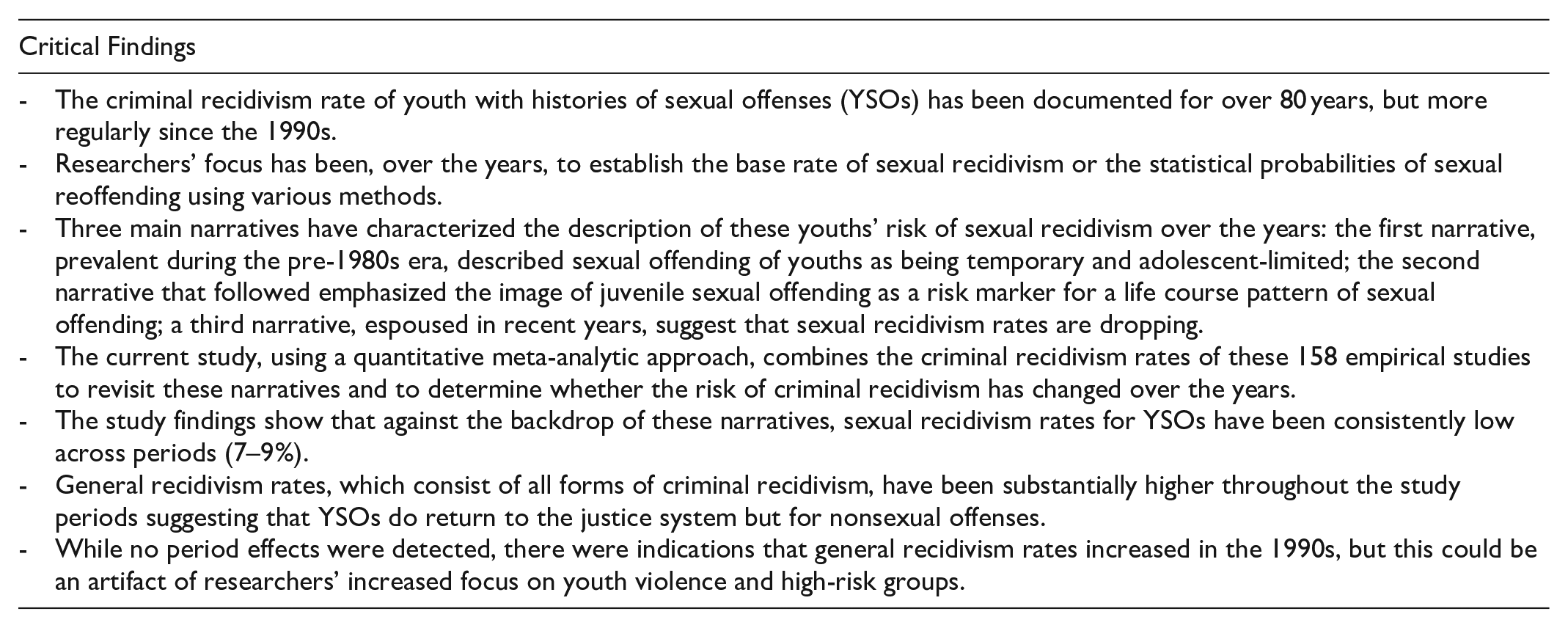
Recent research suggests that sexual recidivism rates have been declining, which contrasts with observations regarding general recidivism rates as well as perceptions of sexual reoffending risk. If sexual recidivism rates are in decline, it raises fundamental policy questions about the youth justice system’s tendency to operate on the assumption that juvenile sexual offending is a risk marker for sexual reoffending in adulthood. A systematic review and a quantitative meta-analysis were conducted to determine the general, violent, and sexual recidivism rates of adolescent perpetrators of sexual offenses with data stemming from studies published worldwide between 1940 and 2019. A total of 158 empirical studies including 30,396 adolescent perpetrators of sexual offenses were retrieved to examine estimates of general, violent, and sexual recidivism. The study findings highlight that the risk of general recidivism (weighted pooled mean = .44) is substantially higher than violent (weighted pooled mean = .18) and sexual recidivism (weighted pooled mean = .08). The study did not observe convincing evidence that sexual recidivism rates for adolescent perpetrators are declining, but rather that these rates have been consistently low over the years. There was strong evidence that multiple study characteristics moderate the recidivism rates observed. Given the low weighted pooled sexual recidivism rate reported in the study, the use of adult-like strategies to increase public safety and prevent sexual recidivism seems misguided, not only because sexual recidivism is unlikely, but also because such strategies are not developed to address general criminogenic needs that may explain general recidivism rates observed.
Research on the criminal recidivism rates of youth with histories of sexual offenses (YSOs) spans eight decades and yet fundamental theoretical, clinical, and empirical issues remain. Early on, examination of criminal recidivism was focused on describing the tendency of YSOs to sexually reoffend. Pioneering research established that the risk of sexual recidivism was relatively low (Atcheson et al., 1954; Doshay, 1943; Dunham, 1951). This reflected theoretical viewpoints of the time that sexual offending was developmental and transitional, partly explained by changeable risk factors associated with the period of adolescence (Awad et al., 1984; Maclay, 1960; Reiss, 1960). Sexual offending was seen as the expression of difficulties with emotional adjustment following entry into puberty for insecure youth with difficult family backgrounds (e.g., conflict within the family home, harsh and hostile parenting practices). Later, these ideas would be reframed, extended, and proposed under attachment theories of sexual offending (Marshall et al., 1993; Smallbone, 2006). However, in the 1970s and 1980s, such ideas were criticized based on observations made regarding adult offenders. Clinical researchers noticed that a substantial proportion of adult perpetrators of sexual offenses reported struggling with deviant sexual behaviors that had started during adolescence, if not earlier (e.g., Abel et al., 1993; Groth et al., 1981; Longo & Groth, 1983). Researchers of the time raised concerns that their predecessors did not take YSOs seriously enough and were wrong to have viewed their sexual offenses simply as a reflection of a young person’s maladaptive developmental pathway (Lewis et al., 1979). These behaviors came to be described as a serious and persistent social problem threatening the safety of potential victims, especially other children. In the process, the description of YSOs as maladjusted was gradually replaced by one depicting this group as sexual predators (e.g., Bennett & DiIulio, 1996; Groth, 1977). Parallels between adolescent and adult sexual offending were examined more closely (Fehrenbach et al., 1986), further reinforcing the perspective of some that YSOs were adult perpetrators of sexual offenses in the making (Groth et al., 1981). Such statements were not based on prospective longitudinal research but rather on inference using retrospective research designs of highly specific samples (e.g., clinical sample of adult offenders admitted to an assessment/treatment center for sexually dangerous offenders), which is known for overestimating offending continuity (i.e., Robins’ Paradox; see Lussier & Blokland, 2014).
The prevalence of research on YSOs increased in the 1990s (see Barbaree et al., 1993) with two contrasting images that had shaped previous research and policies: on the one hand, the view that espoused sexual offending as temporary and transitional (e.g., Doshay, 1943) and, on the other hand, the idea that sexual offending during adolescence is a stepping stone toward adult sexual offending (e.g., Groth et al., 1981). The latter view ultimately became the predominant one among policy circles, painting a picture of all YSOs at risk of a long-term persistent pattern of sexual offending extending well into adulthood. This shift occurred during the proliferation of specialized clinical assessment (Becker et al., 1989, 1993; Fanniff & Becker, 2006), the development of risk assessment tools (e.g., Prentky et al., 2000), and specialized treatment programs (e.g., Hagan, 1994). The momentum created by these earlier reports translated into a rapid increase of research on the criminal recidivism of YSOs. Some researchers viewed the proliferation of sexual recidivism research as an opportunity to settle debates about whether sexual offending in adolescence was a transitory period or whether YSOs were at a high risk to continue this behavior throughout the life course if intensive intervention strategies were not applied. Throughout the 1980s and 1990s, the accumulation of prospective longitudinal research on sexual recidivism allowed researchers to re-examine the abovementioned two competing perspectives on YSOs and their risk of sexual recidivism (Caldwell, 2002). McCann and Lussier (2008) conducted a quantitative meta-analysis on this topic and showed that sexual recidivism rates varied widely across studies (1.6–29.9%), with a median rate of 11%. A second meta-analysis by Caldwell (2010) established that the weighted mean sexual recidivism rate was 7%, which was substantially lower than the mean general recidivism rate of 43%. Both meta-analyses challenged the growing assumption that all YSOs were on a path of continued sexual offending over the life course. This did not mean that such a pattern did not exist. Lussier (2017) suggested that the presentation of a single base rate of sexual reoffending masked the presence of two meta-trajectories of YSOs: (a) the more common adolescence-limited sexual offending trajectory, echoing Doshay’s early observations and; (b) the rarer life-course persistent pattern that mirrored Groth’s earlier perspective. In other words, the base rates observed did not refute any particular perspective on youth sexual recidivism. Rather, the proportion of adolescence-limited versus persistent offenders sampled was responsible for between-study variability in base rates (see Lussier et al., 2012). It may be the case that the focus on recidivism distracted researchers from more fully understanding how broader patterns of offending develop among YSOs (see Lussier & Cale, 2013; Soothill, 2010).
More contemporary research on YSOs has challenged fundamental assumptions about their risk of recidivism and in the process raised key research and policy questions (e.g., Lussier, 2017; McCuish & Lussier, 2017). Studies that support the conclusion of specialization in sexual offending are small in number and biased by their reliance on highly specific clinical samples where individuals were referred for treatment because of their past repeated involvement in sexually deviant behaviors and fantasies (e.g., Abel et al., 1993). In other words, these studies found sex offense specialization because they actively recruited individuals known to specialize in sexual offenses and related behavior. The notion that persons specialize in sexual offenses and require specialized treatment was challenged by the observation that nonsexual recidivism rates were up to 5 times higher than sexual recidivism rates (Caldwell, 2010). It follows that research on the criminal recidivism of YSOs can no longer be limited to the study of sexual recidivism as YSOs share similar developmental backgrounds and risk factors as youth involved in nonsexual offenses (e.g., Lussier et al., 2015; McCuish et al., 2015; Seto & Lalumière, 2005; van Wijk et al., 2005). This should not be interpreted to mean that all YSOs are chronic, serious, and violent youth, but rather that their risk and need profiles are more similar than different (McCuish et al., 2015, 2016). In fact, research has shown that a subset of YSOs do not engage in nonsexual offending and do not present the same developmental risk profile as YSOs who engage in nonsexual offenses (e.g., Butler & Seto, 2002). Also, research suggested that the biggest difference between YSOs and youth with histories of nonsexual offending (YNSOs) is how the justice system responds to the offending behavior and the implications of this for the later criminal career (e.g., Letourneau et al., 2018; Reale et al., 2020). This includes, for example, whether the process of waiving youth involved in sexual offenses to adult court has exacerbated this group’s risk of continued offending. Furthermore, the observed sexual recidivism rates appear to be too low in several studies to support the view that all YSOs are life-course persistent sexual offenders in the making (Lussier et al., 2016).
Studies on sexual recidivism show that only a small proportion of youth return to the justice system for sexual offenses in adulthood (e.g., Fanniff et al., 2017; Lussier & Blokland, 2014; Parks & Bard, 2006; Zimring et al., 2007). That said, there is substantial variability when looking at the range of recidivism rates across individual studies. Thus, aggregating studies to present a singular base rate gives the impression of a much simpler picture of sexual recidivism rates than reality. It is paramount that researchers investigate what accounts for this variability to more comprehensively understand why some studies report much higher sexual recidivism rates than others. It is important to investigate whether the variation in recidivism rates results from instability in the risk of recidivism reported during different eras (e.g., Caldwell, 2010; McCann & Lussier, 2008). Instability in recidivism rates may also explain why there have been different etiological perspectives on the phenomenon of youth sexual offending. Are lower sexual recidivism rates observed during periods in which the dominant perspective on the etiology of youth sexual offending was one of temporary developmental maladjustment (e.g., Doshay, 1943) and are higher sexual recidivism rates observed during periods in which the dominant perspective was that YSOs were at a high-risk of continued sexual offending over the life course (e.g., Groth, 1977)? Said differently, do observations and conclusions stemming from half a century of sexual reoffending research from Doshay (1943) to Caldwell (2010) reflect period effects (e.g., see Fabio et al., 2006)? Instability in recidivism rates over time reflects concerns about period effects in which differences in recidivism rates (and the etiological perspectives stemming from them) could be accounted for by macro-level factors specific to a particular time-period (e.g., cultural and moral changes, proliferation of drugs, easier access to pornographic material, the internet, increased social awareness to various and additional forms of sexual harm).
Exploring the presence of a period effect, Caldwell (2016) conducted a quantitative examination of the general and sexual recidivism rates for YSOs. While he identified 106 datasets, he focused on studies conducted since 1980. Comparing the findings of studies conducted between 1980 and 1995 to those between 2000 and 2010, he estimated that sexual recidivism rates had dropped by 73% but that the pooled general recidivism rate had dropped by only 13%. This decline seemed counterintuitive to the adult-like policies created on the assumption that sexual recidivism rates were high and stable (see, Letourneau & Miner, 2005; Zimring, 2004). These findings also seemed counterintuitive to empirical observations stemming from individual studies showing the absence of a statistically significant impact of these policies on the sexual recidivism rates of these youth, at least in the United States (e.g., Letourneau et al., 2009). In light of earlier portrayals of YSOs as an adolescence-limited phenomenon (Doshay, 1943) and later suggestions of sexual offending in adolescence as a risk marker for adult sexual offending, it remains unclear whether this drop reported in the scientific literature is reflective of: (a) the evolution of risk over time (e.g., risk is decreasing as a result of social and policy changes); (b) changes in sampling procedures over time that resulted in the inclusion of distinctly different groups of YSOs (e.g., more representative, lower risk samples in more recent research); and/or (c) changes in research methodology and practices (e.g., the transition from retrospective to prospective longitudinal research).
While Caldwell’s study is pivotal, several research design decisions limited his ability to make conclusions about the questions of interest in the current study. First, Caldwell’s focus on studies published since 1980 resulted in excluding studies from earlier time periods that (a) were critical in framing narratives regarding theories of YSO (e.g., Atcheson et al., 1954; Doshay, 1943; Dunham, 1951), (b) are necessary for examining period effects that take longer than a decade’s difference to emerge, and (c) may have given the impression of a decline in sexual recidivism rates as opposed to regression to the mean. Regarding this latter point, crime rates in North America increased substantially between the 1970s and mid-1980s. This period saw researchers and policymakers become increasingly interested in serious, chronic, and violent juvenile offenders (e.g., Blumstein & Moitra, 1980; Blumstein et al., 1985; Elliott et al., 1986; Fagan et al., 1986; for a review, McCuish et al., 2021), mirroring concerns with YSOs during that period. This crime rise was followed by a well-documented crime drop, occurring at the end of the period in which Caldwell sampled from, that remains poorly understood (Blumstein & Wallman, 2000; Farrell et al., 2014). In other words, the decision to use 1980 as a starting point given that it corresponds to a period during which crime rates were high and rising in the United States but also in several other countries, might have contributed to the observation of a decline in sexual recidivism rates thereafter. Second, it is unclear whether independence of samples was considered before pooling recidivism rates and how Caldwell handled studies that were not independent (e.g., multiple data points or rates from the same sample across different publications). This could bias pooled recidivism rates in favor of an average that reflects nonindependent samples. Third, the actual pooling of the prevalence estimates did not factor in the standard error of the rate, raising concerns about the validity of those estimates (see Lussier et al., 2022). More specifically, the standard error of pooled prevalence estimates can become unstable when very low, yielding invalid estimates (e.g., negative values). Fourth, some clinical studies included in the Caldwell study were based on retrospective study designs which might have inflated recidivism rates. More to the point, some clinical studies oversampled YSOs who were not representative of all justice-involved youth having perpetrated sexual offenses. Methodological limitations aside, the Caldwell’s (2016) study highlights the importance of an understudied and undervalued phenomenon: the variability of criminal recidivism rates across time and place and the absence of methodological guidelines to uncover these trends (Lussier et al., 2022).
Aim of the Study
Establishing the recidivism rates of YSOs guides (a) the types of research questions to investigate and (b) the types of policies appropriate for responding to this group. The variability of risk of recidivism observed across studies (e.g., Barra et al., 2018; Caldwell, 2010; McCann & Lussier, 2008; Worling et al., 2012) may be due to different sampling procedures (e.g., clinical versus correctional settings), different time periods of sample recruitment (Caldwell, 2016), and/or different research designs (e.g., retrospective versus prospective designs). This makes it difficult to clarify the rate of recidivism among YSOs and may explain why the prediction of recidivism, especially sexual recidivism, is reported to be relatively poor (e.g., Viljoen et al., 2012). The seemingly unpredictable nature of recidivism in justice-involved adolescent perpetrators of sexual offenses could be reflective of factors that might have been downplayed, overlooked, or simply ignored. In other words, difficulties in accurately predicting recidivism in YSOs may stem from an emphasis on individual-level differences without considering the role that period effects and methodological characteristics play in the recidivism rate observed. To explain the variability of observed criminal recidivism rates, researchers have stressed the role and importance of individual differences, such as clinical (e.g., sexual deviance, antisociality), developmental (e.g., maturity), as well as treatment-related factors (e.g., participation, responsivity, duration) (e.g., McCuish et al., 2020; Miner, 2002; Worling & Långström, 2003). It could also be that the prevalence of important individual-level factors associated with recidivism has changed over time due to the evolving nature of youth justice system practices across periods. Therefore, the current study takes a different approach by examining whether recidivism rates have changed over the years while accounting for contextual (e.g., study period, country where the study was conducted, who conducted the study) and methodological factors pivotal to the measurement of those rates (e.g., type of sample, sample size, sampling procedures, data, study length, source of information).
To accomplish this, a systematic review and a quantitative meta-analysis were performed on all empirical studies of YSO recidivism conducted worldwide between 1940 and 2019. This method has been frequently used in criminology to address policy-relevant questions (e.g., Cottle et al., 2001; Gendreau et al., 1996; Lösel & Schmucker, 2005). For several reasons (for a discussion, Schmucker & Lösel, 2011), a quantitative meta-analysis of recidivism rates is considered a better alternative to individual studies (e.g., Lussier et al., 2016), to narrative reviews or the pooling of secondary data stemming from a very small subset of samples of offenders (e.g., Caldwell, 2002; Furby et al., 1989). A meta-analysis limits potential biases, such as researchers focusing on certain authors, samples, and studies or criticizing studies reaching conclusions that are not in line with their own perspective/biases. It allows researchers to statistically control for various critical methodological aspects of studies (e.g., study setting, length of the follow-up period) that can account for variations in recidivism base rates. A meta-analysis allows for the pooling of findings from various studies while accounting for the sample size of each, which is critical in this field of research given the number of small-scale studies based on highly specific samples. The use of a meta-analysis to summarize the likelihood of reoffending among YSOs aligns with prior research on justice-involved adolescents (e.g., Caldwell, 2010, 2016; McCann & Lussier, 2008), as well as research on women (e.g., Cortoni et al., 2010), and adults (e.g., Fazel & Wolf, 2015; Katsiyannis et al., 2018; Lussier et al., 2022). Using a meta-analysis for systematically combining general, violent, and sexual recidivism rates across studies, we revisit Caldwell’s (2016) conclusion that the sexual but not general recidivism of YSOs has been declining over time. Even if sexual recidivism is included in a measure of general recidivism, a wealth of prior empirical research indicates that nonsexual offending is substantially more prevalent than sexual offending, which thus allows for comparisons between general and sexual recidivism trends over time.
Methodology
Literature Review Search and Selection Process
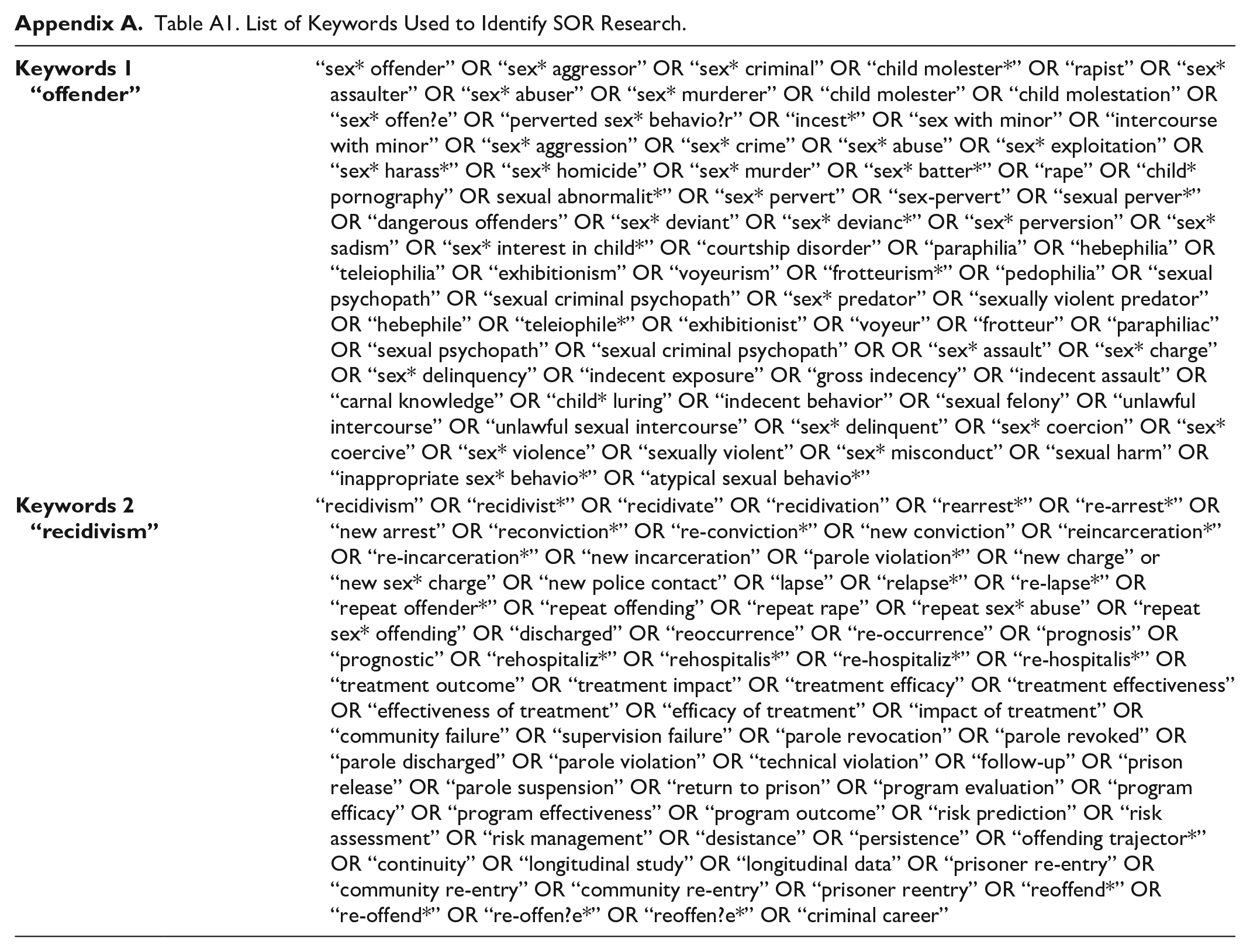
Data are part of a larger study examining criminal recidivism worldwide for individuals with histories of sexual offending. The search for relevant empirical studies initially involved two major terms: “sex offender” and “recidivism.” However, the scientific literature is complex, given its sociohistorical and multidisciplinary aspects, and a broader approach to each of these search terms was needed. Our analysis relied on (a) researchers’ experience and knowledge about the topic, (b) examination of the scientific literature across academic disciplines, (c) consideration of studies across several decades (e.g., 1940s, 1950s, 1960s), (d) examination of handbooks and encyclopedias dealing with relevant topics published during the study period (e.g., Criminology, Criminal Justice; Corrections; Correctional Treatment and Intervention; Juvenile Delinquency; Sexual Offending; Sexual Deviance; Sexual Disorders; Law and Mental Health; Abnormal Psychology), and (e) examination of existing literature reviews and meta-analyses. 1 A list of the search terms is presented in Table A1 in Appendix A. A preliminary examination of the scientific literature that reported recidivism rates revealed several challenges. First, while prior meta-analytic research on sexual offending prioritized searching within specific databases (e.g., PsycINFO), publications appear in scientific journals across multiple disciplines, mainly (a) law and legal studies; (b) medicine and psychiatry; (c) psychology and cognitive sciences; and (d) criminology, criminal justice, and sociology. We reviewed previous meta-analyses of criminal and sexual recidivism (e.g., Caldwell, 2010; McCann & Lussier, 2008) and identified over 80 databases that could be useful. To avoid using overlapping databases, a list of all academic journals cited in quantitative meta-analysis closely related to the topic of the current study was created (e.g., predictors of sexual recidivism; impact of treatment). Gold Rush software, a library content comparison tool, was used to determine an optimal list of databases 2 with minimal overlap. The literature search was expanded to include unpublished (“gray”) literature not captured by typical retrieval systems (e.g., Conn et al., 2003) and includes government reports, dissertations, conference abstracts and proceedings, and technical or brief reports to funding agencies. 3
The original search yielded more than 20,000 documents (k refers to the number of documents), about 20% of which were part of the gray literature. A four-step procedure was used to identify which of these documents were relevant to this study. In the identification phase, relevant references from all sources and databases were inspected and then imported to an electronic document. In the screening phase, the scientific literature was examined based on general descriptive information about the study. Given the large number of documents to be screened, the focus was on an examination of (a) study title; (b) abstract, executive summary, or study highlights; and (c) study keywords. Research assistants determined whether the study was relevant or potentially relevant and a training session was conducted during which research assistants and the lead author coded the same set of studies until acceptable inter-rater agreement was reached (κ coefficient > .80). Any document that was not a duplicate and was either directly or potentially relevant to the current study was extracted (k = 3,026). The third stage, determining the eligibility of these documents, consisted of searching, accessing, reading, and analyzing the 3,026 documents. Studies were included if they met several criteria. First, the full report had to be available. Given the scope of this study, locating older studies and unpublished material was challenging. To avoid excluding research that was difficult to obtain, research assistants contacted lead authors and co-authors, searched websites such as Google Scholar and ResearchGate, used a reverse search approach to allow triangulation of the study content using other sources, and contacted researchers who might have a copy of the study. Second, research assistants determined whether the study was empirical (e.g., not a narrative review, critical review, meta-analysis, commentary, etc.). Third, research assistants determined whether the study included a measure of recidivism. Fourth, based on a careful examination of the methodological characteristics of the study, research assistants determined whether the study design was longitudinal. Retrospective measurements of recidivism based on a person’s past arrests/convictions were excluded. Fifth, research assistants determined whether the study was based on a sample of adolescents, defined as persons between the ages of 12 and 18. Following these steps resulted in the identification of 158 studies of YSOs with recidivism rates.
Sample
A critical assumption of meta-analyses is the independence of observations, which is violated if multiple estimates of recidivism stem from the same or overlapping samples (e.g., Cheung, 2019). It is not uncommon for a single study to report multiple recidivism rates (e.g., for multiple offender groups like those who were treated or not treated) or for multiple studies to stem from the same (or very similar) sample, including multiple publications stemming from the same study/sample. The presence of nonindependent estimates of recidivism raises critical issues, such as whether the scientific literature is biased toward findings stemming from a few samples. A computerized database was created to organize and classify study samples by country, province/state/region, setting, and institution/treatment program. Each sample was given an identification number. Missing data and vague, uncertain, and imprecisely reported methodological details made it difficult to draw firm conclusions about the independence of some samples. Due to questions about the independence of samples, recidivism base rates were estimated in two ways. First, recidivism rates for nonindependent samples were calculated to reflect the total number of data points (i.e., recidivism rates) reported in the scientific literature. These data points were not necessarily based on independent observations but made it possible to investigate whether the over-representation of certain studies in the literature might have created biases in the perception of criminal recidivism rates. Second, to account for the dependence of samples, recidivism data were pooled within publications (i.e., one data point per publication; see analytical strategy for the pooling method) 4 and all data points stemming from the same institution/program 5 (i.e., treatment program, penitentiary, etc.) were regrouped. It was not always possible to establish whether different publications were based on overlapping samples simply by reading each study’s methodology, so additional information was collected from other sources (e.g., internet, related publications, authors), which sometimes included making inferences about authors’ affiliations or comparing descriptive sample statistics. At this stage, recidivism rates were not pooled but were selected based on several criteria 6 .
A total of 158 studies including 30,396 adolescent perpetrators met these criteria and descriptive information are presented in Table 1. Most studies were published after 1990, peaking during the 2010 to 2019 period. Since Caldwell’s (2016) study, about 20 additional empirical studies about the recidivism rates of YSOs have been published. However, this does not mean that this new research recruited participants during the 1990s or later. In fact, despite the over-representation of recidivism research post-1990, about 28% of studies initiated their sampling of YSO prior to the 1990s. None of the studies examined, including those published between 2010 and 2019, were based on a sample that was recruited during the 2010 to 2019 period. In effect, contemporary research does not necessarily reflect contemporary samples, something that should cause concern for research-driven policies given the potential for period effects. About 80% of all publications were peer-reviewed articles while the lead author was a university-affiliated researcher for less than two-thirds of all relevant studies identified, in fact, the diversity of lead authors’ affiliation was noticeable. Altogether, there was an overrepresentation of studies that (a) included less than 300 YSOs (83%), (b) sampled from the youth justice system (74.1%), and (c) were based on American samples (64.6%). On average, YSOs sampled for recidivism studies were 15.2 years old, with 24.8% of those studies reporting a mean age of less than 15 years old.
Descriptive Information About Studies on YSOs.
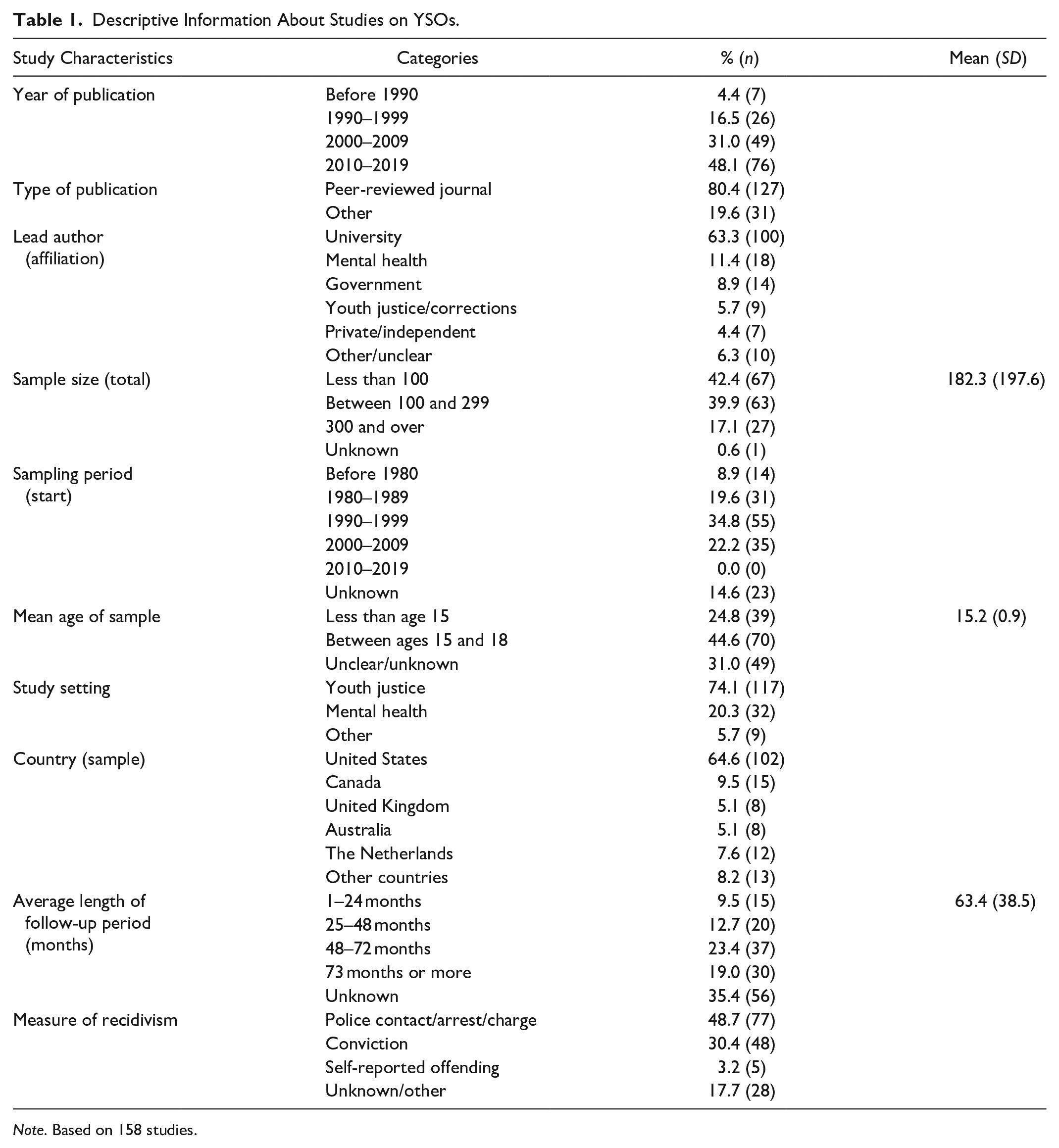
Note. Based on 158 studies.
Measures
Study period
Publication year traditionally has been used to identify the period that a study is from. Because recidivism research is based on longitudinal data, publication year may not reflect period effects since follow-up time can extend for years or even decades. Therefore, period effects were analyzed using the year marking the start of the sampling period (range = 1928–2008). The study was conducted to detect period effects across decades that witnessed significant policy and legal changes (see, Lussier et al., 2022). Trends in recidivism rates were examined across the following periods: (a) pre-1980s, (b) 1980 to 1989, (c) 1990 to 1999, (d) 2000 to 2009, and (e) 2010 to 2019. There were too few independent early studies (i.e., 1940–1979) to divide them into their respective decades. Instances in which the sampling period was not clearly reported (n = 24; 15.2%) were coded as unknown rather than treated as missing data.
Study moderators
Data were coded by research assistants using a coding instrument created by the senior research team based on (a) their knowledge of the scientific literature, (b) experience conducting such research, and (c) examination of criminal recidivism research from various decades, starting with the 1940s. The initial version of the instrument was pretested on 40 randomly selected studies. Three independent coders pretested the instrument and adjustments to the instrument were made to solve coding issues (e.g., lack of clarity, statements too vague/precise, missing scoring categories, scoring sheet too precise given the information available). 7 Each of these studies was coded by a pair of raters. Kappa coefficients (κ) and Intraclass Correlation Coefficients (ICCs) are reported for the following categories of study moderators (Table 1 for descriptive statistics): (a) publication details (b) sample details, and (c) recidivism details. Publication details included the type of publication (e.g., peer-reviewed journal; κ = .94), year of publication (κ = .96) as well as the main affiliation of the lead author (κ = .80). Sample characteristics included the study setting (κ = .67), sample size (κ = .85), year the sampling started (κ = .99), the mean age of the sample (ICC = .99), and the country where the study is based (κ = .93). Recidivism details included the average length of the follow-up period (κ = .71) and measure of recidivism (κ = .81). A measure marking the start of the follow-up period would have been useful, but that information was missing for 79.2% of all publications. The year sampling started and the year the follow-up period started were the same for 71.4% of all studies that included both pieces of information, suggesting that the sampling took place when adolescents were in the community.
Criminal recidivism
Three types of criminal recidivism were considered: (a) general recidivism (any criminal offenses, including violent and sexual offenses), (b) violent recidivism (any violent reoffense that may include sexual offenses), and (c) sexual recidivism (any sexual reoffense). Thus, when comparing base rates between the three measures it is important to consider that sexual recidivism base rates are subsumed within both general and violent recidivism base rates. The operationalization of recidivism in these three categories was selected to reflect how researchers, for the most part, measured and examined recidivism rates over the years. Note that violent recidivism was not always clearly operationalized by the authors of the studies included in the meta-analysis. Most researchers did not mention whether violent recidivism included sexual offenses, some sexual offenses (e.g., sexual assault), sexually motivated violent offenses (e.g., homicide) or whether all sexual offenses were excluded from the operationalization of violent recidivism (for a discussion, see Quinsey et al., 1995). The average follow-up length used to estimate recidivism rates was 64.7 months. Given that the mean age of YSOs was about 15 years old, on average, recidivism rates covered the remainder of adolescence and early adulthood. 8 Researchers overwhelmingly relied on official sources to estimate criminal recidivism rates, typically by examining whether youth were arrested or charged (48.7%). If a study reported multiple rates using various definitions or sources of information, the highest rate reported was used. Inter-rater agreement on the coding of general (ICC = .86; 95% CI [.78, .91]), violent (ICC = .92; 95% CI [.85, .95]), and sexual recidivism (ICC = .86; 95% CI [.81, .90]) was relatively good.
Analytic Strategy
Data analyses were conducted using IBM SPSS Statistic 27 and Stata 16.1 (StataCorp., 2019). The metaprop and metapreg commands were used to pool prevalence estimates of recidivism rates (e.g., Nyaga et al., 2014).
Weighted pooled base rate estimates
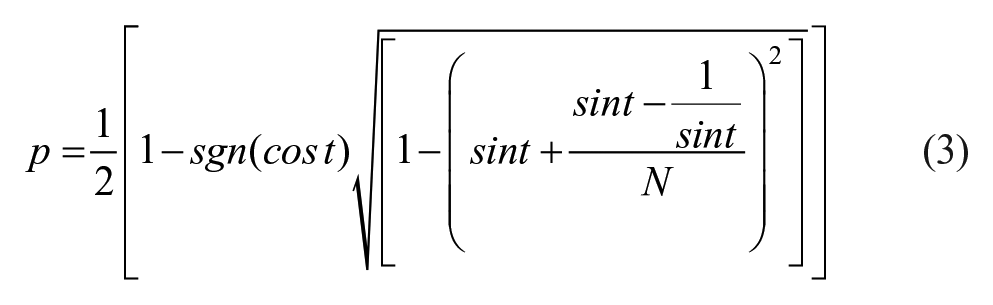
Meta-analysis methods can be used to get a more precise estimate of the prevalence of a phenomenon (e.g., Stoltenborgh et al., 2011). While pooled prevalence estimates using a meta-analytical framework have become increasingly popular, various strategies have been proposed (e.g., invariance method, logit transformation) and there is no consensus about the best way to perform such analyses (Migliavaca et al., 2020). These methods can create measurement issues. For example, when prevalence estimates are very low (or very high) (e.g., see Newcombe, 1998), produced confidence intervals can result in impossible values that fall outside the 0–1 range while squeezing the variance toward zero (Barendregt et al., 2013). For this study, the Freeman-Tukey double-arcsine transformation was used, which address these limitations while stabilizing variance in the pooled prevalence estimates. The double arcsine transformation (see Nyaga et al., 2014) was obtained using the following:

where n refers to the number of cases in the category (recidivist) and N refers to the total sample size. The variance of t can be obtained with the following:

The transformed values are then converted to the original unit of proportions using the following formula:
Heterogeneity assessment
Analyses of moderator effects were conducted using random effects models that allow for the possibility that random differences between studies (e.g., variation in settings, procedures, measurements, etc.) are not limited to sampling error. This assumption is reasonable given the variability embedded in the measurement of criminal recidivism rates across jurisdictions (e.g., reporting crimes to the police, police investigation, providing evidence, the courts, plea bargaining, etc.). Inconsistency of pooled estimates was examined using the Q statistic (Hedges & Olkin, 2014), which tested whether studies observed the same recidivism rate.
Results
Table 2 presents the weighted pooled estimates of general, violent, and sexual recidivism. Looking at all the weighted pooled estimation of all reported recidivism rates for nonindependent samples, sexual recidivism was the most commonly examined recidivism outcome (k = 156; n = 25,765). On average, the sexual recidivism rate reported is .08 or 8% (95% CI [.07, .09]). General recidivism is the second most commonly examined recidivism outcome (k = 136; n = 21,032) with a weighted pooled recidivism rate of .44 or 44% (95% CI [.41, .48]). Finally, violent recidivism was reported for only 68 samples and the weighted pooled recidivism rate is .18 or 18% (95% CI [.15, .21]). Per the Q statistic, there was significant heterogeneity across studies for each of the three recidivism outcomes. This heterogeneity, despite being significant, may nevertheless have been underestimated due to the potential nonindependence of samples included in the 158 studies. After removing all possible duplicates and overlapping samples, pooled rates for the three criminal recidivism indicators remained nearly identical (general = .43; violent = .18; sexual = .08). Not surprisingly, after removing nonindependent samples, there was significant heterogeneity (p < .001), which reiterates the importance of examining the factors responsible for variations in recidivism rates across studies.
Weighted Pooled Estimates of Recidivism for Nonindependent and Independent Samples.
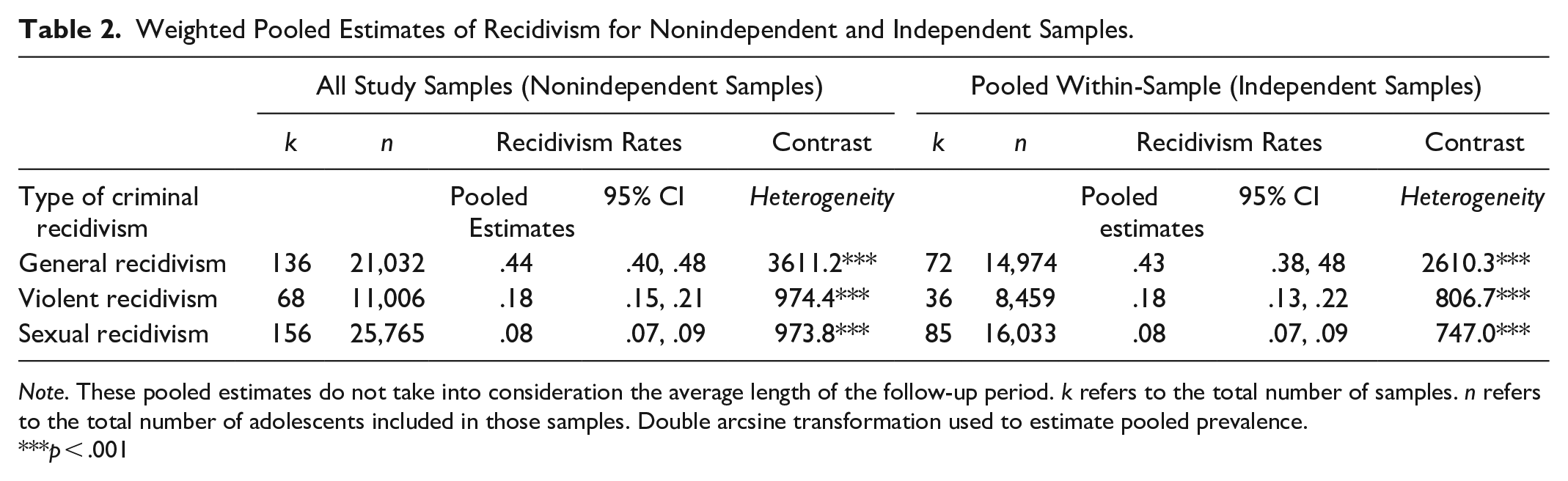
Note. These pooled estimates do not take into consideration the average length of the follow-up period. k refers to the total number of samples. n refers to the total number of adolescents included in those samples. Double arcsine transformation used to estimate pooled prevalence.
p < .001
Study Moderators
In Table 3, criminal recidivism rates are presented for four periods, according to the year the sampling was initiated. When the study period could not be established, it was simply coded as unknown rather than excluding these studies as missing data. Looking at nonindependent samples, between the pre-1980s studies and studies conducted during the 1990s, the reported general recidivism rate increased by 56% and the violent recidivism rate increased by 45%. These trends should be tempered, however, by the fact that the 95% CIs across periods tend to be wide and to overlap, especially for violent recidivism. For general recidivism there was significant heterogeneity observed within study periods and across study periods (p < .05). Significant heterogeneity of violent recidivism rates was observed within periods but not across periods. Sexual recidivism rates show a somewhat distinctive pattern, with weighted pooled recidivism rates peaking during the 1980s (.10) and being at their lowest during the 2000s (.05). There was significant heterogeneity observed in sexual recidivism rates within study periods (p < .001) and across periods (p < .001). The heterogeneity observed across periods appears to be driven by recent studies (2000s) differing from older studies, as suggested by the lower sexual recidivism rates in recent studies and the confidence intervals barely overlapping with those of the other study periods. Similar trends in sexual recidivism rates across time period were observed after removing overlapping samples, but the heterogeneity effect across periods disappeared.
Weighted Pooled Recidivism Rates Across Periods.
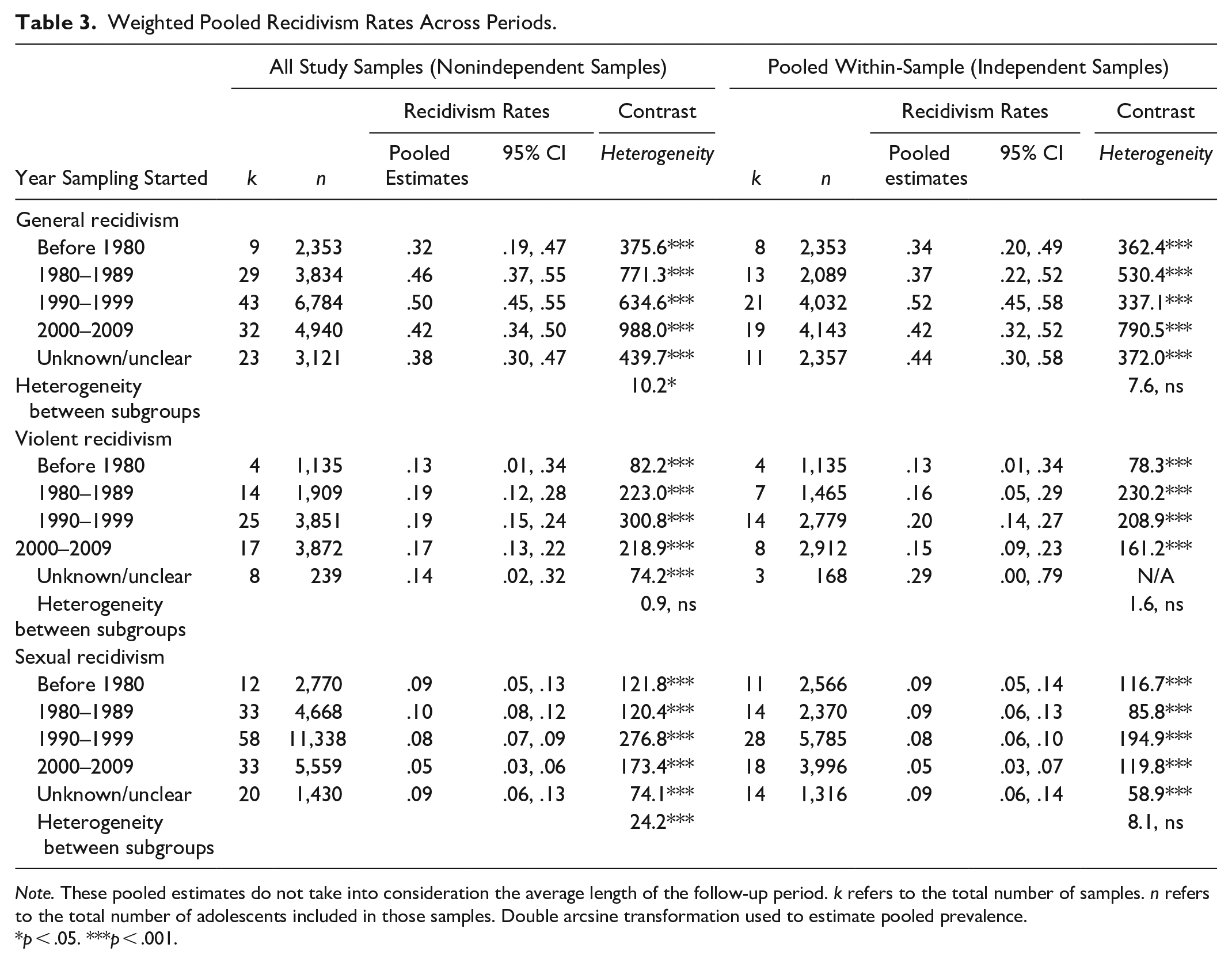
Note. These pooled estimates do not take into consideration the average length of the follow-up period. k refers to the total number of samples. n refers to the total number of adolescents included in those samples. Double arcsine transformation used to estimate pooled prevalence.
p < .05. ***p < .001.
Criminal recidivism rates across study periods were re-examined, this time focusing only on American-based samples (not shown, but available from the first author). A focus on American studies was necessary given that: (a) the bulk of studies were conducted in the United States and findings could be confounded by studies conducted elsewhere given differences in criminal/youth justice system, the handling of such cases, as well as treatment/interventions programs (e.g., Bijleveld, 2007; Blackley & Bartels, 2018; Bouhours & Daly, 2007); (b) we wanted to re-examine a prior report of a drop in sexual recidivism rates for American studies (Caldwell, 2016). Significant heterogeneity was found across periods for general recidivism rates (χ2 = 14.52, p < .01). The weighted pooled rates for general recidivism for American studies were as follows: (a) pre-1980s = .24 (95% CI [.15, .34]), (b) 1980 to 1989 = .27 (95% CI [.13, .43]), (c) 1990 to 1999 = .50 (95% CI [.40, .60]), and (d) 2000 to 2009 = .38 (95% CI [.32, .44]). Clearly, general recidivism rates increased during the pre-1980s and through the 1980s, peaking during the 1990s. It was followed by a drop during the 2000s, the general recidivism rates observed during that period was higher than what had been reported for the pre-1980s. For violent recidivism rates, the Q statistic could not be computed due to the lack of studies outside the period of the 1990s that reported such data. The heterogeneity of sexual recidivism rates was not significantly different across eras (p = .11), suggesting the absence of a period effect within the United States. Overall, variation in sexual recidivism rates is more likely attributable to variations across studies within periods than across periods. A period effect was detected for general recidivism that appeared to reflect an increase of recidivism rates that peaked during the 1990s.
Study Characteristic Moderators
In Table 4, the findings of the analysis of study moderators of weighted pooled recidivism rates are presented for the three recidivism outcomes. The heterogeneity of weighted pooled recidivism rates was examined for each moderator. For the analysis of the study moderators, only nonindependent samples were examined to avoid potential biases. Of 10 moderators, four were associated with heterogeneous general recidivism rates, six were associated with heterogeneous violent recidivism rates, and three were associated with heterogeneous sexual recidivism rates. In other words, weighted pooled violent recidivism rates were most sensitive to the study moderators included in the current study than other forms of recidivism rates.
Study Moderators of Recidivism Rates Observed Across Independent Samples.
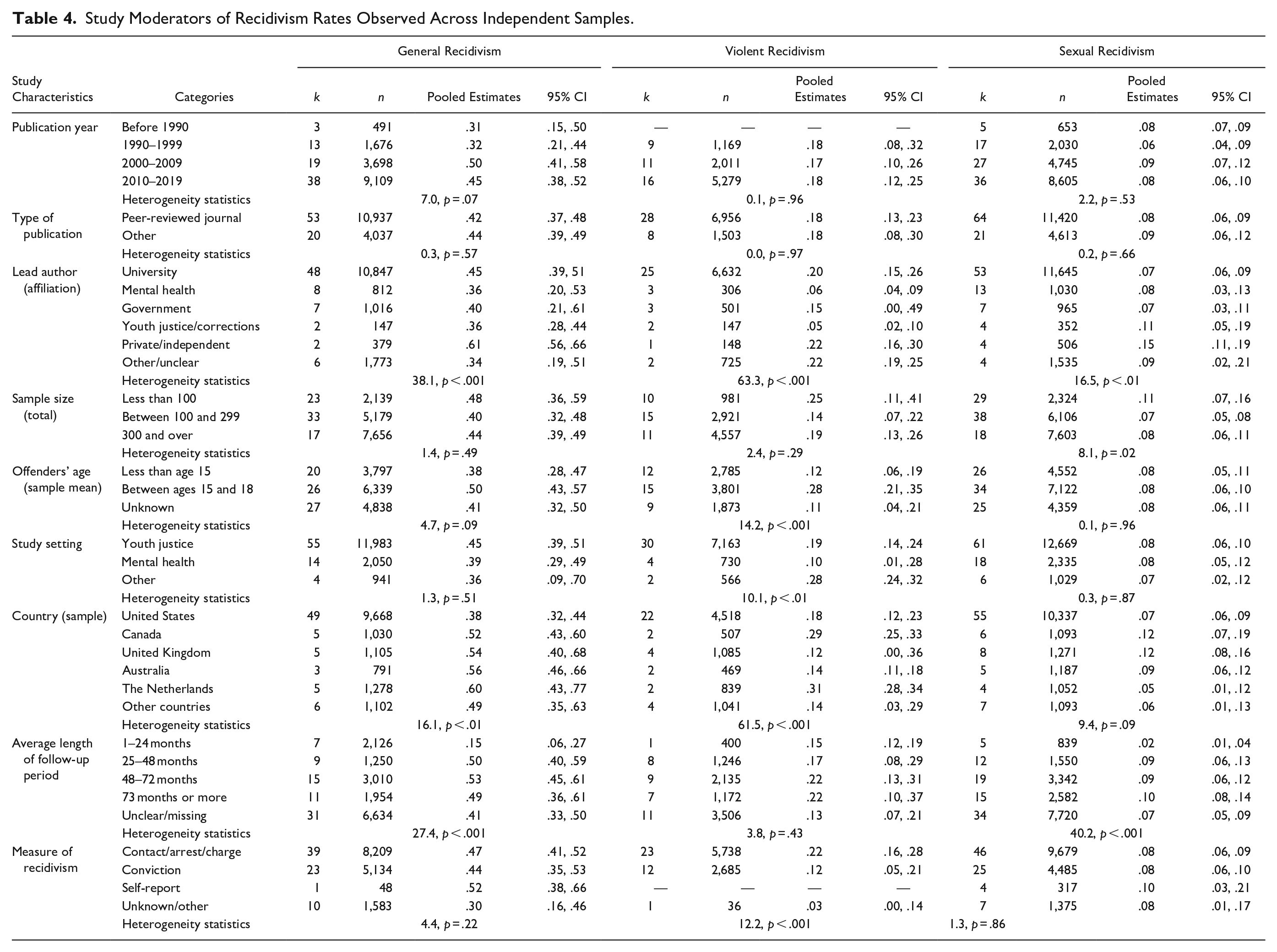
For weighted pooled general recidivism, researchers affiliated with the youth justice system or the mental health system reported lower general recidivism rates compared to private/independent researchers. American-based studies also reported some of the lowest rates of general recidivism. Finally, studies with a short follow-up period (2 years or less) produced the lowest general recidivism rates. For violent recidivism, studies authored by a researcher affiliated with youth justice/mental health settings were associated with lower recidivism rates compared to those stemming from research authored by a university-affiliated researcher. Samples with a younger mean age (early adolescence) had lower violent recidivism rates than older samples (i.e., late adolescence). These findings resemble Van der Put et al.’s (2011; see also Van der Put et al., 2012) conclusion that the influence of key dynamic risk factors decrease over the course of adolescence, suggesting that intervention aimed at these factors in older adolescents might be less likely to be effective in reducing recidivism. Canadian and Dutch samples were also associated with higher violent recidivism rates compared to American samples, which could reflect differences across jurisdiction in the risk levels of youth brought into the justice system for violent offenses. 9 Violent recidivism is the only outcome that was associated with differential recidivism rates according to the recidivism measure used, where convictions yielded lower rates than those based on police contact, arrest, or being charged. Weighted pooled sexual recidivism rates were significantly higher when the study was conducted by a private/independent researcher, when the sample was smaller (less than 100 YSOs) and based on a longer follow-up period (more than 2 years, on average). Note that general, violent and sexual recidivism rates reported were not significantly heterogeneous across publication year and the lead author affiliation was the only moderator statistically significant for all three recidivism rates.
Discussion
The current study provides a systematic review and meta-analysis of recidivism studies conducted between 1940 and 2019 that focused on YSOs. Generally, the findings from the weighted pooled rates for general and sexual recidivism aligned with those reported by Caldwell (2010). However, when looking at how these rates evolved over time, contrary to earlier reports (Caldwell, 2016), we did not find convincing evidence that recidivism rates are declining for YSOs. If there is a period effect in weighted pooled criminal recidivism rates, it is reflected by an increase in general recidivism base rates for studies conducted during the 1980s and 1990s. However, that period effect disappeared when focusing on independent samples, suggesting that the rise in general recidivism rates during that period was due to the over-representation of high-risk samples in the scientific literature. In other words, what initially appeared to be a period effect was accounted for by the tendency during the 1980s and 1990s to sample from the same group of higher risk YSOs. The focus on such youth could reflect growing concerns during this era about youth chronic offending and “superpredators” (see Fox, 1996). Recall that overall crime rates in the United States and Canada dropped substantially during the 1990s (see Blumstein & Wallman, 2000). This paradox sparked significant policy 10 and research interest in the identification and prevention of chronic, serious, and violent juvenile offending (e.g., Kempf-Leonard et al., 2001; Loeber & Farrington, 1998). This interest was supported by the recognition that (a) a small group among justice-involved adolescents were responsible for a disproportionate number of offenses, including rape and sexual assault (see McCuish et al., 2021; Tracy et al., 2013) and (b) the economic impact of an individual chronic offender was estimated to be more than a million dollars (e.g., Cohen et al., 2010).
While some scholars projected that youth crime would continue to rise unless structural changes were implemented to the youth justice system, it gradually dropped to levels lower than those observed prior to the 1980s, for reasons that remain unclear (see Cook & Laub, 2002; Curtis, 1997; Zimring & Rushin, 2013). In the United States, the 1980s and 1990s witnessed a policy shift during which juvenile sexual offending cases were no longer seen as low priority cases (Zimring, 2004) but rather as an imminent threat to society in need of prompt get-tough policies to contain youth violence (see Greenwood, 2008). During this same period, similar policy shifts were observed in Canada focusing on youth violence (Corrado & Markwart, 1994; Trépanier, 1999; see also Carrington, 1995). Yet, sexual recidivism rates for YSOs were not on the rise, which suggests that factors responsible for the rise in youth violence up to the 1990s may not have impacted sexual offending to the same extent. While we did not find convincing evidence of a sexual recidivism rate drop, there was strong evidence of between-study variations of reported general, violent, and sexual recidivism rates. These findings highlight that criminal recidivism rates are very sensitive to such questions as to who is conducting the study (e.g., lead author’s affiliation), in what context and setting (e.g., country, mental health facility), with what population (e.g., offenders’ age) and what the key parameters used to measure recidivism are (e.g., nature of recidivism, length of the follow-up, criteria to determine recidivism). Not considering these contextual and methodological factors could be misleading when examining criminal recidivism rates and their evolution over time.
These observations raise serious concerns about equating the individual-level characteristics of youth with their probability of recidivism. In other words, the likelihood of a young person recidivating is more than just the accumulation of individual-level risk factors or their score on a particular risk assessment tool. Social, cultural, and legal factors may also be operating. For example, a young person with a relatively low criminal propensity may have a higher likelihood of recidivism than another young person with a higher criminal propensity if they find themselves in distinct social, cultural, and legal contexts. Furthermore, studies examining the predictive validity of risk assessment tools must be inspected closely because unaccounted for methodological factors may play a major role in the observed rate of recidivism. Study findings with respect to young offenders’ criminal recidivism is in large part a reflection of youth justice system functioning and methodological choices/limitations characterizing the study of recidivism. We believe that such sensitivities could partly explain the underwhelming predictive validity of risk assessment tools for YSOs (see Viljoen et al., 2012) compared to similar tools for adults. These findings raise concerns with the tendency of policymakers and researchers to interpret criminal recidivism rates strictly in light of offenders’ individual characteristics and “risk factors” (see McCann & Lussier, 2008; Worling & Långström, 2003). More specifically, given that the current study observed substantial heterogeneity in recidivism rates between studies from the same time period, there could be issues with the justice system relying on statistically significant “risk factors” observed in one study from one jurisdiction and assuming that these risk factors will also be important in their own jurisdiction. Instead, when accounting for differences in justice system settings and contexts, such risk factors may be unrelated to recidivism. Indeed, other studies reported that “home grown” risk assessments outperformed others (Duwe & Rocque, 2021), and the type of study moderators included in the current meta-analysis may help account for this.
Although the public, media, and policymakers tend to focus on sexual recidivism (Soothill, 2010), research repeatedly highlights that YSOs are far more likely to return to the justice system for crimes other than sexual offenses. There has been a plethora of studies examining whether YSOs are different than YNSOs (Fanniff et al., 2014; Seto & Lalumière, 2010; van Wijk et al., 2005, 2006), which revealed that there are more similarities than differences between the two groups in terms of offending and risk factors. More fundamentally, it would be wrong to assume within-group homogeneity among either group. In other words, within-group differences among YSOs are as important as differences between YSOs and YNOs (Worling & Langton, 2012). The key question that needs to be raised in light of the study findings is whether the juvenile justice system is doing more harm than good (i.e., in terms of adult criminal, social, professional, and health outcomes) by continuing to emphasize YSOs as a distinct group requiring separate interventions, treatments, and policy responses (e.g., Letourneau & Miner, 2005; Letourneau et al., 2009). For example, by focusing intervention on the prevention of a sexual reoffense, are there important developmental and criminogenic needs left unaddressed or under-addressed (e.g., Chouinard-Thivierge et al., 2021; Lussier et al., 2015; Rosa et al., 2020; van Wijk et al., 2006)? Is it also possible that youth justice-related interventions aimed to prevent a sexual reoffense are detrimental for youth development and the transition to adulthood (e.g., Van den Berg et al., 2017)? Is it possible that by focusing on public safety at the cost of altering youth development, the justice system is creating a context conducive to adolescents with high criminogenic needs returning to the justice system? It seems that even before there were substantial efforts to acquire some basic knowledge about these adolescents (see however; Hunter et al., 2003, 2004), they were already being referred to specialized treatment programs focusing on their sexual offending or subjected to specific sociolegal measures. As a result, resources were then channeled toward the understanding of the impact of these measures, rather trying to describe their motives and intervention needs, and more specifically developmentally informed intervention needs (e.g., Smallbone, 2006).
The study findings reiterate that only approximately 7 to 9% of YSOs return to the justice system for sexual offenses. Certain factors can impact this rate; for example, this estimate is mainly based on official sources, which could certainly underestimate the actual sexual reoffending rate. Sexual recidivism rates based on self-reported information, however, produced somewhat unreliable information across studies (i.e., significant discrepancies) which is not surprising given the various motivations for not disclosing such acts even in the context of a confidential interview. The weighted pooled sexual recidivism rate based on self-reports was not significantly different than the one observed using official sources, which raises further issues with the portrayal of adolescent perpetrators of sexual offenses as uncontrollable sexual recidivists. Furthermore, studies based on larger, more representative samples report lower sexual recidivism rates, which highlight the importance of research design issues in the measurement of risk. Interestingly, we did not find strong support for a linear increase in the sexual recidivism rate with a longer follow-up period as reported in studies with adult perpetrators. By the second year, sexual recidivism rates seem to have stabilized which could be a possible bias of studies limiting the follow-up to the period of adolescence, something that could not be confirmed for this study given the high prevalence of missing data. If these estimates are accurate, this could mean that the risk of sexual recidivism for adolescent offenders differs from those of adult offenders in at least two meaningful ways: (a) the stabilization of sexual recidivism rates by year two for adolescents (see, Hendriks & Bijleveld, 2008); and (b) the lower sexual recidivism rates for adolescents compared to adults over long-term periods. In line with previous observations (e.g., Zimring et al., 2007), these findings reiterate Lussier’s (2017) conclusion that adolescent sexual offending is foremost, an adolescent-limited phenomenon. The finding also counters the tendency, especially in the United States, to process YSOs through the adult justice system.
A meta-analysis pooling data from across the globe should not be interpreted as meaning that the phenomenon of criminal recidivism of YSOs is the same everywhere. We do not advocate for the idea that there is “a recidivism rate” describing the risk for all YSOs, but rather the study of criminal recidivism is a complex research question (e.g., see Harris & Rice, 2006). Establishing a global indicator of the risk of recidivism among YSOs is not in and of itself useful for determining how the problem of sexual offending should be addressed. Rather, the number of factors that moderate the size of the observed recidivism rate speak to the complexity of research on YSOs. Criminal recidivism is not just information about the risk of reoffending by young offenders, but also reflective of the functioning of the justice system and its response to criminal offenses. Several cultural, social, and legal factors can influence the awareness and concern regarding certain sexual offenses, the likelihood of reporting a sexual offenses to the police, the handling of this complaint by law enforcement, including the pressure the public places on the police to respond to certain crimes, the police investigation of the complaint, up to a criminal conviction and the phenomenon of attrition within the criminal justice system (i.e., only a small proportion of sexual offense cases move through all stages of the criminal justice system, from reporting the crime to the police to being sentenced for that crime; e.g., Taylor & Gassner, 2010). Embedded in recidivism rates is the functioning of the youth justice system and its handling of sexual offenses perpetrated by youth which raises various and competing concerns about risk, welfare, and control (e.g., Brownlie, 2003). These concerns are reflected in the different policies enacted across jurisdictions which have been somewhat unaddressed by researchers. Understanding criminal recidivism requires an understanding of the social, legal, and penal context in which it occurs. This context can ultimately be reflected by methodological decisions made by researchers examining the criminal recidivism of YSOs. 11 These methodological differences may be the consequences of different social and legal responses in these jurisdictions (e.g., one-size-fits-all approach; individualized approach tailored to a person’s intervention needs) (e.g., see Zimring, 2004).
Limitations
This study is characterized by a number of methodological limitations. Over-representation of American studies in the scientific literature and trends observed may not represent well the phenomenon in other countries. This concern is particularly critical given the very unique American response to the issue of sexual offending perpetrated by adolescents (e.g., see Zimring, 2004). A meta-analysis can illuminate but cannot overcome methodological issues, challenges, and limitations shared by the studies included in the review. Overwhelmingly, researchers relied on one source, official sources (e.g., official record of an arrest), to measure recidivism. Another important limitation of this body of literature is the absence of key methodological information about study designs, sampling, measurements, and the duration of the study. For example, for about 35% of the studies examined, we could not find information about the length of the follow-up period, which is a critical piece of information to interpret recidivism rates. Also, many researchers did not report whether the examination of criminal recidivism was limited to the period of adolescence, whether it extended to the period of adulthood, or focused exclusively on adulthood. Researchers were particularly concerned by the risk of a sexual reoffense and as a result sexual recidivism was more systematically measured and reported across studies compared to other measures of recidivism, especially violent recidivism. We wonder whether the likelihood of inspecting nonsexual criminal recidivism outcomes was connected to the specific sample under investigation (e.g., YSOs with mental health problems, conduct disorder, psychopathy features, impulsivity). The findings, therefore, might be less representative than those reported for sexual recidivism. It could also be argued that the weighted pooled estimate of violent recidivism is less representative given that only 43.0% of studies reported rates of violent recidivism. While this meta-analysis did not find convincing evidence that a period effect impacted criminal recidivism rates, it does not mean that such period effects did not occur. It means that if there was such a period effect, it was not convincingly captured by empirical research conducted over that 80-year span.
Conclusion
The current study provided a meta-analytical overview of 158 studies capturing 80 years of research on the criminal recidivism of YSOs. Only a small minority (7–9%) of YSOs sexually reoffended and the proportion of sexual recidivists identified was consistently low across periods. That sexual recidivism rates showed a long-term pattern of being low and stable prior to significant policy shifts supports researchers’ criticisms about the introduction of adult-like measures and interventions for YSOs under the guise of such individuals representing a heightened risk to the safety of members of the public (Letourneau & Miner, 2005; Zimring, 2004). In order words, these findings challenged the portrayal of all young perpetrators of sexual offenses as a high risk and a homogenous group on a life course trajectory of sexual offending (see also, Chaffin, 2008; Lussier & Blokland, 2014). Given the low base rate observed combined with the low statistical power of individual studies due to their small samples, the study findings also raise critical questions about the ability for researchers to detect positive intervention and treatment effects (see, Barbaree, 1997). This could partly explain previous conclusions about the relative absence of a positive treatment effect on the sexual recidivism rates of YSOs (see Kettrey & Lipsey, 2018). The relative stability of sexual recidivism over such a long period raises fundamental questions about the justice system response to YSOs. Of concern is the fact that about 40 to 48% of YSOs return to the justice system when broadening the definition to general recidivism. In other words, YSOs do return to the justice system but for nonsexual criminal offenses (Chouinard-Thivierge et al., 2022). This finding highlights an important policy question that rarely has been raised: are the consequences of being adjudicated for a sexual offense in adolescence conducive to a revolving-door problem with possible long-term negative consequences? Are interventions too focused on preventing a sexual reoffense at the cost of failing to provide much-needed help and intervention on criminogenic needs conducive to nonsexual reoffenses upon community re-entry (see Lussier & Frechette, 2022)?
While we did not find convincing evidence that sexual recidivism rates are declining, we find evidence that general, violent, and sexual recidivism rates are very sensitive to study and methodological characteristics. Stated differently, criminal recidivism is a measure that partly reflects researchers’ choices, decisions, limitations, available resources, and the immediate context in which the study is being conducted. Of importance, researchers should be careful before drawing conclusions about recidivism rates of YSOs as reflective of underlying individual-level factors (e.g., dynamic risk factors) given that study setting, legal context, and research design factors may also contribute to the observed recidivism rate. For example, it is unclear whether the weighted pooled recidivism rates are representative of all subgroups of adjudicated YSOs. The study findings could be overestimating those of female offenders, who are largely under-represented in these samples (see Cortoni et al., 2010). Furthermore, this meta-analysis of international studies was overrepresented by American studies and it is unclear whether the findings adequately reflect the situation elsewhere. Relatedly, the inspection of this body of literature highlights one fundamental problem: the lack of clear, standardized guidelines as to how to conduct such studies, how to analyze, interpret, and report recidivism data, and how to conduct meta-analyses in ways that account for critical features of studies, including the lack of independence of samples (see also, Kettrey & Lipsey, 2018). In fact, about half of the reported sexual recidivism rates found around the world were not based on independent observations. This meta-analysis suggests that researchers tend to rely on older, secondary data to examine recidivism rates, which might be convenient for academic purposes, but does very little to help monitor the evolution of recidivism rates over time and across jurisdictions. Periods effects on sexual recidivism have been detected for Canadian studies composed mainly of adult perpetrators, but the factors responsible for the observed drop remain elusive (Lussier et al., 2022). The particularities of the youth justice system, the legal context, its culture and practices (e.g., diversion program, treatment) across states/provinces, countries and regions might have confounded our findings for adolescent perpetrators. Despite our rebuttal of Caldwell’s (2016) main conclusion, we agree with him that the field should consider more seriously the presence of period effects on recidivism rates. In fact, we argue that, to date, the importance of age, cohort and period effects has not been adequately considered and empirically examined. Closer attention to youth justice system handling of sexual offending cases perpetrated by adolescents across periods should be examined and how this evolution might have impacted observed recidivism rates.
Footnotes
Appendix
Table A1. List of Keywords Used to Identify SOR Research.
|
|
“sex* offender” OR “sex* aggressor” OR “sex* criminal” OR “child molester*” OR “rapist” OR “sex* assaulter” OR “sex* abuser” OR “sex* murderer” OR “child molester” OR “child molestation” OR “sex* offen?e” OR “perverted sex* behavio?r” OR “incest*” OR “sex with minor” OR “intercourse with minor” OR “sex* aggression” OR “sex* crime” OR “sex* abuse” OR “sex* exploitation” OR “sex* harass*” OR “sex* homicide” OR “sex* murder” OR “sex* batter*” OR “rape” OR “child* pornography” OR sexual abnormalit*” OR “sex* pervert” OR “sex-pervert” OR “sexual perver*” OR “dangerous offenders” OR “sex* deviant” OR “sex* devianc*” OR “sex* perversion” OR “sex* sadism” OR “sex* interest in child*” OR “courtship disorder” OR “paraphilia” OR “hebephilia” OR “teleiophilia” OR “exhibitionism” OR “voyeurism” OR “frotteurism*” OR “pedophilia” OR “sexual psychopath” OR “sexual criminal psychopath” OR “sex* predator” OR “sexually violent predator” OR “hebephile” OR “teleiophile*” OR “exhibitionist” OR “voyeur” OR “frotteur” OR “paraphiliac” OR “sexual psychopath” OR “sexual criminal psychopath” OR OR “sex* assault” OR “sex* charge” OR “sex* delinquency” OR “indecent exposure” OR “gross indecency” OR “indecent assault” OR “carnal knowledge” OR “child* luring” OR “indecent behavior” OR “sexual felony” OR “unlawful intercourse” OR “unlawful sexual intercourse” OR “sex* delinquent” OR “sex* coercion” OR “sex* coercive” OR “sex* violence” OR “sexually violent” OR “sex* misconduct” OR “sexual harm” OR “inappropriate sex* behavio*” OR “atypical sexual behavio*” |
|
|
“recidivism” OR “recidivist*” OR “recidivate” OR “recidivation” OR “rearrest*” OR “re-arrest*” OR “new arrest” OR “reconviction*” OR “re-conviction*” OR “new conviction” OR “reincarceration*” OR “re-incarceration*” OR “new incarceration” OR “parole violation*” OR “new charge” or “new sex* charge” OR “new police contact” OR “lapse” OR “relapse*” OR “re-lapse*” OR “repeat offender*” OR “repeat offending” OR “repeat rape” OR “repeat sex* abuse” OR “repeat sex* offending” OR “discharged” OR “reoccurrence” OR “re-occurrence” OR “prognosis” OR “prognostic” OR “rehospitaliz*” OR “rehospitalis*” OR “re-hospitaliz*” OR “re-hospitalis*” OR “treatment outcome” OR “treatment impact” OR “treatment efficacy” OR “treatment effectiveness” OR “effectiveness of treatment” OR “efficacy of treatment” OR “impact of treatment” OR “community failure” OR “supervision failure” OR “parole revocation” OR “parole revoked” OR “parole discharged” OR “parole violation” OR “technical violation” OR “follow-up” OR “prison release” OR “parole suspension” OR “return to prison” OR “program evaluation” OR “program efficacy” OR “program effectiveness” OR “program outcome” OR “risk prediction” OR “risk assessment” OR “risk management” OR “desistance” OR “persistence” OR “offending trajector*” OR “continuity” OR “longitudinal study” OR “longitudinal data” OR “prisoner re-entry” OR “community re-entry” OR “community re-entry” OR “prisoner reentry” OR “reoffend*” OR “re-offend*” OR “re-offen?e*” OR “reoffen?e*” OR “criminal career” |
Acknowledgements
The authors would like to acknowledge the significant contribution of: Fanny Audet-Paradis, Justine Daigle, Mariane Fay, Marc Gauthier, Jeffrey Mathesius, and Bianca Meszaros. The research team would also like to thank Mélissa Gravel, Nicolas Lebel-Carrier, and Brigitte Béland for their help and support in retrieving some of the material for this review. We would like to thank anonymous reviewers for their time, helpful comments, and suggestions.
Declaration of Conflicting Interests
The author(s) declared no potential conflicts of interest with respect to the research, authorship, and/or publication of this article.
Funding
The author(s) disclosed receipt of the following financial support for the research, authorship, and/or publication of this article: This research was supported by a grant from the Social Science and Humanities Research Council of Canada (SSHRC/CRSH).
