



Abstract
Background
Environmental problems caused by human beings are expected to worsen in the future. Pro-environmental actions often conflict with consumers’ preferences for convenience and cost-effectiveness. Thus, it is crucial to identify persuasive strategies that can effectively increase environmental intentions.
Focus of the Article
This study investigates the effectiveness of social labeling, a persuasive technique that induces compliance behaviors by using the values that target consumers can identify, in promoting pro-environmental intentions. Humans are inherently social beings and acutely respond to the persuasive messages that define them in the context of their social groups. The current research attempts to extend the social labeling theory by exploring how social labeling could trigger anticipated guilt when the labeled identity is not maintained.
Research Question
The current study asks how pro-environmental consumer identity and anticipated guilt can mediate the persuasive impact of social labeling as a marketing technique to enhance purchase intention of pro-environmental products and intentions of environmentally friendly behavior.
Importance to the Social Marketing Field
This study offers theoretical implications for social marketers by not only reexamining the previously identified mechanism of consumer self-identity but also highlighting the role of anticipated guilt that further explains the potential of social labeling techniques in the social marketing. The cognitive and emotional mechanisms identified in the current study can provide social marketers with distinctive and specific knowledge on promoting pro-environmental products and inducing environmental intentions.
Method
A single-factor online experiment was conducted (N = 242). A survey question promoting participants’ self-perception of their past pro-environmental behaviors was presented first; then a campaign advertisement that had the social labeling (vs. control) message was presented. In the survey question, only those in the social labeling condition were led to believe that they conduct enough number of pro-environmental behaviors so that the follow-up labeling becomes more convincing among this experimental group. To mitigate the impact associated with a specific product type, we created fictional advertisements promoting two types of pro-environmental products: shampoo bar from a fictitious brand-named EDEN and toothbrush from another fictitious brand-named LAKEN.
Results
The findings revealed significant indirect effects of social labeling on pro-environmental intentions. Social labeling led to greater pro-environmental self-identity among consumers, and pro-environmental self-identity was positively related to intentions to purchase the advertised pro-environmental product and behave pro-environmentally after the ad exposure. In addition, pro-environmental self-identity was positively related to anticipated guilt, which was associated with greater intentions to purchase the advertised pro-environmental product and protect the environment.
Recommendations for Research/Practice
Our study supported that consumers intend to take pro-environmental actions to maintain self-identity consistent with social labeling and avoid the expected guilt in the case they fail to comply with internal standards for maintaining the pro-environmental identity. Therefore, social labeling strategies can be more impactful when they properly target audiences’ identity and feelings of responsibility.
Limitations
Our sample was limited to college students. Furthermore, our study’s self-report questionnaire highlights the need for methods to measure actual pro-environmental behavior and sustainability.
Introduction
While most environmental problems that threaten human well-being today, such as climate change, stem from systemic problems involving corporations and governments (Dunlap & Brulle, 2015; Sagebien & Lindsay, 2011), the significant contributions of individuals to environmental deterioration cannot be ignored (Wiedenhofer et al., 2017). Therefore, apart from structural solutions, persuasive strategies that could address pro-environmental awareness and behaviors of individuals and households can also play an important role in mitigating environmental deterioration.
Pro-environmental behavior refers to the behavior that can reduce individuals’ negative impact on the environment (Carrico et al., 2011; Gardner & Stern, 2008; Steg et al., 2014). Literature on sustainability and pro-environmental behavior has continuously increased across various academic fields, including marketing (Setiawan, Afiff, & Heruwasto, 2020). Especially, social marketing—defined as the persuasive approach with the goal of influencing specific behaviors of target audiences (Andreasen, 1994; Truong, 2014)— has been highlighted as an essential and direct method to trigger pro-environmental behaviors. Social marketing strategies provide a useful foundation for promoting diverse actions in the sphere of individual pro-environmental behaviors, with a focus on designing impactful programs grounded in social marketing concepts such as voluntary behavior change and audience segmentation (Kim et al., 2019). One of the challenging characteristics of pro-environmental behaviors is that they can demand more time, money, and effort, at least in the short term, compared to environmentally harmful alternatives (Steg et al., 2014). The societal structure of capitalism often makes it easier for us to consume and waste more, as opposed to save or recycle (Falasca-Zamponi, 2012). In addition, environmental behaviors have to be structured to be even possible (Dioba et al., 2024); for instance, if grocery stores do not offer an option for paper bags, consumers may not have a choice but to use more plastics. As a result, even people with high environmental awareness may not develop pro-environmental intentions or routinely engage in pro-environmental behaviors (Kennedy et al., 2009). Therefore, understanding the persuasive strategies that can enhance consumers’ pro-environmental intentions is an urgent task.
Prior research has consistently explored social marketing as a persuasive strategy to effectively facilitate pro-environmental behavior change. These studies either analyze real-world social marketing programs and campaigns to identify key factors contributing to successful behavioral interventions (Green et al., 2019) or propose theoretical frameworks that integrate core social marketing principles (Rundle-Thiele et al., 2021). For instance, by exploring community-based environmental behavior change campaigns, Haq and colleagues (2013) demonstrated that such initiatives significantly reduce residents’ carbon footprints, highlighting the efficacy of targeted interventions and tailored information dissemination as strategic mechanisms for behavioral change. In addition, with behavioral theories playing a growing role in shaping communication strategies that use social marketing principles to encourage pro-environmental behavior (Maibach, 1993), studies have assessed the effectiveness of social marketing using frameworks such as social cognitive theory and the theory of planned behavior (Orzan et al., 2013; Truong, 2014).
However, even within the downstream social marketing perspective, which emphasizes individual behavior change rather than broader societal contexts like policymaking institutions or corporations (Andreasen, 2006), research exploring the psychological mechanisms of consumer behavior change—particularly from an emotional perspective—remains limited. This indicates the need to broaden the theoretical basis of social marketing beyond existing frameworks, as well as the opportunity to implement new theoretical tools that could increase its effectiveness. Specifically, we aim to identity what type of target audience beliefs and emotions could be addressed to imbue stronger sense of responsibility to protect the environment and suggest a message strategy to develop more persuasive promotion tools. By doing so, this study contributes to the audience research and strategy development phases of the social marketing planning process (Kotler & Lee, 2008) by integrating a novel theoretical framework to drive pro-environmental behavior while simultaneously elucidating its underlying psychological mechanisms, thereby advancing the effectiveness and theoretical depth of social marketing.
This study aims to examine a phenomenon called social labeling; a persuasion technique that provides evaluative statements about an individual’s personality or value to induce behavior consistent with the label (Becker, 1963). While the term “label” was originally defined by the Cambridge Dictionary as material providing information about an attached object, it has since expanded in social sciences to encompass evaluations of an individual’s inherent traits by others (Strenta & Dejong, 1981). Previous studies have demonstrated the effectiveness of social labeling in various contexts (Allen, 1982; Cornelissen et al., 2007; Kraut, 1973; Miller et al., 1975; Summers et al., 2016), and social labeling has been effective in inducing pro-environmental behavior as well (Cornelissen et al., 2007; Summers et al., 2016). Whereas most prior studies presuppose a process in which social labeling leads to message-consistent behavior through the establishment of related identities, the current study investigates an additional theoretical mediator that can explain the effects of social labeling on persuasion: anticipated guilt.
Guilt, “an individual’s unpleasant emotional state associated with possible objections to his or her actions” (Baumeister et al., 1994, p. 245), can further explain how self-identity works to prevent people from doing something that is not aligned with their self-perception. If social labeling (e.g., “you are an environmentally friendly person”) exerts behavioral effects through promoting individuals’ pro-environmental identities, it is also possible that consumers may expect to feel some guilt when they do not follow the standards that the social labeling set forth. Furthermore, existing social labeling studies have focused on whether or not individuals act in accordance with the label as a dependent variable (Allen, 1982; Cornelissen et al., 2007; Kraut, 1973; Miller et al., 1975; Summers et al., 2016), but none of these studies have explored the emotional aspects of the process through which social labeling triggers behaviors that align with the labeled identity by changing and maintaining self-identity.
Moreover, social marketing literature has rarely examined the potential of social labeling theory in promoting pro-environmental behavior. Building on the frequent application of theories like social cognitive theory and the theory of planned behavior in social marketing research (Truong, 2014), and given the demonstrated effectiveness of socio-psychological strategies such as social norms in shaping consumer perceptions (Onel, 2017) and promoting pro-environmental behavior (Haq et al., 2013), our study further delves into a social psychology variable - social labeling - that could serve as a persuasive technique in social marketing. In short, this study aims to expand the psychological process that can explain the effectiveness of social labeling as a persuasive technique in the field of social marketing and examine the impact of this extended process on two types of pro-environmental behavior intentions. Specifically, we investigate the role of pro-environmental self-identity and anticipated guilt as mediators between social labeling and environmental protection intentions as well as purchase intentions of environmentally friendly products.
Theoretical Background
Social Labeling Theory
The Cambridge Dictionary originally defines a “label” as a material that supplies relevant information about the object to which it is attached. In line with this dictionary definition, when the label is applied to a person, its meaning expands the judgments others make regarding a person’s inherent characteristics (Strenta & Dejong, 1981). In a similar context, social labels have been defined as explicit characterization of individuals based on their behavior, beliefs, or character (Becker, 1963). The central proposition of social labeling theory is as follows. At first, an individual may initially exhibit deviant behavior, not as a result of a single, distinct motive, but rather due to a convergence of complex and multifaceted motivations, akin to the intricate drivers of typical, normative actions. While this behavior may not have been consciously intended, it nonetheless manifests as deviant in its outcome. However, when others begin to label him as a deviant through blatant social isolation or subtle nonverbal cues, he frequently recalls his deviant status, internalizes this definition, and eventually acts in ways that align with such traits (Becker, 1963). For example, let’s assume a student initially had no malicious intent but ended up arriving late, being absent, or failing to submit assignments due to various personal reasons or situational factors. At first, the student had no intention of breaking rules or avoiding responsibilities, but as these behaviors repeated, others (teachers or peers) may treat the student, either directly or indirectly, as an “irresponsible student” or a “troublemaker” in various ways. In this case, the student gradually begins to perceive himself as a troublemaker and continues to exhibit deviant behavior consistently, despite having no such intention initially.
The proposition of social labeling is based on the self-perception process and the belief that interpretation of one’s past actions will lead to future actions (Bem, 1972; Burger & Caldwell, 2003; Ouellette & Wood, 1998; Tybout & Yalch, 1980). According to self-perception theory, individuals recognize that they have certain qualities by observing their behavior, and furthermore, act according to them. This is especially noticeable when there is a lack of related experience, and the emotional response to the behavior is ambiguous, so there is no clear evaluation attached to the behavior (Bem, 1972). Furthermore, individuals tend to rationalize that their negative behavior is typically due to external factors such as the environment or situation, while they evaluate others’ negative behavior more harshly by attributing it to internal factors such as the person’s personality and inherent flaws (Bem, 1972). One of the important findings that social labeling theory added to this line of research was that if there is no distinctive external factor to explain one’s behavior, individuals can also find the cause of their own behaviors in internal factors such as personality or preference, which social labeling often targets to form. In other words, an attitude related to personalities or dispositional characteristics can be psychologically formed and maintained by social labeling, which can also lead to related behavior. For instance, Kraut (1973)’s experiment showed that the participants who were labeled as “uncharitable” after refusing to donate to a charity showed significantly less intention to donate to a second donation request than those who refused to donate but were not given such a negative label.
Early social labeling studies were mainly conducted in the context of social deviance, but positive labels were also found to be effective in encouraging desirable behaviors (Allen, 1982; Miller et al., 1975). Miller and Colleagues (1975) found that providing a positive social label (i.e., “5th graders are neat”) to fifth graders, was found to be more effective for students to make classrooms clean than just telling them “The classroom should be kept clean.” Similarly, Allen (1982) revealed that giving the social label (i.e., “American consumers are willing to participate in solving energy problems”) to U.S. consumers through television advertising increased consumers’ intention to participate in energy-efficient consumption more than using a direct statement (i.e., “American consumers should be willing to participate in solving energy problems”). In addition, scholars found that after the development of a certain level of cognitive abilities beyond the age of 10, the influence of social labeling was not limited to the immediate response; long-term effects can also be expected if labeling repeats (Charry & Parguel, 2019).
In the context of environmental communication, one of the persuasive mechanisms of social labeling was known to be inducing pro-environmental behaviors by nudging consumers to re-attribute the cause of their previous behaviors to the social label (Cornelissen et al., 2007). In the lab experiment conducted by Cornelissen and colleagues (2007), participants were first asked to choose a TV with excellent image quality and sound quality among various TV products. Even if the participants chose a TV due to its functional parts such as picture quality and sound quality, those who were labeled “the people who chose this TV are very environmentally conscious” later attributed the reason for choosing the TV to the environmentally friendly reasons and were also more likely to purchase pro-environmental products.
Social Labeling and Identity
As the “environmentally conscious” social labeling encourages consumers to attribute their decisions to environmentally friendly reasons, this process shapes their self-perceptions (Burger & Caldwell, 2003; Ouellette & Wood, 1998). Thus, one of the theoretical mediators that explains the persuasive impact of social labeling is identity perception. In fact, prior studies found that social labeling could lead to pro-environmental behaviors because it encouraged environmental identity (Charry & Parguel, 2019; Cornelissen et al., 2007; Summers et al., 2016; Van der Werff et al., 2014). Across four studies, Summers et al. (2016) showed that behaviorally targeted ads based on users’ shopping behaviors can effectively function as a form of implied social labeling. In other words, those who received behavior-based advertisements adjusted their self-identity as more pro-environmental, following what the advertisements implied; this identity perception not only encouraged them to purchase more pro-environmental products that matched this perception but also affected other actions that helped the environment.
Van der Werff and colleagues (2014) also found that as part of pro-environmental social labeling, just reminding people of their previous pro-environmental behaviors influences their current environmental product decisions, which are mediated by environmental identity. Moreover, the effects of pro-environmental social labeling on triggering environmentally conscious behavior have been consistently validated beyond a certain level of cognitive development age (Charry & Parguel, 2019). Applying the prior findings, we propose the following hypotheses:
Social labeling with pro-environmental value will encourage pro-environmental self-identity among participants.
Pro-environmental self-identity will be positively associated with participants’ intention to (H2a) purchase pro-environmental products and (H2b) behave pro-environmentally.
Guilt Appeal and Anticipated Guilt
We also propose that by looking at the characteristics of guilt as a persuasive technique, other perspectives can be presented to explain the process by which social labeling leads to pro-environmental behavior. Guilt works as a motivation for reparative actions after wrongdoing, often promoting prosocial behaviors and restraining antisocial behaviors (Tangney et al., 2007). Tangney et al. (2007) characterized guilt as a moral emotion, stating that “Along with the tension, remorse, and regret of guilt comes a push toward reparative action, such as apologizing, undoing, or in some way repairing the harm that is done” (p. 798). Focusing on this feature of guilt, previous studies have validated the role of guilt as a persuasive tool (Antonetti & Baines, 2015; Basil et al., 2006; Boudewyns et al., 2013; O’Keefe, 2000). A crucial element in the research of guilt is the idea that when guilt is triggered, there is a threshold beyond which it becomes intolerable. At this juncture, individuals will seek to alleviate the uncomfortable emotions (Ghingold, 1981).
As individuals tend to alleviate guilt by participating in specific behaviors (Burnett & Lunsford, 1994; Graton & Mailliez, 2019), guilt appeal encourages individuals to look inward, notice and assess their actions, and ultimately engage in self-evaluation (Dahee et al., 2014). Moreover, since persuasive messages that evoke guilt can motivate individuals to assume responsibility and enhance their conducts (Bennett, 1998), guilt is often employed as a tool, particularly in promoting prosocial behaviors (Turner et al., 2018). For example, guilt appeals have proven effective in eliciting feelings of guilt with the goal of boosting intentions to contribute to charitable causes (Basil et al., 2006, 2008; Cotte et al., 2005).
While guilt refers to the unpleasant emotional state associated with wrongdoings in the past by individuals’ actions, inaction, circumstances, or intentions (Baumeister et al., 1994), anticipated guilt is defined as the expectation of feelings people may experience when they think of or imagine violating their personal standards (Elgaaied, 2012). Anticipated guilt arises from “contemplating a potential violation of one’s own standards” (Cotte et al., 2005, p. 362). Since people tend to avoid behaviors that are expected to make them feel guilty, being aware of the anticipated guilt coming after possible wrongdoings provides an opportunity to actually avoid the unpleasant feelings related to violations. Elgaaied (2012) found that anticipated guilt exerts a greater effect on pro-environmental behavior than environmental awareness or concerns; anticipated guilt also completely mediated the relationship between environmental concerns and recycling intentions.
Anticipated guilt pertains to guilt, but the event has not yet occurred; instead, individuals are led to project their feelings on what they would experience in the event of a certain future situation (Elgaaied, 2012). Since our study’s purpose is to promote the future pro-environmental actions and to explore the mechanism through which the effects of social labeling occur, our study posits that avoiding anticipated guilt, not guilt from past actions, becomes a key driver for specific behaviors. This anticipated guilt can arise not from actual misdeeds but from expecting not successfully meeting the redefined standards of identity provided by social labeling. The following section summarizes how anticipated guilt plays a crucial role in motivating behavior in response to social labeling.
Pro-environmental Behavior, Identity, and Anticipated Guilt
Pro-environmental behavior, defined as actions that can reduce negative impacts on the environment and slow the rate at which environmental issues become severe (Kollmuss & Agyeman, 2002), can be understood as both conscious or unconscious behavior. Individuals can choose to recycle with some conscious efforts (e.g., finding a recycling bin or purchasing a reusable bag), but also can be engaged in such behavior in an unconscious way if there is a well-structured system to encourage the behavior in a habitual way (Kollmuss & Agyeman, 2002). Another way of categorizing environmental actions is to focus on habitual versus occasional behavior (Lavelle et al., 2015). Habitual environmental behavior is subconscious, repetitive activities requiring minimal planning and conscious effort (Barr et al., 2005) (i.e., recycling, carrying a reusable shopping bag). While habits start under conscious control, they become automatic responses to particular situations once internalized by the individual or promoted by the structure (Aarts et al., 1998). Occasional environmental behaviors are often referred to as “purchase-related behaviors” (Van Raaij & Verhallen, 1983) (i.e., donating to environmental organizations or buying eco-friendly products). Such once-off actions require significant resources and have considerable psychological and financial impacts on individuals (Gatersleben et al., 2002; Lavelle et al., 2015).
Whether environmental behaviors are consciously or unconsciously motivated, or whether they are habitual or occasional, prior literature points out that there are many systematic or psychological barriers to pro-environmental behaviors. For instance, recycling plastic packaging needs some knowledge from consumers to figure out which plastic can be recycled versus not; when there is no systematic incentive for recycling, businesses prefer efficiency to recycling (Koutsimanis et al., 2012). Thus, even though pro-environmental behaviors can create a profitable and sustainable structure for companies and communities in the long term (Ackerman, 2013; Daniela-Abigail et al., 2022), many pro-environmental behaviors still, in some aspects, require more time, money, and effort compared to environmentally harmful alternatives (Steg et al., 2014). In this circumstance, not carrying on pro-environmental behavior may be more convenient to individuals but also guilt-inducing, especially for those who have received social labels that contain pro-environmental values. In other words, many pro-environmental behaviors involve internal conflicts between instant pleasure and goal acquisition versus normative goals (Steg et al., 2014). Therefore, not carrying on pro-environmental behavior can be guilt-inducing to individuals, especially for those who have received social labels that contain pro-environmental values.
Identity has proven to be a strong predictor of anticipated guilt not only in pro-environmental contexts but also in other moral contexts. For example, as athletes’ moral identity increased, their anticipated guilt regarding doping also increased, which subsequently lowered the likelihood of engaging in doping behavior (Kavussanu & Ring, 2017). In another context, anticipated guilt, positively predicted by moral identity, negatively predicted cocaine use (Sumnall et al., 2022).
As social labeling encourages individuals to perceive themselves as environmentally friendly people and form self-identity accordingly, the scenario of not following the pro-environmental rules would induce greater anticipated guilt. Such anticipated guilt may be due to either internal or social reasons; failing to comply with one’s internal standards which they set in the process of establishing pro-environmental identities may be uncomfortable and guilt-inducing; likewise, the fact that pro-environmental values act as popular social norms, which is a shared consensus on what is appropriate and inappropriate, may also lead to anticipated guilt when individuals decide not to follow the social labels (Welsch & Kühling, 2018).
In sum, behavior driven by pro-environmental motivation, which is often characterized as a moral drive to act in ways that benefit the environment or to uphold environmentally responsible behaviors (e.g., Bolderdijk et al., 2013; van der Linden, 2015), is generally future-oriented, but it is unlikely to directly or instantaneously benefit the person performing the behavior, which causes a moral conflict. As social labeling provides pro-environmental identity, individuals who receive social labeling are likely to perceive themselves as those who follow the moral, internal standards aligned with the prosocial value. At this time, self-identity, which can be said to be a desire to act in line with the internal self-standards, is activated (Oyserman, 2009). Once the self- identity to comply with internal self-standards that meet one’s pro-environmental identity is activated, it would be positively associated with the feelings of anticipated guilt that they would experience when their actions do not meet the self-perception and internal standards. Since anticipated guilt is known to exert a positive effect on pro-environmental behavioral intentions (Elgaaied, 2012), the following hypotheses are proposed:
Pro-environmental self-identity will be positively associated with anticipated guilt.
Anticipated guilt will be positively related to intention to purchase pro-environmental products (H4a) and behave pro-environmentally (H4b).
Pro-environmental self-identity and anticipated guilt will sequentially mediate the relationships between social labeling and intentions to purchase pro-environmental products (H5a) and behave pro-environmentally (H5b). Figure 1 Summarizes our hypotheses.
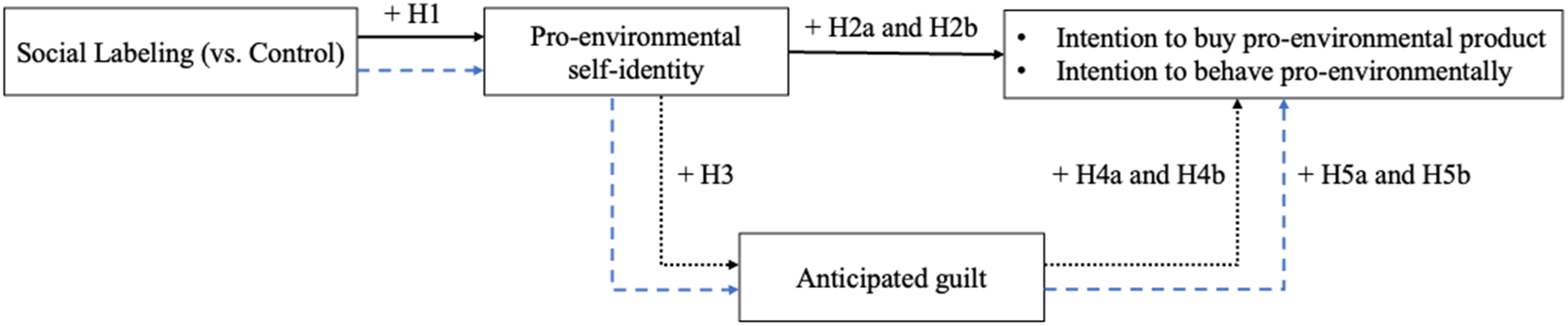
Hypothesized research model.
Method
To test the hypotheses, this study employed a single-factor (social labeling vs. control condition) between-participant experiment.
Participants
The sample consisted of 242 college students from a large Southwestern U.S. university. After completing the study, participants were compensated with course extra credit. Among the participants, 15% identified as male, and 72% identified as female. On average, participants were 20 years old (SD = 2.18), and they identified as White (42%), Asian (21%), Hispanic or Latino/a (15%), African American (7%), or other (15%). Among the 242 participants, 120 were randomly assigned to the social label condition, while 122 were randomly assigned to the control condition.
Manipulation
In an online experiment, the social labeling condition was manipulated by following the manipulation used in past research (Lacasse, 2015, 2016); a survey question promoting participants’ self-perception of their past pro-environmental behaviors was presented first; then a campaign advertisement that has a social labeling message was presented. In the survey question, only those in the social labeling condition were led to believe that they conduct enough number of pro-environmental behaviors so that the follow-up labeling becomes more convincing among this experimental group.
First, participants were asked to fill out a survey question indicating whether or not they perform eighteen different pro-environmental behaviors. The items included on the questionnaire included statements such as “I purchase environmentally friendly cleaning products” or “I unplug appliances from the wall when they are not in use,” and participants indicated whether each statement was “true” or “not true.” However, the instructions for the survey question were manipulated differently in the two conditions. Participants in the social labeling condition were told to indicate a behavior as true if they performed the behavior “at least occasionally,” so that these participants could easily report back that they performed many of the pro-environmental behaviors. In contrast, participants in the control condition were told only to indicate a behavior as true if they performed the behavior “always,” making it more difficult for them to report performing the pro-environmental behaviors. At the end of the questionnaire, participants tallied and reported the total number of behaviors they indicated as “true.”
After participants filled out the behavior questionnaire, participants in the social labeling condition viewed a green campaign message which labeled them with the statement “You are an environmentalist.” Participants in the control condition viewed a more typical green campaign message that emphasized consumers should become an environmentalist, stating “People should all work on becoming environmentalists.” We deliberately avoided using first-person pronouns like “we” in the control condition since it could activate self-identity, which is hypothesized to be the immediate outcome of social labeling in our study.
Stimulus
To mitigate the impact associated with a specific product type, we created fictional advertisements promoting two types of pro-environmental products: shampoo bar from a fictitious brand-named EDEN and toothbrush from another fictitious brand-named LAKEN. Both advertisements underscored the product’s environmentally friendly features, describing it as plant-based and biodegradable (see Figure 2). Stimulus images: The advertisements of shampoo bars from a fictitious brand-named EDEN (above) and toothbrushes from a fictitious brand-named LAKEN.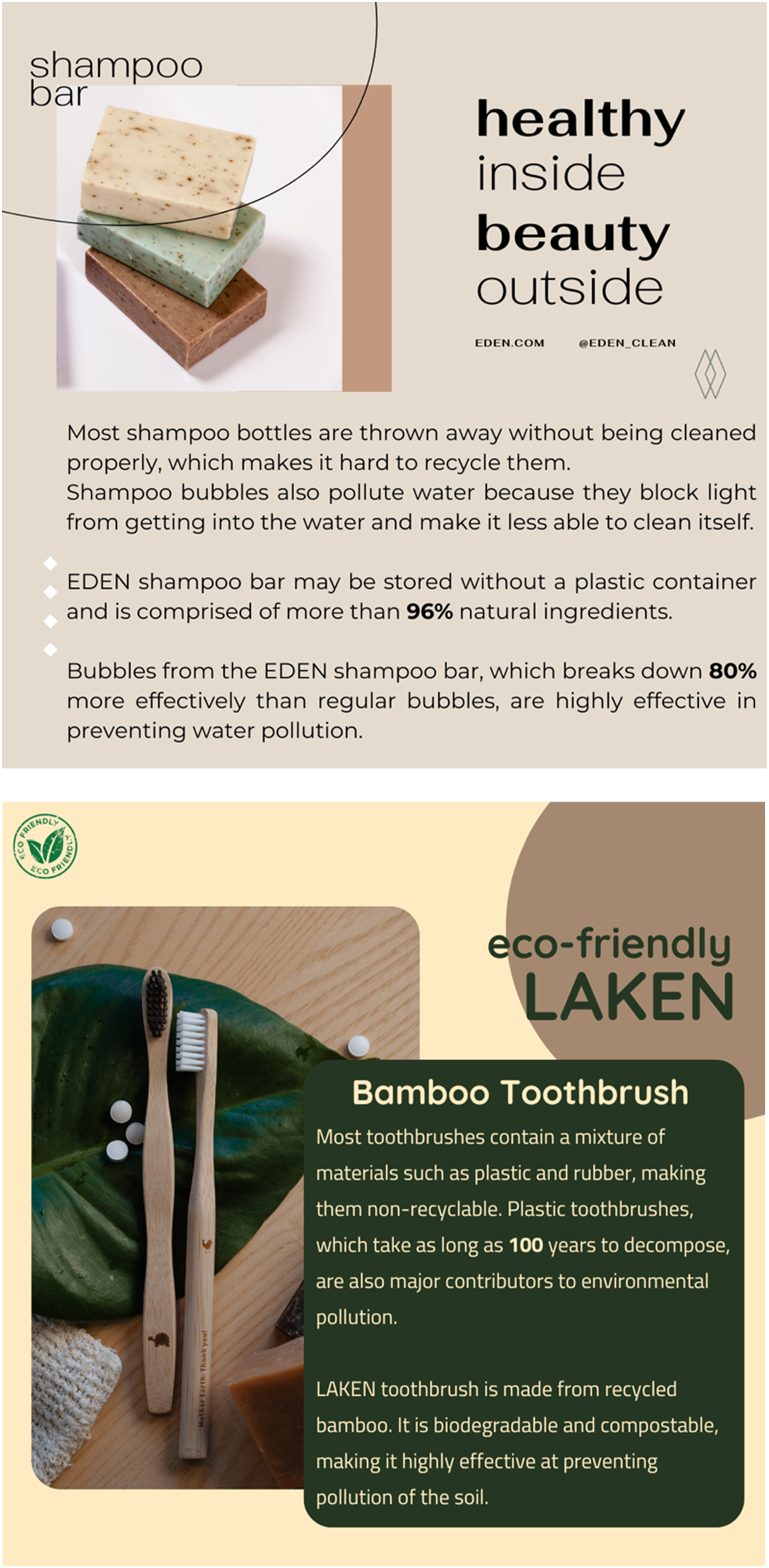
First, 120 participants were randomly assigned to read the social label condition and 122 to read the control condition. Next, these participants were further randomly divided within each condition, with 121 participants exposed to the shampoo advertisement and the other 121 to the toothbrush advertisement. As a result, under the social labeling condition, 51 participants received the toothbrush ad, and 71 participants received the shampoo ad. Under the control condition, 70 participants received the toothbrush ad, and 50 participants received the shampoo ad. To examine whether participants were randomly assigned across the four conditions, a series of Chi-Square analyses on gender and race were conducted. The results indicate there is not a significant difference in gender (
Moreover, to examine whether there were differences in the main variable values according to the advertised product, an independent sample t-test was conducted. The result showed that there was no significant difference in product involvement between shampoo (M = 5.77, SD = 1.04) and toothbrush (M = 5.80, SD = 0.89), t(240) = −0.24, p = .811. Therefore, these two ads were collapsed under each condition for data analysis.
Procedure
Participants began by answering questions about their demographics, environmental concerns, and product involvement. Given that the level of existing environmental concerns can influence pro-environmental engagement (Bamberg, 2003a; Elsantil, 2021) and that product involvement can shape attitudes towards specific product types (Michaelidou & Dibb, 2006), these factors were measured before the stimulus exposure to account for any potential confounding effects.
Following this, participants were randomly assigned to either social labeling or control conditions. All of them were first engaged in filling out the survey question on their environmental behaviors, as part of the manipulation (see the Manipulation section above). They answered questions about environmental self-identity right after the manipulation. Next, participants were again randomly assigned to the print advertisement of one of the two product types (toothbrush or shampoo), which contained either the social labeling or control message depending on the condition they were assigned earlier. Participants were required to stay on the stimulus page for 30 seconds. After viewing the ad for 30 seconds, they were asked to answer questions regarding their purchase intentions, pro-environmental behavior intentions, and anticipated guilt at the end.
Measurement
All items were measured using a 7-point Likert scale, ranging from strongly disagree (score = 1) to strongly agree (score = 7).
Control Variables
The existing degree of environmental consciousness can be instrumental in augmenting pro-environmental engagement among participants (Bamberg, 2003b). Thus, to measure participants’ environmental consciousness, three 7-point Likert scales from Kriwy and Mecking (2012) were employed. Sample items include: “I am concerned a lot about environmental problems” and “I prefer to buy products produced in an environmentally sound manner” (M = 5.07, SD = 1.15, α = 0.82). Product involvement was assessed using a five-item scale adapted by Zaichkowsky (1994) and controlled for the analysis because product involvement can strongly shape individuals’ attitudes towards a specific product type (Michaelidou & Dibb, 2006). Sample items include: “Products related to beauty are important to me” and “Toiletries are valuable to me” (M = 5.78, SD = 0.97, α = 0.92).
Mediating Variables
Pro-environmental self-identity was evaluated with a three-item scale, adapted from Clayton (2003). Example items include: “I am the type of person who acts environmentally-friendly” (M = 4.41, SD = 1.23, α = 0.91). To measure participants’ anticipated guilt, five 7-point Likert scales from Roseman et al. (1994) and Tangney et al. (1996) were employed. Sample items include: “If I were not to buy products from the brand that cares about environmental issues, I would feel guilty” (M = 3.23, SD = 1.46, α = 0.92).
Dependent Variables
Zero-order Correlations Among Variables.
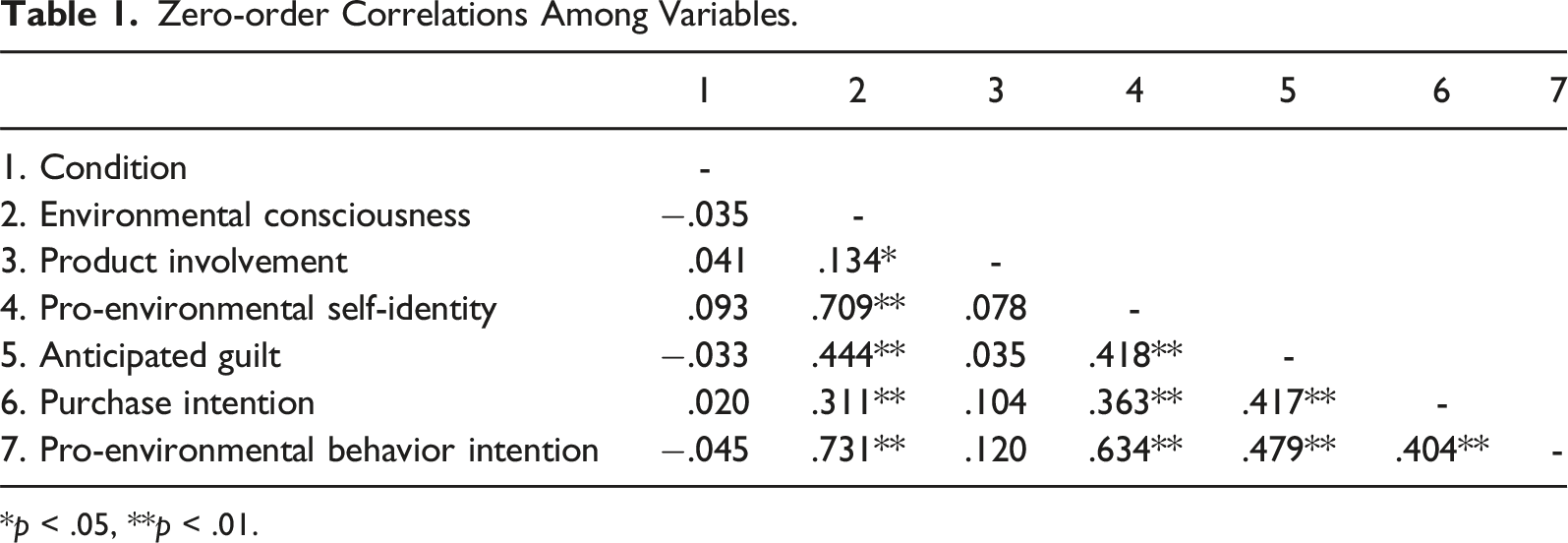
*p < .05, **p < .01.
Results
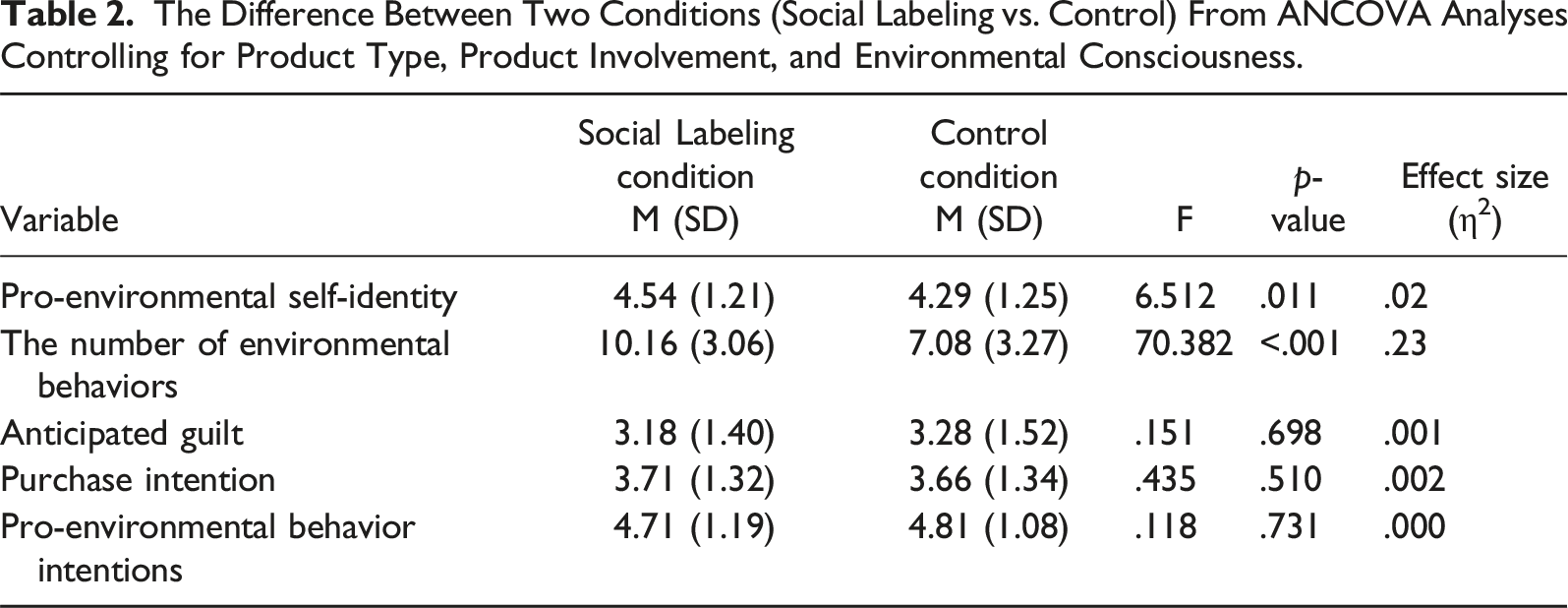
The Difference Between Two Conditions (Social Labeling vs. Control) From ANCOVA Analyses Controlling for Product Type, Product Involvement, and Environmental Consciousness.
To examine the hypotheses, we conducted a mediation analysis using Model 4 of Hayes’ (2017) PROCESS macro. Social labeling (control = “0,” social labeling = “1”) served as the independent variable, pro-environmental self-identity were the mediators, and intentions to (a) purchase the advertised pro-environmental product and (b) behave pro-environmentally were the dependent variables. Product types, product involvement, and environmental concern entered as covariates. Confidence intervals were set at 95%, and bootstrap confidence intervals were based on 5000 re-samplings.
First, social labeling was positively related to pro-environmental self-identity (B = 0.29, SE = 0.11, 95% C.I. [0.07 to 0.51]). Hence, H1 was supported. Next, pro-environmental self-identity was positively related to intentions to purchase the advertised pro-environmental product (B = 0.32, SE = 0.09, 95% C.I. [0.14 to 0.51]). As a result, there was a significant indirect effect of social labeling on intention to purchase a pro-environmental product via pro-environmental self-identity (B = 0.09, SE = 0.04, 95% C.I. [0.02 to 0.18]). Thus, H2a was supported.
In addition, pro-environmental self-identity was positively related to intentions to behave pro-environmentally (B = 0.23, SE = 0.06, 95% C.I. [0.12 to 0.34]). As a result, there was an indirect effect of social labeling on intention to behave pro-environmentally via pro-environmental self-identity (B = 0.07, SE = 0.03, 95% C.I. [0.02 to 0.13]). Hence, H2b was supported.
To examine H3, H4, and H5, we conducted a serial mediation analysis using Model 6 of Hayes’ (2017) PROCESS macro. Social labeling (control = “0,” social labeling = “1”) served as the independent variable, pro-environmental self-identity and anticipated guilt were the mediators, and intentions to (a) purchase the advertised pro-environmental product and (b) behave pro-environmentally were the dependent variables. Product type, product involvement, and environmental concern entered as covariates. Confidence intervals were set at 95% using 5000 bootstrap resamples. The results revealed an indirect effect of social labeling on intention to purchase a pro-environmental product via both self-identity and anticipated guilt, B = 0.02, SE = 0.01, 95% confidence interval from 0.00 to 0.04. Social labeling was positively related to pro-environmental self-identity (B = 0.29, SE = 0.11, 95% C.I. [0.07 to 0.51]). Pro-environmental self-identity was positively related to anticipated guilt (B = 0.26, SE = 0.10, 95% C.I. [0.06 to 0.45]). Lastly, anticipated guilt was positively related to intentions to purchase the advertised pro-environmental product (B = 0.29, SE = 0.06, 95% C.I. [0.18 to 0.41]).
Moreover, there was also an indirect effect of social labeling on intention to behave pro-environmentally via both self-identity and anticipated guilt, B = 0.01, SE = 0.01, 95% C.I. [0.0004 to 0.02]). Anticipated guilt was positively related to intentions to behave pro-environmentally (B = 0.13, SE = 0.04, 95% C.I. [0.06 to 0.20]). Therefore, H3, H4, and H5 were all supported. Figure 3 summarizes the findings. Results.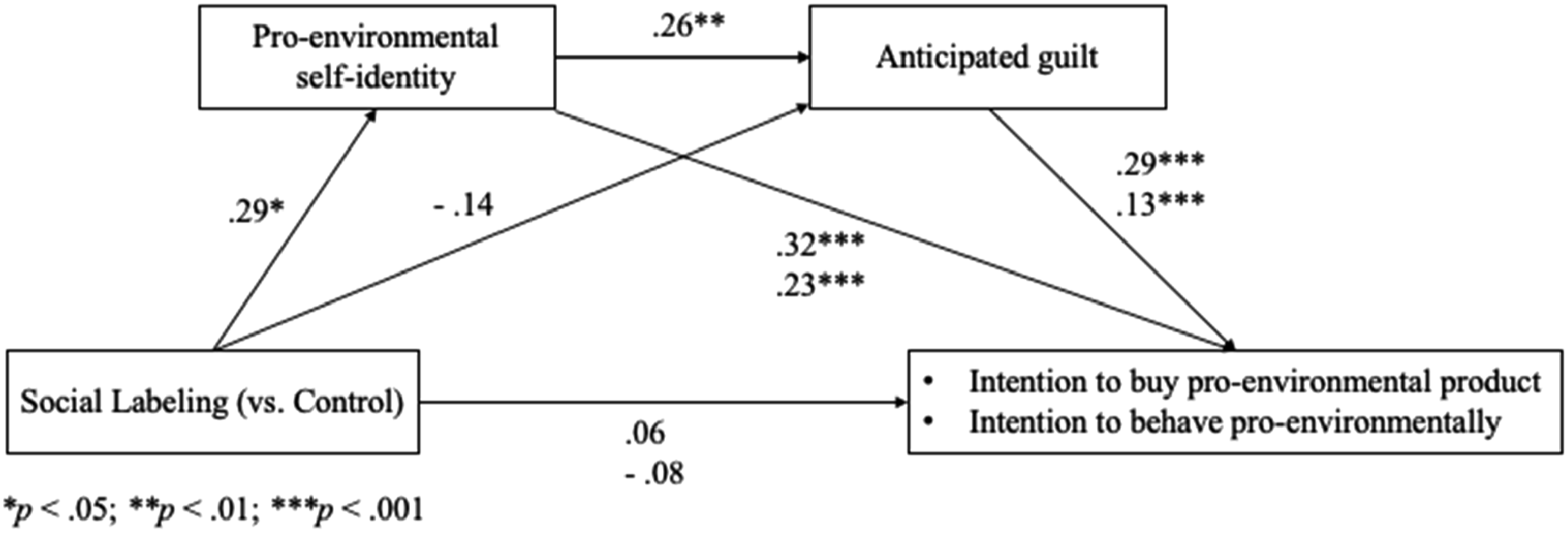
Discussion
The present research examines the process of how social labeling induces pro-environmental intentions. Central to this investigation is the role of pro-environmental self-identity and anticipated guilt as mediators. The theoretical implications are detailed below, followed by their practical implications.
Theoretical Implications
The purpose of this study was to verify how self-identity and anticipated guilt explains the relationship between social labeling with pro-environmental value and environmental behavioral intentions. Based on the previously proposed hypotheses and results, this study has two major theoretical implications.
First, our study has theoretical implications for supporting existing research that social labeling, which labels individuals with desirable personality or value, can cause persuasive effects that trigger behavioral intentions that match the label. Consistent with the theoretical framework, we found that social labeling imbued with environmental values activates a corresponding identity, which in turn, encourages aligned behaviors. In our experiment, people in the social labeling condition showed a higher pro-environmental self-identity and higher intentions to purchase the advertised pro-environmental product and behave pro-environmentally compared to those in the control condition. In sum, the current study demonstrated that social labeling is indeed effective in encouraging pro-environmental behavior and added theoretical implications by replicating and strengthening the existing social labeling effect.
Second, the current study not only reexamined previously identified mechanisms but also highlighted that the increased pro-environmental self-identity through social labeling is associated with anticipated guilt that people feel when they imagine not performing the recommended behaviors. By revealing the role of anticipated guilt in further mediating the effect of self-identity, the current research contributes to extending the explanation on why social labeling changes environmental behaviors. Whereas previous studies dealing with social labeling have explained the process of how social label works through the mediating role of establishment of identity (Cornelissen et al., 2007; Kraut, 1973; Summers et al., 2016), the current study demonstrates an additional dimension in elucidating the positive influence of self-identity. Identity inherently holds value, as individuals strive for consistency in their identity-behavior connection. Nevertheless, choosing a certain identity can also place an emotional burden on individuals, leading to feelings of anticipated guilt when they deviate from their self-made commitments. Accordingly, the current study makes a theoretical contribution by showing how to leverage that emotional aspect of maintaining one’s identity to induce pro-environmental behavior.
Practical Implications
This study’s findings have practical implications for social marketing managers engaged in the promotion of pro-environmental behavior adoption. Our results suggest that individuals can take pro-environmental actions to maintain self-identity consistent with social labeling and try to avoid the expected guilt in the case they fail to comply with the internal standard of maintaining pro-environmental identity. To effectively engage the public, social marketers can design and execute social labeling strategies by which they properly target audiences’ identities. Directly labeling the consumer as “pro-environmental” is just one strategy; with the advancement of personalization technologies, there might be more implicit labeling strategies that can expose consumers to more pro-environmental ads and products on social media platforms and notify them of what they have chosen to read, which could help them identify with pro-environmental values.
Our findings regarding anticipated guilt also have important implications for social marketers, suggesting that guilt appeal through campaign messages might be combined with social labeling to make the strategy more effective. For instance, in addition to labeling consumers to be environmentally friendly, persuasive messages can also imply the importance of being consistent with one’s moral standards and not feeling guilty, simply by being who they really are. By doing this, the anticipated guilt from potentially violating the norms can be used as a campaign strategy.
Moreover, our results related to the sequential mediation of self-identity and anticipated guilt underscore the significance of self-identity in triggering the effects of social labeling. Therefore, when social marketers design pro-environmental messages, the pro-environmental values presented in the message should not be too extreme but should be at a level that the target audience can accept as part of their identity. Furthermore, the pro-environmental behaviors prompted by the social marketing campaign message should be set to a level of difficulty that is manageable for implementation to avoid any backfire from being too challenging and thereby failing to induce anticipated guilt.
Limitations
Our sample was limited to college students. Even though internal validity is prioritized in experimental research, caution should be given to extrapolating our results to other types of audience. To enhance generalizability, future research should employ a broader sample considering differences in age groups and education/income levels. Second, the current study leaves room for future research to examine other possible explanations of social labeling effects. For instance, social labeling can also induce pro-environmental behavior by strongly implying social norms instead of self-identity. It is also possible that our college students’ sample might be particularly vulnerable to social norms since they are relatively young and participate in the study for research credit. Future study can consider the effect of social norms and compare it with the effect of self-identity. Third, there is a possibility that pro-environmental value implied in social labeling induces other types of emotion; for instance, following environmental value can be pride-inducing, and this positive emotion might be a more powerful mediator than the negative emotion like guilt that is triggered by imagining not following the value. Future research can compare the anticipated pride when it comes to pro-environmental behavior and the anticipated guilt when it does not.
Moreover, this study employed a self-report questionnaire. Although the theory of Planned Behavior (Ajzen, 1991) suggests that intention is a strong predictor of actual behavior, and meta-analyses demonstrate that the theory has been successfully applied to explain and predict behavior across numerous domains (Armitage & Conner, 2001; Han & Stoel, 2017; Onel, 2017), prior research also indicates that pro-environmental intention does not always align with actual pro-environmental behavior, a discrepancy often referred to as the “environmental values–behavior gap” (Kennedy et al., 2009; Kollmuss & Agyeman, 2002). In addition, even if the intention for pro-environmental behavior can predict actual pro-environmental actions, it may still fall short in predicting the sustainability of those actions. Thus, identifying methods to measure actual pro-environmental behavior and its sustainability remains essential.
Footnotes
Declaration of Conflicting Interests
The author(s) declared no potential conflicts of interest with respect to the research, authorship, and/or publication of this article.
Funding
The author(s) received no financial support for the research, authorship, and/or publication of this article.
