



Abstract
Background
In circumstances where vaccine hesitancy is high, like in Tanzania in 2021, measures to control the spread of COVID-19 infection through non-pharmaceutical interventions, specifically mask-wearing, hand-washing and physical distancing, become crucial. This study was undertaken to inform the development of a context-adapted communication campaign to control COVID-19 in Tanzania.
Focus of the Article
The study examines the effectiveness of three different behaviour change campaign ads created as part of the same control effort, and two of them by the same creative process, with the same creative team, at roughly the same time, in altering behavioural propensities for relevant target behaviours, including the washing of hands, the wearing of masks and social distancing, and key participant attitudes, such as the sense of obligation to others.
Research Question
The main research question was: what are the effects of behaviour change campaign ads on propensities for engaging in COVID-19 target behaviours? We also examined behavioural attitudes and consumer appreciation of the ads (believability, likeability, relevance and surprise). The purpose of the study was to provide empirical evidence on the effectiveness of different messaging logics, in order to help improve future campaigns.
Methods
We designed a controlled survey experiment where participants were randomly assigned to receive one of the three campaign ads. These were called: the “Setting” campaign, which was designed using a theory-based Behaviour Centred Design (BCD) approach and produced with local partners; the “Password” campaign, which was the result of a substantial investment by a major international consortium; and the “Balance” campaign, a local adaption of “Password”; as well as an educational public service announcement, which served as an active control. An SMS survey was administered online to 2080 participants in Tanzania in 2022 to evaluate the potential effectiveness and consumer appreciation of the campaigns.
Results
The results showed that the most costly campaign, “Password”, did not perform better than the other campaigns on any test. In particular, “Password” was not more effective than the theory-based “Setting” campaign on any single behavioural indicator or exposure variable. The “Setting” campaign was more effective than other ads on the expected qualities of appreciation (surprise, believability). However, the educational announcement achieved higher average response levels than all of the narrative-based treatments on measures of consumer appreciation, such as likeability, believability and relevance.
Recommendations for Practice
This study supported the proposition that a campaign specifically designed to elicit particular kinds of psychological responses could do so. It showed that a theory-based campaign, produced locally and at low cost, can compete on standard marketing values with high-quality creative processes and production values.
Keywords
Introduction
The severe acute respiratory syndrome coronavirus 2 pandemic (hereafter called COVID-19) reached Tanzania in March 2020. Since then, the Tanzanian Government has taken actions to help stop the spread of the virus, including school closures, travel restrictions from affected countries and quarantine for incoming travellers. Vaccine hesitancy and resistance has been a significant problem in Tanzania. President Magafuli, who was a noted opponent to the use of COVID-19 vaccines, died in March 2021, and was succeeded by Samia Suluhu, who was more accepting of vaccines. Results from surveys suggested that around half of the adult population held beliefs and attitudes that ran counter to uptake of the vaccine, and nearly half said they would not take it, due to concerns over safety, side effects, and feeling they did not need it. 1
There are different approaches to developing social marketing campaigns. A recent review indicated the importance of incorporating behavioural theory and using local knowledge in the design of campaign materials (Green et al., 2019). This paper aims to help fill knowledge gaps around strategies for effective infection prevention in disease outbreak settings. The overarching goal of the study was to inform decisionmakers about which components of messaging campaigns were likely to be effective for improving safety and hygiene practices to prevent severe acute respiratory infections, and thus help others to design more effective communications in future. The paper therefore provides a case study of alternative campaign messaging options, rather than a test of a specific social marketing theory. We incorporated different theoretical strategies in the design of the test materials and aim to explain our findings via standard social marketing variables.
We compare messages generated using different creative processes but with the common objective to prevent COVID-19 transmission, via a survey which was delivered to participants using a randomised controlled trial (RCT) design. The outcomes of interest were ratings on a variety of behaviour change indicators and consumer appreciation qualities. The specific evaluation questions were: • What are the effects of campaign ads produced using different creative approaches on indicators of behaviour change potential? • What are the effects of the ads on attitudes (behavioural intention) and standard consumer appreciation measures including believability, likeability, relevance and surprise?
The results of this evaluation were used to inform the development of context-adapted activities and materials for the Tanzanian government’s COVID-19 behaviour change communication campaign. Subsequent sections of this paper present a description of the various creative processes and resulting ads, study objectives, the methods and results. The final sections discuss the findings and conclude.
Background and Description of the Ad Campaigns
Social marketing tends to be profligate in its use of theory, there being a lack of consensus about which is most appropriate in a given situation (Lefebvre, 2000). Many of the theories used are adopted from public health, such as the health belief model (Strecher & Rosenstock, 1997), social cognitive theory (Bandura, 1986), and theory of planned behaviour (Ajzen, 1991). In all of these theories, human intentions to act arise from perceptions about the action, perceived norms and self-efficacy. Therefore, the likelihood of performing a behaviour is the result of a complex calculation involving attitudes about the action itself (for example, whether it is good or bad), the perceived ability of the individual to undertake the action successfully, and expectations about the attitudes and behaviours of others (Wolff, 2021). For example, a study to understand whether the theory of planned behaviour could explain variation in COVID-19 protective behaviours (hand-washing, mask wearing and social distancing) showed several of its variables were significantly correleated with reported behaviour across two European countries (Wollast et al., 2021).
Rarely is it the case, however, that different intervention strategies are compared for their ability to elicit behaviour change. The present study aims to do just this; it compares three different potential campaign strategies, developed using different creative processes by different teams, but roughly at the same time, to address the COVID-19 pandemic in Tanzania. Each strategy is represented by a one-minute broadcast-quality television advertisement that encompassed the central insight from three different approaches to developing the campaigns. All campaigns reflected circumstances on the ground, based on field research, and were motivational, as a consequence of using design processes and a number of in-country and international creative partners and media production teams. We describe the logic of each campaign in turn in this section. Screenshots of the campaign ads are provided in Appendix 1.
Intervention 1: The “Setting” Campaign
A behavioural science-based campaign for COVID-19 control was developed by a team of creative agencies from India and academics from UK universities. This was based on the belief that a theory-based campaign would be more effective, even against a global pandemic, when most existing messaging was simply fear-based. A human and behaviour-centred design process was used to generate ideas through a succession of workshops, which were conducted on-line. The process followed the program development steps of Behaviour Centred Design (Aunger, 2020; Aunger & Curtis, 2016). This approach combines behavioural science and design thinking processes to achieve behaviour change. Key tenets of the approach are to design an intervention which prompts audiences to re-evaluate their behaviour and change performance in specific settings. The drivers of human behaviour are presumed to be evolved emotions, drives and interests that arise in different parts of the brain.
A concept central to BCD is that of a “behaviour setting” (Barker, 1968). A behaviour setting is a coordinated set of factors that circumscribe performance of everyday actions to achieve a common objective. Examples include going to a restaurant (to eat), going to math class (to learn math), shopping in a store (to purchase desired objects), attending a religious service (to satisfy spiritual needs), or standing at a bus stop (waiting to catch a bus). As with all behaviour settings, these require people to play various roles (e.g., waiter, teacher, driver, customer) supported by infrastructure (such as buildings or buses) and facilitated by objects, called “props”, like plates, glasses, tickets, money, books, etc. A behaviour setting can only be executed successfully to achieve the desired outcome in a particular context when all of its constituent parts fulfil their roles. This concept was used throughout ad development as the central theoretical insight.
The contrivance underlying the ad is that the infrastructure and props stop working automatically when any actor does not play their role properly. Mechanical processes enforce the setting norms in people: the setting goes “on strike” until people conform and any miscreants are corrected. In this case, that means getting people to conform with the norms around the target behaviours. So, when a person enters a public setting without wearing a mask, or washing hands, everything stops working until the miscreants remedy what they have been remiss about. All necessary conditions have to be met for the setting to resume – in other words, everyone should be wearing a mask, practising handwashing, and social distancing. Thus, the setting breaks down for every person in the setting, not just one person – which demonstrates that the setting is a unified whole, that there are mutual dependencies between roles – and increases the social pressure on the human participants to find a solution. 2 The human motives this approach attempted to activate were ‘affiliate’ and ‘justice’.
Intervention 2: Global “Password” Campaign
The United Kingdon’s Foreign, Commonwealth and Development Office (FCDO) and Unilever formed a coalition, the Health Behaviour Change Coalition (HBCC), to manage their funding efforts in response to the COVID-19 pandemic. The HBCC management committee, having funded 23 different organisations to produce campaigns in 37 countries, recognized that not all of these organisations were expert at behaviour change communications. Since media were needed in many cases (given restrictions on interpersonal contact due to the pandemic), it was decided to put part of Unilever’s funding contribution and long-term associations with well-known, international advertising agencies to good use, and to go through a standard marketing process to choose the agency with the best creative idea. The winning agency was subsequently funded to produce a COVID-19 control campaign that could be used by all coalition partners.
Considerable effort went into the development of the creative brief, which reflected concerns about its global applicability and timeliness, given the phase of the pandemic at that time. The brief was based on an insight from research done by a Kenyan member of the coalition management: “I’d rather die of COVID than of starvation (from not being able to go to work)”. That is, people were more afraid of the economic hardship derived from the political response (i.e., lockdown) than the health risks coming from the pandemic itself. This was at the time when the concept of the “new normal” and “build back better” were gaining world-wide currency. The insight in the brief was that “consistently practicing a few simple behaviours gives me the peace of mind to go forward with my life (earning a livelihood while protecting the health of my family and friends) in this new COVID reality.” The resulting campaign was built around the idea that protecting oneself from COVID by practicing the well-known behaviours would enable people to get back to work, epitomized by the ‘sounds of life’, such as the sound of a motor for a taxi-driver, or clanging metal for a factory worker.
Due to pressure from the HBCC, however, greater emphasis on the target behaviours was felt to be required and the agency was asked to produce a new concept. The idea that came forward was that people could demand of each other that they practise the target behaviours through a reminder at particular junctures, asking the question “What’s the password?” – meaning, “What do you need to do now for all of us to stay safe?” One of the insights from pre-testing was that people liked seeing many others having to practise the behaviours, so the range of situations depicted included entering a place of business, coming home from shopping, and leaving the home. A number of versions of the final execution were produced for different continental groups, given the global coverage of the partners. 3
Intervention 3: “Balance” Campaign
By 2020, many people in Tanzania believed that COVID-19 was at low prevalence, suggesting that Tanzanians had won against COVID-19 by adhering to safety measures while continuing business as usual (since there was no lockdown). This situation led to the insight to use the sense of victory in inspiring people to continue practicing the behaviours to sustain that victory. The objective was for the target audience to feel inspired to keep practicing the three hygiene behaviours as the secret of their victory against COVID-19. The slogan developed was “Siri ya ushindi” (“the secret of our success”), a hint that keeping doing the right things was key to maintaining the desired behaviour during the pandemic.
Just as this campaign was about to be rolled out, however, the Project CLEAR team became part of a successful bid for HBCC funding, and was charged with also developing a campaign consistent with the HBCC Global COVID-19 password campaign described above. Since the political circumstances in Tanzania were such that COVID-19 could not be mentioned explicitly, and the idea of “success” was already present, the task became one of fitting the “Password” campaign to these local circumstances, and give it greater motivational power. A creative brainstorm suggested the idea that the secret itself was a “balance” between work and safety (consistent with the original insight of the Password campaign). Balance is the way in which you can keep safe while still working, avoiding the dangers of illness and death from COVID-19 on one hand, and hunger and poverty on the other. Tanzania’s “secret” is that Tanzanians have maintained the proper balance in life. The slogan thus became that “Siri ya kushindi ni ku balance” (“the secret to success is to keep the balance”). To keep winning, you have to keep practicing the prescribed behaviours, thus creating balance. In this interpretation, the key element is the idea that doing some simple things is the secret key, the real enabler of COVID-19 control. The concept says that it is easy to stay safe by just doing these behaviours, which allows you to get back to normal life. However, the job is not finished – the virus can always come back – so everyone must keep doing the right things. As fatigue set in with respect to doing the target behaviours, the campaign needed to reinvigorate the population. Those who continue to perform these behaviours are morally good (protecting others) and should be granted higher social status. 4
Control Campaign ad
A fourth ad about COVID-19 was used as an active control. 5 This was an educational advertisement produced as a public service in Swahili.
Approach
Study Design
The study is an individual-level randomised controlled trial (RCT) to estimate the effect of three different behaviour change campaigns on reported behavioural intentions. The study comprised four arms: three arms which included one of the COVID-19 campaign advertisements, and an active control arm that included a knowledge-based COVID-19 elimination campaign advertisement.
Individuals were self-selected from an existing list of mobile phone numbers used for marketing research purposes by the data collection partner, GeoPoll Ltd., an international consumer research company. Participants eligible to participate in the study were those over 18 years of age, living in the study country and registered in GeoPoll’s user consumer database in Tanzania. Participants needed to use a smartphone to access the intervention ad. Compliant individuals were subsequently randomised to view one of the four ad videos. They were sent a short messaging service (SMS) message containing a link to a website which contained the intervention material, to which they were exposed, followed by a suite of questions concerning that intervention.
The survey instrument was administered by GeoPoll Ltd. in March, 2022. The primary study outcomes were responses to hypothetical scenarios relevant for COVID-19 control in which participants could choose their preferred actions. The behavioural targets of these campaigns were: physical distancing in public places; handwashing with soap at relevant occasions; and wearing a mask when in proximity to closed-in groups.
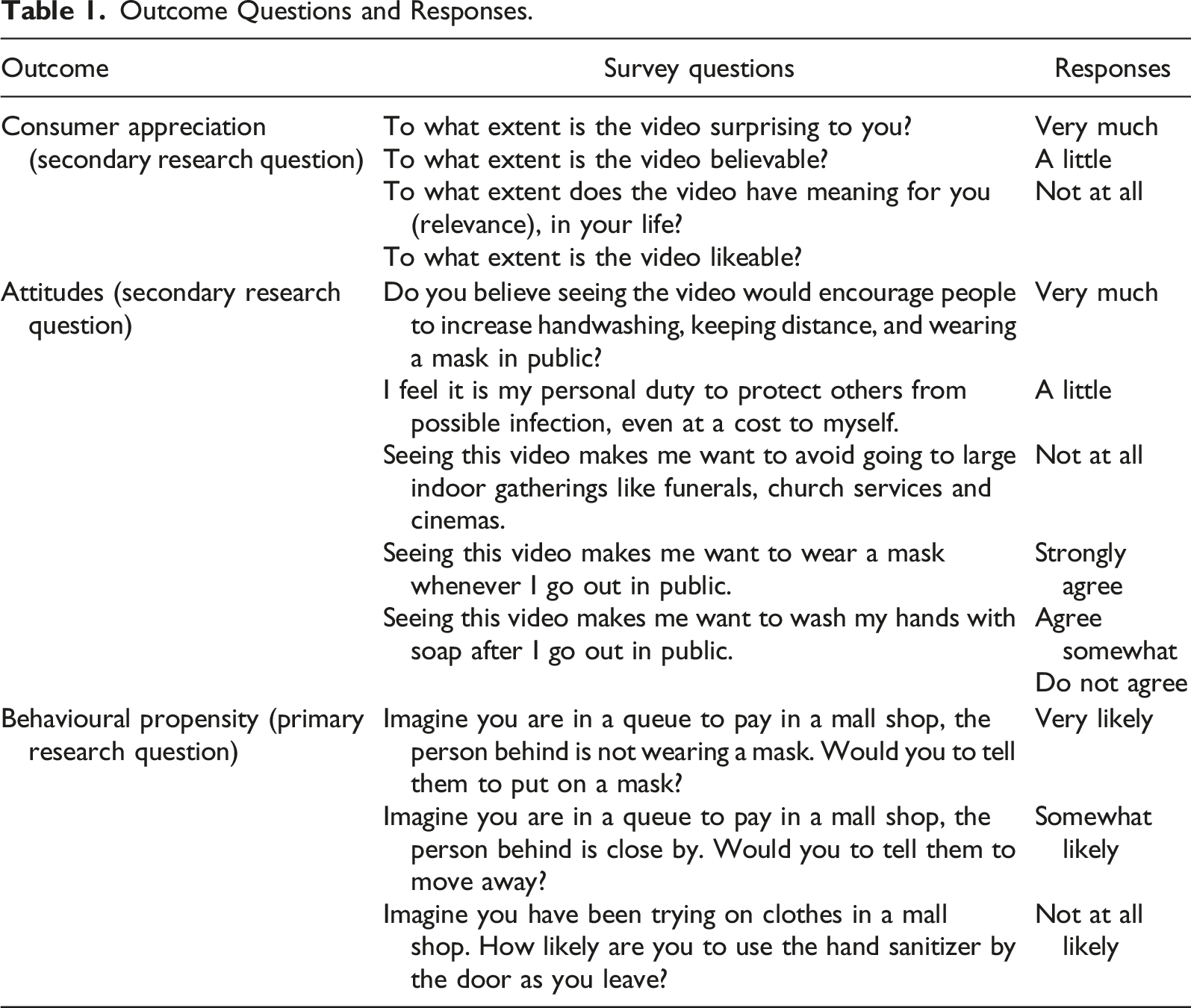
Outcome Questions and Responses.
A small, single-purpose study of responses to the slogans associated with each campaign was also undertaken by GeoPoll Ltd. in June 2021, as part of a regular data collection plan that was part of the government’s monitoring of COVID-19-related beliefs and practices. Data were collected by a mobile online survey conducted by the Kenyan office of GeoPoll Ltd., from their database of potential Tanzanian respondents. This slogan study was a regular panel survey with a sample size of 1122.
Data Analysis
Statistical comparisons were made between Likert-scaled responses to questions concerning surprise, likeability, relevance and intention to engage in the target behaviour. Primary study outcomes were: • Scenario-based behavioural propensity indicators for the relevant target behaviour (mask wearing, maintaining distance, hand-washing with soap). • Whether the participant agreed to receive further information about COVID-19 vaccine availability.
Secondary outcomes were: • Consumer measures of appreciation (believability, likeability, relevance to consumer’s life, surprise). • Measures of attitudes including the intention to perform the relevant target behaviour in a particular behavioural scenario (social distancing, face-mask, handwashing), the likelihood that others will perform target behaviour (encouragement to wash hands) due to campaign exposure, and the sense of obligation to others to protect public health.
Descriptive statistics were prepared on participant socio-demographics, secondary outcomes and understanding of intervention and behaviour change indicators. For continuous variables these included the mean, standard deviation, median, interquartile range and the number of observations. Categorical variables were summarised as counts and proportions.
Analysis aimed to determine whether campaigns differed significantly in their ability to produce positive responses to behavioural propensity indicators. It also tested for differences in the means of the consumer appreciation variables between intervention campaigns and with the control group, using the same approach. The primary and secondary outcomes were compared across arms using prevalence differences with 95 percent confidence intervals.
Bivariate analyses using chi-square tests were used to explore the relationships between demographic characteristics, programme exposure, and primary outcomes. Multivariate analysis used linear probability models. Individual outcome variables were measured across three ordinal categories (e.g., for behaviour scenarios these were: 0 = “not at all”, 1 = “a little”, 2 = “very much”; responses to attitudes and consumer appreciation questions were also coded similarly from zero to 2). Indexes for primary and secondary outcomes were calculated as the sum of the individual outcomes under each category. For example, for the primary outcome, the index summed the ordinal responses to questions about mask-wearing, maintaining distance and hand-washing, with possible values ranging between zero and 6. The three regression models were:


We used the standard threshold of p < .05 to determine if the analyses suggested that the results were significantly different from those that would be expected if the null hypotheses that there were no differences between treatment effects for each campaign were correct. No adjustments for multiple testing were done and analyses reported were pre-specified, with the exception of the regression analysis, which was conducted post hoc. Informant responses that included missing data were excluded by Geopoll from their databases. Informants were excluded if their responses showed no variability (e.g., the first option among potential responses was always selected).
Research Ethics
Ethical approval was obtained from the National Institute of Medical Research (NIMR) in Tanzania (Approval No. NIMR/HQ/R.8a/Vol. IX/3863) and the Ethics Review Committee at the London School of Hygiene and Tropical Medicine (LSHTM) (Approval No. 26464) prior to commencement of the study. The study design and data analysis plan were preregistered with the Centre for Open Science. 6 The data were hosted, updated and stored in a fully secured database at LSHTM. Any transfer of data only occurred through encryption. Access to password-protected, encrypted databases and data storage drives was restricted to the principal investigators and co-investigators listed in this protocol only. Data will be stored in this location for five years from the completion of the project, and then destroyed.
Informant consent used standard GeoPoll procedures, in conformity with international consumer testing protocols and standards, which were registered via response to an SMS message. Participants in the online surveys were given information about the survey when they clicked on the link in the SMS. Participants were given up to 48 hr after they had opened the link to decide whether they would like to participate in the study or not. Once participants consented by agreeing to the statements in the written consent form, the exposure and questioning commenced. All those enrolled were allocated an identification number. These numbers were used to identify all records relating to the individual. Data were stored in an electronic spreadsheet and were identifiable by number only. Only data from completed surveys were retained by GeoPoll.
Those who completed the survey were compensated 0.5 USD for their time to cover opportunity costs and costs of charging their phones. The money was transferred using M-pesa (electronic money transfers) within 2 hr of completing the interview.
Results
Description of Participants and Balance Tests
From the GeoPoll Ltd. marketing database population, 2610 study participants were randomly assigned to one of the treatment conditions, of which 2080 completed the survey and were included in the analysis (Figure 1). Participants were randomly allocated until there were equal numbers of treated units by group. There was less than one percentage point difference in losses to follow-up across groups. CONSORT participant flow diagram.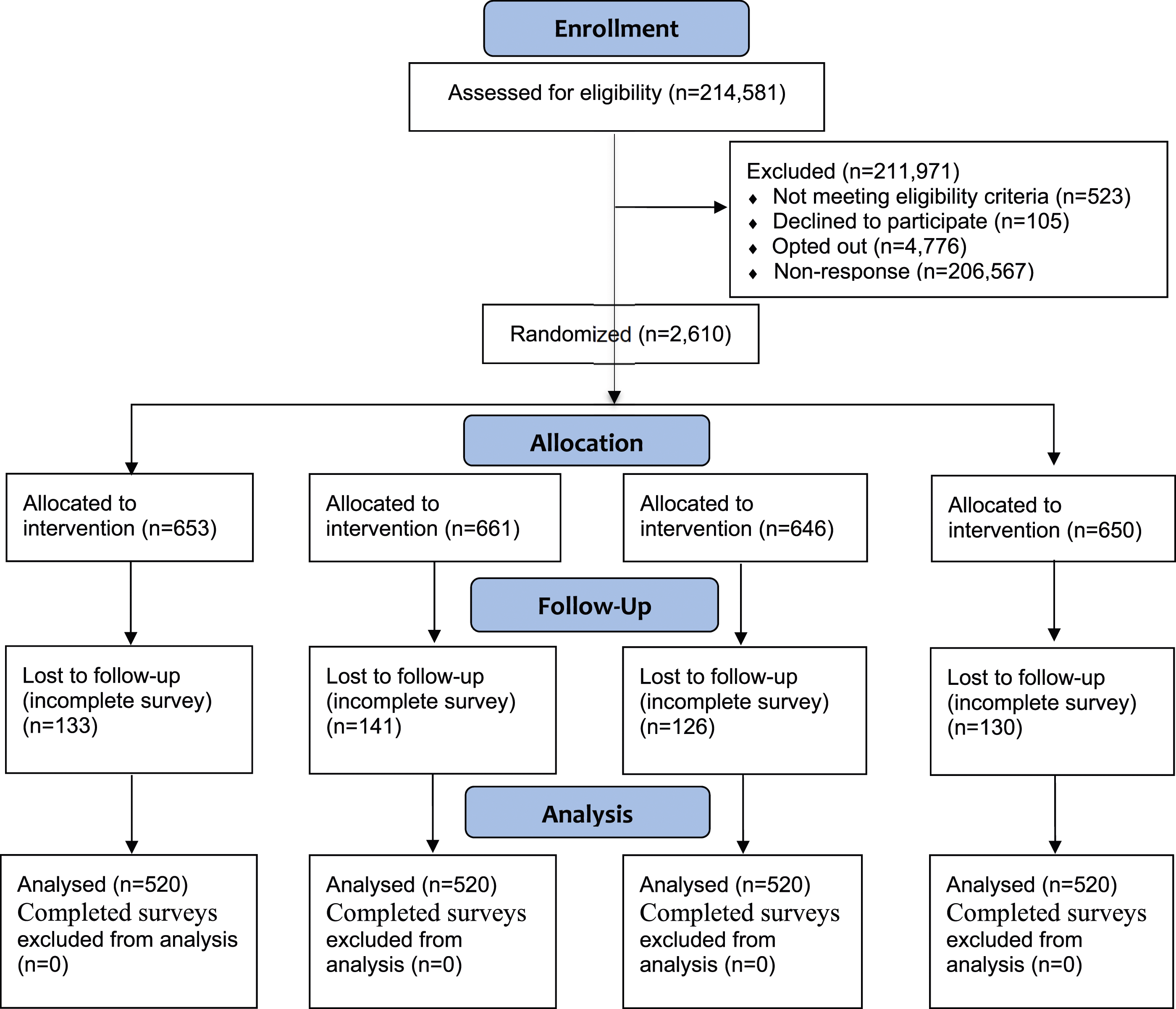
Socio-Demographic Characteristics by Study Group.
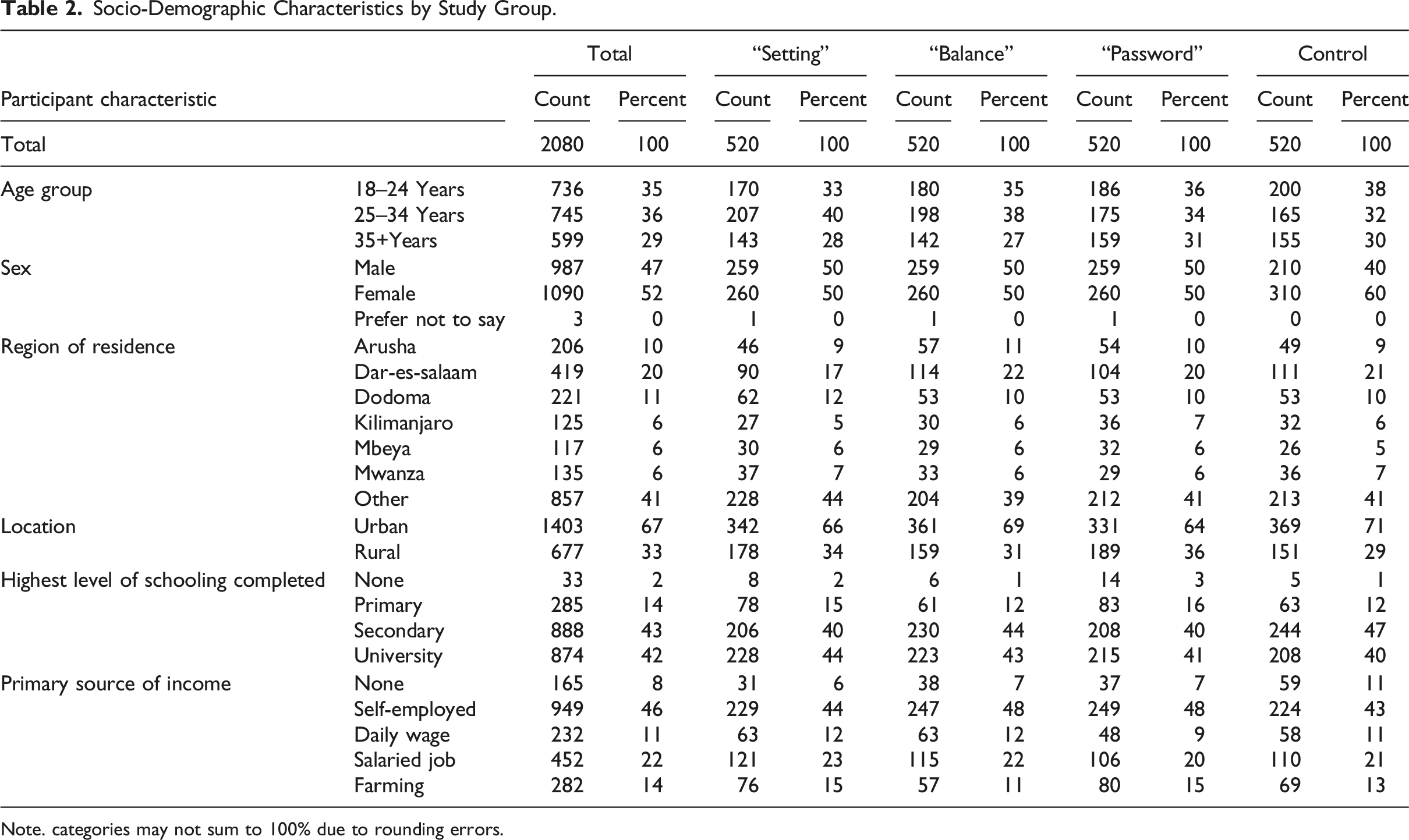
Note. categories may not sum to 100% due to rounding errors.
Results for Primary Outcomes
Significance Tests for Primary Outcomes.
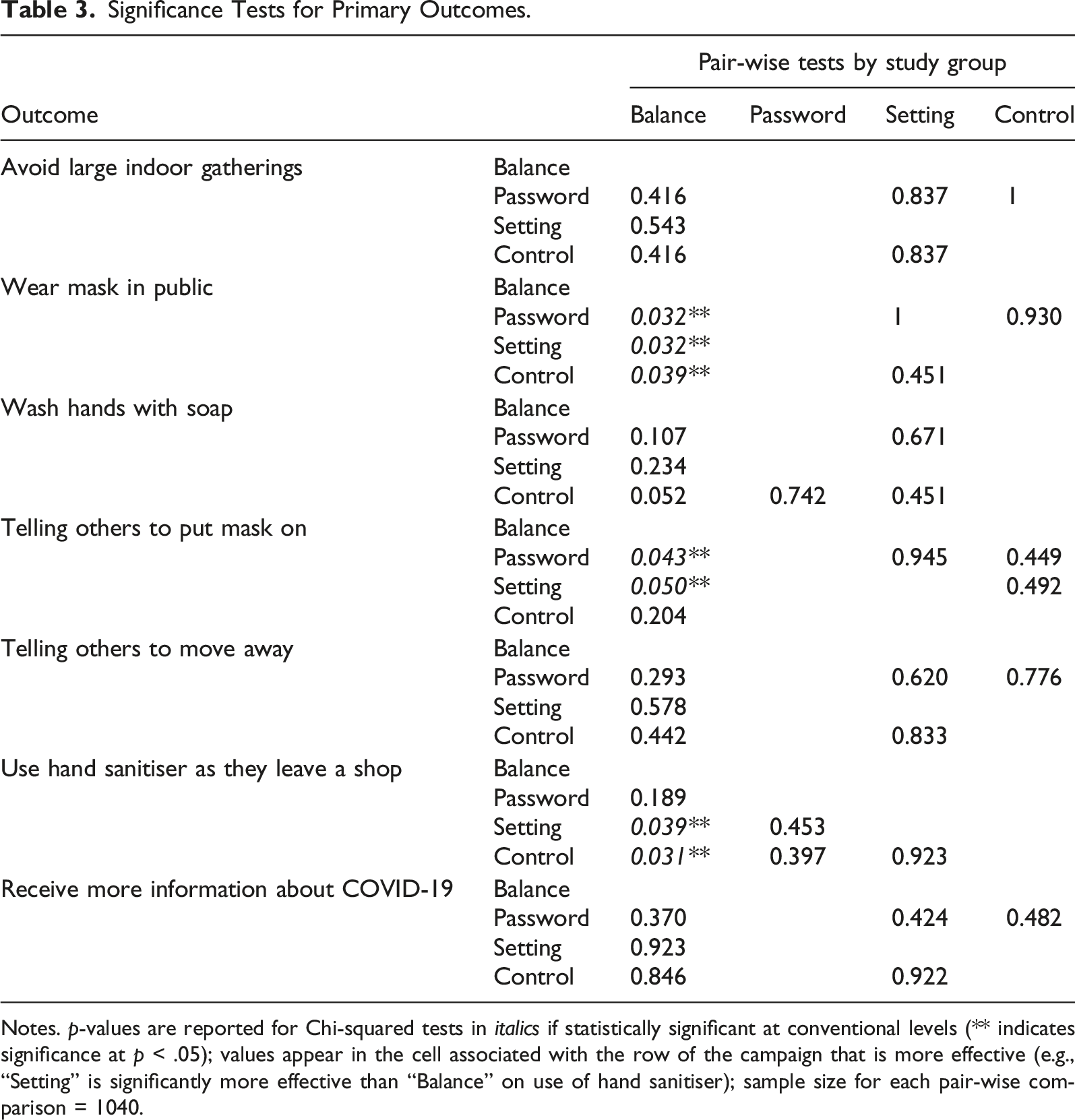
Notes. p-values are reported for Chi-squared tests in italics if statistically significant at conventional levels (** indicates significance at p < .05); values appear in the cell associated with the row of the campaign that is more effective (e.g., “Setting” is significantly more effective than “Balance” on use of hand sanitiser); sample size for each pair-wise comparison = 1040.
Results for Secondary Outcomes
Significance Tests for Secondary Outcomes.
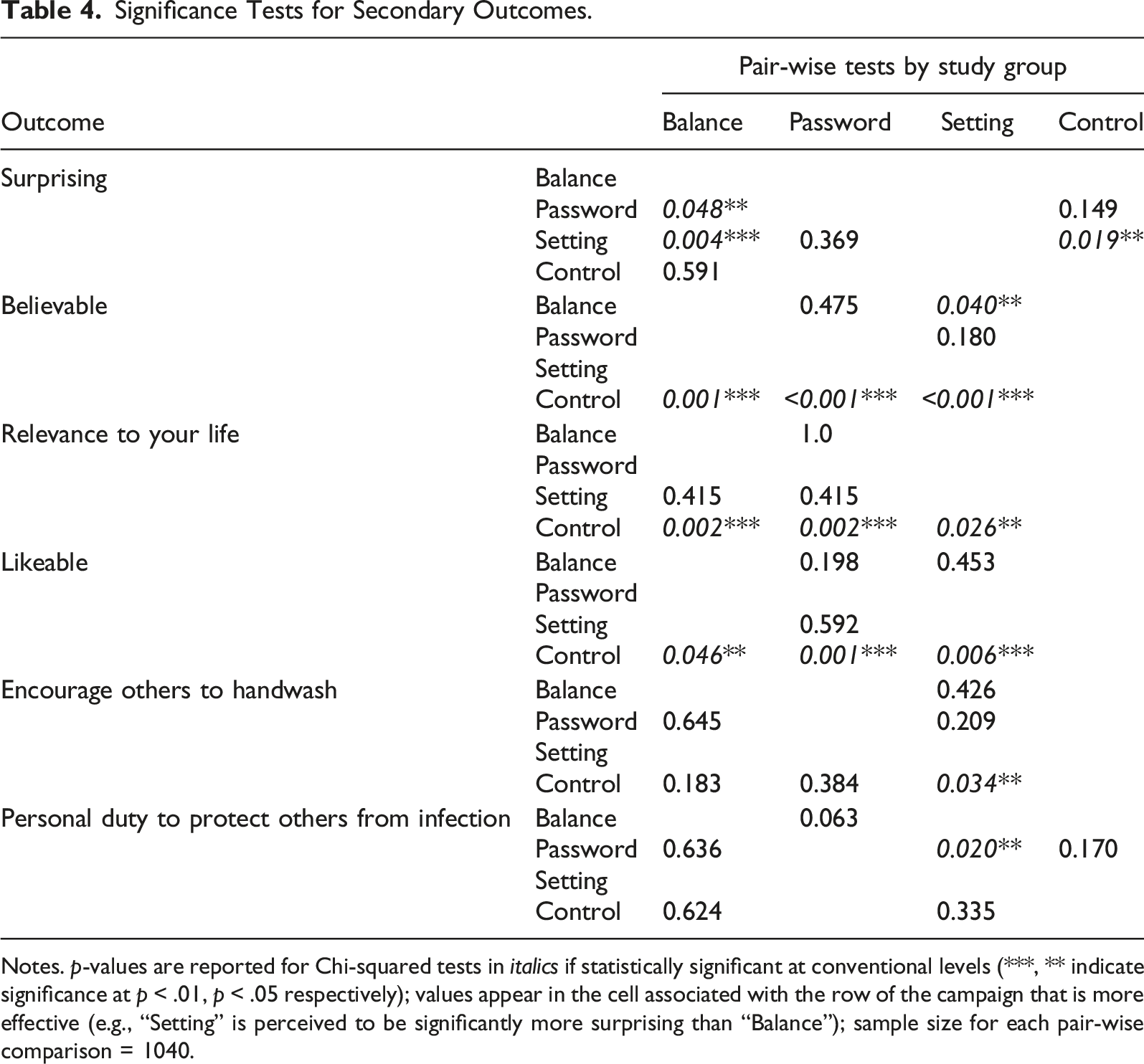
Notes. p-values are reported for Chi-squared tests in italics if statistically significant at conventional levels (***, ** indicate significance at p < .01, p < .05 respectively); values appear in the cell associated with the row of the campaign that is more effective (e.g., “Setting” is perceived to be significantly more surprising than “Balance”); sample size for each pair-wise comparison = 1040.
The control advertisement was seen as having the greatest relevance to the participants’ life (p < .05). The control was also more effective on the likeability criterion against all the narrative-based campaigns (p < .05). The control was perceived to be more powerful in persuading respondents that other people would engage in the protective behaviour of washing their hands after viewing than the “Setting” campaign (p < .05), but not any others.
The “Password” campaign was perceived to inspire a desire to protect others more than the “Setting” campaign (p < .05). The control appeared to be the most effective on believability, likeability and relevance (p < .05). Among the campaigns, the “Setting” appeared to be most effective, but not significantly so, on meaning and intent-to-behave, and second most effective on surprise and likeability. The “Balance” campaign was not rated highest on any measure.
Regression Results
Regression Estimation of Primary and Secondary Outcomes.
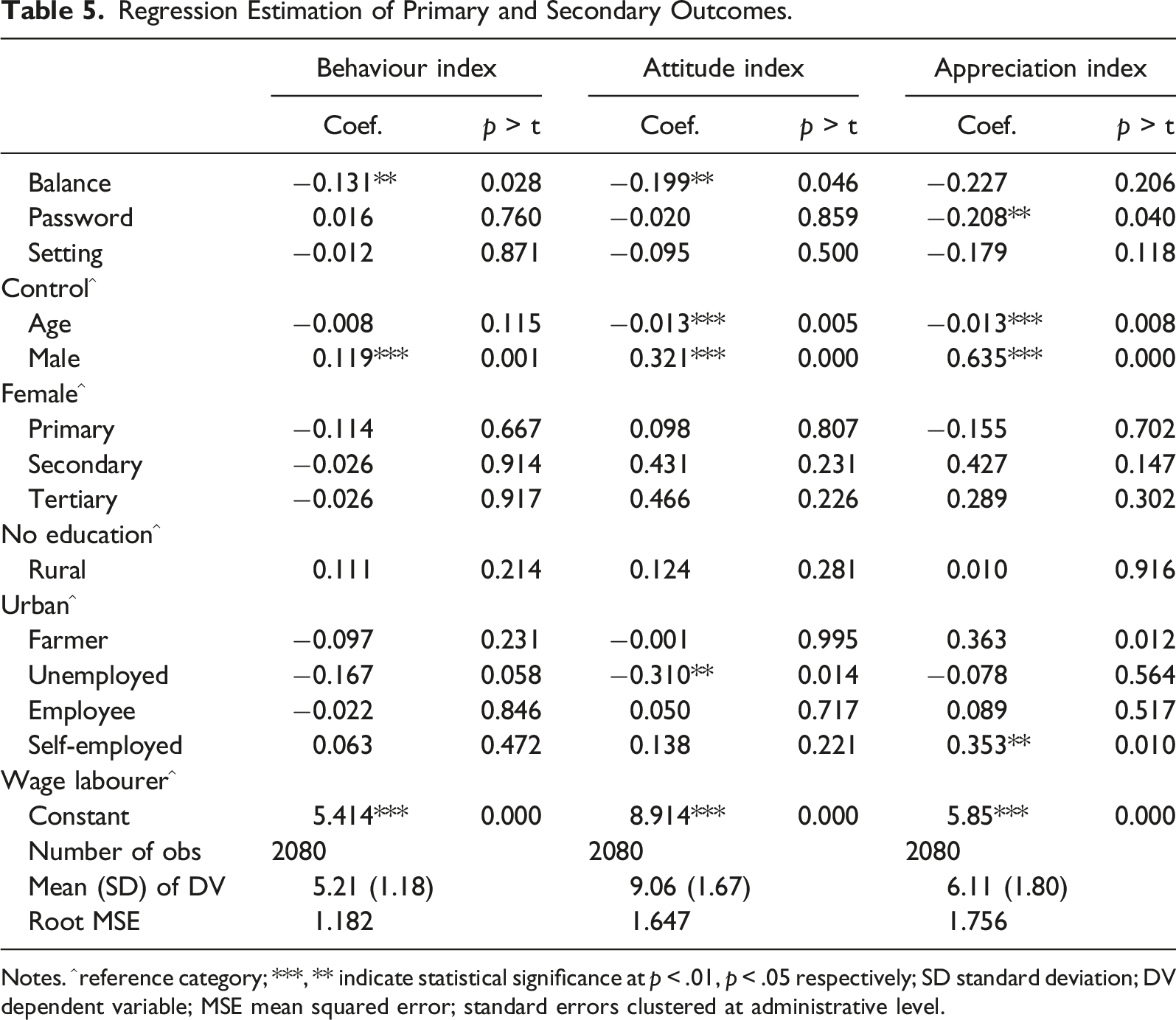
Notes. ^ reference category; ***, ** indicate statistical significance at p < .01, p < .05 respectively; SD standard deviation; DV dependent variable; MSE mean squared error; standard errors clustered at administrative level.
Slogan Results
Results of Slogan Survey for Secondary Outcomes.
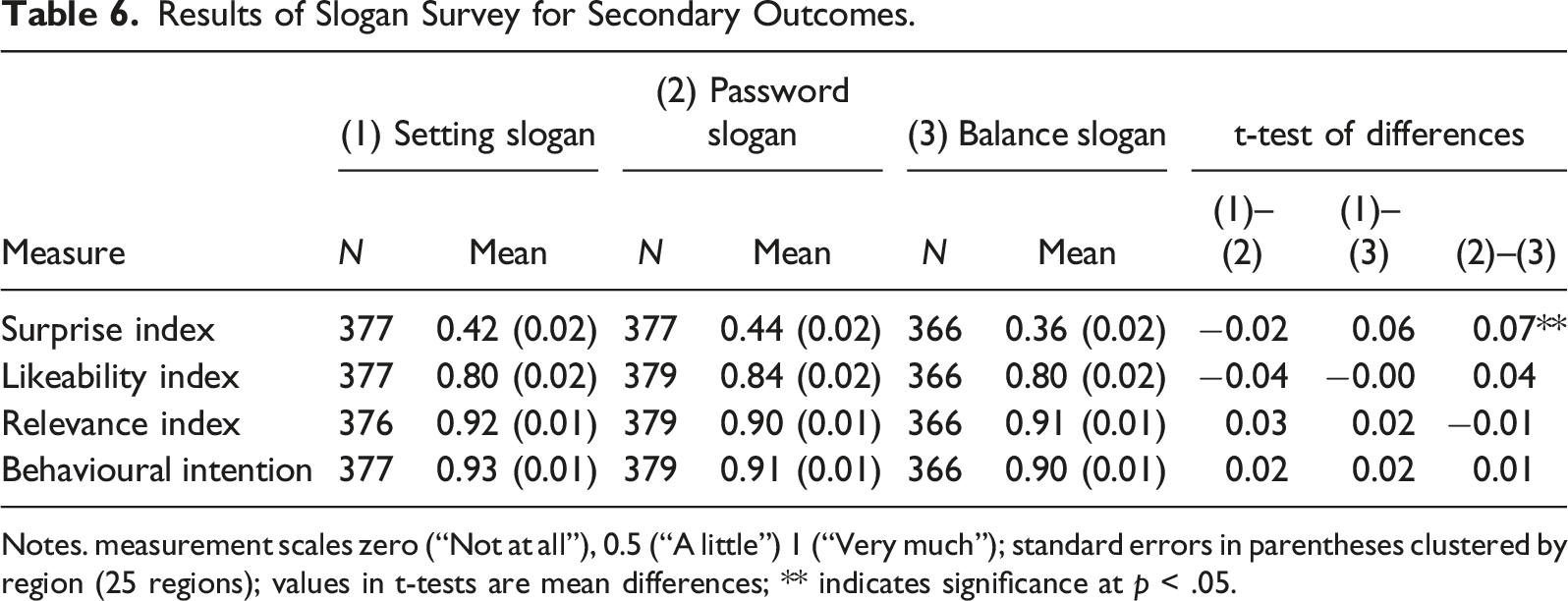
Notes. measurement scales zero (“Not at all”), 0.5 (“A little”) 1 (“Very much”); standard errors in parentheses clustered by region (25 regions); values in t-tests are mean differences; ** indicates significance at p < .05.
Discussion
For the most part, the campaigns did not differ in their abilities to inspire reported intentions to follow COVID-related behaviours, with the important exception of the “Balance” ad. Whether this is a sign of weakness in the campaign concept, the advertisements, or the character of the survey instrument is difficult to ascertain. However, the context of this kind of exposure can be considered relatively weak – a series of text messages and a one-minute advertisement appearing on the screen of a mobile phone in the middle of someone’s daily activities, during a period when people were likely exposed to a wide range of external messaging about the pandemic.
The “Balance” campaign proved to be least effective on a few behavioural indicators and across multiple dimensions of initial response. The campaign was nevertheless based on extensive formative research and the involvement of the same creative and production teams behind the more successful “Setting” campaign. We suggest that the reason it performed less effectively could be due to the circumstances depicted in the campaign advertisement – with business closures and emphasis on physical distancing even at work – which were no longer relevant at the time at which this study was conducted in 2022. This campaign had been designed for the early experience of COVID-19 in Tanzania, in mid-2020. In addition, the “Balance” campaign ad showed a dust mask being worn at a carpenter’s shop, to protect against flying wood shavings, which may have confused viewers. This also seemed to mirror the degree of emphasis within the “Balance” ad about handwashing, which showed only a very brief moment of handwashing. The control was more effective in persuading people that others would engage in handwashing; given this message was exclusively about washing hands, this result is perhaps not surprising. All of the treatment campaign ads showed handwashing, although with sanitizer and not with soap and water.
There were no significant differences across campaigns in the ability to get informants to report an intention to keep their distance. This may have been because no campaign advertisement showed this behaviour explicitly, or referred to it. The “Setting” campaign advertisement showed people distancing themselves in a queue, but attention was not drawn to this. Thus, there seems to be a literal-mindedness in the pattern of responses to the campaigns: only what was emphasized visually was picked up in the questionnaire responses.
The results with respect to exposure-related variables were quite satisfying. In particular, some evidence supported the proposition that a campaign specifically designed to elicit particular kinds of psychological responses could do so, as the effectiveness of the “Setting” campaign exceeded that of other treatments on the expected qualities (surprise, believability). The “Setting” campaign was designed to be unbelievable—physically impossible things happen in the video—hence the findings were anticipated. An important implication of these results – that the “Setting” campaign is both surprising and unbelievable – is that, to some extent, it runs against marketing standards, which tend to want high believability. In this case, the events depicted in the “Setting” are meant to be shocking in the sense that they go against common physical or technological principles—for example, that machines do not know when you have conformed to some social norm—but to make the point that the (social) world works better when everyone is helping control the pandemic.
An important source of bias in trials using reported outcomes can occur when participants are not masked to intervention status (Savović et al., 2012). The use of an active control rather than a passive one helped ensure that participants were masked as to whether or not they received any intervention. However, the use of an educational campaign as the control may have proven to be an inappropriate choice, as it had qualities the audience preferred to any of the narrative-based treatments in some respects, such as declarative information and directive authority. This was probably because it was the only one which is of an educational nature from an obviously authoritative source. Research in Ghana suggested that social pressure from opinion leaders had a significant effect on COVID-19 related behaviour (Tweneboah-Koduah & Coffie, 2022). People tend to respond to educational compaigns and public service announcements differently to ones that are seen as “branded” (e.g., (Darmawan, 2020)), and therefore self-serving for some private enterprise. Further research is needed to help understand some of the specific mechanisms at play in this study, such as why the public service announcement message was rated as being more likeable than the narrative-based campaigns.
We also note that, while some of the outcomes studied in this paper are similar to those commonly tested in theory-based studies, such as intention in the theory of planned behaviour, our aim was to compare the responses to campaign ads produced using different models of creative development, where the responses were measured using standard marketing variables. Since we were not able to collect data on actual behaviours, we are not able to assess how our results fared in fulfilling the expectations of particular behaviour change theories. However, we can postulate motivating drivers to each of the campaigns, including those not designed using the BCD approach. As noted above, in the language of BCD, the motives thought to underlie the “Setting” campaign were ‘justice’, because of the collective responsibility of all to protect public health, and ‘affiliate’, because of the need to adhere to prescribed behaviours. The main motivating driver for the “Balance” campaign, which appealed to Tanzanian national pride, was ‘status’. In contrast, for the “Password” campaign, which featured people demonstrating they were practising desired behaviours in different situations, the key motivating factor operating appeared to be ‘affiliate’. We posit that, by appealing to a narrower range of behavioural motives, and not adequately incorporating higher order motivating drivers like justice and status, the “Password” campaign was inherently more limited both in its consumer appeal and its ability to alter attitudes and behavioural propensities, all else being equal. Or, to put it another way, we hypothesize that, by appealing to higher order drives, the locally designed “Setting” campaign was able to compete (and out-perform on several metrics) the global advertising campaign. Further empirical research that aims to understand how articulated drives affect behavioural intentions, and subsequently observed behaviour, would provide useful evidence for the design of effective public health campaigns.
Conclusion
This paper sought to take advantage of a rare opportunity to investigate the reasons why some messages ‘work better’ than others at achieving communication objectives. This evaluation reports on a test of the process of designing a behaviour change communication campaign to support national efforts to promote handwashing with soap and other behaviours for the prevention of COVID-19. The existence of several different campaign ads, developed using distinctive creative processes for broadcast in Tanzania by different teams of creative professionals, enabled a randomized comparison of ads with different qualities for their reported effectiveness. A number of statistically significant differences were found in primary behavioural tendency outcomes, although these concentrated on one ad (“Balance”) that was found less effective than the others.
The campaign that was the result of a very large investment by a major consortium, using a multi-stage creative development process led by an internationally renowned creative company, only did better than the other campaigns on one test. In particular, it was not more effective than the theory-based campaign on any behavioural indicator or exposure variable. Further, this latter campaign was significantly more effective at making people feel it was their personal duty to protect others from infection. This provides some evidence that a theory-guided development process, produced locally and at low cost, can compete with high-quality standard advertising processes and production values.
Supplemental Material
Supplemental Material - Comparison of COVID-19 Behaviour Change Campaign ads in Tanzania: Results From a Randomised Controlled Survey-Based Experiment
Supplemental Material for Comparison of COVID-19 Behaviour Change Campaign ads in Tanzania: Results From a Randomised Controlled Survey-Based Experiment by Robert Aunger, Vishna Shah, Hugh Sharma Waddington, and Kaposo Mwambuli in Social Marketing Quarterly
Footnotes
Acknowledgments
Thanks to Joy Masimane from GeoPoll Ltd who provided the participant flow data.
Author Contributions
Robert Aunger: conceptualisation, formal analysis, investigation, methodology, writing - original draft
Vishna Shah: formal analysis, investigation, methodology, writing - original draft
Hugh Sharma Waddington: formal analysis, writing - original draft
Kaposo Mwambuli: investigation, writing - review and editing
Declaration of Conflicting Interests
The author(s) declared no potential conflicts of interest with respect to the research, authorship, and/or publication of this article.
Funding
The author(s) disclosed receipt of the following financial support for the research, authorship, and/or publication of this article: This study was funded by FCDO and Unilever through the COVID-19 Hygiene and Behaviour Change Coalition.

Supplemental Material
Supplemental material for this article is available online.
Notes
Author Biographies
References
Supplementary Material
Please find the following supplemental material available below.
For Open Access articles published under a Creative Commons License, all supplemental material carries the same license as the article it is associated with.
For non-Open Access articles published, all supplemental material carries a non-exclusive license, and permission requests for re-use of supplemental material or any part of supplemental material shall be sent directly to the copyright owner as specified in the copyright notice associated with the article.
