



Abstract
Background
The purpose of this research is to extend Corporate Social Marketing (CSM) literature and provide practitioners with a framework that can be used in different contexts, as the existing literature lacks an understanding of what factors determine the success of a CSM program and understand the interplay between cross-sector partnerships, CSM, and societal outcomes and impact delivery. Companies are taking a greater interest in addressing social issues, utilizing innovative CSR approaches such as CSM to promote behavior change among their audience while matching their core strengths and attributes (Kotler et al., 2012).
Focus of the Article
The article evaluates how the CSM program Mein Pragati developed lasting behavior change and seeks to develop a conceptual model around its success.
Research Question
How can the CSM contribute to behavior change programs?
Program Design/Approach Importance to the Social Marketing Field
The proposed model (Input, Outcome, and Impact Model of Program Development) provides a structured approach to building a CSM program that changes behavior and develops mutual benefit between corporations, government, and nonprofits.
Methods
Using a case study approach, this paper analyzes a successful financial inclusion program, Mein Pragati of a global analytics company, CRISIL, and its CSR arm. The three studies (in-depth interviews with eight management members, in-depth interviews with 82 Sakhis (peer educators) and their spouses, and 248 survey interviews with beneficiaries reveal the connection between program development, social outcomes, and societal impact.
Results
Based on the findings of the three studies, the cross-sector Input, Output, and Outcome Model of the Program Development proposes ways to build effective CSR interventions. Individually, the findings from the in-depth interviews provide a thematic overview of CSM’s success, peer educator interviews identify the impact and outcomes of Mein Pragati, and beneficiary interviews demonstrate program success.
Recommendations for Research and Practice
Future research can empirically test the Input, Outcome, and Impact Model of Program Development, as further exploration of CSM is needed to understand how the concepts of people, planet, and profits can mutually benefit and provide both behavioral and societal change within program development.
Keywords
Introduction
Corporate Social Responsibility (CSR) is well-researched. Several frameworks cover ethics, implementation, design, financial viability, stakeholder involvement, performance, and analysis (Bergmann et al., 2021; Bhattacharyya, 2019). However, frameworks specific to CSR’s sub-discipline, Corporate Social Marketing (CSM), are limited. CSM is a marketing-based CSR approach (Campbell et al., 2022), where a corporate leads behavior change using social marketing practices (Kotler et al., 2012). The current study contributes to the literature by proposing a social marketing-focused framework for CSR efforts aiming to deliver outcome change and lasting societal impact.
This manuscript seeks to understand the interplay between cross-sector partnerships, CSM, societal outcomes, and impact delivery. Previous studies have investigated the influence of cross-sector partnerships on the social outcomes and impact that result from the strategic alignment between corporate and the social sector (Inoue & Kent, 2014; Vestergaard et al., 2021; Yan et al., 2018). However, CSM frameworks and models that focus on program development are limited and do not go beyond messaging strategies (Cialdini, 2003; Du et al., 2010), effects on consumer behavior (Inoue & Kent, 2014), and implementation (Du et al., 2008). While other scholars have proposed social marketing and behavior change models for program development (Akbar et al., 2019), they have ignored corporate involvement.
To investigate, a case study approach was adopted to evaluate a CSM program, Mein Pragati (I am Progress, in Hindi). Mein Pragati is a CSR program to improve financial literacy, capability, and inclusion in rural Assam, India. Mein Pragati satisfies the criteria to explore a potential CSM conceptual model; it is delivered through a cross-sector partnership, as defined by Yan et al. (2018), to deliver social outcomes and impacts (Barnett et al., 2020). It satisfies the CSM benchmarks (Campbell et al., 2022; Xia et al., 2016).
Using a three-stage case study approach, the findings uncovered how the program was created and what brought about success from a stakeholder perspective, how management teams (corporate, foundation, and nonprofit) interacted with each other, how incentivizing peer educators was paramount for program success, and, how the program delivered positive perceptions towards changing their financial behaviors. A CSM framework is proposed to enable behavior change practitioners to develop social interventions within a corporate-led cross-sector partnership. Our case study investigates how a corporation can work with government and nonprofits rather than a direct comparison between social marketing and CSM. It is widely accepted that social marketing and CSM share the same foundational principles within behavior change but are driven by corporate involvement rather than government and nonprofit funding.
The findings from these three studies informed the Input, Outcome, and Impact Model of Program Development, a framework for implementing cross-sector corporate-led interventions. The paper explores the current literature on CSM and financial literacy and capability, an in-depth review of Mein Pragati, reports the method and results of the three studies, and a combined analysis leading to the development of the proposed CSM model.
Theoretical Background
Corporate Social Responsibility (CSR) is the operational function that enables corporations to become good citizens using their resources. United National Industrial Development Organization (UNIDO) highlights CSR as integrating “social and environmental concerns in their business operations and interactions with their stakeholders” (Unido, 2022) 1 .
Inversely, other academic literature focuses CSR literature on business outcomes. CSR is a commonly used strategy to improve an organization’s corporate reputation and attract stakeholders (Fombrun, 2012). CSR strategy can also develop a competitive advantage, grow the business, improve investor relations, improve employee relations, and enhance fiscal benefits (Bhattacharya & Sen, 2004; Kotler et al., 2012; Rindova et al., 2010).
As a CSR initiative, CSM’s primary objective is to change behaviors that benefit society (Campbell et al., 2022; Kotler et al., 2012; Lee, 2016). This is demonstrated in the Commonwealth Bank-run Australian initiative in the form of the CommBank Youth app. The CSM program focuses on lifting the fiscal skills of under 14s, specifically financial literacy, and capability (Commbank, 2022). Such programs reflect similar benchmarks as government-funded or nonprofit-led social marketing initiatives, such as the Leave It campaign, where dog owners are persuaded to enroll their pets in a training program to lower koala-dog interactions and koala mortality in urbanized Queensland (Australia) (Harris et al., 2021). Therefore, CSM is an extension of the application of social marketing, meaning that the social marketing initiative is corporate-led (Lee, 2016). The core objective of CSM remains the promotion of desired behavior by offering attractive social products (e.g., the CommBank Youth app) and solving social issues (Lee, 2016).
Social marketing adopts a marketing-based approach to solving social issues (Hastings & Domegan, 2018). CSM’s function within CSR is to apply a marketing-based approach to promote behavior change (Campbell et al., 2022). The initiative must make the desired behavior tangible, enhance benefits and convenience, increase frequency, and reduce entry barriers (Campbell et al., 2022).
Corporations are attracted to CSM-based strategies by aligning with a cause and promoting behavioral outcomes. They deliver win-win benefits for the cause and the corporation (Hoeffler & Keller, 2002; Kotler et al., 2012; Lee, 2016). However, the core audience needs to perceive legitimacy through three lenses: (1) legitimacy within program outcomes, (2) legitimacy of the corporate alignment with stakeholders, and (3) legitimacy that the corporation has with the cause. Otherwise, awareness, revenue, engagement, credibility, and brand equity will be compromised (Hoeffler & Keller, 2002; Kotler et al., 2012).
Corporate social marketing success is based on consistency and congruity between the social and societal cause and the corporate (Du et al., 2010; Inoue and Kent, 2012, 2014). It demands a joint strategic vision between stakeholders. They must apply careful thought and consideration to pairing corporate and social causes and note any substantial congruity to make a partnership work (Deshpande, 2016).
Corporate social marketing tends to borrow from social marketing but does not have a specific framework or model to facilitate a CSM intervention. Models adopted by CSM practitioners include but are not limited to the Transtheoretical Model (TTM) (Prochaska & Velicer, 1997), The Theory of Planned Behavior (TPB) (Ajzen, 1991), and the Health Belief Model (HBM) (Champion & Skinner, 2008). However, these are specific to changing behavior and not the facilitation of a corporate-style intervention that involves cross-sector stakeholders.
Behavior change models are plentiful and are commonly used in social marketing in a cross-disciplinary context. These include social marketing benchmarks (Wettstein & Suggs, 2016; Xia et al., 2016) and the social marketing mix (Luca & Suggs, 2010). However, these models and benchmarks do not view intervention development through the lens of a corporate citizen but rather as a behavior change agent associated with the government or a nonprofit organization. To address these gaps, this study addresses the following research question: how a CSM program can extend the effectiveness of a behavior change intervention.
Considering the dearth of CSM-specific models and frameworks for intervention development, the current study proposes a model for practice consideration.
Case Study: Mein Pragati
Introduction to the Mein Pragati
Mein Pragati is a CSM-based CSR initiative led by CRISIL’s CSR arm, the CRISIL Foundation, with NGO partner support from Rashtriya Gramin Vikas Nidhi (RGVN) and Seven Sisters Development Assistance (SeSTA). CRISIL is a leading global analytics company and India’s foremost provider of ratings, data, research, analytics, and solutions. It is majority owned by S&P Global Inc. CRISIL Foundation is CRISIL’s CSR arm and works in financial capability building and environmental conservation, per the Indian CSR Act 2013. RGVN is a nonprofit and non-government organization focusing on building a grassroots institution supporting the community, securing livelihood and food security, and skill and capacity building. See Figure 1 for the partnership diagram. Mein Pragati Program Partnerships.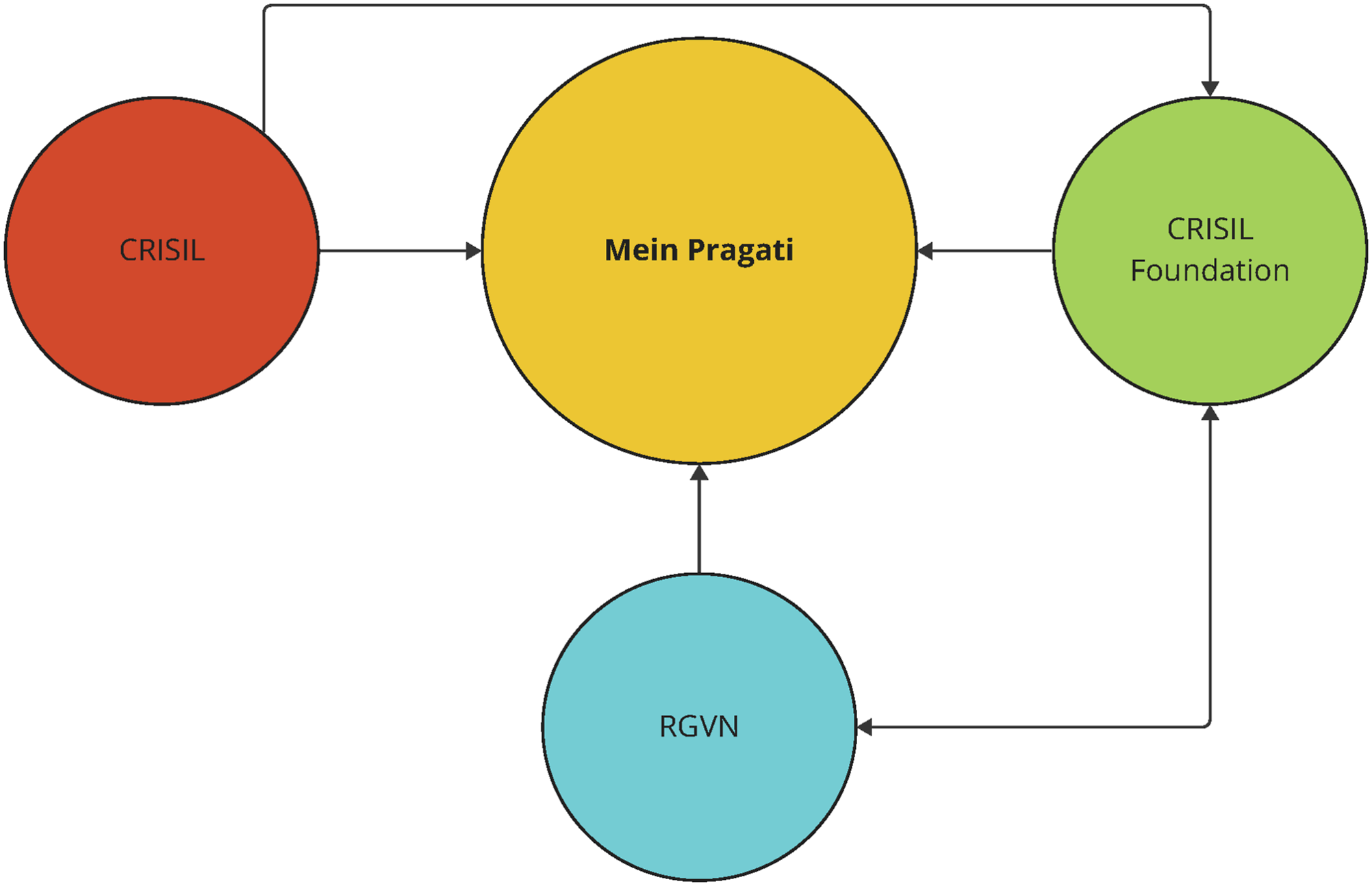
The program aims to lift women’s financial literacy levels and capability in rural Assam, India. Programs that focus on improving financial literacy are suitable to push the individual along the journey to financial well-being but do not provide the skills and knowledge to enhance financial capability. There is a call for more financial programs to build capability rather than awareness, like Mein Pragati. Financial capability is defined as the combination of responsible financial behaviors and an individual’s level of financial literacy, equating to financial skill and the level where they can carry out tasks (Xiao & Porto, 2017). Financial literacy and capability are complex societal issues. For example, financial literacy varies by gender (Baluja, 2016; Mottola, 2013), with rates of financial literacy lowest in women when compared to men. The Global Findex Database reports that 72 percent of men in developing economies have a bank account compared to 65 percent among women (Demirguc-Kunt et al., 2018). This has resulted in calls for programs to strengthen women’s financial capability (Agarwalla et al., 2015).
Mein Pragati is focused on women whose current behavior did not reflect the appropriate levels of financial literacy, inclusion, and capability, intending to lift those indicators to a more desirable level. Compared to other Indian states, in terms of area and population, Assam is a small state in Northeast India. It is projected to have reached 36.61 million people in 2021, with 49% females (Baruah & Baruah, 2021). The program uses a peer education approach to improve financial literacy and capability among women in rural India. The program operates in six districts of Assam, India: Barpata, Darrang, Goalpara, Kamrup, Morigaon, and Nalbari. The history of the program can be split into three phases: phase one (launch), phase two (expansion), and phase three (sustainability of the program). Phase one ran from 2015 to 2017, and phase two ran between 2018 and 2020, with the program currently in the scale-up phase.
Context of Mein Pragati
The program has created an all-women cadre of peer educators known as Sakhis (friends in Hindi and Assamese). Sakhis provides financial advice and support to program beneficiaries, influencing positive financial choices (Campbell et al., 2023). The Sakhi guides the beneficiaries to help improve financial awareness, capability, and community integration. It connects them to essential financial services, such as banks, social welfare schemes, and other financial institutions and services. Sakhi also acts as the first point of contact for the community to resolve first-order queries and helps beneficiaries navigate the needed documentation for accessing any financial services/social security schemes. This program encourages interaction between Sakhi and the program beneficiary, with the Sakhi charging a nominal fee. Thus, Mein Pragati provides Sakhis financial security and a reliable peer network for program beneficiaries, see Figure 2. Mein Pragati Program flow.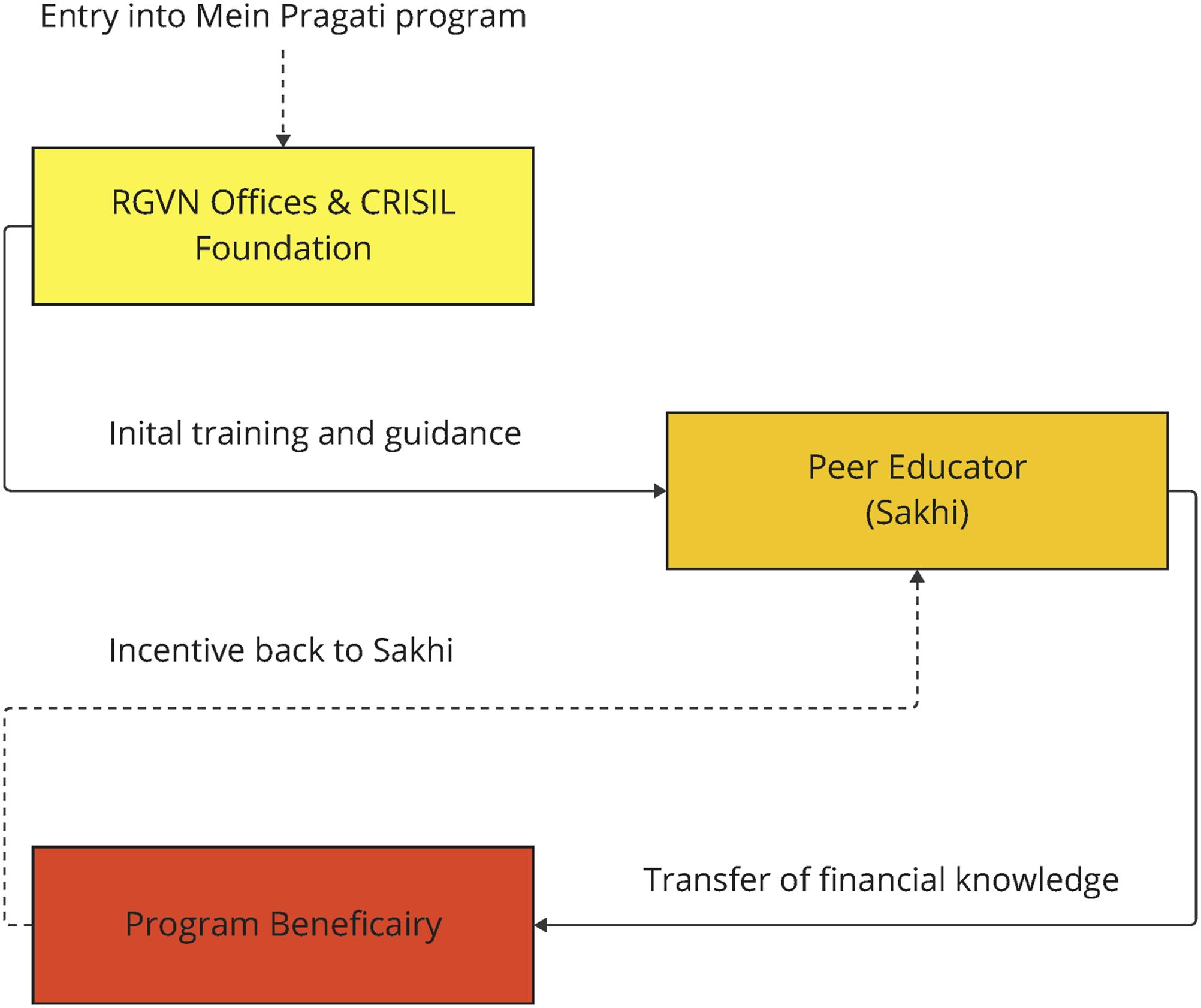
Sakhi Metrics as of November 2021 Across RGVN-Controlled Districts.
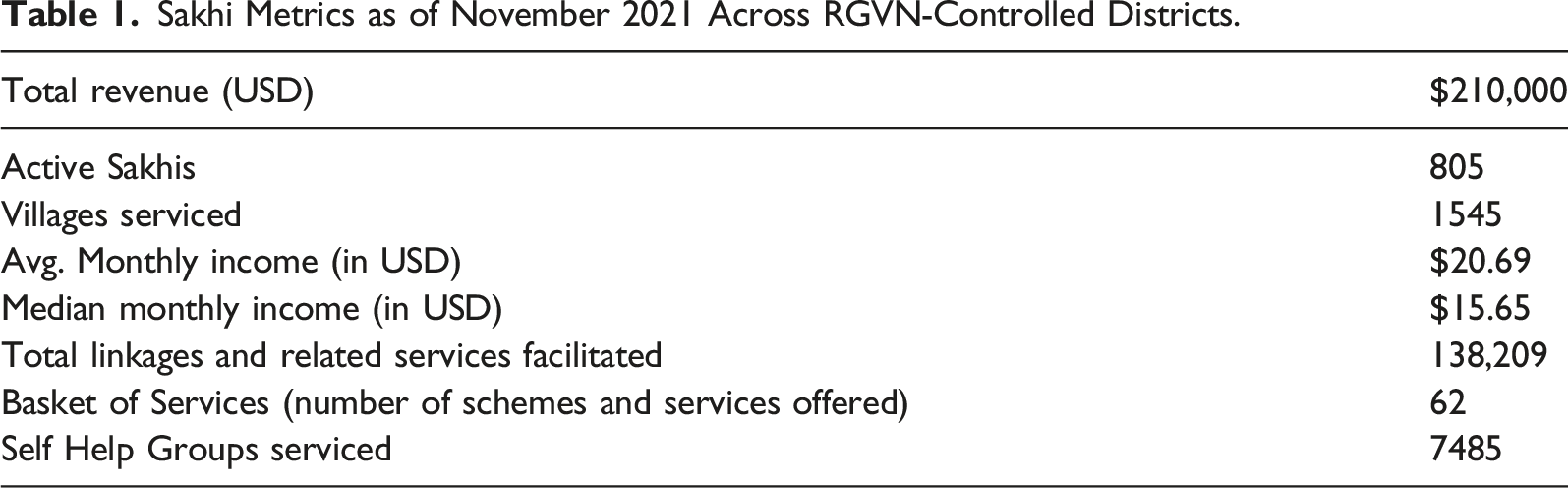
The first iteration of Mein Pragati was launched by the CRISIL Foundation in Assam in 2015 to empower 100,000 rural women in six Assam districts. In addition, the CRISIL Foundation partnered with RGVN as the project implementation partner.
The second phase aimed to strengthen, sustain, and deepen the on-ground impact achieved during the first phase – by creating a trained community cadre of Sakhis. This led to a robust framework of 400 Sakhis by building their capacities via a fee-based service delivery model. The Sakhis were expected to provide a range of services called a Basket of Services (BoS) to drive last-mile financial inclusion in their villages. This enabled the program to move beyond ‘financial awareness/literacy’ to ‘long-term financial behavior.’
In 2019, the CRISIL Foundation won the Ministry of Corporate Affairs, Government of India’s National CSR Award 2018 under ‘CSR in Challenging Circumstances’ for social impact in the Northeast, recognizing Mein Pragati. In 2018 and 2019, Mein Pragati’s (Assam) footprint expanded to 11 blocks (cluster of villages within a district subdivision), six districts, and 376 villages, with 413 Sakhis who serviced 376 villages. Over this period, the community cadre emerged as a powerful convergence model ─ the Sakhis became the primary point of contact for linkages to financial products and services and government welfare schemes.
In 2020, Sakhi’s selection focused on onboarding her willingness to travel and cover a larger territory. This strategy enhanced outreach to distant remote villages. The 376 projects expanded to 1143 villages, with each Sakhi mapped to two villages that provided a BoS of more than 75 services. Focus continued on central and state government scheme linkages and generating new applications and services to promote financial literacy.
Outreach Summary 2019 - 2021.
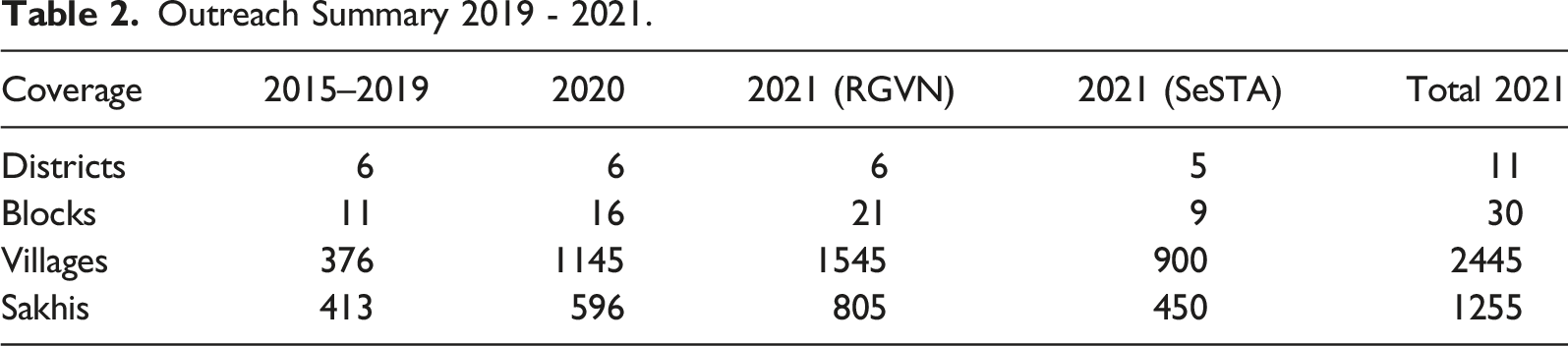
Sixty-six clusters were developed across 16 blocks to ensure a sustainable exit strategy. Each cluster was formed with 10–12 Sakhis, allowing the team to institutionalize the Sakhis for long-term sustainability. Seven hundred and five Sakhis are currently present in the clusters out of 805 Sakhis. The remaining 100 Sakhis joined the existing clusters gradually. Moreover, a cash incentive program was rolled out to motivate the clusters and drive larger outcomes for the Mein Pragati program and its beneficiaries. There was a one-off cash incentive over the COVID-19 period based on the following parameters of performance: income, beneficiary outreach, BoS, stakeholder engagement, monthly meetings held, and attendance and regularity in reporting. Similar incentives are rolled out for well-performing clusters. To ensure program and cluster success, the cash incentives are reinvested into building Sakhi offices, such as banners, office stationery chairs, tables, and fans that provide stability to the Sakhis and visibility to the clusters.
Method
The study utilizes Yin’s (2018) case study method and explores the case insights using Teddlie and Tashakkori’s (2003) sequential research design with a mixed-method approach (see Figure 3). We used Yin’s (2018) case study method to plan, design, prepare, collect, analyze, and disseminate case study findings. In alignment with Yin’s (2018) case study method, we investigated patterns observable in three studies to explain the phenomena of financial, community, and political empowerment in the Mein Pragati program. Moreover, Teddlie and Tashakkori’s (2003) research design allowed for the inferences from studies 1 and 2 to inform the research design for study 3, thus increasing the validity and reliability of case study data. We refer to validity to confirm that the data highlighted the concepts of interest and reliability around how our case study is generalizable to other CSM programs. Mixed-method sequential research design, adapted from Tashakkori & Teddlie (2003).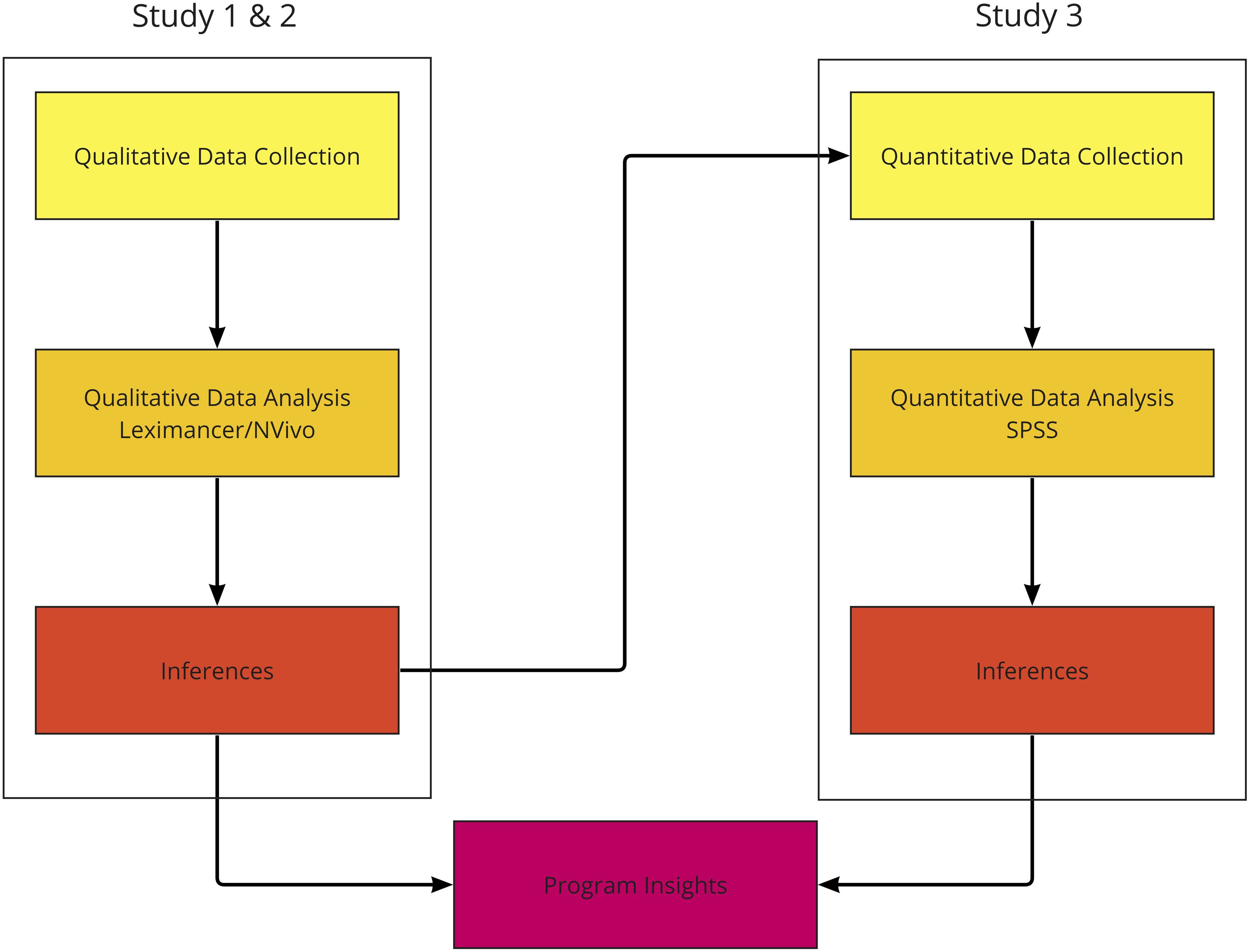
We used a socio-ecological approach (Crandon et al., 2022) to understand all three stakeholder groups in the Mein Pragati case. Study 1 reports findings of semi-structured phenomenological interviews with the management team responsible for designing the Mein Pragati program; study 2 reports findings of semi-structured phenomenological interviews with Sakhis and their spouses; and study 3 reports findings of a quantitative survey of program beneficiaries. Ethics approval was received from Griffith University (GU Ref No: 2019/977) prior to conducting the studies. An informed consent form was administered in writing or verbally before collecting data.
Study 1 stakeholders
Study 1 used the phenomenological interview method. This method was selected to provide a second-person perspective and develop reciprocity between the interviewer and the interviewee (Fuchs, 2013; Høffding & Martiny, 2016). Phenomenological studies or approaches are commonly used in behavior change (Smith, 2011), providing insights into the individual’s lived experience (Gray, 2019).
Researchers used snowball sampling, representing three groups: CRISIL Company Management (n = 2) (Board Member and Chief Executive Officer/Managing Director), CRISIL Foundation Management (n = 4) (Chief Operations Officer, Associate Director, Project Manager, and the Program Manager), and RGVN Management (n = 2) (Trainer and the Social Development Manager).
The discussion guide for the semi-structured interviews used the Trans Theoretical Model (TTM) (Prochaska & Velicer, 1997) as a theoretical base to help understand the process of change within the program. It allowed the researchers to understand how Mein Pragati was developed around behavior change.
The 60 and 90-min interviews were held on Zoom, conducted in English, recorded, and transcribed. The interview data were analyzed using NVivo (v.1.6.1), a word association analysis tool to code themes and concepts manually. In addition, the transcribed responses were synthesized through the Leximancer platform (v.4.51) to analyze the transcription text and group key concepts through linguistic association (Smith & Humphreys, 2006).
Study 2 Peer Educators
Study 2 used a phenomenological approach to study 1 to interview Sakhis and their spouses. The TTM was employed to capture change in financial literacy among Sakhis. At the time of interviewing, 410 Sakhis were employed in the program. Of these, 41 became politically empowered and contested local elections (group 1), and the remaining 369 did not (group 2). These groups were represented using stratum sampling and recruited through a simple random sampling strategy: groups 1 (n = 15) and 2 (n = 52). In addition, the research team also interviewed the spouses of Sakhis (n = 15) to understand how Mein Pragati impacted the family dynamic. The 82 interviews were conducted in person in Assamese. The semi-structured interviews lasted 20 minutes and were later transcribed and translated into English.
Study 3 program benefactors
To measure beneficiaries’ perceptions of financial management and the Mein Pragati program, a questionnaire was distributed with the aid of RGVN and the CRISIL team. The criteria were that the interviewee had previously used Mein Pragati services. The firm used a stratified random sample strategy from a total population of 306,899 spread across the six districts of Assam (i.e., Barpata, Darrang, Goalpara, Kamrup, and rural districts Morigaon and Nalbari). In the end, 248 respondents completed the entire survey.
The questionnaire was completed in person in RGVN offices (face-to-face) using an iPad on the REDCap platform. It took around 30 minutes for the respondent to complete the survey. The interviewers orally administered the consent form and the survey and filled in the responses electronically on behalf of the respondents. The survey instrument was pretested with 25 respondents to check whether they understood and answered all questions appropriately. Initially written in English, the questionnaire was translated into Assamese, and the open-ended answers were back-translated into English.
Results
Study 1 Stakeholders
Study 1 highlighted several essential concepts in constructing a successful CSM program, where success is gauged by behavioral adoption by Sakhis and beneficiaries. In this study, we interviewed three organizations: CRISIL Management (corporate level), CRISIL Foundation Management (corporate social responsibility), and RGVN (nonprofit stakeholder). These results have uncovered the cross-sector relationship between stakeholders and how corporate-led CSR programs can integrate, leading to tangible outcomes and social impact. See Figure 4 for the identified themes and concepts of the study: the need for strategy, cohesion of stakeholders, the requirement for systems and processes, providing a structure around the program, separating outcomes from impact, and the presence of corporate value addition. Study 1 Semi-structured interviews concept map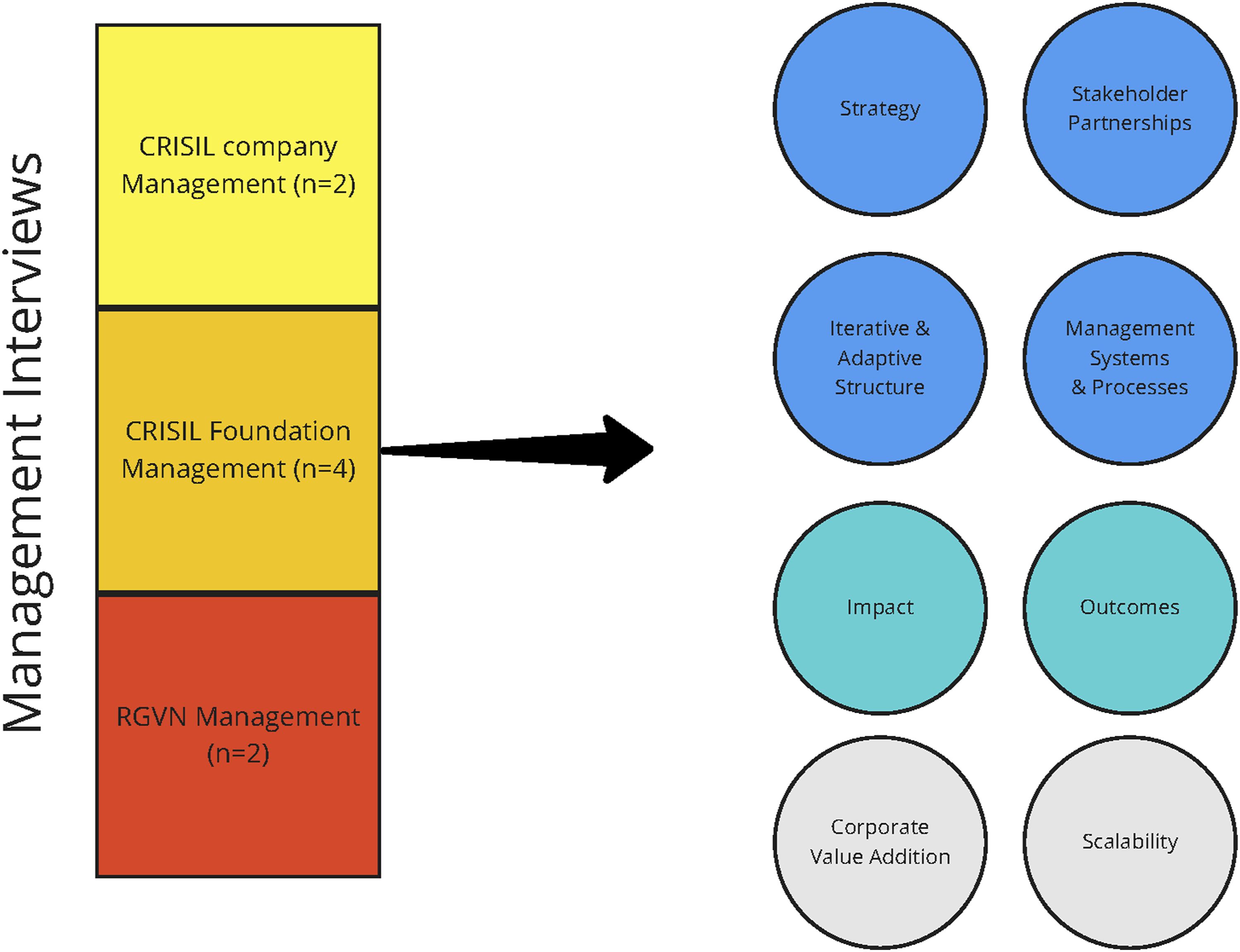
Study 1 Success Factors
Strategy
The strategy was discussed from the perspective of mission alignment, as illustrated by the CRISIL Foundation manager: “…since our mission is making markets function better and by sharing insights which can improve the power of decision making, we felt our area of corporate social responsibility could be financial inclusion and financial literacy because India was rating very, very low on the financial inclusion parameters.”
CRISIL Foundation management also discussed strategy from a community integration/impact perspective, “We had cut that umbilical cord from day one that you need to survive on your own, and we are there to support you. This has led to a sense of empowerment because the Sakhis have created that status within the community. They have tried to get the community linked with various schemes.” The interviews highlighted a strategic imperative that Mein Pragati was developing into an autonomous program.
This sentiment was shared by RGVN, showing an alignment between the strategic approaches. “The strategy, we have built their capacities. We have tried to introduce the value and provide valuable information to them. Every month, we had a monthly meeting called a training program. We have built their capacities to earn and sustain themselves.” Therefore, extrinsic motivations are incorporated into their overall strategy with Sakhis.
However, RGVN management considered extrinsic motivation a secondary layer of their strategy. A more intrinsic approach was prioritized. “I would say the monetary benefit is secondary, but the first motivation we have given them is working for their communities because their work for the communities will improve their status. They will be viewed as a resource and an active woman of their village.”
From a corporate lens, a strategy was discussed from a pragmatic point of view, where CRISIL Management highlighted the importance of the alignment of social cause with the business operations, “When it started, we asked a question, and I am a great believer, if corporations have to do anything in CSR, they must find projects which are close to their competencies. In other words, if I am CRISIL, I do not have any competency in running a hospital or a school, even though that would be considered CSR.
To add another quote, “at CRISIL, we ‘make markets work better’ because we produce great data and analytics. If you were to extend that to CSR, it all started with words like “What if we were to make women financially literate?” “…and then we asked, what does financial literacy mean for our audience?” The second quote reflects how CRISIL defined the program’s intended behavioral outcome.
Stakeholder Partnerships
The interview responses demonstrate the usefulness of adopting a cross-sector partnership and the importance of partnerships in facilitating change. Considering CRISIL Foundation’s stakeholder involvement, “I cannot start a livelihood intervention. However, our NGO partner, RGVN, worked with CRISIL and other donors. So, we engaged with them and asked which other donors were open to considering livelihood as an objective. Why don’t we engage with them and show them the merit of entering these communities, as we already have a strong infrastructure for organizing these women and creating basic awareness and financial linkages.” This partnership helped increase diffusion within the community.
Rashtriya gramin vikas nidhi adopted a cross-sector partnership approach to diffuse and gain credibility of the social program in locations that are remote or present high entry barriers, as stated by a CRISIL management member, “The whole concept of Mein Pragati is a collaboration between the financial institution and the social sector. If you go to the field, it helps to say that we are with RGVN; we have a great network that can get difficult things done in remote towns, not just in district towns. That is why it was important for a corporate like us to contact RGVN.”
“We felt RGVN were a good set of people and had been around long enough, so we could start experimenting. In 2012, we provided them funding to conduct 25 pilot programs.” This highlights a long-standing relationship between RGVN and CRISIL before Mein Pragati’s inception.
Management Systems and Processes
Another dominant concept from this study was the mutual use of systems and processes across the RGVN, CRISIL, and the CRISIL Foundation. Each party attributed systems and processes to their success. The CRISIL Foundation Management representative explained, “In terms of the overall thought process, the scope, and how we defined the objectives, it was very fluid. We did not pretend that we know everything, and we allowed the program to take shape the way it was relevant for the community, and that is how it started taking shape.” CRISIL’s corporate arm further reinforced this: “We work with partners and want to measure how we have done. What is the engagement like? Have we got the report in time? There is the intermediary, and then there is the end customer. The end customer is the beneficiary of our program – and that is where the impact measurement comes in. Furthermore, we also have operational efficiency metrics because we have invested so deeply in technology in the company.” Thus, borrowing the corporate mindset for systems, processes, and measurements ensured efficiency from a program, partner, and beneficiary perspective.
Similar to the previous responses, RGVN shared the same view that systems and processes incorporated into social programs can lead to success, “It has been a very successful partnership, and we have learned a lot. We have learned to deal with targets. We have learned to deal with deadlines and timelines of how a corporation works.” In addition, RGVN also provided insight into procedures that happen with the Mein Pragati program, “They also did village introduction meetings where when a Sakhi was chosen – the village head man, the panchayat members, the social workers in the village, and the self-help group members, called for a meeting, and introduced the Sakhi that she has been chosen for this project, she will be trained, she will have this kind of information, and the villagers will be able to approach her for this kind of thing.” The above quote further emphasizes the need to consider downstream and upstream levels when integrating the systems within a social program.
Iterative & Adaptive Structure
The concept of an iterative and adaptive structure is revealed when discussing program inception and delivery. For CRISIL Foundation, structure exists in an agile approach, canvasing the environment, adjusting the Mein Pragati program, building on previous iterations, and developing the program based on grounded experiences. “We do not have a structured document on the best practice. Some practices work well in Assam but differ from those in Haryana and Rajasthan.”
The following passage corroborates Mein Pragati’s iterative and agile approach. “It was a very iterative process. It is not that we lined it there with a predefined method and completely baked – we went in with broad assumptions, but we kept ourselves extremely open and flexible. We kept making changes as we learned things from our on-ground experience. Moreover, after the four-month engagement with this group of women – we started referring to it as a lifecycle. We completed each lifecycle in about four and a half months. After we completed four lifecycles and covered some ground, we decided to go back and check with the members of the first lifecycle to what extent they retained what they learned and to what extent they continued to apply that knowledge in practice.” The Mein Pragati’s program development was thus collaborative and used co-design elements.
Outcomes
Mein Pragati considered outcomes within the program design. RGVN member stated, “When we design a program, we look through various lenses and have an objective to achieve. I think we have achieved that objective. The most significant outcome is financial sustainability. Once an organization pulls out, its program ceases to exist. If we visit after a few days, we hardly see any traces. Sustainability has been the prime factor in our program. Even if we pull the plug suddenly, we know the Sakhis will work for themselves.”
The outcome of sustainability was key for the development of Mein Pragati, as it could extend the program duration and effectiveness. An RGVN representative further corroborated that sustainability is the biggest success and one of the best things we have achieved, apart from financial inclusion. Many government schemes have been linked, and many bank accounts have been opened. The percentage has grown higher in our villages compared to villages where we do not operate. So, there has been a stark difference in the product adoption.”
The CRISIL Foundation representative discussed outcomes from a downstream lens: “The end-user did not know about the basic insurance. People did not know how to utilize their savings better but were informed after the Mein Pragati program. Did they learn to utilize their savings properly and cut their day-to-day expenditure? The ultra-poor or poor were the real beneficiaries. Earlier, they did not have basic savings. They used to spend on alcohol and unaffordable activities, but after the Mein Pragati program, they realized the importance of savings.” Mein Pragati focused on the individual, both beneficiary and Sakhi, and viewed positive outcomes as a shift from current behaviors to the desired – in this case, smart financial behaviors.
Impact
The first quote illustrates the requirement of prolonged impact. It notes that the impact is not brand recognition but a change in the beneficiary’s behavior. “Ultimately, my perspective on any CSR program is that if we were to visit these areas 10 or 15 years from now, are people in the village still talking about how CRISIL came and changed their lives forever, whether they are more prosperous and better looked after? If we go back to these villages ten years later, people say, CRISIL, who? To me, that is not success.” This quote reinforces that success is connected to the program’s impact on the social cause.
The following quote further highlights the program’s impact on both individuals and the community,
“This program has created a good number of outcomes in terms of the financial linkages, change in the attitude, the behavior of both the women beneficiaries and other stakeholders in the community. It also led to a community cadre of Sakhis, which can deliver much beyond the financial literacy and inclusion mandate. We have been able to make this cadre a sustainable one. Furthermore, there is clear data on the kinds of Sakhi jobs we have created.”
Corporate Value Addition
The managerial interviews of the CRISIL and CRISIL Foundation highlighted how the program adds value to the corporation. CRISIL Foundation interviews provided insight into internal value addition for their organization, stating, “Thankfully, when we won the national CSR award and the Honorable President of India presented that award to us, the whole conversation about Mein Pragati came to the forefront. It resulted in organization-wide visibility for this program. Most of the CRISIL employees came to know about the award-winning project going on in Assam.”
Moreover, a value was also uncovered from an investor relationship standpoint, “We receive plenty of compliments on our CSR agenda at every shareholder meeting. In our degrowth year, one of our shareholders said that we are proud to be associated with this company because we know growth will come around, but we are happy to see that you have stayed focused on the CSR agenda. That speaks volumes for somebody to stand in an open room meeting and say that.”
Value from this program is also extended to the government. The CRISIL management representative states, “The government and policymaker as a stakeholder see value in it, so much so that we are the preferred provider of spreading rural financial literacy. We are the only Corporate CSR arm selected by the Reserve Bank of India to run this project, and they have been happy for us to adopt our learnings from Mein Pragati. So, it has tremendous brand value and stakeholder value.” Based on these responses, we see success gained to be an indicator of a well-made program, which translates into increased brand equity, awareness, and perceived value.
Scalability
The managerial interviews demonstrated a requirement from the CRISIL Foundation to make the program scalable, “We want to go beyond the existing geography. The 410 Sakhis operating in the 376 villages have been able to service customers beyond these villages, which go into 805 villages. So, these Sakhis have expanded their services to more customers. Taking that as an indicator, we want to exit from those villages and move on to newer villages, which do not have a Sakhi.” CRISIL Foundation identifies scalability to expand services and make the program self-reliant.
CRISIL Management representative identified the requirement to scale for societal impact, stating, “My pushback with management always has been that unless we reach thousands of villages, a good number of districts, and a million people, what difference would we make? We cannot be narrowly focused by saying we taught 10,000 women how to write a diary. Ultimately, the impact of our work should lead to a better quality of life for several people and their families.”
Summary of study 1 results
The management interviews uncovered concepts relevant to developing a CSM program: strategy, stakeholder partnerships, management systems, and processes, iterative and adaptive structure, outcomes, impact, corporative value addition, and scalability – informing the proposed Input, Outcome, and Impact Model of Program Development. The identified concepts were functionally crucial to creating CSM programs and interventions in a cross-sector partnership. There was no defined linear progression when developing Mein Pragati.
Study 2 Results
Sakhi and their spousal interview insights are categorized into three groups: incentive to participate, program involvement outcomes, and program impact, as shown in Figure 5. Additionally, the interviews provided multiple perspectives on the Mein Pragati program and how it impacted the community, society, and family units. Study 2 Semi-structured interviews concept map.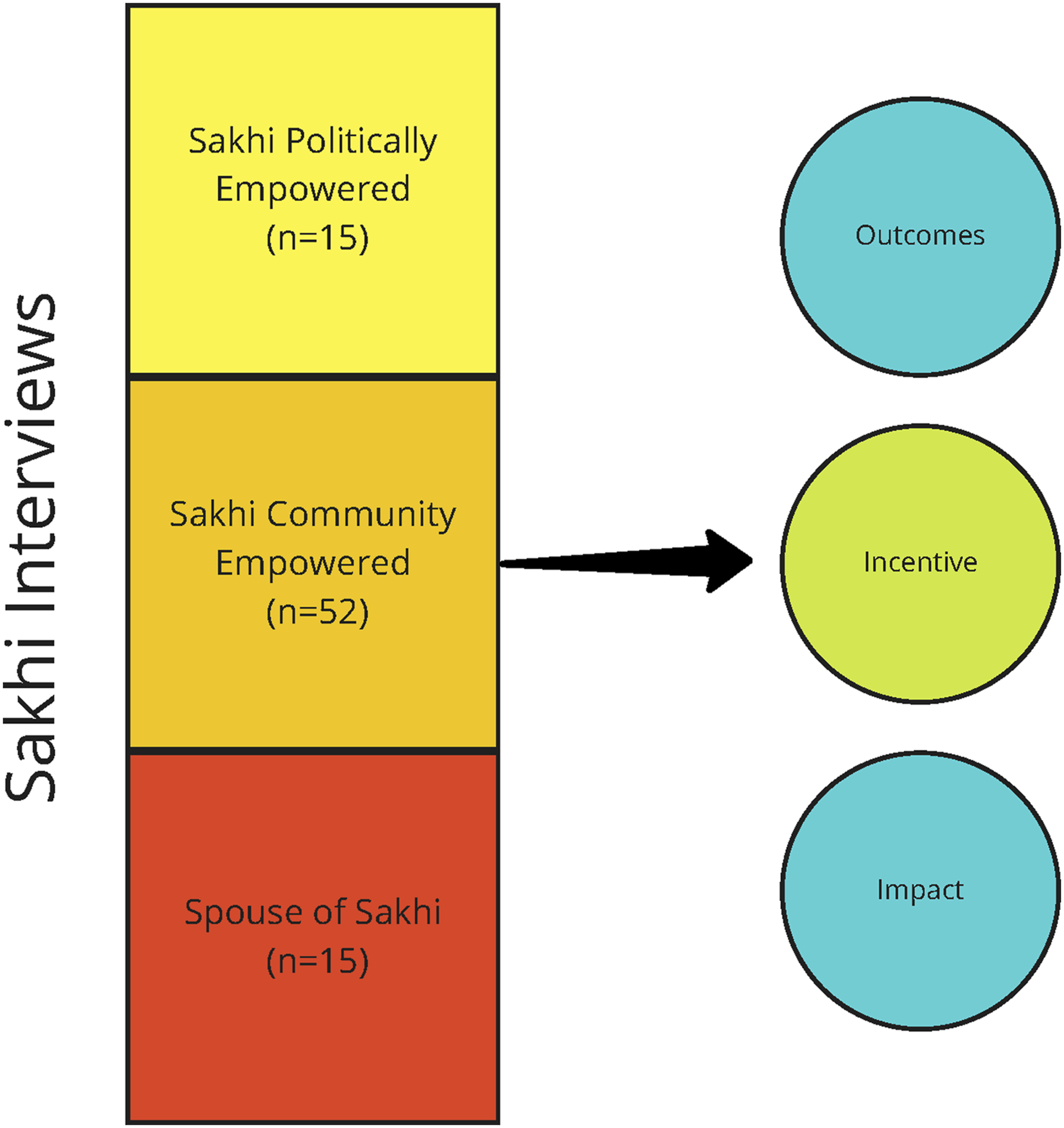
The qualitative analysis demonstrated that the operational arm of Mein Pragati benefited from the overall strategy derived from the cross-sector partnership identified in Study 1.
Study 2 Success Factors
Incentives
Incentives to participate were shared among all sample groups. The Sakhis joined and invested time into the program to improve their own family and the community situation. This was both from an intrinsic and extrinsic viewpoint. Sakhis were motivated to improve their financial capacity, contribute to their finances, and simultaneously improve community engagement, road map out of poverty, and achieve independence. This need-to-improve plays into the wider theme of participation in the Mein Pragati program, contributing to its reputation and success in behavior change.
Financial improvement was prominently highlighted. Sakhis cited improving their financial situation, and that of others as the main reason for becoming a peer educator, “Our financial condition was not so good, but not as bad as others, because my husband has a small shop. However, even though he is a financially able person, he earns little money from his shop”. Other participants shared the same sentiments. “There was a crisis in the family, and it was difficult to run a family with the earnings of a single person. This is why I joined Mein Pragati.” A spouse confirmed this point, “Previously, I thought that I may have to support my family alone. I may not be self-reliant financially, but we hoped to live better by earning well. Later, RGVN asked my wife to join Mein Pragati. I supported my wife in this decision. I told her that she would understand finances, ensuring her future.”
Sakhis also expressed that it would liberate them from their current household situation, “I wanted to do something. I do not like to sit in the house. After getting married, I did not have such an environment. My husband’s family wanted the daughter-in-law to stay in the house and look after the children.” This was a common observation amongst the participants.
Many used Mein Pragati as a road map to achieve greater outcomes in their own lives or overcome adversity, “Never faced money-related problems, but I could never satisfy my heart. I always felt guilty about not providing. In that situation, my husband died, and I felt worse. I was mentally broken. Then, I met people from RGVN, and opportunities arose. I feel happy working as a Sakhi. I became financially independent. Now I am stronger than before.”
Mein Pragati provided a support network for women in unfortunate financial circumstances and allowed them to start micro-businesses. One Sakhi elaborated that “the reason for joining this program was to learn something and earn a little money. I try to teach people, and if I do anything for them, then I take money according to their financial condition, and if someone is poor, I try to do it for free.”
Outcomes
Sakhis mentioned better outcomes for their micro-businesses, families, and beneficiaries.
Family improvement was a common theme throughout the interviews: “My family condition has improved due to Mein Pragati. I did not expect that. I never thought that I would be able to compete in an election in my life.” The same sentiment was provided by spouses, “Yes! Mein Pragati has improved our family’s financial condition. Earlier, I was the only earning person. I run a shop regularly, but we could not flourish. As my wife started working with Mein Pragati, our financial condition improved, and we have faced fewer financial problems”.
Participants made references to a tangible improvement in their financial literacy and capability. “Mein Pragati has made a huge contribution because neither we knew about savings nor had sufficient earnings to save. However, now we earn, know well about savings, and save a little.” Participants also noted an ability to plan and expand their financial and business knowledge: “I am mentally prepared or have developed a thought process towards my finances, which has changed my situation. This program has given road maps on how to handle my finances better”.
Spouses presented similar evidence, “Mein Pragati has helped a lot in planning my finances and saving my wife’s money. It has also helped in running the household budget. My wife now runs the household better financially. She comes home and tells us about improving our finances, which is how we work. We have had a lot of financial benefits.”
Sakhis added details about their financial capability and how that helps them chat with program beneficiaries, “Mein Pragati has taught us how to earn and spend money wisely. It has taught us that if we earn 20 rupees, we should spend at most 15 and save the remaining five. Through a Kut-Kut game, they taught us how to save money and get better returns. They divided our expenses into necessary and unnecessary experiences and helped us to save money and prevent falling prey to fraudsters.”
The program also provided other benefits to participants beyond financial inclusion, such as women empowerment. “Earlier, the women got beaten and scolded by their husbands, but now if that situation occurs, they report it in the meeting, and then other women reach that husband and try to make him understand.” “Many women have become independent and can go out alone and do their work.”
There was also evidence of Sakhis becoming advocates of financial independence as an outcome of the program, “The day I got engaged with Mein Pragati, I had many experiences and got to know about many of the financial difficulties of the villagers. We taught them what they did not know from a financial perspective. We recommended solutions such as opening a bank account.”
Impact
Another theme explored is the program’s impact on the individual and broader community. Specifically, interviewees highlighted the intended and unintended impact on community wealth, confidence, financial inclusion, and unanticipated outcomes such as becoming politically aware and contesting elections.
Firstly, there has been an impact on an individual level, more precisely social inclusion, “There has been a positive impact on our day-to-day life because earlier I used to stay at home while now, I go out for work and earn my living. I have also been able to earn a lot. I am independent. People like me have been able to stay in step with the people in society.”
Moreover, the Sakhis in this program has become a beacon for the community, “Earlier, I had to go from house to house to explain the project or get some work done, but now people come to me. Everyone knows me now.” Sakhis also cited how their internal network helps them learn more and disseminate amongst their beneficiaries: “Our sir has started a WhatsApp group for us. We get information about all new schemes in this group because the details are updated immediately if there is a new scheme. For example, we get information about widows’ pensions, senior pensions, the Ujjwala Scheme, and scholarships for children in the group. I did not know about these things earlier.”
Participants observed an improvement in their social status, “Earlier, I had no connection with the people of my community. I had minimal relationships with them. However, my relationship has improved. The community has accepted me more than earlier, and they now invite me to many community occasions.”
As the management interviews highlighted political empowerment, this unintended consequence was evident in the Sakhi interviews. Sakhis attributed their political success to the program, “people would not have recognized me if I had not been associated with Mein Pragati and would not have asked me to compete in the election,” “people know me due to Mein Pragati, and that is the reason my peers put me forward to compete for the election,” and “Mein Pragati can be credited to my political career, as I would not have been able to stand here without my involvement in the program, and I would not be where I am today.” Sakhis also cited Mein Pragati as contributing to their victory: “I won more votes than the opposition combined. I believe that Mein Pragati helped me in the elections. Had I not been associated with Mein Pragati, I might have won, but not by such a wide margin.”
The community approached the Sakhis to nominate themselves, “they said you should contest the elections because it will be a good experience. I said I was afraid to lose, so I would not contest. They pressured me to contest, saying that I had the experience and that they wanted a person like me. They said they wanted a woman who was able to speak. It was because of this that I contested the elections. I received much support.”
Not all participants shared the same political success, “I contested the elections once because of the poor condition of our village. There is much corruption in our village. I thought that even if I could not eradicate corruption, I could do a lot of good. However, regardless of my loss, I received community support.”
Mein Pragati also prepared the Sakhis for the COVID-19 pandemic and its subsequent lockdowns, “We faced many problems during the lockdown. I could not do any work during the lockdown or sell anything. However, I took help from the RGVN and other sources and managed through the lockdown. I sometimes think I would have faced many problems had I not joined Mein Pragati.”
Summary of Study 2 Results
The semi-structured interviews indicate that the Mein Pragati program empowered Sakhis to improve their livelihoods. In addition, they were motivated through extrinsic and intrinsic means. Significantly, their self-motivation influenced this incentivization, as they sought to better their standing within the community and their family’s fiscal position. Mein Pragati nurtured extrinsic (developing their income streams) and intrinsic incentives (contributing to the community). These motivating factors were crucial to the program in achieving social outcomes and broader community impact. The Sakhi interviews’ success factors helped conceptualize the Input, Outcome, and Impact Model of Program Development. Additionally, the findings helped explore how the Mein Pragati transfers social value to society and the community and how incentive frameworks and strategies motivate positive change within the community and the individual.
Study 3 Measures
Scale Summary.
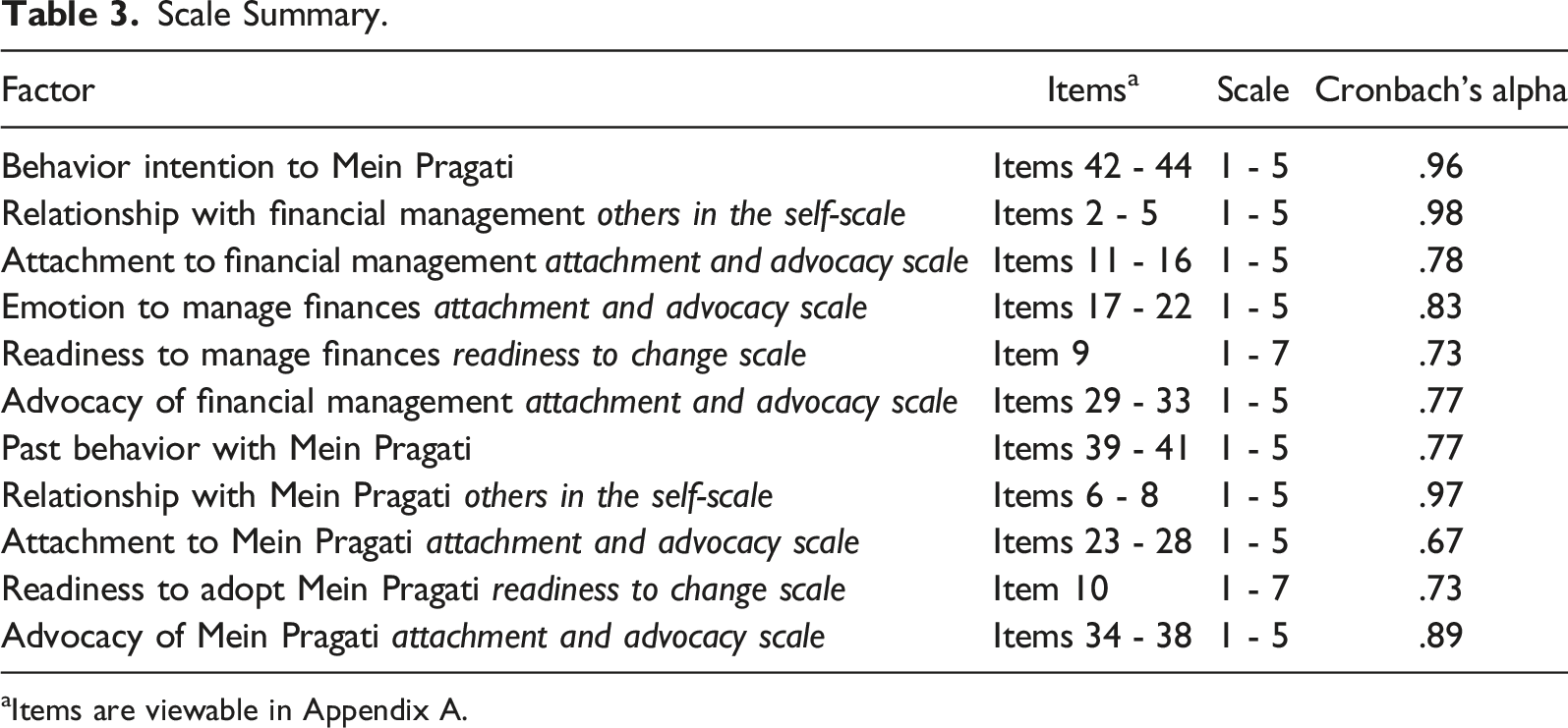
aItems are viewable in Appendix A.
Descriptive Summary.
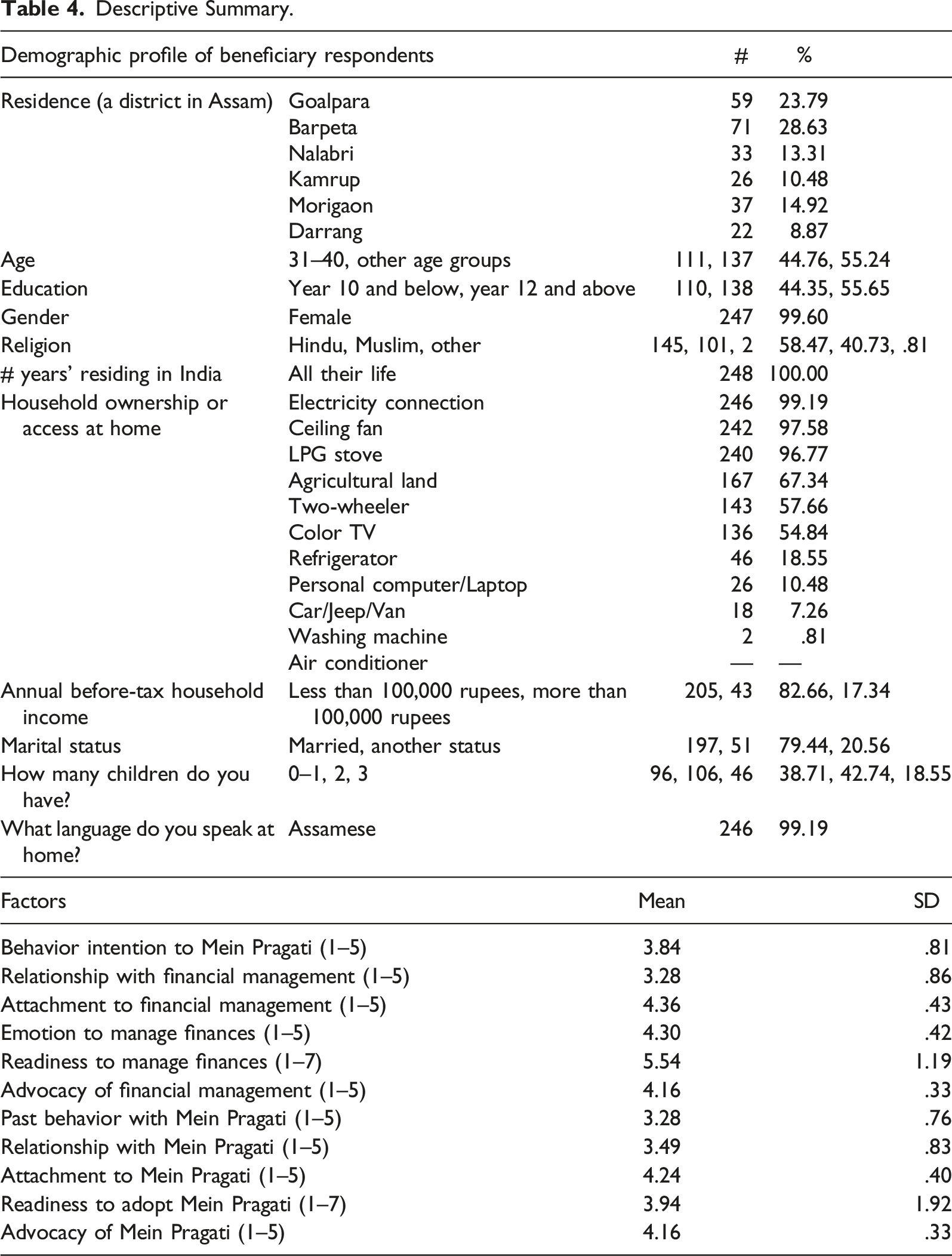
The sample represents all six districts, an age group strongly represented by 31–40-year-old respondents (45%), education of 12 years and above (55%), almost all females, and more Hindus (58%) than Muslims. All respondents had lived in India throughout their lives. In terms of possessions (as an indicator of income), more than 90% of respondents had electricity connections and owned or accessed a ceiling fan and an LPG stove; 50–67% owned or accessed agricultural land, two-wheeler, and a color TV; but very few owned or accessed a refrigerator, personal computer/laptop, car/jeep/van, washing machine, or an air conditioner. Finally, most respondents (83%) earned a gross annual income of less than INR 100,000 (USD 1309), were married (79%), had up to two children (80%), and spoke Assamese (99%).
Other than demographics, most items were measured using a 1 to 5 scale. Eleven factors were considered, two of which were a single item, one formed with two items (that displayed a significant correlation score), and the rest of the eight were formed with three or more items. We conducted a factor analysis for each of the eight factors and retained items where the eigenvalue exceeded 1, the Kaiser-Meyer-Olkin (KMO) test. The variance explained exceeded 60%, and Bartlett’s score was significant at p < .01. The Cronbach’s alpha for these eight factors ranged from .77 to .98. The items for the 11 factors are described below.
Behavior intention to Mein Pragati was measured with three items (1-5 scale): “would you use services from RGVN/the Sakhi/Mein Pragati in the next six months?” The intent was moderately high (M = 3.84).
Five factors measured perceptions towards personal financial management. On a scale of 1–5, four items measured “relationship with financial management” with responses to the statement, “please choose the picture below which best describes you when you think of your relationship with your finances.” The perception was moderate (M = 3.28). The “attachment to financial management” factor was measured with four items. The items were: “I am deeply passionate about my finances,” “I am deeply involved in my finances,” “When I think of the finances, I feel a sense of joy,” and “I have a deep emotional connection to my finances.”
The factor “emotion to manage finances” was measured with five items: “I am deeply passionate about managing my finances,” “I am deeply devoted to the idea of managing my finances,” “When I think of managing my finances, I feel a sense of joy,” “I have a deep emotional connection with managing my finances,” and “I would feel a sense of loss when I do not manage my finances.” Attachment and emotions to managing finances were strong (M = 4.36 and M = 4.30, respectively). The “readiness to manage finances” was measured with one seven-scale item based on Prochaska and DiClemente’s (1992) Transtheoretical model. Respondents regularly managed finances, although they had begun doing so in the past six months (M = 5.54).
The “advocacy of financial management” was measured using a 1-5 scale with four items: “By sharing my experience of managing my finances, I assist other people towards a similar experience,” “It makes me feel good to tell others about how I manage my finances,” “I suggest to others to manage their finances,” and “I give suggestions to others on how to manage their finances to help them have a similar experience.” Respondents were strongly active in spreading the word about the benefits of managing finances (M = 4.16).
Five factors measured perceptions towards the Mein Pragati program. “Past behavior with Mein Pragati” was measured on a 1-5 scale with three items: “in the last six months, how often have you used RGVN/a Sakhi/Mein Pragati services?” Respondents were somewhat regular on this behavioral front (M = 3.28). The “relationship with Mein Pragati” factor was measured on a 1-5 scale with three items, “please choose the picture below which best describes your relationship with Mein Pragati.” The perception was moderate (M = 3.49).
The “attachment to Mein Pragati” factor was measured with two items on a 1-5 scale: “I am deeply devoted to the ‘Mein Pragati’ program,” and “when I think about the ‘Mein Pragati’ program, I feel a sense of joy.” Respondents reported a strong attachment to the program (M = 4.24). The “readiness to adopt Mein Pragati” was measured with a seven-scale item based on Prochaska and DiClemente’s (1992) Transtheoretical model. The mean was 3.94, signifying that respondents knew the program and planned to adopt it in six months.
Finally, the factor “advocacy of Mein Pragati” was measured on a 1-5 scale with five items: “By sharing my experience with the ‘Mein Pragati’ program, I assist others to have a similar experience,” “It makes me feel good to tell others about the ‘Mein Pragati’ program,” “I have a responsibility to society to tell others about the “Mein Pragati’ program,” “I suggest to others about the “Mein Pragati’ program,” and “I give suggestions to other people about the quality of ‘Mein Pragati’ program to help them have a similar experience.” With a mean of 4.16, the perceptions were strongly positive.
Study 3 Results
Correlation Statistics.

Factors That Influence Intent to Transact With the Mein Pragati Program.
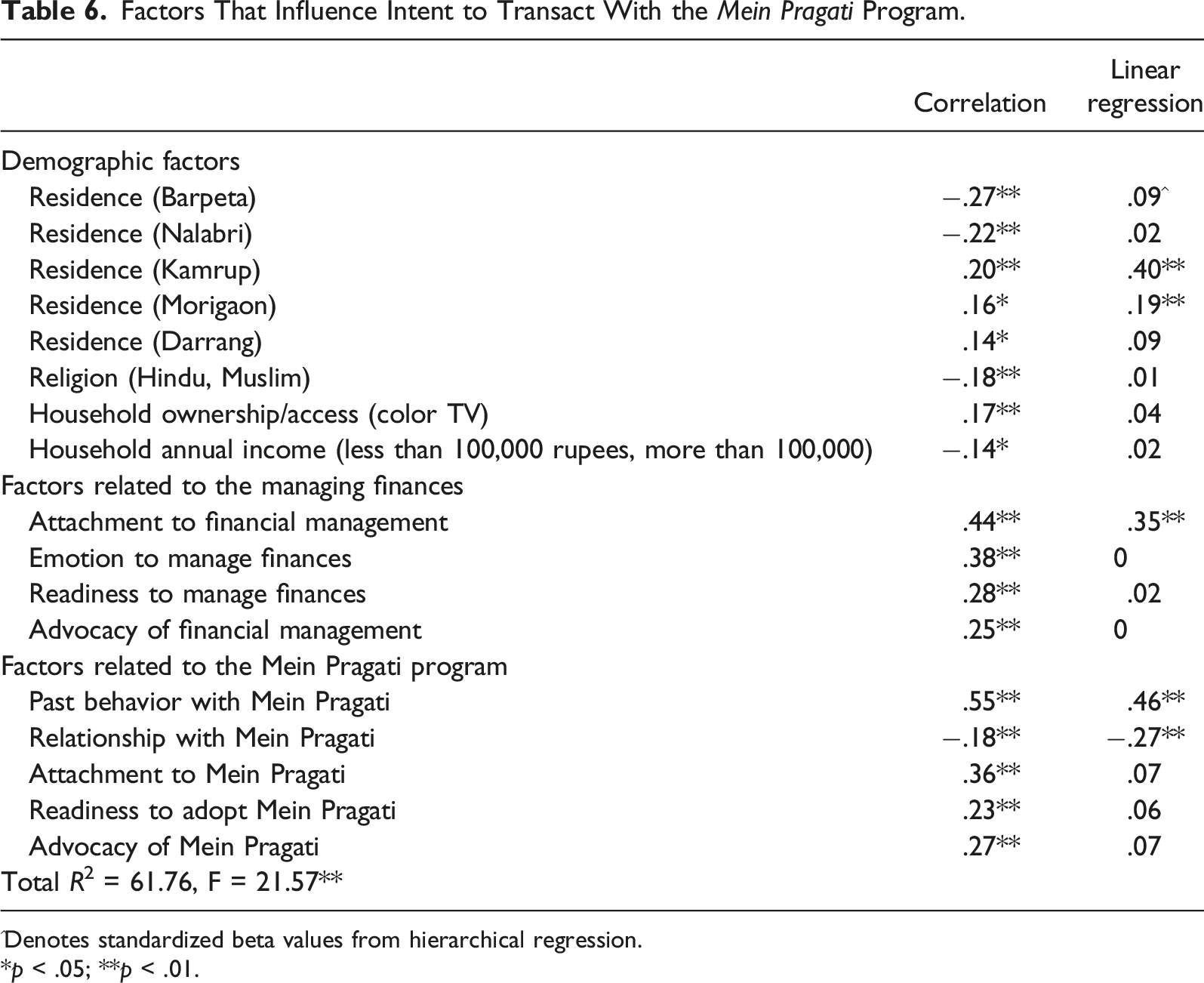
ˆDenotes standardized beta values from hierarchical regression.
*p < .05; **p < .01.
Respondents indicated they would use RGVN/Sakhi/Mein Pragati services within the next six months, regularly manage their finances, and use the services offered. They had a moderate perception of their relationship with their finances, a strong emotional attachment to managing them, and actively advocated for the program to others. In addition, changes in the beneficiary’s financial behavior were positive.
Proposed Conceptual Model
Based on the findings of the three studies, we propose a new conceptual framework dedicated to CSM programs – the Input, Outcome, and Impact Model of Program Development. This proposed framework leverages the intersections between the core elements of program and intervention design. See the visualization of the framework in Figure 6. This framework infers those appropriate inputs of strategy, stakeholder partnership, management systems, and processes. An iterative and adaptive structure must be appropriate to have outcomes, impact, value add, and scalability. These needs must co-exist and have equal prioritization for the CSM program. We do not classify this framework as linear, as all elements within this conceptual model must co-occur to obtain the outcome of shifting behavior. Findings suggest a more agile/fluid approach to developing the program. The input, outcome, and impact model of program development.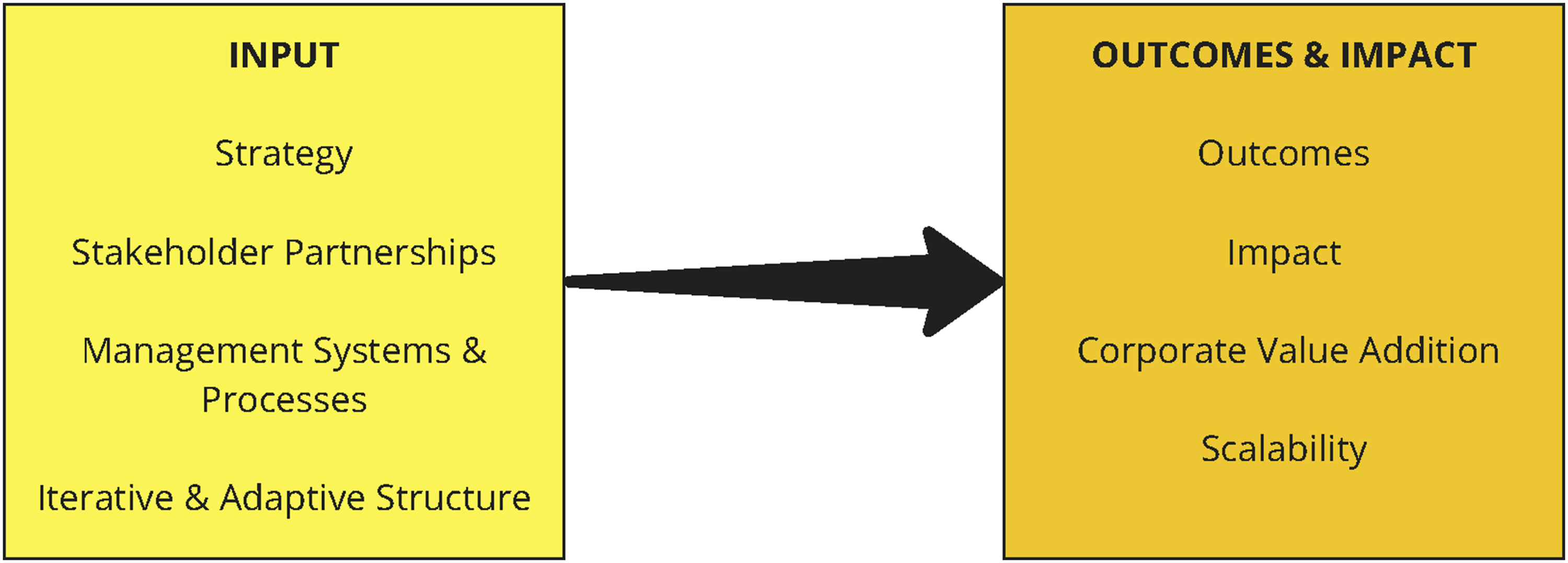
Across three studies conducted across this case study analysis, the results informed the Input, Outcome, and Impact Model of Program Development. The managerial interviews (study (1) provided information on the development of Mein Pragati as a program, the peer educator interviews (study (2) assessed the program’s delivery, impact, and outcomes, and the program beneficiary survey (study (3) offered empirical evidence of the program’s success in terms of implementation and social outcomes, see Figure 6.
As reflected in Figure 7, the model incorporates the Logic Model elements, namely inputs, activities, outputs, outcomes, and impact (Smith et al., 2020), but goes beyond. Due to the complexities of a multi-stakeholder and cross-sector participation, the case study indicated that the Logic Model needed to be expanded and adapted to include additional elements such as strategy, stakeholder partnerships, management systems and processes, iterative and adaptive structure, corporate value addition, and scalability. Conceptual model development.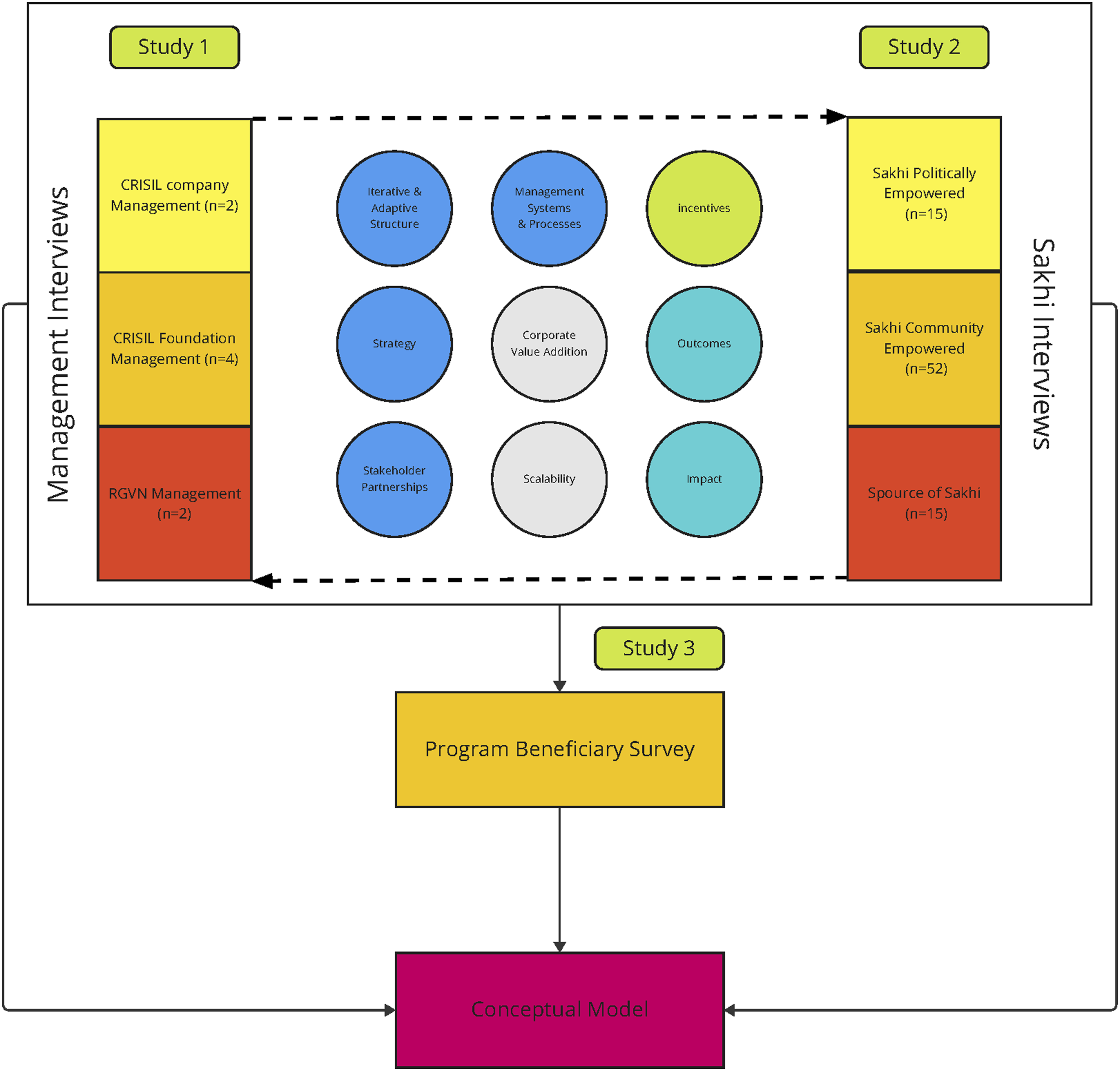
To highlight a few Logic Model elements, the proposed conceptual model includes inputs, which consist of the resources necessary for implementing a CSM program, such as financial literacy training, technology, and staff. The outcomes of the program is the resulting behavioral modification, alteration, or change, such as improved financial literacy and capability among beneficiaries. The impact is determined by the long-term effects of the program on various stakeholders, including society, community, individuals, and corporate parties involved (Bloom et al., 2018; Kotler et al., 2012; Lee, 2016; Polonsky, 2017; Saini et al., 2021).
We define strategy as the strategic force behind the initiative and provide the framework to create the underlying processes required to achieve the desired social outcome. Reviewing the management interview results provided evidence that a clear strategy was vital to the program’s development. Mein Pragati management clearly outlined the program requirements, took a corporate approach, and set up a handover/transition plan for the intervention to become sustained. In addition, we align our definition of strategy with CSM benchmarks (Xia et al., 2016). Specifically, the intervention strategy must contain the marketing mix, tailoring the intervention to the intended audience, alignment between cause and business operations, level of commitment, and alignment of core values with the organization and cause (Lee, 2016). In addition, strategy extends to planning and its approach, where the alignment of stakeholders and partnerships are required to be mutually beneficial, aiding the societal cause, nonprofit (if partnered), and corporate (Campbell et al., 2022; Kotler et al., 2012), with a clearly defined mission and an alignment with core company attributes and societal cause.
As identified throughout the semi-structured interviews, there is an inherent connection between structure, strategy, and systems (Cummings & Worley, 2014). An iterative and adaptive structure is the bedrock that facilitates systems and the program’s strategy. For this conceptual model, the structure underpins the framework and the configuration of business units to enable a cohesive, iterative, and adaptive approach to set objectives. The structure is the core function that allows for strategic planning, stakeholder integration, and the blueprint in which systems and processes can be placed.
Moreover, the cross-over between the corporate, foundation, and nonprofit indicates rules of engagement and clear guidelines. Furthermore, structure sustains systems and processes from both a maintenance and conception viewpoint. In addition, we define systems as the process by which stakeholders abide and consider the systematic approach that the program or initiative follows.
Within this proposed model, we consider stakeholders as both internal and external. The stakeholder element of the model is specific to the planning and the shared delegation of roles between the organization and cross-sector partnership, including but not limited to a government department/agency, non-government organization, and or not-for-profit. In combination, strategy, systems and processes, iterative and adaptive structure, and stakeholder partnerships can deliver efficient and effective outcomes. Efficiency, where program input is equal to or less than its social output and effectiveness, is the adoption rate of the desired behavior against the current behavior.
In conjunction with outcomes, programs need to be scalable. From a business perspective, scalability exponentially infers the changing of size and speed and is agile and flexible in both program development and application (Lund & Nielsen, 2018). In addition, scalability implies the removal of the core internal stakeholders from the program (Lund & Nielsen, 2018) and running it autonomously with a strategic stakeholder in place.
To reach social impact, where the CSM program solves actual societal and community problems (Barnett et al., 2020; Yan et al., 2018), there needs to be a defined strategy guided by structure and system.
Results indicate strategic alignment between stakeholders and shared responsibility for duties and resources. Achieving effective and efficient outcomes enables a foundation to allow for scalability, leading to the impact at a macro level. To quantify the impact from a business perspective, the cause outcomes must be greater than or equal to the corporate benefit and costs (Kotler et al., 2012; Xia et al., 2016) and add value to the organization’s brand equity, reputation, and profit.
Discussion
This research extends CSM literature and provides practitioners with a framework to enable behavior change regardless of the cross-sector partnership context. By addressing the research question: how a CSM program can extend the effectiveness of a behavior change intervention, the study has provided a framework for stakeholders (internal and external) to implement cross-sector interventions. The CSM program Mein Pragati had a transformative effect on the behavior of its beneficiaries by improving their knowledge of finance and building their capabilities within their communities. Thus, a program-informed model will aid future programs in impacting society, community members, individuals, corporate stakeholders, and other internal and external stakeholders. Utilizing the Input, Outcome, and Impact Model of Program Development gives practitioners a framework to enhance the success of implementing behavioral change in their target audience, regardless of the social context, i.e., health and environment.
The CSM-specific input, output, and impact model focuses on how the stakeholders interact and how we can achieve scalability, providing a roadmap between societal causes, corporate, and other relevant parties. Its premise is to ensure clear alignment of company resources and capabilities to the societal cause and its stakeholders, building on the works of Kotler et al. (2012), Lee (2016), and Xia et al. (2016).
Each study provided insights, allowing data triangulation and developing a purpose-built CSM model. Study 1 informed how the Mein Pragati was constructed with management teams of three organizations and how they developed an award-winning program that produced notable Social Return of Investment (SROI)—informing how each component of a CSM program should be constructed with a non-linear approach. Moreover, study 1 gave insight into how each management team interacted across the three strategic, operational, and tactical levels of planning and decision-making. Study 2 provided insight into the outcomes and impact of Mein Pragati and how incentives were a crucial strategic component for peer educator recruitment. Study 3 demonstrates the positive perceptions toward changing beneficiary behavior.
Financial literacy, capability, and inclusion were all critical objectives for Mein Pragati. With the belief in upskilling individuals, the community and society will prosper. This input, output, and impact model was designed around a nested program in a financial context, providing a potential guide for other financial firms to enact behavior change on a wider-scale level using an upstream approach.
Limitations & Future Research
The sample of the management interviews was small (n = 8) and should be acknowledged as a limitation. However, this study interviewed all key management personnel involved in the Mein Pragati program’s strategic, operational, and tactical planning. A sufficient sample was drawn to understand the program’s development and day-to-day operations. Moreover, qualitative research with small samples can provide useful insights if quality data has been uncovered, thus achieving saturation where no new concepts or constructs can be identified (Campbell et al., 2021; Draper & Swift, 2011).
Another limitation was that the survey only focused on the beneficiaries of the Mein Pragati program. Further insight would have been gained if the survey had been distributed to non-beneficiaries. For future research, it would be recommended that program beneficiaries and non-beneficiaries be surveyed to understand the rate of behavior change, providing more accurate insights regarding the effect of change.
The current study assumed that all CSM initiatives are similar, and the same Input-Outcome-Impact model would fit all of them. However, CSM programs can vary on several factors, for example, how integrated they are with their core business. The Commonwealth Bank Youth App initiative in Australia seems more integrated with their commercial venture; the more accounts opened by the youth, the higher the benefit to the bank. On the other hand, Mein Pragati’s success does not directly benefit the corporate bottom line. The underlying factors would influence the program’s success differently. Future research should investigate the model by segmenting the CSM programs.
Future research is needed to test the viability of the program-informed model. An in-field examination of a CSM program is recommended to operationalize the input, output, and impact model. The research should measure the success of the intervention and its impacts on society, community, individual, corporate, and other relevant stakeholders. We also propose investigating the win-win paradox of social and CSR investment and how CSM can facilitate corporate and societal benefits.
Supplemental Material
Supplemental Material - Input, Outcome, and Impact: A Program-Informed Model to Improve the Effectiveness of Corporate Social Marketing
Supplemental Material for Input, Outcome, and Impact: A Program-Informed Model to Improve the Effectiveness of Corporate Social Marketing by Alexander Campbell, Sameer A. Deshpande, Sunil Kumar, Sharyn Rundle-Thiele, and Tracey West in Social Marketing Quarterly
Footnotes
Acknowledgments
We thank Maya Vengurlekar, Chief Operating Officer, CRISIL Foundation, Tania Pal, Associate Director, CRISIL Foundation, Abhishek Neelakantan, Consultant, CRISIL Foundation, and Aneeta Dutta, Deputy Director, Assistant Director, Rashtriya Gramin Vikas Nidhi for their contribution to this study.
Declaration of Conflicting Interests
The author(s) declared no potential conflicts of interest with respect to the research, authorship, and/or publication of this article.
Funding
The author(s) disclosed receipt of the following financial support for the research, authorship, and/or publication of this article: CRISIL Foundation, India.

Supplemental Material
Supplemental material for this article is available online.
Note
Author Biographies
References
Supplementary Material
Please find the following supplemental material available below.
For Open Access articles published under a Creative Commons License, all supplemental material carries the same license as the article it is associated with.
For non-Open Access articles published, all supplemental material carries a non-exclusive license, and permission requests for re-use of supplemental material or any part of supplemental material shall be sent directly to the copyright owner as specified in the copyright notice associated with the article.
