



Abstract
Background
Segmentation use in social marketing especially in improving the health of young adults is limited, and theory use within segmentation remains infrequent. A generalisable segmentation structure that can be reliably applied across different young adult’s samples may assist social marketers to move beyond one size fits all healthy eating programs.
Focus of the Article
Segmentation is an essential marketing principle which allows customising marketing activities to the needs of specific segments. Evidence shows that behaviour change is more likely when more principles are used, yet segmentation remains underutilised and a cross-sample validation of segments across different populations remains to be demonstrated.
Importance to the Social Marketing Field
Delivery of healthy eating programs targeted to group differences and accommodating a broader theory-based socio-ecological viewpoint is needed to engage with a cross section of young adults more effectively along with a cross-sample validation of segments across different populations to identify a valid segmentation structure that can be reliably applied across the Australian young adult population.
Methods
A replication study was conducted using the same constructs, items and analytical procedures as in the original study. Data was collected online and in person using a paper survey in two military bases to ensure a mix of Australian Defence Force (ADF) trainee types. Psychographic variables informed by the MOA framework were collected and used to segment the sample with two-step cluster analysis along with a demographic measure (education) and behavioural measure (eating behaviour) to repeat the segmentation analysis.
Results
The ability of the MOA framework to explain eating behaviour was confirmed in the ADF trainee sample, and two-step cluster analysis produced a similar segment structure to the original study with education, opportunity and motivation to eat healthy being the most important variables in segment formation.
Recommendations for Research or Practice
Segmentation is important for developing understanding that enables social marketers to design social change programs to meet the needs of young adults. This empirical replication study confirmed a similar theory-driven healthy eating segment solution across two young adult populations illustrating the value of using behavioural theories to draw segments and utilising the same theory to cross-validate the constructs in a comparable sample. Future research could use this approach to identify a valid segmentation structure that can be reliably applied across different populations and behavioural contexts.
Introduction
The frequency of overweight and obesity has been rapidly increasing worldwide along with dietary-related non-communicable diseases due to the consumption of energy-dense, nutrient poor diets and sedentary lifestyles (Fleming et al., 2014; NCD Risk Factor Collaboration, 2016). Australia is no exception with growing obesity levels affecting the health of individuals and communities (Sturgiss et al., 2017). Young adults are especially at risk with a rapid weight gain observed in their lifetime during the early twenties to mid-thirties (Flegal et al., 2016; Zheng et al., 2017). Population trends indicate that gradual weight gain during early adulthood leads to obesity (McTigue et al., 2002) with the most obese individuals becoming so prior to reaching the age of 35 (Sheehan et al., 2003). Among overweight 25-year-old Australians, a 4.2- and 3.6-year decrease in life expectancy was observed in men and women while for obese men and women, the numbers were even higher (8.3 and 6.1 years, respectively) (Lung et al., 2019).
Young adults are entering a fundamental life-stage of transitioning to independence (Arnett et al., 2014). Many personal, social and environmental changes occur during this life-stage such as moving away from home, entering tertiary education, moving in with partners or peers (Poobalan et al., 2010) and entering the workforce (Mullen et al., 2007). These changes can be connected with unhealthy lifestyle behaviours, for instance, consumption of a poor diet (Irazusta et al., 2007; Li et al., 2012), sedentary lifestyles (Anderson et al., 2009; Keating et al., 2005) and weight gain (Racette et al., 2005). Therefore, it is essential to establish healthy eating habits among young and the transitioning life-stage presents a window of opportunity for improving the eating habits of young adults.
Social marketing has been acknowledged as a credible behaviour change discipline and has been widely adopted to advance social change (Rundle-Thiele et al., 2015). Social marketing has been applied to a variety of contexts including (but not limited to) physical activity (Fujihira et al., 2015), active school travel (Pang et al., 2017), alcohol education (Dietrich, Rundle-Thiele, et al., 2015) and lifestyle related health issues (Kamada et al., 2013). Social marketing has also been successfully used to change eating behaviours (Carins & Rundle-Thiele, 2014b; Gordon et al., 2006). However, the literature indicates that most social marketing interventions that encourage healthy eating have been directed towards children and adolescents, with only a few programs targeting adults (Carins & Rundle-Thiele, 2014a). In addition, segmentation use in social marketing especially in improving the health of young adults is limited, and theory use within segmentation remains infrequent (Lotenberg et al., 2011). Studies have mainly employed theories that focus on how individuals think (Luca & Suggs, 2013; Truong, 2014; Truong & Dang, 2017), thus failing to apply the wider socio-ecological perspective that captures the complexity surrounding eating behaviours among young adults (Storr et al., 2019).
Application of individual focused theories in health behaviours indicated a limited success. A diabetes intervention applying both the health belief model and transtheoretical model reported positive changes but none of the changes were significant (Gallivan et al., 2007). The theory of planned behaviour and theory of reasoned action were applied in a physical activity intervention evaluating the effect of the intervention on attitudes, perceptions and intentions to increase physical activity levels. The study revealed positive attitudes and intentions towards active lifestyle; however, attitudinal data was not reported and preintervention intention data reporting failed (Peterson et al., 2005).
The socio-ecological perspective highlights that focus should not only be placed on intrapersonal behavioural factors but also on the factors from multiple levels that affect the specific behaviour. Therefore, the focus of the socio-ecological approach is placed on the interrelationships between individual and the social, physical and policy environment (Stokols, 1996). The socio-ecological approach has been used in physical activity context where it successfully assisted in identifying opportunities to promote physical activity by recognising the individual, behavioural and environmental (social and physical) factors that affected participants ability to be physically active (McLeroy et al., 1988; Richard et al., 1996). Recent research aimed to extend research focus beyond individuals targeted for change and applied the motivation, opportunity and ability (MOA) framework to understand whether healthy eating segments are evident in a young adult population. Findings from that study revealed that the MOA framework was able to produce segments within a healthy eating context among young adults (details of the study are reported in Kitunen et al., 2019).
Kitunen et al. (2019) investigated the proficiency of the MOA framework to produce segments, using five measures across three segmentation bases (demographic – education, psychographic – motivation, ability and perceived opportunity and eating behaviour) in a young adult population sourced from South East Queensland Universities. The aim of that study was to examine which segmentation bases have previously been used by social marketers to derive segments, to identify theories that have previously been used to inform segment solutions, and then extend the research focus beyond individuals targeted for change, by applying the MOA framework to understand if segments were evident in one young adult (university students) population. Building on the findings of that study, the current study aims to replicate that study among Australian Defence Force (ADF) trainees. This study assesses if the segment solution could be validated within a second young adult sample drawing on identical theoretical constructs and measures focussed on understanding healthy eating. To achieve the aims of this study, data from an ADF trainee population was collected using the same survey items, theory constructs (demographic – education, psychographic – motivation, ability and perceived opportunity and eating behaviour) and analysed using the same procedures.
Duvendack et al. (2017, p. 47) characterised replication as a 'study whose main purpose is to determine the validity of one or more empirical results from a previously published study'. Replication research can be used as a tool to reinforce the credibility of results and strengthen the evidence of programs. To accomplish this, a replication research plan is required to be open to support the original results and reveal possible problems (Brown & Wood, 2018). Previously, Brengman et al. (2005) attempted to replicate the study of Smith and Swinyard (2001) to test cross-cultural differences in the structure and meaning of the Internet shopper lifestyle scale. The findings showed the same basic structure and meaning across cultures and led to the same segment solution in both samples (Brengman et al., 2005; Smith & Swinyard, 2001).
Although a few studies have used segmentation in social marketing aiming to encourage healthy eating as it relates to targeting overweight and obesity (Chrysochou et al., 2010; Kazbare et al., 2010; Van Loo et al., 2017), a cross-sample validation of segments across different populations remains to be demonstrated. By replicating the Kitunen et al. (2019) study in an ADF trainee sample, cross-sample differences and validity of the segment solution can be tested. This leads to the following hypotheses:
H1. The reliability and validity of the MOA framework constructs will be validated in the ADF sample.
H2. The MOA framework can be used to explain healthy eating behaviour in the ADF trainee sample.
H3. Repeating the analysis from the previous study will produce a similar segment solution. Taken together, delivery of healthy eating programs targeted to group differences and accommodating a broader theory-based socio-ecological viewpoint is needed to more effectively engage with a cross section of young adults. Responding to the Rundle-Thiele et al. (2019) call for replication, this study examines whether theory and segments can be replicated across settings. Therefore, the aims of the current study are to empirically test if the MOA framework explains healthy eating in an ADF trainee population; identify if a segment solution similar to the previous study can be validated in the ADF trainee population; and, determine how to tailor strategies to each segment with a healthy eating program.
Motivation, Opportunity and Ability (MOA)
The current study utilises the MOA framework to explain eating behaviour ensuring that understanding extends beyond internal factors such as motivation to consider the role of the food environment in individuals' healthy eating behaviour. The MOA framework has been previously applied in a land management context where it was proposed that the MOA framework could provide a basis for segmentation. The MOA framework has been used to creating distinct consumer categories based on how prone, resistant or unable said consumer is to change depending on their motivation, opportunity and ability to perform the target behaviour (Rothschild, 2000). Motivation includes the internal drivers to perform a behaviour incorporating willingness, readiness, desire and interest to engage in a particular behaviour (Morel et al., 1997). It has been suggested that goals and needs along perceived risk and alignment with existing attitudes impact motivation (Bandura, 1977). Ability refers to the extent which people possess the needed skills or capabilities to engage in a particular behaviour to achieve the outcome (Morel et al., 1997). Self-efficacy is a determinant of ability and includes the beliefs individual holds regarding their capabilities to organise and perform a series of actions (Bandura, 1977). Environmental influences such as cultural norms are likely to influence self-efficacy and it has been linked to motivation to perform a behaviour (Zimmerman, 2000). Opportunity refers to the extent to which external factors mitigate or prevent engaging in a specific behaviour (Morel et al., 1997). Consequently, lack of opportunity refers to situations where an individual can be motivated to perform a behaviour but is prevented from doing so by environmental factors (Rothschild, 2000), for example, low or no supply of healthy alternatives.
In previous research, the MOA framework has been used to examine the interrelated effect of motivation, opportunity and ability on the behavioural outcomes in weight management research (nutrition and physical activity) among Australian adults (Willmott & Parkinson, 2017). The results revealed that 63% of the participants who reported learning new habits or adopted changes to their mindset reported weight loss following program participation. An important relationship was also identified between new habits formed and changes adopted from participation in the weight management program and participant’s health and wellbeing outcomes including weight loss following participation in the program (Willmott & Parkinson, 2017). This proposes that the MOA framework is suitable for improving understanding of the market for changing eating habits.
Segmentation
Segmentation is an approach used in both commercial and social marketing to determine if population subsets that share common characteristics exist (Dibb, 2017). Factors that can be used to segment target audiences are divided into four main bases: demographic, geographic, psychographic and behavioural. Segmentation is based on the assumption that audiences differ from one another, have different motivations, lifestyles and attitudes, and behave differently (Moss et al., 2009). Segmentation provides benefits such as a full understanding of the audience, ability to predict behaviour accurately and an increased likelihood of utilising new opportunities (Kotler & Turner, 1997). Utilising segmentation method, social marketers can identify individuals or groups most in need (Donovan & Henley, 2010), or most willing or able to change their behaviour (Lotenberg et al., 2011), and thus add significant value to their programs (French & Gordon, 2015) by designing communication strategies, interventions or services that align the needs of specific segments (Dietrich, 2017). Understanding segment differences allows social marketers to design programs more effectively to cater to group differences (Kubacki et al., 2017). Despite the benefits that the approach offers, segmentation use in social marketing remains limited and only a few studies have used segmentation (Dietrich, Rundle-Thiele, et al., 2015; Ibrahim et al., 2018; Rundle-Thiele et al., 2015; Schuster et al., 2015). These studies show that clear segments exist within different social contexts and that when evaluated at a group level, segments respond to social marketing programs differently (Dietrich et al., 2015a, 2015b).
Application of segmentation in social marketing to encourage healthy eating has been limited but found to be successful (Chrysochou et al., 2010; Kazbare et al., 2010; Van Loo et al., 2017). Utilisation of different segmentation models revealed differences in attitudes towards healthy eating among 13- to 15-year-old adolescents (Kazbare et al., 2010). Three adult segments were identified with demographics and psychographics based on their attitudes towards healthy eating. The attitudinal beliefs of the three segments provided insights for targeting social marketing healthy eating programs (Chrysochou et al., 2010). Psychographic variables were investigated, and four segments were identified in one sample from four European countries (UK, Germany, Belgium and the Netherlands) based on involvement to consume a sustainable and healthy diet (Van Loo et al., 2017). Each of these studies highlights the importance of a segmented approach in social marketing to encourage healthy eating. Taken together, examination of healthy eating segmentation studies indicates studies are not theoretically driven and validation across samples is not reported.
The limited examination and utilisation of segmentation, particularly as it relates to improving the health of young adults, highlights the need for additional research in this field. Research has found that the segmentation process could be optimised by the inclusion of behavioural theory that may contribute in the recognition of factors that impact behaviour change in different segments (Lotenberg et al., 2011). Furthermore, people of different regions may have different eating habits given support for healthy eating varies socio-economically (Storr et al., 2019). However, to make cross-sample segmentation studies achievable, cross-sample validity is required (Brengman et al., 2005). Theory-driven young adult healthy eating segments were discovered in previous research (Kitunen et al., 2019) and replicating the study in ADF trainees enables the testing of cross-sample validity of theory-driven segments.
Methods
Participants and Procedures
This study is a part of larger research project conducted with the ADF and a young adult sample similar to the sample in the previous study was obtained to enable comparability and replicability. Research shows that even though ADF personnel are considered to be physically fit due to requirements for higher physical activity than the general population, they display poor dietary habits, low in fruit and vegetables and high in fat and sugar (Booth & Coad, 2001; Forbes-Ewan et al., 2008; Kullen et al., 2016; Skiller et al., 2005). This leads to similar obesity levels when compared to the general Australian population (Australian Institute of Health Welfare, 2010). Considering that 46% of permanent ADF personnel are under 30-years old, with the largest proportion of permanent ADF personnel being 25–29 (Department of Defence, 2019) and given entry to ADF usually occurs when young, establishing healthy eating habits in this young adult population is crucial.
Demographic Profile.
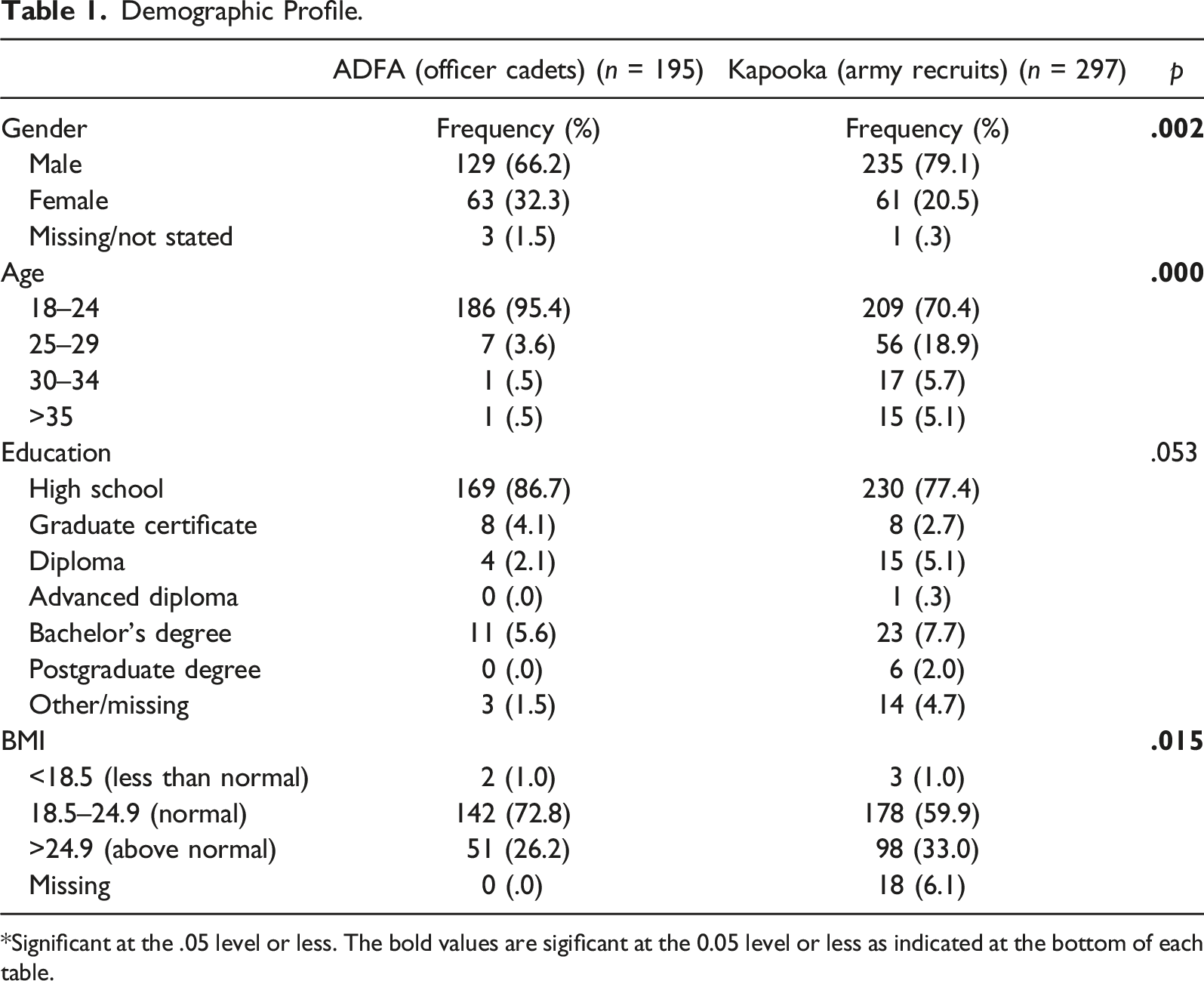
*Significant at the .05 level or less. The bold values are sigificant at the 0.05 level or less as indicated at the bottom of each table.
Demographic Profile Comparison Between Studies.
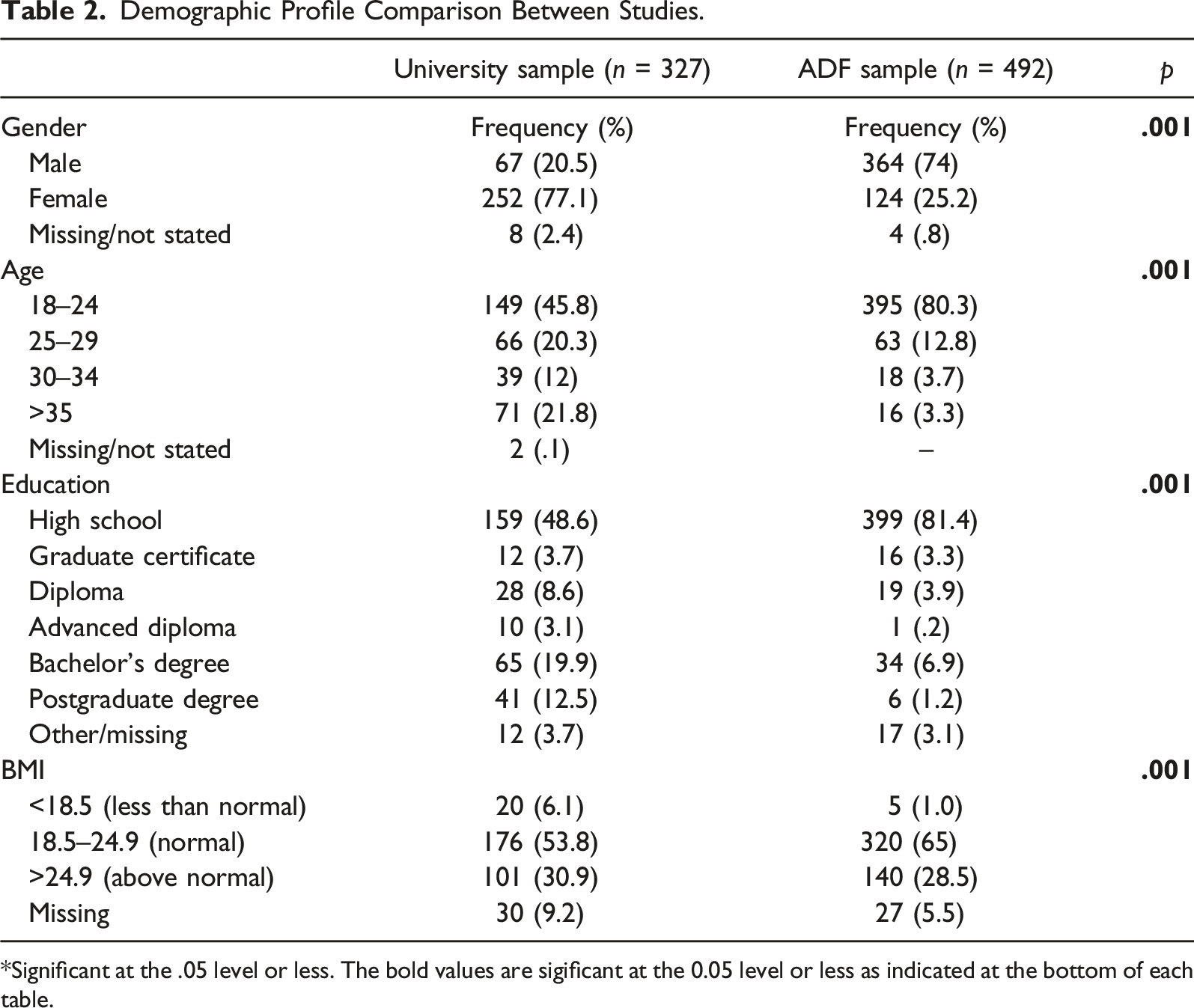
*Significant at the .05 level or less. The bold values are sigificant at the 0.05 level or less as indicated at the bottom of each table.
Measures
Psychographic variables informed by the MOA framework were collected and used to segment the sample with two-step cluster analysis along with a demographic measure (education) and behavioural measure (eating behaviour) to repeat the segmentation analysis conducted in Kitunen et al. (2019). Motivation, opportunity and ability were measured using three items per construct (e.g. one item for motivation was: I eat what I eat...because it is healthy; 1 = never; 7 = always, one item for opportunity was: I eat what I eat…because there are lots of different fruit and vegetables available; 1 = never; 7 = always, and one item for ability was: I eat what I eat…because I have the skills to shop for my own food; 1 = never; 7 = always). Eight items capturing eating behaviour (e.g. one item was: thinking about your average day, please select the frequency you eat 3 meals; 0 = never; 3 = always) were sourced from Turconi et al. (2003), and used to calculate a Turconi eating behaviour score for each participant. The reliability and validity of the MOA constructs displayed high internal consistency exceeding the recommended Cronbach’s alpha levels (motivation α = .73, opportunity α = .77 and ability α = .77). Structural equation modelling (SEM) was conducted with AMOS Graphics version 24 to investigate the measurement and structural models to understand if the MOA framework could be used to explain healthy eating behaviour in the ADF trainee sample. Model fit indices revealed an acceptable model fit: .959 (GFI), .924 (AGFI), .938 (TLI), .959 (CFI) and .072 (RMSEA) (Hu & Bentler, 1999; Steiger, 2007).
Data Analysis
Two-step cluster analysis was used with IBM SPSS version 25 to identify homogenous healthy eating subgroups in the ADF trainee population. Two-step cluster analysis was used in the original study and in order to validate the results by replicating the analysis, the same segmentation analysis technique needs to be used. Repeating the Kitunen et al. (2019) study, the analysis was conducted with the five segmentation variables, all with low to zero correlations, and recommended respondent to measure ratio guidelines (Dolnicar et al., 2016).
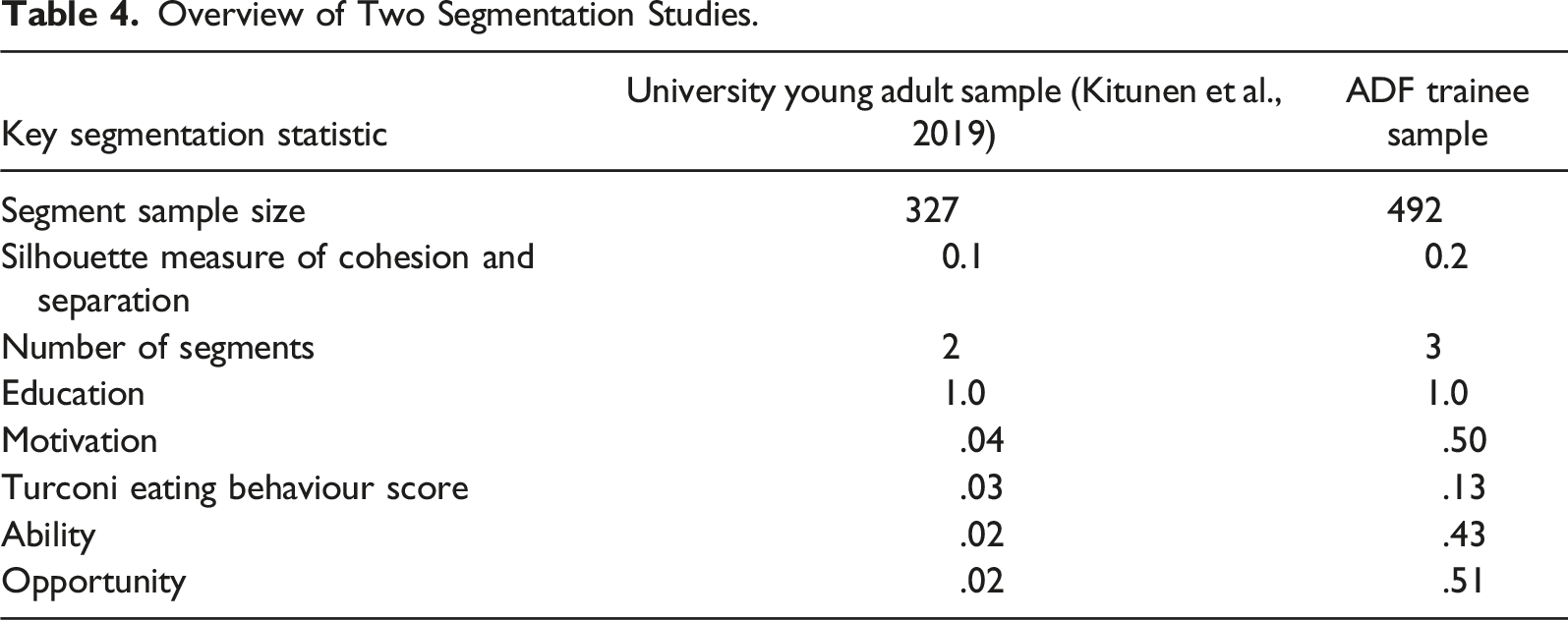
The analysis generated a sample (n = 492) with a silhouette measure of cohesion and separation of .2. A silhouette measure of cohesion and separation of more than .0 is required for the between-cluster and within-cluster distances to be valid. The silhouette measure indicates the clustering solution’s overall goodness-of-fit. It is based on the average distances between the objects and can vary between −1 and +1. Specifically, a silhouette measure of less than .20 indicates a poor solution quality, a measure between .20 and .50 a fair solution, and a measure higher than .50 indicates a good solution (Norušis, 2012). The segment solution was validated in a split sample to guarantee the consistency of the segment formation in a half-sized sample. A three-segment solution with five segmentation variables was produced followed by the assessment of individual variable predictor importance scores (from 0 = least important to 1 = most important). Importance level indicates the importance of a variable to segment solution. Importance levels between 1.0 and .8 signify that a variable is highly important, while ratings between .2 and .0 indicate the variable was less important in forming the segments (Norušis, 2012). Input importance levels of all segmentation variables were higher than .0, hence indicating that every variable contributed to some variation within segments. The most important variable defining the segments was education (1.00), followed by opportunity (.51), motivation (.50), ability (.43) and the Turconi eating behaviour score (.13) as the least important variable. Chi-square tests and one-way ANOVA tests were used on categorical and continuous variables to investigate segment differences.
Results
Three Segment Solution.
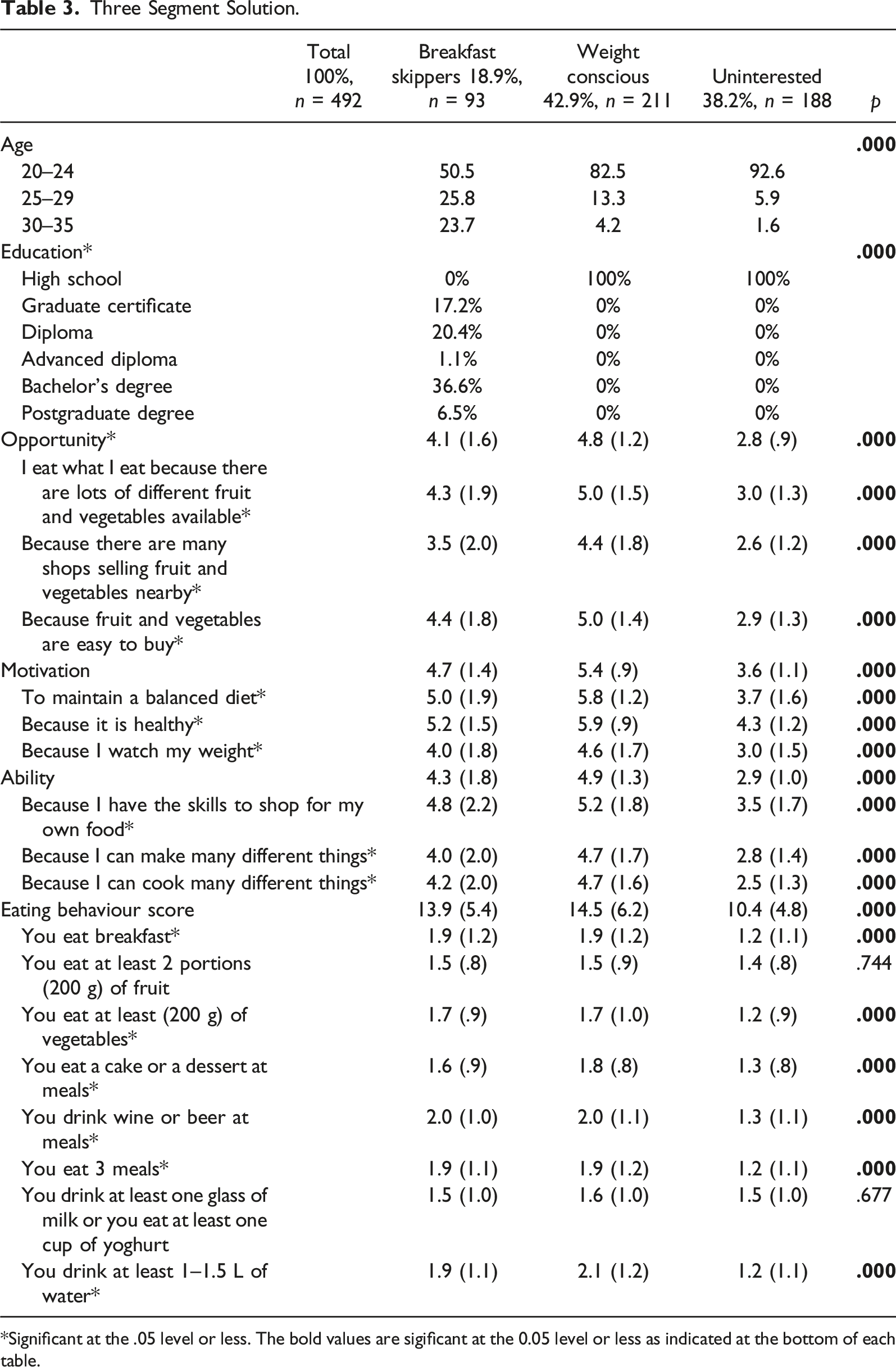
*Significant at the .05 level or less. The bold values are sigificant at the 0.05 level or less as indicated at the bottom of each table.
The second segment (Weight conscious) was the largest segment (42.9%) and consisted completely of high school educated (100%) respondents who were mainly 18–24 years old (82.5%). The respondents in this segment held the strongest motivation to eat healthy (M = 5.4, SD = .9), along with strongest belief in their ability (M = 4.9, SD = 1.3) and opportunity (M = 4.8, SD = 1.2) to eat healthy. In accordance with the MOA framework, which states that presence of these three factors facilitates behaviour, this segment also had the highest Turconi eating behaviour score (14.5).
The third segment (Uninterested) comprised of 18- to 24-year-old (92.6%) high school educated (100%) respondents. The respondents in this segment reported the lowest motivation to consume a healthy diet (M = 3.6, SD = 1.1) and had lowest perceptions of their ability (M = 2.9, SD = 1.0) and opportunity (M = 2.8, SD = .9) to eat healthy. As expected, this segment also had the lowest Turconi eating behaviour score (10.4) for healthy eating when compared to the other segments.
Overview of Two Segmentation Studies.
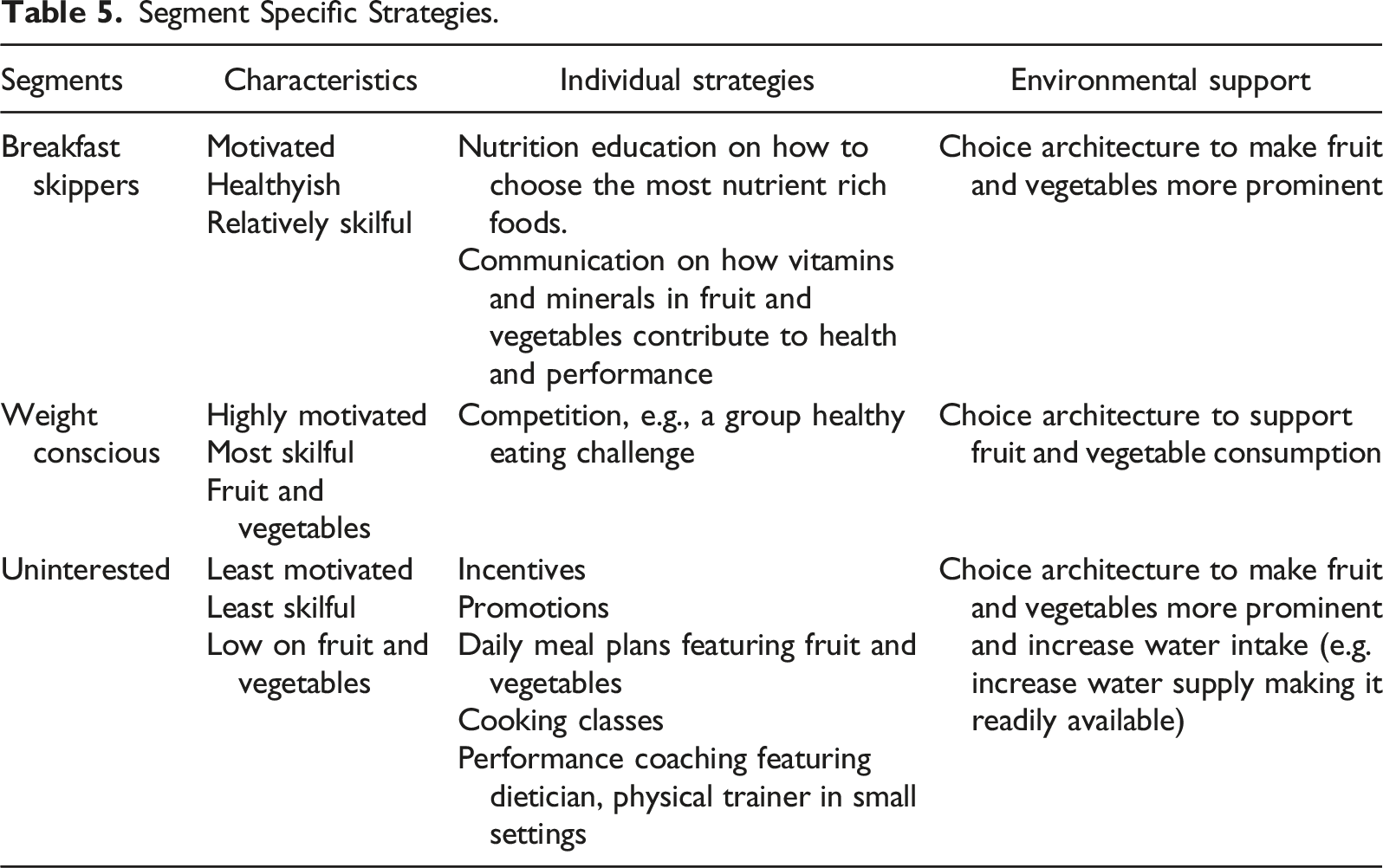
Segment Specific Strategies.
Discussion
This study contributes to the literature in four main ways. First, this study confirms the reliability and validity of the MOA constructs in the ADF sample. Second, this study empirically tests if the MOA framework explains healthy eating in the ADF trainee population. Third, this study identifies if a theoretically derived segment solution similar to the previously conducted study can be validated in the ADF trainee population. A replication study was undertaken using the same constructs, items and analytical procedures. Finally, this study determines how different strategies can be tailored to each segment within a healthy eating program.
To repeat the segmentation analysis conducted in Kitunen et al. (2019), the reliability and validity of psychographic variables informed by the MOA framework were tested. The MOA constructs display high internal consistency exceeding recommended Cronbach’s alpha levels. Furthermore, SEM was conducted to investigate the measurement and structural models to understand if MOA framework explains eating behaviour in the ADF trainee sample and model fit indices revealed an acceptable model fit. This study offers empirical evidence of the value of construct validation in separate samples before study replication. This is supported by previous research where cross-cultural differences in structure and meaning of the Internet shopper lifestyle scale were tested and validated (Brengman et al., 2005).
This study expands the focus to the application of theory within segmentation in social marketing. Theory is rarely used in social marketing segmentation studies and when it is used individual and intentional-focused theories dominate (Luca & Suggs, 2013; Truong, 2014; Truong & Dang, 2017). This study applied the MOA framework to investigate if MOA predict eating behaviour and indicated the replicability and ability of the MOA framework to explain eating behaviour in two young adult samples. This study further confirmed the usefulness of applying behavioural theory within segment formation. Particularly, by employing the MOA framework, this study provides empirical evidence illustrating the value of using behavioural theories to draw segments and utilising the same theory to cross-validate the constructs in a comparable sample. Specifically, the study indicates the usefulness of the MOA framework in identifying distinct segments with similar structure in two comparable young adult samples. This study provides empirical evidence supported by previous research (Ibrahim et al., 2018; Schuster et al., 2015) endorsing the value of using behavioural theories to segment target populations (Lotenberg et al., 2011), with all of the three MOA framework constructs contributing to segment formation. Given that behaviour change is more likely when more of the social marketing benchmarks are used (Carins & Rundle-Thiele, 2014a; Xia et al., 2016), this paper delivers clear guidance demonstrating how behavioural theory can be included within segmentation to inform program planning and therefore increase the likelihood of behavioural change. Given that interventions that clearly link theory constructs to at least one intervention component deliver positive outcomes (see Willmott et al., 2019 p. 14), healthy eating can be increased through enhanced environmental support (opportunity), improved skills (ability) and motivation.
Despite the current study producing a different number of segments (increasing the number of segments from two to three) similarities can be identified across the two studies. This is supported by McAndrew et al. (2019) who applied quantitative methods to compare different datasets on the same segmentation model and found minimal differences between the defining criteria used as bases of segmentation. The segments discovered in Kitunen et al. (2019) were named breakfast skippers and weight conscious. When compared to the current segments the profile of breakfast skippers is comparable in both samples. The differences in mean scores on opportunity and ability are mainly not more than .1 between the two segments, and the largest mean difference in motivational items was .3. The main difference between these segments was education, breakfast skippers being high school educated (100%) in the previous study and bachelor’s degree level educated (37.4%) in the current study. Similar patterns can be observed in weight conscious with both mean scores for opportunity and ability being separated by .2 points at the most. Mean scores for motivation had slightly more variation with .6 points being the largest difference between the segments. Similarly, to breakfast skippers, weight conscious in the current study are high school level educated (100%). This finding provides insights on comparability of segments across samples; however, more research needs to be conducted to examine if both the number and characteristics of the segments can indeed be validated across young adult samples.
Program Planning Implications
This study provides clear evidence for practitioners of the value of evaluating target audiences and segmenting the audience to reveal the unique characteristics to design more detailed behaviour change programs. This study provides insights that can be utilised to change ADF trainees’ eating behaviour. The ADF trainee population revealed three distinct segments (Breakfast skippers, Weight conscious and Uninterested), each with individual beliefs regarding what motivates them to eat more healthy, the different opportunities they have to eat healthy and their ability to make healthy foods for themselves. This study provides useful insights for social marketers working on encouraging healthy eating habits of ADF trainees. Different social marketing programs could be developed, targeting the three identified segments (Table 5).
Given the ADF trainees are on a tight schedule with training and mealtimes it could be beneficial to extend the mess hall operating hours especially during mornings when the trainees are rushing to their physical training sessions and are likely to skip breakfast due to lack of time to eat. This way trainees could have time to either consume breakfast before the training session or directly after before having to move on to other commitments. In addition to regular physical training sessions, the trainees are very competitive in many aspects of their lives and healthy eating challenges and competitions would be beneficial in encouraging consumption of a healthy diet. This would enable comparison of results with peers and assist with motivation to do better when trying to win a competition over other trainees.
Limitations and Future Research
This study has some limitations. First, the study used self-reported measures of behaviour. Self-reported measures are the most widely used methods in social sciences (Sallis & Saelens, 2000); however, self-report suffers from social desirability bias and possible incorrectness of data resulting from selective memory bias (Warnecke et al., 1997). Future research could verify self-report data by utilising mechanical observations to measure actual eating behaviour (Bogomolova, 2017). Preferably, individual self-reports would be linked to observations.
Furthermore, the study employed a convenience cross-sectional sample representing young adult ADF trainees spread over two states of Australia. Therefore, any generalisations beyond this sample and the two bases are difficult. Future studies should reach beyond this sample and collect data from young adults in the ADF across the country to establish segments that are representative of young adults in ADF. In addition, data could be collected across Australia and from people living in rural areas with the aim of validating segments that can be reliably implemented in an Australian young adult population.
The naming of the segments was kept consistent with the previous study for replication purposes; however, for example, the Breakfast skippers segment didn’t differentiate in breakfast consumption when compared to Weight conscious. It might be beneficial to use more appropriate naming for segments in the future and potentially tie the names into the MOA framework constructs to further link in the theoretical approach.
Future research employing a longitudinal research method to examine the long-term effects of healthy eating is recommended to examine the predictive ability of MOA. Even though MOA was successfully applied in a social marketing healthy eating study (Kitunen et al., 2019) and constructs were cross-validated in the current study, the need to examine causality remains to determine if MOA does predict future eating behaviour.
In order to replicate the previous study, the same segmentation variables were used to establish the number and characteristics of the segments. The MOA framework was able to explain eating behaviour in the current study, and like the previous study, education was the most important variable to distinguish segment differences. While the segment structure is similar to the previous study, the number of segments increased from two to three suggesting that future research should be undertaken until full validity is assured.
Other variables such as age, gender or BMI could be tested to identify how the segment solution might change, and if a stronger solution could be identified. Furthermore, the relationship between BMI and cluster membership could be explored to potentially strengthen the ability of the MOA framework to produce segments. Given the results indicated that segment specific healthy eating programs could be provided to cater for each segment future research could take a step further and examine if a relationship exists between BMI and the Turconi eating behaviour score for more specific insights.
Conclusion
The current study was an empirical replication study that aimed to investigate, to what extent similar theory-driven healthy eating segments could be identified across two young adult populations. The results showed that the MOA framework can be used to deliver theoretically informed segments, which can assist social marketers to move beyond one size fits all healthy eating programs. The current study produced three distinct segments within a healthy eating context that were defined by the MOA framework constructs. The segment structure exhibited some similarities, with education being the most important variable in differentiating the segments from one another. However, clear differences were evident with the number of the segments increasing from two to three. Respondents within these segments had significantly different eating behaviours, motivations to eat healthy, abilities and opportunities to buy and make healthy foods, and different demographic profiles. A generalisable segmentation structure that can be reliably applied across different young adult’s samples is not yet apparent, and a wider study is suggested to identify a valid segmentation structure that can be reliably applied across the Australian young adult population. Until then, it is recommended that segmentation studies should be conducted for each young adult population targeted for change. This study offers evidence of the usefulness of theory-driven segments in social marketing, aiming to change young adults’ eating behaviour, a crucial focus given the growing frequency of overweight and obesity among young adults.
Footnotes
Declaration of Conflicting Interests
The author(s) declared no potential conflicts of interest with respect to the research, authorship, and/or publication of this article.
Funding
The author(s) disclosed receipt of the following financial support for the research, authorship, and/or publication of this article: This work was supported by the Defence Science and Technology Group.
