Abstract
Background
Binge drinking is a social problem that is highly prevalent in South Africa, particularly among the youth. The behaviour has negative consequences on the health of individuals and society.
Focus of the Article
This empirical study drew from the Theory of planned behaviour and decomposed the theory’s determinants of intention into two components each, to investigate intention to quit binge drinking. Social support from the Social cognitive theory was also investigated as a determinant of intention to quit. Furthermore, the study investigates the determinants quitting binge drinking behaviour.
Research Hypotheses
The study proposed that attitude (affective and instrumental); subjective norms (injunctive and descriptive), perceived behavioural control (self-efficacy and perceived controllability) and social support positively and significantly predict intention to quit binge drinking. Intention, perceived controllability and self-efficacy were hypothesised to predict actual behaviour of quitting binge drinking.
Importance to the Social Marketing Field
This study contributes theoretical knowledge through the use of an extended TPB model that focuses on the desired behaviour of quitting binge drinking and provides specific determinants that social marketers can use when designing interventions. The two-component TPB used in the study also provides social marketers distinctive and specific knowledge on which aspects from the original one component significantly influence the intention to quit. The implications are discussed from a social marketing perspective.
Methods
A cross-sectional, quantitative online survey was used to collect data from a convenient sample of 810 respondents. Partial Least Squares Structural equation modelling was used to analyse the data including testing the hypothesis and age group–based multigroup analysis.
Results
Instrumental attitude, injunctive norms, descriptive norms, self-efficacy and social support were found to significantly and positively predict intention to quit binge drinking explaining 49.2% variance in intention. However, the influence of affective attitude was negative and insignificant. Intention and self-efficacy positively explained 16.2% of variance in behaviour.
Recommendations for Research/Practice
It is recommended that social marketers focus on instrumental attitude injunctive, descriptive norms, self-efficacy as well as social support when designing interventions to promote quitting binge drinking behaviour.
Limitations
The main limitation of the study is it provides a broad ranging overview which calls for more experimental efforts to be done on the ground for practitioners promoting positive behaviour change.
Keywords
Introduction
Binge drinking or heavy episodic drinking is an excessive alcohol consumption pattern which the World Health Organisation (WHO) defines as the 'consumption of 60 or more grams of pure alcohol (6+ standard drinks in most countries) on one single occasion at least monthly' (WHO, 2014:4; 2018:47). Binge drinking behaviour is associated with negative health consequences such as cancer, cardiovascular diseases and mental disorders (Centre for Disease Control and Prevention, 2019). Binge drinking also increases susceptibility of engaging in risky sexual behaviours (Rehm et al., 2017a). In spite of the dangers associated with binge drinking, its prevalence among drinkers is high globally (WHO, 2018).
In South Africa, binge drinking is of high prevalence with statistics revealing that, 31% which is almost a third of the South African population aged 15 years and older consume alcohol, and disturbingly 59% of the drinkers indulge in binge drinking (WHO, 2018). Based on the WHO global status report on alcohol and health of (2014) and (2018), the level of binge drinking in South Africa is among the highest in the world and it is above the global average of 39%. This implies that binge drinking is a serious social problem in South Africa which requires urgent and effective interventions.
Binge drinking is most prevalent among the youth in South Africa (NDoH et al., 2019). In South Africa, the youth are defined as those aged 15–34 years (Stats SA, 2019). The high prevalence of binge drinking among the youth is of great concern because in addition to the negative health consequences, the youth are prone to possible brain impairment since research has established that the brain development continues well into the 20s (Ostby et al., 2009). Second, from a socio-economic perspective, if the youth succumb to the illnesses and injuries attributed to alcohol consumption they cannot optimally contribute to the development of their countries which negatively impacts societies in developing and emerging economies such as South Africa.
To reduce binge drinking among the youth, the government and other stakeholders have implemented several interventions including legal and education efforts. However, the problematic behaviour still persists. In light of the unabated problem of binge drinking among the youth in South Africa, the application of social marketing which promotes voluntary positive behaviour change may be beneficial. Social marketing has been found to be effective in promoting positive behaviour change, for instance, quitting smoking behaviour (Skerletopoulos et al., 2020); engaging in physical activity (Scarapicchia et al., 2015); promoting recycling (Haghighatjoo et al., 2020) as well as reducing risky drinking (Thompson et al., 2013). Of importance in social marketing, is conducting formative research so that interventions are well informed prior to development. The use of theory is also recommended in social marketing as it aids in understanding the underlying behavioural factors of a target audience and guides intervention planners (Rundle-Thiele et al., 2019). However, the use of theory and formative research are considered minimal in the field which means a gap still exists (Truong and Dang, 2017).
The present study aims to narrow the gap by providing theory and insight to social marketing. The present study takes a positive approach and focuses on the desired behaviour of quitting binge drinking rather than focusing on the problematic one. As such, the current study builds on the study by Buyuceck et al. (2019) that suggests focusing on investigating the factors that drive the desired behaviour thereby gaining direct insight. This study also takes a social marketing perspective from a developing country’s perspective to understand the antecedents of quitting binge drinking behaviour.
Literature Review and Theoretical Framework
The Theory of planned behaviour is the main underlying theory used in this study to understand quitting binge drinking intention and behaviour. The TPB has been used extensively in literature to understand various types of behaviour including; quitting smoking (Athamneh et al., 2015); healthy eating (Chan et al., 2016); exercise (Vo and Bagg, 2015) and alcohol related (Chen and Feeley, 2015; Lawental et al., 2018). The TPB argues that attitude, subjective norms and perceived behavioural control directly influence intention (Ajzen, 1985, 1991, 2005). The TPB also notes that perceived behavioural control and intention directly influence actual behaviour (Ajzen, 2005). Intention is considered the most proximal determinant of actual behaviour (Ajzen, 2005). This study looked at the TPB constructs of attitude, subjective norms and perceived behavioural control from a two-component perspective. Attitude was investigated as affective and instrumental, subjective norms as injunctive and descriptive and perceived behavioural control as self-efficacy and perceived controllability. The two-component approach has been reported to have improved predictive capability in comparison to the original single component TPB (Elliot and Ainsworth, 2012). Although prior studies including Elliot and Ainsworth (2012); Huang and Chen (2015) have used the two-component TPB in predicting binge drinking behaviour, none according to the researchers’ knowledge have investigated quitting binge drinking behaviour.
Attitude is defined as 'an individual’s positive or negative position on an evaluative or affective dimension of an object, action or event' (Fishbein and Ajzen, 1975:16). Affective attitude is associated with feelings associated with the desired behaviour and can measure aspects such as joy, fun or pleasure (Botsaris and Vamvaka, 2016:435; Norman et al., 2019:479). Instrumental attitude refers to the rational or cognitive aspects associated with a particular behaviour, such as quitting binge drinking is healthy (Botsaris and Vamvaka, 2016:436). Behaviour change studies such as Courneya et al. (2006) on exercise as well as Elliot and Ainsworth (2012) on binge drinking investigated affective and instrumental attitude and reported positive and significant influence of both types of attitude on intention. Based on the TPB, the present study proposed the following hypotheses:
Affective attitude towards quitting binge drinking positively and significantly influence intention to quit binge drinking.
Instrumental attitude towards quitting binge drinking positively and significantly influence intention to quit binge drinking.
Subjective Norms
According to Ajzen (1991:188), 'subjective norms refer to the perceived social pressure to perform or not to perform a behaviour'. The TPB posits that subjective norms influence intention (Azjen, 2005), and prior research has confirmed this (Previte et al., 2015). Subjective norms can be categorised into descriptive and injunctive norms as they have different sources of origin (Cialdini et al., 1990). Descriptive norms refer to the perception of the typical patterns of how people in a social referent group behave, for example, friends and family (Cialdini et al., 1990; Norman et al., 2019). Injunctive norms pertain to perceptions of approval or disapproval of performing a specific behaviour by important people in an individual’s social circles (Norman et al., 2019). Descriptive and injunctive norms were found to be significant predictors of intention to drink moderately by Park et al. (2009). This study drawing from the TPB proposed the following hypothesis
Injunctive norms significantly and positively influence intention to quit binge drinking.
Descriptive norms significantly and positively influence intention to quit binge drinking.
Perceived Behavioural Control
According to Ajzen (1991:183), 'perceived behavioural control refers to the individual’s perception of the ease or difficulty of performing the behaviour of interest'. Perceived behavioural control includes self-efficacy and perceived controllability (Elliot and Ainsworth, 2012). Perceived controllability is explained as 'the degree to which an individual believes she or he has control over performing the new behaviour' (Ajzen, 2002:666). Self-efficacy refers to an individual’s belief and confidence that they possess the ability to perform the new desired behaviour (Bandura, 1986). Self-efficacy is also a key construct in the Social cognitive theory (Bandura, 2004b).
Based on the TPB, perceived behavioural control not only influences intention but also directly influences actual behaviour (Ajzen, 2005). Perceived behavioural control has been investigated as a two-component construct in some behaviour studies. Elliot and Ainsworth (2012) on their binge drinking behaviour study reported that self-efficacy significantly predicted intention to binge drink but perceived controllability was insignificant. However, in another study on sun protection behaviour, both self-efficacy and perceived controllability predicted intention to use sunbeds (Pertl et al., 2010). Drawing from the TPB, this study proposed the following hypotheses:
Self-efficacy to completely quit binge drinking positively and significantly influences intention to quit.
Perceived controllability regarding completely quitting binge drinking positively and significantly influences intention to quit.
Self-efficacy to completely quit binge drinking positively and significantly influences actual behaviour of quitting binge drinking.
Perceived controllability regarding completely quitting binge drinking positively and significantly influences actual behaviour of quitting binge drinking.
Social Support
Drawing from the SCT by Bandura (1986), the inclusion of environmental facilitators and impediments is crucial to understanding behaviour. Social support is an example of an environmental facilitator based on the SCT (Bandura, 2009). Social support refers to the perceived assistance and encouragement from family, friends and other support networks (Farrell and Langrehr, 2017). Prior research has found social support to be a significant predictor of intention to exercise (Rhodes et al., 2002); entrepreneurial intention (Muhammed et al., 2021) and intention to quit smoking (Soulakova et al., 2018). Although the studies were non-alcohol related, the influence of social support may be important to further understand the intention to quit binge drinking. Based on the SCT, facilitating factors such as social support indirectly determine actual behaviour through goals (which can be considered similar to intention) (Bandura, 2009). Drawing from prior research, this study proposed that:
Social support positively influences the intention to quit binge drinking.
Intention to Quit
Intention refers to the willingness and plan to act out a new behaviour (Ajzen, 1991). According to a review of the TPB by Cooke et al. (2016), intention was found to be the strongest predictor of actual behaviour. Intention has been reported to influence actual behaviour in alcohol-related studies including Zhang et al. (2018) in South Africa, Peltzer et al. (2017) in Argentina and Willis et al (2020) in Australia. Since previous studies focused on binge drinking, the present study aimed to investigate the influence of intention to quit on actual behaviour of quitting binge drinking. The present study proposed H6 as follows:
Intention to quit binge drinking positively and significantly influences quitting binge drinking behaviour. Socio-demographic factors such as age may result in differences regarding intention to consume alcohol (Haydon et al., 2016; Olowabi et al., 2018). Considering the broad definition of youth adopted in this study, a group difference analysis was conducted for 2 generated age groups (i.e. 18 to 25 and the 26–34). Since most studies on youth binge drinking focus on age groups that range from 18 to 25, for example, Bartoli et al. (2014), Park et al. (2009) and Willis et al. (2020), therefore assessing an older age group of the youth would also provide further insight. This study investigated if significant differences existed in the model’s structural paths between the 2 groups and proposed the following hypothesis:
There are significant differences in the model’s structural paths’ relationships between the 18 to 25 and 26 to 34 age groups.
Research Methodology
A quantitative approach was adopted in the present study as the formulated hypotheses were to be tested. After obtaining ethical clearance, data was collected using a self-administered online survey. Ethical clearance was granted by the School of Consumer Intelligence and Information Systems at the University of Johannesburg, South Africa. The ethical clearance approval number/code is 2020SCiiS48. The target population was the youth aged 18 to 34 who resided in the province of Gauteng in South Africa and who had engaged in binge drinking at least once in the preceding 12 months. The youth as the age group with the highest prevalence of binge drinking in the country and the Gauteng province as the most populated province and economic hub of the country were considered suitable. A total of 810 valid responses was realised through the use of convenience sampling. All participants provided informed consent in writing.
Measurement
The measurement scales were adapted from previous related studies. A 7 point Likert scale was used to measure the model’s constructs. To measure affective and instrumental attitude, a semantic scale was used. As examples, statements were adapted from Elliot and Ainsworth (2012) read, ‘For me quitting binge drinking is: painful/pleasurable and; fun/not fun.' To measure instrumental attitude, statements included, ‘For me, quitting binge drinking is: good/bad and; beneficial/harmful.'
To measure injunctive and descriptive norms; self-efficacy and perceived controllability; social support and intention to quit a 7 point Likert scale that ranged from, strongly disagree (1), to strongly agree (7) was used. Statements to measure descriptive norms were adapted from Zhang et al (2018) and included, ‘Most people important to me: (e.g. family, friends and colleagues) have quit binge drinking' and ‘are willing to quit binge drinking'. Statements to measure injunctive norms included, 'Most people important to me: approve quitting binge drinking' (Rhodes & Courneya, 2003) and 'want me to completely quit binge drinking' (Elliot and Ainsworth, 2012). Self-efficacy statements were adapted from Conner et al. (2013), for example, 'I am confident that I can completely quit binge drinking', whilst perceived controllability statements, for example, 'I have total personal control regarding completely quitting binge drinking', were adapted from Vallance et al. (2012). Social support measures were adapted from Farrell and Langrehr (2017), for example, 'There is someone around to help me when in need regarding quitting binge drinking'. To measure intention, statements were adapted from Zhang et al. (2018) and Previte et al. (2015); examples included, 'I intend to completely quit binge drinking' and 'I plan not to binge drink again'. Actual behaviour was measured using response options that ranged from 1 (very untrue of me) to 7 (very true of me). Question items were adapted from previous studies such as Rollnick et al. (1992) and Kushnir et al. (2016). Examples included, 'I have not engaged in binge drinking behaviour for the past six months' and 'I have succeeded in staying away from binge drinking for the past six months'.
Results
Demographics
Descriptive statistics were analysed using SPSSv27. Demographics that were captured in this study included gender, age, education, ethnic group and employment status. The majority of respondents were between the ages of 18 and 25 years (50.9%). The second highest age group was 26–30 years (30.7%) whilst those aged 31–34 years were 11.2%. As part of the conditions for ethical clearance, respondents were required to be given the ‘I prefer not to say’ option on questions related to their demographic profile, 7.2% chose not to say. Most of the respondents were male (48.8%) while females represented 43.3%. This study found that more males binge drink compared to females. With reference to education, 28.3% of the respondents reported that their highest level of education was matric, 21% had a bachelor’s degree, 3.5% had Honours degree, 1.9% had Master’s degree and .7% reported having a doctorate degree. The majority, 75.4% of the participants were black Africans, followed by Coloureds (mixed race) at 6.8%. Whites constituted 4.7% of the sample, whilst 4% were Indians. In terms of employment status, 27% of the respondents reported that they were unemployed; 26.5% were students whilst 10.7% indicated that they were employed full time. There were 10% of the respondents who preferred not to state their employment status
The mean score for affective attitude (M = 3.23) was negative, considering 4 was the neutral point indicating that respondents associated quitting binge drinking with statements such as 'For me quitting binge drinking would be: unpleasant'. The mean score for instrumental attitude although in the negative range (M = 3.66) inclined towards neutrality. The mean scores for descriptive norms was (M = 4.57) and for injunctive norms (M = 4.94). Clearly positive scores showing agreement were found for; perceived controllability (M = 5.58); self-efficacy (M = 5.26); intention to quit (M = 5.11) and social support (M = 5.01).
Measurement Model
The study followed the 2 step approach in assessing models in SEM recommended by Anderson and Gerbing (1988) which includes assessing the measurement model first and then the structural model. First, the assessment of the measurement model was through the evaluation of convergent and discriminant validity using SmartPLS version 3.3.3. The results are shown in Table 1.
Factor loadings above .708 are preferred as it is an indication that the construct explains 50% of the indicator’s variance (Hair et al., 2019). According to the results presented in Table 1, the indicator loadings for all the constructs were over .708 and considered satisfactory. The results confirmed that all the measures had acceptable internal consistency reliability, above .708 (Hair et al., 2019). Based on the findings, all AVE values were above .50 (Hair et al., 2019), therefore confirming convergent validity.
To assess discriminant validity, the Fornell and Larcker technique and the HTMT criteria were used. Fornell and Larcker (1981) mention that discriminant validity is statistically established when the square root of the AVE of a construct is above the highest inter-construct correlation coefficient. Discriminant validity findings are presented in Table 2. The findings are presented in Table 2 also show that the square root of all the AVEs (bold diagonal value) for the constructs were greater than their correlations with other constructs confirming discriminant validity. Furthermore, the HTMT analysis was used as a second method to assess discriminant validity as recommended for PLS-SEM by Henseler et al. (2015). HTMT criteria findings are presented in Table 3. The results of the discriminant validity analysis using the HTMT criteria presented in Table 3 also confirmed discriminant validity.
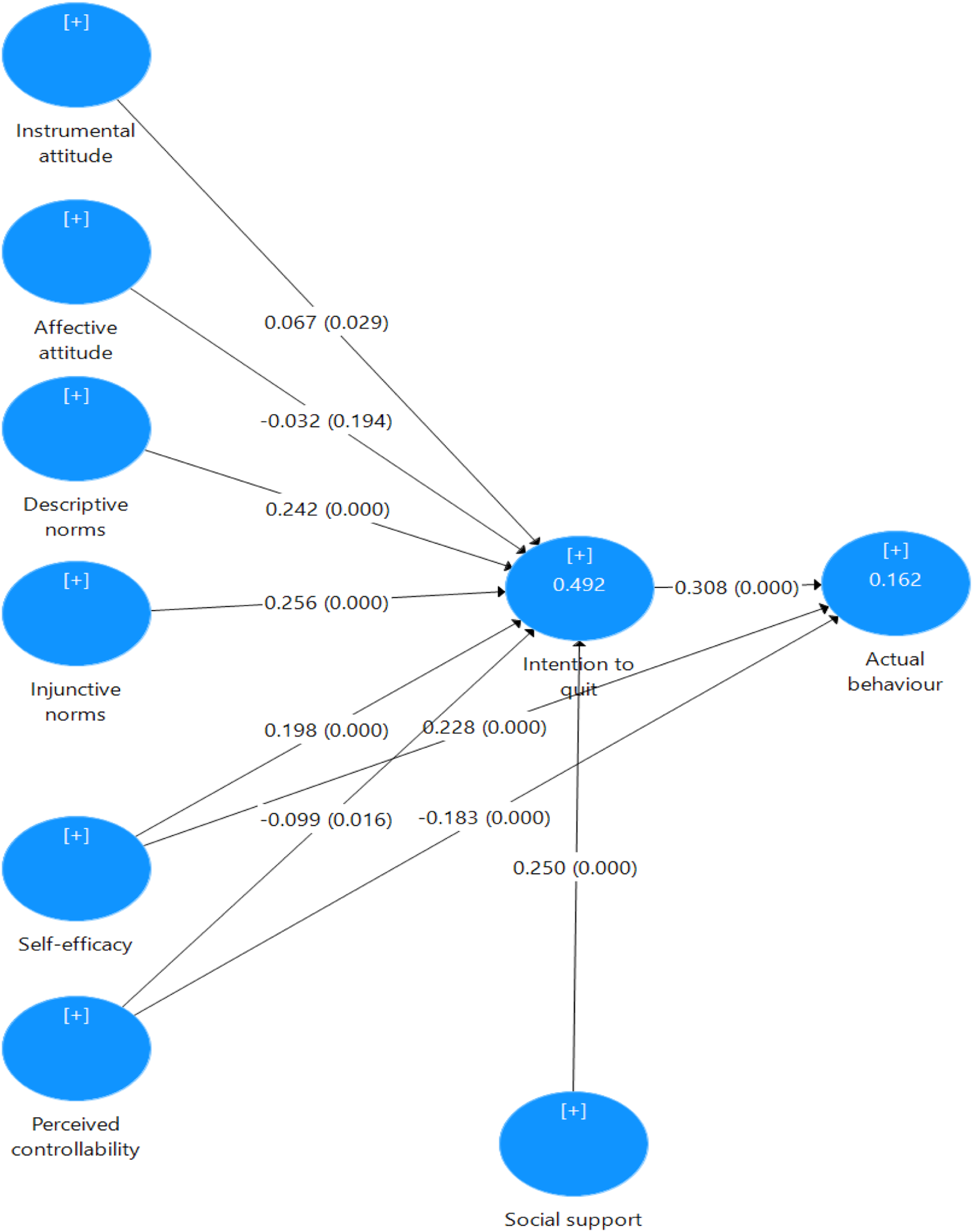
After satisfactory results for validity and reliability the structural model was then assessed. Prior to the structural model analysis, a collinearity assessment was conducted using the variance inflation factors (VIFs) as recommended by Hair et al. (2019). All the inner VIF values were below 5 ranging from 1.396 to 2.165 which confirmed that there were no multi-collinearity issues among the constructs. The structural model shown in Figure 1 was then examined to determine the structural model path coefficients (β); the coefficient of determination (R2); the effect size (f2) and the predictive relevance (Q2) was. The structural model is illustrate in Figure 1.
As presented in Table 4, the findings revealed that 7 of the 10 hypothesised relationships were supported. As shown in Table 4 Hypotheses H1a, H3b and H4b were not supported. Affective attitude was not a significant predictor of intention (β = .032, p > .05). An effect size f2 = .001 which was close to 0 was also found. The influence of instrumental attitude on intention to quit (H1b) was significant (β = .067, p < .05). Therefore, H1b was accepted. The results however showed an effect size f2 = .005 which indicates a close to no effect of instrumental attitude on intention to quit. Thus, hypotheses H2a (descriptive norms on intention) and H2b (injunctive norms on intention) were accepted. For H2a, the results were β = .242, p < .05 with effect size of f2 = .067, and for H2b, β = .256, p < .05 with effect size of f2 = .065. The effect sizes for both H2a and H2b indicated a small effect on intention as they were both above .02 (Cohen, 1988).
Findings on the influence self-efficacy on intention was significant and revealed β = .198, p < .05; therefore, H3a was accepted. The effect size f2 = .036 also indicated that self-efficacy had an effect on intention to quit. H3b on perceived controllability and intention to quit relationship showed β = −.099, p < .05 which was a significant but a negative relationship. H3b was rejected as a positive relationship had been hypothesised. The effect size for H3b was f2 = .010 which also indicates close to no effect. The hypotheses H4a (self-efficacy influence on actual behaviour) results were β = .288, p < .05; therefore, H4a was accepted. Furthermore, the effect size f2 = .030 indicated that self-efficacy had an effect on actual behaviour. For hypotheses 4b (perceived controllability’s influence on actual behaviour), the results were β = −.183, p < .05; therefore, H4b was not supported as it was a negative relationship. An effect size of f2 = .024 indicated a small effect of perceived controllability on actual behaviour. The findings for H5 on social support’s influence on intention to quit showed that β = −.250, p < .05; therefore, H5 was accepted. The results showed an effect size f2 = .078 confirming that social support had an effect on intention to quit. Lastly, H6 regarding the intention to quit on actual behaviour showed β = −.308, p < .05; therefore, H6 was supported. The results showed an effect size of f2 = .083 which indicated a small effect.
The predictive relevance for both endogenous variables was .124 for actual behaviour and .337 for intention to quit. The values were above 0 indicating predictive relevance (Hair et al., 2019).
Group Difference Analysis
A multigroup analysis (MGA) was conducted in SmartPLS using the measurement invariance of the composite model (MICOM) procedures with results presented in Tables 5 and 6. The first of the 3 steps is configural invariance; this was achieved by ensuring that identical variables of the model, treatment and algorithm setting were used and for all groups (Henseler et al., 2016). Second, compositional invariance was assessed by running a permutation test and was established when all correlations (c) in both groups were not significantly lower than one (Henseler et al., 2016). In this study, as shown in Tables 5 and 6 the exceptions were for perceived controllability and social support. Third, the mean value showed no significant differences across the groups with the exception of social support. This study achieved partial measurement invariance and proceeded to compare the path coefficients of the two groups via the permutation test as presented in Tables 7 and 8 . No significant differences (p > .05) across all the groups were found as presented in Tables 7 and 8.
Discussion
Based on the findings of this study, instrumental attitude; injunctive norms; descriptive norms; self-efficacy and social support positively influence intention to quit binge drinking. This study pioneers in providing specific aspects of the variables that influence intention to quit binge drinking through the use of a two-component TPB.
Regarding the significant influence of instrumental attitude on intention, this study’s findings are in agreement with the TPB. Similar findings were also reported though for intention to binge drink by Elliot and Ainsworth (2012). The findings imply that knowledge of the consequences of binge drinking is crucial as it is a basis for the development of instrumental attitude. Contradicting the TPB and prior research such as Elliot and Ainsworth (2012), this study’s findings indicated that affective attitude was not a significant predictor of intention. It is possible that feelings towards quitting might not be adequate to positively influence intention to quit a social behaviour such as binge drinking, though they may influence engaging in the risk behaviour. This affirms the usefulness of the two-component TPB as distinguishing the aspects of attitude that are significant for behaviour change is possible.
The findings further revealed that descriptive norms and injunctive norms were predictors of intention to quit binge drinking. These findings were in agreement with the TPB and prior research such as Dobbs, Branscum and Wilkerson (2020). Similarly, Park et al. (2009) also found that descriptive norms were the strongest predictor of intention to drink moderately among the youth.
Self-efficacy positively influenced intention to quit binge drinking whilst perceived controllability was an insignificant predictor. Similar results were reported by Elliot and Ainsworth (2012) pertaining self-efficacy and perceived controllability. The use of the two-component TPB also enabled the study to identify the significance of self-efficacy and not perceived controllability in the context of quitting binge drinking.
Social support had a positive and significant effect on intention to quit binge drinking. Similar findings were reported in prior research though non-alcohol related including Rhodes et al. (2002); Soulakova et al. (2018) and Muhammed et al. (2021). This study highlights how social support influences intention which has not been investigated in the context of quitting binge drinking.
Self-efficacy and intention to quit significantly predicted quitting binge drinking behaviour. Self-efficacy has been reported as a significant predictor in other behaviour change focused studies including; Lewis et al. (2016) and Parkinson et al. (2018). On the other hand, perceived controllability did not positively influence actual behaviour of quitting binge drinking contradicting the TPB. It is possible that though perceptions of controllability might be positive, binge drinkers may not be willing or ready to quit the behaviour.
The findings revealed that intention had a positive and significant effect on actual behaviour which is consistent with the TPB and several studies (Cooke et al., 2016; French and Cooke, 2012; Lawental et al., 2018; Peltzer et al., 2017). Intention to quit binge drinking was also the strongest predictor of behaviour.
Based on the multigroup analysis conducted, there were no significant differences across the two age groups for all the relationships in the model. This means that the model had similar construct relationships across the groups. It is possible that generational similarities exist between the 18 to 25 and 26 to 34 age groups. This may be due to the perception of youth in modern society that goes beyond the age of 30 and focuses on going out, fun and marrying later. For instance, in South Africa in 2019 the median age for males to get married was 37 and 33 for females (Stats SA, 2019).
The findings of this study though they focused on South Africa, they corroborate with recent literature in behaviour change world over, particularly on the key finding on significance of subjective norms (i.e. both descriptive and injunctive norms). As examples, subjective norms have been found to significantly influence intention in recent social marketing literature including antilittering adoption behaviour in India (Sing and Kaur, 2021); waste disposal behaviour in Ghana (Tweneboah-Koduah et al., 2020); engaging in physical activity behaviour in Serbia (Milicevic et al., 2022). The key findings of the present study also align with literature that points out the importance what is approved, done and considered the norm by peers and family has an influence on an individual’s drinking behaviour or quitting thereof (Kuntsche et al., 2017; Martínez-Montilla et al., 2020). In addition, this study’s findings add more clarity on the aspects of subjective norms by dividing them into injunctive and descriptive norms thereby providing specific insight that is useful in designing interventions.
Conclusions and Implications
This study provides consumer insight which is of great importance in social marketing as it provides the targeted audience oriented information that can guide intervention development.
Implications for Product
Considering the significance of injunctive and descriptive norms in this study, social marketers can associate a fun and social lifestyle that has no alcohol involved. Quitting binge drinking as the actual product could still be portrayed with a fun lifestyle through social events that do not necessarily involve heavy alcohol consumption. Drawing from the significance of social support in the findings, as part of the augmented product, social marketers could incorporate support structures such as quitting networks whereby those interested in quitting binge drinking can join and be encouraged. A toll free line can be made available as well as online platforms when interventions are designed for the people who may require support.
Implications for Price
Strategies that minimise the costs associated with quitting binge drinking such as emphasising the benefits of quitting such as being healthier. The associated cost of quitting must be less compared to that of the competing behaviour of engaging in binge drinking. As a strategy for social marketers, the prices of alternative products such as non-alcoholic cocktails must be affordable and lower than the alcoholic beverages.
Implications for Place
Strategies such as non-alcoholic beverages that are appealing to the youth being widely availed in common socialising venues. Social marketers also have to ensure convenience and accessibility of any support networks, toll free lines that might offer additional assistance.
Implications for Promotion
Drawing from the findings, injunctive and descriptive norms have to be taken into consideration when designing interventions. This implies that social marketers should emphasise a narrative that pushes quitting binge drinking and which associates fun with other non-alcohol activities such as bowling when designing interventions. As also pointed out by Tran, Robertson and Thyne (2020), it is important to dissociate drinking with socialising and fun through promoting other appealing activities to the youth that still allow people to socialise.
Strategies that include the use of emotion appeals depicting fun lifestyle that does not involve binge drinking may be used to promote the product offering. Social marketers can include the use of testimonials, from relatable successful quitters. Considering self-efficacy was a significant determinant of quitting behaviour, sharing testimonies of how they succeeded may help with improving self-efficacy. Through promotion the message of the product, price and place of quitting binge drinking can be communicated through channels that the target audience can be reached.
Limitations and Recommendations for Future Research
This study provides insight on quitting binge drinking; however, it remains a broad-ranging overview. While discriminant analysis provided evidence that all the variables were distinct, a gap remains regarding the practicality aspect for behaviour change agents on the ground. To reduce the gap, experimental efforts which shrewdly explore the variables one or two at a time, meaningfully creating visual and verbal messages of what quitting binge drinking would require or look like to the target audience are important. More practical insight will then be gained on what moves the target audience. This study points to the need for these micro (experimental) efforts as avenues for future research.
Footnotes
Declaration of Conflicting Interests
The author(s) declared no potential conflicts of interest with respect to the research, authorship, and/or publication of this article.
Funding
The author(s) received no financial support for the research, authorship, and/or publication of this article.

Appendix
Factor Loadings, Internal Consistency Reliability and Average Variance Extracted.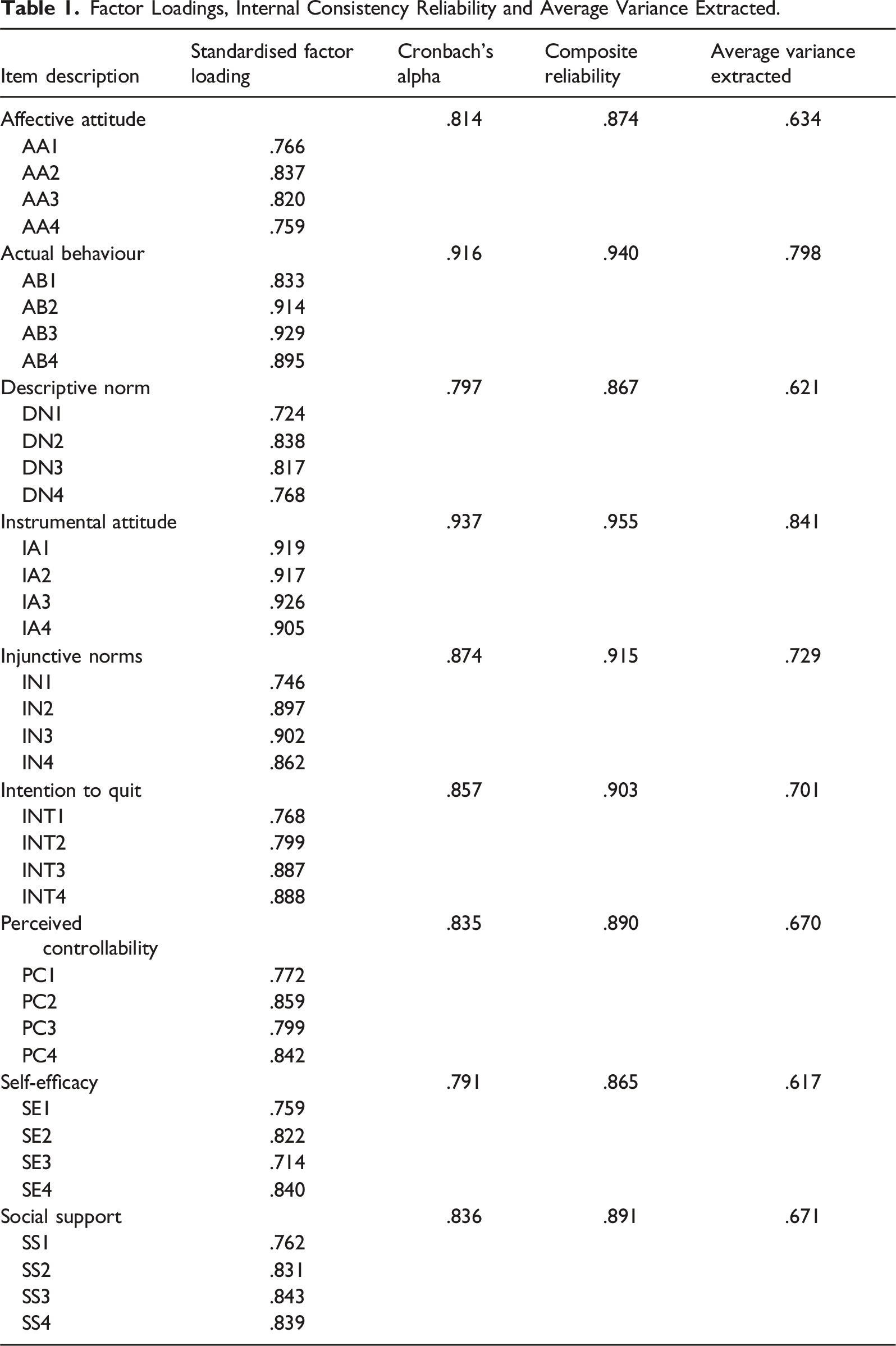
Item description
Standardised factor loading
Cronbach’s alpha
Composite reliability
Average variance extracted
Affective attitude
.814
.874
.634
AA1
.766
AA2
.837
AA3
.820
AA4
.759
Actual behaviour
.916
.940
.798
AB1
.833
AB2
.914
AB3
.929
AB4
.895
Descriptive norm
.797
.867
.621
DN1
.724
DN2
.838
DN3
.817
DN4
.768
Instrumental attitude
.937
.955
.841
IA1
.919
IA2
.917
IA3
.926
IA4
.905
Injunctive norms
.874
.915
.729
IN1
.746
IN2
.897
IN3
.902
IN4
.862
Intention to quit
.857
.903
.701
INT1
.768
INT2
.799
INT3
.887
INT4
.888
Perceived controllability
.835
.890
.670
PC1
.772
PC2
.859
PC3
.799
PC4
.842
Self-efficacy
.791
.865
.617
SE1
.759
SE2
.822
SE3
.714
SE4
.840
Social support
.836
.891
.671
SS1
.762
SS2
.831
SS3
.843
SS4
.839
Discriminant Validity Analysis (Fornell and Larcker Technique). aThe bold diagonal values are the square root of all the AVEs.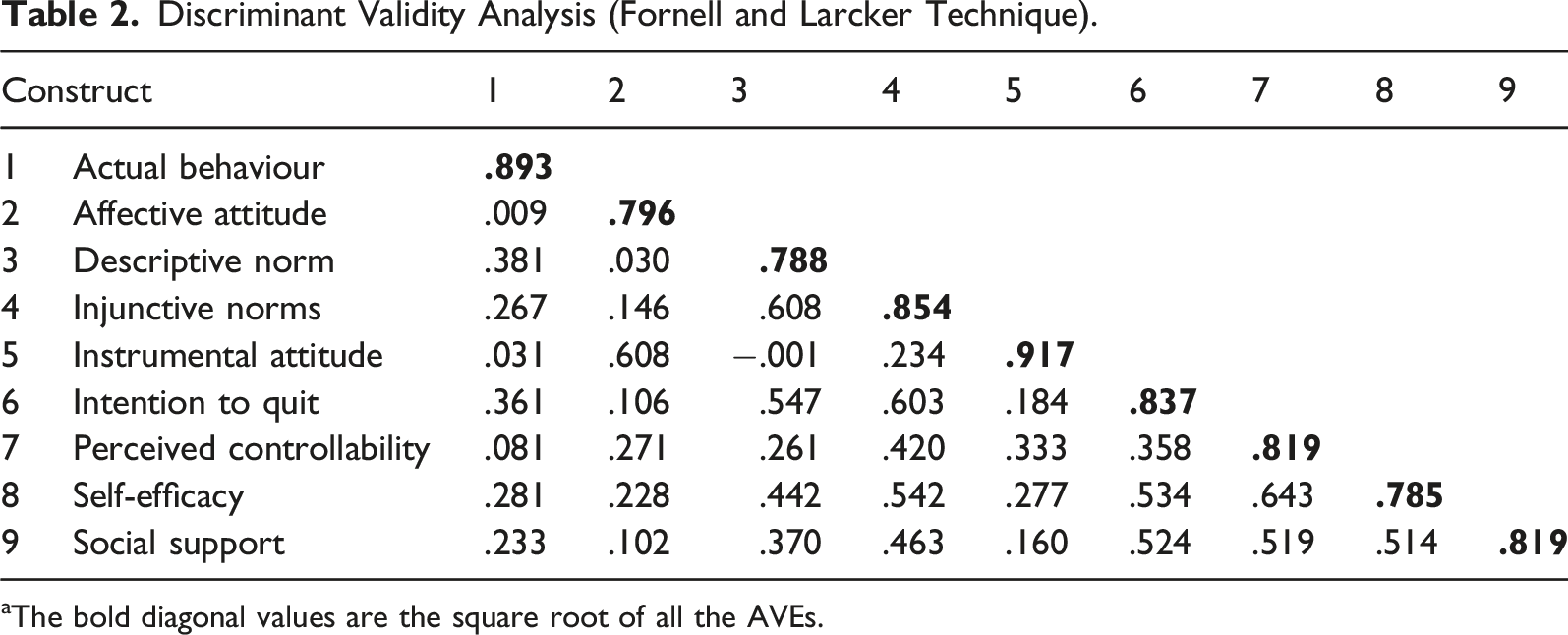
Construct
1
2
3
4
5
6
7
8
9
1
Actual behaviour
2
Affective attitude
.009
3
Descriptive norm
.381
.030
4
Injunctive norms
.267
.146
.608
5
Instrumental attitude
.031
.608
−.001
.234
6
Intention to quit
.361
.106
.547
.603
.184
7
Perceived controllability
.081
.271
.261
.420
.333
.358
8
Self-efficacy
.281
.228
.442
.542
.277
.534
.643
9
Social support
.233
.102
.370
.463
.160
.524
.519
.514
HTMT Analysis.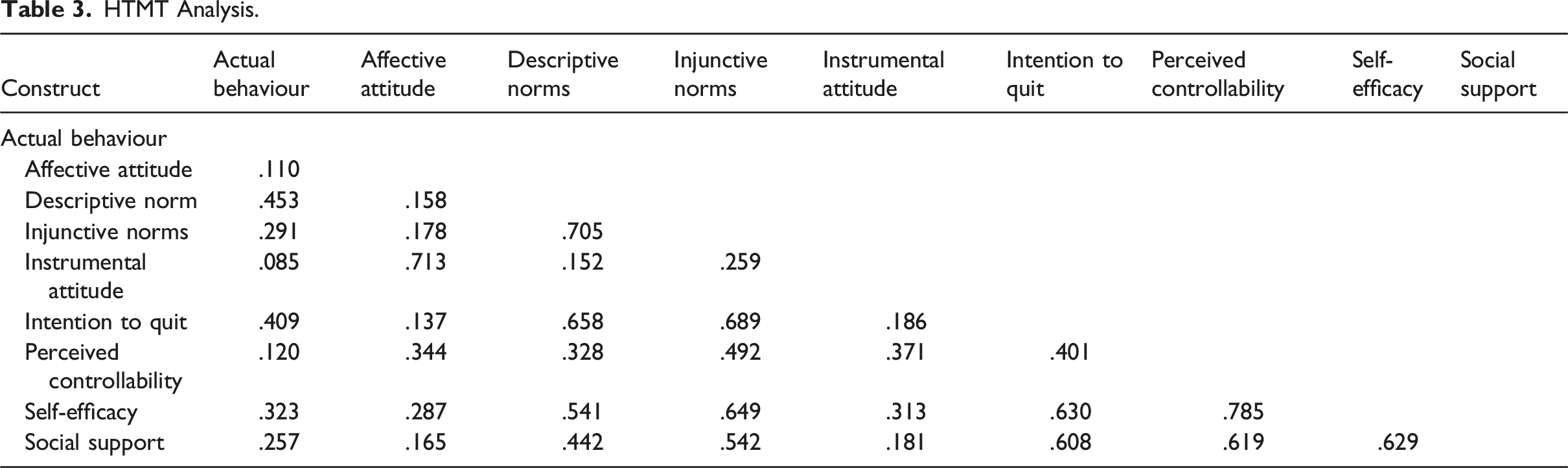
Construct
Actual behaviour
Affective attitude
Descriptive norms
Injunctive norms
Instrumental attitude
Intention to quit
Perceived controllability
Self-efficacy
Social support
Actual behaviour
Affective attitude
.110
Descriptive norm
.453
.158
Injunctive norms
.291
.178
.705
Instrumental attitude
.085
.713
.152
.259
Intention to quit
.409
.137
.658
.689
.186
Perceived controllability
.120
.344
.328
.492
.371
.401
Self-efficacy
.323
.287
.541
.649
.313
.630
.785
Social support
.257
.165
.442
.542
.181
.608
.619
.629
Structural Model Relationships.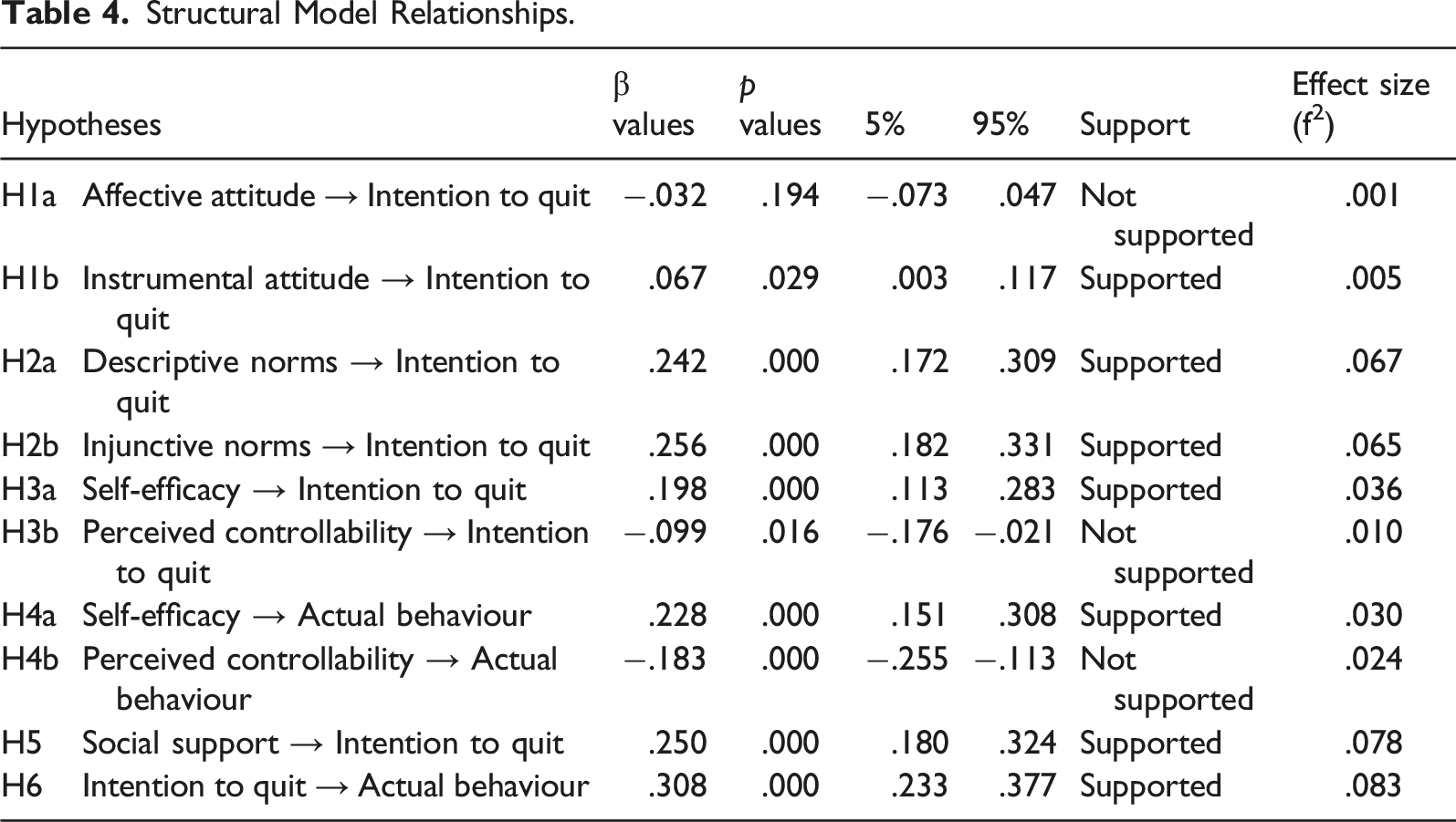
Hypotheses
β values
p values
5%
95%
Support
Effect size (f2)
H1a
Affective attitude → Intention to quit
−.032
.194
−.073
.047
Not supported
.001
H1b
Instrumental attitude → Intention to quit
.067
.029
.003
.117
Supported
.005
H2a
Descriptive norms → Intention to quit
.242
.000
.172
.309
Supported
.067
H2b
Injunctive norms → Intention to quit
.256
.000
.182
.331
Supported
.065
H3a
Self-efficacy → Intention to quit
.198
.000
.113
.283
Supported
.036
H3b
Perceived controllability → Intention to quit
−.099
.016
−.176
−.021
Not supported
.010
H4a
Self-efficacy → Actual behaviour
.228
.000
.151
.308
Supported
.030
H4b
Perceived controllability → Actual behaviour
−.183
.000
−.255
−.113
Not supported
.024
H5
Social support → Intention to quit
.250
.000
.180
.324
Supported
.078
H6
Intention to quit → Actual behaviour
.308
.000
.233
.377
Supported
.083
MICOM Step 2a.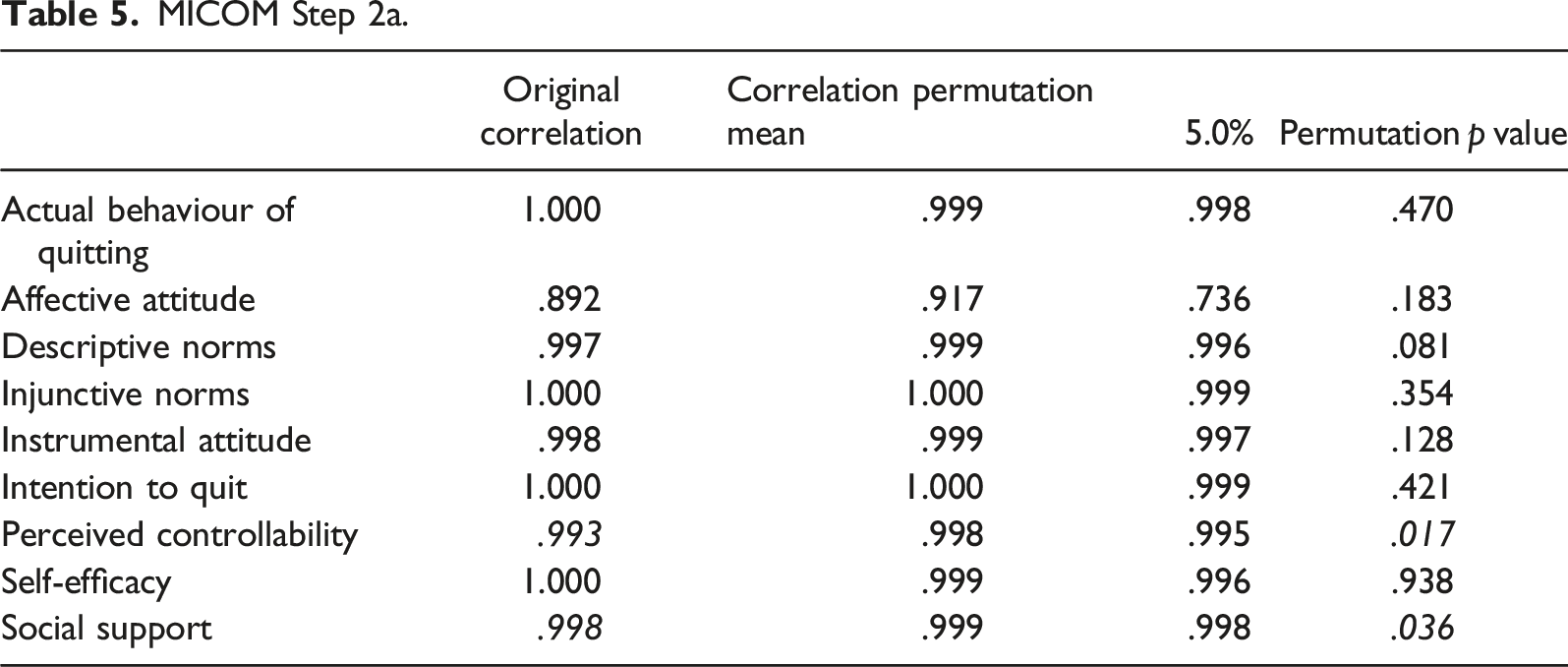
Original correlation
Correlation permutation mean
5.0%
Permutation p value
Actual behaviour of quitting
1.000
.999
.998
.470
Affective attitude
.892
.917
.736
.183
Descriptive norms
.997
.999
.996
.081
Injunctive norms
1.000
1.000
.999
.354
Instrumental attitude
.998
.999
.997
.128
Intention to quit
1.000
1.000
.999
.421
Perceived controllability
.993
.998
.995
.017
Self-efficacy
1.000
.999
.996
.938
Social support
.998
.999
.998
.036
MICOM Step 3a.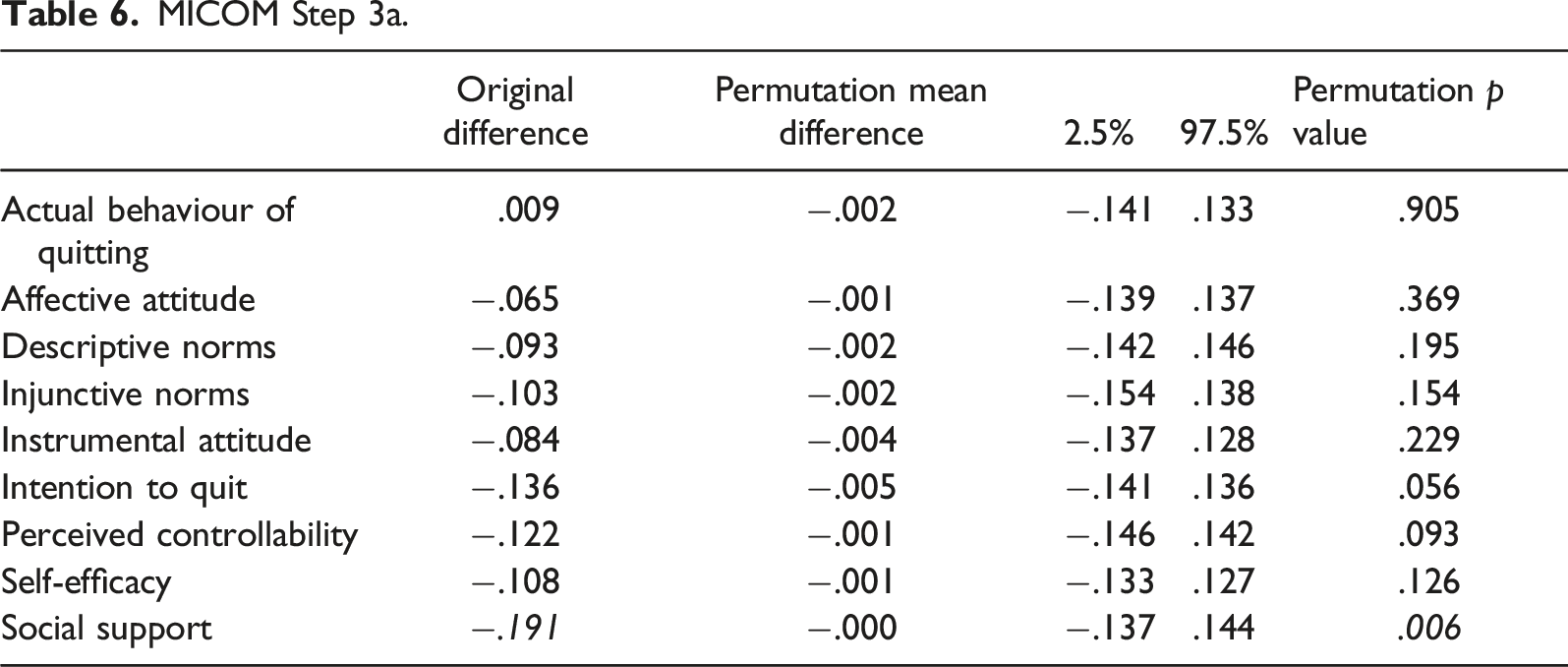
Original difference
Permutation mean difference
2.5%
97.5%
Permutation p value
Actual behaviour of quitting
.009
−.002
−.141
.133
.905
Affective attitude
−.065
−.001
−.139
.137
.369
Descriptive norms
−.093
−.002
−.142
.146
.195
Injunctive norms
−.103
−.002
−.154
.138
.154
Instrumental attitude
−.084
−.004
−.137
.128
.229
Intention to quit
−.136
−.005
−.141
.136
.056
Perceived controllability
−.122
−.001
−.146
.142
.093
Self-efficacy
−.108
−.001
−.133
.127
.126
Social support
−.191
−.000
−.137
.144
.006
MICOM Step 3b.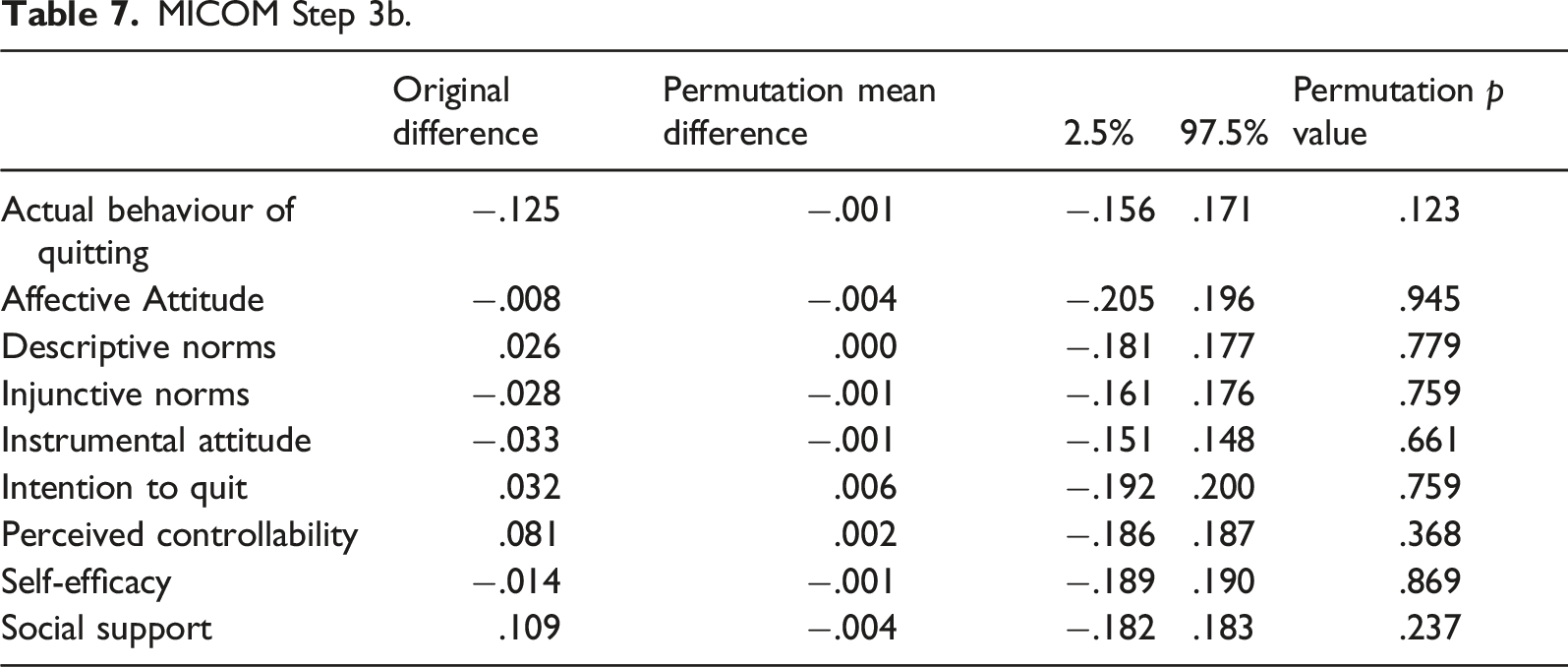
Original difference
Permutation mean difference
2.5%
97.5%
Permutation p value
Actual behaviour of quitting
−.125
−.001
−.156
.171
.123
Affective Attitude
−.008
−.004
−.205
.196
.945
Descriptive norms
.026
.000
−.181
.177
.779
Injunctive norms
−.028
−.001
−.161
.176
.759
Instrumental attitude
−.033
−.001
−.151
.148
.661
Intention to quit
.032
.006
−.192
.200
.759
Perceived controllability
.081
.002
−.186
.187
.368
Self-efficacy
−.014
−.001
−.189
.190
.869
Social support
.109
−.004
−.182
.183
.237
Multigroup Permutation Test.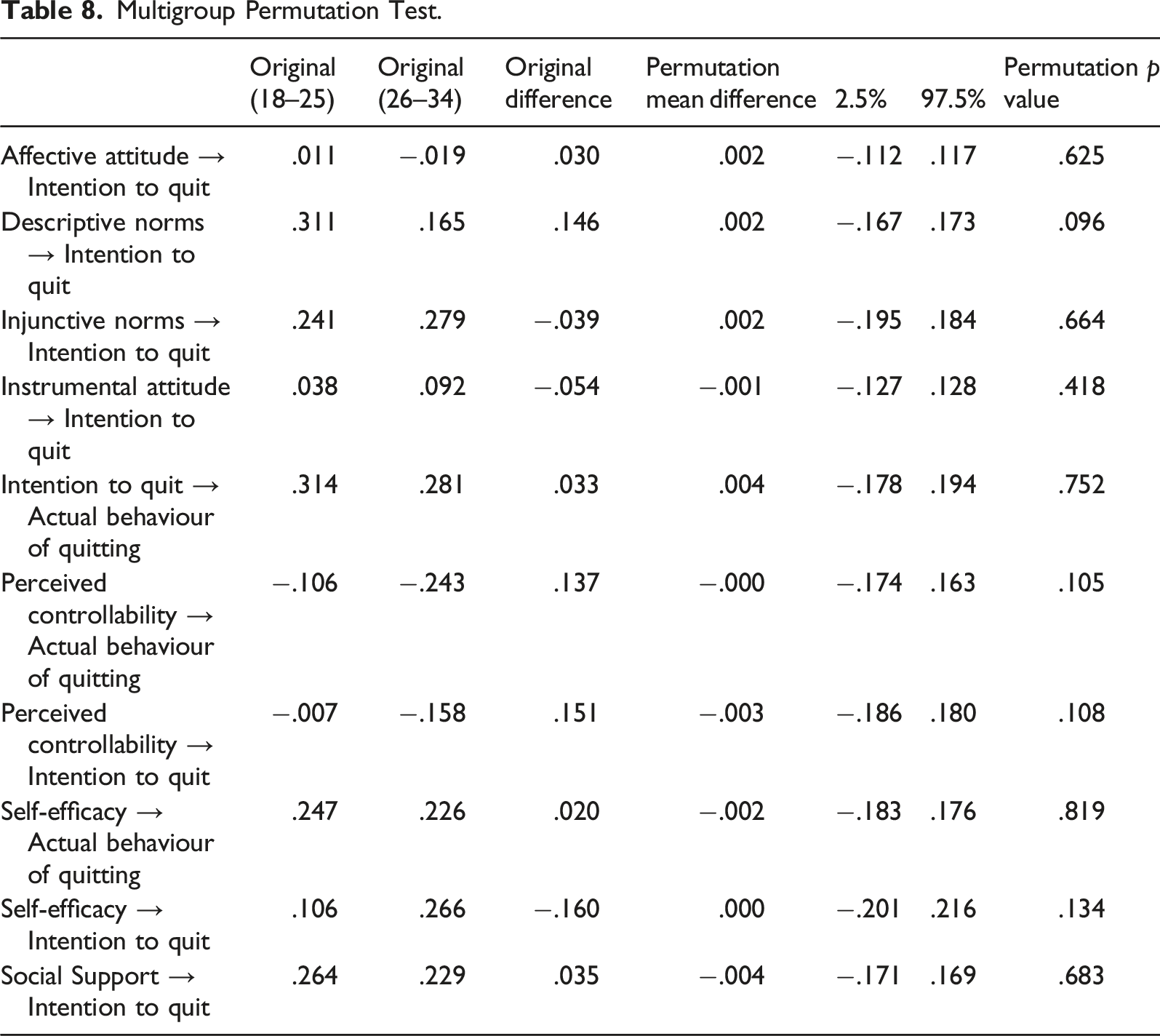
Original (18–25)
Original (26–34)
Original difference
Permutation mean difference
2.5%
97.5%
Permutation p value
Affective attitude → Intention to quit
.011
−.019
.030
.002
−.112
.117
.625
Descriptive norms → Intention to quit
.311
.165
.146
.002
−.167
.173
.096
Injunctive norms → Intention to quit
.241
.279
−.039
.002
−.195
.184
.664
Instrumental attitude → Intention to quit
.038
.092
−.054
−.001
−.127
.128
.418
Intention to quit → Actual behaviour of quitting
.314
.281
.033
.004
−.178
.194
.752
Perceived controllability → Actual behaviour of quitting
−.106
−.243
.137
−.000
−.174
.163
.105
Perceived controllability → Intention to quit
−.007
−.158
.151
−.003
−.186
.180
.108
Self-efficacy → Actual behaviour of quitting
.247
.226
.020
−.002
−.183
.176
.819
Self-efficacy → Intention to quit
.106
.266
−.160
.000
−.201
.216
.134
Social Support → Intention to quit
.264
.229
.035
−.004
−.171
.169
.683
Structural model.