




Abstract
Background
The practice of viewing animals in captivity is losing popularity among tourists, who would rather observe wildlife in their natural environments. A laudable sustainability goal is to provide enjoyable viewing possibilities while also protecting wildlife.
Focus of the Article
This study tested a social marketing campaign that promoted replacement behaviors against standard regulatory signage in persuading individuals to follow the viewing distance guideline for Hawaiian green sea turtles. The characteristics of one of the study sites also offered the opportunity to study the impacts of symbolic barriers (e.g., rock walls, orange safety cones) and enforcement from authority-like figures on people’s compliance.
Research Questions
The study addresses three research questions: (1) Can a social marketing-based approach encourage respectful wildlife viewing? (2) How does the approach compare to one providing simplistic information about the behavior and associated laws? (3) How do symbolic barriers and enforcement by authority-like figures add impact to influencing respectful wildlife viewing?
Program Design/Approach
The “Amazing from Afar” campaign was designed with insights from federal wildlife managers, existing literature on tourists’ psychology and goals, and key informant interviews with local residents. The campaign promoted replacement behaviors of taking forced perspective photos of sea turtles and was evaluated alongside other techniques to encourage respectful viewing.
Importance to the Social Marketing Field
This article demonstrates the effectiveness of social marketing for nature-based recreation, an under-served area where interest in approaches focused on behavior change is emerging. The study documents improved compliance with wildlife viewing distances using a social marketing approach compared to the more standard approach of stating rules/laws and putting up symbolic barriers. Plus, it illustrates how symbolic barriers and enforcement can enhance impact.
Methods
Research took place over two studies, one on Oahu (n = 1,437) and one on the Island of Hawai‘i (n = 10,217) using a quasi-experimental design where the control conditions reflected existing efforts at the site. Using naturalistic observation, we categorized and counted people at various distances from basking sea turtles before and during the social marketing campaign.
Results
Findings showed regulatory information signs located near the sea turtles positively impacted people’s compliance with the viewing distance guideline, and the social marketing campaign improved compliance even further. The symbolic barrier could help or hurt compliance depending on how close sea turtles got to its edges, but compliance was over 90% with the social marketing campaign in place.
Recommendations
Natural resource managers and conservationists should carefully consider how regulations/enforcement, environmental design, and marketing can work together to achieve wildlife protection while preserving fulfilling viewing opportunities.
Limitations
The field research relying on observations of people’s behavior did not allow for assurances of exposure to signage, and in some cases, the symbolic barriers could have been overlooked as well. Instead, there could have been descriptive norm cues from others since it was common for multiple parties to be viewing at once.
Keywords
Wildlife managers in several tourist destinations face challenges when trying to provide visitors with opportunities to observe rare and endangered wildlife while at the same time protecting the target species (Sorice, Shafer, & Ditton, 2006). In recent decades, profiles of the stereotypical tourist interested in sun, sand, and relaxation, have changed to a sophisticated and demanding tourist who likes to learn about history, nature, and wildlife (Lück, 2016). Conservation efforts for charismatic megafauna like sea turtles have benefited from a burgeoning global wildlife tourism industry. At the same time, as people flock to see and appreciate wildlife, numerous harms to the species and their ecosystems often results (see Turner, Bentall, Young, Johnson, & Standley, 2021, for more detail). In Hawai‘i, this intersection of tourism and threatened species management is particularly evident at several well-known locations where Hawaiian green sea turtles forage and swim near shore reef habitats and often rest (bask) on beaches (Lamb, 2020). This unique basking behavior, first documented in 1999, makes turtles easily accessible to tourists seeking up-close encounters, photos, and videos (National Oceanic and Atmospheric Administration, 2021a). As the number of tourists grows, natural resource managers must find ways to protect sea turtles from being harassed while preserving tourism opportunities.
The U.S. National Oceanic and Atmospheric Administration (NOAA) created a viewing distance guideline of 10 feet (3 m) to prevent disturbance of federally protected sea turtles in Hawai‘i. The Endangered Species Act specifies the illegality of harassment or attempted harassment resulting in disturbing sea turtles; the 10-foot distance is a guideline designed to prevent such disturbances (NOAA, 2021b). Since the mid-2000s, signs with rules and volunteers on beaches have been used to try to stop people from harassing sea turtles (Lamb, 2019). However, while interest is growing, few studies have used a social marketing framework to examine behavior-change-based approaches (Turner et al., 2021). Typically, wildlife managers have relied on regulatory or education-based approaches (Abrams Leong, Melena, & Teel, 2020; Cherry, Leong, K. M., Wallen, R., & Buttke, 2018). Further, while there are many examples of social marketing for pro-environmental behaviors involving municipal natural resource management, such as water or electricity conservation or reducing littering, there are fewer examples for nature-based recreation and tourism or ecotourism (Abrams et al., 2020; Truong, 2014).
NOAA Fisheries Pacific Island Region partnered with Colorado State University to better understand how social marketing could complement their regulatory and education efforts to encourage tourists to follow laws and guidelines for protected marine species. To determine the target behavior change, we held multiple meetings with NOAA wildlife managers, systematically recorded 100 + hours of observational data over 5 weeks at locations with reported sea turtle interactions (without volunteer management) and weighed how we would implement and evaluate a social marketing approach. Ultimately, we selected people’s compliance with the 10-foot viewing distance for basking sea turtles as the target behavior. Violations of the viewing guidance in the initial dataset occurred with enough frequency to warrant an investment in a social marketing intervention, and the ability to accurately measure people’s behavior was strong. When basking, sea turtles often rest or fall asleep, which adds reliability to studying human behavior.
Our broad research purpose was to evaluate messages designed using a social marketing approach compared to standard regulatory information signs in achieving compliance with wildlife viewing guidance. Unique field conditions provided opportunities to study the effect of messaging coupled with symbolic barriers (e.g., rock wall, orange safety cones) and enforcement.
Conceptual Framework for the Social Marketing Intervention
Tourists getting close to sea turtles or disturbing them in other ways (i.e., touching, feeding, picking up) not only creates an environmental problem, but also exacerbates socio-cultural conflict over tourism in Hawai‘i. Sea turtles are sacred and held in high regard by indigenous Hawaiians; they are viewed as the embodiment of their ancestors (Ching, 2001). Tourists disturbing sea turtles for the enjoyment of their vacation exemplifies the discursive tension between commodifying the species for tourists and views that the species is culturally and environmentally revered (Lamb, 2019). Though tourists may be interested in learning more about the species’ cultural and environmental significance, that knowledge may not necessarily lead to tourists following viewing distance guidelines (Rothschild, 1999). On the other hand, rigorously enforcing tourists and spaces where sea turtles frequent is not feasible and could result in added tension in a tourism economy like Hawai‘i’s. Another solution is social marketing because it “consists of voluntary exchange between two or more parties, in which each is trying to further its own perceived self-interest while recognizing the need to accommodate the perceived self-interest of the other to achieve its own ends” (Rothschild, 1999, p. 30).
To encourage sea turtle viewing from no closer than 10 feet, previous research supports using approaches that make the desired behavior seem easy (Kollmuss & Agyeman, 2002), enjoyable (Manfredo, Driver, & Brown, 1983), a unique experience (Cater & Cater, 2007), popular (Hunt & Harbor, 2019), and in alignment with tourists’ identities (Bryan, Walton, Rogers, & Dweck, 2011) and aspirational goals for the experience (Abrams et al., 2020). Abrams et al. (2020) showed a social marketing-based campaign was effective for encouraging compliance with viewing distance guidance in national parks. In their social marketing approach, they embedded key messages about the immediate risks and benefits of following viewing distance guidelines in materials that also provided photography tips to still get good photos. However, the focal wildlife species in the national park campaigns posed more obvious threat of physical injury to people, so leveraging risk messaging helped enhance compliance. Relative to large land mammals, sea turtles are less threatening to humans; thus, designing and testing a different messaging approach is necessary. Plus, the target audience and local context for wildlife tourism differs in Hawai‘i.
At the time of designing the intervention, most tourists to Hawai‘i were from the U.S. (65%); tourists from Japan were the largest international market, followed by Canada (Hawaii Tourism Authority, 2019). Recent research examining data on tourists’ interactions with wildlife suggested obtaining a photo documenting their encounter is often involved in and presumed to be a potential driver of too-close encounters (Cherry et al., 2018; Lamb, 2019). A key part of our intervention was to find a replacement behavior that would help tourists reach their goals of taking pictures of wildlife.
Replacement Behaviors
The behaviors of tourists and visitors can negatively impact wildlife and natural areas (Hammitt et al., 2015; Marion, 2019; Marion et al., 2016). Replacing negative behaviors with alternatives is one way to alleviate such problems. The audience must perceive replacement behaviors as equal to or better than the undesired behavior (Slater, 1999). Similar to how Andreasen (1994) described effective positioning strategies for behavior change, we can infer the replacement behavior must be viewed by the audience as offering a superior exchange for the effort required that is also socially desirable (Reeves, 2014) and easily done (Dwyer, Rozewski, & Simonsen, 2012).
Considering our secondary research illustrated the importance of taking photos of wildlife among tourists (Cherry et al., 2018; Lamb, 2019), we wanted to carefully consider how to preserve this behavioral driver. Self-presentation is one of the major functions of photography today (Van Dijck, 2008). Among tourists, photography is an important part of their wildlife experience (Pagel, Orams, & Lück, 2021). Though smartphone cameras continue to add improved zoom capabilities, the amateur photographer is unlikely to use more advanced techniques that would help them achieve good quality photos from further away. Forced perspective photography, wherein people pose in different ways in relation to an object in the distance, does not require using special camera features. Forced perspective photography is playful, and even when the photos become common (e.g., Tower of Pisa), other tourists still seek to construct their own version (Thurlow & Jaworski, 2011). We theorized that promoting forced perspective photography as a replacement behavior would help tourists focus more on how fun and unique the experience is, while also encouraging them to act out a symbol that links their behavior to protecting wildlife. These poses were only obtainable at a minimum of 10 feet away from the basking sea turtle(s) (Figure 1). This replacement behavior approach is most akin to a nudge or a boost in the behavior change literature (Hertwig & Grüne-Yanoff, 2017). Example forced perspective photo (Replacement behavior).
Symbolic Barriers and Enforcement
NOAA has used regulations and supported volunteer management efforts to prevent protected marine species harassment, particularly from tourists. Policies and laws can signal what the social norm is for a given behavior (Sunstein, 2019). Besides implementing anti-wildlife harassment laws, policies may also implement area or time-area closures, which can protect wildlife and their habitats (Marion, 2019). Such closure policies can be controversial (Hasslinger, 2021) and may still require the presence of authority figures or law enforcement to prevent wildlife harassment. For example, Rocky Mountain National Park (2012) relies on volunteers to enforce the closures and required viewing distances for elk during their mating season.
Another alternative is to place symbolic barriers around highly affected or sensitive areas to keep people further away from wildlife. For example, fences act as a physical barrier; however, this same fence can also be a symbolic barrier (Jachowski, Slotow, & Millspaugh, 2013). A fence works to symbolize the separation between humans and natural resources along with a decrease in the wildness of an experience (Jachowski et al., 2013; Lindsey, Masterson, Beck L., & Romanach, 2012). Barriers (physical, symbolic, or otherwise) help to stifle some behaviors (Kollmuss & Agyeman, 2002), especially those that could negatively impact the natural environment, like getting too close to wildlife. One such example of preserving wildlife viewing opportunities and visitor safety is in Katmai National Park and Preserve in Alaska. There, they installed fenced viewing platforms near Brooks Falls where grizzly bears can frequently be seen during the summer, giving people a safe place to view them (Katmai National Park and Preserve, 2021).
In Hawai‘i, over the past 20 years, concerned community members, and eventually, organized volunteer groups have made makeshift symbolic barriers using sticks, rocks, ropes, and/or signs around basking sea turtles (Lamb, 2019). Because they are not as physically restrictive as fences, these symbolic barriers signal the desired behavior and theoretically operate as a subjective/injunctive norm to encourage people to keep back 10 feet or more (Niemiec, Champine, Vaske, & Mertens, 2020). At sites managed by volunteers, those individuals act as authority-like figures and use enforcement alongside these symbolic barriers. Lifeguards have also taken on the role of enforcement and/or setting up symbolic barriers. Because of this existing effort to set up symbolic barriers in some parts of Hawai‘i, including one of our test sites, our study offers some data descriptively illustrating how a symbolic barrier and enforcement of that barrier by an authority-like figure affects people’s behavior when coupled with a social marketing intervention.
Designing the Intervention
Prior to designing the stimuli, we audited NOAA’s existing communication about viewing sea turtles in Hawai‘i, which included several pages on their Web site, a brochure, and existing signs displayed at most beaches with easy public access (parking, trails) or those known for frequent sea turtle basking. All used basic instructional messaging and proscriptive and prescriptive statements about the desired behavior. The brochure and web page used educational appeals focused on sea turtle protection and then typically included “viewing from 10 feet away” as a recommended way for people to help protect sea turtles. All also provided a legal threat message by stating the species is protected by state and federal laws. An existing regulatory information sign used simple iconography and short statements to illustrate three behaviors that could violate the law (Figure 2). The main persuasive appeal to encourage/discourage the behaviors it illustrated was a subtle legal threat message stating the turtles are protected by laws with a phone number to report violations. None of the materials appealed to other emotional or psychological motivators, values, personal norms, efficacy, or identity. Existing Regulatory information sign.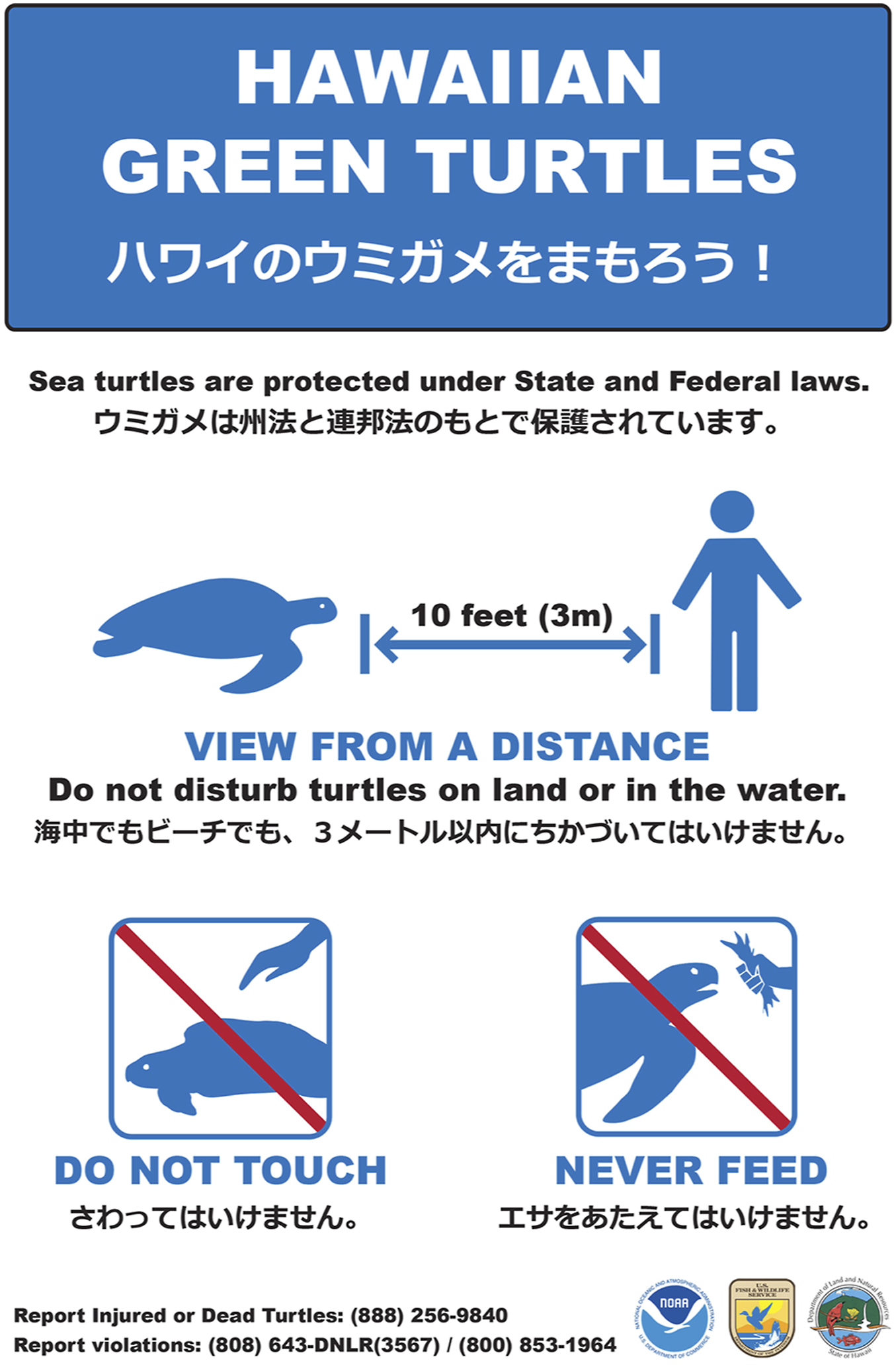
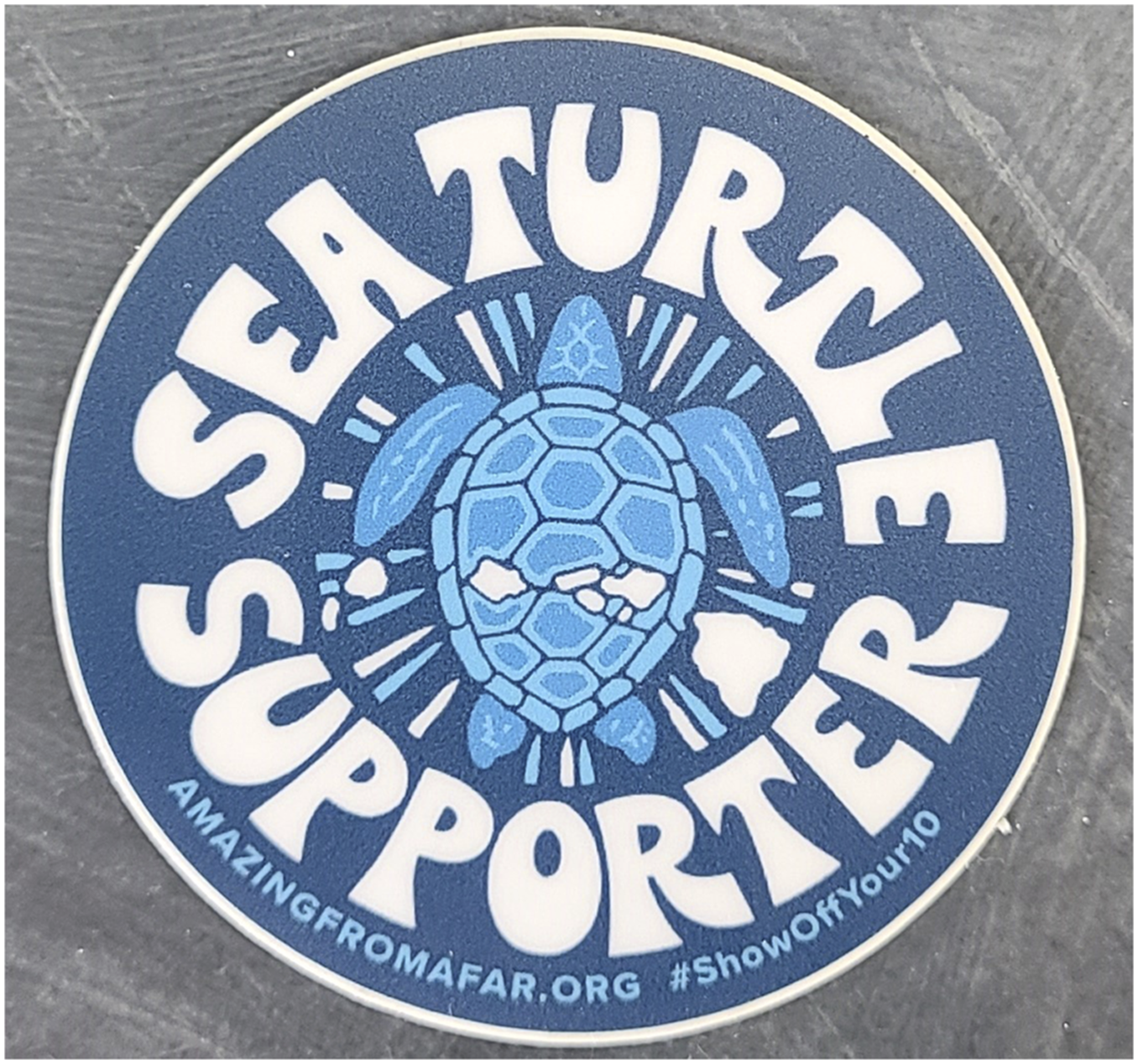
To design the stimuli, we applied the secondary and primary research conducted via interviews with people from local sea turtle and marine species nonprofits that conduct outreach with tourists, other state and federal wildlife management agencies, and a local tour guide that stops at popular sea turtle basking sites. The hook was “Amazing from Afar,” which positioned the desired behavior positively rather than as a restriction on the audience’s desired experience. Specifically, through the messaging, we aligned the desired behavior with audience motivations for a unique and awe-inspiring experience (Black, 2018; Cater & Cater, 2007) and enhanced this by offering suggested replacement behaviors of taking forced perspective photos. Additionally, similar to Abrams et al. (2020), we supported people’s ability to estimate and judge 10 feet of distance by comparing the distance to a compact vehicle. With the infographic-style display of the viewing distance, we included an identity-evoking statement “thank you for being a respectful viewer” to align the desired behavior with being a respectful person (Bryan et al., 2011). Materials developed included a double-sided 24 × 36-inch sign (Figure 3), 9 × 4 double-sided pamphlet (one in English with two Japanese translations and one entirely in Japanese), a 2 × 2-inch sticker (Figure 4), a Web site (amazingfromafar.org), and an Instagram account (@amazingfromafar). The double-sided sign and pamphlet contained the same content with only a couple of differences between the photos. “Amazing from Afar” double-sided sign in condition 3. “Amazing from Afar” sticker.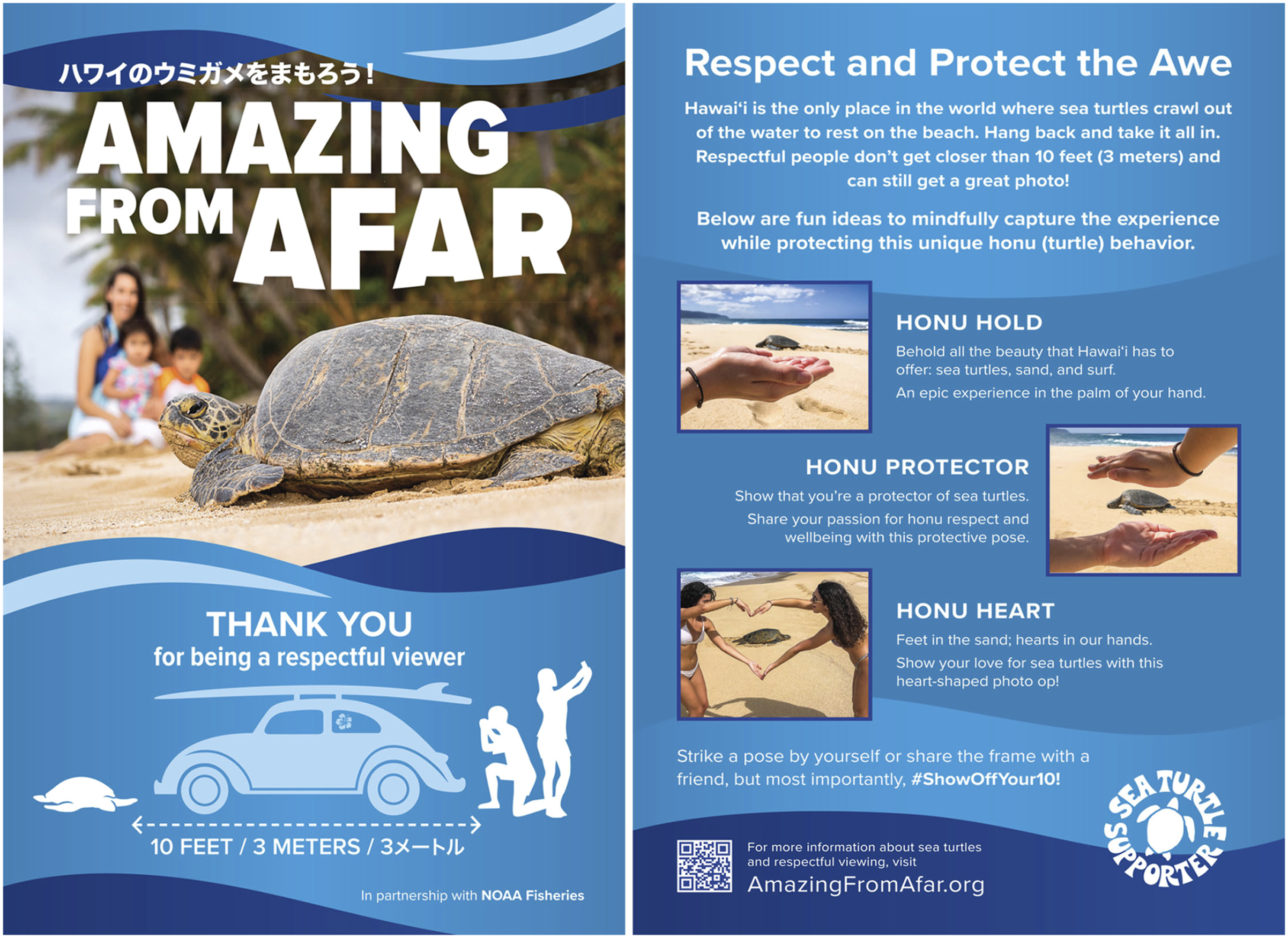
Methods
Selection of Study Sites
To evaluate the social marketing approach, research took place during two different time periods at two different beach locations, one on Oahu and one on the Island of Hawai‘i. Sea turtles may bask anywhere feasible in Hawai‘i, but some beaches are more well-known tourist destinations. They are featured in Hawai‘i travel books and websites, on travel blogs and review sites, and are tagged with “sea turtles” as a keyword on Google Maps. Oahu’s North Shore (Hale‘iwa, HI) has one of the most well-known beaches for seeing sea turtles, Laniākea, also referred to as “Turtle Beach.” Laniākea was staffed by NOAA in 2005 until a nonprofit took over in 2007 to provide visitor education and an authority-like figure presence to prevent sea turtle harassment (NOAA Fisheries, 2021a). Two miles south of Laniākea, Ali‘i Beach is another emerging destination for tourists to see basking sea turtles. It was chosen as the site for study 1 because interactions were occurring regularly, but during our study, it was not managed by volunteers from a nonprofit.
The main goal of Study 1 was to assess the effectiveness of the social marketing-based campaign relative to NOAA’s existing efforts that did not involve direct management by an authority-like figure. The research was interrupted by the Covid-19 pandemic in March 2020, so we conducted Study 2 November 22 through December 28, 2021, at Punalu‘u Black Sand Beach on the Island of Hawai‘i. It was selected to optimize project resources by piggybacking on another study the lead author was conducting nearby. Here, existing conditions allowed us to measure the added impact of symbolic barriers (i.e., rock walls, orange safety cones) and enforcement by lifeguards on the social marketing approach. Interactions here have never been regularly managed by a nonprofit like at Laniākea.
Design Applicable to Both Studies
Both studies used a quasi-experimental, between-groups design (Shadish, Cook, & Campbell, 2002) and, in each, we measured people’s compliance with the 10-foot viewing distance via naturalistic observation. Colorado State University Research Integrity and Compliance Review waived review of the research. To measure people’s behavior, we developed an observational protocol and used a multi-counter app on a smartphone to record the final, closest distance each individual got to the focal turtle(s). We recorded qualitative observations with a note-taking app. This method of naturalistic observation allowed us to examine the spontaneous behavior of visitors in the most natural way possible, increasing the study’s ecological validity (Carey, Rentscher, & Mehl, 2020). Natural observation also provides an opportunity to study the total context of human-wildlife interactions. It offers additional avenues of inquiry that would be missed if studied through controlled observations such as a laboratory experiment (Carey et al., 2020). Details about how data were collected at each study site differed and are explained in the next sections.
Study 1: Social Marketing Versus Regulatory Information Signage
The purpose of study 1 was to determine how the social marketing approach compared to NOAA’s existing communication efforts that did not involve the presence of an authority-like figure on people’s compliance with the 10-foot viewing distance for basking sea turtles. We conducted a field study with three conditions: 1. The control condition with two regulatory information signs (Figure 2) on metal poles at beach entry points, 2. The two regulatory information signs (Figure 2) placed on the beach in a similar fashion to the signs in condition 3, and 3. The social marketing campaign with two, double-sided signs (Figure 3) placed on the beach and pamphlets and stickers distributed to tour operators that frequented the site.
The signs placed on the beach in conditions 2 and 3 were done so in the same way: at about 25 feet from the turtle(s) typical basking area and angled slightly toward walkways from the park to the beach. Regardless of whether the turtles were basking, signs were placed upon researcher arrival. Also, in condition 3, a multi-language Web site (auto-translated by a plug-in based on user language choice) and an Instagram account were launched. The Web site address was on the print materials and accessible through a QR code on the signs. The two signs on the poles at beach entry points remained in place for the other two treatment conditions; though due to their placement at about 6 feet or higher, they were not observed to be read by most visitors.
We counted all people within about 25 yards (23 m) of the basking sea turtle(s), resulting in a sample size of 1437 over 75 hours across 15 days. To measure the effects of the three conditions on people’s interactions with basking sea turtles, two researchers inconspicuously observed and counted the number of people who kept at least 10 feet away from the turtle(s), got within 10 feet, touched or otherwise disturbed the turtle(s), and those who were within 25 yards but uninterested. We used sticks, leaves, or rocks from the beach to mark four points in a 10-foot radius around the turtle(s) in an inconspicuous pattern so that no symbolic boundary was created. This allowed accurate observations from about 30 to 40 feet from the interactions to not influence people with our own proximity to the turtles. We categorized people as “uninterested” if they never paused to observe or point out the sea turtle(s). For example, many presumably residents would come through the area for another purpose, such as exercise, watching the sunset, or walking dogs.
The research was conducted daily from March 3 to 22, 2020, at Ali‘i Beach, in Hale‘iwa, HI, but data collection depended on the presence of basking sea turtles on the beach as well as people’s presence. We cycled between conditions 1 and 2 until launching the social marketing campaign on March 15. Unfortunately, numerous circumstances related to the COVID-19 pandemic affected our ability to launch the tour operator materials at the scale intended and data collection was cut short by 10 days when the governor asked all visitors to leave March 23. Additionally, heavy rains and flash flooding from March 16–19 at the site further impacted the implementation of the new campaign and data collection. Sample size in condition 3 was lower than desired but sufficient for statistical power.
Study 1 Findings
Frequencies of People and Their Behavior Within 25 Yards of Basking Sea Turtles at Ali’i Beach Across the Three Conditions.
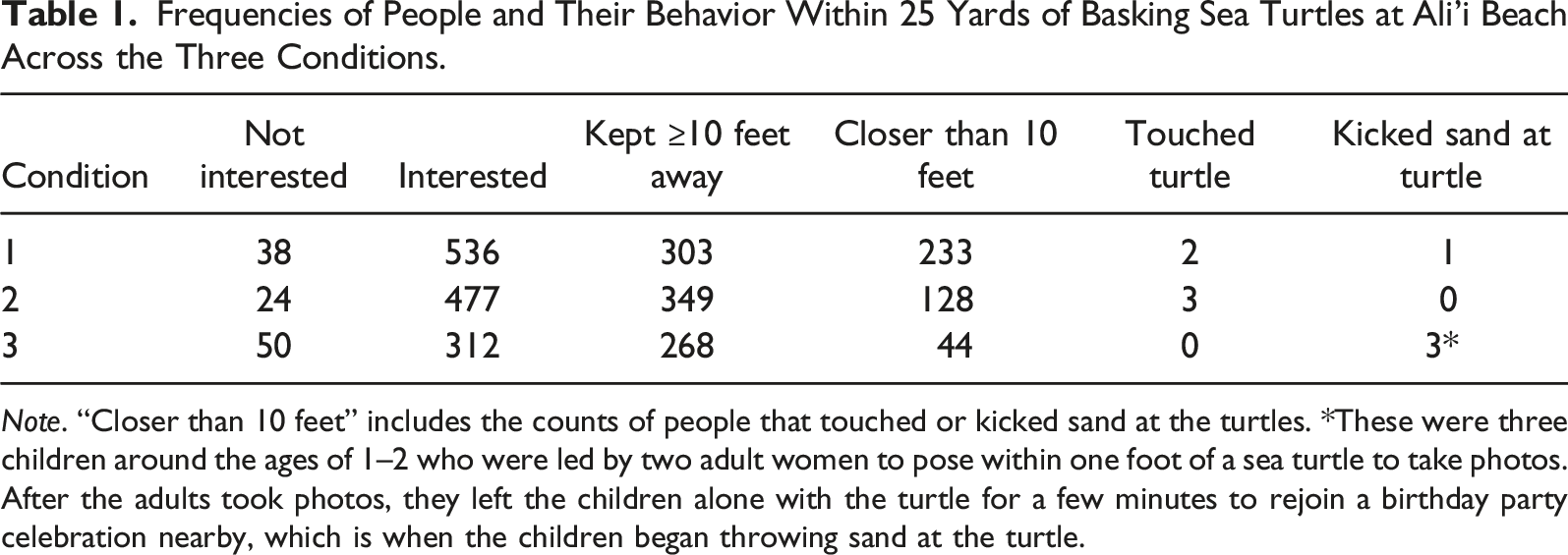
Note. “Closer than 10 feet” includes the counts of people that touched or kicked sand at the turtles. *These were three children around the ages of 1–2 who were led by two adult women to pose within one foot of a sea turtle to take photos. After the adults took photos, they left the children alone with the turtle for a few minutes to rejoin a birthday party celebration nearby, which is when the children began throwing sand at the turtle.
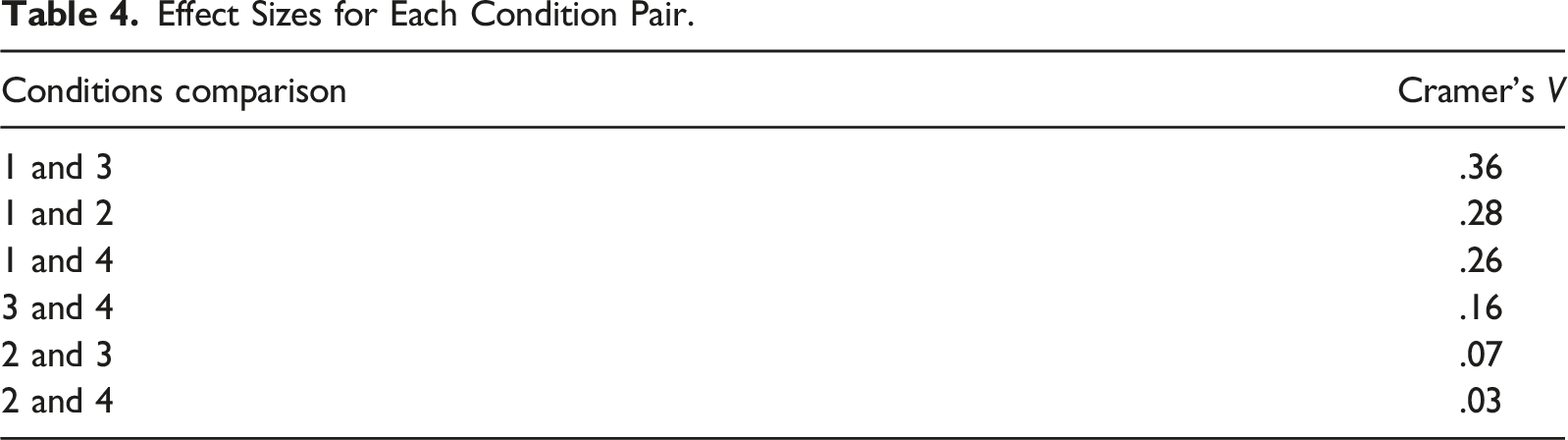
In the analysis, we excluded people categorized as uninterested in the basking turtles (n = 112). This site had a mixture of guided tour groups and people visiting on their own. Tour groups ranged in size from 2 to 15 people, and a total of 28 tour groups visited with an average of 2 per day. The percent difference in people in compliance with the 10-foot viewing distance was 25.7% between conditions 1 and 2, 15.9% between conditions 2 and 3, and. 41.3% between conditions 1 and 3 (Figure 5). Percentages of people in compliance with 10-foot viewing guidance within each condition.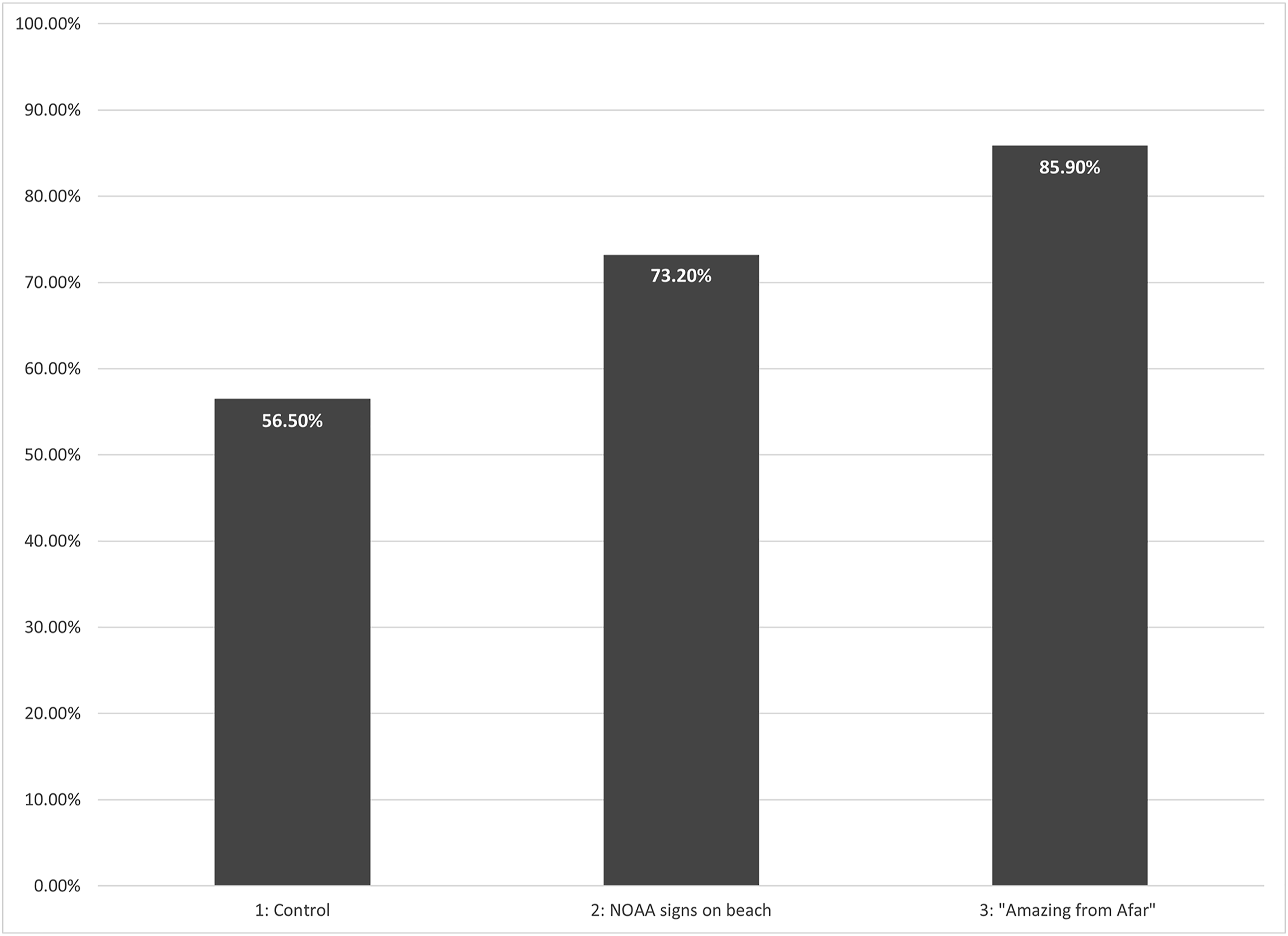
Effect Sizes for Each Condition Pair.

In sum, placing regulatory information signs on the beach was more effective than the same sign on beach entry points. The social marketing approach was even more effective. Effects from this study were primarily from the signage rather than the Web site, Instagram account, and print materials given to tour operators (pamphlet and sticker). During the campaign, the Web site had only 15 visitors. Five tour companies took materials, but only two were observed returning with customers later during data collection. Of note, these were the only two operators that visited the site after the launch of the campaign on March 15. When handing items off to one tour operator, he said he appreciated what we were trying to do, but he was worried he wasn’t going to have a job shortly. In other words, the effects of the pandemic were a far greater concern and priority for these tour operators, and understandably so.
Study 2: Added Impacts of Symbolic Barriers and Authority-Like Figure Enforcement
To test the robustness of the social marketing approach developed for study 1 and to determine if the pandemic may have altered the type of people we ended up observing (e.g., more locals than visitors), we conducted a second study. It took place on the Island of Hawai‘i at Punalu‘u Black Sand Beach from November 22 to December 28, 2021. Like Ali‘i Beach, there no dedicated nonprofit presence there to manage people’s interactions with the sea turtles. However, unlike Ali‘i Beach, there was a lifeguard presence and the local community had taken some matters into their own hands to try to manage people’s interactions with the basking sea turtles. In 2019, they built a short rock wall (ranging from about 12 to 18 inches tall) around an approximate 700 square-foot area where the sea turtles commonly hauled out to rest (Figure 6). They posted the NOAA rules signs at two of the corners. Just prior to our arrival, they added two “KEEP OUT” signs as well (Figure 6). This short rock wall created a symbolic barrier to signal the desired viewing distance behavior to people in a manner that would be more obvious should that distance be violated. Rock wall area built by the lifeguards and other community members at Punalu‘u.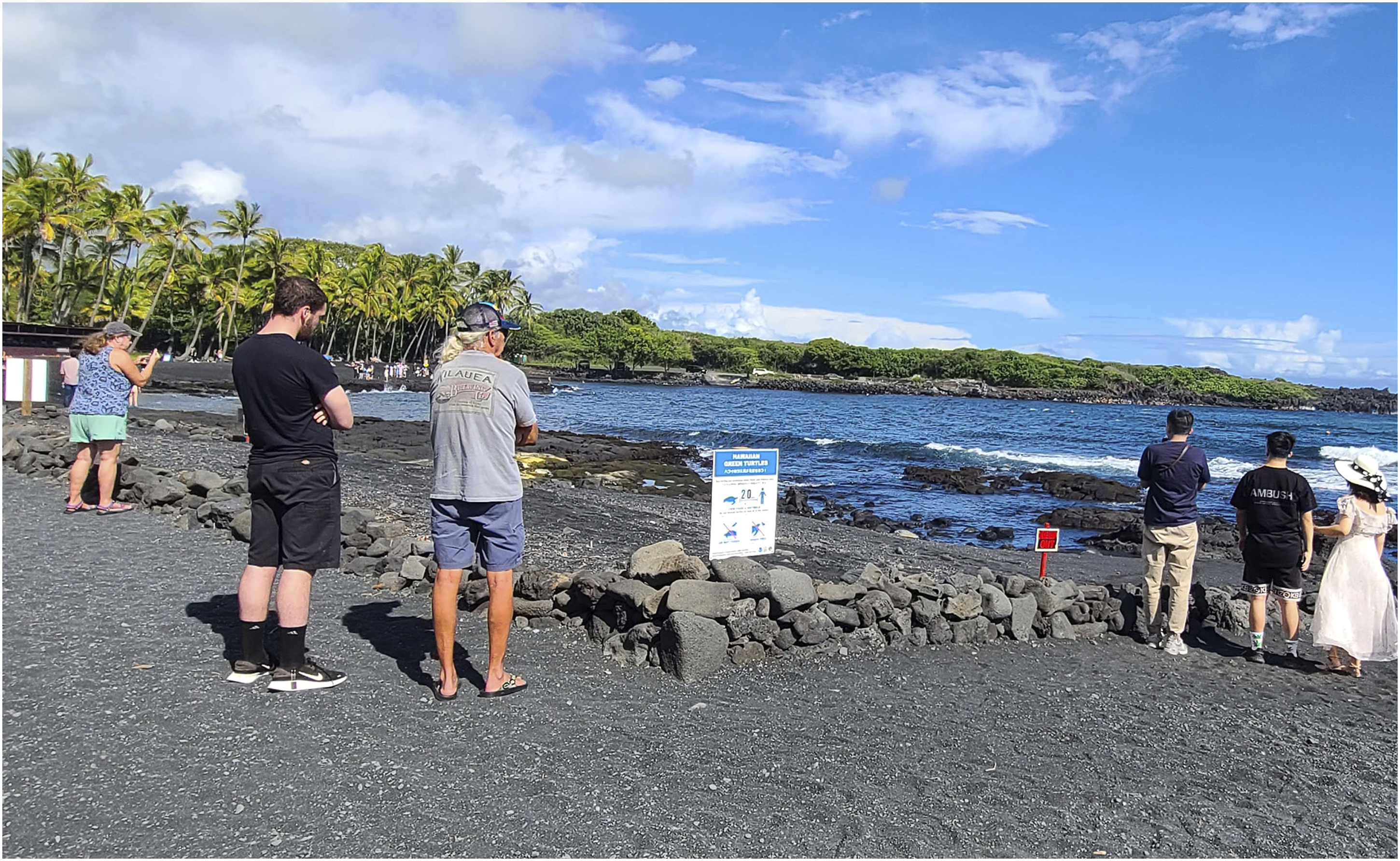
Sea turtles also basked directly in front of the lifeguard stand. Lifeguards placed orange cones around turtles and blew their whistles at people who got too close (Figure 7). Lifeguards did not typically enforce the rock wall area because it was about 40 yards away from their vantage point. These existing conditions allowed us to study the added impacts of symbolic barriers (rock wall and cones) and enforcement from an authority-like figure (lifeguards). Cones placed by lifeguards around sea turtles.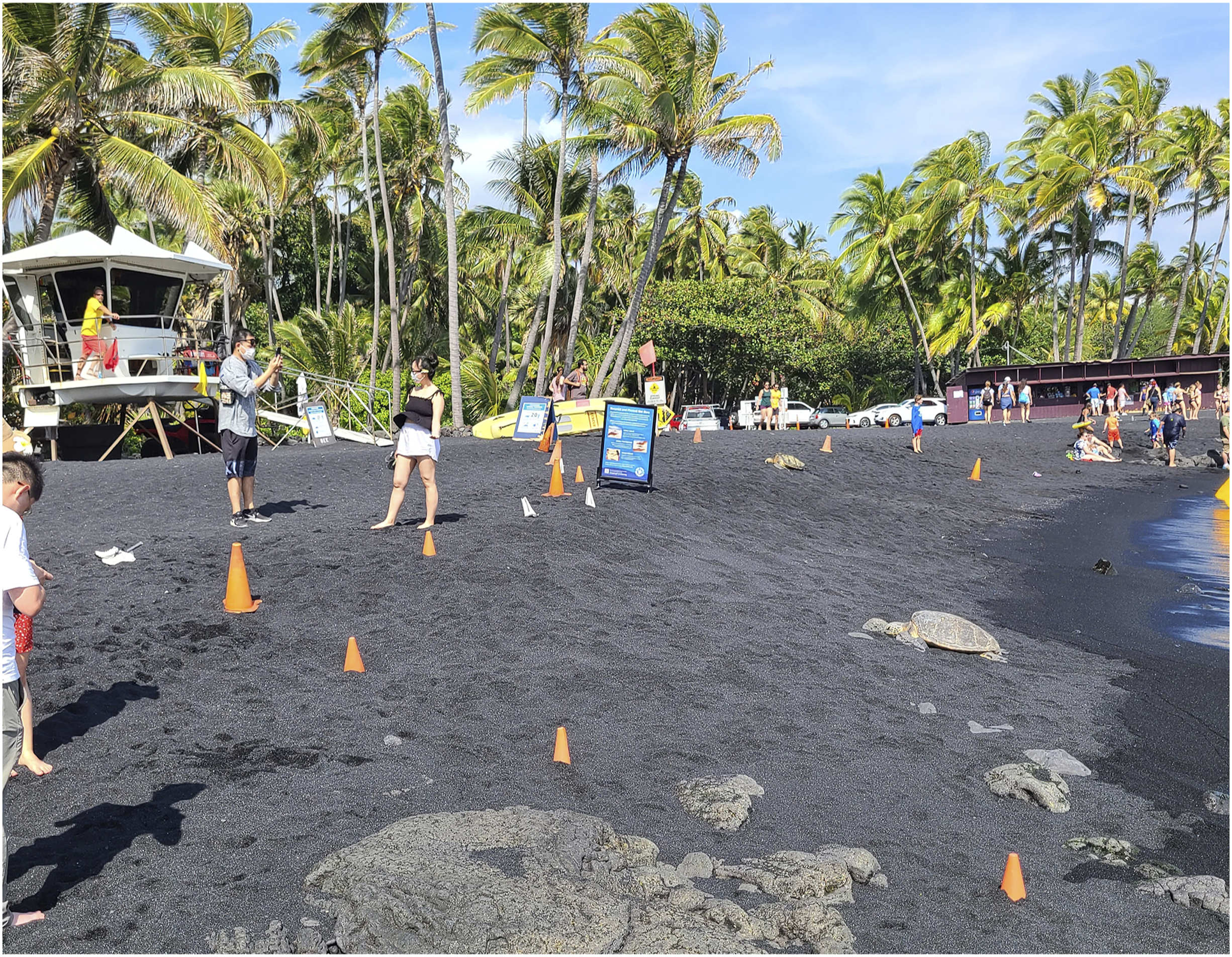
The purpose of study 2 was adapted to account for these additional conditions. Once baseline data were collected, we launched new pamphlets at a greater scale by distributing them island-wide at hotels, the gift shop in Hawai‘i Volcanoes National Park, tourism brochure stands in the cities of Hilo and Kailua-Kona, snorkel and dive gear rental shops, restaurants, and tour companies. During this time, the Web site and Instagram account were updated to address all protected marine species rather than just focusing on sea turtles. This was done because we were also conducting a separate study on tourists’ compliance with a new viewing distance law to protect Hawaiian spinner dolphins.
We conducted a field study with the following conditions: 1. Rock wall with regulatory information and “keep out” signs (Figure 6), 2. Same as condition 1 but with “Amazing from Afar” campaign in effect; double-sided sign (Figure 3) was placed at the rock wall area, 3. “Amazing from Afar” campaign with sign plus a symbolic barrier of cones and lifeguard enforcement (lifeguard would blow their whistle and gesture to get back at violators who passed through the cones), 4. “Amazing from Afar” campaign with sign placed about 20 feet from sea turtles that basked in front of the lifeguard stand (lifeguards did not enforce, no cones placed).
Unfortunately, we were unable to collect baseline data without the social marketing campaign in place for conditions 3 and 4. Data were collected in condition 1 from November 22 to December 6, 2021, and in conditions 2–4 December 15 to 28, 2021.
We updated the observation protocol by subdividing noncompliant behavior to include those who got within various closer distances. These distance categories appear to overlap in exact measurement, but they were distinguished from one another in data entry. In data collection training, we realized observers were unable to reliably distinguish between multiple distances with 1 foot of accuracy. So instead, these distance categories approximated each person’s distance a bit more loosely for better consistency between data collectors. For example, at 5–8 feet, a person is clearly closer than 10 feet, but unlikely to disturb the turtle much. At 3–6 feet, a person is much closer, but they still cannot touch the turtle. At less than 2 feet, a person could touch the sea turtle. Due to the high volume of people, we excluded counting those who were uninterested within 25 yards, and we focused on observing them as they came from the closest parking lot to prevent counting people more than once. At this site, researchers counted a total of 10,217 people over 92 hours across 22 days.
Study 2 Findings
Frequencies of People and Their Behavior Within 25 Yards of Basking Sea Turtles at Punalu’u Across the Four Conditions.
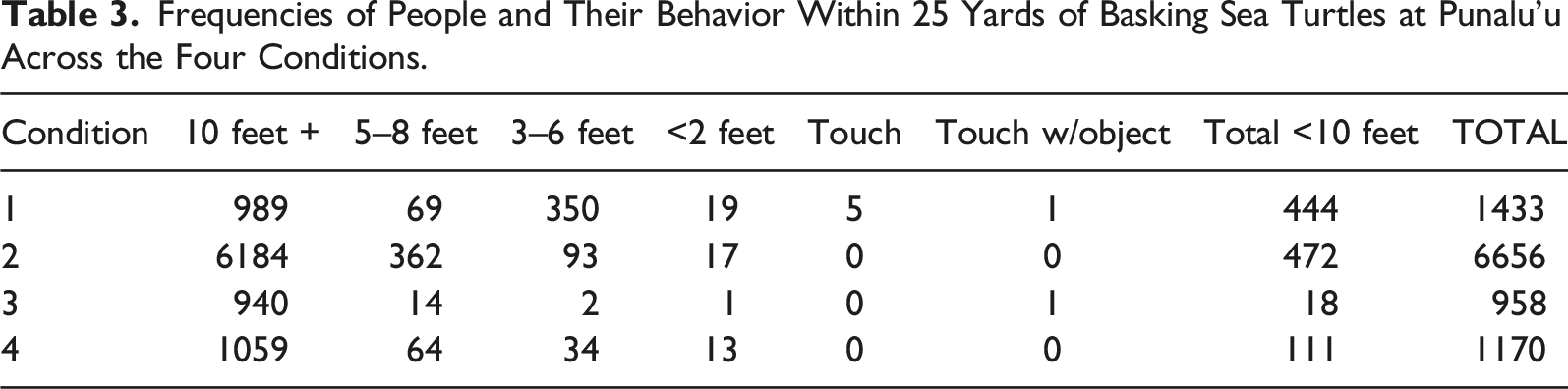
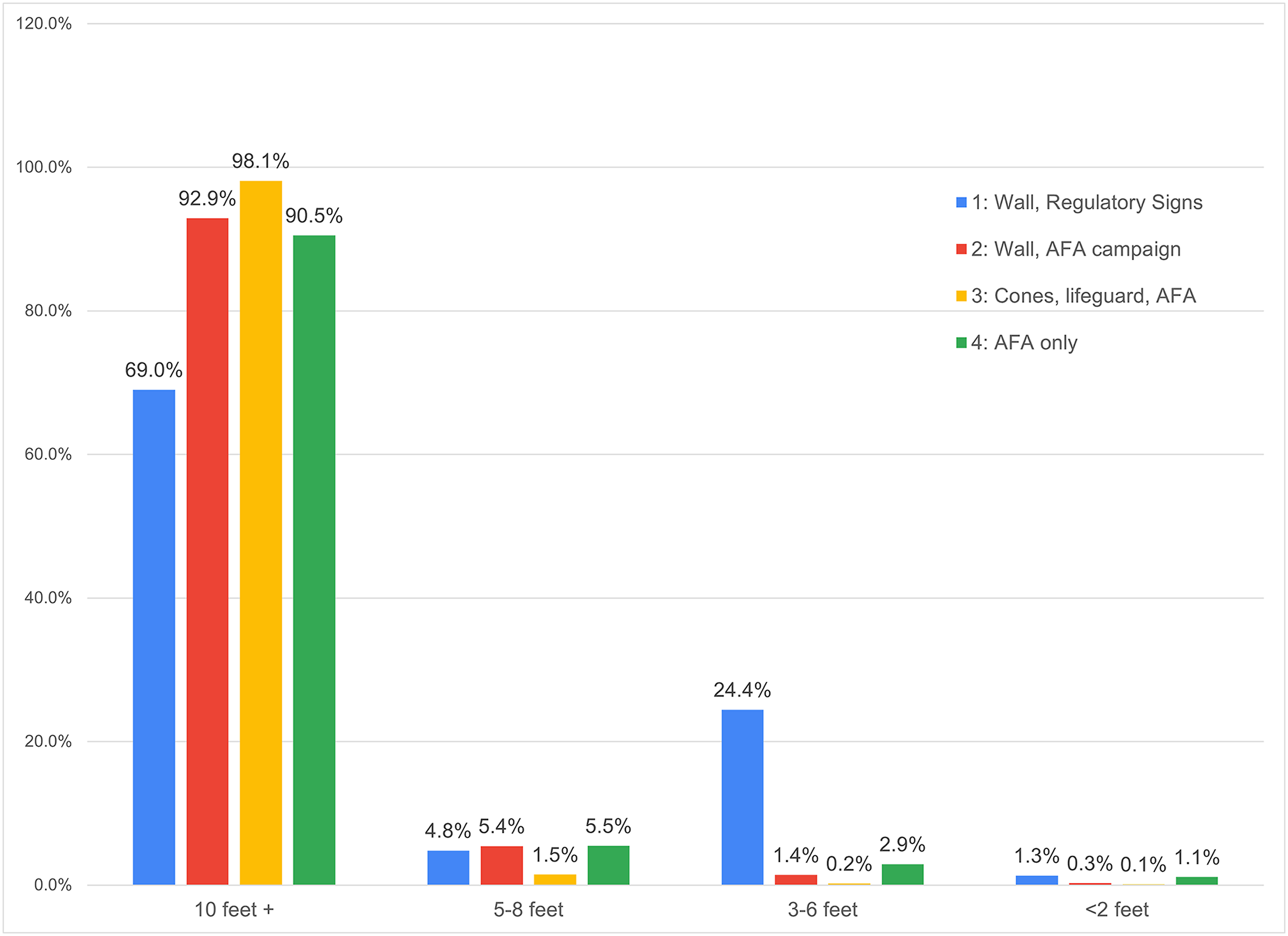
Percentages of people within each condition at various distances from a basking sea turtle.
Effect Sizes for Each Condition Pair.
Summary of Findings from Both Studies
Because the conditions in each study differed, we can only descriptively compare the proportions of people following the 10-foot viewing guideline for basking sea turtles. In sum, regulatory information signs had a positive effect on this behavior when placed within eyesight of the basking sea turtles, but there was a greater improvement when the social marketing campaign was implemented. Furthermore, comparing proportions of compliance across the studies with their various conditions and adding other behavior-shaping components to the environment, such as symbolic barriers and enforcement, improves it further (Figure 9). Percentages of people in compliance with 10-foot viewing guidance within each condition across studies 1 and 2.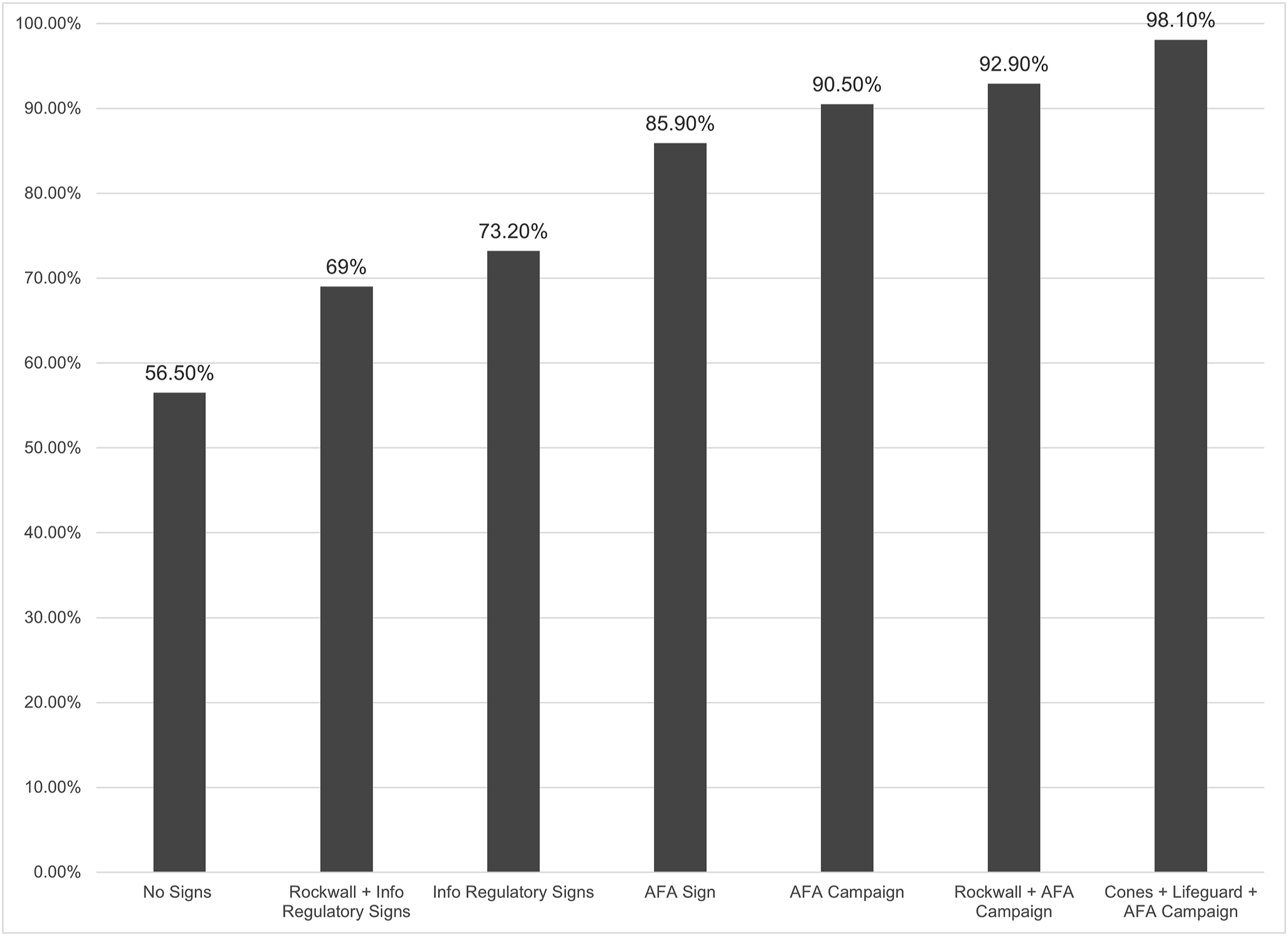
Discussion and Recommendations
This research offers three implications about encouraging people (particularly presumed tourists) to follow wildlife viewing distance guidelines. First, social marketing-based signage promoting replacement behaviors for up-close wildlife encounters works better than regulatory information signage. Second, symbolic barriers can result in mixed behavioral compliance depending on the barrier’s proximity to the wildlife. Third, combining multiple behavior change techniques including environmental design and enforcement with social marketing-based communication strategy and tactics is powerful.
Leveraging social marketing-based messages and tactics has the potential for attaining more compliance with wildlife viewing distance guidelines over a regulatory information-based message approach. The “Amazing from Afar” approach encouraged greater compliance with the 10-foot viewing guidance for basking sea turtles at all locations and contexts we studied. Simply placing either sign on the beach garnered greater compliance, likely because the signs at the entryways were not seen by most people entering the beach due to their height and placement. The location of the signs on the beach could have magnified the effects on people’s behavior in two ways: their presence closer to the sea turtles could signify additional importance of the request to stay at least 10 feet from sea turtles and/or enhance risk perceptions of possible social shaming or ticketing. After all, it would be much harder to feign ignorance with a noticeable sign about 25 feet from the sea turtle(s). It seems plausible these signs also act as a symbolic barrier. Anecdotally, we noticed few people would stay near the sign to watch or take photos, perhaps assuming it was a marker of where it would be appropriate to view the sea turtles. Future research should test alternate placements of signage relative to wildlife.
Still, we saw even greater compliance with the social marketing-based signs in study 1 and the signs plus the other communication materials in study 2. Theoretically, the “Amazing from Afar” approach was more successful because of how the desired behavior was framed in messaging. It was based in exchange theory (Kotler, 1972) and used a message strategy to make the desired behavior seem easy (Kollmuss & Agyeman, 2002), enjoyable (Manfredo et al., 1983), a unique experience (Cater & Cater, 2007), popular (Hunt & Harbor, 2019), and in alignment with tourists’ identities (Bryan et al., 2011) and aspirational goals for the experience (Abrams et al., 2020). Posing to create forced perspective photos with the basking sea turtle(s) that could only be obtained at a minimum of 10 feet away added to the enjoyment and uniqueness of the experience. We believe the replacement behaviors were particularly impactful because they offered a superior exchange for the undesired behavior that was also socially desirable and easily done (Andreasen, 1994). Theoretically, creating forced perspective photos is a more playful and creative process (Thurlow & Jaworski, 2011). These replacement behaviors may act as a game and/or provide a tangible reward of a creative photo (Van Leuvan, Kellerman, Highleyman, & Fujita, 2022). When considering the applicability of these findings to promoting viewing other wildlife from legal or recommended distances, encouraging forced perspective photos may not always provide audiences’ the desired result, depending on the distance, other hazards (e.g., dangerous wildlife, terrain), and the size and potential movement of the wildlife.
Another factor related to the signs is that those used in the “Amazing from Afar” conditions could have been more frequently viewed and attended to because their design was more attractive than the regulatory information signs and combined iconography with real-world artifacts (i.e., photos) (Messaris, 1997). The “Amazing from Afar” sign’s design was more like what may be used in tourism marketing materials or in educational materials. As a result, tourists may have perceived the signs to potentially hold more interesting information compared to the regulatory information sign. Keep in mind, such an approach is intentional when following the social marketing framework. Communication materials should have an audience-centered design and one that goes beyond simply stating the rules if the barrier to compliance is determined to be more complex than information insufficiency (Van Leuvan et al., 2022).
Though our study can only address the added effect of symbolic barriers, our data on how they impact compliance with viewing distance are useful. Perhaps not surprising to some, rock walls seem to have been stronger indicators than signage of an acceptable distance or a cue of what would be enforceable in study 2. Recall that there were two “keep out” signs and two regulatory information signs. When the sea turtles would bask near the wall, we observed a greater proportion of people at the 3- to 6-foot distance category before the social marketing campaign was put enacted. Once our campaign was in place, when turtles basked close to the wall, more people got closer, but compliance with the 10-foot distance was still greater. Aside from giving careful thought to where symbolic barriers are placed in relation to wildlife, messages about wildlife viewing distances should be based on social marketing (see also Abrams et al., 2020).
Enforcement of symbolic barriers by an authority-like figure combined with the social marketing campaign resulted in almost 100% compliance. This was also when a more flexible symbolic barrier (orange cones) was used and could be modified based on the turtles’ ultimate basking place. One might conclude that the best avenue is to set up volunteers or other appointed people to act as enforcers of viewing distances and serve as deterrents. However, using volunteers to manage sites is time- and resource-intensive, and should be carefully weighed against the risk of inadvertently increasing tourism pressure on the site and species, as well as causing conflict with the local community over site use and management (see Konrad & Levine, 2021; Lamb, 2019). Plus, volunteers cannot manage all potential locations for interactions all the time, so having other techniques in place is beneficial. When used alone, policies and enforcement can crowd out intrinsic motivations for engaging in behavior (Van Leuvan et al., 2022).
Limitations
Our study helps address a lack of literature which measures direct impacts of social marketing on people’s actual behavior affecting wildlife (Veríssimo & Wan, 2019). In doing so, we recognize several limitations. Conducting field research over a short period of time with existing efforts in place that attempt to shape people’s interactions with sea turtles means there were potential confounding variables (weather, guided tours, numbers of sea turtles and their location on the beach, volume of tourists, etc.). Though we were collaborating with some local community members, contention around sea turtle tourism and government management issues meant we had to remain flexible to existing efforts, particularly at Punalu’u. Therefore, we were not able to include a more complete study that covered or removed permanent existing signs or symbolic barriers. Future projects should be built with one or 2 years of exploration and collaboration with local communities. Finally, our research methods do not illuminate whether or the extent to which any sea turtle signage or other communication was viewed or processed by the people we were observing. As mentioned already, the location of these signs could enhance compliance similarly to a symbolic barrier. Some people could have been influenced by the behavior of others (i.e., descriptive norms) rather than the social marketing campaign directly. Future research could include surveys to measure people’s exposure to communication and include conditions with signs placed in alternate locations, such as at entryways or information kiosks.
Conclusion
Our findings show how integrating social marketing-based communication alongside symbolic barriers and enforcement from authority-like figures can enhance people’s compliance with wildlife viewing guidelines. In conclusion, encouraging replacement behaviors and aligning the messaging regarding sustainable actions with tourists’ aspirations for wildlife encounters can encourage more sustainable wildlife viewing, particularly for non-threatening species. Such an approach is more effective than signs portraying the guidelines and laws, but both can be enhanced with symbolic barriers and enforcement from authority-like figures.
Footnotes
Acknowledgments
We would like to acknowledge field research support and pre-study data collection by the University of Hawaii-Hilo/NOAA Sea Turtle Response coordinator (Jennifer Sims) and team, Hawaii Marine Mammal Response-Oahu, and NOAA Fisheries-Pacific Islands Region (Irene Kelly). We are also grateful for the assistance with data collection and distribution of campaign materials provided by University of Hawaii-Hilo and Colorado State University students (Mary Williams, Lucy Chalgren, Jordan Hemmerly, Ryan Sack, Kara Smith).
Declaration of Conflicting Interests
The author(s) declared no potential conflicts of interest with respect to the research, authorship, and/or publication of this article.
Funding
The author(s) disclosed receipt of the following financial support for the research, authorship, and/or publication of this article: This work was supported by the Federal funds under award NA19NMF0080179 from Pacific Islands Fisheries Science Center, National Oceanic and Atmospheric Administration, U.S. Department of Commerce.
Correction (October 2023):
Article updated to correct the article type from “Case Studies” to “Research and Evaluation”.
