



Abstract
Background and Situation Analysis
For more than 50 years, social marketing has been used to address a variety of health issues in the Global South, including the promotion and distribution of condoms for family planning and HIV prevention. Condom social marketers aim not just to increase sales of their own brands; they seek to increase demand for all condoms—whether it be through the commercial, non-profit or public sectors. The number of male condoms distributed through social marketing increased from 591 million in 27 countries in 1991 to more than 1.5 billion in 66 countries in 2020. Concurrent with this growth in the number of countries, the size of the condom markets also grew in most, if not all, of those countries.
Target Audience(s)
The primary audiences of condom social marketing programs are low income and high-risk populations in the developing countries of Africa, Asia, Eastern Europe, Latin America, and the Caribbean. They often focus on young people and high risk groups—such as sex workers and their partners, injecting drug users, soldiers, and migrant workers—who do not always have reliable access to affordable condoms. As condom social marketing programs mature, they often use market segmentation to add higher priced condoms aimed at middle-income and even higher-income consumers, and the profits are used to “cross-subsidize” the lower-priced brands.
Behavioral Objective
To increase purchase and use of condoms, particularly with low-income people and certain high risk individuals (such as young people, commercial sex workers, injecting drug users and men who have sex with men), by selling them through a wide variety of sales outlets at highly subsidized prices.
Strategy
The authors examined mature condom social marketing programs in Ethiopia, Brazil and Indonesia where the growth in condom social marketing was accompanied by similar growth of the total condom market. They looked at the evolution and sales of these three programs, and the larger condom universes in those countries. The authors were interested to know if social marketing programs help expand the larger condom markets, and not just grow sales of their own products.
Results
Based on the evidence, the authors believe that these three programs contributed significantly to creating larger markets even though there were surely other forces at work (such as changes in government policy or fears of being infected with HIV). This article adds to the limited literature on the effect of successful condom social marketing programs on their broader markets.
Recommendations for Social Marketing Practice
The authors make five recommendations for social marketers interested in replicating the success of these programs: 1) keeping one product in each product category highly affordable, 2) applying market segmentation through cross-subsidization, 3) showing flexibility in distribution, 4) pushing the limits on behavior change communication, and 5) building the product category (Neugaard, 2008).
Background and Situation Analysis
For more than 50 years, social marketing (SM) programs have worked to improve health in the Global South (Harvey, 1999), initially in family planning and HIV prevention and later working on other health issues such as oral rehydration, malaria and safe water.
Condoms have played a major role in these programs. In the 1960s and 1970s, condoms were promoted to protect against unwanted pregnancies and sexually transmitted diseases. However, the advent of HIV/AIDS in the 1980s increased demand for condoms as protection against HIV, leading to a proliferation of condom SM programs in the 1990s and 2000s.
Since 1991, the first year for which global contraceptive SM statistics are available, the number of condom SM programs – and the number of condoms they distributed—have increased significantly. In 1991, 31 programs sold 591.4 million male condoms. By 2020, that had tripled to 92 programs distributing 1.5 billion condoms (Contraceptive Social Marketing Statistics, 2020). Note that male condom sales in 2020 were down 16% from 2019, presumably due to the impact of the COVID-19 pandemic.
Rising sales of these programs have been accompanied by expanding overall condom markets. This has happened by educating consumers on the benefits of condom use, increasing demand for condoms with creative and clever advertising, and introducing innovative products and activities that stimulate use, open up new channels of distribution and encourage competition. By raising awareness of the importance of condoms and expanding access for consumers, these programs have increased their own sales and distribution as well as the entire condom category.
A critical barrier to condom use in many countries is the embarrassment felt by people, particularly young people, when they purchase condoms. A 2008 study found that the embarrassment associated with purchasing condoms exceeds that of using condoms, and “purchase-related condom embarrassment significantly and negatively impacts the frequency of condom use” (Moore, 2008). This is consistent with the co-authors’ own experience implementing condom SM programs in a variety of countries.
Social marketers have addressed this embarrassment through clever advertising and promotion, and by selling condoms in “non-traditional outlets” outside of pharmacies and drug stores so that young people feel more comfortable and are less likely to bump into a family member or friend.
Social marketing on a major scale started with the founding of Population Services International (PSI) in 1970, MSI Reproductive Choices (formerly called Marie Stopes International) in 1976 and DKT International in 1989. In 2020, programs managed by these three organizations accounted for 89% of all couple years of protection (CYP, the amount of contraception necessary to protect a couple for 1 year) provided through contraceptive SM in the world (Contraceptive Social Marketing Statistics, 2020). There were at least 112 such programs delivering at least 10,000 CYPs in 2020.
“In response to the HIV/AIDS epidemic, social marketing programs have made condoms accessible, affordable, and acceptable to low-income populations and high-risk groups in many of the world’s developing countries,” reported UNAIDS in a special report on social marketing (UNAIDS, 1998). “In several of these countries, this approach has been expanded to incorporate other essential health products and has become an important component of efforts to improve national health.”
Social marketers believe that the marketing of their brands—and the concurrent behavior change campaigns that often accompany it—increases demand for all condom brands. Social marketers call this “The Halo Effect” and it has been cited a few times in the public health literature. 1 This version of the “Halo Effect” is different from the better documented social-psychological phenomenon of the same name, in which an impression formed from a single trait or characteristic is allowed to influence multiple judgments or ratings of unrelated factors (Neugaard, 2008). In 1989, officials of the company distributing Organon, a commercial brand of oral contraceptives, confirmed that sales of Organon in Bangladesh had topped 3 million cycles in 1988, a healthy increase of more than 8% from 1987 and a “very significant” improvement over earlier years (CSM halo effect cited in Bangladesh, 1989). Organon acknowledged that contraceptive advertising carried out by the Social Marketing Company of Bangladesh, a PSI affiliate, may have helped their brand.
In the article, then-PSI President Richard Frank said that the Bangladesh situation was not unique. “‘It is well documented that social marketing programs can stimulate sales of non-social marketing products,’ he notes. ‘It’s become known as a halo effect.’”
The article also pointed out that a study done in the Dominican Republic showed that SM efforts there were responsible for a 60% increase in commercial contraceptive sales over a three and a half-year period, according to Frank.
An analysis of an SM program in Cameroon came to the same conclusion. “Anecdotal evidence indicates that ACMS [Association Camerounaise pour le Marketing Social, the PSI affiliate in Cameroon] efforts have stimulated all condom sales,” according to that analysis (Gesing, Niebuhr, & Gruber-Tapsoba, 2004). “This ‘halo effect’ has been observed in other social marketing programs, although little attempt has been made to systematically document and quantify it.”
These examples suggest that SM helped build the total contraceptive market in those countries. And they prompted the authors to consider DKT International’s experience with the Halo Effect in three of its oldest programs. In Brazil and Indonesia, SM helped expand commercial and public sector condoms; and in Ethiopia, SM created a market for condoms virtually from scratch. These three case studies examine the strategies employed and the results obtained in each program to enlarge the total condom markets.
Target Audiences, Behavioral Objective, and Methods Used
The primary target audiences of the 92 condom SM programs noted in 2020 were low-income and high-risk populations in the developing countries of Africa, Asia, Eastern Europe, Latin America and the Caribbean. They focused on people lacking reliable access to affordable condoms and/or engaging in high risk activity—like sex workers and their partners, injecting drug users, soldiers, migrant workers, and young people.
The behavioral objective of condom SM is to increase purchase and use of condoms to the groups described above by selling them through a wide variety of sales outlets at highly subsidized prices.
In the development of these three case studies, the authors looked closely at three mature SM programs in Ethiopia, Brazil and Indonesia where the growth in condom SM was accompanied by similar growth of the total condom market. These three programs were selected because they were three of DKT International’s most mature programs, with the data set necessary to support the development of these case studies. In addition, these countries provided geographic diversity, taking place on three different continents.
In preparing this case study, all current country managers, other staff, some former managers and a former employee of Durex in Ethiopia were interviewed. The authors looked at the history of sales and marketing of these programs starting the year the SM program was established. They also looked at the larger condom markets, including advertising budgets, commercial sales and free distribution.
Ethiopia
When DKT International sent a representative to Ethiopia to set up its first program in the world in 1989, three years after the first case of AIDS was recorded, the condom market was virtually non-existent.
There were a few expensive Russian and Chinese commercial brands of poor quality in Addis Ababa but they were not widely available, promoted or advertised. Durex was on the market only in a few pharmacies in Addis Ababa, and was very expensive. Indian brands like Moods and Kama Sutra started to creep into the market a few years later, followed by small quantities of Rough Rider, but there was no real marketing or distribution. They were usually hidden under the counter. Consumers had to ask for them, creating embarrassment and discomfort.
There was no significant free condom distribution despite the rising threat of an HIV/AIDS epidemic.
At the same time, there was a great need to educate people about condoms and how to use and dispose of them correctly. The World Health Organization’s Global Program on AIDS (GPA), which advised the Government AIDS Control Program, was just starting to create information, education, and communications (IEC) materials on condoms when SM arrived in 1989. A few years later, GPA launched the “ABC Campaign” to promote Abstinence, Being Faithful and Condoms.
Strategy
Ethiopia was seen as a logical place for a SM program because of a severe lack of condoms, especially among low-income people, and a lack of knowledge about condoms and how to use/dispose them correctly. This program aimed to make condoms widely available to low-income people at very low cost, first in Addis Ababa and other major cities, and later in peri-urban and rural areas.
The strategy was to create an attractively packaged condom brand and make it available through a variety of sales outlets. It would be marketed and distributed in such a way to minimize the embarrassment felt by many, particularly young people.
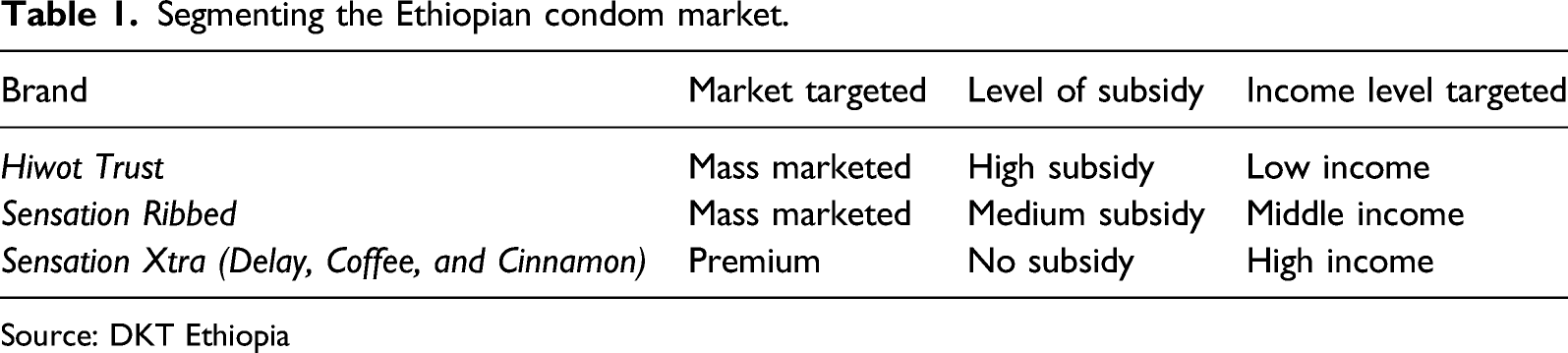
Other DKT Ethiopia condom brands were introduced later at higher prices in order to segment the market between different socio-economic groups, and to bring in additional revenues from profitable brands that could be used to cross-subsidize the lower-priced brands (Harvey, 2008).
In 1990, the program started with a highly subsidized product developed for a broad audience, launching the condom brand Hiwot (the Amharic word for “life”) in urban areas as an HIV prevention product. Within a year, condoms were embraced to such an extent that distribution was expanded to peri-urban areas, followed by expansion to nationwide distribution.
In 1993, the program launched a second subsidized condom, Hiwot Trust, that had raised dots and was marketed for dual protection (against HIV and unwanted pregnancy) at a slightly higher price. In Ethiopia and other countries, DKT International has introduced condoms with raised dots and other texture variations as premium products to attract customers who prefer the feel of these products. The two brands were marketed concurrently for a while before Hiwot was dropped (Purdy, 2020).
At this stage, condom distribution was a major barrier as there were no commercial companies with the distribution systems necessary to sell condoms widely. Because of this, DKT Ethiopia program staff sold Hiwot directly to the retail outlets, delivering them by vans, bicycles, and donkeys to such non-traditional markets as kiosks and vegetable vendors since pharmacies were rare.
Condom demand creation in the mid-1990s consisted mostly of radio advertising in Amharic and local languages, promotional events and targeting of high-risk venues —such as brothels, nightclubs, and bars called Tej Beits, where men consumed raw red meat and cheap home-brewed liquor. There was much use of branded merchandising and promotional items, such as plastic shopping bags, key chains, and posters, to increase the awareness and attractiveness of the product.
Over the years, the program has experimented with various condom attributes and with less subsidized, and even commercial, condom brands. For example, the program launched an upscale male ribbed condom called Sensation in 2004. It took over distribution of French Feelings, a condom brand of JK Ansell of India, for 7 years. It launched a coffee-flavored condom in a country where coffee plays a huge role in the country’s culture and tradition (Batty, 2007). For several years, DKT marketed an unsubsidized brand called Members Only but dropped it in 2015 after lackluster sales (Jeffrey, 2014).
In 2018, a line of Sensation Xtra condoms was introduced as premium, unsubsidized condoms intended for a more affluent market. It made a small profit. Sensation Xtra is now offered with a number of flavors like coffee and cinnamon and features like a condom that delays ejaculation.
Segmenting the Ethiopian condom market.
Source: DKT Ethiopia
To some extent, these condom brands were also segmented by behavior. For example, Sensation appealed to young people, whose behaviors were somewhat different from Hiwot Trust, which appealed to truck drivers, bartenders, military, police officers, and a wide range of slightly older working people.
The vast majority of condom advertising, promotion, and education in Ethiopia in the last 30 years have been done by DKT Ethiopia, which invested millions of dollars for its own brands as well as the overall product category. For much of this time, the SM program was the largest procurer of radio and outdoor advertising. The daily radio messages were oftentimes aired in multiple languages to cater to the different ethnic groups. Such activities supported the uptake of all condoms, according to DKT Ethiopia’s first country director, including commercial and public sector.
In the early years, most of the condom distribution was done by the DKT Ethiopia itself. Over time, government and large NGOs started free condom distribution through smaller NGOs and community-based organizations. Figure 1: Ethiopian Condom Market (2002–2020) shows the size of social marketing distribution versus government free distribution. Ethiopian condom market (2002–2020) millions of male condoms. Sources: DKT Ethiopia, Federal Ministry of Health, HIV/AIDS Prevention & Control Office. Note: There is no data for commercial condom brands. Ethiopian fiscal year runs July 1 to June 30.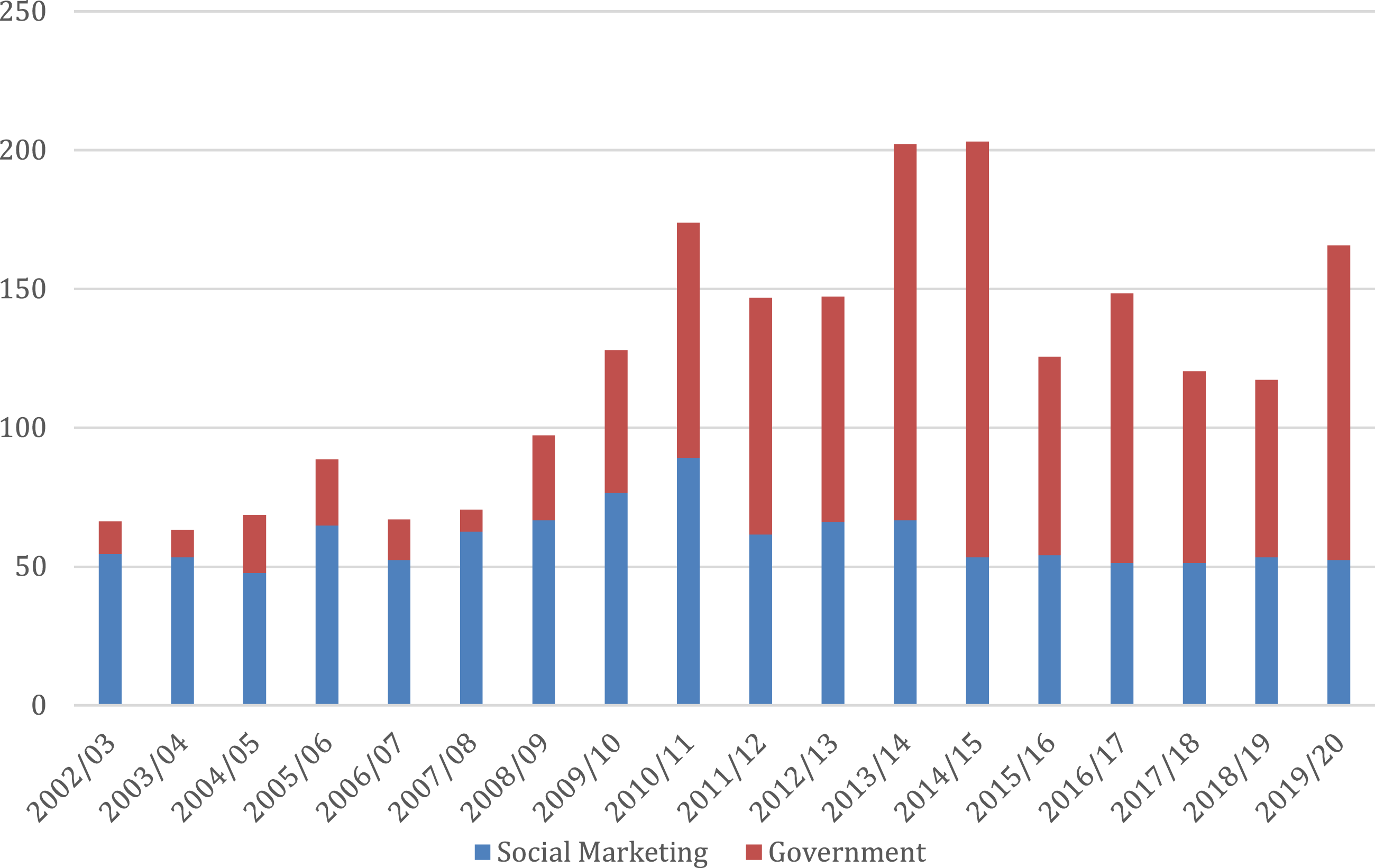
In 1997, Noble and Trustworthy House PLC signed an agreement with Durex and launched over ten Durex variants. Durex provided limited marketing support with a few TV advertisements, flyers and product displays for pharmacies, hotels and shops.
Commercial condom brands, however, have had a difficult time gaining a foothold in Ethiopia, observers say, because of a challenging business environment and draconian currency restrictions which greatly restrict exportation of foreign currency.
Results
The overall condom market has increased enormously from 1990, when the 0.7 million condoms sold by DKT were virtually the entire market. “Figure 1: Ethiopian Condom Market (1990–2019)” shows that SM together with government distribution increased from 66.3 million in Ethiopian fiscal year 2002–2003 (the first year in which government condom data is available) to 165.6 million in 2019–2020.
From 2002 to 2011, SM dominated the condom market in Ethiopia but starting in 2011, the Government of Ethiopia started distributing more condoms than SM. Former DKT Ethiopia country directors believe that their heavy condom advertising and promotion since 1990 has stimulated demand not only for their own brands, but for free government condoms as well.
Commercial condom brands were also available throughout this period but no data on their sales is available. However, the Ethiopia National Condom Strategy 2019–2023 (Federal HIV/AIDS Prevention & Control Office, 2018) posits that “the private commercial sector has remained virtually non-existent,” with only 1% of the condom market in fiscal year 2010/2011. By 2021, Durex no longer had commercial representation in Ethiopia, the multiple variants it introduced in 1997 were off the market and it was not doing any advertising.
Hiwot Trust is now the leading condom brand in Ethiopia with sales of almost 22 million in 2020, followed by Sensation.
Discussion
The HIV epidemic in Ethiopia peaked between 2001 and 2002 and AIDS-related deaths have been declining ever since. UNAIDS noted the progress Ethiopia has made in fighting HIV from 2001–2011, when new infections dropped by 90% (UNAIDS, 2012), the largest drop of any country in Africa and the second greatest in the world. What’s more, UNAIDS reported HIV prevalence at a relatively modest 0.9% in 2020, with an estimated 620,000 adults and children living with HIV (UNAIDS, 2020).
DKT Ethiopia created a condom market with the launch of Hiwot and Hiwot Trust, and helped increase demand in the public sector. Since then, many commercial condom brands have entered the Ethiopian market, especially Durex, but these brands continue to face a tough environment. They should have more of a role in the condom market but that is unlikely to happen until the business environment improves and the current currency restrictions, which limits exportation of foreign currency, are relaxed.
“Although the condom program has been one of the most important interventions for the success of both HIV prevention and FP programs in the country, its implementation is dependent on socially marketed and free condoms, with limited attention given to the promotion and distribution of commercially marketed condoms for those who are willing and able to pay,” according to the Ethiopia National Condom Strategy 2019–2023 (Federal HIV/AIDS Prevention & Control Office, 2018). “This may create a major implementation challenge to the sustainability of the program, given the current trend of global reduction of resources for HIV/AIDS programs.”
The outlook is promising: HIV is declining. The total condom market has grown enormously in the last 30 years. Between 1990 and December 2020, DKT Ethiopia sold over 1.4 billion condoms and estimates that its products averted 16.6 million unintended pregnancies between 1990 and 2020 (MSI Reproductive Choices Impact 2, 2021). Between 2002 and 2020, SM sold 1.078 billion condoms and the Government of Ethiopia distributed 1.111 billion condoms.
Brazil
Brazil’s first AIDS case was identified in 1982 and the National AIDS Control Program was established in 1986. Infection rates climbed rapidly in the 1980s and 1990s. In 1990, the World Bank predicted that Brazil would have 1.2 million cases by 2000. The government took the threat seriously and started a number of activities to mitigate the impact of AIDS, including condom promotion.
The condom market of Brazil was very different from Ethiopia at that time. In the early 1990s, two Brazilian manufacturers dominated the condom market. Their locally manufactured condoms sold at prices ranging from 60¢ (American cents) to more than $1.00 per condom (Harvey, 2016)—far too expensive for the average Brazilian. Condoms were more available than in Ethiopia but still mostly limited to pharmacies.
Strategy
DKT became interested in the Brazilian market because of the high price of commercial condoms and the associated barriers that low-income people encountered in accessing them. In response, DKT started a SM operation in Brazil in 1990 which was registered as “DKT do Brasil.”
DKT do Brasil’s strategy was to bring a condom to market at a much lower price by importing them from Asia. Fortuitously, this was the same time that the Brazilian government was liberalizing its economic and trade policies. DKT do Brasil took advantage of that to buy high quality Asian condoms for around 3¢. Even after paying transport and import tariffs, it was able to sell them to consumers for about 15¢, less than a quarter of the price of commercial condoms (Harvey, 2016). In 1991, DKT do Brasil launched Prudence condoms.
At the same time, the Government of Brazil had started promoting condoms heavily with creative and striking ads on TV, radio and other media in response to an emerging HIV epidemic. It began free distribution, which increased massively in 2001, as seen in “Figure 2: Brazilian Condom Market.” These activities helped pique interest in condoms. Brazilian condom market (1991–2020) millions of male condoms. Sources: DKT do Brasil, the Nielsen Corporation and the Government of Brazil.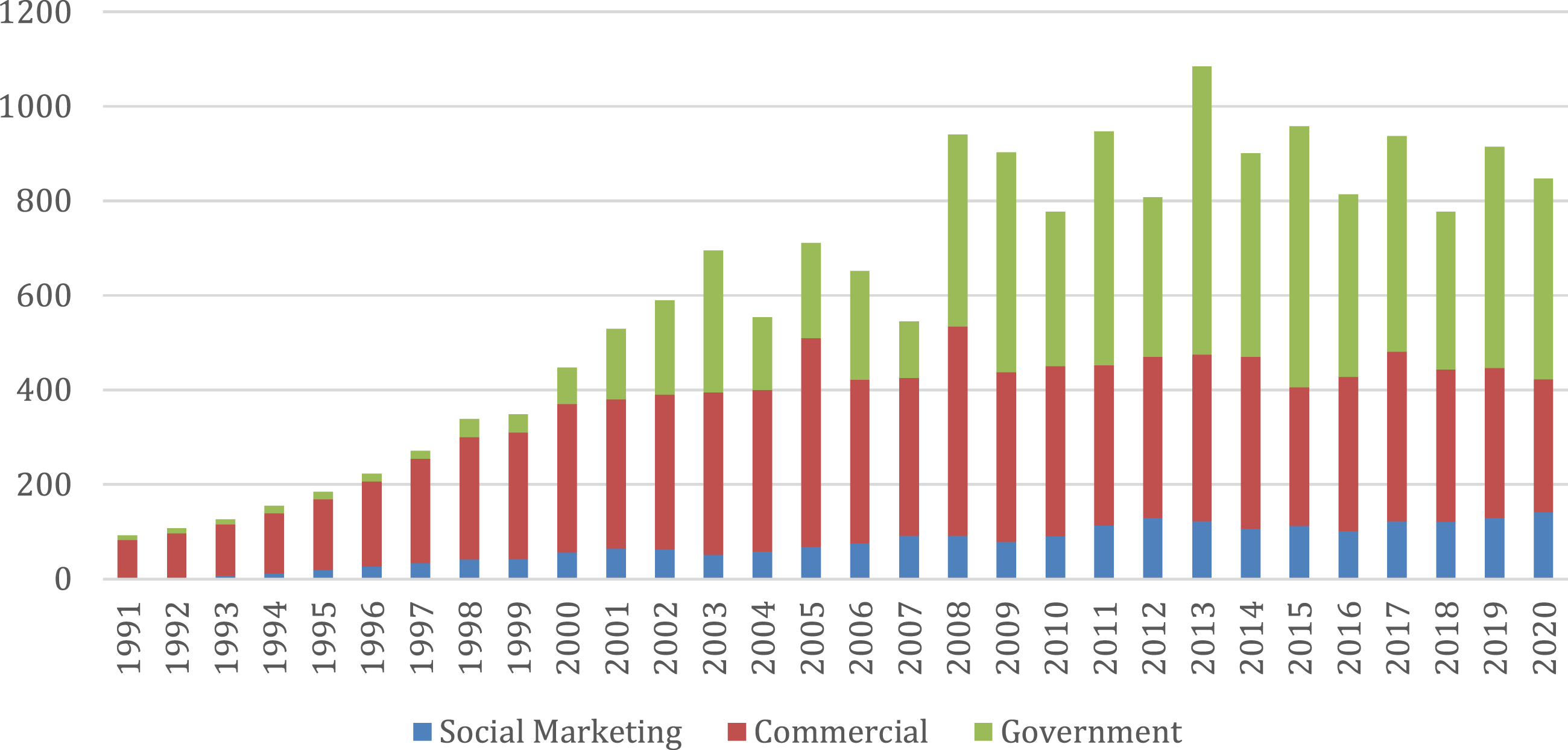
In the face of DKT do Brasil’s low-priced condoms, Brazilian condom manufacturers began lowering their prices, to around 48¢ per condom in 1998 (when the consumer price for Prudence was 35¢). This was aided by individual states agreeing to suspend a tax on condoms which averaged around 18% of the suggested retail price. DKT do Brasil supported indirectly this advocacy campaign with state governments.
DKT do Brasil distinguished itself from its competitors by taking a different approach to the marketing of condoms. While most commercial condom distributors marketed their products on the basis of responsibility and protection, DKT do Brasil marketed Prudence for fun. They made condoms sexy. Their advertising was provocative and even erotic.
In order to segment the market and increase its financial sustainability, DKT do Brasil launched Prudence condom variants. Over time, it added offerings with colors, aromas, and tastes (such as strawberry, chocolate, mint, coffee, grape, tutti-frutti, bubble gum, melon, watermelon, ice, sparkling wine, fruit mix, and caipirinha); condoms lubricated with mild anesthetic to delay ejaculation; extra-large, anatomically shaped condoms; condoms lubricated to create a warm or cool sensation (fire and ice), glow-in-the-dark, ultra sensitive, ultra resistant, and extra-textured condoms. Prudence now comes in 27 variants. None of its commercial competitors has this range of condom offerings, according to DKT do Brasil.
Even though all Prudence variants make money, many are still within the Chapman Contraceptive Affordability Index 2 , which dictates that the price of a year’s supply of condoms should not cost more than 0.25% of the Gross Domestic Product per capita. In Brazil, that means one condom should not cost more than 37¢. All of the Prudence Classico condom brands cost between 25¢ and 30¢, well below the affordability guideline. Even some of the premium variants cost between 31¢ and 36¢.
DKT do Brasil’s distribution strategy has evolved over time: It started out with just one exclusive distributor but today has a diverse distribution network—national and local distributors and wholesalers, pharmacy and supermarket chains served by independent sales agents—and its own sales force. This has allowed DKT do Brasil to have a national presence and obtain shelf space in more non-traditional outlets—like grocery stores and convenience stories—than its competitors.
DKT do Brasil was also different in its early adoption of digital and social media. In the 1990s, it utilized mostly mass media and “below-the-line” (non-media) activities to create demand for Prudence. In the early 2010s, it moved aggressively into social and digital media. For example, it started a condom tester program by which people could geo-tag their location and report their creative use of Prudence. It launched “Prudence Advisor,” a “chatbot” on the Prudence Facebook page that can answer sex-related questions in real time. Prudence is active on Facebook, Twitter, Instagram and YouTube.
Results
All three main sources of condoms—social marketing, the commercial sector, and free government distribution—increased impressively between 1991 and 2020, according to “Figure 2: Brazilian Condom Market,” which shows annual condom distribution. The total market increased almost ten-fold, starting with 92.5 million in 1991 and rising to an average of 900 million per year in the 10 years between 2011 and 2020.
The four major commercial brands have spent millions of dollars in advertising since 1991, according to the Nielsen Corporation. Prudence alone spent an average of $1.2 million a year since 2002. The three leading commercial condom brands, Jontex, Olla and Blowtex, spent an annual average of $3.1 million, $1.1 million and $712,364, respectively, from 2015 to 2018.
This advertising was another factor that helped the commercial condom market grow rapidly. Other companies started importing condoms and advertising in order to survive in a more competitive environment. Condoms became more available in Brazil than ever before. “Figure 2: Brazilian Condom Market” shows how commercial sales grew from 82.1 million condoms in 1991 to 282 million in 2020.
The Government of Brazil also greatly increased the number of condoms it distributed for free, starting with 10 million in 1991 and reaching a peak of 610.4 million in 2013. Between 2016 and 2020, it has given out an average of 414 million annually.
The number of commercial brands has grown exponentially from the time that SM was established—four brands in 1991, eight brands in 1997, 16 brands in 2007, and 22 brands in 2018, according to Nielsen Retail Index. These numbers do not include the many variants marketed by major brands: Blowtex has 20, Jontex has 17, and Olla has 15.
DKT do Brasil estimates that the 2.2 billion condoms it sold between 1991 and 2020 prevented an estimated 161,000 HIV infections (estimated from FHI360s AVERT model) and 3.2 million unplanned pregnancies (estimated from MSI Reproductive Choices Impact 2, 2021). In 2020, UNAIDS estimated that Brazil had around 930,000 people living with HIV and a prevalence rate for 15- to 49-year-olds of 0.6% (UNAIDS, 2020). The number never reached 1.2 million as the World Bank had predicted in 1990.
Discussion
DKT do Brasil was the first DKT program to practice cross-subsidization keeping one condom brand affordable while setting other brands at higher price points in order to reach different income segments. This helped make it the first DKT program to turn a profit. Many other DKT programs followed Brazil’s example.
DKT do Brasil, by importing low-cost condoms, has brought down the price of other brands and stimulated the dramatic growth of the condom market and the popularization of the condom in Brazilian culture. Moreover, DKT do Brasil’s share of the commercial market grew from a tiny fraction in the early 1990s to a 25% market share in 2016, when Prudence became the best-selling condom brand in Brazil. But more importantly, this rising tide lifted all boats, with all categories of condoms growing impressively.
By 2002, there were fewer than 600,000 HIV infections in Brazil, half the number predicted by the World Bank in 1990. This is due to the coordinated efforts of the government and civil society, including non-governmental organizations and community-based organizations. Brazil is now considered a success story in HIV prevention and treatment: In 2003, the Brazilian National AIDS Program received the Gates Award for Global Health for being a model for combating HIV/AIDS by combining access to antiretroviral treatment with aggressive HIV prevention including condoms.
Indonesia
The Indonesian public sector had been the predominant source of family planning products and services in Indonesia since the inception of BKKBN (the Indonesian acronym for the National Family Planning Coordinating Board) in 1970, which achieved notable success providing contraceptives and services through government facilities (Chandani & O’Hanlon, 2006; Psacharopoulos & Nguyen, 1997). This activity helped increase contraceptive prevalence among women 15–49 from 9% in 1973 to almost 64% in 2017 (The DHS Program, 2017).
However, condoms were not popular as a family planning method. Only 1.6% of currently married women used condoms in 1987 (Central Bureau of Statistics/Indonesia, 1989). Demand was flat, and condoms were highly stigmatized for non-family planning use, such as commercial sex, pre-marital sex, and extra-marital sex (Purdy, 2002).
After Indonesia’s first case of HIV appeared in 1987, condom education, availability, and use became more important. The same year, BKKBN launched the Blue Circle campaign to promote private sector activity and boost contraceptive prevalence. The campaign included the introduction of family planning products under the Blue Circle logo (Sanderson & Tan, 1995), including DuaLima condoms targeting lower- and middle-income couples at affordable prices.
Blue Circle, which did the first real marketing of condoms, improved the image of condoms and boosted the market. The campaign involved: providing training, equipment and supplies to doctors and midwives for their private practices; multimedia publicity, advertising the availability of higher quality private products and services; and introduction of subsidized family planning products under the Blue Circle logo.
In 1992, the Futures Group’s Social Marketing for Change (SOMARC) Project developed a condom SM pilot project in Surabaya that increased availability and accessibility to affordable, high quality condoms to commercial sex workers and their clients in red light districts (Leavelle & Schneider, 1996) through the private sector. The program was expanded after these positive results.
However, despite sustained efforts by the government, the size of the total condom market was only 50.8 million pieces in 1995 (half from the private sector; half from government). The population of Indonesia in 1995 was around 197 million. For a country the size of Indonesia, this condom market was too small.
Strategy
In response to concerns about low condom use in the face of a growing HIV/AIDS pandemic in Southeast Asia, the Indonesian and German governments (with funding from the KfW Development Bank) proposed a condom SM project in 1995 and chose DKT to manage it. The project was justified because commercial brands were not affordable or accessible to those most in need of them. The strategy focused on introducing a low-cost condom, making it available in a wider variety of outlets and building demand through advertising, promotion and behavior change campaigns.
In 1996, DKT Indonesia launched a highly subsidized condom brand called Sutra targeting low-income Indonesians. In 2000, DKT Indonesia expanded into family planning by introducing three family planning products under the brand name Andalan, including a second subsidized condom brand.
But DKT Indonesia decided that Sutra and Andalan alone were not sufficient to meet the needs of sexually active youth. So in 2003 it launched a line of Fiesta condoms with flavors and price points attractive to young people (Purdy, 2006). Eventually, this line of condoms was expanded to include other flavors, shapes and textures. This strategy was taken in order to make condoms fun, and more appealing to youth, and allowed DKT Indonesia to reach people at different socio-economic levels.
DKT Indonesia had no donor money to launch Fiesta so the prices were slightly higher than Sutra, but far less expensive than commercial brands, to ensure that these condoms covered their costs.
DKT Indonesia has since introduced 20 Fiesta variants such as banana, strawberry, grape, bubble gum, mint, melon, orange, durian, and lychee, and special features like dotted, ribbed, close fit, tight, baggy, ultra thin, lubricant and spermicidal. Other brands promise extra safe, ultra safe, strong pleasure, natural pleasure, extra sensation and earthquake (with a vibrating ring), among other enticements.
The Fiesta brand was a success — helping reach more youth, increase overall condom sales and cross-subsidize the lower-priced brands Sutra and Andalan.
In 2019, DKT Indonesia launched Supreme, a premium brand that targets middle- and upper-income consumers. Supreme is profitable and the revenues are used, like Fiesta, to cross-subsidize Sutra and Andalan.
DKT Indonesia has launched new brands and/or variants nearly every year. In addition to the 21 Fiesta variants, it has launched five Sutra variants, three Supreme variants and fifteen contraceptive products. Many of these products are profitable, and have made DKT Indonesia financially self-sufficient.
DKT Indonesia introduced so many products in order to reach different segments of the market, provide consumers with more choices and remove as many barriers to condom use as possible. A secondary factor was to provide DKT Indonesia with more revenue so it could cross-subsidize Sutra and Andalan, and even provide start-up money for a new SM program in Ghana.
When DKT Indonesia started operations in 1996, most condoms were sold only in pharmacies and drug stores and there were only a dozen or so 24/7 convenience stores in the entire country. Condoms are now widely available in non-pharmaceutical outlets, where consumers feel more comfortable purchasing them (Purdy, 2002). Almost 50% of condom distribution is through modern channels, mainly convenience stores, with more than 30,000 outlets nationwide.
In addition, the last 20 years have seen a strengthening of condom distribution in such sectors as red light areas, hotels, bars and informal vendors. These efforts have opened up the condom market, expanded potential outlet sources for all condom brands and increased access to and availability of condoms.
In addition to young people, DKT Indonesia also targeted high-risk groups. The rising numbers of condoms distributed to key affected populations such as sex workers, transgender people, and men who have sex with men suggest improvements in condom availability, acceptability, and use (Indonesian National AIDS Commission, 2012).
DKT Indonesia’s advertising has always focused heavily on television and, more recently, outdoor advertising has been added to the mix. But it is increasingly using digital and social media, with limited radio and print media. DKT Indonesia is now active on its four websites as well as Facebook, Twitter, and Instagram to inform consumers and motivate them to use its products.
In addition to mass media advertising, DKT Indonesia invests in other kinds of marketing activities, including trade and consumer promotions, events marketing, and a range of other “below-the-line” strategies.
Results
Over the last two decades, the total private condom market (SM and commercial sales) has grown six-fold from 26 million pieces in 1995 to 162 million in 2020. The market has become vibrant with many more choices available to consumers, both in terms of products and the number and types of outlets selling them. “Figure 3: Indonesian Condom Market (1995–2020)” shows this growth, driven primarily by the commercial condom market and the SM program, with support from government’s free distribution. Indonesian condom market (1995–2020) millions of male condoms. Sources: DKT Indonesia and the Nielsen Corporation.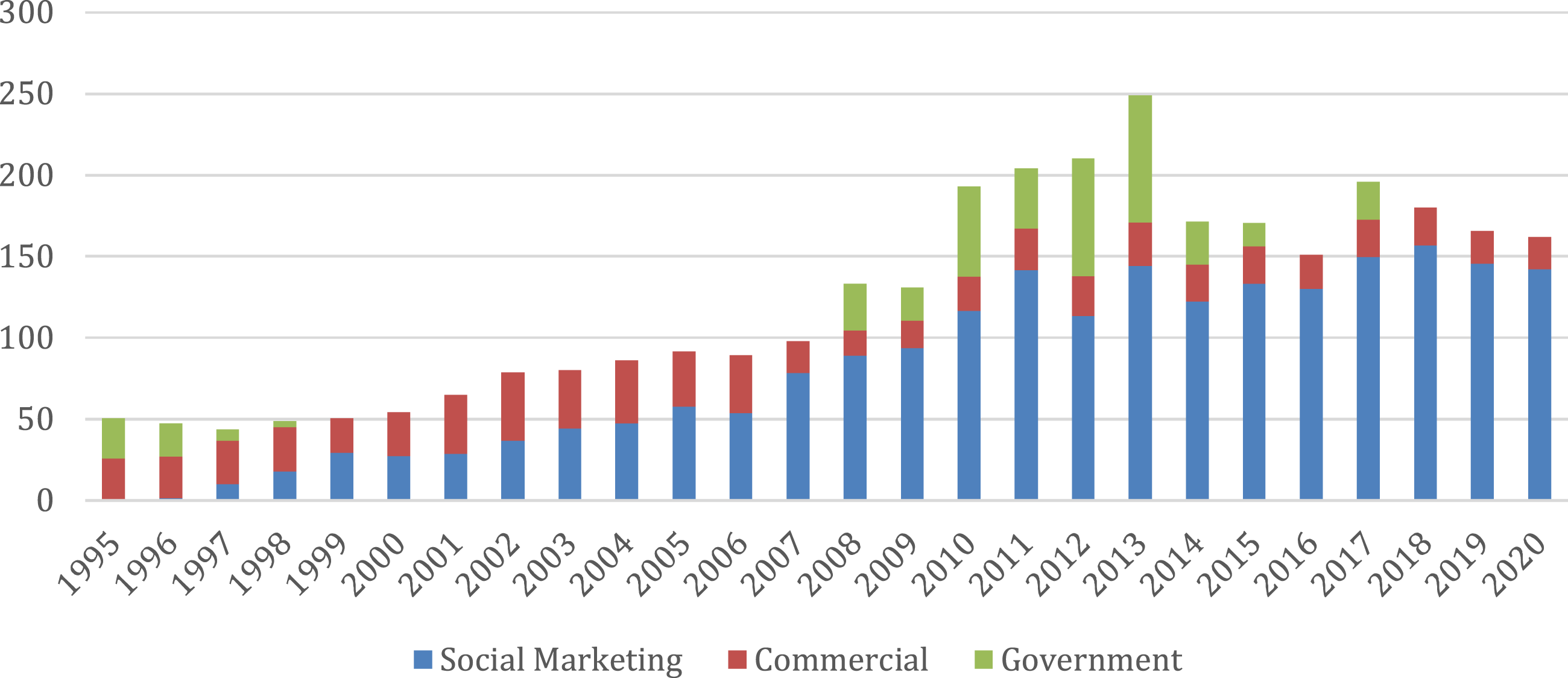
A report by the Indonesian National AIDS Commission independently validates these trends in the total condom market. That report shows consumption of condoms in Indonesia, free and for sale, more than doubled from 2006 to 2011 (Indonesian National AIDS Commission, 2012), closely paralleling the trends shown in Figure 3.
The private sector has played a strong role in the growth of this market as well as in advertising and promoting condoms. In recent years, many new brands have entered the Indonesian condom market. A 2019 audit of the private condom market by DKT Indonesia showed 18 major brands and 122 variants competing in the marketplace.
In addition, this rise in the private condom market has been accompanied by sporadic free condoms from the government.
During the years of no government procurement, SM and the commercial sector helped meet demand among segments of the population that may have been receiving free condoms previously by selling them condoms and making them widely available.
The efforts to increase condom distribution in such sectors as red light areas, hotels, bars and informal vendors have opened up the condom market, expanded potential outlet sources for all condom brands and increased access to and availability of condoms. Market trends suggest that non-traditional markets will continue to grow.
Dedicated and consistent advertising of condom brands and their benefits, accompanied by targeted behavior change campaigns, have raised the profile of condoms among consumers, especially youth, and decreased stigma.
Condom advertising and promotion is an important indicator of the health and activity of the condom market. Prior to the advent of SM, there was a very low level of condom advertising in Indonesia—693 million rupiah in 1994 ($330,000) and 702 million rupiah in 1995 ($319,000) (Harvey, 2000).
But once Sutra was launched in 1996, condom advertising—from the commercial sector and social marketing—took off in a significant way. During the 6 years 1996–2001, estimated spending on all condom advertising totaled more than 24 billion rupiah. On an annual basis, this is almost a six-fold increase from pre-social marketing days. Between 2005 and 2017, total spending for condom-related mass media advertising (TV, radio, and print) has totaled over 439 billion rupiah (an average of more than 33 billion per year), or $43 million based on the exchange rates of the time. “Figure 4: Condom Advertising Expenditure in Indonesia (2005–2017)” shows that most of the advertising was done by DKT Indonesia, Durex and Simplex. Condom advertising expenditure in Indonesia (2005–2017). Source: Activate, The Nielsen Corporation. Note: Rupiah are shown on the left.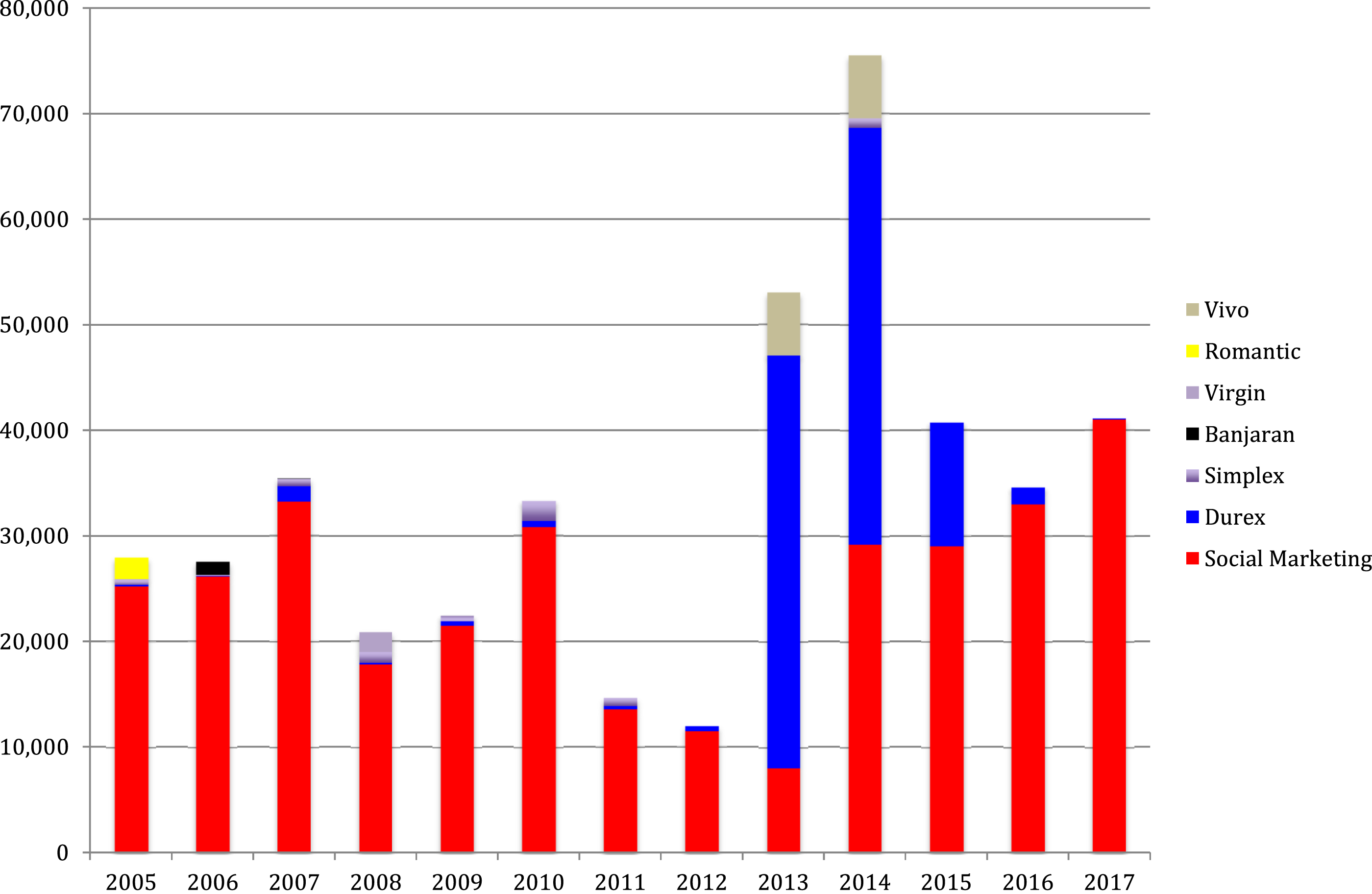
Discussion
These developments demonstrate the growth and vibrancy of the Indonesian condom market and how this growth has been driven principally by SM and the commercial sector, with government free condom distribution playing a supporting role. The Ministry of Health, National AIDS Commission, BKKBN and various donors all made significant contributions to supporting this condom market success.
Despite the dramatic growth in the condom market, Indonesia is the only country in the Asia-Pacific region where HIV prevalence is still increasing (Cairns, 2018). In 2020, prevalence among 15- to 49-year-olds was estimated at 0.4%, with 540,00 adults and children living with HIV (UNAIDS, 2020), but is much higher among high-risk groups like people who inject drugs, who have an HIV prevalence of 13.7%.
The size of the Indonesian condom market is still smaller than it should be given the size of the population (which was estimated at 278 million in 2022) and the growing concern over HIV and other sexually transmitted infections. Therefore, increased behavior change and condom promotion should be emphasized to increase condom use even further, from 162 million in 2020 to around 350 million annually.
Overarching Results and Conclusions
The rise of three condom markets.
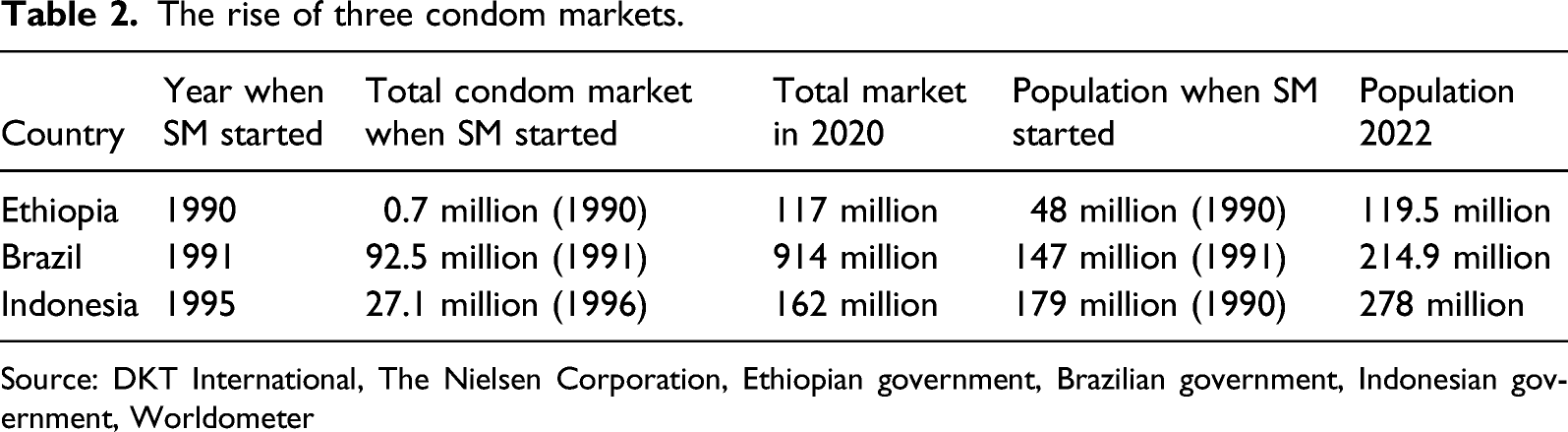
Source: DKT International, The Nielsen Corporation, Ethiopian government, Brazilian government, Indonesian government, Worldometer
The trends of the commercial sector, social marketing and government distribution over time do not always move upward every year but have their ups and downs depending on the vagaries of condom supply and demand, the market forces at work, the strength (or weakness) of the economy and the prevalence of pandemics. For example, the private sector condom markets in Brazil and Indonesia have thrived while it has struggled in Ethiopia, and government distribution in Indonesia has sometimes been erratic. But the trajectory of the overall market has been upwards.
Although the three programs described in this article are quite diverse, they nevertheless share five key elements that helped them grow condom markets in their countries: • • • • •
The three SM programs profiled here have supported the expansion of the total condom market in their countries. In the case of Brazil and Indonesia, the SM programs helped expand total demand from very low bases. In the case of Ethiopia, SM created a market for condoms virtually from scratch.
Recommendations for Social Marketing Practice
Social marketers should consider the following recommendations for programs interested in replicating DKT’s success in Ethiopia, Brazil, and Indonesia. Not all of these recommendations are appropriate for all countries or products and services but should be considered in the context of the countries’ economies and specific market conditions. Although this paper shares the specific experiences of condom programs, these recommendations might apply to other SM programs as well. • • • • •
Footnotes
Declaration of conflicting interests
The author(s) declared no potential conflicts of interest with respect to the research, authorship, and/or publication of this article.
Funding
The author(s) received no financial support for the research, authorship, and/or publication of this article.
Author Note
A couple year of protection (CYP) is the amount of contraception necessary to protect a couple for 1 year. For male condoms, that equates to 100 condoms.
