



Abstract
Metabolic dysfunction-associated steatotic liver disease (MASLD) and diabetes independently contribute to increased gut permeability. Whether metabolic alterations of type 2 diabetes mellitus (T2DM) are further increased by the concomitant presence of MASLD and may explain cardiovascular risk is unknown. We analyzed differences in biomarkers of gut permeability alteration related low-grade endotoxemia and oxidative stress in T2DM with or without MASLD. Enrolled patients were included if they had a diagnosis of T2DM. In the presence of hepatic steatosis, the finding of any cardiometabolic risk factors would confer a diagnosis of MASLD if there are no other causes of hepatic steatosis. Blood samples were collected for oxidative stress and gut permeability evaluation. Overall, 190 patients were included, of which 95 had concomitant MASLD and 95 had no concomitant MASLD. Patients with MASLD had significantly higher values of lipopolysaccharide (LPS) and zonulin compared with patients without MASLD. Patients with MASLD have significantly higher values of NOX-2 activity and hydrogen peroxide compared with patients without MASLD. Linear correlation analysis demonstrated a significant and direct correlation between LPS and zonulin (R = 0.47, p = 1.3e-11). These results support the hypothesis that patients with MASLD exhibit an increase in gut permeability alteration related low-grade endotoxemia and oxidative stress compared with patients without MASLD. Antioxid. Redox Signal. 44, 134–140.
This is a visual representation of the abstract.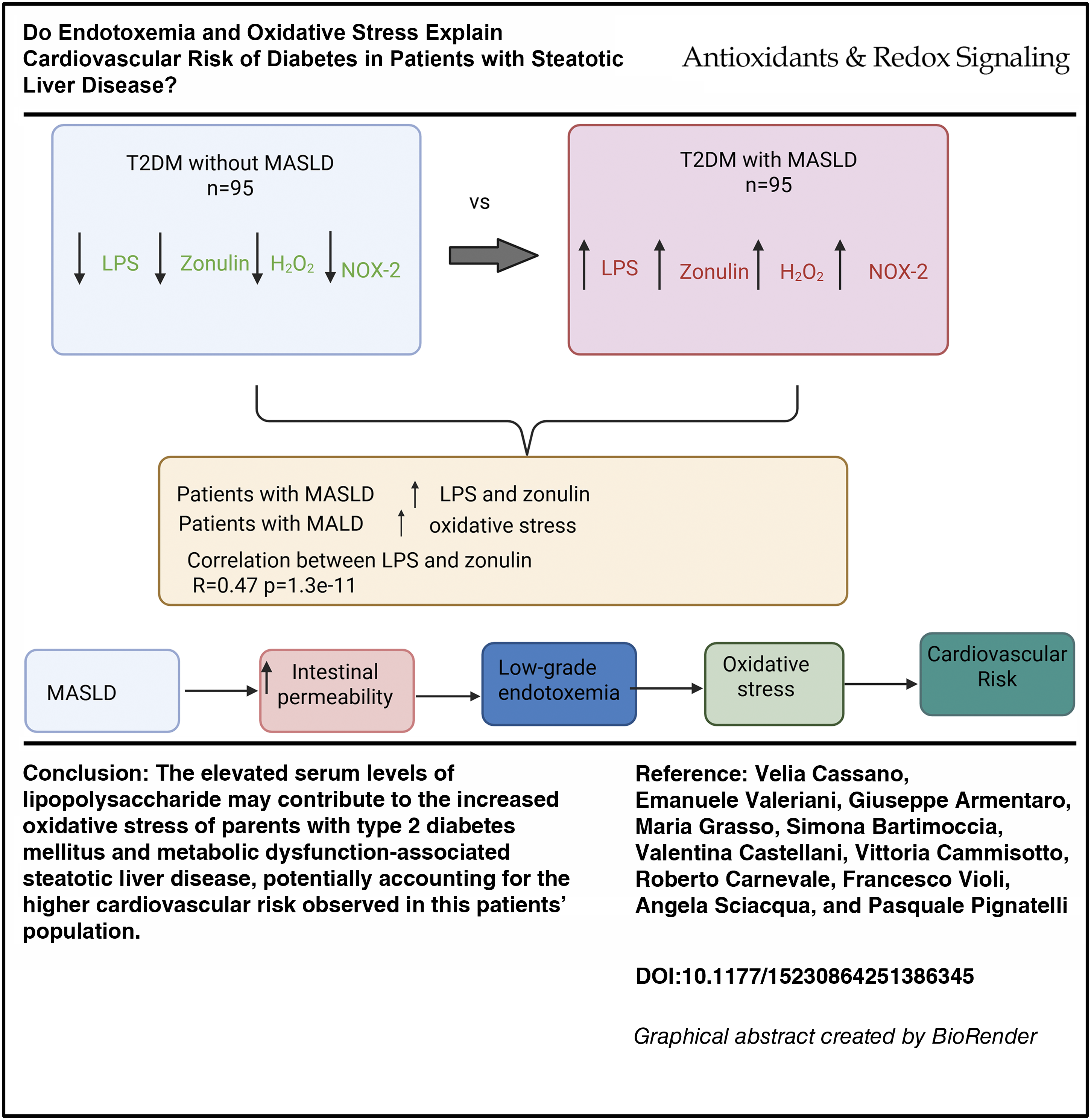
Get full access to this article
View all access options for this article.
References
Supplementary Material
Please find the following supplemental material available below.
For Open Access articles published under a Creative Commons License, all supplemental material carries the same license as the article it is associated with.
For non-Open Access articles published, all supplemental material carries a non-exclusive license, and permission requests for re-use of supplemental material or any part of supplemental material shall be sent directly to the copyright owner as specified in the copyright notice associated with the article.
