




Abstract
Introduction:
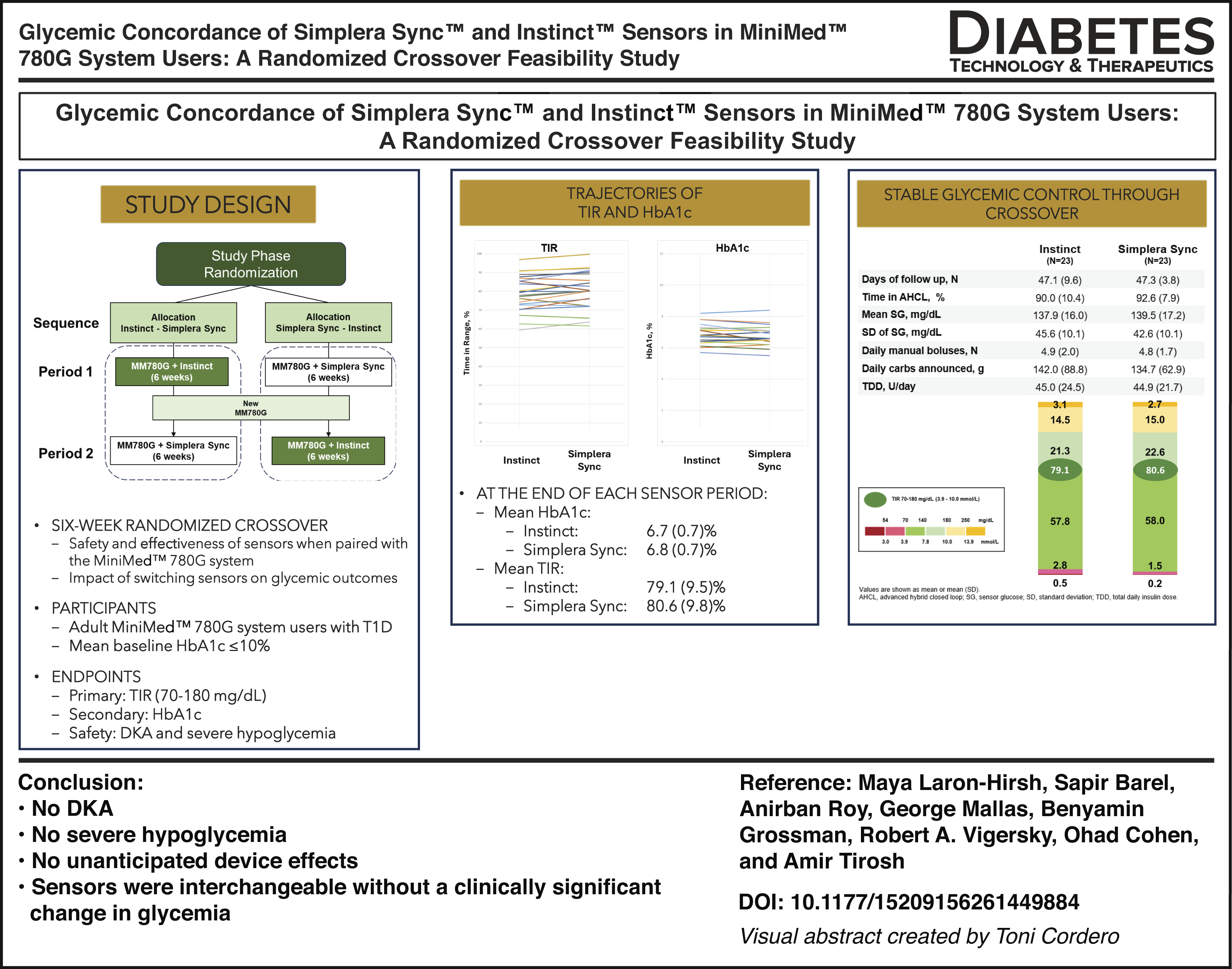
This study evaluated the performance of Simplera Sync™ and Instinct™ sensors when paired with the MiniMed™ 780G (MM780G) system and assessed whether switching between sensors affected clinical outcomes of people with type 1 diabetes (PwT1D).
Methods:
A single-center, two-arm, randomized crossover study in adult PwT1D started with either the Simplera Sync sensor or Instinct sensor for a 6-week period, followed by crossover to the alternate sensor for an additional 6 weeks. The primary end point was noninferiority in time in range (TIR; 70–180 mg/dL), with a noninferiority margin of 7.5%. Secondary end points included HbA1c and other continuous glucose monitoring-derived metrics.
Results:
Twenty-five participants were assessed for eligibility, 24 were randomized, and 23 completed the study. TIR was 80.6 (9.8)% during the Simplera Sync sensor period and 79.1 (9.5)% during the Instinct sensor period. The mean difference was 1.5% (95% confidence interval: 0.18–2.79), and the noninferiority criteria were met. HbA1c at the end of the Simplera Sync and Instinct sensor periods was 6.8 (0.7)% and 6.7 (0.7)%, respectively. No serious adverse events related to sensor use were reported.
Conclusion:
This randomized controlled crossover trial demonstrates that both Simplera Sync and Instinct sensors meet international consensus targets for glycemic control when used with the MM780G system, and that the sensors can be interchanged without meaningful differences in glycemic control. This study supports the concept that the automated insulin delivery algorithm, rather than the sensor, is the primary determinant of clinical outcomes in MM780G users.
Keywords
Get full access to this article
View all access options for this article.
References
Supplementary Material
Please find the following supplemental material available below.
For Open Access articles published under a Creative Commons License, all supplemental material carries the same license as the article it is associated with.
For non-Open Access articles published, all supplemental material carries a non-exclusive license, and permission requests for re-use of supplemental material or any part of supplemental material shall be sent directly to the copyright owner as specified in the copyright notice associated with the article.
