




Abstract
We report here the efficacy and safety of GFT505, a novel liver-targeted peroxisome proliferator-activated receptor alpha/delta (PPARα/δ) agonist, in the db/db mouse model of diabetes. Mice were treated with vehicle, GFT505, PPARγ agonist rosiglitazone or dual-PPARα/γ agonist aleglitazar for up to 8 weeks. All compounds comparably reduced fasting glycaemia and HbA1c and improved insulin sensitivity. The glucose-lowering effect of GFT505 was associated with decreased hepatic gluconeogenesis, correlating with reduced expression of gluconeogenic genes. In contrast with the PPARγ-activating drugs, treatment with GFT505 did not affect heart weight and did not increase plasma adiponectin concentrations. This absence of cardiac effects of GFT505 was confirmed after 12 months of administration in cynomolgus monkeys, by the absence of echocardiographic and histological findings. Moreover, long-term GFT505 administration to monkeys induced no change in haematological parameters or in bone marrow differential cell counts. Compared to PPARγ-activating drugs, the dual-PPARα/δ agonist GFT505 therefore shows an improved benefit/risk ratio, treating multiple features of type 2 diabetes without inducing the cardiac side-effects associated with PPARγ activation.
Introduction
Peroxisome proliferator-activated receptors (PPARs) are ligand-activated transcription factors implicated in the regulation of glucose homeostasis, lipid metabolism and vascular inflammation. Numerous synthetic PPAR ligands have been developed to treat metabolic disorders including type 2 diabetes mellitus (T2DM), dyslipidaemia and non-alcoholic steatohepatitis (NASH). 1
PPARα agonists such as fibrates lower serum triglycerides (TGs) and increase high-density lipoprotein (HDL)-cholesterol in patients with hyperlipidaemia. 2 PPARγ agonists such as rosiglitazone and pioglitazone are insulin sensitizers that improve insulin sensitivity in T2DM patients. 3 The PPARδ isotype is also a potential target for the treatment of metabolic diseases. Indeed, preclinical studies suggest that PPARδ regulates glucose metabolism and improves insulin sensitivity 4 and β-cell function. 5 In humans, the synthetic PPARδ agonist GW501516 improves dyslipidaemia and insulin resistance and reduces liver fat in moderately overweight subjects. 6
Given the potential pharmacological benefit of activating multiple PPAR isoforms, numerous synthetic dual-PPAR and pan-PPAR agonists have been developed to obtain synergistic actions on lipid and glucose homeostasis for the treatment of metabolic disorders including T2DM, dyslipidaemia and NASH. 7 However, several PPARα/γ agonists (glitazars) were discontinued because of safety concerns during clinical development.8,9 The most limiting safety issue associated with PPARγ agonist compounds relates to fluid retention, haemodilution, oedema and subsequent effects on cardiac remodelling and risk of heart failure. 10 Most recently, the development of the PPARα/γ agonist aleglitazar was terminated in Phase III due to safety concerns including an increase in heart failure. 11
GFT505 is a novel liver-targeted PPAR agonist with preferential activity on PPARα (half-maximal effective concentration 10–20 nmol/L) and additional activity on PPARδ (half-maximal effective concentration 100–150 nmol/L). 12 GFT505 has been shown to improve dyslipidaemia, hepatic and peripheral insulin sensitivity and liver enzymes in abdominally obese patients.12,13 Here, the efficacy and safety of GFT505 were assessed in the db/db mouse model of T2DM. The data show that GFT505 has beneficial effects for T2DM, with a superior cardiac safety margin compared to PPARγ-activating agonists.
Materials and methods
Compounds and chemical reagents
Rosiglitazone was acquired from Yick-Vic Chemicals & Pharmaceuticals Ltd (Hong Kong). Aleglitazar and GFT505 were synthesized at Genfit and verified by nuclear magnetic resonance (NMR) and liquid chromatography–mass spectrometry (LC-MS).
Diabetic db/db mice studies
Animals
Male db/db and db/lean mice were obtained from CERJ JANVIER (France). Animals were randomly assigned into different treatment groups and dosed by oral gavage (10 mL/kg body weight) once daily with vehicle or test compound(s). The vehicle was 0.1% Tween 80 (polyoxyethylenesorbitan monooleate) and 1% carboxymethylcellulose in 98.9% distilled water. All study protocols were approved by Genfit’s Animal Research Committee, and National Institutes of Health (NIH) ‘Principles of laboratory animal care’ were followed.
Treatments
In Experiment 1, mice were treated with GFT505 (10 and 30 mg/kg/day), rosiglitazone (10 mg/kg/day), aleglitazar (0.3, 1 and 3 mg/kg/day) or vehicle for 56 days. An oral glucose tolerance test (OGTT) was performed after 43 days. In Experiment 2, mice were treated with GFT505 (3, 10 and 30 mg/kg/day), rosiglitazone (10 mg/kg/day) or vehicle for 56 days. In Experiment 3, mice were treated with GFT505 (10 and 30 mg/kg/day) or vehicle for 14 days, and a pyruvate challenge test was performed. At the end of each experiment, plasma and selected organs were collected.
Glucose tolerance (OGTT) and pyruvate challenge tests
db/db or db/lean mice fasted overnight (16 h) were orally given a glucose bolus (0.5 g/kg body weight) for the OGTT or were injected intraperitoneally with sodium pyruvate (1 g/kg in NaCl 0.9%) for the pyruvate challenge test. Glycaemia was measured with a portable glucometer device on tail-vein blood samples. Basal fasting glycaemia was measured immediately before glucose or pyruvate administration (t0) and then at the indicated time points after glucose or pyruvate challenge.
Blood chemistry
TGs and HbA1c were measured using the RX Daytona™ automatic analyzer (Randox, UK). Plasma adiponectin levels were determined using mouse enzyme-linked immunosorbent assay (ELISA) kits (R&D Systems, UK). HDL-cholesterol levels were measured using a kit from Biomerieux (France).
Real-time polymerase chain reaction (PCR)
Nucleospin® 96 RNA kit (Macherey Nagel, France), RNeasy Fibrous Tissue Mini Kit (Qiagen, France) and guanidinium thiocyanate were used to extract total RNA from liver, skeletal muscle and adipose tissue, respectively. After synthesis of complementary DNA using Moloney Murine Leukemia Virus Reverse Transcriptase (MMLV-RT), the real-time PCR measurement of individual cDNAs was performed using iQ SYBR Green Supermix kit to measure duplex DNA formation with the MyiQ Single-Color Real-Time PCR Detection (Biorad, France). The PCR primers used are shown in Table S1. Expression levels were normalized using 36B4 (liver) or 18S (skeletal muscle and adipose tissue) genes.
Twelve-month toxicology study in cynomolgus monkeys
Animals and treatments
Male and female purpose-bred cynomolgus monkeys (Macaca fascicularis) were obtained from Le Tamarinier (Mauritius) and were quarantined for a period of 6 weeks at the study facility (CIT, France). At the beginning of the treatment period, the animals were between 22 and 27 months old, with a mean body weight of 2.8 kg for males and 2.2 kg for females. Animals were randomly assigned into treatment groups and dosed by oral gavage (5 mL/kg body weight, n = 4–6 per sex and per group) once daily for 52 weeks with vehicle or GFT505 (3, 10 and 50 mg/kg/day). The vehicle was an aqueous suspension of carboxymethylcellulose at 1% in purified water. The study was performed in compliance with Animal Health Regulations, and the study protocol was approved by the CIT Ethical Committee.
Haematology and blood chemistry
Bone marrow smears were prepared from the sternum of all animals at necropsy and stained with May Grünwald Giemsa. The bone marrow differential cell count determination was performed by microscopic examination. For haematology, samples were collected into ethylenediaminetetraacetic acid (EDTA) tubes and analyses were performed using an ADVIA 120 Hematology Analyzer (Siemens, Germany). For blood chemistry, samples were collected into lithium heparin tubes and analyses were performed using an ADVIA 1650 (Siemens).
Clinical examinations
Electrocardiography and blood pressure measurements were performed on all animals prior to treatment and at 13, 26 and 52 weeks of treatment. Echocardiography examinations were performed on four animals per sex in the vehicle and high-dose (50 mg/kg/day GFT505) groups prior to treatment and at 26 and 52 weeks of treatment. At the end of the 52-week treatment period, organs were dissected and weighed, and macroscopic and microscopic organ examinations were performed.
Statistical analyses
Experimental results are expressed as mean ± standard deviation (SD). Statistical analyses were performed using a one-way analysis of variance followed by a post hoc Bonferroni analysis and compared to the corresponding control group with p < 0.05 as the level of significance.
Results
GFT505 treatment improves glucose control and plasma lipids in diabetic db/db mice
Eight-week treatment of db/db mice with GFT505, rosiglitazone or aleglitazar significantly reduced fasting glycaemia and HbA1c to levels equivalent to non-diabetic db/lean mice (Figure 1(a) and (b)). Moreover, glucose tolerance as measured by OGTT was significantly improved by GFT505, to a similar extent as with rosiglitazone and aleglitazar (Figure 1(c) and (d)). GFT505 treatment also resulted in favourable changes in plasma lipids, shown by a reduction of fasting TG levels (Figure 2(a)), and a significant increase in HDL-cholesterol (Figure 2(b)). This beneficial effect on HDL-cholesterol was not observed with rosiglitazone or aleglitazar.
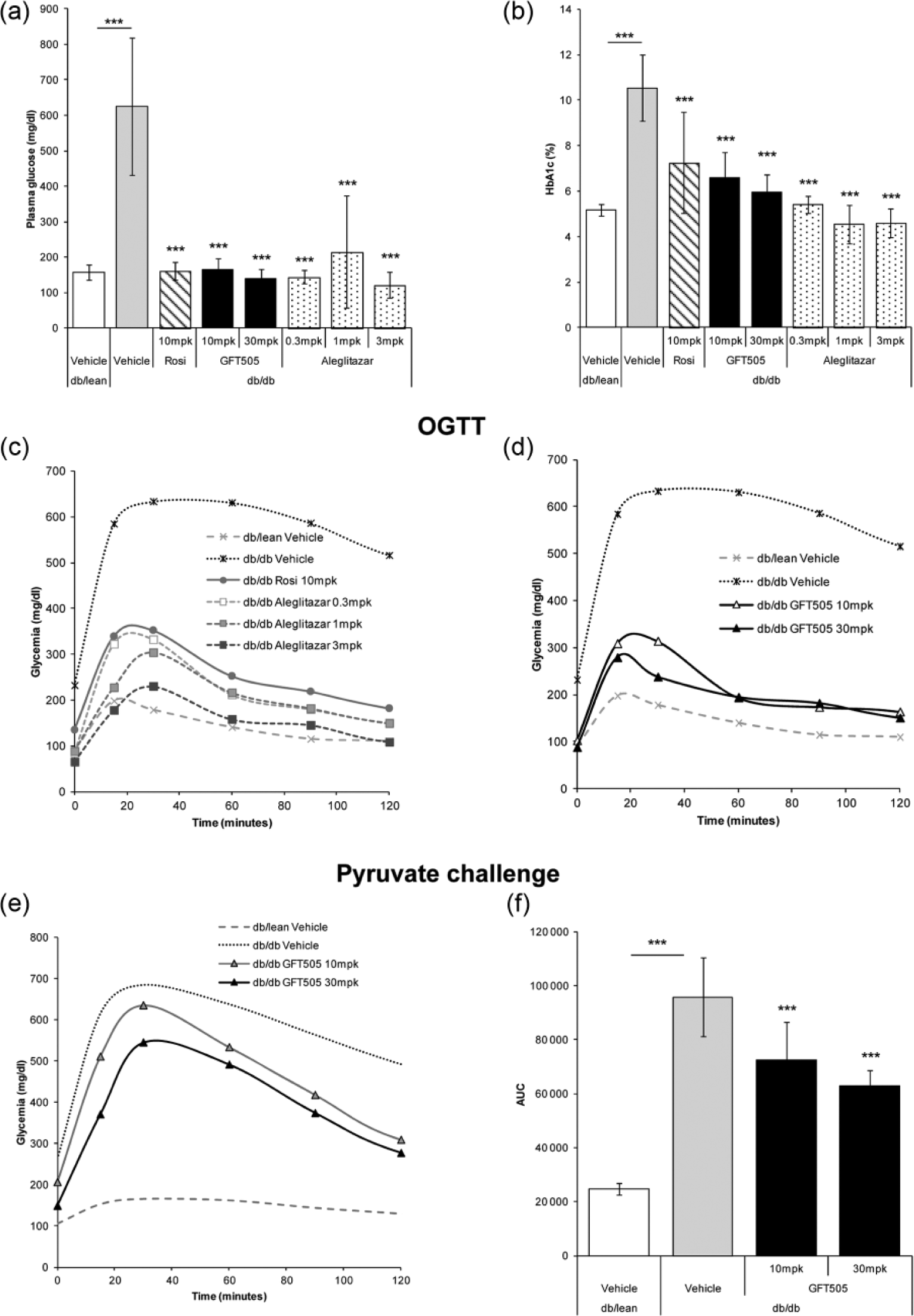
Effect of GFT505 on glycaemic control in insulin-resistant db/db mice. In Experiment 1, 8-week-old male db/db mice (n = 8 per group) were treated daily with GFT505 (10 and 30 mg/kg/day), rosiglitazone (10 mg/kg/day) or aleglitazar (0.3, 1 and 3 mg/kg/day) for 56 days. At the end of treatment, (a) fasting plasma glucose and (b) HbA1c were measured. (c and d) OGTT was performed after 6 weeks of treatment. In Experiment 2, 9-week-old male db/db mice (n = 9 per group) were treated with GFT505 (10 and 30 mg/kg/day) or vehicle for 14 days, and a pyruvate challenge test was performed: (e) glucose excursion during the pyruvate challenge and (f) AUC for the glycaemia response to pyruvate challenge.
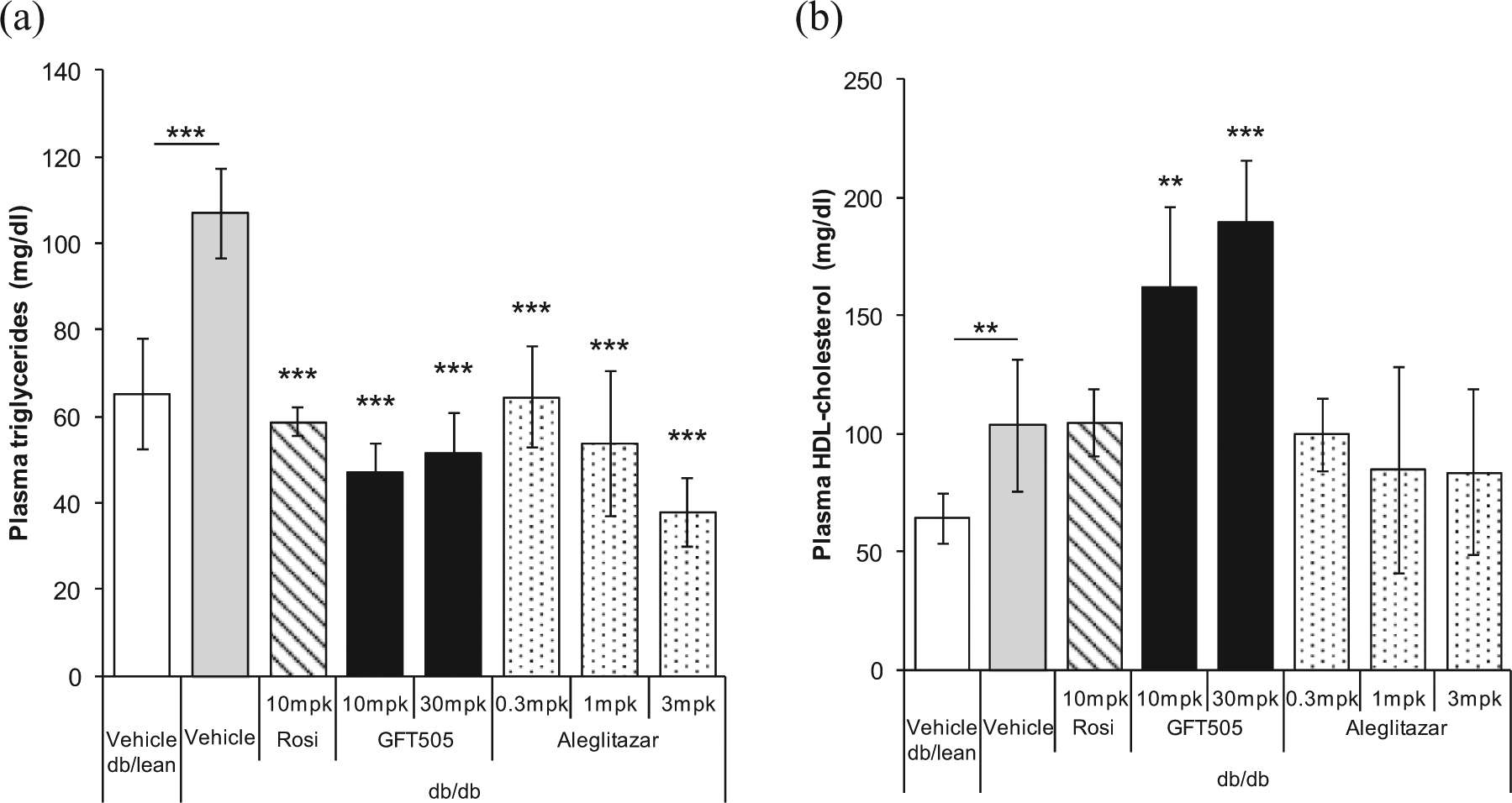
Effect of GFT505 on plasma lipids in insulin-resistant db/db mice. Eight-week-old male db/db mice (n = 8 per group) were treated daily with GFT505 (10 and 30 mg/kg/day), rosiglitazone (10 mg/kg/day) or aleglitazar (0.3, 1 and 3 mg/kg/day) for 56 days. At the end of the treatment period, (a) plasma triglycerides and (b) HDL-cholesterol were measured.
To determine the mechanism of action, gene expression levels were analysed in db/db mice treated for 8 weeks with GFT505 or rosiglitazone (Table 1). A significant dose-dependent reduction of hepatic expression of the key gluconeogenic enzymes glucose 6-phosphatase (G6Pase), PEPCK, and fructose 1,6-bisphosphatase 1 (FBP1) was observed with GFT505. In contrast, GFT505 induced no change in expression of PPARα and PPARδ target genes in skeletal muscle [CPT1a (carnitine palmitoyltransferase I), PDK4 (pyruvate dehydrogenase kinase isozyme 4), CD36], or the PPARγ target gene adiponectin in epididymal white adipose tissue (WAT), in keeping with its liver-targeted action and lack of PPARγ activity. Moreover, hepatic expression of the PPARγ target gene GCK (glucokinase) was not significantly affected by GFT505, in contrast to the strong induction observed with rosiglitazone (Table 1).
Effects of GFT505 (3, 10 and 30 mg/kg/day) and rosiglitazone (10 mg/kg/day) on gene expression in liver, skeletal muscle and adipose tissue of insulin-resistant db/db mice after 56 days of treatment.
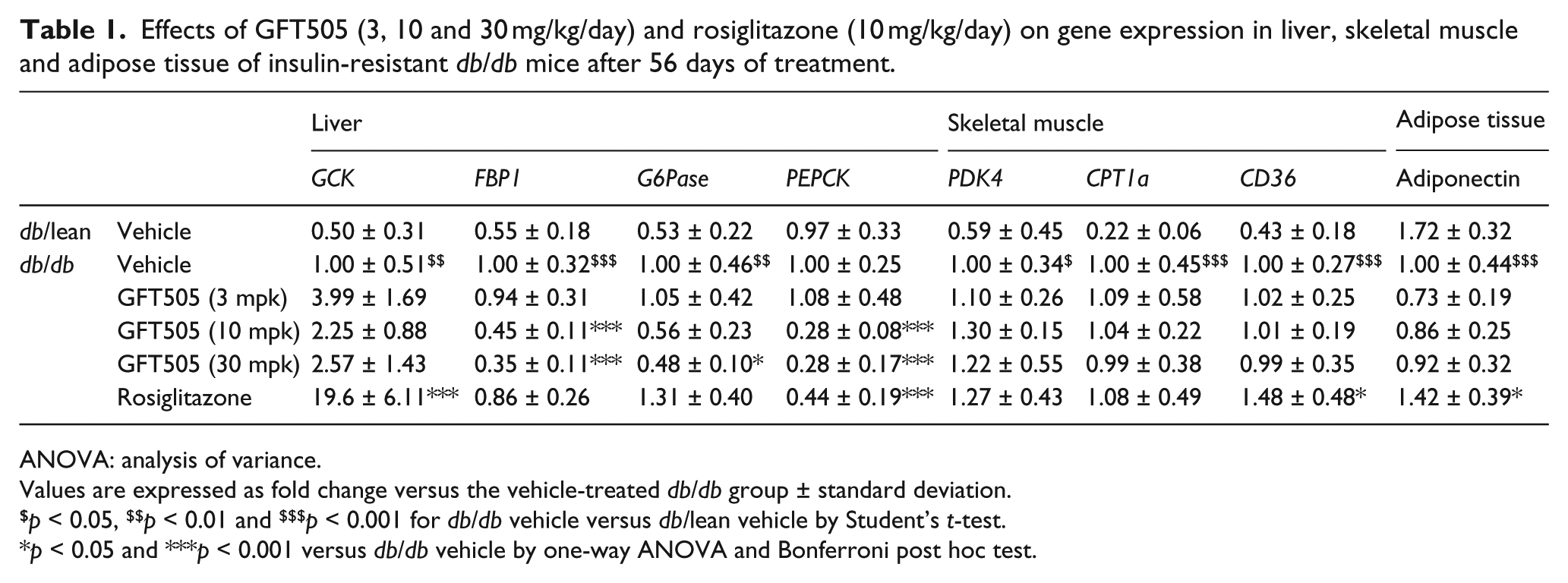
ANOVA: analysis of variance.
Values are expressed as fold change versus the vehicle-treated db/db group ± standard deviation.
p < 0.05, $$p < 0.01 and $$$p < 0.001 for db/db vehicle versus db/lean vehicle by Student’s t-test.
p < 0.05 and ***p < 0.001 versus db/db vehicle by one-way ANOVA and Bonferroni post hoc test.
Finally, the effects of GFT505 on hepatic gluconeogenesis were directly assessed in db/db mice by a pyruvate tolerance test after 14 days of treatment. Glycaemia was higher in db/db versus db/lean mice after pyruvate injection, indicating elevated hepatic gluconeogenesis from pyruvate (Figure 1(e)). In keeping with the inhibitory effect of GFT505 on hepatic expression of gluconeogenic enzymes, treatment induced a dose-related reduction of pyruvate conversion into glucose (Figure 1(f)).
GFT505 does not induce cardiac adverse effects of PPARγ-activating agonists
Eight-week treatment of db/db mice with rosiglitazone or aleglitazar resulted in significant increases in heart weight (Figure 3(a)), associated with fluid retention illustrated by decreased haematocrit values (Figure 3(b)), and correlated with increased plasma adiponectin concentrations (Figure 3(c)). In contrast, none of these PPARγ-related effects were observed in GFT505-treated mice (Figure 3(a) to (c)).
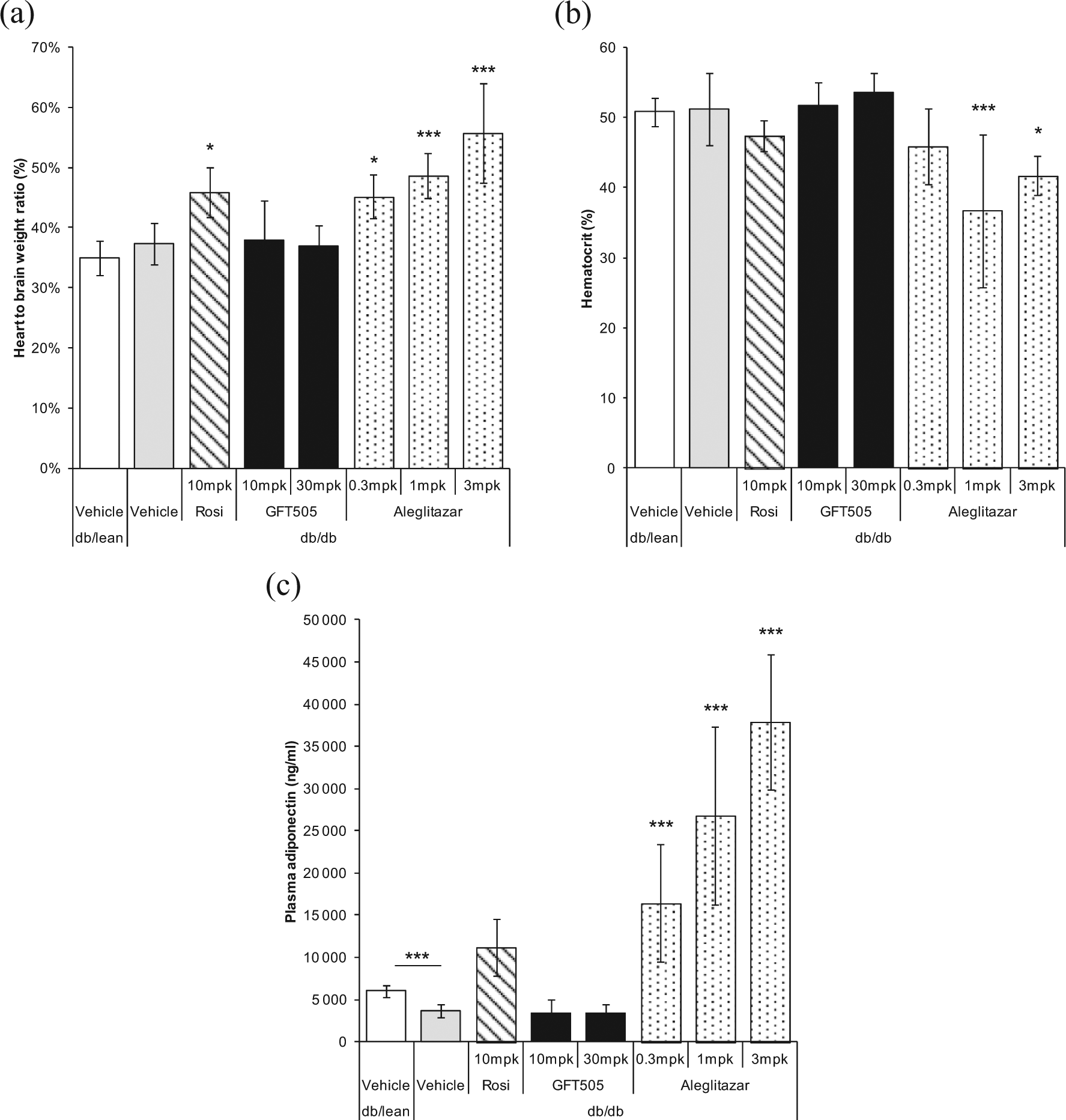
Safety profile of GFT505 in insulin-resistant db/db mice. Eight-week-old male db/db mice (n = 9–14 per group) were treated daily with GFT505 (10 and 30 mg/kg/day), rosiglitazone (10 mg/kg/day) or aleglitazar (0.3, 1 and 3 mg/kg/day) for 56 days. At the end of the treatment, (a) heart-to-brain weight ratio, (b) haematocrit and (c) plasma adiponectin levels were measured.
The cardiac safety of GFT505 was also studied during a 12-month toxicity study in cynomolgus monkeys. GFT505 at up to 50 mg/kg/day showed no significant effect on heart weight, and there were no treatment-related histological changes in cardiac tissues (data not shown). Moreover, echocardiography examinations did not reveal any effect of GFT505 on cardiac wall thickness or ejection fraction (Table 2) and no differences in systolic or diastolic blood pressure, heart rate, and PQ, QRS and QT interval durations between GFT505-treated groups and controls (data not shown). Similar to the db/db mouse study, the long-term treatment of monkeys with GFT505 at 50 mg/kg/day did not result in any significant change in levels of haemoglobin, red blood cell count or packed cell volume (Table 3). Moreover, GFT505-treated monkeys showed no increase in plasma creatinine (Table 3), a change that has previously been associated with PPARα agonists such as fenofibrate. 14 Furthermore, long-term GFT505 treatment was not associated with any change in bone marrow differential cell counts (data not shown), in contrast to previous findings with PPARγ agonists. 15
Echocardiographic parameters measured in male and female cynomolgus monkeys after 12 months of treatment.
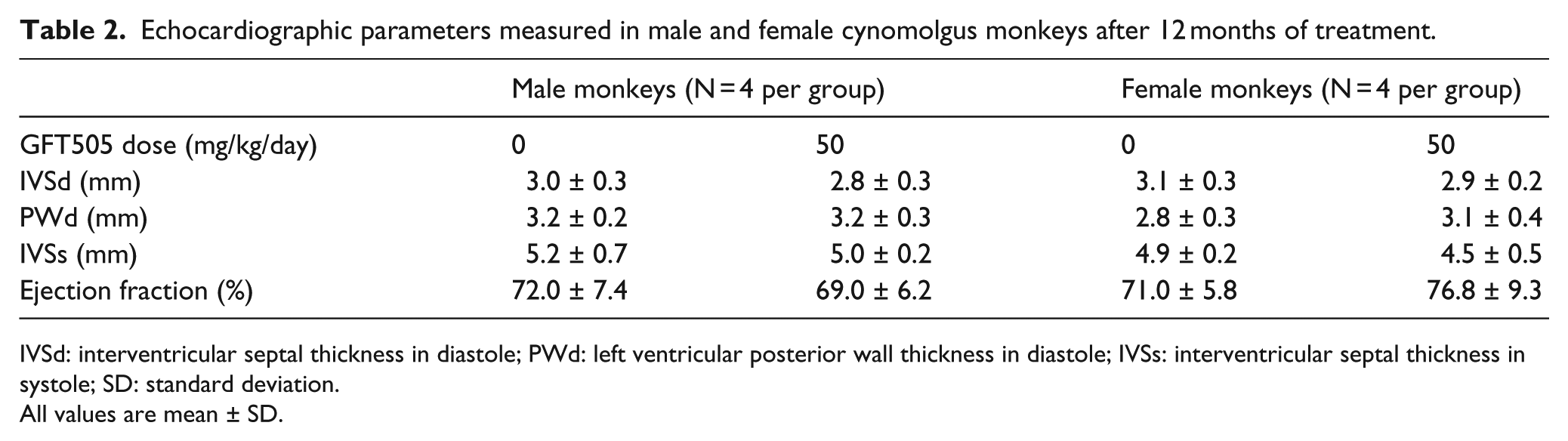
IVSd: interventricular septal thickness in diastole; PWd: left ventricular posterior wall thickness in diastole; IVSs: interventricular septal thickness in systole; SD: standard deviation.
All values are mean ± SD.
Haematology and blood biochemistry parameters measured in male and female cynomolgus monkeys after 12 months of treatment.
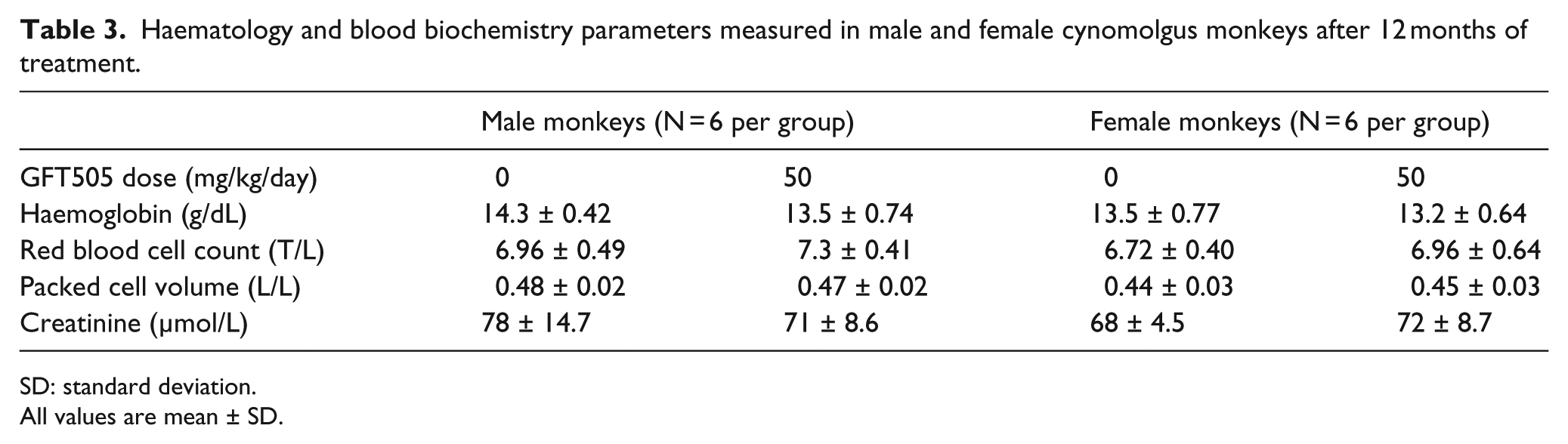
SD: standard deviation.
All values are mean ± SD.
Discussion
A mixed PPARα/δ agonist that activates both nuclear receptors has the potential to address multiple metabolic and cardiovascular risk factors of T2DM. Moreover, such an agonist should not be associated with the safety concerns encountered with PPARγ and PPARα/γ agonists, including the risk of cardiac insufficiency associated with glitazones and glitazars.9 –11 In this study, treatment with GFT505, a liver-targeted dual-PPARα/δ agonist, is shown to regulate glucose homeostasis and plasma lipids in a diabetic model, without showing PPARγ-associated adverse cardiac effects.
GFT505 shows efficacy in animal models of NASH and liver fibrosis 16 and is currently being assessed in a 1-year Phase IIb trial (ClinicalTrials.gov: NCT01694849) in NASH. In this study, treatment with GFT505 improved glycaemic control in db/db mice, likely resulting from its liver-centric effects including increased hepatic insulin sensitivity and reduced gluconeogenesis. This mechanism is supported by decreased hepatic expression of gluconeogenic genes and reduced glucose excursion in the pyruvate challenge assay. These findings corroborate clinical data showing that GFT505 improved hepatic and peripheral insulin sensitivity assessed by hyperinsulinaemic-euglycaemic clamps. 13 A direct contribution of PPARδ activation in skeletal muscle seems excluded since PPARα/δ target genes were not affected in this tissue, as previously demonstrated in human muscle biopsies. 13 Although the roles of PPARα and PPARδ activation in the effects of GFT505 were not specifically addressed in this study, published data for db/db mice show that the hypoglycaemic effect of the PPARδ agonist GW501516 was partly due to a reduction in hepatic glucose production and an increase in glucose disposal, by diverting glucose into the pentose phosphate shunt. 4
This study also showed that at pharmacological doses in db/db mice and at the highest doses used in chronic toxicology studies in monkeys, GFT505 did not induce any sign of fluid retention, haemodilution or cardiac remodelling. The excellent safety profile of GFT505 reflects the absence of PPARγ activation, as exemplified by the lack of effect on plasma adiponectin, a specific PPARγ activation marker. Similar findings were previously observed in humans, where the insulin-sensitizing effect of GFT505 was associated with a significant reduction of plasma adiponectin. 13
In summary, this study demonstrates that the dual-PPARα/δ agonist GFT505 has beneficial actions on glucose homeostasis via inhibition of hepatic gluconeogenesis. The distribution profile of GFT505, which accumulates predominantly in liver, 16 as well as its lack of PPARγ activity, likely plays an important role in its favourable efficacy/risk profile. In conclusion, GFT505 demonstrates pharmacological and safety profiles consistent with its potential use for the chronic treatment of metabolic disorders including T2DM and NASH.
Footnotes
Acknowledgements
The authors thank Raphaël Boutry and Linda Cambula for their outstanding technical assistance and Anne Rubenstrunk for valuable discussions.
Declaration of conflicting interest
BS and BC are advisors to Genfit and have been involved in the conception, analysis of the experiments and drafting of the manuscript in close interaction with the Genfit employees. All the experiments have been performed according to state-of-the-art methodology and have been analysed in an objective manner according to ethical rules of scientific research.
Funding
This work was supported by Genfit SA and an FP7/2007–2013 no. 305707 (RESOLVE) grant to B.S. B.S. also received funding from Inserm and Université Lille 2. B.S. is a member of the Institut Universitaire de France.
References
Supplementary Material
Please find the following supplemental material available below.
For Open Access articles published under a Creative Commons License, all supplemental material carries the same license as the article it is associated with.
For non-Open Access articles published, all supplemental material carries a non-exclusive license, and permission requests for re-use of supplemental material or any part of supplemental material shall be sent directly to the copyright owner as specified in the copyright notice associated with the article.
