




Abstract
The personalization of politics (the process of politicians’ strengthening at the expense of political parties) has long been studied. This study focuses on online personalism in the consumption of political parties and their leaders on Twitter and Facebook and aims to find its explaining factors. Following the normalization/equalization debate, it sets hypotheses regarding the relationship between variables from offline to online personalized politics. Using multilevel analysis of Facebook and Twitter data of more than 140 parties from 25 democracies, it finds that the leaders’ position significantly affects online personalism in most of the consumption aspects of social media. It also shows that country’s offline personalization, leader’s tenure, party populism, party age, party’s governmental status, vote share, and the leadership selection method have effects on some of the indicators for online personalism on the consumption side. It concludes that offline political power is reflected online.
Keywords
Introduction
Israeli Prime Minister Benjamin Netanyahu is one of the most followed politicians on Facebook. In mid-2019, he had more than 2 million Facebook followers, while the Likud, the party he has led since 2005, had only 64,000 followers. At the same time, the situation was reversed for the UK’s Liberal Democrats: the party had 188,000 Facebook followers, while Vince Cable (their leader at the time) had only 13,800. What can explain such differences? Finding answers to this question will help us understand the variance in levels of personalized politics in social media.
The personalization of politics is a process in which the importance of the individual political actor increases at the expense of the political party (Rahat and Sheafer, 2007). It may occur in various arenas of political life, from media coverage to political campaigns, political institutions, and the behavior of voters and politicians (Pedersen and Rahat, 2019; Rahat and Kenig, 2018). The emergence of online platforms, especially social media, created a new arena in which personalized politics can be fostered or restrained.
Online personalism will be defined here as the dominance of individual politicians over their parties in terms of online activity and consumption. Social media consumption means how social media users show interest and seek information from political actors. Social media may provide political parties an opportunity to revive their status compared to other arenas such as traditional media, especially TV, where parties had an inherent disadvantage (McAllister, 2007). In parallel, it allows politicians to create direct connections with citizens without the mediation of their parties or the traditional media. These two claims imply that both sides may benefit and that variation at the level of online personalism should be expected (Rahat and Zamir, 2018).
This study aims to reveal which factors explain variation in online personalism in the social media consumption of party leaders and their parties. It uses the social media consumption patterns (page fans, followers, and other engagement indicators such as shares, comments, reactions, favorites, and retweets) of parties from 25 democracies. It compares it to those of their leaders on Facebook and Twitter in 2019. This work also analyzes the relationship between offline politics and online personalism. More precisely, it asks whether and how factors from the offline political world affect the differences in social media prominence of parties compared to their leaders. The hypotheses presented later are based on the theoretical debate between the normalization and the innovation/equalization approaches to online politics. The normalization approach may suggest that factors from offline politics will be reflected online. In contrast, the equalization/innovation approach may indicate that the online realm is a new world in which power reflects differently.
Answering these questions is essential for several reasons. Theoretically, it may shed light on the links between the online and offline arenas, mainly between offline and online political personalism. Second, it will contribute to the study of political personalism as it is one of the few studies that directly compare parties and their leaders. Most studies of online personalism focus on leaders or individual politicians and thus ignore the value of measuring personalism as its definition requires, that is, in comparison with the party (Pedersen and Rahat, 2019). Third, it is one of a few studies that analyze the online personalism of parties from many different countries and on two different social media platforms. This allows for generalizing the findings of this study more broadly. Finally, the answers to these questions may allow us to identify which factors can strengthen political parties and representative democracies—and with that, help in developing cures for the personalization malaise or at least for cases of over-personalized politics.
Online Political Personalism—Conceptualizing Personalism in a New Arena
Personalized politics, as noted above, has various expressions. Of late, the topic has been increasingly addressed in its online contexts. Social media and online platforms provide an arena where personalized politics can be seen and fostered. This new arena combines elements that also appear in “offline” arenas, mainly personalized politics in the media and politicians’ and citizens’ behavior. One can analyze online personalism by looking at the inputs of the political actors on social media, that is, the supply/production side (Haleva-Amir, 2016; Jackson and Lilleker, 2009) or the consumption side, by which social media users show their interest, provide feedback, and draw information, in this case from political actors.
Some studies in this realm analyze the social media virality of individual politicians’ posts (Larsson, 2019); others examine the virality of posts that include private life references (Nave et al., 2018). This work will measure the extent to which Facebook and Twitter users follow political actors, parties, and their leaders. The importance of the consumption side is evident. It is the necessary condition for two-way interaction between political actors and citizens: a social media account without followers is like a newspaper without readers. Moreover, the number of followers can be a proxy for the level of exposure and interest in the specific actor. In addition, when party membership is on the wane, social media followers can be regarded as an alternative to traditional membership through which parties create linkages with society (Scarrow, 2015). Thus, just as the number of social media followers can be a proxy for the ties between parties and society, it can also be used to compare parties and leaders to measure personalism.
Most of the literature on political expressions of political personalism and personalization at the citizens’ level discusses the voters’ behavior (Pedersen and Rahat, 2019). Only very few studies examine personalized voters’ behavior online. Kruikemeier (2014), for example, assesses how candidates talk about their private persona on their Twitter accounts and suggests that candidates who used Twitter won more votes than those who did not. Other studies investigated only how online news consumption relates to voting patterns (Holian and Prysby, 2014) or party leadership evaluations (Garzia, 2017; Garzia et al., 2021). This study has a different focus. It explores online consumption of political content, assessing the personalism of online users’ behavior by comparing the choice—to follow the party or to follow its leader.
While research on personalized online politics is on the rise, it is inconsistent in scope, themes, and character. This might be due to the different ways they define personalism. Some studies define personalized politics as personal-centered communication in which the individual politician promotes a more personalized agenda, sharing a more intimate, private, and less party-centered perspective (Metz et al., 2020; Vergeer et al., 2013). Such definitions or similar definitions lead different studies to look at the personal relationships and communication between candidates and users (Jackson and Lilleker, 2009; Vergeer et al., 2013) or to assess the increasing integration of elements from their private lives in their messages (Graham et al., 2018; Larsson, 2019). Other studies look at online personalism as the self-presentation of politicians (Haleva-Amir, 2016; Nave et al., 2018). Most of these studies cite and address the definition of Rahat and Sheafer (2007) for political personalization, that is, the increase in the weight of politicians at the expense of their political group (party). However, these studies’ operationalization and conceptualization of the process fail to implement this definition—which requires directly comparing the personal and the partisan—in the online arena.
This work builds on Rahat and Sheafers’ (2007) definition of political personalization (especially at its centralized level: Balmas et al., 2014) and adjusts it to the online arena and to personalism, which refers to a situation and not to a process (Pedersen and Rahat, 2019). Thus,
Though measuring political personalism requires comparing individuals to parties, most studies of personalized politics online address just one part of that concept, namely, the politicians and their personalities (Dolezal, 2015; Enli and Skogerbø, 2013; Karlsen, 2011). Only a few studies of online personalism refer to the second part of the concept—political parties (Larsson, 2019; Rahat and Zamir, 2018). This study’s premise is that a more complete understanding of online personalism can be gained by comparing politicians and parties (Pedersen and Rahat, 2019).
Explaining Variation in Online Personalism
Our primary research question is: which factors explain variation in online personalism in social media in terms of consumption of party leaders and their parties? To answer this question, this study assesses whether factors from offline politics, that is, “the real world,” affect online political personalism. This issue is associated with a critical debate in the online politics literature: whether online politics is mainly a continuation of the offline world or a new arena that provides unique and autonomous opportunities to create politics that differ from the offline world. By the normalization approach, politics online reflects offline politics, or “politics as usual” (Margolis and Resnick, 2000). One inference of this approach is that the more powerful political actors will also maintain their advantage in the online realm. According to the competing innovation/equalization approach, the online world creates a new political distribution of power as it requires affordable and accessible resources; the web and especially social media will give more opportunities to weaker actors to equalize their online sphere status.
If the normalization approach is correct, we should expect factors from offline politics to be reflected in online politics and, more specifically, in personalized online politics. Rahat and Zamir (2018) found that in terms of Facebook and Twitter consumption, party leaders are doing better in general than their parties and prominent politicians who are not the leaders. This finding suggests that the normalization approach is evident since leaders’ political power over other politicians is reflected in their social media consumption. However, in terms of online and social media presence and activity, parties had a more solid presence than leaders and prominent politicians, and prominent politicians tweeted and posted on Facebook more than their leaders. So, in terms of online activity, this finding suggests that prominent politicians using online tools equalize their status vis-à-vis their parties’ leaders. In another study, Zamir and Rahat (2017) found mixed pieces of evidence for both approaches in the Israeli context. For instance, the inferior status of political parties in Israeli politics is not reflected in their relatively high online presence and activity levels, which supports the equalization approach. However, when it comes to the leaders’ online consumption, the picture is different: leaders have the upper hand, just as in “real world” Israeli politics. Nonetheless, regarding factors that should have been consistent with the levels of online personalization, they found no support for either the normalization or the equalization approach.
On the contrary, Samuel-Azran et al. (2015) found that newcomer leaders gained higher engagement levels for their Facebook posts during the Israeli 2013 general elections than their veteran competitors. Indeed, new leaders entering the political race may stimulate online competition. However, the authors did not probe how these newcomers’ entrance affects their parties’ online status. Leadership turnover can change the online power relationship between parties and their leaders. Leaders come, and leaders go, and the party is there to stay. In other words, a new leader may need to build her online accounts, accumulate followers, and develop a salient online presence. On the other hand, her party already has active social media accounts, has been present and active online, and has accumulated followers. It is expected that as time goes by and the leader remains in her position as party leader, her social media consumption levels will also rise. In addition, in parties where the leader serves for a long time, her power exceeds the party. This relationship may also be reflected in the online world. Thus, our first hypothesis is as follows:
H1: The longer a party leader’s tenure, the higher its online personalism level.
If the party leader is in a senior government position, she also has significant political power and high prominence. Indeed, several studies found high levels of media personalization of Prime ministers (Holtz-Bacha et al., 2014; Poguntke and Webb, 2005) and ministers (Figenschou et al., 2017). In line with the normalization approach, I expect that the senior leader’s position in the offline world will be translated into online prominence. Thus, our second hypothesis is as follows:
H2: Parties whose leaders are the PM or ministers will have higher levels of online personalism than parties whose leaders do not hold such positions.
Most studies of online personalism focused on one specific context, that is, in a particular country. Only a few adopted a cross-national comparative approach or addressed a large scope of parties and countries. Some found a high variance of personalized politics within countries (Livak et al., 2011; Zamir and Rahat, 2017). Others found some variation between countries (Hermans and Vergeer, 2013; Kruikemeier et al., 2015; Rahat and Kenig, 2018). The latter found that the differences between countries may result from differences in democratic traditions, patterns of adoption of online communication, Internet access, and other factors that have to do with political and media environments that may encourage different levels of political personalism (Hermans and Vergeer, 2013; Kruikemeier et al., 2015). Therefore, I will check whether online personalism levels on the consumption side are also nested in the differences between countries.
In line with the normalization approach that online politics reflects offline politics, one of the most critical factors that distinguish between countries should be to what extent the country’s politics, in general, is personalized. Online politics is a relatively new phenomenon that occurs in a world that has already experienced party change and political personalization (Rahat and Zamir, 2018). A country that experienced some aspects of the process of personalization also probably developed personalization in other elements (Rahat and Kenig, 2018). For example, suppose the media in a specific country emphasize leaders at parties’ expense, and the voters make their electoral decisions based on the evaluations of leaders. In that case, this will probably be reflected in the level of online interest that the leaders derive. The third hypothesis is as follows:
H3: Country-level offline personalization will positively affect parties’ online personalism on the consumption side.
Populism can also be expected to increase online personalism. While populism and personalization are on the rise, they are distinct phenomena with different characteristics. Parties may have strong leaders without being populist, and some populist parties may not have a strong leader (e.g. the Red-Green Alliance in Denmark or the Portuguese Communist Party). However, there are two reasons to believe populism will be associated with personalism. The first is the thin ideological nature of populism (Mudde, 2004). In most cases, this makes populist parties highly dependent on a charismatic leader (Kriesi, 2014). Second, the model of representation of populism claim to represent the will of the people as a whole and not the constituency, for example (Mudde and Rovira Kaltwasser, 2018). In that sense, the leader represents the people’s will. Thus, in populist parties, the leader has a “built-in” advantage over the party organization. This may also be reflected online. More specifically, in the online realm, populist parties draw broad interest because social media allows them direct relationships with citizens in a way that bypasses the mediation of the traditional media (Esser et al., 2017). Since populist leaders are crucial in such parties, they also design their message, which usually concentrates exclusively on her. Social media sites and the online world provide the populist leader with the tools to enhance such communication (Engesser et al., 2017). Indeed, another study shows that this is also reflected in the consumption side as populist leaders and, to some degree, populist messages receive higher user attention (Blassnig et al., 2020). Therefore, it makes sense that the leaders in populist parties will be more dominant than the party:
H4: There are higher levels of online personalism in populist parties than in non-populist parties.
At the core of the personalization thesis, there is a notion that political party organization is in decline/change and new parties emerge without solid grassroots (Dalton and Wattenberg, 2000). Into this vacuum, individual politicians enter; more specifically, the leader of these parties becomes the most prominent figure (Rahat and Sheafer, 2007). Thus, one might assume that new parties will be more characterized by political personalism than the old ones. More specifically, in the online realm, the equalization thesis argues that developing new information and communication technologies will favor new parties lacking access to the mainstream media (Ward and Gibson, 2009). Theoretically, modern communication tools may attract a large audience to new parties. Although there is mixed evidence for justification of the two approaches (Gibson and McAllister, 2015) regarding new or marginal parties, the normalization approach works better, and old or more established parties are doing better in social media (Haleva-Amir, 2021). In addition, veteran parties had a long time to establish themselves online. Many younger parties were born into a personalized realm, which means their identity is likely more about their leader. Thus, I hypothesize the following:
H5: The more veteran the party, the lower the levels of online personalism
In addition to the factors elaborated in the hypotheses, more factors may impact online personalism on the consumption side. However, since they have been touched on in the previous hypotheses and may lead to contradicting directions, they are treated in this article as controls. The relationship between votes and online power has long been studied (Burnap et al., 2016). Voting for a party can be a proxy for the party’s power, but it can also be a proxy for the leader’s power. Therefore, we cannot predict whose political power will be reflected online, the leaders or the parties. In addition, the governmental status of the party may be correlated to the party’s leader’s position. For example, if the party leader is a minister or PM, the party will necessarily be part of the governing coalition. However, a party leader may not hold an official position in government or parliament, and her party can still be in the coalition. Thus, we also need to control the party’s governmental status as the proxy for the party’s power offline to assess the apparent effect of the leader’s position on personalism. In H3, I addressed country-level personalism. However, one proxy for party-level personalism lies in the leadership selection method. The leadership selection method may determine the behavior of the elected politicians in diverse ways (Friedman and Friedberg, 2019; Itzkovitch-Malka and Hazan, 2017), including the personalized campaigning of politicians detached from the party (Bøggild and Pedersen, 2018; Livak et al., 2011). The level of inclusiveness of the selection method may also be associated with partisan political participation (Wauters, 2015). However, the relationship between the selection method and online consumption may not be clear. Here I use the concept of the personalized leadership selection method rather than the level of inclusiveness of the leadership selection method as a control variable. This concept includes the most exclusive method at the highest level: self-elected leaders in parties whose leader is the founder and whose leadership is not contested.
Methodology
Database
This study is based on a unique database that covers aspects of online politics in parties that won 4% or more of the votes in two consecutive elections before April 2019 (a total of 141 parties 1 and 145 leaders 2 ) 3 , from a broad scope of 25 democracies (Austria, Australia, Belgium, Canada, Czech Republic, Denmark, Finland, France, Germany, Hungary, Iceland, Ireland, Israel, Italy, Japan, Luxembourg, the Netherlands, New Zealand, Norway, Poland, Portugal, Spain, Sweden, Switzerland, and the United Kingdom). Analyzing political parties from different types of democracies allows for generalizing the findings and asses party-level explanations that cross the countries’ differences.
Dependent Variables
The measure for online personalism is about the differences between the online consumption of leaders compared to their parties because online personalism is defined as the online preeminence of individual politicians over their parties in terms of social media consumption. In the case of Facebook, the number of page fans accumulated until a given day (March-June, 2019) was coded. 4 For Twitter, the number of followers accumulated until a given day was coded (July 2019). The engagement levels in posts and tweets were also coded. For Facebook, the number of shares, comments, and reactions (including like, love, laughing, sad, shocked, angry, and thankful) per post between 28 February 2018 and 28 February 2019 were measured. 5 For Twitter, the number of retweets and favorites per tweet for that period was also calculated. 6
To capture the online power relations between parties and politicians and to evaluate to what extent the online power of one actor exceeds the other, we calculated for each party the online personalism indicators using the formula
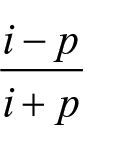
where “i” is the value for the leaders in each of the data units (fans/followers/shares/comments/reactions per post/retweets/favorites per tweet) and “p” is the value for the party in the related data units. This formula provides interval variables that range hypothetically from −1 to 1. The value (−1) means maximum online depersonalism. A party had a maximum score of depersonalism if its leader did not have any followers/fans, for example. The value 1 resembled maximum online personalism, and 0 signaled a total balance between politicians and their parties. A party had a maximum score of online personalism if it had 0 fans/followers.
Independent Variables
Leader’s tenure—a continuous variable indicating the number of consecutive years the leader held on to her position. 7
Leader’s government position—a dummy variable indicating whether the leader held a senior position (prime minister or minister) or a junior position (other than PM or minister) in April 2019. 8
Offline Personalization Index—a country-level variable constructed as the average value of nine indicators for offline personalization (Rahat and Kenig, 2018). This measure reflects the extent to which the country experienced personalization over the years in multiple arenas.
Populist parties—a dummy variable indicating whether the party is classified as a populist party or not, according to the PopuList (Rooduijn et al., 2019). 9
Party age—a party’s age as of 2019 (in years). 10
Control Variables
Party vote share—a party-level variable indicating the percentage of votes out of the total votes the party won in the last elections before April 2019. 11
Party governmental status—a dummy variable indicating whether the party was in the governing coalition or the parliamentary opposition in April 2019. 12
Personalized leadership selection method—This variable follows Rahat and Kenig’s (2018) classification of the leader’s selection methods on the depersonalized–personalized axis. On one side of this variable, the more exclusive selection methods resemble party-centered (depersonalized) methods. On the other side, more inclusive selection methods resemble more personalized methods. Yet, the most exclusive category, parties with a self-elected leader, is treated as the most personalized form of leader selection (5 = Self-elected Leader 4 = Voters, 3 = Party Members, 2 = Delegates, 1 = Councils, 0 = Party Parliamentary Group). 13
A mixed-effects model is used to analyze the data since they include country and party-level variables.
Results
The descriptive statistics of the online personalism variables (Figure 1 and Online Appendix), especially the positive means and medians, indicate that leaders attract more interest than their parties on Facebook and Twitter. Although negative values suggest a slight bias toward the party in terms of social media consumption, the two negative means and medians of personalism on Facebook page fans and shares are lower than −0.33 (the cutting point for personalism following Rahat and Kenig, 2018; Rahat and Zamir, 2018; Zamir and Rahat, 2017). The rest of the indicators show high and positive means and medians, suggesting that in all the indicators, there is personalism rather than depersonalism.
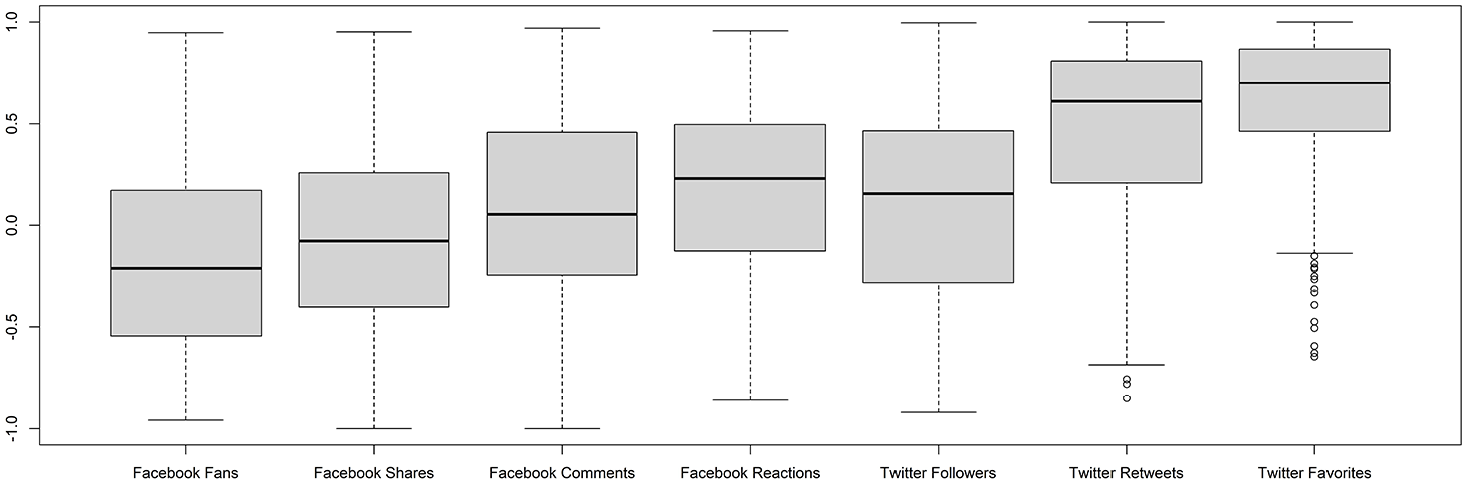
Boxplot for the Distribution of Personalism Variables.
Most variables’ distributions are close to normal (see Histograms in Online Appendix). The standard deviations of all the indicators are relatively high compared to the scale (SD = 0.41 ± 0.51). This reflects a high level of variability. In addition, the boxplot in Figure 1 shows that personalism is more prevalent in Twitter’s consumption than on Facebook.
Applying Multi-level Mixed-Effects models to each personalism variable on Facebook and Twitter provides mixed results. I held country differences as random effects. Figure 2 indicates that the differences between countries on parties’ personalism levels on Facebook Fans are apparent, though they are relatively small. On the contrary, there is no visible variation between countries regarding Facebook shares (Figure 3), comments (Figure 4), and reactions (Figure 5). This is also apparent in the relatively low interclass correlations (ICC) in intercept-only models of personalism on Facebook shares, comments, and reactions (0.08–0.13) compared to the higher ICC of personalism on Facebook Fans (0.16). It suggests that modeling country-level variation on Facebook is relevant only to Fans. The differences between countries on Parties’ personalism levels on Twitter are not apparent in Followers (Figure 6) but more apparent in Retweets (Figure 7) and Favorites (Figure 8) although relatively small. This is translated to a very high ICC on personalism on Twitter Retweets and Favorites (0.24–0.28) compared to a relatively low ICC on Twitter Followers (0.12). Thus, modeling country-level variation on Twitter is relevant only for the engagement variables.
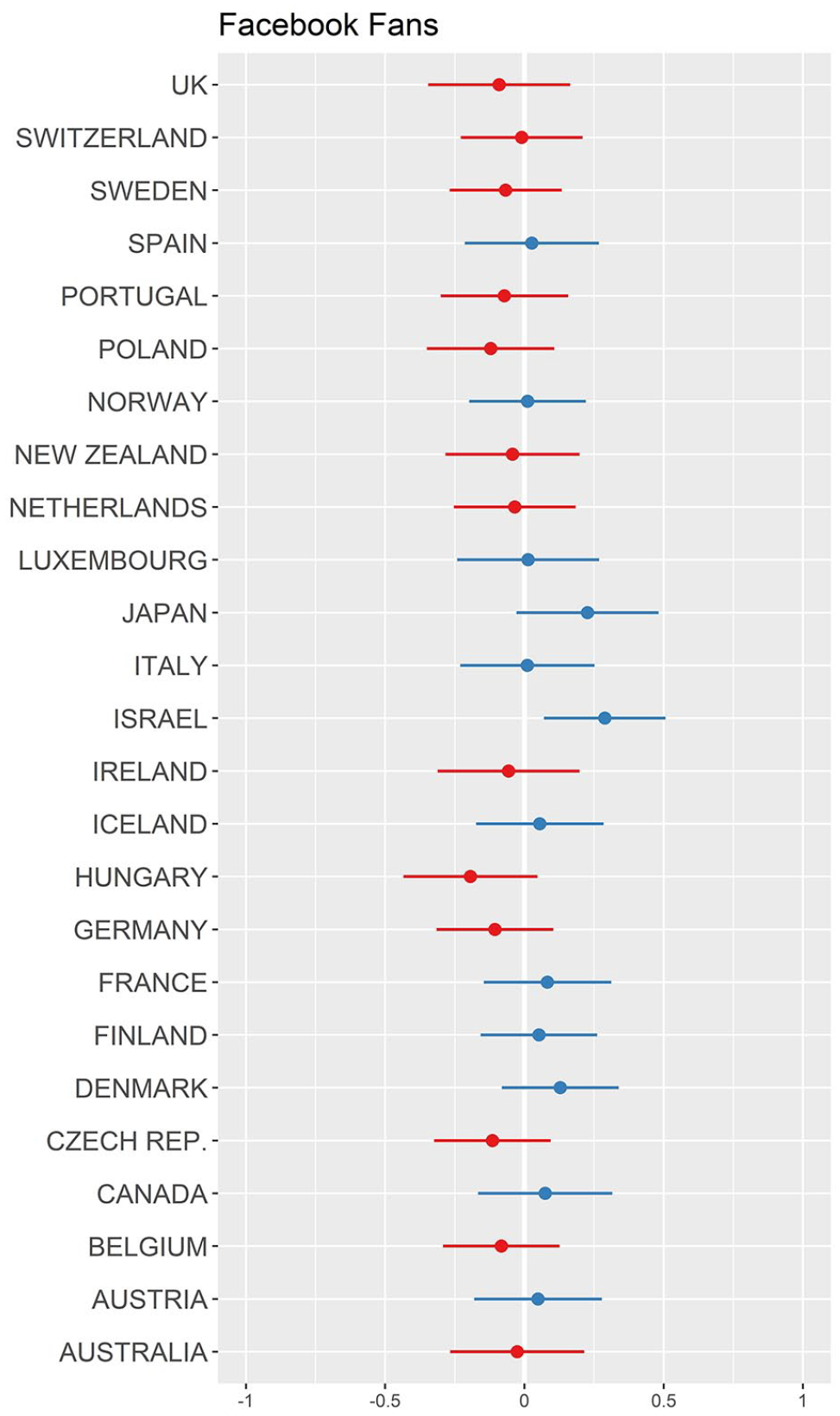
Country Differences in Personalism on Facebook Fans.
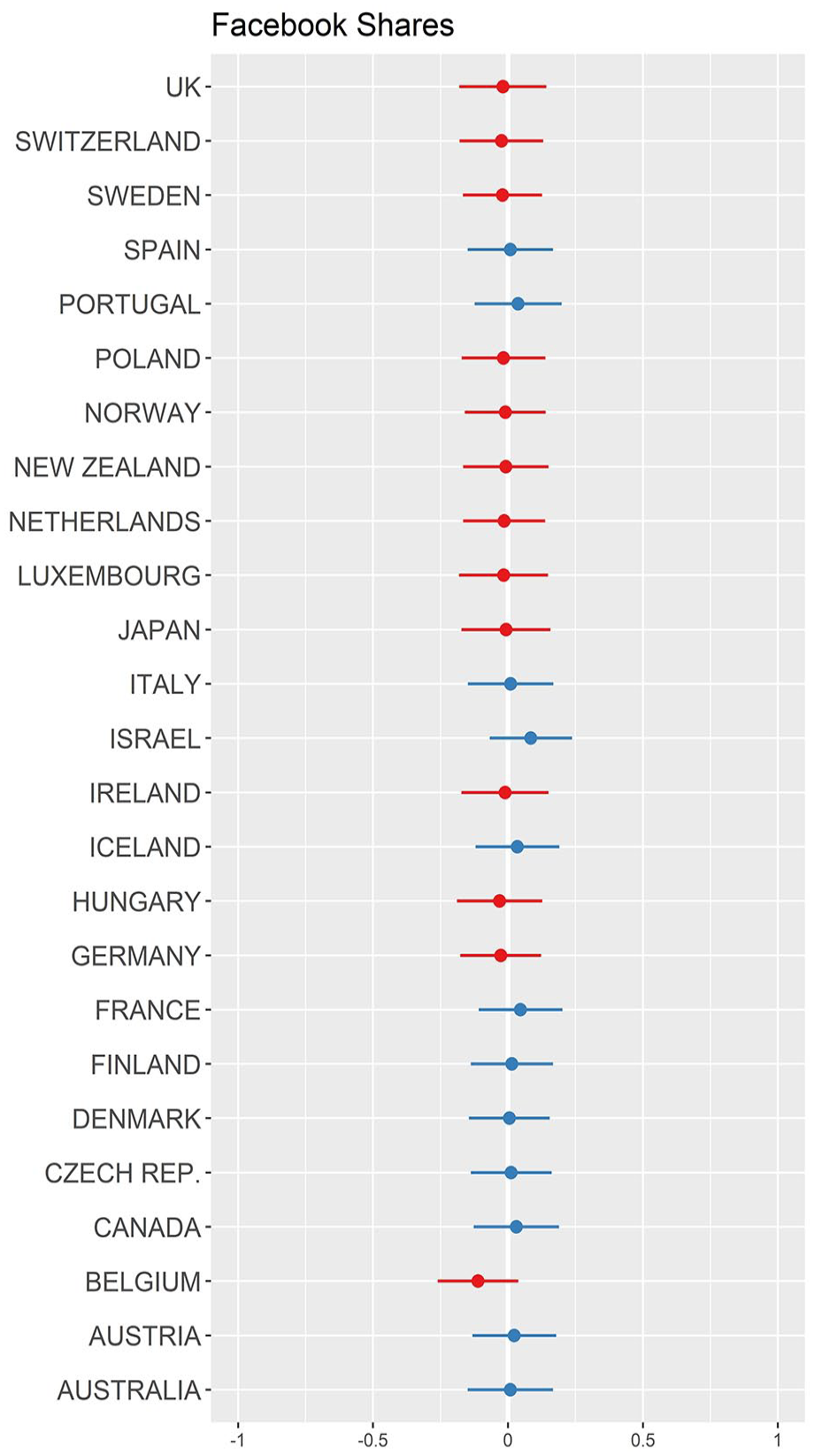
Country Differences in Personalism on Facebook Shares.
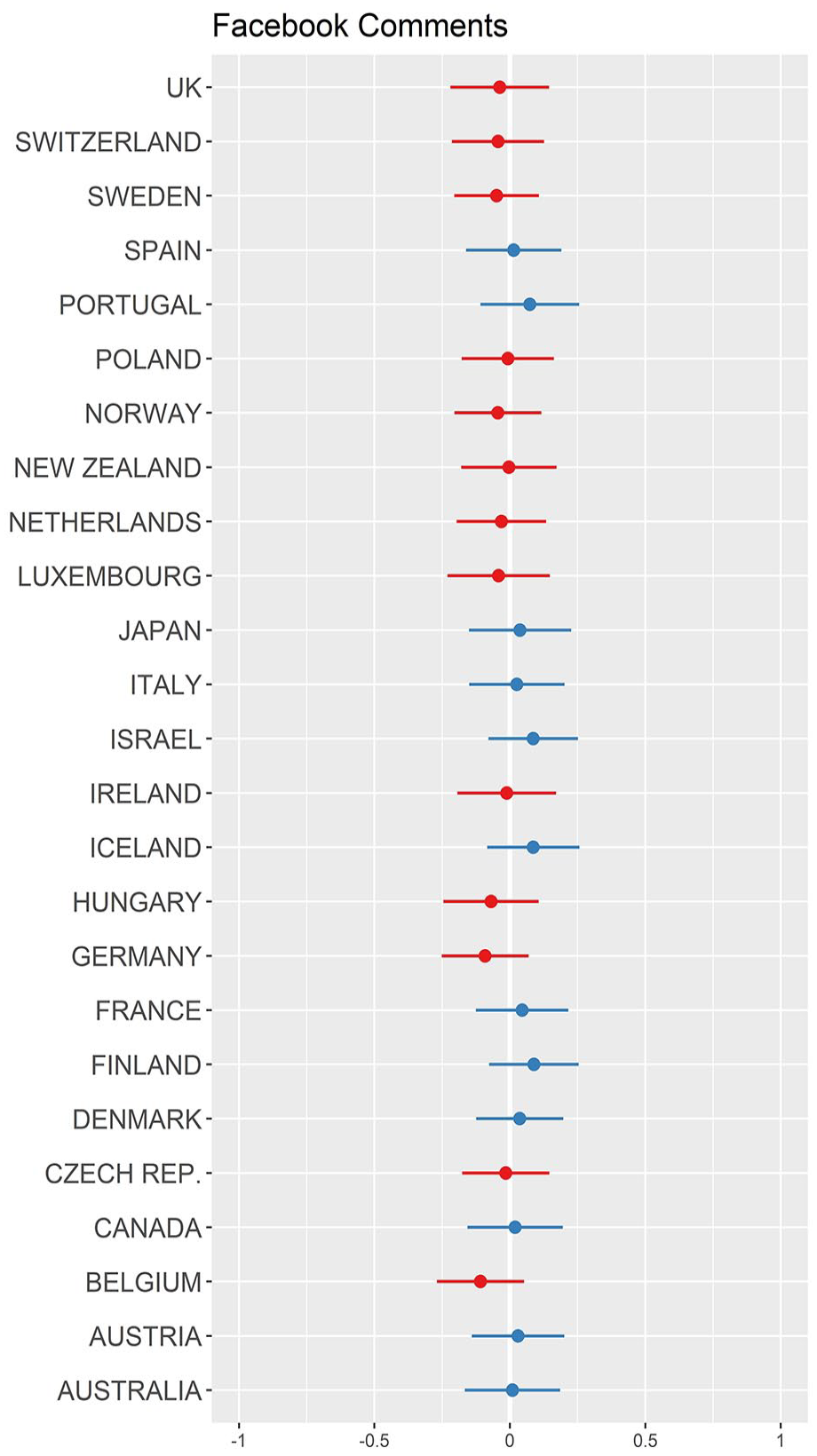
Country Differences in Personalism on Facebook Comments.
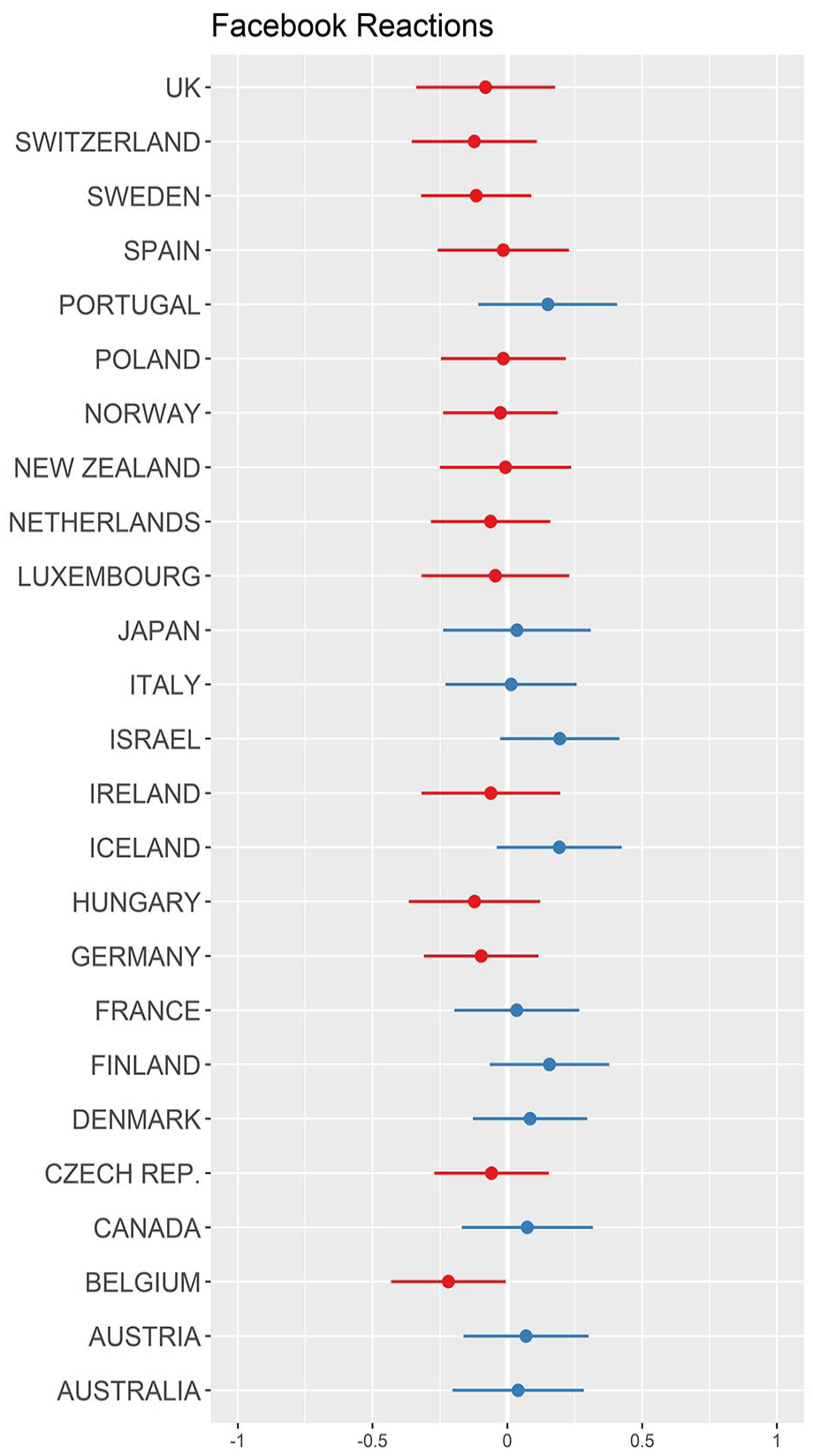
Country Differences in Personalism on Facebook Reactions.
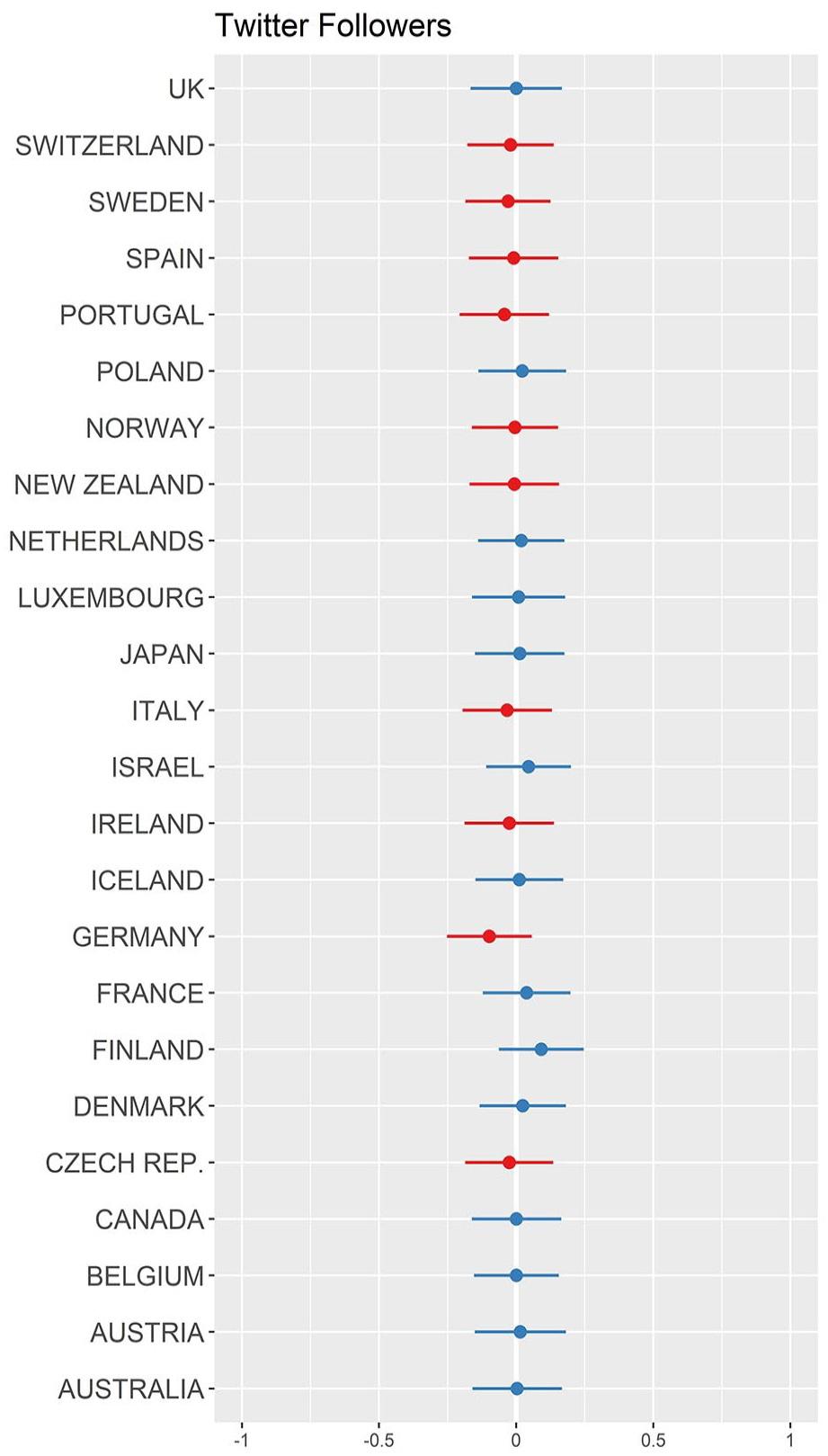
Country Differences in Personalism on Twitter Followers.
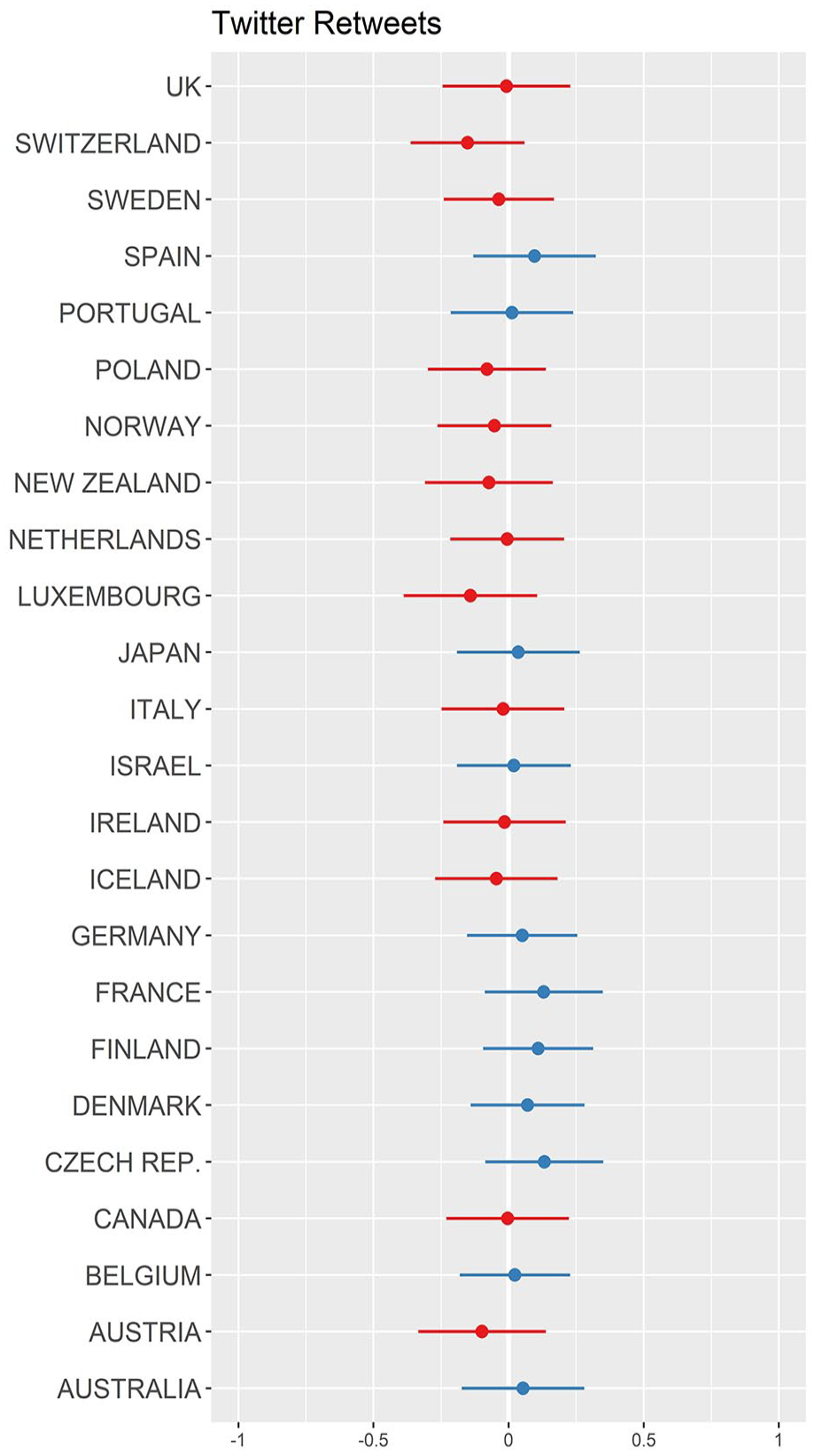
Country Differences in Personalism on Twitter Retweets.
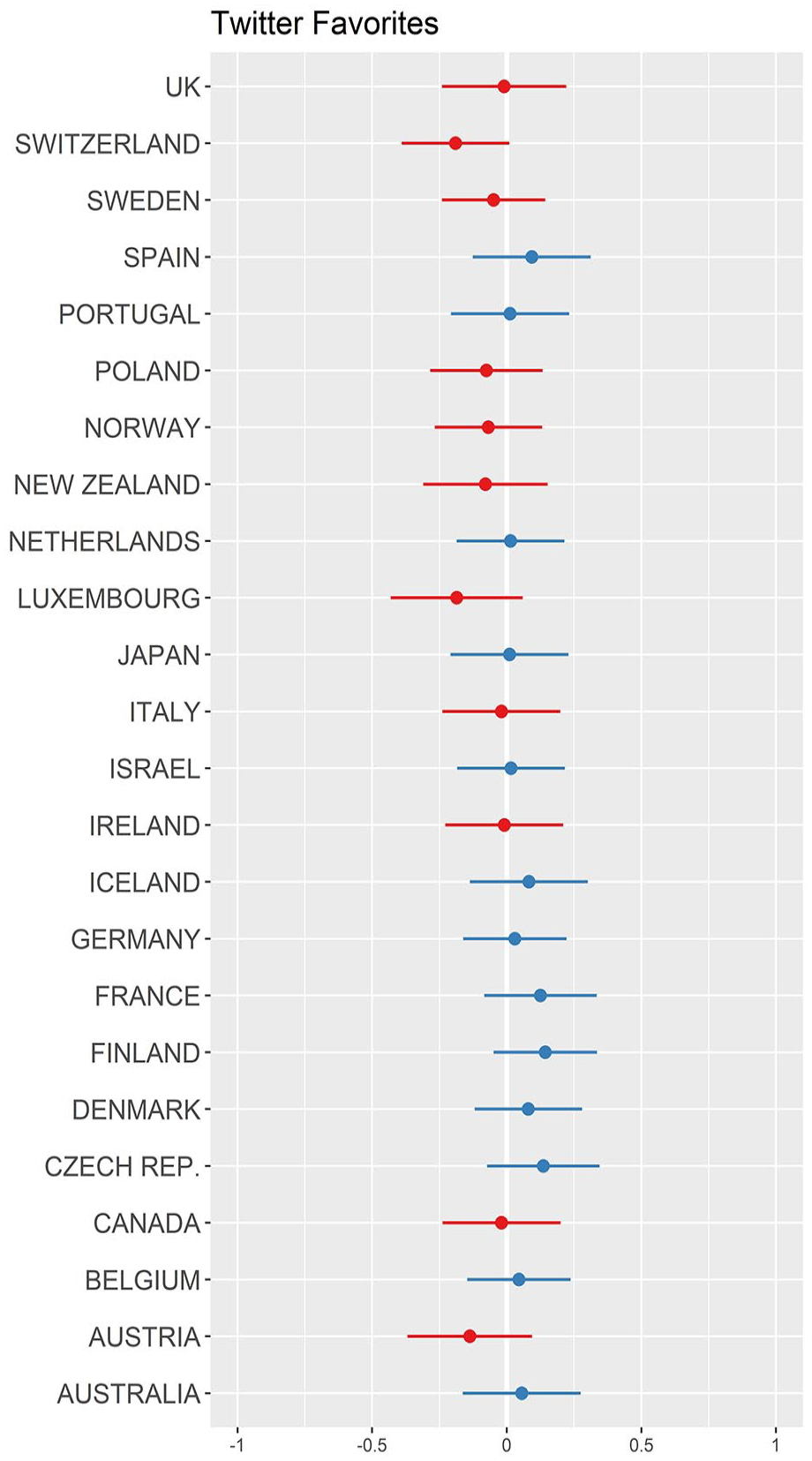
Country Differences in Personalism on Twitter Favorites.
Figures 9–12 and 17–19 present the standardized beta fixed-effects of the independent variables on each personalism dependent variable. The models suggest that when it comes to Facebook, the leader’s position as a prime minister or a minister has the most prevalent and significant effect on personalism on Facebook Fans (Figure 9; B = 0.48; p < 0.05), Shares (Figure 10; B = 0.35; p < 0.05) and Reactions (Figure 12; B = 0.32; p < 0.05), but on Facebook comments (Figure 11) the effect becomes barely significant on the 90% level (B = 0.25; p < 0.1). Populist parties also have a prevalent significant effect on personalism on Facebook Fans (B = 0.25; p < 0.05), Comments (B = 0.27; p < 0.5), and Shares (B = 0.20; p < 0.1). This means that populist parties have higher levels of personalism on Facebook consumption than non-populist parties. The Leader’s term in office of the party leadership also positively correlates with personalism on Facebook. However, it has a strong and significant effect only on Fans (B = 0.02; p < 0.05) and comments (B = 0.02; p < 0.05) but not on shares (B = 0.01; p > 0.05) and reactions (B = 0.01; p > 0.05). Although Party age coefficients are close to zero they positively and significantly correlate with personalism on comments (B = 0.00; p < 0.05) and reactions (B = 0.00; p < 0.05) but not with Fans (B = 0.00; p > 0.05) and Shares (B = 0.00; p > 0.05). Indeed, every 1-year increase in the party age leads to a very small increase in personalism in comments and Shares. However, the standardized coefficients in Figure 11 and Figure 12 show the effect more clearly. The personalized leadership selection method has a significant and prevalent effect only on the Facebook engagement variables: Shares (B = 0.11; p < 0.05), Comments(B = 0.11; p < 0.05), and Reactions (B = 0.10; p < 0.05), but on personalism on Facebook Fans only in the 90% level (B = 0.07; p < 0.1). Surprisingly, holding constant the rest of the independent variables, being part of the coalition decreases the level of personalism in Facebook Fans (B = −0.31; p < 0.05), Reactions (B =-0.20; p < 0.05), and to some degree, Comments (B = −0.20; p < 0.1) but not on Shares (B = −0.17; p > 0.05). This means that parties in the coalition are more prominent on Facebook than leaders compared to opposition parties, especially when controlling for the leader’s prominent position. Votes share has significant and positive effects on Facebook Fans (B = 0.01; p < 0.05) and Comments (B = 0.01; p < 0.05) but not on Shares (B = 0.00; p > 0.05) and Reactions (B = 0.01; p > 0.05). This means that the bigger the party, the weaker it is compared to leaders in terms of Facebook Fans and Comments.
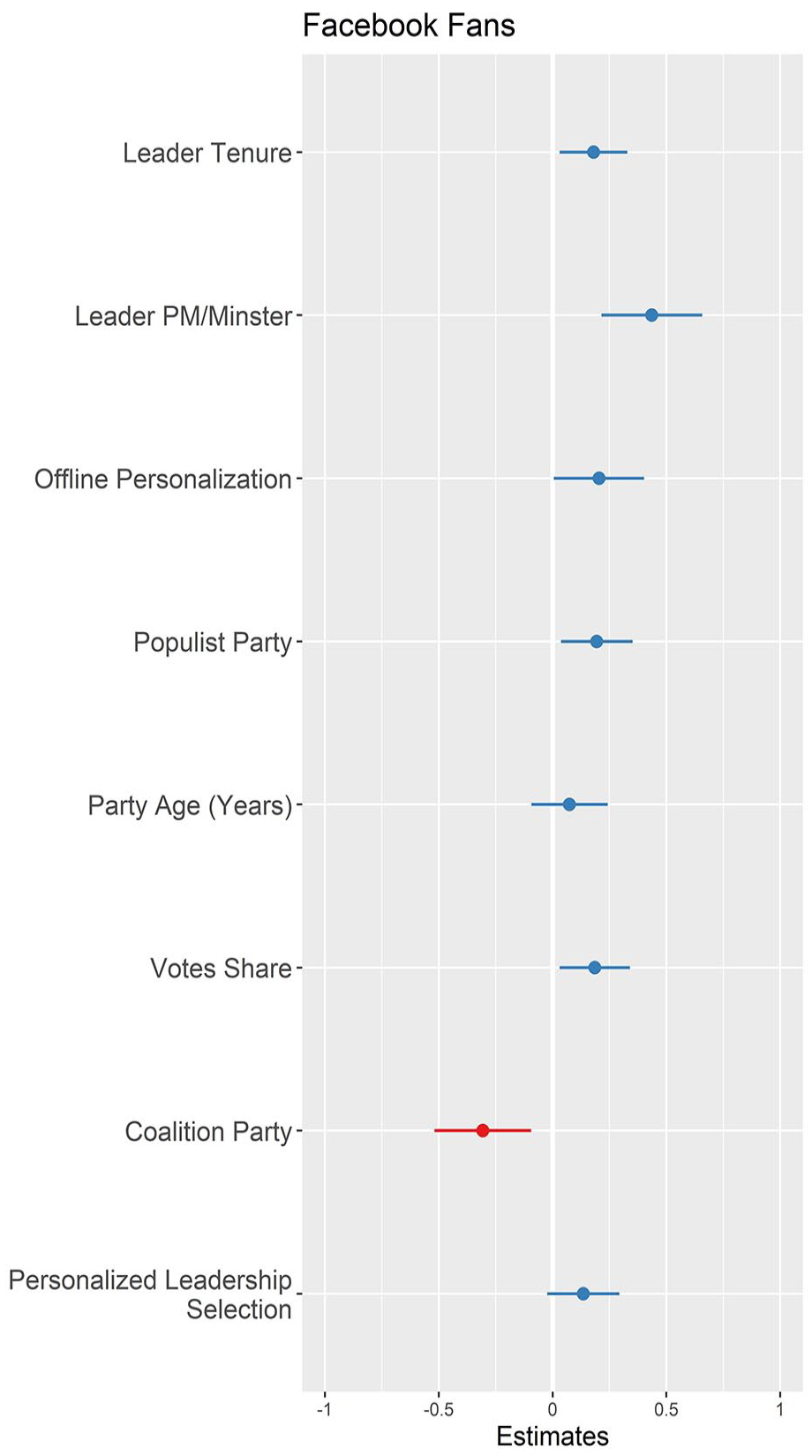
Standardized Fixed-Effects on Personalism on Facebook Fans.
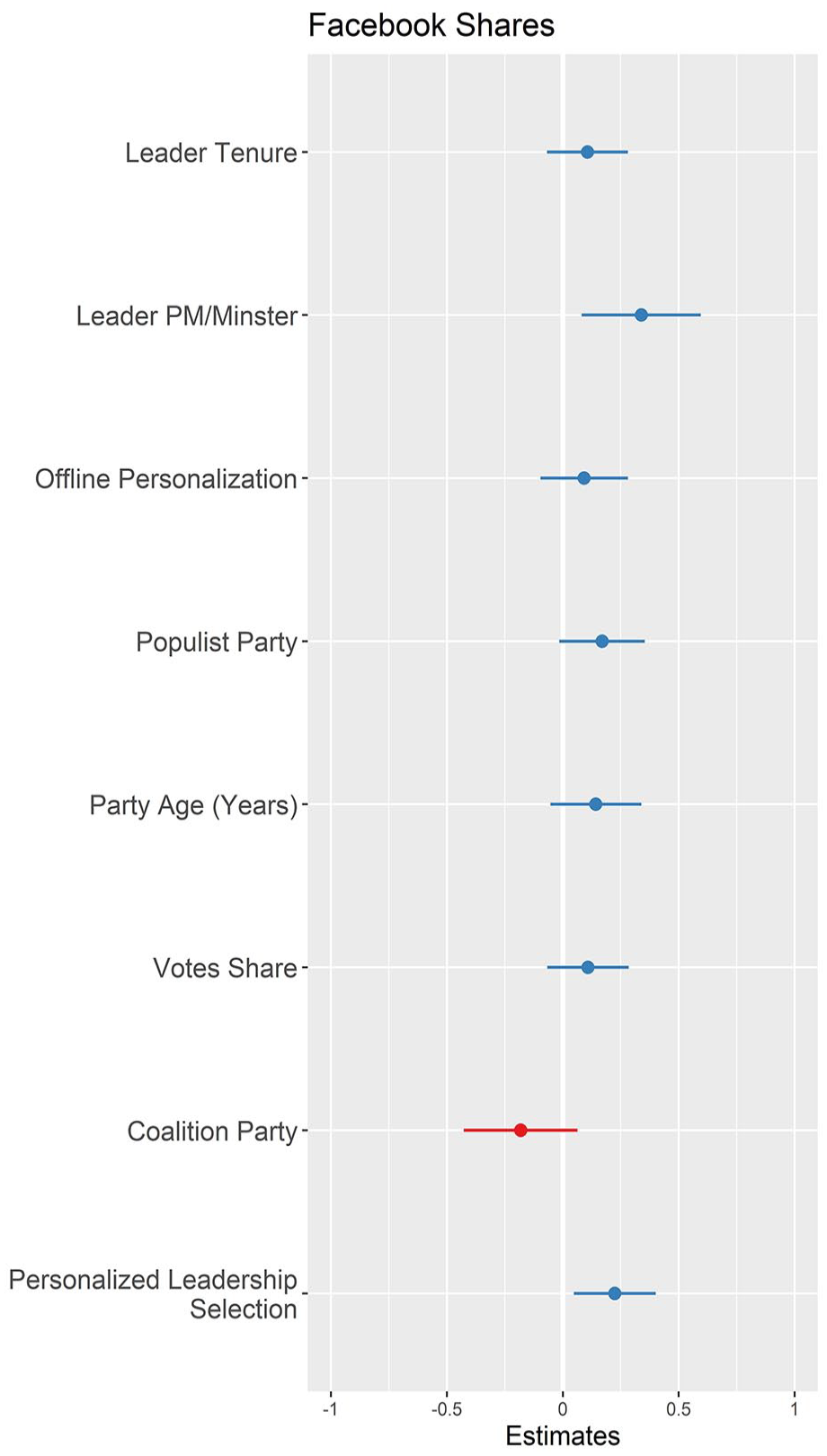
Standardized Fixed-Effects on Personalism on Facebook Shares.
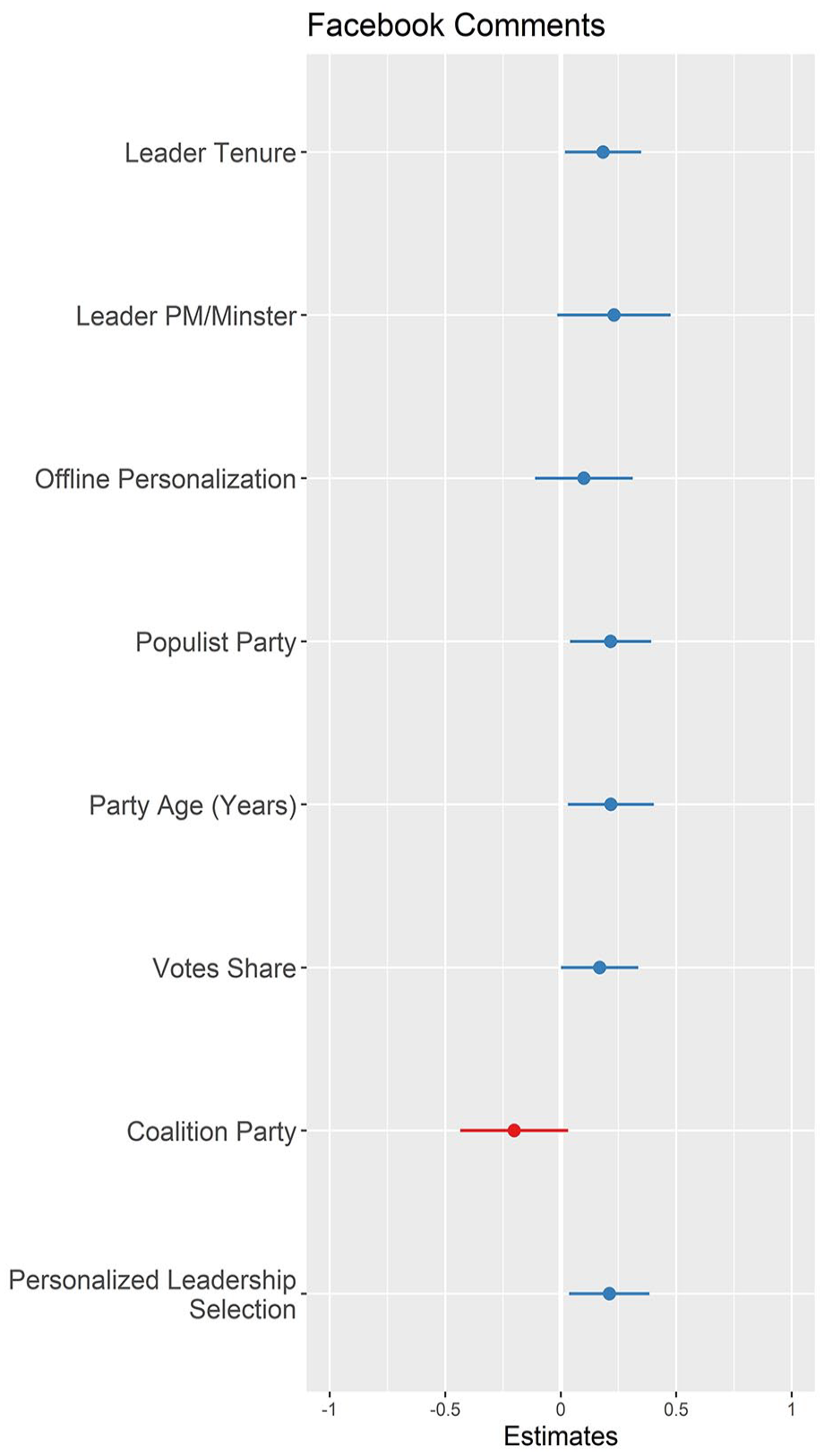
Standardized Fixed-Effects on Personalism on Facebook Comments.
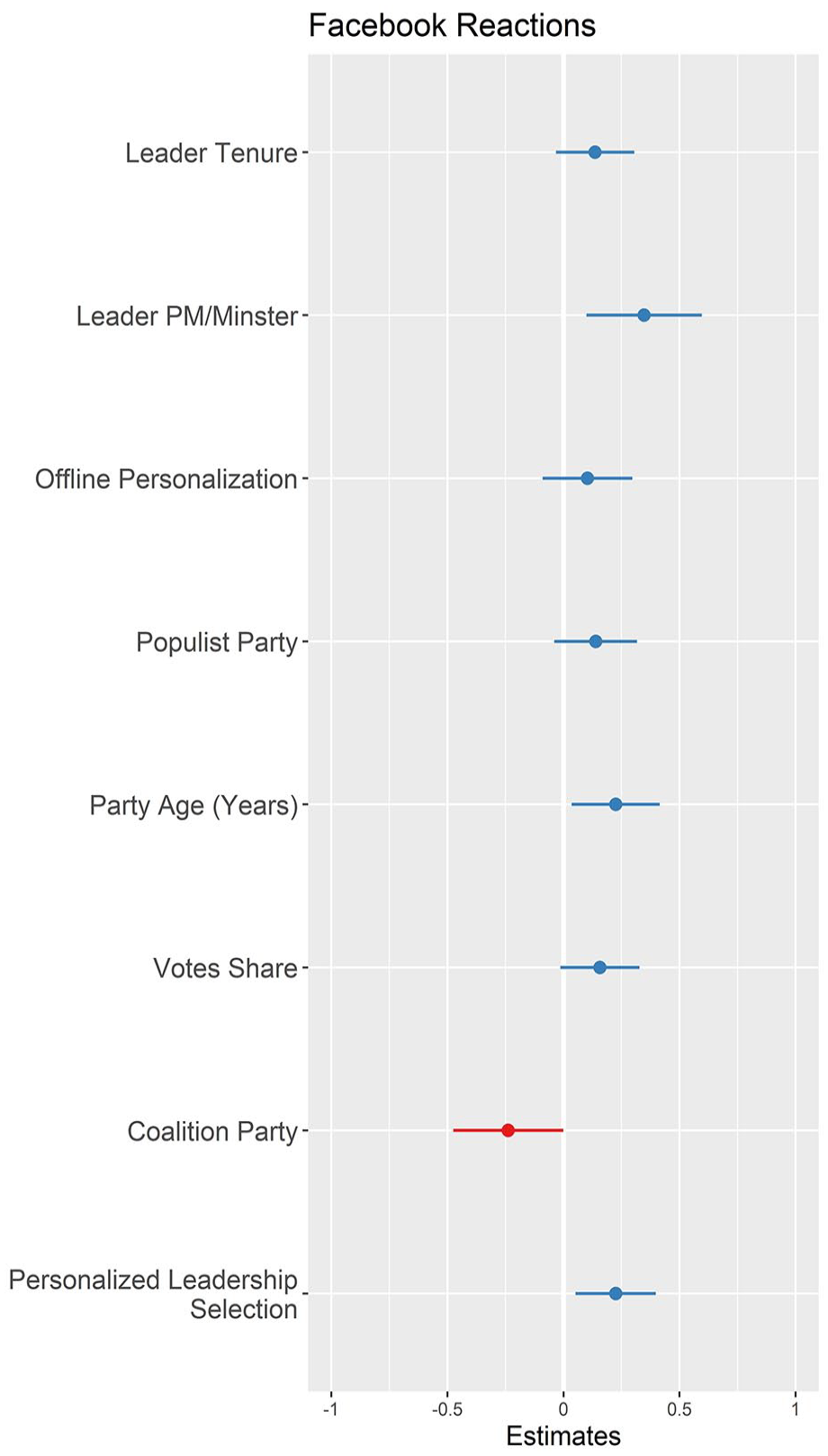
Standardized Fixed-Effects on Personalism on Facebook Reactions.
As for the Country-level variable of the personalization of politics the country has gone through, it has a significant and positive prevalent effect only on personalism on Facebook Fans (Figure 13; B = 0.19; p < 0.05) but not on Shares (Figure 14), Comments (Figure 15), and Reactions (Figure 16). The different colors of the points in the scatterplots in the figures represent countries, and the line shows how the increase in the country’s personalization leads to more personalism among Facebook fans. However, in the higher levels of personalization, this effect becomes unstable.
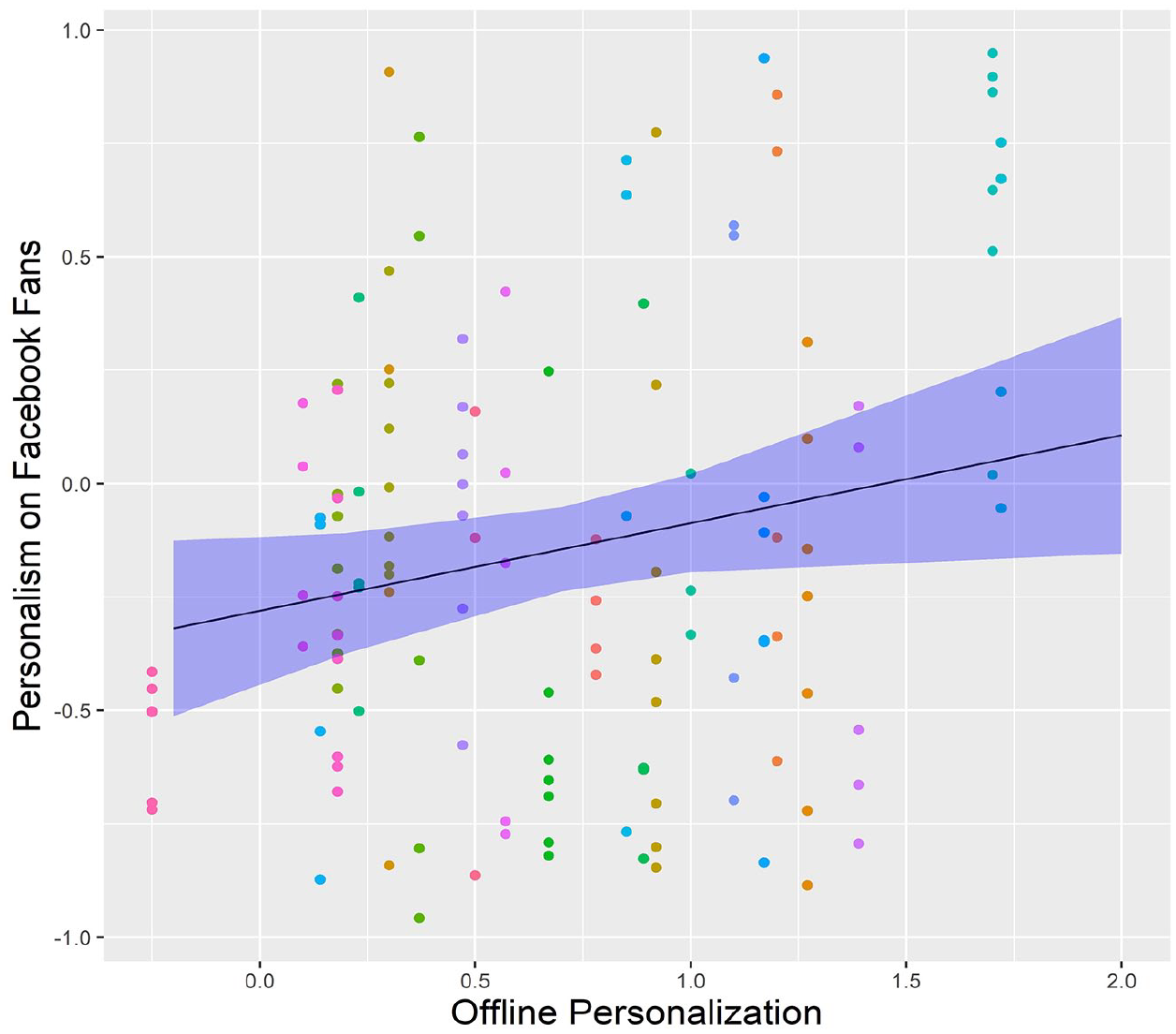
The Effect of Country’s Offline Personalization on Personlism on Facebook Fans.
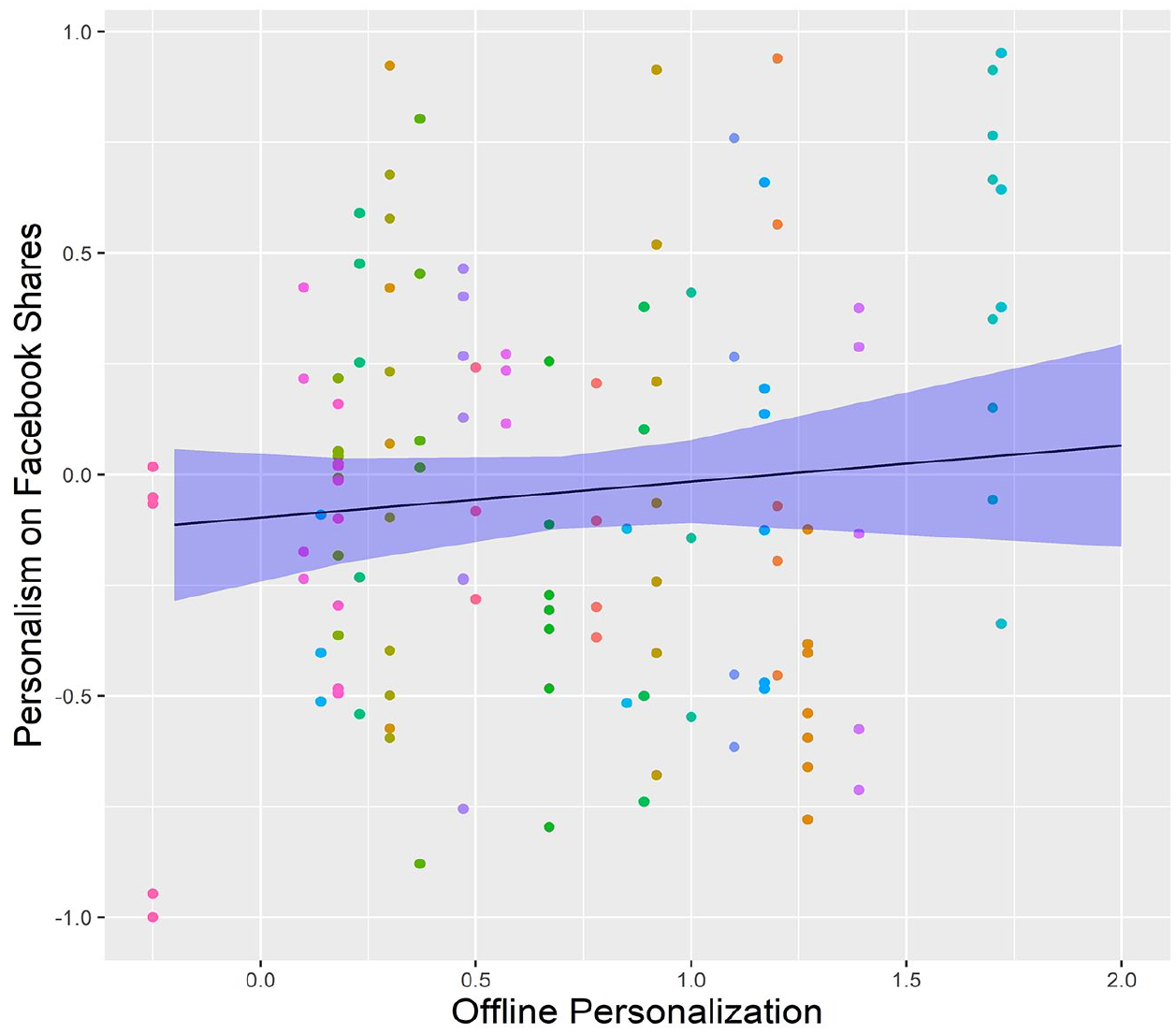
The Effect of Country’s Offline Personalization on Personlism on Facebook Shares.
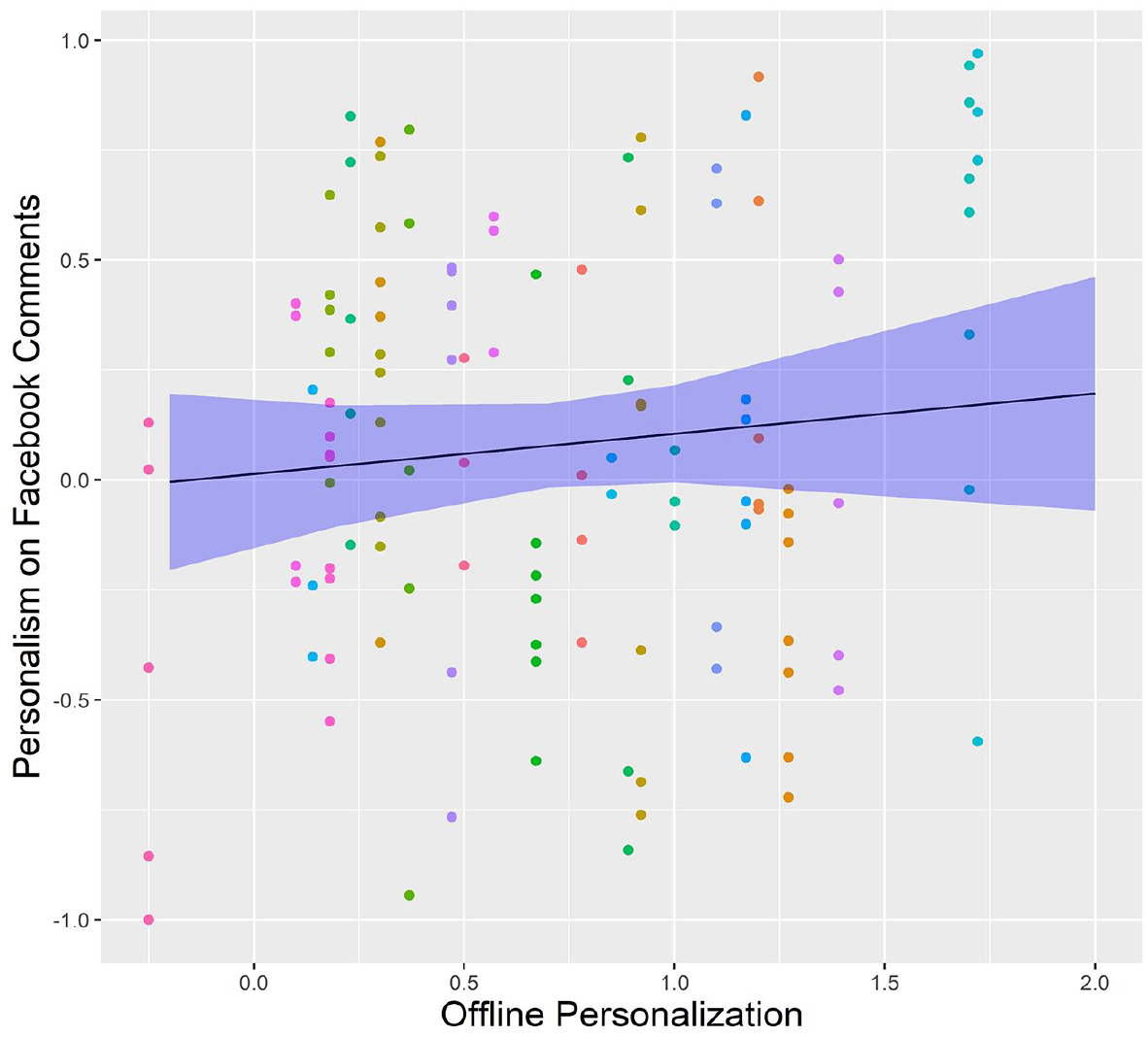
The Effect of Country’s Offline Personalization on Personlism on Facebook Comments.
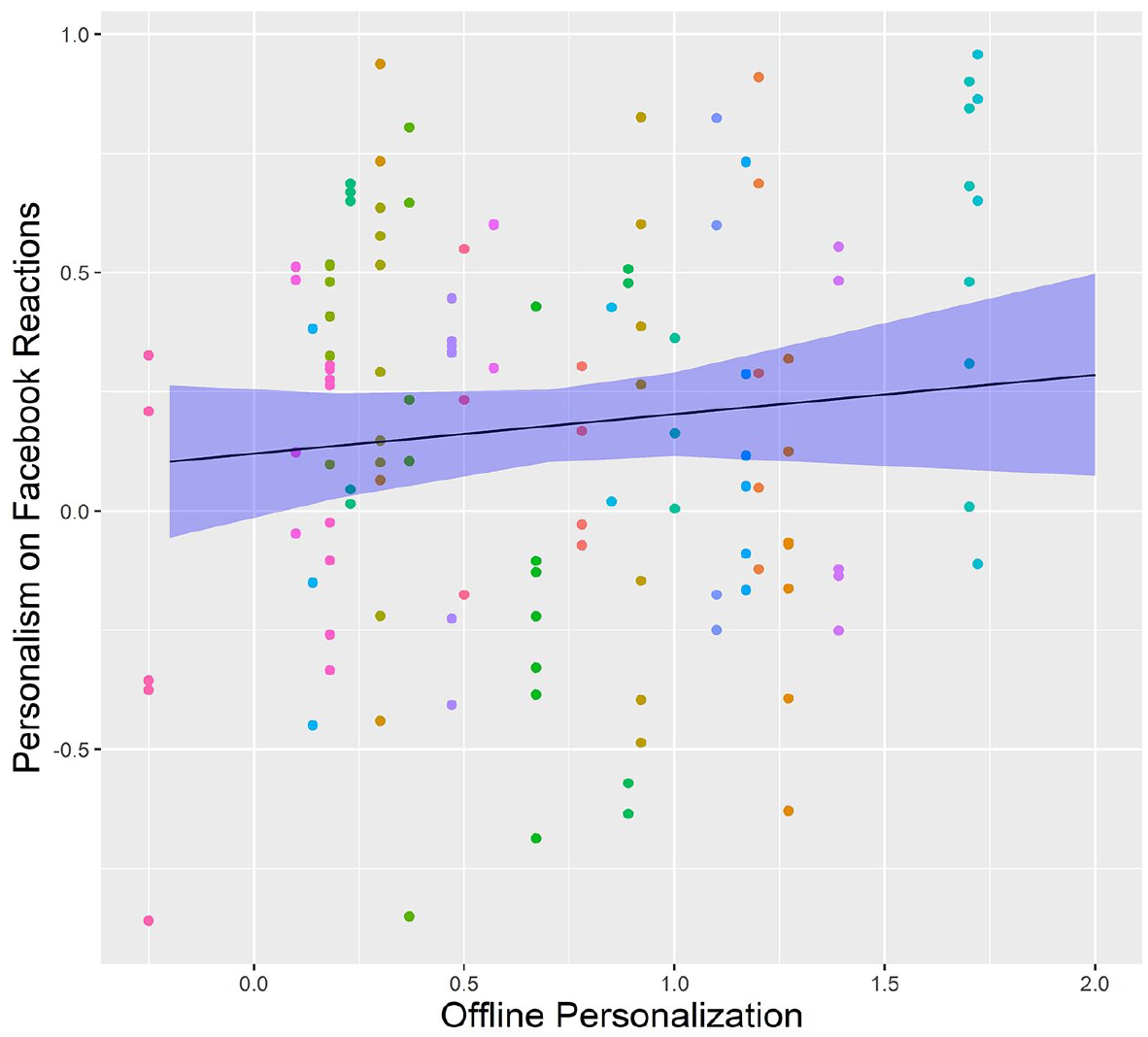
The Effect of Country’s Offline Personalization on Personlism on Facebook Reactions.
In the models that explain variation in Twitter personalism (Figures 17–19), the most prevalent, positive, and significant effect is that of the leaders’ positions as prime minister or minister, like the models for personalism on Facebook consumption. This means that when the leader has been PM or minister, her Twitter has more followers (Figure 17; B = 0.55; p < 0.01) than her party, her tweets are more retweeted (Figure 18; B = 0.36; p < 0.05) and favorited (Figure 19; B = 0.31; p < 0.05). The leaders’ tenure in party leadership, on the contrary, has only a significant effect on personalism on Twitter Followers (B = 0.04; p < 0.05) but not on Retweets (B = 0.01; p > 0.05) and Favorites (B = 0.01; p > 0.05). Populist parties and Party age does not have a significant effect on any of the Twitter personalism variables (p > 0.05), and on Twitter Followers, their insignificant effect is even negative (B =-0.06, B =-0.00, p < 0.05). The models also suggest significant negative effects of participating in the coalition when controlling for the rest of the independent variables in Twitter Followers (B = −0.38; p < 0.05), Retweets (B = −0.24; p < 0.05), and Favorites (B = −0.27; p < 0.05), like Facebook above mentioned. Votes share also has a significant positive effect on Favorites (B = 0.01, p < 0.05) and is barely significant on Twitter Followers (B = 0.01; p < 0.1) and Retweets (B = 0.01; p < 0.1). In contrast to the Facebook models, the personalized leadership selection method does not have significant effects on any of the Twitter variables (p > 0.05).
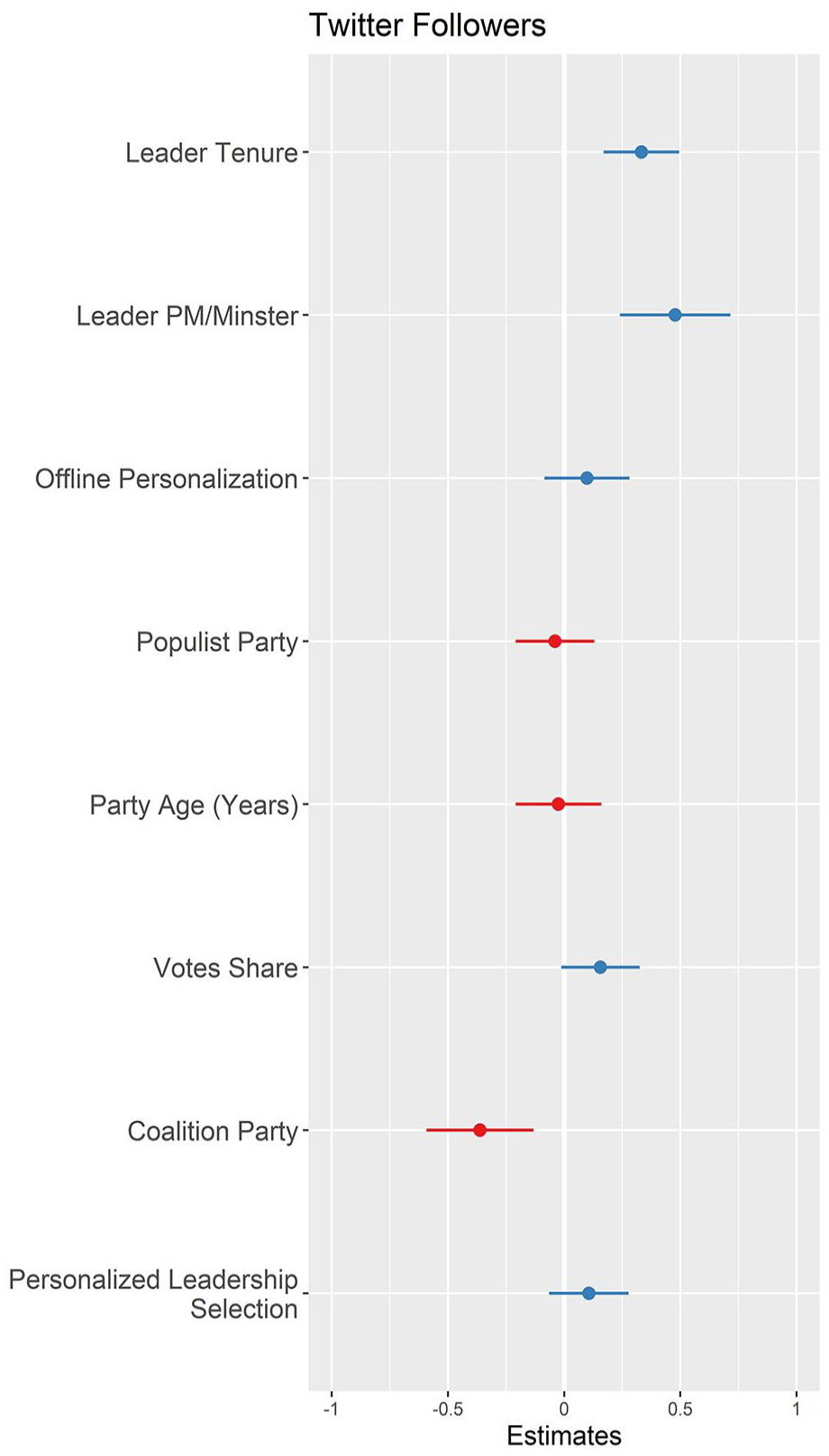
Standardized Fixed-Effects on Personalism on Twitter Followers.
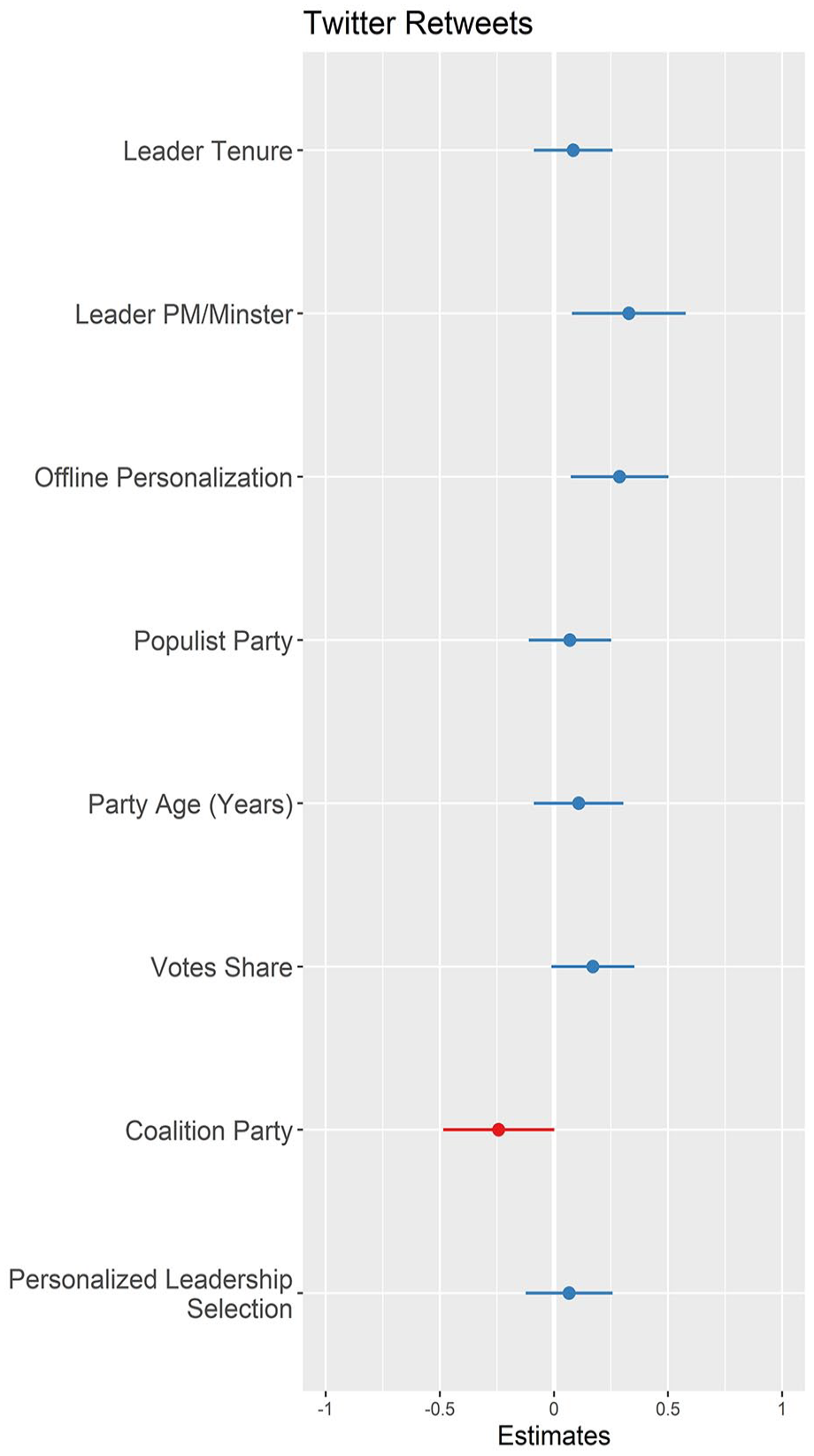
Standardized Fixed-Effects on Personalism on Twitter Retweets.
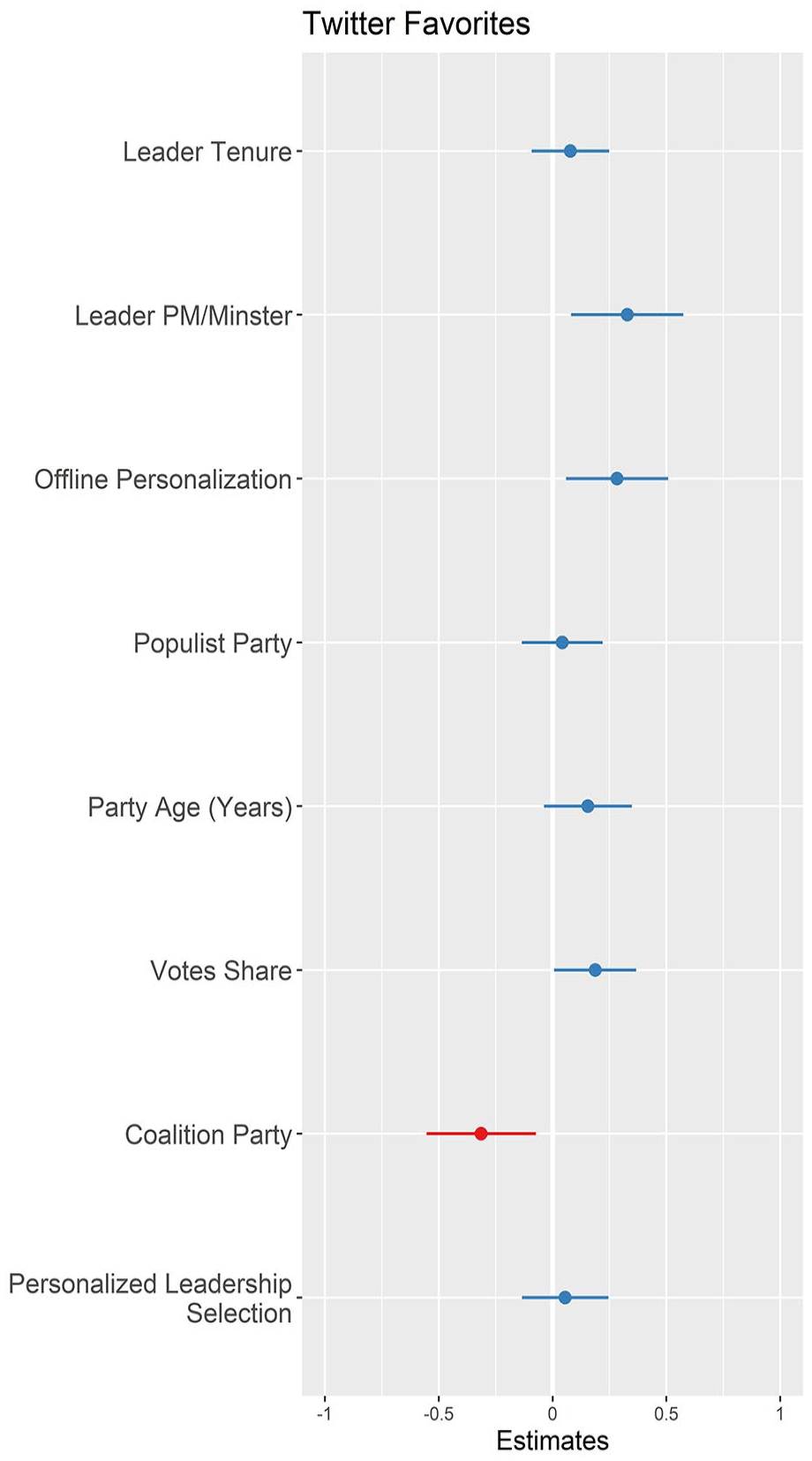
Standardized Fixed-Effects on Personalism on Twitter Favorites.
The Country-level variable of offline personalization has no significant effect on Twitter Followers (Figure 20; B = 0.09; p > 0.05) but does have a positive prevalent effect on personalism on Retweets (Figure 21; B = 0.26; p < 0.05) and Favorites (Figure 22; B = 0.22; p < 0.05). Nonetheless, the inclusion of this country-level variable reduces the random variance that remains unexplained due to countries in 13%–14% on the models of Retweets and Favorites and 8% on the model of Twitter Followers as the ICC of these models differs compared to the intercept-only models (see also tables in Online Appendix).
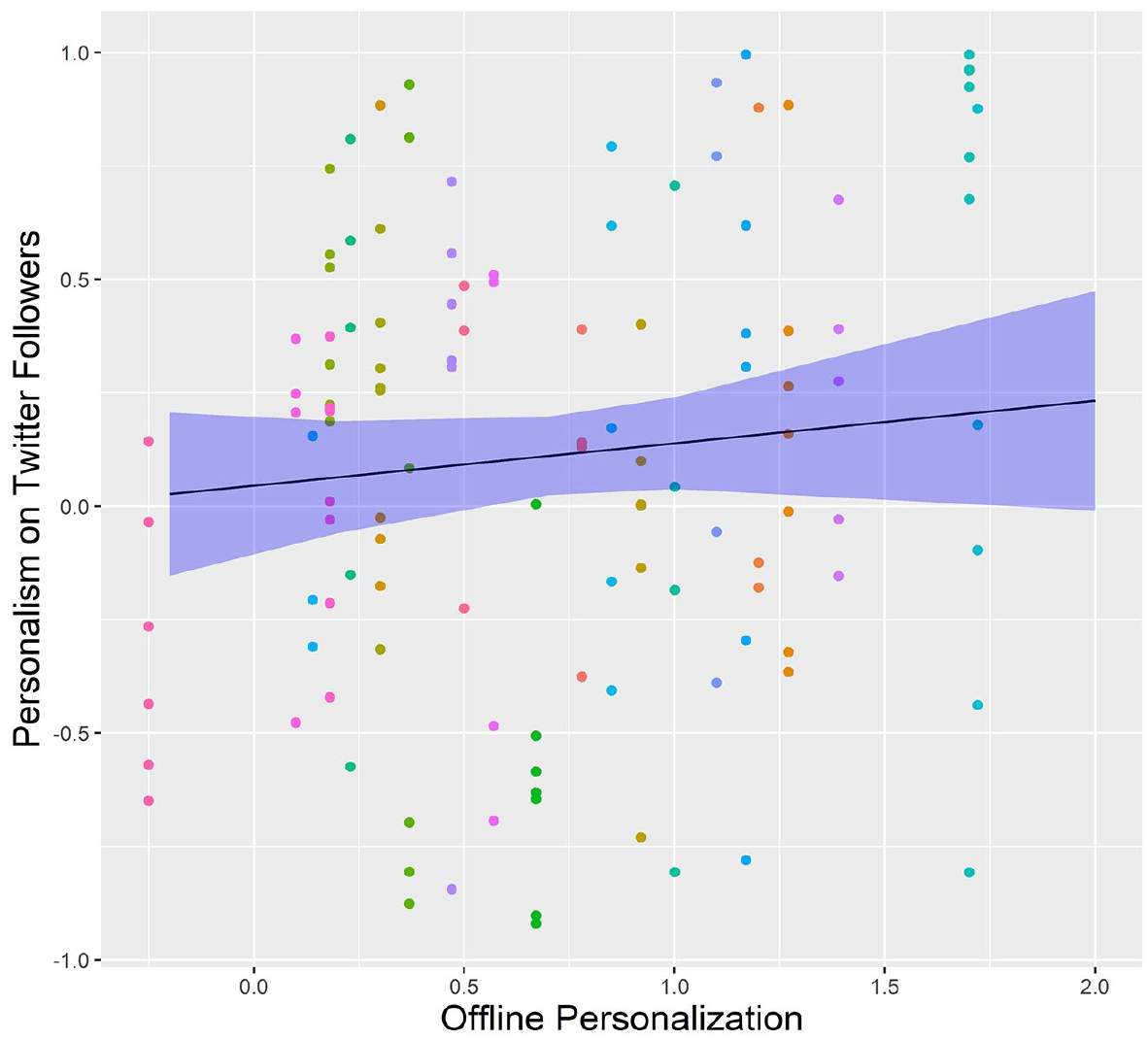
The Effect of Country’s Offline Personalization on Personlism on Twitter Followers.
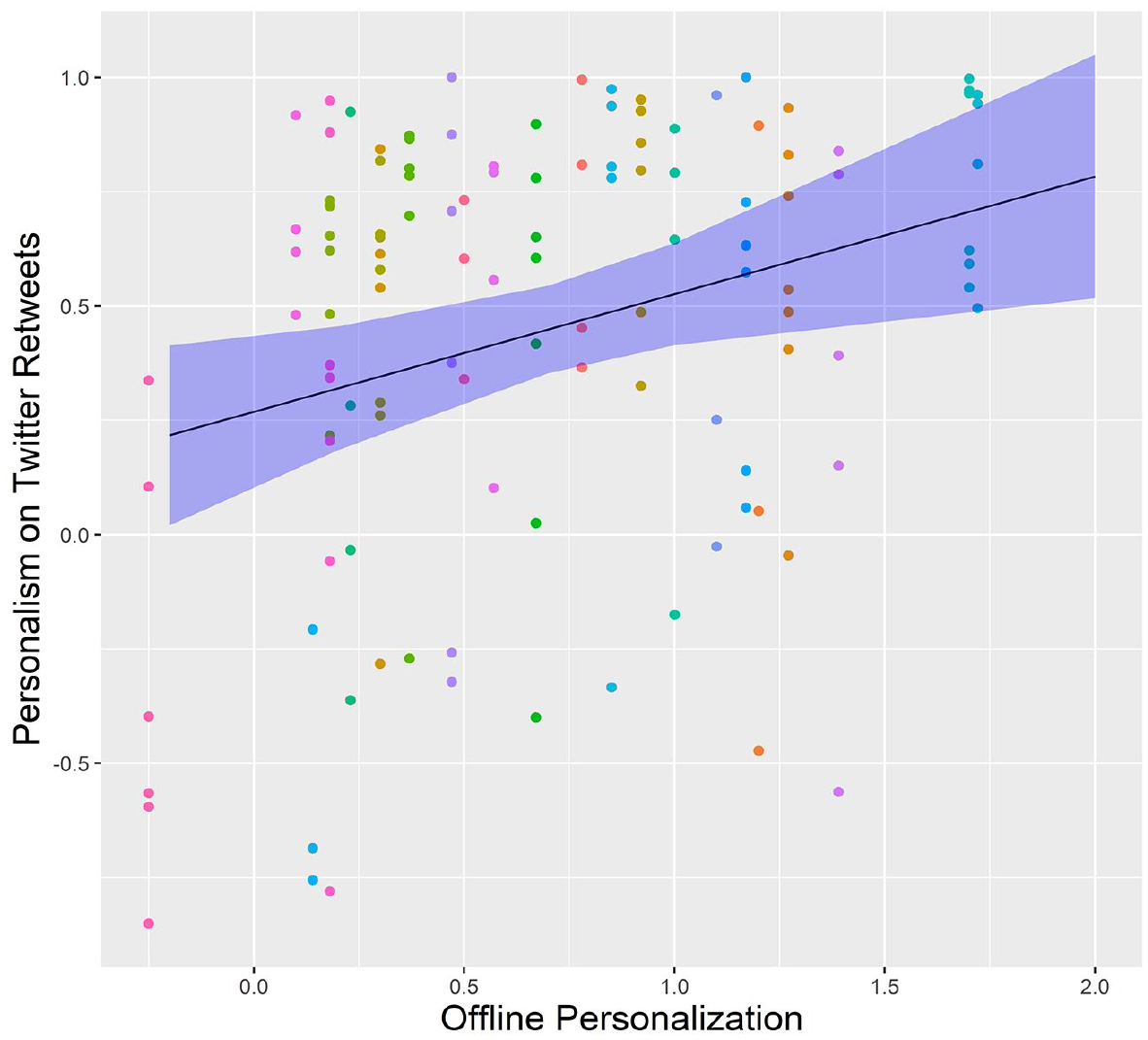
The Effect of Country’s Offline Personalization on Personlism on Twitter Retweets.
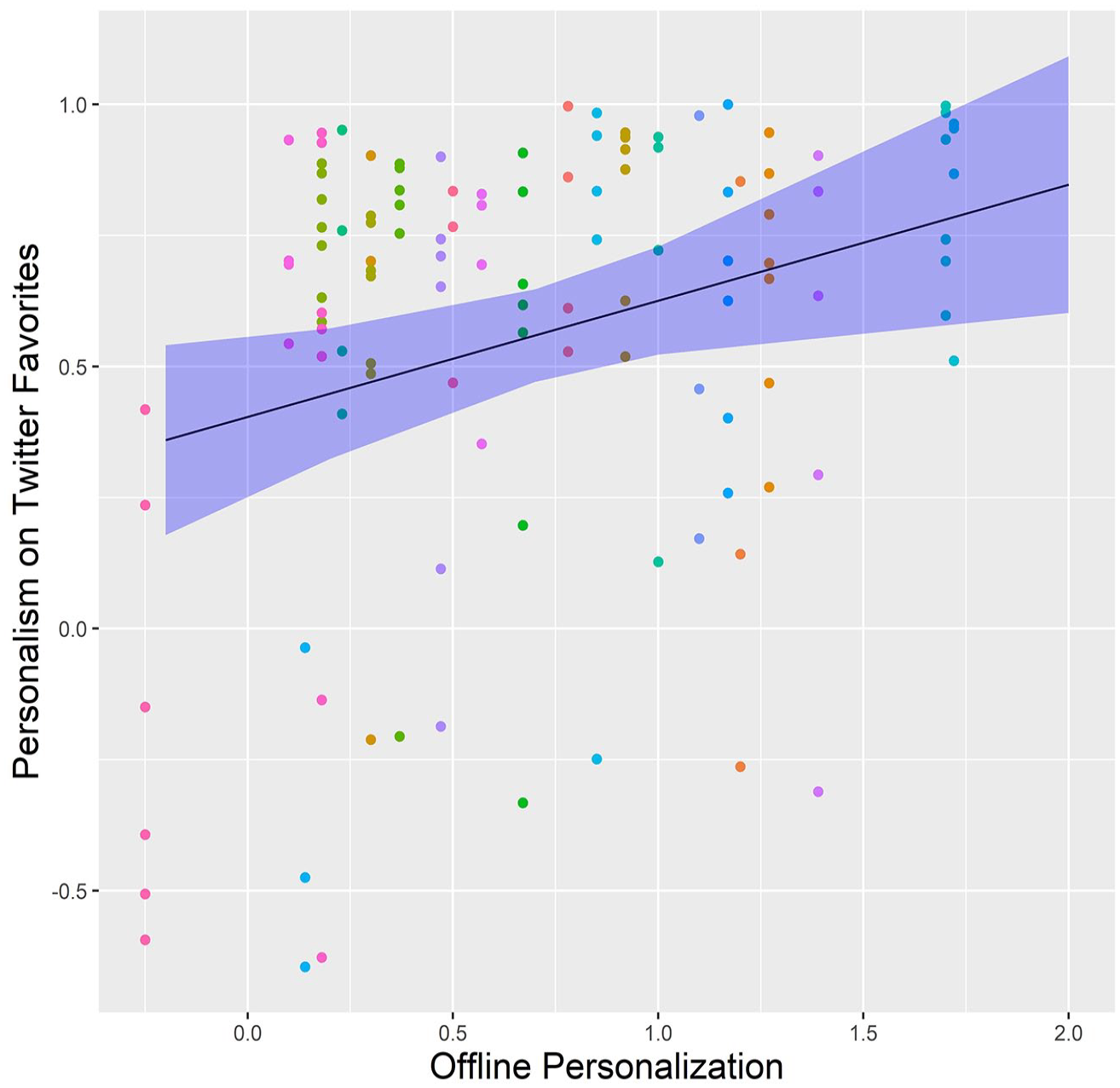
The Effect of Country’s Offline Personalization on Personlism on Twitter Favorites.
Discussion
Using a comparative cross-national perspective, this study aims to explain online personalism on the consumption side in two of the most widely used social media platforms for political discourse. Indeed, the findings show mixed results for explaining the different variables between the platforms and within them. However, their direction fits, in most cases, the direction of the hypotheses.
H1 is confirmed in three out of seven indicators of social media consumption. As the leader’s term in the party leadership office increases, personalism on the essential followership of Facebook and Twitter also increases. This is also true for one of the engagement variables of Facebook. On the one hand, it seems that veteran leaders ultimately earn greater interest on social media than their parties and become the parties’ main presenters. This finding also has an optimistic message for those concerned about parties’ declining status: when a leader’s term comes to an end, it takes time until the new leader will receive social media interest; the parties, meanwhile, will already be present with their long-accumulated, steady follower base and will probably fill the vacuum. On the other hand, it is not necessarily mean that users read and engage with the content produced by the leaders compared to their parties.
H2 is the only hypothesis confirmed for all social media consumption indicators. More personalism is found in parties whose leaders serve as PMs or ministers than parties whose leaders hold other, lower-ranking positions. PMs and ministers have the most senior positions politicians can acquire, which usually reflects their political power. This and their eliciting more media attention are translated into an online interest in a way that gives them a noticeable advantage over other political actors, including their party. This is one of the more significant findings of this study since it empirically validates previous theories on the relationship between political power and media saliency (Holtz-Bacha et al., 2014; Poguntke and Webb, 2005) in the online realm. This, in turn, also confirms the normalization approach.
The study also finds some noticeable differences between parties from different countries in 3 out of seven indicators (Facebook fans, Twitter Retweets, and Twitter Favorites). In these variables, H3 regarding the relationship between offline personalization in the country and personalism in social media is confirmed. The fact that this is the only country-level variable in the study suggests that offline personalization may explain a great portion of the variance due to country differences. Indeed, many country-level variables can be considered, for example, electoral volatility, party system, and turnout. However, these variables were unhelpful for the analysis, and the theoretical mechanism for explaining the relationship between them and online personalism is limited. Therefore, for the sake of parsimony, they are not discussed in the study. Second, the offline personalization index of Rahat and Kenig (2018) captures many aspects of the political system focusing on the theoretical concept discussed in the study. For example, it contains information on the personalization process taken on the institutional (including electoral system reforms, prime ministerial power parties selection method, and more), media (in the controlled and uncontrolled), and behavioral (of politicians and voters).
H4, which presents the relationship between populism and online personalism, was confirmed only for personalism on Facebook fans and comments. Since personalism is one of the main characteristics of populism, it is not surprising that I found a higher rate of personalism for populist parties in the more populist social media (Ernst et al., 2017). However, the rejection of H4 for the Twitter indicators and in two of the Facebook engagement variables is surprising. This may be explained by the fact that Twitter is considered a more elite medium while Facebook is directed at a broader user base. Therefore, populists may prefer to follow populist leaders there. In addition, it may strengthen the evidence that having a strong charismatic leader is not only a feature of populist parties but also of the rest of the parties.
H5, regarding the relationship between party age and personalism, was not confirmed for any social media personalism indicators. The direction of the effect in six out of the seven variables was even opposite to our expectation. Personalism on Facebook comments and reactions was even significantly opposite to the hypothesis. This suggests that new parties born into a more personalistic world are not more personalized in terms of Facebook engagement; it also indicates that veteran parties enjoy no advantage based on their age and resources regarding Facebook consumption.
The study also found in most of the indicators a consistently significant negative effect of being part of the coalition on personalism in social media when controlling for the leader’s position. Thus, being part of the coalition can be considered an indicator of the party’s power when the leader may not be in a prominent governmental office. Including this variable in the study is justified as a control to see the actual effect of the leader’s position.
I also found a significant effect of the leadership selection method in some of the indicators, which means that in some cases, the personalism of the party is indeed reflected in the level of interest and engagement it derives. In addition, the vote share for the party was found to have a positive effect on personalism in three out of seven indicators. The positivity of the effect shows that, in contrast to our expectation to find mixed results for this variable, vote share may indicate the power and prominence of the leader. However, this finding is shown in H2 and its unequivocal confirmation.
The confirmation of most of our hypotheses to some extent in most of the indicators suggests that the normalization approach applies to personalized politics online. Offline political power is reflected online. As stated above, it is one of only a few studies that follow the conceptualization of personalized politics in terms of the balance between parties and their politicians (Pedersen and Rahat, 2019; Rahat and Sheafer, 2007). Second, a significant strength of the current study is its ability to examine the research question on a large scope, investigate variables that are also theoretically relevant, and reach results that show an explanation for a significant part of the phenomenon in most of the variables. Therefore, this is one of the only works that try to do this. Third, it combines two rather distinct theoretical frameworks to explain a political and societal phenomenon, integrating main theories from the online politics literature and personalized politics. Fourth, it has some implications for democracies and political parties, showing that personalism is not a deterministic product of contemporary politics and that parties can also take advantage of the online world and remain essential actors.
Nonetheless, this study has some limitations: First, it focuses on the consumption side of social media and not on the production side. The study does not deal with the content of the messages or responses or the scope of activity. The production side may lead to different theoretical expectations and other means of data collection and analysis, which exceeds the capacity and resources of the current study. Thus, future research should establish a new theoretical framework directed at communicators; such research will enable an analysis of the content of the messages of parties and politicians using content analysis. Second, except for the indicators for personalism on the consumption side of social media activity, the study does not contain any individual-level explaining variables that capture differences between users’ profiles. This limits the ability to call this study research on the personalism of voters’ behavior (even on the broader sense) as has been done in the political personalism and personalization literature (Pedersen and Rahat, 2019). Future research may focus on the individual-level explanations for social media users’ choice to follow or engage with leaders compared to parties. It requires a different analytical framework that distinguishes between individuals. Such research design can take the form of an experiment or direct survey among social media users. Third, the study focuses on centralized rather than decentralized personalism. Indeed, looking at decentralized personalism (i.e. The balance of power between politicians who are not the leaders and their parties) may lead to different patterns and results (Balmas et al., 2014; Rahat and Zamir, 2018).
Supplemental Material
sj-docx-1-psw-10.1177_14789299221147458 – Supplemental material for Explaining Online Personalized Politics: A Cross-National Comparative Analysis of Social Media Consumption of Parties and Leaders
Supplemental material, sj-docx-1-psw-10.1177_14789299221147458 for Explaining Online Personalized Politics: A Cross-National Comparative Analysis of Social Media Consumption of Parties and Leaders by Shahaf Zamir in Political Studies Review
Supplemental Material
sj-docx-2-psw-10.1177_14789299221147458 – Supplemental material for Explaining Online Personalized Politics: A Cross-National Comparative Analysis of Social Media Consumption of Parties and Leaders
Supplemental material, sj-docx-2-psw-10.1177_14789299221147458 for Explaining Online Personalized Politics: A Cross-National Comparative Analysis of Social Media Consumption of Parties and Leaders by Shahaf Zamir in Political Studies Review
Supplemental Material
sj-docx-3-psw-10.1177_14789299221147458 – Supplemental material for Explaining Online Personalized Politics: A Cross-National Comparative Analysis of Social Media Consumption of Parties and Leaders
Supplemental material, sj-docx-3-psw-10.1177_14789299221147458 for Explaining Online Personalized Politics: A Cross-National Comparative Analysis of Social Media Consumption of Parties and Leaders by Shahaf Zamir in Political Studies Review
Supplemental Material
sj-docx-4-psw-10.1177_14789299221147458 – Supplemental material for Explaining Online Personalized Politics: A Cross-National Comparative Analysis of Social Media Consumption of Parties and Leaders
Supplemental material, sj-docx-4-psw-10.1177_14789299221147458 for Explaining Online Personalized Politics: A Cross-National Comparative Analysis of Social Media Consumption of Parties and Leaders by Shahaf Zamir in Political Studies Review
Footnotes
Declaration of Conflicting Interests
The author(s) declared no potential conflicts of interest with respect to the research, authorship, and/or publication of this article.
Funding
The author(s) received no financial support for the research, authorship, and/or publication of this article.

Supplementary Information
Additional supplementary information may be found with the online version of this article.
Contents Mixed Effects Modeling Personalism on Twitter Indicators Mixed Effects Modeling Personalism on Facebook Indicators Histograms Online Personalism indicators Descriptive Statistics of Online Personalism Variables
Notes
Author Biography
References
Supplementary Material
Please find the following supplemental material available below.
For Open Access articles published under a Creative Commons License, all supplemental material carries the same license as the article it is associated with.
For non-Open Access articles published, all supplemental material carries a non-exclusive license, and permission requests for re-use of supplemental material or any part of supplemental material shall be sent directly to the copyright owner as specified in the copyright notice associated with the article.
