



Abstract
This research examines the role of effort at the school level in ensuring climate literacy and the influence of climate literacy on the environmental behavior of children. Literature has shown that pro-environmental behavior is mediated by hope and despair amongst the children. An attempt has been made to study the same. Also, the role of climate literacy in inducing indoor generation behavior was studied. The research is based on a questionnaire developed to measure the constructs (Efforts at the school level, hope, despair, climate literacy, pro-environmental behavior, and indoor generation behavior). The questionnaires were used to survey 477 students of the middle and high-level schools in Delhi National Capital Region (DelhiNCR), India. CB -Structural Equation modeling was used to study the influence and significance of the relationships. The research revealed that climate literacy, positively and significantly influenced proenvironmental behavior, while it wasn’t positively influencing indoor generation behavior. Hope was been found to positively mediate pro-environmental behavior. This research is one of its kind and explored the psychological and behavioral implications of climate literacy amongst school students.
Keywords
Introduction
Humans and nature are interconnected, and the planet's future depends upon humans’ care and recognition of this interconnectedness (Winograd, 2016). Environmental changes including temperature elevation, extreme weather events, and increasing air pollution represent projected impacts of global climate change. Rising temperatures may lead to rising interpersonal and intergroup conflict, and possibly psychological distress. Prone-ness to droughts, floods, and severe storms lowers the quality of life, elevates stress, produces psychological distress, and induces prolonged grief. Children may suffer delayed cognitive development and recreational opportunities are compromised by extreme weather. (Evans, 2019). Climate change is primarily because of large accumulated gases. Climate has been greatly changing but accelerated negative changes have been expedited by uncontrolled human interventions (Sorgho et al., 2021). There is the direct (environmental) and indirect (socio-economic) impacts on human health by climate change. Climate change may lead to biodiversity loss, floods, droughts, and extreme heat which will contribute to heat stress, more incidence of vector-borne diseases, poor air quality, and hampered food and water supply (Sorgho et al., 2021). Despite the concerns being raised in multiple forums, not many efforts have been made at the grassroots level (Fears et al., 2021). Individualistic norms and the perceived influence of the marketplace play a meaningful role in the transformation of environmental concerns into purchasing behavior (Sharma et al. 2022). It is vital for health policy planners to consider climate change as a major precursor for public health issues (Pandve et al., 2009). Time and again, countries and governments have been making efforts to address climate issues like, in 2015, General Assembly espoused the 2030 agenda for sustainable development which included 17 SDGs (Sustainable Development Goals) and SDG 13 focused on climate action (Sorgho et al., 2021). In crafting a policy framework, it's crucial to align economic and environmental goals to effectively address multiple Sustainable Development Goals (SDGs). Overemphasizing environmental concerns could disrupt the trajectory of economic growth, potentially resulting in unemployment. Conversely, solely focusing on economic growth may exacerbate long-term environmental challenges (Sharma et al. 2021). The direct connection among environmental knowledge, concern, perceived environmental consequences, and willingness holds significant implications for diverse environmental stakeholders, including consumers, business and marketing sectors, as well as educational institutions (Kautish and Dash 2017). Countries were called upon to take climate change mitigation action to limit the temperature increase to 1.5 degrees Celsius (Delpla et al., 2021).
All children are at risk from the effects of climate change but more so, this is true for poor communities. Children have rapid metabolism and need protection from adults in handling mental as well as physical issues. This makes them vulnerable to any trauma or stressors related to the environment (Pennea et al., 2021). Slow and sudden-onset hazards, exposure, and vulnerability to climate change puts people at health risk caused by climate change and are called climate risks (Schwerdtle et al., 2021). Awareness and sensitization must happen at the primary and secondary school levels about climate risk to bring changes in the thought process of the masses. This poses the question; of how we can involve and influence school children for pro-environmental behavior.
Literature review
Climate literacy (CL)
We are living in ‘Anthropocene’, an epoch where human activity is having a maximum influence on climate and its environment. Swedish Activist Greta Thunberg describes climate instability as a direct threat to human well-being (Murray, 2020). Climate literacy denotes your influence on climate and climate's influence on you (Limaye et al., 2020). Climate change education leads to climate change knowledge and encourages behavior change. Educational programs and policies are vital interventions to spread awareness about public health issues like the influence of climate change. Public health policymakers, health practitioners, educators, and government should come together to educate people about public health issues (Hahn and Truman, 2015). India is one of the few countries where environmental education is enforced at all levels but restricted to only facts and figures (India's 24 Cr School Students Need to Be Green-Jobs Ready…, 2021). The Indian education system has been apathetic to climate literacy it needs to be more indulging and practical (It's Time to Reform India's Environmental Education, 2021). Climate change literacy and environmental awareness ought to be made mandatory in schools to reduce emissions and enforce the adoption of sustainable frameworks (Mission Paani 2021). Fear and awareness of climate change upheaval motivate appropriate action (Kleres and Wettergren, 2017). Graphics and concise language aid in developing an understanding of climate change's impact on health and pro-environmental behavior amongst vulnerable groups (Kreslake et al., 2016).
Physical health
Covid 19 reminds us that our health is at risk of issues emerging from the environment we inhabit (Fleming et al., 2021). Climate change may lead to heat-related morbidity and mortality, ozone-related mortality, dengue, and Lyme disease (Ebi et al., 2021). Covid 19 virus has shown its survival is dependent on climate. Cases in countries with warmer weather showed a daily decline as compared to countries with low temperatures (Kirana et al., 2021). Hepatitis A is a viral disease that spread through the oral route directly or indirectly. Frequency, intensity, and duration of weather-related water extremes may increase the incidence of this disease (Adibin et al., 2021). Heatwaves are associated with age and gender mortality (Faye et al., 2021). Air pollution is a global problem that influences environmental health along with the physical health of human beings. A curb on air pollution will also help mitigate its influence on chronic and non-communicable diseases (Howse et al., 2021). Wildfire smoke has a strong association with adverse cardiovascular outcomes and a weak association with bronchitis, asthma, and pneumonia (Hahn et al., 2021). Climate change may lead to a higher burden of ozone-related pre-term birth (Ekland et al., 2021). Infectious disease variety and its incidence of communicability, in all likelihood, are influenced by climate change. It facilitates the faster spread of airborne infections like tuberculosis in warm temperatures (Dawu et al., 2021). Soil aids in the healthy functioning of the biosphere and feeds the human race and confiscates carbon to combat global warming. The world is facing soil deterioration and desertification which hampers the service to the physical existence of mankind (Timmis and Ramos, 2021).
Mental health
Not having a green view or greenery or garden alongside home leads to a lowering of life satisfaction and this may lead to dislocation pangs amongst city dwellers (Kley and Dovbishchuk, 2021). But mental agony associated with climate change is much bigger and ugly. Ecological grief triggered by the loss of landscapes, forests, species, and way of life can be debilitating to the extent of prolonged grief disorder. It is the grief beyond depression, anxiety, and post-traumatic stress disorder (PTSD) whereby individuals may have a personal, social, and economic impact that may have bearing on their daily life. This further poses a risk of initiating mental disorders or amplifying existing mental disorders (Comtesse et al., 2021). Climate-related disasters like floods, hurricanes, and bush fires often put involved individuals at a high risk of PTSD. It may include flashbacks, prolonged fear, and irritable response to aligned cues. This impairs the quality of life to a great extent (Padhy et al., 2015). Significant associations have been found between increased temperature and higher pollution with suicide rates (Heo et al., 2021). Climate-related life-threatening events, such as wildfires, can lead to severe mental illness sequelae like PTSD and depression which can have lifelong implications (Silveira et al., 2021). Studies suggest a relationship between high temperatures and higher morbidity and mortality has neurological implications (Amiri et al., 2021). Climate changeinduced migration may lead to irretrievable and damaging impacts on mental health and wellbeing. Staying behind and witnessing changes in one's habitat or moving away to a new one without a guarantee of wellbeing may have long-term negative consequences on mental health (Kelman et al., 2021).
Efforts at the school level
Place-based stewardship education (PBSE) leads to mindfulness amongst school children for the two key elements of the environmental commons: awareness and empathy for natural resources (land and water) which support flora and fauna. And the hidden and vital processes by which humans can sustain those resources through collective action (Flanagan et al., 2019). Students felt more connected and empathized with their surroundings and felt more responsible for sustainable behavior with these kinds of projects. A representative sample of 17 and 18-year-old Canadians believes that youth have limited confidence in how well their schooling has prepared them for climate change (CC) and mitigation. However, most believe that the choice of activities and lifestyle they make can help in mitigating CC. Knowledge of the relative effectiveness of Greenhouse gas emissions (GGE)reducing actions was generally poor(Pickering et al., 2020). Increased knowledge of climate change among middle school students positively influences the acceptance of anthropogenic global warming (AGW). Efforts at the school level for climate literacy is a necessary phenomenon to ensure the full involvement of children who will be responsible citizens of tomorrow. They will be the key drivers in rolling adaptation and mitigation of the effects of climate change, today as well as for the generations to come (Stevenson et al., 2014). Climate literacy efforts can overcome, worldview-driven skepticism among adolescents, making them a receptive audience for building climate change concerns. Enforcing education about climate change spurs individual as well as collective action. Educationists worldwide have been devoting more curricular and pedagogical resources to raising students’ environmental awareness and addressing these issues through ecological and sustainability education(Jimenez and Moorhead, 2021).
Indoor generation
People love their places, places where they live, and nurture their lives, families, and loved ones. People cook, exercise, indulge in self-care rituals, and have home décor reflecting their persona. They add humidifiers and air purifying plants to make their homes the best place on earth during a pandemic. Bunkering and working from home made it more appropriately carry the true essence of the indoor generation (YouGov, 2018). Technology, increasing prices of land and home, and a scary picture of the world outside all corners, the new generation as well as the older generation in their comfort zones or cocoon. Since they spend almost eighty to ninety percent of their time indoors they thus are called indoor generation (Boost, 2020; VELUX, 2015). Associated with indoor generation is the concern of indoor air quality (IAQ). It concerns every citizen, all workplaces, and all residential areas (Settimo and Avino, 2021).
Indoor air can be five times more polluted than outside air, with kids’ rooms being the most polluted. Doing routine chores in stuffy places takes a toll on the health of individuals (VELUX, 2015). Nature deficit disorder kicks in as children spend less time outside and suffer mentally and physically because of the consequences. Nature deficit disorder also draws a parallel with attention deficit disorder (Bewley, 2019).
Pro-environmental behavior
Pro-environmental behaviors may refer to energy-saving behavior amongst children (Zeiske, 2021). Individual consumer behaviors do matter and will need to change if we are to mitigate climate change. But to influence individuals we need to move beyond psychological barriers for climate (in)action (Schmitt et al., 2020). Climate change education amongst students leads to increased climate change knowledge which links, hope, concern, and pro-environmental behavior (Stevenson et al., 2018). Nature schools or studying in nature reinforces pro-nature behavior (Dopko et al., 2019). Exposure to nature has a small but significant positive effect on school children's mental health and wellbeing (Weeland et al., 2019). Nature-connected children demonstrate pro-ecological behavior, frugality, altruism, and equity. They demonstrate a series of actions aimed at the preservation of natural resources. Pro-ecological behavior is recycling, object reuse, saving water, and separating garbage (Barrera-Hernández et al., 2020). Feeling sad when the environment is harmed, picking up trash, caring for and acknowledging flora and fauna, and appreciating nature in our lives are some of the pro-environment behavior (Sobko et al., 2018).
Theoretical Framework
In the contemporary landscape, as environmental degradation escalates due to human activities, it becomes imperative to delve into the motivations behind individuals choosing pro-environmental behaviors (Kautish et al. 2021). Functional value alone isn't sufficient for predicting green purchasing behavior; instead, both terminal and instrumental values play a significant role in shaping green attitudes, influencing behavioral intentions, with instrumental value exerting a greater impact, and green attitude acting as a mediator in the relationship between values and green behavioral intentions (Kautish and Sharma 2019). Instrumental and terminal values influence product involvement and it directly affects the perceived marketplace influence on choice behavior related to sustainable consumption (plastic packaging)(Kautish et al. 2022). Consumer sustainability consciousness is shaped by both terminal and instrumental values, subsequently influencing behavioral intentions that aligned with consumers’ Sustainable Development Goals (SDGs)(Kautish et al. 2020). Top of Form
Besides this, both terminal and instrumental values play a substantial role in shaping environmental consciousness, and in turn, environmental consciousness significantly impacts behavioral intentions (Kautish and Sharma 2018).The interplay of environmental awareness and recycling intentions plays a crucial role in moderating the influence of perceived consumer effectiveness (PCE) and the willingness to embrace eco-friendliness on actual green purchasing behavior(Kautish et al., 2019).
Children's understanding of the environmental impact was found to be much better at eco-certified preschools compared to non-eco-certified preschools (Borg et al., 2019). Students overall value the ecological education that their schools provide to them and they appreciate that contemporary lifestyles rooted in overconsumption are not sustainable (Jimenez et al., 2021). Environmental education with ecofriendly and interesting, experiential pedagogies aims to facilitate the better learning of ecological threats and clarity on the subject (Ballantyne and Packer, 2005). Cosmopolitanism, global self-identity, and participation in online communities plays a role in shaping green knowledge among Indian consumers. This green knowledge, in turn, influences their perceptions of green apparel. Consumers’ alignment with social norms and their identification with online communities are predictive factors in shaping their understanding of green apparel (Khare and Kautish 2021). Social identification with online (social media) and offline (global self-identity, and green peer influence) groups acts as predictors of Indian consumers’ views on sustainable fashion, behavioral intentions, and engagement in electronic word-of-mouth (eWOM)(Kautish and Khare 2022).The perceived effectiveness of green apparel and the knowledge about green apparel positively impacts the green apparel purchase behavior of Indian consumers(Khare and Kautish 2022). Climate change hopes independently and positively relate to pro-environmental behavior (Stevenson and Peterson, 2016). Hope may motivate individuals to learn more about climate issues and to take or support mitigation or adaptation measures (Smith and Leiserowitz, 2014). Hope is a feeling that is triggered by the belief and expectation that things will turn out well at the end(Ojala, 2012). Sources of hope amongst children can be positive reappraisal and trust in researchers and technological development(Sanson et al., 2019). Positive reappraisal acknowledges that the climate threat is a problem. Efforts to promote proactive responses to climate change typically start with education under the premise that climate change knowledge encourages hope and trust(Ojala, 2013). Children with an understanding of climate change impact feel distressed and hopeless. It reinforces spending time indoors and looking forward to recreation, attractions, and sports academies to maintain new social identities(Chawla, 2020). Climate literacy efforts designed for adolescents should acknowledge feelings of despair. (Stevenson and Peterson, 2016). Children may respond to climate change learning with anxiety and despair that may suppress their well-being, and it cripples their capacity to act(Chawla, 2020). Despair is a predictor and is negatively related to behavior. however, climate literacy efforts should not shy away from expressing the seriousness of climate change as adolescents are likely capable of productively responding to the concern of climate change (Stevenson and Peterson, 2016). Climate literacy efforts should not shy away from communicating the seriousness of climate change as adolescents are likely capable of productively responding to the concern (Stevenson and Peterson, 2016). To foster environmentally conscious consumer behavior, green marketers should enhance both environmental knowledge and the perceived consequences of environmental actions among their target audience. Additionally, to boost consumers’ willingness to be environmentally friendly, efforts should focus on cultivating a heightened sense of environmental concern among them (Kautish and Sharma 2020). Developing environmental literacy (EL) in children and adolescents by schools is critical to meeting current and emerging environmental challenges worldwide. Climate literacy efforts amongst adolescents can have long-term implications for environmental sustainability(Jimenez and Moorhead, 2021). Direct responses to global environmental crises can slow the tide of environmental degradation, but reversing the trend will require an environmentally literate citizenry (Stevenson et al., 2013). It was found that scientifically literate individualists were the least concerned about climate change risks, whereas science-savvy egalitarians reported the highest levels of concern (Corner, 2012). The risk-averse culture of our generation makes us more nervous and less likely to push our boundaries by venturing outside (Boost, 2020). This leads to the following hypotheses and theoretical framework (Figure 1) H1 School efforts (SE) lead to Climate Literacy (CL) H2 Hope (HO) leads to pro-environmental behavior H3 CL leads to hope H4 Despair (DE) leads to indoor generation behavior (IG) H5 CL leads to despair H6 Despair negatively related to pro-environmental behavior H7 CL leads to pro-environmental behavior H8 CL leads to indoor generation behavior
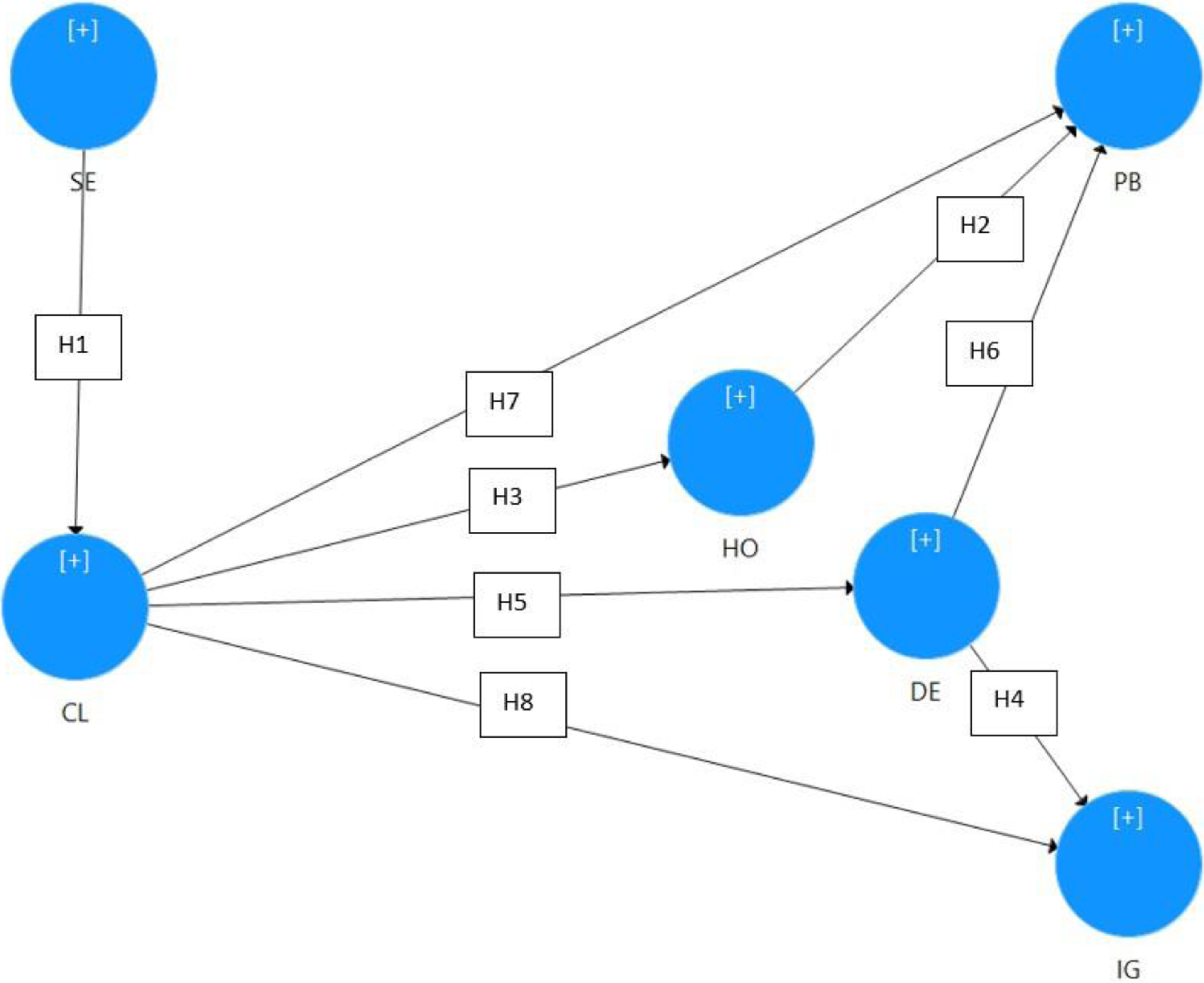
Relation between school effort, climate literacy, and its consequences. Source: Author.
Research methodology
This research adopted a hypo-deductive approach, classifying variables into two groups—structural and functional. This classification guided hypothesis formulation and statistical test selection, aiming to enhance overall research efficiency (Mesly, 2015, p. 126). Data collection in India utilized a self-administered questionnaire and convenience sampling. India, being the second-fastest-growing economy globally, attracted attention. A pilot survey involved 43 students, leading to changes based on their recommendations, including the removal of redundant items and simplification of language. Questionnaires were distributed to school children in three Delhi NCR schools, targeting the age group of 14–16, recognizing their vulnerability and need for protection (Pennea et al., 2021). Out of 700 approached students, 473 usable responses were received, with inappropriate identical responses excluded. Participants were assured of anonymity, reducing apprehension and social desirability concerns (Podsakoff et al., 2003). Data collection spanned diverse times and days over six months, addressing periodic and non-coverage issues. Of the 473 respondents, 53 percent were female, and 47 percent were male. The sample size surpassed the suggested size for structural equation modeling (Boomsma, 1987; Kline, 2011). Questionnaires were distributed using a group administration approach for efficient and high-response-rate data collection (Adler and Clark, 2006). A questionnaire, encompassing measures such as class, age, gender, mother and father occupations, and income levels of Indian consumers, was developed. It included scales adapted from past research work, widely used and established in diverse contexts, from previous studies like Padhy et al. (2015), Stevenson and Peterson (2016), Howse et al. (2021), and Ekland et al. (2021). The main objective was understanding school efforts for climate education, climate literacy, and their impact on children's behavior. Respondents rated perceptions on a 5-point Likert scale for dimensions like school effort, climate literacy, pro-environmental behavior, indoor generation behavior, hope, and despair. Pre-testing involved school teachers and students.
Data analysis and findings
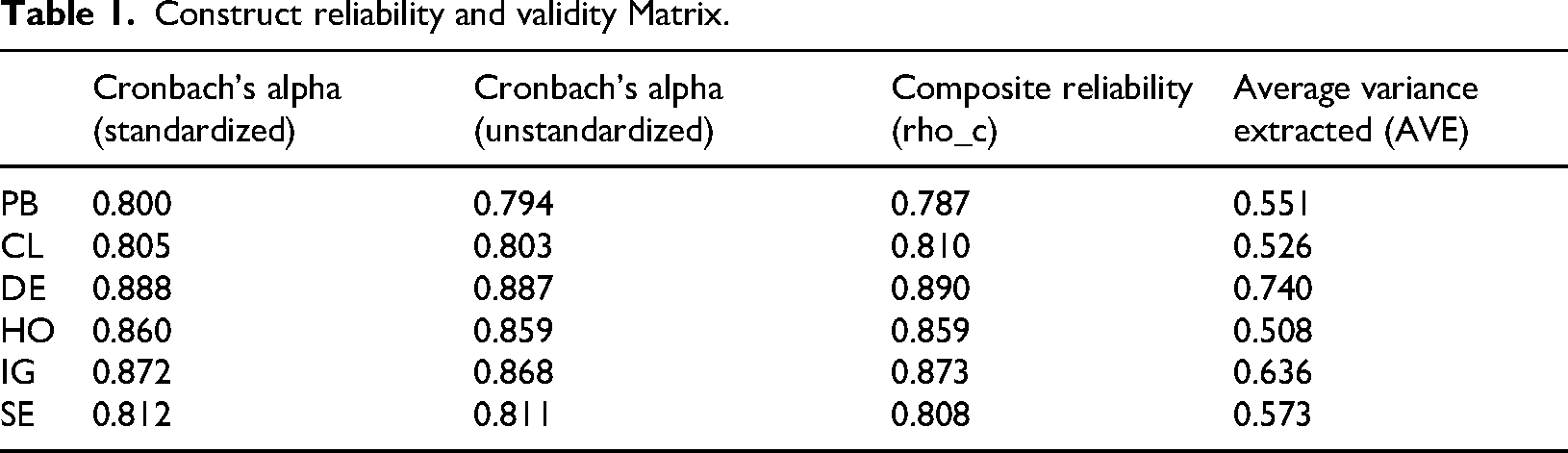
In this study, CB-SEM path modeling was utilized to examine the proposed hypotheses and validate the measures. Internal consistency of the scales was ensured through adequate Cronbach alpha (α) values, ranging between 0.800 and 0.888, meeting the threshold value of 0.7 and above (Nunnally and Bernstein, 1994).
Convergent validity and discriminant validity were established to ensure construct validity. MSV and ASV, representing maximum shared variance and average shared variance respectively, serve as crucial tools for scrutinizing discriminant validity. The essence of discriminant validity assessment lies in confirming that a reflective construct establishes stronger associations with its own indicators compared to those of any other construct within the PLS path model (Hair et al., 2022). Our study adopts both HTMT and the Fornell Lacker criterion for this purpose.
In our investigation, both validity techniques endorse the robustness of our data, affirming the discriminant validity of the constructs under scrutiny (Table 1).
Construct reliability and validity Matrix.
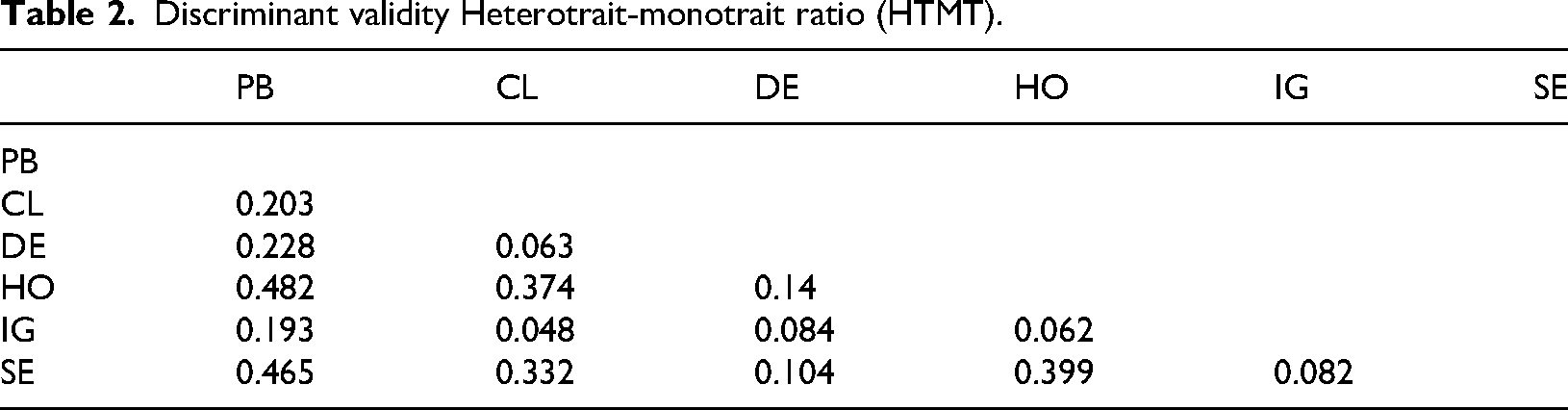
HTMT, a statistical technique prevalent in business management research (Nawanir et al., 2019; Roemer et al., 2021), examines discriminant validity, aiming for values below 0.90 to meet acceptability (Hair et al., 2022). HTMT value below 0.90, established discriminant validity amongst constructs (Table 2).
Discriminant validity Heterotrait-monotrait ratio (HTMT).
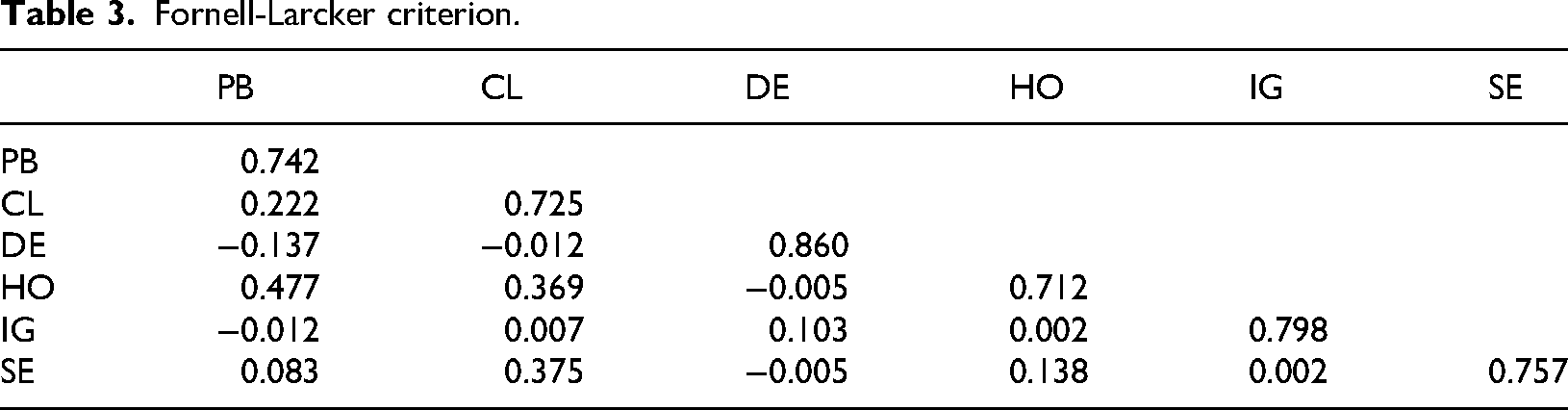
The Fornell-Lacker criterion, one cornerstone in the realm of discriminant validity assessment, contrasts the square root of average variance extracted (AVE) with the correlations among latent constructs. AVE falls within the suggested range, varying from 0.508 to 0.740, further validating the convergent validity of the constructs. A construct's AVE should predominantly capture the variance of its own indicators rather than those of other constructs, substantiating its distinctiveness. This criterion, as delineated by Hair et al. (2014), underscores the necessity for the square root of each construct's AVE to surpass its correlations with other latent constructs. Discriminant validity was observed through the square root of the AVE, exceeding the correlation value within each construct and with other constructs (Fornell and Larcker, 1981) (Table 3).
Fornell-Larcker criterion.
Hypotheses
After the constructs were confirmed as reliable and valid, structural model results were assessed. The following table shows the path coefficients obtained by applying non-parametric bootstrapping (Ref. Table 4)
Results of path coefficients.
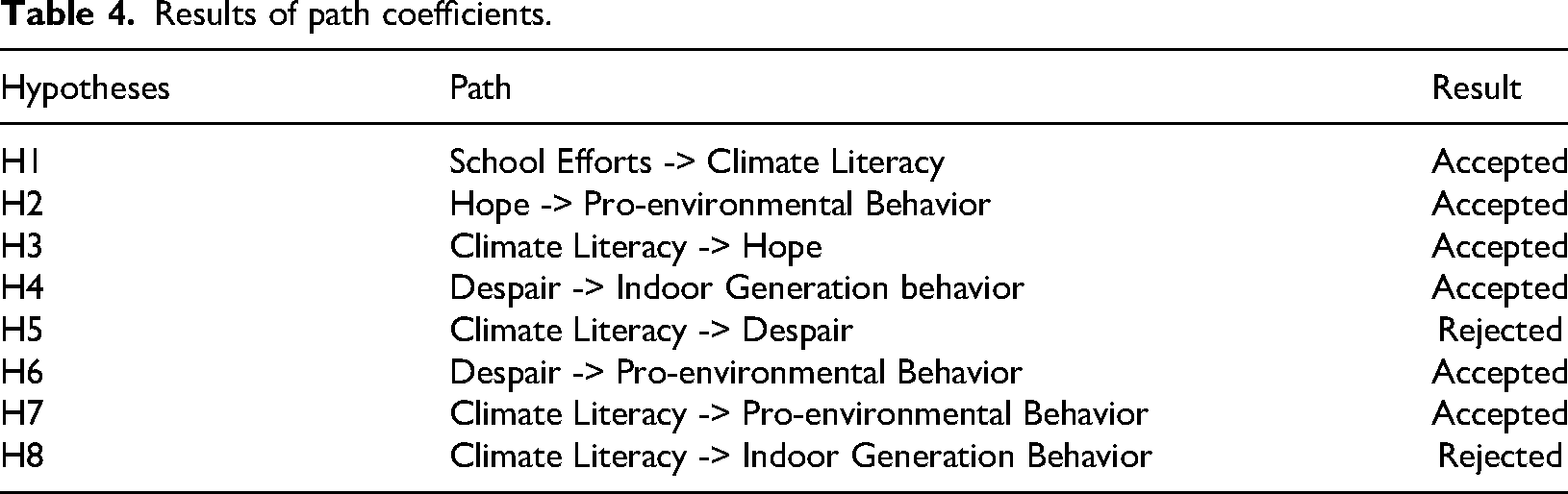
School efforts were found to be positively correlated with climate literacy and climate literacy further leads to hope and pro-environmental behavior. Hope was found to be leading to pro-environmental behavior positively. Climate literacy was not found to be leading to despair or indoor generation behavior. Despair was negatively related to pro-environmental behavior (negative and significant) whereas it was found to be positively related to indoor generation behavior.
Mediation analysis was carried out by calculating the variation accounted for (VAF)that determines the size of the indirect effect to the total effect. Full mediation is characterized by larger values of VAF (more than 80 percent); no mediation for very low values of VAF (less than 20 percent) and partial mediation if VAF lies between 20 and 80 percent. For climate literacy-hope–pro-environmental behavior a VAF value of 0.56 shows partial mediation. For climate literacy-despair-pro environmental behavior and climate literacy -despair and indoor generation behavior were not found to be significant.
Discussion and Implications
The broad objective of the present research was to empirically examine school efforts and environmental behavior amongst school-going children. The proposed empirical model posits the mediating effect of hope and despair between climate literacy and environmental behavior (pro-environmental and indoor generation). The findings suggest that hope is an independent predictor and partially mediates climate literacy amongst students and pro-environmental behavior. A VAF value of 0.56 indicates partial mediation for climate literacy, hope, and pro-environmental behavior. The relationship between despair and pro-environmental behavior was significant but negative whereas relationship between despair and indoor generation behavior was found to be positively significant. Climate literacy's relationship with despair and indoor generation was found insignificant. Meditation by despair between climate literacy and proenvironment and indoor generation behavior was found insignificant.
The significant relationship between school efforts, climate literacy, hope, and pro-environmental relationship indicates that involved students have a positive and actionable orientation towards the environment. At the same time, this also indicates a hopeful stance toward climate literacy by schools leads to the creation of an environment-friendly mindset for students. Despair sometimes may lead to proenvironmental behavior as well as indoor generation behavior but it is not found to be guided by climate literacy. Despair doesn’t seem to be a strong predictor of indoor generation behavior although some studies suggested despair to be leading to indoor generation behavior. Technology, increasing prices of land and home, and a scary picture of the world outside all corners, the new generation as well as the older generation in their comfort zones or cocoon. Since they spend almost eighty to ninety percent of their time indoors they thus are called indoor generation (Boost, 2020; VELUX, 2015).
Theoretical implications
The present research contributes to the literature on climate literacy and environment-related behavior. This study has a number of theoretical implications. a)First, this study presents a model of how school efforts and climate literacy can have an effect on pro-environmental and indoor generation behavior. The developed model was tested in the context of school children for climate literacy but the model could be valid in other contexts too. b)Second, not many studies have so far talked about indoor generation behavior or the influence of climate literacy on indoor generation behavior. The available literature on indoor generation has been compiled in this study and its relationship with despair or climate literacy has been done which was mainly ignored in existing research. And that makes this study uniquely contribute to theory. c)Third, the findings reveal that among the climate literacy and behavior variables, hope is the most important variable that leads to pro-environmental behavior. These findings have implications for high school curricula and climate change education and policy.
Managerial implications
People susceptible to the health impacts of climate change find value in communication materials that use visuals and straightforward language to illustrate the effects of climate change on health and provide guidance on adopting protective adaptation behaviors (Kreslake et al., 2016). Marketers dealing in green products should use illustrations demonstrating positive impact of their purchase to influence younger generation. Similar to other studies, this study also assists practitioners regarding school efforts, climate literacy, and pro-environmental behavior. In these unprecedented times, this theme holds more relevance than ever before. Children represent the future generation and have the capacity to influence the present generation in adopting environment-friendly practices. The proposed and empirically tested model of this study revealed that by ensuring climate literacy and instilling hope in the younger generation schools can influence the masses and help in making the earth a safer planet. The findings of this study are reinforced by an appreciation of hope, wherein hope encompasses pathways (identifying a solution) and agency thinking (confidence in one's capacity to make a difference), working together to inspire action (Snyder et al., 2005).
Policy implications
It is clear from the study that climate study, climate literacy leads to pro-environmental behavior partially mediated with hope and refrains people from leading an indoor generation life. Consequently, school boards, schools, government, and parents should make all attempts to enhance climate literacy practices in schools and otherwise too. Accordingly, it can also help in differentiation for schools, the ones that adopt these practices and others that don’t. Government agencies can deliberate on their role in creating hope or despair with scientific bodies to further support pro-environment behavior amongst citizens.
Conclusion
The objective of this paper was to assess school efforts and climate literacy relationships in influencing schoolchildren's environmental behavior. To achieve the research objectives, we proposed eight hypotheses and empirically tested them. Analysis indicated hope contributed as a mediator between climate literacy and pro-environmental behavior. Thus, hope is of significant importance in positively influencing school children's behavior positively towards the environment. Moreover, the influence of climate literacy, despair, pro-environmental behavior, and indoor generation behavior has been found to be ambiguous.
Limitations and future research
The present research has a number of limitations. First, the study was performed in India, and it will be worthwhile to examine the relationship between school efforts, climate literacy, hope, despair, proenvironmental behavior, and indoor generation behavior in other countries. Second, the present research is cross-sectional in nature, thus further studies with longitudinal data are needed to be conducted. Third, this paper investigated hope and despair as mediating variables; further studies could assess, mediating as well as moderating effects of some other variables in the hypothesized model. A potential number of potential mediators and moderators can be picked from predictors of indoor generation behavior, predictors of pro-environmental behavior, and climate literacy. Interaction and influence of demographic factors could also be studied in future studies to have more insights into how these relationships vary in different situations ns. The present study is restricted to schools following the Central Board of Secondary Education (CBSE, India) curricula, it will be interesting to examine the responses from schools from other international boards too. The findings of the proposed model cannot be generalized due to the research's specific focus on a particular geographical area, namely Delhi,NCR in India. Additionally, the study's emphasis on young consumers introduces a potential bias, as their responses may lean towards socially desirable outcomes (Fischer et al., 2017). The restriction to the Indian market limits the generalization of results, considering the influence of consumers’ socio-cultural values, which may differ from those in other countries (He et al., 2016). Moreover, factors such as lifestyle, eating habits, and health concerns were not considered in this study (Göç er and SevilOflaç, 2017). These limitations could be addressed in future research to enhance the comprehensiveness of the findings.
Footnotes
Declaration of conflicting interests
The author declared no potential conflicts of interest with respect to the research, authorship, and/or publication of this article.
Funding
The author received no financial support for the research, authorship, and/or publication of this article.
