



Abstract
Strengthening political knowledge and democratic understanding of children is an essential aim of citizenship education. In Germany, most curricula of civic education target high school students, neglecting younger children in elementary school. The present study investigates the impact of an out-of-school program for elementary school students at a state parliament on their political knowledge and political interest. The program introduces the students to parliamentary institutions, processes, and decision-making. Among other didactical elements, the students participate in a simulation of a plenary session. The article examines the short-term and long-term effects of program attendance with a quasi-experimental design. The findings show that the out-of-school program positively affects children's political knowledge and interest, thereby confirming that civic education can already be effective at the elementary school level. By implementing such interactive learning programs, schools and teachers could positively contribute to young citizens' political socialization.
Keywords
Introduction
Being politically interested and knowledgeable helps citizens to form an independent opinion and to participate competently in political decision-making processes. Moreover, both political knowledge and political interest are positively correlated with support for democratic values (Galston, 2001: 224−225). From a democratic perspective, politically well-informed and interested citizens are therefore desirable. Considering that the foundation for successful democratic citizenship is laid in early years (Verba et al., 1995; van Deth et al., 2011), civic participation or abstention might be, at least to some extent, the result of successful or failed political socialization processes taking place in different institutions and contexts. Thus, “good citizens are made, not born” (Galston, 2001: 217), which stresses the importance of citizenship education. An individual's cognitive political involvement is acquired through political socialization and learning processes, which begin in early childhood. In Germany, the electoral success of the populist right-wing party AfD has led 2 to a renewed interest in the strengthening of civic education.
For a long time, civic education and research on political learning have focused on adolescents or even young adults and rarely looked at younger children (Abendschön 2017; Haug 2017). Recent societal demands for children's participatory rights (for instance, by the UN) and empirical findings from educational and socialization studies suggest, however, the relevance of political socialization processes in childhood. At the beginning of their school career, many children are politically interested and knowledgeable, demonstrate political and social understanding, and support democratic values and norms (van Deth et al., 2011; Götzmann, 2017).
To strengthen this development, the communication department of the state parliament (Landtag) of the German Bundesland Rhineland-Palatinate developed an out-of-school citizenship education program in 2018, taking place in the Landtag itself. This new visiting program aimed exclusively at elementary school students in grades 3 and 4. The program intended to strengthen political knowledge and democratic understanding of children, especially with regard to the political context of the Bundesland. Within this out-of-school learning environment, the children should develop a general understanding of political decision-making and democratic processes. Among other didactical elements, the visiting program included a simulation of a plenary session.
To assess if the students of the target group who participated in the program experienced learning effects, the communication department of the state parliament (Landtag) asked us to conduct a study on the program's influence on children's political knowledge and interest The evaluation's aim, therefore, was to test if the newly implemented program has positive effects on the levels of students' political knowledge and interest. A quasi-experimental design was set up to analyze the possible impact of the program on its participants.
In this article, based on the study data, we analyze children's political knowledge and political interest throughout the program. What level of political knowledge and political interest do the children have before they attend the program? To what extent does the program influence the children's political knowledge and interest levels? Moreover, are these effects lasting or only of a short-term nature? The findings can enhance our general understanding of the impact of out-of-school learning activities on elementary school students' political knowledge and political interest.
Political Knowledge and Political Interest in Childhood
It is a well-established fact in political behavior research that both political knowledge and political interest foster and facilitate political participation, deliver an informed background to political decisions, and generally enable and motivate people to recognize and articulate their political preferences (Delli Carpini et al., 1996; Niemi and Junn, 1998; Milner, 2002). Some authors even consider political knowledge the “currency of citizenship” (Delli Carpini et al., 1996: 8). Suitable for examining children's cognitive involvement, we understand political knowledge as “the range of factual information about politics that is stored in long-term memory” (Delli Carpini et al., 1996: 10). Moreover, this factual information should be “correct” (Luskin, 1987) or “proven to be 'true'“ (Dekker and Nuus, 2007: 28). Political interest as our second relevant characteristic can be defined as “the degree to which politics arouses a citizen's curiosity” (van Deth 1990: 278), or, to speak with Lupia and Philpot (2005: 1122), it represents “citizen's willingness to pay attention to political phenomena at the possible expense of other topics”. According to Haug (2017: 256), this degree of curiosity “is supposed to be a comprehensive orientation toward politics in general” (see also van Deth et al., 2011; Abendschön and Tausendpfund, 2017).
Children acquire political knowledge and political interest, next to other political orientations, during political socialization processes. Early political socialization studies (Hess and Torney, 1967; Greenstein, 1965; Easton and Dennis, 1969) have already indicated that both affective orientations towards the political system and its authorities and the acquisition of political facts and information start in early childhood. The works of Hess and Torney (1967) and Easton and Dennis (1969) are based on the same expansive standardized data collection with about 17.000 US-American students. Students of grades 2 to 8 were questioned in both qualitative pilot studies and a vast survey study about their orientations towards the political system and its authorities. They showed that children personalize politics, and gradually assemble political information during their elementary school years (Easton and Dennis, 1969; Hess and Torney, 1967; Moore et al., 1985). Moreover, it was assumed (although without robust longitudinal evidence) that basic political orientations such as trust and support remain rather stable in the individual biography.
Recent studies show that many elementary school students are politically knowledgeable and display an interest in political topics (e.g., van Deth et al., 2011; for interest: Haug, 2017). Haug’s (2017) mixed-methods design (survey and drawings) for instance reveals that students aged 8 to 12 years have a consistent understanding of politics and already express political interest. Götzmann (2017) could show that first-graders exhibit political knowledge and conceptual understanding and recognize political phenomena; throughout elementary school, this understanding differentiates further. Van Deth et al. (2011) revealed in a panel study with more than 700 students from German primary schools that school beginners have already developed structured political orientations that develop further in a consistent way in primary school. However, most of these studies indicated that the socioeconomic environment and/or a migration background 3 and to a lesser extent gender affects the development of children's political orientations (e.g., Greenstein 1965; Hess & Torney, 1967; Moore et al., 1985; Gemmeke, 1998; van Deth et al., 2007; van Deth et al., 2011; Vollmar, 2012; Götzmann, 2017).
The Relevance of Civic Education
So far, political socialization and civic education research has mainly focused on youth who attend at least secondary school (van Deth et al. 2011). However, there are a few exceptions from different countries. For instance, a study of elementary students in the U.S. show that active learning strategies can positively influence elementary school students' political engagement and that even contentious political issues can be discussed in their classrooms (Payne and Journell 2019, Beck 2003). During the last years, the political orientations of children slightly gained more attention. Studies found that an interactive engagement with concrete content is having a positive effect on political learning, even for primary school students. Berti and Andriolo (2001) demonstrate in their intervention study with an extra-curriculum on core political notions with Italian 3rd graders that children can understand core political notions after specific stimuli (such as law, the main Italian political offices, the state). Oberle et al. (2018) indicated that an EU simulation game with German elementary school students could improve the children's political understanding of the EU. These studies show that the transfer of political information raises curiosity and interest for political affairs and improves political knowledge among young children. With Russo and Stattin (2017: 654) we can therefore conclude that the “impressionable years are the years of early adolescence, and possibly even before”.
Attending a special parliamentary visiting program constitutes an interactive learning strategy that includes formal civic education and puts children in direct contact with politics. Therefore, we assume that this out-of-school learning environment can – as a form of active learning strategy - influence primary school students' political knowledge and political interest positively. We expect that the parliamentary visiting program trains and improves both political knowledge and political interest.
Visiting Program
Before we present the research design of our study, we address the content and structure of the newly introduced visiting program at the Landtag. The program was developed by the communication department of the Landtag (duration: one school day). The program want to present an early first contact with parliamentary democracy for young children. It aims to support the political socialization process in elementary schools and to improve children's general understanding of political decision-making processes. Furthermore, the program wants to strengthen young children's interest in democratic processes through this out-of-school learning environment. 4 Schools could apply with two classes of each cohort for the program via a public call. Out of 40 applications, the Communication Department of the Landtag selected 10 schools to attend the program (including 10 program and 10 control classes). The selection was based on regional dispersion, in order to include schools from all regions of the state. 5
The program itself consisted of three parts. First, the participating classes received learning material for the teachers in class (i.e., learning puzzles and memory games that introduce political institutions in a playful manner) before the visit. Second, the students were shown around the building and introduced to the institution Landtag, its meaning for democracy, and how political decisions are made. 6 Thereby, the program aimed to further enhance the understanding of different parliamentary settings, especially on the state level. Third, after a break, the students were prepared to participate in a simulation game of a plenary session to learn the “rules of the (political) game": different parliamentary groups, the distribution of seats, the tasks of the parliamentary chair and speaker. Moreover, they were shown how a parliamentary discussion can be structured, and how the final decision is made. Following this introduction, with regards to content and process, students could suggest political topics they want to deliberate on in the simulation game. Students then decided by majority rule the respective topic. For the simulation game, students were allocated into different parliamentary groups, and the chair/speaker of the plenary session. Students publicly discussed the topics (pros and contras), this discussion was moderated by the chair and speaker roles. The simulation game lasted about 45 to 60 min.
Research design
We set up a quasi-experimental design to evaluate the aims of the program and the effect of attending the program for elementary school students (grades 3 and 4) in the parliament of Rhineland-Palatinate. Experimental designs require high homogeneity between program and control groups regarding the social environment, age, and initial knowledge. From the applied schools, two classes of 3rd resp. 4th grade participated in this study. Therefore, a complete class was assigned as program or control class. The assignment of program and control class was randomized, however, the control classes also attended the program after the study was finished. Having two classes of the same grade in each participating school enabled us to assign one class to the program group (P) and one class to the control group (C) in each school. This approach helps to ensure comparability between the program and control group because the two classes of one school have the same preconditions in terms of school climate and local context. 7
We developed a standardized children's questionnaire to measure children's political orientations, their cognitive political involvement, their family background, and their feedback to the program itself. The construction of the questionnaire was based on available instruments of the project “Learning to live democracy” (van Deth et al., 2007; van Deth et al., 2011). Moreover, new instruments were developed and included in the questionnaire to measure if the objectives of the visiting program were achieved. We conducted pre-tests of the questionnaire with a similar class to the target group, which did not participate in the program.
Figure 1 illustrates the research design. The program group (group P) filled in the same questionnaire three times. With the first wave, we measured initial levels of political knowledge and political interest before students were introduced to the visiting program. With the second wave directly after the visit, we could measure short-term effects of the day at the Landtag. Wave 3, three weeks after the visit, can measure long-term effects of attending the program. As discussed earlier, out-of-school learning activities can have positive effects on political learning. With our three wave design we can test if effects are only of short duration or have a more lasting character. Around the same time, the control groups (group C) completed the same core questionnaire 8 in wave 1 and wave 3.
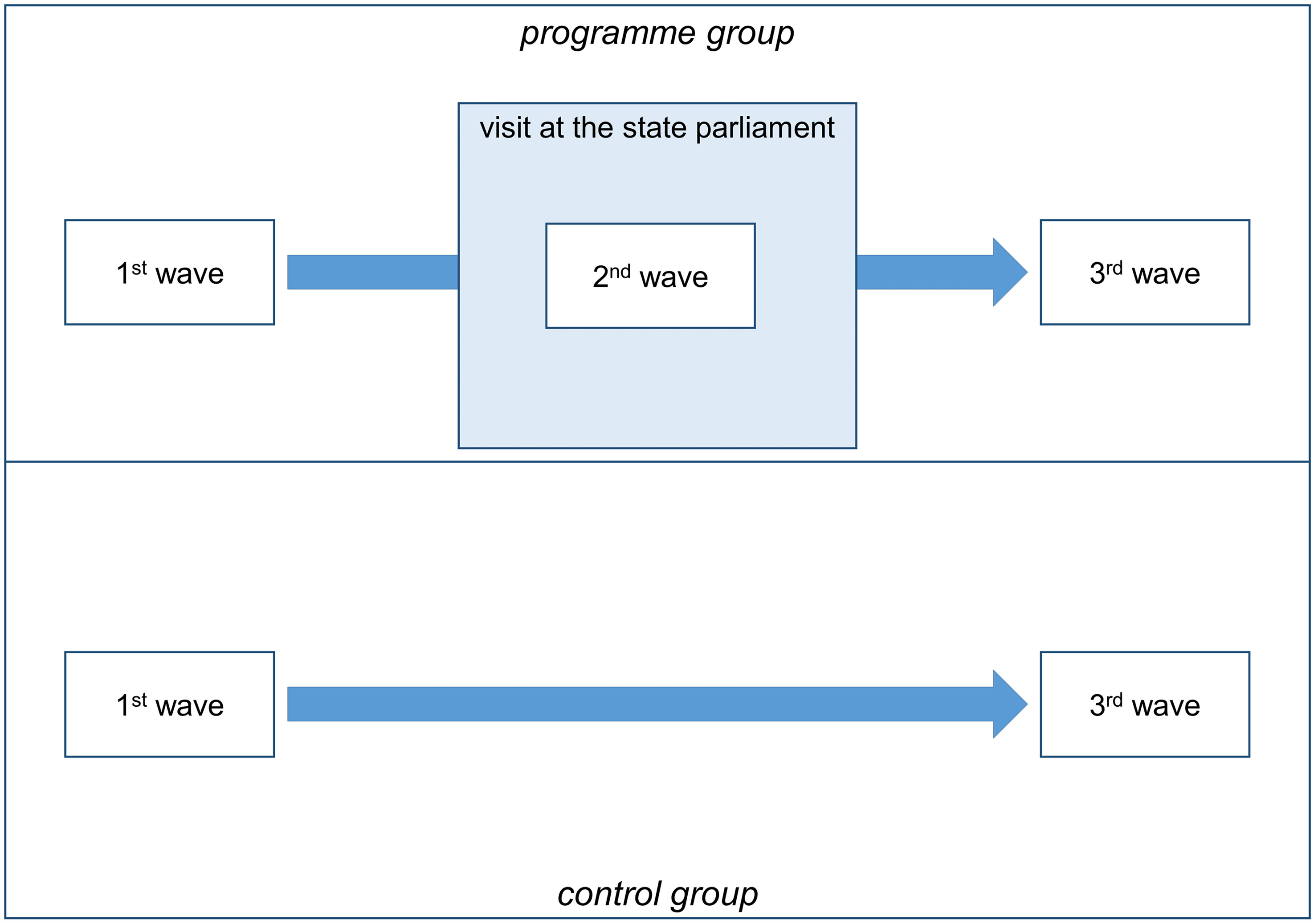
Research design.
The first wave was conducted one week before each program class attended the program in the Landtag.
The sample included 20 classes (10 program and 10 control classes) with 424 students. The response rate was 80% (nPanel = 341 9 ). We collected 157 complete surveys (3 waves) within the program group and 184 complete surveys (2 waves) within the control group (sample size per class can be found in the appendix, table A1).
Hypotheses
Regarding the development of children's political knowledge and political interest, we expect a rise in these orientations after attending the program because the students have actively engaged with the program material and participated in the simulation game.
The political knowledge and political interest levels of children should increase directly after attending the program.
H1 addresses the short-term learning effects of the program. Higher levels should primarily occur immediately after the children participated in the program as a direct effect of the out-of-school learning activity. Concerning long-term effects, we expect the levels of political knowledge and political interest to be higher three weeks after attending the program (wave 3) than before attending the program (wave 1). However, the level of political knowledge and political interest might have decreased three weeks after attending the program (wave 3) compared to directly after attending the program (wave 2) due to a lack of active engagement with the topic. It seems reasonable that students' curiosity about politics decreases over time and the effect of the out-of-school activity might not be sustainable; however, we still expect to find higher levels than before. Therefore, we assume that
The level of political knowledge and political interest should be higher three weeks after attending the program than before attending the program.
Furthermore, for the program to be effective in our understanding, children should exhibit substantially higher levels after attending the program than the control children (with no program). Otherwise, an increase in the level of political orientations could not be related to program attendance, the cause for an increase in both groups might be a social studies class or a general rising interest due to age or period effects.
The differences in levels of political knowledge and political interest should be high and significant between the program and the control group after attending the program.
Finally, we expect a positive and significant effect of the visit of the Landtag on the level of political knowledge and political interest, even if other factors are taken into account. With this, we hypothesize that attending the program still has an important influence besides other factors on the political socialization process of young children.
Even after controlling for other variables, the children's levels of political knowledge and political interest should be higher after attending the program than before.
Measurement
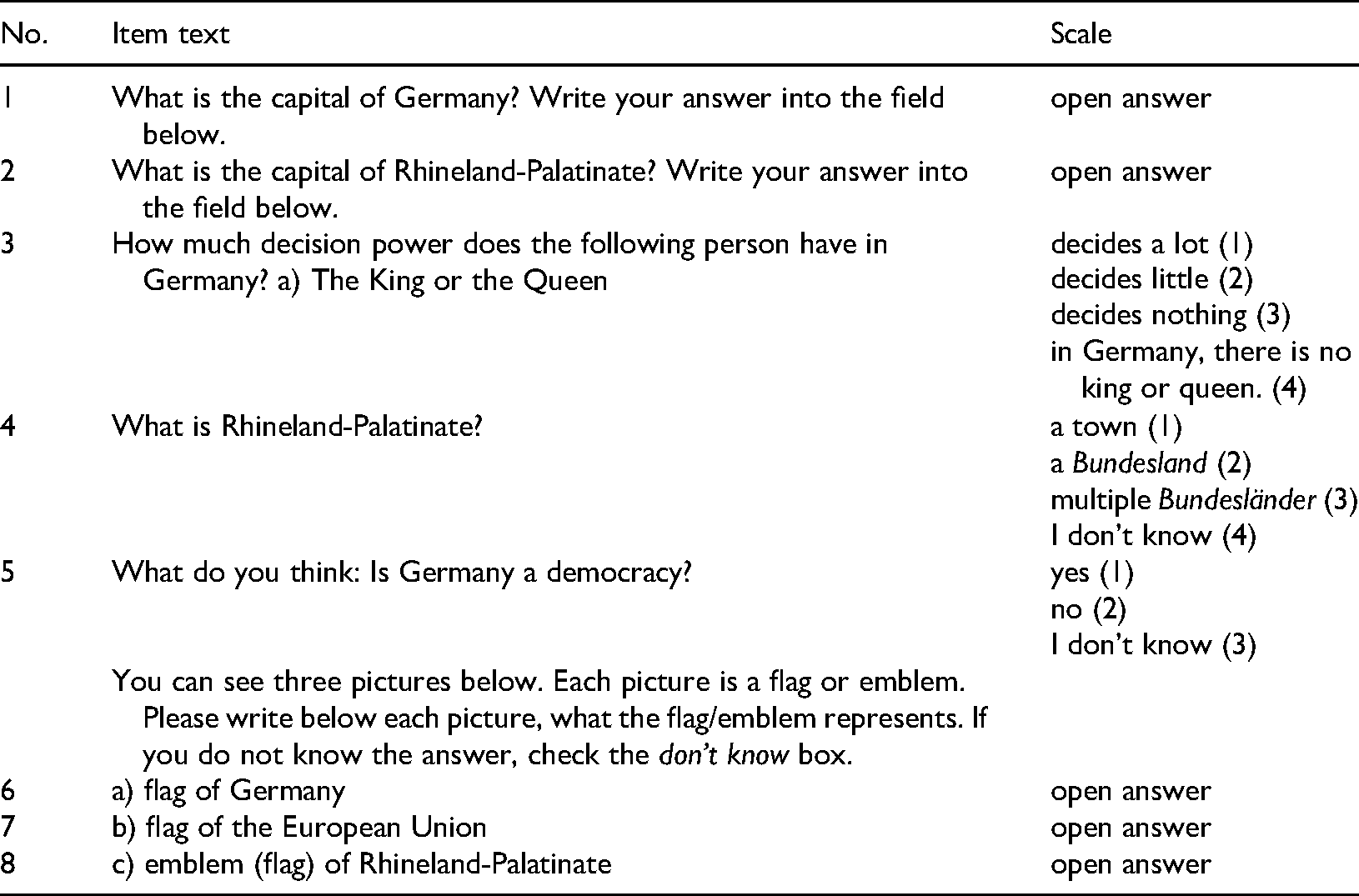
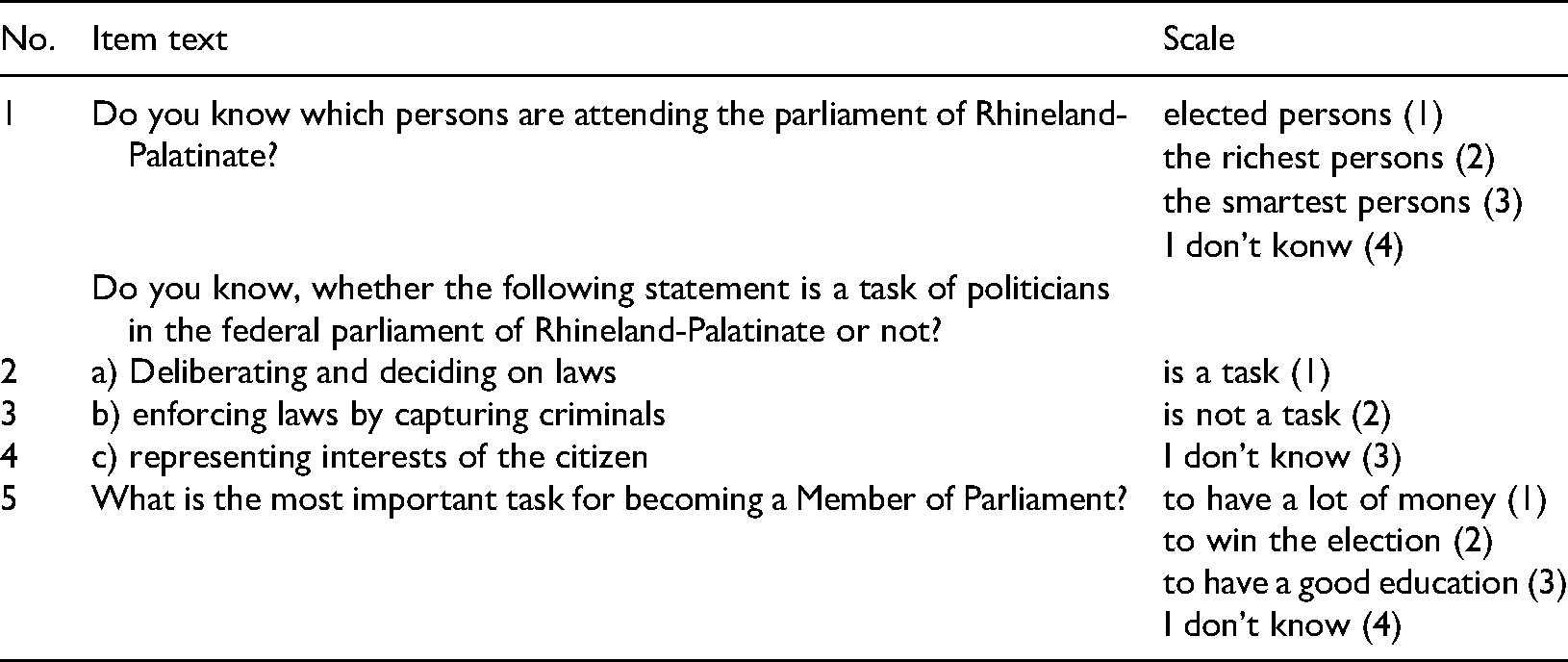
In the core questionnaire, a wide variety of political knowledge items was included. There were general political knowledge questions, for instance, about political symbols such as the European flag or the capital of Germany. There were also more specific knowledge items dealing with the parliament and its functions. A principal component analysis
10
of the knowledge items revealed two empirical dimensions that also make sense from a theoretical perspective.
general political knowledge (8 items) and specific parliamentary political knowledge (on the state level) (5 items).
Tables 1 and 2 show the wording of the questions.
Items of the general political knowledge.
Items of the parliamentary political knowledge.
An index was created for each of the two dimensions by summating each individuals' correct answer (coded as 1) on the respective items. Wrong and “Do not know"-answers were coded traditionally as wrong answers (coded as 0) (e.g., Mondak 1999: 59). The final index of general knowledge includes values from 0 (no correct answer) to 8 (all questions correctly answered). The index of parliamentary political knowledge includes values from 0 (no correct answer) to 5 (all questions correctly answered). Since we dichotomized the items, we calculated Kuder-Richardson-20 reliability scores. The reliability test values lie for both indexes consistently for all three waves at around 0.7 (Table A2 in appendix).
Political interest – our third dependent characteristic – was measured with a single standard item that is also used in questionnaires with youth and adults: “How interested are you in Politics? You are …”. They could answer on a four-point scale from very interested (3), interested (2), more or less interested (1), and not at all interested (0).
Besides the primary independent variable – program attendance – we include socio-economic control variables age, gender, socio-cultural environment, migration background in the regression analyses because they have proved to be effective in other political socialization studies (e.g., van Deth et al., 2011; Abendschön and Tausendpfund, 2017). We measure program participation as a dummy variable (0: non-attendance in the program, 1: attendance in the program). Gender is used as a binary variable (female/male) in this analysis. 11 As it was done successfully in other international student assessment studies (e.g., Sieben and Lechner, 2019), we used an easily comprehensible item to measure the socio-cultural background of the young students. We measured socio-cultural background with the number of books at home: respondents answered on a 5-point-scale from only a few (up to 10 books) (1), a single book board (11 to 24 books) (2), a bookshelf (25 to 100 books) (3), about two bookshelves (101 up to 200 books) (4) to three or more bookshelves (more than 200 books) (5). While conducting the pretests, we have not recognized any irritation on this question. With this item, we can measure approximatively the socio-cultural background of children without being too insensitive to children's feelings while completing the survey. 12 In the same way, we used an approximate item on the student's migration background. It seems insensitive to ask young students directly where they or their parents were born. To measure a potential migration background, students were asked which languages they speak at home (open question). In socialization studies, it has been found that the spoken language at home is a better indicator for analyzing the migration background of adolescents (see for Germany especially the results of the PISA study: e.g., Müller and Stanat, 2006; Walter, 2008). Niemi and Junn (1998: 120−124) could show that youth from families where other languages were spoken than English have less political knowledge than youth from families where English is the pre-dominant language at home. By measuring migration background with languages spoken at home, we also ascertain language barriers, which might hinder the program from being fully effective. We recoded the open answers into three relevant groups: 1) households, in which only German is spoken, 2) households, in which German and any other language are spoken, and 3) households, in which any language(s) except German are spoken (one or more different languages).
Analyses
Our analytical strategy consists of three consecutive steps. Each step contributes to the test of the hypotheses. First, we analyze the development of knowledge and interest levels descriptively over the study time for the program group (H1). Second, we conduct pre-post analyses (dependent t-tests) for the program group only and independent t-tests between the program and control groups in waves 1 and 3 (H2 and H3). Third, we estimate linear regression models with each of the dependent variables. In all steps of the analyses, we included only those students who participated in all three survey waves (P, program group), respectively, two waves (C, control group) (H4).
First step: political knowledge and interest over time
In this section, we examine the longitudinal development of the three dependent variables during the observed period, general political knowledge, parliamentary political knowledge, and political interest
H1 expects that students' political knowledge increases after attending the program at the parliament. Figure 2 shows the mean general political knowledge over the three (P), respectively, two waves (C). Students (group P) show higher political knowledge directly after attending the program and even after another three weeks than their peers of the control group C. Although three weeks after attending the program the mean average is lower than directly after the visit at the Landtag, it is still higher than the initial level of political knowledge (before attending the program), which confirms H2. Descriptively, we see that students who attended the program gained higher levels of general political knowledge.
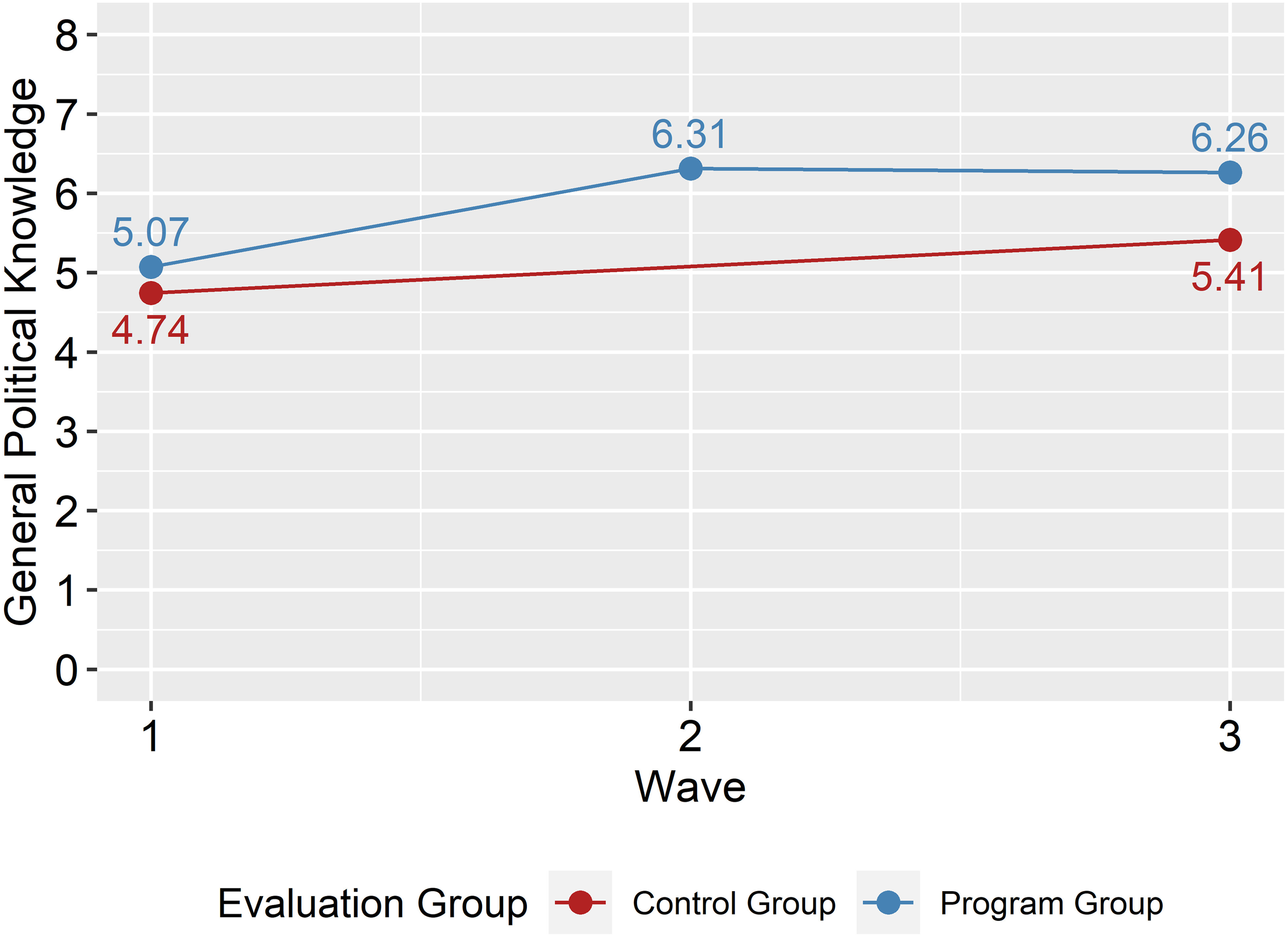
Mean general knowledge (aggregated by the program (P) and control group (C)).
Similar to the development of general political knowledge, we see increasing levels of parliamentary political knowledge in program group P. Figure 3 shows that program children exhibit higher levels of political knowledge, both directly (H1) and three weeks after the program (H2). Again, we can see that students, who attended the program gained higher levels in the short and the long term.
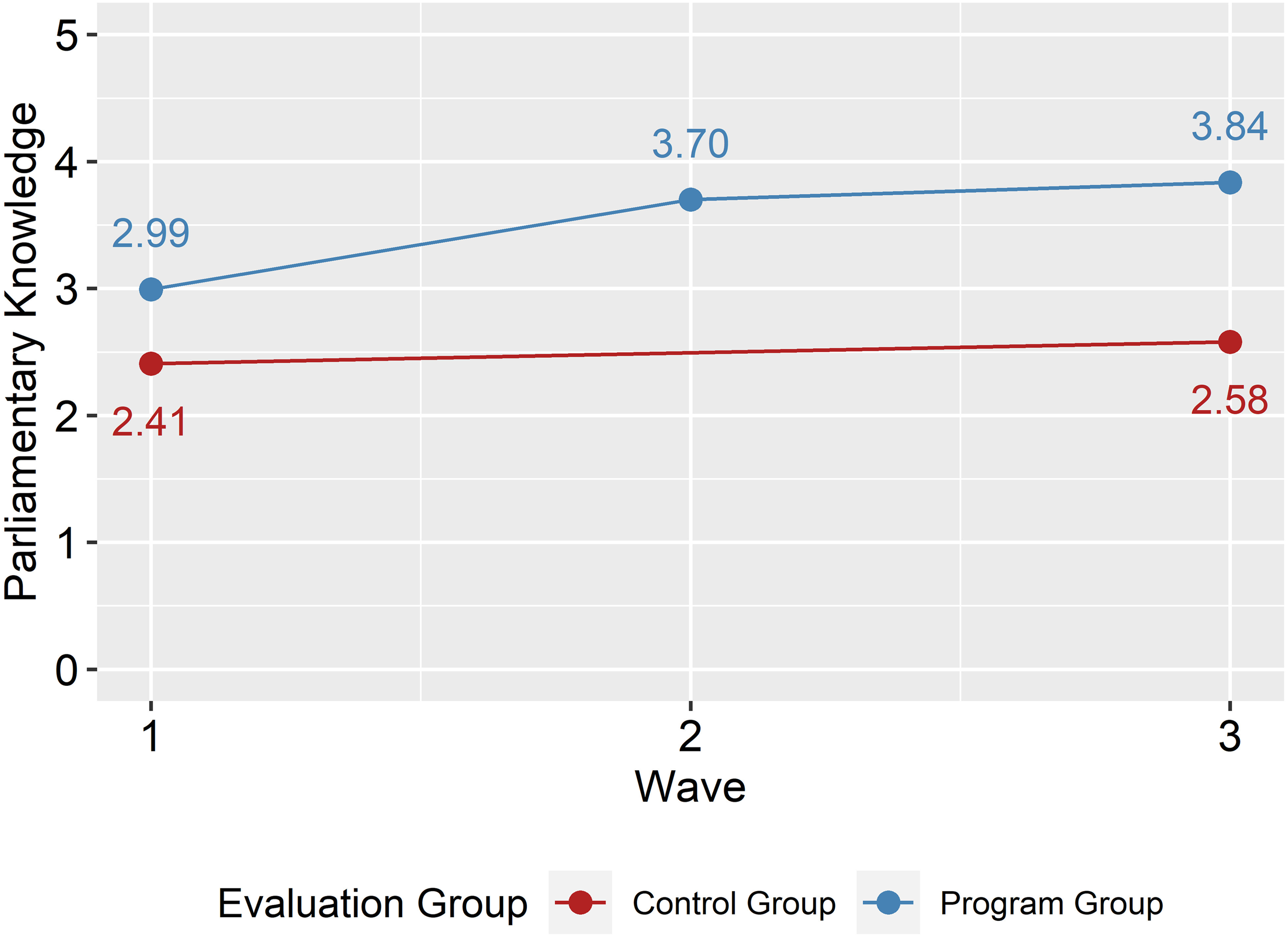
Mean parliamentary political knowledge (aggregated by the program (P) and control group (C)).
The first hypothesis H1 expects an increase in the level of political interest since the out-of-school learning experience could strengthen the curiosity about politics. As Figure 4 shows, the interest level is indeed rising, especially directly after attending the program. The interest level has increased by around 0.45. (H1). The program achieved to nurture students' curiosity directly after attending the program.
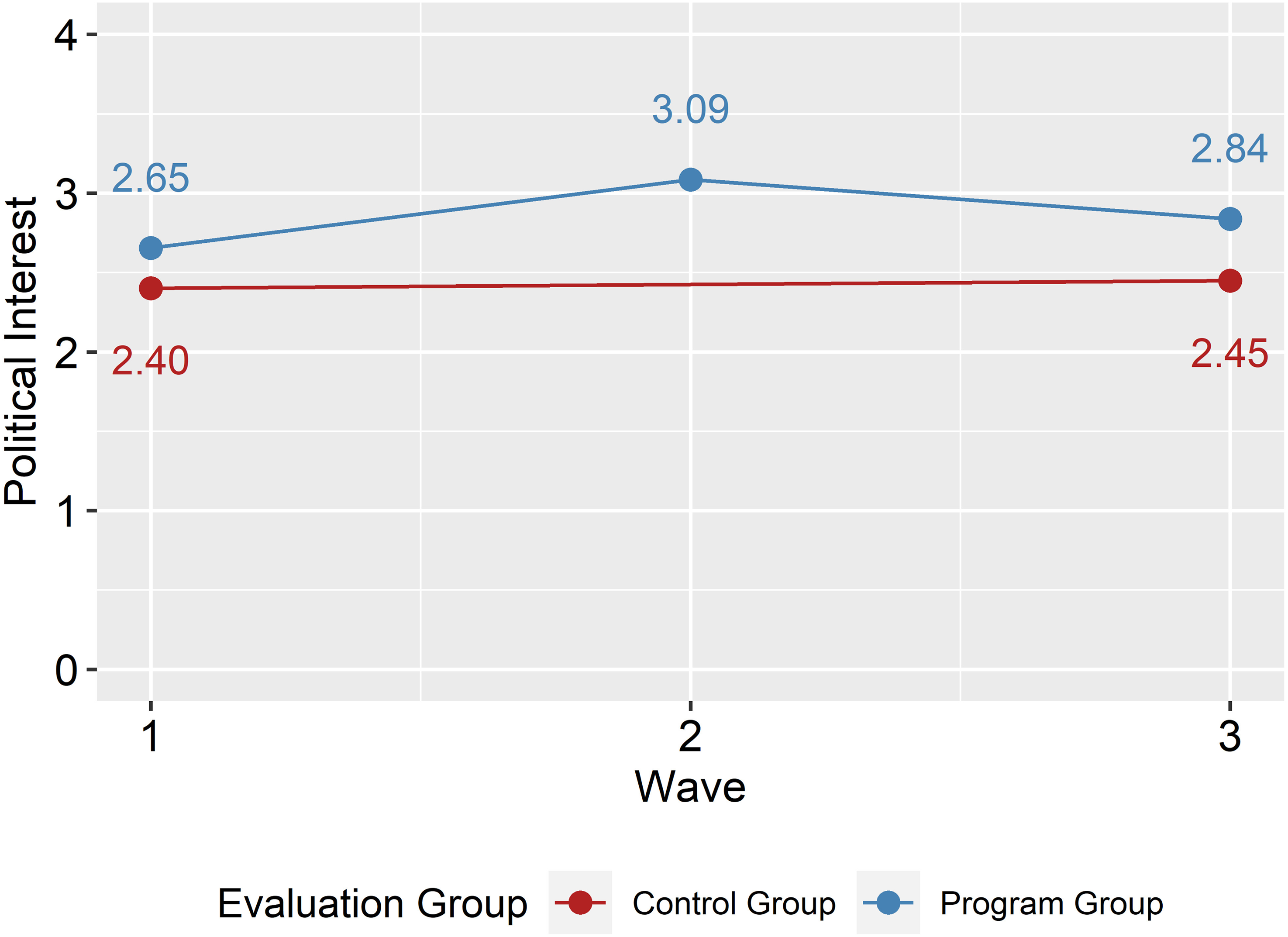
Mean political interest (aggregated by the program (P) and control group (C)).
In contrast to the political knowledge levels, however, students' political interest is almost close to the initial level (H2) three weeks after attending the program. This means that the short-term increase of political curiosity declines with time. After the program, the children's chances to deal with political matters decreases and therefore probably their willingness “to pay attention to political phenomena at the expense of other topics” (Lupia and Philpot, 2005: 1122), decreases, too.
The experimental design requires that the initial levels of political knowledge are nearly the same between both groups. We see, however, in Figures 2 to 4 that in the first wave (at t1) the program group children already have a slight headstart on the control children. Moreover, general political knowledge increases in the control group over time, even though the growth is not as substantial as in the program group. A kind of “Hawthorne Effect” could cause both findings, which means that the participants' knowledge that they are part of a study influences their behavior: First, the children (group P) knew that they were part of an evaluation study of the Landtag and, therefore, they might have changed their natural behavior. Second, the slight increase of knowledge of the control group might be based on the interaction between children. For example, students who were excited about the visit might have talked about it to friends in the control group. Third, the difference in the initial levels between the program and the control group could be based on the visit preparations, although we instructed teachers to prepare the visit after completing the first wave.
To sum up, the descriptive evidence confirms H1 and H2 for the two dimensions of political knowledge. The levels of knowledge rise throughout the program and are substantially higher than those of the control group. In contrast, the analysis of political interest only confirms H1. We do not find support for a sustainable boost of political interest: After three weeks (t3), the mean level of political interest is very close to the initial level.
Second step: mean comparisons and effect size
In this second step, we compare the dependent variables i) only within the program group at all three waves and ii) between the program and control group at waves 1 and 3. This enables us to examine if the program has a positive effect on participating students over time and in comparison to non-participating students. Table 3 presents the mean values of both groups - program and control - in each wave.
Mean values of each group in each wave.
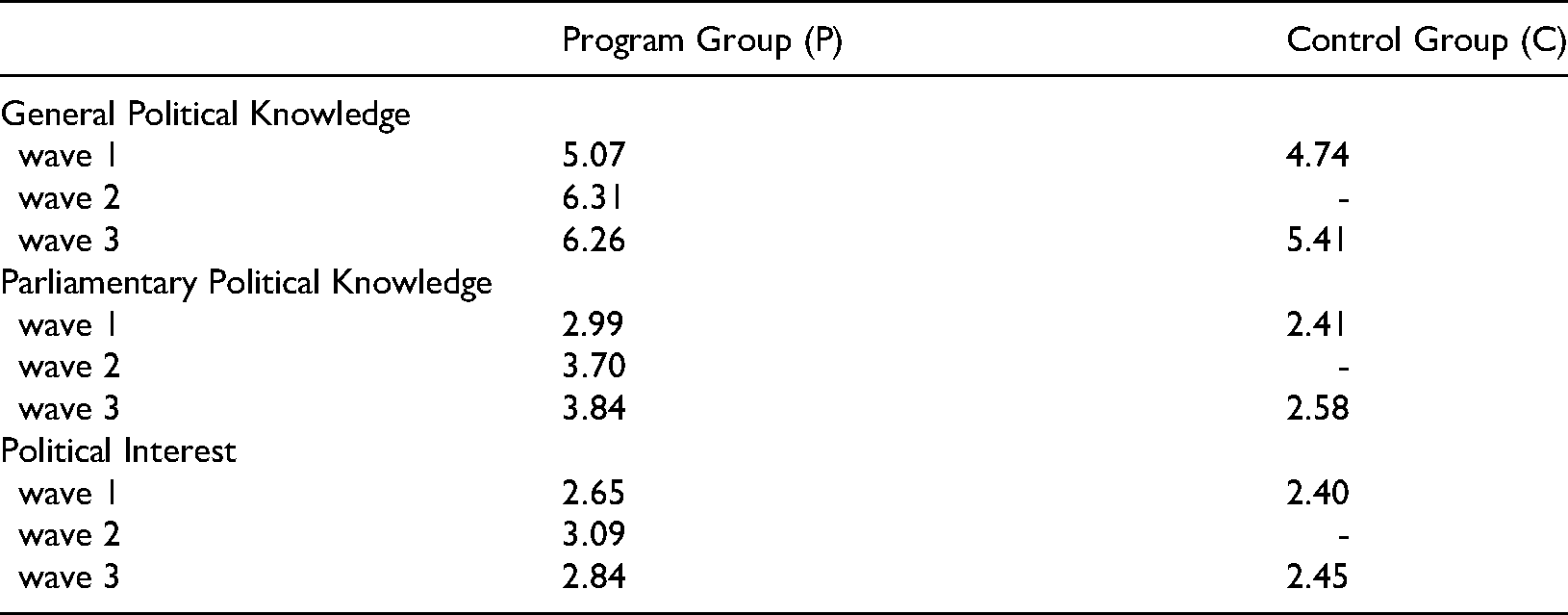
Comparison over time for program group
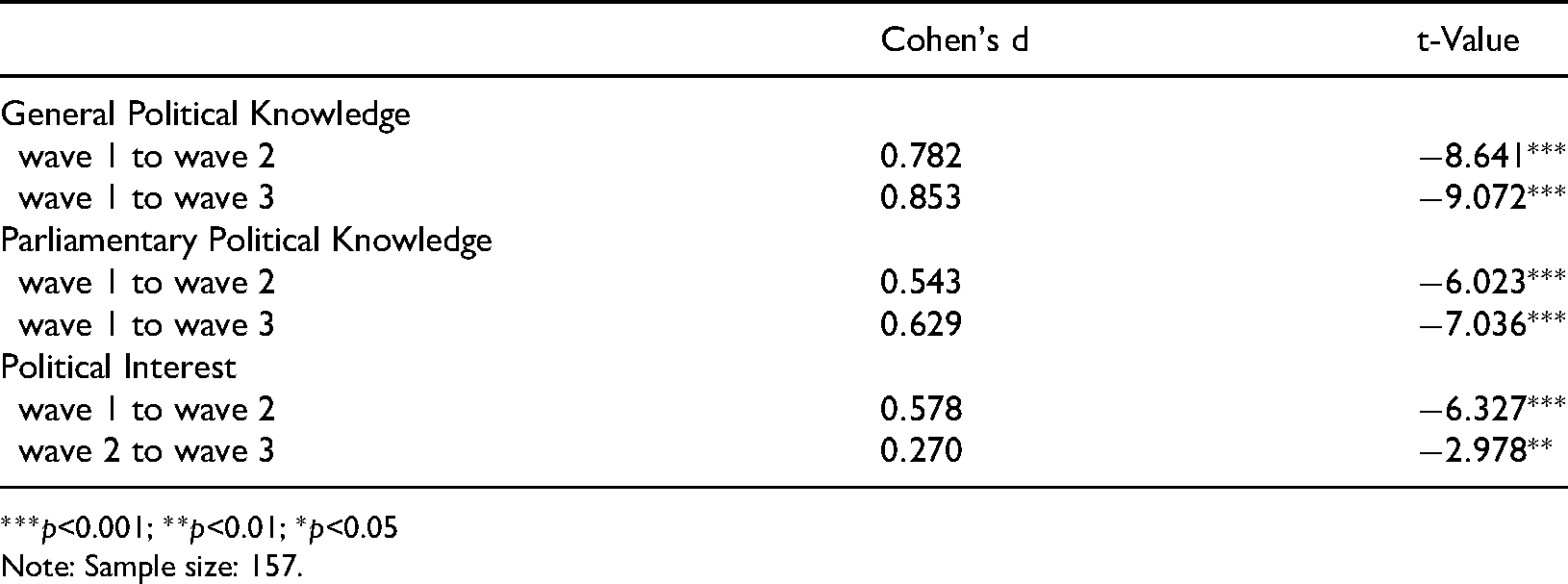
First, we calculated pre-post analyses for the program group and evaluated the effect size to corroborate the descriptive findings on increasing knowledge and interest within the program group (H2). Doing this, we test the effect's statistical strength and see if the differences in the program group are statistically significant over time. If there is a significant short-term effect (H1), we should observe a significant difference between the 2nd to the 1st wave for students in the program group. In addition, if there is a significant long-term effect (H2), we should observe a significant difference between the 3rd to the 1st wave for students in the program group. If H1 and H2 hold, we should observe a significant difference between i) the 2nd to the 1st wave and ii) the 3rd to the 1st wave for students in the program group. A significant difference would indicate that attending the program affects levels of political orientations positively. The above presented descriptive statistics (Table 3) show higher values in the subsequent waves. Table 4 shows the results of the pre-post analyses.
Effect sizes (pre-post analyses, program group).
***p<0.001; **p<0.01; *p<0.05
Note: Sample size: 157.
For each of the dependent variables – general political knowledge, parliamentary political knowledge, and political interest – we see significant differences for the program group over time. The program group's levels on each dependent variable were higher in waves 2 and 3 compared to the initial level (wave 1). The findings indicate a significant short-term and significant long-term increase for students who attended the program.
To assess the strength of these statistically significant effects, we calculated Cohen's d 13 (effect size). Although all effects are significant, Cohen's d shows that only the effect on general political knowledge indicates a strong effect (short-term and long-term). Cohen's d for the program's effect on parliamentary political knowledge shows a medium effect size (short-term and long-term). For political interest, Cohen's d indicates a medium short-term effect but only a small long-term effect. As shown descriptively, the program's effect on political interest is not as substantial as it is on political knowledge. Hence, the results of the comparison over time for the program group supports H1 and H2; however, the program's effects are more substantial regarding political knowledge.
Overall, the (uncontrolled) two-folded bivariate analyses within the program group suggest that attending the program is positively connected to general and parliamentary political knowledge; to a lesser degree, this also holds for political interest. The comparison results support H1 for all three dependent variables. However, we can only partly support H2. Although all calculated effects are statistically significant, the effect sizes indicate only substantial positive effects for the two dependent variables of political knowledge. The long-term effect of program attendance on political interest is weak.
Comparison between program and control group
To test H3, we estimated independent t-tests between the program and control group at waves 1 and 3, including the effect size to measure the effect of program attendance (H3). The control groups were from the same cohorts and schools. As our experimental design suggests, we should not see any significant differences between the program and the control group in the first wave (Table 5): The groups should not differ in their initial levels on political knowledge and political interest to measure the effect of attending the program.
Effect sizes (t-test between program and control group).
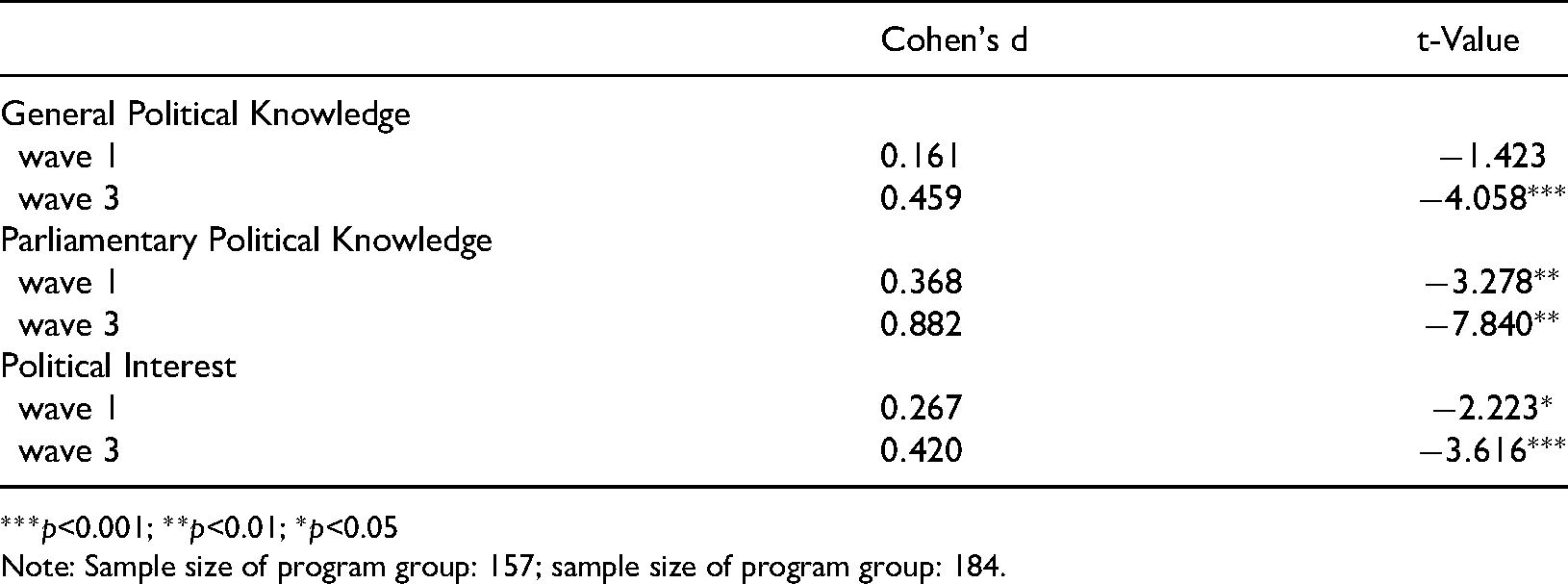
***p<0.001; **p<0.01; *p<0.05
Note: Sample size of program group: 157; sample size of program group: 184.
We do not see statistically significant differences between the groups in the initial level of general political knowledge. However, we see a significant difference between the program and control group in the initial parliamentary political knowledge and political interest levels. However, the effect sizes (Cohen's d) are only weak. The difference between both groups could be a result of teachers not following the instructions and preparing the trip to the parliament before the first survey wave.
For wave 3, we expected significant differences and a high effect size between program and control groups, implying a measurable effect of attending the program. The control groups were classes from the same school and same cohort. Therefore, we expect to control the social environment of schools. The results of the comparison between the program and control group indicate a lasting positive effect of participating in the program for students' political knowledge and political interest. All calculated t-tests on the three dependent variables are significant. Furthermore, Cohen's d indicates a strong difference between the program and control group on parliamentary political knowledge and medium difference on general political knowledge and political interest. Therefore, we find support that the program positively affects students' political knowledge and interest compared to non-participating students.
The differences between the program and the control group were expected to be high and significant, even three weeks after attending the program (H3). Notably, the results indicate a substantial lasting effect of the program on students' level of parliamentary political knowledge. The program's effect on general political knowledge and political interest is only medium in size, but still, these results support H3. In the following section, we test the effects of program attendance controlling socio-structural characteristics.
Third step: multivariate analysis
Finally, to find out if there still is a substantial program effect when we include other relevant characteristics for children's political knowledge and interest, we control the effect of attending the program for other independent variables (H4). For each dependent variable – general political knowledge, parliamentary political knowledge, and political interest – a single linear OLS-regression at wave 3 was calculated. 14
Each model includes – next to program attendance – the political knowledge or interest levels at wave 1 and the control variables age, gender, socio-cultural environment, and migration background of the respondent. 15
Table 6 shows the regression results for the three dependent variables at t3 (unstandardized betas, standard error in brackets). The models explain from 37% (political interest) to 58% (general political knowledge) of the respective variances. This is another indicator that political knowledge is more affected by the observed characteristics than political interest
Linear Regression Models (t3).
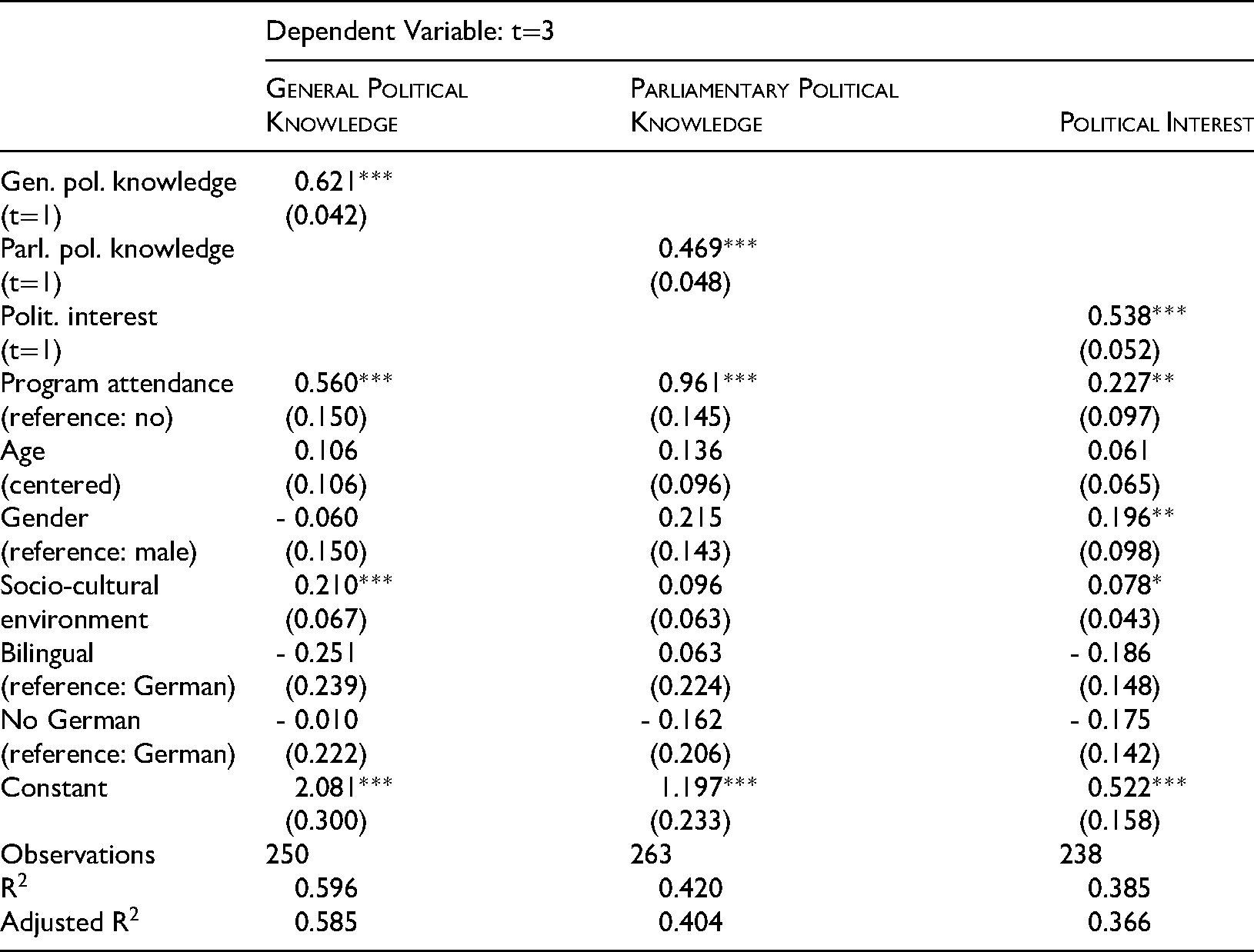
For all three models, we see significant effects of the respective levels at t1 showing a consistent development of the children's political involvement throughout the program. Besides the individual level of t1, we see additional significant coefficients.
For general political knowledge, we see that even under control of relevant sociodemographic characteristics, the effect of the attendance is still significant and positive. Holding all other variables constant, students who attended the program show higher levels of general political knowledge than those who did not attend the program. The initial level of general political knowledge also significantly affects the level of knowledge at t3. The effect of the socio-cultural environment is significant: Students from households with a higher socio-cultural environment have a higher increase in general political knowledge. This finding replicates similar results of other studies investigating children's political knowledge (Abendschön and Tausendpfund, 2017) that also found that the better the social background of a child's family, the higher the political involvement. No additional significant effects were found for gender, migration background, and age. This does not mean that these characteristics that have proven to be effective in other studies are not influencing the children's knowledge and interest levels at all. However, we can assume that these characteristics already are at work at wave 1. Since our analyses here want to retrace the development of knowledge and interest levels over the program period, we are only interested in effects that restrict or push these developments. Against this background, it seems however reasonable that these effects are not present here. The program yielded a small group (10 to 20 students on a single day), and the conductors aimed to interact with all of the participants and nurture every student's interest. The open feedback of the students after the program also indicates that almost all of the students were positively excited about the program and therefore exhibit similar learning effects.
Despite including control variables in the model of parliamentary political knowledge, we see a significant and positive effect of attending the program. Attending the program leads to a nearly 1-point increase in parliamentary political knowledge on a 5-point-scale. Besides this positive effect of program attendance, the initial level of parliamentary political knowledge shows a significant and positive effect. Attendance at the out-of-school learning activity is positively correlated with parliamentary political knowledge in the long term; the gap between students with high and low initial levels is reduced in t3. Again, we do not find any statistically significant effects of control variables, which might indicate that the program nurtured all students' political interest throughout the out-of-school learning activity.
We see similar results for political interest in the third column of Table 6. Students of the program group show higher levels of political interest than students of the control group. Moreover, being female increases political interest. This finding contrasts studies with older children that often find a gender gap in political interest in favor of boys. A plausible explanation might be the interactive and small group-size program experience that addresses boys and girls equally.
Overall, we find support for hypothesis 4. The multivariate analysis of our three independent variables showed that the effect of program attendance is significant and positive.
Conclusion
This study evaluated the effects of a newly introduced civic education program at the Landtag in Rhineland-Palatinate for elementary school students (3rd and 4th grade). We used a quasi-experimental panel survey with three waves to examine the short-term and long-term effects of attendance at the program on political knowledge and political interest.
The findings of our study show that program attendance has led to an increased political knowledge and political interest of the students, especially directly after attending the program. Even three weeks after attendance, the knowledge and interest levels are higher than before the program. Attendance even had a positive and significant effect after controlling for the initial level and other social variables such as age, gender, socio-cultural environment, and migration background. However, we observed that the effects are especially sustainable for political knowledge and less so for political interest.
Our analyses revealed that the program has been more effective regarding the stability of political knowledge than regarding the stability of political interest. We conclude from this finding that the acquired knowledge has been stored in children's memory whereas the curiosity and interest regarding politics needs appropriate occasions and contexts to stay alive. Since these occasions and contexts are normally not part of children's family and school life, general political interest at that age probably fluctuates. This difference between knowledge and interest should be examined more closely in future studies with children.
Although the study has successfully demonstrated that an out-of-school learning activity can have positive effects on political knowledge and political interest, it has certain limitations in terms of generalizability. Experimental research designs generally require high homogeneity between program and control groups regarding the social environment, age, and initial knowledge or interest. The sample we used in this study, however, is based on a selection process of an organizational team of the program managers meaning that the sample selection was not strictly randomized. This means that our observed program effects for political interest and parliamentary political knowledge should be interpreted cautiously. Nevertheless, we think that since the call for program participation was publicly accessible, all costs for schools related to the trip were covered to ensure that children from lower socio-economic background can take part and regional disparity of the groups was considered, the observed sample allows for reliable conclusions on the effects of the program.
Despite these methodological limitations, the insights gained from this study help to understand extra-curricular civic education processes of elementary school children. Out-of-school learning activities have positive effects on children's political knowledge and, to a lesser degree, on political interest. These findings confirm other studies showing that civic education can be effective at the elementary school level. Schools and teachers should use this possibility to contribute positively to young citizens' political socialization.
Footnotes
Declaration of Conflicting Interests
The author(s) declared no potential conflicts of interest with respect to the research, authorship, and/or publication of this article.
Funding
The author(s) disclosed receipt of the following financial support for the research, authorship, and/or publication of this article: The research was conducted in cooperation with the state parliament of Rhineland-Palatinate and the state parliament of Rhineland-Palatinate funded the program.

Notes
Appendix 1
Reliability Tests.

| Index | Wave 1 | Wave 2 | Wave 3 |
|---|---|---|---|
| General political knowledge | 0.706 | 0.676 | 0.688 |
| parliamentary political knowledge | 0.690 | 0.612 | 0.679 |