



Abstract
What does organisational sustainability mean when environmental aspects are deliberately set aside? This paper reframes sustainability from a managerial model towards a policy-oriented understanding, focusing on organisational dimensions such as longevity, resilience, viability, adaptability, and persistence. As sustainability remains central to political and institutional agendas, an exclusive ecological focus constrains our ability to grasp how organisations – particularly in higher education – sustain continuity and strategic relevance under shifting socio-political and economic pressures. The paper examines
Keywords
Introduction
In current academic and policy debates, sustainability is often understood mainly from an environmental standpoint. Although this ecological emphasis is crucial for addressing planetary limits and climate crises, it can overlook other vital facets of sustainability, particularly in complex organisational settings such as university collaborations. Organisational sustainability – referring to an organisation or network’s capacity to persist, adapt, and maintain its core functions over time – demands a broader perspective that extends beyond ecological considerations (Basiago, 1999; Meadowcroft, 2024). Acknowledging this gap is essential, as higher education increasingly operates within multi-organisational, transnational frameworks that cannot be fully captured by ecological criteria alone.
In this paper, the distinction between environmental sustainability and organisational sustainability is made explicit from the outset. The former refers to ecological balance, resource preservation, and planetary boundaries, whereas the latter concerns the endurance and functionality of organisations as social and managerial systems. These two perspectives intersect but operate at different analytical levels: environmental sustainability addresses the external conditions of survival. In contrast, organisational sustainability focuses on the internal capacities that allow an institution or network to remain viable and coherent over time. By isolating the organisational dimension, this study seeks to clarify how higher education alliances sustain themselves structurally and strategically, independent of their environmental performance.
This article explores the concept of organisational sustainability from a managerial perspective, intentionally setting aside environmental factors. The goal is not to downplay ecological sustainability but to focus on non-environmental aspects – especially those related to governance, financial stability, strategic alliances, and organisational resilience. The discussion centres on European University Alliances (EUAs), a key policy initiative by the European Commission that has revolutionised higher education collaboration across Europe (European Commission, 2023). Since 2019, three consecutive calls within the Erasmus + program have created 65 alliances involving over 500 universities across Europe, accounting for nearly 20% of all European higher education institutions (Crăciun et al., 2023; Van Hellemont and Vancauwenbergh, 2022). The European Commission aims to establish at least 60 university alliances with sustainable governance models by 2024 (New Funding for Additional European Universities Alliances Will Boost Cooperation in Higher Education, 2024). This scale and scope are unprecedented in European higher education, making the organisational sustainability of these alliances a critical and open issue for research and policy.
As EUAs evolve into new organisational structures, concerns arise regarding their long-term viability amid fragmented regulatory systems, inconsistent funding models, and increasing operational challenges. These issues are further compounded by variations in national governance, unequal access to resources, and the limited legal capacity of most alliances (Stensaker and Vabø, 2022; Zapp and Ramirez, 2019). Therefore, understanding how alliances can endure, adapt, and succeed under these conditions entails going beyond ecological metrics and creating a conceptual framework that reflects organisational and managerial realities.
This paper explores the central research question: What does organisational sustainability mean from a managerial perspective, when environmental sustainability is excluded? To examine this, the study draws on an integrative literature review spanning environmental, social, and management sciences, emphasising key constructs such as resilience, adaptability, organisational durability, and strategic alignment. The analysis also incorporates insights from higher education governance research, where issues of legal frameworks, funding mechanisms, and inter-organisational trust are crucial to the functioning of alliances.
By reframing sustainability through a managerial perspective, this paper advances a more nuanced and practical understanding of organisational longevity. The findings aim to guide researchers, organisational leaders, and policymakers in strengthening the structural resilience of transnational academic networks. In doing so, the article connects ongoing policy debates with conceptual clarity, helping to ensure that the sustainability of EUAs is not limited to ecological criteria alone but instead encompasses the broader organisational conditions necessary for their long-term persistence.
The remainder of the paper is organised as follows: the next section reviews relevant theoretical frameworks; the methodology section explains the integrative review process; the findings section outlines proposed dimensions and factors of organisational sustainability; and the conclusion discusses broader implications and directions for future research.
This study contributes to ongoing European policy discussions on higher education governance and sustainability. By broadening the concept of sustainability beyond environmental metrics, the paper aligns with EU policy priorities related to institutional resilience, strategic autonomy, and long-lasting transnational cooperation. The findings offer valuable insights for policymakers seeking to enhance the long-term sustainability of European University Alliances as key components of the European Education Area.
This study builds on existing empirical and policy evidence from alliances, which serve as reference cases for analysing the organisational dimensions of sustainability in higher education.
While the individual dimensions discussed in this paper are well established in organisational and higher education research, their systematic integration into a policy-oriented framework for European University Alliances constitutes the paper’s central contribution. The originality of the study lies not in introducing new concepts, but in reframing existing ones to address the specific governance and sustainability challenges of transnational higher education networks.
Literature review
The concept of sustainability has evolved over recent decades, reflecting shifts in environmental, economic, and social discourses. At its core, it denotes the capacity to maintain a system, activity, or institution over time (Basiago, 1999). However, different disciplines emphasise distinct dimensions of continuity and responsibility. While environmental scholarship focuses on ecological balance and planetary boundaries (Rockström et al., 2009), social and economic perspectives highlight intergenerational equity, institutional stability, and managerial responsibility (Daly, 1992; Mensah, 2019; Zhai and Chang, 2018).
Definitions of sustainability in scientific literature (created by the author).
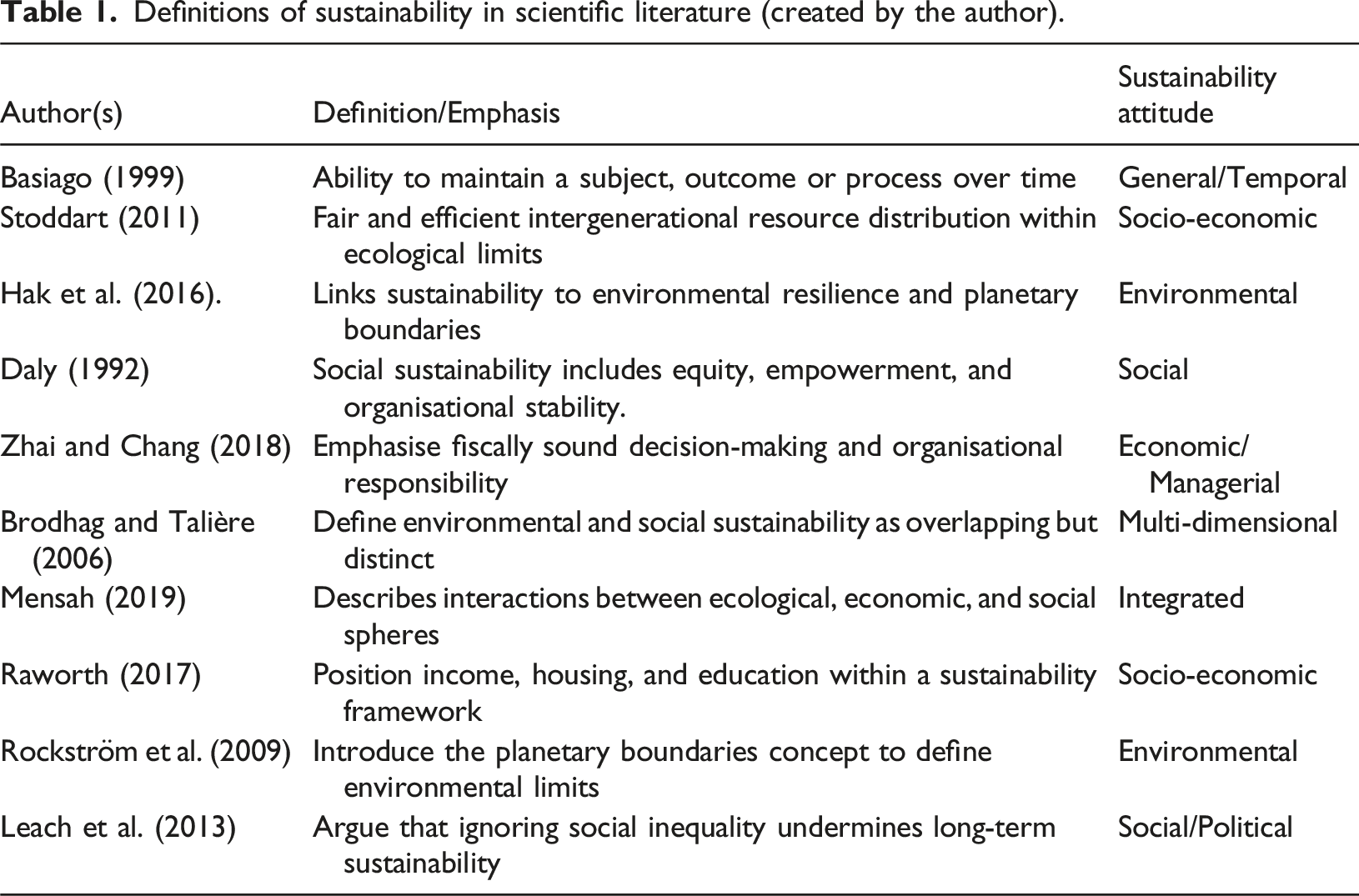
This overview shows that while environmental interpretations dominate, other dimensions – especially economic, managerial, and institutional – are increasingly recognised as essential for continuity. These organisational aspects provide the conceptual foundation for analysing sustainability in higher education networks.
Given the conceptual breadth of sustainability scholarship, this review prioritises depth of conceptual synthesis over exhaustive coverage. Rather than cataloguing all existing interpretations, the analysis selectively condenses overlapping constructs to foreground those most relevant for organisational sustainability in complex higher education networks.
Organisational sustainability in higher education and EUAs
Organisational sustainability represents a subfield of sustainability scholarship that addresses the longevity and operational resilience of institutions. It has particular salience in sectors exposed to external shocks, shifting governance regimes, or resource volatility – such as higher education (Meadowcroft, 2024; Pierobon, 2019). Governance functions as a bridging concept connecting policy design, organisational coordination, and legitimacy across levels and sectors (Van Kersbergen and Van Waarden, 2004). In this perspective, sustainability does not primarily concern environmental mitigation but the organisation’s ability to remain viable, mission-driven, and adaptable under uncertain conditions.
From this viewpoint, higher education organisations can be considered sustainable when they demonstrate the following qualities: The ability to maintain organisational continuity through effective governance, Functional resilience in the face of crises, Strategic adaptability to changing environments, and Long-term viability in terms of financial and managerial capacity.
These attributes resonate with organisational theories of multi-level governance and networked collaboration (Marginson and Sisson, 2006). In practice, however, the question of how universities embody these qualities remains a contested issue. Some scholars warn that the rapid organisation of sustainability rhetoric risks masking unresolved governance tensions or financial fragility (Fuchs et al., 2023). Others highlight that without clear managerial frameworks, organisational sustainability risks are being conflated with project-based survival rather than long-term stability (Stensaker and Vabø, 2022). This indicates the need for a sharper conceptualisation of what non-environmental sustainability means in higher education.
The context of
Recent comparative mapping of the governance structures of all 64 European University Alliances reveals significant variation in organisational design and degrees of formalisation (the author’s ongoing dissertation). While some alliances, such as
This heterogeneity underscores the experimental nature of the European Universities Initiative and its implications for sustainability. Alliances with complex, multi-tier governance structures tend to prioritise inclusiveness, shared ownership, and long-term institutionalisation, whereas project-based arrangements emphasise flexibility and operational efficiency. Such diversity suggests that organisational sustainability cannot be understood as a uniform condition but must be linked to specific governance types and maturity levels.
These findings align with the broader theoretical claim that
This paper addresses that gap by investigating how organisational sustainability manifests when ecological dimensions are explicitly excluded. By situating the analysis in the EUA context, the article seeks to contribute to a conceptual framework that captures the organisational and managerial foundations of organisational longevity in transnational academic networks.
Illustrative governance examples in EUAs
The diversity of organisational sustainability across alliances becomes particularly visible when comparing their governance architectures. Recent data from the BAUHAUS4EU and Una Europa alliances illustrate two distinct approaches to structuring decision-making and operational coordination within the European Universities Initiative.
BAUHAUS4EU governing organigram. (BAUHAUS4EU official website, 2025).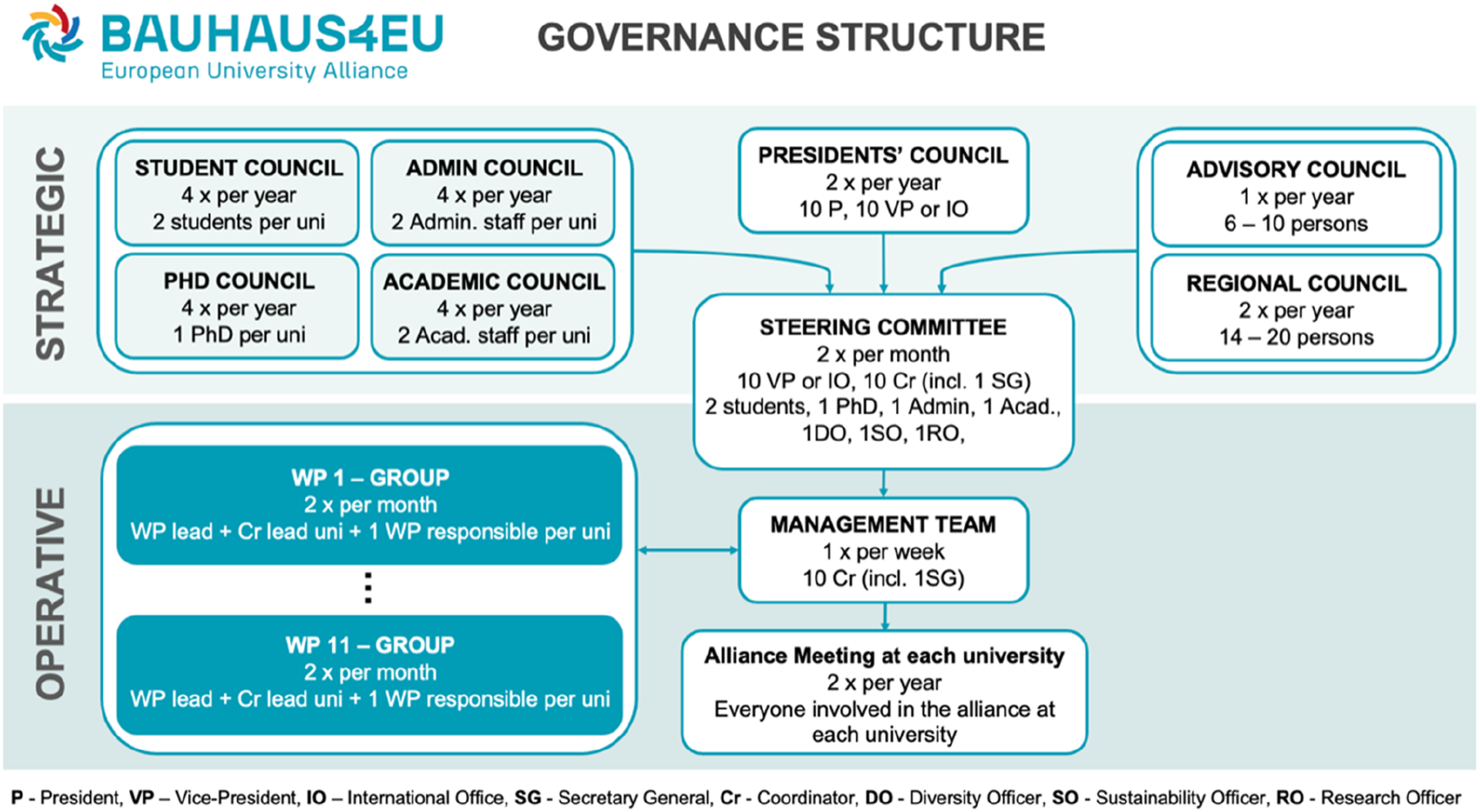
In contrast,
Together, these two examples underscore that European University Alliances operationalise organisational sustainability through different governance logics. Formalised, multi-layer structures (e.g. BAUHAUS4EU) enhance representational resilience but risk administrative complexity, whereas streamlined, integrative systems (e.g. Una Europa) improve responsiveness but may face challenges of inclusiveness and institutional continuity. Both approaches exemplify how governance design functions as a practical mechanism for sustaining transnational cooperation over time.
Methodological approach
This study employs an
(a) Conceptual and theoretical studies addressing organisational endurance, adaptability, and governance; (b) Peer-reviewed sources and policy reports published mainly after 2010, supplemented by seminal earlier works (e.g. Basiago, 1999; Daly, 1992); (c) Applicability to higher education institutions, networks, or comparable organisational systems.
Overview of the integrative literature review process.
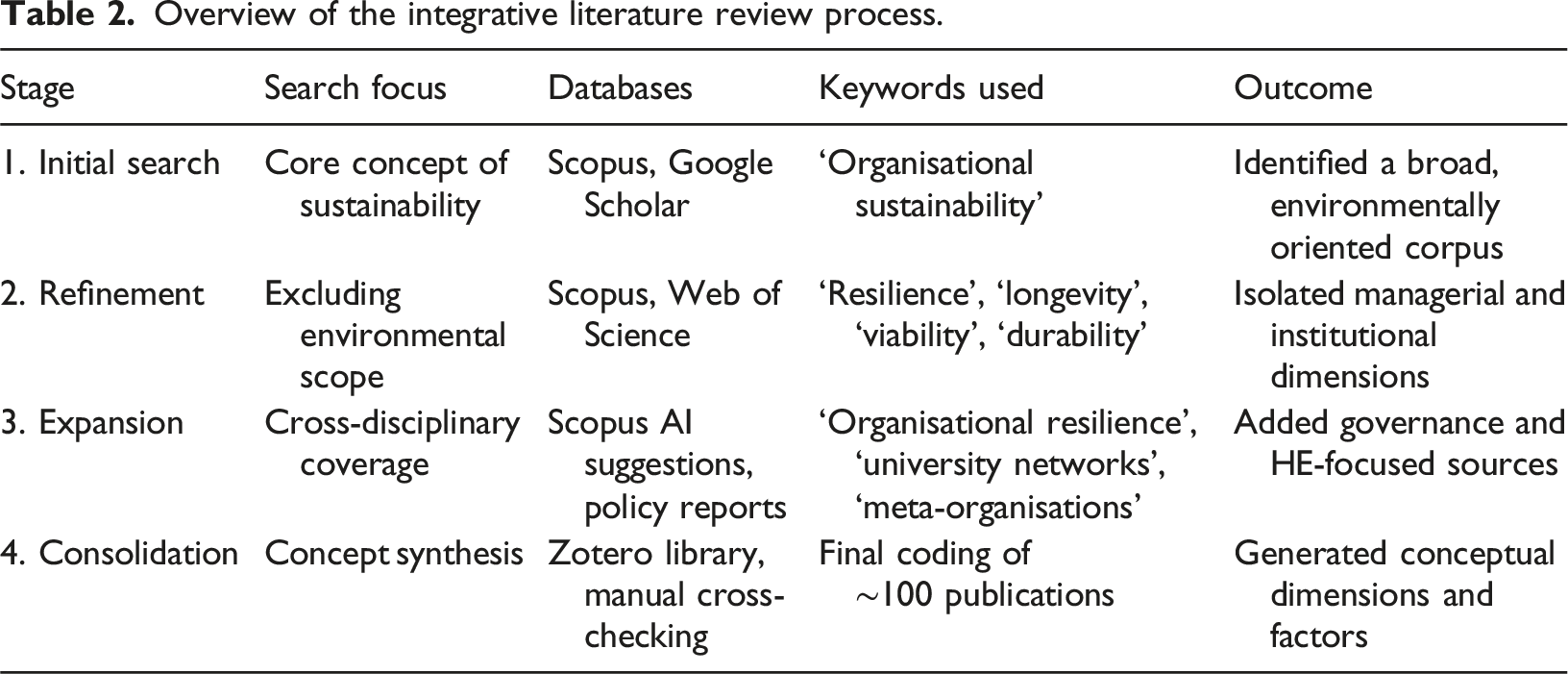
The integrative literature review was conducted through an iterative and exploratory process spanning 2021–2024. Because the concept of organisational sustainability in higher education is dispersed across multiple disciplines, the search strategy was intentionally dynamic. Initial searches using the keyword ‘organisational sustainability’ in Scopus and Google Scholar yielded primarily environmental studies. To refine the focus, successive rounds incorporated related terms such as ‘resilience’, ‘viability’, ‘longevity’, ‘durability’, ‘persistence’, and ‘organisational continuity’.
The process was supported by AI-enhanced tools available within the Scopus database, which assisted in identifying cross-disciplinary linkages between sustainability, governance, and resilience. Automated filtering was applied to remove redundant and non-textual material (e.g. HTML/CSS content) from web-scraped sources, ensuring clean and thematically relevant datasets. This hybrid approach combined traditional academic judgement with computational efficiency, thereby improving both the transparency and reproducibility of the review.
The analysis proceeded in three stages: Descriptive mapping – identifying key definitions and conceptual overlaps across disciplines; Thematic coding – grouping references by managerial themes such as resilience, governance durability, adaptability, and financial viability; Conceptual synthesis – comparing organisational and environmental framings to formulate dimensions and factors later integrated into the conceptual framework.
This approach balances systematic transparency with conceptual creativity, consistent with ILR principles. It does not claim exhaustiveness but provides a structured lens for analysing European University Alliances (EUAs) as organisational networks.
Limitations
As a conceptual, literature-based study, this paper presents no original empirical data. The resulting framework requires future empirical validation across different EUA structures. Reliance on English-language sources may underrepresent regional perspectives, and coding by a single researcher, while consistent, may limit intercoder verification. Nevertheless, the integrative approach establishes a rigorous foundation for subsequent empirical work on alliance sustainability.
Findings and conceptual synthesis
Rethinking organisational sustainability beyond the environmental lens
While public and academic discourses often equate sustainability with ecological responsibility, a growing body of research emphasises the need to incorporate non-environmental dimensions, particularly in organisational contexts (Meadowcroft, 2024; Zhai and Chang, 2018). In management literature, sustainability refers to an organisation’s ability to persist and evolve over time by maintaining structural coherence, operational effectiveness, and strategic adaptability (Pierobon, 2019). This interpretation is especially salient in higher education, where institutions increasingly function as complex, multi-level organisations embedded in volatile policy and financial environments.
This study identifies seven interrelated dimensions of organisational sustainability:
Together, these dimensions extend sustainability far beyond environmental stewardship. In volatile sectors such as higher education, the interplay of resilience, adaptability, and strategic alignment is often more decisive for an organisation’s longevity than its ecological performance. This perspective highlights the need for tailored frameworks that recognise the specific vulnerabilities of academic institutions. From a normative perspective, educational philosophers have warned that governance frameworks prioritising viability and performance risk reduce institutions and individuals to matters of ‘price’ rather than dignity (Roth et al., 2022), raising questions about what organisational sustainability leaves unarticulated.
European university alliances as organisational experiments
The
However, EUAs operate in an inherently complex environment. Institutions retain their legal and financial autonomy; alliances are frequently project-based and rely on temporary EU funding; and coordination is required across different legal systems, languages, and academic calendars. These conditions create managerial and structural challenges that extend far beyond ecological sustainability. Instead, organisational sustainability in EUAs is more dependent on effective governance, strategic alignment, operational interoperability, and long-term organisational commitment (Tsvi, 2025). The alliances thus provide a living laboratory for testing how organisational sustainability can be conceptualised and practised in higher education.
Aligning non-environmental organisational sustainability with the SDGs
Although the SDGs are often interpreted through an ecological lens, several goals align directly with the proposed organisational dimensions and factors (UN, 2017). For instance:
This alignment illustrates that non-environmental dimensions of organisational sustainability are not isolated from the global sustainability agenda. Instead, they expand their scope by demonstrating how governance, culture, and organisational viability are integral to achieving SDGs in higher education. Earlier debates already questioned the assumed trade-off between sustainability and organisational performance, highlighting the need for integrated strategic perspectives (Porter and van der Linde, 1995). However, SDG implementation increasingly depends on institutional commitment and governance capacity rather than indicator proliferation alone (Neshovski, 2024). By situating EUAs within this broader framework, the analysis shows that organisational sustainability complements rather than competes with ecological perspectives.
Discussion
Many university alliances place a strong emphasis on compliance with environmental reporting requirements and climate action goals. While such commitments are essential for addressing global ecological crises, they may overshadow equally critical organisational challenges. These include weak governance coordination, funding volatility, and persistent misalignment between partners. If left unaddressed, such vulnerabilities threaten the long-term viability of alliances, regardless of their ecological performance. A managerial redefinition of sustainability, therefore, offers a path to more effective long-term planning and evaluation. It enables organisational leaders to assess their organisational resilience, rather than treating sustainability as an external or symbolic mandate (Meadowcroft, 2024; Purcell et al., 2019). In this sense, the concept shifts from compliance-driven reporting to a strategic tool for organisational learning and adaptation.
This concern resonates with critical educational scholarship that examines how governance vocabularies framed as neutral, technical, or managerial may unintentionally depoliticise structural tensions rather than engage with them directly. Sardoč et al. (2022) show that policy discourses oriented towards stability and risk management can limit the visibility of contestation and disagreement, thereby influencing which forms of critique are recognised as legitimate. From this perspective, organisational sustainability frameworks require reflexive awareness of their normative assumptions to avoid narrowing the space of possible organisational futures.
The sustainability of higher education networks must also be understood against the backdrop of growing geopolitical tensions and the re-politicisation of knowledge production (Marginson, 2020). One important contribution of this perspective is that it highlights the difference between
Another implication is that
Finally, adopting a non-environmental lens enables a more straightforward integration of
The dynamic interaction between adaptability and stability within alliances also resonates with Stafford Beer’s Viable System Model (1995) and the broader tradition of systems-based organisational theory. In Beer’s framework, organisational viability depends on continuous feedback loops that balance internal regulation with external adaptability. These self-reinforcing and interconnected structures ensure that each subsystem within a larger organisation can respond autonomously while maintaining coherence with the system as a whole. Applying this logic to European University Alliances, adaptability represents the system’s capacity for renewal and innovation, whereas stability ensures that shared identity, governance routines, and strategic objectives remain intact. The tension between these two forces – adaptation and internal systemic equilibrium – is not a flaw but the essence of organisational sustainability. Only through dynamic equilibrium, achieved via feedback and learning cycles, can alliances remain viable in an evolving policy environment. This systems-based interpretation therefore grounds the conceptual framework in established organisational theory while highlighting its applicability to complex, networked forms of governance in higher education.
From a policy futures perspective, the sustainability of European University Alliances is increasingly shaped by macro-level European integration agendas that position higher education as a strategic infrastructure rather than a project-based instrument. Recent policy documents, including the European Parliament’s resolution on the future of European Universities and the articulation of the ‘fifth freedom’ within the Single Market and European Research Area, frame alliances as long-term structures supporting knowledge circulation, mobility, and strategic autonomy (European Parliament, 2025; Letta, 2024). However, these future-oriented visions coexist with countervailing pressures towards administrative simplification, reduced bureaucratic burden, and short funding cycles, which may undermine the organisational capacities required for durability and stability. This tension between long-term political ambition and short-term administrative rationalisation highlights a critical policy blind spot: sustainability is expected rhetorically, but often not structurally enabled.
From a broader normative perspective, questions of organisational sustainability intersect with broader debates on justice, public responsibility, and the temporal horizons of educational change. Educational philosophers have argued for a more immediate, justice-oriented role of education in responding to contemporary crises (Papastephanou et al., 2022). However, higher education institutions operate as paradigmatic systems characterised by deep institutional inertia, where change tends to occur incrementally rather than through immediate normative demands. As Kuhn (1962/2012) reminds us, not all theoretical critiques translate into paradigm shifts; many remain analytically significant without becoming organisational doctrines.
In this sense, while injustices may require urgent scholarly articulation, the capacity to diagnose and theorise them belongs primarily to research, whereas education as an institutional practice evolves through slower, policy-mediated and paradigmatic processes. Organisational sustainability frameworks must therefore engage with justice-oriented critiques reflexively, without assuming that universities can function as immediate agents of normative transformation.
In summary, the discussion illustrates that sustainability in European University Alliances cannot be fully understood through environmental criteria alone. By framing sustainability as an organisational capacity rather than an ecological outcome, alliances gain a more practical and diagnostic tool for assessing their long-term functionality. This shift has significant implications for both research and policy, as it invites new evaluation frameworks that prioritise resilience, adaptability, and governance over compliance reporting. Such a reorientation positions sustainability as an enabler of organisational durability, making it central to the future of European university cooperation.
In a broader policy context, the proposed framework could inform the European Commission’s ongoing efforts to monitor and evaluate higher education cooperation instruments. Integrating organisational sustainability dimensions into existing policy dashboards – such as the European Education Area monitoring framework or Erasmus + renewal evaluations – would allow for a more systemic and qualitative assessment of alliance performance. Rather than relying exclusively on quantitative indicators (e.g. mobility rates or joint degrees), evaluators could use this framework as a diagnostic lens to interpret the organisational coherence, adaptability, and durability of alliances over successive funding cycles. Such an approach would encourage institutions to strengthen governance stability and financial resilience while promoting strategic learning across consortia. Importantly, this perspective aligns with emerging EU policy priorities that emphasise institutional capacity-building, networked collaboration, and social sustainability. By embedding the framework’s principles into European policy instruments, organisational sustainability can become an evaluative dimension – a qualitative layer that helps explain why some alliances thrive while others struggle to maintain continuity. In this sense, the framework bridges conceptual analysis and practical policy design, transforming sustainability from a rhetorical vision into a strategic and diagnostic capacity for higher education governance.
A conceptual framework of organisational sustainability in European University Alliances
This paper introduces a conceptual framework for analysing the Conceptual framework of organisational sustainability dimensions (created by the author) (a) functional grouping (b) integrative systemic view.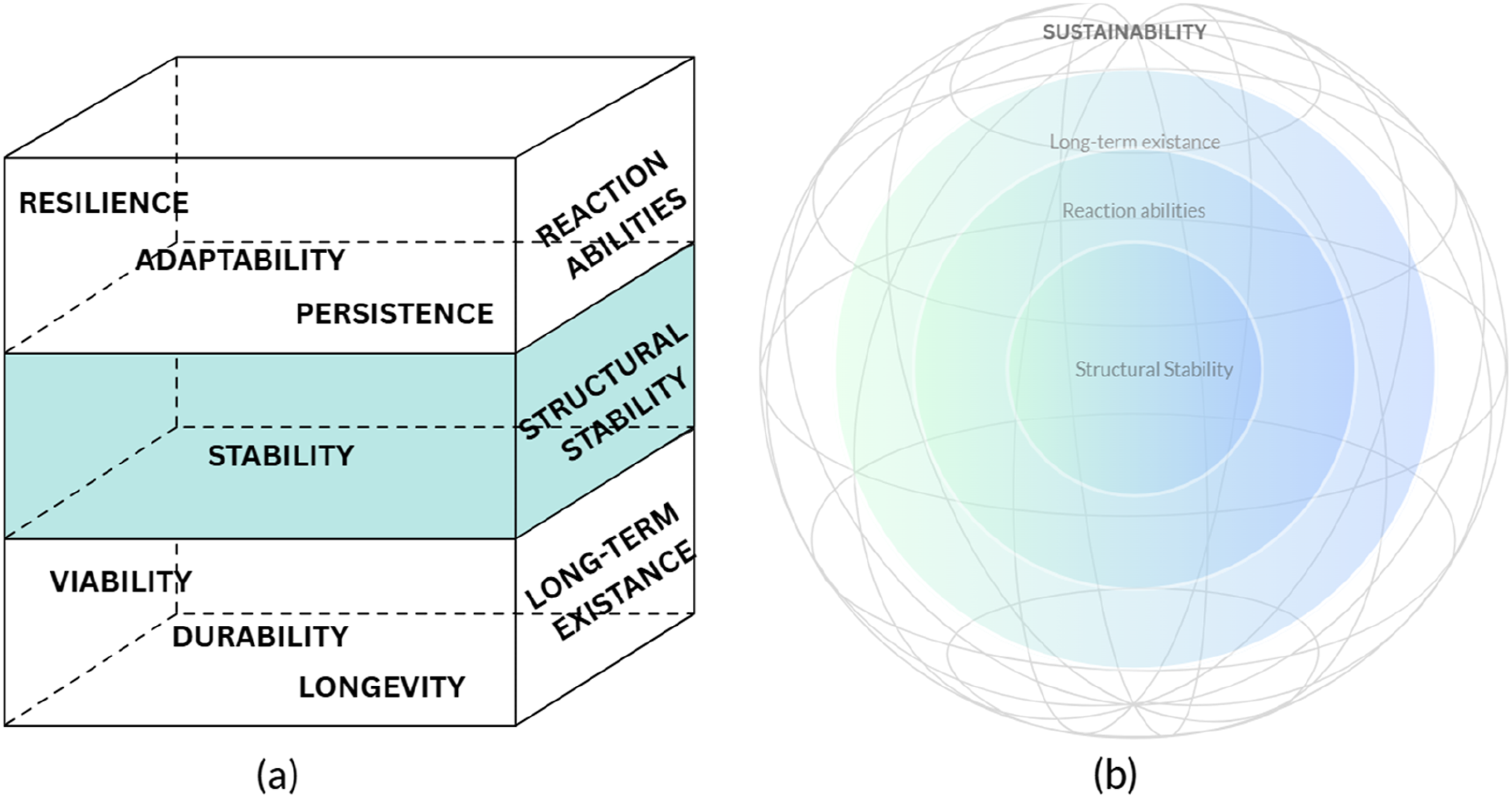
To avoid unnecessary repetition, the framework builds on the previously defined dimensions by focussing on their functional interrelations rather than re-elaborating each concept individually.
The framework positions seven interrelated dimensions – resilience, viability, adaptability, durability, stability, longevity, and persistence – within the broader organisational and policy environment that shapes European University Alliances.
Figure 2 illustrates how the seven identified dimensions of organisational sustainability interconnect to form a coherent system. Panel (a) presents a functional grouping of dimensions, organised into three layers that together sustain the alliance’s long-term existence. The upper layer – reaction abilities – encompasses
Panel (b) provides an integrative systemic view, positioning organisational sustainability as a dynamic and self-reinforcing construct. The concentric structure shows that long-term existence depends on structural stability, which, in turn, is supported by reaction abilities. The overlapping circles indicate that these dimensions are interdependent rather than sequential: strong stability enhances resilience, while adaptability reinforces long-term viability. In this systemic perspective, organisational sustainability emerges not as the sum of individual dimensions but as a continuous equilibrium between stability, adaptability, and endurance within evolving policy and organisational environments.
This grouping reflects a systems-based interpretation of organisational sustainability, aligning with the logic of viable systems (Beer, 1995) and adaptive governance (Folke et al., 2005). It distinguishes between dynamic reaction abilities, stabilising structures, and long-term existence conditions – three functional layers required for sustained organisational viability.
These dimensions highlight the internal capacity of alliances to endure over time, withstand external shocks, and maintain coherent governance structures. Prior research has emphasised resilience and adaptability as key to surviving turbulent environments (Holling, 1973; Meadowcroft, 2024). However, in the EUA context, they must be complemented by stability, viability, and persistence to ensure that collaborative structures do not collapse under external or internal pressures. For example, viability requires ongoing enrolments and funding streams (Tight, 2021), while stability is reflected in maintaining a shared identity across institutions with diverse missions (Krücken, 2021). The inclusion of persistence underlines the need for continuity despite leadership changes or political cycles, which frequently destabilise transnational initiatives in higher education.
Finally, the framework positions organisational network sustainability as the outcome of the interplay among these seven dimensions within their organisational and policy contexts. This outcome reflects the ability of alliances not only to survive but also to evolve as coherent networks that provide long-term value to member institutions and the broader higher education landscape (Stensaker and Vabø, 2022). By situating organisational sustainability at this systemic level, the framework serves both as a conceptual map for academic inquiry and as a diagnostic tool for policymakers and practitioners seeking to strengthen alliance functionality.
This conceptual model remains exploratory and is not intended as a definitive measure. Instead, it provides a structured scaffold for empirical validation in future research, including the author’s ongoing doctoral dissertation. In this way, the framework offers originality by extending sustainability discourse beyond ecology and making it directly relevant to the governance of complex higher education networks.
Overall, the framework conceptualises organisational sustainability as a dynamic capacity composed of seven interdependent dimensions. It provides a diagnostic lens for understanding how European University Alliances can sustain coherence, adaptability, and longevity over time – beyond ecological considerations.
Conclusions and recommendations
This paper reframed the concept of organisational sustainability by intentionally excluding environmental criteria and focussing instead on managerial, legal, ethical, and financial capacities. Drawing on an integrative literature review and the analysis of European University Alliances (EUAs), it argued that organisational sustainability should be recognised as a distinct analytical category – particularly in complex, multi-organisational settings where ecological indicators alone are insufficient.
The findings suggest that seven core dimensions – resilience, viability, adaptability, durability, stability, longevity, and persistence – are essential to the survival and evolution of higher education alliances. These capacities are often underdeveloped in dominant sustainability frameworks, which prioritise environmental performance. In the EUA context, sustainability depends less on carbon neutrality and more on governance durability, strategic coherence, financial adaptability, operational interoperability, and long-term organisational commitment. Recognising these attributes as part of sustainability offers a more accurate understanding of what enables alliances to function effectively over time.
The conceptual framework developed in this study integrates these seven dimensions into a coherent model of organisational sustainability. While exploratory, it provides a foundation for both theoretical refinement and practical application. The model can support alliance self-assessment, funding evaluation, and policy interventions aimed at strengthening long-term functionality. Most importantly, it shifts sustainability discussions from symbolic compliance towards actionable managerial and governance practices that enhance resilience and institutional endurance.
For organisational leaders and policymakers, this managerial perspective offers a strategic lens for: Designing governance models that balance autonomy and coordination; Planning sustainability beyond short-term project funding; Supporting alliance structures that foster trust, interoperability, and system-level adaptability.
These considerations are particularly relevant given the growing complexity of European higher education governance and the pressure on universities to demonstrate value within multi-scalar partnerships. Aligning managerial sustainability with broader European policy objectives can ensure that alliances are better equipped to withstand external turbulence while remaining mission-driven.
From a research perspective, the framework invites empirical validation. Future studies could include case analyses of successful and struggling alliances, interviews with coordinators and organisational leaders, or comparative evaluations of governance and funding models. Such investigations would help refine the framework’s categories and enhance its diagnostic value for both scholars and practitioners. The author’s ongoing doctoral research applies Grounded Theory to derive measurable indicators of organisational network sustainability based on these seven dimensions.
From a policy perspective, reframing sustainability beyond ecological metrics highlights several critical priorities for higher education governance in Europe. Integrating organisational sustainability into funding and evaluation frameworks would strengthen the long-term viability of EUAs. Current EU and national schemes tend to prioritise environmental performance; expanding evaluation criteria to include managerial, financial, legal, and ethical considerations would foster resilience, adaptability, and structural stability in multi-organisational cooperation.
Moreover, continuity mechanisms beyond project-based funding are urgently needed. Policymakers should establish instruments that provide baseline organisational support, promote co-funding from member states, and reduce dependency on short-term project cycles. Addressing divergent regulations, funding rules, and quality assurance procedures through coordinated EU-level frameworks would also improve interoperability and policy alignment.
Broader sustainability metrics can further ensure that issues such as power balance, representation of smaller universities, and fair participation of underrepresented groups are systematically addressed in alliance governance. Inclusiveness and equity should thus be embedded not as optional add-ons but as integral dimensions of organisational sustainability.
In practical terms, the proposed framework can serve as a diagnostic matrix for evaluating alliance performance in EU-funded programmes such as Erasmus+ and other European Universities Initiative support programmes. For example, each of the seven dimensions could be operationalised as assessment criteria within funding reviews: resilience in crisis management, viability in maintaining joint degrees or mobility schemes, adaptability in policy alignment, and so forth. The framework could also inform the design of self-evaluation templates for alliances seeking to demonstrate long-term organisational (network) sustainability to the European Commission or national agencies. By translating conceptual dimensions into measurable indicators, policymakers and evaluators could move beyond compliance-based monitoring toward a more systemic understanding of what enables alliances to endure and evolve across successive project cycles. In this way, the model bridges academic theory with practical governance and supports evidence-based decision-making for the future architecture of the European Higher Education Area.
Key recommendations
Integrate organisational sustainability into funding and evaluation frameworks; Establish continuity mechanisms beyond project-based funding; Enhance policy alignment across national systems; Embed inclusiveness and equity into alliance governance.
Collectively, these steps would enable European and national policymakers to promote not only ecological but also organisational and managerial sustainability, enhancing the long-term success of EUAs and the stability of the European Higher Education Area. Environmental sustainability remains a vital component of institutional responsibility; however, an overly narrow ecological framing risks obscuring equally critical organisational dimensions. By refocusing attention on resilience, coordination, and organisational alignment, this study contributes to the ongoing transformation of European higher education policy and its pursuit of enduring institutional sustainability.
Footnotes
Author note
This manuscript may show textual similarity with the author’s earlier unpublished submission to another journal (2025). The overlap represents self-similarity, as the previous version was never published. The text has been fully revised and reframed for Policy Futures in Education.

Consent to participate
This article does not contain any studies with human participants or animals performed by the author.
Author contributions
The author is solely responsible for the conception, design, analysis, and writing of this article.
Funding
The author disclosed receipt of the following financial support for the research, authorship, and/or publication of this article: This article qualifies for open-access funding under the SAGE–Klaipėda University (Lithuania) institutional agreement.
Declaration of conflicting interests
The author declared no potential conflicts of interest with respect to the research, authorship, and/or publication of this article.
Data Availability Statement
No datasets were generated or analysed for this conceptual study.