



Abstract
This study investigates the determinants of educational inequality between OECD and non-OECD countries using data from the PISA 2022 dataset. By focussing on factors such as parental education, perceived socioeconomic status, food security, and access to digital devices, the study provides a comprehensive analysis of how these variables impact student performance in mathematics, science, and reading. The methodology includes multiple regression and ANOVA analyses to explore relationships between independent variables and educational attainment. The findings suggest significant disparities: students in OECD countries generally achieve higher scores, have better access to digital devices, and experience less food insecurity compared to their counterparts in non-OECD countries. Correlation and regression analyses further highlight that while digital device access is crucial across both regions, food insecurity has a pronounced negative effect on student performance in non-OECD countries. The study underscores the broader socioeconomic inequalities that influence educational outcomes and suggests targeted interventions to address these disparities. The study concludes by outlining both theoretical and practical implications and suggesting directions for future research.
Keywords
Introduction
Education is widely recognised as a catalyst for enhancing opportunities and social mobility, with even modest qualifications significantly reducing unemployment risks (Wolbers, 2000). However, unequal access to education can impede economic development, perpetuate intergenerational poverty, and worsen global social disparities (Machin and Vignoles, 2004). Recent disruptions, such as the COVID-19 pandemic and the Russia-Ukraine war, have exacerbated these issues by affecting global supply chains and increasing isolation among students from low economic backgrounds (The Guardian, 2022). Additionally, technological advancements have heightened the need for students to acquire digital skills, emphasising the integration of modern software training (UNESCO, 2023). Although global economies are showing signs of recovery (IMF, 2023), significant disparities persist among countries (Urak et al., 2024). The role of digital literacy and educational access has become increasingly critical in modern education, particularly in light of global disruptions (Peters et al., 2021). The engagement of public intellectuals in education reform highlights the importance of broadening the discourse around accessibility and technological inequalities.
Previous literature has examined educational inequality’s impact on various outcomes, including educational attainment (Montt, 2011) and child mortality (Balaj et al., 2021). Researchers have also explored determinants such as parental education levels (Barra and Boccia, 2022), relative poverty (Daniele, 2021), and computer availability (Barra and Boccia, 2022). These studies reveal how educational inequality hinders development within and between nations. Many have utilised the Programme for International Student Assessment (PISA) database for cross-country comparisons in regions like the European Union, Latin America, the United Kingdom, and Asia (Martins and Veiga, 2010; Gamboa and Waltenberg, 2012; Doyle, 2008; Mazurek et al., 2021; Machin et al., 2013; Yang et al., 2022; Sunker, 2004). Our study aims to extend this research by examining variations in educational inequality across OECD and non-OECD countries, using the PISA database to categorise countries into two groups: OECD and non-OECD countries.
We contribute to the literature in various ways. First, while considerable research has explored the impact of food security on student achievement, few studies have used the number of days students have skipped meals in the past 30 days due to lack of income as a measure of food insecurity. Most studies rely on food insecurity indices. By focussing on this specific measure, our study evaluates its explanatory power on student achievement, extending the discussion beyond the psychological aspects and offering insights for policymakers about the limitations of policies that focus solely on objective socioeconomic status.
Second, while objective socioeconomic status (SES) is commonly used to assess socioeconomic background, it provides only a snapshot of available resources at a given time (Zhao et al., 2023). Our study introduces an alternative by examining both anticipated and current subjective socioeconomic status (SSS) and its effects on student performance. This approach enriches the literature by exploring mechanisms such as social mobility expectations and student motivation, offering a more nuanced understanding of socioeconomic impacts on education.
Furthermore, our analysis is distinctive in its scope and timing. To our knowledge, no study has compared PISA 2022 results on the proposed scale, which typically focuses on specific countries or regions. Our cross-country analysis provides a broader perspective, complementing existing research and helping policymakers in OECD and non-OECD countries identify common educational challenges and develop targeted policies. We use regression analysis to assess the significance of each variable on student achievement and conduct ANOVA to identify significant differences between the two groups.
Our study complements existing research, such as that by Barra and Boccia (2022), who focused on both OECD and non-OECD countries. However, our approach differs in the variables considered and the timeframe analysed. By utilising PISA 2022 data and examining factors such as technology access, parental education, food security, and socioeconomic status, we address gaps in the literature related to education equality and student performance globally. Aligning with Sustainable Development Goal (SDG) 4 (Quality Education) and building on the idea that education is a fundamental right and a tool for justice (Papastephanou et al., 2022), our study aims to contribute to ensuring inclusive and equitable education for all. We seek to provide insights that can inform policy and practice, promoting a more equitable global education system.
Based on the above literature, we designed the following research questions:
What is the nature of the correlation (positive/negative) between access to technology, parental education, food security, perceived socioeconomic status, and exam scores among students in OECD and non-OECD countries?
Which factors (access to technology, parental education, food security, perceived socioeconomic status) contribute the most to students’ performance in OECD and non-OECD countries? The subsequent sections of this paper are organised as follows: Literature Review section presents a comprehensive review of the literature on students’ performance and its key determinants. The Methodology section outlines the study’s approach, detailing the selection of countries from the PISA database, variable categorisation, and analytical techniques used. The Results and Analysis section of the study, offers insights into the relationships between student achievement and various factors. The Discussion section discusses the findings in the context of existing literature. Finally, the Conclusion section summarises the key findings, outlines the theoretical and practical implications, and suggests the directions for future research.
Literature review
Students’ educational achievement (Dependent variable measured as students’ performance)
Educational achievement is measured to gain a better understanding of the quality of education a student receives and is used to obtain a better understanding of educational inequality. It is often measured using student test scores in subjects such as Mathematics, Science, and Reading. Many studies tend to focus on student achievement in mathematics due to the relevance of mathematical literacy in an individual’s future employment, especially in an increasingly technological-based society (Martins and Veiga, 2010). Alternatively, they take an average of each student’s science, reading, and mathematics scores as a measure of student performance, as done by Mazurek et al. (2021).
Previous literature examines student education through an economic lens by modelling it as a production function: the output is a student’s test score, with the inputs being various socioeconomic and school factors that impact their education, such as their parental education, home resources, and teacher quality (Aurino et al., 2019). The use of an education production function allows researchers to examine the ‘value added’ of each independent variable. This enables researchers to determine the most significant variables affecting a student’s education once the effects of other variables have been taken into account (Aurino et al., 2019; Hanushek, 2020). The alternative methodology includes the use of hierarchical linear and multiple regression models to determine the explanatory power of different variables (Mazurek et al., 2021). These models provide deeper insight that better informs the implementation of targeted policies to improve student education.
Determinants of students’ educational achievement (Independent variables)
Parental education
Parental education is defined as the highest level of education a student’s parent has achieved. Multiple papers find parental education to be a significant determinant of educational outcomes and educational inequality, finding a positive relationship between parental education and student achievement (Azhar et al., 2014; Duman, 2011; Oppedisano and Turati, 2015). Despite this, findings by Martins and Veiga (2010) that student performance does not always reflect the average level of parental education, for instance how students may score lower despite their parents having a higher level of education, and vice versa, illustrate the dynamics of other factors at play in this relationship.
Bourdieu’s Cultural Capital Theory has been used as a theoretical framework for explaining the general relationship between parental education and student achievement, arguing that academic-related benefits from a student’s origin social class can be passed down (Yang Hansen and Gustafsson, 2016). This framework has been shown to have a similar explanatory power across countries. Parents with a higher level of education will possess more cultural capital and are more likely to have cognitively stimulating parenting practices, enabling their children to perform better (Barone, 2006; Tamayo Martines et al., 2022; Yang et al., 2022; Yang Hansen and Gustafsson, 2016).
Barra and Boccia (2022) find a relationship between parental education and student achievement through the differential impacts of maternal and paternal education. The authors use a multilevel regression and find paternal education to be negatively associated with student achievement until at a high level, whereas the association between maternal education and student achievement is positive for all levels of education. This relates to previous findings on parental involvement in student achievement, explained by the ‘additive’ and less scripted role fathers usually take in their children’s education. In contrast, the mother is traditionally more consistently involved (Duman, 2011; McBride et al., 2009). Hence, as fathers are usually more active in their children’s education only when their children are struggling, this can explain how only high levels of paternal education are positively associated with student achievement, and how maternal education levels are a main determinant of academic performance (Ampofo and Osei-Owusu, 2015).
Socioeconomic status
Objective socioeconomic status
Whilst a student’s objective socioeconomic status is not an explicit variable in our linear regression model, we have included some discussion on this topic owing to its relevance to the issue of educational inequality. Socioeconomic status (SES) is the social standing/class of an individual or a group. Previous literature such as Yang et al. (2022) and Maozhong and Shen (2011) have utilised this in their studies.
PISA’s educational, social, and cultural status (ESCS) index is also used as a measure of SES. The ESCS index comprises a student’s highest parental educational status, highest parental occupational status, and the family’s educational background and cultural resources. Studies that do not use the PISA dataset create an index of similar variables, as shown by Byun and Kim (2010), who used years of parental education, the number of books at home, and an index of home possessions to create a composite SES variable from the Trends in International Mathematics and Science Study (TIMSS) dataset.
Many studies highlight the importance of SES on both inter and intra-country educational inequality, as SES plays a prominent role in determining student achievement (Daniele, 2021; Doyle, 2008; Ilie et al., 2021). While SES remains a dominant predictor of student achievement, particularly in OECD countries, recent research suggests that its explanatory power varies across different economic contexts. Lee and Borgonovi (2022) find that parental education and occupational status are the key components of objective SES and are strongly associated with student performance in OECD countries but show weaker predictive power in non-OECD contexts. This suggests that in developing economies, structural barriers may limit the extent to which parental resources translate into educational advantages. Additionally, research has begun to highlight the role of subjective socioeconomic status (SSS) as an alternative and complementary measure to objective SES. Zhao et al. (2023) argue that SSS, which captures students’ perceptions of their social standing, may better explain variations in academic motivation and engagement, especially in contexts where objective SES indicators do not fully capture socioeconomic realities. Our study builds on this literature by incorporating both perceived SSS (how students rate their current socioeconomic standing) and anticipated SSS (where students believe they will be in the future) to provide a sounder understanding of educational inequality. By distinguishing between these measures, we contribute to ongoing discussions on how socioeconomic perceptions shape student achievement across OECD and non-OECD countries.
A student’s SES has been found to have a positive and moderately strong relation to their academic achievement, which can be explained by how higher-SES students will have access to more and better quality educational resources, whilst lower-SES students will face greater barriers to education. Lee and Borgonovi (2022) expand on this relation by examining the significance of human resources (parental education attainment and occupational status) and physical resources (number of books and cultural possessions) on a student’s academic performance and drawing comparisons between OECD and non-OECD countries. Their findings that a student’s human resources are not significant for non-OECD countries indicate how investments in human resources are not likely to produce a good return in developing countries. However, the authors refer to the complementary intangibles’ hypothesis in their discussions, which asserts that a parent’s influence on their offspring’s education can be limited due to the lack of sufficient supporting infrastructure and resources. Yang et al. (2022) complement this research, finding that once a country has reached a certain level of economic development, a student’s SES will not affect academic performance. These findings may suggest the compensatory role that schools, and the wider educational infrastructure play in student education. For instance, schools can accept students from a variety of socioeconomic backgrounds and provide a relatively homogenous standard of learning.
Subjective socioeconomic status
Subjective socioeconomic status (SSS) is the extent to which students believe they are poor or rich, which differs from objective SES as objectively wealthy students can still believe themselves to be lower on the SES scale if their peers are relatively wealthier. Commonly measured using the MacArthur Scale of Subjective Social Status, SSS has been found to have a strong positive association with student performance and acts as a mediator for the relationship between objective SES and academic performance (Destin et al., 2012; Tan et al., 2020). Whilst there has been a stronger focus on objective SES in research focussing on student performance, recent papers suggest SSS as an alternative measure (Zhao et al., 2023).
Moreover, existing papers on SSS have mainly explored how psychological influence impacts both physical and mental health concerns. Destin et al. (2012) complement this, proposing that SSS is an identity that students will carry with them which subconsciously drives their decisions and participation in academics. For instance, students who perceive themselves to be of a lower SES may struggle with motivation as the belief that students from poorer backgrounds cannot succeed can foster depressive symptoms. In doing so, this can hinder efforts to focus and apply themselves to academics. Vázquez et al. (2024) complement this by exploring how students’ sense of belonging mediates the relationship between perceived SES and academic performance, illustrating that those students who are better integrated into the wider school community can do better.
Anticipated subjective socioeconomic status
Anticipated subjective SES is the SES students believe they will possess in the future. Anticipated subjective SES comes hand in hand with their academic ambition, which relates to issues of social mobility, as well as the hope that students from lower socioeconomic backgrounds have of being able to break free of the poverty cycle. Whilst there has been comparatively less research conducted explicitly on the effect of anticipated subjective SES, past studies have examined relevant variables such as faith in social mobility and hope.
Previous literature has examined the importance of student hope in regard to academic and career progression. Students that have more faith in the social mobility of their country tend to cope better with social inequality (Zhang et al., 2020). This is because the belief that one can progress beyond one’s current SES can moderate the effect of low SES on academic performance and encourages low-SES students to more consistently apply themselves to their studies, discouraging them from giving up. Hence, motivation can act as a better predictor of adolescent academic outcomes over time (Zhang et al., 2020).
Food insecurity
Food insecurity is when a person does not have reliable access to enough affordable, nutritious, healthy food (World Bank, 2024.). Food insecurity has commonly been observed to have a negative impact on student academic achievement, through mechanisms such as poor nutrition, mental health, and prioritising paid work over academics (Loofbourrow and Scherr, 2023). The impact of food insecurity on different demographics and age groups has been well-documented. For instance, research by Aurino et al. (2019) on the timing of food insecurity shows that whilst household food security at any age is associated with lower standardised test scores, it was associated with greater losses for girls than for boys. Additionally, temporary food insecurity had a larger impact on Maths and English than on vocabulary and reading due to the increased difficulties in filling in basic education gaps for the former.
Additionally, past research has focused more strongly on the school and national levels rather than on the wider international level. This could be because of the issues regarding the different standards across countries when engaging in data collection, as well as aggregation issues by examining student performance on a country level (Ames et al., 2016; Santeramo, 2015). Hence, they avoid this issue by turning to local questionnaires and surveys. Papers that undertook cross-country comparisons used indices such as the Economist’s Global Food Security Index (Singh et al., 2017). Alternatively, they used datasets from questionnaires conducted across multiple countries (such as the Young Lives Longitudinal Survey or PISA) to construct their own variables (Aurino et al., 2019; Wan Mohamed Radzi et al., 2017).
Access to digital devices
Recent advancements in software accompanied by the gradual trend of increased digitalisation have increased the importance of having digital devices and have exacerbated inequalities for students who own a limited number of digital devices. Technology has been found to have a positive association with student academic achievement (Sezer, 2017). Bozkuş (2021) uses PISA 2018 data and finds that the infrastructure of digital devices within the school is a better predictor of Reading, Mathematics, and Science scores than teachers’ capacity using digital devices, Research by Gonzáles-Betancor et al. (2021) complements this, as their analysis of European Union (EU) countries illustrates how the integration of ICT at school is fundamental for how frequently students use of ICT at home. Furthermore, they find that for EU countries, the integration of ICT at school is more important than a student’s socioeconomic status in terms of the quality of ICT use at home, which refers to the learning/deeper familiarisation students undertake with their digital devices.
However, Navarro-Martines and Pena-Acuna (2022) present an additional aspect to this relationship by using PISA 2018 data and measuring students’ access to digital devices by the frequency of usage and age of first use. Their findings of a negative correlation between this measure of digital device access and PISA test scores hint towards the issues of how students’ excessive use of the internet and digital devices for non-academic and non-productive means. The authors found that males tended to use social networks more inappropriately than females.
Based on the reviewed literature and to answer our research questions, we propose the following two hypotheses for our study:
Higher access to technology, higher level of parental education, higher perceived socioeconomic status and food security will positively correlate with higher exam scores in both OECD and non-OECD countries.
There are differences in the factors affecting student performance between OECD and non-OECD countries.
Methodology
Previous literature has utilised databases such as the Programme for International Student Assessment (PISA), the Young Lives Longitudinal Study, and the Trends in International Mathematics and Science Study (TIMSS) for cross-country comparisons to assess educational inequality. These studies often focus on regions like the European Union, the Americas, and Asia. A significant emphasis is placed on student achievement in mathematics due to the relevance of mathematical literacy in future employment, especially in an increasingly technological society (Martins and Veiga, 2010).
Alternatively, some studies use an average of each student’s scores in science, reading, and mathematics as a measure of overall performance. We have chosen this latter approach to provide a more comprehensive measure of student ability.
Our factors of interest are derived from previous literature that broadly discusses cross-country educational inequality. For instance, Maozhong and Shen (2011) created an educational inequality index using the PISA dataset through principal component and factor analysis methods, identifying key factors such as differences in socioeconomic status between students and schools, possessions, government education investment, educational resources, and parental education levels. In our study, we examine six factors as determinants of educational inequality between OECD and non-OECD countries: mother’s education, father’s education, perceived socioeconomic status, anticipated perceived socioeconomic status, and access to digital devices. While many studies focus on the highest parental education level as a measure of overall parental influence, we separately examine the effects of mother’s and father’s education. This distinction is important due to the differing impacts that mother’s and father’s presence can have on a student’s home life, which in turn affects their academic achievement (Barra and Boccia, 2022; McBride et al., 2009).
Most existing literature emphasises the effect of objective rather than subjective socioeconomic status (SSS) on student performance. This may be because SSS often acts as a mediator between objective SES and student achievement. To expand on this research, we compare the relative importance of SSS on student performance between OECD and non-OECD countries. There is also less focus on anticipated SSS, although some studies have explored related variables, such as the impact of hope and students’ beliefs about social mobility on academic performance. These studies suggest that anticipated SSS can moderate the effects of coming from a low socioeconomic background (Ampofo and Osei-Owusu, 2015; Zhang et al., 2020).
The effects of food security on student academic achievement are well-documented. However, most studies examine food security within countries, likely due to the ease of data comparison and to avoid issues related to varying standards across countries. To our knowledge, few studies use the PISA question, ‘How many days did you skip a meal because of a lack of income?’ as a measure of food insecurity. Although this question is an extreme measure, we use it to maintain homogenous standards across countries. The impact of access to digital devices is another well-documented variable, reflecting its importance in modern education. As educational institutions strive to integrate technology into teaching, studies often focus on the positive effects of digital device access on student achievement.
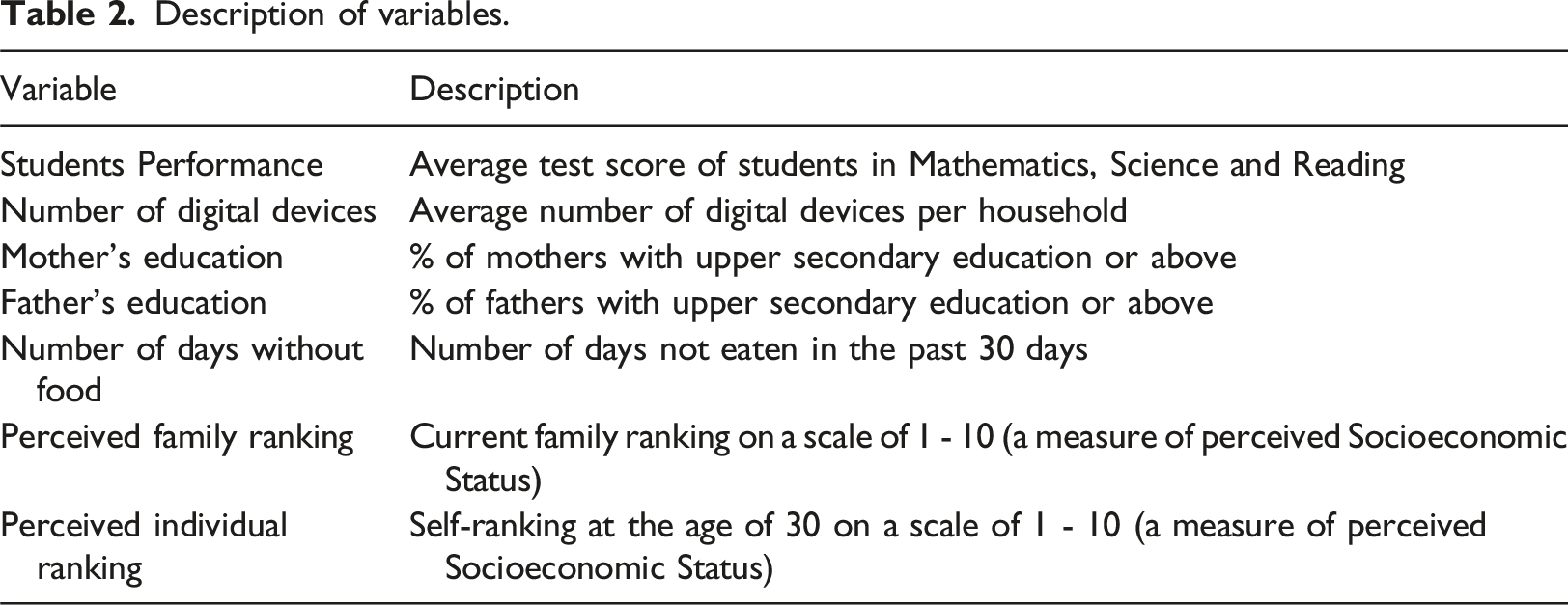
We collected data from the PISA database for the year 2022 to address our two research questions. Students’ performance, the dependent variable, was measured using average scores in Mathematics, Science, and Reading. Independent variables included access to technology, parental (mother and father) education, food security, and perceived socioeconomic status. Access to technology was quantified by the average number of digital devices available per household. Parental education was measured by the percentage of upper secondary education completed by both the mother and father. Food security was assessed by the number of days without food in the past month, and perceived socioeconomic status was determined by individual and family rankings on a socioeconomic scale of 1 to 10.
Demographics for the two groups.
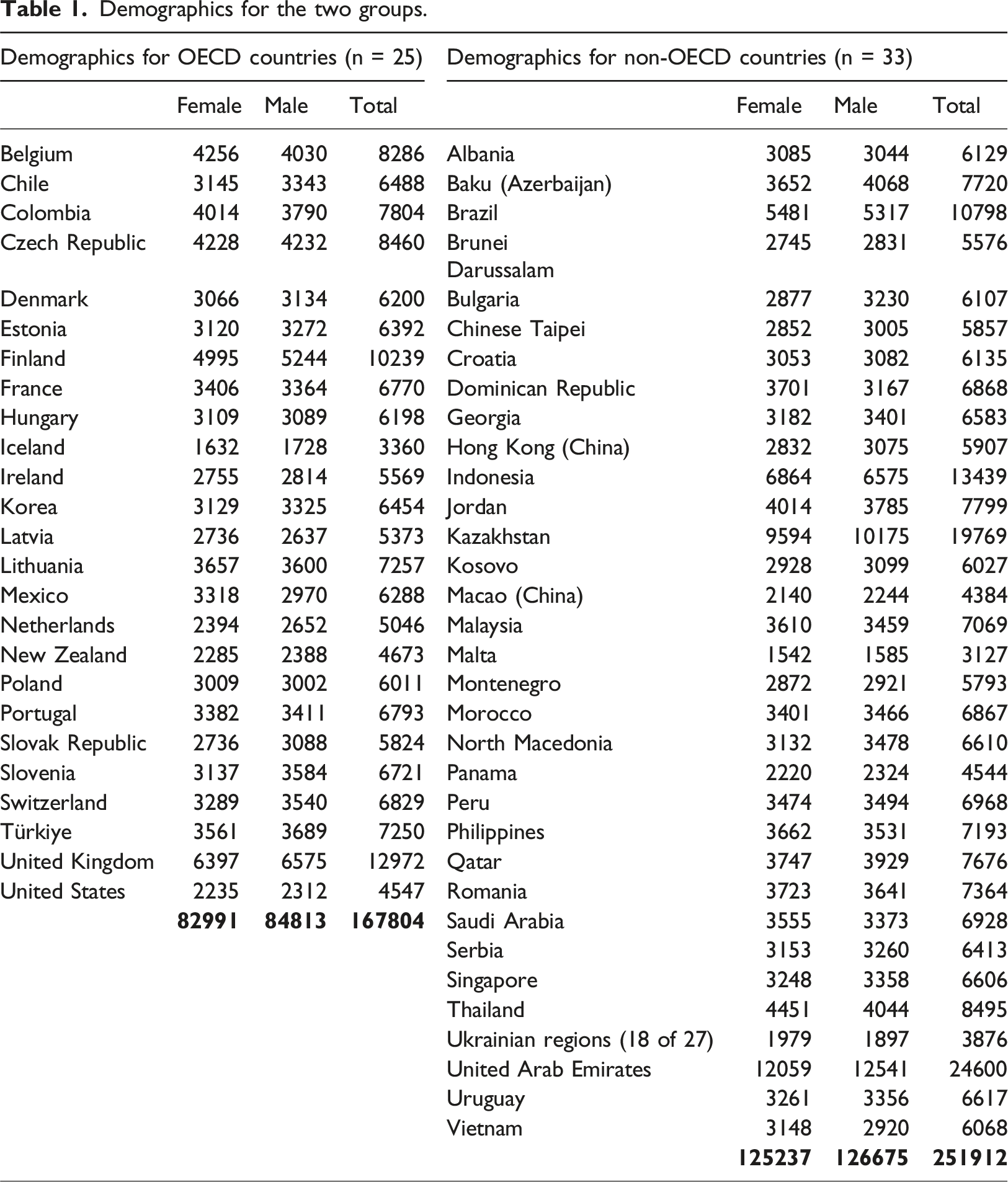
To ensure the robustness of our analysis, we employed multiple regression techniques to explore the relationships between the independent variables and educational attainment. Additionally, we conducted ANOVA to assess whether the differences between the OECD and non-OECD groups were statistically significant.


In the above model, Students Performance ij refers to a dependent variable for a country i within group j (where j refers to non-OECD or OECD) in the year 2022. The term β0 is the constant term, while β1 to β6 are the coefficients of interest, representing the effects of independent variables (number of digital devices, father’s education, mother’s education, number of days without food, perceived individual ranking, and perceived family ranking) on student performance at the country level. The error term εij represents the unexplained variability in the model for country i in group j.
Description of variables.
Results and analysis
Descriptive statistics
Descriptive statistics of variables for OECD and non-OECD countries.
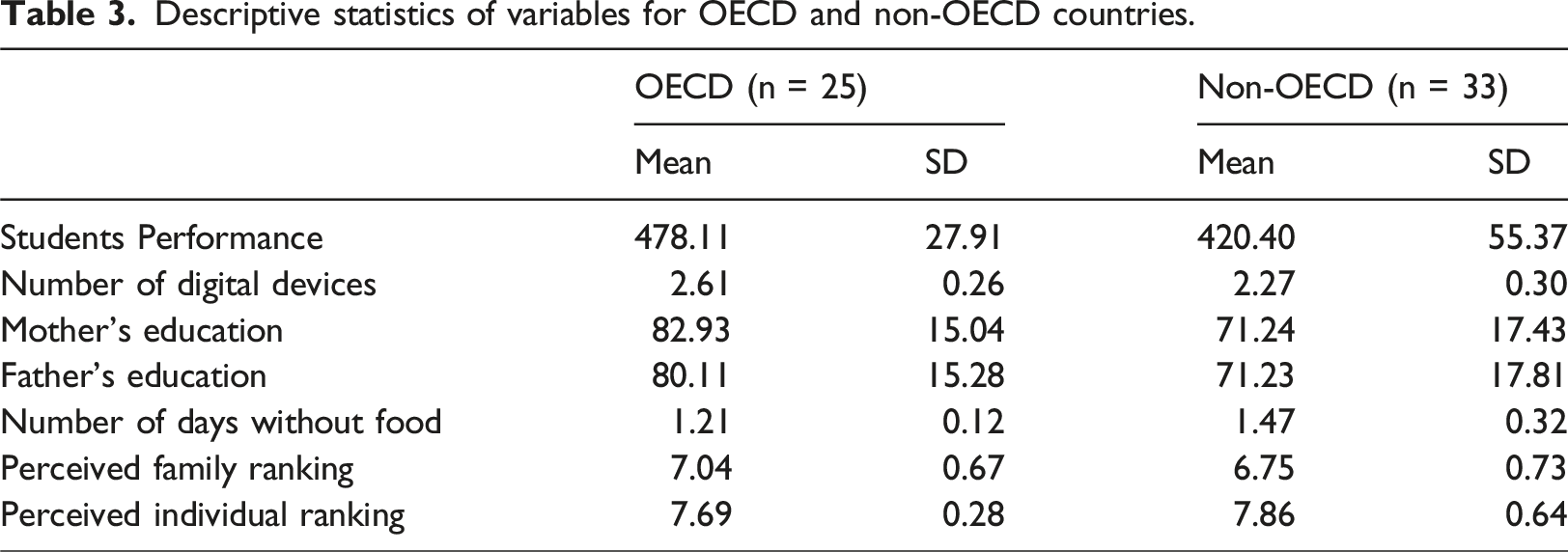
The data highlights pronounced inequalities between OECD and non-OECD countries. Students in OECD countries not only achieve higher average scores but also benefit from greater access to digital devices and a higher percentage of parents with secondary education. These factors contribute to a more supportive learning environment and better academic outcomes. In contrast, students in non-OECD countries face additional challenges, including fewer educational resources at home and a higher incidence of food insecurity, which can negatively impact their academic performance. These disparities reflect broader socioeconomic inequalities that create significant barriers to educational success in non-OECD regions, further entrenching the gap between these groups of countries.
Correlation analysis
Correlation analysis between variables for OECD countries.
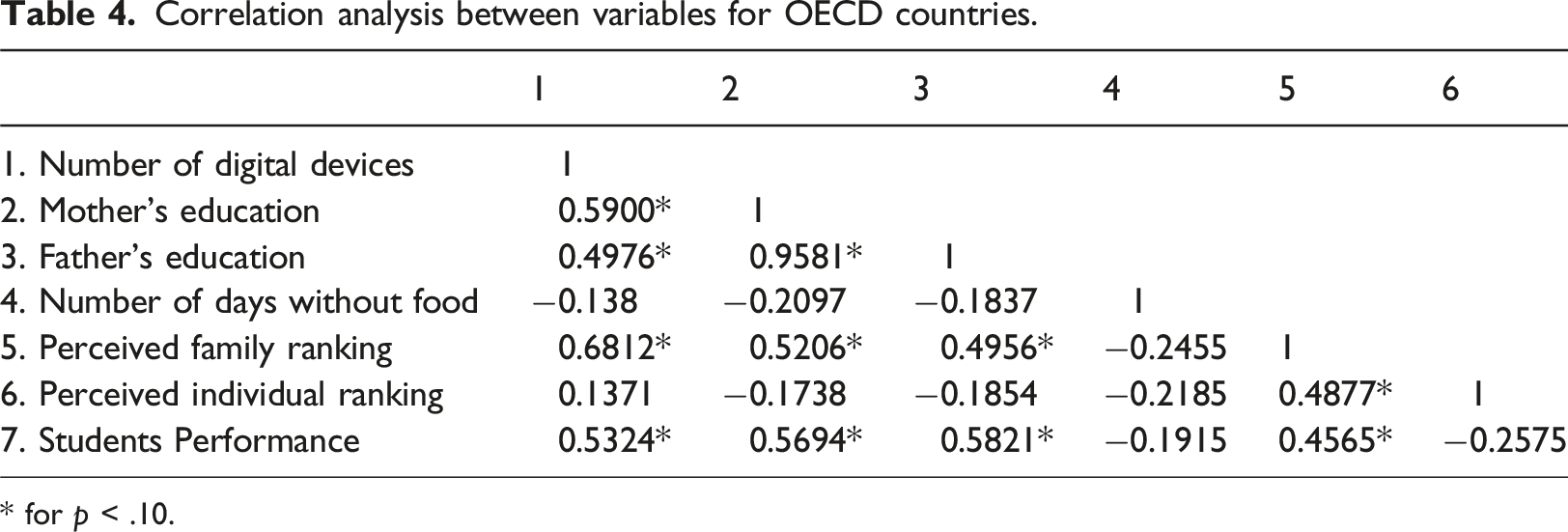
* for p < .10.
Correlation analysis between variables for non-OECD countries.
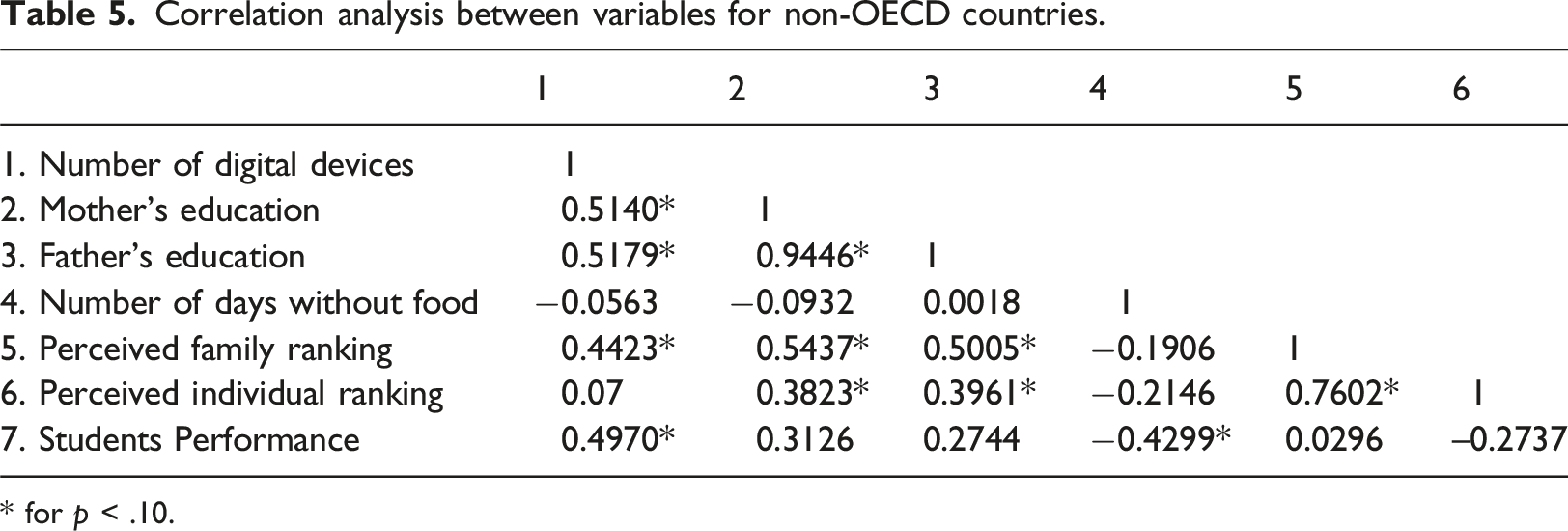
* for p < .10.
The analysis highlights significant inequalities between OECD and non-OECD countries. In OECD countries, academic performance is strongly associated with socioeconomic factors such as access to digital devices and the education level of parents. In contrast, while digital access remains important in non-OECD countries, basic needs like food security also play a critical role in student performance. This disparity underscores the broader challenges faced by students in non-OECD countries, where fundamental needs are not consistently met, potentially hindering their academic success and widening the gap between these regions.
Regression analysis
Regression analysis for OECD countries.
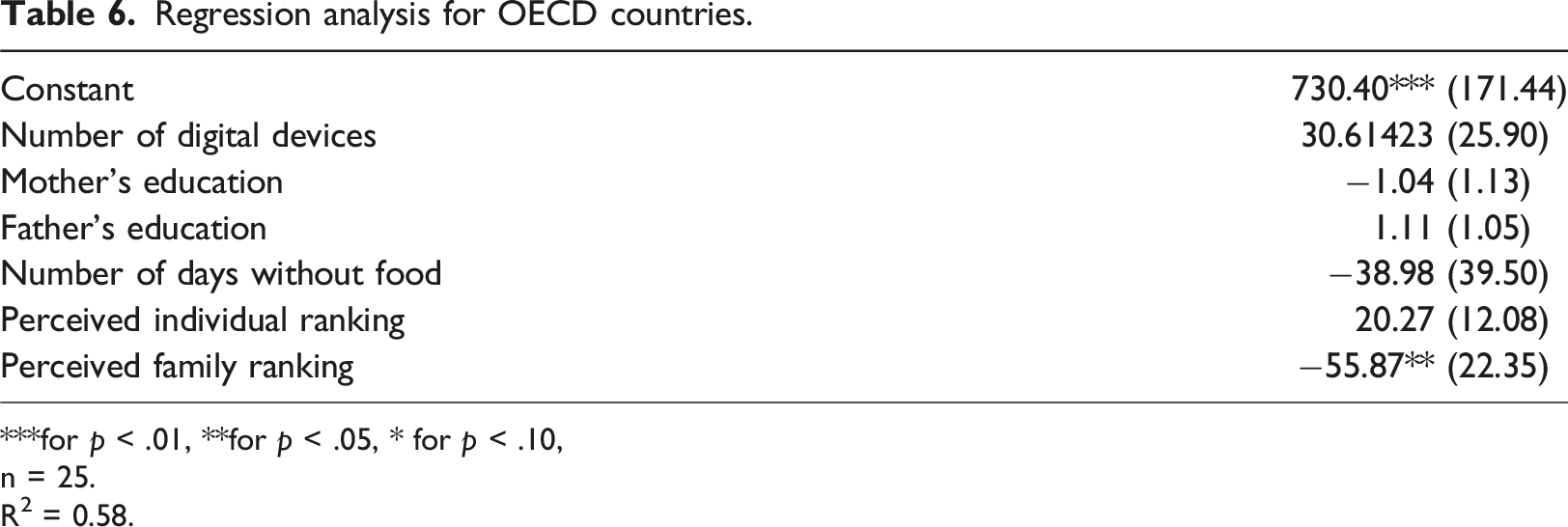
***for p < .01, **for p < .05, * for p < .10,
n = 25.
R2 = 0.58.
Regression analysis for non-OECD countries.
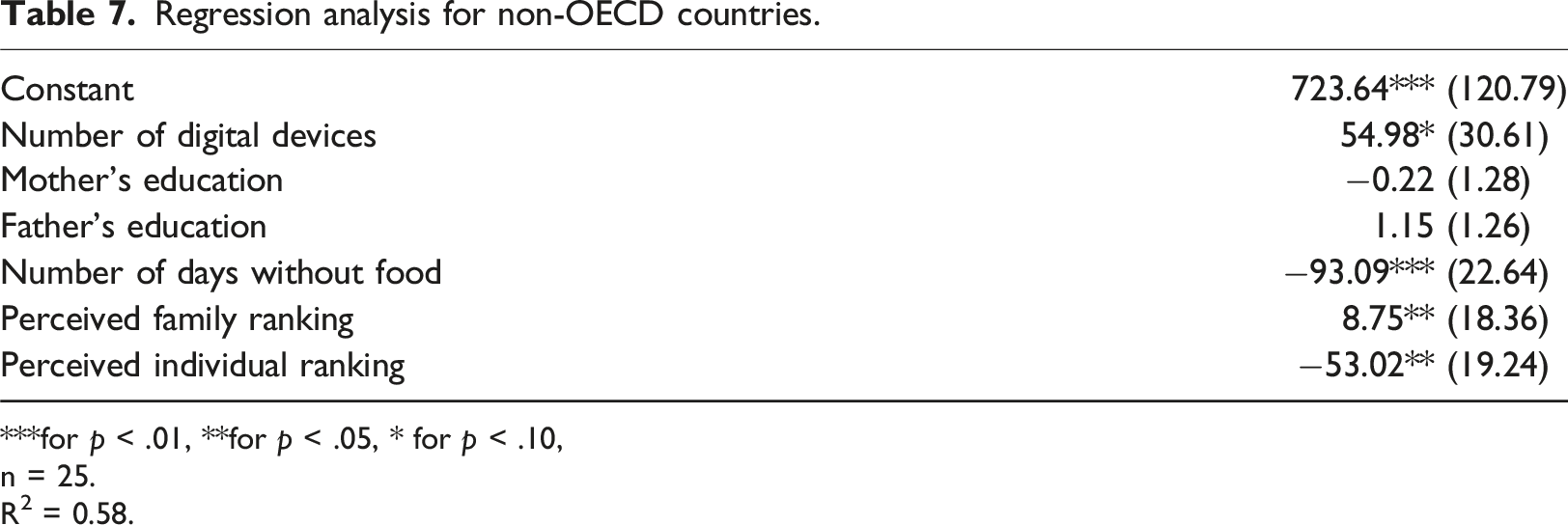
***for p < .01, **for p < .05, * for p < .10,
n = 25.
R2 = 0.58.
The analysis suggests inequalities between OECD and non-OECD countries. In OECD countries, a single factor – students’ future expectations – significantly influences academic performance, suggesting that these students may benefit from a more stable and supportive environment where their aspirations have a direct impact on their academic outcomes. Conversely, in non-OECD countries, students’ scores are influenced by a combination of negative and positive factors, such as food insecurity and access to digital devices, reflecting the broader challenges they face. The negative impact of food insecurity on academic performance in non-OECD countries underscores the harsh realities that can hinder educational attainment, while the positive influence of digital devices highlights the importance of access to educational resources. These disparities point to systemic inequalities where students in non-OECD countries are burdened with challenges that go beyond academic factors, ultimately affecting their educational outcomes and perpetuating the gap between OECD and non-OECD regions
One-way ANOVA analysis
One-way ANOVA analysis (OECD and non-OECD countries).
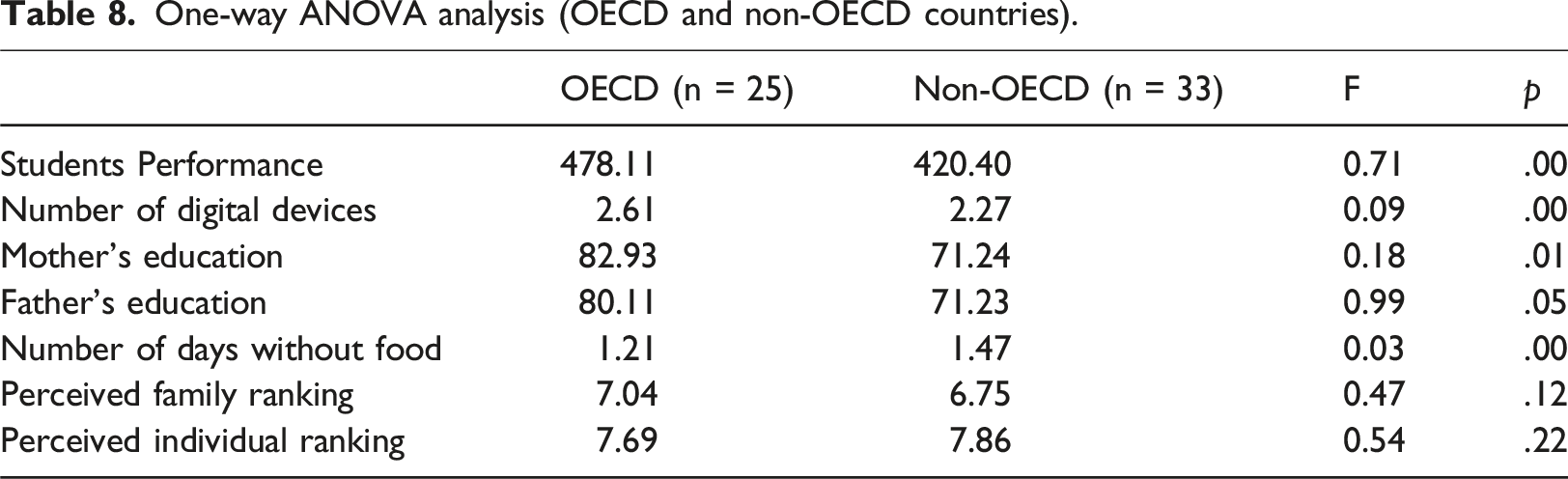
The ANOVA analysis highlights significant inequalities between OECD and non-OECD countries across several critical factors. The difference in student performance, access to digital devices, and parental education levels between the two groups underscores the disparities in educational opportunities and resources. The significant difference in food insecurity, as indicated by the number of days students did not eat, further emphasises the challenges faced by students in non-OECD countries, where basic needs may not be consistently met. These inequalities suggest that students in non-OECD countries are at a considerable disadvantage, not only academically but also in terms of their overall well-being, compared to their counterparts in OECD countries.
The absence of significant differences in where students see themselves in the future may reflect universal aspirations among students, but the unequal starting points indicated by other factors suggest that students in non-OECD countries may face more obstacles in achieving these goals.
Discussion
The analysis across descriptive statistics, correlation, regression, and ANOVA provides a clear picture of the disparities between OECD and non-OECD countries in terms of student performance and related factors. Overall, the results indicate that students in OECD countries outperform those in non-OECD countries, with a significant gap in average scores. Our analysis has given us insights into our designed hypotheses.
The study results support our first hypothesis, though some variables show contrasting relationships for some variables. Access to digital devices, parental education levels, higher perceived socioeconomic status and food insecurity in OECD countries are positively correlated with higher exam scores in OECD and non-OECD countries. The correlations suggest that in OECD countries, student performance is positively influenced by higher parental education and greater access to digital devices. Conversely, in non-OECD countries, while digital device access also boosts performance, food insecurity has a detrimental effect. Alongside this, the study highlights differences in the role of socioeconomic status (SES) between OECD and non-OECD countries.
In OECD countries, objective SES, reflected in parental education and home resources, continues to be a strong predictor of student performance, as noted by Lee and Borgonovi (2022). In contrast, we find a more nuanced impact for the correlation of subjective socioeconomic status (SSS) – how students perceive their own or their family’s social standing – with exam scores. In non-OECD countries, while higher perceived SES is generally associated with better academic outcomes, anticipated subjective SES (how students view their future economic status) surprisingly shows a negative correlation with performance in non-OECD countries. This contrasts with studies like Zhang et al. (2020), which found that positive future expectations could buffer the adverse effects of low SES. The negative correlation in our study may suggest that in non-OECD countries, the gap between aspirations and reality could lead to disillusionment, reducing students’ motivation to perform academically. This disillusionment could be the result of mechanisms in which students aim to gain a higher status through non-academic means, such as employment in well-paid, low-skilled jobs. We can also consider the effects of migration, where students may consider migrating to OECD countries in search of better opportunities and thus a higher social status, which may alienate them from their current studies.
Furthermore, whilst our findings indicate that access to digital devices positively correlates with student performance in both OECD and non-OECD countries, the relationship is stronger in OECD countries. This result aligns with previous studies such as Bozkuş (2021) and Gonzáles-Betancor et al. (2021), which highlighted the importance of digital infrastructure in enhancing academic achievement. However, the less pronounced effect in non-OECD countries suggests that while digital access is crucial, its benefits may be constrained by other limiting factors, such as the quality of education or the extent of technology integration in these regions. In OECD countries, students’ future outlook (where they see themselves at age 30) is a significant predictor of their current performance, reflecting the importance of future aspirations. In non-OECD countries, food insecurity and digital device access significantly influence performance, highlighting more immediate concerns impacting students. ANOVA results confirm significant differences between OECD and non-OECD countries in several key factors, such as student scores, digital device access, and parental education levels. However, no significant difference was found in students’ future outlooks, indicating that while aspirations may be similar, the resources and conditions that shape educational outcomes are vastly different.
The influence of parental education on student performance also shows significant disparities between OECD and non-OECD countries. In OECD countries, both maternal and paternal education levels are strongly associated with higher student achievement, supporting the findings of Yang et al. (2022) and Barra and Boccia (2022). These studies emphasise the role of cultural capital and the transmission of educational values from parents to children. However, in non-OECD countries, while parental education is still important, its impact is less consistent. This variation may be due to differences in educational systems, societal structures, or the availability of other supportive resources that can mitigate or amplify the effects of parental education.
Our study’s second hypothesis is partially supported. For OECD countries, the only significant variable was anticipated socioeconomic status. However, for non-OECD countries, both anticipated socioeconomic status and food security emerged as significant factors. The emergence of food security as a critical determinant of educational outcomes in non-OECD countries, shown by the negative correlation between the number of days students reported not eating and their academic performance, underscores the severe impact of unmet basic needs on learning. This finding is consistent with research by Aurino et al. (2019) and Loofbourrow and Scherr (2023), which documented the detrimental effects of food insecurity on cognitive function and academic performance. Interestingly, food security appears to play a less significant role in OECD countries, likely due to the higher baseline level of food availability and stability in these regions.
The differences observed across the various factors in OECD and non-OECD countries highlight the complex interplay between economic development, resource availability, and educational outcomes. While OECD countries benefit from better access to educational resources and parental support, non-OECD countries face more immediate challenges, such as food insecurity and limited access to technology, which directly impede student performance. Moreover, the role of anticipated future status as a demotivator in non-OECD countries suggests that policies aimed at improving current conditions, rather than solely focussing on future aspirations, may be more effective in these regions.
Intersectionality of educational disadvantages
Educational inequality might not always be the result of a single disadvantage but rather a complex interaction of multiple socioeconomic factors that compound over time. Our findings highlight the significant effects of parental education, food security, and digital access on student performance. However, these factors might not operate in isolation; rather, they may reinforce one another, creating a cumulative disadvantage that disproportionately affects students in non-OECD countries.
For instance
The cumulative disadvantage theory as suggested by Hanushek et al. (2023) provides a useful framework for understanding these interactions. This theory suggests that small educational setbacks accumulate over time, leading to widening disparities between students from different socioeconomic backgrounds. In the context of our study, a lack of parental education may limit a child’s early exposure to learning resources, which, when coupled with food insecurity and digital exclusion, may result in long-term academic underperformance.
Conclusion
This study aimed to provide a detailed comparative analysis of educational inequality between OECD and non-OECD countries, focussing on key factors: access to digital devices, parental education, food security, and socioeconomic status. The findings for our first research question (RQ1) indicate that in OECD countries, higher parental education and greater access to technology are positively correlated with improved exam scores. In contrast, in non-OECD countries, both anticipated socioeconomic status and food security significantly affect exam scores. Specifically, while access to technology positively impacts student performance, food insecurity is negatively correlated with academic outcomes. These results highlight the differing impacts of these factors across various contexts and reflect broader socioeconomic disparities affecting educational outcomes. Students in non-OECD countries face more substantial challenges, which hinder their educational performance.
Regarding RQ2, our findings show that the most significant contributors to student performance vary between OECD and non-OECD countries. For OECD countries, parental education and access to technology are the primary factors influencing performance. Conversely, in non-OECD countries, anticipated socioeconomic status and food security are critical determinants. Food security, in particular, emerges as a crucial factor in non-OECD contexts, with its negative impact on performance emphasising the severe effects of unmet basic needs. This illustrates a more complex relationship between these factors and student performance, dependent on regional context. These findings suggest a need for targeted interventions to address resource disparities and improve educational conditions in non-OECD countries. Next, we discuss the theoretical and practical implications of our study, along with the study’s limitations and directions for future research.
Theoretical implications
This study makes significant theoretical contributions by deepening our understanding of educational inequality through a multifaceted analysis of factors that have been underexplored in the existing literature. Previous research has primarily focused on objective measures of socioeconomic status (SES) and their impact on educational outcomes. Our study broadens this perspective by introducing and rigorously analysing both current and anticipated subjective socioeconomic status (SSS). This approach challenges the traditional emphasis on objective SES, revealing that students’ perceptions of their own and their families’ future economic status play a crucial role in shaping their academic achievements, particularly in non-OECD countries. Additionally, our study contributes to the growing body of literature on the intersection of basic needs and educational performance by incorporating a direct measure of food insecurity; specifically, the number of days students have skipped meals due to lack of income. This variable provides a more detailed understanding of how immediate physiological needs can overshadow the potential benefits of educational resources, particularly in less developed regions. By linking food insecurity directly to academic outcomes, our study extends the conversation beyond psychological and social aspects of poverty, suggesting that policies addressing educational inequality must also tackle basic survival needs.
Moreover, our findings provide a comprehensive understanding of the relationship between anticipated SSS and academic performance, particularly in non-OECD countries. Contrary to the positive impact of future expectations observed in OECD contexts, we found that higher anticipated SSS can negatively correlate with performance in non-OECD countries, possibly due to the greater gap between aspirations and attainable realities. This highlights the complexity of motivational theories when applied across different economic landscapes, suggesting that the benefits of high aspirations may not be universal but are instead contingent on the socioeconomic context.
Practical implications
For the practical implications, our findings offer critical insights for policymakers and educational practitioners aiming to reduce educational inequality. In OECD countries, the results underscore the importance of continuing to invest in digital infrastructure and parental involvement to enhance student performance. Ensuring widespread access to technology and supporting parents’ educational roles can help maintain and improve the high educational standards already observed in these regions. In non-OECD countries, our study suggests that interventions need to address more fundamental issues before the benefits of educational resources can be fully realised. Addressing food insecurity should be a top priority, as our findings demonstrate that unmet basic needs significantly hinder academic performance. Policies should focus on ensuring that students’ immediate physiological needs are met, which could lay a stronger foundation for educational improvements. Expanding school meal programs, particularly in low-income regions, could help mitigate this issue. Digital inclusion initiatives, such as subsidised internet access and the provision of digital devices, should also be implemented to bridge the technological divide.
Additionally, the negative impact of anticipated subjective socioeconomic status in non-OECD countries points to the need for realistic and attainable goal-setting within educational frameworks. Programs that enhance current living conditions and provide clear, achievable paths for economic and social mobility may be more effective in these regions than those solely focused on cultivating high aspirations. This approach could help bridge the gap between students’ expectations and their lived realities, potentially improving both motivation and academic outcomes.
Furthermore, teacher training programs in under-resourced areas should be strengthened to improve instructional quality and ensure that educators can effectively integrate digital tools into their teaching practices. Finally, international organisations such as UNESCO and the World Bank play a crucial role in addressing global educational disparities. Collaborative efforts with these institutions could provide financial and logistical support for large-scale policy interventions, ensuring that educational reforms are sustainable and impactful. These targeted strategies can help bridge the gap between students’ expectations and their lived realities, ultimately improving both motivation and academic outcomes.
Additionally, to broaden the policy implications of our findings, we draw on insights from Sahlberg (2021, 2007) regarding education policy reforms in Finland. Sahlberg’s work underscores how Finland’s emphasis on equitable resource distribution, comprehensive teacher training, and holistic educational reforms has played a crucial role in reducing educational disparities. These reforms prioritise student-centred learning, robust public investment in education, and minimising socioeconomic inequalities, contributing to one of the world’s most equitable education systems. By applying this framework, we can derive broader lessons that are relevant for both OECD and non-OECD countries, particularly in addressing systemic barriers to educational access and performance.
Finland’s focus on optimising learning environments, fostering teacher autonomy, and reducing reliance on high-stakes testing offers a valuable model for OECD countries aiming to advance their education systems, especially in areas such as digital infrastructure and parental engagement. For non-OECD countries, Sahlberg’s (2007) emphasis on building trust and fostering sustainable leadership models can provide guidance that is adaptable to these regions. Prioritising students’ welfare and empowering local schools can lay a stronger foundation for academic success. Furthermore, the negative impact of anticipated subjective socioeconomic status in non-OECD countries highlights the need for realistic and attainable goal-setting within educational frameworks. Programs that improve current living conditions and offer clear, achievable paths for economic and social mobility may be more effective in these regions than those focused solely on cultivating high aspirations. This approach can bridge the gap between students’ expectations and their lived realities, potentially enhancing motivation and academic outcomes. Sahlberg’s (2021) work on Finnish education also emphasises the significance of local accountability and the establishment of professional learning communities, which could help non-OECD regions create educational systems that are more responsive to students’ lived experiences.
Limitations and directions for future research
While this study provides valuable insights, it also has certain limitations. The reliance on PISA data, while robust, may not fully capture the nuances of educational inequality, particularly in non-OECD countries where data collection might be less comprehensive. Additionally, the study’s cross-sectional design limits the ability to draw causal inferences. Future research could benefit from longitudinal studies that track changes in educational outcomes over time, offering a more detailed understanding of how the factors identified in this study evolve and interact. Future studies could explore the role of anticipated subjective SES in more depth, particularly in non-OECD contexts, to better understand the mechanisms by which future expectations influence academic performance. Additionally, investigating the impact of digital device overuse or misuse could provide further insights into the complexities of technology’s role in education. Next, expanding the scope of research to include other regions and datasets could offer a more global perspective on educational inequality, helping to develop more targeted and effective interventions.
While our study provides a robust empirical analysis of educational inequality, it does not extensively examine the potential role of emerging education technologies in addressing these disparities. AI-driven personalised learning and digital platforms might offer new possibilities for reducing educational inequality, yet their impact remains underexplored in our research. AI-powered adaptive learning tools could help mitigate disparities by tailoring content to students’ needs, particularly in non-OECD countries where teacher shortages and large class sizes pose challenges. Future research can address this gap by investigating how scalable and sustainable digital learning solutions can bridge educational gaps while ensuring equitable access to technology. Collaborations between governments, EdTech firms, and international organisations such as UNESCO and the World Bank could further drive these innovations to support disadvantaged students.
Furthermore, while our study highlights disparities in student performance, it does not extensively examine how national education policies contribute to educational inequality. Different countries implement diverse policy frameworks that significantly shape student outcomes. For example, Finland has effectively reduced educational inequality through comprehensive teacher training, minimal standardised testing, and equitable resource allocation (Sahlberg, 2021). Likewise, Singapore’s education system prioritises early intervention programs, government-subsidised tutoring, and targeted financial aid to support disadvantaged students (Ng, 2017). Future research could explore how these policy-driven approaches can be adapted to OECD and non-OECD contexts, providing valuable comparative insights for policymakers aiming to reduce educational disparities.
Next, our study examines the structural determinants of educational inequality, but it does not fully explore its broader philosophical and ethical implications. Persistent disparities in access to quality education can have profound long-term consequences for social mobility, democratic participation, and economic stability
Lastly, our study examines the individual effects of parental education, food security, and digital access on student performance, it does not empirically model their interactions or explore the cumulative nature of educational disadvantages over time. The cumulative disadvantage theory (Hanushek et al., 2023) suggests that small socioeconomic setbacks compound over time, widening educational inequalities. Hence, future research could investigate how these factors interact dynamically, particularly in longitudinal studies
Footnotes
Acknowledgement
We would like to express our gratitude to Dr Amira Elasra for her supervision and guidance throughout this project.
Declaration of conflicting interests
The author(s) declared no potential conflicts of interest with respect to the research, authorship, and/or publication of this article.
Funding
The author(s) disclosed receipt of the following financial support for the research, authorship, and/or publication of this article: This project was funded by the University of Warwick, UK, through the Undergraduate Research Support Scheme (URSS) 2024.
