




Abstract
In this paper, we discuss the development and initial validation of an instrument, namely IV-SOPRA (Index of Violence Suffered and Practiced), measuring levels of violence suffered and practiced by students in Higher Education institutions; thus, seeking to advance research into the issue of violence connected to Higher Education. Participants are undergraduate students (n = 1188), who responded to an online questionnaire from a university in the south of Brazil. This was a convenience sample. The population was from all undergraduate courses offered at the partner university (i.e. Arts and Humanities; Social Sciences; Sciences; Medicine). Data analysis was conducted using R environment (R Core Team, 2020), and lavaan package (Rosseel, 2011). Confirmatory factor analysis was carried to investigate model fit to the data according to theorised structure of the IV-SOPRA subscales. Each subscale demonstrates good to excellent fit to the data, according to fit measures and reliability indices. The instrument provides Higher Education institutions with a tool for evaluating and diagnosing levels of prejudice and bullying on campus, so that effective measures can be put in place to deal with problems at hand.
Introduction
Historically, Meirieu (2011) in his seminal ‘Quelle parole face à la violence?’ points out that research into violence in schools appears to have started in the 1960s when the distinction between institutional violence and violence against the institution, and we would add society, first emerged as a field of educational research. This 1960s scenario applies not only to schools but also to Higher Education. As it is well-known, this period marks very turbulent political times, culminating in student protests and uprisings in many countries; the May 1968 riots and strikes in France are perhaps the better know (cf. Singer, 2002) but similar events took place elsewhere, like the USA, Mexico and Brazil (cf. Braun, 1997; Godfrey, 1969; Langland, 2013).
In the following decades, there were further developments in the field with an interest towards research into violence against teachers, violence between peers, intentional vandalism and destruction of personal property within school settings, and gang issues – this was something that had been previously overlooked or minimised. It is important to note here that alongside research centred around education and violence, there was also a robust development in the fields of conflict resolution and peace education, which tried to provide both theoretical and practical perspectives on how to deal with problems of violence within educational settings. This scenario has set much of the trends for conducting research into education and violence, which has grown steadily at an international level and with great impetus (cf. Cremin and Guilherme, 2016; Guilherme, 2017).
In the light of the above, it can be argued that it is important to analyse and make a diagnostic of contexts, such as schools and educational institutions, so that issues of violence can be identified, enabling us to respond in effective fashion. Further, the issue of violence can be understood as the very manifestation of prejudices, discrimination and intolerance (Lawrenz and Habigzang, 2020), and this has deep connections to the issue of bullying in education settings (Dennell and Logan, 2015).
In the next section, we discuss the development of an instrument focusing on eight types of prejudice (i.e. 1. racism; 2. misogyny/machismo; 3. religious intolerance; 4. fatphobia; 5. homophobia; 6. lesbophobia; 7. transphobia; 8. biphobia) and bullying (i.e. 9. bullying). Hence, the instrument, namely IV-SOPRA (Index de Violência Sofrida e Praticada/Index of Violence Suffered and Practiced) accesses nine dimensions of violence within the context of Higher Education. The intention is to provide HEIs (i.e. Higher Education Institutions) with a tool for evaluating and diagnosing levels of prejudice and bullying on campus, so that effective measures can be put in place to deal with problems at hand.
Method
Background research and development of the instrument
Four researchers, one senior and three juniors, worked in the initial development of the instrument, hereby named IV-SOPRA (Index of Violence Suffered and Practiced). A narrative literature review of instruments, studies and reports dealing with the issue of violence, prejudice and bullying was conducted so to understand classic and recent developments in the field using google scholar during the first semester of 2017 using the keywords in English ‘instrument’ and ‘violence’, and the string ‘instrument + violence’. We reviewed and considered only publications in English. Amongst our findings, Olweus’ famous bullying questionnaire was of particular interest to us, as was Smith’s review of the school violence within the European Union (cf. Olweus, 1996a, 1996b, 1999; Smith, 2003). The Olweus’ bullying questionnaire is divided up into two parts: i. the perpetrator/bully and ii. the victim/bullied. The two parts, perpetrator and victim, provide us with two sides of a complex problem faced in school settings, discriminating between those that effect violence and those that suffered from violence. This bullying questionnaire has a total of 39 items (i.e. 3 personal questions; 20 questions about being bullied; 16 questions about bullying others).
In addition to the Olweus questionnaire, we were also interested in a study conducted in the Netherlands by Bongers et al. (2003: 72), and published in Smith (2003), which stated that ‘[p]upil responses were assessed on two victim scales: 15 percent were a victim of physical violence, and 43 percent a victim of intentional damage of property or emotional violence. On three perpetrator scales, 51 percent were a perpetrator of disruptive behaviour in school, 15 percent a perpetrator of premeditated physical violence, and 7 percent a perpetrator of intentional damage to property’. The intentional damage to property, a premeditated sort of violence against individuals that is effected in an indirect manner (i.e. not against their physical person, but against the extension of their person, their property) was something that captured our attention.
Finally, we were also interested in the ‘bystander effect’ and its findings regarding diffusion of responsibility when witnessing a case of emergency, demonstrating that individuals may be slower in offering help if there are other people around; this may be based on their assumption that other individuals may be more qualified to aid, such as doctors, or that their help is unwanted, or yet, that they may get involved in an unwanted situation that might lead to ramifications, such as lawsuits (Darley and Latanè, 1968, 1970). Thus, the ‘bystander effect’ is related to our interest in understanding if individuals who witness acts of violence, such as prejudices or bullying in the most varied forms, hesitate to intervene and help victims of such actions (Machackova et al., 2015; Song and Oh, 2017).
It is also noteworthy the context in which this research has taken place, providing the thrust to develop and effect the initial validation of the instrument measuring levels of violence experienced and practiced by undergraduate students. Brazil has been considered a ‘racial paradise’ and ‘religious democracy’ and these are myths embedded in Brazilian cultures (Freyre, 1933; Guilherme, 2012); however, research has demonstrated otherwise. The country experiences high levels of racism, lgbt+-phobia, and more recently xenophobia (Milesi et al., 2018; Gall, 2016; Guilherme et al., 2019). This scenario makes Brazil a very interesting place to conduct this research – the development of the instrument and its initial validation.
The instrument, herewith named IV-SOPRA (Index de Violência Sofrida e Praticada/Index of Violence Suffered and Practiced) was developed and tested. Figure 1 demonstrates all the stages of development and early validation of this instrument. The instrument was constructed in three parts: i. a sociodemographic questionnaire; ii. victim questionnaire; iii. perpetrator/bystander questionnaire – and these will be discussed in further detail during the unfolding of this section. It is also important to note that in the field of psychology, various instruments have been created to investigate and measure prejudice in education; however, to the best of the authors’ knowledge there is no one instrument in this area which simultaneously takes in account the roles of victim, perpetrator and bystander in accordance with recent research on violence. In this connection, Walsh et al. (2008: 1038) state: Few questionnaires are available to assess multiple forms of maltreatment among youth using a self-report format... For example, many survey instruments assess only one type of victimization, rely on a single item to represent this concept, or inquire about ‘abuse’ in general allowing the respondent to interpret what is meant by this term—all of which have a direct impact on rates of disclosure ... In addition, few of the available instruments have established reliability and validity. Stages of development and early validation of IV-SOPRA.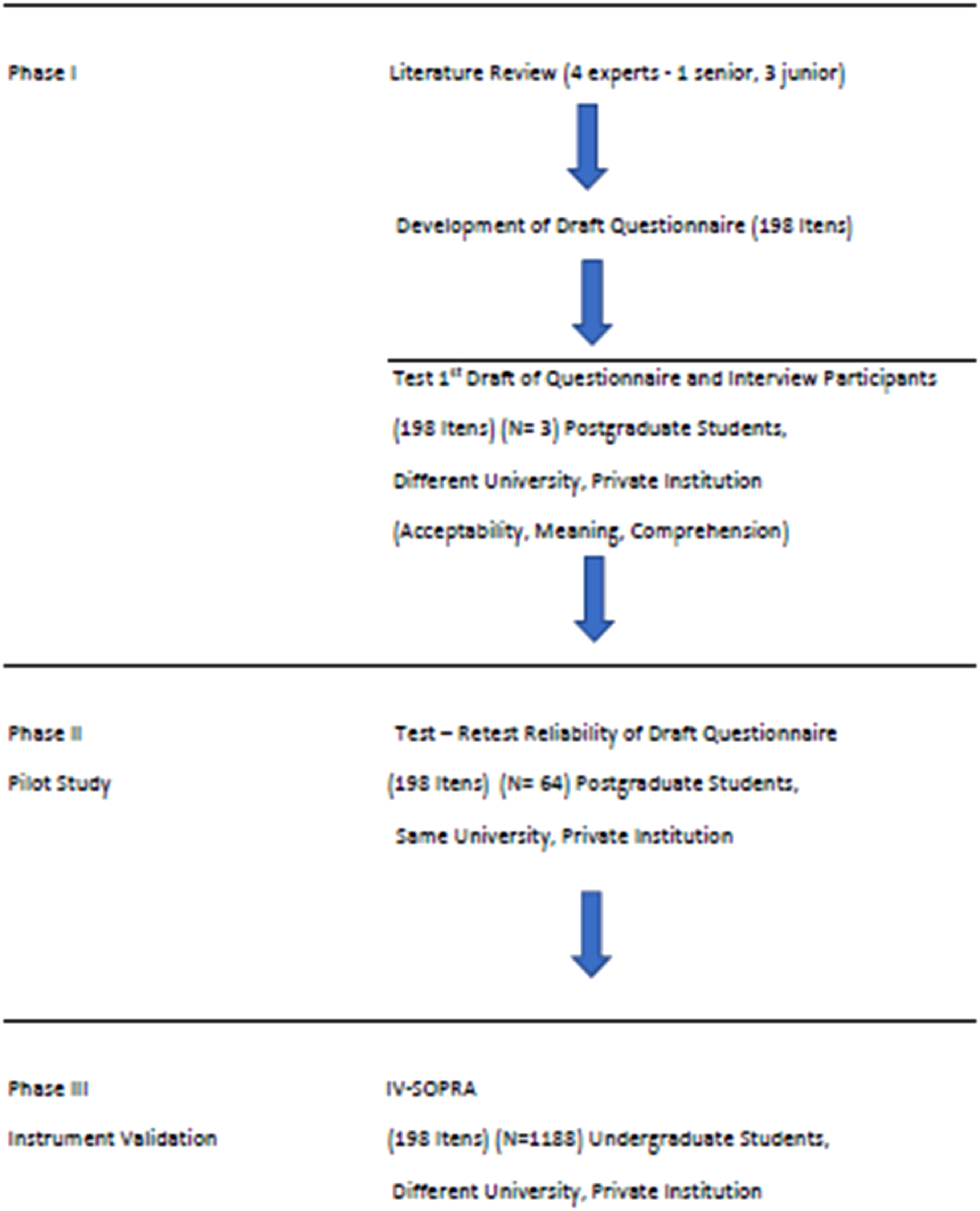
As it can be gathered from Figure 1, in Phase 1, the instrument was developed by four researchers, one senior and three juniors, following a review of the literature. The questionnaire has a total of 198 items to be answered by participants. All questions for the nine types of prejudice/violence in the designed instrument followed the same pattern, as per Part I and II in the questionnaire (see Figures 3 and 4). We are aware that this risks the issue of having patterned responses; that is, participants may simply mark items without thinking about them individually and carefully, tending perhaps to choose the first choice that appears in the response set – the so-called, primacy effect. However, as Barnette (1999: 5–6) demonstrated in his study applying for versions of a questionnaire with 20 items: ‘there is no evidence that the directionality of...response alternatives should be a concern in the design of at least some types of surveys. A primacy effect was not observed in this experiment. This indicates that at least sometimes it may not make any difference which direction is used as related to the technical adequacy and stability of the results obtained’. In addition to this, the nine types of prejudice/violence are very specific, and further, they relate to individuals in a very singular and personal way, drawing their attention to issues. Also, given that all the nine sets of prejudice/violence have a maximum of 20 items to be answered and this seems to allow individuals to maintain their attention span, as they shift from one prejudice/violence to another (cf. Colton and Covert, 2007).
Following from the above, Figure 2 exemplifies the sociodemographic; Figure 3 the victim questionnaire; and Figure 4 the perpetrator/bystander questionnaire. It is understood that the victim questionnaire and the perpetrator/bystander questionnaire could be applied independently. We must also emphasise that both types of questionnaires, namely victim and perpetrator/bystander, are formed by nine subscales that could also be applied independently: that is, 1. racism; 2. misogyny/machismo; 3. religious intolerance; 4. fatphobia; 5. homophobia; 6. lesbophobia; 7. transphobia; 8. biphobia and finally 9. bullying. In the online platforms, namely google forms (through which it was first piloted and tested) and Qualtrics, all subscales included a definition for the prejudice at the top of the subscale (e.g. Racism and Fatphobia) so to enlighten, and emphasise to participants the central topic of the subscale being answered. Sociodemographic questionnaire. Victim questionnaire. Perpetrator/bystander questionnaire.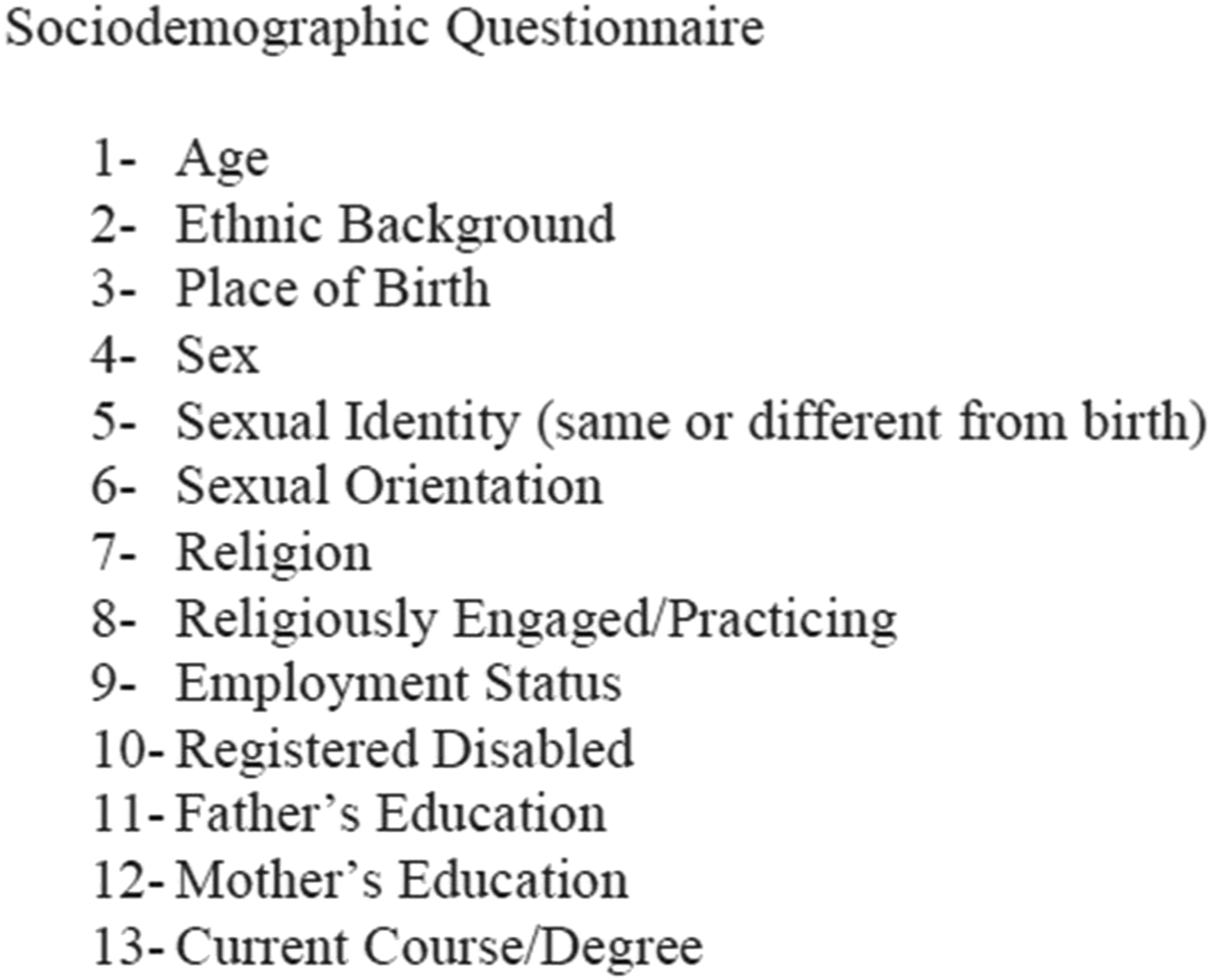
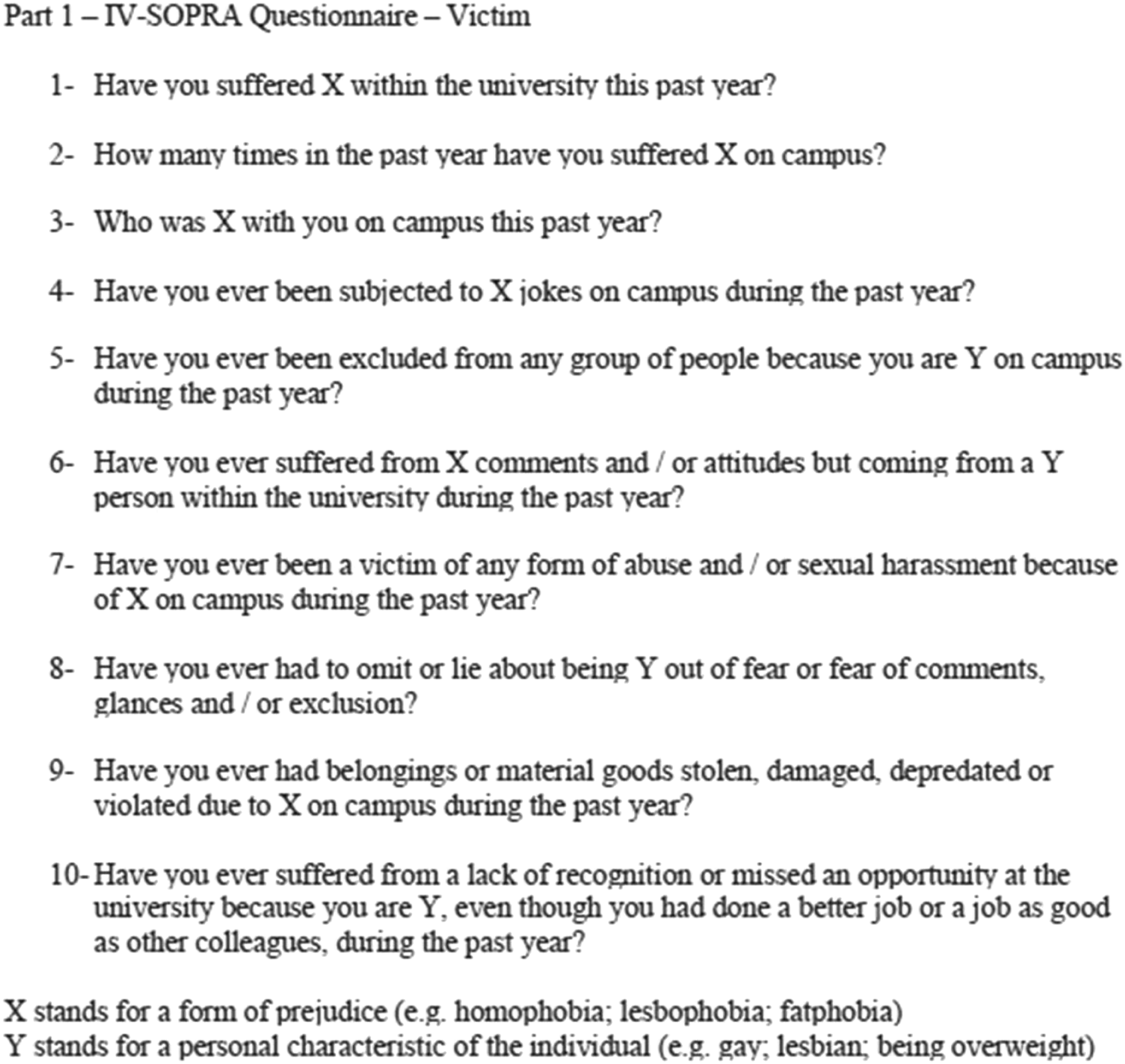
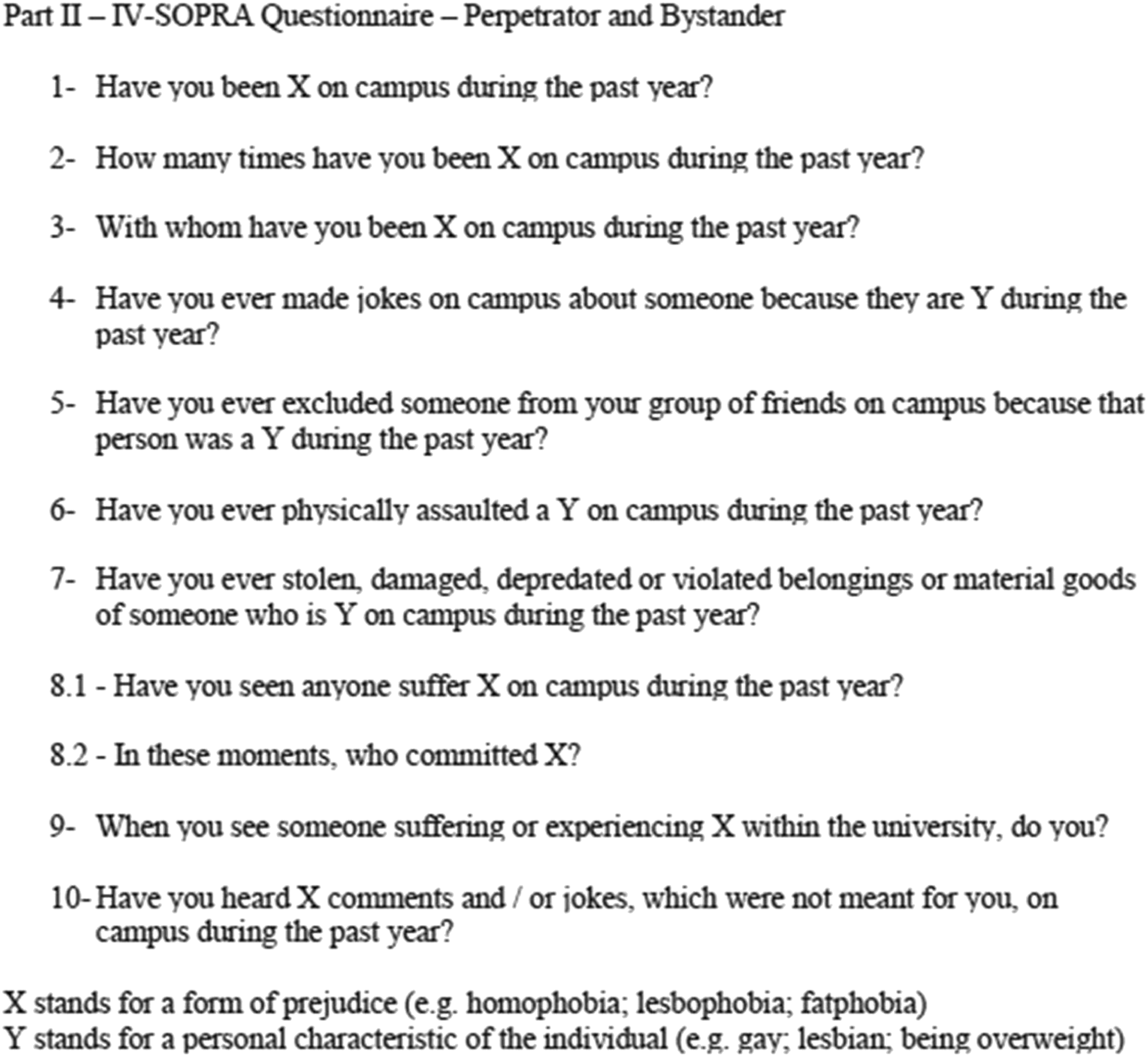
Following its development, the instrument was referred to postgraduate students (n = 3) in another institution, a private university – this was deliberately chosen so not to risk ‘priming’ our targeted population, undergraduate students. These postgraduate students completed the questionnaires (i.e. Sociodemographic, Victim and Perpetrator/Bystander) and were interviewed so to access the instrument’s acceptability, meaning and comprehension, and this helped us standardise all subscales. One possible issue reported by these students was the length of the questionnaire; however, the theme, prejudice and violence, prevented them from giving up answering the whole questionnaire. Also, this criticism was discussed between the four researchers developing the instrument and we understood that it was important to maintain all its items and subscales to provide institutions with an analysis and diagnostic of levels of different prejudices and bullying taking place in their particular contexts. However, we also implemented a crucial change to the instrument making it smart; that is, we inserted some features that would reduce the number of items to be responded depending on certain answers in the sociodemographic part of the instrument. For instance, a heterosexual woman (something that must be answered in sociodemographic questionnaire) would not need to answer the victim subscale for homophobia, but would still need to answer the perpetrator/bystander subscale for homophobia; or a heterosexual/homosexual man (something that must be answered in the sociodemographic questionnaire) would not need to answer the victim subscale for lesbophobia, but would still need to answer the perpetrator/bystander subscale for lesbophobia. This concluded Phase 1 of the development of the instrument.
The next stage was to conduct a pilot study, which took place in Phase II. This was conducted with postgraduate students (n = 64) from the School of Humanities of a private university in the south of Brazil – the same institution of the researchers. This pilot study did not present us with any issues and the initial analysis demonstrated that the instrument was ready for application on a larger scale. This concluded Phase II of the development of the instrument. Below we present findings of Phase III and the initial validation of the instrument, IV-SOPRA.
Phase III – the initial validation
Participants
Age.

Race.

Biological sex.

Sexual identity.

Sexual orientation.

Procedures
Data collection
An email containing all information about the research and contact details of the main researchers was sent to all undergraduate students of the university. The email emphasised that participation was on a voluntary and anonymous basis, that in case of doubts or further information the researchers could be contacted at any time via email. The email also contained a link to the online questionnaire, which was embedded in a ‘click here’ to take part in the research; the link was also placed at the bottom of the email. The researchers were not contacted by any of the participants. Collection took place over a period of three weeks during the second semester of 2018. IV-SOPRA. The instrument was uploaded in the Qualtrics platform.
Analytical strategy
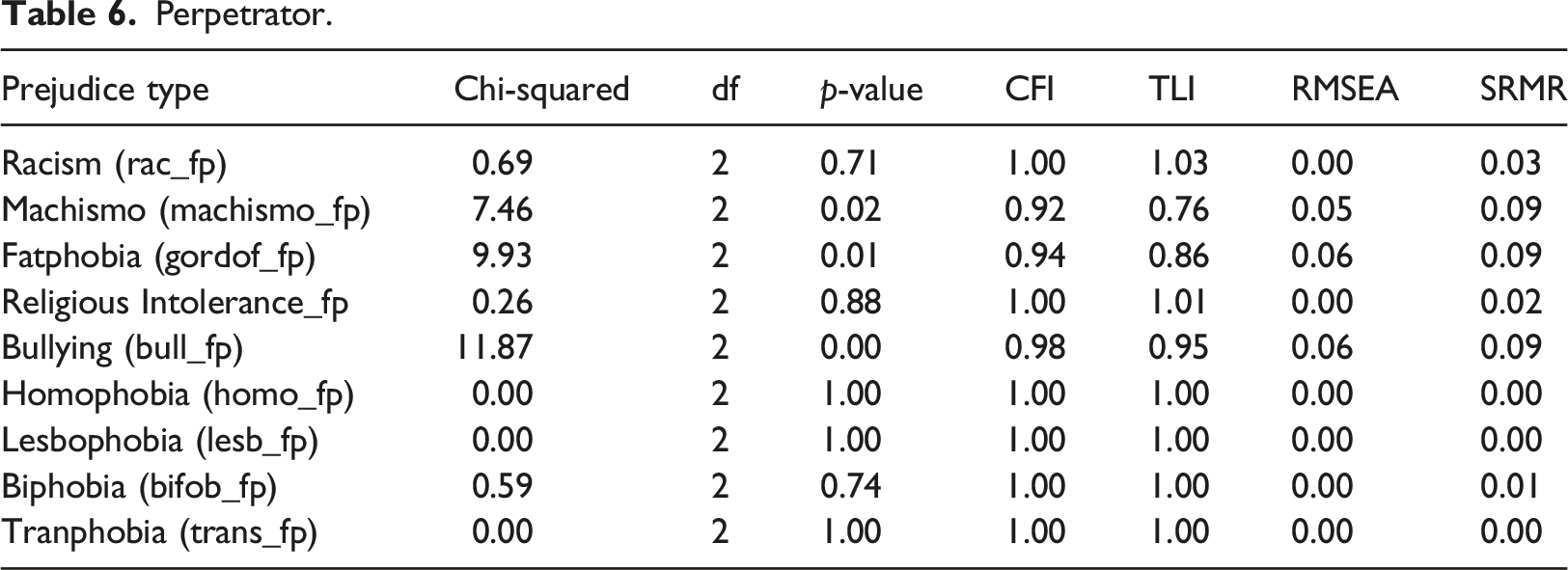
Data analysis was conducted using R environment (R Core Team, 2020), and lavaan package (Rosseel, 2011). Confirmatory factor analysis was carried to investigate model fit to the data according to theorized structure of the IV-SOPRA subscales. Considering ordinal level of measurement of observable variables, we used Diagonally Weighted Least Squares (DWLS) estimation method of polychoric correlation matrix, with robust estimation of the means, variances, and standard errors. To assess the fit of the models to the data, we consider the following fit indices: Comparative Fit Index and Tucker–Lewis Index (CFI and TLI, ≥0.95), Root Mean Square Error of Approximation (RMSEA, ≤0.06) with associated p value, and Standardized Root Mean Residual (≤0.10). The internal consistency was assessed using Cronbach’s Alpha coefficient (α), considering satisfactory if higher than 0.70 (Hair et al., 2019).
Ethical procedures
The collection and analysis of data was approved by the Scientific Committee of the Pontifícia Universidade Católica do Rio Grande do Sul (PUCRS). The research follows the Ethical Guidelines of the Brazilian Federal Resolution 510. Students invited to take part in this study were informed of its objectives and were required to accept a Free and Informed Consent Term before having access to the questionnaire.
Results
Perpetrator.
Victim.
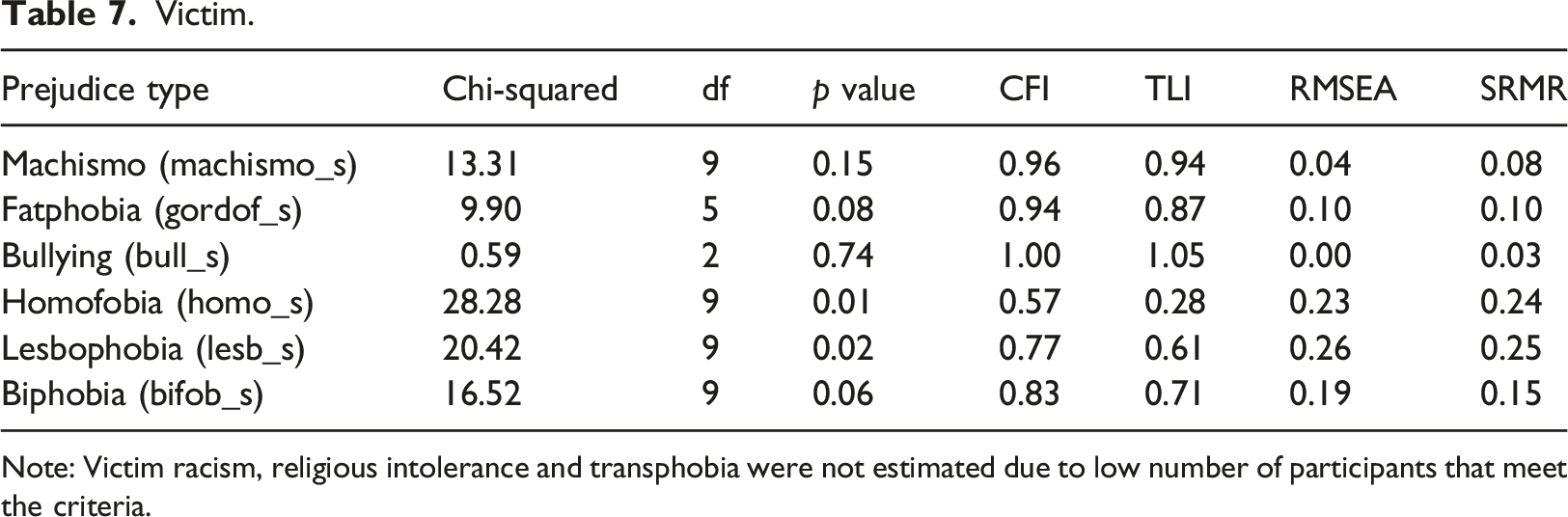
Note: Victim racism, religious intolerance and transphobia were not estimated due to low number of participants that meet the criteria.
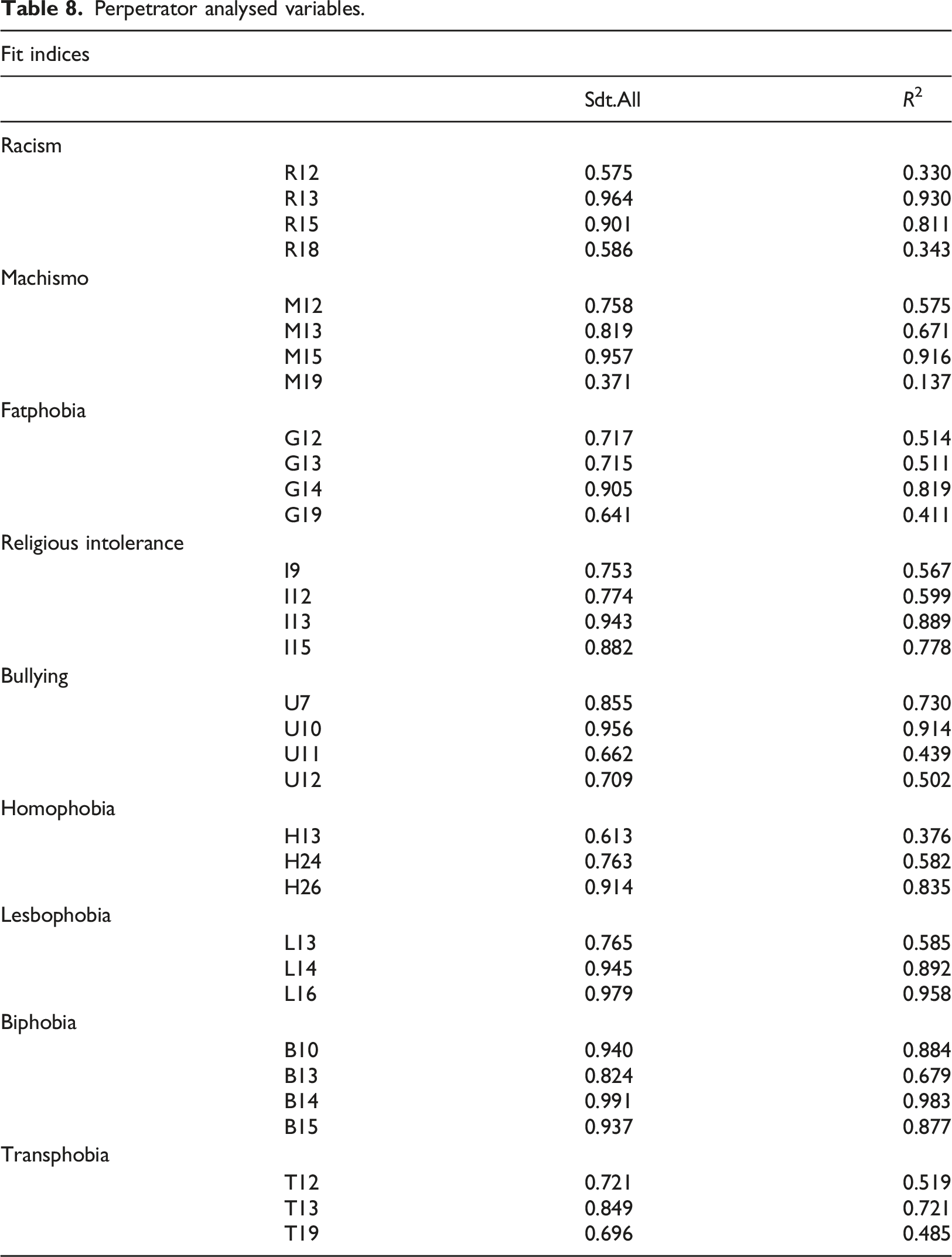
Perpetrator analysed variables.
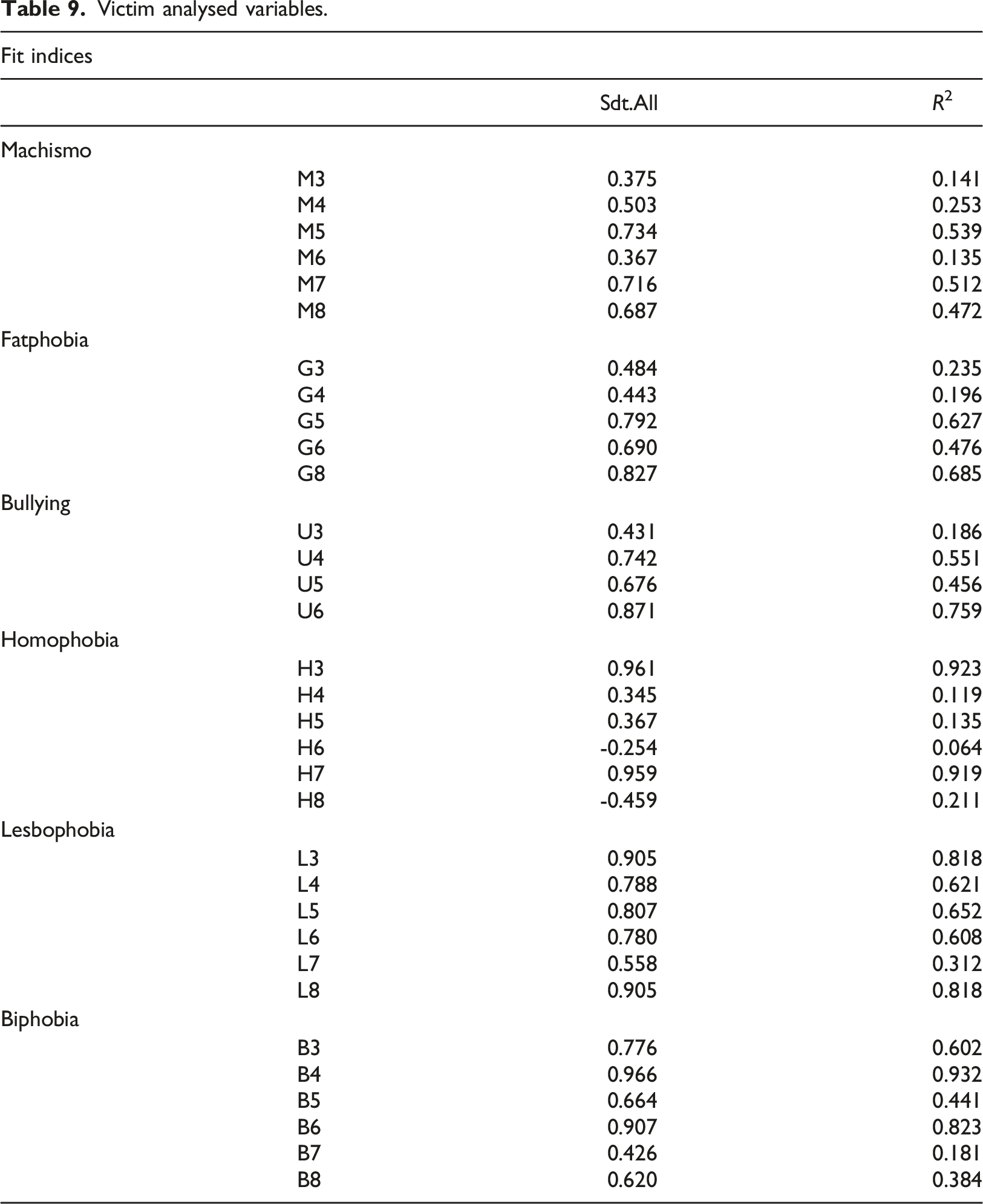
Victim analysed variables.
Discussion
Racism
Concerning the model for perpetrators of racism, two very strong effects were found. Firstly, R13,’Have you ever excluded someone from your group of friends on campus because of the colour of their skin during the past year?’, and secondly R15, ‘Have you ever stolen, damaged, depredated or violated belongings or material goods of someone because of the colour of their skin during the past year?’. These findings are in line with literature on the experiences of students of colour at the university. Most prevalently, these students report high levels of mistreatment, belittlement, and isolation, as well as low sense of belonging (Brunsma et al., 2017; Dos Santos et al., 2019). Recent research also points that the perception of insecurity and violence in educational spaces has been increasing, especially by black people (Shelley et al., 2017), which is coherent with our results. The model for victims of racism failed to generate a strong or very strong effect, due to a lack of participants.
Machismo
Machismo is the prejudice against women because of their gender, and it might occur through aggressive attitudes that go unnoticed, perpetrating symbolic violence in society (Araruna, 2016). The instrument shows a strong effect with M12 ‘Have you ever made jokes on campus about someone because they are women during the past year?’. Jokes, as related to the categories of prejudice against sexual minorities, are a form of aggression that imposes a relation of power. We note that misogynous jokes are often related to women’s lack of intelligence or of capacity in general (Araruna, 2016). Both M5 ‘Have you ever been excluded from any group of people because you are a woman on campus during the past year?’ and M13 ‘Have you ever excluded someone from your group of friends on campus because that person was a woman during the past year?’ present a strong effect and contribute to the previous point. Prejudice against women deals with the stereotype that women are not strong, intelligent or assertive and they lack some skills which exclude them from some professions and areas of knowledge (Barros and Oliveira, 2020).
The M8 ‘Have you ever suffered from lack of recognition or missed an opportunity at the university because you are a woman, even though you had done a better job or a job as good as other colleagues, during the past year?’ in the victim part of the instrument show a moderate effect of 0.69. In Brazil, women are paid 30% less than men (IBGE. Rendimento de Todas as Fontes, 2019) and jobs that are predominantly feminine have lower salary and lower prestige when compared to their peers (Pereira and Lima, 2017). In addition, M7 ‘Have you ever had belongings or material goods stolen, damaged, depredated or violated due to misogyny on campus during the past year?’ in the victim part of the instrument show a strong effect, and M15 ‘Have you ever stolen, damaged, depredated or violated belongings or material goods of someone who is a woman on campus during the past year?’ in the perpetrator/bystander part shows a very strong effect. These findings corroborate with the research conducted by Instituto Avon and Data Popular (2015) that explore different violence against women in the university; however, it is important to note that M7 and M15 have a specific focus on patrimonial violence against women. Meza et al. (2020) demonstrated in their study that women, in the university context, are more vulnerable than men to all types of violence, including patrimonial (cf. Bongers et al., 2003).
Fatphobia
In relation to the issue of fatphobia, although there is limited literature specialised in its occurrence in higher education, the results found in this study seem to reflect the broader literature in this subject. Notwithstanding, the few publications available in tertiary education point to the existence of a weight bias amongst students (Blanton et al., 2016), especially in courses in the area of Health (Werkhoven et al., 2015), which is in line with the increasing prevalence of this type of stigma in society (Alberga et al., 2016). The overall model displayed a very strong effect with G14, which translates to ‘Have you ever physically assaulted an overweight person on campus during the past year?’. Physical aggression in fatphobia is severely less prevalent than verbal and psychological harm, as shown in expanded literature (Rubino et al., 2020). One hypothesis for our findings is that, since this is a self-response questionnaire, from the perspective of the perpetrators, microaggressions, such as teasing and name-calling, might not be perceived as being committed by respondents, and therefore are not reported; contrariwise, physical aggression may be more easily remembered by respondents and thus reported in the instrument.
In addition, the model presented a strong effect with G13, that is, ‘Have you excluded someone from your group of friends on campus because that person was fat during the past year?’, as well as with G12, ‘Have you made jokes on campus about someone because they are fat during the past year?’. These findings seem in line with the perceived prevalence of teasing and exclusion of overweight peers in high schools, which is associated with negative social and health outcomes (De la Haye et al., 2017). With the victims of fatphobia, a very strong effect was found with G8, ‘Have you ever suffered from a lack of recognition or missed an opportunity at the university because you are fat, even though you had done a better job or a job as good as other colleagues, during the past year?’ as well as with G5, ‘Have you ever been excluded from any group of people because you are fat on campus during the past year?’ These findings are in line with what was reported by perpetrators, who prevalently admitted to excluding people because of their weight, as well as with current literature, which states these types of dynamics and behaviours in educational settings (De la Haye et al., 2017).
Transphobia
In connection to the issue of transphobia, in this study it was not possible to validate the subscale for victims of transphobia due to a negligible number of respondents. However, it was possible to validate the subscale for perpetrator/bystander of transphobia. The difficulty in validating the subscale for victims of transphobia can be explained by the fact that transgender individuals often find it difficult to complete their formal education due to situations of violence, prejudice and bullying, which makes it even more difficult to access Higher Education in Brazil (Scote et al., 2020). In fact, and as evidence for the high levels of violence experienced by transgender individuals in Brazil, according to research that took place in 2016 and sponsored by Transgender Europe, Brazil is the country with the highest number of violent deaths of transgender individuals in the world (cf. Transgender Europe, 2017).
The overall model displayed a very strong effect on T13 ‘Have you ever excluded someone from your group of friends on campus because that person was a transgender individual during the past year?’ and a strong effect on T12 ‘Have you ever made jokes on campus about a transgender individual during the past year?’ demonstrating that transgender individuals face inappropriate and discriminatory comments, and social exclusion on campus. The literature states that this is something very present in transphobic attitudes, occurring commonly in work situations (de Sousa and de Alves, 2013), following a series of phases: 1. Identification and labelling; 2. pigeonholing; 3. exclusion (Caravaca Morera and Padilha, 2016). It is also important to note that the model displayed a strong effect on T19 ‘Have you ever heard transphobic comments and/or jokes, which were not meant for you, on campus during the past year?’, which seems to demonstrate that discrimination is openly displayed against transgender individuals. This seems to emphasise the importance of developing strategies for bystander’s interventions for transphobic situations on campus, as a way of tackling this issue (Dessel et al., 2016; Woodford et al., 2014).
Homophobia
With regards to the issue of homophobia on campus, an interesting correlation emerged in the overall model for the victim scale connecting H3 ‘Have you ever been subjected to homophobic jokes on campus during the past year’ and H7 ‘Have you ever had to omit or lie about being a gay man out of fear or fear of comments, glances and/or exclusion?’, with very strong effects. Jokes are a form of violence that emphasise values and relations of power in society (Santos et al., 2019), and in this connection, disclosing one’s sexual orientation to others may be something dangerous, raising the risk of suffering different kinds of violence, such as jokes. Our findings regarding the connection between making jokes about an individual’s sexuality, which is a way of displaying prejudice, and homophobia are in line with the wider literature (Branfman, 2019; Ford et al., 2017); however, and in addition to this, it is arguable that not disclosing one’s sexual orientation may be a reasonable option taken by individuals so to feel safer in certain contexts, such as the university campus. Further, when the gender expression is not conforming to established social norms, individuals may decide not to come out of the closet (Soares Parente et al., 2018).
Another surprising finding was that the model displayed a strong negative effect for H6 ‘Have you ever been a victim of any form of abuse and/or sexual harassments because of homophobia on campus during the past year?’ and for H8 ‘Have you ever had belongings or material goods stolen, damaged, depredated or violated due to homophobia on campus during the past year?’. We postulate that since gay men have not been disclosing their sexual orientation on campus, they have been doing so in order not to be victims of abuse and sexual harassment as well as not to have their belongings and personal property stolen or damaged. In fact, the perpetrator/bystander scale for homophobia demonstrated very strong effects for H16 ‘Have you ever stolen, damaged, depredated or violated belongings or material goods of someone who is a gay man on campus during the past year?’, which seems to be connected to gay men’s fears on campus (King et al., 2013; Rodríguez-Hidalgo and Hurtado-Mellado, 2019; ). Lastly, the perpetrator/bystander scaled also demonstrated a very strong effect for H14 ‘Have you ever excluded someone from your group of friends on campus because that person was a gay man during the past year?’, which are also in line with very recent literature. Exclusion is a way of enforcing establishing social values and norms, and individuals who have been excluded by others due to their sexual orientations tended to accept this passively, placing those enforcing exclusion in a position of authority (Currin et al., 2020).
Lesbophobia
With regards to lesbophobia, one interesting correlation made in the overall model was on L3, with a very strong effect, about the victim experience ‘Have you ever been subjected to lesbophobic jokes on campus during the past year’ and L13, very strong effect, about the perpetrator/bystander ‘Have you ever made jokes on campus about someone because they are lesbian during the past year’. Jokes are a form of violence that display values of our society and relations of power (Santos et al., 2019), byway of ridiculing others, it is possible to exclude them and to impose an understanding of being an outsider to lesbians (Godoi, 2013). The strong effect on L4 ‘Have you ever been excluded from any group of people because you are a lesbian on campus during the past year’, and in connection to L14 ‘Have you ever excluded someone from your group of friends on campus because that person was a lesbian individual during the past year?’, correlates to our preceding findings. A woman who desires sexually and romantically other women challenges the social normative and even the concept of what a woman is (Rich, 2010). Lesbians, as well as other sexual and gender minorities, suffer minority pressure, the burden of social stigmatisation that can be present through social attitudes, which may seriously impact their general health, becoming more vulnerable to, for example, depression, anxiety and abuse of substance (Flentje et al., 2019; Pachankis et al., 2020).
The very strong effect on L16 in the perpetrator/bystander part ‘Have you ever stolen, damaged, depredated or violated belongings or material goods of someone who is a lesbian on campus during the past year?’ and a strong effect on L6 in the victim part ‘Have you ever been a victim of any form of abuse and/or sexual harassments because of lesbophobia on campus during the past year’ disclose the material and physical violence that lesbians can face in addition to jokes and group exclusion. These results seem to go in the same direction of studies that show lesbians and bisexuals are more vulnerable to sexual violence than heterosexuals as well as gay and bisexual man, and are more likely to experience this violence than others in tertiary education (Ray et al., 2018). The L8 ‘Have you ever had to omit or lie about being lesbian out of fear or fear of comments, glances and/or exclusion?’ presents a very strong effect. Disclosing one’s sexual orientation to others may be something dangerous, raising the risk of suffering different kinds of violence. Thus, it seems reasonable to assume that it may be an option taken by individuals not to do so, and to feel safer. Further, when the gender expression is not in conformance with social norms, individuals may decide not to come out of the closet, or to do so and assume a more masculine stereotype to feel less vulnerable to male violence (Chmielewski, 2017; Soares Parente et al., 2018). Concerning the strong effect of L5, in the victim part, ‘Have you ever suffered from lesbophobic comments and/or attitudes but coming from a lesbian person within the university during the past year’, we understand that from the angle of internalised lesbophobia. This is not something pathological, but a response to the internalisation of social prejudices manifested against their own community. That is to say, this can be manifested in different ways, one being through prejudice to other Lesbians, and other LGBT+ members in general (Lira and Morais, 2019).
Biphobia
Biphobia enters our instrument as an umbrella term that makes visible the prejudice against people that are not monosexual. Biphobia is often related to ignoring or erasing someone’s identity by mockery or contempt, generating a fear of invalidation in not monosexual people (Jaeger et al., 2019). In this sense, B3 showed a strong effect in the victim part of the instrument, ‘Have you ever been subjected to biphobic jokes on campus during the past year?’, as well B13 showed a strong effect in the perpetrator/bystander part ‘Have you ever made jokes on campus about someone because they are bisexual during the past year?’. This community is vulnerable to suffer violence from heterosexual, and gender and sexual minority (GSM) people because they challenge the concept of monosexuality and are often stigmatized with hypersexualization (Jaeger et al., 2019). The B10 ‘Have you been biphobic on campus during the past year?’ and the B14 ‘Have you ever excluded someone from your group of friends on campus because that person was a bisexual during the past year?’ showed a very strong effect in the perpetrator/bystander part of the instrument.
In addition, B4 showed a very strong effect in the victim part ‘Have you ever been excluded from any group of people because you are bisexual on campus during the past year?’. Invisibility of bisexuality occurs even in a survey to assess HIV transmission of the Centers for Disease Control and Prevention (CDC) in USA, where bisexual men are often not seen in their difference expression of sexuality than homosexual men as they are included in the same category (Fernando, 2017, 2019). Also, studies in USA demonstrate higher rates of sexual violence against bisexual women than heterosexual and lesbian women (Flanders et al., 2019, 2020; Ray et al., 2018). The very strong effect B6 ‘Have you ever been a victim of any form of abuse and/or sexual harassment because of biphobia on campus during the past year?’ reinforce these data findings. It is important to note that sexual violence seem to be related with the intersection of gender and sexual orientation, being frequently related with lesbian and bisexual women. The question B15 also showed a very strong effect ‘Have you ever physically assaulted a bisexual on campus during this past year?’. Sexual minority, especially young bisexuals (men and women), show higher rates of physical and sexual violence when compared to their heterosexual or homosexual peers (Caputi et al., 2020).
Religious intolerance
Regarding the religious intolerance model, four factors were noteworthy, and will be presented in order of strength. First, both I13, ‘Have you ever excluded someone from your group of friends on campus because of that person’s religion during the past year?’, and I15, ‘Have you ever stolen, damaged, depredated or violated belongings or material goods of someone because of their religion on campus during the past year?’, showed a very strong effect in the model. This is a very similar scenario to that of the racism perpetrator model discussed before, and could be related to how in Brazil religious intolerance is directly related to Afro-Brazilian religions (Fernandes, 2017; Mota, 2018). Finally, both I9, ‘Have you been religious intolerant on campus during the past year?’, and I12, ‘Have you ever made jokes on campus about someone because of their religion during the past year?’, presented a strong effect within the model. Building on the previous point, this topic in Brazil is historically ingrained in racism, and the prevalence of microaggressions might be a product of the veiled racism, that is, a more ‘subtle’ form of racism that is very prevalent in Brazil (da Conceição, 2019). Again, as with racism and transphobia, the model for victims of religious intolerance failed to show an effect due to a lack of respondents. Our sample was composed by a population that is, by and large, composed by individuals from a white Italian catholic background, and thus the possible lack of answer in the victim subscale for this dimension.
Bullying
With regards to the issue of bullying in higher education the literature is considerable and very rich. A recent systematic review of the literature in Portuguese and English yielded 769 publications, out of which 54 were selected; however, within the Brazilian context only seven have passed the inclusion/exclusion criteria (Gadelha et al., 2019). In our study, we incorporated the subscale on ‘bullying’ into the instrument IV-SOPRA so to gather information about the overall atmosphere on campus, and case the other eight subscales did not contemplate the whole scenario. The literature on bullying in higher education seems to be centred around issues related to substance abuse, sexual harassment of women, and LGBT+ discrimination on campus (Brown et al., 2020; Kaufman et al., 2019a, 2019b; Kim et al., 2019; Musharraf et al., 2019), and this has been reported by countries such as Brazil, South Korea, Ethiopia and Pakistan as well as the USA, suggesting that these might be a widespread phenomenon in higher education or the focus of current research by those working with the theme of bullying in higher education. The overall model displayed a very strong effect on U6 ‘Have you ever suffered from a lack of recognition or missed an opportunity at the university because of bullying, even though you had done a better job or a job as good as other colleagues, during the past year?’ and strong effect on U4 ‘Have you ever been excluded from any group of people because of bullying on campus during the past year?’. It is possible to argue that both could be related; that is to say, individuals felt that they were not recognised or missed an opportunity on campus, and also felt excluded because of bullying, and this is in line with findings in the literature (Sinkkonen et al., 2014). It is, however, interesting to note that the perpetrator/bystander scale shows a different scenario, demonstrating the differences of perception between ‘being a victim’ and ‘being a perpetrator/bystander’. Also, the overall model displayed a very strong effect U7 with ‘Have you practiced bullying on campus during the past year?’ demonstrating that individuals self-report on practicing bullying was substantial on campus during the past year. It is interesting to note that, and relating to our findings on the LGBT+ scales and Misogyny scale of the IV-SOPRA instrument, women and LGBT+ populations who participated in our research also confirmed suffering discrimination on campus, and this seems to be in line with current research (Brown et al., 2020). Further, the model also displayed a very strong effect U10 ‘Have you ever made jokes on campus about someone during the past year?’, which has also been reported in the literature concerning bullying in higher education, and this again is related particularly to women and LGBT+ populations (Brown et al., 2020). Finally, the model displayed a strong effect on U12 ‘Have you ever stolen, damaged, depredated or violated belongings or material goods of someone on campus during the past year?’. Since this is a self-report questionnaire it can be argued that individuals were aware of practicing bullying on campus, and that this took the form of ‘making jokes’ about individuals, and, to a lesser extent, the depredation of an individual’s private property. This means that respondents perceive their actions as being a form of ‘bullying’ both when directly involving their victims, and also when their actions indirectly affected their victims; that is, when these actions were directed at ‘objects’ belonging to their victims.
Conclusion
We conclude that the initial validation of the majority of the subscales of the IV-SOPRA instrument meet the theoretical statistical criteria for reliability (Cronbach’s alpha coefficient was <0.7); unfortunately, due to a lack of responses, the subscales for racism victim, transphobia victim and religious intolerance victim failed to generate a model, and could not be validated – further data collection is required to validate these scales and to confirm our findings. In addition to this, our findings seem to be in line with the wider literature demonstrating that there are issues related to various forms of prejudice and violence on university campus, and that this is an issue that should be addressed through informative actions and interventions.
Footnotes
Declaration of Conflicting Interests
The author(s) declared no potential conflicts of interest with respect to the research, authorship, and/or publication of this article.
Funding
The author(s) disclosed receipt of the following financial support for the research, authorship, and/or publication of this article: We acknowledge that this work was supported by the Brazilian National Council of Scientific and Technological Development (CNPq).
