




Abstract
This study focuses on the degree, nature and consequences of bullying or inappropriate behaviour among faculty personnel (n = 303) in a Finnish university. A total of 114 (38%) faculty members answered the email questionnaire. According to the results, 15% of the respondents had experienced bullying; in addition, 45% had experienced inappropriate behaviour. The person behind the bullying or inappropriate behaviour was a member of the teaching personnel (f = 26), a member of the administration staff (f = 23), a student (f = 13) or a member of the research personnel (f = 8). Bullying or inappropriate behaviour occurred during research work (f = 21), personnel meetings (f = 19), interaction situations (10), teaching (f = 7), counselling (f = 7) or during leisure time (f = 1). Factor analysis revealed three dimensions of bullying: exclusion and discrimination, person-related belittlement and professional undermining. These dimensions were consistent with the categories of the consequences of bullying or inappropriate behaviour based on open-ended answers. The consequences of bullying or inappropriate behaviour primarily have an influence at the individual level as affective disorders and as a decrease in professional self-confidence and work performance. These consequences are also temporally and communally linked to a declining working environment and further to a reduction in the profitability of the faculty.
Introduction
Over the years, the phenomenon of workplace bullying and inappropriate behaviour has borne many names: workplace harassment, bullying, mobbing, mistreatment, scapegoating, petty tyranny, abusive behaviour, incivility, etc. Terminology depends on the focus of the studies and even on the researchers' nationality (Einarsen, 2000; Keashley and Neuman, 2013; Namie and Namie, 2009a; Salin, 2003; Twale and De Luca, 2008; Vartia, 2003; Zabrodska et al., 2014). Among the studies undertaken in different workplaces, few are related to academia (Björkqvist et al., 1994; Keashly and Neuman, 2010; Lewis, 1999; McKay et al., 2008; Simpson and Cohen, 2004; Twale and De Luca, 2008).
Bullying is seen as frequent and escalating, direct or indirect negative acts that happen over a relatively long period of time, and are not welcomed by the target. It may be conducted by one or more individuals, and due to a power imbalance, the victim often feels unable to defend him or herself in the situation (Bartlett and Bartlett, 2011: 72–75; Dedousis-Wallace and Shute, 2009: 3; Einarsen, 2000: 383–384; Einarsen et al., 2009: 25–26; Namie and Namie, 2011: 13; Samnami and Singh, 2012: 582; Tehrani, 2012; Vartia-Väänänen, 2013: 1–2; Zabrodska et al., 2014: 1, 3). One recently studied new manifestation of this phenomenon is cyberbullying with its potentially worldwide magnitude (Bartlett and Bartlett, 2011; Beran and Li, 2007; Huhtala, 2013; McKay et al., 2008; O'Moore, 2012).
As a general guideline, we use the theoretical framework for the study and management of bullying at work offered by Einarsen et al. (2009: 29), which acknowledges the individual, organizational, cultural and socio-economic factors influencing workplace bullying. Because the mere concept of bullying can cause strong reactions (Crawshaw, 2012; Vartia and Tehrani, 2012), we have also included the term ‘inappropriate behaviour’ in our study. Inappropriate behaviour is behaviour that is not right or suited to the purpose or situation at hand (Merriam-Webster, 2014), but the circumstances are often interpreted very differently by different people (Jenkins et al., 2012: 495–496). In this study we focus on the degree, nature and possible consequences of bullying or inappropriate behaviour among faculty personnel in one faculty of a Finnish university.
The context of the study
Bullying and inappropriate behaviour in the workplace is widely recognized in Finland (Leka et al., 2011). Compared to other European countries, workplace bullying is rather common in Finland and approximately 6% of all workers are currently exposed to it (Vartia, 2013; Vartia-Väänänen, 2013). According to the National Working Conditions Barometer, over 50% of Finnish employees have witnessed bullying. Increasing levels of customer violence in general are also being reported (Lyly-Yrjänäinen, 2013). Workplace bullying was first included in Finnish occupational health legislation in 2003. The law obligates the employer to intervene immediately when notified of harassment or other uncivil acts towards a worker. In other words, an employer's inactivity in the matter is considered a crime (Finlex, 2014; Vartia-Väänänen, 2013). In a recent nationwide study undertaken by the national Trade Union of Education in Finland (2014), 36% of respondents had been victims of bullying or uncivil treatment during the last 12 months. University respondents in the study reported less victimization (21%) than other teachers and were mainly bullied by their colleagues (OAJ, 2014).
Apart from individuals’ contributions to incidents of bullying and inappropriate behaviour (Neuman and Baron, 2005), the work environment (i.e. the organizational and social cultures and dynamics of the workplace) is also an important antecedent to bullying (Carter et al., 2013; Jenkins et al., 2012; Namie and Namie, 2011; Salin, 2008; Samnami and Singh, 2012; Sperry, 2009; Vartia and Tehrani, 2012). McKay et al. (2008: 92) link systematic bullying to weak or ‘toxic’ organizational cultures. Poor management and work design, tight or laissez-faire leadership and management styles, policies defining acceptable and unacceptable behaviours, ethical climate and organizational differences in human resource systems are mentioned as factors that enable workplace bullying (Arthur, 2011; Cortina, 2008; Einarsen, 2000; Einarsen et al., 2009: 27–28; Hoel et al., 2010; Samnami and Singh, 2012; Vartia and Tehrani, 2012).
According to Vartia (2003: 12–13, 48), experiences of role conflicts, work control, a heavy work load, increasing haste, organizational restructuring, high stress levels, poor social climate in the organization and the like are related to manifestations of bullying (see also Tuckey et al., 2009). Carter et al. (2013: 10) state that bullying rates are higher during organizational change, restructuring and budget cuts. These findings also align with Salin (2003), who highlighted motivating and enabling structures and processes, and precipitating processes that, when operating together, make bullying more likely in an organization.
Victims report issues such as envy, a weak superior, competition for tasks, status or advancement, competition for the supervisor's favour and approval, etc., as explanations for the occurrence of bullying (Björkqvist et al., 1994; Einarsen, 2000; Vartia, 1996, 2003; Vaughan, 2012). Large, male-dominated, hierarchical private enterprises and industrial organizations seem to be potential places for bullying (Einarsen, 2000; Lyly-Yrjänäinen, 2013; Taylor, 2013). Bullying and inappropriate behaviour also appear to be common in health and social work, in the educational field and in the public sector – at least in the Finnish context (Illing, 2011; Lyly-Yrjänäinen, 2013; Samnami and Singh, 2012; Vartia, 2003: 19; Vartia-Väänänen, 2013).
In this study, we are particularly interested in the university as a work environment. It seems that due to its history and special characteristics, academia is an arena that is highly vulnerable to bullying and inappropriate behaviour (McKay et al., 2008; Taylor, 2013; Twale and De Luca, 2008). Elements such as evaluation processes and criteria, institutional codes of conduct, peer-review, numerous committees, control issues and competition for funding, publicity and tenure are mentioned among possible sources of academic frustration and inappropriate behaviour (Keashly and Neuman, 2010; Namie and Namie, 2009b; Taylor, 2013; Twale and De Luca, 2008; Zabrodska et al., 2014). It is difficult to separate bullying from the context of organizational structure. Bullying may also be regarded as normal, effective or rewarding if the bully gets results for the organization through the use of aggressive behaviours (Twale and De Luca, 2008).
The faculty studied here represents the field of social studies in a medium-sized Finnish university. At the time of this study, it had five departments, a little less than 5000 students and approximately 300 personnel, including faculty and other employees. Roughly two-thirds of the respondents had open-ended working contracts while one-third had fixed-term contracts.
The roles of bullying and inappropriate behaviour
The victims
Long lists of possible victim-related reasons and personality traits have been presented as the causes of bullying (Balducci et al., 2011; Einarsen, 2000; Simpson and Cohen, 2004; Vartia, 2003: 13–15). These lists may, however, stigmatize the victims for no reason. Especially in the case of victims of long-term bullying, it may be difficult to determine whether, for example, low self-esteem or anxiety is the cause or the result of workplace bullying.
Gender and differences such as handicap or ethnicity are still issues in bullying and inappropriate behaviour (Cortina, 2008; Illing, 2011; Lampman et al., 2009; Salin, 2013; Simpson and Cohen, 2004). Notwithstanding, both men and women, young and old workers, members of minorities and majorities, subordinates and supervisors are being bullied (Carter et al., 2013; Einarsen, 2000; Jenkins et al., 2012; Salin, 2003: 1216; Twale and De Luca, 2008; Vartia, 2003: 49). We conclude that even though some personal, social and cultural tendencies do exist amongst potential victims, almost anybody can become a victim of workplace bullying and inappropriate behaviour at some phase of their lives.
Vartia (2001: 66–68) confirms that in most cases, the victims of bullying are simultaneously subjected to many forms of bullying and the bullying starts unexpectedly (also see Zabrodska et al., 2014). Shame and fear are strongly attached to the victim's role (Lewis, 2010; Twale and De Luca, 2008; Zabrodska et al., 2014). In academic settings, new, untenured and older employees get bullied more often than others (Einarsen, 2000: 386; McKay et al., 2008; Taylor, 2013; Twale and De Luca, 2008; Zabrodska et al., 2014). A bullied colleague may end up in debt to the bully (Twale and De Luca, 2008: 57), and not all work place victims dare to admit they are being bullied (Lewis, 2010; Vaughan, 2012). In the first study of a Finnish university as the context of workplace harassment, administration, financial and service-related tasks were found to be more prone to bullying, and competition about status was identified as the main cause of bullying according to the respondents (Björkqvist et al., 1994).
The bullies
The people responsible for hostile acts have also found themselves subject to long personality traits lists (Crawshaw, 2012; Namie and Namie, 2011). It seems that men and supervisors of dominant groups bully more often than women and subordinates of the minorities do, but exceptions to these ‘ground rules’ are also well documented (Einarsen, 2000; Namie and Namie, 2009b; Salin, 2003; Tuckey et al., 2009; Twale and De Luca, 2008; Vartia, 2003).
According to Neuman and Baron (2005), the intentionality of harm defines a bully. Yet not all inappropriate behaviour is intentionally harmful. Bullies often fail to identify their own actions as bullying and do not recognize the injury they cause – they are just doing their jobs. Bullies are somewhat blind to feelings, including their own. They can also morally condemn the victims to justify their actions – and to do this, they need other people (Crawshaw, 2012; Hutchinson et al., 2006; Jenkins et al., 2012; Tehrani, 2012; Zabrodska et al., 2014). According to Twale and De Luca (2008: 22), bullies often seek allies among leaders or get into a leadership position themselves.
The roles of ‘victim’ and ‘bully’ may also be blurred. O’Moore (2015) applies the term ‘bully-victim’ to indicate that the victim can also be a bully. This possible double role is also acknowledged by Salin (2003), Beran and Li (2007) and Jenkins et al. (2012) among others. Evidentally, every employee and supervisor can behave inappropriately (Vartia and Tehrani, 2012: 223).
Bullying is not just a ‘top-down’ phenomenon (Jenkins et al., 2012) – McKay et al. (2008) have also found peer-to-peer and bottom-up bullying in academia. The largest group initiating inappropriate behaviours was peers. Lampman et al. (2009) use the term contrapower to address student incivility, bullying and sexual attention aimed at faculty. If faculty staff are bullied by students or a manager by subordinates, it may be difficult to make the bullies accountable or for the organization to acknowledge the problem (Lewis, 2010; McKay et al., 2008: 88–90, 94; Vaughan, 2012). In Finland, the workplace bully is mostly a peer or a superior (Vartia-Väänänen, 2013) and bottom-up bullying is worst at the primary school level (OAJ, 2014).
The bystanders
The most numerous group related to bullying and inappropriate behaviour in a workplace are the bystanders (Bloch, 2012). To Keashly and Neuman (2010), the presence of witnesses of bullying incidents is an important indicator of the organizational climate. Colleagues are important witnesses when recognizing the phenomenon (Lewis, 1999) or trying to objectively prove the occurrence of bullying ( Simpson and Cohen, 2004; Zabrodska et al., 2014). Some organizations already use trained staff (from within the business or outside) as confidential supporters, informing and helping the victims (Hubert, 2012). Unfortunately, many claims of bullying remain without the support of observers (Hoel et al., 2010).
Vartia (2001: 67; 2003: 51) writes on general stress levels and mental stress reactions of bystanders in a workplace where bullying takes place – and finds that bystanders also reported more mental distress and job dissatisfaction than those working in a non-bullying workplace. Emdad et al. (2013) consider bystanders with depressive symptoms as secondary targets of bullying and divide them into three groups: those that intervene, those that do not dare to intervene and those who tolerate bullying and blame the victim. According to Bloch (2012), bystanders who understand the victim have often faced bullying themselves and try to socially include the victim, while those who accuse the victim even take part in negative actions.
A study dealing with university students' bullying experiences revealed that only a third of the witnesses had tried to intervene in bullying on campus (Sinkkonen et al., 2012). Namie and Namie (2011) highlight the negative bystanding effect: the larger the witnessing group, the lower the probability that someone will actually intervene. Intervening also comes with a price: although some forms of action seem to help, often bystanders find that talking to the bully or to the superiors about bullying only makes the situation worse (Bloch, 2012; Keashly and Neuman, 2013).
After studying the involvement of all three parties, it can be concluded that bullying and inappropriate behaviour affect the whole work unit. As it is clear that “personality is not a sufficient factor for an understanding of bullying” (Balducci et al., 2011: 509), in this study we focus on workplace features and on the organization that enables – and in many cases, supports and reinforces –bullying and inappropriate practices (Salin, 2003; Twale and De Luca, 2008; Vartia & Tehrani, 2012). With this framework, we join other researchers of the so-called environmental view on the antecedents of bullying (Vartia, 2003: 12).
Consequences of bullying and inappropriate behaviour
Apart from the serious individual consequences of workplace bullying, scant attention has been given to the effects and outcomes of bullying (Samnami and Singh, 2012: 586). However, Samnami and Singh (2012) believe that bullying can affect organizational culture if inappropriate behaviour spreads through multiple departments and divisions of a firm. This spillover effect is also recognized in academia by McKay et al. (2008). Hubert (2012: 193) bluntly states: the more people involved in a bullying case, the more likely it will escalate.
Lowered job satisfaction and psychological wellbeing, mental and physical health symptoms, post-traumatic stress disorder and sick leave among others are listed as consequences of workplace bullying (Vartia, 2003: 25–27, 50–51). Bartlett and Bartlett (2011) echo this by classifying the negative impacts of workplace bullying on finance, productivity, reputation, legal issues and organizational culture, on top of the damage done to the individual worker. An increasing number of legal cases against employers who have ignored workplace bullying among employees have also been reported in Canada (McKay et al., 2008: 79).
More attention should be paid to the societal-level impact of workplace bullying, such as growing medical costs and premature retirement (Samnami and Singh, 2012). In short, the organizational cost of bullying may be high both money- and personnel-wise. For example, the price tag attached to bullying-based teachers' sick leave by the Finnish Trade Union of Education is nearly €15 million ] per year (OAJ, 2014; also see Illing, 2011).
According to Björkqvist et al. (1994), in an academic setting the main consequences of bullying were depression, anxiety and aggression (pp. 179–181). In addition, Simpson and Cohen (2004: 170) name loss of confidence, anxiety and low self-esteem as the most common effects of bullying. According to Zabrodska et al. (2014), victims of hostility in academia experience destabilization of identity; they undermine and position their bullies as arbiters of their adequacy. Bullying impacts job satisfaction, performance and employee engagement, learning environment and interactions with students; it also causes absenteeism, resignations and staff turnover in academia, and can, in the worst case, lead to suicide (Keashly and Neuman, 2010; McKay et al., 2008; Samnami and Singh, 2012; Soares, 2012; Vaughan, 2012).
In this article, we focus on the issue of bullying and inappropriate behaviour among personnel of one university faculty. The research questions in this study are as follows:
To what degree does bullying or inappropriate behaviour exist at this university faculty? What is the nature of bullying among university personnel? What are the consequences of bullying or inappropriate behaviour?
Method
Participants
An internet link to our questionnaire on bullying or inappropriate behaviour was emailed to all faculty personnel (n = 303) in the spring of 2014. After two follow-up reminders, a total of 114 faculty members answered the questionnaire. The response rate of 38% is tolerable and the total number of 114 responses made the intended analyses possible (Cook et al., 2000).
There were 77 female (67.5%) and 36 male (31.6%) respondents. One respondent did not want to specify his/her gender. The male to female ratio found amongst respondents is similar to that found in faculty personnel, which consists of 182 women (60%) and 121 men (40%). The respondents' age varied between 25 and 66 years (M = 47.7; SD = 10.0) and their working experience was between 0 and 40 years (M = 13.65; SD = 9.5). A typical respondent was a 55-year-old man who had been working at the university for an average of 18.8 years (n = 7), and a 52-year-old woman who had been working at the university for an average of 14.25 years (n = 6). Two-thirds of respondents had open-ended working contracts and one-third had fixed-term contracts. Respondents were divided among all subgroups: teaching personnel (62%), research (19%), administration (14%), and project workers (5%).
Data collection
Besides background information, the questionnaire included items concerning bullying experiences and possible consequences as well as respondents' perceptions of their working environment, self-efficacy, job satisfaction, job self-efficacy, work engagement, wellbeing and general satisfaction with life. In total, the questionnaire comprised 158 items; both Likert-type and open-ended questions were presented.
Measures
Experiences concerning bullying and/or inappropriate behaviour were measured using the Negative Acts Questionnaire-Revised (NAQ-R). The NAQ-R comprises 22 items that are “indicators of inappropriate behaviours that one may experience, but should not normally let alone regularly experience at work” (Einarsen et al., 2009: 39). The question on the frequency of bullying included five alternatives: ‘Never’, ‘Occasionally’, ‘Monthly’, ‘Weekly’, ‘Daily’. The possible consequences of bullying and/or inappropriate behaviour were measured using the open-ended question: ‘How has bullying or inappropriate behaviour affected your work?’
Data analysis
Factors of Bullying (n = 107 ).
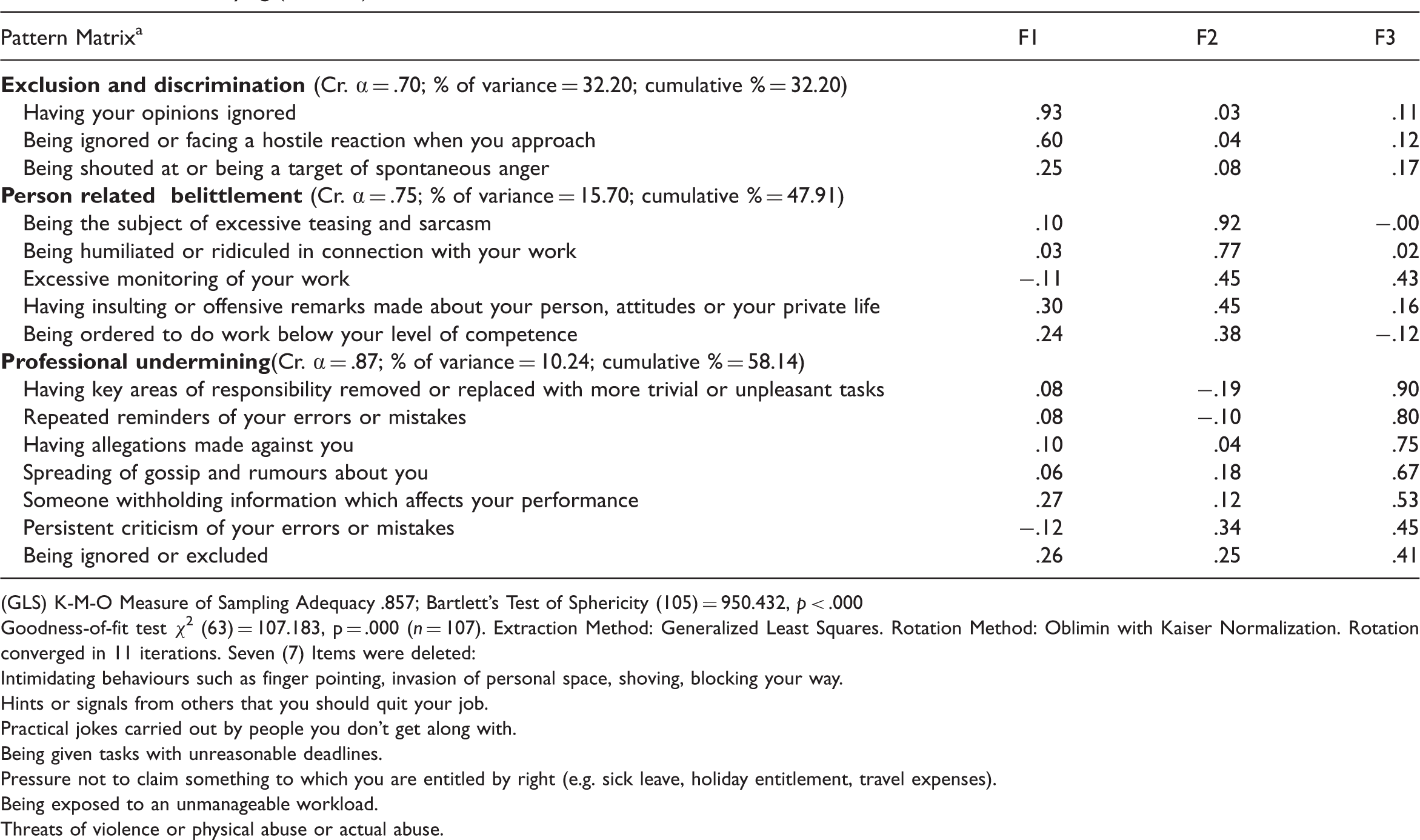
(GLS) K-M-O Measure of Sampling Adequacy .857; Bartlett's Test of Sphericity (105) = 950.432, p < .000 Goodness-of-fit test χ2 (63) = 107.183, p = .000 (n = 107). Extraction Method: Generalized Least Squares. Rotation Method: Oblimin with Kaiser Normalization. Rotation converged in 11 iterations. Seven (7) Items were deleted: Intimidating behaviours such as finger pointing, invasion of personal space, shoving, blocking your way. Hints or signals from others that you should quit your job. Practical jokes carried out by people you don't get along with. Being given tasks with unreasonable deadlines. Pressure not to claim something to which you are entitled by right (e.g. sick leave, holiday entitlement, travel expenses). Being exposed to an unmanageable workload. Threats of violence or physical abuse or actual abuse.
Group comparison between the frequencies of experiencing bullying and the factors of bullying (n = 106 ).
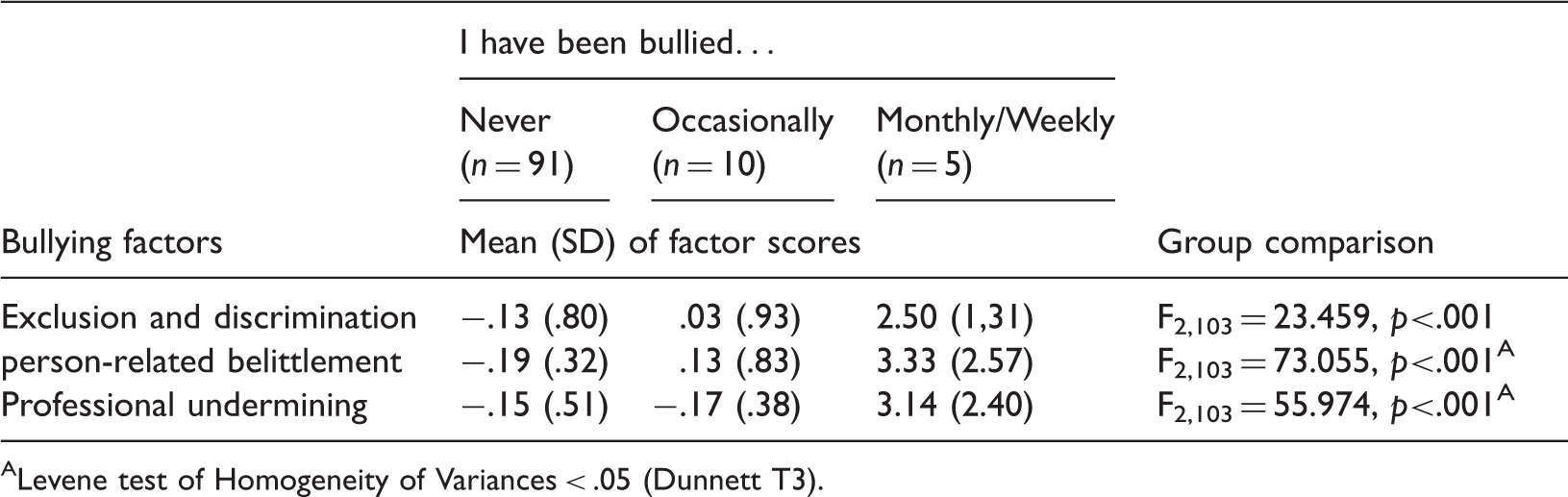
ALevene test of Homogeneity of Variances < .05 (Dunnett T3).
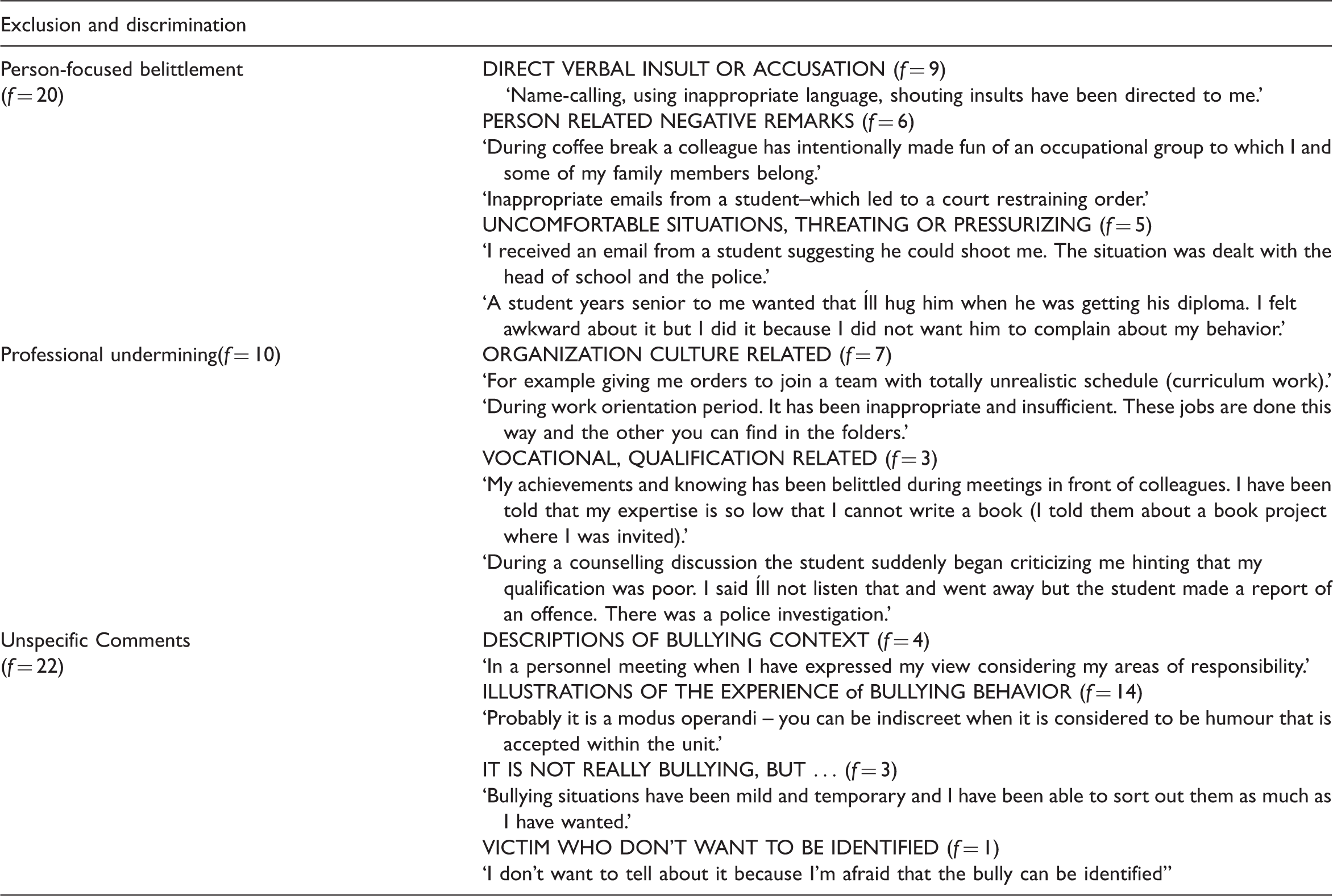
What bullying and inappropriate behaviour looks like at university level (f = 52).
Results
The degree of bullying and inappropriate behaviour at faculty level
Most of the respondents (n = 114) stated that they had never been bullied at work (n = 93 ), but 17 (15%) had experienced bullying: 12 occasionally, one monthly and four weekly . Moreover, 52 (45%) of the respondents had met with inappropriate behaviour. Bullying or inappropriate behaviour usually occurred during research work (f = 21), teaching (f = 7), counselling (f = 7), personnel meetings (f = 19), interaction situations (10) or during leisure time (f = 1). In total, 67 (60%) of respondents said that they had been bullied or faced inappropriate behaviour during the last six months . Typically, the person who had bullied or behaved inappropriately was a member of the teaching personnel (f = 26), a member of the administration staff (f = 23), a student (f = 13) or a member of research personnel (f = 8).
Almost half of the respondents (48%) had been bullied or met with inappropriate behaviour sometime earlier, for example, at school, whereas over one-third (36%) admitted that they had been a bully sometime earlier, for example, also at school. Almost one-third (f = 5) of those bullied in the workplace had also been bullied sometime earlier, for example, at school.
The nature of bullying among university personnel
Three dimensions of bullying among university personnel were revealed: exclusion and discrimination, person-related belittlement and professional undermining (Table 1). Compared to the theoretical framework of the NAQ-R measurement, this factor model does not include an explicit dimension of physically (Einarsen et al., 2009) or psychologically (Tsuno et al., 2010) intimidating bullying.
The relationship between the frequency of bullying and the factors of bullying was linear: the more often bullying had been experienced, the higher the mean of factor scores in each bullying dimension. Group comparison revealed statistically significant differences between subgroups (Table 2).
What does bullying and inappropriate behaviour look like within university?
Open-ended answers related to the experience of bulling were coded into three main categories: person-focused belittlement, professional undermining and unspecific comments with several sub-dimensions. An overarching feature of all these categories was Exclusion and discrimination which is presented as a collective upper category in Table 3.
The open-ended answers illustrate the multifaceted nature of university bullying as a phenomenon. In universities – as in any other organization – interpersonal relationships are essential for the working atmosphere. There are various professions and duties among university personnel, and there are also different kinds of student groups. Teaching and research work are being constantly evaluated. This increases the pressure from administration, colleagues and students. The answers also reflect continuing uncertainty about the future among personnel. This can further increase the culture of ‘inappropriate behaviour’ among personnel and students. The category of ‘Unspecific Comments’ indicates that inappropriate behaviour really exists in the faculty studied. It also hints that the problem may be more general than we have realized. A tendency to ‘play down’ the importance of bullying and inappropriate behaviour can be noted. It seems that (due to the hierarchical interdependency between faculty members?) nobody wants to rock the boat. In addition, it is important to remember that we are talking about an educational institution. We should also be worried about the possible transfer of ‘inappropriate behaviour’ to students and thus to their future working places.
The consequences of bullying or inappropriate behaviour
How has bullying or inappropriate behaviour affected your work? (f = 38).
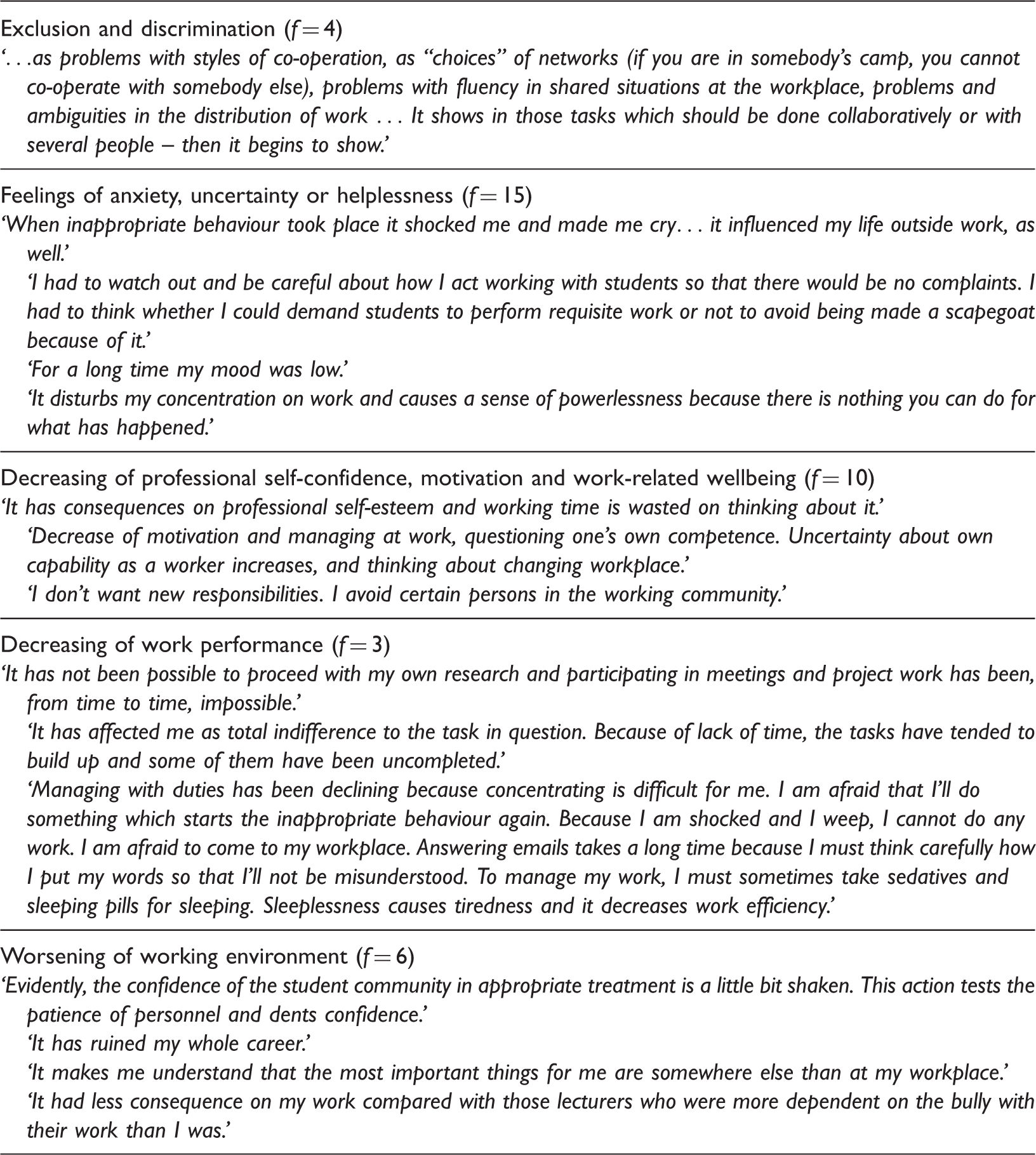
The consequences of bullying or inappropriate behaviour are primarily seen at the individual level (see Table 4), but it is obvious that the consequences are also seen at the level of the working environment (see Samnami and Singh, 2012: 586). Besides this ‘spillover’ effect (McKay et al., 2008), the consequences seem to follow each other. For example, discrimination may cause uncertainty and a further decrease of work-related wellbeing, which further impacts on decreasing of work performance and worsening of working environment at the societal level. Based on these results, the consequences of bullying or inappropriate behaviour are temporally and communally linked to the profitability of the faculty, besides individual suffering as seen in anxiety or affective disorders (see Björkqvist et al., 1994).
Universities are high-grade civil educational institutions with a specific academic organisational culture and hierarchic structure. Students get there their qualifications and skills and in tandem they internalise the working styles and organizational climate as a model for their future careers. The management and co-operation styles and working climates witnessed during studies are remarkable examples for students to follow later in their lives. Behaviour that negatively influences the health, wellbeing, professional performance and confidence of the people and groups involved should prompt intervention and exclusion. Finnish occupational health and safety legislation forbids this kind of inappropriate behaviour, yet in our data there was no mention of this. Experiences at university may have a wide-ranging social influence on the careers of the people involved and weaken trust in equal treatment both inside as well as outside academia.
How to intervene in and prevent bullying?
If nothing is done the consequences of bullying seem to worsen in the long run. This emphasizes the need for immediate intervention. The sooner the bullying is recognized and dealt with, the better the chances of preventing its escalation and ending it. Victims need witnesses and bullies need other arbiters in order to be able to put an end to the problematic situation. The colleagues and managers whose actions are required in an intervention also suffer the impact of bullying and need support. This can be given in the form of clear institutional ‘zero tolerance for bullying’ – policies and instructions on how and when to act (Bloch, 2012; Cortina, 2008; Einarsen, 2000; Illing, 2011; Keashly and Neuman, 2010; McKay et al., 2008; Namie and Namie, 2011; Salin, 2008; Twale and De Luca, 2008; Vartia and Tehrani, 2012; Vartia-Väänänen, 2013; Zabrodska et al., 2014).
The best place to identify, investigate and solve bullying issues is within the organization in question (Vartia and Tehrani, 2012). Co-operation between different units of the organization, such as human resources, occupational health professionals, management and the rest is crucial in the problem solving process (Salin, 2008; Namie and Namie, 2011, Vartia and Tehrani, 2012). Salin (2003, 2008) emphasizes the importance of having a policy with explicit punishments for the bullies, as without this the costs of bullying may seem low to the perpetrator (also see Namie and Namie, 2011: 73–74). Vartia-Väänänen (2013: 13) stresses the importance of writing such policies in a co-operative manner and Salin (2008) urges the avoidance of a ‘copy-and-paste’ adaptation of best practice. This is a particularly valid notion at the international policy level (Leka et al., 2011). Briefing and orientation of personnel and civility awareness campaigning is needed (McKay et al., 2008; Taylor, 2013; Mikkelsen et al., 2011), and the use of confidential supporters may bear fruit (Hubert, 2012). According to the National Working Conditions Barometer of Trade Union of Education in Finland (2014), approximately half of Finnish universities already have written policies on how to act in the case of bullying or inappropriate behaviour; one-fifth has already advised their workers on the prevention of workplace bullying. In the faculty studied here, the university's web pages contained brief guidelines to promote appropriate workplace behaviour and instructions on how to solve and prevent problematic situations related to sexual harassment or (over-)exercising of power, and name those people who should be contacted in the event of such behaviour. Regular surveys of work wellbeing were underway.
Key factors in preventing bullying and inappropriate behaviour are participative leadership and dialogue (Hoel et al., 2010; Mikkelsen et al., 2011). As victims who experience high social support are less vulnerable and suffer fewer adverse health effects as a result of long-term harassment, it is also important to facilitate social support both at work and at home (Einarsen, 2000: 387–388; Twale and De Luca, 2008). Faculty personnel may need to be trained in order to enable collaborative work in academic settings, as skills such as active listening or conflict resolution cannot be taken for granted, and informal support can be easier to accept than third-party mediation (Keashly and Neuman, 2010: 61–62; McKay et al., 2008; Mikkelsen et al., 2011). Especially in cases where bullying and inappropriate behaviour have already spread to the whole organization or the supervisor is the bully, a third-party intervention may be needed (Bartlett and Bartlett, 2011; Namie and Namie, 2009b; Vartia and Tehrani, 2012). However, external consultants can also fail, especially if the organizational culture is not taken into account (Vartia and Tehrani, 2012). Emdad et al. (2013: 714–715) stress, that since bystanders and the whole organization are involved in bullying, the intervention should also focus on the whole workplace system. “In an escalating conflict, neither person is passive”, affirms Tehrani (2012: 8). If the situation leads to the point where one or more workers are leaving, either voluntarily or as a result of dismissal, special attention should be paid to exit interviews – without them valuable information can go unnoticed (Bartlett and Bartlett, 2011; Twale and De Luca, 2008).
Conclusions
The aim of this research was to reveal the degree, nature and possible consequences of bullying or inappropriate behaviour among personnel at one university faculty. According to our results, 15% of respondents had experienced bullying and 45% had experienced inappropriate behaviour. Whilst bullying is defined as frequent and escalating, direct or indirect negative acts that take place over a relatively long period of time (Einarsen, 2000), inappropriate behaviour can be understood as behaviour that is not right or suited to the purpose or situation at hand (Merriam-Webster, 2014).
Three dimensions illustrating the nature of bullying among university personnel were revealed: exclusion and discrimination, person-related belittlement and professional undermining. Open-ended answers were coded into three main categories: person-focused belittlement, professional undermining and unspecific comments with several sub-dimensions. An overarching feature for all these categories was exclusion and discrimination. The dimension of physically or psychologically intimidating bullying (Einarsen et al., 2009; Tsuno et al., 2010) was not revealed in the factor analysis. However, psychologically intimidating bullying emerged when the open-ended answers concerning the consequences of bullying or inappropriate behaviour were analysed. The respondents' answers showed signs of exclusion and discrimination, feelings of anxiety, uncertainty or helplessness, decreasing of professional self-confidence, motivation and work-related wellbeing, decreasing of work performance and worsening of working environment. Based on the synthesis of quantitative and qualitative analyses, the nature of bullying among university personnel could be outlined as 'sophisticated, psychologically emphasized, inappropriate behaviour which is difficult to label as bullying”.
Due to the specific nature of academic bullying, and to the fact that in organizations such as universities task-oriented expertise, autonomy and individualism are emphasized, successful interventions are hard to realize. The precipitating processes (e.g. downsizing, continuous organizational changes, restructuring and changes in work group composition) play an important role in triggering bullying (Salin 2003). We must also consider the impact of the recent and still ongoing organizational changes at Finnish universities in general and at the faculty in question, when seeking the reasons for bullying. Budget cuts, competition for decreasing job vacancies and the increasing demands of profitability bring constant pressure to publish, to find research funding, etc., and unavoidably lead to tensions between faculty members. In such an operational environment much of what happens is so covert that it's difficult to document, prove, respond to or eliminate it. To provide better understanding of these aspects, a follow-up study concerning the causes behind bullying and inappropriate behaviour and their consequences is needed.
The revealed ‘culture of inappropriate behaviour’ among university personnel makes us ponder, how we behave towards each other in our daily work and how our colleagues experience our behaviour. Bearing in mind that these findings represent an educational institution, the results are even more alarming. In education respecting other human beings is a basic ethical value. Even though our ideas concerning bullying or inappropriate behaviour may vary a lot, we should always behave as well as we expect others to behave towards us. These findings should also spark discussion about institutional dysfunction with specific attention to educational consequences. The influence of the ‘culture of inappropriate behaviour’ among faculty personnel is reflected in faculty–student relations and further in studentś peer relations. This is not the kind of culture we want to transfer to the future workplaces of our students. Instead we should gift our students with abilities and attitudes to prevent and intervene in bullying, when needed. One respondent clearly explained, that it was not possible to tell anyone about the bullying incident without revealing the identity of the bully. This hints that there is either fear of making things worst by opening one's mouth or lack of trust in the idea that the situation, once identified, could be solved. It also proves that we need more open discussion about the matter among university personnel and thorough research of the phenomenon.
Footnotes
Declaration of conflicting interests
The author(s) declared no potential conflicts of interest with respect to the research, authorship, and/or publication of this article.
Funding
The author(s) received no financial support for the research, authorship, and/or publication of this article.