



Abstract
The ongoing global COVID-19 pandemic has revolutionized the education system and forced fundamental changes in the teaching–learning process. The present study aims to explore various modes of education used by educational institutions across the world and provide a holistic understanding of different measures taken by governments and universities to endure the crippling crisis. The radical shift to digital pedagogy followed by online assessments and examinations brought new experiences to both educators and learners. This paper elucidates the extraordinary challenges encountered by various stakeholders in making the required shift to digital learning and the substantial attempts made by educational institutions to minimize learning losses. The paper also presents various opportunities induced by the COVID-19 pandemic and highlights the need to develop appropriate mechanisms to deal with such an unforeseen crisis in future. To this effect, some recommendations have been made that may enable educational institutions to eliminate adversities and maintain academic integrity in tempestuous times.
Introduction
An infectious respiratory disease COVID-19 caused by novel coronavirus SARS-CoV-2 was discovered in December 2019, in Wuhan Province, People’s republic of China (PRC) (Marinoni et al., 2020) and due to its massive outspread, the World Health Organization (WHO) declared COVID-19 a global pandemic on 11 March 2020 (World Health Organization, 2020). It is noteworthy that though mankind has witnessed various outbreaks in the past such as Ebola virus disease, human immunodeficiency virus/acquired immune deficiency syndrome, “Black Death” plague and “Spanish flu” (Motala and Menon, 2020; United Nations Educational, Scientific and Cultural Organization, 2020), the unpreparedness for and abrupt outburst of COVID-19 caused extensive and incalculable devastation (Ifijeh and Yusuf, 2020).
Since COVID-19 was extremely contagious, most countries announced lockdowns and life came to a standstill. This adversely affected various sectors such as healthcare (Holshue et al., 2020; Peng et al., 2020), travel and tourism (Galvani et al., 2020), manufacturing (Sahoo and Ashwani, 2020), and agriculture (Sahoo and Rath, 2020). The education sector was no exception and thus experienced immense turmoil during the COVID-19 pandemic (Paudel, 2021). To contain the spread of this highly infectious pathogen, numerous stringent non-pharmaceutical interventions were implemented such as sanitization, wearing masks, using hand-gels, and social distancing measures (Upoalkpajor and Upoalkpajor, 2020), which necessitated educational institutions to shutdown thus affecting 1.57 billion students globally (United Nations Educational, Scientific and Cultural Organization, 2021). Table 1 presents the timeline of the global response of education institutions to COVID-19. Most countries across the globe such as the USA, United Kingdom, Canada, the PRC, Chile, Argentina, Cuba, Columbia, Venezuela, Peru, Uruguay, Republic of Guyana, South Africa, and India suspended in-person classes and shifted to digital modes of education (Dorn et al., 2020; El Masri and Sabzalieva, 2020; Mishra et al., 2020; Motala and Menon, 2020; Oyedotun, 2020; Paudel, 2021; United Nations Educational, Scientific and Cultural Organization, 2020; Zhu and Liu, 2020).
Timeline of the global response of educational institutions to COVID-19.
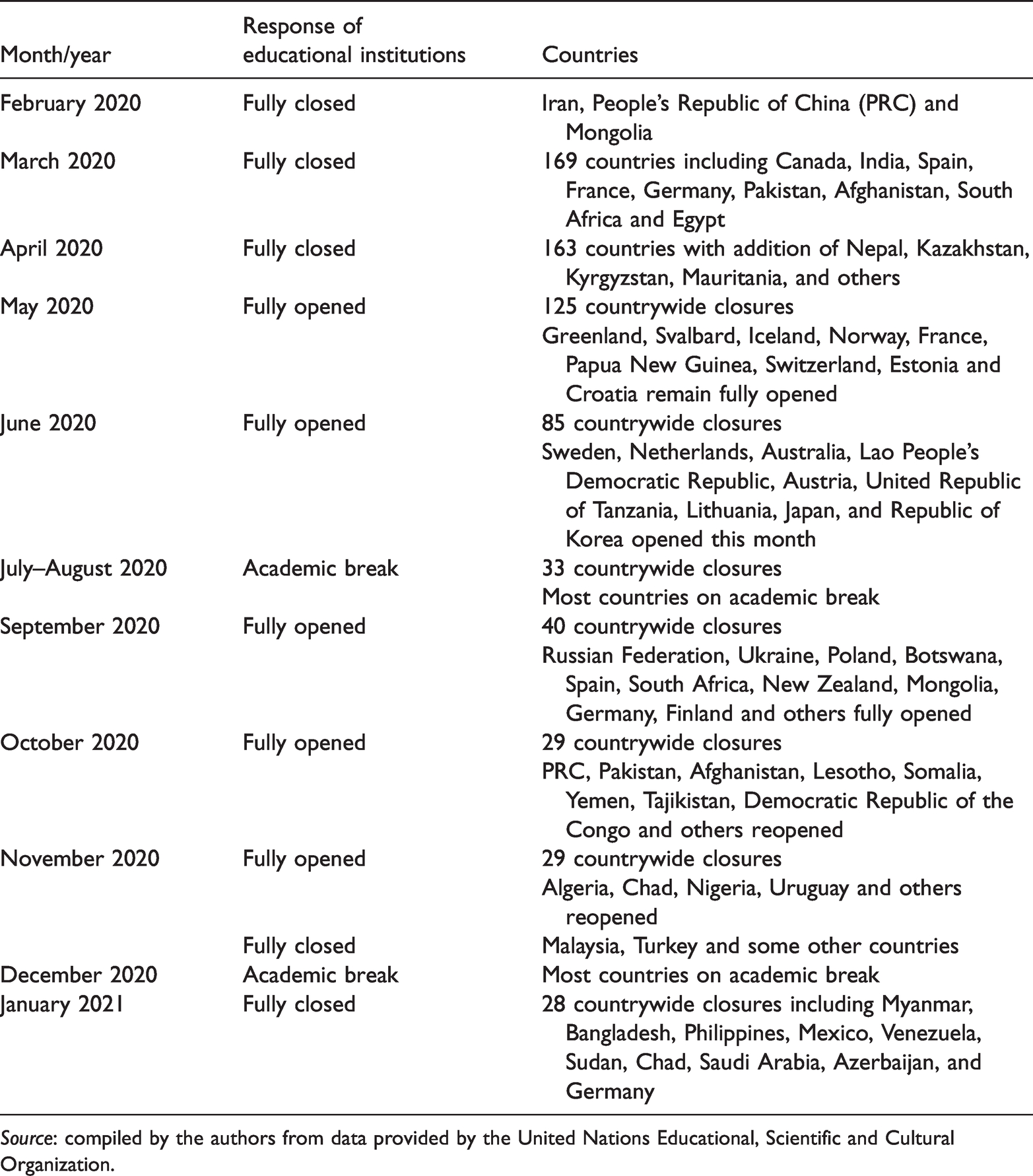
Source: compiled by the authors from data provided by the United Nations Educational, Scientific and Cultural Organization.
The closure of educational institutions brought dramatic changes in the education sector. The educational institutions worked ceaselessly to ensure continuity of the teaching–learning process despite the deadlock. Although various studies portrayed availability of contingent plans for distant virtual education most of these plans were viable at a small scale and could not cope with a pandemic as huge as COVID-19 (Basilaia and Kvavadze, 2020). It was realized that the learning management systems (LMS) that were already in use in most higher education institutions (HEIs) facilitated attendance, student registration and content distribution, but were not suitable for full-fledged virtual classes (Khan, 2020). Thus, as an immediate response to the COVID-19 pandemic, various educational institutions across the globe introduced significant changes in their education system as per their resources and capabilities. It was witnessed that technologically advanced nations such as France, Australia, USA, and United Kingdom readily adopted distance learning as a course of action by strengthening their existing e-learning platforms, whereas contrarily, nations such as Chile, Argentina, and Brazil lacked sufficient infrastructure and thus employed traditional methods such as radio and television to ensure undisrupted learning (Dawadi et al., 2020). Furthermore, populous countries such as India and the PRC shared access to their national repositories of learning resources with various stakeholders by establishing e-learning portals (Dawadi et al., 2020) to cope with the turbulent times. Annihilated by the unanticipated pandemic, various universities expeditiously constituted committees to manage the crisis (Agasisti and Sonchin, 2020), made significant investments in electronic infrastructure (Zawacki-Richter, 2021) and supported students in myriad of ways by extending fee deadlines, ensuring reimbursements on accommodation, and providing laptops and Internet connections (El Masri and Sabzalieva, 2020).
The present study thus aims to highlight various measures undertaken by educational institutions in different countries to make the paradigm shift to digital pedagogy. The prolonged lockdown and government mandated norms also impacted student performance evaluations where most countries resorted to online assessments and examinations. The literature advocates varied views with regard to effectiveness of such assessments and thus this paper attempts to present these diverse perspectives. The study also endeavours to synthesize and present the challenges associated with rampant use of digital teaching–learning platforms and the opportunities it created for educational institutions to leverage even post-crisis. Lastly, considering the challenges and opportunities, a few recommendations have been made to prepare the educational institutions to better handle such a crisis situation in future.
Method
This paper employs a documentary research approach from multiple information sources and databases such as Routledge, SAGE and Elsevier. The topical nature of the domain necessitated the need to include all recent relevant articles from peer-reviewed journals with careful consideration on the quality of information source. For maintaining academic integrity, reliable sources have been used such as research papers, government information sources and policy documents, university websites, news articles, and publications and reports by global organizations. A total of 102 sources have been used and a summary of the sources is presented in Table 2.
Summary of sources used in this paper.
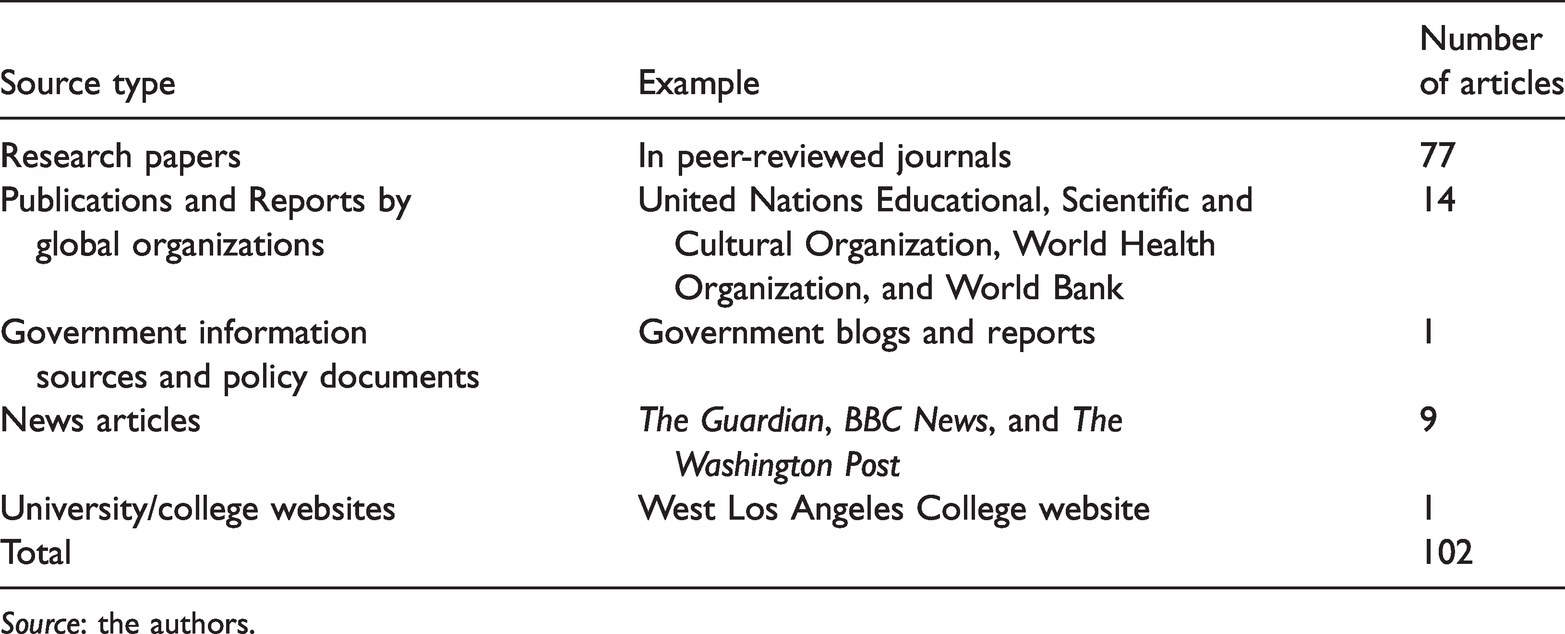
Source: the authors.
Furthermore, keywords used for searching documents were “Education” and “COVID-19”. Synonyms of both words such as “Academics”, “Coronavirus”, “Pandemic” and “Crisis” were also used to gather all related literature on the topic. To ensure a global review, the paper includes countries from all six WHO regions, that is, African region, region of the Americas, South-East Asian region, European region, Eastern Mediterranean region, and Western Pacific region. A summary of different countries included in the study from the abovementioned six regions is presented in Table 3.
Summary of countries from six World Health Organization (WHO) regions included in this study.
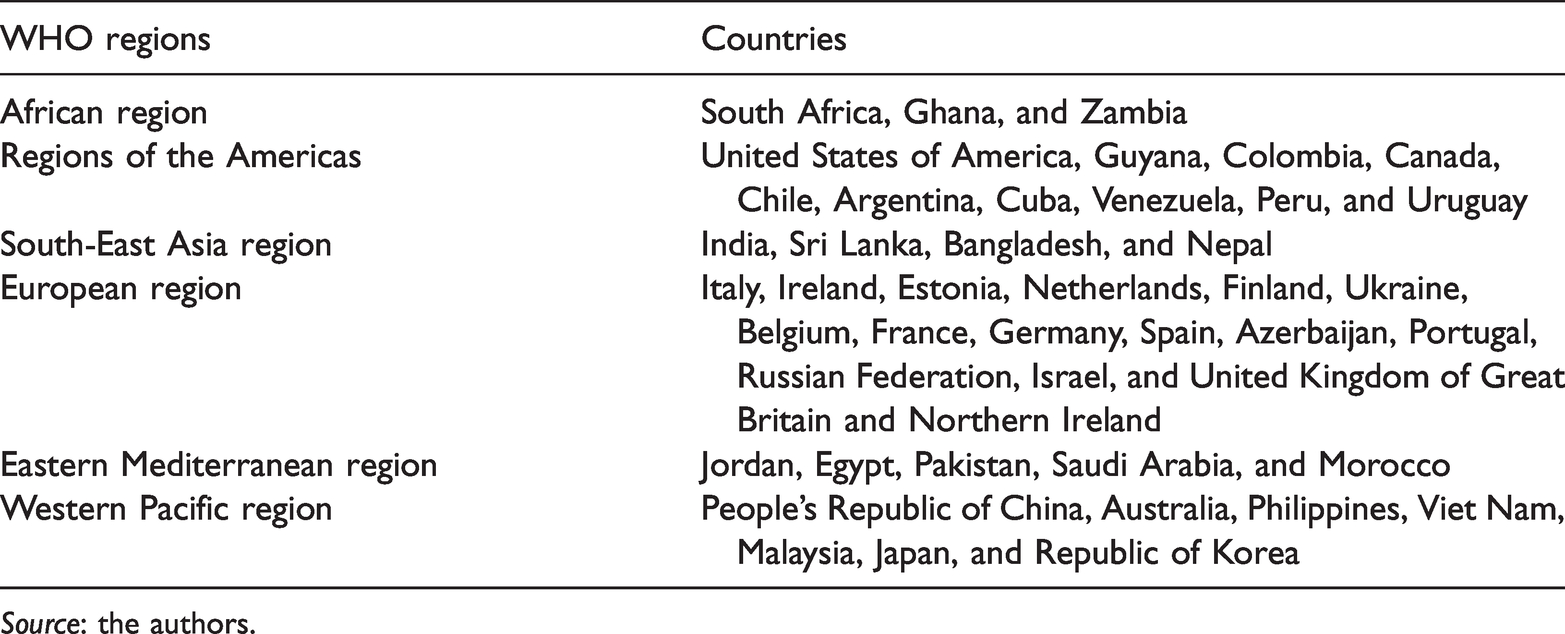
Source: the authors.
The literature on the subject was carefully analysed and the purpose was to systematically categorize content of the publications and to identify significant aspects in this area of research. The meticulous review of research articles along with facts and figures from government sources and international organizations led to identification of four key themes for analysis which were common in most publications. The first theme, that is, a radical shift to digital pedagogy highlights the struggle of educational institutions in suddenly embracing the virtual environment along with initiatives undertaken by different countries for the transition. The second theme presents diverse practices adopted by countries regarding online assessments and examinations. This is followed by theme three that foregrounds various challenges faced by stakeholders in the virtual teaching–learning process and theme four which emphasizes the merits and opportunities of e-pedagogy. Subsequent to these themes, the discussion section mentions some critically intriguing aspects with regard to virtual education that seek attention of academia and governments. Lastly, a few recommendations have been made to assist educational institutions in sustaining such a crisis situation in future.
A radical shift to digital pedagogy
The COVID-19 pandemic has forced most countries around the world to shift from their conventional methods of in-person teaching, training, learning and educating to digital pedagogy (Sutton and Jorge, 2020). Although it was difficult for educational institutions to suddenly shift from traditional chalk and talk didactic teaching (Basilaia and Kvavadze, 2020; Dutta, 2020; Tria, 2020) to online teaching, appreciable attempts were made for undisrupted flow of knowledge.
As a measure to curb the spread of the life-threatening coronavirus, gatherings were restricted in most countries and therefore physical classes in educational institutions were suspended (Oyedotun, 2020; Paudel, 2021). According to the United Nations Educational, Scientific and Cultural Organization (2021), 166 countries observed closure of their educational institutes by March 2020 which impacted 83.7% of the world’s learners (United Nations Educational, Scientific and Cultural Organization, 2021). Despite various infrastructural and technological limitations, most countries shifted to alternative modes of education such as blended learning in the PRC (Chung et al., 2020), and synchronous and asynchronous online learning in countries such as Italy (Agasisti and Sonchin, 2020), Australia (Scull et al., 2020) and South Africa (Mpungose, 2020).
Universities across the globe adopted various approaches to combat ripple effects of the relentless crisis. All six WHO regions witnessed sudden transition in modes of education. The few countries which already had infrastructure for online delivery of lectures, improved and encouraged its use; however, other countries took time to build and launch alternative platforms for learning. In South-East Asia region, which mostly comprises developing countries, apart from new launches, the already existing online learning platforms were also significantly improved. For example in India, new study materials and courses were added to the existing online education portals such as SWAYAM, SWAYAM Prabha, and the National Repository of Open Educational Resources (Dutta, 2020; Mishra et al., 2020). Furthermore, recognizing the need for good quality digital educational content, the Indian Government in April 2020 launched VidyaDaan 2.0 that encouraged educationists, subject experts, and government and non-government organizations to contribute towards online learning (Sarif, 2020). Governments also recognized the need for infrastructural and technological support to educational institutions and thus came forward to extend help. For example, in Sri Lanka, Accelerating Higher Education Expansion and Development, a Sri Lankan Government operation, provided technology and equipment to begin e-learning resources (Tognatta, 2020). Similarly, Bangladesh Research and Education Network (BdREN), established under the aegis of the Bangladesh Government’s Ministry of Education, provided connectivity and supercomputing facilities to universities (Tognatta, 2020) for supporting undisrupted operations during the COVID-19.
In the Eastern Mediterranean region, most countries developed new platforms for online teaching and learning. For example in Jordan, new e-learning platforms such as “Darsak”, “Jo Academy”, “Idrak” and “Abwab” were launched (Guermazi, 2020). Governments, in countries such as Egypt and Pakistan, also contributed towards sudden education transition (Tognatta, 2020). The Egyptian Government’s Ministry of Education launched an electronic portal to facilitate online learning where students could upload their work and receive reviews from teachers (Taha, 2020). Similarly, the Pakistan Education and Research Network, an initiative of the Government of Pakistan which connects universities through high-speed Internet bandwidth, developed a national learning platform to support undisrupted learning in times of crisis (Tognatta, 2020). Likewise attempts were also made in the Western Pacific region and African region. The Chinese Ministry of Education launched an initiative “Disrupted Classes, Undisrupted Learning” to support continuous learning in times of educational disruption (Huang et al., 2020). In the Philippines, apart from government initiatives, most universities facilitated online learning via their own LMS, for example “AnimoSpace” developed by De La Salle University was widely used to bridge the gap between teachers and students during the COVID-19 pandemic (Joaquin et al., 2020). Similarly, universities in South Africa also used LMS for online content dissemination (Mpungose, 2020).
In the region of the Americas and the European region, countries such as the United States and United Kingdom already had digital education infrastructure and policies in place that facilitated learning during the COVID-19 pandemic (Paudel, 2021). A 2019 pre-crisis research by the Centre for European Policy Studies also found that European countries such as Estonia, Netherlands and Finland excel in digital education and learning (HITSA, 2019) which made their transition to virtual pedagogy easier as compared to the rest of the world. However, few countries in the region additionally undertook unique initiatives to support electronic learning in times of crisis. One such initiative launched in Italy was project “E-Buddy – events on the screen to break the quarantine” which aimed to facilitate online networking and learning among students (Agasisti and Sonchin, 2020).
Apart from the abovementioned, many HEIs delivered content digitally via already established platforms such as Skype, Zoom, Webex, (Dutta, 2020; Mishra et al., 2020), Microsoft Teams (Agasisti and Sonchin, 2020), and YouTube, Google Meet and Google Classroom (Chung et al., 2020; Mishra et al., 2020). Furthermore, massive open online courses’ platforms such as Coursera, Udemy, and edX also helped students in uninterrupted learning during the COVID-19 pandemic (Mishra et al., 2020; United Nations Educational, Scientific and Cultural Organization, 2020). However, above all, teachers played a significant role in smooth transition from in-person learning to remote learning. Various countries and organizations arranged for teacher trainings and interactions to make faculty familiar with use of digital platforms. Events such as “Edcamps” were organized globally for teachers, where they could learn and share their experiences with peers regarding online teaching during the COVID-19 crisis. For example in April 2020, a national online Edcamp “High Five for Education” was organized in Ukraine and a series of online Edcamps with title “Edcamp: Powerful Learning at Home” was hosted in the United States to facilitate learning and interaction among educators (Modica, 2020). The governments of countries such as Belgium also took initiatives in this direction where KlasCement, which is an educational resources network managed by the Flemish Department of Education and Training organized webinars for teachers regarding virtual classes and online evaluation during the COVID-19 pandemic (Minea-Pic, 2020).
This sudden shift towards online teaching and learning also necessitated the need to turn physical libraries into digital libraries for online delivery of information services. Libraries relentlessly made efforts to support online classes by providing e-resources to students, researchers and educators while struggling to adopt online work from home practices (Rafiq et al., 2021). Various library associations across the globe, for example, the Association of College and Research Libraries (2020), which is a division of the American Library Association, supported academic libraries in distance education and collection maintenance during the COVID-19 crisis. The Australian Library and Information Association (2020) also in this regard developed a specifically designed webpage for sharing library services during COVID-19 pandemic. Apart from subscribing to and providing e-resources, it also arranged for unique “online author events” which aimed to connect authors with their audience digitally. Similarly in Italy, libraries not only provided e-books, but also organized and promoted digital events, exhibitions, courses and tutorials (Tammaro, 2020) which helped in establishing and maintaining author–audience connections during the COVID-19 pandemic.
Thus, shifting from in-person learning to digital learning in a short span of time required efforts and acceptance of tumultuous changes. Governments, universities and other HEIs joined together to introduce and implement new policies and procedures to support education in crisis. The importance of digital learning platforms was realized and remote education received immense support and contribution from libraries and teachers. However, after shifting to digital pedagogy, online assessments and evaluations posed a real challenge to educational institutions.
Online assessments and examinations
Assessments and examinations are the linchpin of an education system since they are tools to measure the degree of learning of participants and are used to track progress of learners (Guangul et al., 2020; Liu and Chen, 2018). Owing to the COVID-19 pandemic, although the educational institutions made the dramatic sudden shift to online learning, online examinations were still a distant thought. The administration lacked technical know-how and infrastructure to conduct remote examinations, teachers were not sufficiently aware of alternative modes of assessment and students were at the receiving end trying to cope up with the change in their learning environment (Guangul et al., 2020).
In such an unstable and precarious situation, some HEIs cancelled their examinations in the best interest of their stakeholders while others postponed and took a time advantage to prepare for the conduct of remote assessments. At the very initial stage of coronavirus spread, premier educational institutions such as Queen’s University Belfast in Ireland (Meredith, 2020) and Monash University in Australia (Truu, 2020) cancelled their examinations. Following their example, various other educational institutions called off their final examinations in countries such as Netherlands, France, and Germany where institutes decided to evaluate students on the basis of average scores of assessments conducted throughout the year (Opposs, 2020). Countries such as the PRC, Spain, Azerbaijan, Ghana, India, Bangladesh and Vietnam, which did not support cancellation, postponed their university entrance examinations and summer examinations as an immediate relief during the COVID-19 crisis (James, 2020; Opposs, 2020; Tognatta, 2020). However, considering the rapid transmission rate of the coronavirus and widespread devastation all around, the educational institutions soon realized that they would have to continue with the online teaching–learning process for long time and thus alternative forms and modes of assessments and examinations were adopted.
Broadly there are two types of assessments: synchronous; and asynchronous. While synchronous assessments involve real-time presence of students and instructor, asynchronous assessments include activities that are not concurrent in time (Chao et al., 2012; Lee and Liu, 2016). Depending on the digital infrastructure (Organisation for Economic Co-operation and Development, 2020), instructors’ availability and their competence (Elzainy et al., 2020), nature of courses and students’ learning goals (Guangul et al., 2020; Organisation for Economic Co-operation and Development, 2020), educational institutions around the globe adopted online assessments to evaluate their students in times of crisis. Online synchronous assessments use virtual spaces and can be undertaken in numerous forms such as online proctored open-book examinations, viva, oral presentations, text and phone conversations, video conferencing, and real-time discussions among students on virtual platforms (Nakatani, 2005; Uribe and Vaughan, 2017). Since this involves a lot of time, resources and monitoring (Haus et al., 2020), some institutions adopted asynchronous assessments such as untimed projects, research papers and pre-recorded video presentations (Organisation for Economic Co-operation and Development, 2020) to assess the performance of their students. Many first-rate educational institutions such as Imperial College London in England preferred conducting open book examinations (Tapper et al., 2020), and to tackle the challenge associated with laboratory assessments, educational institutions revised their academic curricula to teach theoretical courses online and postponed practical courses to future semesters (Organisation for Economic Co-operation and Development, 2020). A few universities in the United Kingdom adopted “no detriment policies” in favour of students which gave them a chance to improve their grades and assured that grades would not decline below their average in times of crisis (Gamage et al., 2020; Organisation for Economic Co-operation and Development, 2020). The University Grants Commission in India also ensured that no student was at disadvantage as result of the COVID-19 pandemic and thus gave directives to universities to provide another opportunity to students who failed to undertake examinations either online or in-person (James, 2020).
Although remote assessments were adopted worldwide as the only option to evaluate students during the COVID-19 pandemic, different stakeholders have varying views regarding their effectiveness. Many scholars are of the view that remote assessments increase chances of academic dishonesty (Gamage et al., 2020; Guangul et al., 2020). The surge in Google searches related to examination topics during the conduct of examinations makes it evident that students took undue advantage of having immediate access to search engines during online examinations (Bilen and Matros, 2021). To prevent such cheating among students, some educational institutions even hired proctors (Newton, 2020) and considered monitoring student’s workspace during real-time examinations as an appropriate solution (Bilen and Matros, 2021; Haus et al., 2020). For example, students at the University of Sydney in Australia were required to expose their workspace with webcams and provide personal details such as on a student’s identity card on virtual platforms (Chrysanthos, 2020). However, privacy concerns were raised and universities shifted to take-home or open-book tests (Chrysanthos, 2020). Other alternatives such as oral examinations, multiple question paper sets, submissions through plagiarism software and live presentations though curbing cheating require very high time commitment from educators (Basilaia and Kvavadze, 2020; Organisation for Economic Co-operation and Development, 2020). On the other hand, a few scholars highlighted advantages associated with online assessment conduct such as cost and time saving and reduction in use of paper which can greatly help in preserving the environment (Guangul et al., 2020; James, 2020). Furthermore, frequent online assessments and quizzes were found to motivate students to study (Elzainy et al., 2020) and develop their analytical skills such as creativity and problem-solving (Organisation for Economic Co-operation and Development, 2020). However, despite a few merits, due to unpreparedness of administration and lack of technical competence of teachers, educational institutions faced many challenges.
Challenges faced in virtual teaching–learning
The COVID-19 pandemic engulfed various countries abruptly and the education sector with no prior preparation was crippled across the globe. Though immediate efforts were made for undisrupted teaching–learning, it brought numerous challenges for students, teachers, as well as administration of educational institutions as presented in Table 4.
Challenges faced in virtual teaching–learning.
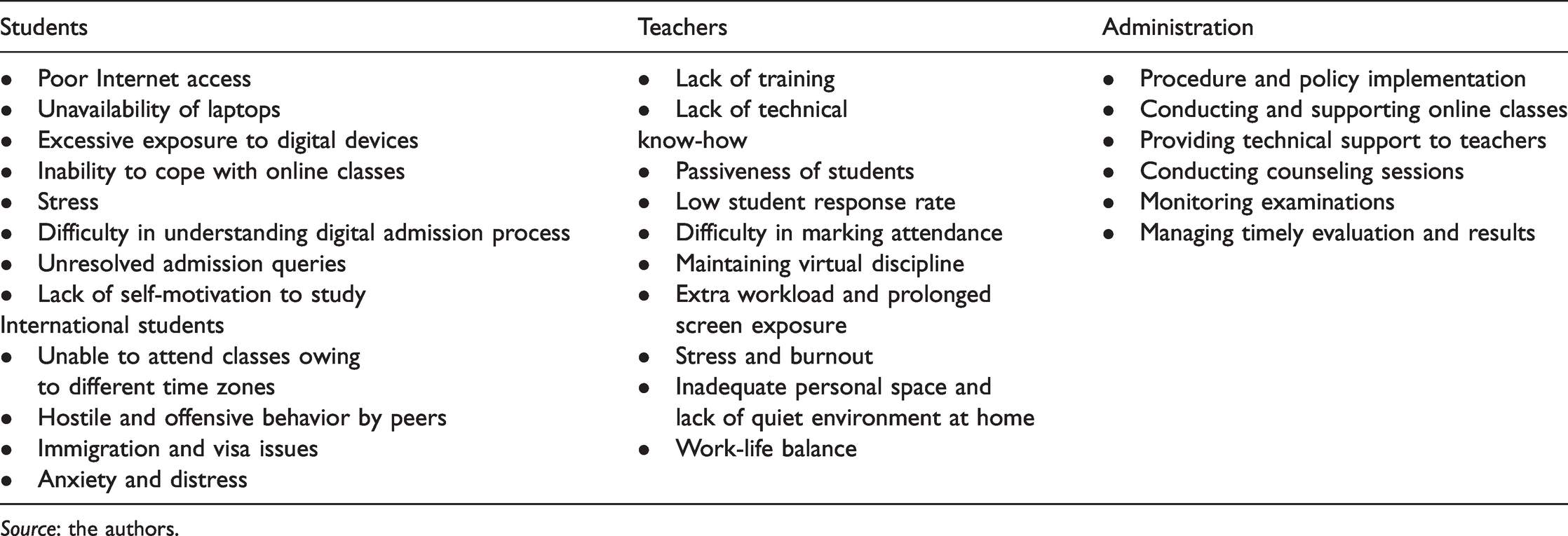
Source: the authors.
The sudden shift to digital pedagogy was a necessity considering the crisis but students faced a plethora of dilemmas and hindrances in virtual learning. While successful delivery of online education requires appropriate digital infrastructure and platforms, poor Internet access coupled with unavailability of laptops and desktops, was considered a major impediment in most countries (Sangster et al., 2020; Zhu and Liu, 2020) such as the PRC (Zhu and Liu, 2020), Malaysia (Chung et al., 2020), India (Dutta, 2020; Radha et al., 2020), Nepal (Paudel, 2021), Bangladesh (Emon et al., 2020), Guyana (Oyedotun, 2020), South Africa (Mpungose, 2020) and Saudi Arabia (Hoq, 2020). A survey conducted by the International Association of Universities (Marinoni et al., 2020) found that one-third of HEIs in Africa had no infrastructures in place to communicate with their staff and students during the COVID-19 crisis. Additionally, prolonged exposure to digital devices, inadequate information regarding reopening of educational institutions, and inability to cope with online classes caused stress and turmoil among the students (Dutta, 2020; Hoq, 2020; Oyedotun, 2020). A study conducted on higher education students in the United States found that 75% of them had experienced depression and anxiety as a result of the COVID-19 crisis (United Nations Educational, Scientific and Cultural Organization, 2020). The research scholars also faced similar stress since the laboratory activities which are necessary for research were suspended and fieldwork that includes primary data collection was not possible (Dutta, 2020; Mishra et al., 2020).
Furthermore, the learners who were seeking admission to HEIs also had a tough time in understanding the digital admission process and applying for a course. It was found that many students missed the online pre-admission counselling and therefore were not able to choose the right course as per their eligibility and requirements (Jena, 2020a) Also the students were not able to clarify their queries regarding admission since they were not allowed to visit campuses physically (Jena, 2020a) The situation was adverse for international students seeking admission (Emon et al., 2020). Even the already admitted international students who relocated to a different country with a different time zone, encountered difficulties and expressed their inability to attend the classes at the scheduled timings. Some students from countries such as the PRC, Vietnam, Japan, and South Korea reported instances of hostile and offensive behaviour based on their national identity which strained their relations with peers and affected their mental health (Chirikov and Soria, 2020). Furthermore, managing immigration and visa issues during the COVID-19 pandemic also led to anxiety and distress among international students (Chirikov and Soria, 2020). However above all, students’ lack of self-motivation to study in online classes proved to be a major obstacle during transition to virtual learning (Amemado, 2020).
The challenges were not only limited to students but teachers also struggled to adapt to the online mode of education. Due to the sudden transition to digital pedagogy, educators were not given any formal training to prepare material and conduct classes online but were expected to continue the teaching–learning process without any disruption. Evidence showed that most teachers were not well acquainted with different modes and platforms of online teaching and lacked technical know-how (Chen et al., 2020; Oyedotun, 2020). Many teachers also revealed that they lack computer skills which are necessary for online teaching and digital content creation (Hassan et al., 2020). Apart from technical difficulties, many academics highlighted passiveness of students during synchronous classes as a major cause of concern (Hassan et al., 2020; Jegede, 2020; Ratten, 2020). Engaging students posed a big challenge to teachers where studies revealed that students initially were not sincere and serious about their online classes and teachers received very low response rates to the allocated assignments (Farooq et al., 2020; Hassan et al., 2020; Oyedotun, 2020). Owing to lack of training, marking attendance digitally also became a tedious task for educators and there were high possibilities of students marking proxy attendance while indulging in other online activities (Farooq et al., 2020). Furthermore, due to lack of face to face interaction, it was witnessed that students were often rude and impudent during the online classes (Oyedotun, 2020) which demotivated educators and posed another challenge of virtual discipline maintenance. Moreover, various faculty members in countries such as Columbia, Portugal and Russia experienced stress, anxiety, burnout, exhaustion and worsened physical health due to extra workload and screen exposure for extended periods (Johnson et al., 2020; Sangster et al., 2020). Additionally, the COVID-19 crisis greatly hampered the work–life balance of educators (Corbera et al., 2020), where on the one hand creation of e-content required added efforts and time (Hassan et al., 2020) and on the other hand teachers had their own personal and social obligations at their homes in the lockdowns (Motala and Menon, 2020). The boundaries between work and personal life became porous which not only disrupted personal life but also affected professional life where it was found that at many times online teaching sessions were hindered due to inadequate personal space and lack of a quiet environment at home (Sangster et al., 2020). This resulted in increased stress and decreased job satisfaction (Nambiar, 2020).
Administration departments of universities and HEIs which played a vital role in transition to digital pedagogy also encountered challenges in implementing procedures and policies, conducting and supporting online classes, monitoring examinations, and managing timely evaluation and results (Johnson et al., 2020; Tria, 2020). The administrators had to put in huge efforts to convert in-person classes to digital classes and scrambled to provide digital infrastructure and technical support to teachers during classes (Oyedotun, 2020). Furthermore, supervising examinations and ensuring plagiarism-free answer scripts was also a big challenge for both teachers and administrators (Motala and Menon, 2020; Sahu, 2020). Also, despite struggling to cope with the changed work scenario, administrations worked hard to ensure mental well-being of all stakeholders and thus arranged and conducted numerous counselling sessions (Sahu, 2020).
However, even after countless obstacles faced and efforts made by teachers and administrators, achieving socio-economic equity in education during the COVID-19 crisis remained a big challenge. Accommodating students from diverse and disadvantaged backgrounds such as students with disabilities, those residing in rural areas with no Internet connectivity, migrants, refugees, etc. has been a major concern for the entire education system (Dorn et al., 2020; Mpungose, 2020; Oyedotun, 2020; United Nations Children’s Emergency Fund, 2020). It was anticipated that due to prolonged shutdown of educational institutions, and an increasing digital divide among students, many may drop out of the system, thus affecting literacy, employment and the economy at large (Dorn et al., 2020). However, despite numerous challenges faced by students, teachers and administration, virtual education had its own merits and COVID-19 pandemic created an opportunity to explore and leverage those.
Merits and opportunities
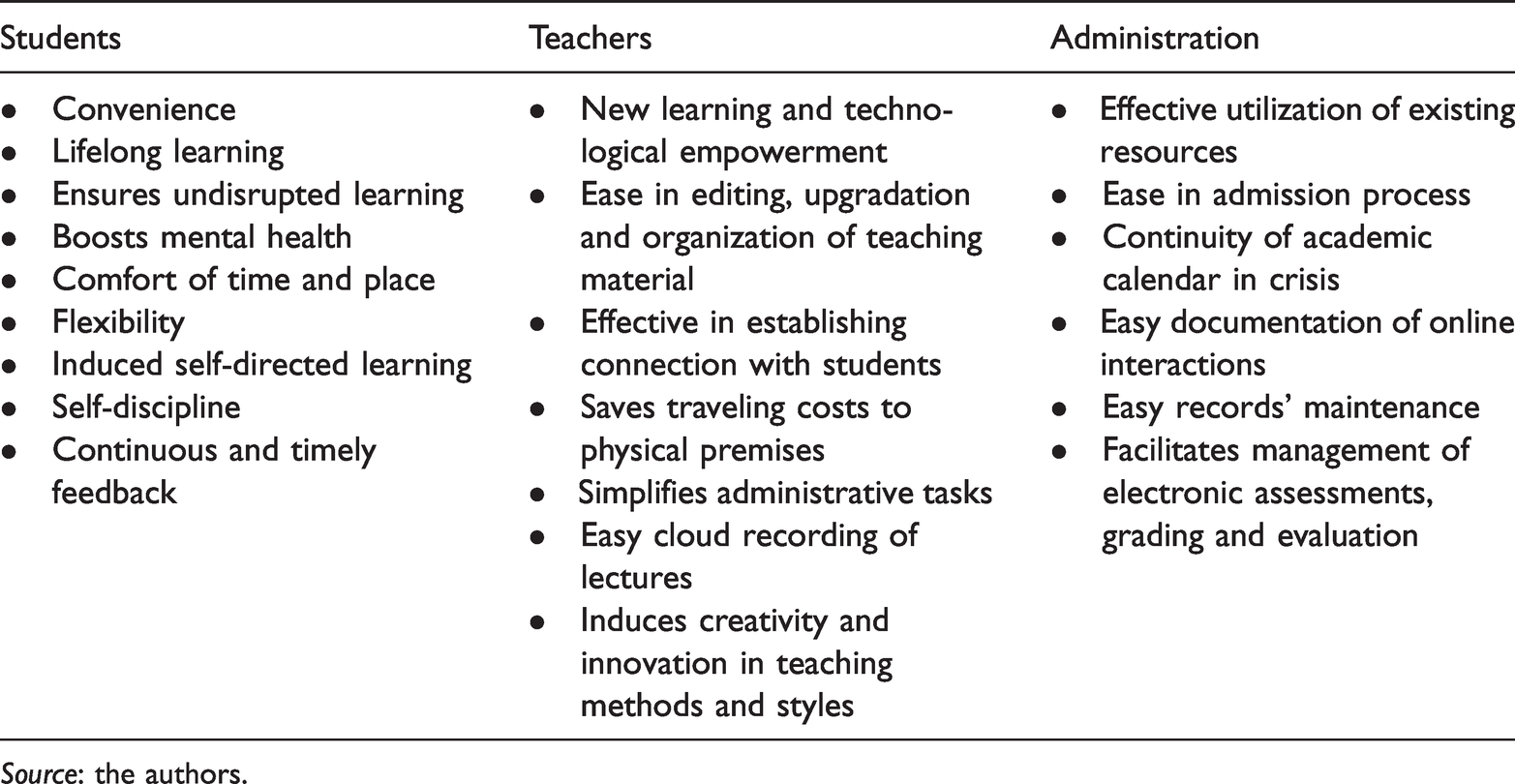
The inconvenience caused by the COVID-19 pandemic pushed various stakeholders to explore different alternatives associated with remote teaching and learning (Mbiydzenyuy, 2020). The prolonged use of such alternative digital platforms led to identification of various merits and opportunities of virtual teaching–learning as presented in Table 5.
Merits and opportunities of virtual teaching–learning.
Source: the authors.
Despite innumerable efforts in past decades, universities were struggling to shift parts of their curriculum online and introduce e-courses since it was predicted earlier that digital learning environments may disrupt education (Beech and Anseel, 2020). But left with no choice, the inevitable catastrophe helped educational institutions to quickly explore virtual learning platforms and shift to online modes of teaching (Beech and Anseel, 2020). Fortunately, online learning was accepted immediately by students and many reported its worthwhile advantages. For example in Nepal, students reported that online courses were more convenient and they induce lifelong learning (Paudel, 2021). Likewise, in India, students expressed that online classes helped maintain an undisrupted flow of studies and helped them gain understanding of crisis management which boosted their mental health (Dutta, 2020). The comfort of time, place and flexibility in virtual learning was also highlighted (Prokopenko and Berezhna, 2020; Stern, n.d.). Apart from the abovementioned, studies found that online education prompted self-directed learning (Mohmmed et al., 2020; Radha et al., 2020), self-discipline (Paudel, 2021), self-organization (Prokopenko and Berezhna, 2020), and expanded the knowledge base of learners (Radha et al., 2020). Digital platforms also made possible continuous and timely feedback to students on their assessments (Hollis et al., 2011) which helped them learn and improve even in times of crisis.
The merits were not only limited to students but extended to educators where they saw it as an opportunity to advance themselves by learning virtual technology interventions in education (Prokopenko and Berezhna, 2020). In Saudi Arabia, teachers expressed that digital pedagogy eased the process of editing and upgradation of teaching material and amid crisis, it provided a route to effectively connect with the students (Hoq, 2020). Similarly, in Pakistan, educators opined that online teaching reduced their travelling costs, simplified administrative tasks of marking attendance and recording lectures, and virtual platforms made it convenient to share study material with students (Mukhtar et al., 2020). In other countries such as Ukraine, India, Guyana and Saudi Arabia, teachers positively accepted their modernized role and highlighted various benefits of virtual classes such as enhanced creativity and innovation in teaching (Nambiar, 2020; Prokopenko and Berezhna, 2020), easy cloud recording of lectures (Oyedotun, 2020), and better organization of teaching material (Hoq, 2020).
Furthermore, it was realized that the available online resources such as LMS which were underutilized for a long time, were brought to their full potential use due to the sudden COVID-19 pandemic crisis and thus university administrations pushed for effective utilization of their dormant systems (Oyedotun, 2020). The tempestuous times also demanded university admissions to be conducted online and thus countries such as India managed fresh admissions virtually so that the staff and students could stay at home as a necessary precaution (Jena, 2020a) The virtual interventions eased the admission process and much manual work was automated and therefore the unexplored merits of electronic interface came into the forefront (QS, 2020). The online mode of education also ensured continuity of the academic calendar and successful timely completion of courses (Organisation for Economic Co-operation and Development, 2020). Apart from admissions and uninterrupted classes Stern (n.d.) highlights that virtual platforms enable administrations to easily document online interactions, maintain records and manage electronic assessments, grading and evaluation.
Furthermore, e-learning offers a big opportunity to students who are unable to pursue their studies from a regular college due to their socio-economic conditions, or who want to earn and learn simultaneously, and professionals who want to advance in their career and wish to earn a degree without foregoing their present jobs (Jena, 2018). Therefore, online learning creates a wide array of opportunities for students, teachers, university administration and professionals but proper planning and implementation is necessary to ensure elimination of the multitude of challenges.
Discussion
The VUCA acronym for volatility, uncertainty, complexity and ambiguity holds absolutely true in the context of the COVID-19 pandemic outbreak that affected the entire world’s education system. Varied responses from different countries and diversified views of stakeholders propagate both advantages and disadvantages that the unexpected crisis brought to the education sector. It was witnessed that most first and second world countries successfully transitioned and adopted the digital pedagogy but third world countries struggled to make the required switch (Emon et al., , 2020). The students and teachers also had multifarious perspectives regarding online education. Many felt that online teaching–learning had significant challenges (Dutta, 2020; Hoq, 2020; Salceanu, 2020) while various others advocated the merits of online teaching–learning (Oyedotun, 2020; Paudel, 2021). However, despite mixed standpoints, given the unanticipated crisis situation, the educational institutions adopted virtual learning as an obligation and not a choice (Bozkurt et al., 2020). Thus it was seen that not virtual learning but unpreparedness of the academic institutions was a major cause of most challenges faced by educators and learners (Mishra et al., 2020).
The most crucial challenge of making virtual education accessible to impoverished students highlights the increasing need for public–private partnerships. Various nations across Africa have set an example where universities and governments collaborated with telecommunication companies to provide affordable high-speed Internet services to students accessing education-related platforms (Mbiydzenyuy, 2020). For example, the University of Witwatersrand in South Africa and Copperbelt University in Zambia collaborated with companies such as MTN and Telkom to offer free access to educational websites (Mbiydzenyuy, 2020). Educational companies, for example, Pearson and technology companies, for example, Google, Zoom, and Microsoft also offered their premium services free of cost to support remote education (Basilaia and Kvavadze, 2020; Williamson et al., 2020). Thus, the role of the private sector cannot be overlooked in the transition to digital pedagogy.
Furthermore, the worldwide cataclysm caused by the COVID-19 pandemic taught a big lesson to administrators and educators, and raised questions regarding sustainability and feasibility of physical classes during crisis. Although the education sector was quick to embrace digital teaching–learning platforms, appropriate training was not provided to educators to effectively and comfortably use virtual spaces which greatly affected quality of content delivery and learning outcomes (Oyedotun, 2020). The rigidity of the education sector was also a substantial hindrance in acceptance and success of digital pedagogy. It was found that curriculum taught in face-to-face classes was implemented in virtual mode without any alterations and revisions (Mbiydzenyuy, 2020). The results may have been better if timely changes were made in curriculum to better suit the virtual environment but obstinacy and inflexibility of educational systems hindered that happening.
Proper planning and preparation may also help restrain cheating during virtual assessments which also has been a major cause of concern. Various scholars such as Bilen and Matros (2021) and Haus et al. (2020) advocated that online examinations need to be proctored to curb academic dishonesty and widespread cheating. However, the other side of the argument also needs to be considered wherein proctoring raises various privacy concerns. Online examination invigilation and monitoring involves recording students’ movements and surroundings which get stored on servers and therefore many students opposed such proctoring (Bilen and Matros, 2021; Chrysanthos, 2020; Haus et al., 2020). Thus, keeping in mind the privacy and cheating concerns, various alternative forms of assessments such as open-book written examinations, oral examinations, examinations with stricter time-limits, creative presentations and projects using three-dimensional modelling, and skits and role plays may be adopted by educational institutions to evaluate students (Organisation for Economic Co-operation and Development, 2020). Such assessments are believed to bring in innovation and creativity among students which are lacking in traditional physical classes (Nambiar, 2020). Apart from privacy breach, the technology that is pivotal to drive the online education system threw students and teachers into traps of cyberattacks and cyberbullying (Drane et al., 2020). This again highlights the lack on part of the administration which could not provide access to authentic and secured indigenously developed student online learning portals.
Lastly, it is important to highlight that although much emphasis was given on maintaining physical health during the COVID-19 pandemic, a mental health crisis was mostly neglected. Studies revealed that the expeditious change in lifestyle and unpredictability of the future greatly impacted mental well-being of the students during the COVID-19 pandemic (Nambiar, 2020; Oyedotun, 2020). Numerous scholars anticipated that many students may suffer from mental health issues such as anxiety, depression, and stress due to factors other than those arising from the education system such as delayed placements (Jena, 2020b), job loss of parents (Cao et al., 2020; Husky et al., 2020), or death of a close relative (Pragholapati, 2020). A survey conducted on students in Morocco found that various students experienced symptoms of mental health disorders (Essangri et al., 2020). More shocking was to know that various students in Israel and Russia with mental health issues turned to substance use such as alcohol, tobacco and cannabis (Essangri et al., 2020; Yehudai et al., 2020; Zolotov, et al., 2020). Thus, universities have a significant role to understand, empathize, and guide students in such perilous situations to prevent them from ruination. To this effect, numerous universities conducted counselling sessions for their students to alleviate their suffering (Salceanu, 2020). The mental well-being of teachers, who changed their teaching modes and styles overnight, was also disregarded. For a long time, teachers have been suffering from work-related stress (Lever et al., 2017) which leads to burnout and the COVID-19 outbreak exacerbated it by increasing their workload and worsening their work–life balance (Corbera et al., 2020). Thus, universities need to revisit their plans of action and ensure well-being of the teachers who are foundational pillars of an education system. Besides challenges, the various advantages associated with online learning as aforementioned encourage the educational institutions to think of better ways to implement and continue digital learning. Universities and governments should unite their efforts to reduce the learning gap created due to the COVID-19 pandemic and devise sustainable measures for future crisis situations.
Recommendations and potential solutions for dealing with future crisis
It is amply clear that governments, educational institutions’ administration, educators, and learners played a big role in sustaining education during the COVID-19 pandemic. However, the unexpected crisis highlighted the improper planning and unpreparedness of the education sector which was reflected in most challenges faced in digital pedagogy. Thus, it is realized that the education sector needs to combat its inertia and introduce major reforms to better deal with unprecedented circumstances in future.
During the COVID-19 crisis, many students and teachers were not well-versed with online teaching–learning platforms and were unequipped with necessary infrastructure such as personal computers and stable Internet connections (Chung et al., 2020; Mishra et al., 2020). It specially took a toll on students residing in remote areas (Mpungose, 2020). Thus, governments and educational institutes should join together to provide the necessary infrastructure and hands-on training to all stakeholders (Oyedotun, 2020). Collaboration with private companies may also prove worthwhile (Mbiydzenyuy, 2020). Scholars such as Oyedotun (2020) and Jena (2020a) also advocated offering gadgets and concessional Internet fees to students. Furthermore, it is imperative to ensure effective utilization of digital infrastructure and therefore educational institutions must create awareness on cyber security to prevent students and teachers falling in traps of cyber-attacks, cyber bullying, data breach, and even sexual exploitation as revealed in some studies (Guermazi, 2020; Jena, 2020a Kashif et al., 2020). Installing antivirus programs and the latest software updates may also help in maintaining Internet security (Jena, 2020a)
Furthermore, HEIs must develop virtual laboratories and flexible timetables to better suit the digital environments (Jena, 2020a). Also, since engrossing students in digital learning has been a big challenge, online learning curricula need to be more engaging and hence need major revisions (Hoq, 2020; Paudel, 2021). The educational institutions must also organize various counselling sessions which may help relieve the stress and anxiety caused to their stakeholders due to crisis (Shmis et al., 2020). To encourage such reforms, governments must also support and invest more funds into the education sector (David, 2009; Jacob et al., 2020; Shmis et al., 2020). Governments can also help by facilitating cross-border exchange of resources (Shmis et al., 2020) where countries equipped with better education systems may help countries struggling to adopt the “new normal”.
The increasing dropouts, unemployment and bleak future job opportunities during uncertain times also increase the onus on educational institutions to ensure that their students get placements after degree completion as in pre-crisis times. This view has also been supported by Jena (2020b) and it was witnessed that although the education sector has moved towards online teaching–learning modes, placements were not done online which increased anxiety among the graduating students. Therefore, HEIs along with governments may collaborate with private companies to develop appropriate online placement mechanisms to help to ensure jobs for students even in parlous situations.
Thus, the COVID-19 pandemic was an intense learning experience for educational institutions and it is recommended that all stakeholders join together to bring the much-needed revolution in the education system so as to make it perpetual and sustainable in all times.
Conclusion
The traumatic COVID-19 crisis redefined the entire education system and challenged the long-established methods of in-person teaching and learning. It necessitated a shift to digital pedagogy where experiences of teachers and students across the globe unveiled various challenges and opportunities associated with online education. The sudden transition witnessed was not an easy enforcement, rather it demanded grave diligence and strategic planning and implementation by various stakeholders. As educational institutions were unprepared for such a massive crisis, the challenges of e-learning substantially outnumbered the merits where students were exposed to learning paralysis in turbulent times and faculty experienced extreme distress. The COVID-19 outbreak also raised questions on the educational institutions’ flexibility, sustainability and readiness to accept change. However, if all stakeholders channelize their efforts in unison, online learning may serve as a boon with effective outcomes. In this regard, some recommendations and potential solutions have been presented to equip the education sector to deal with disruptions caused by the COVID-19 pandemic and prepare for such unforeseen future crisis situations.
Footnotes
Declaration of conflicting interests
The author(s) declared no potential conflicts of interest with respect to the research, authorship, and/or publication of this article.
Funding
The author(s) received no financial support for the research, authorship, and/or publication of this article.
