




Abstract
Currently, Vietnam is adopting a cost-sharing policy for public higher education. A dual mechanism of tuition fees has been introduced: (i) the tuition fee covers part of the instruction cost; and (ii) the tuition fee covers the full instruction cost. Despite this, Vietnamese public universities still face a shortage of income for maintaining good quality higher education. There has been ongoing debate about measures to resolve this problem: while some suggest the current tuition fee cap predetermined by the government should be raised, in conjunction with high levels of aid, others are opposed to this idea. However, this debate lacks students' perspectives. In this paper, we examine student’s willingness to pay for tuition in association with its predictors. A survey of 237 students shows that there is a high willingness to pay for higher education, evidenced by their willingness to pay for extra classes in addition to tuition fees for universities. The study also revealed that the following factors affect students’ views on total payments for higher education (including tuition fees and fees for extra classes): the academic year of the student, their major, whether they are fully self-paid vs. state-subsidized, their family’s economic situation and academic-related factors. Meanwhile, their willingness to pay was not influenced by gender and economic-related factors. These findings provide implications for policymakers and university administrators for the adjustment of financing policies.
Introduction
In Vietnam, following Doi Moi (Renovation) of the whole socio-economic system in the late 1980s, the higher education system has expanded dramatically. In 2018, there were 236 higher education institutions, including 171 public universities and 65 private ones (Ministry of Education and Training, 2019). These figures have increased significantly since 1987 when there were only 101 public universities and no private ones. With regard to the number of enrolled students, there were 2,162,106 university students in Vietnam in 2018 (Ministry of Education and Training, 2019), which is 16-fold higher than in 1987, when there were only 133,000 students (Pham, 2011).
Similar to other higher education systems, the massification of higher education in Vietnam has resulted in a shift in financing policies in higher education. From a fully subsidized financing system, the Vietnam government now allows a cost-sharing mechanism in which higher education costs are shared among various stakeholders, including the government (or taxpayers), parents and students (Pham and Vu, 2019)
Among cost-sharing mechanisms, tuition fees for public universities are the most prominent. Before 1993, universities in Vietnam did not charge tuition fees. At that time, there were some additional fees such as facility and graduation fees, but these were not a significant amount compared to average household incomes (Prime Minister, 1973). Since 1993, with the issuance of Decision No. 220-TTg by the Prime Minister, tuition fees have been charged. Since then, the tuition fees have been increased periodically. In the academic year of 2018–2019, the tuition fee cap for public university students ranged between VND 8,100,000 (US$348) and VND 11,800,000 (US$507) per year, depending on the major (Prime Minister, 2015).
Despite the introduction of fees, the quality of higher education in Vietnam has not met expectations (Postiglione, 2011). The number of students unemployed after graduation is still high, with nearly 250,000 students unable to find a job after earning a bachelor’s/college degree (Tran, 2018)
Among the identified causes of low quality in higher education, low instruction costs, composed of government subsidies (if any) and tuition fees, are seen as significant (for instance, see Nguyen et al., 2019; Pham, 2016). According to these scholars, to overcome this problem, the current tuition fees in Vietnam should be raised, along with making larger student loans or scholarships available. This assertion is supported by the recent observation that there are more and more university students in Vietnam paying for extra classes such as English, soft skills or professional training in order to enhance their employability (Ha, 2012). In the opposite direction, many others (for instance, see Pham, 2017; Tran, 2015), do not advocate this idea, warning that inequality issues will occur if tuition fees are raised. This controversial issue repeats what has been observed in other countries, especially in the US (Griswold and Marine, 1996; Harris, 2007; St. John et al., 2000; Turner, 2005).
The advocates for raising tuition fees represent a group that favours a policy known as ‘two highs’ (high tuition fees – high aid). The opposing group represents those who favour the notion of ‘free’ higher education or higher education as a public good.
The controversial issue of higher education fees was sparked for the first time in 2010, when Pham Phu, a renowned professor, presented a paper emphasizing the advantages of ‘two highs’ (Pham, 2016). Since then, the debate has continued not only in the academic environment but also in the media and policy discussions (see Pham and Vu, 2019).
However, it is apparent that the current debate on university tuition fees in Vietnam lacks students’ perspectives and opinions. The student is one of the most crucial factors in the higher education system and the tuition fees' direct payer (Hill, 1995). All the policies related to tuition fees significantly influence students’ decisions to pay fees and engage in higher education.
This study, therefore, aims to address the following two questions: How much do Vietnamese undergraduate students pay for their higher education, including direct tuition fees to universities and extra fees for extra classes? To what extent are Vietnamese undergraduate students willing to pay higher tuition fees for their university education and extra fees for extra classes?
We expect that the answers to the above questions will provide empirical evidence for policymakers and university managers in Vietnam in designing their financial policies for higher education in the future. Other countries with similar socio-economic conditions to Vietnam might also refer to the implications of the empirical findings of this study.
Literature review
Overview of Vietnam's higher education
Traditionally, Vietnam followed the former Soviet Union’s model for higher education and research (Trinh et al., 2020). Specifically, the academic sector was divided into two separated sub-sectors: universities and research institutes. While the former explicitly focused on teaching, the latter's mission was research and development (Xuan and Son, 2019). At present, both roles are assigned to both types of institutions (i.e., universities and research institutes). However, most universities in Vietnam are still teaching-oriented, and very few of them appear in the renowned university rankings. According to QS (2020), there are only two Vietnamese universities ranked in the top 1000 universities worldwide. This figure is significantly lower than the respective rankings of neighbouring countries such as Malaysia (20), Thailand (8) or Indonesia (8).
The last 30 years have witnessed an ongoing massification of higher education in Vietnam. In 1987, according to the General Statistics Office of Vietnam (2020), there were only 101 universities and 133,000 university students nationwide. The respective figures increased to 322 and 1,666,200 in 2006 and to 237 and 2,162,106 in 2018. This phenomenon is in line with many countries across the world, which have also experienced massification of higher education (Mok and Jiang, 2018).
Policies of cost-sharing or ‘Socialization’ in Vietnam's higher education
The Concept of cost-sharing or ‘socialization’
The sharing of higher education costs has occurred worldwide in recent decades. According to Johnstone (2003), cost-sharing in higher education refers to a shift in the burden of education costs from being borne solely by the government, to being shared with parents and students.
Globally, there is a shift from a government-subsidized financing system for higher education towards a cost-sharing system. According to Johnstone (2003), there are six different forms of cost-sharing: (1) the first introduction of tuition fees in higher education institutions, or an increase in the existing tuition fees; (2) a dual-track system in which a personal tuition fee track is added alongside fee-free higher education; (3) reduced provision of scholarships and grants; (4) the introduction of loans for students; (5) the ‘user charge’ principle in which students have to pay for their living costs instead of these being paid by the government; and (6) the introduction of a fully fee-based private higher education sector.
Johnstone's conceptualization of cost-sharing is, indeed, in line with that of Tilak (1993), who defined cost-sharing as a combination of direct cost recovery concepts and indirect contributions from students. The contributions from students, parents and sponsors may be voluntary, quasi-compulsory or even compulsory.
Examples of cost-sharing in higher education systems are now presented. In Australia, the Higher Education Contribution Scheme (HECS) was first introduced in 1989. The scheme allows students to defer all tuition fees until after graduation, at which point fees are repaid through an income-contingent tax (Rasmussen, 2006). In China, university students have been charged tuition fees since 1989. Since then, tuition fees have become popular across the country, along with ongoing reductions in government subsidies (Yang, 2015). In Tanzania, the cost-sharing programme in higher education consists of several phases, of which the first phase became operational in the academic year 1992–1993 (Mushi, 2014). In 1998, the UK became the first European country to impose tuition fees for university students. Specifically, students were required to pay up to £1000 per academic year (Study in UK, 2020). Since then, tuition fees have increased significantly and differ between England, Scotland, Wales and Northern Ireland. In 2001, Austria was the first German-speaking country to introduce tuition fees (Johnstone, 2003).
The term ‘cost-sharing’ is not common in the official language in Vietnam. Instead, the term ‘xã hội hóa’ (‘socialization’ in English) is more widely used (Rolleston and Iyer, 2019). According to Pham and Vu (2019), ‘socialization’ is a euphemistic term employed by Vietnamese policymakers in order to avoid using the term ‘cost-sharing’.
The introduction of ‘socialization’ or cost-sharing in the education, cultural and public health sectors in Vietnam could be seen from the late 1980s. However, that term was officially mentioned for the first time in the government's Resolution No. 90/CP in 1997 (Vietnamese Government, 1997). Resolution No 90/1997/CP defines ‘socialization’ as a process ‘to broaden the sources of investment, to exploit the potentials in human, material and financial resources in society, to develop and effectively use the various resources of the people, create conditions for educational, medical and cultural activities to develop more quickly and with higher quality’. With regard to the education sector, it is necessary to improve the regime of school fees and mobilize contributions from students, parents and manufacturing and business organizations, together with using the state budget effectively.
The dual system of tuition fees for higher education in Vietnam
As mentioned above, Vietnamese students in public universities started to pay tuition fees in 1993, though they were still financially supported by the state. For instance, the Asian Development Bank (2012) estimated that in 2010, the government allocated about 5,222,892 VND (equal to US$225) per public university student per year. In this study, we refer to them as ‘state-subsidized’ students. This is to differentiate them from ‘fully self-paid students,’ who have to pay 100% of their instruction costs.
The ‘fully self-paid’ students in Vietnam are composed of three sub-groups: private university students (FSP1); transnational students who study in cross-border programmes in Vietnam with degrees granted by international universities (FSP2); and public university students who study in so-called ‘advanced programmes’ (‘chương trình chất lượng cao’ in Vietnamese) (FSP3).
In 2018, there were 267,530 students in sub-group FSP1, who accounted for 15.7% of all enrolled university students in Vietnam. The respective figures for FSP2 were about 15,537 in 2016 (Pham, 2016). We do not have detailed data for students in the FSP3 sub-group, but it is noted that almost all universities in Vietnam opened programmes using this track, especially in ‘high in demand’ courses such as business and information technology (Thanh, 2020; Tuyet, 2019).
Figure 1 and Table 1 present the tuition fees for ‘state-subsidized’ students and for some selected ‘fully self-paid’ programmes in Vietnam. While the tuition fees applied to ‘state-subsidized’ students are controlled and capped by the government, those of ‘fully self-paid’ students are unregulated and follow a market-based mechanism.
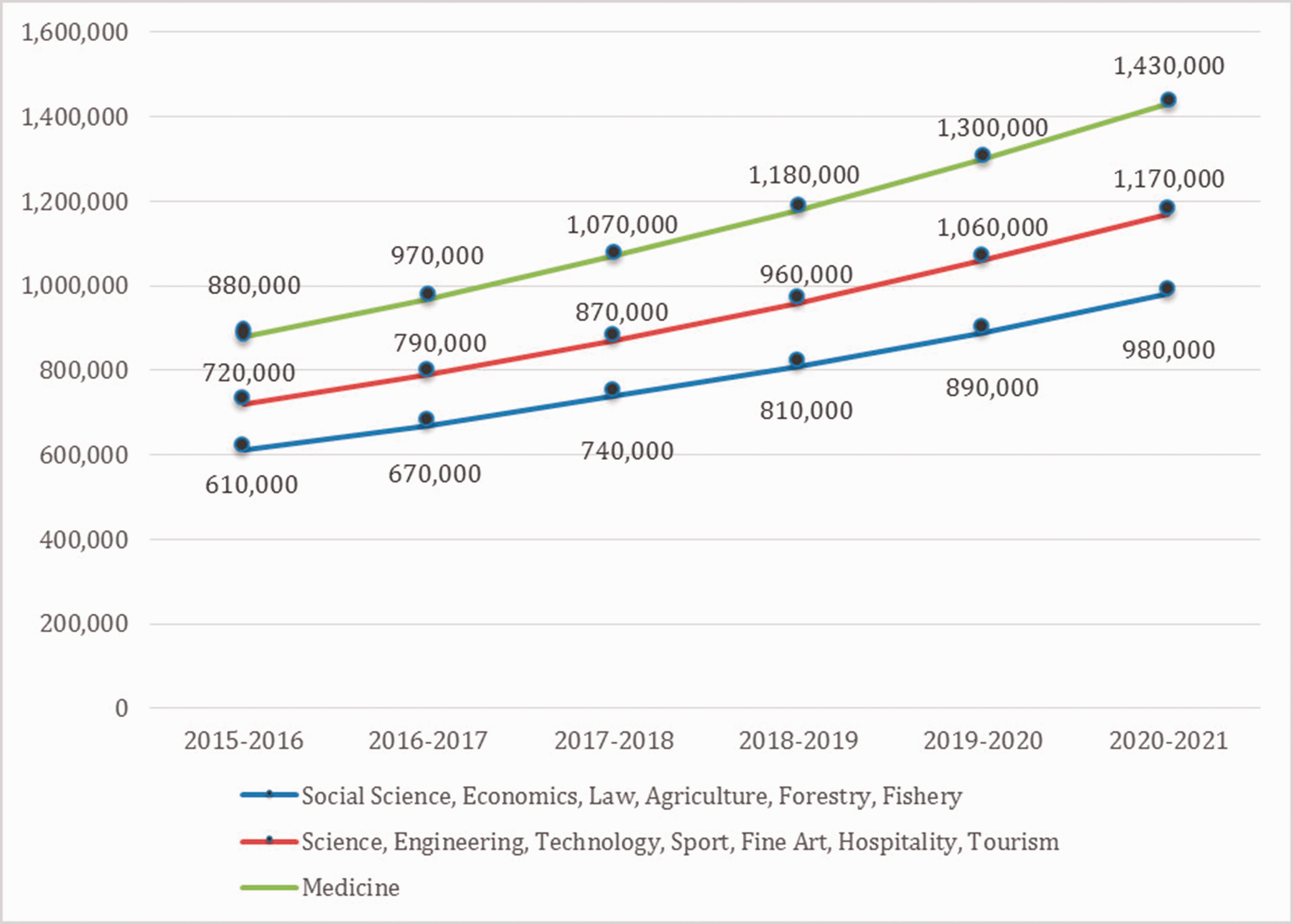
Monthly tuition fee scheme applying for ‘state-subsidized’ students in Vietnam between 2015 and 2016 and 2020 and 2021. Unit VND; $US 1 = VND 23,000 in 2019. Source: Prime Minister (2015).
Tuition fees for some selected ‘fully self-paid’ programmes/universities in Vietnam.
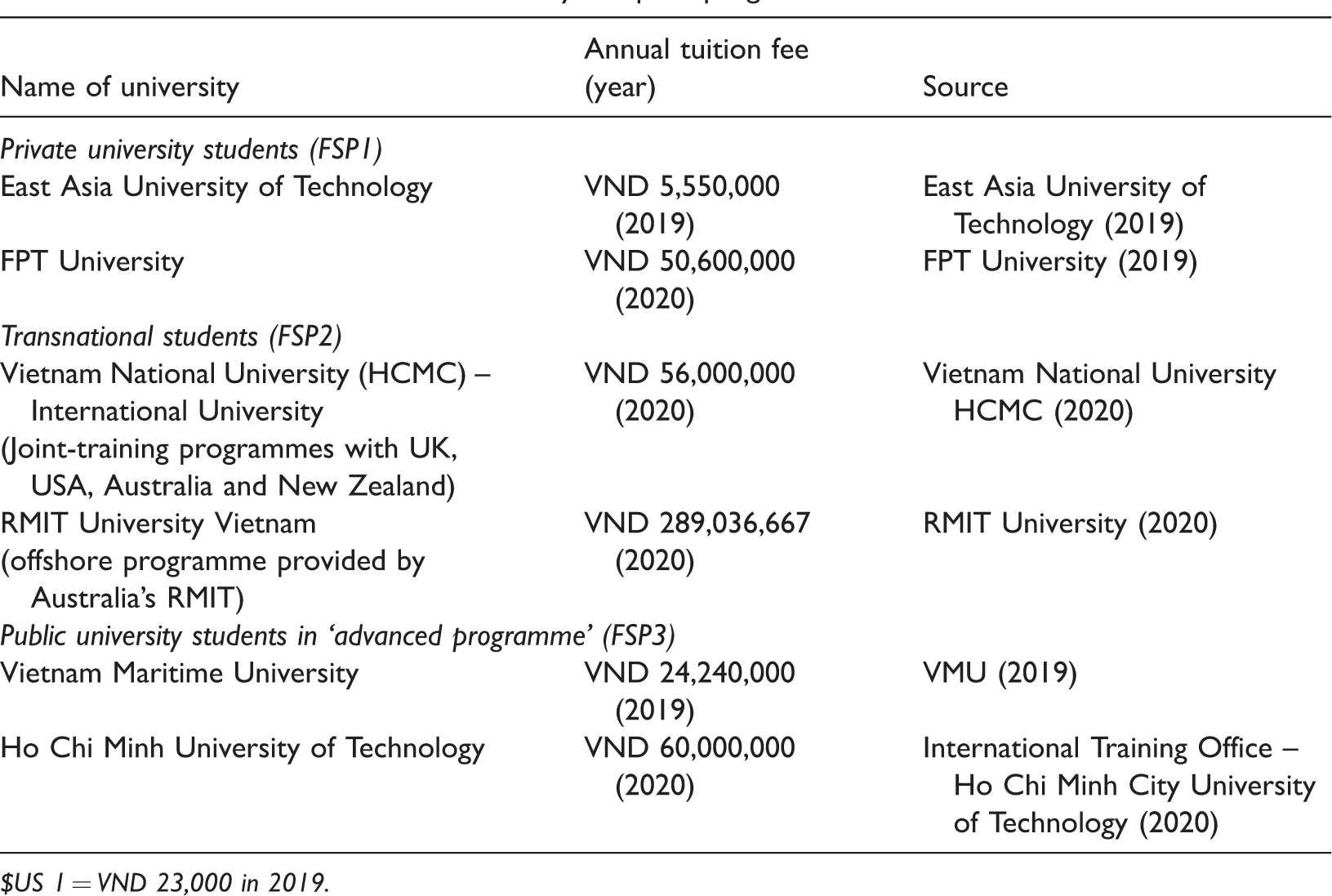
$US 1 = VND 23,000 in 2019.
Extra class payments by university students
Although extra classes among university students are less common than among students at primary and secondary levels (Dang, 2007; Tran and Harpham, 2005), this is an increasing phenomenon in Vietnam. Dissatisfied with the higher education provided by the universities and with the hope of enhancing their employability, many university students nowadays pay additional fees for extra classes such as English, soft skills or professional training (Ha, 2012). A recent survey conducted by the Institute for Economic and Development Information (2017) in three major universities in Vietnam revealed that among a survey sample of 600, 89% of the students took extra classes for English outside their university’s programmes. Of these, 42.4% had extra classes at English centres or extra classes organized by teachers, and 34.3% took classes via the Internet, television or radio. Anecdotal evidence collected from Vietnamese media and newspapers also supports this assertion. Students find it difficult when studying English at university, so they go to extra classes to improve their English skills (Duong and Tu, 2019). In brief, this phenomenon highlights the high level of willingness to pay among university students in Vietnam. Vietnamese students have extra demands in addition to higher education at their universities. Their willingness to pay for extra tuition is a market signal that universities may need to increase their current tuition fees.
Factors influencing student’s willingness to pay for higher education
Previous authors have investigated the topic of willingness to pay in various contexts such as health insurance (Asgary et al., 2004), renewable energy (Batley et al., 2000), public safety (Donahue and Miller, 2006), health services (Habbani et al., 2006) and retailing (Sanjuán et al., 2003). In particular, for the education sector, there are several ‘willingness-to-pay’ studies in the extant literature.
For instance, guided by ‘human capital theory’, Taubman and Behrman (1986) revealed that the effects of birth order and family size on parents’ willingness to pay for daughters are more significant than for sons. The factors affecting the willingness to pay for education can also be found by exploring the status-attainment model (Sewell and Hauser, 1972), and the resource-dilution hypothesis (Hogan and Blake, 1990). Steelman and Powell (1991) proposed a model with eight factors, including family income, parents’ level of education, parents’ marital status, sibship size and students' academic ability as predictive factors for parental willingness to pay for the higher education of their children. Steelman and Powell (1991) revealed that if the family's structure is conducive to helping children, the parents are willing to pay more for their children's education.
In the same vein with Steelman and Powell (1991), Hu and Hossler (2000) surveyed 482 students from 21 high schools in Indiana, USA, to examine their preferences for attending private universities rather than public institutions, and the associated factors, including gender, race/ethnicity, parent’s education, family income, GPA, student education expectations, subjective response to tuition costs and financial aid availability. The study found that students’ subjective responses to tuition costs and financial aid availability are key factors affecting the decisions about types of educational institutions. Despite the impact of the ability to pay, willingness to pay is linked with choice preferences in student college choices. As private universities in the USA have higher tuition fees than public institutions, Hu and Hossler (2000)’s findings provide implications regarding US high school students’ willingness to pay for their university selection. The study also suggested that a high-tuition aid policy may benefit private colleges but may result in problems for public ones.
Research method
Data collection
The data obtained in this study were collected through a survey conducted in November and December 2019. Before the official distribution, the survey was pre-tested with 20 pilot respondents. Based on the respondents' feedback, some adjustments in terms of terminology were undertaken to ensure the questionnaire's readability. An online survey was selected as the primary method to collect data. Thanks to the Internet's spread, researchers nowadays can use online surveys to replace traditional paper and pencil surveys (Bhattacherjee, 2001). We sent soliciting messages, with a URL directing respondents to the online survey, to three Facebook groups consisting of undergraduate students from a social sciences-based higher education institution located in Hanoi, Vietnam. Given the popularity of Facebook among Vietnamese students (McCauley et al., 2016), Facebook was an appropriate environment for an online survey.
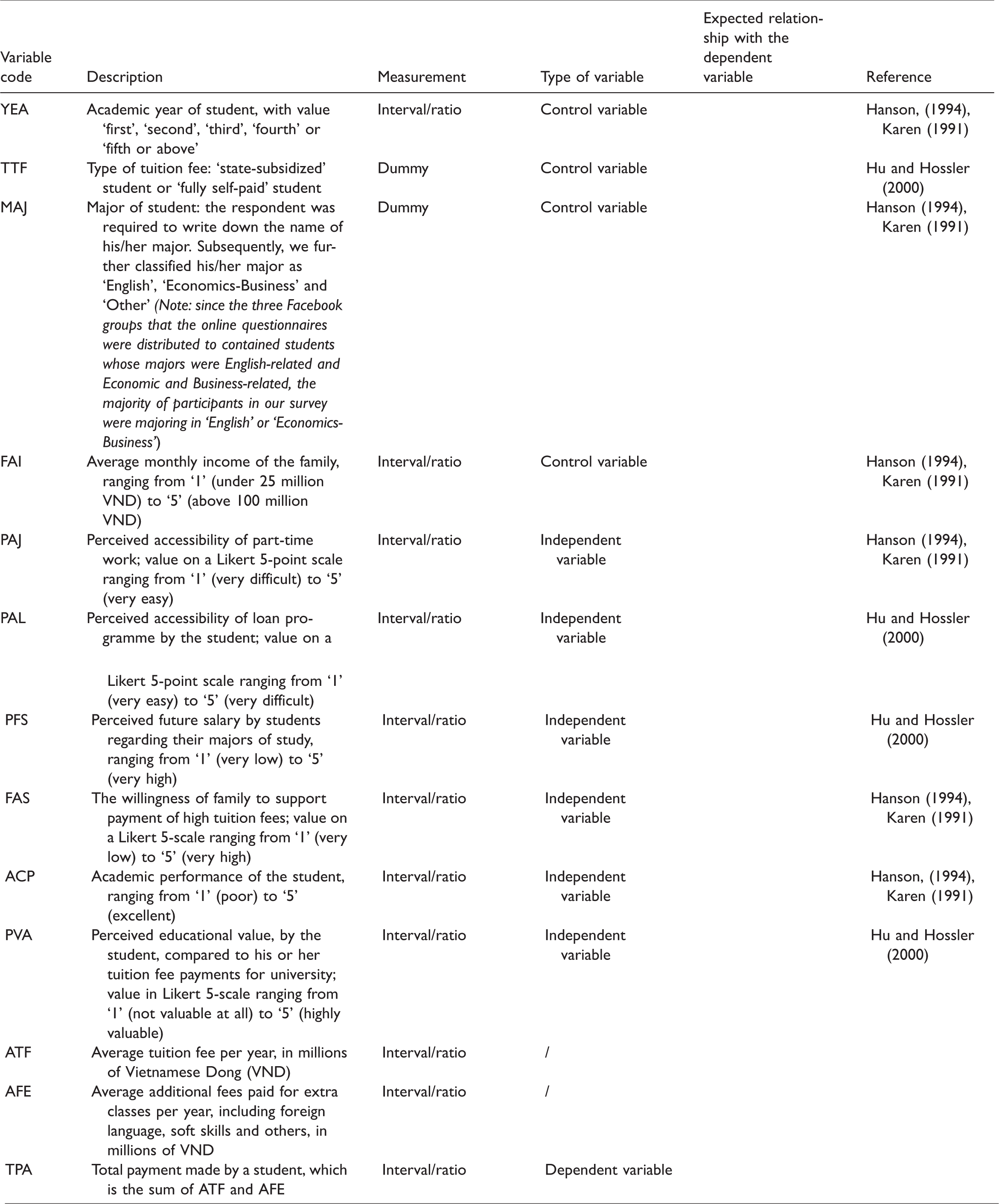
Our survey was composed of two groups of questions: demographic and socio-economic characteristics of the respondents; and information regarding the selection and perceptions of respondents concerning their higher education (see Table 2).
Description of independent and dependent variables.
The variables
As shown in Table 2, the dependent variable in this study was students' total payment for their higher education, which is composed of tuition fee payments for university courses and additional fees for extra classes, respectively. The purpose of paying extra fees for extra classes is to enhance employability after graduation (Ha, 2012) or to satisfy intrinsic motivations that are not accommodated by their formal higher education at universities. With this measurement of dependent variables, we assumed that students were, indeed, willing to pay higher than the tuition currently pays for formal tuition at universities. In other words, we assume that since the higher education provided by universities does not satisfy students’ demands, they are willing to pay extra fees for classes conducted outside of their university course.
Ten independent variables are selected from two perspectives, as found in the extant literature: educational-sociological and economical. From the sociological perspective, previous authors identified some background features, such as gender, age, family settings and race, which might influence student choices relating to educational issues (Hanson, 1994; Karen, 1991). Given this, in the present study, we selected YEA (academic year of the student), MAJ (major of the student), ACP (academic performance of student) FAI (average monthly income of family), FAS (the willingness of family to support) and PTJ (number of hours that students are spending in part-time jobs) as sociological independent variables. From an economic perspective, educational economists have analyzed student choice using the lens of human capital and economic demand theories (Hu and Hossler, 2000). Specifically, a student considers higher education as an investment, and thus, he or she is willing to pay for this according to the future expected benefits. Given this point of view, the following independent variables were selected: TTF (Type of tuition fee: ‘state-subsidized’ students or ‘fully self-paid’ students), PAL (Perceived accessibility of loan programmes by the student), PVA (Perceived educational value by students, compared to the tuition fees they pay for university) and PFS (Perceived future salary based on their degree major).
Procedures
Following Abdi and Williams (2010) and Hair et al. (2010), this study used exploratory factor analysis (EFA) to regroup the different possible items that may impact students’ total payments into latent variables. Next, multiple regression analysis was undertaken to estimate the effect of the latent variables explored in EFA on students’ total payments.
Results
Descriptive results
Survey questionnaires were delivered to 600 students. Eventually, 325 answered, indicating a response rate of 54.2%. However, following a closer look at the details of the participants’ answers, 40 were eliminated due to incomplete answers. Thus, there were 285 participants who completed all the questions.
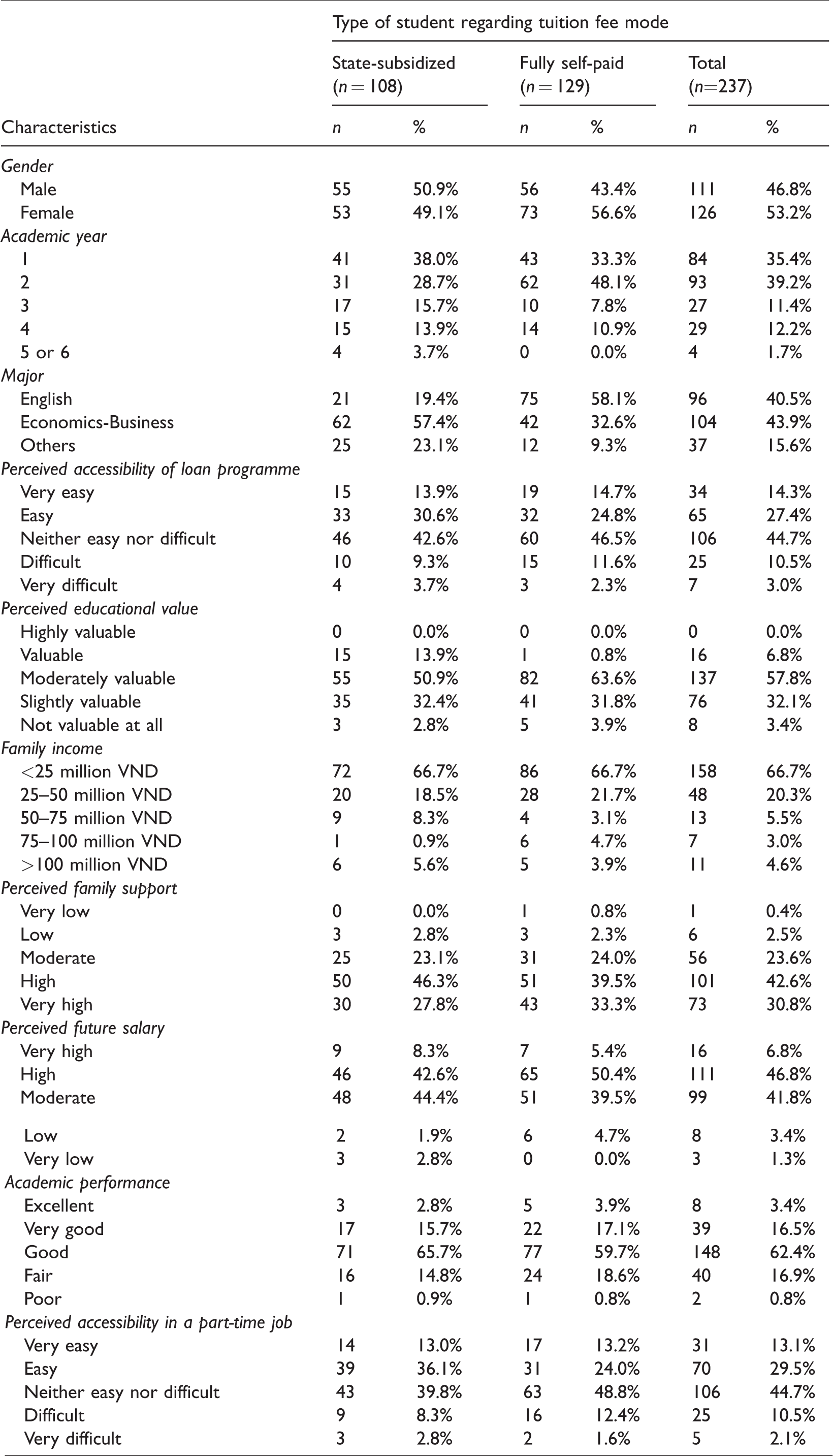
However, only 237 participants eventually remained for further analysis because these participants answered that they would agree to transfer their current additional fee payments for extra classes to pay more in university tuition fees with the condition that their universities would provide more classes similar to their current extra classes. The other 48 participants, who were not willing to do so (their answers are ‘No’ for question 8 in Appendix 1), were eliminated from our final analysis. This implies that these 48 participants might want to undertake extra classes to enrich their out-of-campus experiences, and they are not willing to pay more for their incumbent universities. Table 3 provides descriptive results of the independent variables of our 237 participants.
Some characteristics of survey participants.
Student’s actual payment on higher education
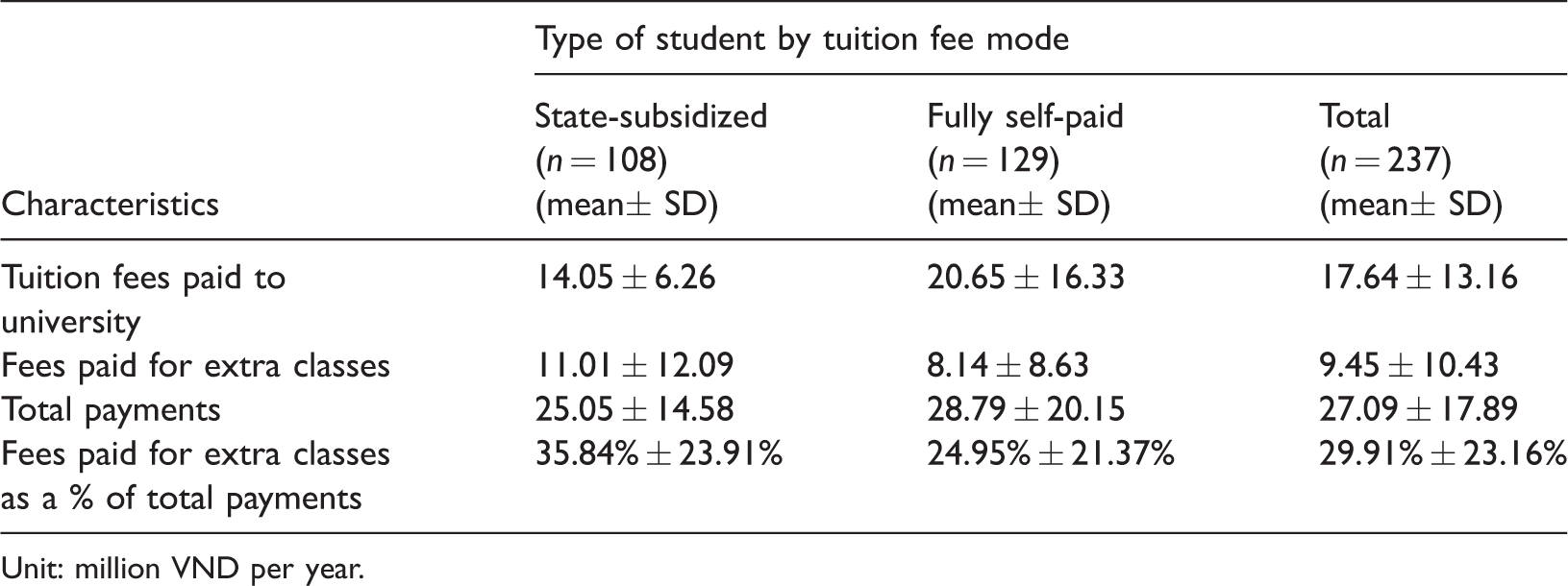
Table 4 shows the actual payments for the higher education of our participants. On average, a participant in this study paid 27.09 (±17.89) million VND per year, of which 17.64 (±13.16) was tuition fees paid to his/her university and 9.45 (±10.43) was fees for extra classes outside his/her university.
Students’ actual payments for higher education (237 students).
Unit: million VND per year.
Looking at different types of students, including ‘state-subsidized’ students and ‘fully self-paid’ ones, we observed a significant difference in payment patterns, both absolutely and relatively. Specifically, a ‘state-subsidized’ student paid 25.05 (±14.58) million VND per year overall for his/her higher education, of which 11.01 (±12.09) or 35.8% (±23.9%) was fees for extra classes. The respective figures for fully self-paid students were 28.79 (±20.15), 8.14 (±8.63) and 24.9% (±21.4%). These figures indicate that ‘state-subsidized’ students tend to pay less than ‘fully self-paid’ ones in university tuition fees (14.05 ± 6.26 vs 20.65 ± 16.33; p < 0.000). With regard to the total amount paid for higher education (p-value = 0.001), ‘state-subsidized’ students still paid less than ‘fully self-paid’ ones; however, the difference between the two types of students (25.05 ± 14.58 vs 28.79 ± 20.15; p < 0.023) was lessened, compared to the difference in fees paid directly for university tuition.
Exploratory factor analysis
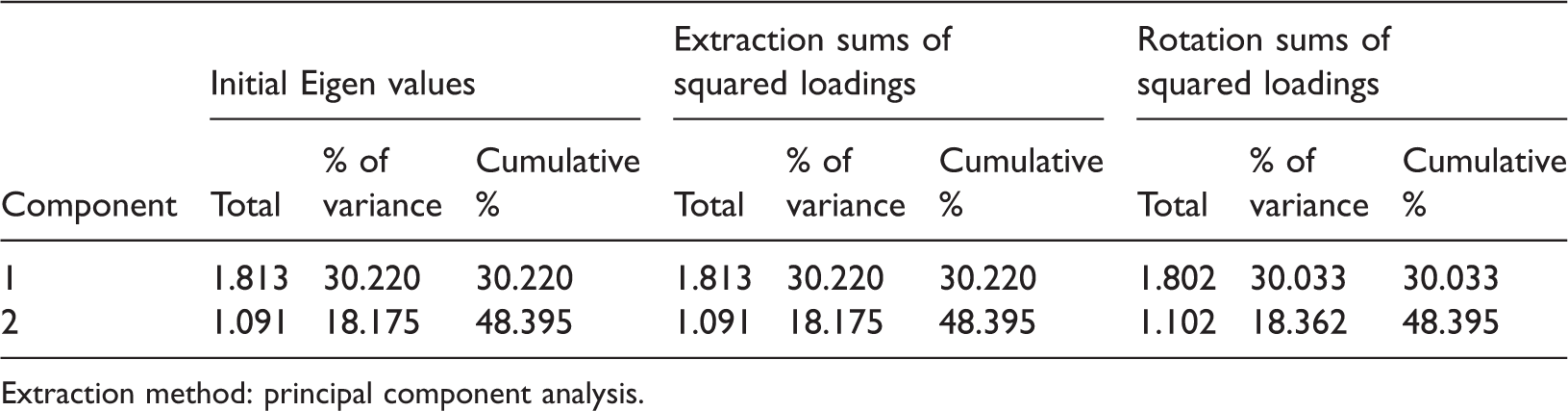
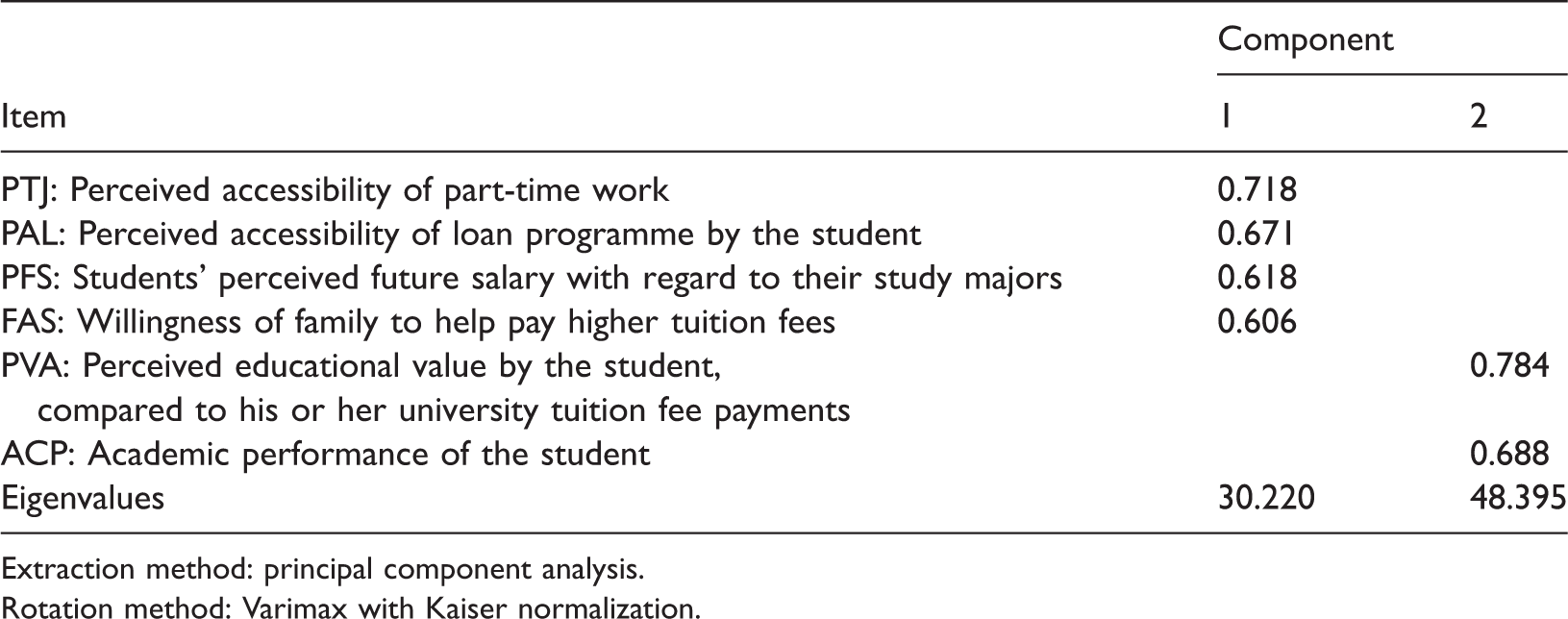
EFA was performed using SPSS 26.0. Precisely, we followed the extraction method introduced by Heeler et al. (1977) to examine the relationship between the latent variables. As shown in Table 5, two factors extracted from the EFA explained 48.4% of the variance. As shown in Table 6, six items were divided into two constructs: one with four items and the other with two items. The former was termed ‘economic-related factors’ (ERF) and the latter ‘academic-related factors’ (ARF).
Results of total variance explained.
Extraction method: principal component analysis.
Results of rotated component matrix.
Extraction method: principal component analysis.Rotation method: Varimax with Kaiser normalization.
Results of regression analysis
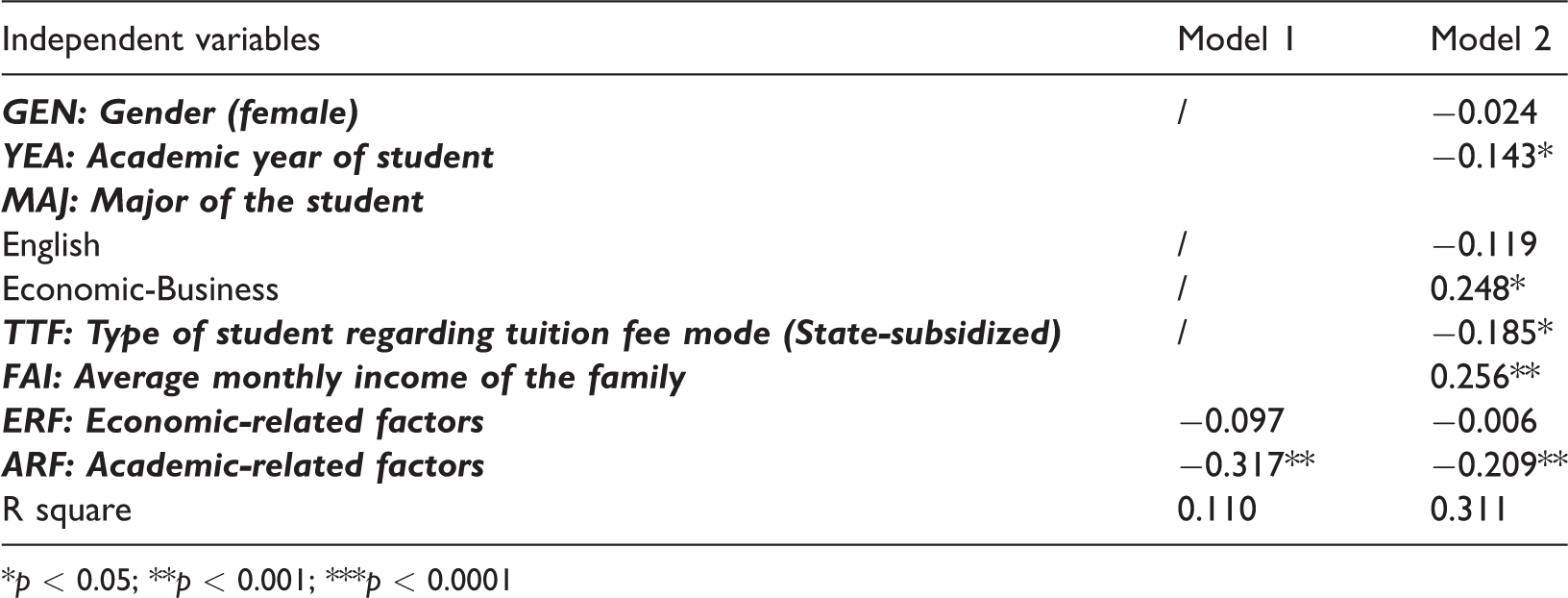
The results of the multiple regression analysis are provided in Table 7. Overall, Model 1, involving 237 participants and including two independent factors extracted from EFA (ERF: Economic-related factors and ARF: academic-related factors), may explain 11.0% of the variation in the dependent variable (i.e., total payments by students for their higher education, which is the sum of university tuition fees and extra fees for taking extra classes).
Results of multiple regression analysis of 237 survey participants.
*p < 0.05; **p < 0.001; ***p < 0.0001
The results show that the higher the level of ARF (including perceived educational value by the student, compared to his or her university tuition fees, and the academic performance of the student), the less money a student was willing to pay for his/her higher education (β = −0.317, p <0.001). Our results also indicate that the ERF (including perceived accessibility of part-time work; perceived accessibility of loan programmes; students’ perceived future salary in terms of their majors of the student; and willingness of family to help pay higher tuition fees) did not have an impact on the students’ payments for higher education (β= −0.097, p = 0.117).
In Model 2, in addition to the two factors ARF and ERF, we included five control variables: GEN (gender), YEA (academic year of the student), MAJ (major of the student), TTF (the type of student with regard to tuition fee model) and FAI (average monthly income of family) as independent variables. Overall, the model explained 31.1% of the variation in payments for higher education.
With regard to ARF and ERF, the results of Model 2 remained similar to these of Model 1. Specifically, ARF was found to have a significant impact on payments for higher education purpose (β = −0.209, p < 0.001), whereas ERF was found not to have a significant impact on payments for higher education (β= −0.006, p = 0.919) ,
Looking at the roles of the five control variables, we obtained mixed findings. Specifically, YEA (academic year of the student), MAJ (major of the student), TTF (the type of student regarding tuition fee mode) and FAI (average monthly income of family) had significant impacts on payments for higher education, but GEN (gender) did not. As shown in Table 5, our results showed that the more senior a student is, the less likely he or she is to pay for higher education (β = −0.143, p < 0.01). A possible way to interpret this phenomenon is that when students become more senior, they have higher self-learning skills or become busier with projects and internships; thus, they would pay less for their higher education. With regard to the type of tuition fee paid by students, according to our classifications in Figure 1 and Table 1, there are two types of students: (i) state-subsidized students whose instruction costs are partly paid by state allocation and partly paid by themselves; and (ii) fully self-paid students whose instruction cost are fully paid by themselves. Our empirical findings show that the ‘state-subsidized’ students tend to pay less than ‘fully self-paid’ students (β = −0.43, p < 0.01). This result is not unexpected since, by definition, ‘fully self-paid’ students are supposed to pay more for their university studies than ‘state-subsidized’ students.
The results pertaining to students' majors were diverse, according to our analysis. Thus, there were significant differences between English and Economics-Business students in terms of total payments (β = 0.248, p < 0.01); this difference was not observed between English and other majors (β = −0.119; p = 0.186). Economics-Business students may pay more than English and other majors because the labour market that recruits economics-business graduates in Vietnam are highly demanding in terms of English and technical skills (e.g., see Minh, 2017), while the economics-business-related curricula provided by Vietnamese universities are out of date (World Bank, 2006). Thus, students in economics-business, who are supposed to be better at evaluating the costs and benefits of their higher education than students in other disciplines, may be more willing to pay for extra classes in order to enhance their employability.
Family-related factors may also influence the payment behaviours of university students (Hossler and Stage, 1992; Hu and Hossler, 2000). Our results revealed that having a higher income family (FAI) resulted in more significant expenditure for higher education for their child (β = 0.256, p < 0.001). This finding is reasonable as richer families are likely to be more willing to invest more heavily in their children (Steelman and Powell, 1991; Taubman and Behrman 1986).
Robustness check
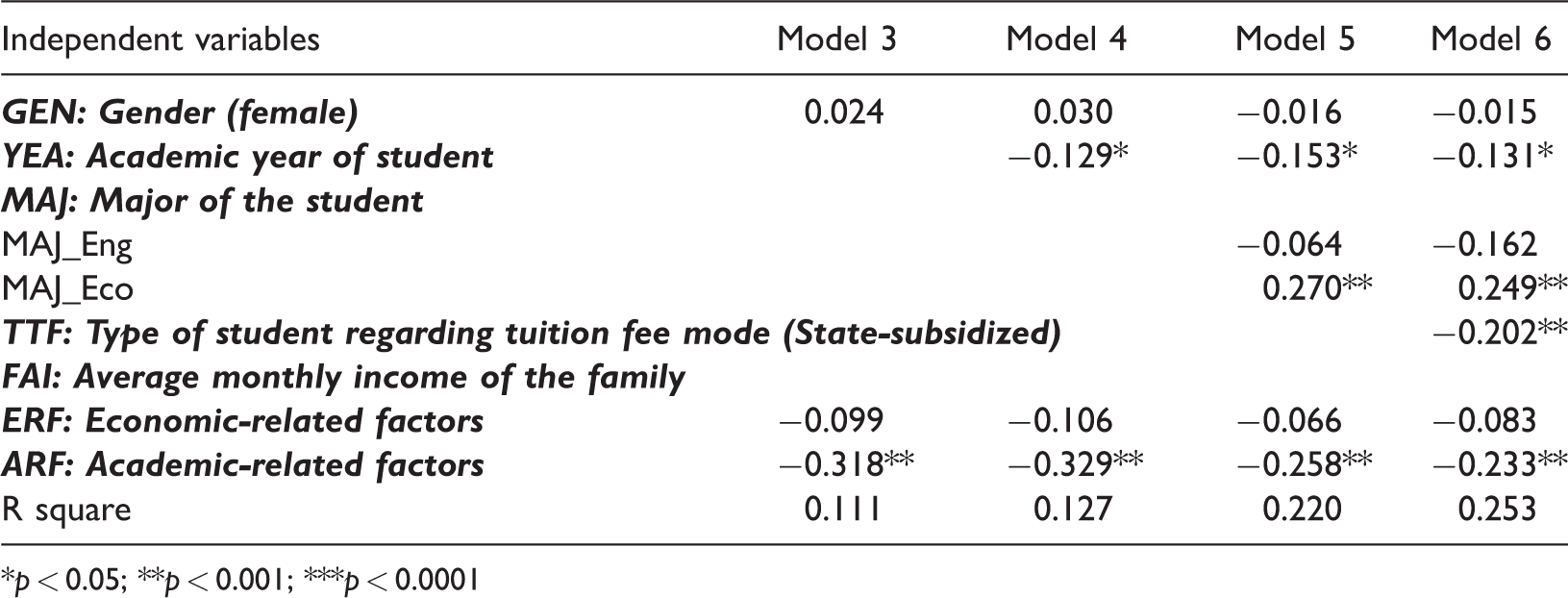
To verify the robustness of the results, we employed stepwise regression technique. Table 8 presents four models (from 3 to 6) in which control variables were added step-by-step, along with two independent variables (i.e., FAI and ERF). As shown in Table 8, the coefficient β of the control variables varied slightly among different models, while their levels of significance were unchanged. This confirms the robustness of our empirical results.
Results of stepwise regression.
*p < 0.05; **p < 0.001; ***p < 0.0001
Discussion
The financial shortage has been an unresolved problem for higher education institutions in Vietnam in recent years. Owing to budget deficits, the government has gradually reduced its allocation, both recurrent and non-recurrent. Over the past decade, several authors suggested that Vietnam should adopt a ‘high tuition – high aid’ policy to address this problem (Pham P, 2016). However, whether the ‘high tuition – high aid’ policy (or in the opposite direction, the ‘free’ higher education policy) is workable in Vietnamese higher education has been a controversial topic (Pham and Vu, 2019). While consensus has not been reached, the Vietnamese Government has seemed to select an ‘in-between’ option. Specifically, on the one hand, the Vietnamese Government allows its public universities to charge tuition fees for ‘state-subsidized’ students but with a cap predetermined by the government (Figure 1). On the other hand, the government allows its public universities to enrol a limited proportion of ‘fully self-paid’ students.
Pham and Vu (2019) noted that since the Vietnamese Government's current policy choice is a passive adoption of cost-sharing, it still has flaws. It does not result in adequately enhancing income for Vietnamese universities in order to maintain high-quality higher education (Postiglione, 2011), but it also fails to stop the current tendency towards widening inequality of access to higher education in Vietnam (see Vu Hoang and Nguyen, 2018).
In the context of massification of higher education, adopting cost-sharing in Vietnamese higher education is inevitable. However, Vietnam needs a more active cost-sharing mechanism, which can simultaneously address the two objectives of higher education: quality and equality of access. Over the past decade, several scholars have tried to resolve the problem (Hayden and Pham, 2015; Oliver, 2004; Pham and Tran, 2014). However, there has been a lack of supporting evidence from the student perspective. Thus, in this paper, we provide a preliminary empirical investigation of the actual payments for the higher education of 237 undergraduate students at a public, social science-oriented university in Vietnam and related factors.
The study indicates that all students, both ‘state-subsidized’ and ‘fully self-paid’ pay for extra classes, including English, soft skills and other skills. The payment for extra classes for both these student groups contributes to a considerable proportion of their total payments for higher education. These results imply that despite the current cap set by the government for ‘state-subsidized’ students, they still pay more for their higher education through another track: extra classes. ‘Fully self-paid’ students also pay for extra classes but with a lower proportion of the total payment compared to ‘state-subsidized’ students.
The study also shows that students with different characteristics have different willingness-to-pay behaviours. Specifically, the more senior the student, the less likely he or she is to pay for his/her higher education; a student majoring in economics-business will pay more than students with other majors; fully self-paid students have a tendency to pay more than state-subsidized students; a student who comes from a wealthier family is more likely to pay than a peer who comes from a poorer family; a student with a higher degree of academic-related factors (i.e., perceiving higher value from his/her current university and having higher academic performance) will pay less than another with a lower degree of such factors. However, our empirical findings do not reveal any association between a student’s total payment for higher education and gender, English major or economic-related factors.
Implications
Our empirical findings provide some implications. First, since all students, regardless of their type (‘state-subsidized’ or ‘fully self-paid’), tend to pay for extra classes, there is room for the surveyed university and other institutions with similar conditions to adjust the tuition fee policies for ‘state-subsidized’ students. In other words, our study provided preliminary evidence to support the idea of diversification of tuition fees in higher education in Vietnam. For instance, students in Business-Economics majors in the surveyed university seem to be willing to pay more than other students. This implication is, indeed, in contrast to what is regulated in the current legislation: as shown in Figure 1, tuition fees applying to this cluster of students are the lowest in Vietnam. However, since higher tuition fees may worsen equitable access to higher education, such adjustment should be designed very carefully.
Second, since different students in the surveyed university have a different degree of willingness to pay, it is suggested that for the surveyed university and other institutions with similar conditions design a more flexible tuition fee-setting policy than the current uniform one. Specifically, the surveyed university and other institutions with similar conditions might consider the idea of ‘pay-what-you-can-afford’ tuition policies from the USA (Fethke, 2018). Thus, the tuition fee for ‘state-subsidized’ students would be computed as the difference between tuition fees for ‘fully self-paid’ students and the government allocation per student. Meanwhile, low-income students would be supported by a variety of financial aids, such as need-based scholarships (Castleman and Long, 2016) and/or student loans (Armbruster, 2008; Chapman, 2006).
Limitations and suggestions for further studies
There are no studies without drawbacks, and this one is not immune. Below, we identify some notable limitations of this study and suggest directions for further studies.
First, the sample in this study was convenient, and it covered mostly students in English and Economics-Business-related majors from a single social sciences-based university in Hanoi. Obviously, it does not represent the whole student population in Vietnam. Further studies (in both Vietnam and other countries’ contexts) would overcome this limitation by addressing a more inclusive sample, especially those who are not included in this study, such as those whose subjects are pure sciences.
Second, although ten independent variables were included in this study, some essential factors were still missing, which may influence the paying behaviour of students as identified by previous studies, such as parents' background (Hu and Hossler, 2000), the number of siblings (Steelman and Powell, 1991) or students’ academic performance in a certain subject such as mathematics (Huynh, 2020) rather than overall academic performance. Further studies (in both Vietnam and other countries’ contexts) may avoid this limitation by including such variables in their empirical analyses.
Third, the issue of tuition fee policy in higher education is complicated. It is impossible to use only students’ willingness to determine tuition fees, as could be done for prices of other regular goods. Another approach that policymakers and university leaders should consider is the estimation of the personal rate of return versus the social rate of return of higher education in different fields of study (e.g., see Bourne and Dass, 2003; Tran et al., 2019). Furthermore, as indicated by Breidert et al. (2006), students’ willingness to pay may not always translate to actual payment. Further studies (in both Vietnam and other countries’ contexts), without a doubt, would reconsider this issue seriously.
Fourth, not all variables included in this study are normally distributed. Although some previous authors suggested that normality, in certain circumstances, is not always necessary (Kim, 2015; Li et al., 2012), we still suggest further studies (in both Vietnam and other countries’ contexts) to avoid repeating this limitation.
Footnotes
Acknowledgement
This work is output of project no ĐTĐL.XH-07/19, funded by Ministry of Science and Technology of Vietnam. The authors sincerely thank Ministry of Science and Technology of Vietnam for this support.
Declaration of conflicting interests
The author(s) declared no potential conflicts of interest with respect to the research, authorship, and/or publication of this article.
Funding
The author(s) disclosed receipt of the following financial support for the research, authorship, and/or publication of this article: This work is funded by project no ĐTĐL.XH-07/19, Ministry of Science and Technology of Vietnam.
