




Abstract
Responding to the special issue call Capital and Capability, this paper undertakes a critical policy analysis of a recently published Irish labour market activation strategy for people with disabilities through a discourse analytical framework. Drawing on a disability studies lens informed by Foucault’s theory of discourse, the study reveals a hegemonic policy rhetoric within the pages of this policy document that is deeply embedded in neoliberal assumptions about the role and value of education. Through a critical disability studies lens, this study draws attention to the concepts of disablism and neoliberal ableism, whilst highlighting in particular how rhetoric is a means by which ableist culture perpetuates itself. In response to the disparities surrounding the employment of disabled people, the Comprehensive Employment Strategy for People with Disabilities 2015–2024was launched into policy in October 2015. This strategy represents a significant policy event in the Irish disability policy landscape, warranting further questioning, interrogation and analysis. This paper aims to reveal the framework of thinking that lies within the discursive contours of this strategy and to assess the implications therein for inclusive education policy and practice. In keeping with the aim of the special issue, the study explores the potential of a capabilities approach in creating a discursive policy space where social justice througheducation for disabled people can be imagined.
Introduction
Despite advancements and progress in providing for diversity and disadvantage within the Irish education system, students with disabilities continue to experience compounded and overlapping forms of oppression and exclusion. Recent calls from eminent Irish and international scholars have espoused an engagement with the politics of critical disability studies and Amartya Sen’s Capability Approach (President of Ireland, 2015; Scanlon et al., 2014) in an attempt to halt what has become know as a distinctly Irish neoliberal tune in education and wider social policy development (Mooney Simmie, 2012; Phelan, 2007). Critical policy analysis recognises the value-laden nature of policy and seeks to illuminate hidden structures of power by examining who is privileged or excluded systematically (Molla, 2014).
Given the gradual shift towards neoliberalism that has ‘inconspicuously but harmfully changed the subjective experience of education at all levels’ in Ireland (Ball, 2016: 1046), the effects of austerity enforced on disabled people’s services and supports are deeply troubling warranting critical analysis. The field of critical disability studies offers a lens with which to undertake a critique of neoliberal ableist regimes and the effects of neoliberal governmental practices on the individual and society. Drawing on a critical disability studies lens informed by Foucault’s theory of discourse, this study aims to examine issues of social justice througheducation by means of a critical policy analysis the Comprehensive Employment Strategy for People with Disabilities(Government of Ireland, 2015; hereinafter referred to as CES). From this analysis the study explores what a capabilities approach has to offer in terms of the construction of ‘a just and morally decent world’ (Nussbaum, 2006: 324) for disabled people.
The paper is divided into two parts. Part one introduces the theoretical and methodological frameworks and concepts employed in undertaking this study. Part two, introduces the data and presents the findings and implications from the analysis. Because the study draws on many strands of literature from across critical policy studies, most notably education, employment, welfare and disability inclusion, it is useful to briefly explain some of the key theoretical concepts drawn on in this paper, starting with critical disability studies employed as a theoretical lens throughout this study.
Discourse through a critical disability studies lens
The discourse of disability has come under the spotlight increasingly as disability studies scholars continue to expand their exploration of disability in society. Although there are many angles taken in this scholarship, studies work generally on the Foucaultian premise that discourse shapes the way disability is understood and in turn informs its political implications (Cherney, 2011; Liasidou, 2008; Liasidou and Symeou, 2016).
Discourse from a Foucaultian perspective involves ‘starting from the assumption that all actions, objects and practices are socially meaningful, whose meanings are shaped by the social and political struggles of specific socio-historical contexts’ (Goodwin, 2012: 29). Extending this frame to include Ball’s (2015)conceptualisation of policy as a form of discourse, discourses are understood here as ‘ways of thinking and talking about our institutional ourselves, to ourselves and to others; in other words, they form a regime of truth that offers the terms that make self-recognition possible’ (307).
Critical disability studies and social justice
Critical disability studies is concerned with achieving social justice for disabled people. Broadly speaking, social justice concerns itself with ‘the alleviation of poverty and the reduction of inequality (or at least some dimensions of it) and the redress of this through society and institutions as a matter of justice rather than charity’ (Vaughan, 2016: 210). Critical disability studies offers a lens to challenge entrenched views of what is ‘normal’ about disability – views that originate from deeply rooted beliefs about productivity and the value of human life that devalues and marginalises some cohorts of society. Through this lens, Campbell (2008), Goodley (2014)and other critical disability scholars invite us to explore the limits of tolerance of disability, as a means of challenging ableist assumptions in neoliberal times.
Within the literature, there are ample studies exemplifying the role that discourse plays in forwarding a change agenda (Bacchi, 2000; Grue, 2011; Liasidou and Symeou, 2016; Pinto, 2011). Drawing on discourse theory, critical disability scholars such as Liasidou (2008; Liasidou and Symeou, 2016) have employed discourse theory in their studies of disability policy, the broad aim being to reveal the normative frameworks embedded within the assumptions therein. Following these lines of inquiry, this study aims to reveal the framework of thinking that lies behind the hegemonic discourse of CES. First through, it is necessary to locate CES within the broader socio, economic and political issues surrounding the publication of this policy (Hyatt, 2013).
Austerity, neoliberalism and education
The implementation of austerity measures in Ireland during the economic recession has had and continues to have a significant effect on the ability of young people with disabilities to reach their full potential through education. From late 2010, the fiscal consolidation programme under the terms of the Troika brought structural reforms in the public sector – education being particularly targeted by the Irish Government ‘to drive through, in the uncertainties of recession, the consolidation of neoliberal policies’ (Holborrow, 2012: 94). Although Ireland has now exited the bailout programme, it is still subject to supervision from European authorities and austerity is still being implemented. Although there have been steady increases over the last number of years in the number of new entrants to higher and further education reporting a disability (Association for Higher Education Access & Disability [AHEAD], 2016), it is widely acknowledged that young people with disability are under-represented in Irish further and higher education (Scanlon et al., 2014), the effects of which have a profound impact on people with disabilities' ability to participate in the labour market.
Therefore, the inextricable links between education policy and its wider social context require critical attention, particularly as the neoliberal drive for personal independence, choice, and freedom has come to dominate this policy discourse ‘in subtle but alarming ways’ (Burch, 2018: 96–97). New managerialism has come to take hold in Ireland over the past 20 years, premised on a neoliberal understanding of governance, in which the market is regarded as the ideal mechanism for the allocation and delivery of public services.
Although the term ‘neoliberalism’ is contentious across the literaure, Springer provides a useful understanding as ‘the new political, economic and social arrangements within society that emphasise market relations, re-tasking the role of the state, and individualised responsibility’ (Springer et al., 2016: 31). Described by some as ‘the spider at the center of the hegemonic web that is worldwide market rule’ (Peck, 2013: 133), belief in the market overrides all else from this perspective. Hallmarks of neoliberalism include individual responsibility and competitiveness, letting the markets rule unregulated, and reducing state support and investment in public services.
Neoliberalism as discourse
Within the literature, there are many exponents of viewing neoliberalism in its discursive form. Springer in particular argues that: ‘neoliberalism is an idea that is made flesh through the very power that we assign it through our discursive participation in its routines and rituals, and importantly, through the performances we enact’ (2016: 1). While not denying its material corporeality, he is confident that ‘societal change is within our grasp, should we find the courage to change the discourse’ (2016: 2). Central to the discourse of neoliberalism is the term ‘human capital’.
Human capital and education
Human capital, a key term in neoliberal ideology, represents the commodification of human abilities and an alienating notion of human potential (Holborrow, 2012). Human capital in the educational policy arena gives voice to two specific interests: the provision of a workforce tailored to the needs of employers and the intensification of competition between individuals in the labour market. The production of human capital is seen as a principal function of higher education within this perspective. Underpinning this ideology is the notion that the role of higher education is to produce human capital to meet the needs of the economy.
Within this framework, education mutates from its original focus on human development in a holistic sense to being a producer of human capital for the market economy. Education is viewed as a commodity that individuals purchase for their own benefit, bringing with it a cultural shift embodied in the use of market language, where students are viewed as discerning ‘customers’ or ‘clients’.
Higher education is reconstituted through this ideology as an adjunct of the economy resulting in a ‘downgrading of services, attacks on the idea of public education as a right, and the pushing of the neoliberal model in its stead, all of which serve to legitimise and promote a rigid instrumental understanding of what education is for’ (Power et al., 2013: np). Neoliberalism is underpinned by a market view of citizenship ‘that is generally antithetical to rights, especially to state guaranteed rights in education, welfare, health and other public goods’ (Lynch, 2006: 4). Education was reformed principally by new managerialism’s central tenets – the educational marketplace and consumer choice. Indeed, O’Sullivan (2005: 112) highlights a mercantile paradigm within the Irish education system, noting that ‘what education is for is a matter for consumers of the system, such as pupils, parents, civic leaders and business interests, to decide’. Although the transformation of higher education along neoliberal lines only started in the 1990s, this process has intensified since the onset of the financial and economic crisis in 2008 (Mercille and Murphy, 2017).
Disability, ableism and disablism
There has been an increase in the number of disability studies highlighting the ways in which contemporary developments within disability policy have been influenced and impregnated by the doctrine and discourse of neoliberalism (Grover and Piggott, 2005; Grover and Soldatic, 2013; Mladenov, 2015, 2017; Piggott and Grover, 2009; Scanlon et al., 2014). The link between neoliberalism and ableism has become a strong theme across this literature concerned with suppression of equality to the market rules principle. For Goodley et al. (2014), the sway towards neoliberalism means educational institutions are driven by the desire to create a normative ‘ideal’ neoliberal citizen who is responsive, active, work-ready and productive in economic terms. It is necessary therefore to unpack what is understood by the term ‘ableism’ and its antithesis ‘disablism’.
Ableism
The work of Campbell (2009, 2008, 2015) and Wolbring (2012) are critical in informing this study from the perspective of ableism. Ableism can be understood as a preference for certain abilities and an often-negative sentiment towards the lack thereof (Wolbring, 2012). Such abilities might include cognition, performativity and consumerism. From a critical disability studies perspective, ableism represents an ideological phenomenon, steeped in the over-valuation of ability or ableness and the ways in which the norms of abled bodies are afforded legitimacy in social policy, laws and cultural values (Campbell, 2009). Drawing on this work, Goodley (2014)coins the term ‘neoliberal-ableism’ referring to the logic that values the (hyper) normal, positing that ableism’s character privileges, promotes and provides for the ideal able-bodied citizen that is economically active but dependent on neoliberal forms of capital production. Ableism is visible in the ideals of the normal mind, appropriate behaviours, and by extension, an ableist discourse that suggests an ideal to be constantly striven for, but impossible to attain.
Two elements are key to sustaining a system of ableism: the concept of normativity – the idea of a normal individual; and the construction of a binary encapsulating a perfectly developed human being and ‘the aberrant, the unthinkable, underdeveloped and therefore not really human’ (Campbell, 2015: 50). The role of discourse is critical in this process of construction.
Ableism, it is argued has come to dominate the framework of thinking of society as a whole, operating as a discourse of power and authority. From this perspective, ableism can be understood as a ‘“mental framework” transmitted through rhetorical devices including language, imagery, and systems of representation’ (Cherney, 2011: np). Recognising ableism, Cherney argues ‘requires a shift in orientation … framed by the filter of the term “ableism” itself to expose the social systems that keep it alive’.
Disablism and social exclusion
Antithetically, the concept of disablism relates to the construction of disability, whereby everyday practices of society are seen to perpetuate oppressive structures upon those who identify with or are categorised as being disabled. Following Campbell (2009: 4), disablism is understood as ‘a set of assumptions (conscious or unconscious) that promote the differential or unequal treatment of people because of actual or presumed disabilities’. Meanwhile, social exclusion, in its various forms, is conceptualised within this perspective as a ‘condition’ deriving from ‘unsuccessful participation in education and training’, thus transferring responsibility for exclusion onto the individual, who is considered to have ‘a moral duty to take the opportunities offered by the state, the school or the labour market’ (Grimaldi, 2012: 1133–1134). Brodie (2007: 103) notes that the concept of individualisation has increasingly been embedded within social policy reform strategies, ‘which both promote the illusion of choice and are designed to shape citizens into self-sufficient market actors who provide for their needs and those of their families’.
Because of the growing interest in the capability approach from critical disability studies, it is explored here as an alternative discourse to prevailing neoliberal and economic imperatives – the intention being twofold: to encourage a deepening of the discourse between human capital and human rights; and to reimagine what alternative possibilities exist to pursue social justice for disabled people througheducation.
Capabilities approach
As a social justice evaluative framework, a capabilities approach gives centre stage to individual values, focusing on the freedom to be and do what is valuable to that person. Human dignity lies at the core of a capabilities approach, within which people are seen as ends not means, to be enabled to achieve the life plans and goals they have reason to value (Hedge and MacKenzie, 2012). A capabilities approach proposes a shift from wealth and income emphasis as indices of well-being to a focus on the quality of life that individuals are actually able to achieve. By posing the question ‘what are people actually able to do and to be?’ (Nussbaum, 2011: x), it takes into consideration disadvantage experienced by individuals in society, due to social, economic and environmental barriers to equality.
Key to this approach are the two core concepts of ‘capability’ and ‘functionings’. Sen (2003)conceptualises human life as a set of ‘doings and beings’, which he terms ‘functionings’. Capability is understood as the real opportunity (freedom) that a person has to accomplish what it is they value in life (functionings of their choosing). A capabilities approach therefore is based on the ‘opportunities’ or ‘freedoms’ to choose from possible functionings, in order to lead one type of life or another. Thus, a person’s capability represents their effective freedom to choose between different functionings or combinations of functionings; in other words, the freedom to choose between the different kinds of life that she has reason to value.
The approach posits that a person’s capability depends on a variety of factors, including personal characteristics and social arrangements (Sen, 1993). This points to an interesting juncture between capabilities’ version of individual choice (freedom) and neoliberalism’s reliance on individualised choice (market). The concept of the individual, and in particular, the related term of choice, has been recast in the neoliberal period, bringing a new discourse of consumerism and choice that emphasises individualised responsibility underpinned by the logic of self-governance and self-care in a market society. Sen (1999)and followers on the other hand, recognise the importance of individual identity grounded in beliefs, values and preferences; and individual choice as ‘a product of their personal tastes or preferences under conditions of resource scarcity, such as with respect to income or time’ (Eagleton-Pierce, 2016: 5). Thus, from a capabilities perspective the agency of the individual is defined by values, beliefs and preferences within a given social environment that are consubstantial to the individual and not contextual factors.
Capabilities therefore, represent the pivotal intersection between primary resources and human achievements, or, as Dean et al. (2005)explain, between welfare inputs and welfare outputs. From Sen’s perspective however, equal inputs do not necessarily realise equal outputs, because human capabilities – the real freedoms that people have to shape their own way of being and living, may be objectively constrained. For example, a wheelchair user living in the same environment as an able-bodied person may be constrained in terms of employment opportunities because of socially constructed barriers, such as lack of accessible transport, streets or buildings and/or employer attitudes. Public policies from a capabilities perspective are therefore designed to provide the social and cultural basis for capabilities (Nussbaum, 2000: 81). Although Sen’s capabilities approach has begun to gain traction in Disability Studies (Mitra, 2006; Nussbaum, 2006; Terzi, 2005a, 2005b), there is little research into how a capabilities approach applies to disability and the implications therein for public policy (Trani et al., 2011).
Capability and disability
The capability approach has been adopted as an established social justice model focused on improving the lived freedom and well-being of disabled people. The approach has been described as ‘one of the few philosophical theories that engages with the issue of disability in a manner that is not only theoretically illuminating but also politically practical’ (Vehmas and Watson, 2014: 644). It is employed as a vehicle for challenging disablism and progressing a socially oriented conceptualisation of disability (Burchardt, 2004; Hedge and Mackenzie, 2012; Mitra, 2006; Terzi, 2005a, 2005b, 2007). Trani et al. (2011)posit a useful capabilities framework within which the possibilities of public policies can be envisioned. This framework aims to inform welfare policy through an agency perspective which is premised on the effective participatory role of individuals ‘who act and bring about change’ (Sen, 1999: 19).
Capabilities through education
From a capabilities perspective, education is viewed as key to all human capabilities, premised on the assumption that education is a fundamental capability in itself, being one among ‘a relatively small number of centrally important beings and doings that are crucial to wellbeing’ (Sen, 1992: 44). Equally, education is also part of the process of exercising agency, ‘that is using reflection, information, understanding and the recognition of one’s right to exercise these capacities in order to formulate the valued beings and doings’ (Unterhalter, 2003: 6). A capabilities approach in education illuminates thinking about the distribution of poverty, policy-making, politics, education measurement, and the link between education and the labour market (Unterhalter and Walker, 2007).
The link with the labour market is particularly important here, bringing greater freedom and choice, including opportunities to transition to gainful, meaningful employment. This is what is referred to as capabilities througheducation. Capabilities through education focuses on the value of education for achieving skills and knowledge that generate socio-economic benefits, including better employment opportunities, better health outcomes, civic and community engagement, as well as recognition and reward (Gale and Molla, 2015; Molla and Pham, 2018).
A capabilities approach has been adopted by scholars examining the concept of social justice in and through education. Terzi (2007) argues that capabilities through education extends to choices of occupations and levels of social and political participation: ‘thus education has a distinct role in expanding capabilities and in determining people’s real opportunities for well-being’ (2007: 760). Similarly, Pham (2015)argues for a reconceptualisation of education to take account of the intrinsic value of creating substantive opportunities for people to live the lives they value, as well as the instrumental objectives of skills development and jobs procurement.
Within this context, it is imperative to explore how the problem of inequality is framed within equity policies and strategies. This Molla (2014) posits, calls for a problematisation of how educational inequality is framed within policy, with a view towards reimagining social justice in and through education.
Methodology
Critical discourse analysis is a problem-oriented, interdisciplinary, social science research approach, bringing together social theory and textual analysis (Hyatt, 2013). As a research methodology, critical discourse analysis is particularly appropriate for critical policy analysis, allowing the researcher to systematically investigate the complex relationship between language and other social processes, including power, structures and institutions. At the level of discourse, critical policy analysis aims at problematising the framing of the policy problem and the assumptions therein. As an ‘emancipatory research tool’ (Liasidou, 2008: 495) it has the potential to threaten the authoritarian discourses imbedded in educational policy agendas and texts.
Foucault’s notion of discursive practice (Bacchi and Bonham, 2014) informs the critical discourse analytical approach undertaken in this study. Central to this approach is the view that discourses are practices or, more specifically, sets of practices, in which individual subjects are constituted by the ways in which we talk about them. While there are no prescriptive methods of critical discourse analysis, the Hyatt (2013)Critical Higher Educational Policy Discourse Analysis Framework provides a useful navigation tool to undertake the analysis of CES. Using the lens of critical disability studies informed by Foucault’s understanding of discourse, Hyatt’s framework offers a toolkit with which to contextualise and deconstruct this policy document.
The data
The data analysed in this study comprises the policy document Comprehensive Employment Strategy for People with Disabilities 2015–2024(CES; Government of Ireland, 2015). CES constitutes a significant policy event in Irish disability policy-making, affording the first opportunity in over a decade, since the publication of the National Disability Strategy (Government of Ireland, 2004), the Disability Act (Oireachtas, 2005) and the Education of Persons with Special Educational Needs (EPSEN) Act (Oireachtas, 2004), within which to examine the State’s conceptualisation of ‘disability inclusion’.
CES (Government of Ireland, 2015) constitutes a 76-page labour-market activation policy situated at the intersection of welfare, education and disability, with the stated aim of social inclusion. It has two main sections – section one, which sets out the overall strategic approach of the policy, and section two, which details a three-year action plan for each of the key strategic priorities proposed.
Focusing on extracts of texts taken from CES, attention is paid to the discursive strategies within which disability, welfare and education are linguistically framed. Equally important are the silences that appear in the text, paying attention to what is not being said in the framing of policy problems. How the policy speaks to the wider neoliberal education project is of particular interest given the focus of this special issue. Therefore, the study considers the broader discursive arena of Irish educational policy-making.
Analysis
For the purposes of this special issue, the analysis of CES focuses on two key themes: the discursive construction of disability and the role of education respectively, through the lens of critical disability studies.
A portrait of disability: others
By reading CES through critical discourse analysis, it is possible to identify the discursive construction of people with disabilities across the narrative of this policy document.
Disabling warrant
The policy warrant (extract 1) provides our first indication of the disabling discourse surrounding the construction of the disabled person. Warrant is understood as the reasonable justification or grounds for action (Cochrane-Smith Fries, 2001). Located upfront in the introduction chapter of this strategy, a series of warrants establish very quickly the disablist discourse framing this policy.
Disabling Warrants (Government of Ireland, 2015: 5).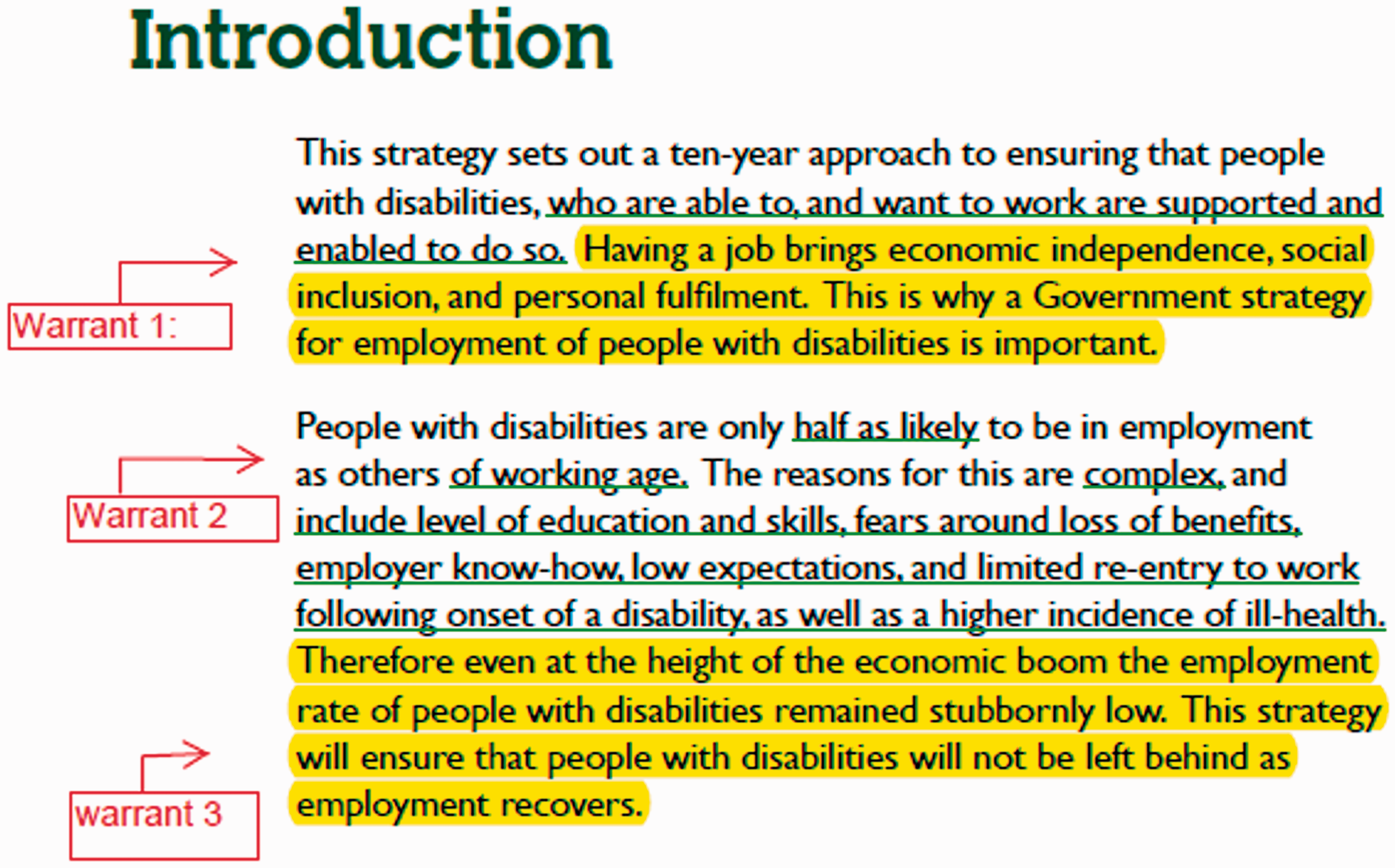
Three distinct warrants, following Hyatt's framework (2013), can be identified within extract 1: warrant 1, an accountability warrant, names the desirable outcomes of social inclusion, economic independence and personal fulfilment associated with having a job; warrant 2, an evidentiary warrant, previews the plight of disabled people with a simple but troubling fact regarding the likelihood of their employment, attributing the causes to a small number of disablist characteristics – ‘fears’, ‘ill-health’, ‘low expectations’ and ‘poor education’, each of which is firmly located within the individual; and warrant 3, an altruistic political warrant frames the problem as a charitable cause ensuring that ‘people with disabilities will not be left behind as the economy recovers’.
How disability is understood
There is no definition of disability offered in CES; instead disability is constructed and constituted through the workings of the text and the discourse, alongside a series of graphs, charts and stark statistics (extract 2), which defines people with disabilities neatly within a series of categories and binaries.
How Disability is Understood (Government of Ireland, 2015: 25–27).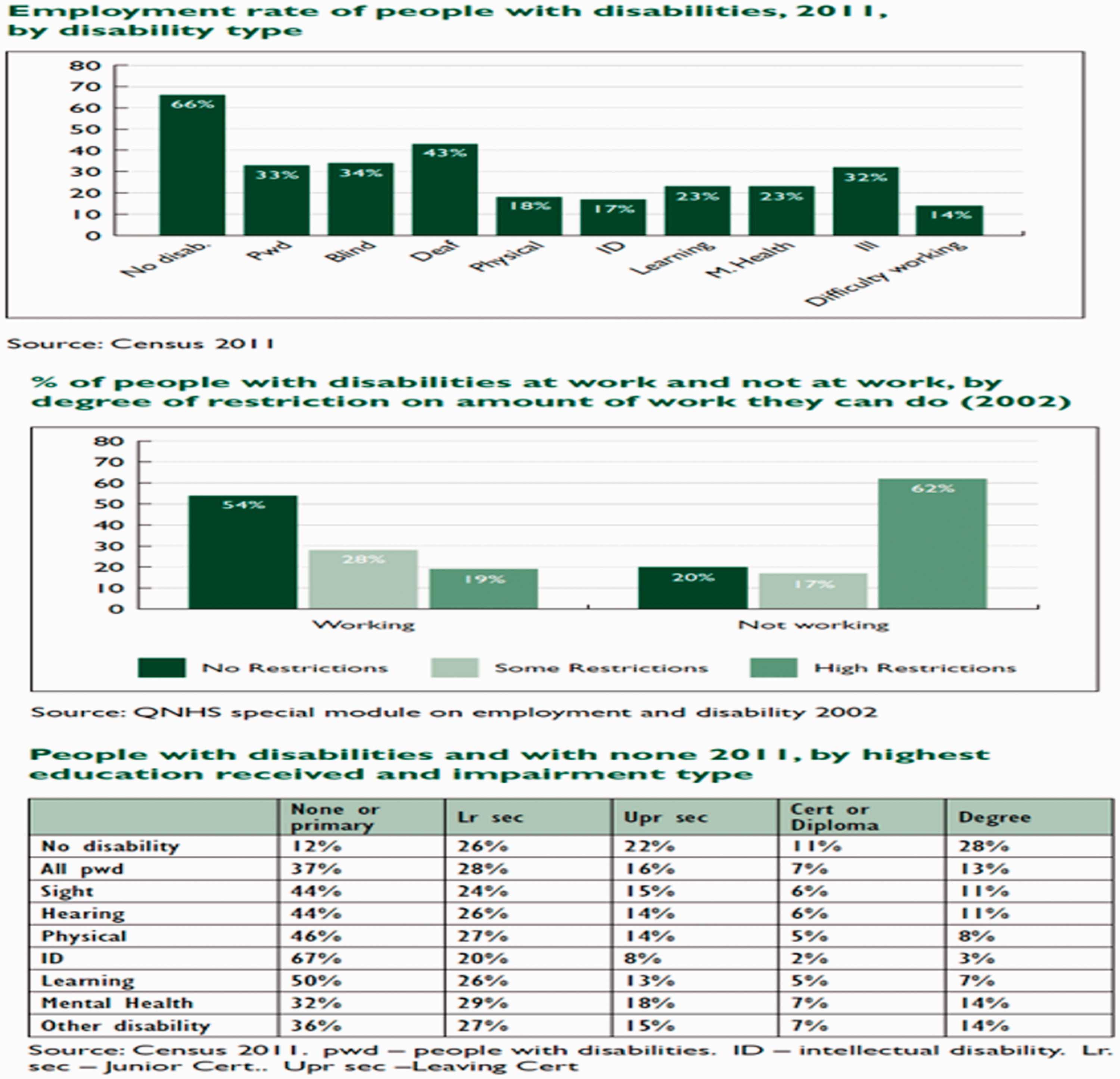
The disablist portrayal of people with disabilities is systematically reinforced throughout the narrative by a rhetoric of recovery (the term appearing 17 times within the policy document) and a lexicon of deficit-based interventions aimed at ‘fix it and get better solutions’ (Goodley and Runswick-Cole, 2010: 283). Notwithstanding that we would like to consider ourselves as a State with a more sophisticated infrastructure and lexicon for describing and understanding disability, people with disabilities are still constituted as ‘targets of interventions rather than sources of socio-political change’ (Grue, 2011: 535). What is emerging thus far is a disturbing portrayal of disabled people framed as helpless, deficient and in need on ‘recovery’.
A glance at the bibliography (Government of Ireland, 2015: 63) reveals a babble of legitimating voices (Ball, 1994), speaking authoritatively of ‘perfect partnership-workplace solutions' and knowing ‘what works, for whom and when’ as extract 3 testifies. From here, the evidence base and its corrective solutions, become part of a process of legitimising a disablist rationality logic and rhetorical strategy, impregnated by a professional, medicalised, discourse.
Individualised interventions
A deconstruction of the six strategic priorities (Government of Ireland, 2015: 3) reveals that five of the six proposals are firmly focused on individual intervention; the sixth relying heavily on the goodwill and benevolence of the private sector.
Build skills, capacity and independence. Provide bridges and supports into work. Make work pay. Promote job retention and re-entry to work. Provide co-ordinated and seamless support. Engage employers.
Each of the first five proposals are supply-side interventions locating the ‘problem’ firmly within the individual, thus necessitating specialist and compensation-type supports; the proposal to upskill through training and education aimed clearly at enhancing participants’ human capital.
Babble of Legitimating Voices (Government of Ireland, 2015: 63–66).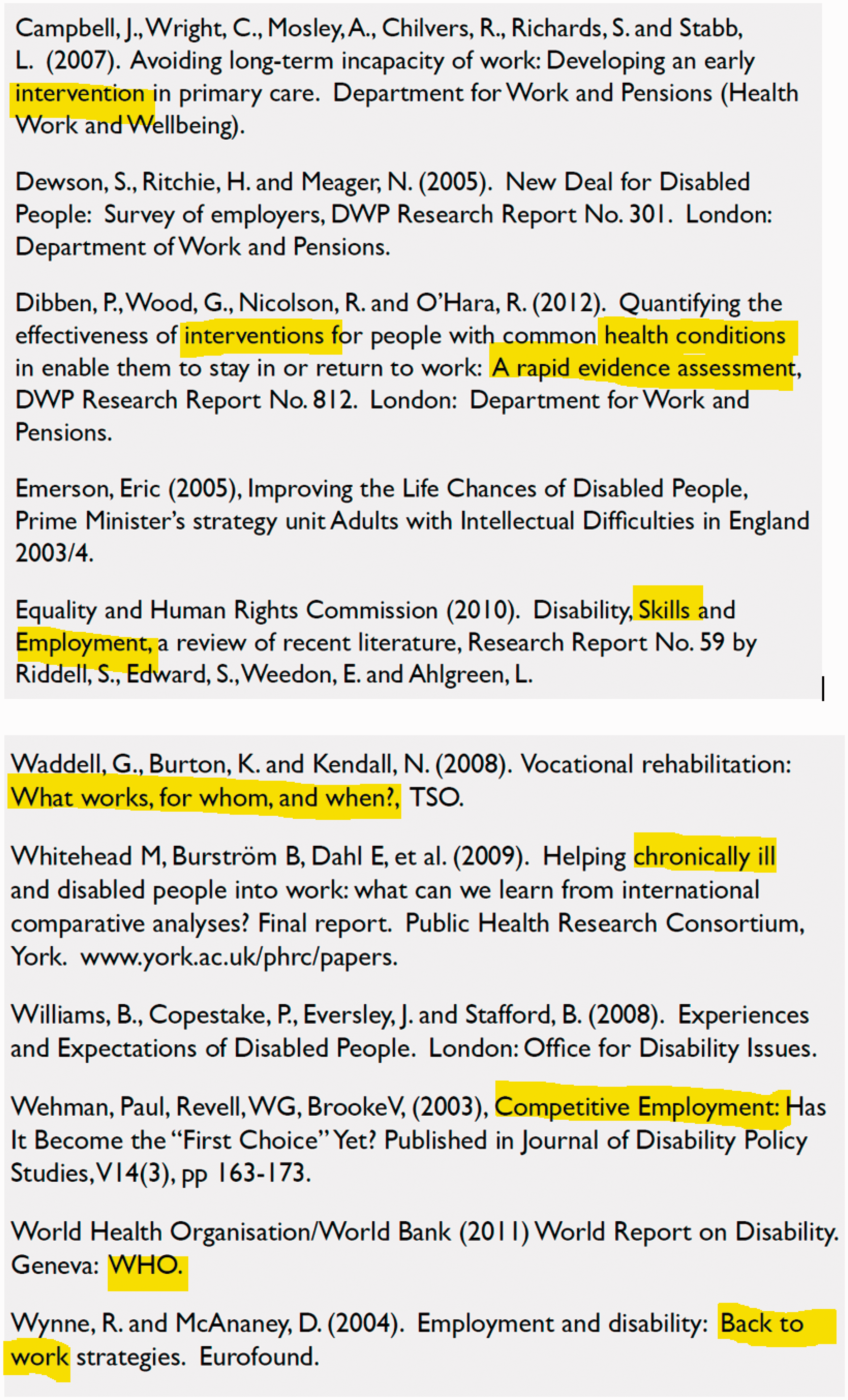
Human capital discourse
Following Molla, extract 4 provides evidence of the ‘discursive impediments of human capital theory’ (2014: 301) in the form of ‘joblessness’. Framed by the contours of ableism, the recurring headline of ‘stemming the flow into joblessness’ within this policy document can be viewed as espousing the neoliberal-ableist citizen, who is responsibly and actively maximising their potential to become employable, and make a contribution to the economy, as extract 5 exhibits, where the focus is on harnessing human capital to service the imperative of economic growth. Views of employability as seen in extract 4 & 5 are saturated with the lexicon of ability and capacity. But it is the last clause in extract 5, which promises to include the actions of CES within ‘mainstream’ activation policies, that frames disability as the ‘quintessential Other of neoliberal-ableist society’ (Goodley, 2014: 33). Within this portrait, the binary of ‘normals’ and ‘Others’ emerges, creating a discursive space where ableism flourishes.
A portrait of education
In examining education’s role within CES, it is useful to contextualise it interdiscursively within the broader discursive contours of the Department of Education and Skills policies. Thus, this section constructs a portrait of education from a reading of CES, as it speaks to the wider Irish educational policy agenda.
Handmaiden
Upskilling for employment lies at the heart of the first strategic priority, positioning education in a subservient relationship with employment. The role of education, as articulated in CES, bears testimony to the ableist underpinnings of neoliberal imperatives, which espouses a skills-driven higher education system that is crudely reductionist in its values. The broader and substantive goals of education are not acknowledged in CES; the focus is rather on the instrumentalist purposes of education in advancing the economic recovery agenda, as extract 6 exemplifies. In this extract, education’s role is presented as one of ‘drivers’ of employment, and raising educational achievement is seen only in terms of ‘job prospects’ and ‘employment rates’. Following Alexadiou, education from this perspective is given the enormous challenge of balancing an ‘increasingly liberalised market-driven economy, with the requirements of a socially just society’ (2005: 102).
Joblessness Discourse (Government of Ireland, 2015: 13). Human Capital Discourse (Government of Ireland, 2015: 12).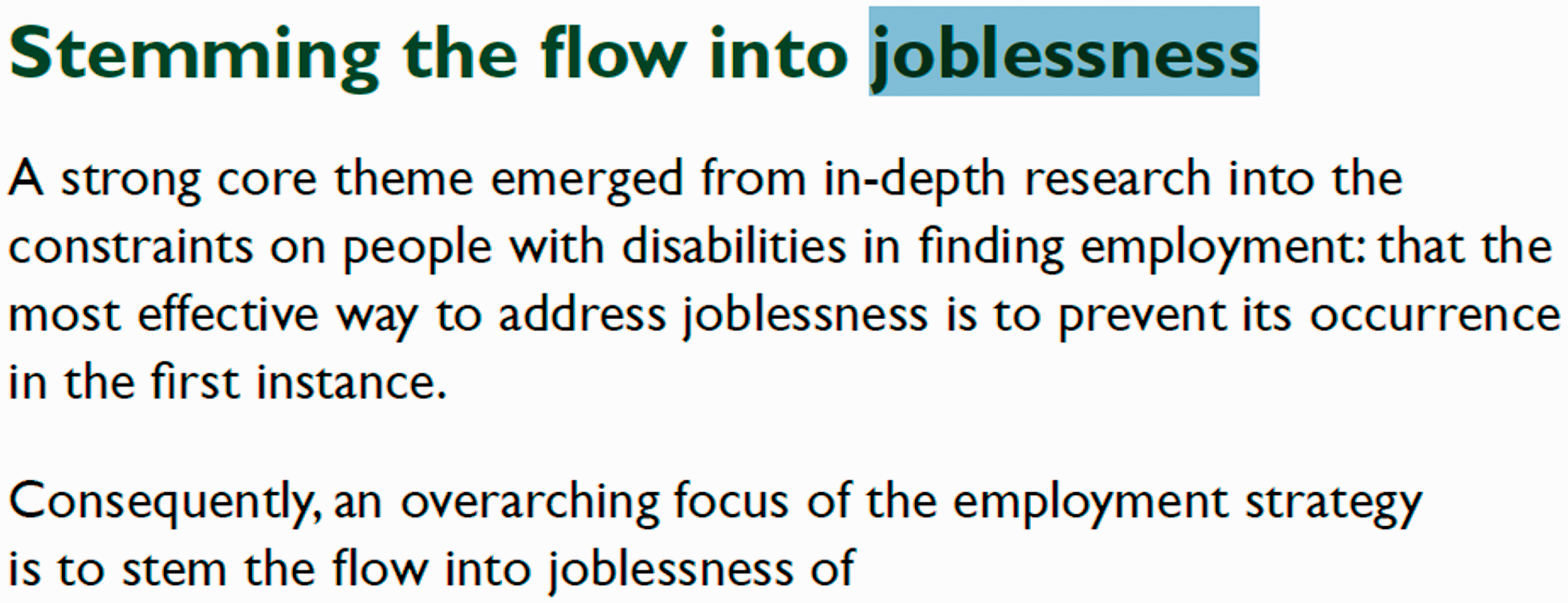
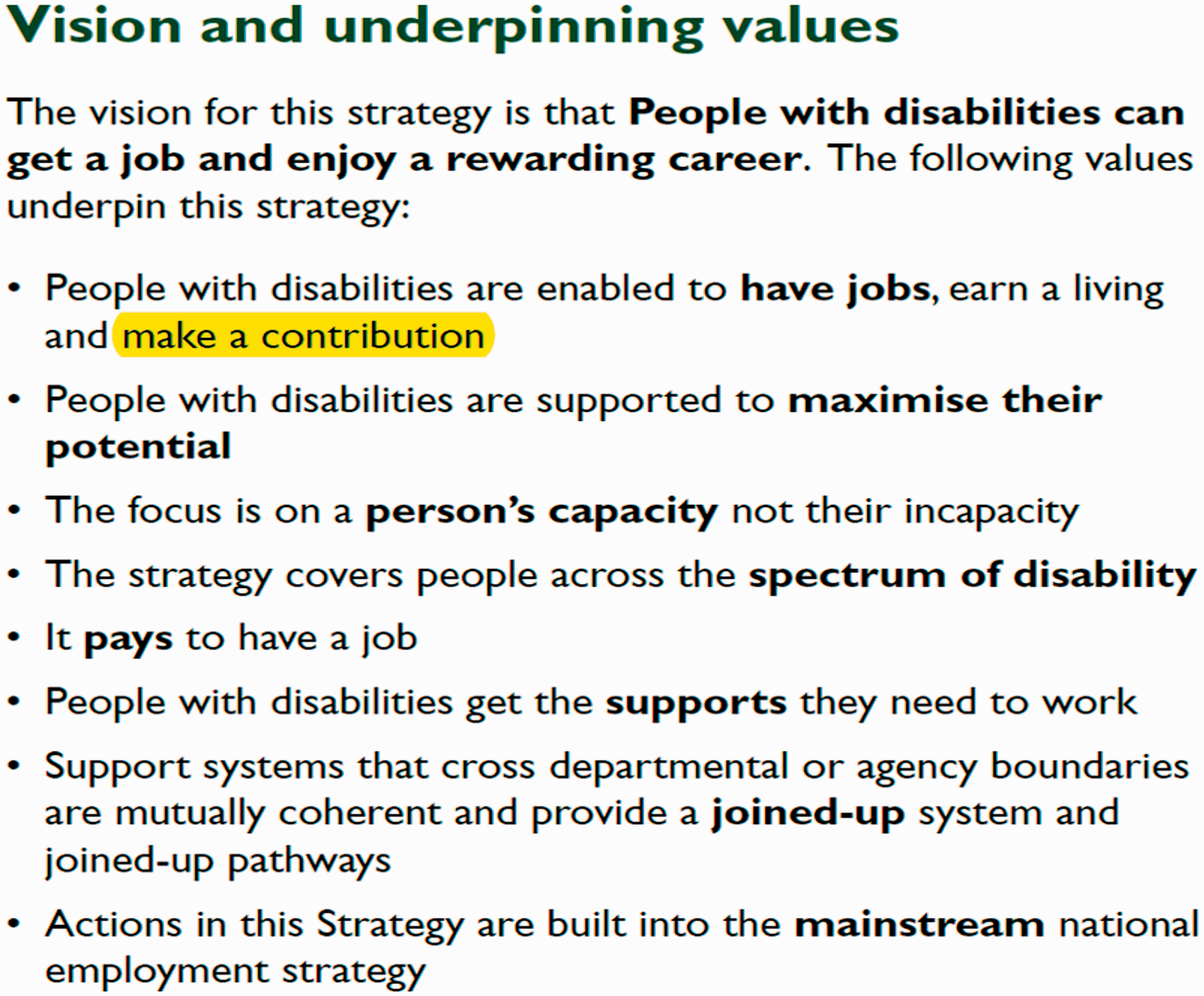
Notwithstanding that this is an employment strategy, what is significant to this study is the discourse of human capital framing this policy narrative—the hegemony of neoliberal ideology that has come to dominate Irish education policy-making, making its way into disability inclusion policy.
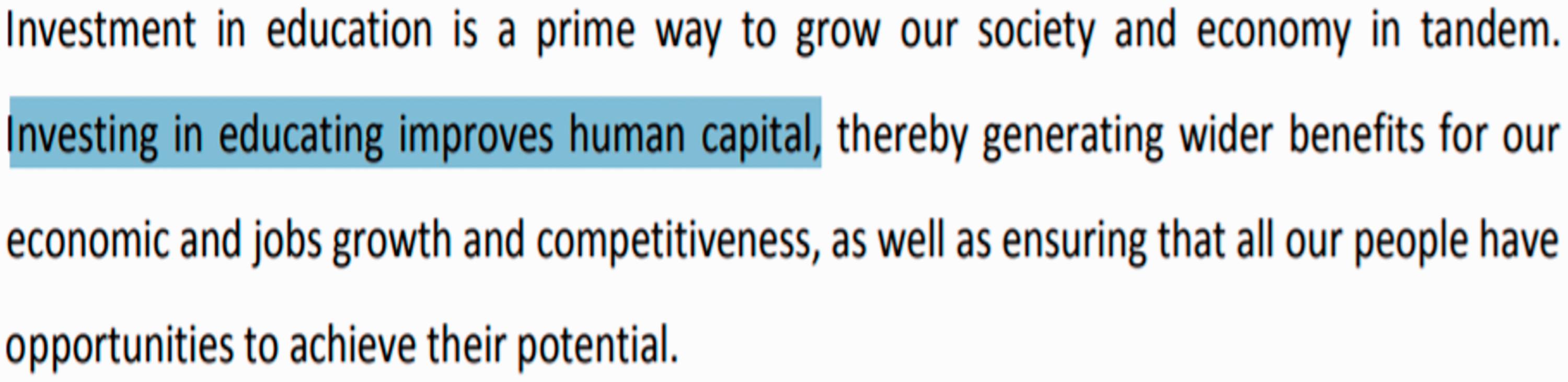
The handmaidencaption on this portrait mirrors the view of education’s role as articulated through the National Strategy for Higher Education to 2030 (Department of Education and Skills, 2011), which Holborrow argues can be ‘summed up in one word – skills’ (2012: 95). Education should of course support market-led skills – but should not be driven by them. Skills such as interpretation, critical thinking and interrogation are increasingly at risk in a neoliberal education system, where value is attributed only to those skills that hold explicit economic worth (O’Sullivan, 2017). Market-led skills have become the key business for the ministry of education – the name of which having recently morphed from that of Department of Education and Science(1997–2010) to the Department of Education and Skills(2010–present). Equally, extract 7 from the Programme for Government (Government of Ireland, 2016c: 86) provides a close-up view of the human capital imperatives underpinning the perceived role of education within Irish policy-making.
Reductionist View of Education's Role (Government of Ireland, 2015: 10, 14). Programme for Government.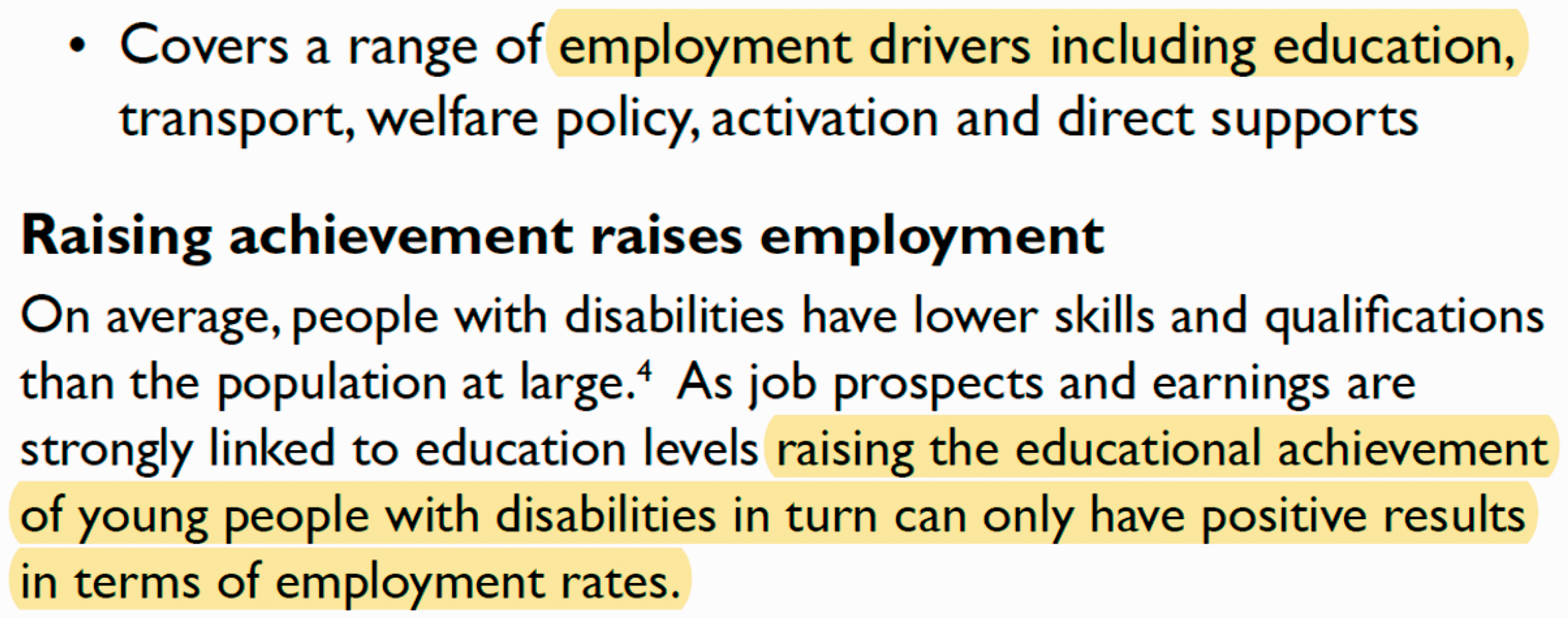
Educational disadvantage
Issues of educational disadvantage, inequality and social justice are silenced in CES. Instead, the lexicon of professionals and disability experts proliferate the pages claiming to know what ‘work for whom and when’ as extract 8 demonstrates.
Structural barriers are also overlooked in this policy narrative, serving to undermine the personhood of people with disabilities. As Molla (2014: 301) observes, ‘the discursive effect of the neoliberal policy narrative is expressed by, inter alia, the superficial representation of the problem of inequality’. This not only produces issues of representations, but, as Hammad argues ‘also generates devalued discourses on social identity as “deserving poor” to sustain national public services’ (2018: 689). Loss of a productive workforce is the primary concern of education and training policies underpinned by a neoliberal ideology – not social justice (Gale and Molla, 2015).
Professionals and Disability Experts (Government of Ireland, 2015: 35).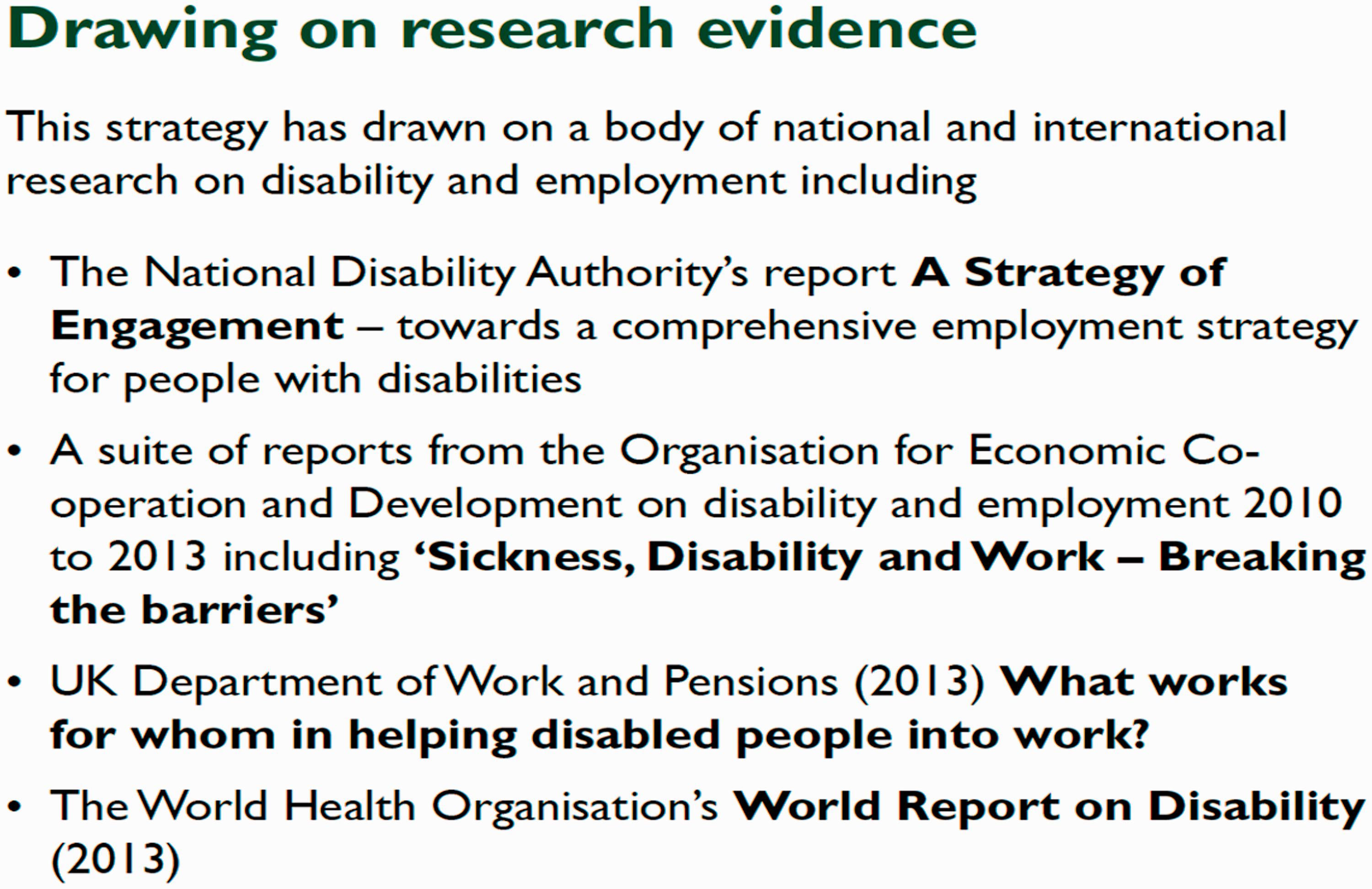
Hollowed-out education
The portrayal of education’s role in CES is indicative of the wave of marketisation that has swept across educational policy-making in Ireland over the last few decades, leaving in its wake a hollowed-out education system driven by market forces, deficit discourses and practices attendant to neoliberal reform (Holborrow, 2012). Indeed, over the past decade and a half in particular, education policy discourses have embraced a human capital paradigm, focusing exclusively on education’s role in building a knowledge economy and enhancing social cohesion. As noted by O’Sullivan (2005: 181) ‘the successful penetration of a human capital paradigm and its subsequent mutation and fracturing in Irish consciousness paved the way for a mercantile paradigm … with a hollowed-out education system awaiting its inscription’. Thus, as Ball (2016: 1047) argues, we are witnessing the ‘general reworking of the relationship of education in fundamental and intimate ways, to the needs of the economy’.
Implications for disability policy development.
In undertaking a critical policy analysis of CES, what is evident is the discord between a capabilities approach and the neoliberal discourse framing this policy. This study has presented a portrait of disability and education respectively as read from CES through the lens of critical disability studies. What has emerged is a deeply troubling portrayal of disability framed in charitable tones, emphasising the role of the individual in overcoming obstacles to employment, through deficit-oriented supply side interventions.
Solving the problem of unequal participation of disabled people in education and employment requires a new way of thinking about what constitutes the citizen, ‘not simply a new application of old theories, but a shaping of theoretical structures themselves’ (Nussbaum, 2006: 2).
Human rights versus human capital
The re-commodification of labour approach implicit in CES ignores a concept of capabilities in favour of a concept of human capital, while framing the concept of human rights within a liberal-individualist interpretation. One of the unintended consequences of institutionalising market values is that they over-ride and weaken other values in education. Social and moral values are relegated in importance, and thus the role of education in promoting the social justice goals of ‘inclusivity, equity and fairness in access to and effective participation in quality schooling remain marginal policy agendas’ (Molla and Pham, 2018).
Implicit in the discourse of human capital is the idea that investment in upskilling and training the disabled person will result in an outcome that will benefit both the welfare of the individual and the economy. As Hammad (2018: 686) argues, these ‘one-dimensional, paired ideas generated on education (human capital) and disability (medical model) are often of detriment to people with disabilities trying to assert and secure their right to political, social and economic participation in education’.
Reifying exclusion
Although studies have shown that there are benefits associated to varying degrees with approaches focused on the supply side of the labour market (Whitehead et al., 2009), a simplistic social capital enhancement and a supply-side focus does not of itself reduce employment barriers for people with disabilities (Yates and Roulstone, 2013). As Orton (2011: 355) points out ‘the provision of skills training may well improve a person’s functioning as an economic actor, but it will not of itself enhance his/her capacity to choose how he/she lives or to achieve happiness’. In fact, supply-side interventions are reproved as the ‘very opposite of what is needed’ for disabled people, serving to ‘reinforce, rather than undermine, the traditional assumption that disabled workers are somehow not equal to non-disabled peers’ (Barnes, 2003: 4). The very fact that this policy is a standalone specialist policy for disabled people situated alongside its able-bodied counterparts Action Plan for Jobs(Government of Ireland, 2016a) and Pathways to Work(Government of Ireland, 2016b) is evidence of the twin track approach to mainstreaming, where disabled people are seen as requiring a specialised strategy that is built on a charitable model of the ‘deserving poor’.
Policies from this framework of thinking focus on ensuring that citizens do not become a burden on the welfare system by enhancing their productive potential and their labour market readiness – in other words, their human capital potential. Underpinning this perspective is the wider ideological commitment to the marketisation of education – a managerialist perspective that is preoccupied with maximising economic output and individual self-sufficiency, rather than enhancing human capabilities. Sen (1999: 295–296) himself has been critical of the misappropriation with and conflation of human capital to the concept of human capabilities. The use of the concept of ‘human capital’, which concentrates on only one part of the picture (an important part), relayed to broadening the account of ‘productive resources’, is certainly an enriching move. But it does need supplementation. This is because human beings are not merely means of production, but also the end of the exercise.
Valued knowledge
Embedded within the human capital paradigm is a new code of values underlying what constitutes valuable knowledge – and from this perspective, market knowledge trumps all other forms. The lack of critical sociological and philosophical research in Ireland, as noted by Lynch, has resulted in impoverished discourses that are scientifically misinformed and frequently inaccurate, and a policy arena where ‘disciplines and fields of study that are not marketable have lower status and power’ (2014: 9). From a capability perspective, an education that enables people to achieve well-being as well as the exercise of agency, entails the promotion of functionings and capabilities relating to abilities and knowledge that enable them to participate in dominant social frameworks (Terzi, 2007). Education should not be construed merely as the provider of technical skills, but equally as the empowerment of the person through critical thinking and imagination (Nussbaum, 2006). However, the Irish State’s directive is evident: increase the skills base in strategic growth areas in order to create and attract more business and investment; in other words, ‘teach what can be sold’ (O’Sullivan, 2017).
An alternative discourse
Ivan Illich once famously stated ‘If you want to change a society, then you have to tell an alternative story’ (cited in Springer, 2016: 2). In seeking an alternative to neoliberal human capital discourse, a capabilities approach provides a framework for new ways of thinking alongside ‘an underpinning ideological narrative from which policy development can flow’ (Orton, 2011: 352).
A capabilities approach has the potential to emphasise the ethical aspects of inclusion because it embraces an understanding of difference as a specific variable of human diversity; equally, it understands human dignity as the development of capabilities. From this perspective, there is no tolerance for disabling/ableist discourses or the unequal treatment of individuals. Nussbaum (2011)makes this clear, stressing that a capabilities approach must be concerned with the impact of deeply embedded social injustice and inequality, because it is these features that generate capability failures through discrimination or exclusion. Instead of emphasising the specifics of the disabling situation, a capabilities approach shifts the focus to look at establishing equality in terms of possibilities and choices (Trani et al., 2011). A capabilities perspective emphasises that people not only require access to resources and opportunities, but also need to be able to convert these into valuable and valued achievements and goals (Gale and Molla, 2015). Policies that improve the lot of groups are to be rejected, Nussbaum (2006: 16) argues, unless they deliver the central capabilities to each individual. A capabilities approach puts the onus on government and public policy to overcome structural obstacles in ensuring that all individuals in a society can achieve their capabilities.
Concluding comments
Although welcomed on the surface by the disabled people’s movement, CES raises serious questions about the framework of thinking that guides the development of inclusive policies and practices for disabled people in Ireland (Naughton, 2015). The prioritisation of economic imperatives has greatly impacted on rights of disabled people to exercise agency in relation to their available choices to achieve the forms of inclusion that are highlighted within materialist social models of disability (Scanlon et al., 2014). As Nussbaum argues ‘we need a counter-theory to challenge these entrenched but misguided theories, if we want to move policy choice in the right direction’ (2011: xi–xii). In response, this study highlights the real potential of a capabilities approach for overcoming the deficient discourses and disablist assumptions in CES in favour of a policy framework that seeks to reconcile personal fulfilment, social inclusion and economic independence for disabled people.
Footnotes
Declaration of conflicting interests
The author(s) declared no potential conflicts of interest with respect to the research, authorship and/or publication of this article.
Funding
The author(s) received no financial support for the research, authorship and/or publication of this article.