




Abstract
Thailand is a good example of a developing country which is struggling with globally common problems in trying to find solutions for sustainable education development. Education is one of the important methods to build the mindset of Thai people toward sustainable development (SD). The co-production approach is a way of improving public services, including education for sustainable development (ESD). The study employs qualitative research techniques which aim at studying the implementation and co-production of ESD. Moreover, it is to explore and synthesize the implementation characteristics of co-producing ESD in Thailand. The research found 12 correlated indicators from the literature that link SD, ESD and co-production practices. They were categorized into input, process and output of the cycle of implementing and co-producing ESD. The indicators were examined within the context of the case study of Bansankong School. The researchers conducted in-depth interviews with stakeholders that included representatives from the school administration, families and communities, local authorities, other relevant institutions and volunteers. The results showed that factors in the process portion of the cycle of implementing and co-producing ESD tended to be more significant; these were community engagement, information technology and media usage, and the contingency approach. The factors in the input portion of the process, namely, self-reliance and self-efficiency of population and leadership, and the factor of mutual benefits in the output portion proved to be significant. The other seven factors, cultural adaptation, democratic participation, equitability, goal of sustainable future, interdependence, interdisciplinary approaches and collaborative approach and partnership, appeared to be non-significant.
Keywords
Introduction
Education for sustainable development (ESD) is considered a part of sustainable development (SD). This is due to the fact that the limits of continued economic growth have been a major concern for the international community since the 1970s. The “World Commission on Environment and Development” (WCED) has been attempting to put the concepts of SD and sustainability into the international agenda since the mid-1980s (WCED, 1987). Later on, the term ESD arose and was defined as a “dynamic concept that encompasses a new vision of education that seeks to empower people of all ages to assume responsibility for creating and enjoying a sustainable future” (UNESCO, 2002: 1). The overall objective of ESD is to allow citizens to act for positive environmental and social change. It implies a participatory and action-oriented approach. As a result, it is a challenge for Thai education authorities to commit themselves to meeting these challenges and to discover ways of empowering Thai citizens to acknowledge to themselves their responsibility to society and nature. This is the main point of discussion in this paper.
The research is based on the conviction that the means of accomplishing a sustainable future for all is to mobilize the actions of all parties to commit to the tasks responsibly in order to sustain the resources of the nation. While the nature of Thai education provision is based on public service, civic participation is not usually common in the Thai state schools. According to the Office of Non-Formal and Informal Education (ONIE, n.d.), the problems and obstacles faced by Thai education are the lack of opportunity for some target groups, economic disparity, distribution of people’s income and the expansion of educational opportunities. Moreover, as a result of national unification policies, the diffusion of public education is an issue. In every area of Thailand’s education service, the standard Thai curriculum is taught by Thai teachers. Although Thai education is indispensable for earning a living in Thailand, it ignores the local and traditional customs and has thus created a gap between generations of people (Zaha, 2009). The case-study school, Bansankong School, challenged problems such as low literacy rates and poverty in the community. This was done by educating the students to have both academic skills and life skills. However, due to budget constraints, the school could not complete these targets on its own in order to achieve better and more sustainable education for students.
The co-production theory is taken into account as a part of ESD implementation in order to accomplish these goals. The concept of co-production is a challenge to policymakers in terms of reforming public service by encouraging users or public service users to design and deliver service in equal partnership with professionals or professional service providers. Somphone (2007: 40) posits that ESD should begin at an early age. Therefore, this research focuses on the Basic Education Unit in Thailand, where education is accessible to all people. With the hope that the best way that Thailand should reform its education system is to have it co-produced by relevant stakeholders, such as families, communities and other public/private organizations, the research investigates this possibility as well as relevant significant factors.
Objectives
The research aims to: 1) examine the current state of the implementation and co-production of ESD in Bansankong School; and 2) examine the indicators (factors in the cycle of implementing and co-producing ESD, namely, the input, process and output) of ESD and co-production of ESD.
Research question
The research is designed to investigate the implementation of ESD policy in Thailand, with an emphasis on the implementing models of co-production of ESD policy in the basic education sector. In other words, this research aims to examine the important factors contributing to the co-production of ESD policy in Thailand.
Literature review
Sustainable development (SD)
Background of “sustainability” and “SD”: concepts and definitions
SD was first introduced in the World Conservation Strategy in 1980 and is widely used by the Brundtland Report (WCED, 1987). In the report, a statement regarding development states that human needs are fundamental and essential to economic growth. It also states that equitable access to shared resources by the poor is necessary. Both these initiatives need to be sustained and are encouraged through effective citizen participation. Sustainability is repeatedly mentioned in the eight Millennium Development Goals (MDGs). Based on United Nations (UN) policy, sustainability means “the ability to make development sustainable to secure the needs of the present without compromising the capacities of future generations to respond to their needs” (WCED, 1987, cited in Robert et al., 2005). “Sustainability”, therefore, is a broad concept. SD, sustainable products, sustainable economic activity, sustainable consumption and sustainable policies are also melded into the concept. Sustainability is not a modern phenomenon; however, sustainability as a characteristic of modern societies is a new thing (Stockmann, 2012).
Education is a tool for SD (Nnabuo and Asodike, 2014). Maclean (2008, cited in Nnabuo and Asodike, 2014) asserted that, although there were many keys to development, education was regarded as being the master key to social and economic development. High-quality, relevant education and schooling were shown to open the doors to poverty alleviation, SD, equity, justice and the mainstreaming of marginalized and vulnerable groups in society. These were examples of the global goals mentioned in the sustainable development goals of the UN which need to be completed by 2030. These goals were the common goals that every country, including Thailand, had committed to achieve to support SD.
All in all, sustainability policies are what people need to be concerned with to achieve the goal of having a sustainable future for all. There are several theories of sustainability; however, this paper used the concept of sustainability as laid out by the UN. Furthermore, it introduced some significant thoughts toward sustainability, especially in relation to Thai norms, traditions, beliefs and religious values. For example, the philosophy of Sufficiency Economy adopted by the Thai King, Bhumibol Adulyadej, which aims to lead to the nation’s sustainability, is interwoven with the emergence of ESD in Thailand. In the case study, the concepts of enoughness and self-reliance, which are central to the philosophy, in both an individual and a larger group as a community, are key to helping tackle the community’s problems. Embedding some particular skills and attitudes in the students, such as critical thinking and problem-solving, caring about environment and life skills, helps sustainability in all economic, social and environmental aspects. In reality, the school successfully adopted the ideas and integrated both into the school practices.
Education for sustainable development (ESD)
ESD is a broad idea with the objectives to build social transformation and to create more sustainable societies. ESD is part of every aspect of education including planning, policy development, program implementation, curricula, finance, teaching, learning, assessment and administration. ESD gears to create a coherent interaction between education, public awareness and training. Finally, its vision and mission are to create a more sustainable future.
ESD has some essential characteristics. In addition, people perform ESD in many culturally appropriate forms. ESD, firstly, is based on the principles and values that highlight SD. It involves all three spheres of sustainability: environment, society and economy, together with an underlying aspect of culture. Additionally, ESD applies a vast range of pedagogical techniques that encourage participatory learning and higher-order thinking skills. Primarily, it promotes life-long learning. ESD becomes locally relevant and culturally appropriate. ESD depend on local needs, perceptions and conditions. In this situation, it acknowledges that fulfilling local needs often has international effects and consequences. ESD engages formal, non-formal and informal education. Finally, ESD accommodates the evolving nature of the concept of SD and focuses on the ideals and principles that underlie sustainability (UNESCO, 2006). The Rio Declaration – a product of the Earth Summit in 1992 – consists of 27 principles of sustainability (UNEP, n.d.). For instance, one of the major principles is that people have the right to have good health and live productively in harmony with nature. Another principle mentions that development must fulfil equitable life quality and the developmental and environmental needs of present and future generations. Another outlines the idea of eradicating poverty and reducing disparities in living standards. These all are important concepts to SD. Furthermore, ESD contains values and codes of conduct as a basis for SD (see http://www.accu.or.jp/esd/about_esd/index.html).
ESD in Thailand
The concept of ESD came to Thailand in 2006 when it intersected with the Tenth National Economic and Development Plan (2007–2011), which directs the national development framework with His Majesty the King Rama IV’s Sufficiency Economy. The Tenth National Economic and Development Plan is supported by the philosophy that encourages middle paths to achieve SD with equilibrium between economics, society and the environment. With this, the educational revolution and educational reformation was a crucial strategy that was highlighted in the National Education Act of B.E. 2542 (1999) and the National Education Plan B.E. 2545–2559 (2002–2016). These were strategic plans based on the philosophy of Sufficiency Economy. The reformation, in particular, was concerned with education management and curriculums. The scheme has the objective of integrating all aspects of the quality of life that include social, economic and environmental aspects. It is also harmonized with other visions, policies, measures and legislations relating to the development of society during this period of reform (UNESCO, n.d.).
Under the Asia/Pacific Cultural Centre for UNESCO (ACCU)–UNESCO Asia/Pacific ESD Program, ESD was first introduced to Thailand in 2006 as an alternative to UNESCO. ACCU is a non-profit organization that works in line with the principles of UNESCO for promoting mutual understanding and cultural cooperation among people in the Asia/Pacific Region. To transform the broad concept of ESD into concrete activities, they organized a seminar called the “ACCU–UNESCO Joint Regional Seminar for the Promotion of Education for Sustainable Development in Asia and the Pacific” in Japan from February 23 to February 26, 2006, with a focus on the six realms of ESD – gender issues, poverty reduction, natural disaster preparedness, community development, cultural diversity and environmental education. The ACCU mentions the “ESD-oriented” activities that refer to those with more than a single issue by taking an approach that envisions a sustainable society in which human beings can coexist with nature. This is not something new but something that already exists (ACCU, 2007: 10). The ACCU has promoted ESD and its practices in many countries in the Asia/Pacific region, including Thailand. In collaboration with the Office of the Basic Education Commission (OBEC), they invited Thai schools interested in the program that already had SD-based best practice, to join the program. Then, they organized training programs and offered financial support to complete the ESD program at the schools. The ESD training was based on the whole-school approach and the involvement of the community.
The government has been trying to mobilize ideas through the popular participation of people in all sectors, groups and regions across the country in every step of the planning process. In terms of education service, it may need something more than participation; that is, co-production. For example, besides calling upon representatives from the communities, local authorities and families to be members of the school Executive Board, the school requires the presence of parents in classroom activities within their own capacities; some help giving lectures and some help the teachers to prepare the lectures. Co-production in education is a somewhat challenging idea to investigate in considering whether it is the solution to solving the current educational problems and whether it enhances ESD.
Co-production
The public become, not the passive recipients of state services, but the active agents of their own life. They are trusted to make the right choices for themselves and their families. They become doers, not the done-for. (Cameron, 2007)
The definition of co-production
Boyle and Harris (2009) define co-production as delivering public services in an equal and reciprocal relationship between professionals, public service users, their families and their neighbors. Both services and neighborhoods become far more active agents of change. Moreover, Ostrom (1996: 1073) provides a widely accepted definition of co-production as “the process through which inputs from individuals who are not ‘in’ the same organization are transformed into goods and services”. Table 1 explains who can co-produce the services and provides some examples of co-production in public service.
User and professional roles in the design and delivery of services.
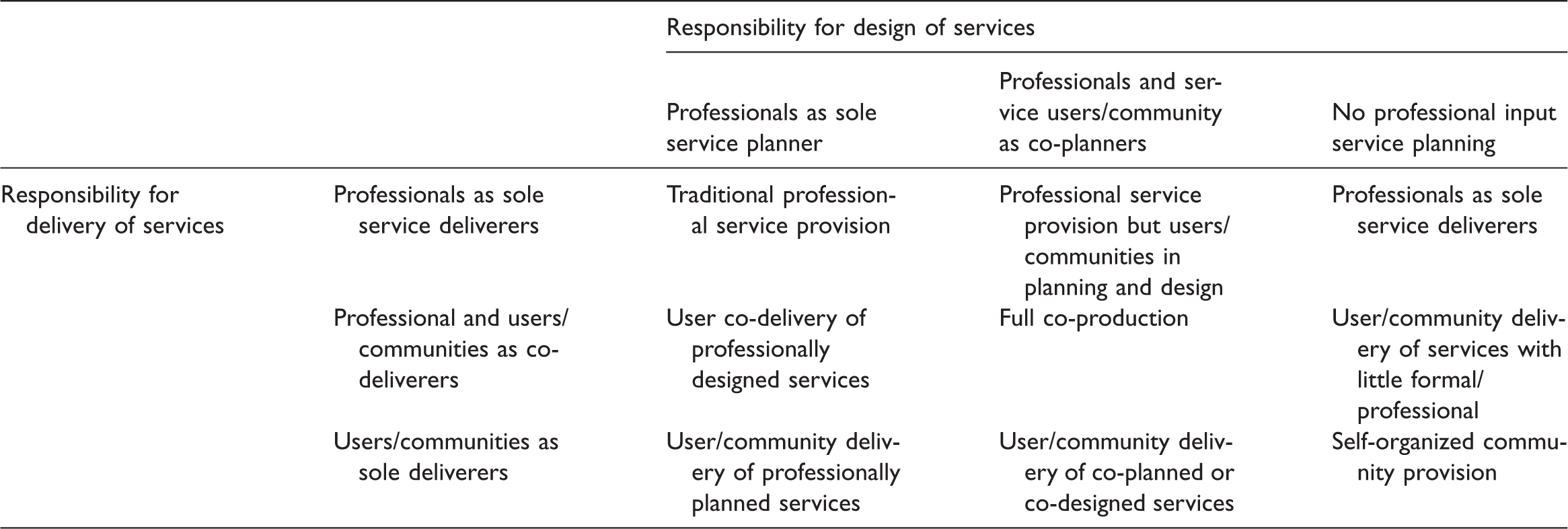
Source: In "The Challenge of Co-Production" by Boyle and Harris (2009).
Linkage among SD, ESD and co-production
To simplify the similarities and differences among these three theories, an integral synthesis may be utilized. The keywords are from books, past research and relevant journal articles. The studied texts and research articles emerge as the result of searches on Google Scholar and Mahidol University E-database. In the study, 40 past pieces of research are studied in order to find the keywords and some links among SD, ESD and co-production. Figure 1 presents the process of finding the relationship between the keywords and these three concepts.
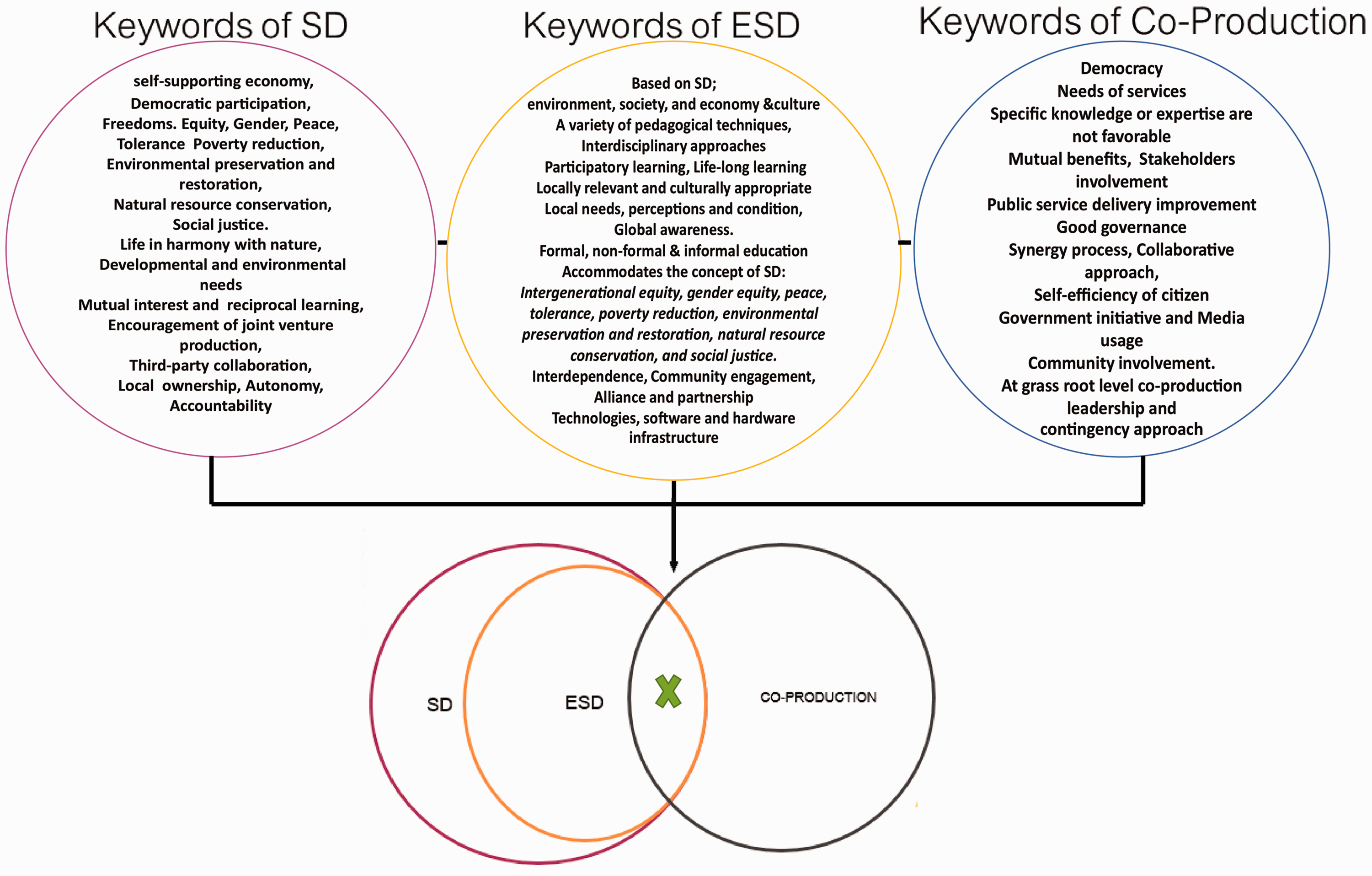
Process of finding the linkages between SD, ESD and co-production.
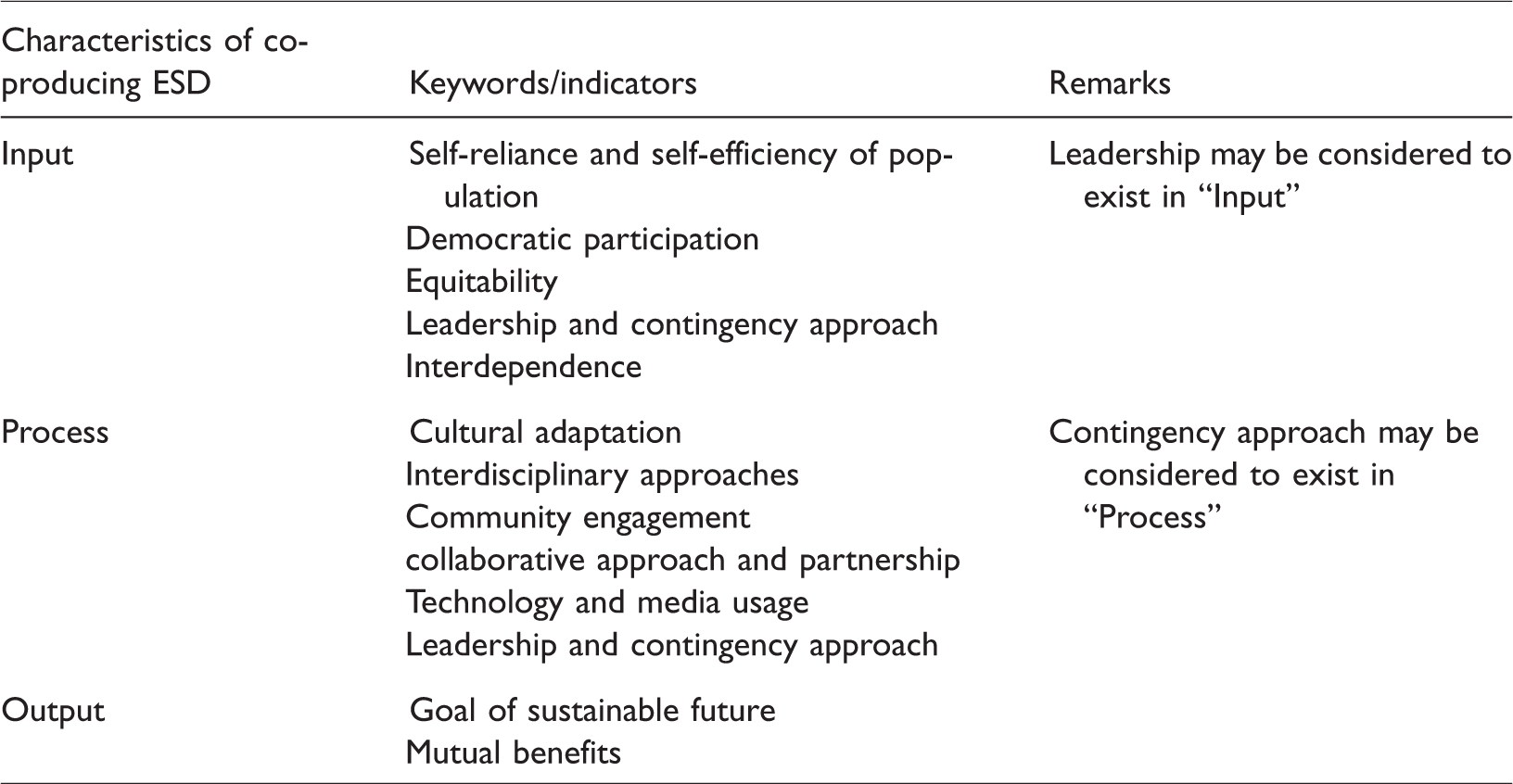
In the literature reviewed, 12 correlated indicators, which link the important themes of SD, ESD and co-production, were found on the basis that only the keywords being present in all three concepts were counted into the correlated group of indicators. These were self-reliance and self-efficiency of population, democratic participation, cultural adaptation, interdependence, equitability, goal of sustainable future, interdisciplinary approaches, community engagement, mutual benefits, collaborative approach and partnership, technology and media usage, and leadership and contingency approach.
However, the authors assert that while these correlated indicators share common attributes, they are different. Some can be put into the input of the implementation cycle; however, some should be considered as part of the process portion of the implementation cycle, and others for the output of the implementation cycle. Therefore, the key characteristics listed in the literature are presented in Table 2.
Process of co-producing ESD with indicators.
With the synthesis of the literature about SD, ESD and co-production, the synthesized keys of the concepts are adopted in developing a conceptual framework and research tools in the subsequent steps. The 12 indicators are used as materials/data to build a checklist in case selection and a set of semi-structured interview questions. Some key informants acknowledged the questions beforehand, but some were briefed the set of questions before the interviews started. To be more specific, the methodology section describes the research process more thoroughly.
Methodology
The research employs a qualitative research approach which aims to explore the implementation and co-production of ESD policy in Thailand. It focuses on the Basic Education Unit in Thai education systems since that is the foundation from where childhood education starts. School curricula generally do not meet the needs of the students and those of their families and communities, and ignore the indigenous knowledge that should be integrated in the local curriculum (Somphone, 2007: 40). The researchers conducted a preliminary survey with the checklist based on the availability of the 12 indicators when carrying out case selection. As a result, Bansankong School, situated in Chiang Rai province, Thailand, was selected as the appropriate case study for this research as it is the site of the pilot model of ESD policy implementation in Thailand, where the learning system is based on seven steps and community-based learning. Furthermore, it exhibits most of the key features found in the synthesis of the literature. Data were collected through document research and in-depth interviews with stakeholders in co-producing ESD in the school. Data were analyzed utilizing the NVIVO 11 software that allows the qualitative data to be organized and calculated based on keyword frequencies. This organization and calculation form the basis of data for data analysis.
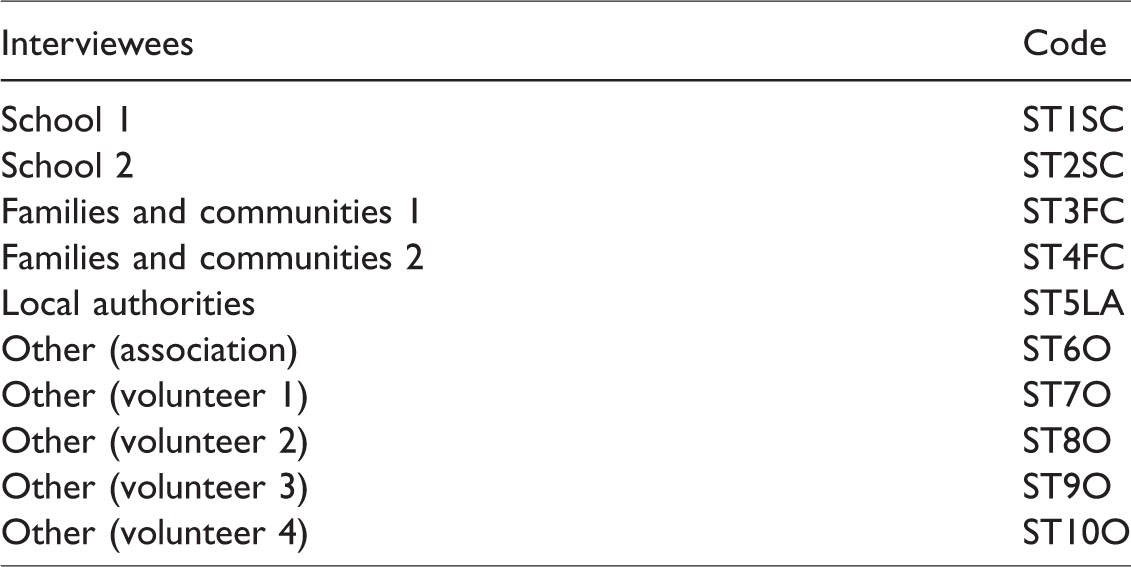
A total of 10 in-depth interviews were conducted. Both purposive sampling and snowball sampling were used to recruit informants. The key informants were familiar with ESD practices as they were the co-producers of ESD who co-delivered the lessons and helped provide ESD material supplies to the case-study school. The respondents were stakeholders in co-producing ESD at Bansankong School: two people were from the school administration, two from families and communities, one from the local authorities and the other five were from other institutions and volunteer organizations. These respondents acted as representatives from different sectors, as the research aimed to study the current state of co-production of ESD from other stakeholders rather than from the school itself. All of the respondents were coded (see Table 3).
Respondents’ codes.
Each interview lasted 30–60 minutes and was conducted at the school and the respondents’ homes. The interviews were semi-structured in nature, allowing a structure to be followed but also flexibility for probing and follow-up questions to be asked when necessary. During the interviews, the authors recorded the conversations and then the records were transcribed into Microsoft Word and processed by NVIVO 11 software.
Results and discussion
The research aims to investigate keywords by cross-checking with the case study of the school implementing the ESD policy. Bansankong School is situated in Chiang Rai province, in the North of Thailand. It is one of the pilot schools of ESD policy implementation in Thailand. In this school, the learning system is based on seven steps and community-based learning. Based on the background, Bansankong School is located in the zone where there have been various problems; for instance, poverty, the spread of drugs and HIV/AIDS and a great diversity of hill-tribe populations. It is a public school with free tuition, and is a middle-sized school with 500 students and 25 school administers and teachers. Almost 80% of the students are from the hill-tribe communities of the area, mainly Akha, and the rest are from poor families of the area. Moreover, this district exists along the border of Myanmar and the school sometimes has to receive children who migrate from Myanmar to Thailand. The school is obliged to receive all students due to the 15-year free state education policy for all. Meanwhile, the annual government subsidy granted per student is never enough to undergo all school activities. At the same time, some social capital and economic situations in the community have been rather weak due to low literacy rates and the struggle of understanding diverse ethnicities and customs (Zaha, 2009: 68–69). The case-study school needs help in solving the problems and found that the co-production of ESD may be the right path.
The way of thinking regarding the policies, including education policy, has been changed: there was a shift of gravity in politics and policy such as neo-liberalism and Third Way politics and policies. With globalization, there has been a continuous operation of the tertiary sector and a move to service-oriented industries. At the same time, there have been doors opening for non-traditional providers with new forms of schooling and education that are based on customized responses to individual needs in the international sphere (Tesar, 2016 ). In the same way, the case-study school shows the new form of service provision utilizing the co-production approach. Co-production from the Bansankong School neighborhood stands out at one level; that is, from a group of people in the community who are the representatives of families, parents, local authorities and local citizens.
At the case-study school, an ESD learning process that involves examining and creating society was adopted and implemented with initial funding and training from the ACCU and the OBEC. The ESD practice is called “CSA”, short for “Case Study Approach”. Its purpose is that children are able to engage themselves with their environment and to gain the capacity to resolve their own problems. The process is that the students are divided into study groups and work through the following seven steps: 1) discover issues in their communities; 2) narrow down priorities that are possible to address; 3) make a presentation to the school or the community; 4) search for alternative solutions; 5) create an action plan; 6) implement the plan; and 7) measure and evaluate the outcome (Zaha, 2009: 71).
The key informants were ones who are co-producers of the ESD with the school. No student was selected because the research aimed to check the second level of education stakeholders at the school where service quality could be improved (Galli et al., 2014). To check the 12 indicators, the researcher conducted an in-depth interview with the representatives of people co-producing ESD policy with the school. The data analyzed utilizing the NVIVO 11 software are shown in Figure 2.
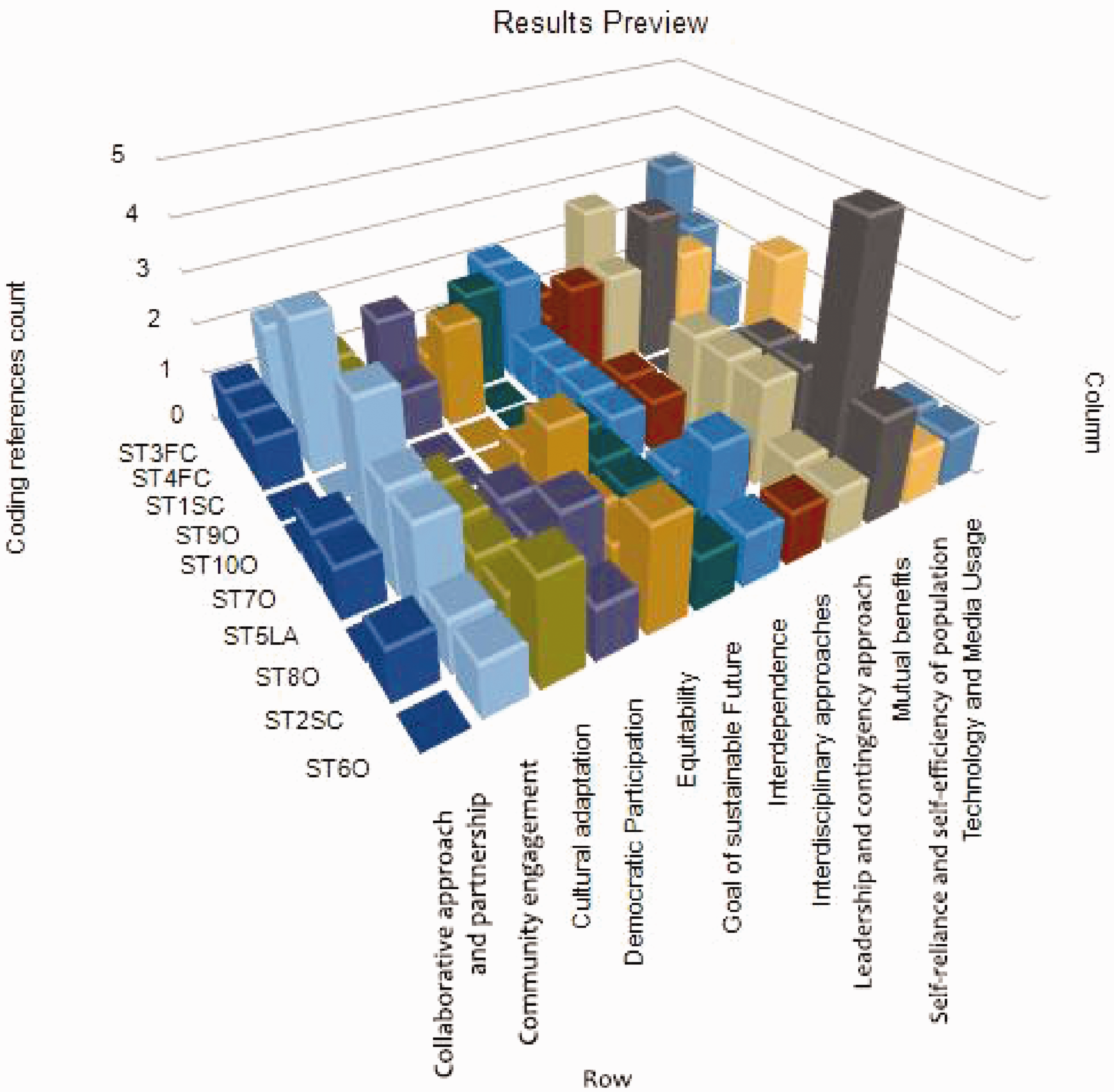
Frequency of indicators.
Figure 2 shows that there are five more significant concepts. These are: mutual benefits, technology and media usage, self-reliance and self-efficiency of population, leadership and contingency approach and community engagement. When these key indicators were put into diagram form, Figure 3 presents the result that was obtained.
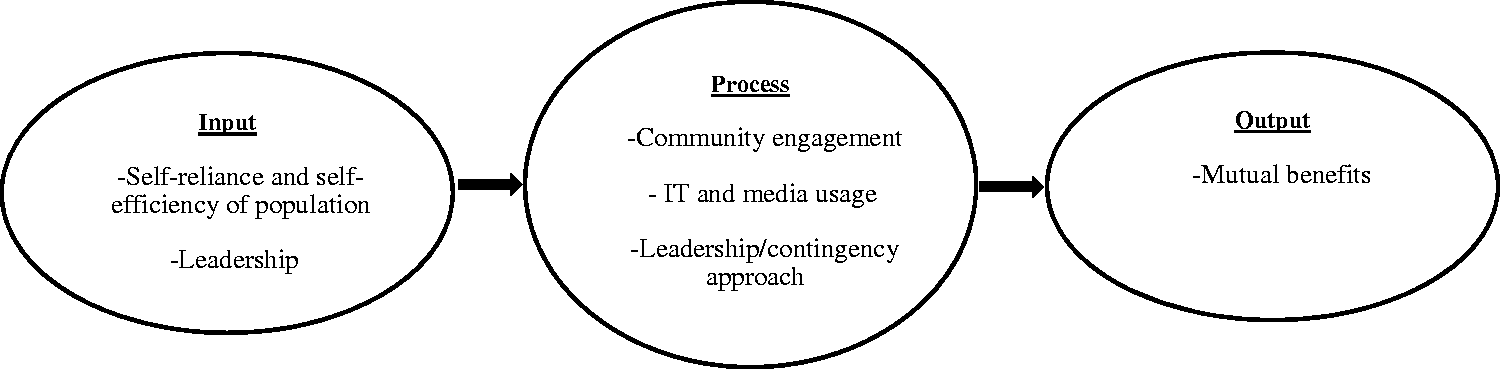
Cycle of implementing and co-producing ESD with the most significant factors.
Input: indicators in the input portion of the implementation and co-production of ESD
According to Parrado et al. (2013), individual attitudes, values and motivations are prone to explain variation in co-production behaviors. Self-efficacy is a significantly stronger determinant of performance outcomes than one’s task-related skills. In the input process, the “self-reliance and self-efficiency of population” aspect showed that the population of the Mae Rai district is self-supporting. A large portion of the population in this study is from the Akha tribe whose profession is agriculture. The following excerpt confirms that, They are self-reliant. Although they do not process any land, they earn their living as employees. They are diligent. Even a 200–300 baht hire is enough for them because they live a simple life. One cup of chili paste can be used for a meal. People here are self-reliant. Natural resources here are not scarce. Most people earn their living properly through agriculture. There’s a small part of the population who do not do the right thing, but they are the minority. The majority does agriculture…. People in the plain cannot do like they do. They do not even leave one square meter of land unutilized. (ST7O, June 14th, 2016)
An example of the help from other units is the Doi Tung Development project. The land allotment for agriculture for their profession took place in the plain by the royal initiatives. The hill-tribe population has to adapt themselves by means of education, which is equally provided to everybody. By learning the Thai language and sending their children to school, they integrated with other Thai citizens or people in the plain.
The second factor in the input portion is leadership. Leadership is an important factor in driving the implementation and co-production of policies (Shuttenberg and Guth, 2015; Suwanich, 2008 ). For the schools that manage and provide education service to the pupils, leadership is essential at each level: from top to bottom or from the management team to policy implementation. The lesson learned from the Bansankong School case study is that the vision of the leader is essential in embracing SD practices in education management. Due to the fact that the achievement of sustainability is abstract, long-term and contested, the leaders have to believe in ESD as the best avenue for pupils. Before we improve the school, we need to look at the efficiency of teachers first. The administrator must be smart. Then, the school administrator and the teachers must collaborate to be role models. They have to be a good example, do good things for the students to follow. After that, the students will tell their parents about what they’ve seen. The parents may consider joining in further collaborative efforts. (ST4FC, June 15th, 2016) Here, people love the school leader. Because he always helps them a lot. That’s why when he asks for something, people do not hesitate to give back. He’s straightforward. He’s stayed here for 22 years. There’s been no question about money. They’ve never asked what the money is used for. If they donate 100,000 baht, when they see what the school is doing, it’s more than that amount (ST7O, June 14th, 2016).
Process: indicators in the process portion of the implementation and co-production of ESD
“The sustainability that you mentioned will not happen unless we do it with the community, then develop it” (ST3FC, June 14th, 2016), mentioned one key informant. When considering the factors that reveal the significance in the process of implementing and co-producing ESD, community engagement, information technology (IT) and media usage, and a contingency approach are highlighted. In the Bansankong School case study, the school emphasizes the importance of integrating local folklore and culture in the curriculum. The school meets the UN goals in improving the situation of illiteracy while trying hard to achieve other goals. By embedding good attitudes towards the environment, society and economy, the children have strong and caring mindsets for the community. Furthermore, community engagement is valid for ESD and co-production to achieve sustainability. The ESD implemented in the school is mainly aimed to study and solve the problems of the community. The solution for effective and efficient services is the effective adoption and implementation of a collaborative approach between the government and community-based groups, particularly at the local level (Popoola, 2011). At Bansankong School, ESD was introduced through a seven-steps method. When someone tries to point out the problems which occur in a community and tries to mobilize and encourage people who share common problems, everybody should engage in solving the problems because they are their problems as well. In this case, the communities are aware of the issue. Finally, they are directly and indirectly involved in the process. Directly, some join the campaign as a promoter; indirectly, others commit to the requirements and instructions of the campaign.
This is a community-based form of education management and, as previously mentioned, it has seven steps. We train the children to question and direct questions to the community where they live to study the community problems. The first step is that they have to study their community and its problems by investigating and asking the people questions. They collect data on the economy, politics, laws and community rules, professions, religions and social contexts (ST1SC, June 14th, 2016).
Moreover, Bansankong School has been trying to partner with the community. In fact, a school in the education system is considered as a corporation which has to manage the internal activities on its own. The school partners with the communities and the neighborhood companies in trading and being a marketplace for the community products. The school regularly buys organic vegetables from the farms, which use a pesticide-free farming method for school lunches. In addition, it opens a community souvenir shop in front of the school to be a marketplace for the school and the community commodities. This is one example of how the idea of ESD and sustainability is rooted in the students and the community by using a collaborative method and partnership.
The school has been trying to invite the community to collaborate with them, even if they do not 100 percent succeed. As a member of the School Board, I appreciate the policy – it’s a good policy. The school attempts to involve the community in school activities, and this also provides new knowledge for the community. Before this initiative happened, people thought that the school could do things on their own; this is not true. Since the people began to participate, the community also improved, together with the school (ST5LA, June 14th, 2016).
In terms of technology and media usage, citizens may need some specific production skills or knowledge to provide positive co-production (Alfors, 2002 and Levine, 1984, as cited in Jakobsen, 2012). Furthermore, citizens’ co-production often increases if they have certain tools or facilities (Jakobsen, 2012; Tsai, 2013; Watanabe, 2015 ). The benefits of technology and media usage, such as the television broadcasting of lessons, can be seen in Bansankong School. The usage of other media, such as social media and websites, is present but not so outstanding. Technology is an investment. If someone invests in technology, they use a large amount of money. A middle-sized school like Bansankong School receives an annual subsidy from the government; however, it does not provide funding for investment in computer technology. It is the privatized company, CAT, that has co-produced the technology application for the school by giving a donation to build a library and a computer room. They co-invest in the facilities of the school, which thus contributes to other lessons. In fact, the facilities should come with the knowledge of how to maximize the application of these technologies. The one, who supplies the technologies, should provide the information on the usage.
There are only 10% of students in the school who are good at IT; the remaining students are better at life skills. However, if they understand the context, then we accompany and advise them to do what needs to be done – we call it magic. Students can finish the assignments in the wink of an eye (ST3FC, June 14th, 2016).
Nonetheless, the school still lacks the technological expertise to improve application. The school headmaster said that with the help of foreign volunteer teachers, the school learned how to use this kind of channel to improve and promote the school activities. “There is no need for advanced technology, basic technology is enough”, he continued.
Finally, the contingency approach is also underlined here. An example of the contingency approach can be seen in one ESD project on solving a waste-management problem. People produce a lot of refuse, but in the Mae Rai sub-district, there is not enough space to dump and destroy the garbage. The municipality helped solve the problem by finding a place where the garbage could be managed; however, it was not a sustainable way of solving the problem, and people still produce a lot of household waste. For this reason, the school began a project for managing waste by prohibiting the use of plastic bags and preventing students from consuming snacks that came in packaging that was not environmentally friendly. This was a far better method to reduce the amount of garbage and protect the environment.
These three factors focus on the SD-oriented good practices as the processes in achieving SD goals. The Figure 2 provides the researchers with the most cited keyword and the study continues to investigate the output in the cycle.
Output: indicators in the output portion of the implementation and co-production of ESD
The co-production of ESD policy in Bansankong School occurs with mutual benefits among the stakeholders. At the intrinsic reward level, some may feel that they are givers; at the same time, they are the receivers. The givers receive rewards rather than money – this is in an intrinsic form. For example, many foreigners come to Bansankong School to give foreign language lessons to the pupils. As a public school, the school cannot afford to pay for their wages; however, they reimburse them with the right to legally stay in Thailand by providing them with a legal work permit.
We have hired only one foreign teacher and the rest of the foreign teachers are volunteers; they stay here for a long time, we help them with work permit documentation and although we don’t pay them, we provide some small provisions like rice and eggs for their meals – most of them are okay with the situation and some invite other friends from aboard to come and work (ST1SC, June 14th, 2016).
Meanwhile, there are real mutual benefits happening among the stakeholders. For instance, any donations to the school can be used as tax deductions at the end of the fiscal year by every contributing corporation. Besides the tax deduction, co-production can bring a good reputation to the contributing corporations. This is known as “Corporate Social Responsibility” (CSR).
We arrange many things for communities. First of all, we open a shop for selling community products and we have it registered as a public commercial shop. Secondly, there is CSR. In Thailand, CSR is more than a tax deduction. When people donate some amount of money to the school, it gives them a two-fold return because the school uses the money to hire people in the community to work, and the school also benefits (ST3FC, June 14th, 2016).
However, the basic practice of co-producing ESD can result in reciprocal benefits among co-producers, service providers and service users. In the education service, when the families co-produce education, it means that their children can receive better education or the type of education which the families wish for their children.
Discussion
When analyzing Figures 2 and 3, the researchers see that the most significant indicators are in the process of implementing and co-producing ESD in the cycle. The researchers can assume that co-producing ESD needs to focus on the process. The case study proves that the processes are strong enough to bring ESD practices into the output, which most of the stakeholders highlight as results of mutual benefits. When the community and families understand what benefits they will receive, they engage in the ESD activities of the school. The process of the implementation and co-production of ESD should go along with the vision of leaders who attempt to solve the problems of the community; at the same time, it should root the right attitude into the children’s mindsets toward the environment and social concerns. The help of technology and media usage will enhance ESD practices in the social context of the case study. Those that co-produce the ESD in the case study are more involved in the processes and practices than in the planning or co-planning of the services. This is due to the fact that the parents from Akha families do not know much about education provision. This reflects the notion that the better the performance in service provision from local or state governments is, the less willing they are to co-produce the services (Parrado et al., 2013).
If full co-production views “professional and users/communities as co-planners and co-deliverers” (Boviard, 2006, cited in Boyle and Harris, 2009), the case study may not prove to exhibit the full co-production of ESD; it may, however, apply to the user co-delivery of professionally designed services (Table 1). Therefore, the ones who professionally design services are prone to be more important; that is, the school administration. The leadership and contingency approach is one of the most repeated keys in the interviews with the 10 respondents. It is the leader who has the right to facilitate the co-production of ESD, and it is the management team who allows co-production to happen in their jobs. If the team does not allow this and lacks the vision for what the benefits of the education service might be, things will never happen because people tend to not co-produce any services. For another reason, ESD is an alternative and not a compulsory policy in Thailand. Meanwhile, the attributes of the co-deliverers are also important. The self-reliance and self-efficiency of a population are also strongly cited. This means that the qualities of the co-producers are the things to be highly concerned with in co-production. Additionally, community engagement and technology and media usage should be the most essential processes in facilitating the co-production of ESD. Finally, the achievement of mutual benefits is not only the primary but also the vital goal of the sample in the case study. Without the understanding of what people will receive when they co-produce the education service, they might not be convinced to make education sustainable to accomplish the goal of sustainability. As the result, people have to know what they give and what they gain. Then, they are willing to co-produce the services.
Conclusion
The results show that the case-study school continued with the implementation and co-production of ESD with the presence of the 12 correlated indicators. However, the research may not be able to answer whether the school has achieved the ultimate goals of SD. The 12 indicators contribute to ESD implementation in schools, and even in other smaller or bigger institutions, such as life-long learning centers or universities. Although all indicators are present in the case study, there are some that are more significant than others, these being, mutual benefits, technology and media usage, self-reliance and self-efficiency of population, leadership and contingency approach and community engagement. The factors in the process of the implementation and co-production of ESD tend to be more significant. We can conclude that ESD is an action-oriented policy that requires a sound implementation process to co-produce it. As ESD is an alternative and not a compulsory policy in Thailand, the management of a school should facilitate the co-production of the policy with other stakeholders. The additional suggestion is that the top management in education, the Thai Ministry of Education, or the OBEC who has their duties in the Basic Education policy, should consider integrating ESD as a part of the Basic Education core curriculum in the future and should encourage co-production as a norm in the provision of Thai education. This is because the best education cannot take place through the efforts of a single institution, but through the collaboration of many. Furthermore, ESD is not only suitable for schools with difficulties and complications, it can be applied to every school. Regards the study’s limitations, the research aims to check the indicators within the context of a case study; however, it does not go any deeper into the achievement of each indicator. This research indicates that future research possibilities lie in the refinement of each indicator to create better models of ESD implementation.
Footnotes
Declaration of conflicting interests
The author(s) declared no potential conflicts of interest with respect to the research, authorship, and/or publication of this article.
Funding
The author(s) received no financial support for the research, authorship, and/or publication of this article.